Ecology Exam 2
 Call Kai
 Learn
Learn Practice Test
 Spaced Repetition
 Match
Match Flashcards
 Knowt Play
1/43

There's no tags or description
Looks like no tags are added yet.
Name | Mastery | Learn | Test | Matching | Spaced | Call with Kai |
|---|
No analytics yet
Send a link to your students to track their progress
44 Terms
finite rate of increase equation
λ = N(t+1)/Nt
geometric population growth
assumes unlimited environment
deaths included
discrete generations
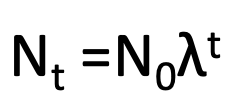
exponential population growth
dN/dt = rN or Nt =N0e^rt
use when need to know instantaneous pop sizes (for overlapping generations)
relationship between λ and r
r = ln(λ)
r max
per-capita rate of increase for a species under perfect (unlimited) conditions
determined by life history/biology of an organism
K
equilibrium density of individuals = carrying capacity
logistic growth equation
shows effects of intraspecific competition (within)

density dependent limiting factors
size of effect is proportional to pop density
competition, disease, predation, parasitism
more important in favorable environments
impact larger animals more
density independent limiting factors
size of effect is not related to pop density
climate/weather, disasters
impact small organisms more
components of metapopulations
populations are spatially structured
group of locally breeding pops
migration occurs between pops
pops re-establish after extinctions
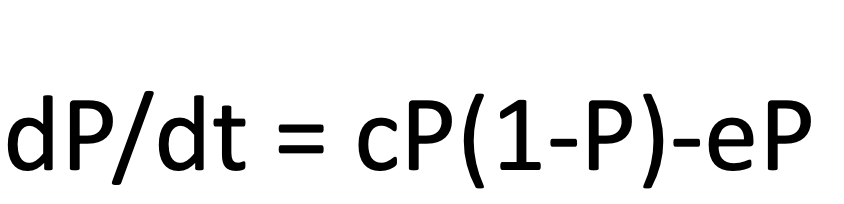
defines dP/dt (fraction of patches occupied)
metapopulation dynamics can increase stability of local populations
patch occupancy dynamics equation
P = fraction of occupied patches
c = colonization rate
e = extinction rate
metapopulation model assumptions
habitat patches equal in size/isolation
pops have same behaviors
all pops contribute equal migrants
all pops equally likely to be colonized
migration doesn’t affect local pop dynamics
local dynamics faster than metapopulation dynamics
demographic stochasticity
allee effect
reaction time lag
duration of lag or cycle depends on generation time
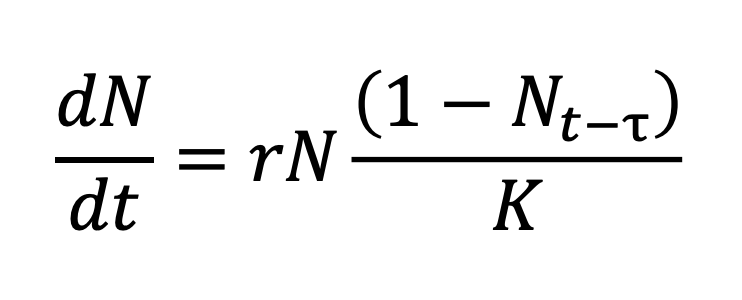
net reproductive rate R0 and time lag
Ro ≈ 1 and small time lag: results in logistic curve
Ro ≈ 1.5 and small time lag: results in damped oscillations
Ro ≈ 2 and small time lag: results in stable cycle
consequences of fluxuations
overshoot K, damage resource base of population; recovery time (resilience) of biotic resources important
interspecific interactions
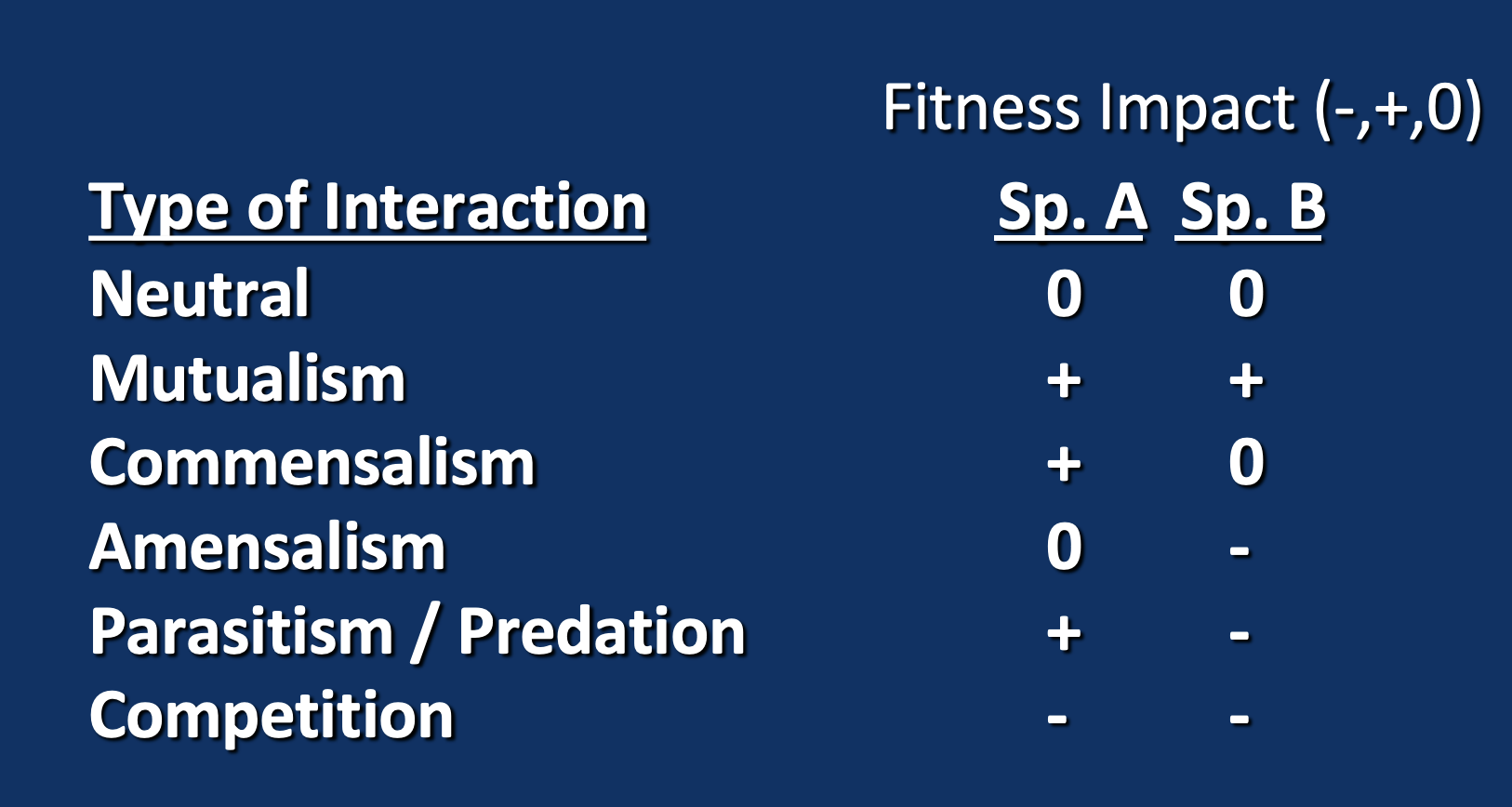
reduction of fundamental to realized niche caused by
competition, predation, parasitism
indirect competition
competition for resources
ex. self-thinning in plants
interference competition
allelopathy, territoriality, preemption
allelopathy
chemical interference
affects seed germination and growth of same and different species
preemption
interference
get there first and take up preferred space
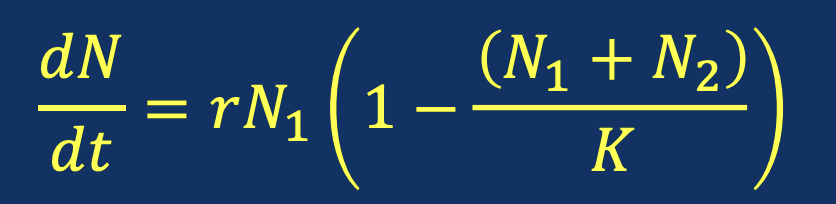
competition between equivalent competitors
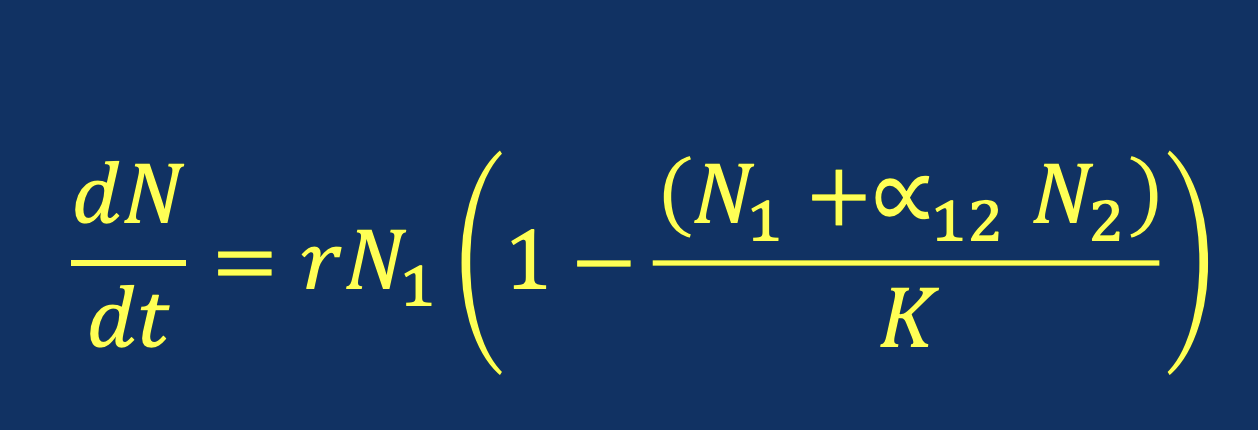
competition between non equivalent competitors
α12 = effect of species 2 on species 1 = competition coefficient
when multiplied by N2 = total effect of species 2 on species 1
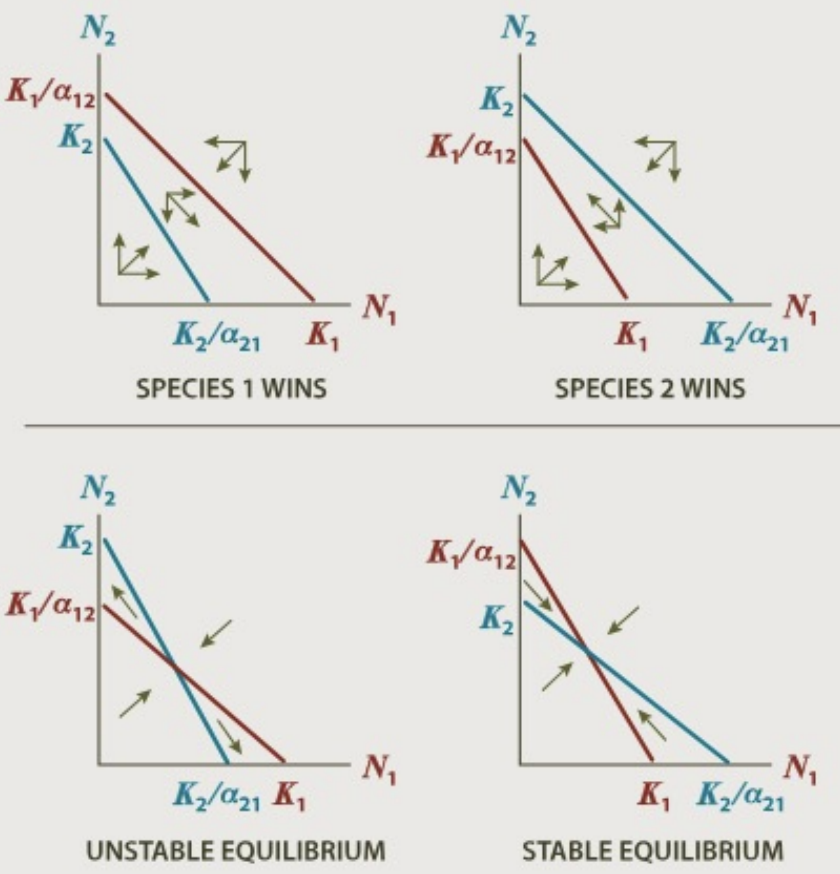
4 possible outcomes of competition
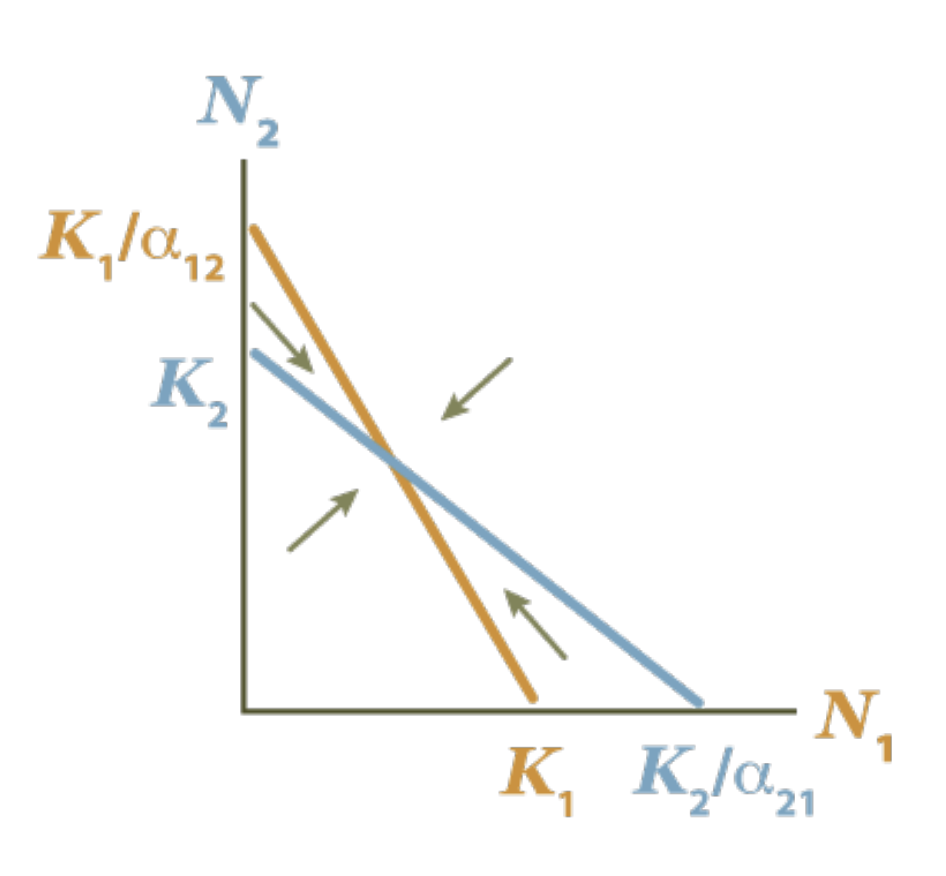
stable equilibrium
negative feedback
starting pop size doesn’t matter
interspecific competition is less than intraspecific competition
K1/α12 > K2
K2 / α21 > K1
unstable equilibrium
positive feedback
coexistence only when starting pops are the same
interspecific competition more than intraspecfic
K1/ α12 < K2
K2 / α21 < K1
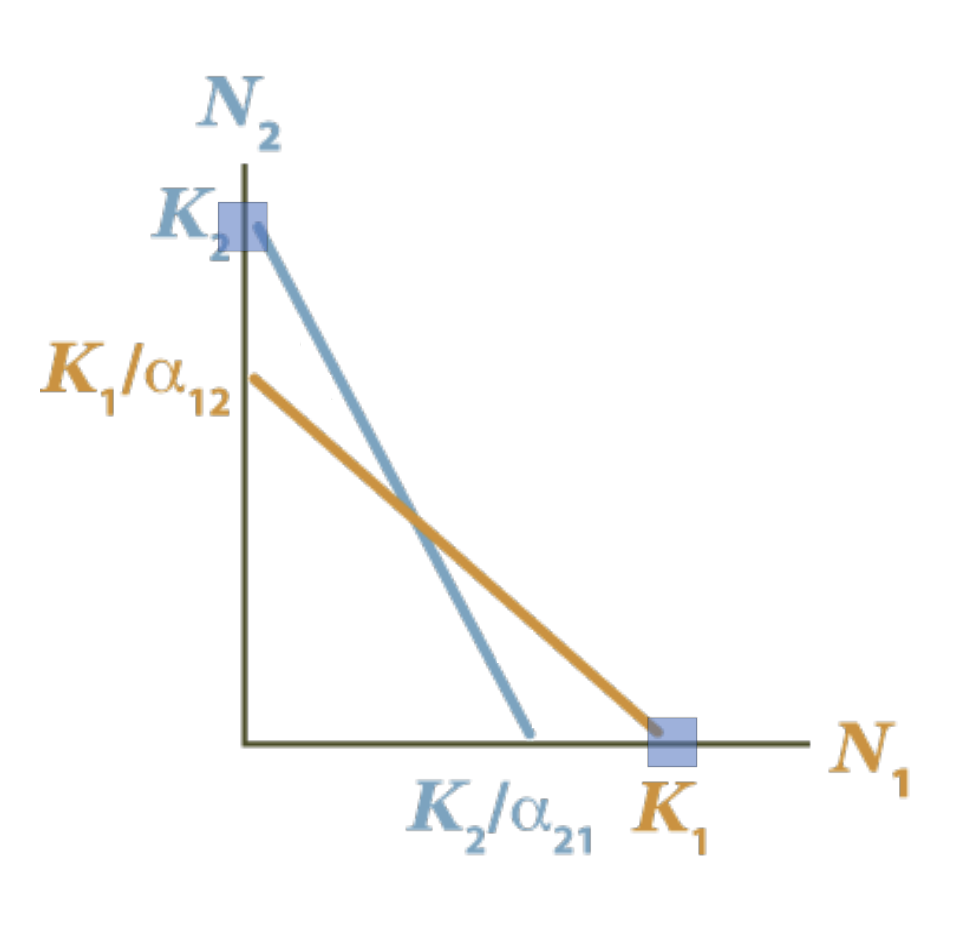
coexistence and α
the less similar the two species are in terms of resource use (lower α) the more likely is coexistence)
lotka-volterra model assumptions
homogeneous, stable environment
no immigration or emigration
instantaneous effects of competition
competition is only major interaction
3 types of exploitation
parasitism, herbivory, predation
endoparasites advantages/disadvantages
may be hard to get in
host system may attack
once in, may be hard for host to physically remove (advantage)
ectoparasites advantages/disadvantages
easy access
avoid host immune system
easier for host to remove
transmission pathways
active (direct movement towards a host) vs passive
parasitoid
parasite (usually insect) that sterilizes or kills host
effects of parasites on hosts
death or major fitness reduction
behavioral manipulation
minor inconvenience
plant nutrition
relatively low nutrition (low Kcal/gram, low N)
lots of tough tissue
low water content
herbivory in insects
low conversion rates of food to body mass
slower rates of development (smaller size as adults, less reproduction)
nutritional defense against herbivory
complex molecules in plants
cellulose, lignin
toxins
type of plant chemical defense
often induced by herbivory
rapid synthesis, mobile
small molecules, high cost (lots of N)