Immunity
 Call Kai
 Learn
Learn Practice Test
 Spaced Repetition
 Match
Match Flashcards
 Knowt Play
1/10

There's no tags or description
Looks like no tags are added yet.
Name | Mastery | Learn | Test | Matching | Spaced | Call with Kai |
|---|
No analytics yet
Send a link to your students to track their progress
11 Terms
What are the types of immunity
Innate immune system - natural and unspecific immunity targeting all pathogens
Adaptive immune system - specific response to antigens
Humoral nervous response in the blood - B lymphocytes
Cell-mediated response - T lymphocytes
Explain the parts of the innate immune system
Skin - vitamin C for string connective tissue barrier and microflora to outcompete pathogens on surface
Phagocytes
Stomach acid
Lysozymes - in tears which hydrolyse peptidoglycan cell walls for lysis
Inflammation - localises damage and diverts blood for phagocytes and increases temp - non optimal for their growth
Blood clotting - prevent entry of pathogens and sealing wound
Ciliated columnar epithelium - mucus to trap bacteria and move up trachea
Explain the humoral immune response as a part of the adaptive immune system
B lymphocytes are produced in the bone marrow as stem cells but mature in the spleen and lymph nodes.
They are then secreted into the blood where they travel round with a specific complementary receptor to an antigen
When that specific antigen binds to the receptor (clonal selection) it triggers proliferation by mitosis to produce more BL - clonal expansion
They then differentiate into plasma cells which are antibody secreting cells and memory cells which travel dormant in the blood with the specific receptor ready for secondary immune response
Explain the cell-mediated immune response as a part of the adaptive immune system
T lymphocytes are produced from bone marrow as stem cells and then mature in the thymus gland
Phagocytes like macrophages in the blood have receptors complementary to the antigens of pathogens so when they bind to receptors they engulf and digest by phagocytosis and lysosomes in the cell destroy the pathogen.
The macrophages then present the antigen
The T-lymphocytes then detect this - clonal selection with their complementary receptor, proliferate by mitosis - clonal expansion and differentiate to form
T-killer cells which lyse cells
T-helper which produce cytokines which stimulate antibody response, B L and phagocytes
memory cells
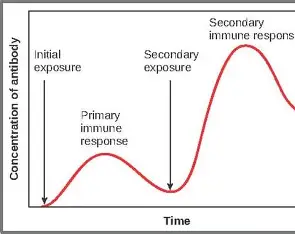
Explain the primary vs secondary immune response in terms of antibodies concentration
The pathogens first initial contact creates a lag in the primary response because it takes time for phagocytosis and lymphocytes clonal selection and expansion and so symptoms are already displayed when the antibodies are secreted
The antibodies concentration then increases and the primary response kills the pathogens
Subsequent exposure to the pathogens trigger fast secondary immune response with no lag before symptoms as memory cells remember the antigens and have a complementary receptor so can stimulate plasma cells and specific antibodies even with low levels of pathogen
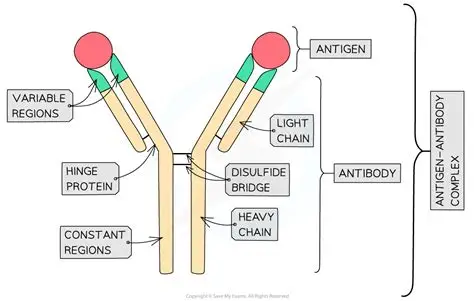
Draw and label an antibody
Explain the 4 types of immunity and examples from each
Natural - There is no medical intervention in causing an immune response
Artificial - There is medical intervention in provoking an immune response
Active The body makes it’s own antibodies and memory cells for secondary response
Passive - medically made antibodies are transferred ready made so no memory cells for 2ndary response
Examples
Natural active - catching disease, primary and then secondary response
natural passive - vaccine
Artificial active - transfer of milk/ placenta antibodies
Artificial passive - transfer of antibodies - no memory cells and used in Rabies
What is a vaccination
It is a type of artificial active immunity to stimulate a primary response within the body without symptoms but to create memory cells so that secondary exposure and response is quick with no symptoms
What are the 4 types of vaccine
Killed - killed through chemicals or heat eg. Flu
Attenuated - live micro-organisms cultured under specific conditions so they aren’t pathoegenic eg. TB
Toxoid - Toxics from pathogen are inserted
Subunits - parts of the pathogens eg. antigens which will provoke primary response
What are the features of vaccines
Long last immunity
Few side effects
Can provide immunity - immunogenic from a disease
Even if lots of antigenic types so less long term immunity, yearly immunization programes can create ‘herd immunity’ where enough of a population has been vaccinated so that there is a low human reservoir so that it protects those who can’t be vaccinated
List some ethical issues with vaccines
Cost
side effects
Right to refuse vs compulsory