u3 aos 2 sac
 Call Kai
 Learn
Learn Practice Test
 Spaced Repetition
 Match
Match Flashcards
 Knowt Play
1/112

Earn XP
Description and Tags
photosynthesis + cellular respiration
Name | Mastery | Learn | Test | Matching | Spaced | Call with Kai |
|---|
No analytics yet
Send a link to your students to track their progress
113 Terms
what is the word equation for photosynthesis?
carbon dioxide + water -> glucose + oxygen
what does photosynthesis do?
convert light energy into chemical energy stored in glucose
unbalanced chemical equation for photosynthesis
CO2 + H2O -> C6H12O6 + O2
balanced chemical equation (+ over and under arrow)
6CO2 + 12H20 -> C6H1206 + 6O2 + 6H20
over arrow: light
under arrow: chlorophyll
what is chlorophyll and what is its role in photosynthesis
it is a photosynthetic pigment that absorbs light energy to drive the light dependent stage of photosynthesis
- absorbs red and blue/violet wavelengths best
where is chlorophyll found
in the thylakoid membranes inside chloroplasts (in stacks of grana)
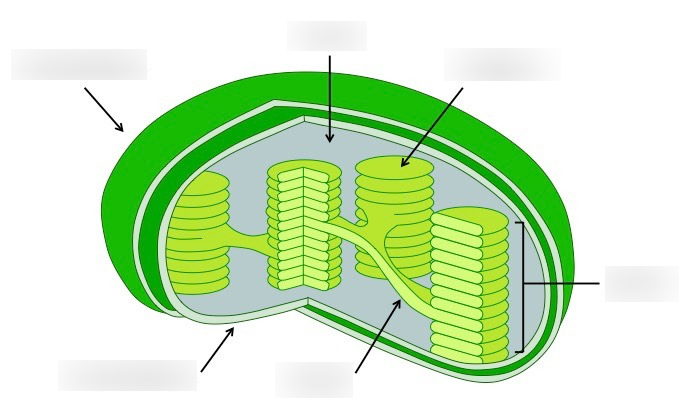
label a chloroplast
.
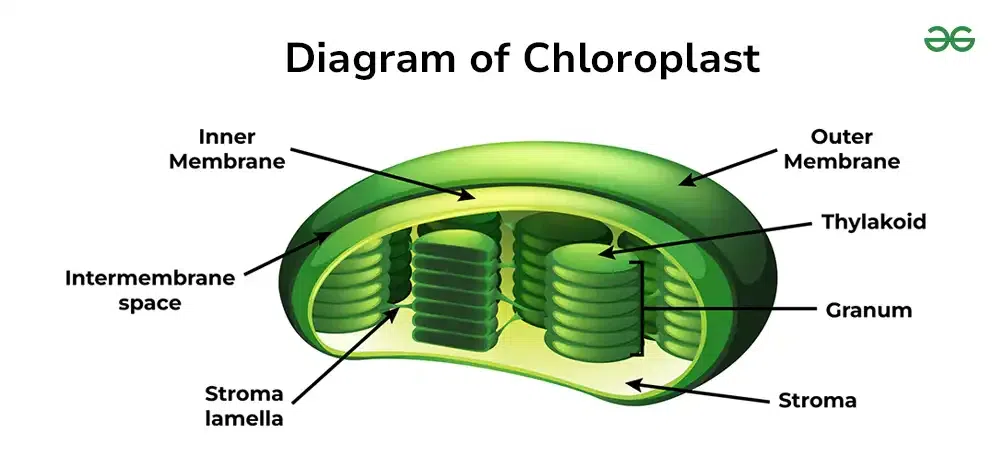
where does the light dependent stage occur
in the thylakoid membranes (grana) of the chloroplast
- requires light energy
where does the light independent stage occur
in the stroma of the chloroplast
inputs of light dependent stage
light, water, ADP + Pi, NADP+
- water provides electrons and hydrogen ions through photolysis
outputs of light dependent stage
oxygen, ATP, NADPH
what happens during the light dependent stage
chlorophyll absorbs light energy
electrons become excited and move through an electron transport chain
water undergoes photolysis, replacing lost electrons and releasing oxygen
ATP and NADPH are produced
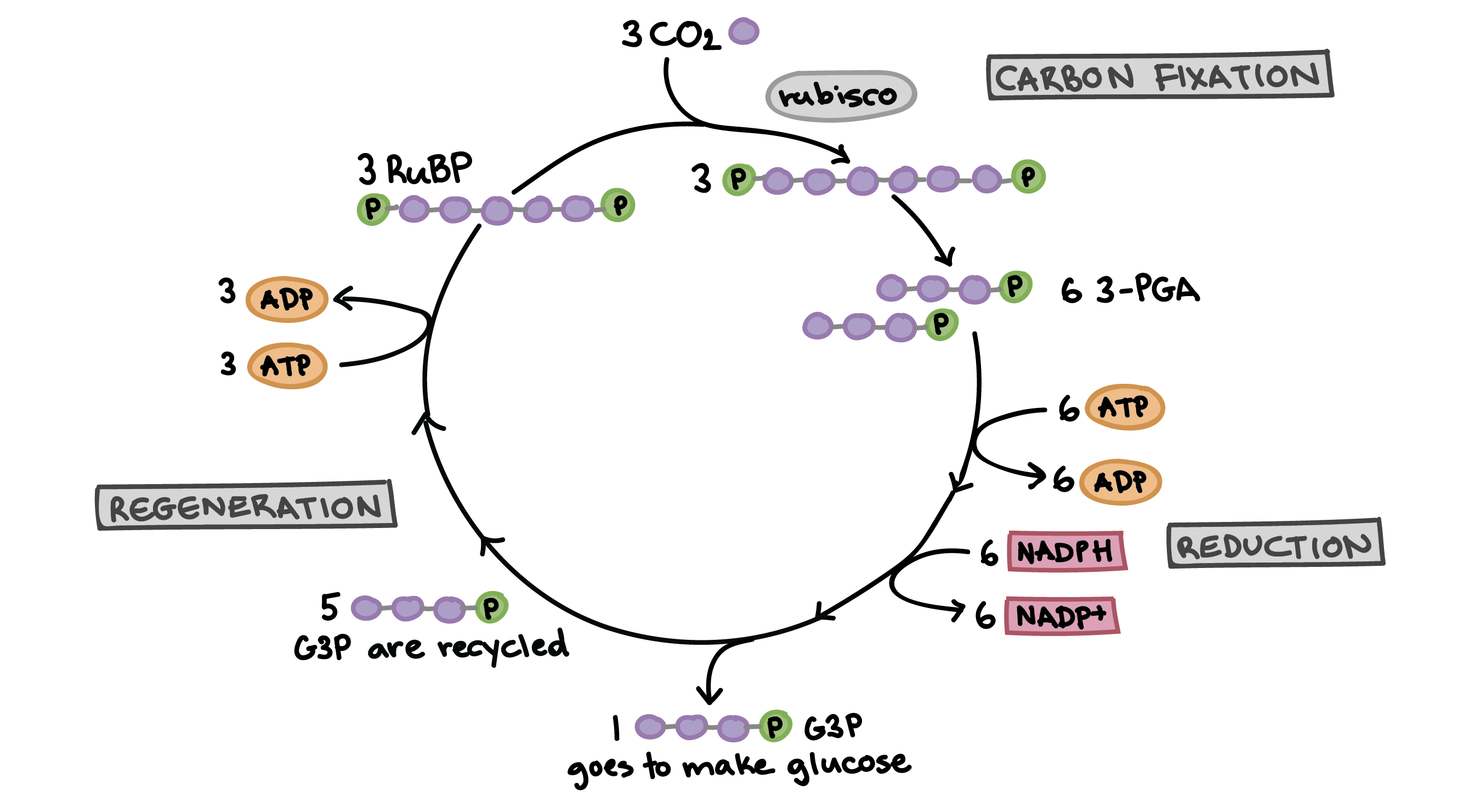
what are the inputs of the light independent stage (calvin cycle)
carbon dioxide, ATP, NADPH
what are the outputs of the light independent stage
glucose, ADP + Pi, NADP+
what happens during the light independent stage
the calvin cycle uses ATP and NADPH from the light dependent stage to convert carbon dioxide to glucose
the enzyme rubisco catalyses carbon fixation
how does light intensity affect the rate of photosynthesis
more light energy is available, so rate increases. eventually plateaus/reaches saturation point where increasing light no longer increases photosynthesis because: enzymes are working at the maximum capacity, OR another factor becomes the limiting factor
how does wavelength of light affect photosynthesis
photosynthesis occurs fastest under red and blue/violet wavelengths because chlorophyll absorbs these wavelengths strongly. green light produces lower photosynthetic rate because most green wavelengths are reflected
how does temperature affect photosynthesis
photosynthesis depends on enzymes in chloroplasts. as temperature increases towards optimum temperature, photosynthesis increases due to more enzyme-substrate collisions: above optimum temperature, enzymes denature
how does pH affect photosynthesis
photosynthetic enzymes function best at their optimal pH. if pH is too high or too low, enzymes denature
how does carbon dioxide concentration affect photosynthesis
carbon dioxide is an input of the light independent stage. increasing CO2 concentration increases photosynthetic rate until a plateau/saturation point is reached. at this point: enzymes are working at maximum capacity, OR another factor becomes the limiting factor
how does water availability affect photosynthesis
water is an input of the light dependent stage and responsible for influencing the stomata opening and closing. when water is limited, stomata close to reduce water loss, less CO2 enters the leaf, so oxygen concentration increases and photorespiration becomes more likely
how does enzyme inhibition affect photosynthesis
enzyme inhibitors interfere with enzymes involved in photosynthesis, reducing the rate of photosynthesis
what is rubisco?
the enzyme that catalyses carbon fixation during the light independent stage
what is rubisco’s role?
to bind carbon dioxide to organic molecules to begin glucose production, however it can also bind to oxygen, causing photorespiration
what is photorespiration
it occurs when rubisco binds to oxygen instead of carbon dioxide, reducing the efficiency of photosynthesis. wastes ATP and reduces glucose production
when does photorespiration occur
when temperatures are elevated, oxygen concentration is high and carbon dioxide concentration is low, rubisco has a higher affinity to bind to oxygen
what are c3 plants? (+ examples)
plants that use the standard calvin cycle where rubisco directly fixes carbon dioxide. better suited to temperate environments, e.g. wheat and rice
how do c4 plants reduce photorespiration
c4 plants use spatial adaptations to reduce photorespiration. the light dependent stage takes place in mesophyll cells, however the light independent stage takes place in bundle sheath cells, further away from the stomata where CO2 concentrations are higher as CO2 is released near rubisco
benefits of C4 plants vs C3 plants
reduced chance of photorespiration, higher photosynthetic efficiency in hot conditions, better adapted to environments with high temperatures, less affected by low CO2 concentrations
limitations of C4 plants
require extra ATP to transport carbon compounds between cells
examples of C4 plants
maize, sugarcane, corn
how do CAM plants reduce photorespiration
they temporally separate carbon fixation and the calvin cycle. at night, the stomata opens, co2 enters and carbon is stored. during the day, stomata close and stored CO2 is released for photosynthesis
why are CAM plants best suited to dry environments
because they keep stomata closed during the day, reducing water loss through transpiration
what are the benefits of CAM plants vs C3 plants
excellent water conservation, reduced chance of photorespiration, survive in extremely dry conditions, less affected by low water availability
limitations of CAM plants
slower growth rate, lower photosynthetic rate, limited CO2 intake because stomata only open at night
examples of CAM plants
cacti, pineapple, succulents
what is CRISPR-Cas 9
a gene editing technology that allows scientists to make precise changes to dna
how does CRISPR increase photosynthetic efficiency and crop yield
modify rubisco to have a higher affinity for CO2 than O2, bypass photorespiration, edit chloroplast function to increase photosynthetic output, modify stomata to reduce water stress
what steps are involved in using CRISPR-Cas9 to improve photosynthesis
understand the photosynthetic process of the crop species
identify genes affecting photosynthesis and growth
use computer modelling to identify inefficiencies
use CRISPR-Cas9 to edit genes responsible for the inefficiencies
what are the advantages of CRISPR-Cas9 compared with older models
highly precise, fewer negative side effects, can modify existing DNA
what is cellular respiration? what is its purpose?
cellular respiration is the process of breaking down high-energy organic molecules (such as glucose) to produce ATP
what is the word equation for aerobic cellular respiration
glucose + oxygen -> carbon dioxide + water + ATP
balanced equation for aerobic cellular respiration including ATP
C6H12O6 + 6O2 -> 6CO2 + 6H20 + 30 or 32 ATP
what is ATP
ATP is the main energy carrier in cells
label a mitochondrion
.
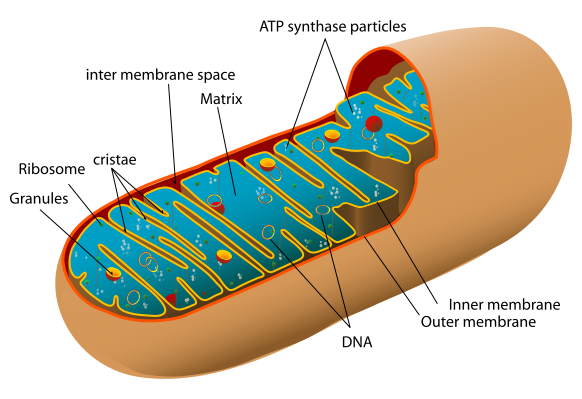
what is the function of the cristae
cristae are the folds of the inner mitochondrial membrane that increase surface area for the electron transport chain and ATP production
what are the 3 stages of aerobic cellular respiration
glycolysis
+ link reactionkrebs cycle (citric acid cycle)
electron transport chain
where does glycolysis occur
in the cytosol
what happens during glycolysis
1x glucose is split into 2x pyruvate
electrons and hydrogen ions are transferred to NAD+, forming NADH
2 net ATP produced
inputs of glycolysis
1 glucose, ADP + Pi, NAD+ + H+
outputs of glycolysis
2 pyruvate, 2 net ATP, NADH
what is the link reaction
connects glycolysis to the krebs cycle. pyruvate is transported to the mitochondrial matrix, where:
each pyruvate is oxidised
carbon dioxide is released
NADH is produced
an acetyl group combines with coenzyme A to form acetyl-CoA, which enters the krebs cycle
where does the krebs cycle (citric acid cycle) occur
in the mitochondrial matrix
what happens during the krebs cycle
in each turn of the krebs cycle:
1x acetyl-CoA enters
1 ATP is produced
electron carriers become charged
3 NADH
1 FADH2
2 CO2 are released
because one glucose produces 2x acetyl-CoA, the cycle turns twice per glucose
inputs of krebs cycle
2 acetyl-CoA, ADP + Pi, NAD+ + H+, FAD + H+
outputs of krebs cycle
4CO2, 2 ATP, NADH, FADH2
where does the electron transport chain occur
on the cristae
what happens during the electron transport chain?
NADH and FADH2 donate electrons to the electron transport chain
electrons move through a chain of cytochromes and enzymes embedded in the inner membrane
energy released pumps hydrogen ions out of the mitochondrial matrix, creating a proton gradient
hydrogen ions move back through ATP synthase, producing ATP from ADP + Pi
oxygen acts as the final electron acceptor, combining with hydrogen to form water
produces 26 or 28 ATP
inputs of electron transport chain
O2, ADP + Pi, NADH, FADH2
outputs of electron transport chain
H20, 26 or 28 ATP, NAD+ + H+, FAD + H+
what is anaerobic respiration
a metabolic process that occurs in the absence of oxygen, to generate ATP from glucose
why does anaerobic respiration occur
occurs in the absence of oxygen. without oxygen, the E.T.C cannot be used, so glycolysis is followed by fermentation to allow ATP production to continue
why is glycolysis important in anaerobic fermentation
because it produces 2 net ATP, 2 pyruvate and 2 NADH (which is recycled back into NAD+, allowing glycolysis to continue)
products of anaerobic fermentation in animals
pyruvate -> lactic acid
products of anaerobic fermentation in yeast and plants
pyruvate -> ethanol + CO2
what factors affect the rate of cellular respiration
temperature, pH, glucose concentration, oxygen concentration, enzyme inhibition
how does temperature affect the rate of cellular respiration
below optimum temperature: substrates have less kinetic energy, so therefore fewer enzyme-substrate collisions and ATP production decreases
at the optimum temperature: enzymes function at their highest rate, causing the greatest ATP production
above the optimum temperature: enzymes denature, changing shape and reducing respiration rate dramatically
how does pH affect the rate of cellular respiration
respiration enzymes have optimal pH at which they function most efficiently
if pH becomes too acidic or basic, enzymes denature
how does glucose concentration affect the rate of cellular respiration
increasing glucose concentration increases the rate of respiration because more substrate is available for enzymes
eventually reaches saturation point, meaning all active sites are occupied
at this point, increasing glucose no longer increases respiration, causing the graph to plateau
how does oxygen concentration affect the rate of cellular respiration
increasing oxygen concentration increases aerobic respiration and ATP production until it plateaus because enzymes are working at maximum capacity
what is enzyme inhibition
when a molecule (enzyme inhibitor) interferes with enzyme activity, reducing the rate of cellular respiration and ATP production
what is a competitive inhibitor
binds to the enzyme’s active site, preventing the substrate from binding
its effects can be reduced by increasing substrate concentration, allowing substrates to outcompete the inhibitor
what is a non competitive inhibitor
binds to an allosteric site rather than the active site, causing conformational shape change in the enzyme, altering the active site
increasing the substrate concentration does not overcome inhibition
what is reversible inhibition
an inhibitor temporarily binds to an enzyme and can later detach
what is irreversible inhibition
an inhibitor binds permanently to an enzyme, preventing it from functioning
what is end-product inhibition
the final product of a metabolic pathway inhibits an earlier enzyme in the pathway
prevents overproduction and helps regulate metabolism
what is biomass
organic material from living or recently living organisms that can be used to produce fuel
plant mass
what is biofuel
a renewable fuel made from biomass
alternative to non-renewable fossil fuels
bioethanol
biodiesel
what is renewable energy
sources that can be continuously replenished naturally
biofuels are renewable because biomass can be continuously produced through agriculture and forestry
what is a non-renewable fuel
a fuel source that cannot be replenished quickly enough for human use
coal
oil
natural gas
known as fossil fuels
why are biofuels considered carbon neutral
because the carbon dioxide released during combustion was originally absorbed during photosynthesis
carbon cycles back into the atmosphere and can be reused by plants
difference between bioethanol and biodiesel
bioethanol: made from plant sugars and starches, produced through fermentation
biodiesel: made from natural oils and fats, produced from vegetable oils or animal fats reacting with short-chain alcohols (e.g. ethanol)
1st step in making bioethanol
deconstruction - biomass is broken down to increase surface area by damaging the cell wall and cellulose
crushing
acids
enzymes
2nd step in making bioethanol
digestion by enzymes (hydrolysis) - enzymes break starch and cellulose into glucose and sugars
3rd step in making bioethanol
ethanol fermentation - yeast anaerobically ferments sugar, producing ethanol
4th step in making bioethanol
purification and dehydration - water is removed through distillation, purifying ethanol into usable fuel
all 4 steps of making bioethanol in order
deconstruction, hydrolysis, fermentation, purification
applications of biofuels
transportation, energy generation
advantages of biofuels
renewable, lower reliance on fossil fuels, carbon neutral
disadvantages of biofuels
large land requirements, deforestation risk, expensive producing
what is an independent variable
the variable that is deliberately changed by the experimenter to test its effect
variable being tested
what is a dependent variable
variable that is measured or observed in response to changes in the independent variable
what is a controlled variable
variables that are kept constant to ensure a fair test, and prevent other factors from affecting results
what is a control group
does not receive the experimental treatment and is used as a baseline for comparison
what is an aim in an experiment
a statement describing the purpose of the experiment
to investigate the effect of [IV] on [DV]
what is hypothesis
a testable prediction based on scientific knowledge
if … then
what is a conclusion in an experiment
summarises the results, patters/trends in data, whether the hypothesis was supported
what is a personal error
an error caused by human mistakes during an experiment
what is a systematic error
an error caused by faulty equipment or consistent bias. causes measurements to be consistently too high or too low, reducing accuracy
what is a random error
unpredictable variation that causes results to vary randomly, reducing precision