economics revision
 Call Kai
 Learn
Learn Practice Test
 Spaced Repetition
 Match
Match Flashcards
 Knowt Play
1/21

There's no tags or description
Looks like no tags are added yet.
Name | Mastery | Learn | Test | Matching | Spaced | Call with Kai | Chat |
|---|
No analytics yet
Send a link to your students to track their progress
22 Terms
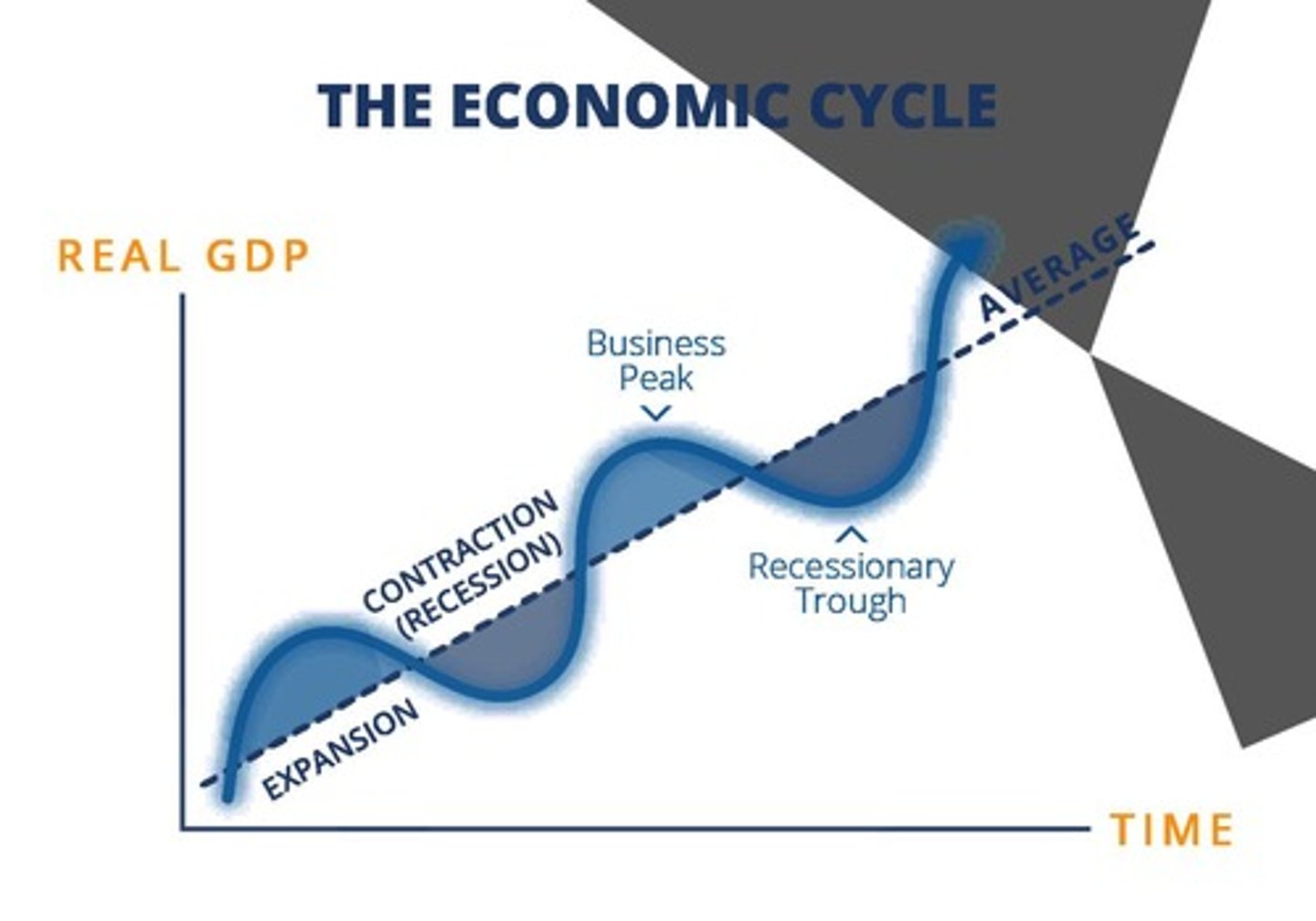
What is the business cycle?
the ongoing pattern of expansion and contraction in economic activity
What are the targets for the economy?
GDP: 2-4%
Inflation: 2-3%
Unemployment: 4-5%
What is the role of the ABS (Australian Bureau of Statistics)?
the ABS collects official data on Australia’s economy, population, and society to help people make informed decisions.
How does economic performance affect living standards?
Strong economic performance → more jobs, higher incomes, improves living standards.
Poor performance → fewer jobs, lower incomes, lowers living standards.
What is macroeconomics, and why do we measure the economy?
the study of the economy as a whole
helps make predictions, better decisions and reduces uncertainty
How do other countries (overseas sector) influence our economy?
when China grows → Australia exports more
if interest rates change in another country → money moves between countries
both global and local factors impact our economy
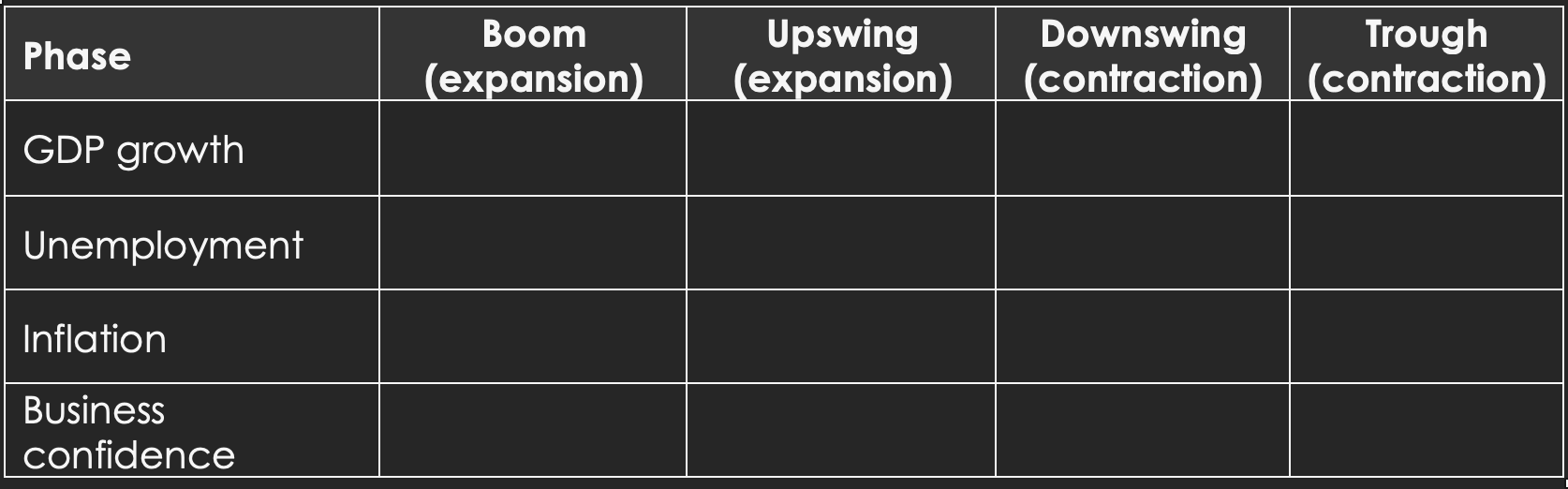
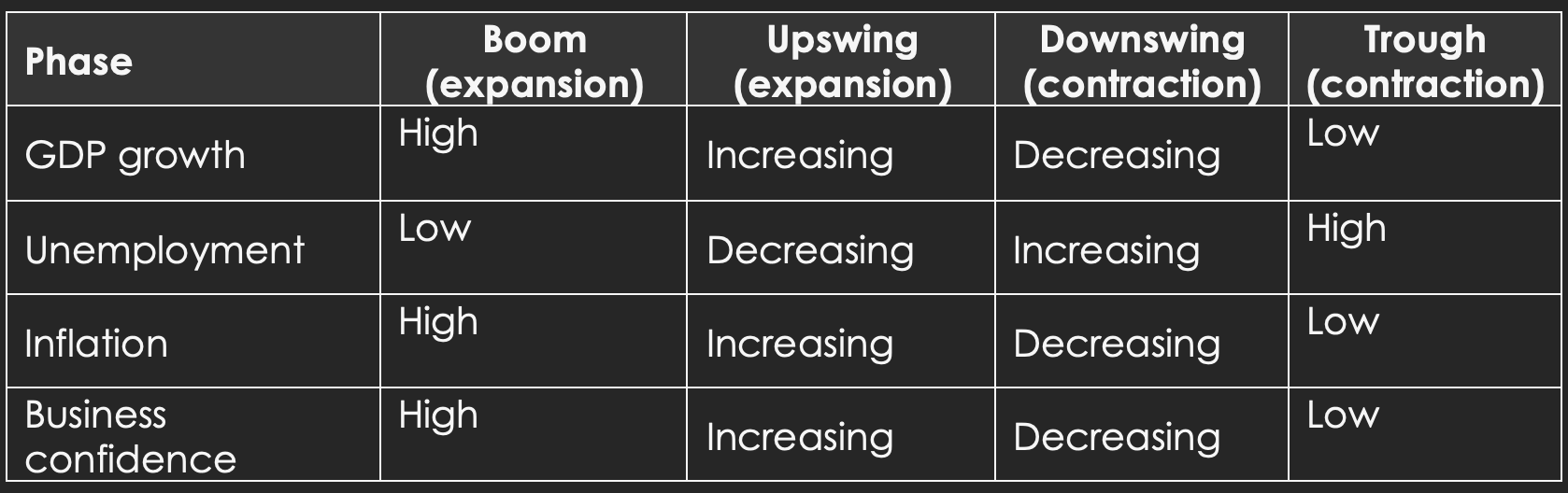
Complete the table (high, low, increasing, decreasing)
How are economies measured (3 main quantitative indicators)?
economic growth - is the economy producing more goods & services?
unemployment - how many people can’t find work?
inflation - are prices rising too quickly?
What is GDP and why is GDP data gathered?
GDP is the total value of all goods and services produced in a country in one year.
Data is gathered to measure economic performance, track growth, and compare living standards over time.
GDP per capita
GDP divided by population
shows the average output per person and gives an indication of living standards.
Limitations of GDP
it doesn’t measure:
wellbeing
unpaid work
environmental damage
Why does economic growth matter and what does it mean to grow sustainably?
creates jobs, increases income, and improves living standards.
Sustainable growth is steady growth (about 2–4%) that meets current needs without harming future generations
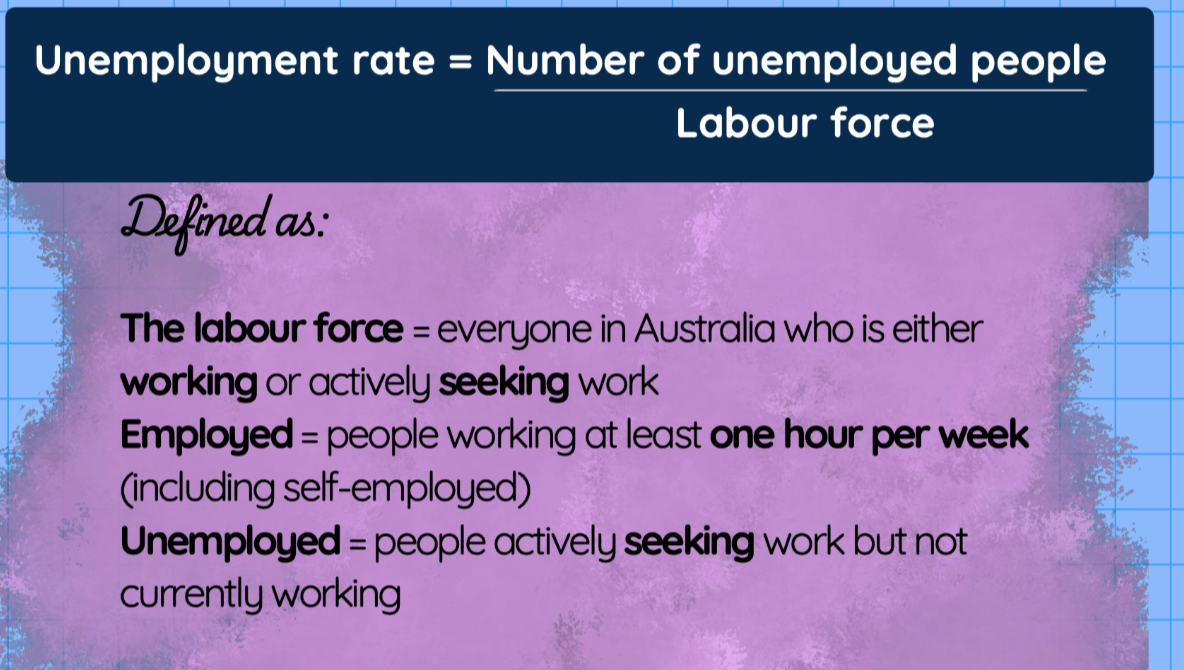
What is unemployment and how do we measure it?
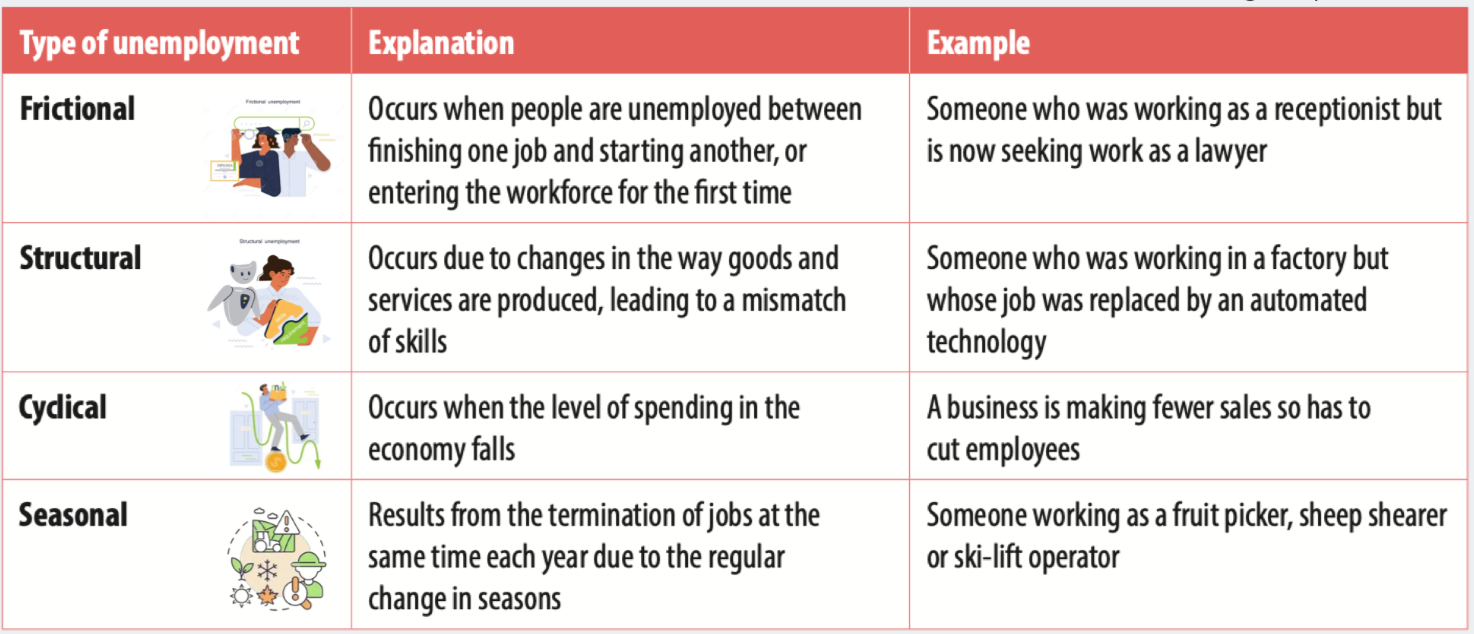
Types of unemployment. When they occur? Give an example.
frictional
structural
cydical
seasonal
Effects of high unemployment
negative
lower standard of living
positive
reduces inflation
What is inflation?
an increase in the prices of goods and services bought by households
Is it bad if prices rise?
no, it is a sign of a healthy economy
because it means there are lots of transactions and its adding value to what we produce and consume
How is inflation measured?
by the ABS, using the CPI (consumer price index)
CPI: a measure of the average change over time in the prices paid by households for common goods and services
Causes of inflation
Demand-pull inflation: demand is higher than supply
👉 Too much money chasing too few goods.
Cost-push inflation: businesses have higher production costs
👉 It costs more to make things, so prices go up.
Effects of high inflation
Decreased purchasing power for consumers
Increase in interest rates
Worsening income inequality
How do businesses respond during an economic downturn?
Reduce output → because demand is falling
Cut costs → to protect profits
Increase marketing/promotions → to attract limited consumers
Invest in innovation → to gain competitive advantage
How do businesses respond during an economic boom?
Increase output → to meet higher demand
Hire more staff / expand operations → to support growth
Boost marketing / promotions → to capture more customers
Invest in innovation → to stay ahead of competitors