Hip Special Tests

0.0(0)
Studied by 0 people
call kaiCall Kai
learnLearn
examPractice Test
spaced repetitionSpaced Repetition
heart puzzleMatch
flashcardsFlashcards
GameKnowt Play
Card Sorting

1/17

encourage image

There's no tags or description

Looks like no tags are added yet.

Last updated 3:39 AM on 4/23/26
Name
Mastery
Learn
Test
Matching
Spaced
Call with Kai

No analytics yet

Send a link to your students to track their progress

18 Terms

1
New cards

trendelenburg test

purpose: test for lateral tendinopathy

procedure: in standing, patient is instructed to lift one leg off the ground (via hip and knee flexion) and hold it there for 30 seconds

positive finding: unable to elevate and hold the pelvis up on the non-stance side for 30 seconds

*high specificity
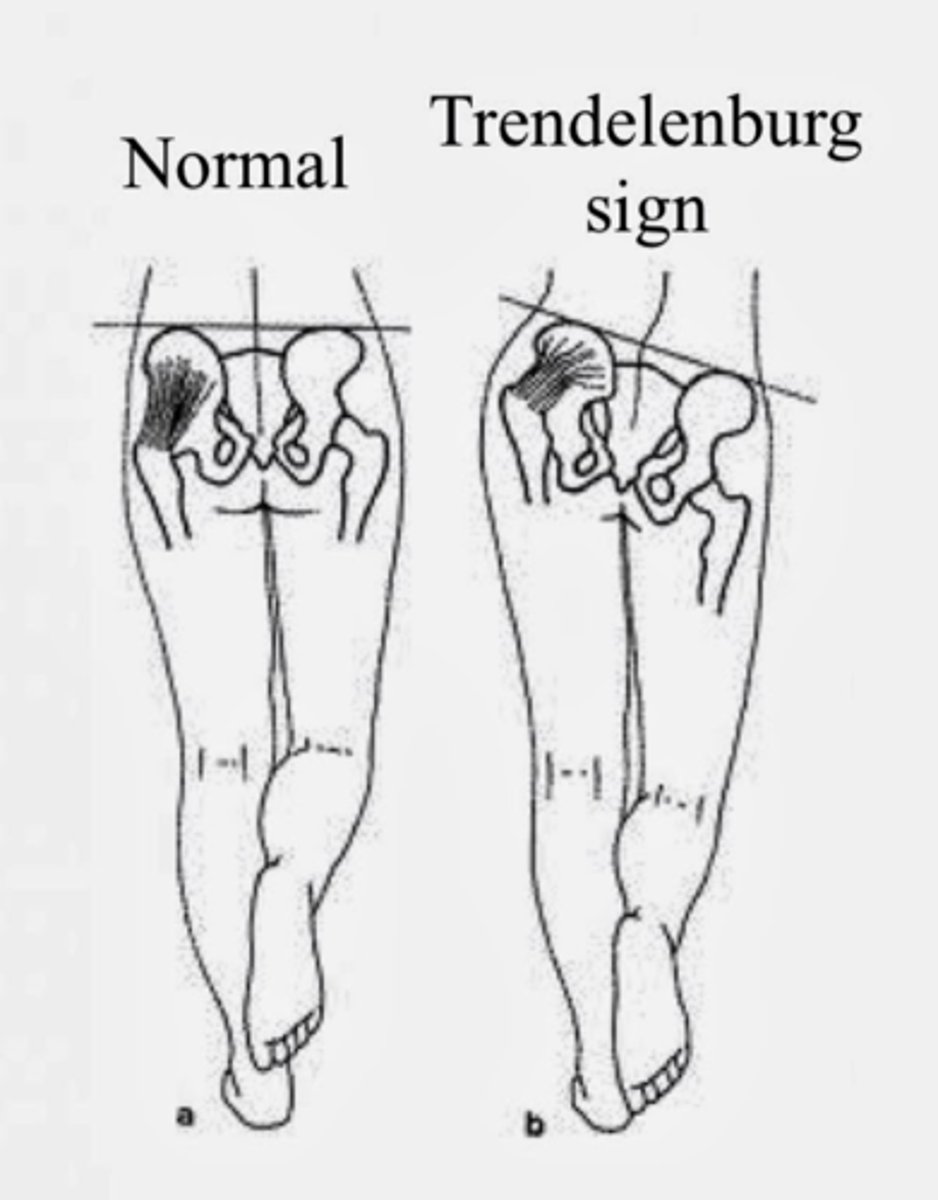
<p>purpose: test for lateral tendinopathy</p><p>procedure: in standing, patient is instructed to lift one leg off the ground (via hip and knee flexion) and hold it there for 30 seconds</p><p>positive finding: unable to elevate and hold the pelvis up on the non-stance side for 30 seconds </p><p>*high specificity</p>
2
New cards

modified thomas test

purpose: test for iliopsoas and rectus femoris tightness

procedure:

- patient sitting as close to edge of table as possible

- patient instructed to bring legs to chest and is assisted to lay back on table

- examiner facilitates the target limb moving into hip extension while maintaining knee extension to bias the iliopsoas muscle extensibility

- examiner then allows knee flexion to bias rectus femoris extensibility

positive finding: thigh lifts off table/cannot lay flush with table

*indicative of iliopsoas tightness if leg lifts with knee extension

*indicative of rectus femoris tightness if leg lifts with knee flexion
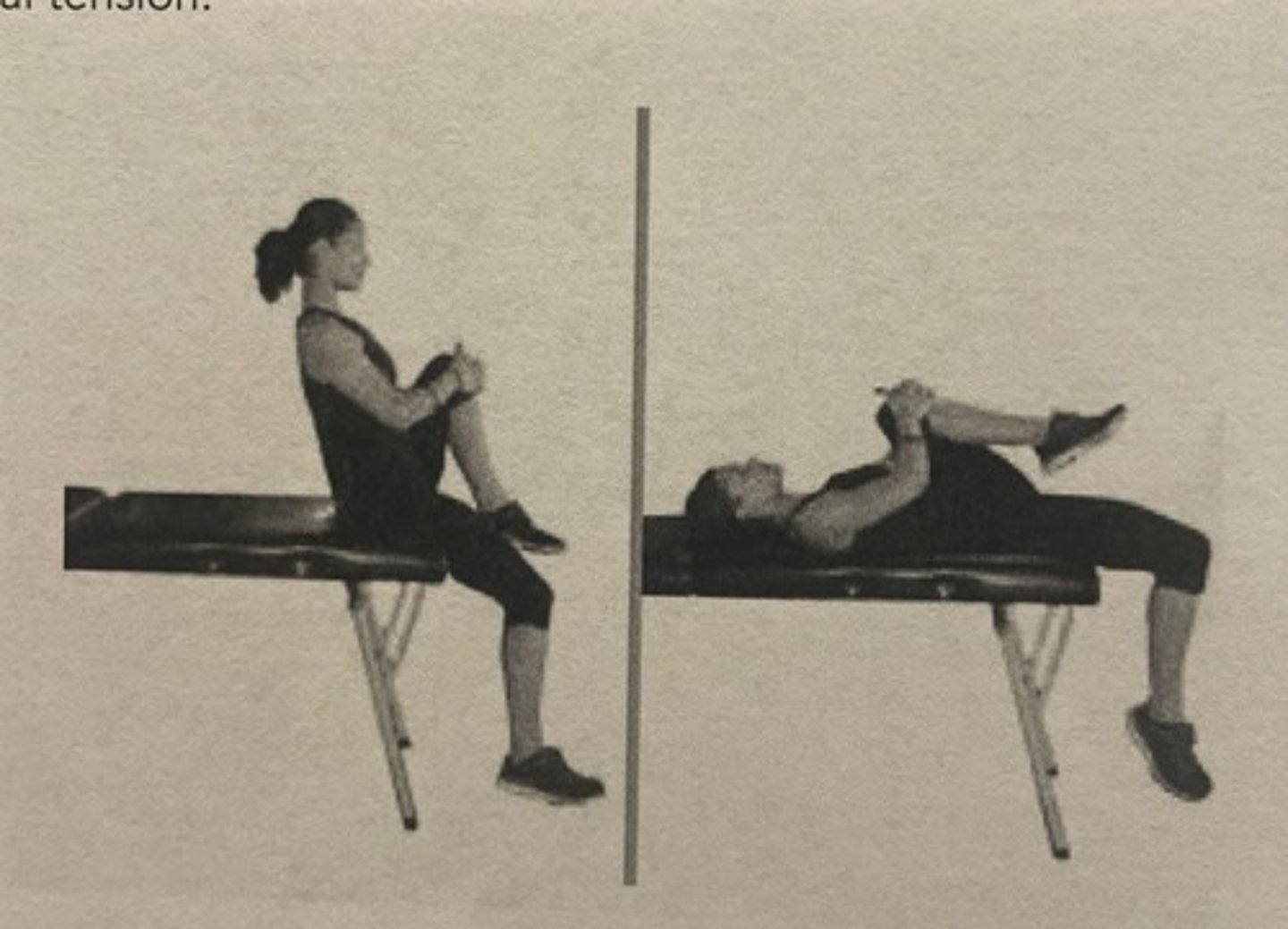
<p>purpose: test for iliopsoas and rectus femoris tightness</p><p>procedure:</p><p>- patient sitting as close to edge of table as possible</p><p>- patient instructed to bring legs to chest and is assisted to lay back on table</p><p>- examiner facilitates the target limb moving into hip extension while maintaining knee extension to bias the iliopsoas muscle extensibility </p><p>- examiner then allows knee flexion to bias rectus femoris extensibility </p><p>positive finding: thigh lifts off table/cannot lay flush with table </p><p>*indicative of iliopsoas tightness if leg lifts with knee extension </p><p>*indicative of rectus femoris tightness if leg lifts with knee flexion </p>
3
New cards

ely's test

purpose: test for rectus femoris tightness

procedure:

- patient prone

- examiner passively flexes knee while palpating ipsilateral pelvis, assessing for pelvic movement

positive finding: pelvis lifts/rises off table with knee flexion
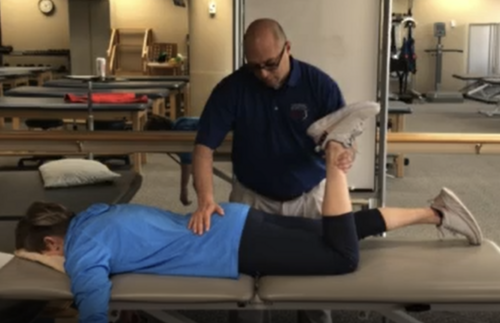
<p>purpose: test for rectus femoris tightness </p><p>procedure:</p><p>- patient prone</p><p>- examiner passively flexes knee while palpating ipsilateral pelvis, assessing for pelvic movement </p><p>positive finding: pelvis lifts/rises off table with knee flexion</p>
4
New cards

90/90 (popliteal angle) test

purpose: test for hamstring length/tightness

procedure:

- patient supine

- examiner passively flexes test hip and knee to 90 degrees, and then extends knee until end point is met

- at the end point, the angle of the tibia from vertical is measured and symptoms are assessed

- test bilaterally

positive finding: asymmetries between two LE, provocation of concordant symptoms

*larger angle = increased impairment
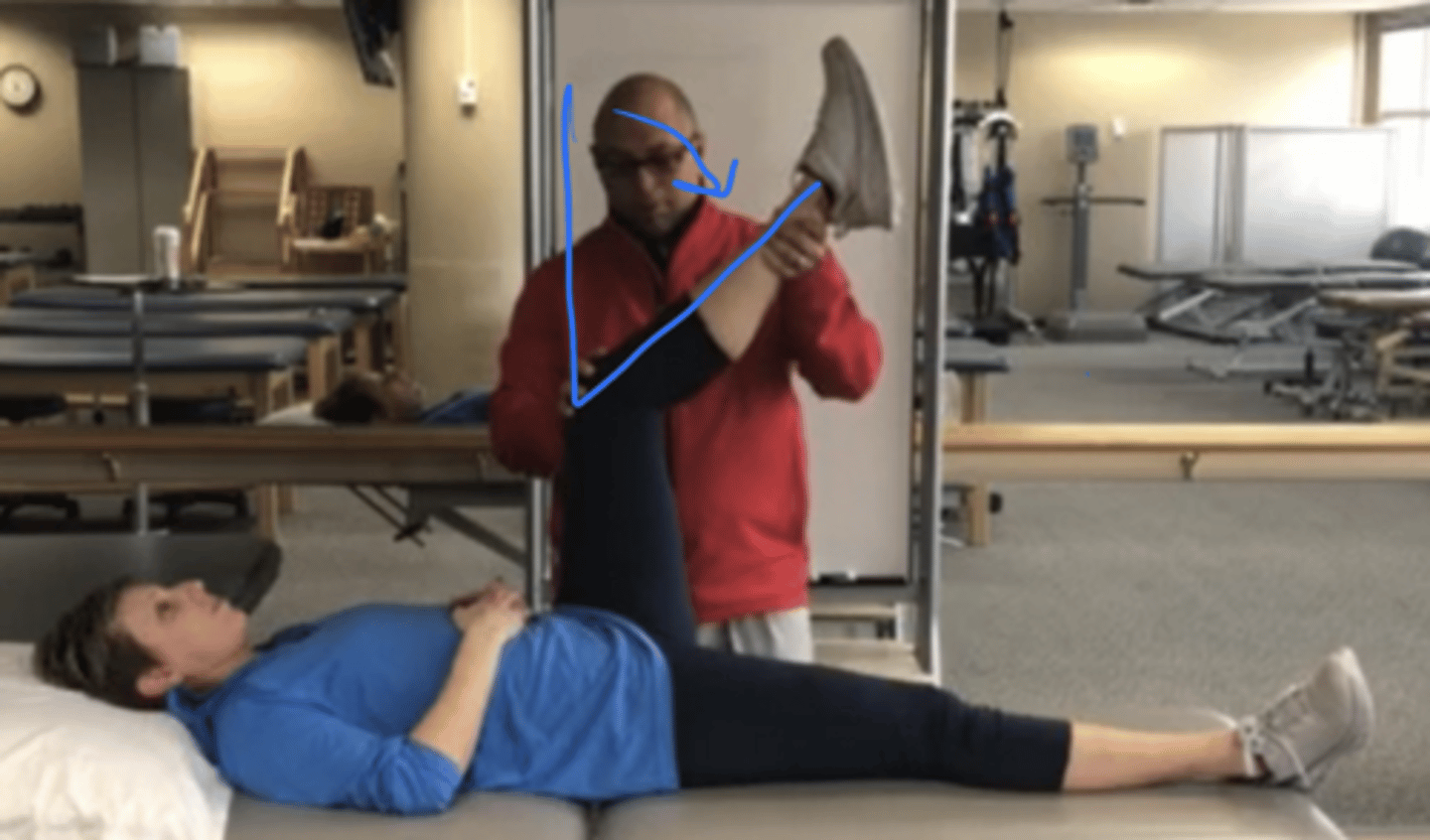
<p>purpose: test for hamstring length/tightness</p><p>procedure:</p><p>- patient supine</p><p>- examiner passively flexes test hip and knee to 90 degrees, and then extends knee until end point is met</p><p>- at the end point, the angle of the tibia from vertical is measured and symptoms are assessed</p><p>- test bilaterally </p><p>positive finding: asymmetries between two LE, provocation of concordant symptoms </p><p>*larger angle = increased impairment</p>
5
New cards

single leg raise

purpose: test for hamstring length/tightness

procedure:

- patient supine

- examiner passively flexes hip while maintaining knee extension until end point is met

- at the end point, the angle of the tibia from the horizontal is measured and symptoms are assessed

positive finding: asymmetries between two LE, provocation of concordant symptoms

*smaller angle = increased impairment
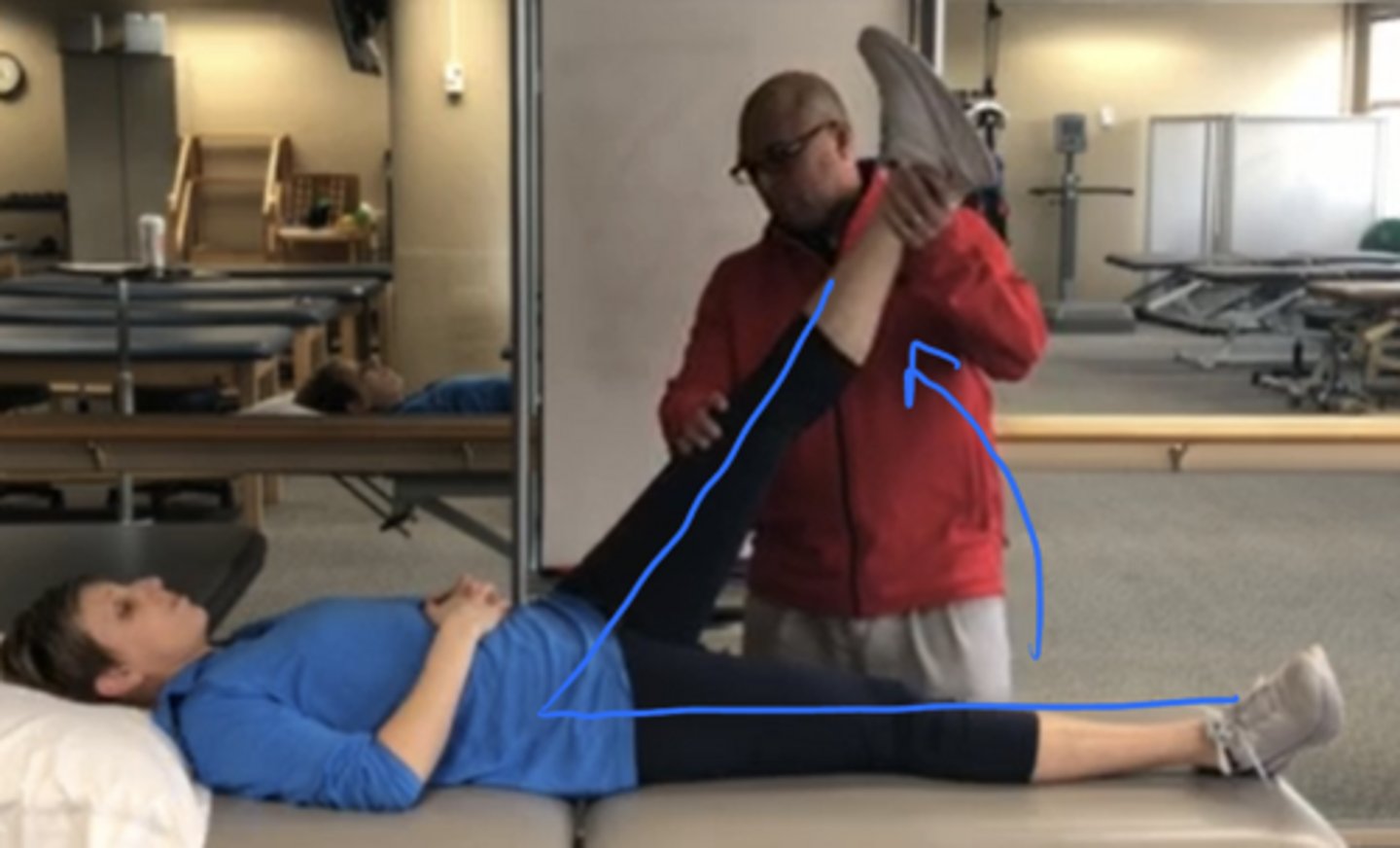
<p>purpose: test for hamstring length/tightness</p><p>procedure:</p><p>- patient supine</p><p>- examiner passively flexes hip while maintaining knee extension until end point is met</p><p>- at the end point, the angle of the tibia from the horizontal is measured and symptoms are assessed</p><p>positive finding: asymmetries between two LE, provocation of concordant symptoms </p><p>*smaller angle = increased impairment </p>
6
New cards

ober's test

purpose: test for IT band "tightness"

procedure:

- patient sidelying with target limb up

- examiner stabilizes the pelvis with one hand and uses the other to passively flex the knee to 90 and abduct and extend the hip to be in line with trunk

- the leg is then dropped down into adduction until end point is met

positive finding: cannot lower leg past horizontal (can't adduct the leg)
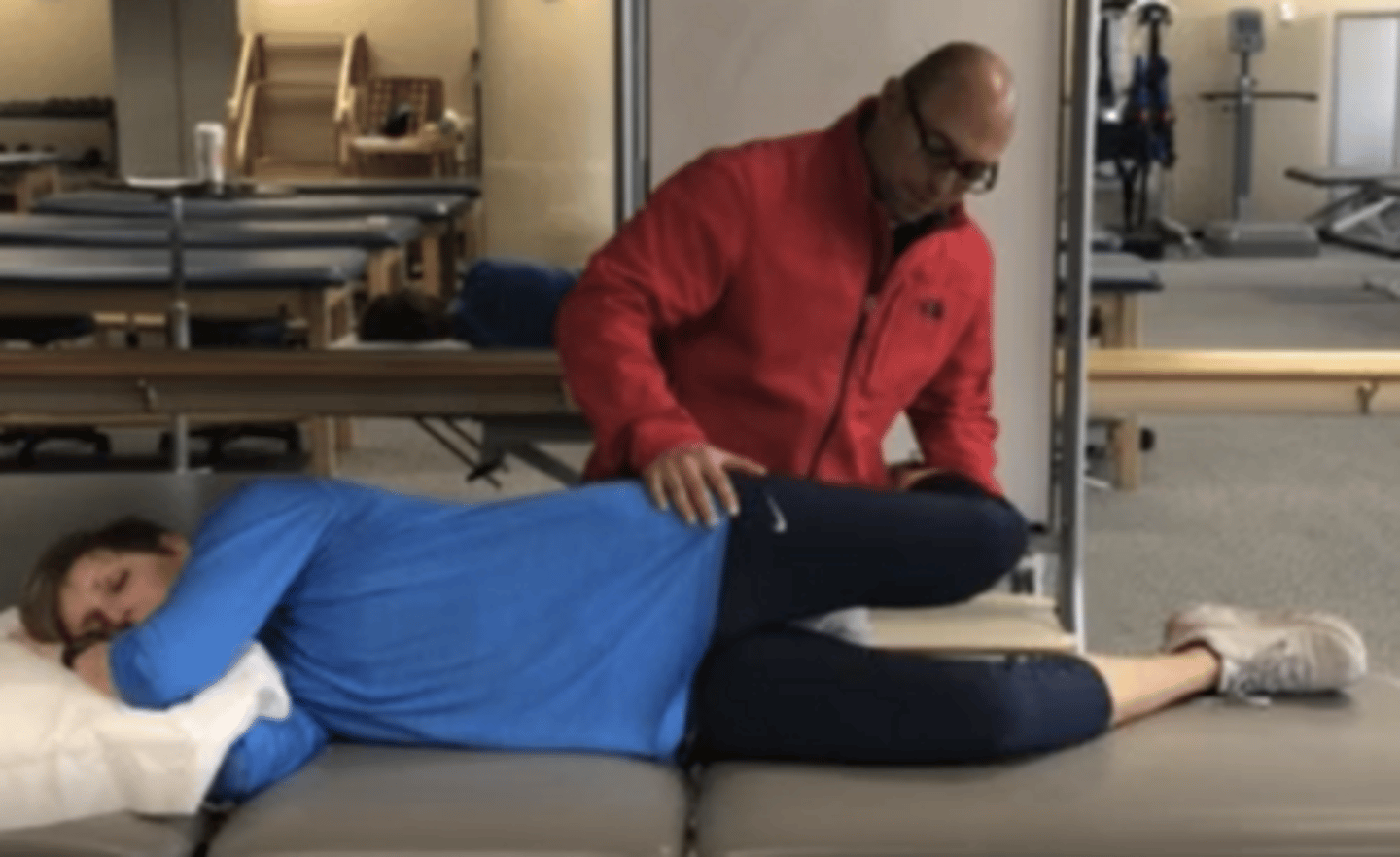
<p>purpose: test for IT band "tightness"</p><p>procedure: </p><p>- patient sidelying with target limb up </p><p>- examiner stabilizes the pelvis with one hand and uses the other to passively flex the knee to 90 and abduct and extend the hip to be in line with trunk </p><p>- the leg is then dropped down into adduction until end point is met</p><p>positive finding: cannot lower leg past horizontal (can't adduct the leg)</p>
7
New cards

noble's compression test

purpose: test for ITB syndrome

procedure:

- patient supine

- examiner passively flexes hip and knee to 90 degrees

- examiner then applies pressure over the proximal prominence of the lateral femoral condyle as the knee is extended

positive finding: concordant pain between 30-40 degree knee flexion
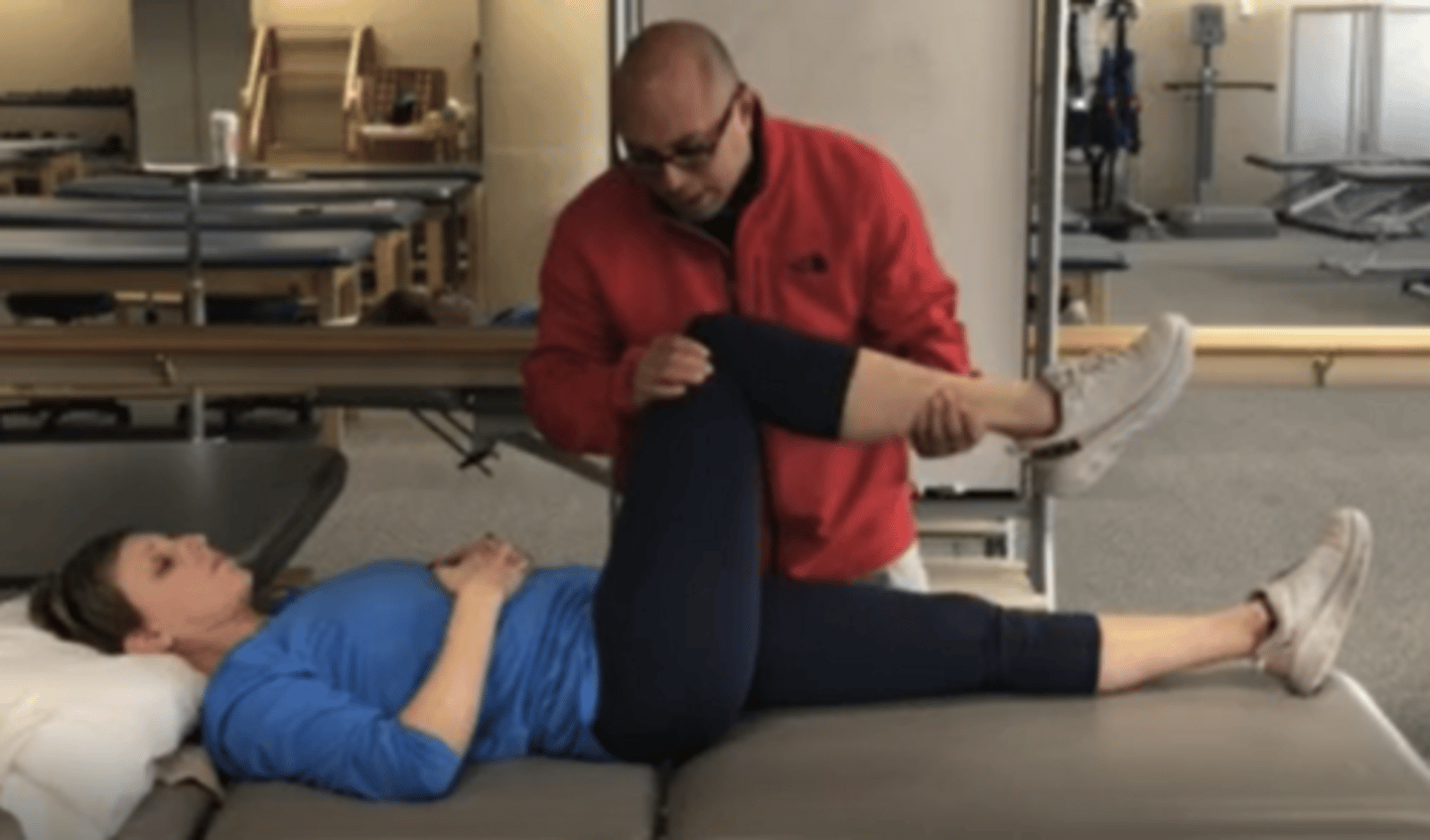
<p>purpose: test for ITB syndrome </p><p>procedure:</p><p>- patient supine </p><p>- examiner passively flexes hip and knee to 90 degrees</p><p>- examiner then applies pressure over the proximal prominence of the lateral femoral condyle as the knee is extended</p><p>positive finding: concordant pain between 30-40 degree knee flexion </p>
8
New cards

patrick's test (FABER)

purpose: test for SI dysfunction

procedure:

- patient supine with the ipsilateral knee in flexion with lateral malleolus over contralateral knee

- examiner stabilizes contralateral ASIS with one hand and applies slight overpressure over ipsilateral knee with the other hand

- inclinometer is placed 2.5 cm proximal to flexed knee to measure angle

- distance between flexed knee and the table is measured using a tape measure

- test bilaterally

positive sign:

intra-articular hip pathology: reproduction of concordant pain

hip OA: angle >60 degrees; asymmetrical tape measure measurement between limbs
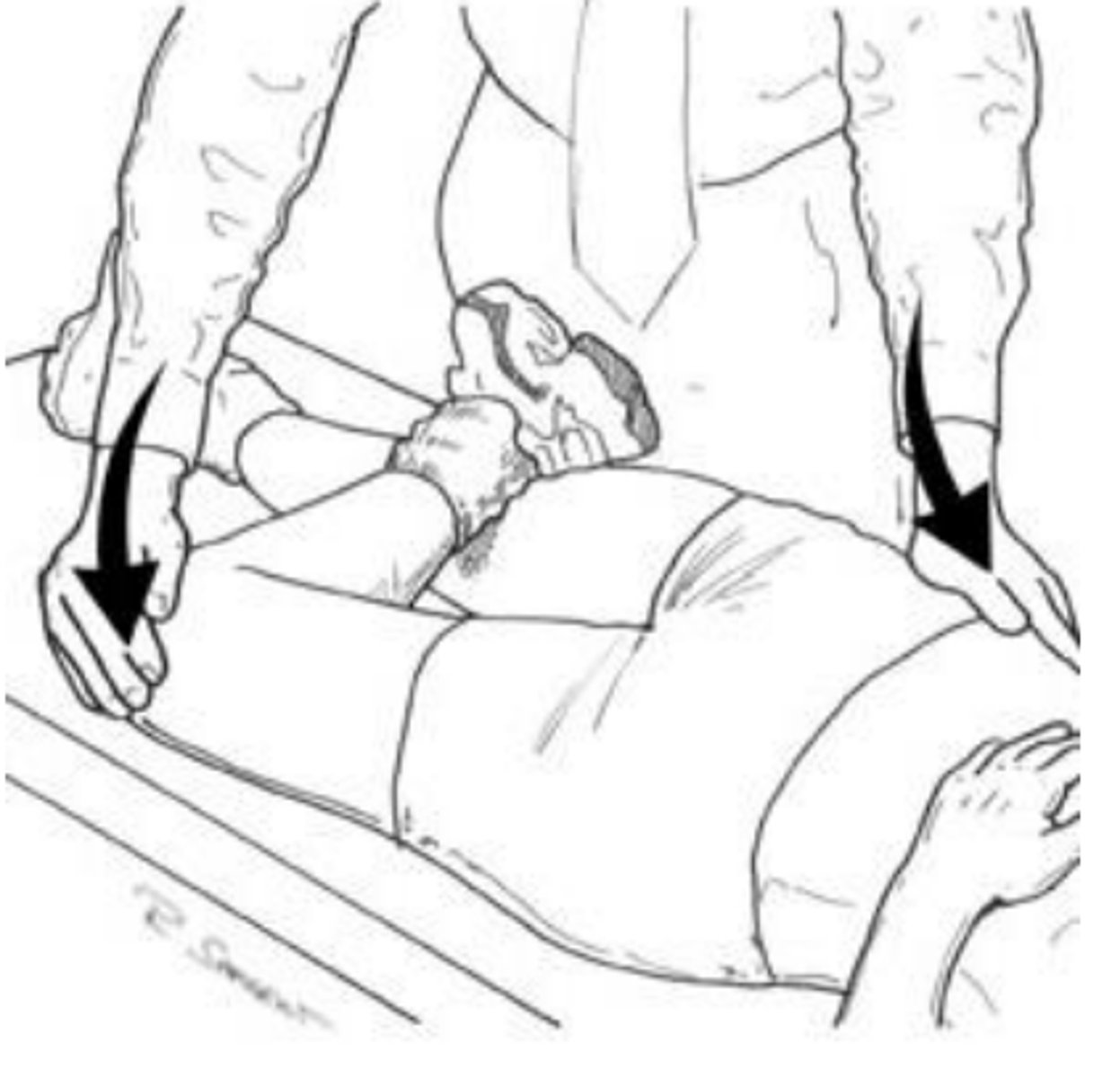
<p>purpose: test for SI dysfunction</p><p>procedure:</p><p>- patient supine with the ipsilateral knee in flexion with lateral malleolus over contralateral knee</p><p>- examiner stabilizes contralateral ASIS with one hand and applies slight overpressure over ipsilateral knee with the other hand</p><p>- inclinometer is placed 2.5 cm proximal to flexed knee to measure angle </p><p>- distance between flexed knee and the table is measured using a tape measure </p><p>- test bilaterally </p><p>positive sign:</p><p>intra-articular hip pathology: reproduction of concordant pain</p><p>hip OA: angle &gt;60 degrees; asymmetrical tape measure measurement between limbs</p>
9
New cards

hip scour test

purpose: test for intra-articular hip pathology

procedure:

- patient supine

- examiner passively flexes hip to 90 and introduces adduction towards opposite shoulder

- examiner then applies an axial load through the femur

positive finding: reproduction of concordant pain
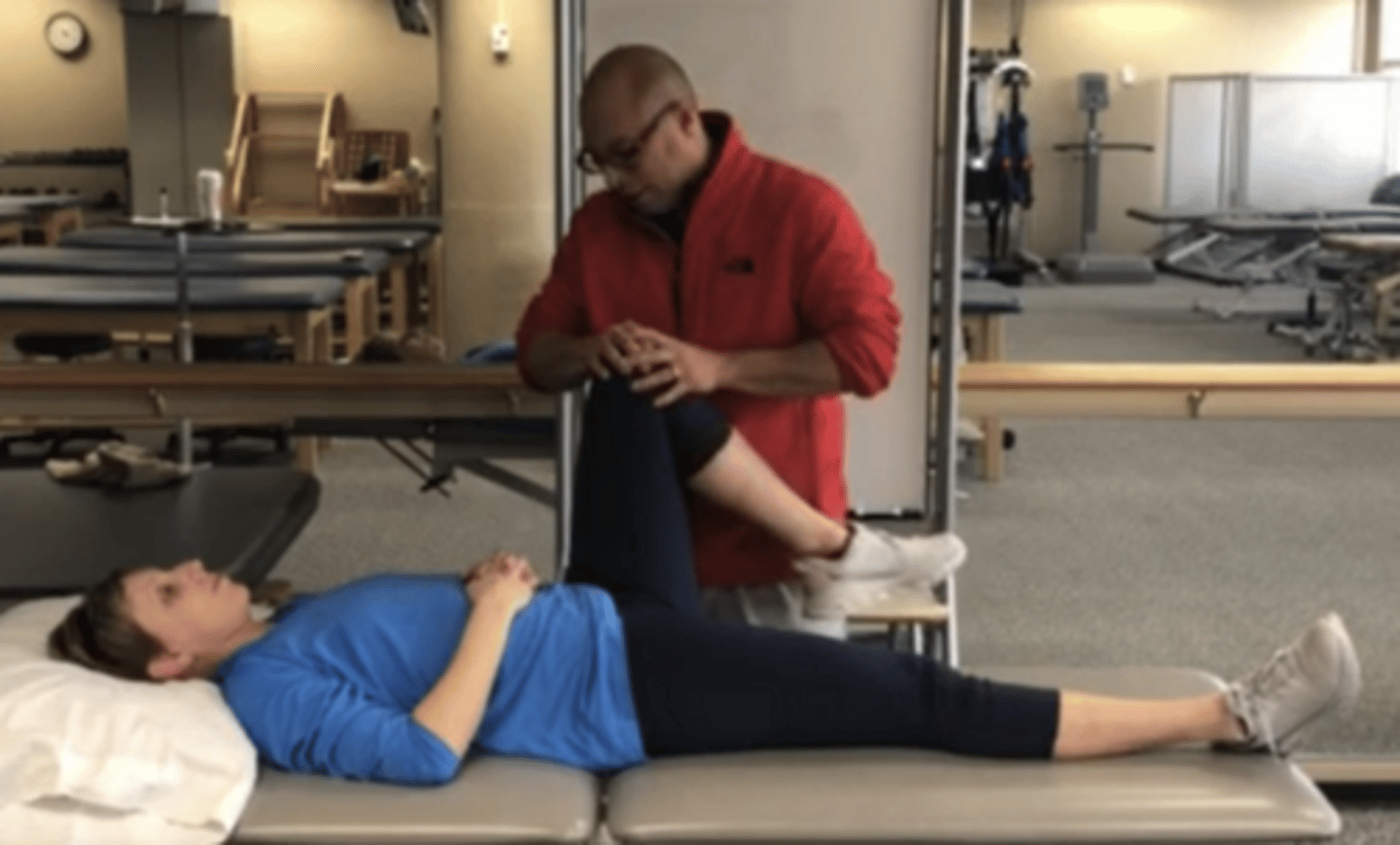
<p>purpose: test for intra-articular hip pathology </p><p>procedure:</p><p>- patient supine </p><p>- examiner passively flexes hip to 90 and introduces adduction towards opposite shoulder</p><p>- examiner then applies an axial load through the femur </p><p>positive finding: reproduction of concordant pain </p>
10
New cards

piriformis syndrome test

purpose: test for piriformis syndrome

procedure:

- patient sidelying with test hip flexed to 60 degrees and knee flexed

- examiner stabilizes the pelvis with one hand and applies a downward pressure to the lateral aspect of the knee with the other hand

- if there is no provocation of concordant pain/paresthesia or sciatica in that position, the examiner can have the patient perform resisted ER with the hip passively placed into IR

positive finding: concordant pain/paresthesia in the buttocks and/or sciatica
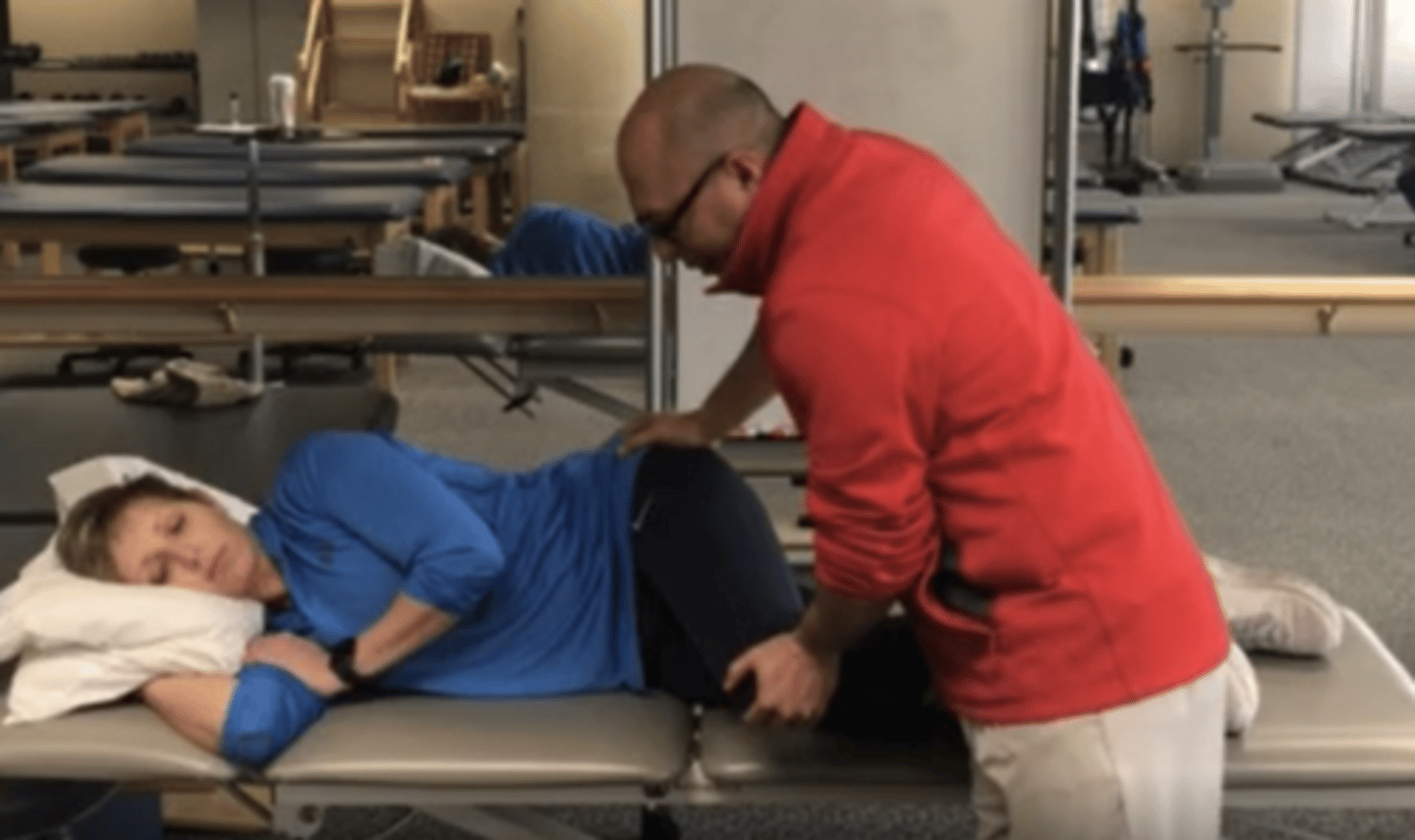
<p>purpose: test for piriformis syndrome</p><p>procedure:</p><p>- patient sidelying with test hip flexed to 60 degrees and knee flexed</p><p>- examiner stabilizes the pelvis with one hand and applies a downward pressure to the lateral aspect of the knee with the other hand</p><p>- if there is no provocation of concordant pain/paresthesia or sciatica in that position, the examiner can have the patient perform resisted ER with the hip passively placed into IR</p><p>positive finding: concordant pain/paresthesia in the buttocks and/or sciatica</p>
11
New cards

craig's test

purpose: test for femoral antetorsion/retrotorsion

procedure:

- patient prone

- examiner palpates posterior aspect of greater trochanter with one hand and uses the other hand to passively IR and ER the leg until the trochanter prominence reaches its most prominent/lateral position

- once the most prominent/lateral position is found, use an inclinometer placed on the medial tibia to measure the angle between the lower leg with respect to vertical

positive finding:

- antetorsion: <8 degrees

- retrotorsion: >15 degrees
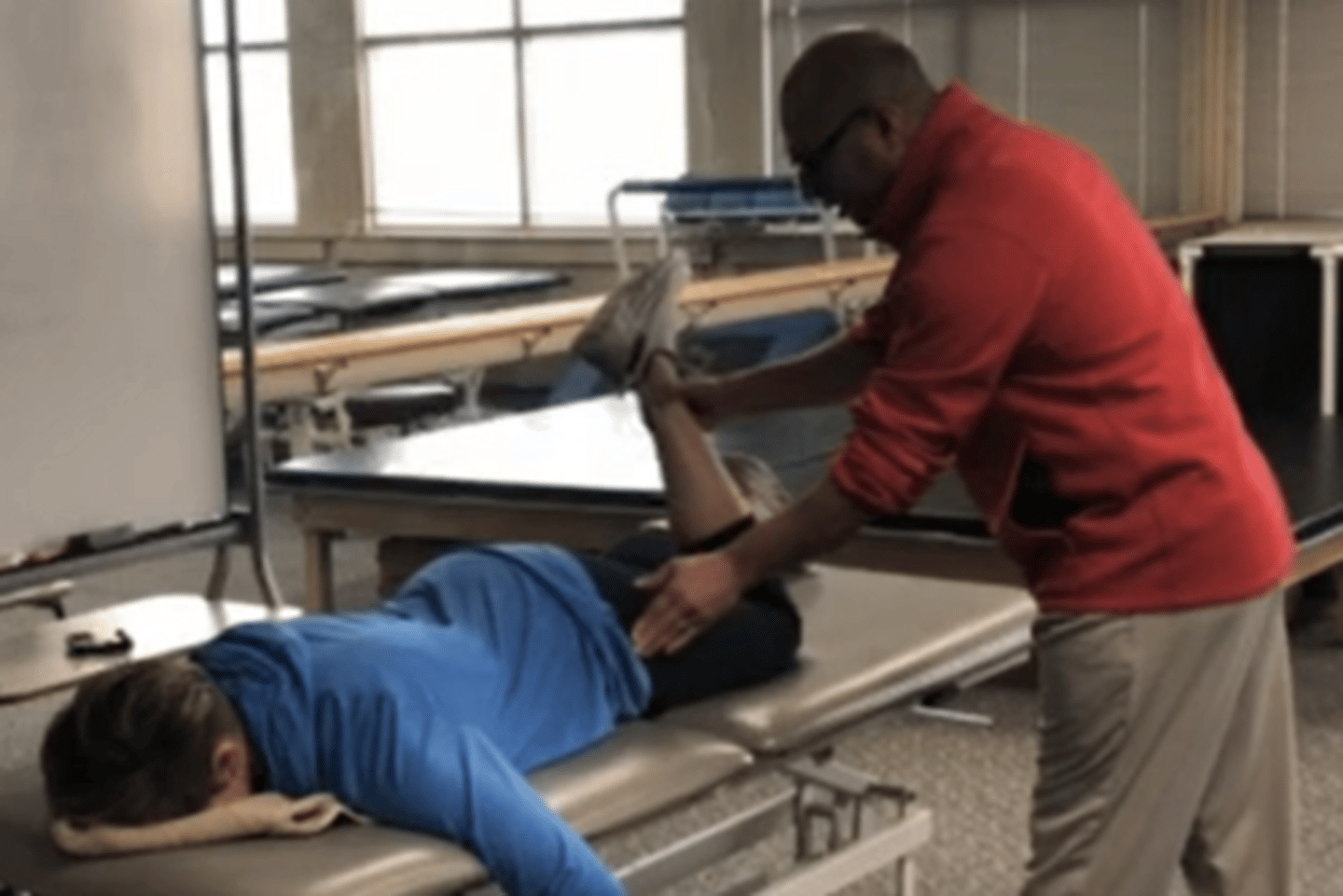
<p>purpose: test for femoral antetorsion/retrotorsion</p><p>procedure:</p><p>- patient prone</p><p>- examiner palpates posterior aspect of greater trochanter with one hand and uses the other hand to passively IR and ER the leg until the trochanter prominence reaches its most prominent/lateral position </p><p>- once the most prominent/lateral position is found, use an inclinometer placed on the medial tibia to measure the angle between the lower leg with respect to vertical </p><p>positive finding:</p><p>- antetorsion: &lt;8 degrees</p><p>- retrotorsion: &gt;15 degrees</p>
12
New cards

fulcrum test

purpose: test for femoral fracture

procedure:

- patient seated at edge of table

- examiner places one forearm under midshaft of test femur and applies a downward force on the distal femur with the other hand

positive finding: pain
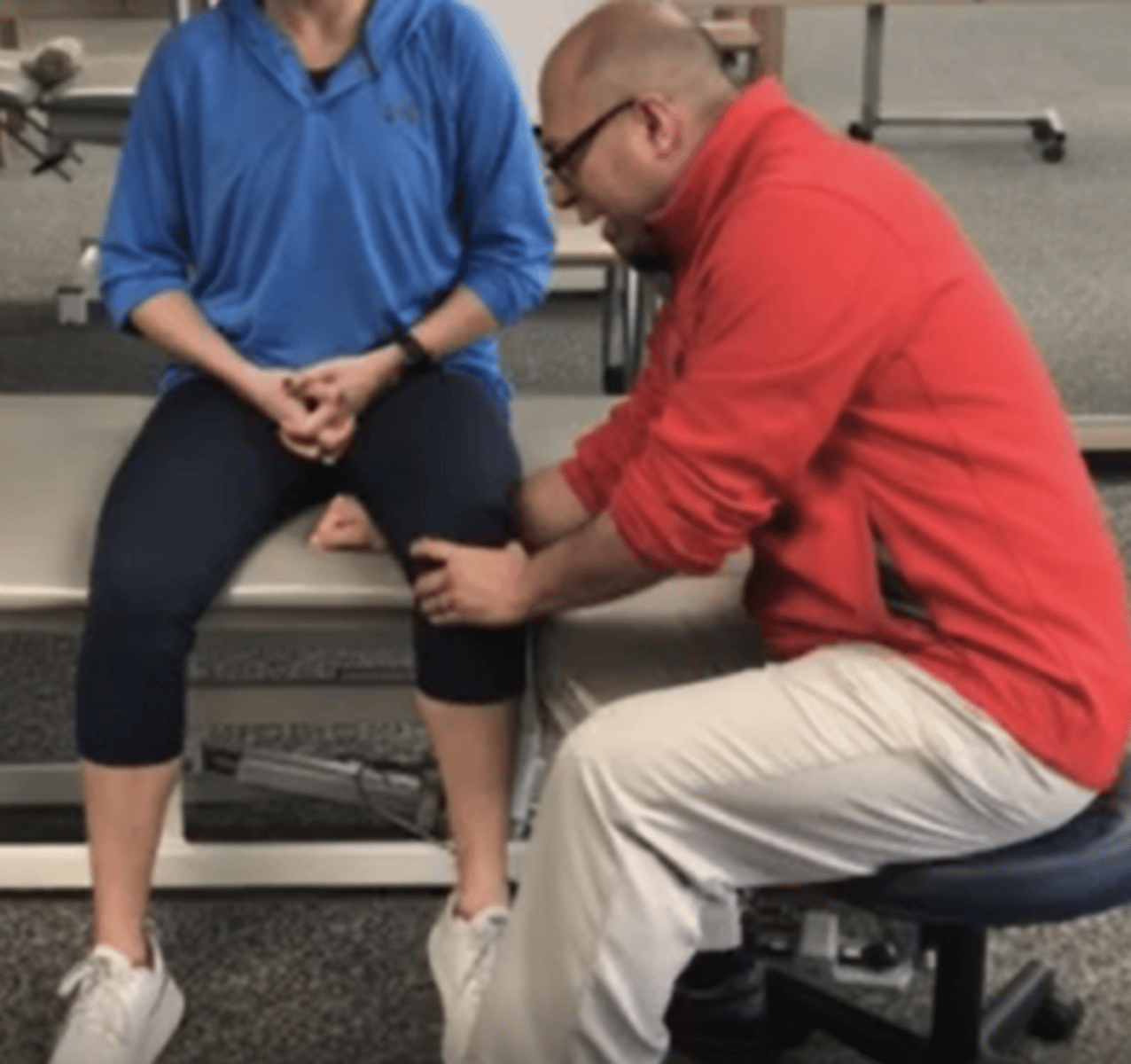
<p>purpose: test for femoral fracture </p><p>procedure:</p><p>- patient seated at edge of table</p><p>- examiner places one forearm under midshaft of test femur and applies a downward force on the distal femur with the other hand </p><p>positive finding: pain </p>
13
New cards

flexion-adduction-IR (FADIR) test

purpose: test for anterior FAI

procedure:

- patient supine

- examiner applies overpressure into hip flexion (90 degrees), adduction, and IR

positive finding: concordant anterior groin pain
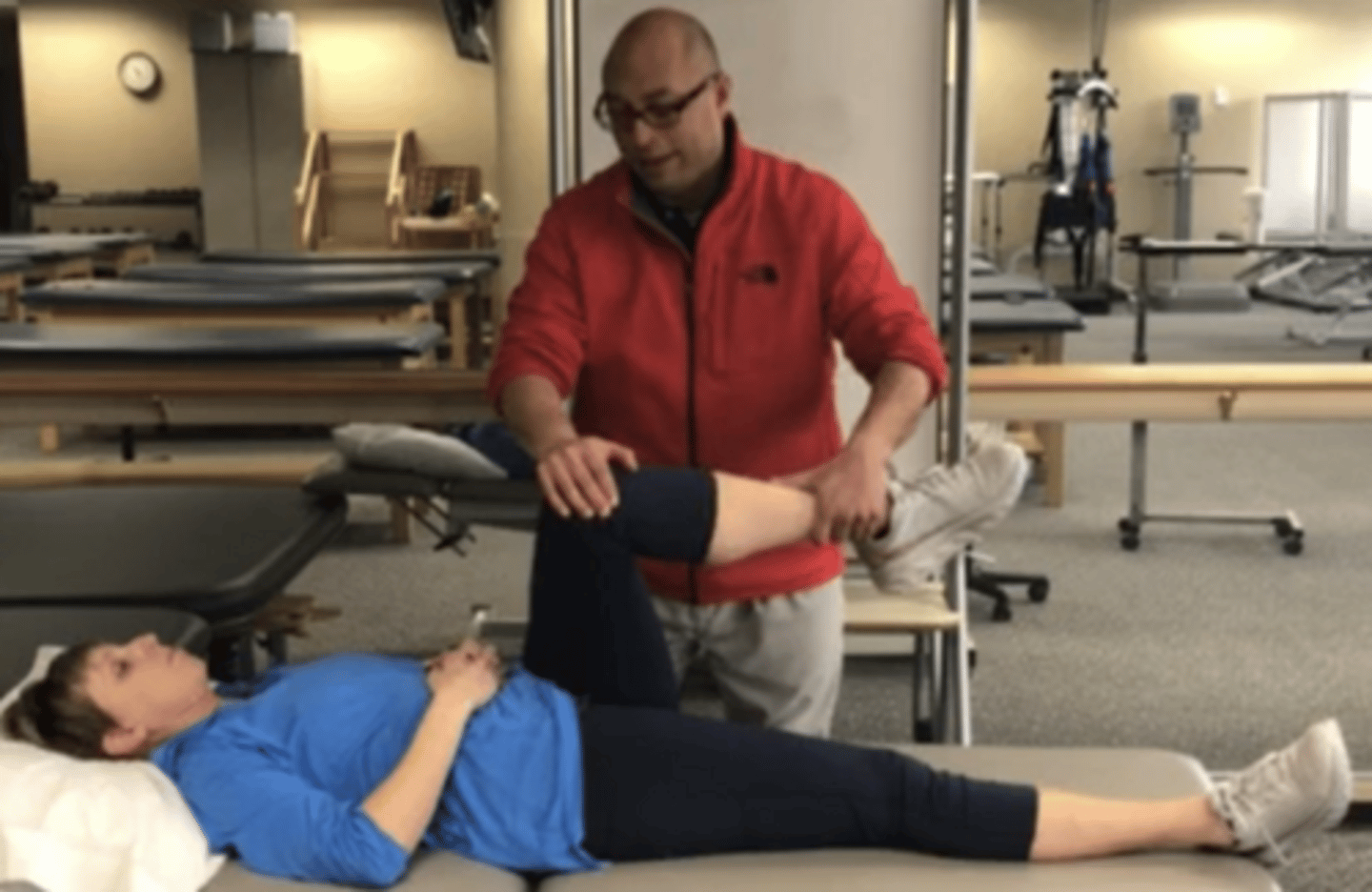
<p>purpose: test for anterior FAI</p><p>procedure:</p><p>- patient supine</p><p>- examiner applies overpressure into hip flexion (90 degrees), adduction, and IR</p><p>positive finding: concordant anterior groin pain </p>
14
New cards

posteroinferior labrum impingement provocation test

purpose: test for posteroinferior labral impingement

procedure:

- patient supine

- examiner passively extends, abducts, and ER target leg off side of table

positive finding: concordant pain and apprehension
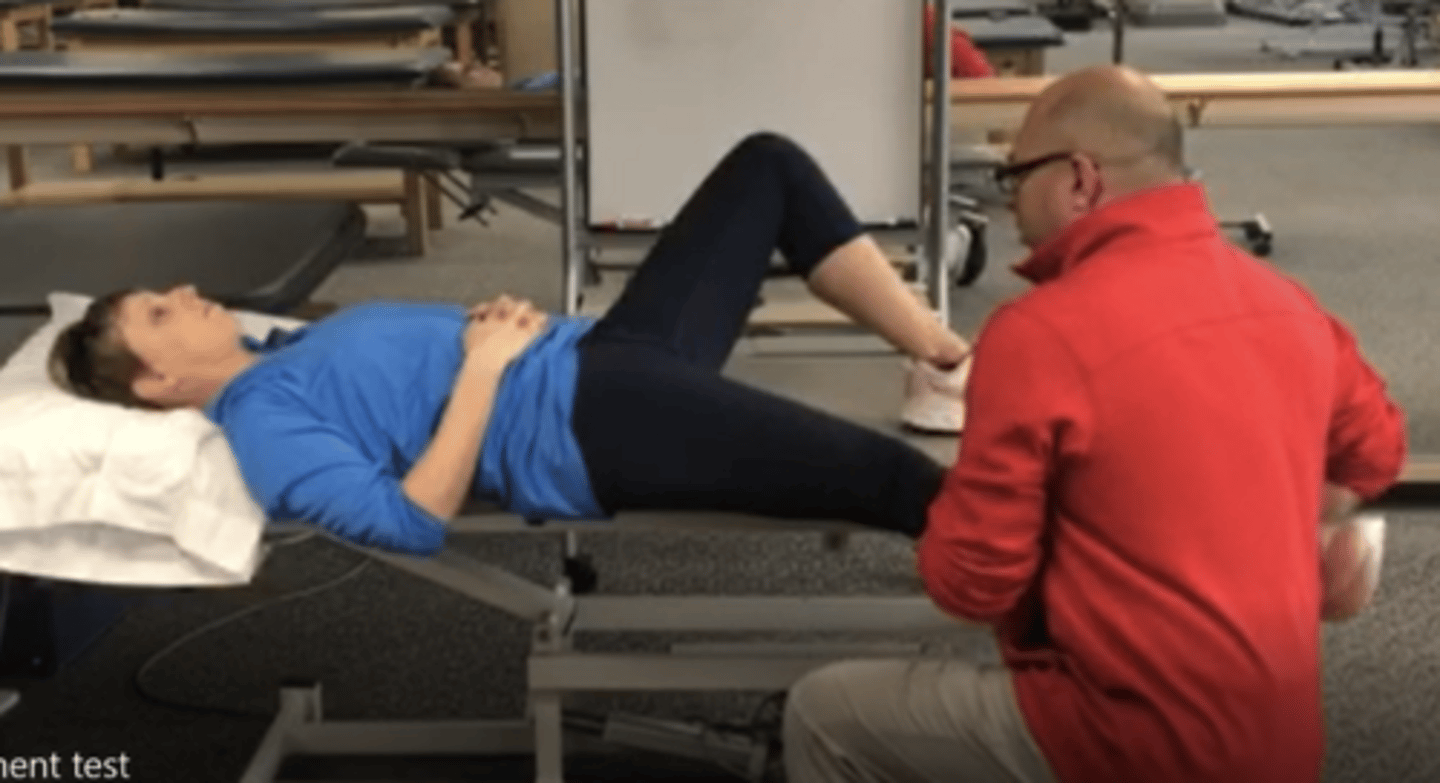
<p>purpose: test for posteroinferior labral impingement </p><p>procedure:</p><p>- patient supine</p><p>- examiner passively extends, abducts, and ER target leg off side of table </p><p>positive finding: concordant pain and apprehension </p>
15
New cards

hamstring syndrome/eccentric provocation test

purpose: test for hamstring syndrome and/or tendinopathy

procedure:

- patient standing flexed over table with both feet flat on ground

- examiner passively lifts symptomatic leg off ground with knee flexed and asks patient to hold it there

- examiner then applies a downward force into knee extension at the ankle which the patient resists (pt lets examiner win)

positive finding: concordant pain and/or symptoms (thigh numbness, tingling)
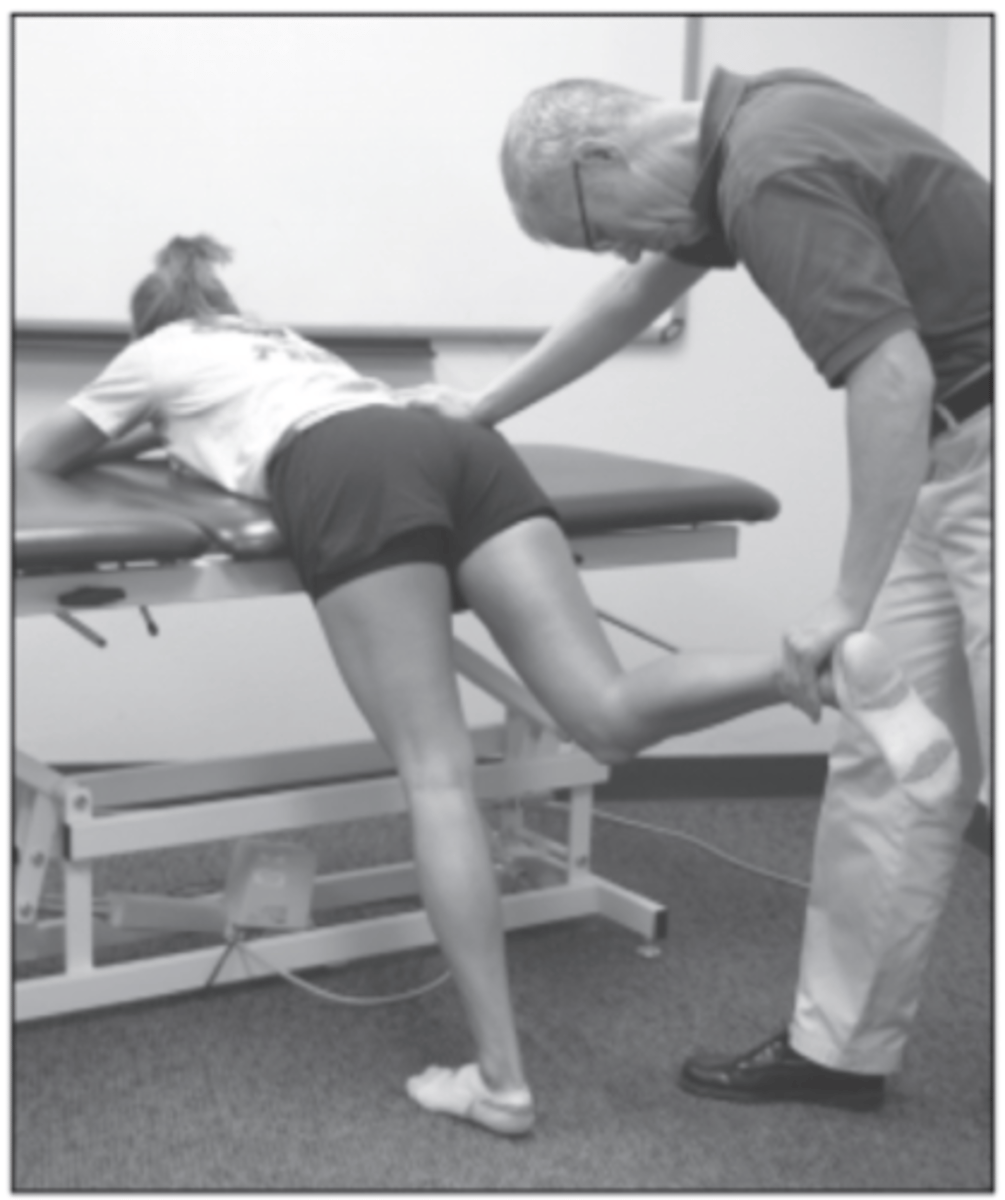
<p>purpose: test for hamstring syndrome and/or tendinopathy</p><p>procedure:</p><p>- patient standing flexed over table with both feet flat on ground</p><p>- examiner passively lifts symptomatic leg off ground with knee flexed and asks patient to hold it there</p><p>- examiner then applies a downward force into knee extension at the ankle which the patient resists (pt lets examiner win)</p><p>positive finding: concordant pain and/or symptoms (thigh numbness, tingling)</p>
16
New cards

abduction-hyperextension-external rotation (AB-HEER) test

purpose: test for anterior capsule instability

procedure:

- patient sidelying with test limb up

- examiner passively abducts the hip between 30-45 degrees with extension and ER

- examiner then applies an anteriorly directed force to the posterior aspect of the proximal femur (near greater trochanter)

positive finding: apprehension, instability, concordant anterior hip pain
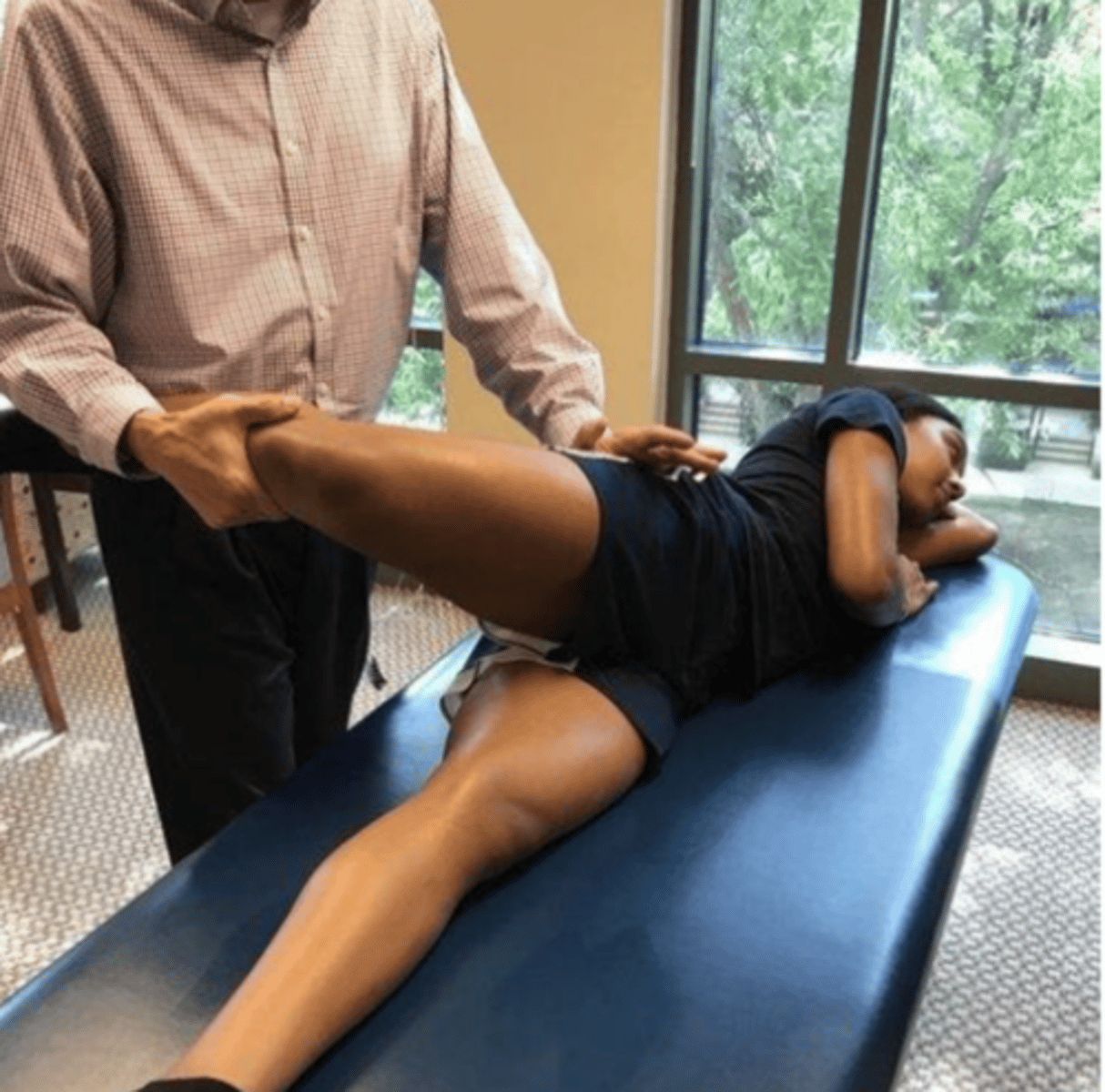
<p>purpose: test for anterior capsule instability </p><p>procedure:</p><p>- patient sidelying with test limb up</p><p>- examiner passively abducts the hip between 30-45 degrees with extension and ER</p><p>- examiner then applies an anteriorly directed force to the posterior aspect of the proximal femur (near greater trochanter)</p><p>positive finding: apprehension, instability, concordant anterior hip pain </p>
17
New cards

adductor squeeze test

purpose: test for groin pain (adductor muscle involvement - selective tissue tensioning)

procedure:

- patient hooklying with hips neutral in ABD/ADD

- examiner places forearm between the knees and patient is instructed to produce a maximal isometric adductor contraction for 5-10 seconds

(can also perform at 0 degrees hip flexion for which examiner resistance is at distal lower leg)

positive finding: reproduction of concordant groin pain
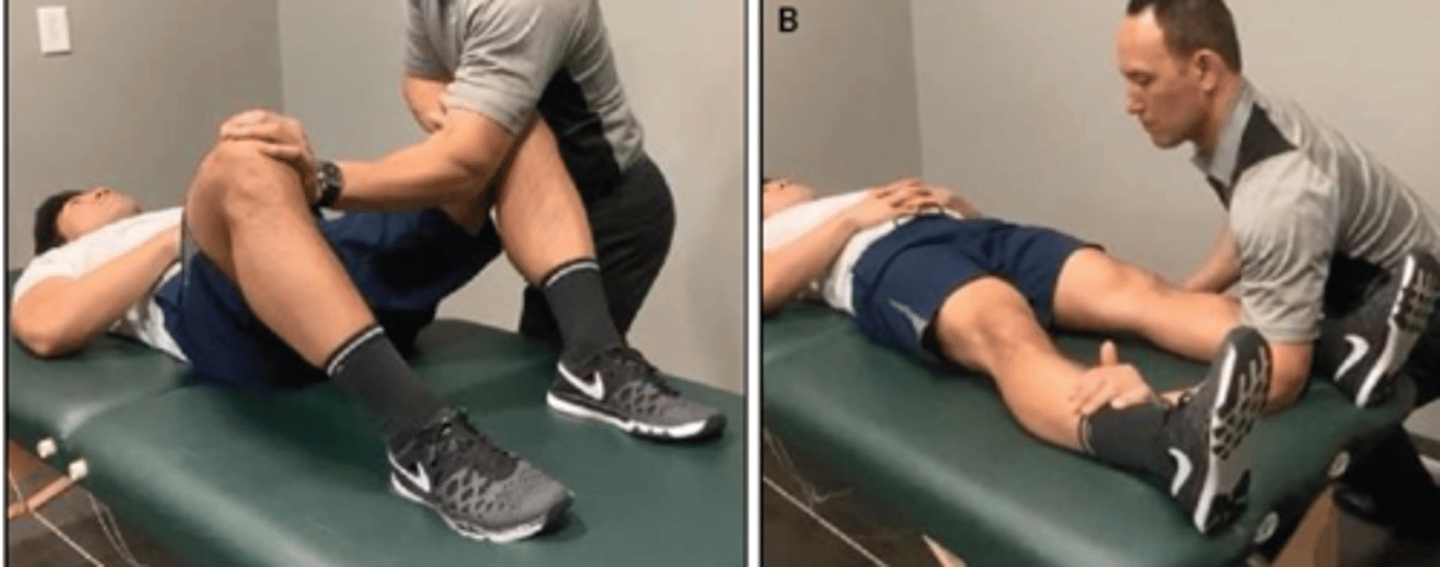
<p>purpose: test for groin pain (adductor muscle involvement - selective tissue tensioning) </p><p>procedure: </p><p>- patient hooklying with hips neutral in ABD/ADD</p><p>- examiner places forearm between the knees and patient is instructed to produce a maximal isometric adductor contraction for 5-10 seconds</p><p>(can also perform at 0 degrees hip flexion for which examiner resistance is at distal lower leg)</p><p>positive finding: reproduction of concordant groin pain</p>
18
New cards

broken wing test

purpose: test for glut tear

procedure:

- patient prone with test leg knee bent 90 degrees

- patient asked to actively extend the the hip and raise the leg off the table

positive finding: ER lag with extension

*high specificity



