Neurulation and Embryonic Development in Vertebrates
 Call Kai
 Learn
Learn Practice Test
 Spaced Repetition
 Match
Match Flashcards
 Knowt Play
1/50

There's no tags or description
Looks like no tags are added yet.
Name | Mastery | Learn | Test | Matching | Spaced | Call with Kai |
|---|
No analytics yet
Send a link to your students to track their progress
51 Terms
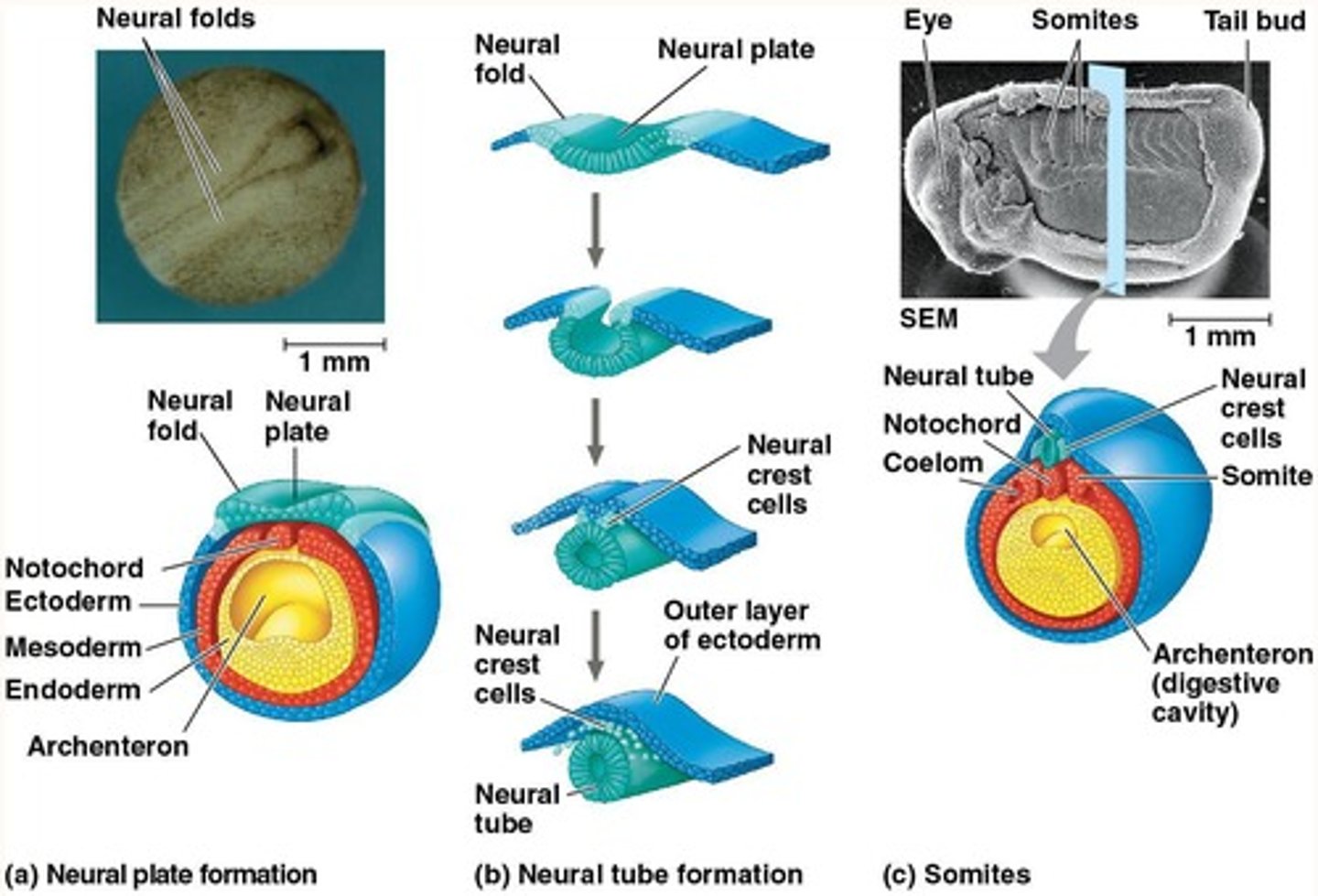
What is neurulation?
The formation of the brain and spinal cord in vertebrates.
What role do mesoderm cells play in neurulation?
They form the notochord, which secretes signaling molecules that cause the ectoderm to form the neural plate.
What structure develops from the neural plate?
The neural tube, which becomes the central nervous system (brain and spinal cord).
What condition can arise if the neural tube does not close properly?
Spina bifida.
What is the fundamental unit of the nervous system?
The neuron.
What are the main components of a neuron?
Cell body, dendrites, and axon.
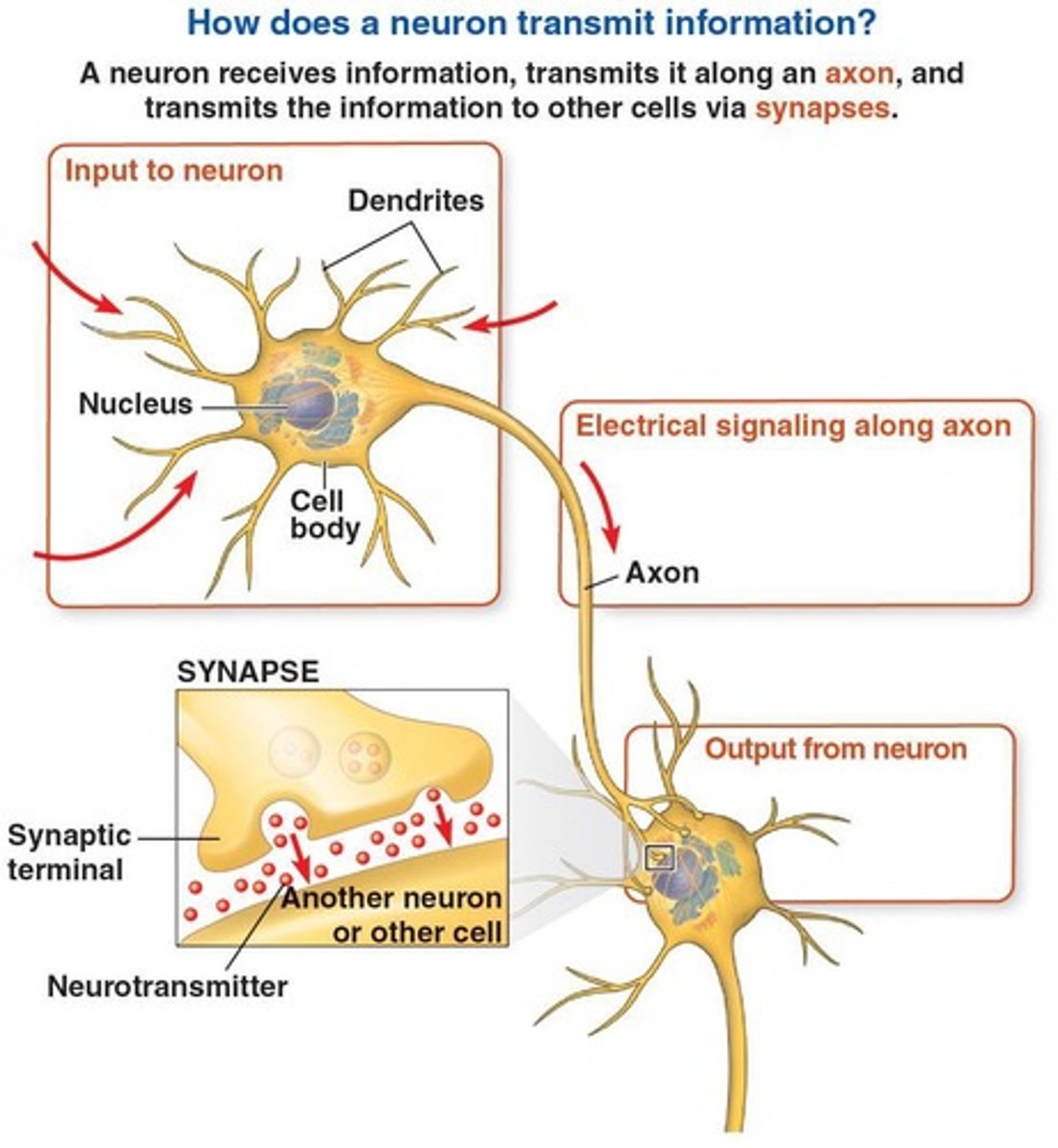
What is the function of dendrites?
They receive signals from other neurons.
What is the role of the axon?
To transmit signals to other cells.
What is a synapse?
The junction between a neuron and another cell.
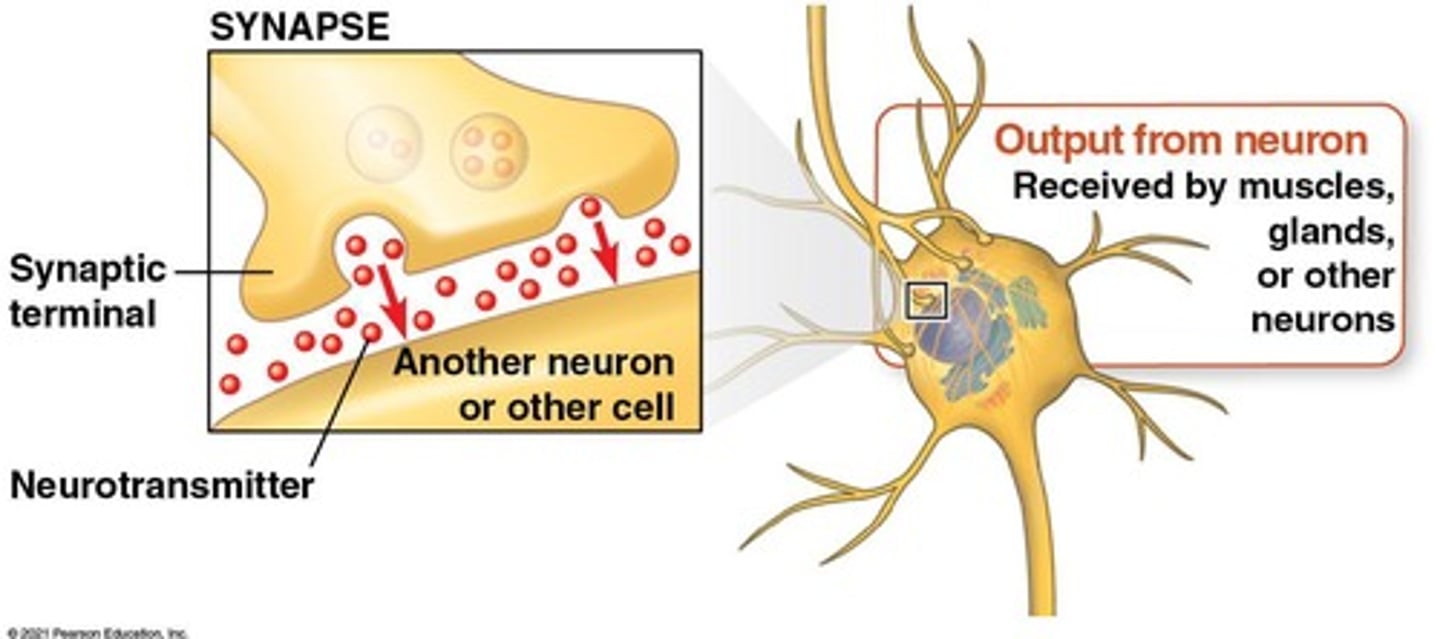
What are neurotransmitters?
Chemical messengers that pass information from the transmitting neuron to the receiving cell.
What are the three types of neurons involved in information processing?
Sensory neurons, interneurons, and motor neurons.
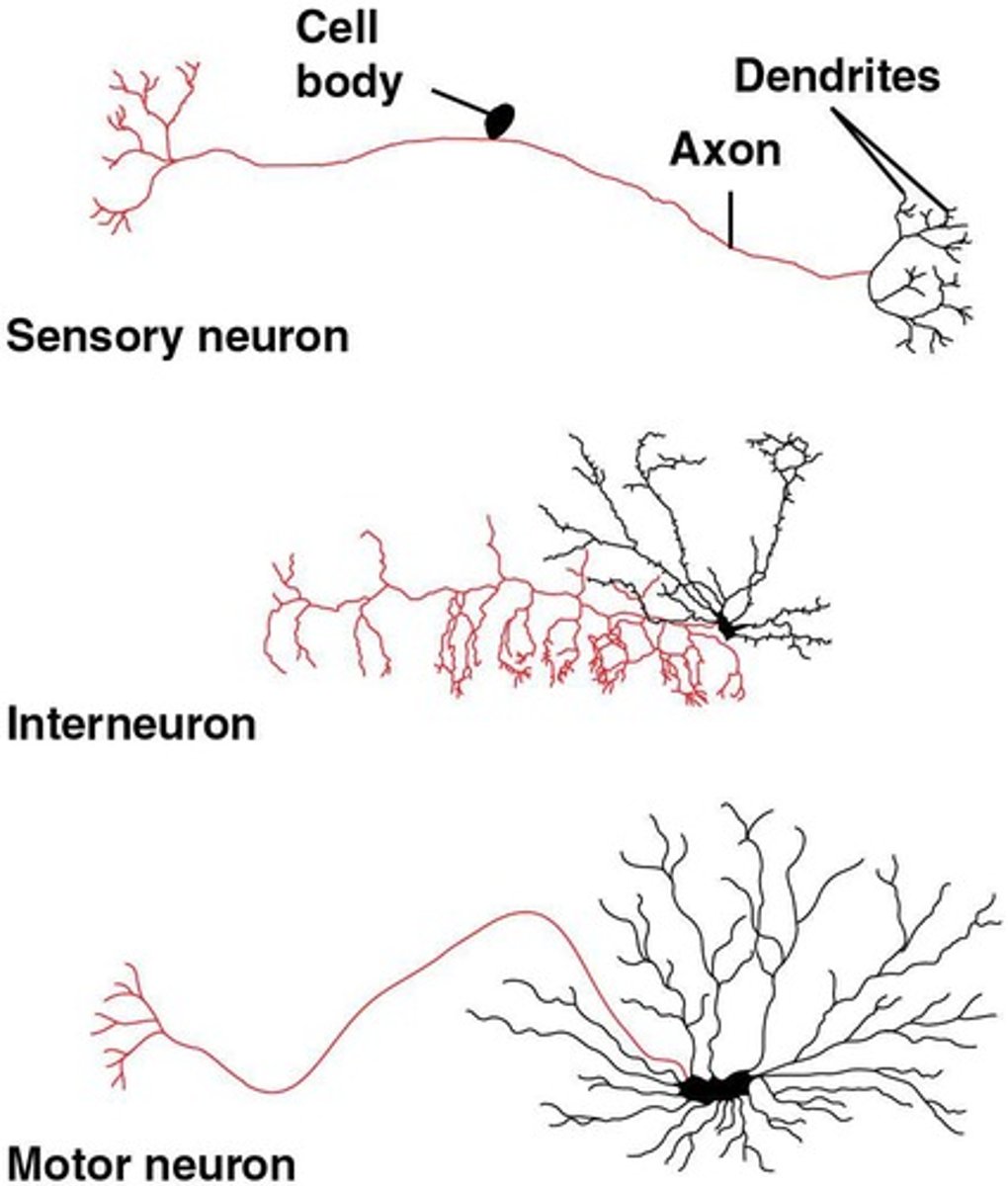
What do sensory neurons do?
Transmit information about external stimuli.
What is the function of interneurons?
To integrate and analyze information.
What do motor neurons do?
Transmit signals to muscle cells, causing them to contract.
What is resting potential?
The membrane potential of a neuron that is not sending signals, typically between -60 and -80 millivolts (mV).
What ions are primarily involved in maintaining resting potential?
Sodium (Na+) and potassium (K+).
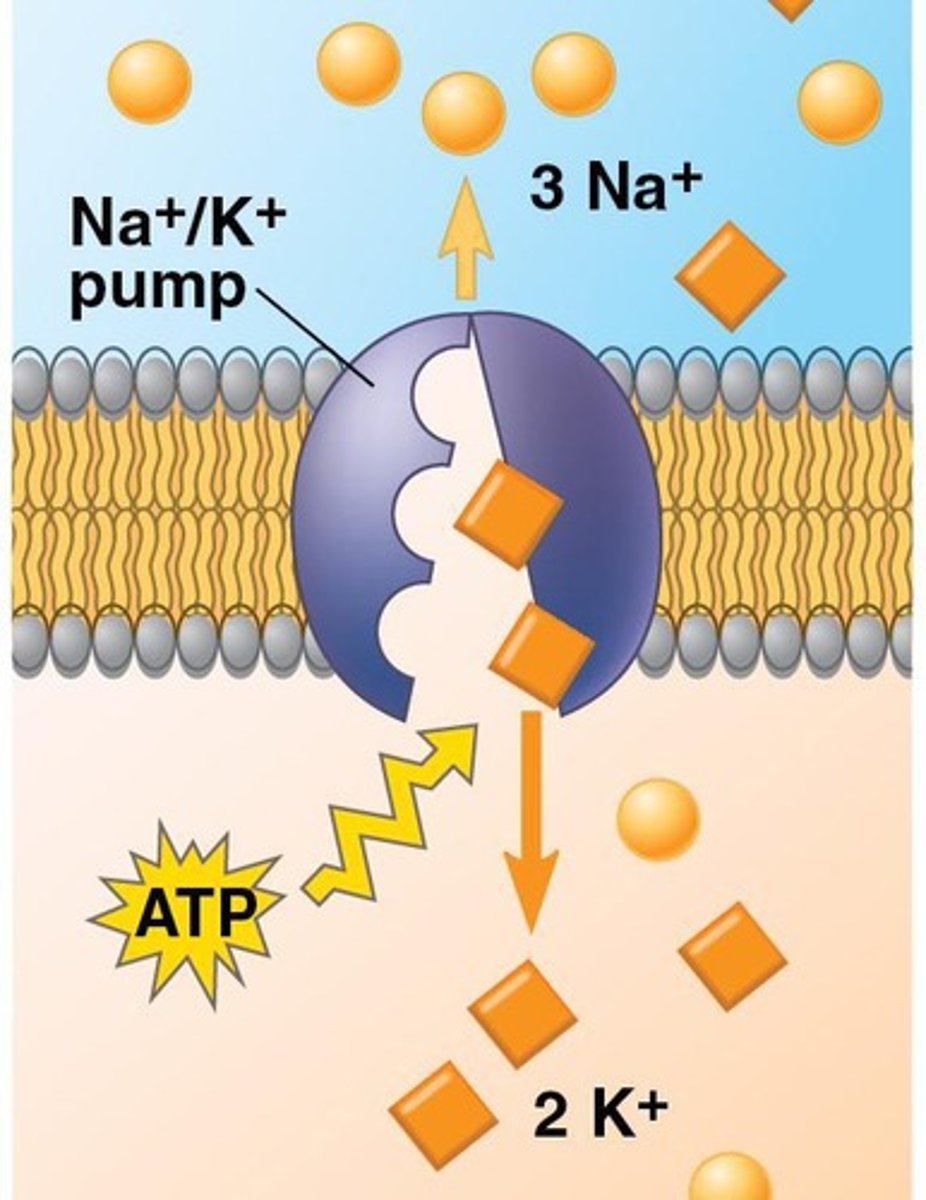
What is the sodium-potassium pump?
A mechanism that maintains ion gradients by pumping 2 K+ ions in for every 3 Na+ ions out.
What is an action potential?
A brief, all-or-none depolarization of a neuron's plasma membrane.
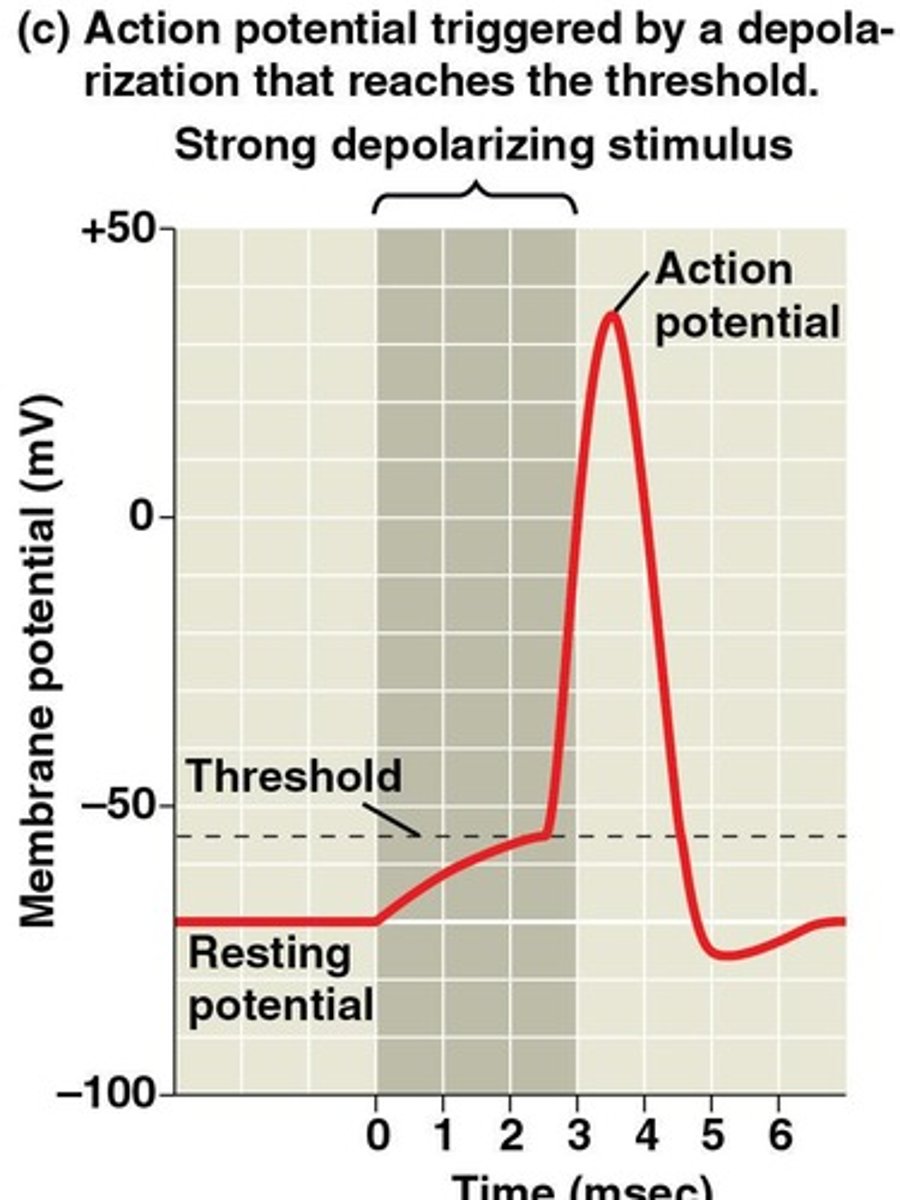
What triggers the generation of an action potential?
A graded depolarization that shifts the membrane potential to threshold (-55mV).
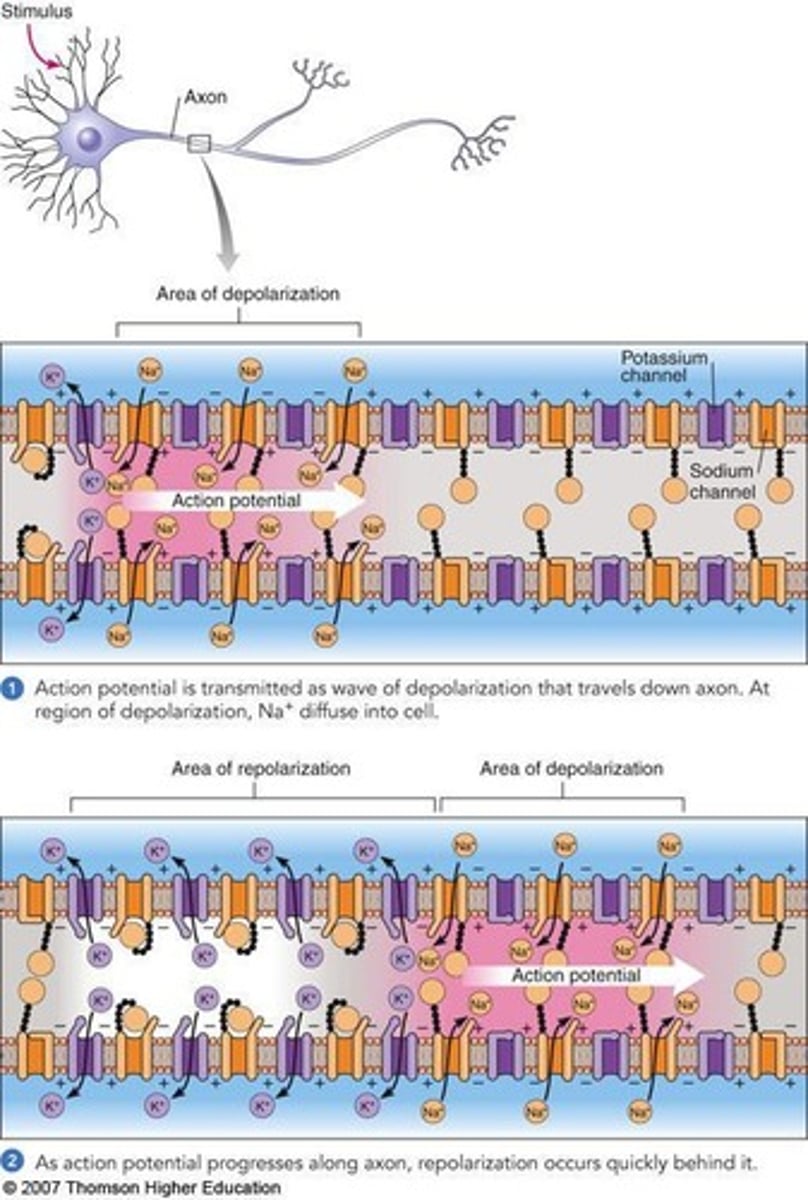
What happens during repolarization?
Sodium channels are inactivated and voltage-gated potassium channels open.
What is saltatory conduction?
The process by which action potentials jump from node to node along myelinated axons.
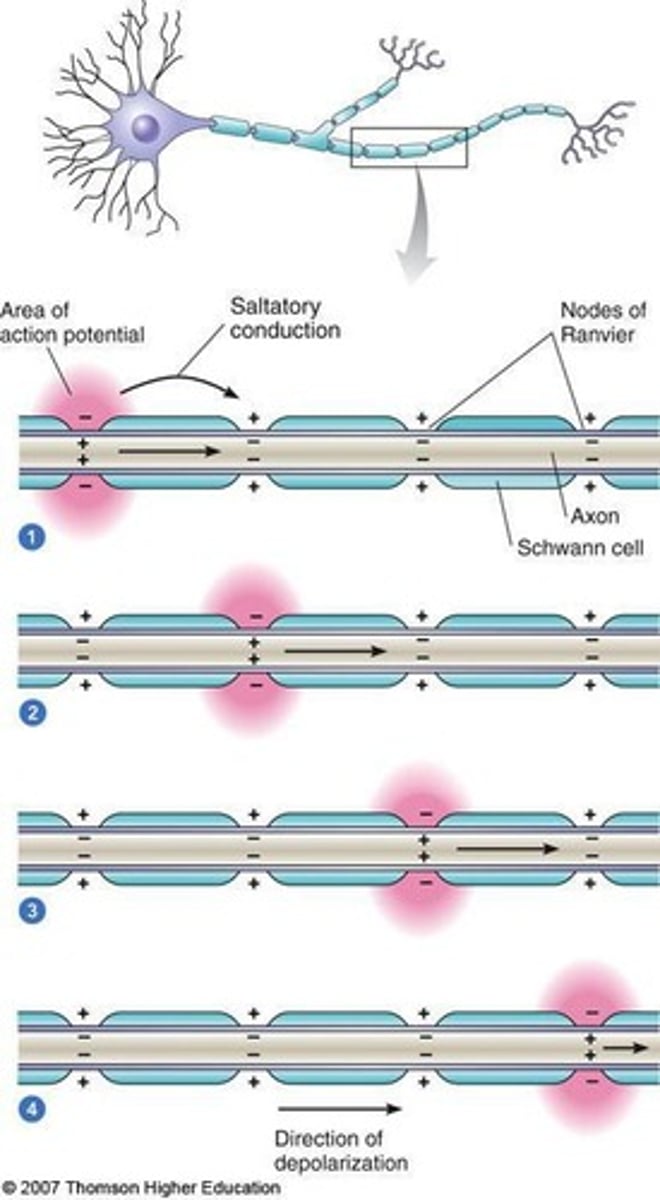
What are the gaps in myelinated axons called?
Nodes of Ranvier.
What is the role of acetylcholine?
Muscle stimulation, memory formation, and learning.
What neurotransmitter is associated with long-term memory?
Glutamate.
What are endorphins?
Neuropeptides that are involved in the perception of pain.
What is the function of nitric oxide (NO) in neurotransmission?
It acts as a neurotransmitter in certain signaling pathways.
What initiates the female reproductive cycle?
The hypothalamus releases GnRH, stimulating the anterior pituitary to secrete FSH and LH.
What occurs during the follicular phase of the ovarian cycle?
Estrogen levels increase, follicles grow, and oocytes mature, culminating in ovulation.
What is the role of the corpus luteum?
It forms after ovulation and secretes progesterone and estrogen to support the uterine lining.
What happens to the endometrium prior to ovulation?
It thickens to prepare for supporting an embryo during the proliferative phase.
What triggers menstruation?
The degeneration of the corpus luteum results in a drop in estrogen and progesterone.
What is conception?
The fertilization of an egg by sperm in the oviduct.
What is a blastocyst?
A ball of cells that implants in the endometrium after cleavage.
What hormone does the embryo secrete to maintain pregnancy?
hCG (human chorionic gonadotropin).
What is organogenesis?
The development of body organs during the first trimester of pregnancy.
What are the three stages of labor?
Dilation, expulsion, and delivery of the placenta.
What is the purpose of contraception?
To prevent the release of gametes, fertilization, or implantation.
What is the acrosomal reaction?
The release of hydrolytic enzymes from the sperm head to penetrate the egg.
What occurs during cleavage?
Rapid cell division without growth, producing smaller cells called blastomeres.
What is gastrulation?
The rearrangement of cells in a blastula into a three-layered embryo called a gastrula.
What are the three germ layers formed during gastrulation?
Ectoderm, endoderm, and mesoderm.
What is the function of the amnion?
It encloses amniotic fluid, providing a protective environment for the embryo.
What is the role of the notochord during neurulation?
It secretes signaling molecules that cause the ectoderm to form the neural plate.
What is the difference between holoblastic and meroblastic cleavage?
Holoblastic is complete division of the egg, while meroblastic is incomplete division.
What is the role of the trophoblast in human development?
It initiates implantation and forms the placenta.
What occurs during the second trimester of pregnancy?
The fetus continues to grow, and the placenta takes over hormone production.
What is the significance of the cortical reaction?
It forms a fertilization envelope to prevent polyspermy.
What is the primary function of the chorion?
It functions in gas exchange between maternal and fetal circulation.
What is the main period of organogenesis?
It occurs during the first trimester of pregnancy.
What happens during the expulsion stage of labor?
The delivery of the baby occurs.
What is the main purpose of the IUD?
To prevent implantation of a fertilized egg.