Lecture 16-23: CL112 Exam3 real
 Call Kai
 Learn
Learn Practice Test
 Spaced Repetition
 Match
Match Flashcards
 Knowt Play
1/309

There's no tags or description
Looks like no tags are added yet.
Name | Mastery | Learn | Test | Matching | Spaced | Call with Kai |
|---|
No analytics yet
Send a link to your students to track their progress
310 Terms
by the 12th century bc, the eastern world was becoming
unstable and egypt was attacked by the “sea peoples”
rameses III had to defend egypt against these invaders
battle in the delta c 1174bc
pharaoh tricked sea people into
the delta and ambushed them
we know that minoans/myceneans were over seas traders and
we have a small number of illustrations but no accounts of naval actions
at the end of the “greek dark ages'“ , greece reappreaed as a number of
city states, prominent among them Athens and Sparta
the athenian become a major sea power
their battle ship the trireme (3 rows of oras)
for fighting (Athenian) :
a. boarding
b. but main weapon: bronze ram
grees vs persians in the early 5th century (400)
major naval battle at salams
who was defeated at the battle of salams
perisians by greek tactics
punic wars was between
rome and carthage
what happened in the first war duing the punich wars
a. romans had a new invention - the corvus (turns naval battle into land battle)
b. major naval battle at ecnomus
corvus (“crow”)
tool used by the romans, a spiked boarding bridge
major naval battle at ecnomus
off the coast of sicily - in 256 bc - perhaps the biggest naval battle of the ancient world and major carthaginian defeat
byzantines mantained a fleet using
smaller, faster craft 0 the dromon (“runner”)
byzantines also has a terror weapon
“greek fire”
in the middle ages in the west, war at sea
a. initial by merchants ships
b. as land battles - boarding tactics
with the coming of gunpowder, boarding still used but a new major tactic was firepower
standing off an enemy ship and attacking w cannon broadside
by the early 19th c,
steam would become a potential replacement for sails
nemesis
1st steam ship (w a iron vs wooden haul)
1859 - naval arms race began
a. french “la glorie”
b. vs english HMS warrior
both french “la glorie” and english HMS warrior
both steam + iron hulls (much stronger than wood)
in the US in the civil war we see
a. USS monitor vs
b. CSS virginia
both USS monitor and CSS virginia
both had w iron hulls
*the monitor has a revolving turret
but invention progression will bring one a new arms race in the
early 20th c
1763
French has lost the 7 years war (in American- the French and Indian in war
France had lost more than Canada (New France)
A. Influence on India
B. Islands in the Caribbean (sugar)
This British victory cost the British
Huge amounts of borrowed money, how are they going to pay it back
The govt thought
North American colonies, since we freed them from French attacks
From the 1650s
The London govt had taxed and tried to control trade in/with the colonies
What was the problem with this approach?
A. Colonies mostly rules themselves
B. But big tax issues came from parliament at which colonies had no representation
Govt in 1760
Began to produce a series of acts (laws) taxing various colonial commodities
Govt expected colonies to also pay for
Garrisons
Before the state police
The government used the army → so colonies saw soldiers saw govt enforcers
Colonies resisted
A. Refusing to buy taxed goods
B. Smuggling
In response the govt
Dropped some taxes, tried others (showed inconsistency and weakness)
1768
Govt sent troops to Boston (what they believed to be a trouble center)
March 1770
Trouble in Boston w soldiers
A. “Massacre”
The govt still persists in taxation but
Now its tea
Dec 1773 the “Boston tea party”
Response to Boston tea part:
A. The govt closed the port of Boston
B. Abolished local govt - sent in a military governor
Locals had been reading French govt Philosophy
A. People should govern themselves
B. They should be able to change govt
Govt tried military pressure which lead to
Open conflict in April 1775 (Brit defeat)
Brit besieged in Boston from
April ‘75 - march ‘76 (when they left)
They would rest to NY in
July ‘76
America fled to Pennsylvania but had 2 little victories
Trenton and Princeton (showed that the cause was not dead)
The capture of a British army at Saratoga in late 1777 which brought
The possibility of American victory to minds of the FRENCH
The French had made a treaty with
Americans - and provided ships and soldiers
The British (out the war)
Abandons the colonies in 1783
That victory had brought French closer to bankruptcy
Debts from Louis XIV who died in 1718
French tax structure based upon
Social structure - 3 estates system
3 estates system
1st estate church 1%
2nd estate nobles 2%
3rd estate everyone 97%
Another problem with the french, no legislature
They had a king = the govt
Summer 1789
The estates general called - supposedly to advise the king (which failed)
Because of this Paris
Revolted, capturing the kinds fort (the bastille)
3rd estate formed its own
Govt - the National Assembly - to give France a constitution
Louis XVI became “citizen king” until
He tried to run away, then was caught and gradually stripped of his power
After he was Louis XVI was caught
Put on trial and execute in Jan 1793 (executed as a traitor)
France moved towards
A. A war w/ Europe
B. Internal struggles leading to the committee of public safety - which arrested and killed at least 40,000 people
Until committee overthrow in July 1794
And thing calm down - although war w Europe countries
early in the west
people wrote about war
only later Greco-Roman times did people begin to
write how-tos - how to wage war
youll recall that Morris of Nassau (c 1600s) then read those earlier books and
developed the Dutch System based in part on Roman tactics
as technology changed, so do
tactics
by about 1700,
pikes were rapidly disappearing - muskets w/ bayonets were becoming the norm
necessary to develop new drills which:
a. mass muskets
b. allow muskets to fire in a carefully organized way (in part to conserve ammunition)
major decisions were being made like
how deep should units be? 3 ranks? more?
some other major questions were:
a. how to move men on an doff battlefields?
b. what to do about enemy cavalry?
three major formations develop:
column (on and odd the battlefield)
line (on battlefield)
square (against cavalry)
some countries in the early 18th c, begin to
add skirmishers - light infantry - for scouring and for breaking up enemy formations
by the napoleonic ear (1790s-1820),
everyone developed light infantry - trained to fight independently of lines (often in pairs)
cavalry also diversified
a. light cav
b. mounted infantry (commonly called dragoons)
c. heavy cav (descendants of old gendarmes)
artillery is changing
a. old bombards - for sieges
b. in Renaissance began to appear on battlefields
in 18th c, they began to become
standardized
napoleon born 1769, was trained as an
artillery man
then came 1789 and the revolution was
hard on officers (most of whom were nobles) so the army and navy lost much of its command structure
in 1792, most of europe opposed
france and attacked which had to produce bigger armies in a hurry
two part answer to needing bigger armies
a. conscription (the draft)
b. mixing 1 old roiyal unit w 2 new draftee units = demibrigade (old = whites) (new = blues)
to use these new draftees effectively - a new formation - attack column
a. mass of men marching w drumbeat towards the enemy
b. meant them to shake out into longlines
to help the attack
close up artillery
nap made reputatation initially by using
artillery to drive out bristish and spain ships from the harbor of Toulon (1793)
nap successful in italy in 1796 - so
when he proposed to invade egypt, govt agreed (1798)
nap returned to france as part of a coup and became
a. one of 3 consuls
b. the only consul
c. emperor (1804)
nap went on to dominate much of europe but 2 mistakes:
a. invading spain (1808)
b. invading russia (1812)
nap lost in spain and russia and eventually was send back to france:
where he was forced to abdicate, exiled to the tiny island of elba
Nap was exiled to
elba…
in march 1815, nap escaped and
began rebuilding his armies
nap tries to make a duel w his enemies -
which they reject, so he his to fight
naps plan:
a. attack weakest enemy armies
prussians
brit
b. to do so, march north, leaving other troops to watch over invasion routes
step one of nap’s plan seems to go well -
he defeats prussians - but has to make sure that they stay for from brit - he detaches 1/3 of his army to prevent this
wellington picked battlefield
a. long ridge - which he could conceal troops behind
b. set up walled forms in front as mini-fort- to slow French attacks
nap always has to worry about the prussians appearing
on his right
but he negins w an attack on his left to try to
focus wellington’s attention there
frontal attacks fail and nap decided to rely on his artillery, then
final infantry assaults - which failed and nap had to flee the battlefield (and the prussians arrived)
so, nap finally gone (died 1821-
will warfare continue to change?
what will happen to
column, line, square?
the area of waterloo - an area so often fought over that it became known as
“the cockpit of europe”
in the early 18th c,
the duke of marlborough, fighting the armies of louis XIV, had to deal w allies - the dutch in particular - the brit govt’s representative = charles viscount townshend (“turnip”)
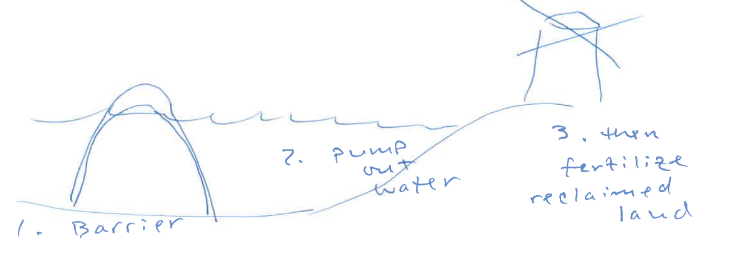
much of netherlands = land reclaimed from north sea by the “polder system”
barrier
pump out water
then fertilize reclaimed land
townshend admired and used dutch methods in eastern england townshend made a
reputation for these methods
but the real money came not from agriculture,
but from sheep
since the middle ages a major wealth - producer in england =
wool