DNA Structure, Function, and Replication: Key Concepts for Biology
 Call Kai
 Learn
Learn Practice Test
 Spaced Repetition
 Match
Match Flashcards
 Knowt Play
1/206

There's no tags or description
Looks like no tags are added yet.
Name | Mastery | Learn | Test | Matching | Spaced | Call with Kai |
|---|
No analytics yet
Send a link to your students to track their progress
207 Terms
What does DNA stand for?
Deoxyribonucleic Acid
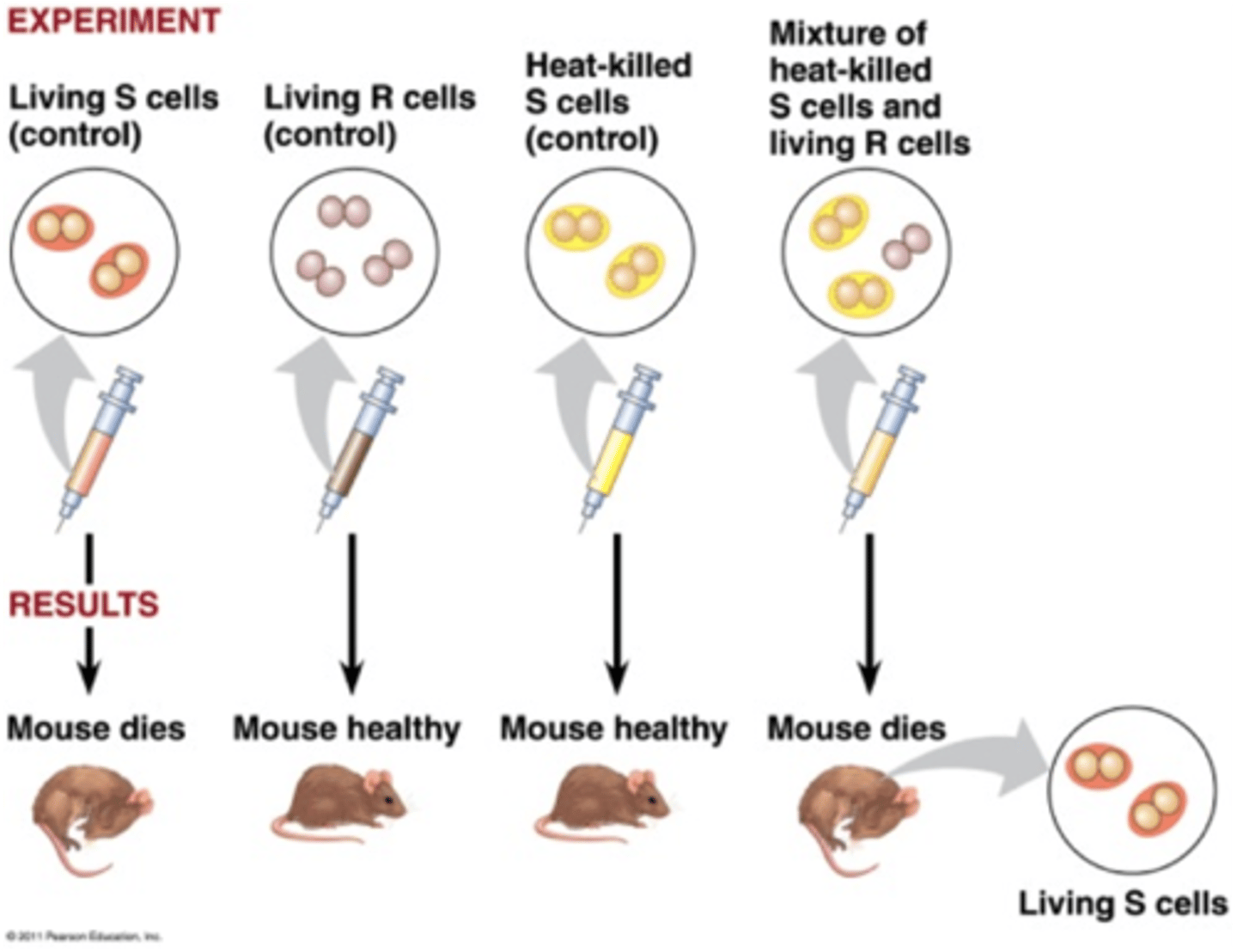
Who conducted the experiment that first demonstrated transformation in bacteria?
Frederick Griffith in 1928
What are the two strains of pneumonia bacteria used in Griffith's experiment?
S (smooth) and R (rough) bacteria
What characteristic does the S strain of bacteria have?
It is virulent, has a protective capsule, and appears smooth in culture.
What happens to R bacteria when mixed with S bacteria according to Griffith's conclusions?
Harmless R bacteria become virulent through a process called transformation.
What did Oswald Avery discover in 1944?
DNA was the material responsible for transformation in bacteria.
What was the key finding of the Hershey-Chase experiment?
DNA of viruses was injected into bacterial cells, confirming that DNA is the genetic material.
What are the three main roles of DNA?
Storing, copying, and transmitting genetic information.
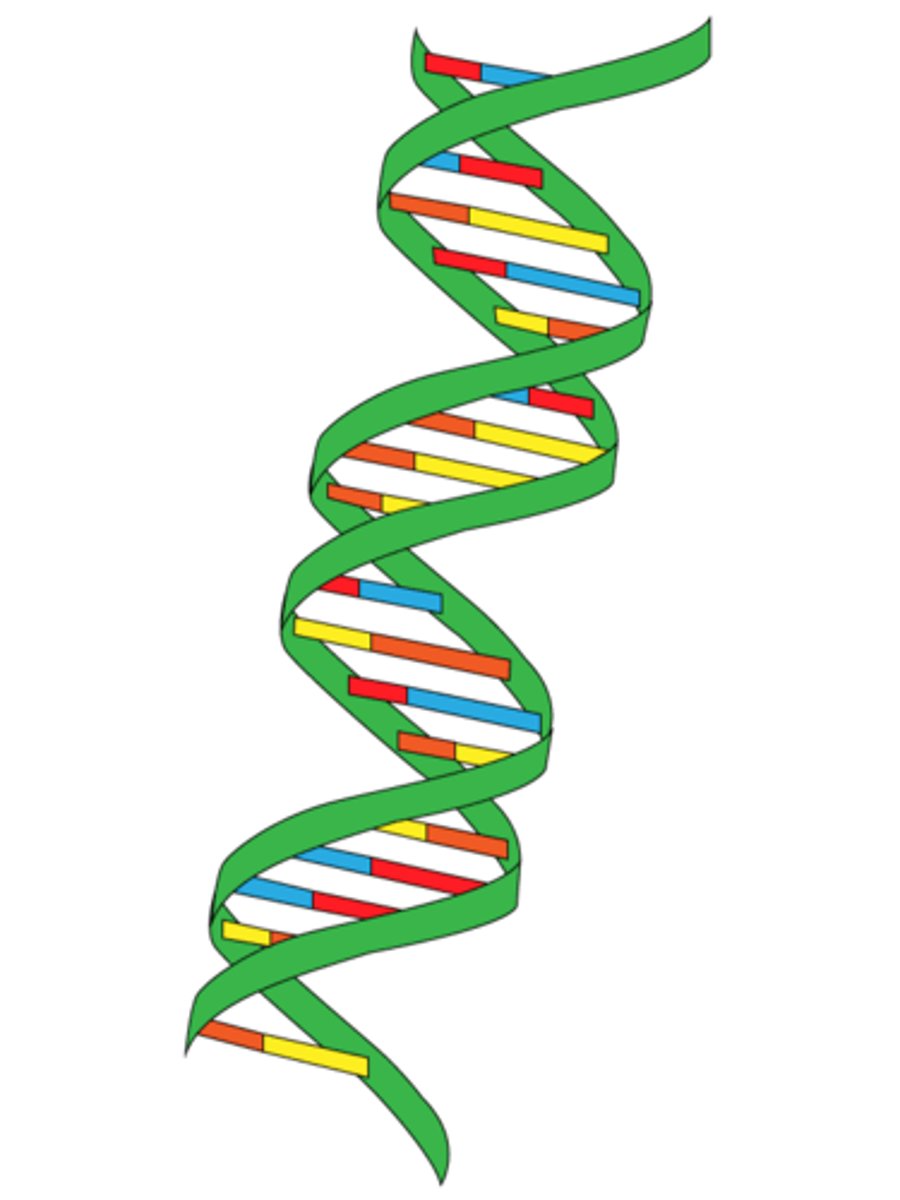
What is the structure of DNA commonly referred to as?
A double helix.
What are the monomers of nucleic acids?
Nucleotides.
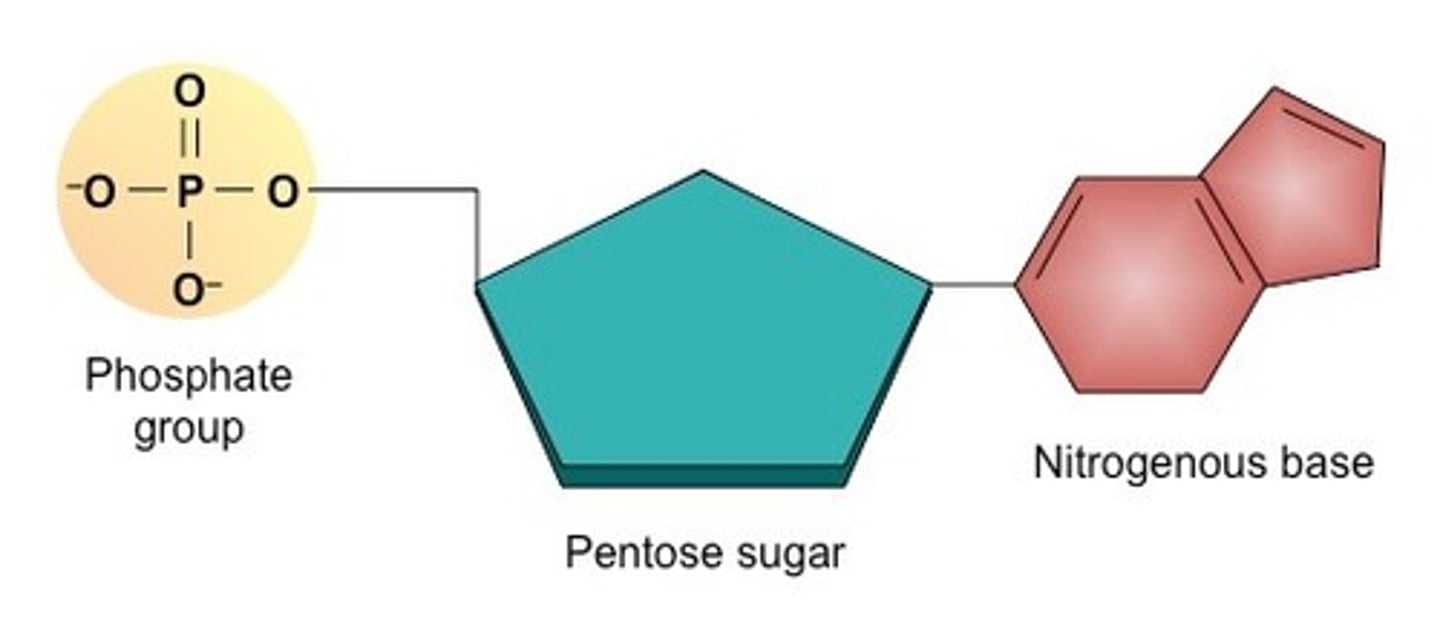
What components make up a nucleotide?
A sugar, a nitrogen base, and a phosphate group.
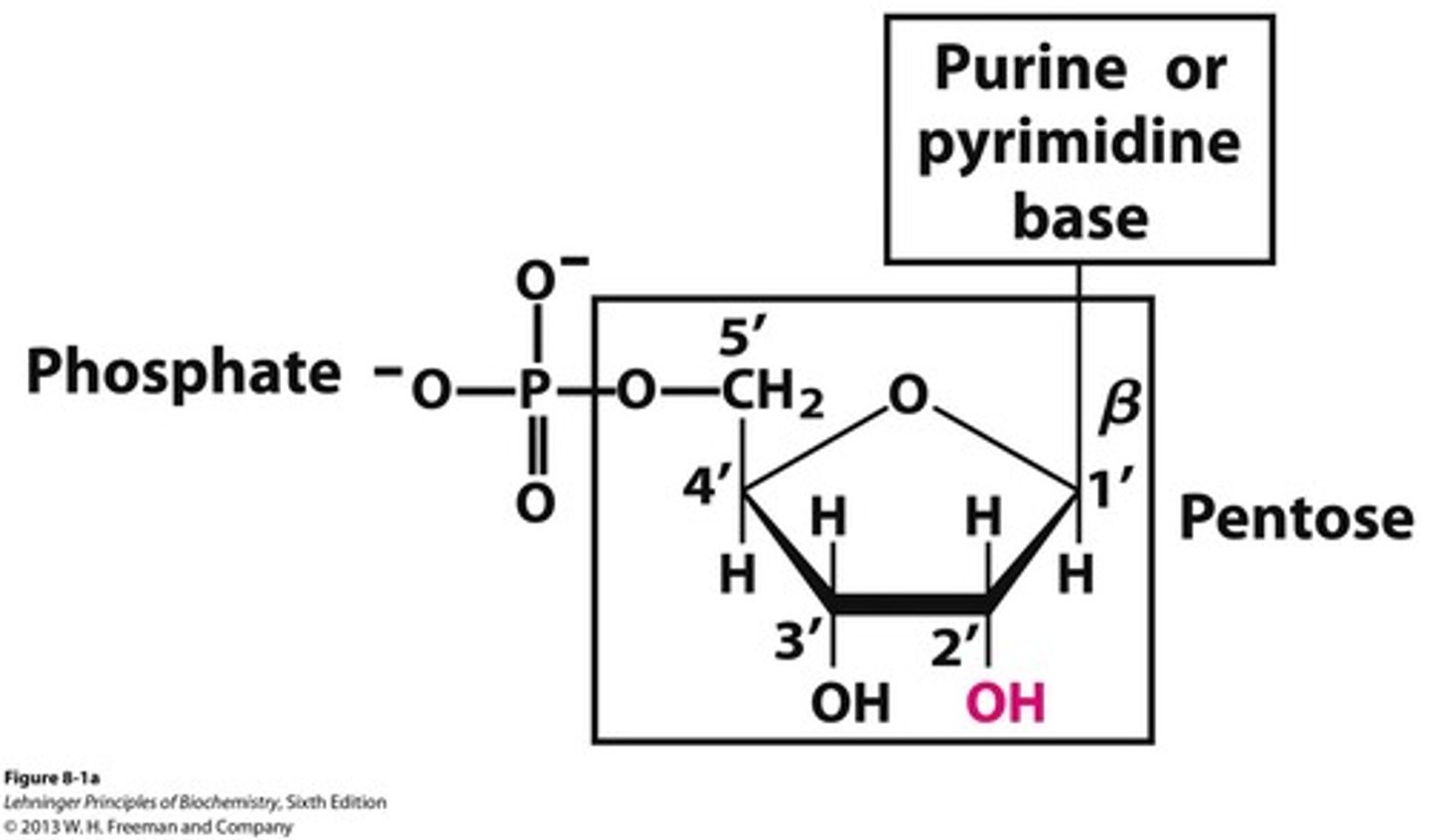
What are the four nitrogen bases found in DNA?
Adenine, Cytosine, Guanine, and Thymine.
Which nitrogen bases are classified as purines?
Adenine and Guanine.
Which nitrogen bases are classified as pyrimidines?
Cytosine and Thymine.
What is Chargaff's rule regarding base pairing?
The amount of adenine equals thymine, and the amount of cytosine equals guanine in DNA.
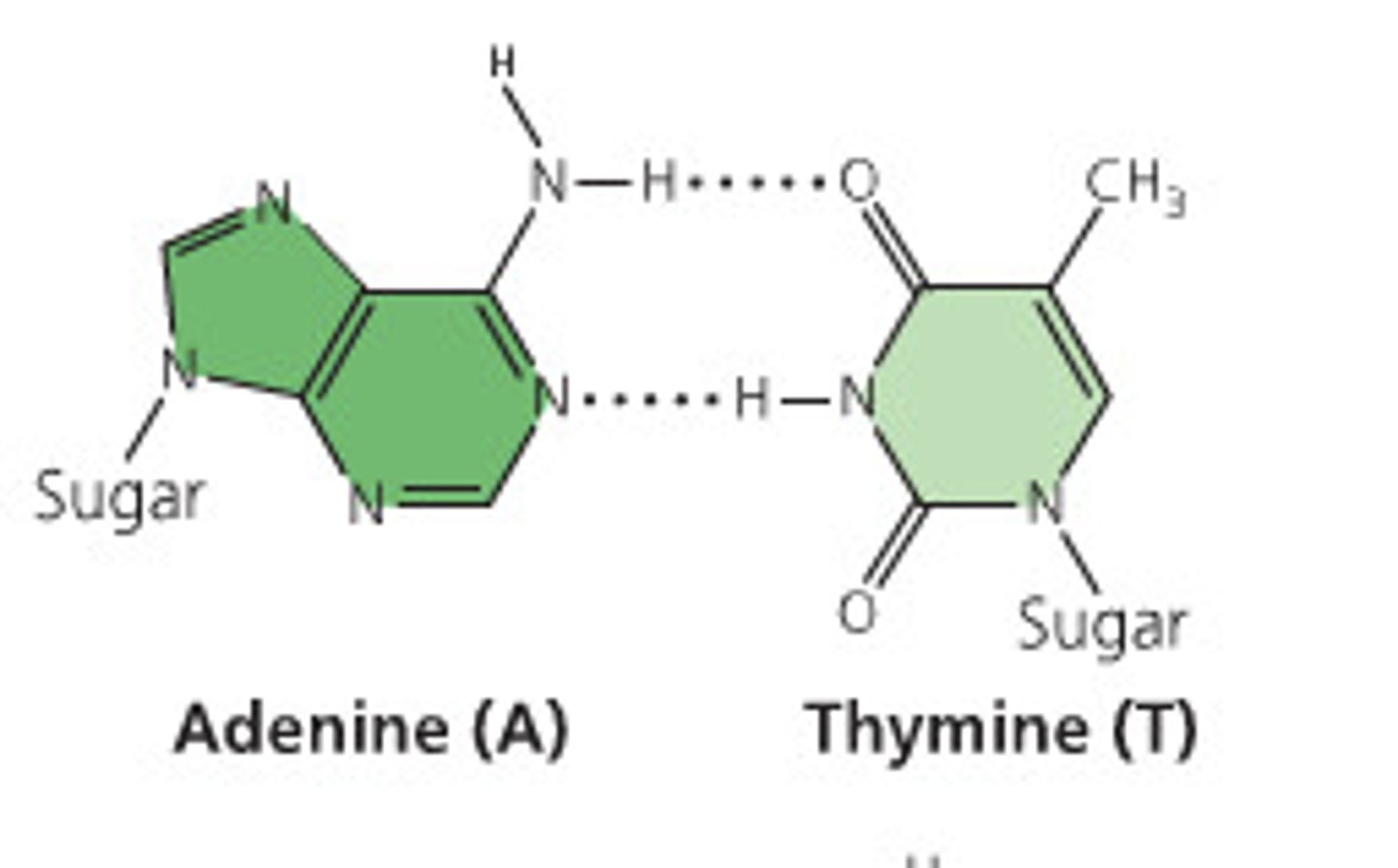
How are adenine and thymine connected in DNA?
By 2 hydrogen bonds.
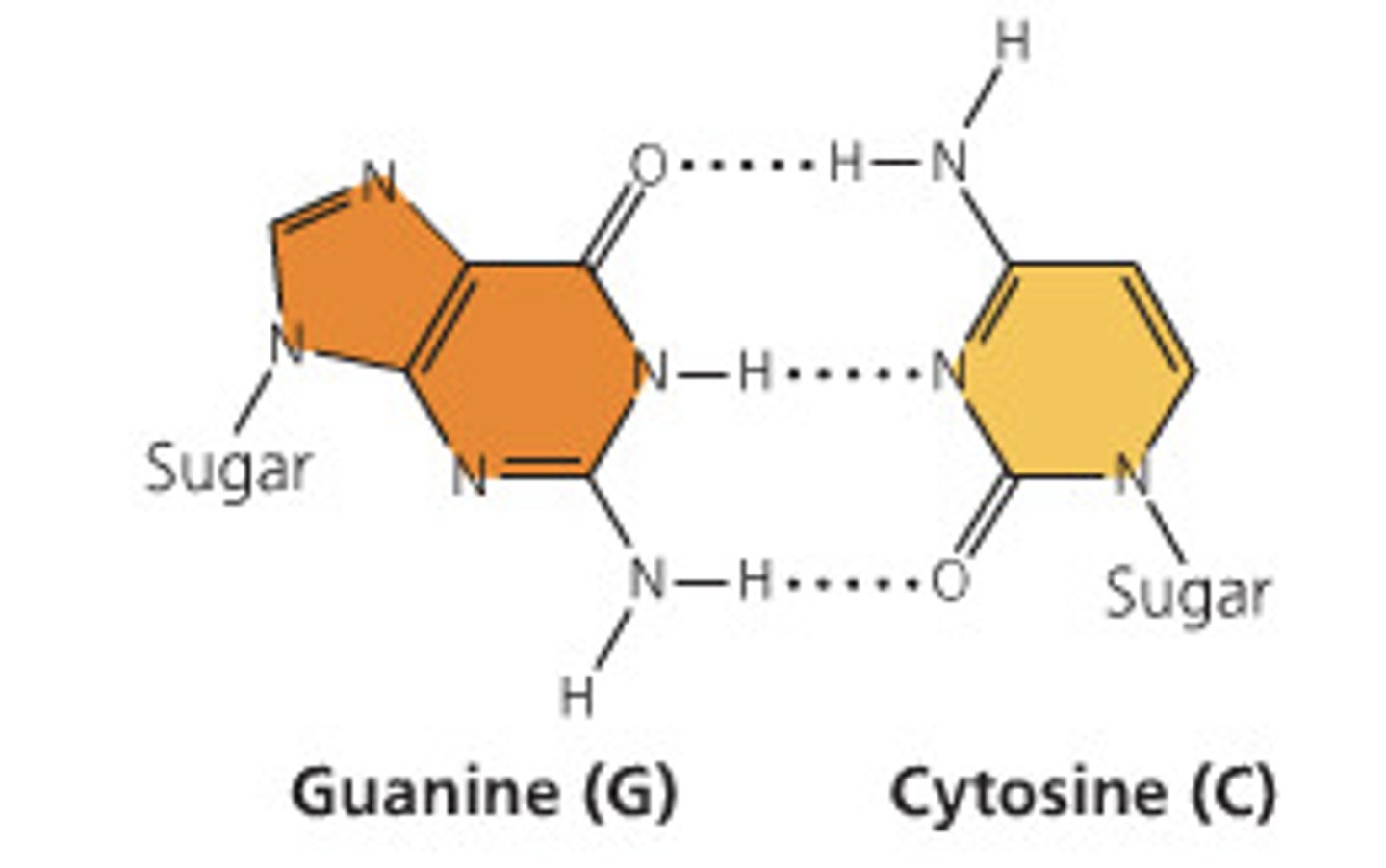
How are cytosine and guanine connected in DNA?
By 3 hydrogen bonds.
What forms the backbone of the DNA ladder?
Deoxyribose sugar and phosphate groups.
What is the significance of the sequence of bases in DNA?
It encodes genetic information.
What did Erwin Chargaff discover about base proportions in DNA?
The amount of adenine always equals thymine, and cytosine always equals guanine in every organism studied.
What is the role of hydrogen bonds in DNA structure?
They connect the nitrogen bases together, forming the rungs of the DNA ladder.
What is the function of the protective capsule in S strain bacteria?
It allows the bacteria to be virulent and cause disease.
What occurs if DNA is destroyed in Avery's experiment?
Transformation to new bacteria does not occur.
What is the significance of the Hershey-Chase experiment in the context of DNA?
It provided strong evidence that DNA is the genetic material, not protein.
What is the shape of DNA described as?
A twisted ladder or double helix.
Who discovered the base pairing rules?
Erwin Chargaff
What did Rosalind Franklin and Maurice Wilkins use to study DNA structure?
X-ray diffraction
What shape did Watson and Crick propose for DNA?
A double helix
What holds the nitrogen bases together in DNA?
Hydrogen bonds
What are the nitrogen base pairs in DNA?
Adenine (A) pairs with Thymine (T) and Cytosine (C) pairs with Guanine (G)
What is the backbone of DNA made of?
Sugar and phosphate groups
True or False: The sequence of bases on one strand of DNA determines the sequence on the other strand.
True
What three components make up a nucleotide?
A nitrogenous base, a sugar, and a phosphate group
What is the process called when DNA duplicates itself?
DNA replication
What model of DNA replication was supported by Meselson and Stahl?
The semiconservative model
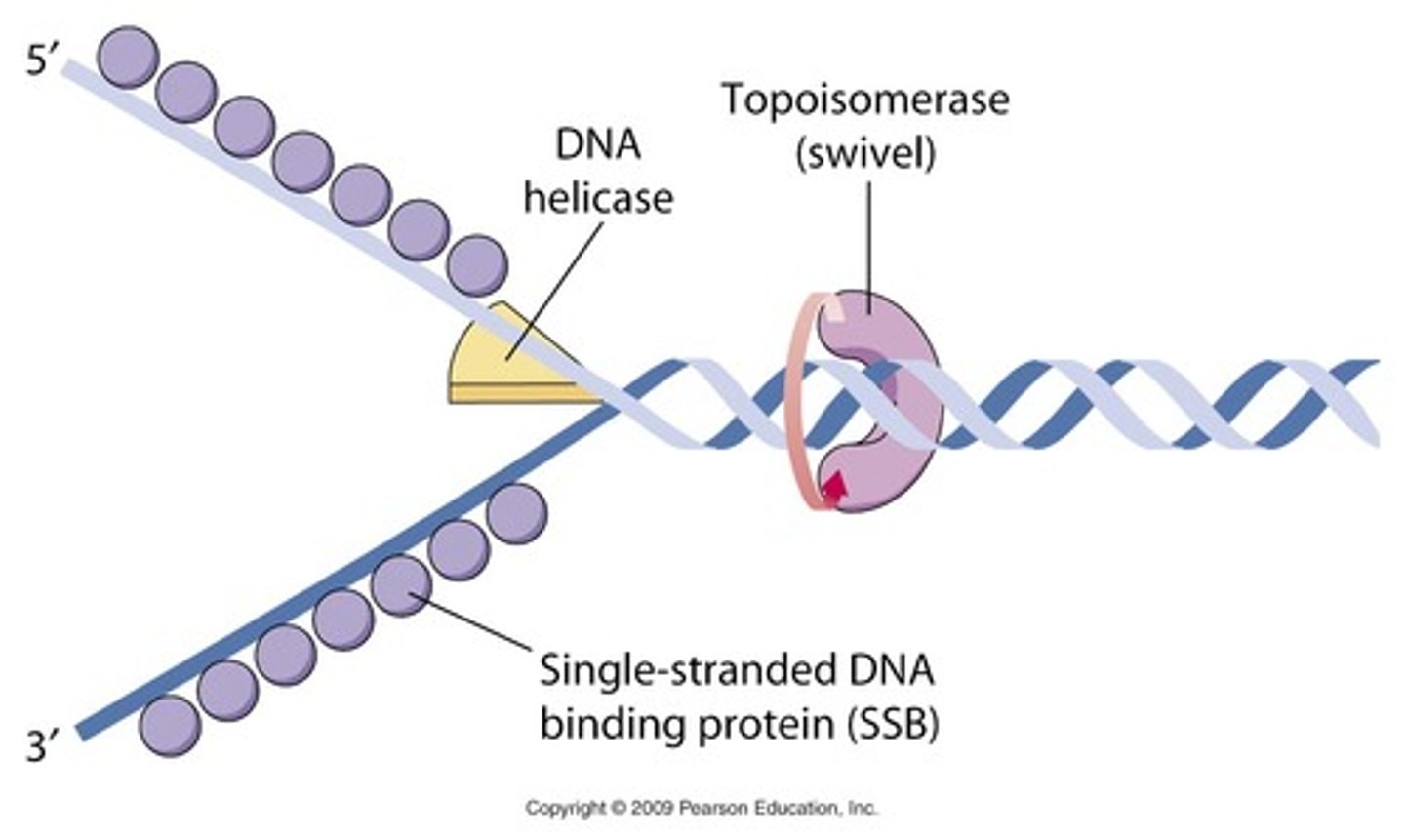
What enzyme unwinds the DNA during replication?
DNA helicase
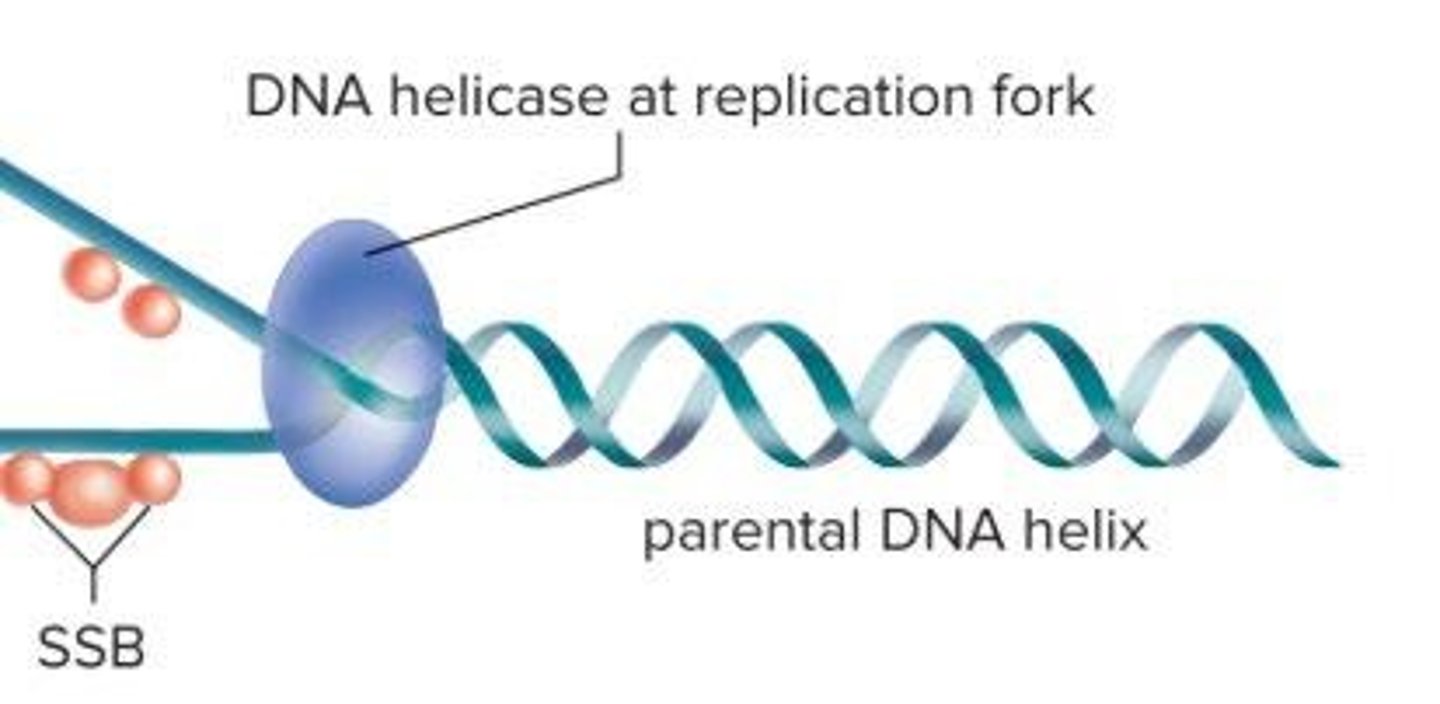
What are the proteins that keep DNA strands apart during replication called?
Single-stranded binding proteins
What enzyme adds RNA primers to the DNA strands?
RNA primase
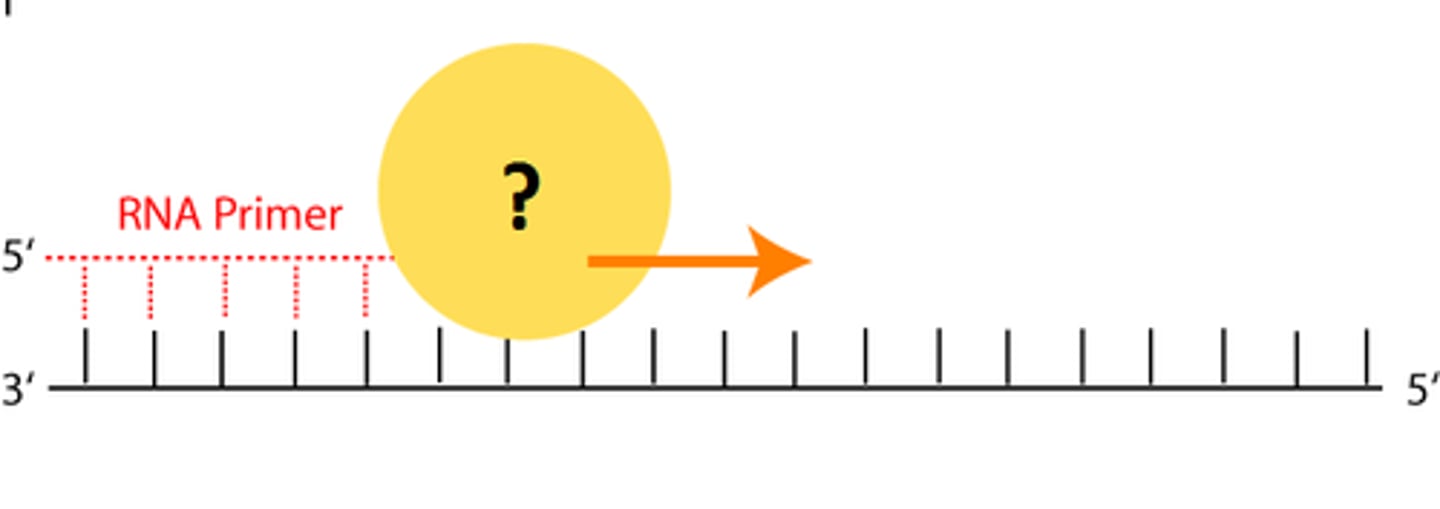
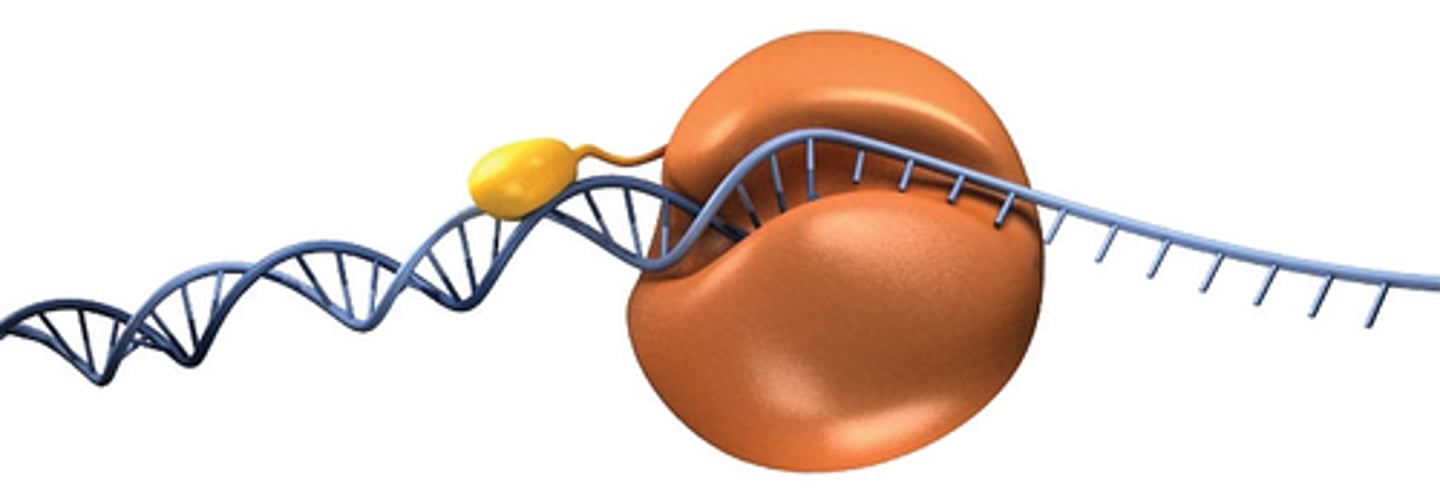
What enzyme adds new nucleotides to the growing DNA strand?
DNA polymerase
What are the small fragments of DNA on the lagging strand called?
Okazaki fragments
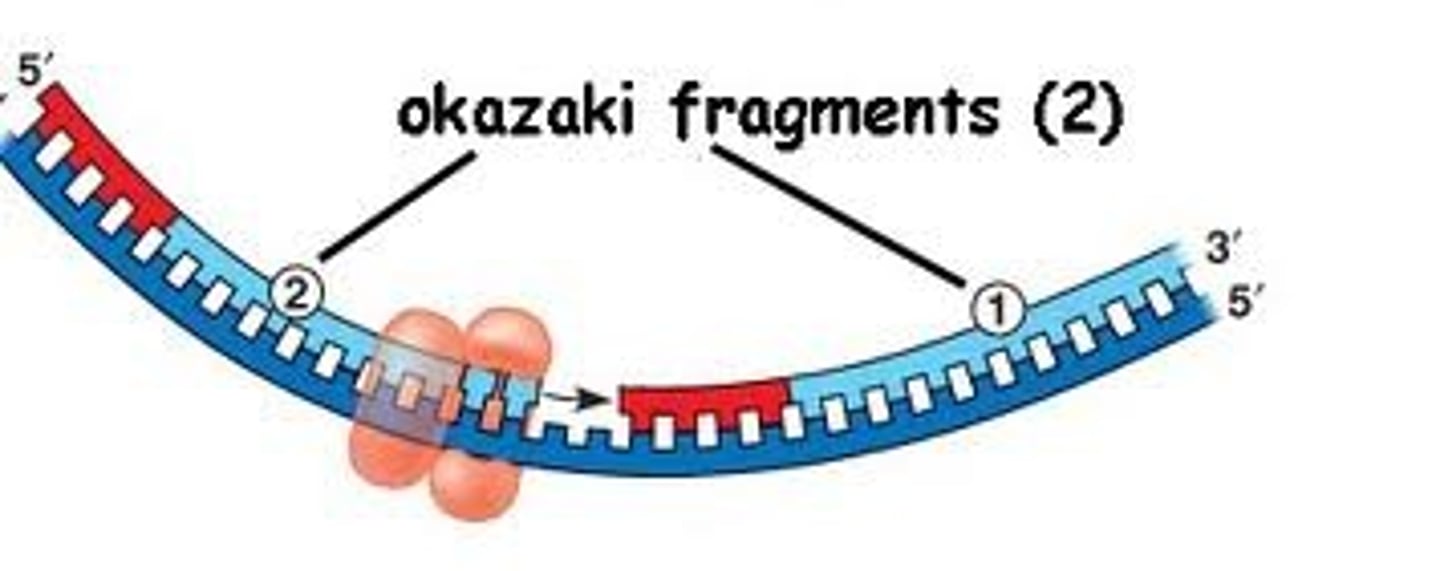
What enzyme connects Okazaki fragments?
DNA ligase
What are the ends of eukaryotic chromosomes called?
Telomeres
What is the origin of replication?
The point where DNA replication is initiated
What is a replication fork?
The area where DNA starts to unzip during replication
How long would DNA replication take if there was only one replication fork?
33 days
How quickly can DNA be replicated in human chromosomes with multiple replication forks?
About 8 hours
How does DNA replication differ in prokaryotes compared to eukaryotes?
Prokaryotes typically start replication from a single point, while eukaryotes can begin in multiple places.
What happens to a chromosome each time it replicates?
It gets a little shorter due to the loss of telomere DNA.
What is the significance of DNA sequence similarity between species?
The closer the DNA code is between species, the more closely related they are.
Organisms obtain energy from food when the _ within food molecules are broken.
Chemical bonds
Which type of organisms must consume food to obtain energy?
Heterotrophs
What is the amount of energy required to raise the temperature of 1 gram of water by 1C?
A calorie
How many calories are contained in one dietary Calorie (kilocalorie)?
1000 calories
Cells use the energy released from food to produce which high-energy compound?
ATP (Adenosine triphosphate)
What term describes metabolic reactions that synthesize larger molecules and usually require energy?
Anabolic reactions
Reactions that require an input of energy are classified as _.
Endergonic
What term describes metabolic reactions that break down substances and release energy?
Catabolic reactions
Reactions that result in a net release of energy are classified as _.
Exergonic
Which process is an example of a catabolic reaction where glucose is broken down in the presence of oxygen?
Cellular respiration
How do warm-blooded animals utilize the energy from cellular respiration besides for movement and repair?
Heat production
Which three components make up an adenosine triphosphate (ATP) molecule?
Adenine, ribose, and three phosphate groups
In the relationship between energy processes, photosynthesis is said to "deposit" energy while cellular respiration "_" energy.
Withdraws
List the three main stages of cellular respiration in chronological order.
Glycolysis, Krebs Cycle, and Electron Transport Chain
What are the folds of the inner mitochondrial membrane called?
Cristae
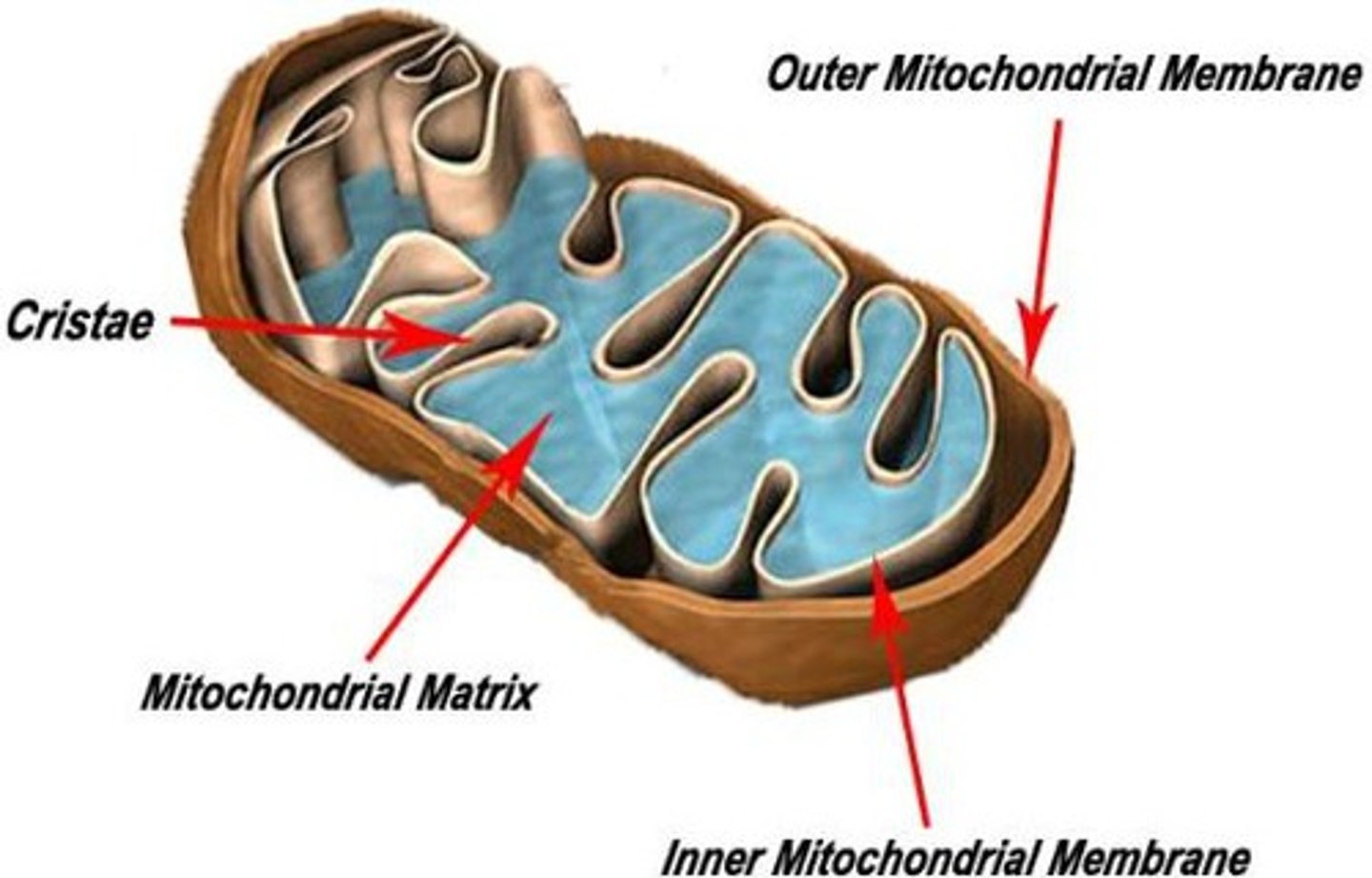
What is the name of the innermost compartment of the mitochondria?
The matrix
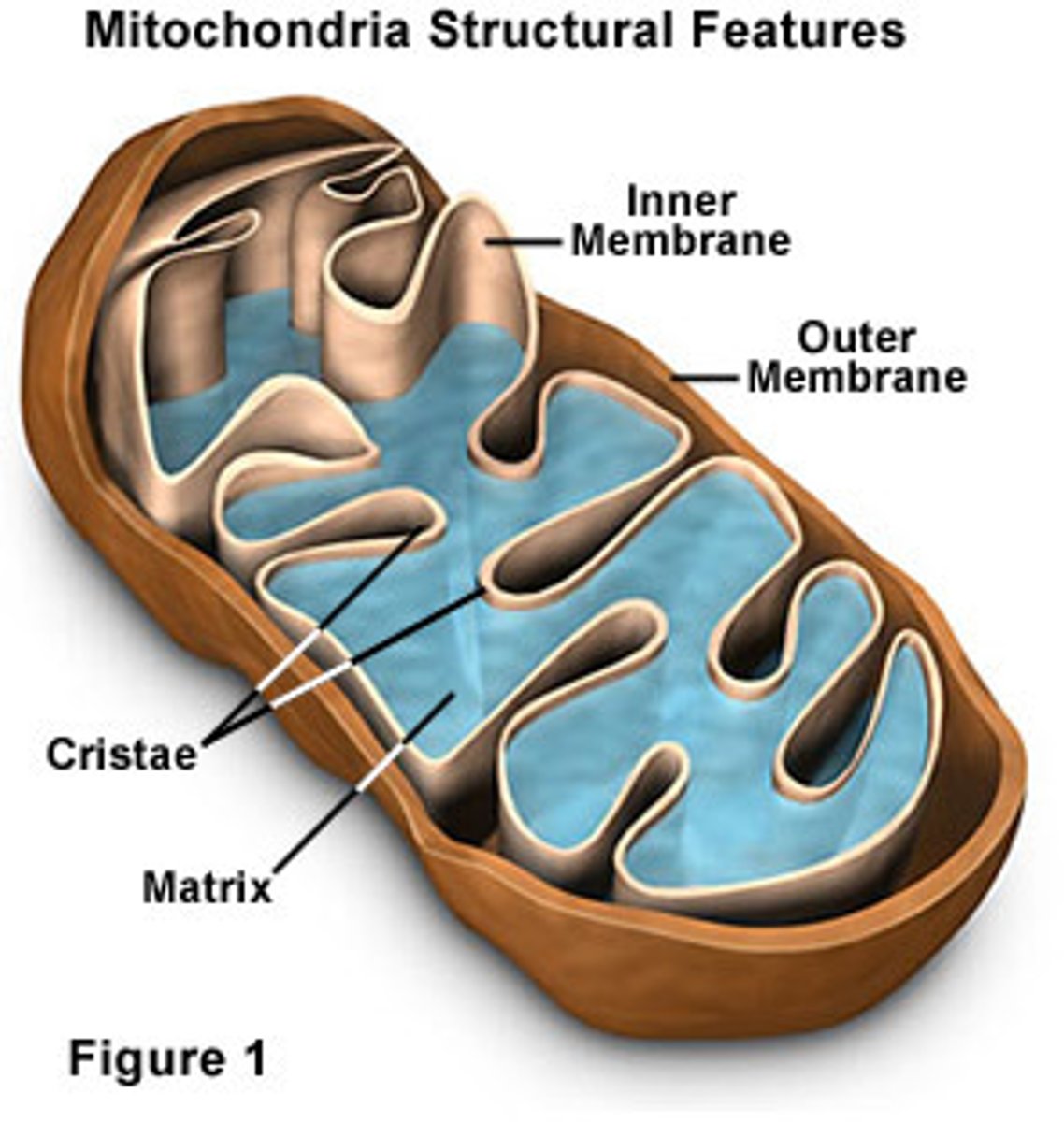
What does the term "glycolysis" literally mean?
Sugar breaking
In which part of the cell does glycolysis occur?
The cytoplasm
How many ATP molecules are required as an initial investment to start glycolysis?
2 ATP
What is the net gain of ATP molecules produced during glycolysis?
2 ATP
Glycolysis breaks one molecule of glucose into two molecules of _.
Pyruvate (Pyruvic acid)
Which electron carrier is produced when $NAD^{+}$ accepts high-energy electrons during glycolysis?
NADH
Why is glycolysis classified as an anaerobic process?
It does not require oxygen to function.
Before the Krebs cycle begins, pyruvate is rearranged into which two-carbon molecule?
Acetyl-CoA
During the conversion of pyruvate to Acetyl-CoA, which gas is released as a byproduct?
CO2 (Carbon dioxide)
In which specific location of the mitochondria does the Krebs cycle take place?
The mitochondrial matrix
Acetyl-CoA combines with a four-carbon compound (oxaloacetate) to produce which six-carbon molecule?
Citrate (Citric acid)
Per one molecule of glucose, how many total ATP are released specifically from the Krebs cycle?
2 ATP
Which two electron carriers are generated during the Krebs cycle to transport electrons to the next stage?
NADH and FADH
How many times must the Krebs cycle turn to process one molecule of glucose?
Twice
Where is the Electron Transport Chain (ETC) located in the mitochondria?
The inner membrane
What is the primary role of NADH and FADH in the Electron Transport Chain?
They pass high-energy electrons to the chain.
The energy from the Electron Transport Chain is used to pump _ from the matrix into the intermembrane space.
H+ (protons)
Which molecule serves as the final electron acceptor at the end of the Electron Transport Chain?
Oxygen O2
What byproduct is formed when oxygen accepts electrons and combines with hydrogen ions at the end of the ETC?
Water H2O
Through which protein complex do H+ ions diffuse back into the matrix to generate ATP?
ATP synthase
How many ATP molecules are produced during the Electron Transport Chain stage alone?
32 ATP
What is the overall balanced chemical equation for cellular respiration?
C6H12O6+6O2 → 6CO2+6H2O+ATP
In the presence of oxygen, what is the total number of ATP molecules produced from one molecule of glucose?
36 ATP
Approximately what percentage of the total energy in glucose is captured as ATP during cellular respiration?
36 percent
What happens to the 64 percent of energy from glucose that is not captured as ATP?
It is released as heat.
Which anaerobic process occurs to produce ATP when oxygen is absent?
Fermentation
What is the primary purpose of the fermentation step that follows glycolysis?
To regenerate NAD+ so glycolysis can continue.
What are the two most common types of fermentation?
Lactic acid fermentation and ethyl alcohol fermentation
Which organisms perform lactic acid fermentation to produce foods like yogurt and cheese?
Bacteria (such as Lactobacillus acidophilus) and some fungi
Besides carbon dioxide, what is the end product of alcoholic fermentation?
Ethyl alcohol (Ethanol)
What are the three main sources of ATP for humans during exercise?
ATP in muscles, lactic acid fermentation, and cellular respiration.
For about how many seconds can lactic acid fermentation supply enough ATP for intense activity?
90 seconds
What is the term for the extra oxygen needed after intense exercise to clear lactic acid from the body?
Oxygen debt
To which organ is lactic acid carried by the blood to be converted back into pyruvate?
The liver
For exercise lasting longer than 90 seconds, which process is required to provide a steady supply of ATP?
Cellular respiration