BIO911 zoofysiologi
 Call Kai
 Learn
Learn Practice Test
 Spaced Repetition
 Match
Match Flashcards
 Knowt Play
1/351

There's no tags or description
Looks like no tags are added yet.
Name | Mastery | Learn | Test | Matching | Spaced | Call with Kai |
|---|
No analytics yet
Send a link to your students to track their progress
352 Terms
Homeostasis
En tendens att upprätthålla ett balanserat eller konstant internt tillstånd
De olika vävnaderna i kroppen
Epitelvävnad
Muskelvävnad
Stödjevävnad
Nervvävnad
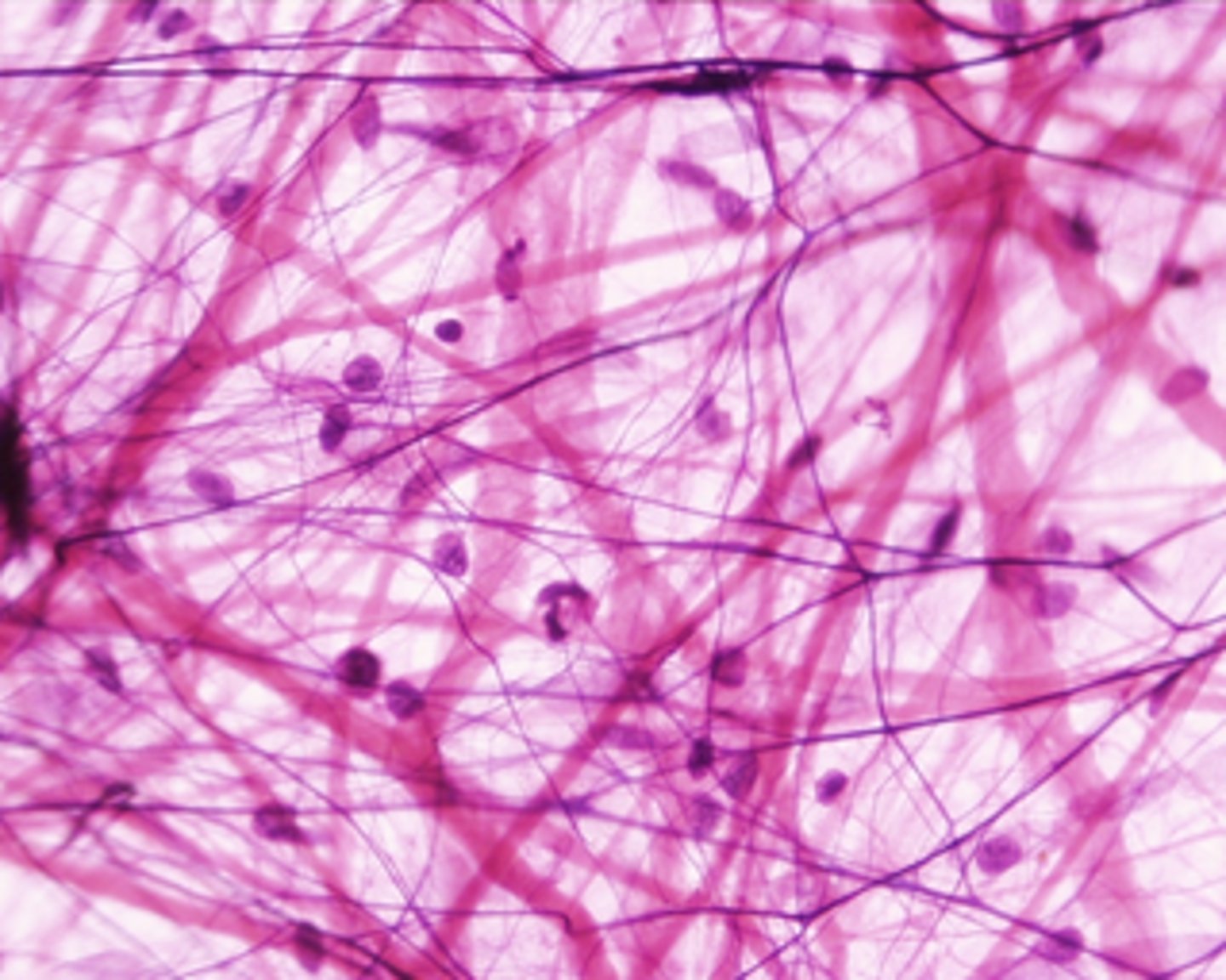
Epitelvävnad
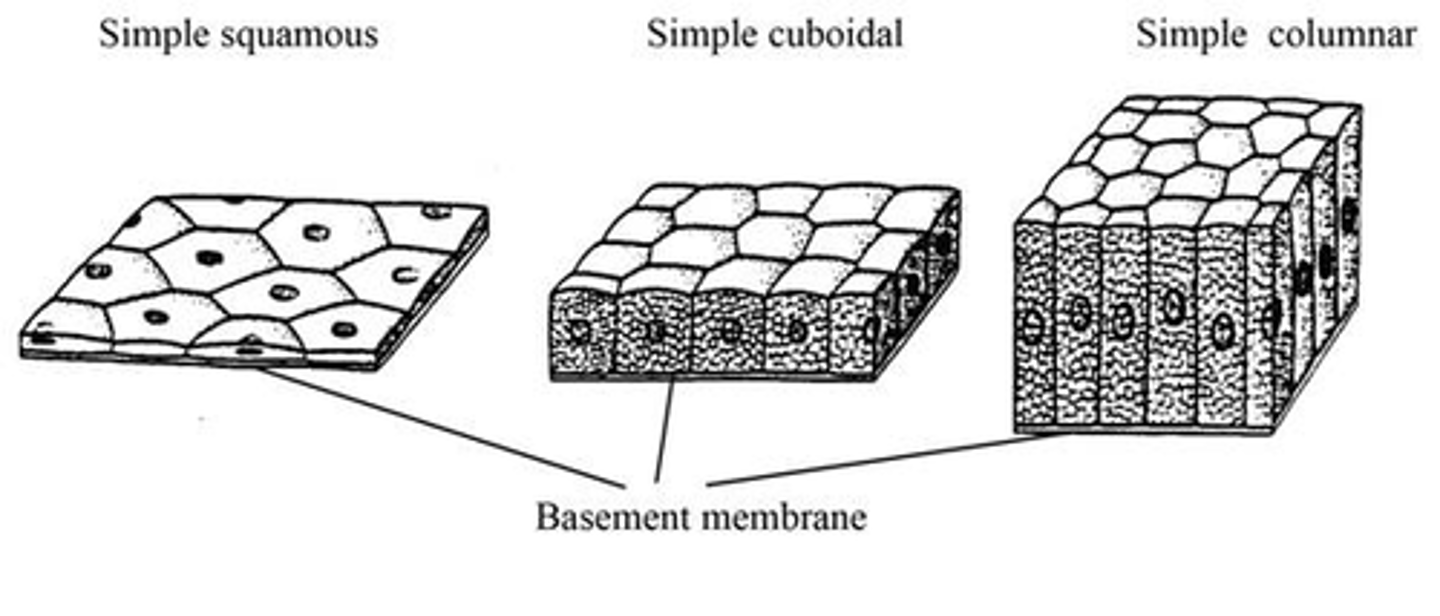
Important for filtration and transport of molecules, like nutrients and ions.
Exists in ex:
- Esophagus lining (stratified squamous)
- Lungs and intestines (simple squamous ((1 layer)), respective columnar)
- Kidneys (simple ((1 layer)) cuboidal)
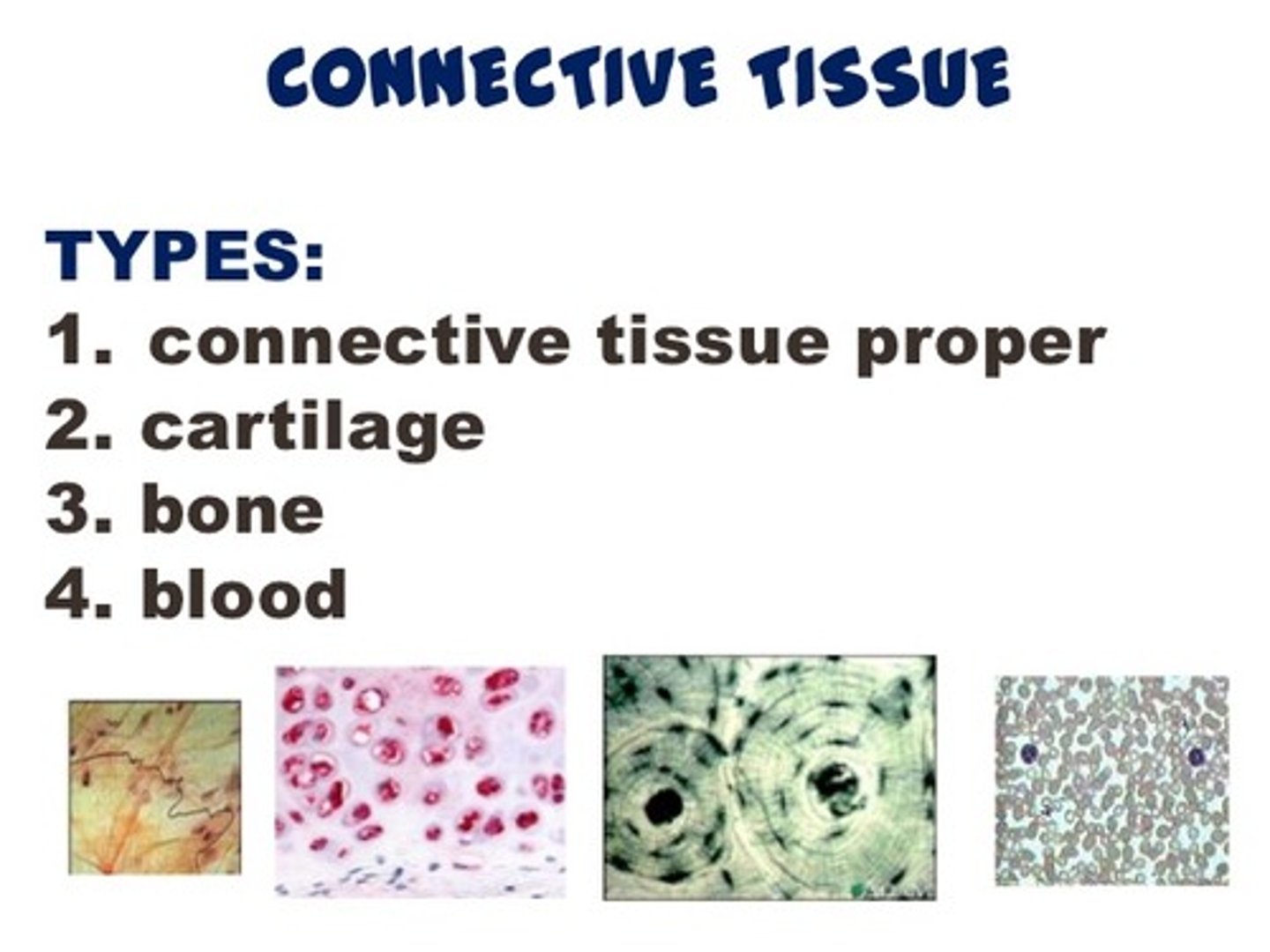
Connective tissue in (4)
1: In between muscles and bones (collagen, stretch resistant strong)
2: Skin-tissue (collagen)
3: Lungs (elastine, elastic tissue)
4: Arteries (elastine)
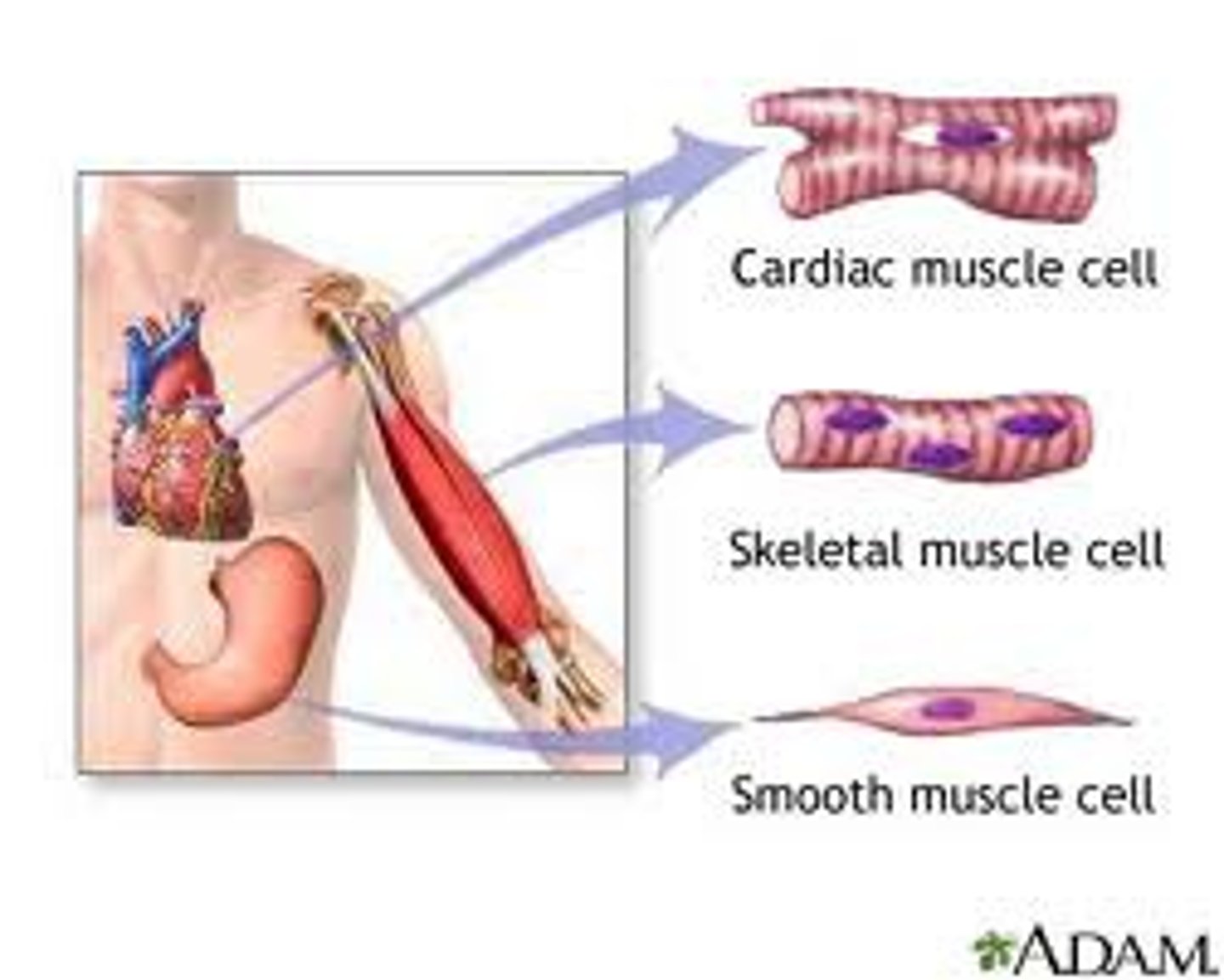
3 types of muscle tissue
1: Skeletal
2: Smooth
3: Cardiac (heart)
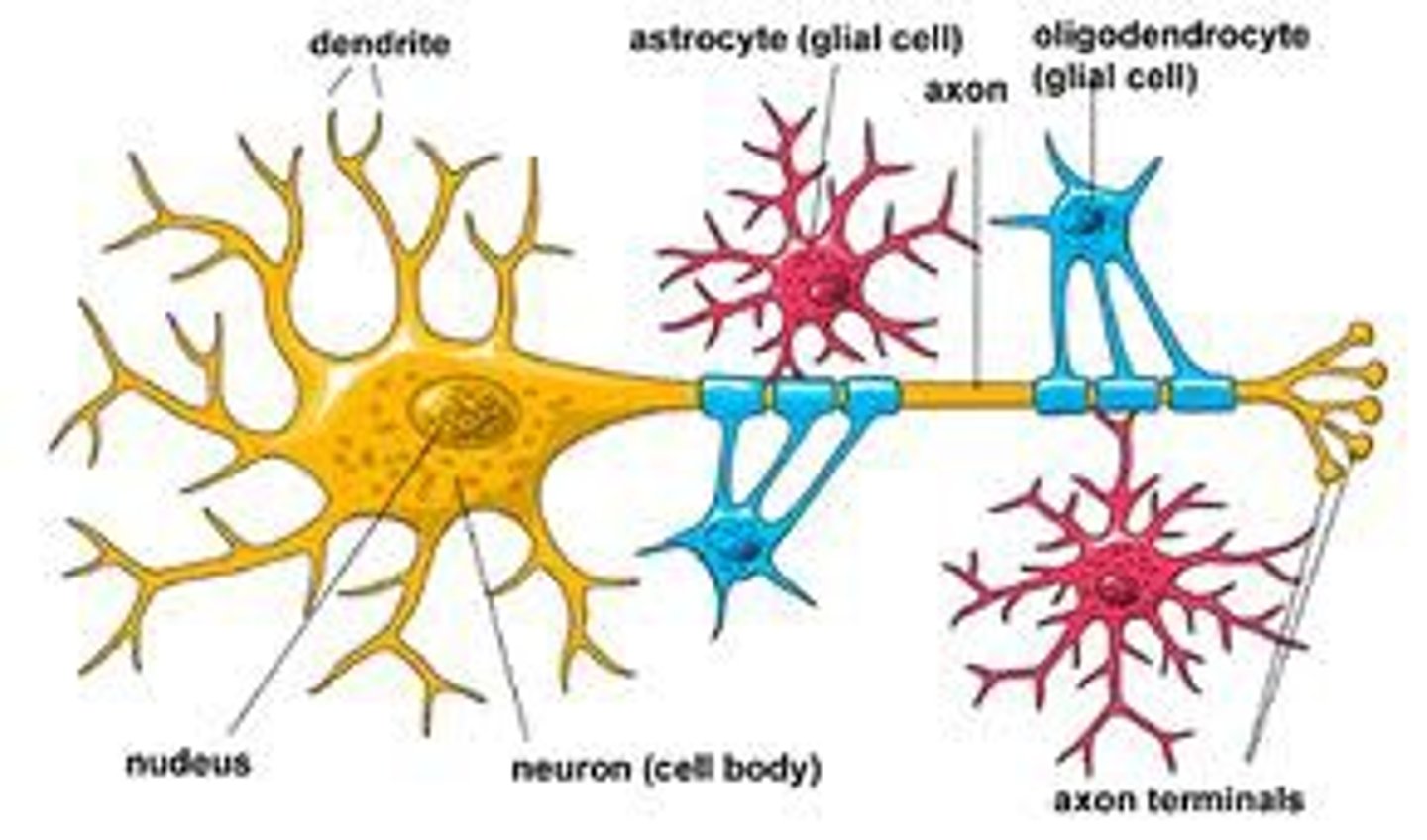
Glial cells
Cells in the nervous system that support, nourish, and protect neurons;
MACROGLIA:
- Astrocytes (support)
- Oligodendrocyte (myelin)
- Ependymal (produces cerebral-fluid and lines the ventricle-systems of the brain)
MICROGLIA:
- The brain's immune-cells
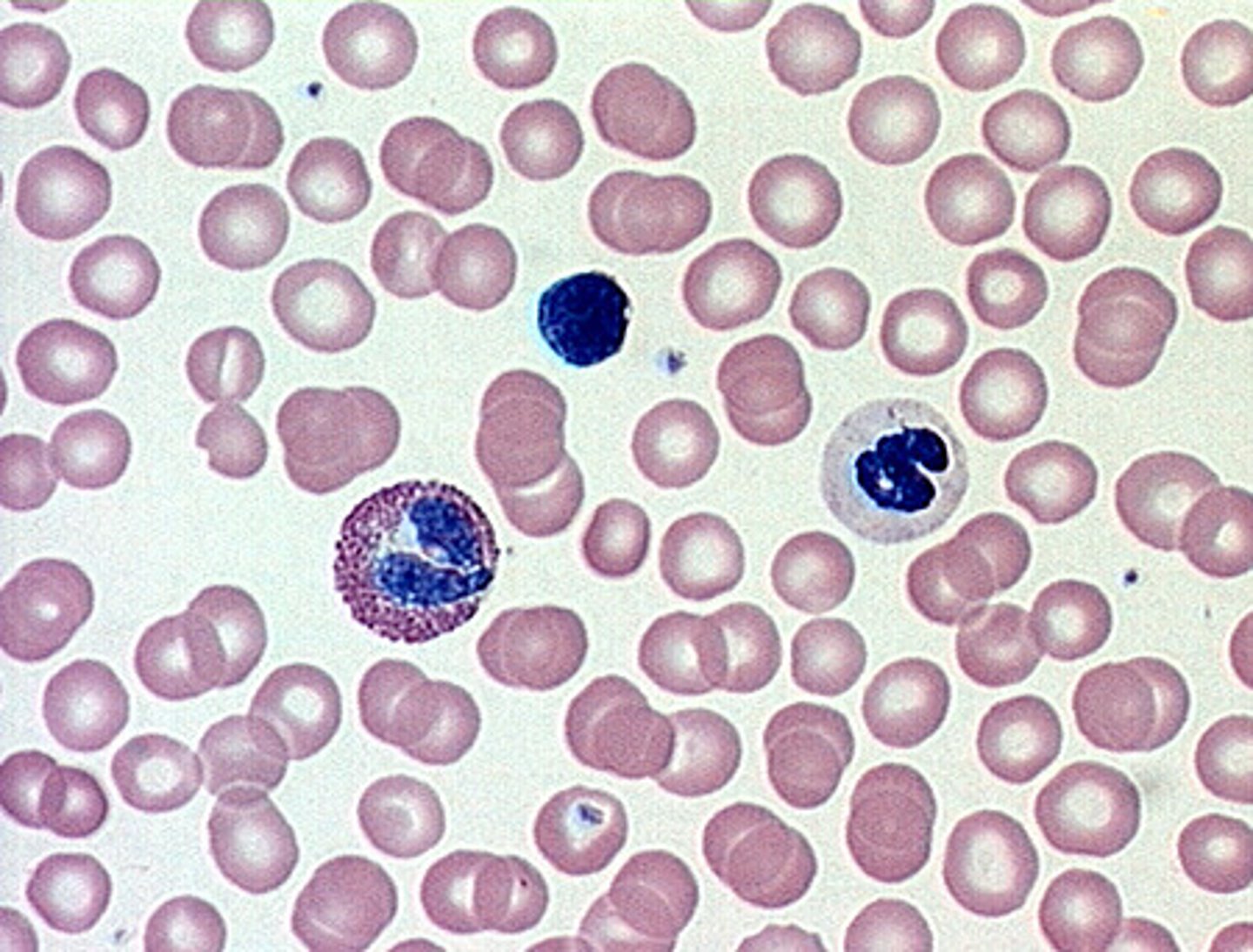
Extracellular liquid (ECL)
Bloodplasma + interstitialfluid
In-between cells!
Dehydration (hyperosmotic/hypertonic)
When [H2O] is higher inside the body than outside, and [ions] is lower than outside, so H2O gets pulled out and ions in.
![<p>When [H2O] is higher inside the body than outside, and [ions] is lower than outside, so H2O gets pulled out and ions in.</p>](https://knowt-user-attachments.s3.amazonaws.com/97e297e6-7f52-4196-80e8-e15b691e6734.jpg)
Dilution (hypoosmotic(hypotonic)
When [ions] is higher inside and [H2O] is higher outside => ions out and H2O in.
![<p>When [ions] is higher inside and [H2O] is higher outside => ions out and H2O in.</p>](https://knowt-user-attachments.s3.amazonaws.com/251611ea-5d62-47db-9fbe-b67668b5b5c5.jpg)
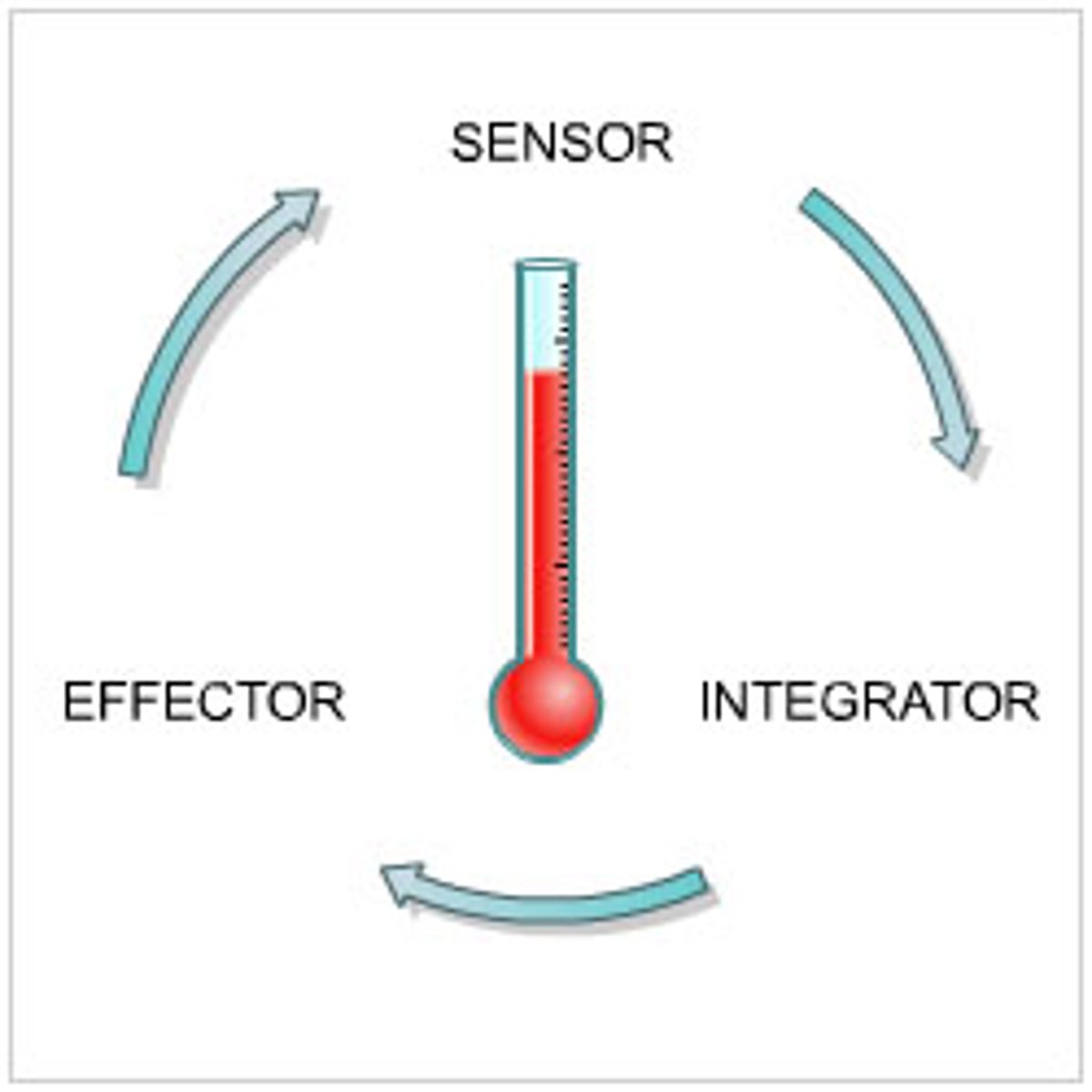
How is homeostasis maintained?
Often by negative feedback loops;
1: The brain's neurons receives information from the body
2: It recognizes changes in homeostasis and regulates the cells, circulation etc...
An organism needs to have a combating system against all passive flows to maintain homeostasis.
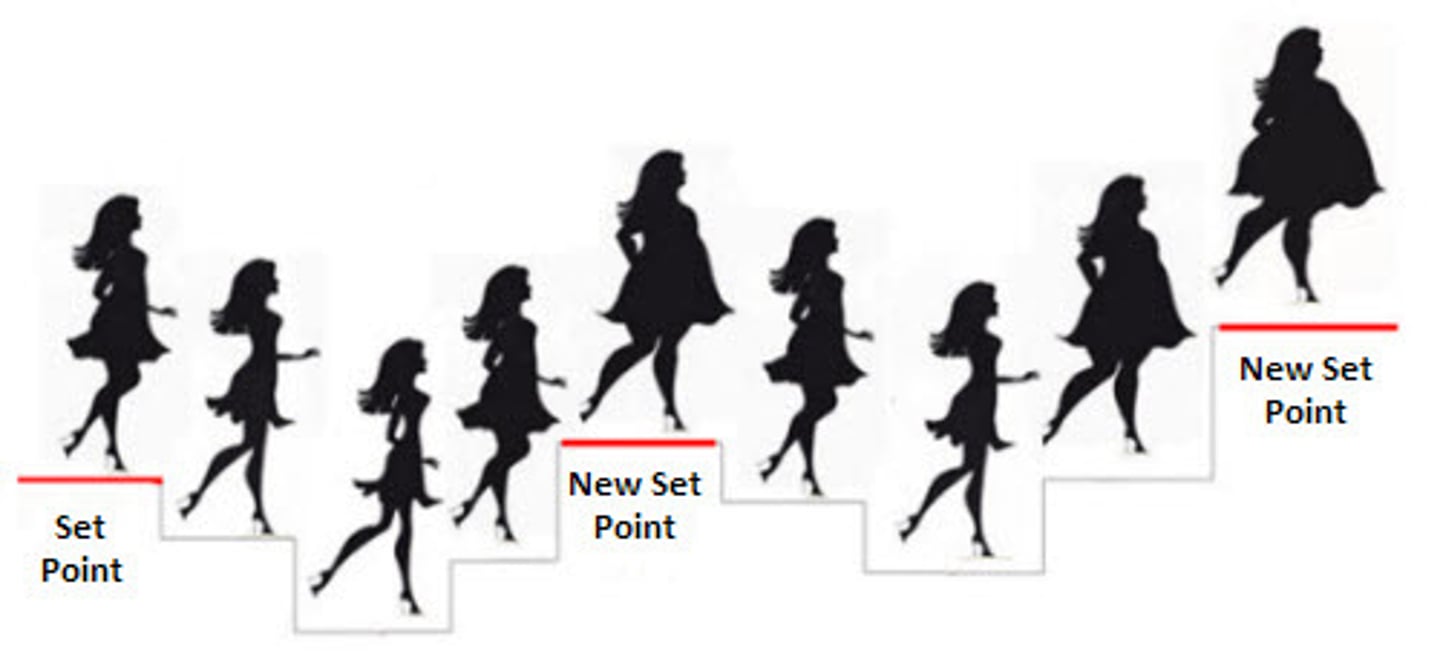
Set-point
Target level of a certain substance, reference point for the hypothalamus.
Set points can be altered throughout life, like how pregnancy alters hormonal set-points (increased oestrogen/progesterone, prolactin ...)
Effectors
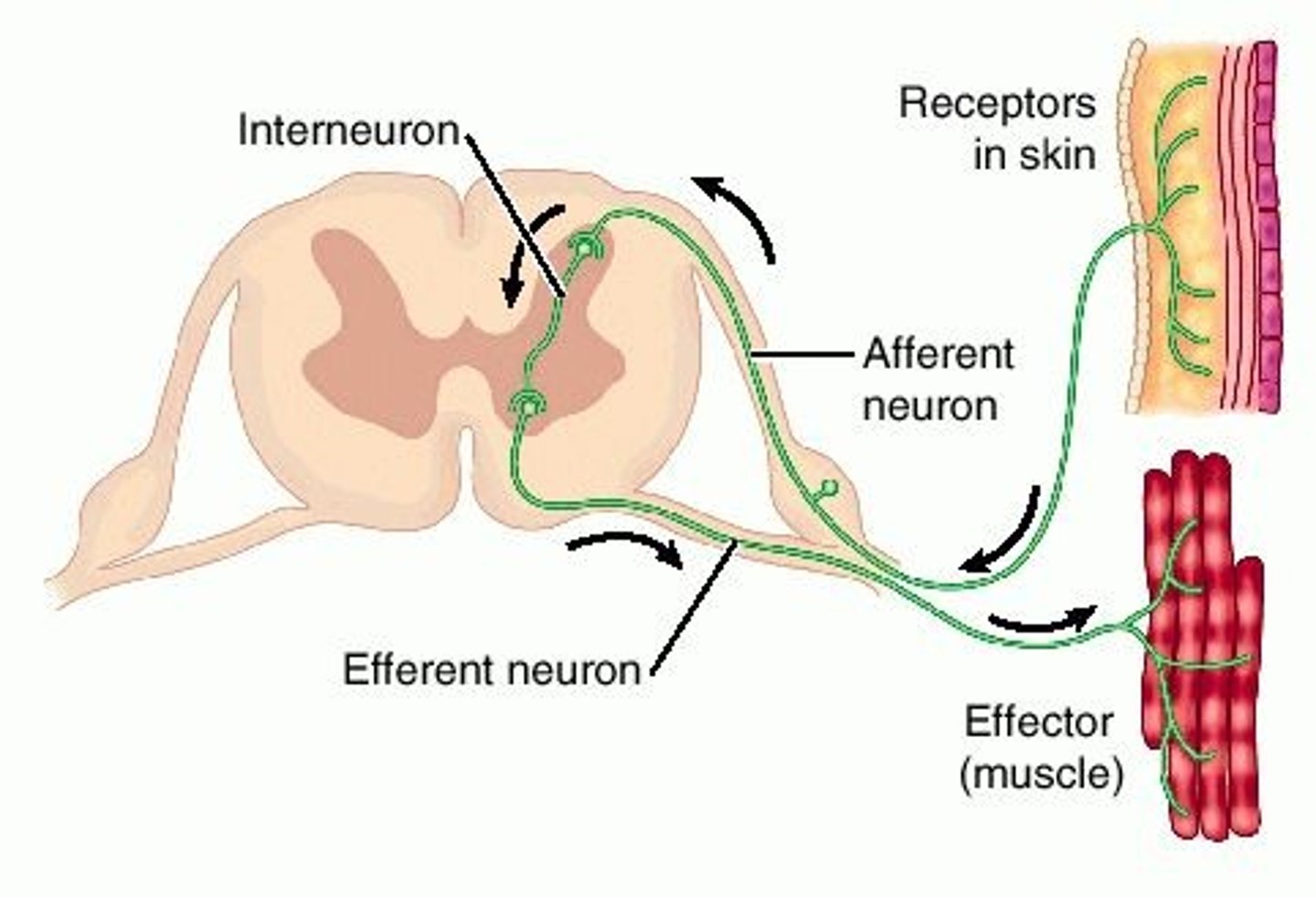
Part of body that triggers a response in body, from signals sent from the brain/other receptors, => conditions of the internal environment changes.
Could be movement of a muscle or contraction of a gland.
Feedback information
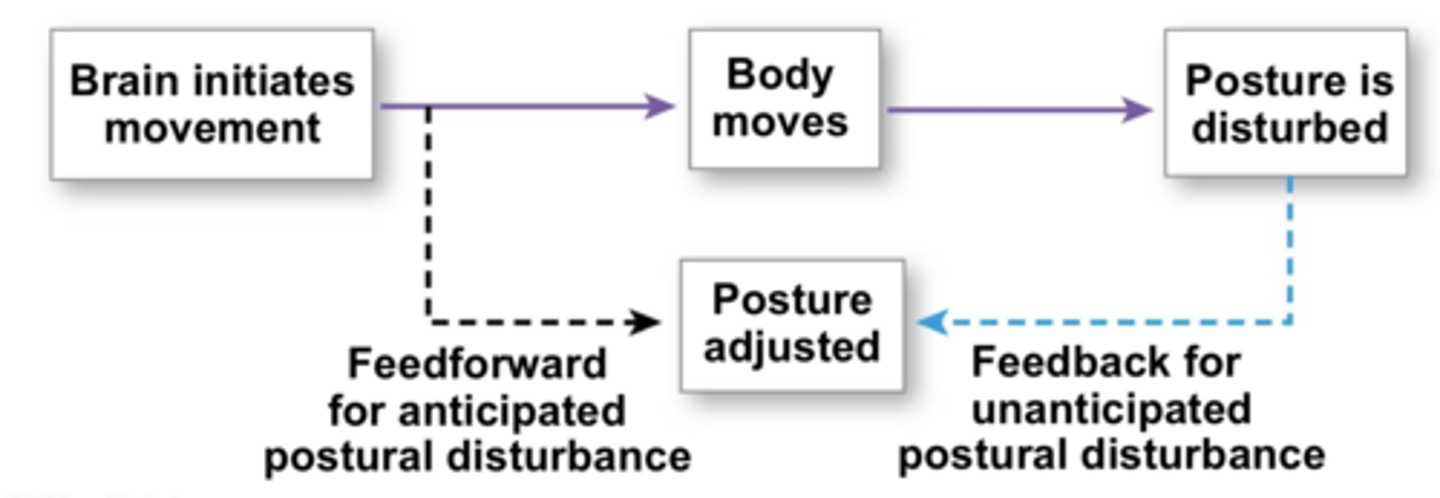
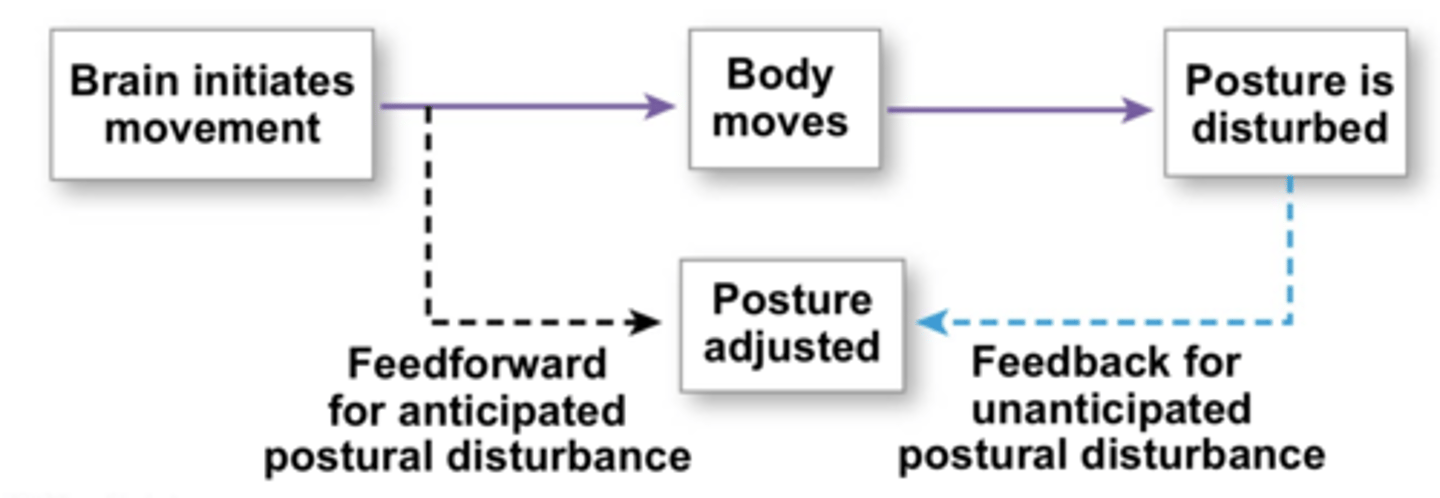
Information going back to the hypothalamus to be compared to set-point.
Feedforward information
Information that anticipates future changes and changes the set-point.
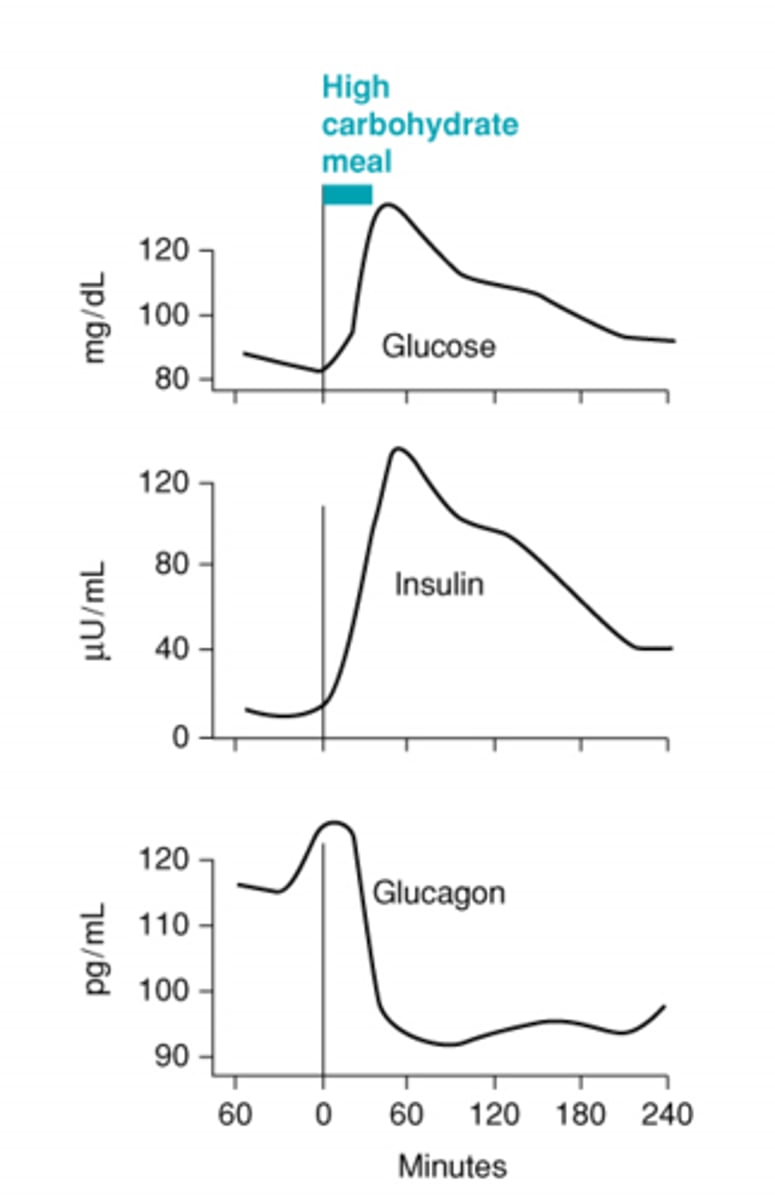
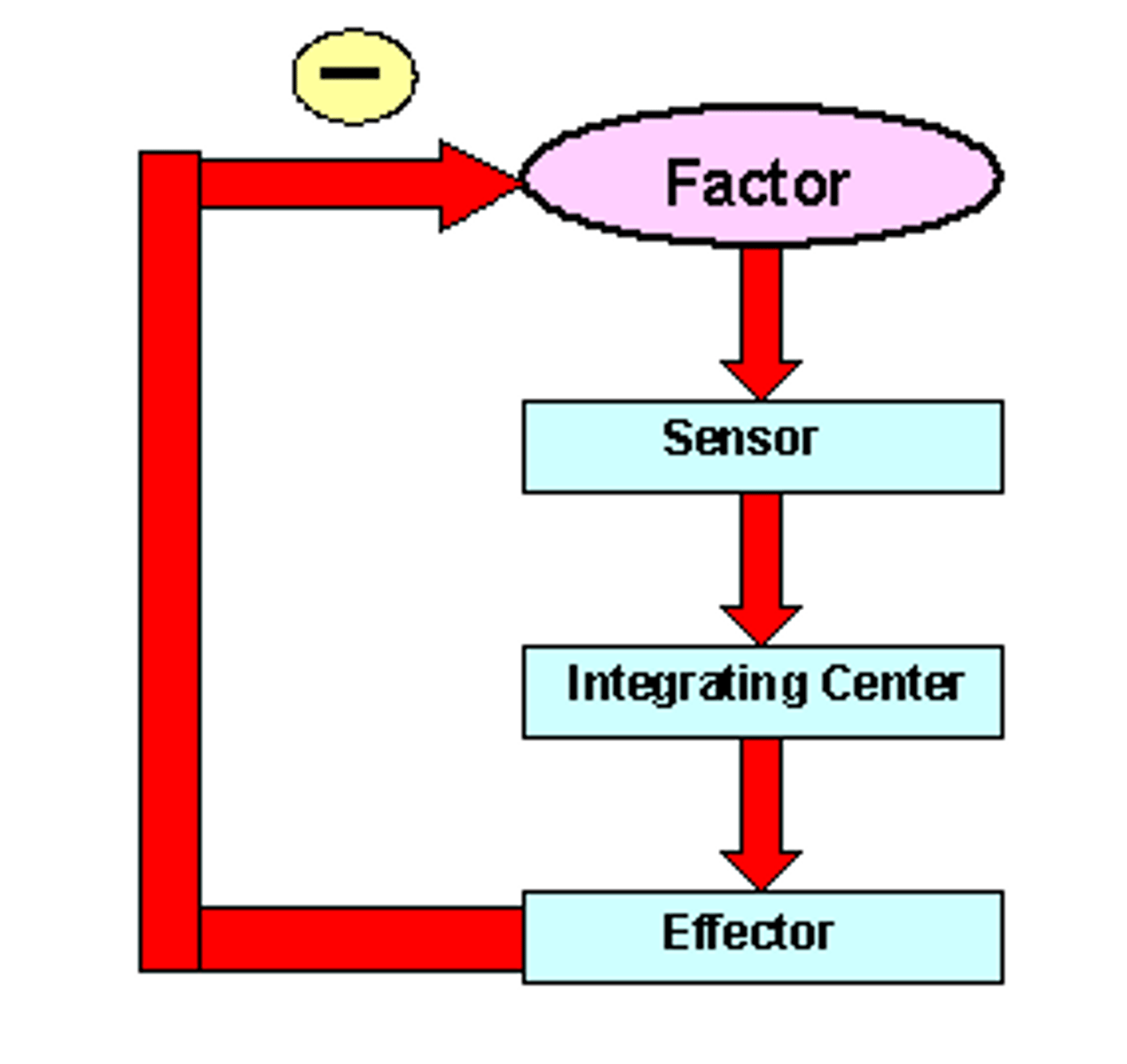
Negative feedback
A primary mechanism of homeostasis;
A change in a physiological variable, that is being monitored by the hypothalamus i comparison to the set-point, triggers a response that counteracts the initial fluctuation.
Like insulin lower blood-sugar levels in response to glucose in blood.
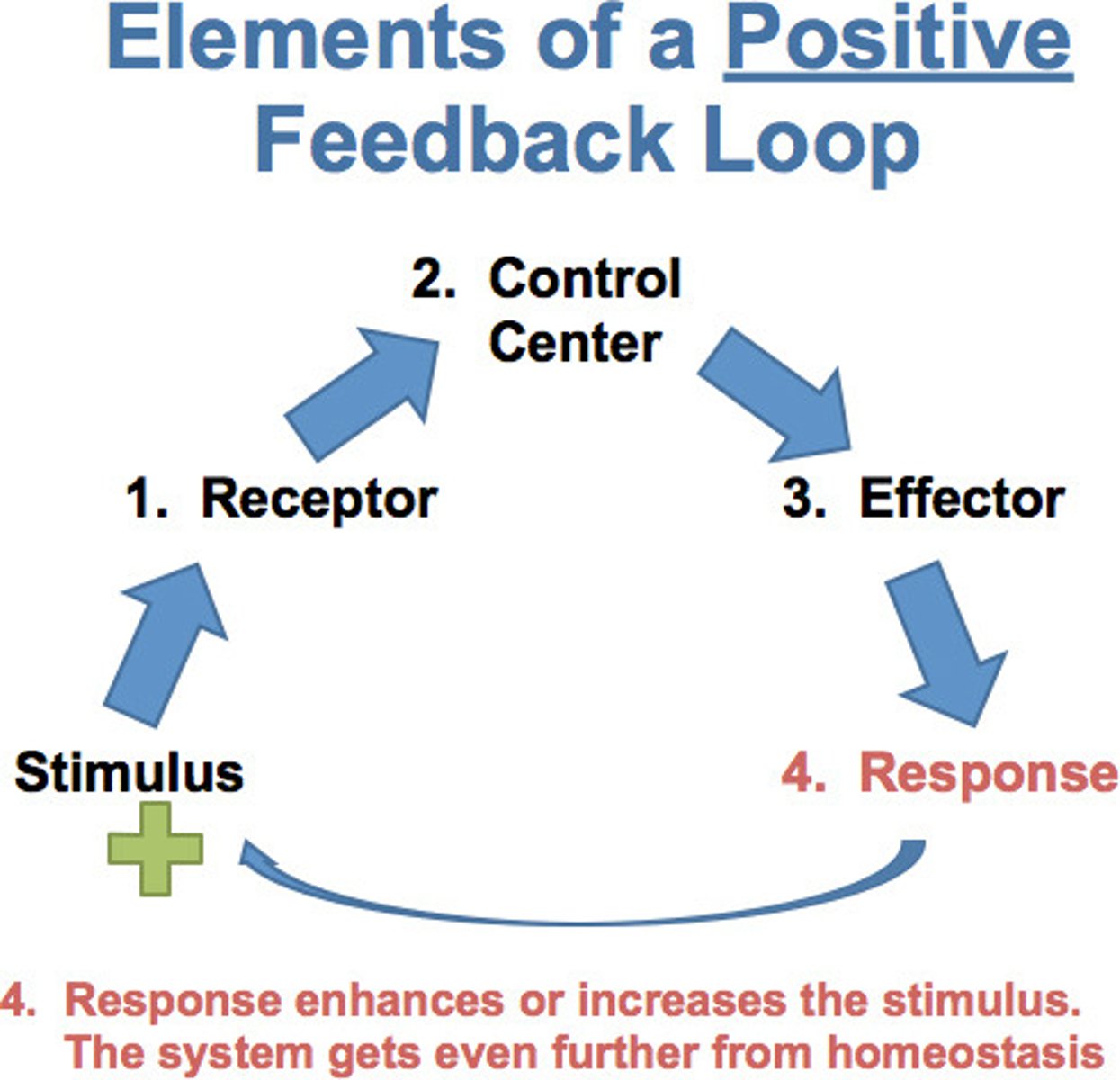
Positive feedback
Feedback that tends to increase a responses' output in body.
Like how during ovulation, as oestrogen and progesteron is being produces by the follicles as a response to LH and FLS they'll work as a POSITIVE feedback and increase secretion of LH/FSH to cause release of oovum (instead of supressing LH/FSH in a negative feedback-way like it usually does).
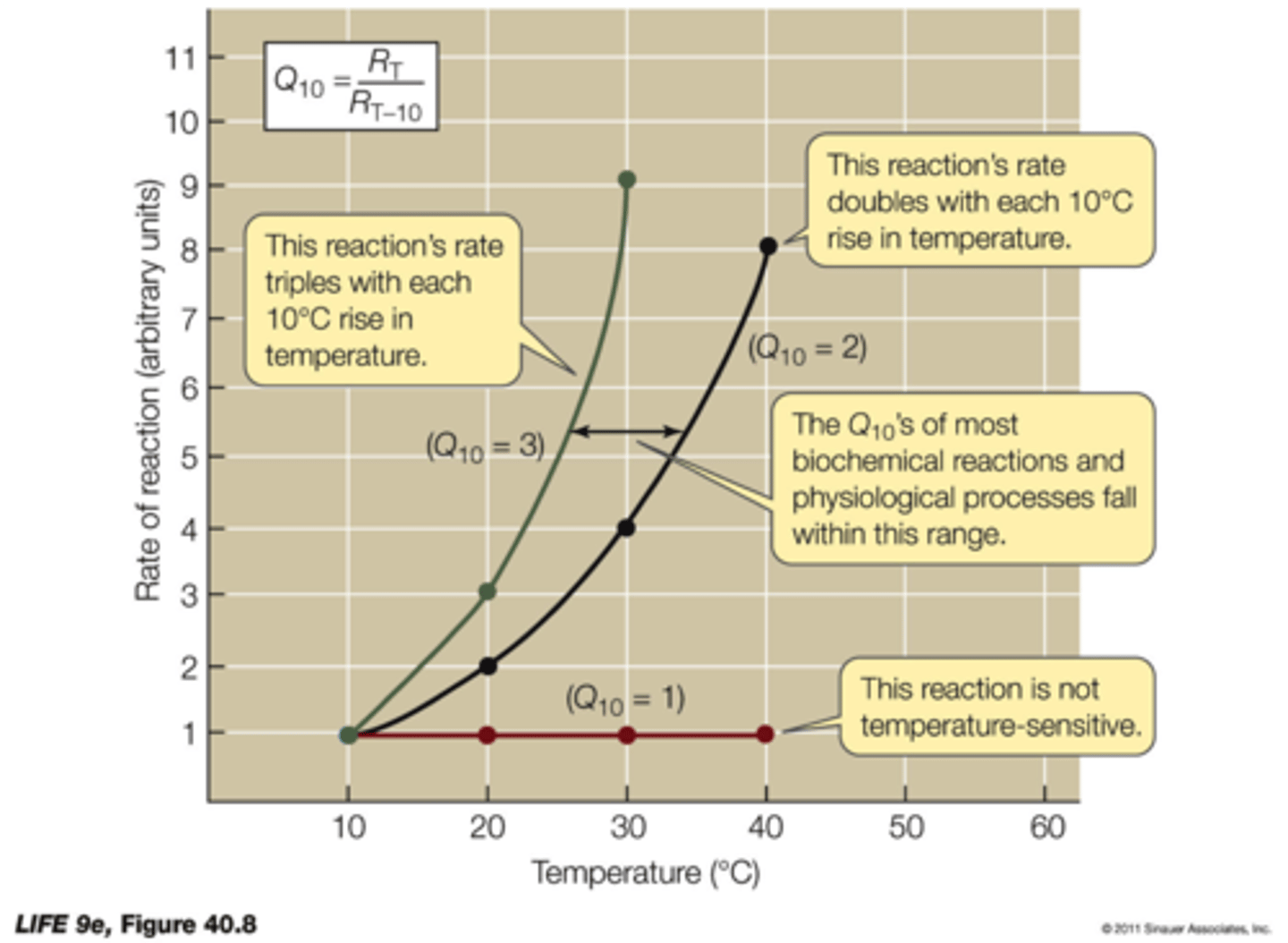
Q10
Tells us the reaction velocity's correlation to temperature.
Q10 = Rt / (Rt-10)
If Q10 stays the same at every temperature = reaction is not correlated to temperature.
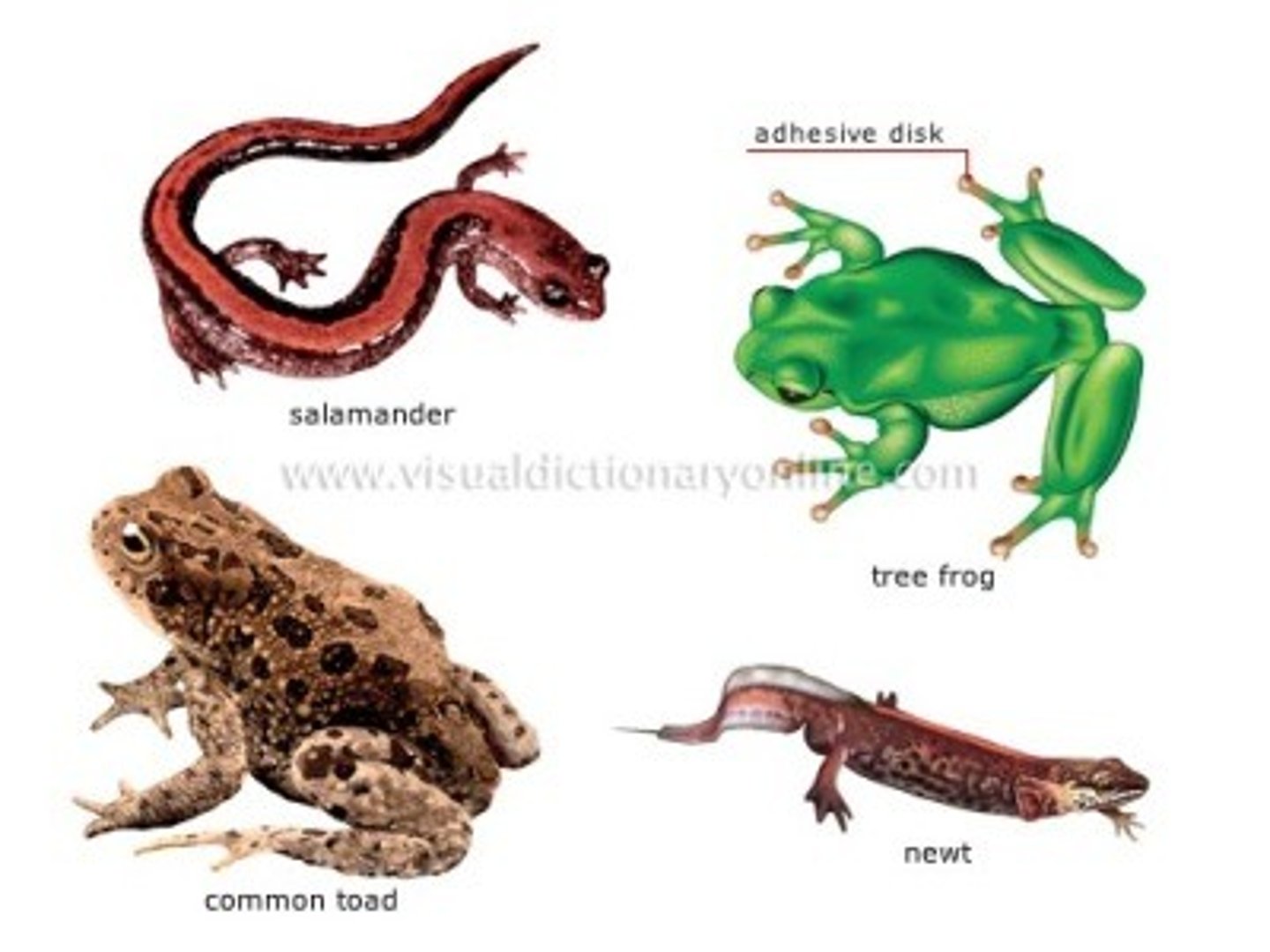
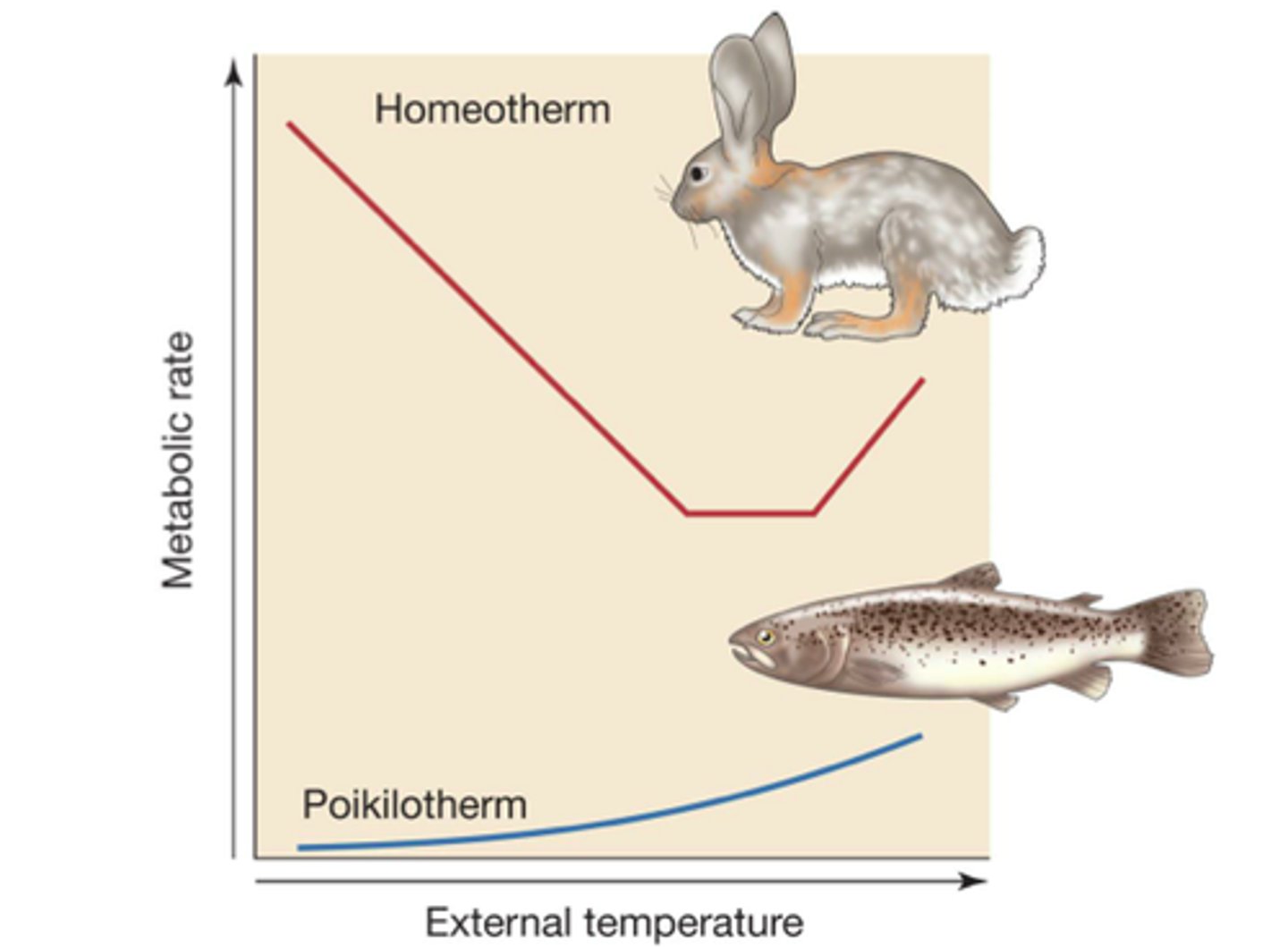
Ectotherms (poikilotherms)
Organism dependent on outer conditions to regulate their temperature;
Like reptiles and fishes.
Endotherms
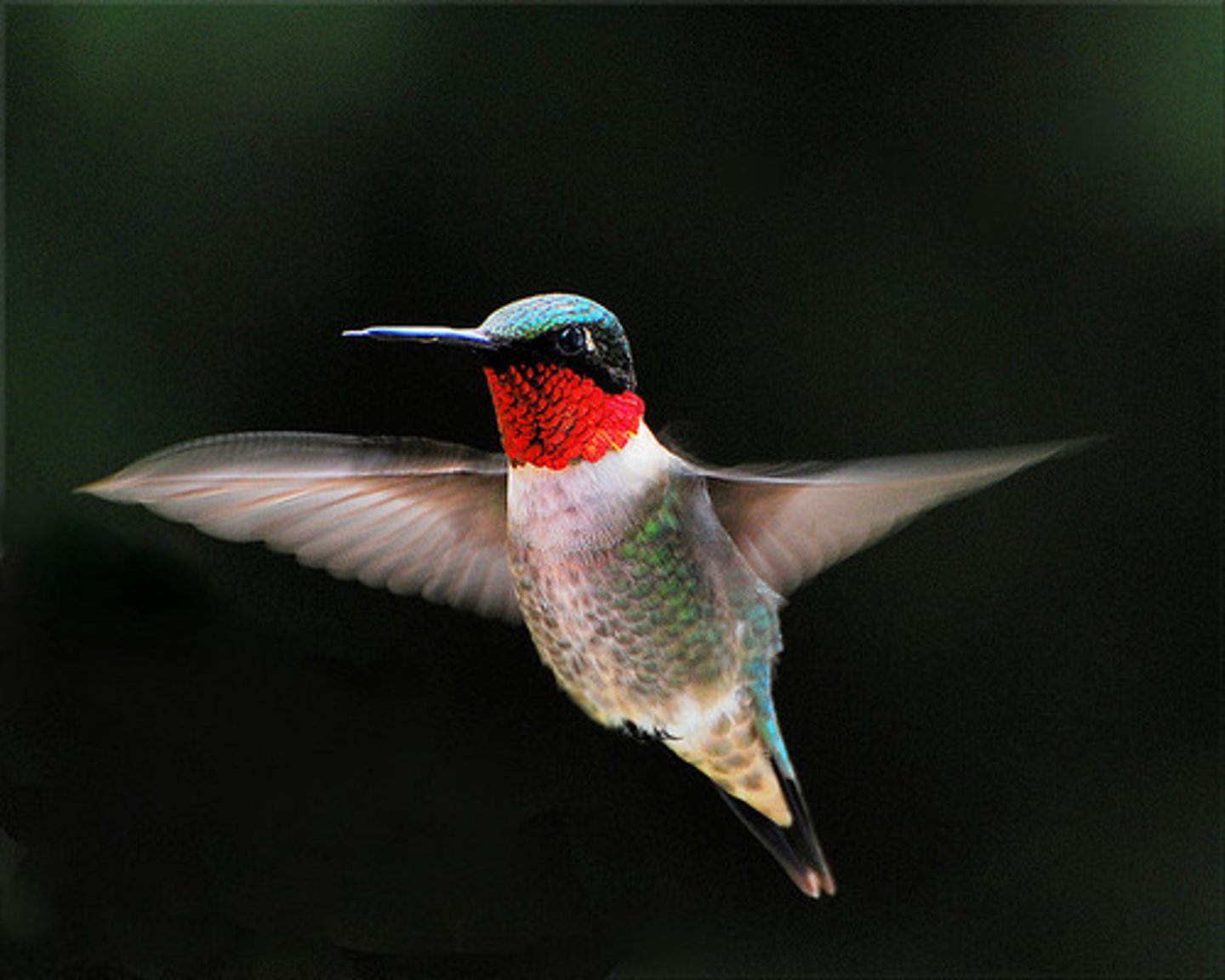
Organism that can regulate their temperature by producing heat through metabolism or by actively releasing heat to cool down.
Like mammals and birds (also insect that can contract their wing-muscles to generate heat)
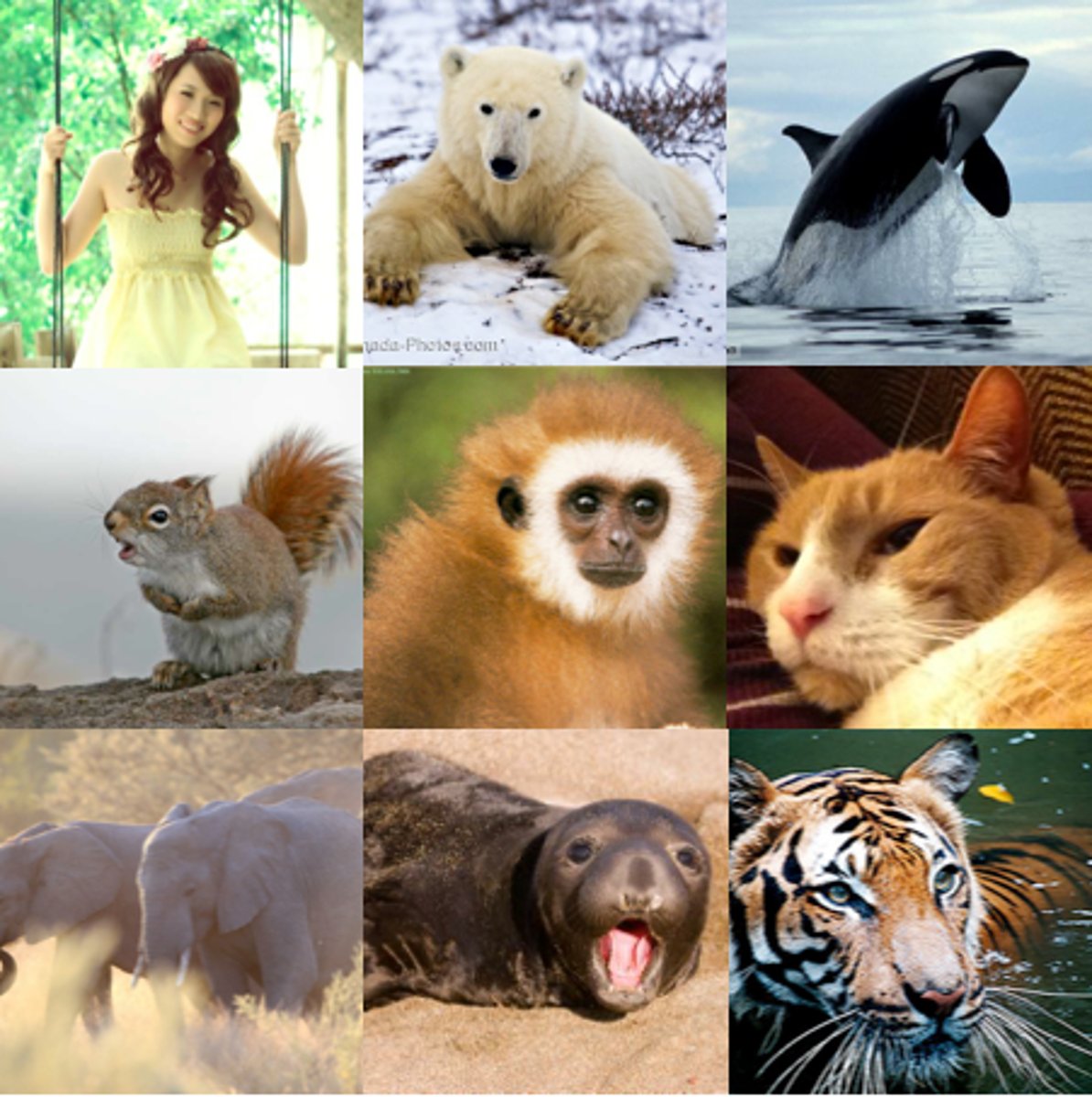
Homeotherms
Endotherms that keep a stable temperature all throughout it's body.
All parts are equally hot.
Heterotherms
Organisms that keep an unstable/different temperature throughout it's body.
Regional heterotherm = different body-parts have different temperatures
Temporal heterotherm = body temperature changes over the course of time (temporal ectotherms, like lizards, that keeps their body-temperature stable with the help of environment ((burrow, sun, burrow, sun)))
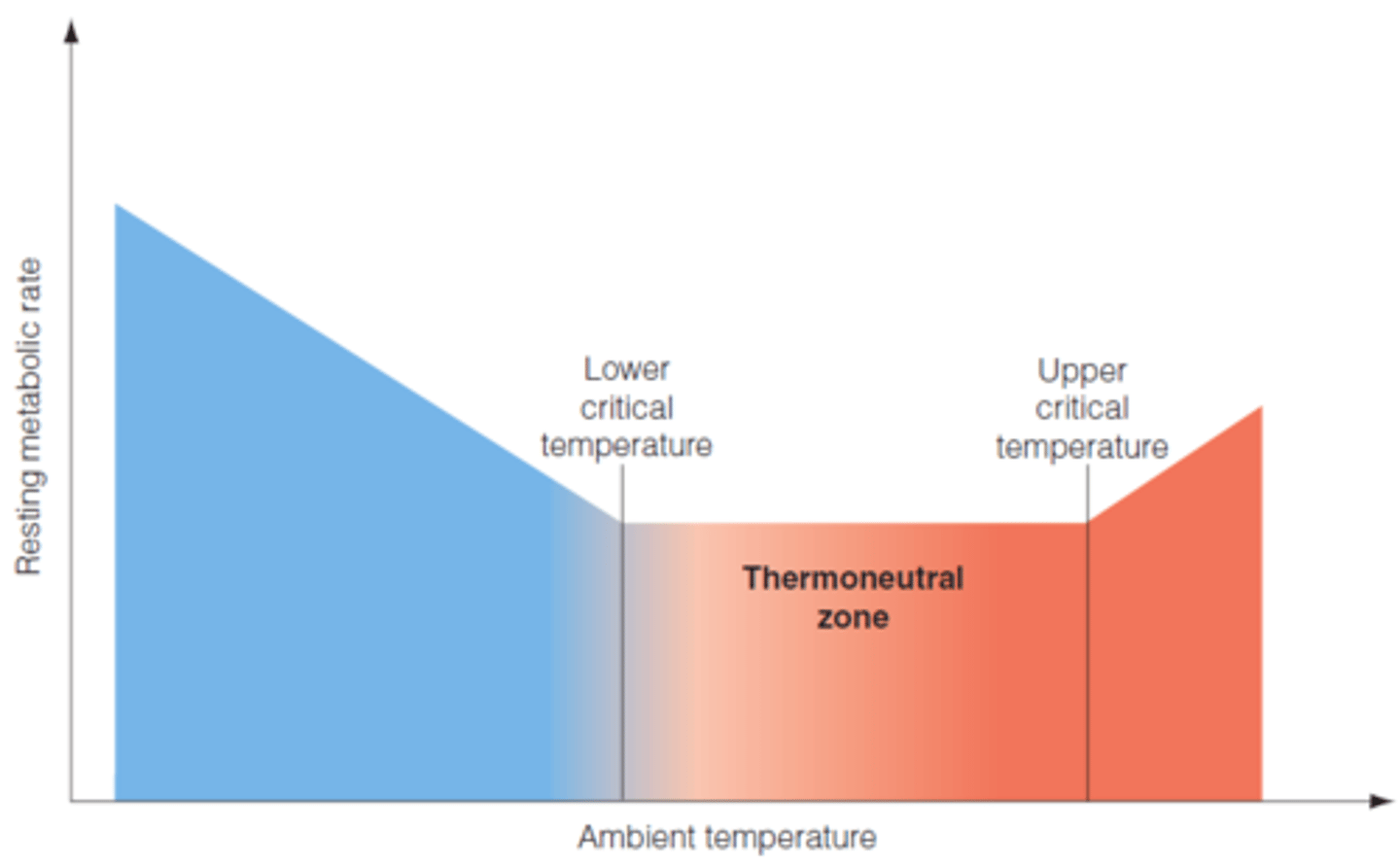
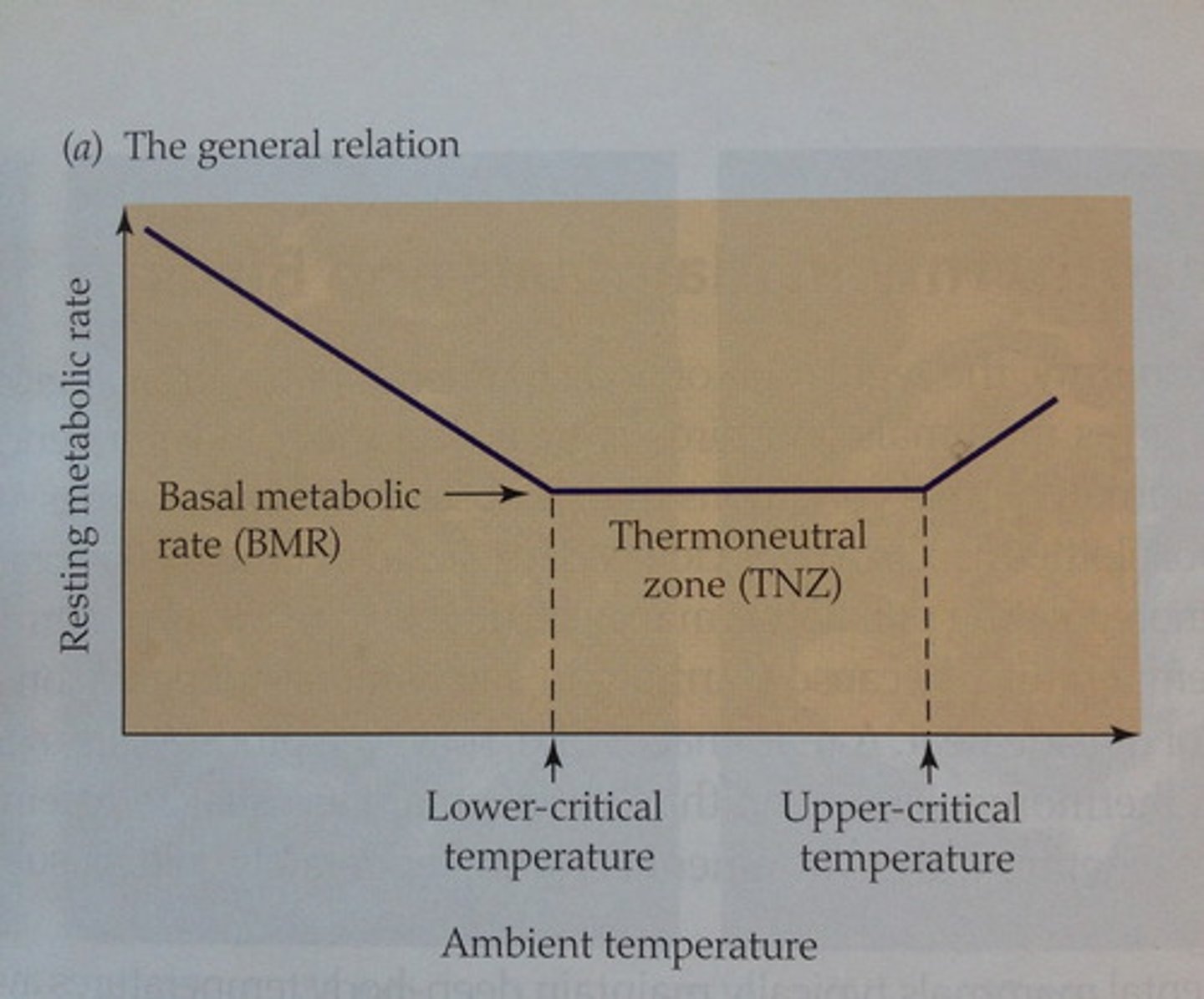
Thermoneutral zone
The range of environmental temperatures within which the metabolic rates are minimal;
The body doesn't need to spend energy to withhold it's ideal temperature (catalyzation velocity is ideal).
Radiation
Heat-radiation in waves, often IR, from body.
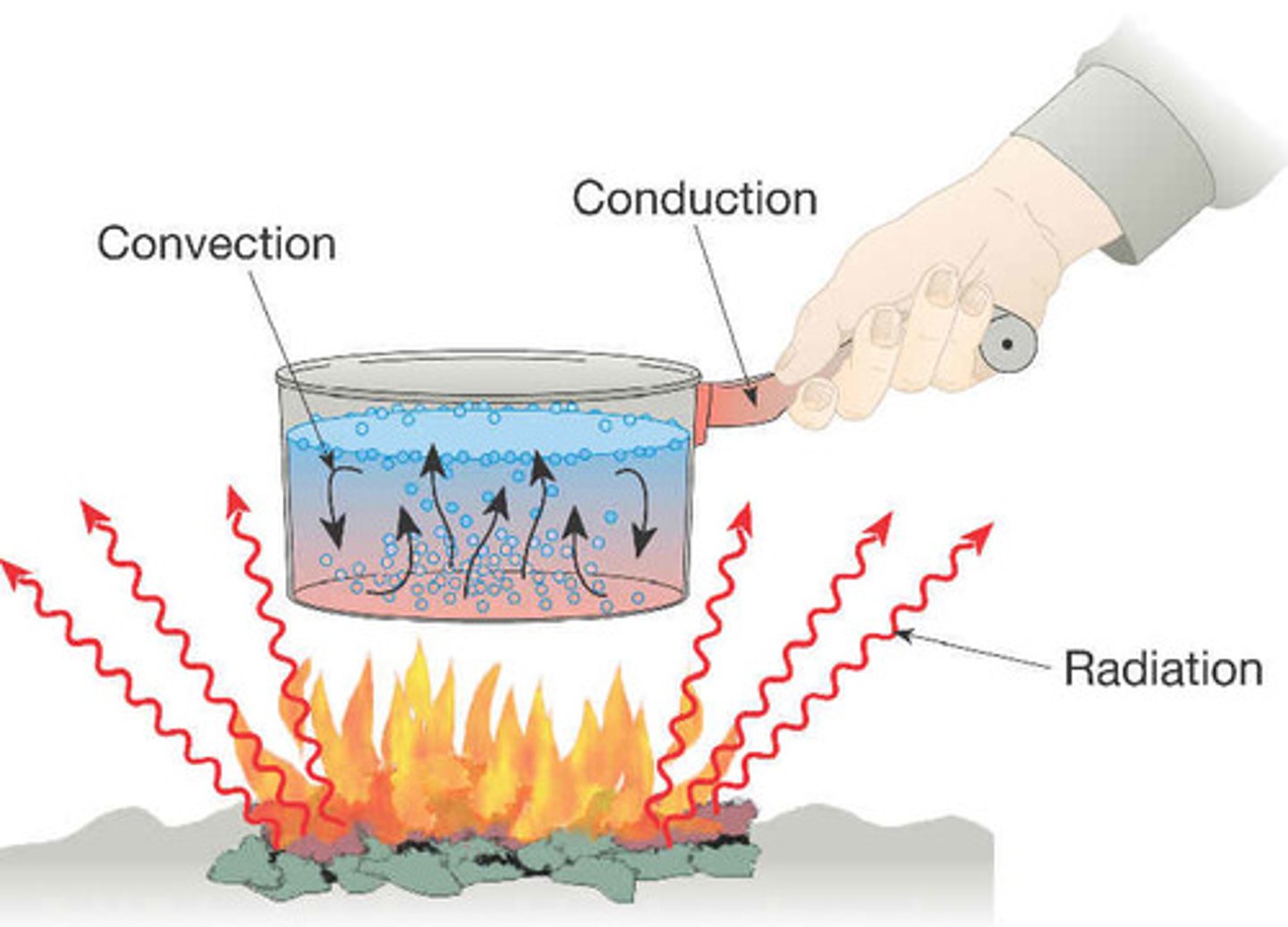
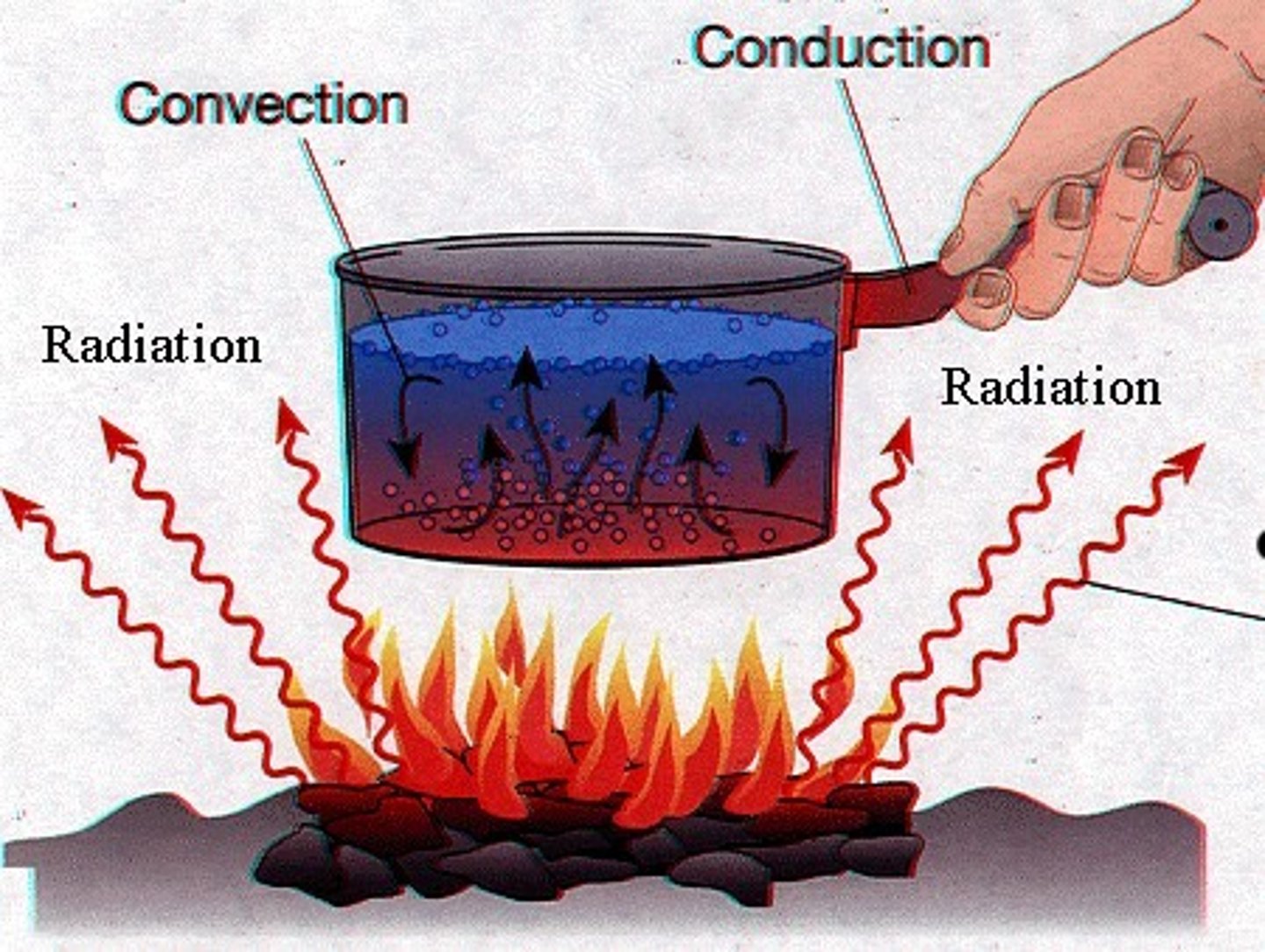
Conduction
Direct transfer of heat from one object touching another.
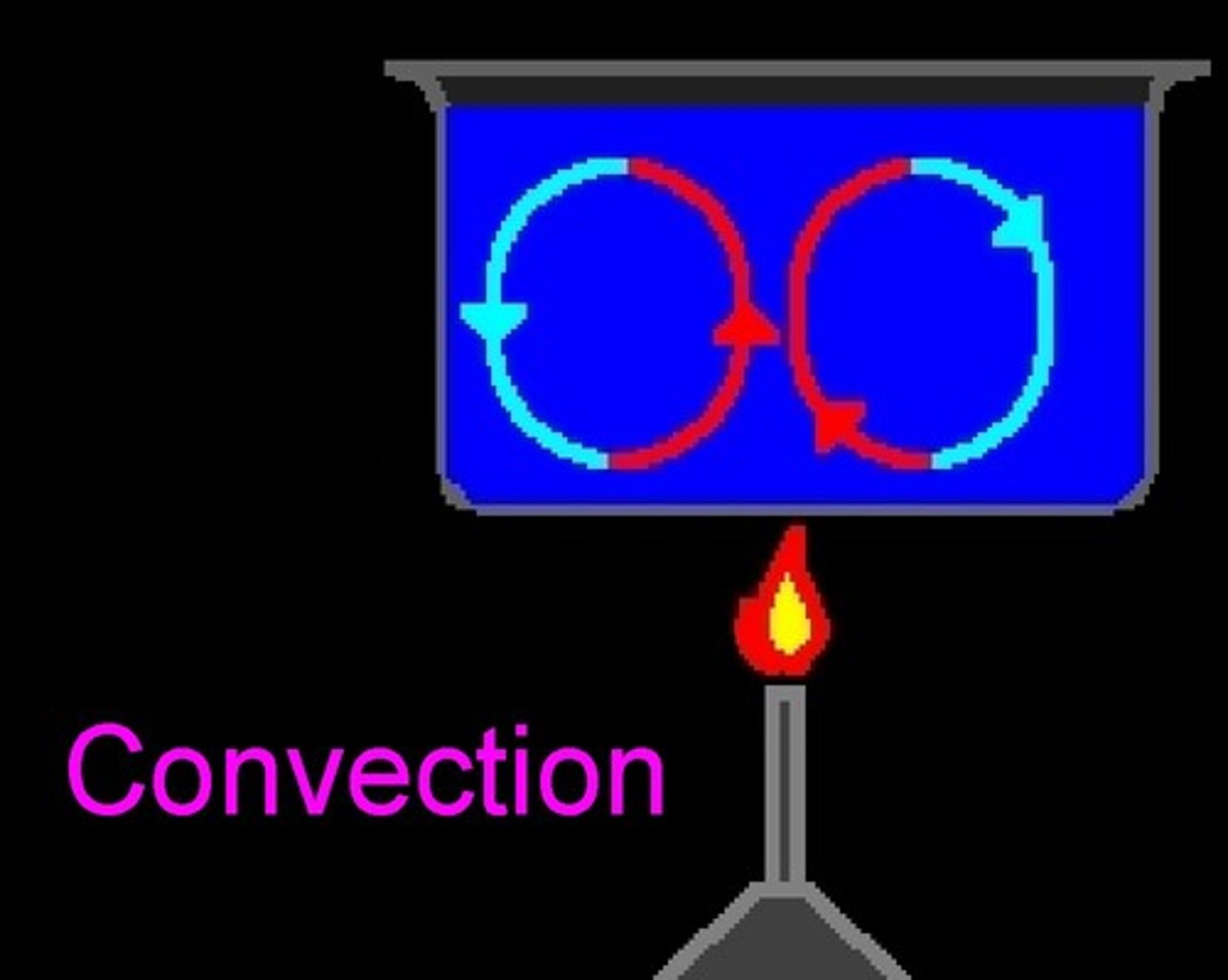
Convection
Heat-transfer by movement of a fluid/substance.
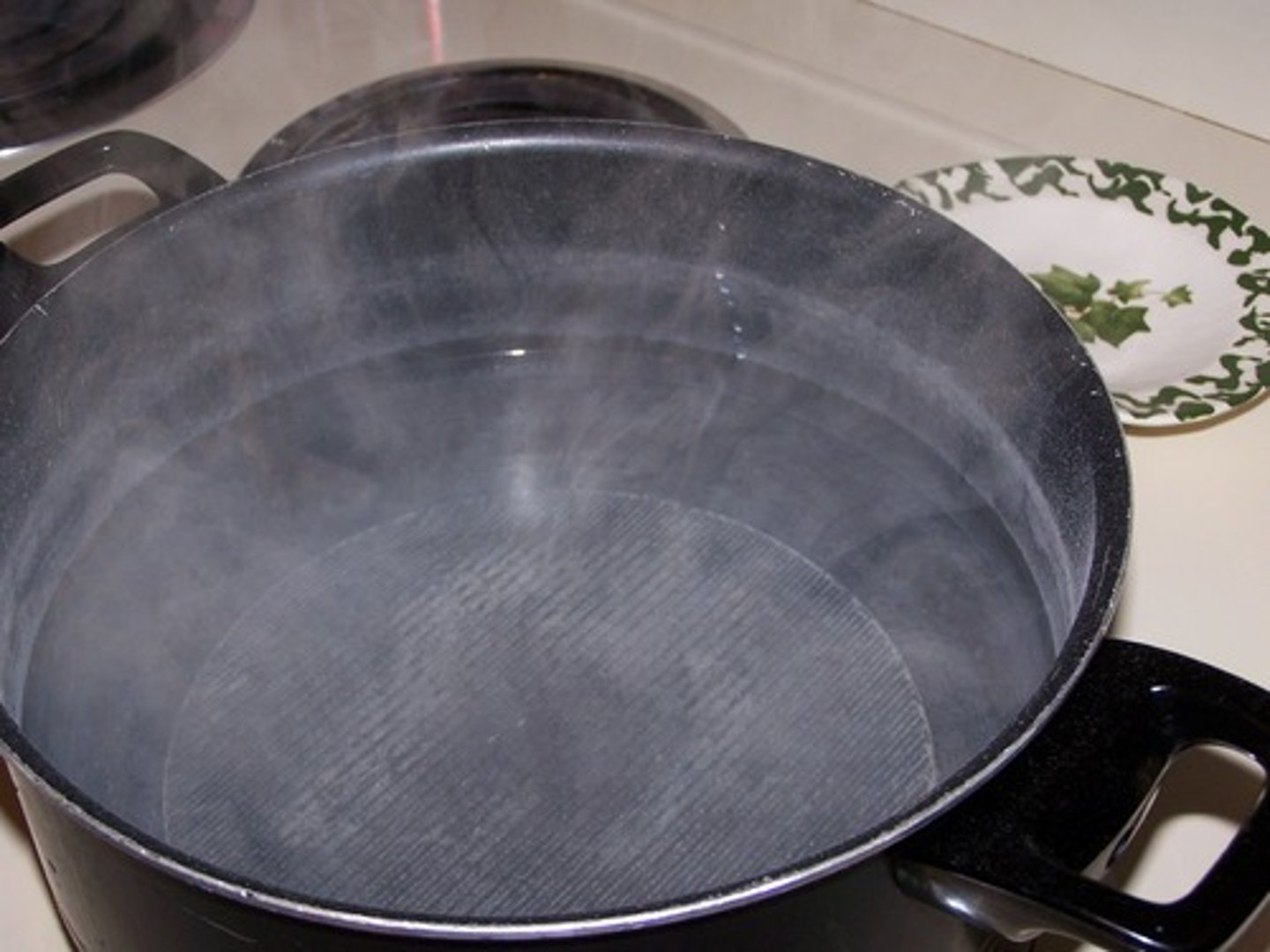
Evaporation
Loss of heat-energy by fluid => gas.
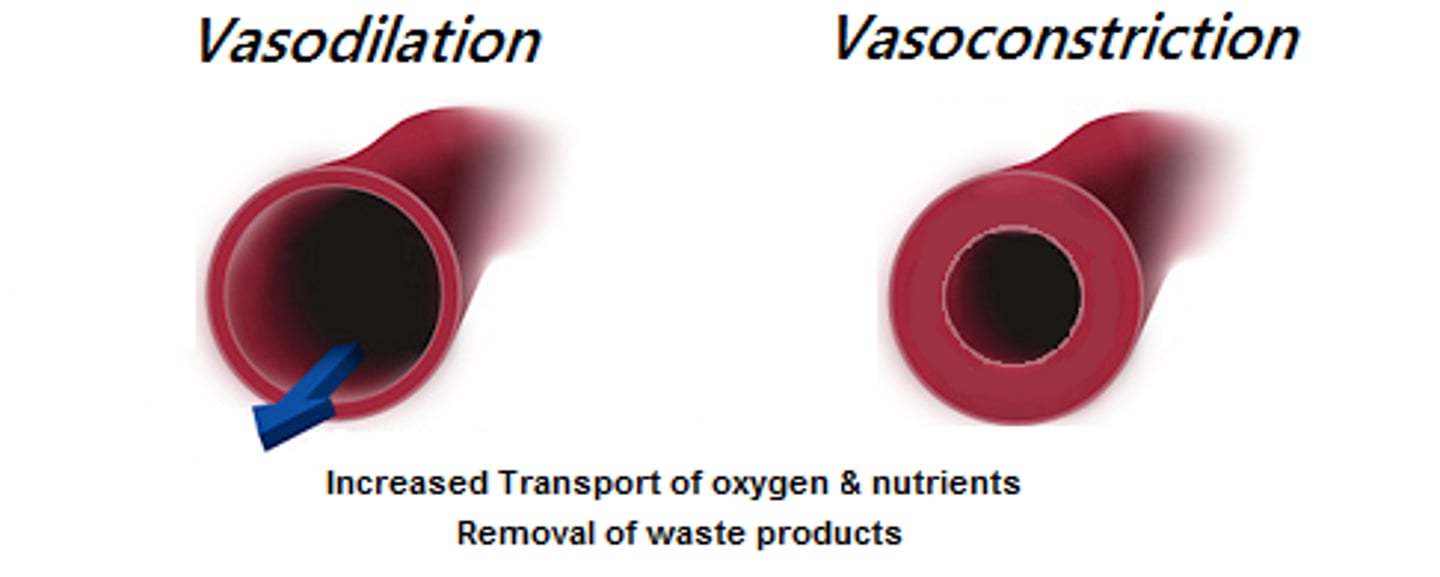
Vasodialation
Dilatation of vessels (to release more heat from blood-stream).
Like how blood-vessels in our fingers dilate when we're too warm to release heat from our hands, the shunt (another path blood can take inside hands that doesn't lead to the fingers) also constricts forcing blood to run through finger-vessels. Opposite happens if we're too cold.
Some elephants even have small cracks in their skin's that releases H2O onto skin and cools it down.
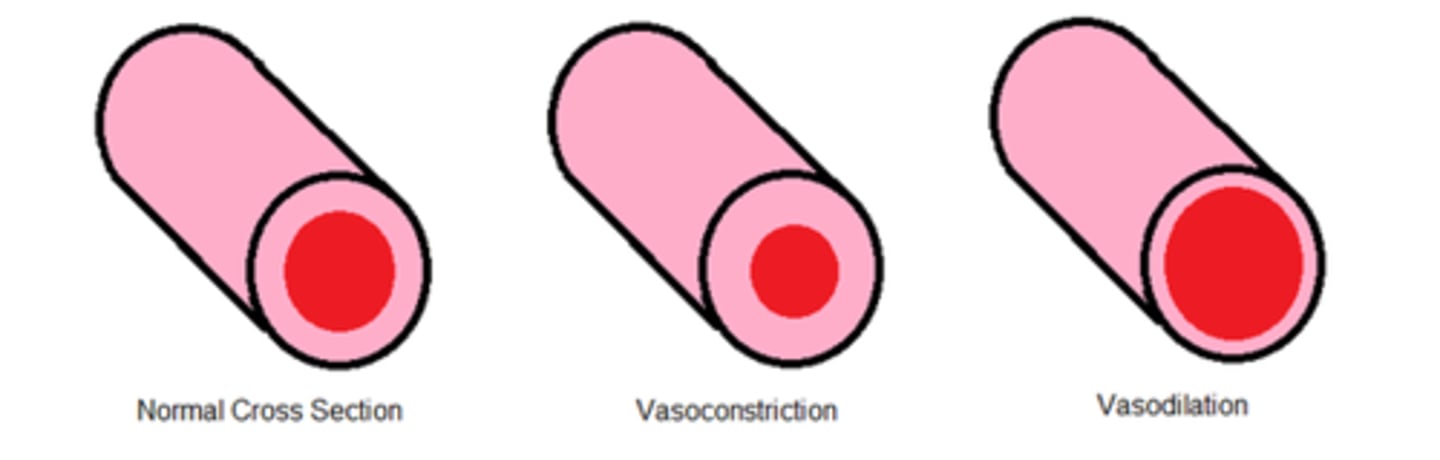
Vasoconstriction
Constriction of vessels (to keep heat inside body).
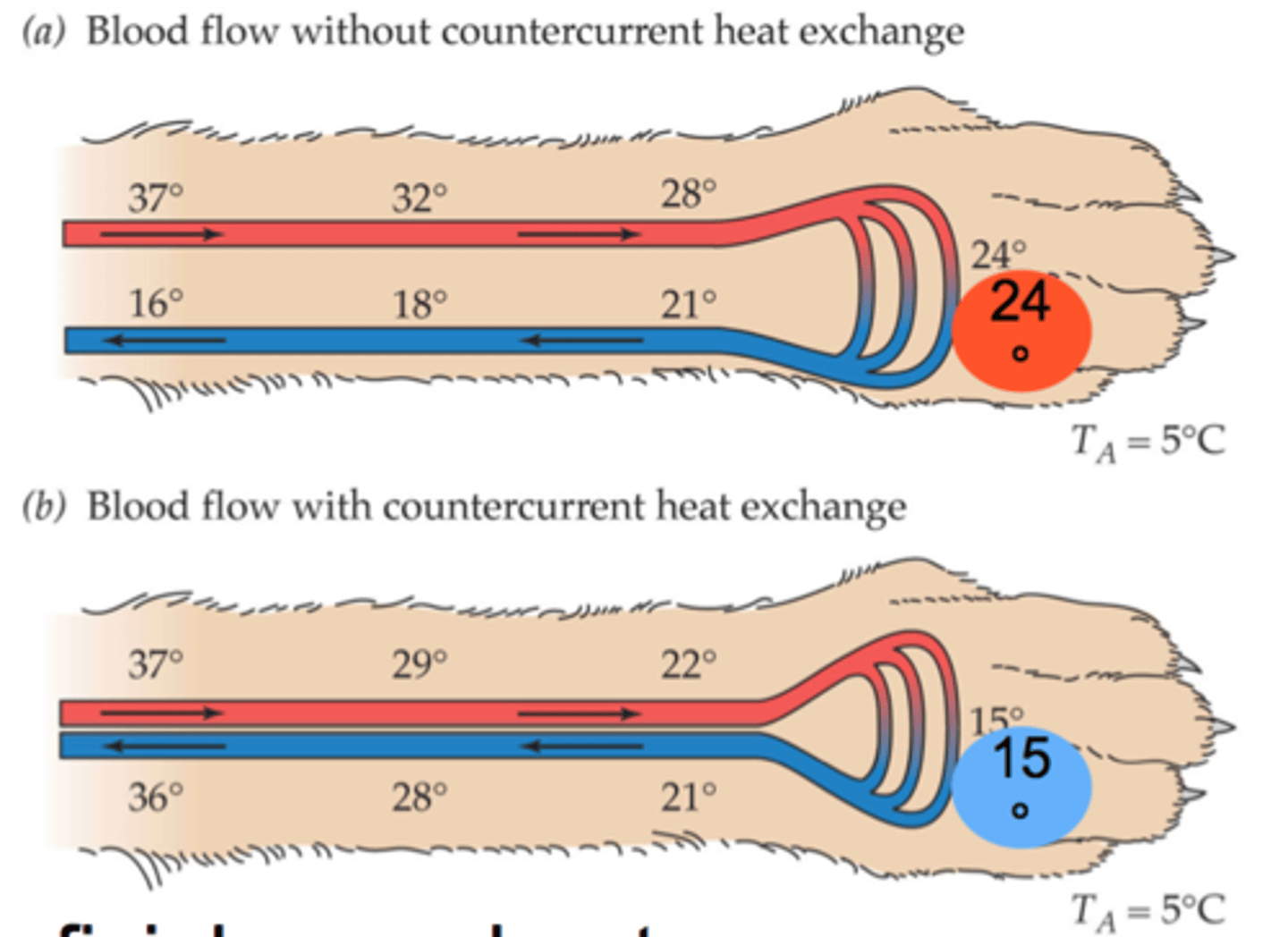
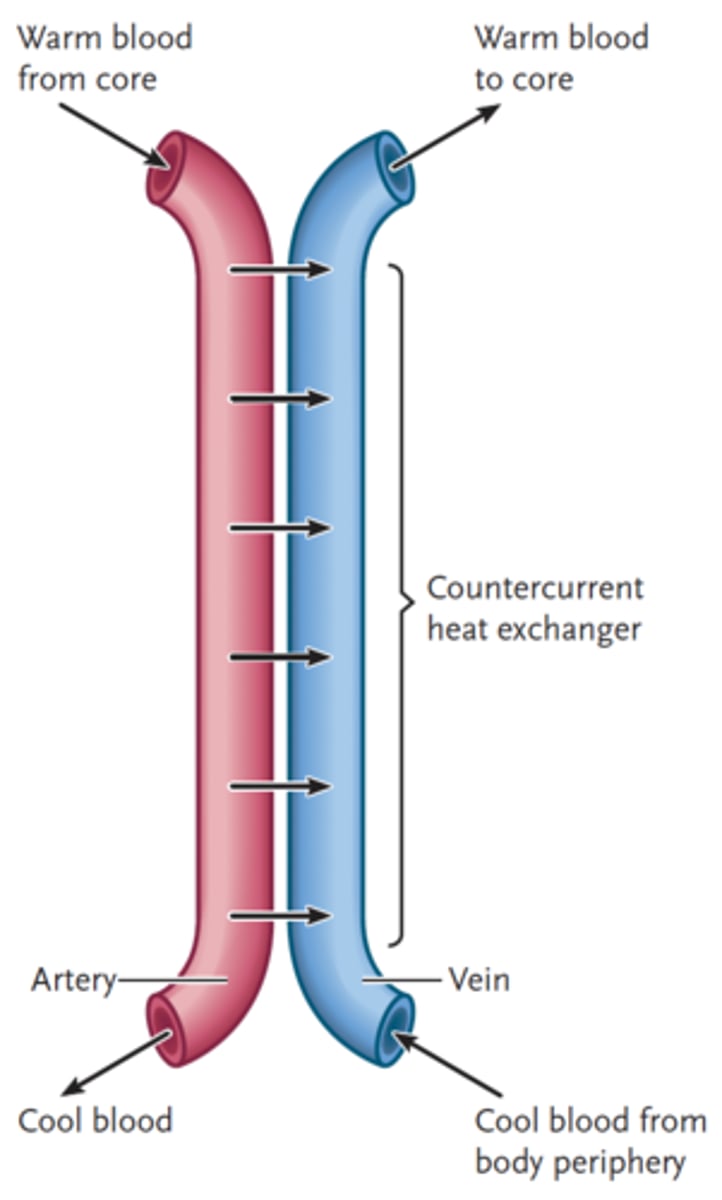
Upstream (counter-current) heat exchange
Running arteries and veins next to one another so that heat will pass from the hotter vessel to the colder.
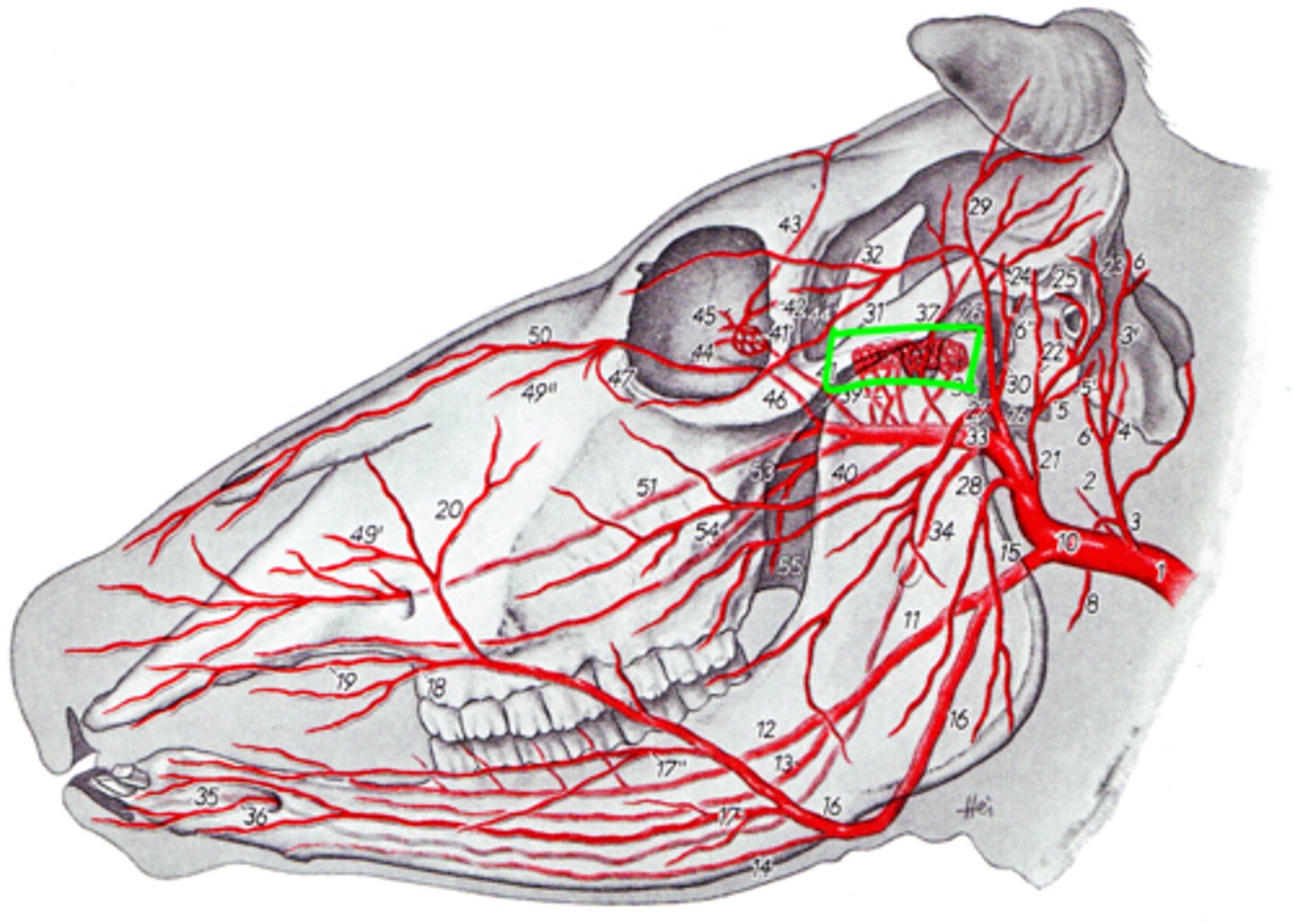
Like how tuna/sharks have rete mirabile networks of their blood-vessels, so that the arteries coming from the cold gills, run next to the veins coming from the hot inner body so that heat stays within the body.
Rete mirabile
A network structure of vessels that run close to each-other to exchange heat.
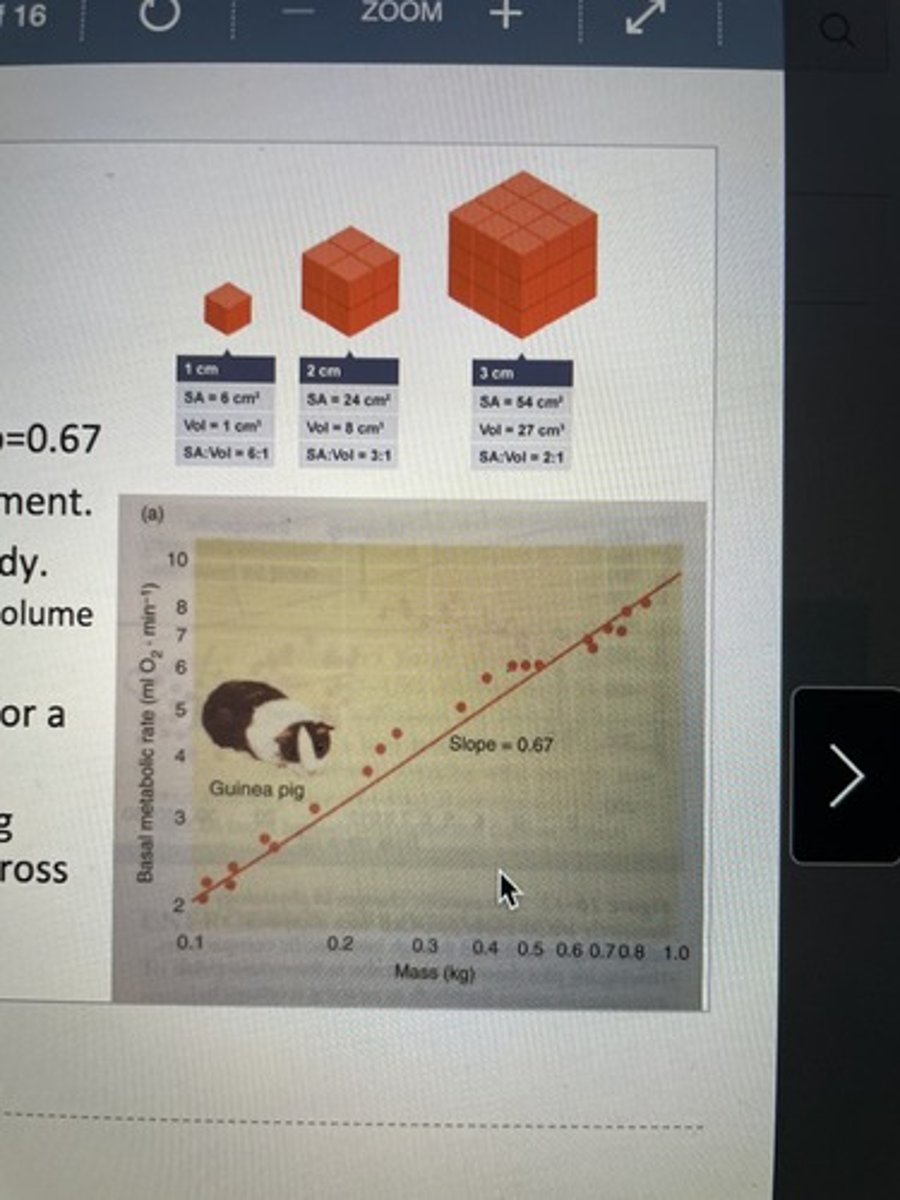
Metabolic rate
The rate at which the body uses energy.
The metabolic rate generally falls with increased body mass.
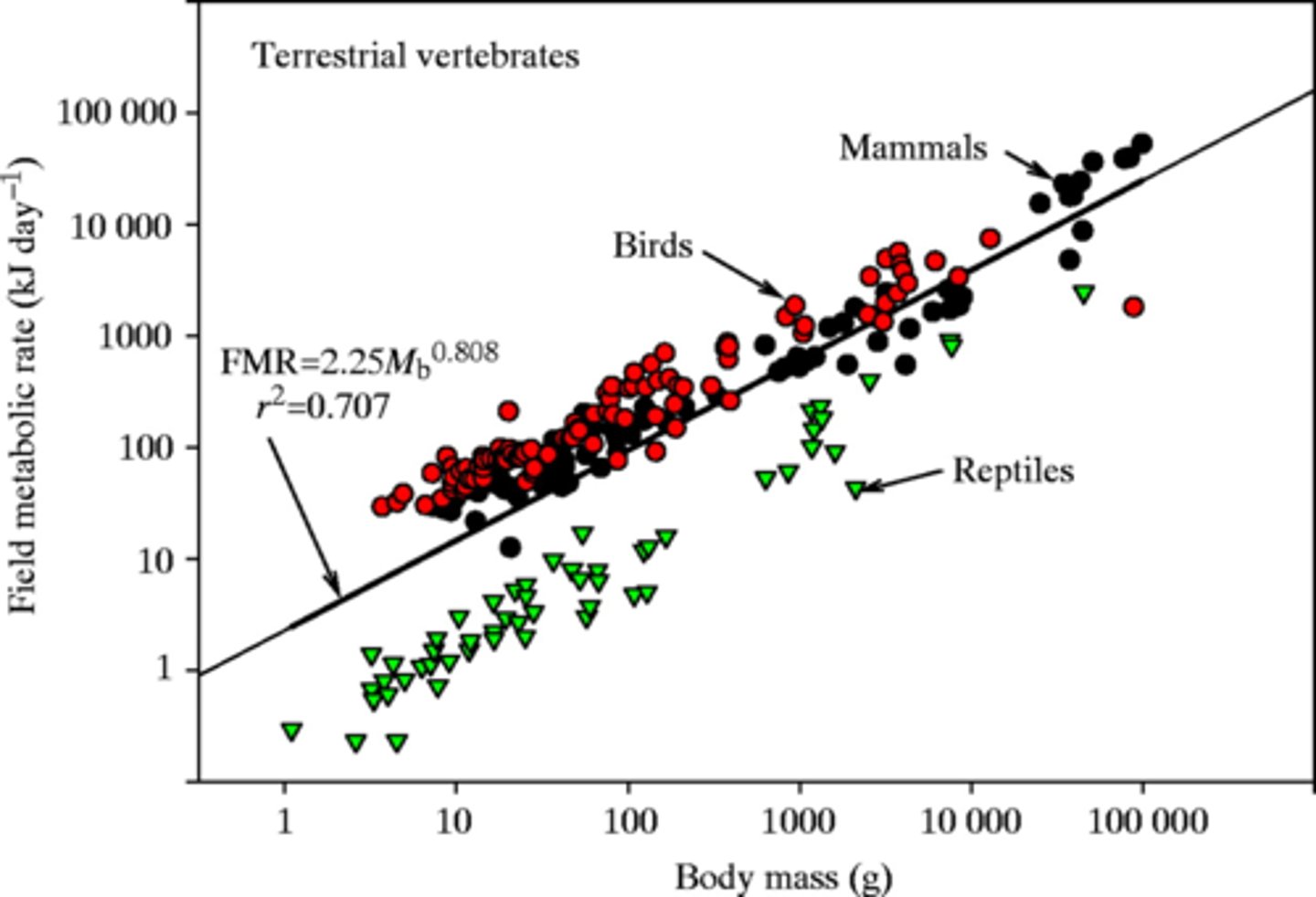
Rubner's Surface Law
The higher % of cells that're exposed to the environment, the smaller the animal the higher the %, the higher the metabolic rate needed is to be able to warm itself up.
Thermoneutral zone in mammals (graph)
On y-axis: metabolic rate
On x-axis: ambient (environmental) temperature in °C
Critical low = The temperature in which the animal needs to start producing heat to keep a stable inside temperature. If too low reactions start being unable to happen.
Critical high = The temperature in which the animal needs to start releasing heat to keep a stable inside temperature. If too high proteins denaturating.
3 ways to warm up when cold
1: Vasocontriction
2: Shivering
3: Creation of brown-fat tissue which has mitochondria that produces thermogenin-I (UPC) instead of ATP. Cold acclimation (constant 15-16 degrees) recruits brown-fat tissue and increases thermatogenesis.
2 morphological features to minimize heat-loss
1: Small ears, less exposed body-surface
2: Counter-stream heat-exchange, rete mirabile.
3 ways to cool down when warm
1: Vasodialation
2: Sweating
3: H2O evaporation (but this requires a lot of energy if not in very dry-air areas)
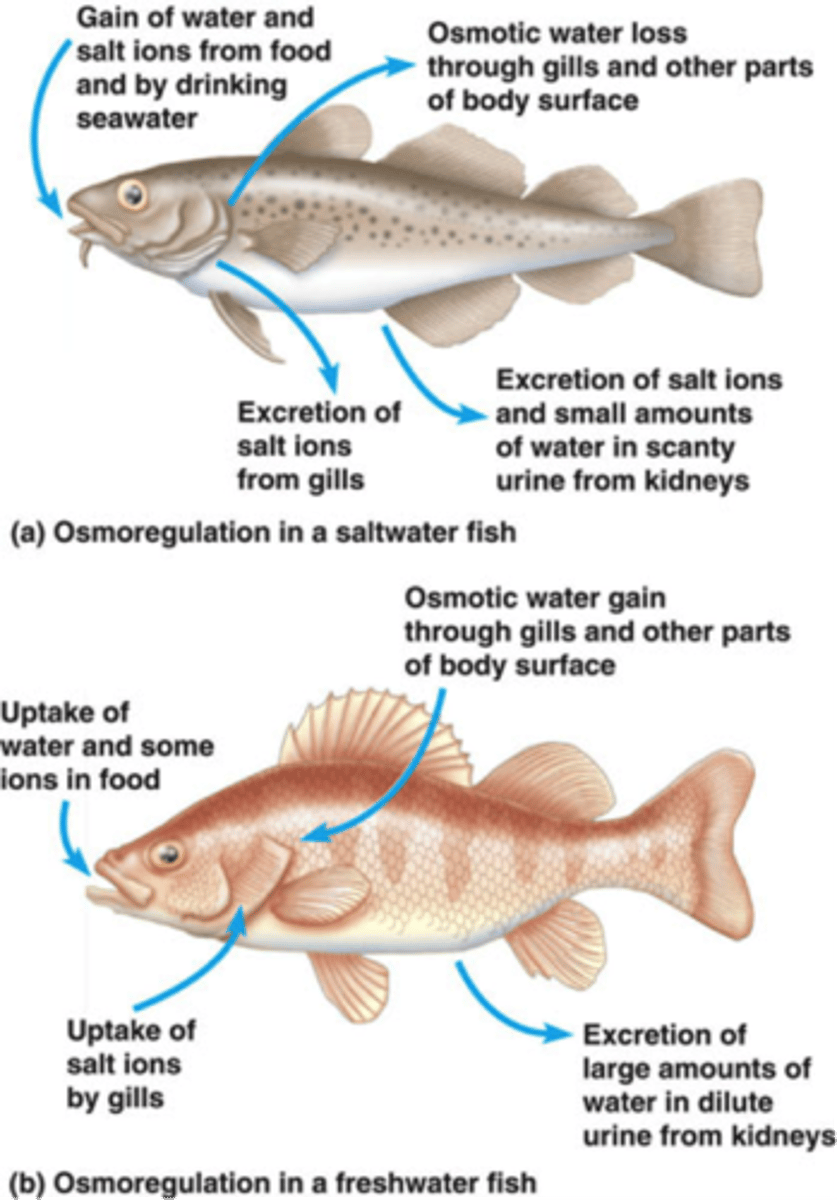
Osmoconformers vs Osmoregulators
Osmoconformers: consisting of some marine animals, are isoosmotic with their surroundings and do not regulate their osmolarity
Osmoregulators: expend energy to control water uptake and loss in a hyperosmotic or hypoosmotic environment
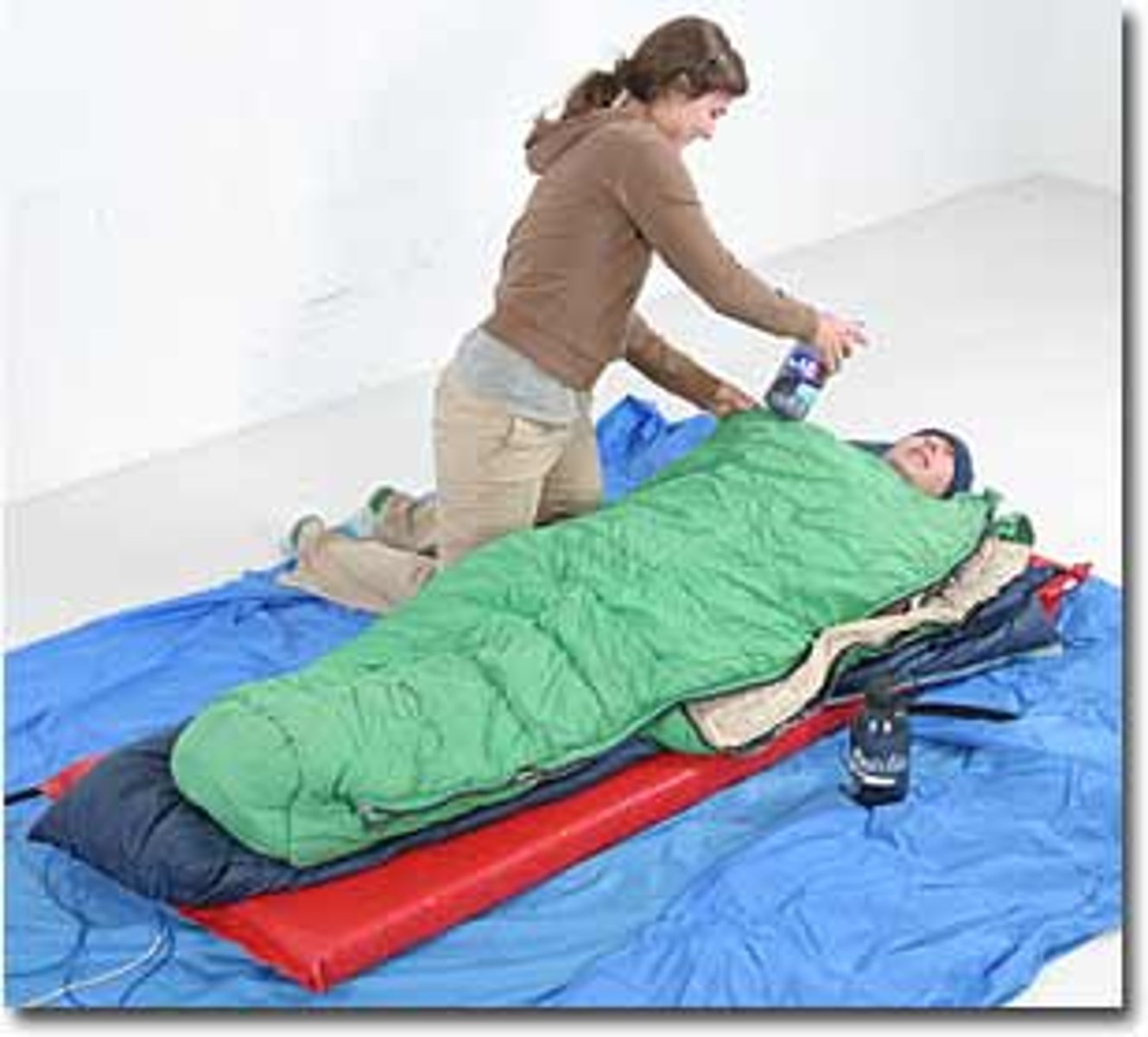
Hypothermia
Abnormally low body temperature
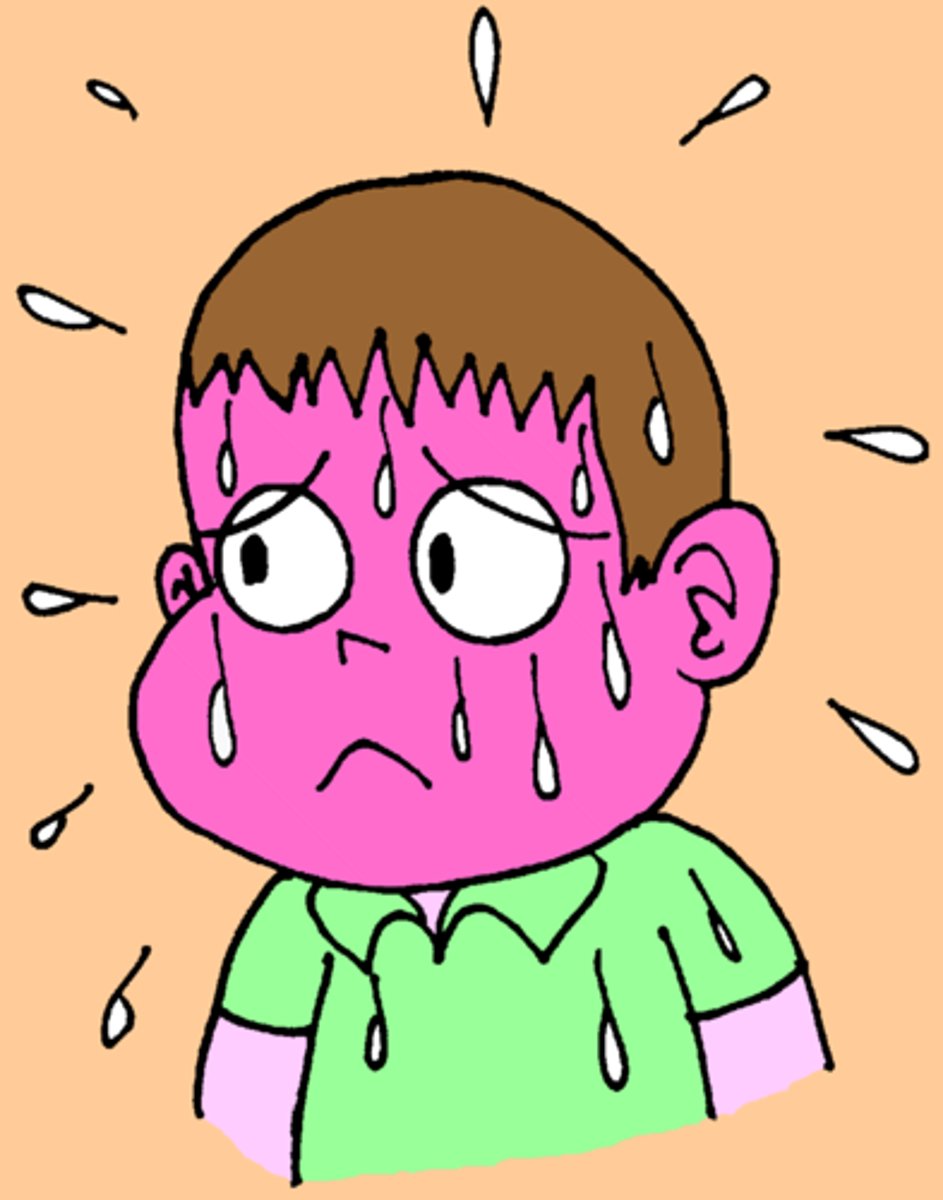
Hyperthermia
Abnormally high body temperature
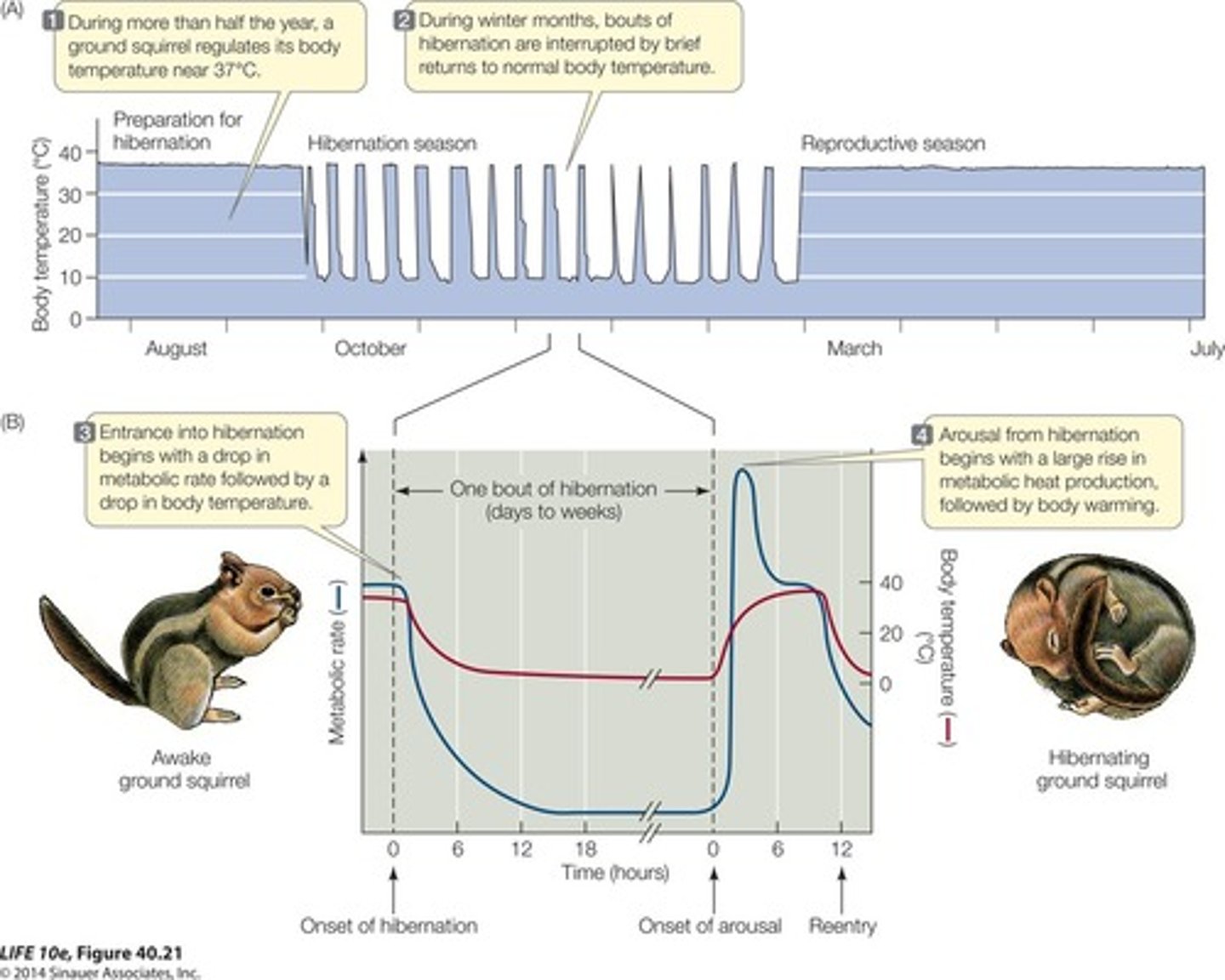
Long-term regulated hypothermia
DVALA, an animal that sleeps for a long time and lowers their metabolistic rate and thereby their heat.
Hormones defintion
Endocrines secreted by epithelial cells directly into the extracellular fluid, either local diffusion or into blood-stream.
Reaches target receptors that can be either extracellular-membrane bound OR internal.
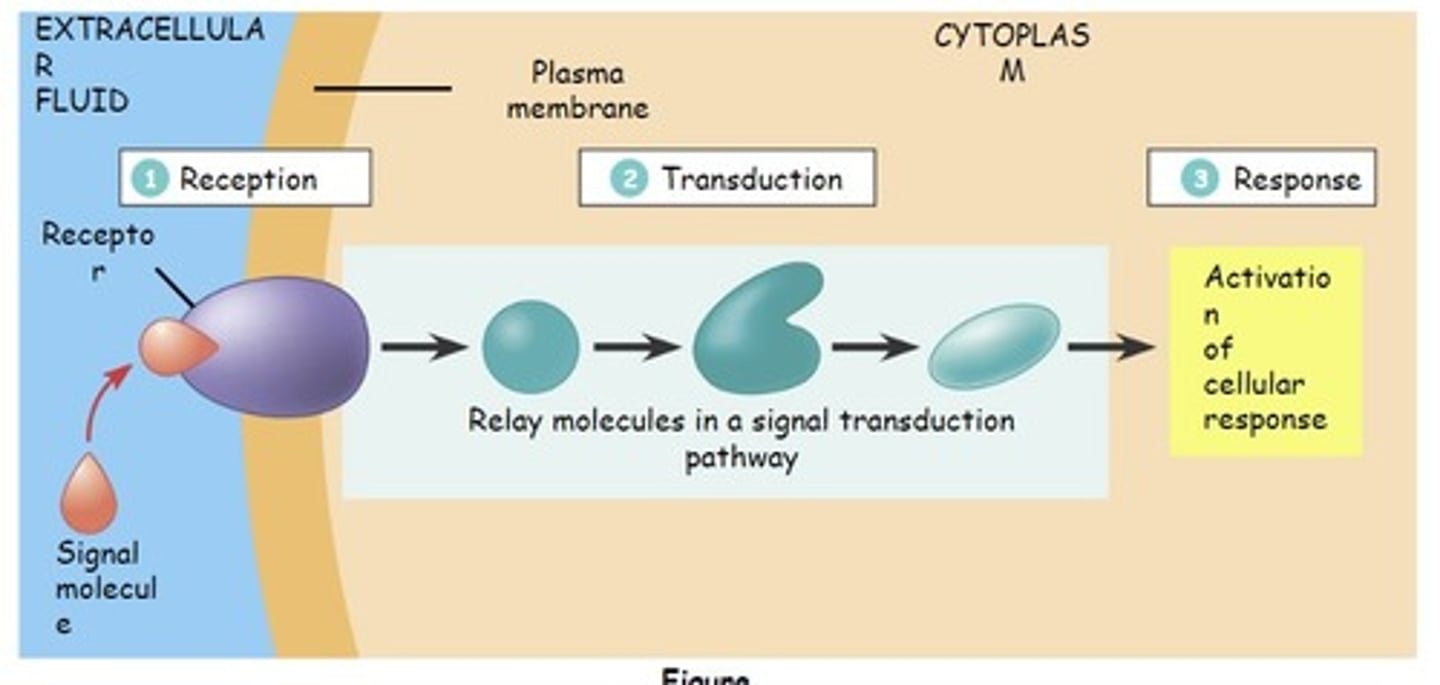
3 phases of signal transduction
1: Reception
2: Transduction
3: Response
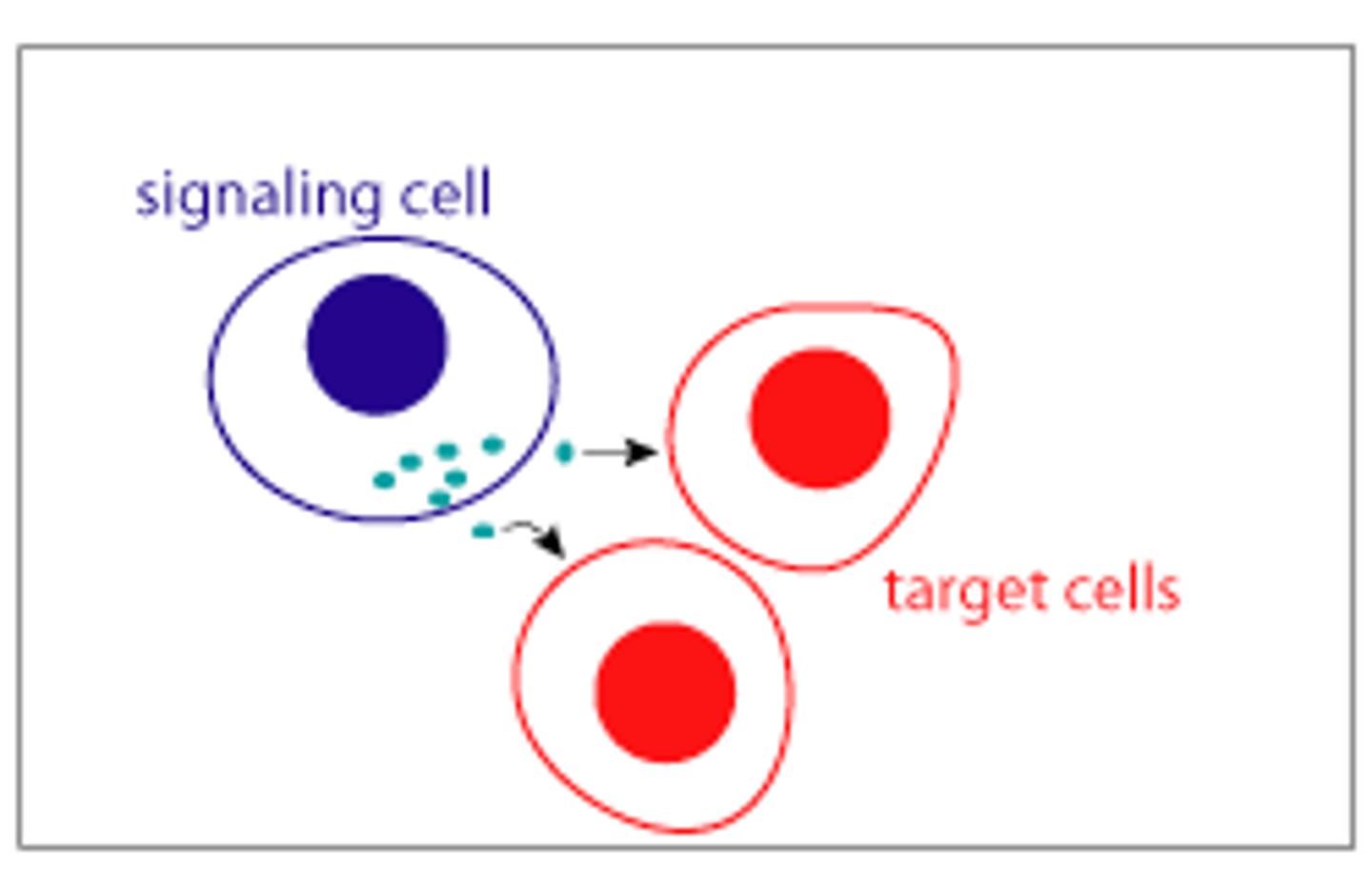
Paracrine
Hormones that acts locally, affecting neighbouring/local cells, won't spread to the rest of the body.
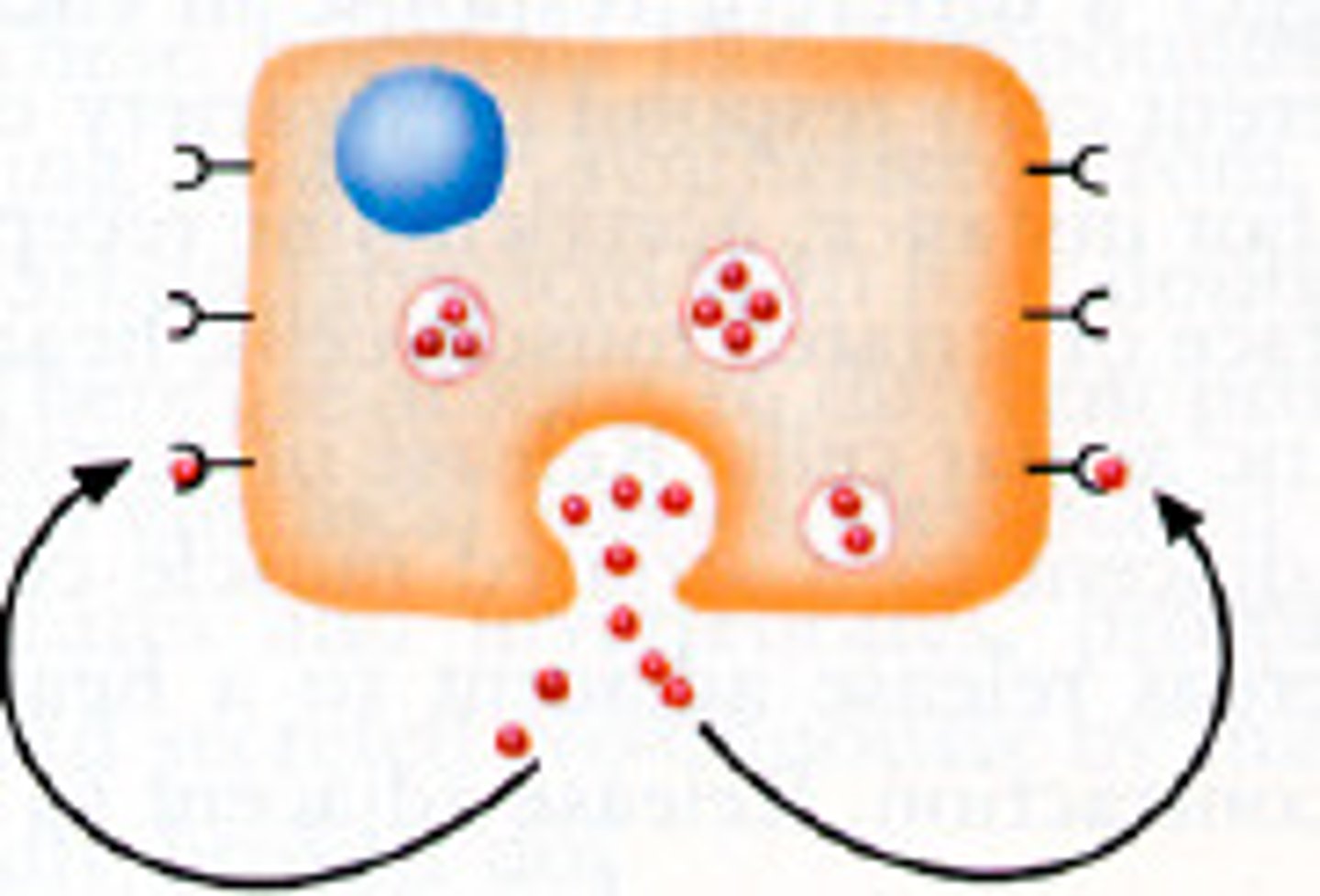
Autocrine
Hormones that affects the same cell that secreted them.
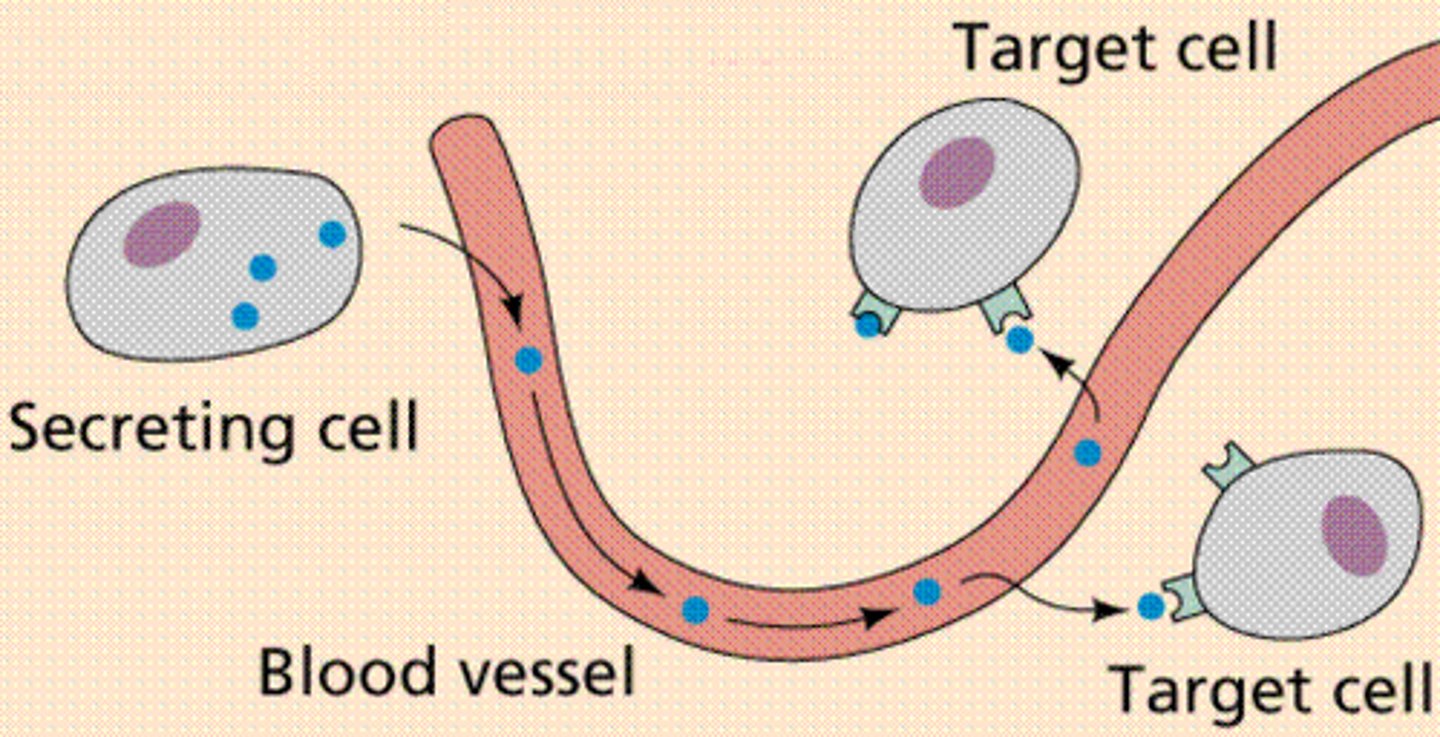
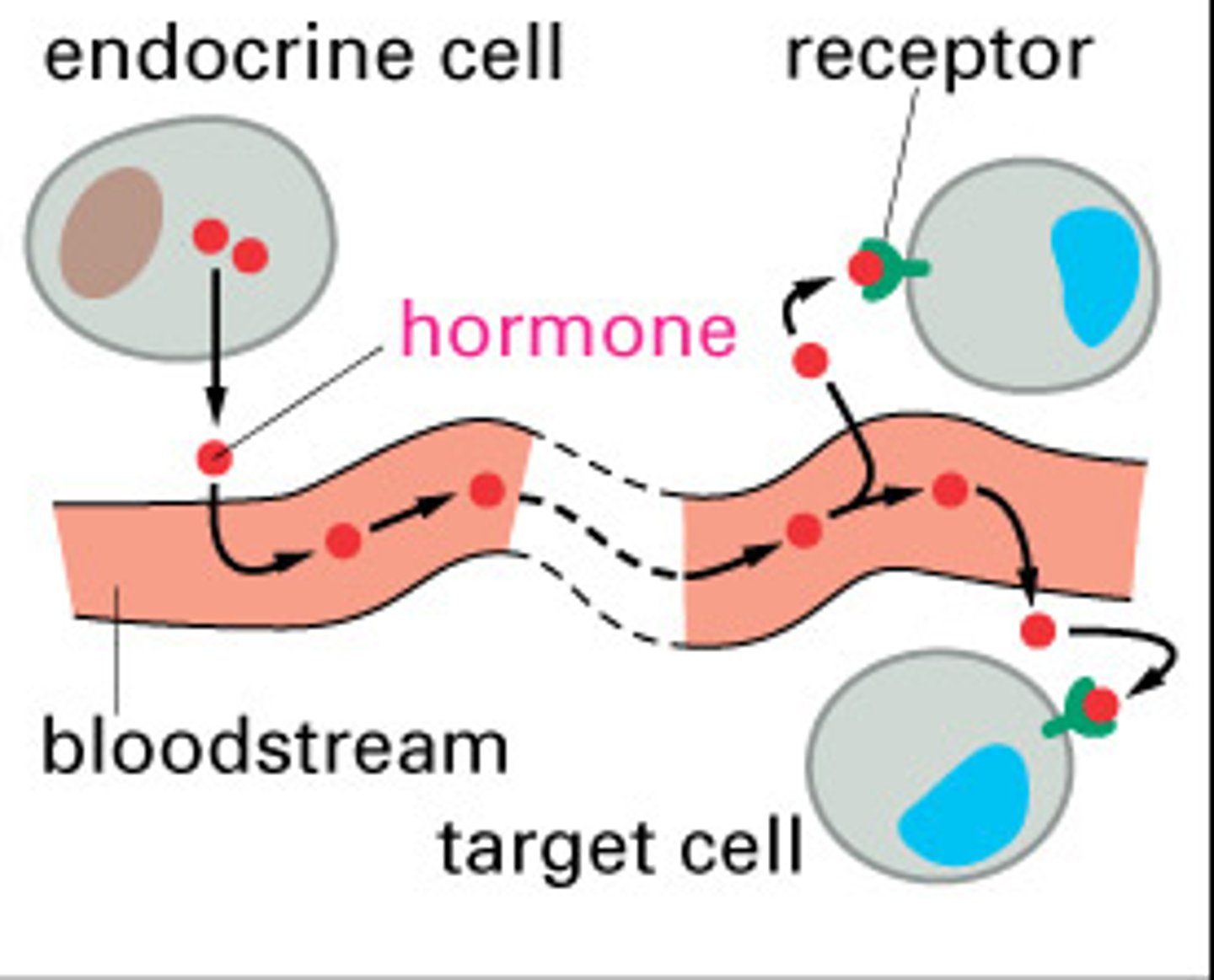
Endocrine
Hormones that acts distally, affecting a distant cell by traveling through blood-stream.
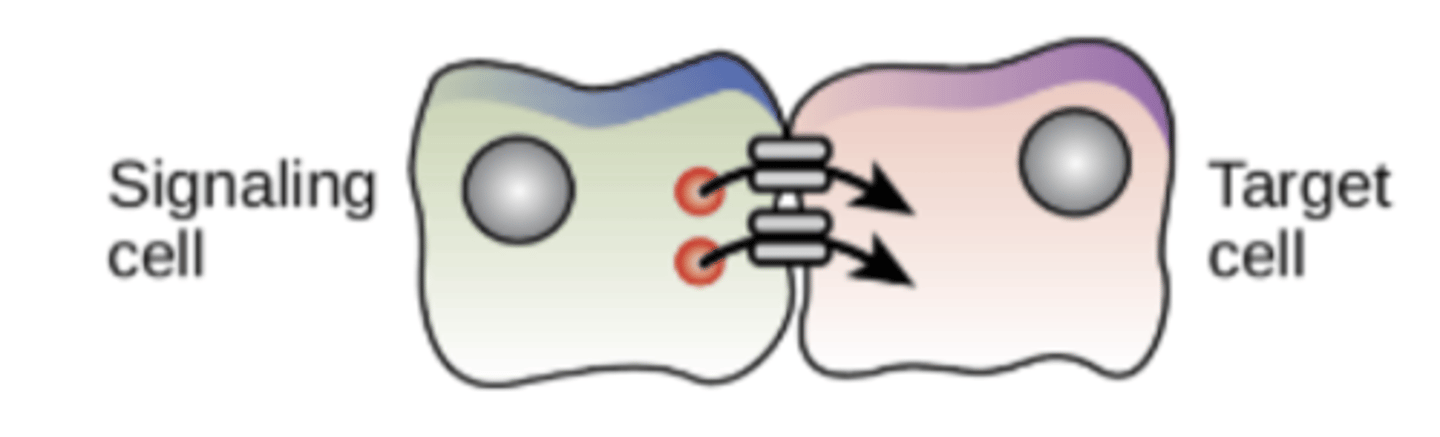
Signaling across gap-junctions
Hormones that spread from one cell to another through connective gap-junctions.
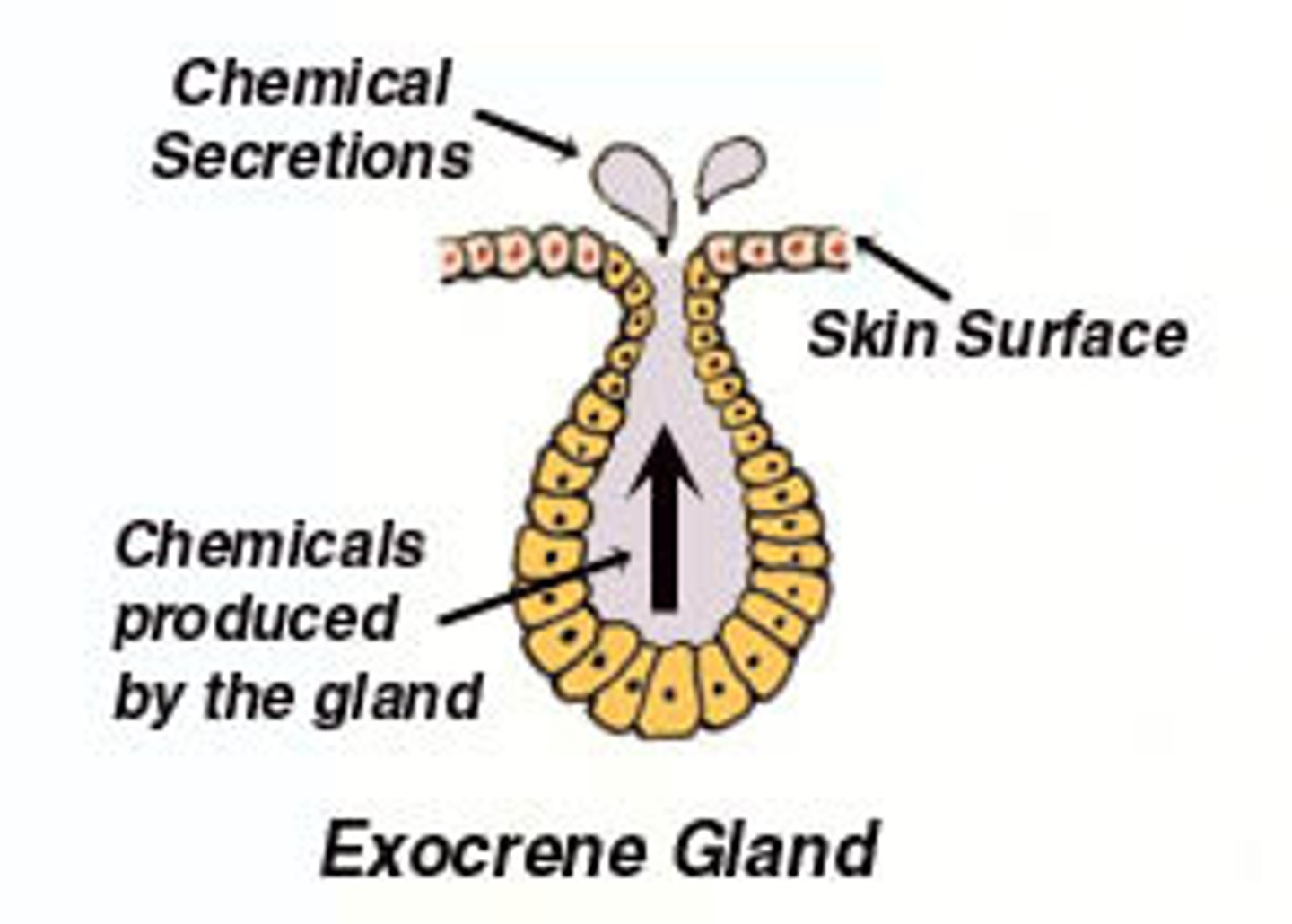
Exocrine
Hormones that're excreted into the external environment.
Like sweat or saliva glands.
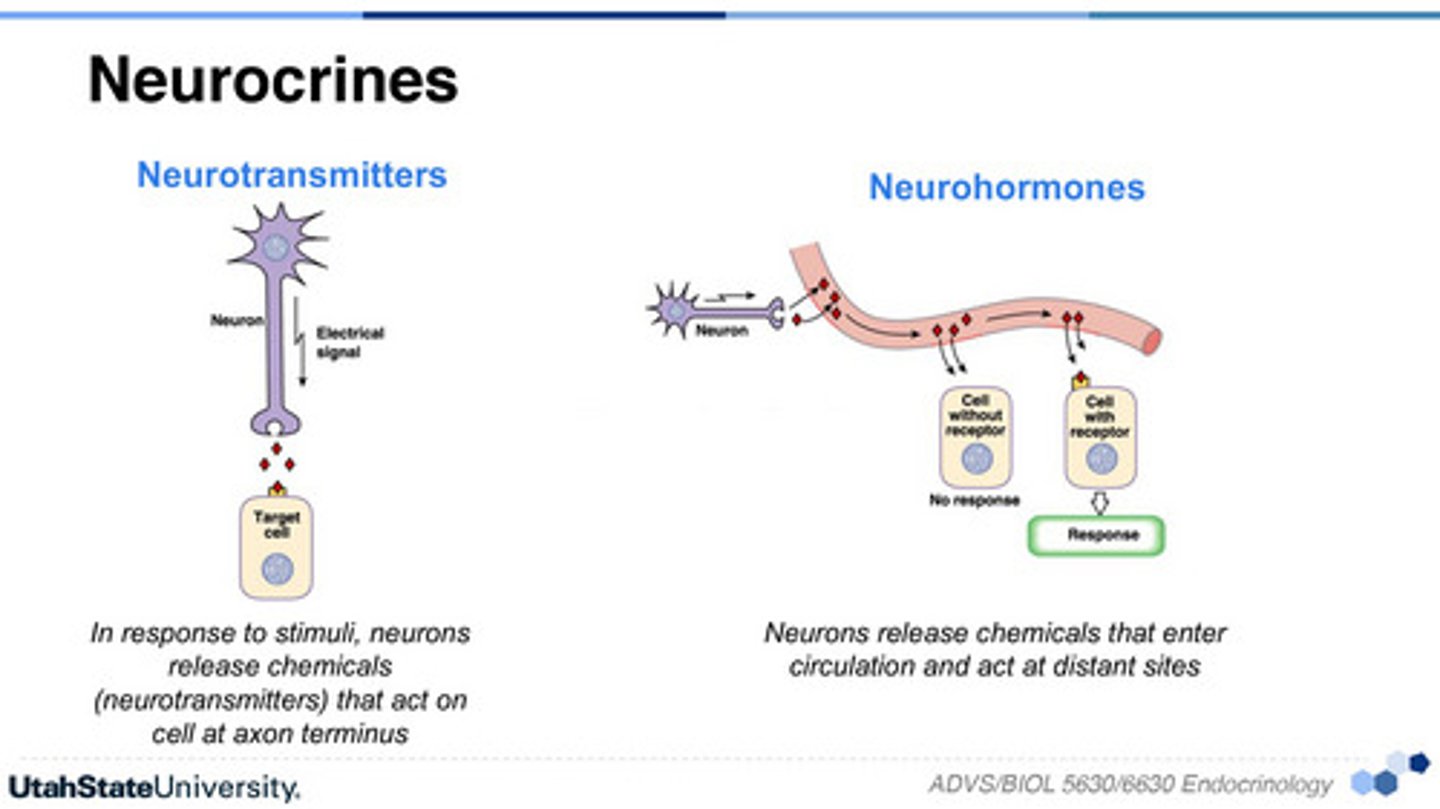
Neurocrines
Chemical signals, neurotransmittors, secreted by neurons either to another cell or into ECL.
AND
Neurohormones, nervesignals that cause the secretion of hormones into ECL
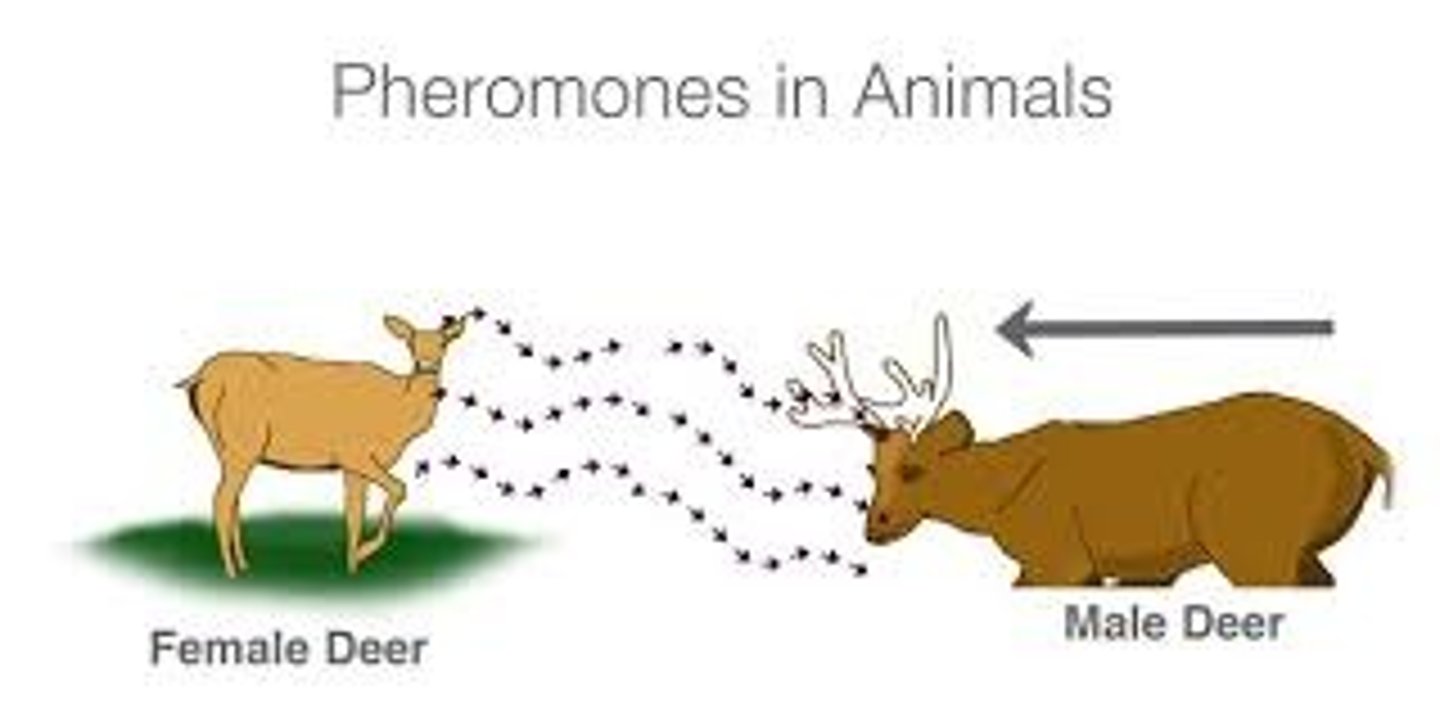
Pheromones
Chemical signals exocrineally secreted by animals to affect animals of the same species in it's environment.
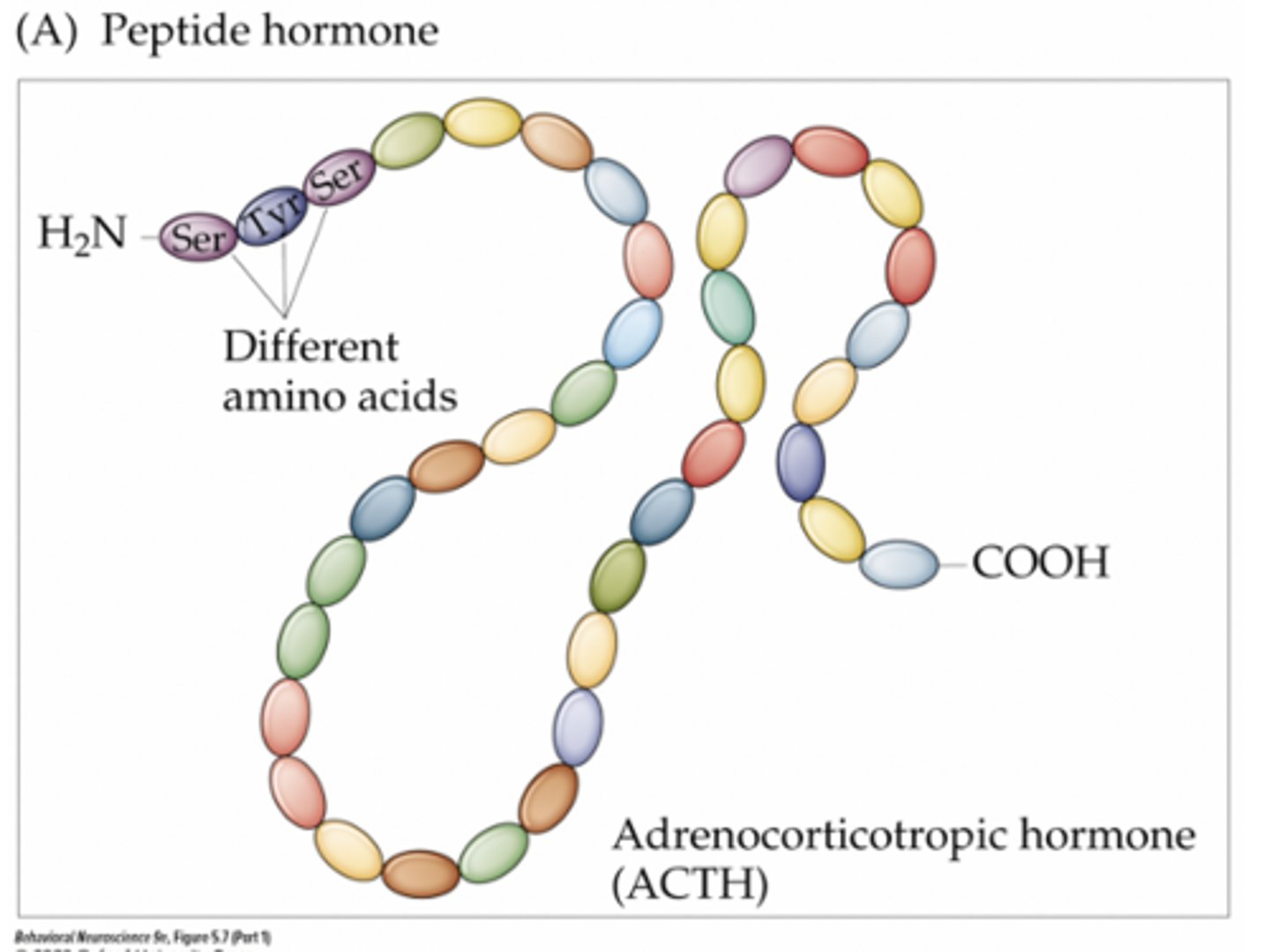
Peptide/protein hormones
- Amino-acid polymers synthesized from DNA transcription
- H2O-soluble (exits synthesizing cell through exocytosis, often extracellular receptors on target cells)
Ex: oxytocin, adrenocorticotropic hormone or insulin.
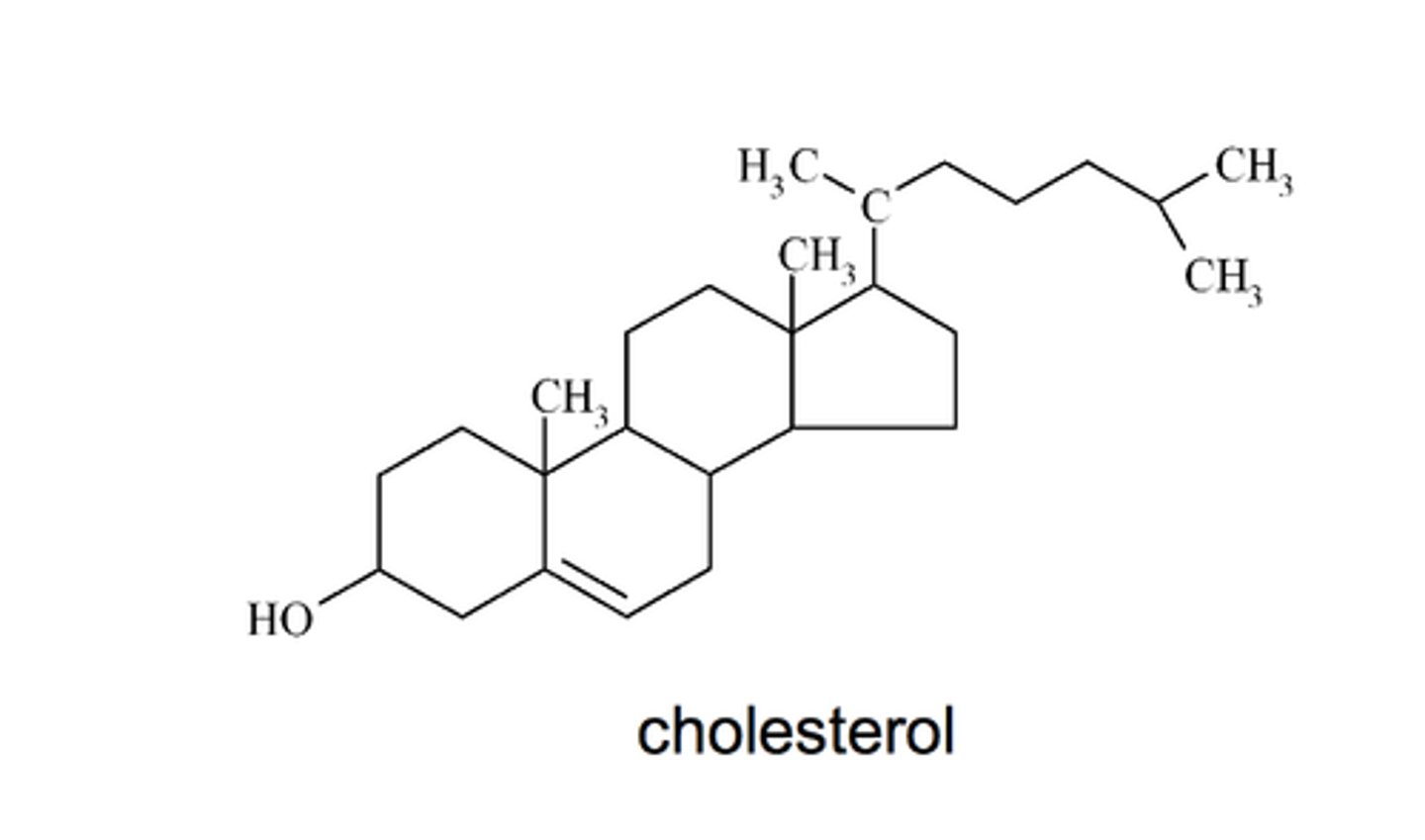
Steroids
- Hormones made from cholesterol
- Lipid-soluble (can diffuse through cell-membrane, often intracellular receptors in target cell)
- Often needs to be transported through blood with carrier protein because of their hydrophobia
Ex: oestrogen, testosterone, aldosterone, cortisol, adrenalin or noradrenalin.
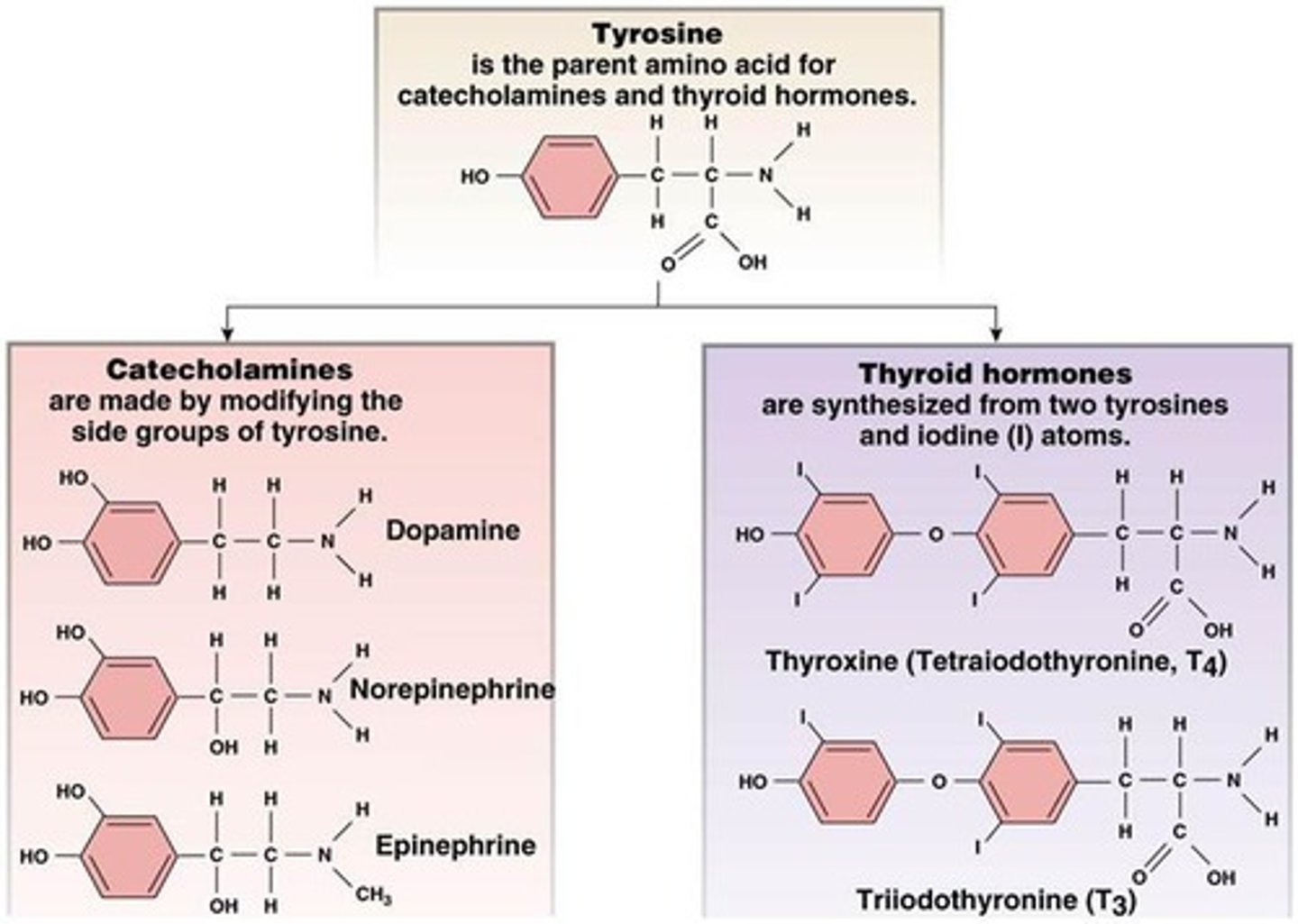
Amines
- Hormones made from the AA tyrosine or tryptophane
- Can be either lipid- or H2O-soluble depending on it's structure
Ex: Thyroxin (T4) or adrenalin
Intracellular receptors 2 types
1: Nuclear receptors; hormone has a nuclear localization signal
2: Cytoplasmic receptor
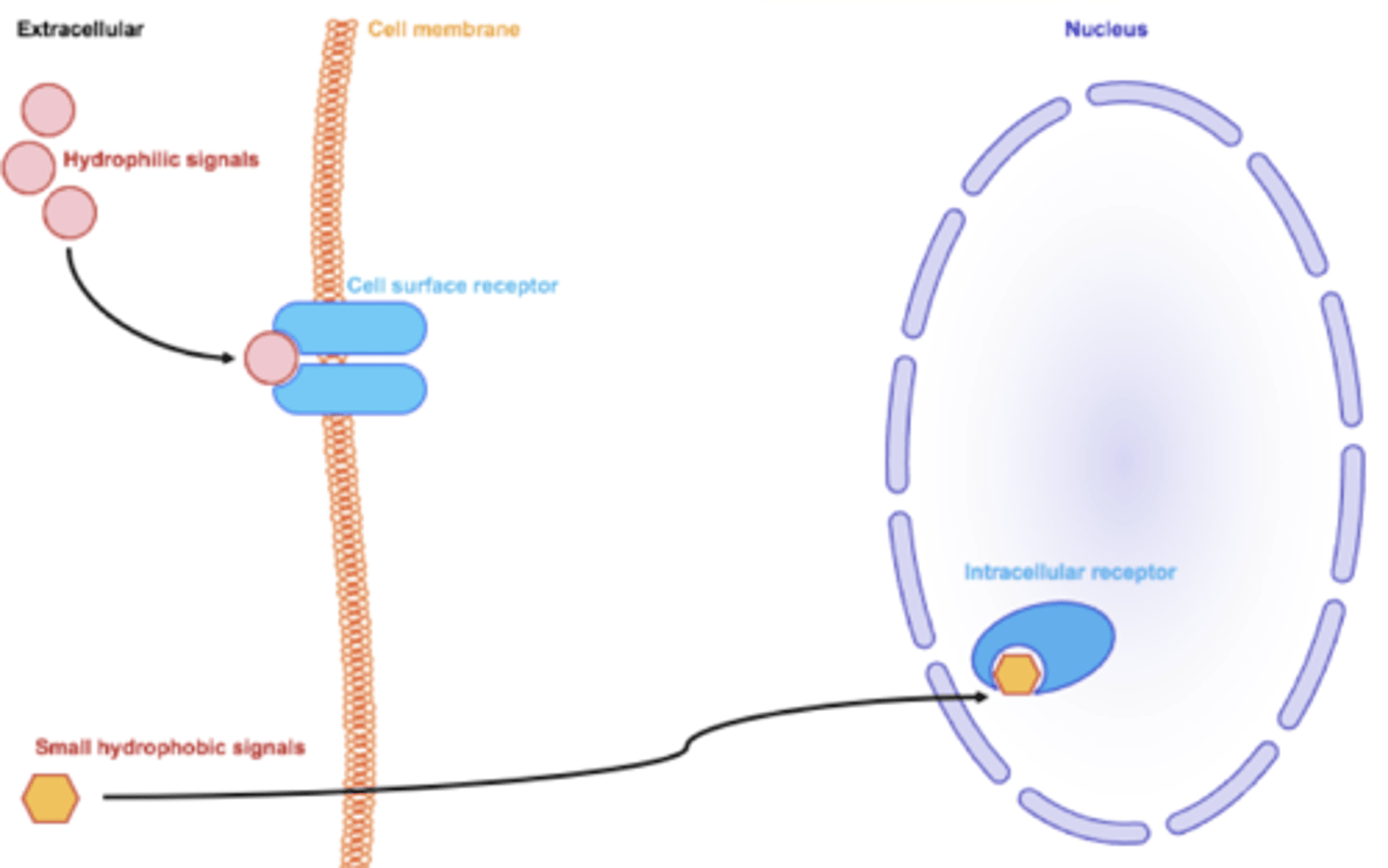
Extracellular receptors affect (4)
Causes intracellular signaling proteins to become active =>
1: Ion-channel control
2: Altered metabolism
3: Altered gene expression
4: Altered shape or movement of cell
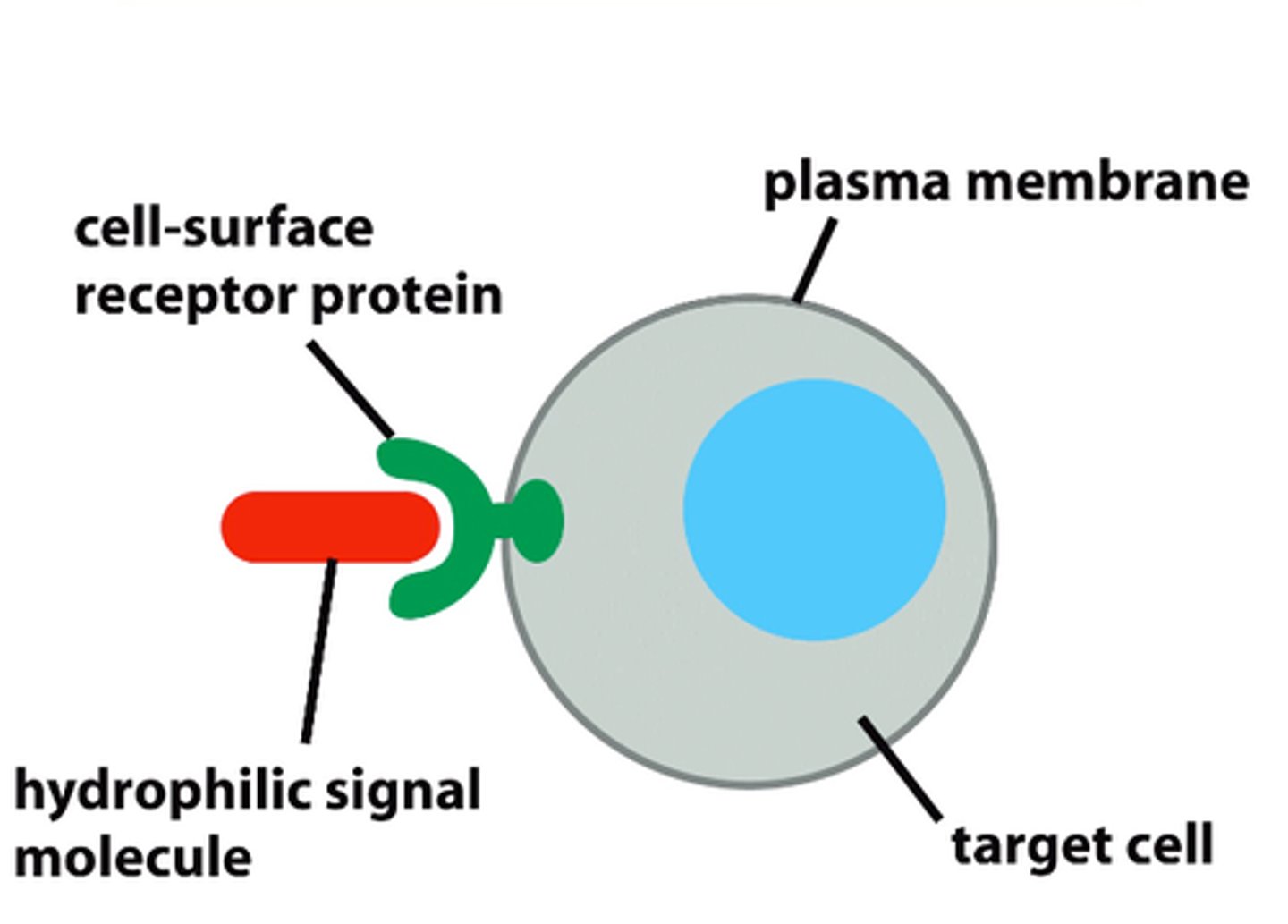
Which is faster, H2O-soluble or lipid-soluble?
H2O-soluble is faster because it can travel through blood without carrier protein and usually binds to external receptor.
H2O-soluble causes effect minutes-hours from release
Lipid-soluble cause effect hours-weeks from release
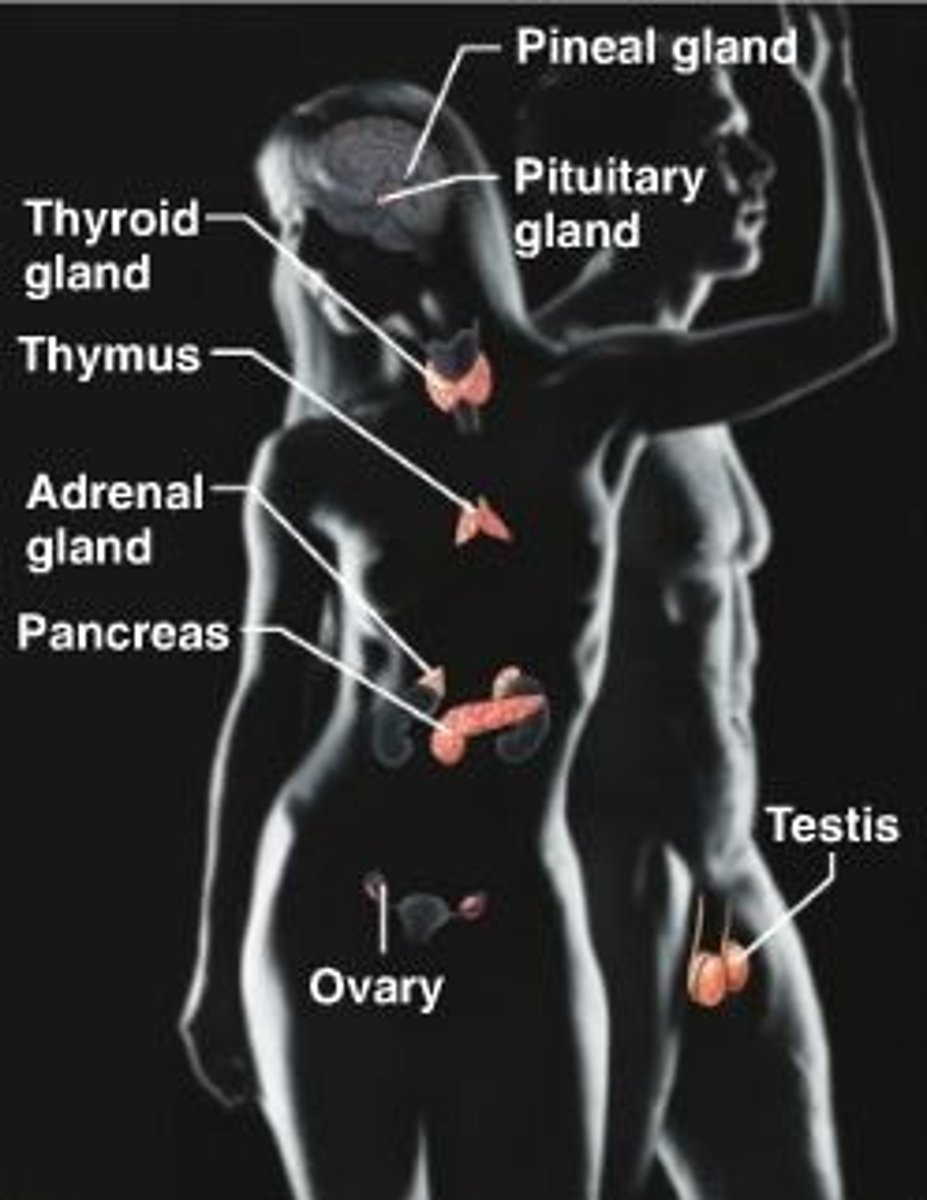
8 (+3) glands of the endocrine system
1: Hypothalamus
2: Pituitary
3: Pineal gland
4: Thyroid
5: Parathyroid gland
6: Thymus
7: Pancreas
8: Adrenal glands
AND
In women:
9: Ovaries
10: Placenta
In men:
11: Testis
Hypothalamus hormones (4 releasing hormones + 4 others)
1: Thyrotropin Releasing Hormone (TRH)
2: Growth Hormones Releasing Hormone (GHRH)
3: Gonadotropin Releasing Hormone (GnRH)
4: Corticotropin Releasing Hormone (CnRH)
5: Dopamin
6: Somatostatin
7: Oxytocin
8: Antidiuretic Hormone (ADH)
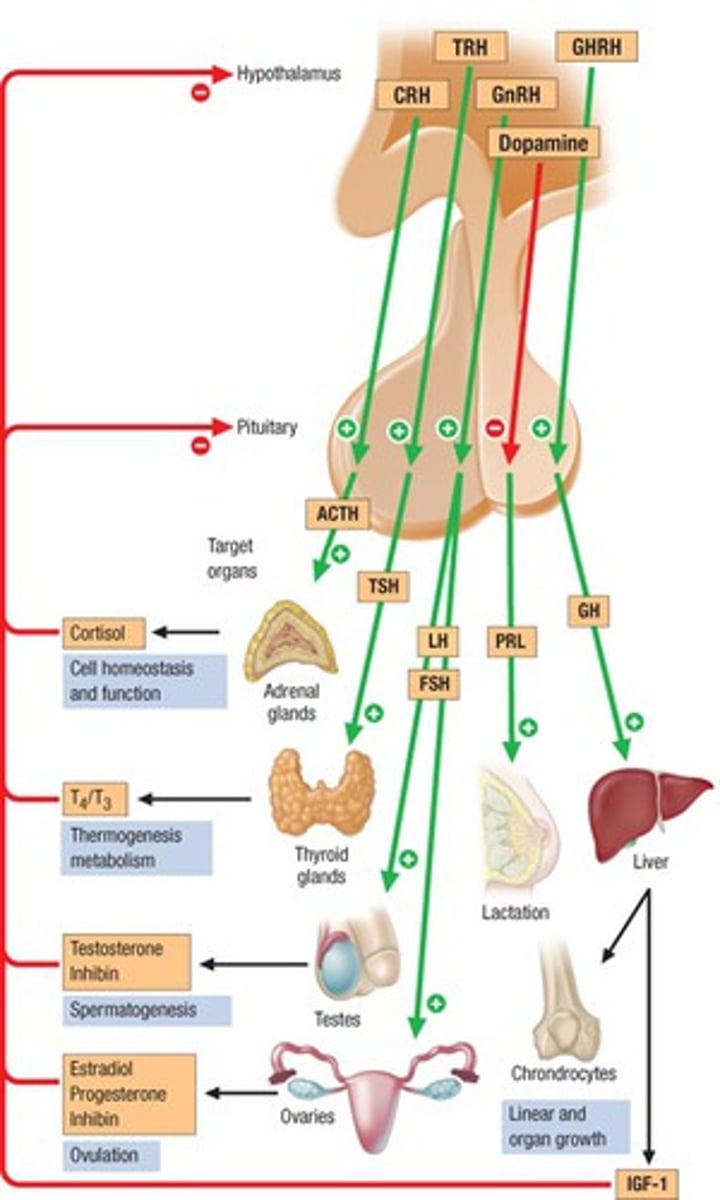
Anterior Pituitary hormones (6)
1: Thyroid Stimulating Hormones (TSH)
2: Growth Hormone (GH)
3: Follicle Stimulating Hormone (FSH)
4: Luteinising Hormone (LH)
5: AdrenoCorticoTropic Hormone (ACTH)
6: Prolactin
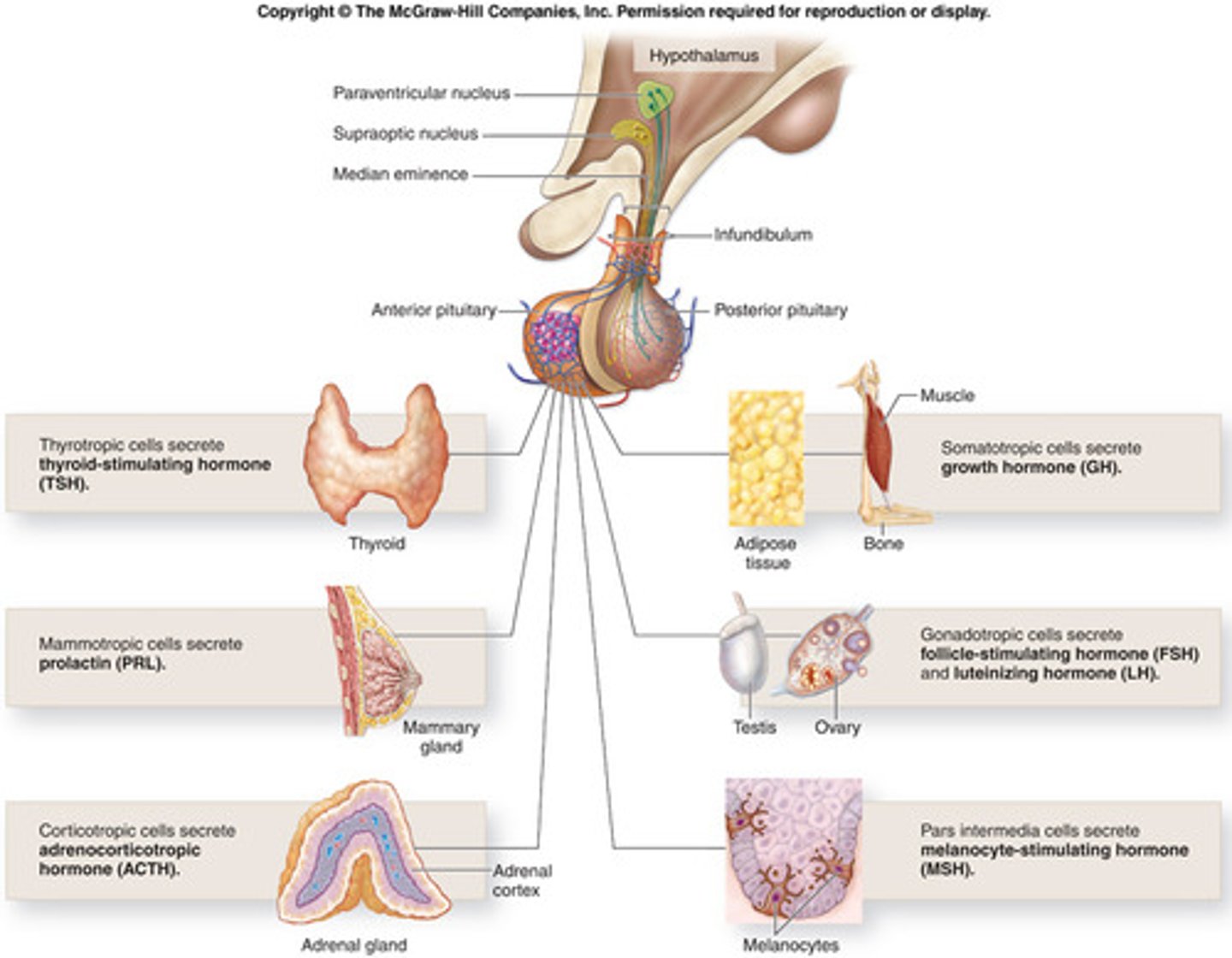
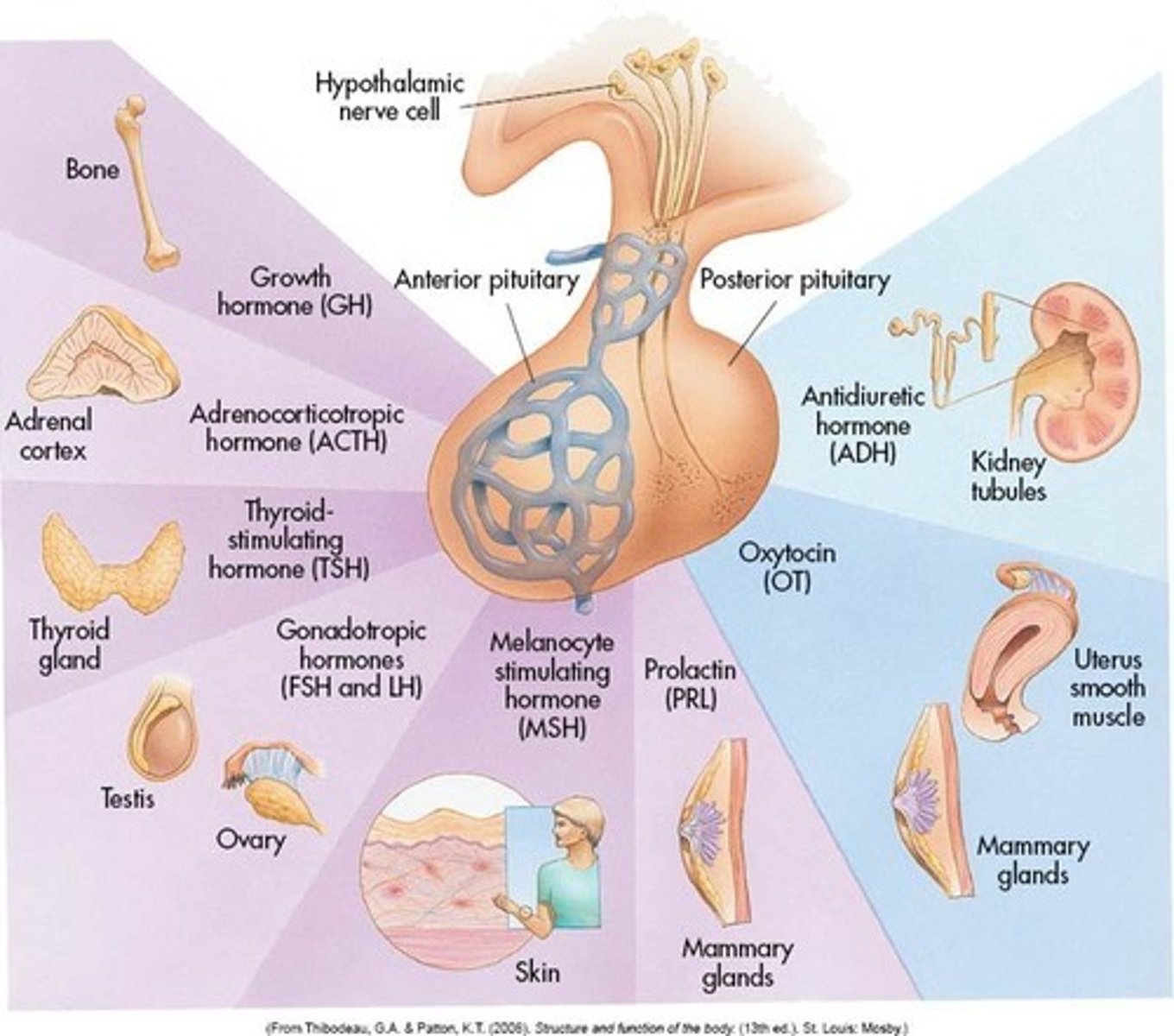
Posterior Pituitary hormones (2)
1: Oxytocin
2: AntiDiuretic Hormone (ADH)
Both are also stored here.
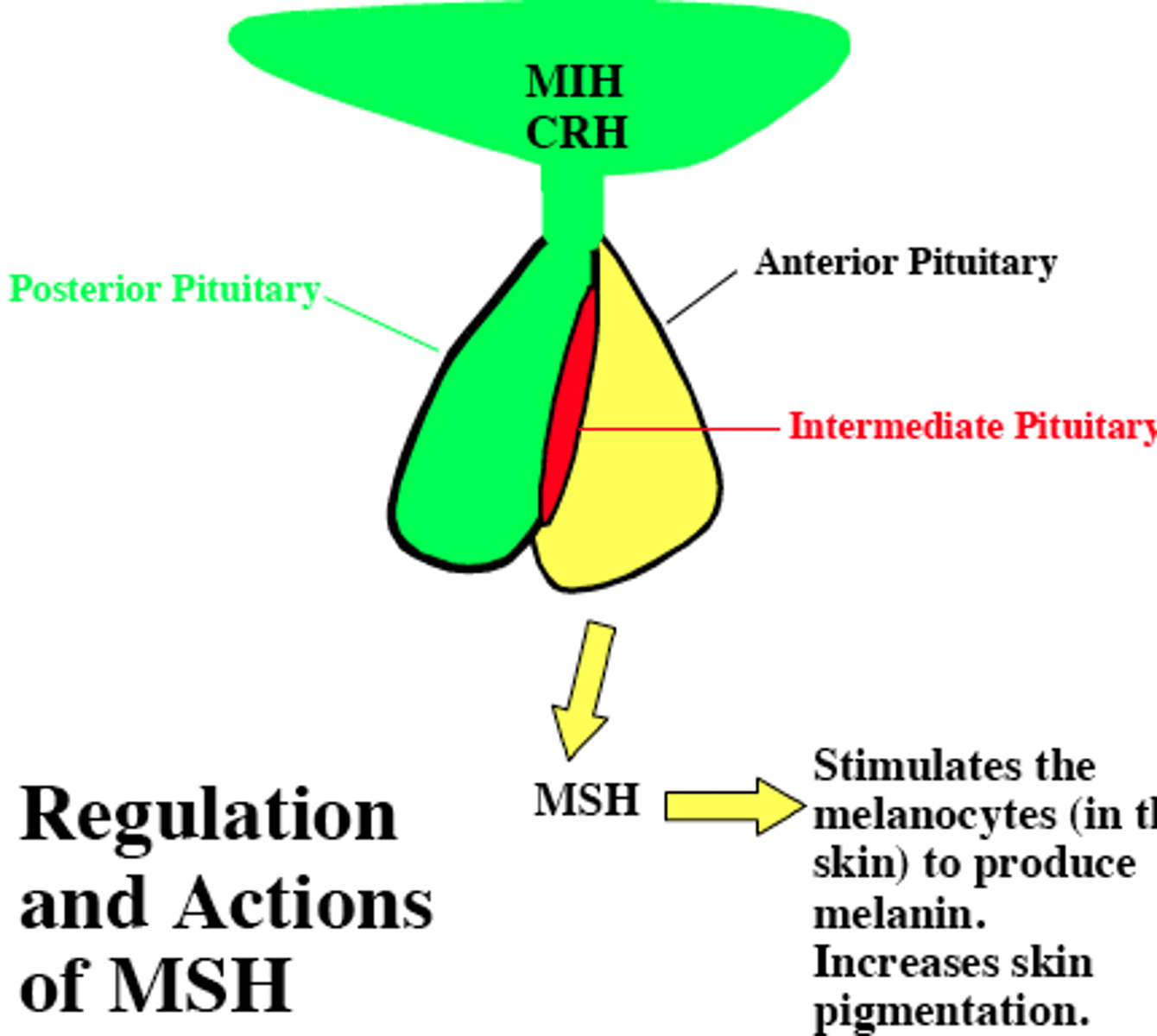
Intermediate Pituitary hormone (1)
Melanocyte-stimulating hormone (MSH)
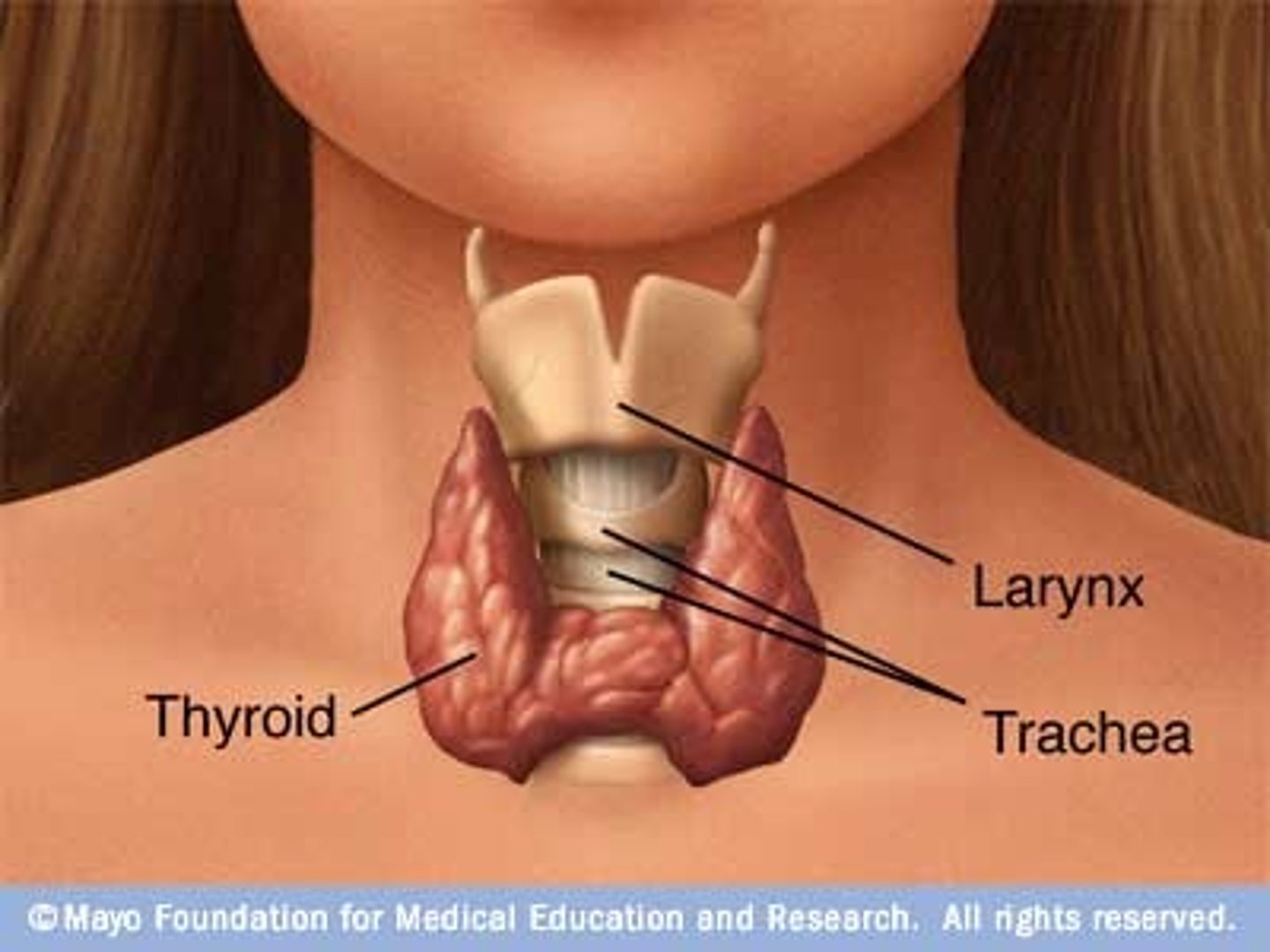
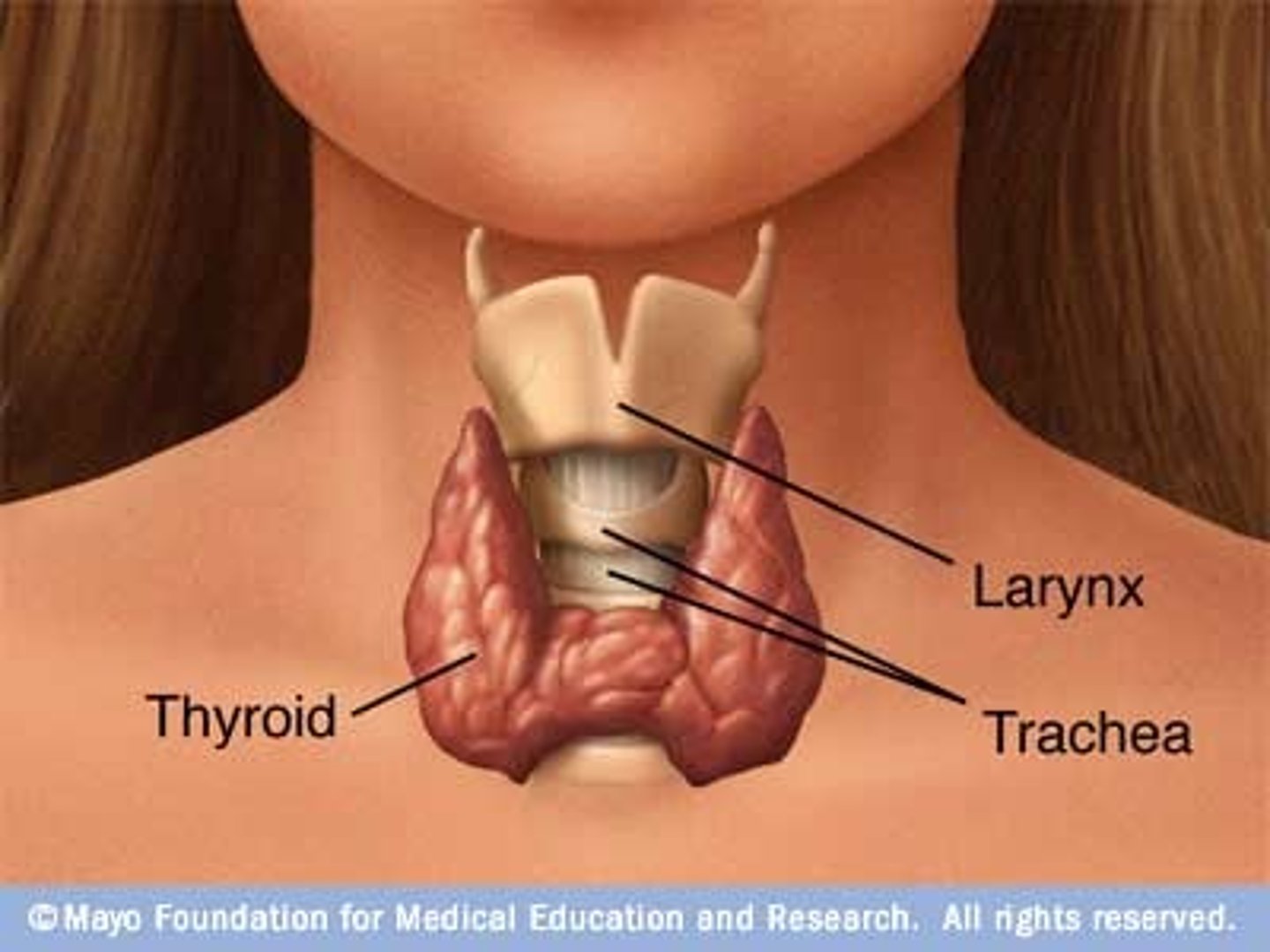
Thyroid hormones (3)
1: Thyroxine (T4)
2: Triiodothyronine (T3)
3: Calcitonin
Para-Thyroid gland hormone
1: Para Thyroid Hormone (PTH)
Controls levels of calcium in blood.
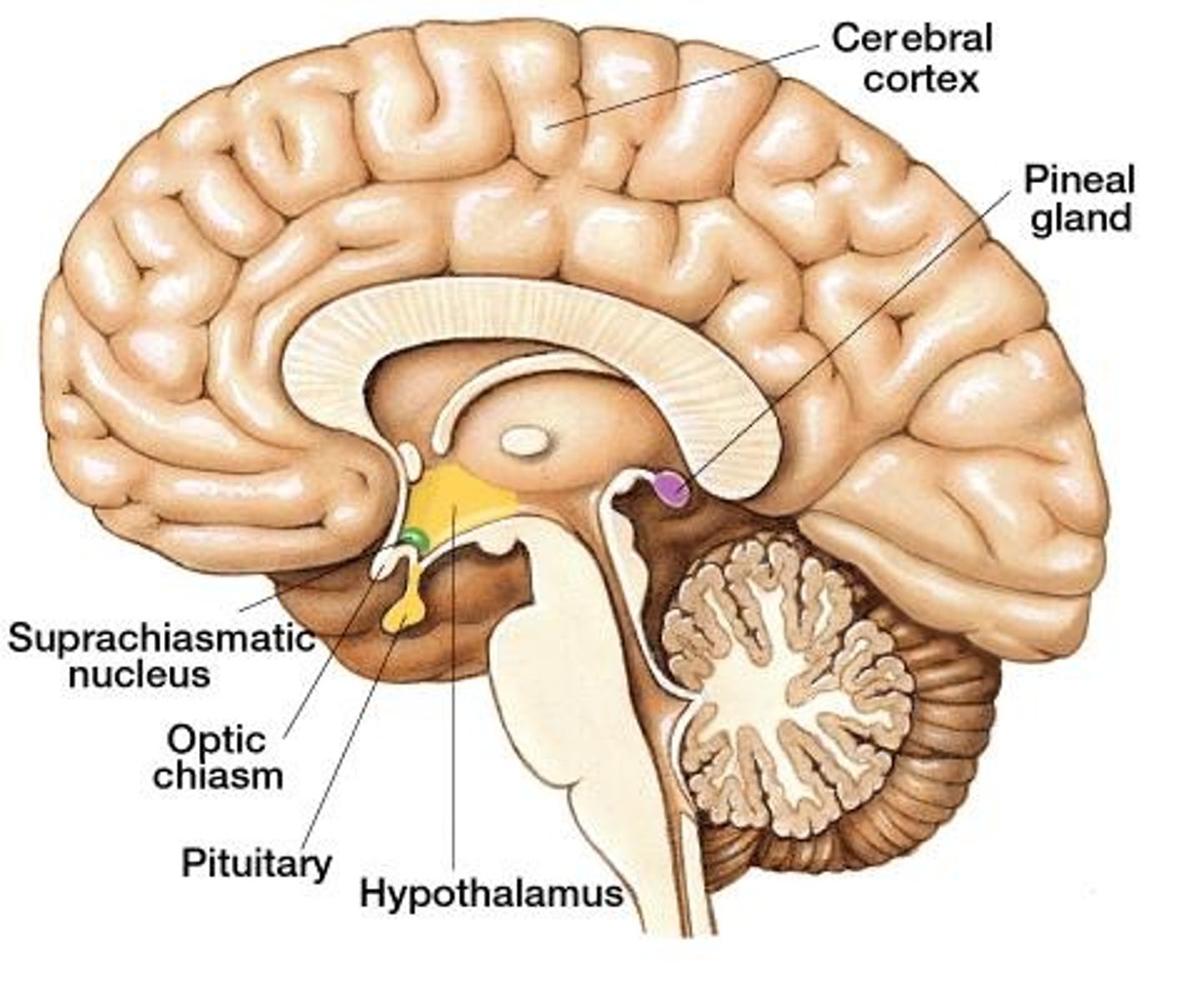
Pineal gland hormone (1)
Melatonin
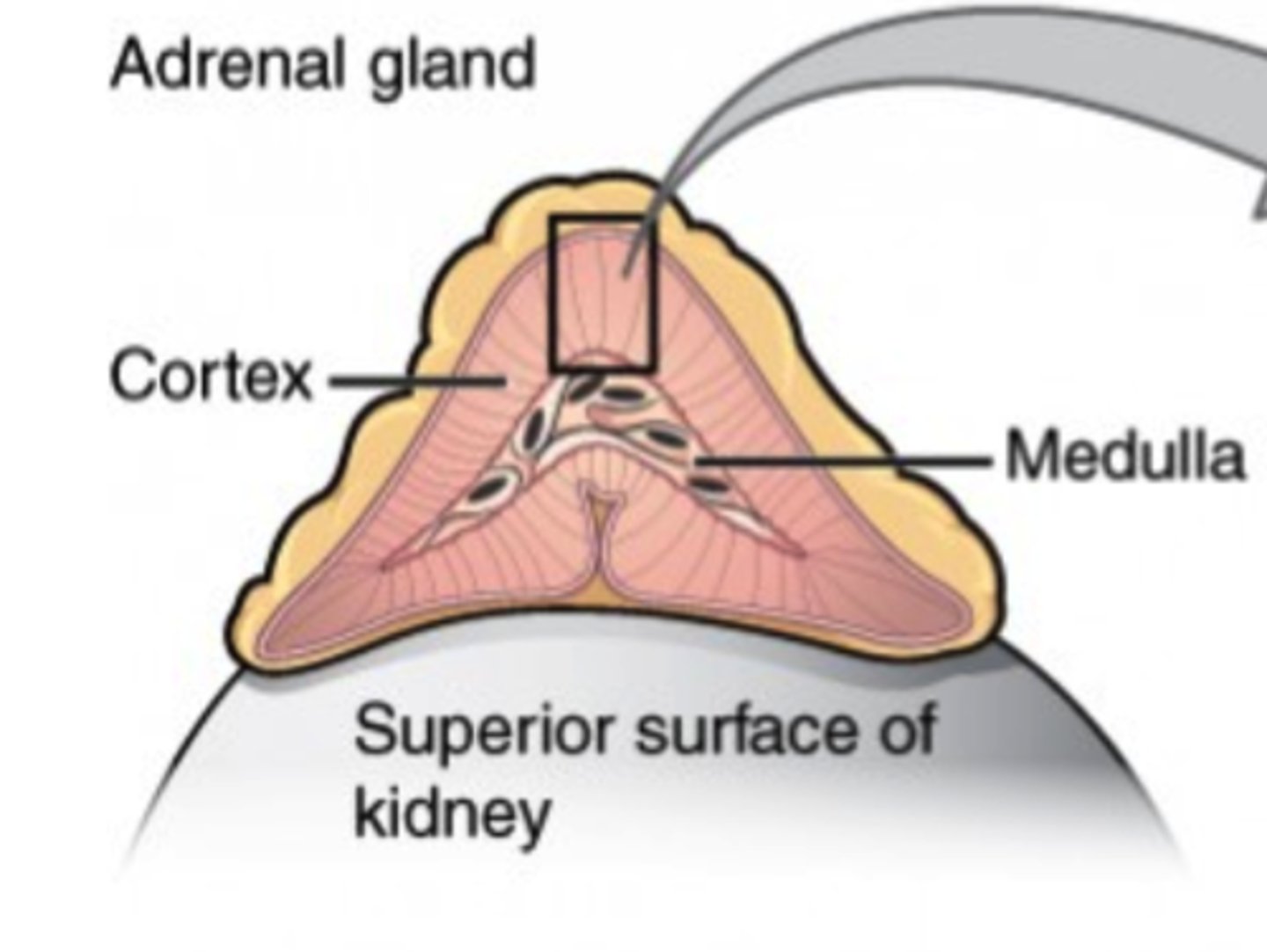
Adrenalgland hormones (5+2)
1: Aldosteron (cortex)
2: Cortisol (cortex)
3/4: Adrenalin/noradrenalin (medulla)
5: Somatostatin (medulla)
Mostly before puberty (Adult woman testosterone and adult man oestrogen);
6/7: Oestrogen/testosterone (cortex)
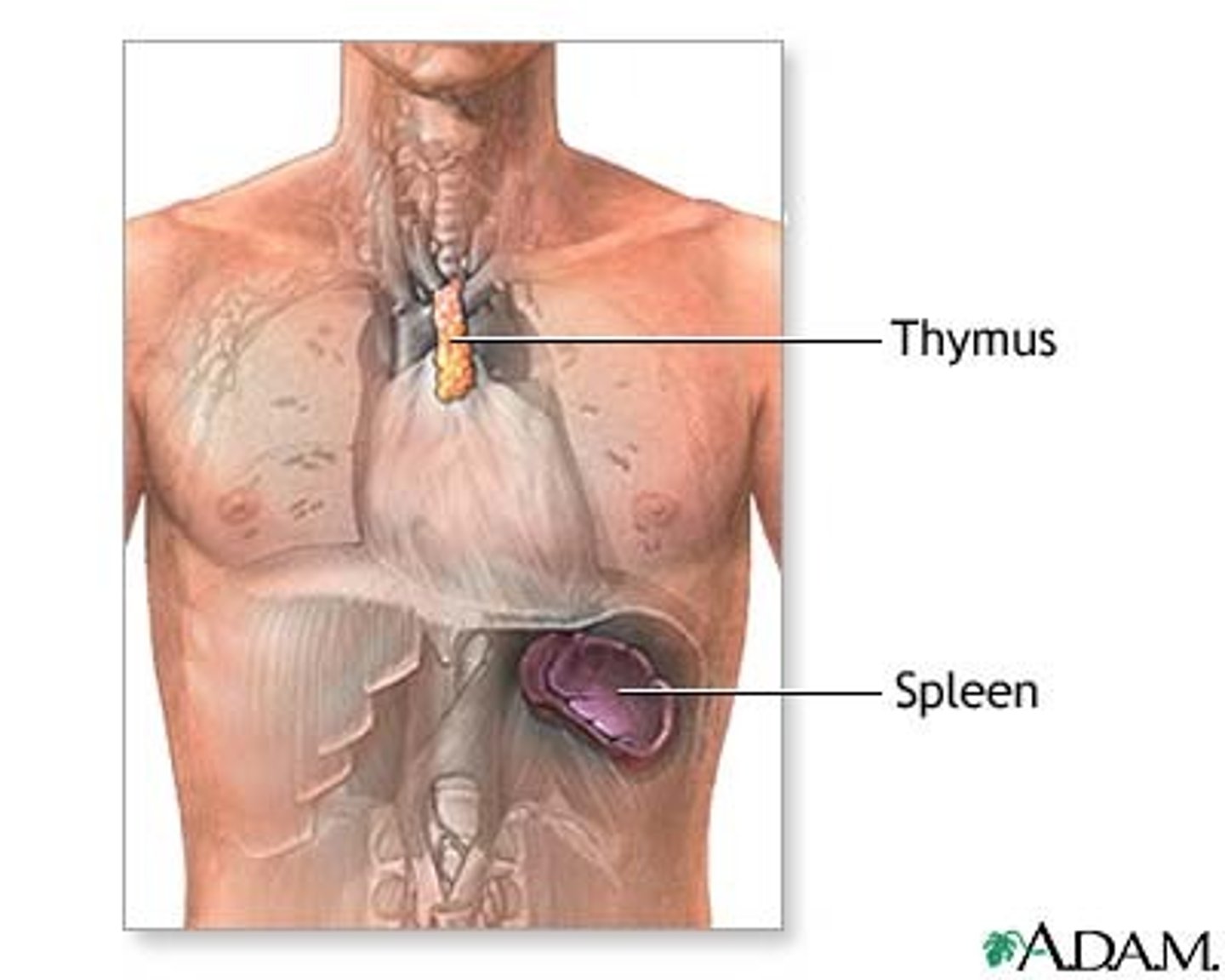
Thymus hormone (1)
1: Thymosin
Involved in the making of T-cells, also boosts immune-system response. Also
Pancreas hormones (3)
1. Insulin
2. Glucagon
3. Somatostatin (prevent release of insulin and glucagon)
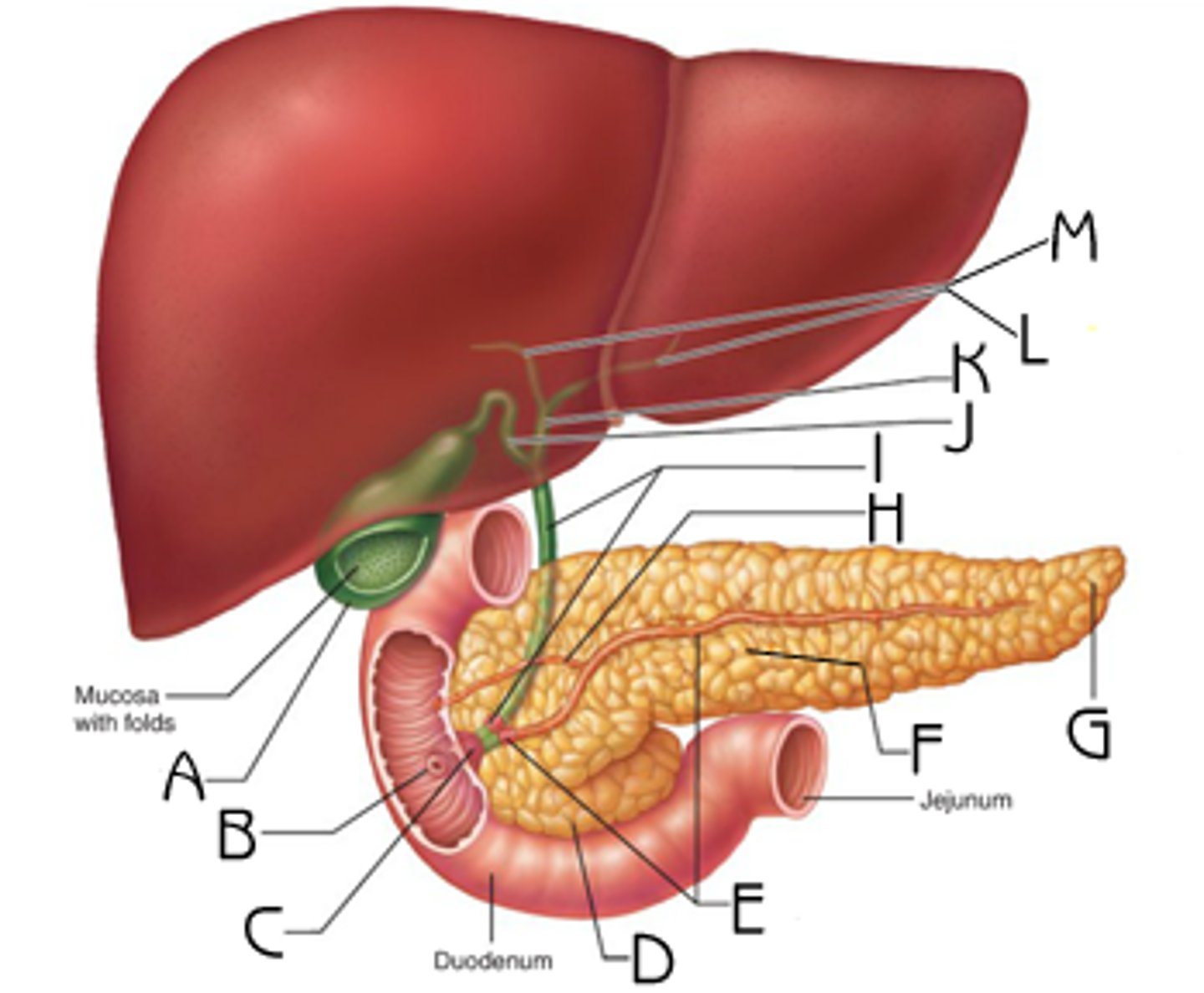
Ovaries hormones (3)
1: Oestrogen
2: Progesterone
3: Inhibin (inhibits FSH synthesis and LH releasage)
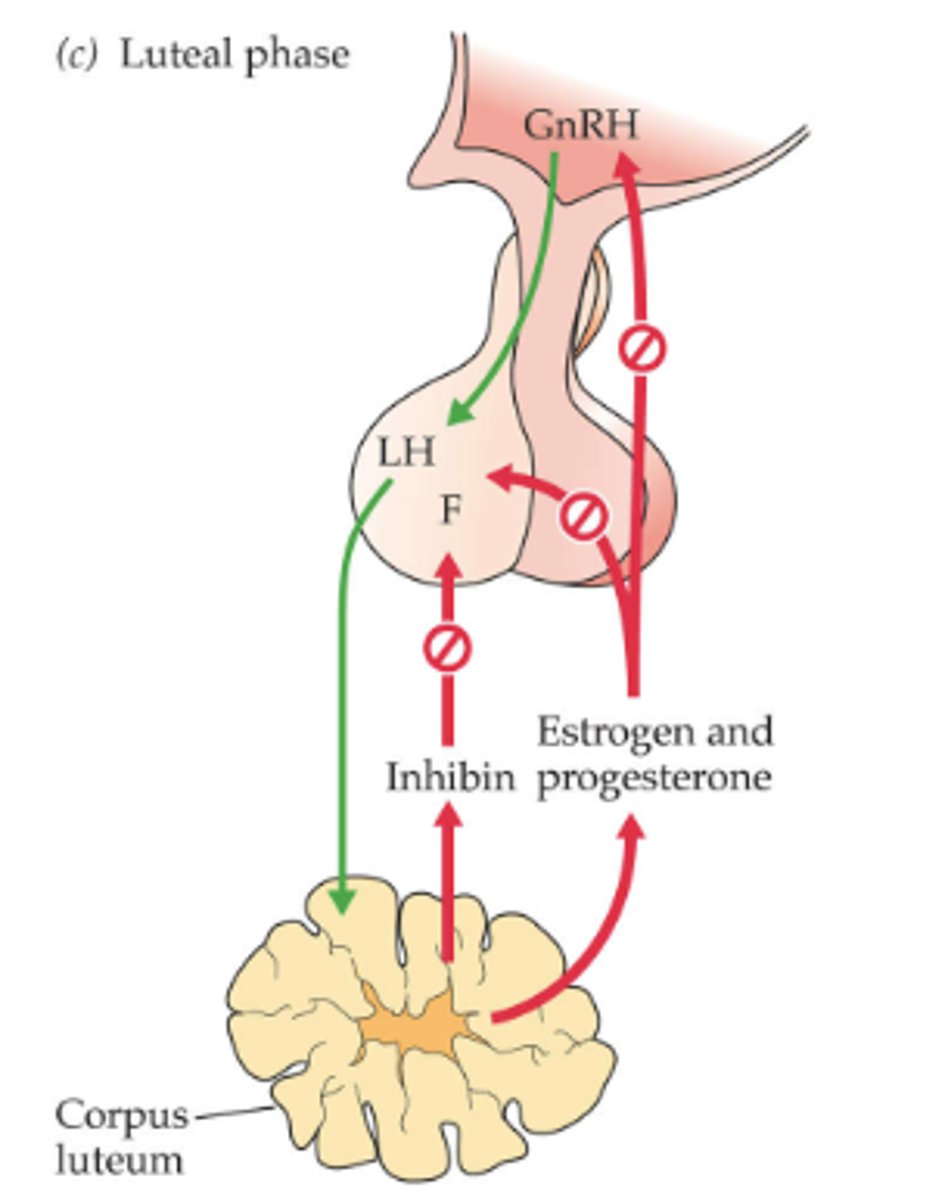
Testis hormones (1)
1: Testosterone
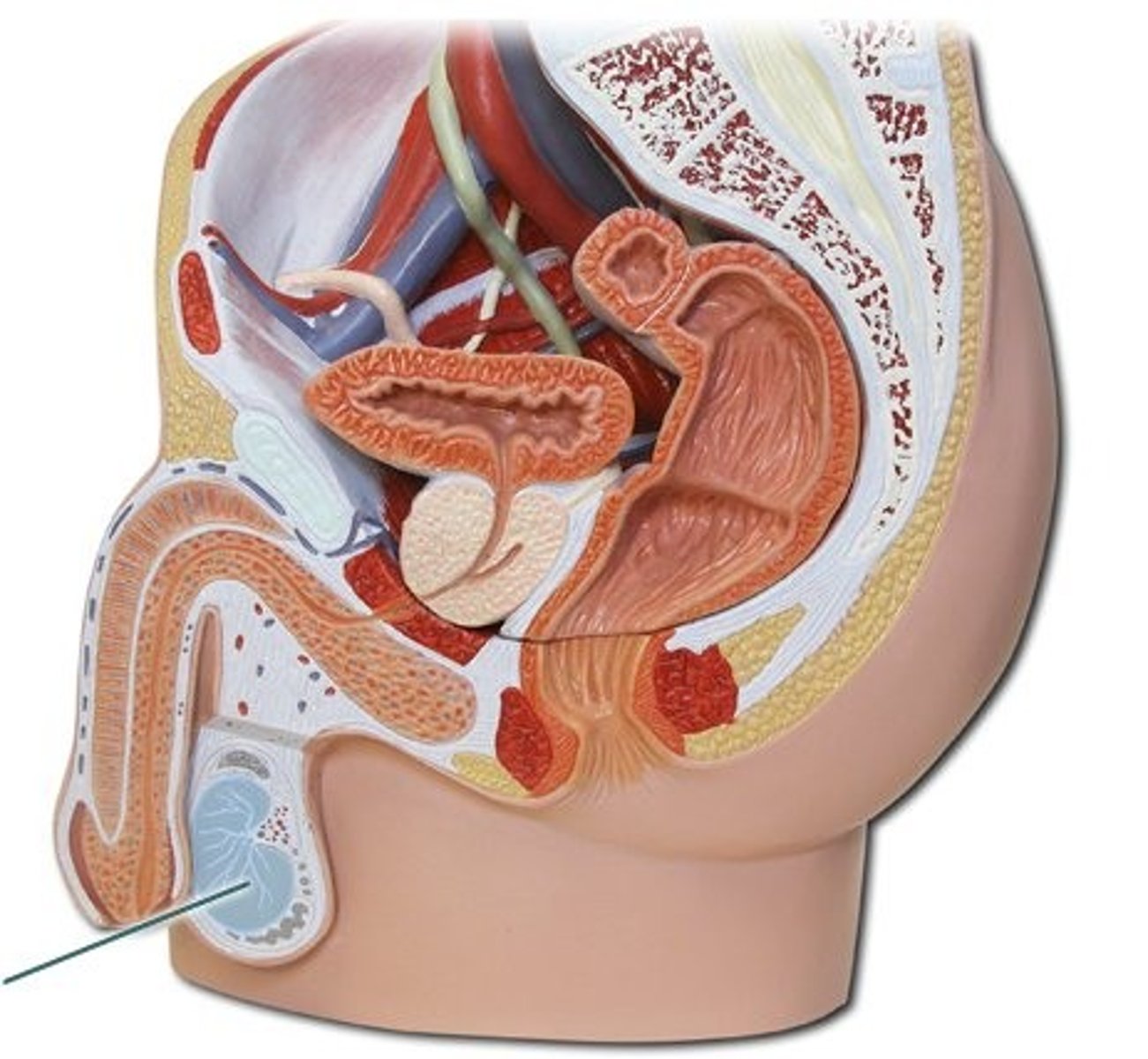
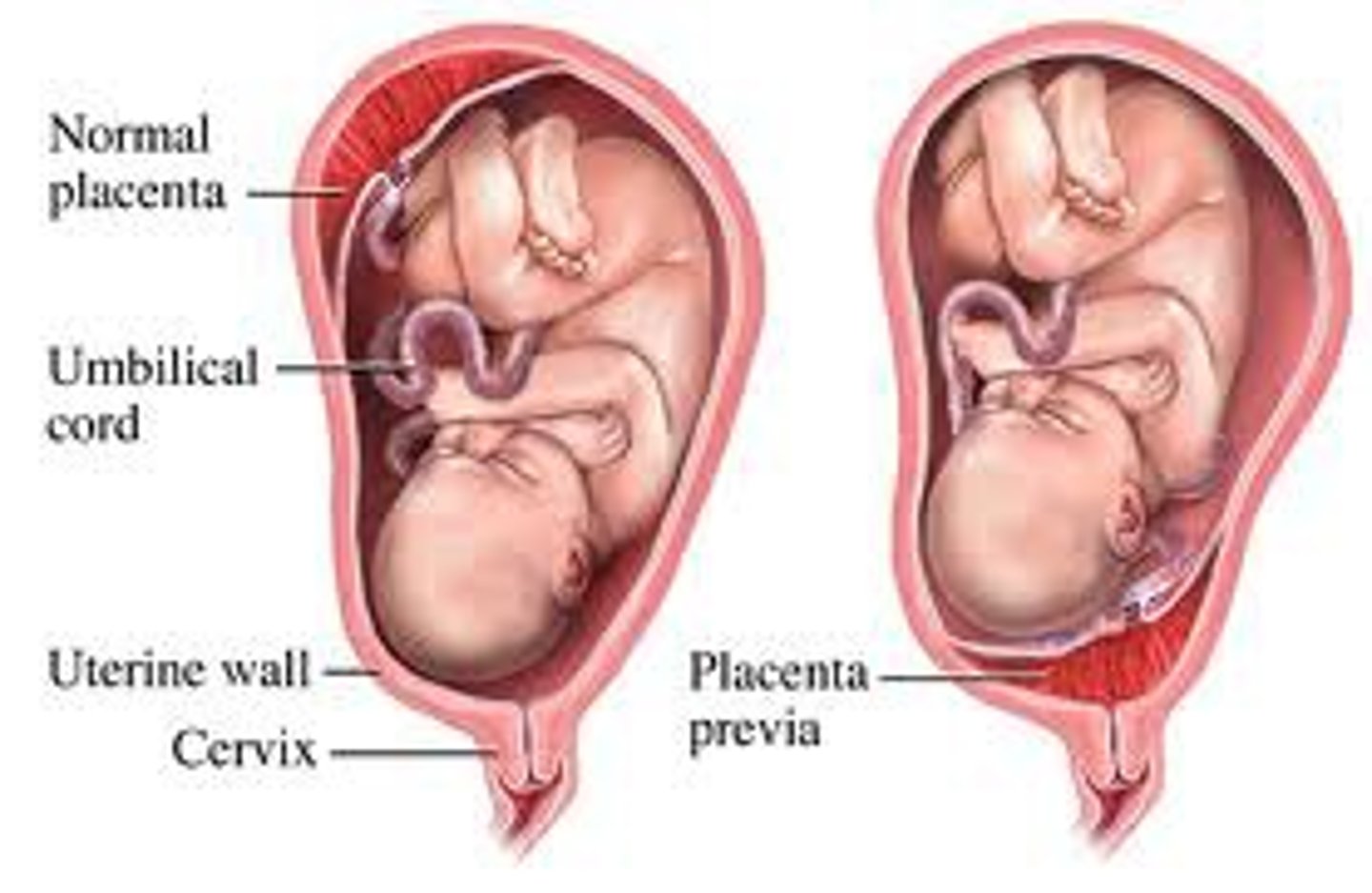
Placenta hormones (1 + 3)
1: human Chorionic Gonadotropin (hCG)
When developed (no longer needs corpus luteum)
2: Oestrogen
3: Progesterone
4: Relaxin
Thinn-gut cell-wall hormones (2)
1: Cholecytokinin
2: Secretin
Stomach cell-wall hormone (1)
Gastrin (makes you hungry)
Juxtaglomular cells hormone (1)
Renin
Renin into blood meets angiotensinogen => angiotensin I => to lungs => angiotensin II
THEN EITHER TO
angiotensin II => kidneys => efferent bloodvessel contracts
angiotensin II => adrenal gland => aldosterone that increases ion-uptake from primary urine to blood.
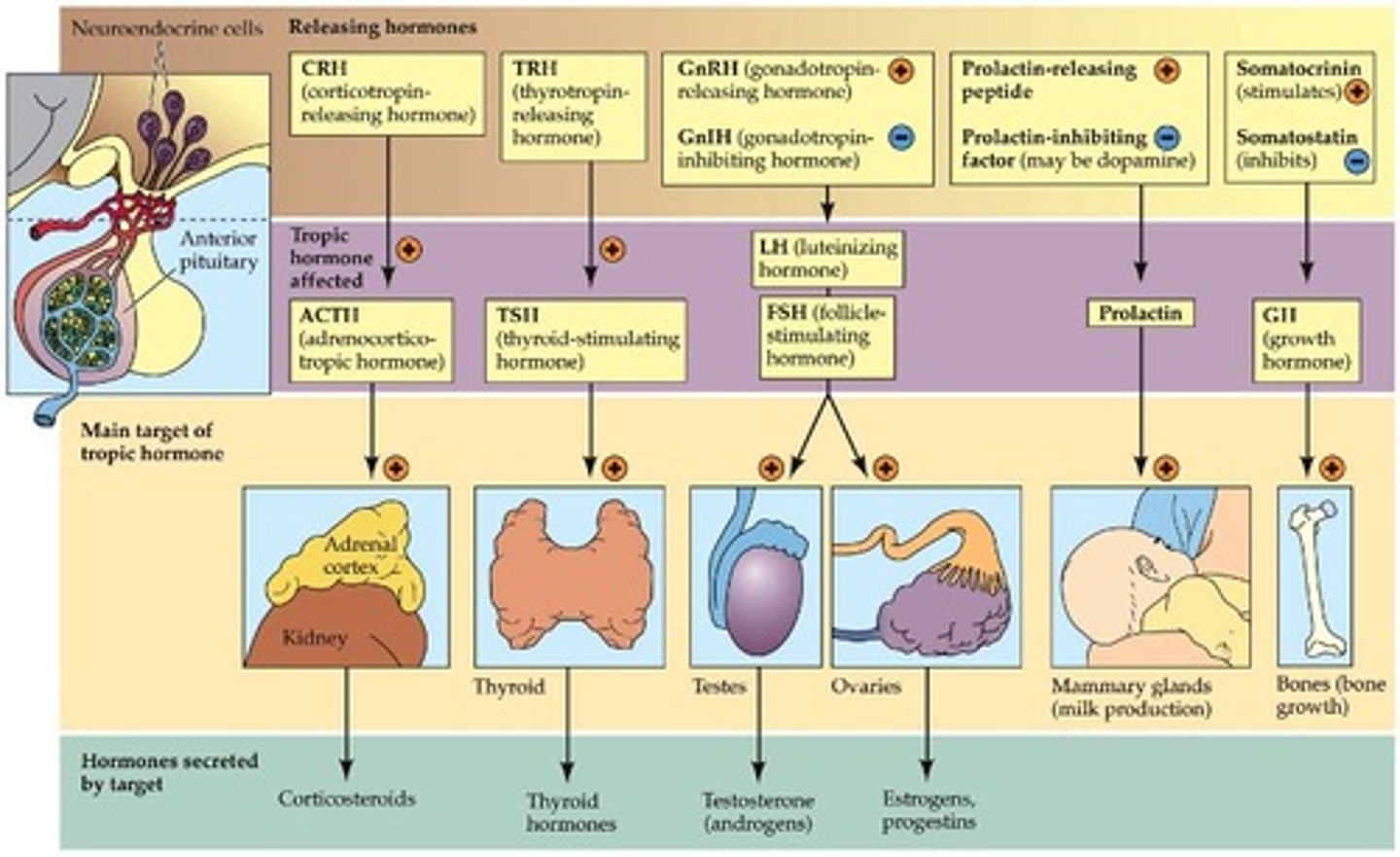
Tropic hormones
Hormones that stimulate other glands to produce/release their hormones.
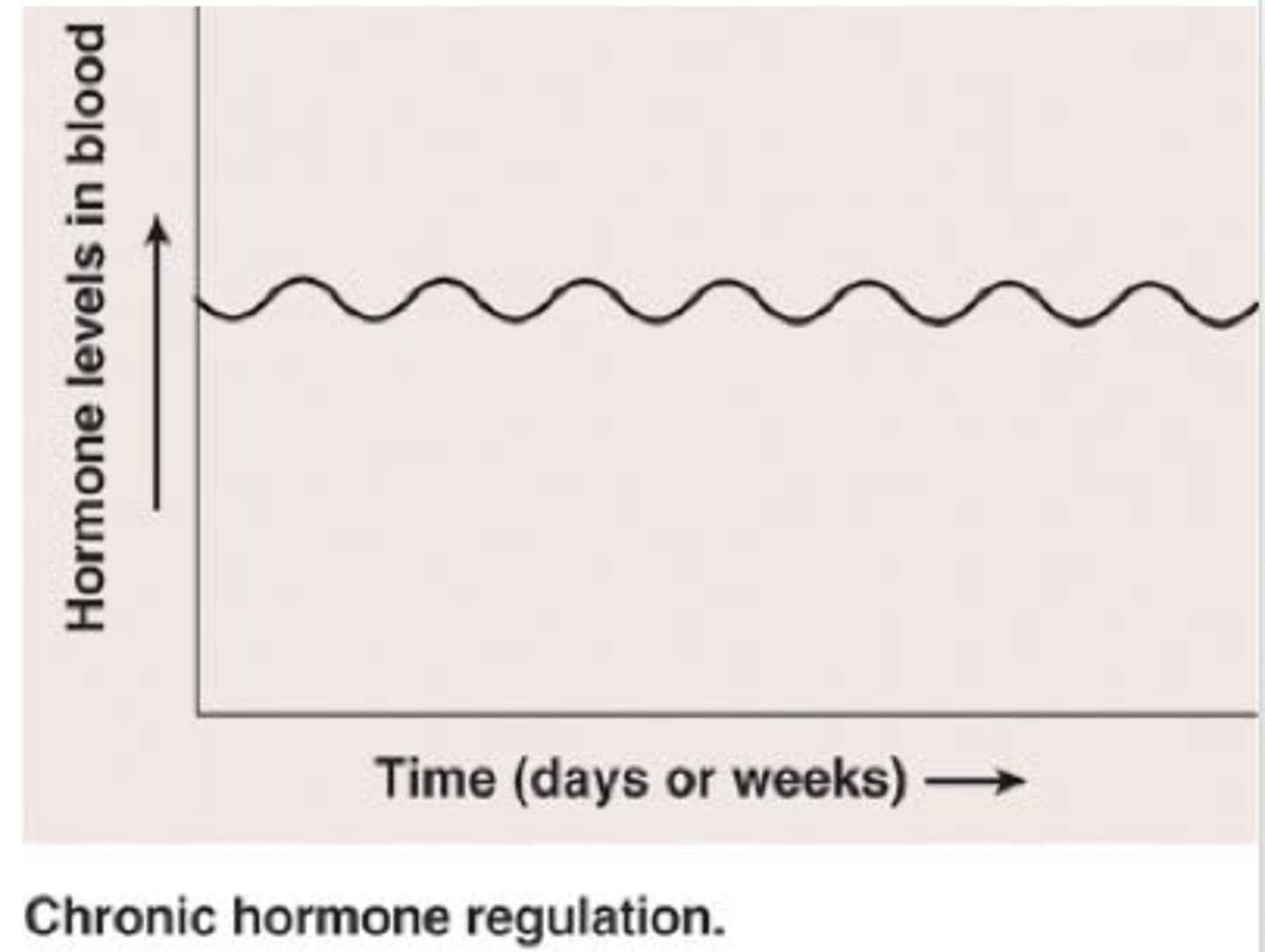
Chronic hormone regulation
Maintenance of relatively constant concentration of hormone.
Like T4 and T3.
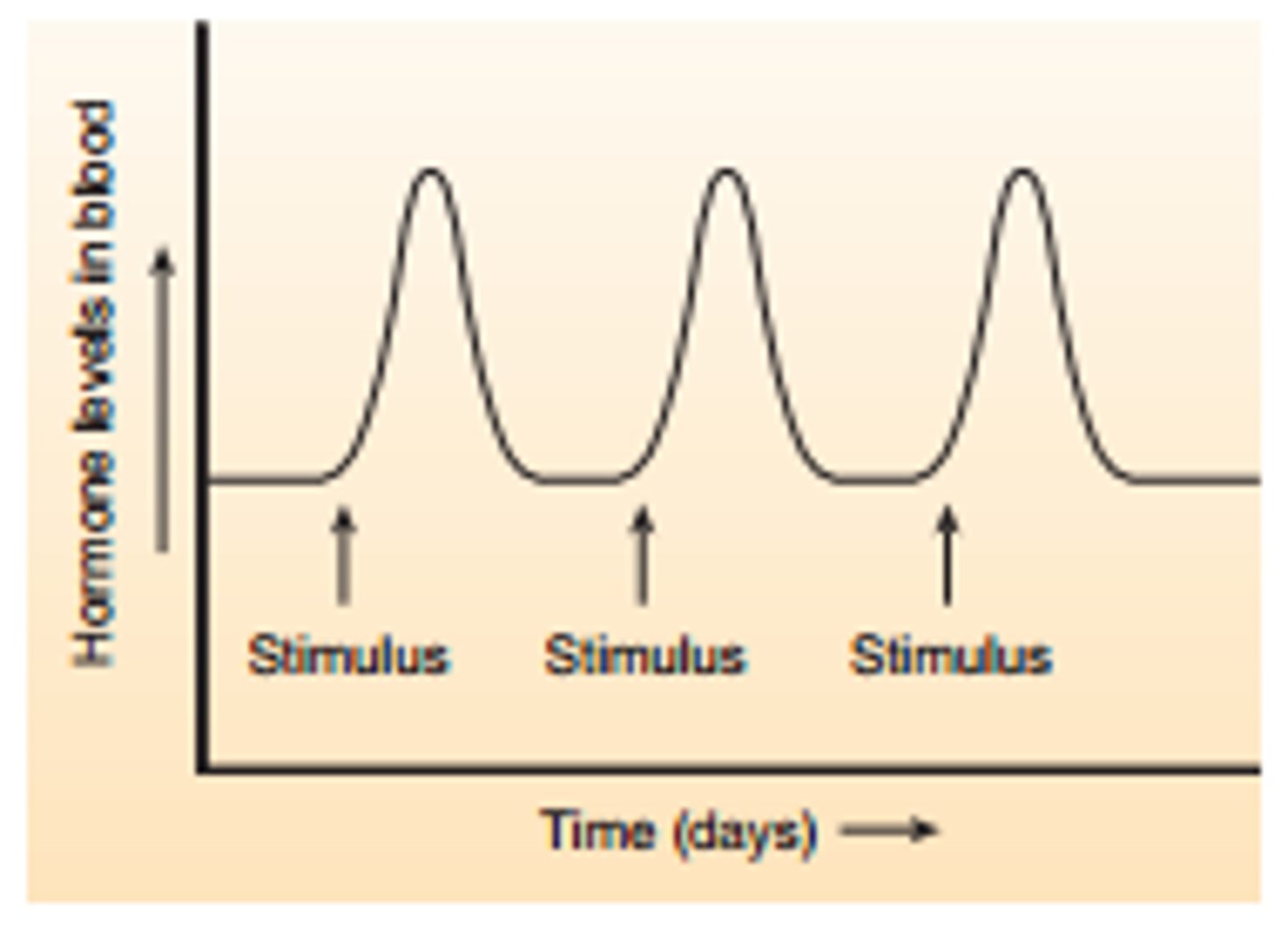
Emergency hormone regulation
Fluctuating levels or a hormone that drastically increases when met by a stimuli.
Often shorter lasting.
Cyclic hormone regulation
Regular/cyclic pattern of hormone release.
Like LH, FSL, oestrogen and progesterone.
Often longer lasting.
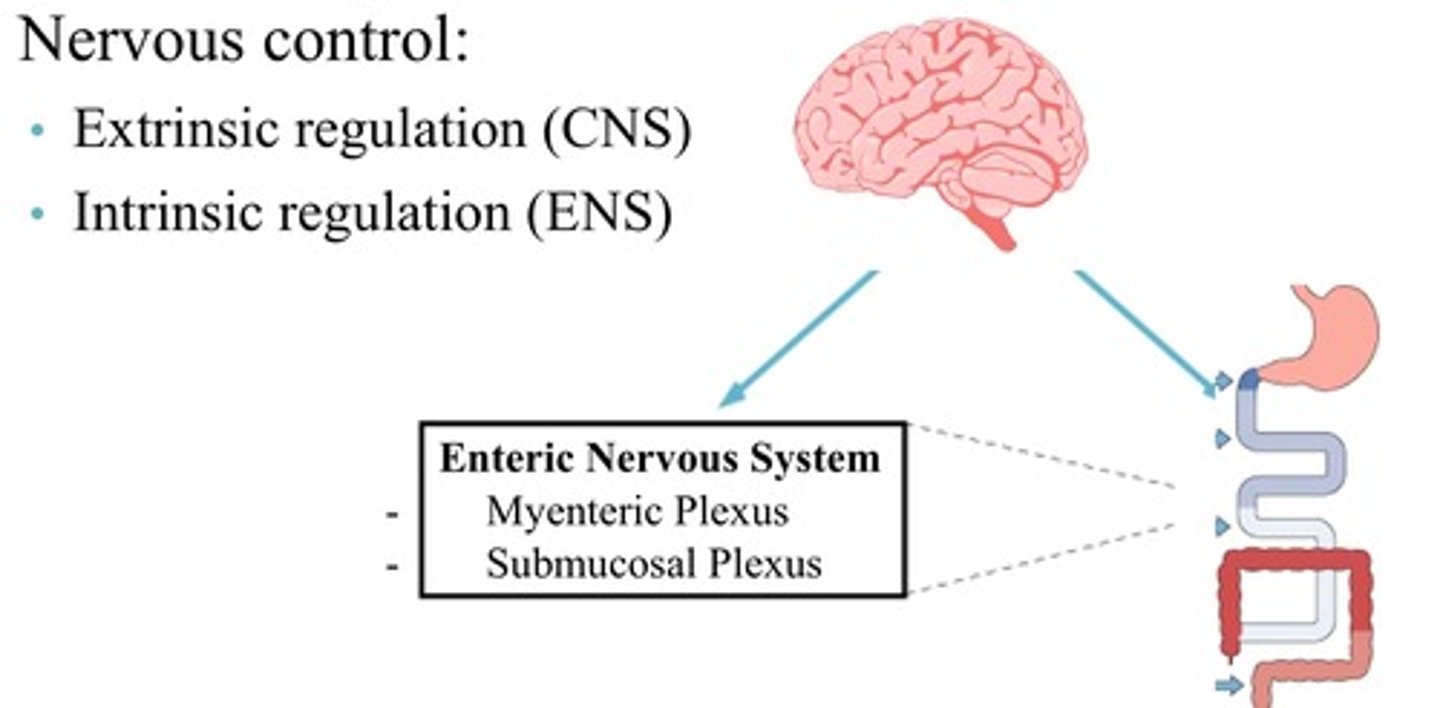
Direct control (nervous system)
Hormones released by action potential (AP), stimuli, from nervous system.
Like adrenalin/noradrenalin (directly to adrenal gland), ADH and oxytocin (to posterior pituitary gland)
Indirect control
Release of regulatory hormones that stimulate the release of other hormones.
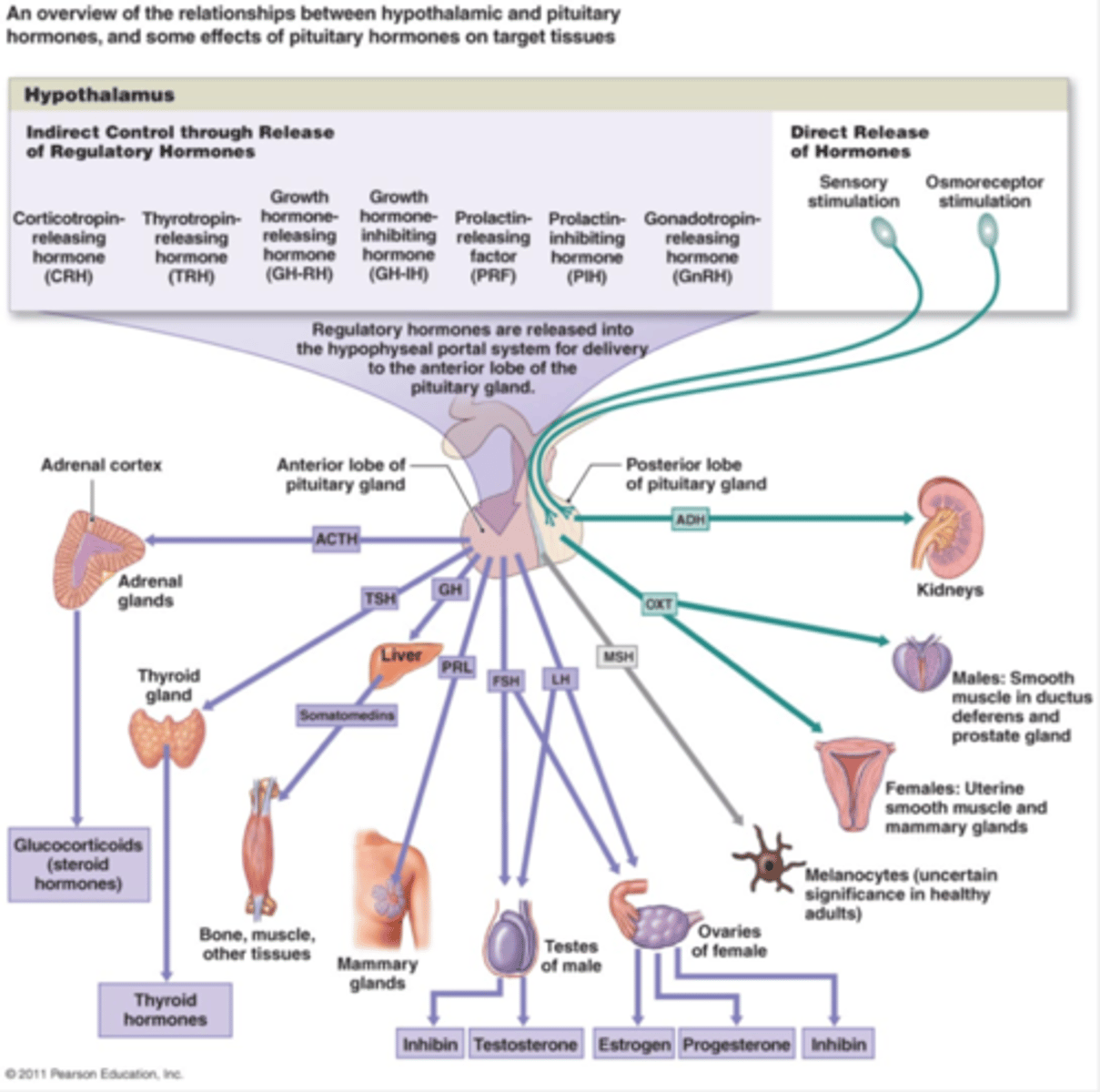
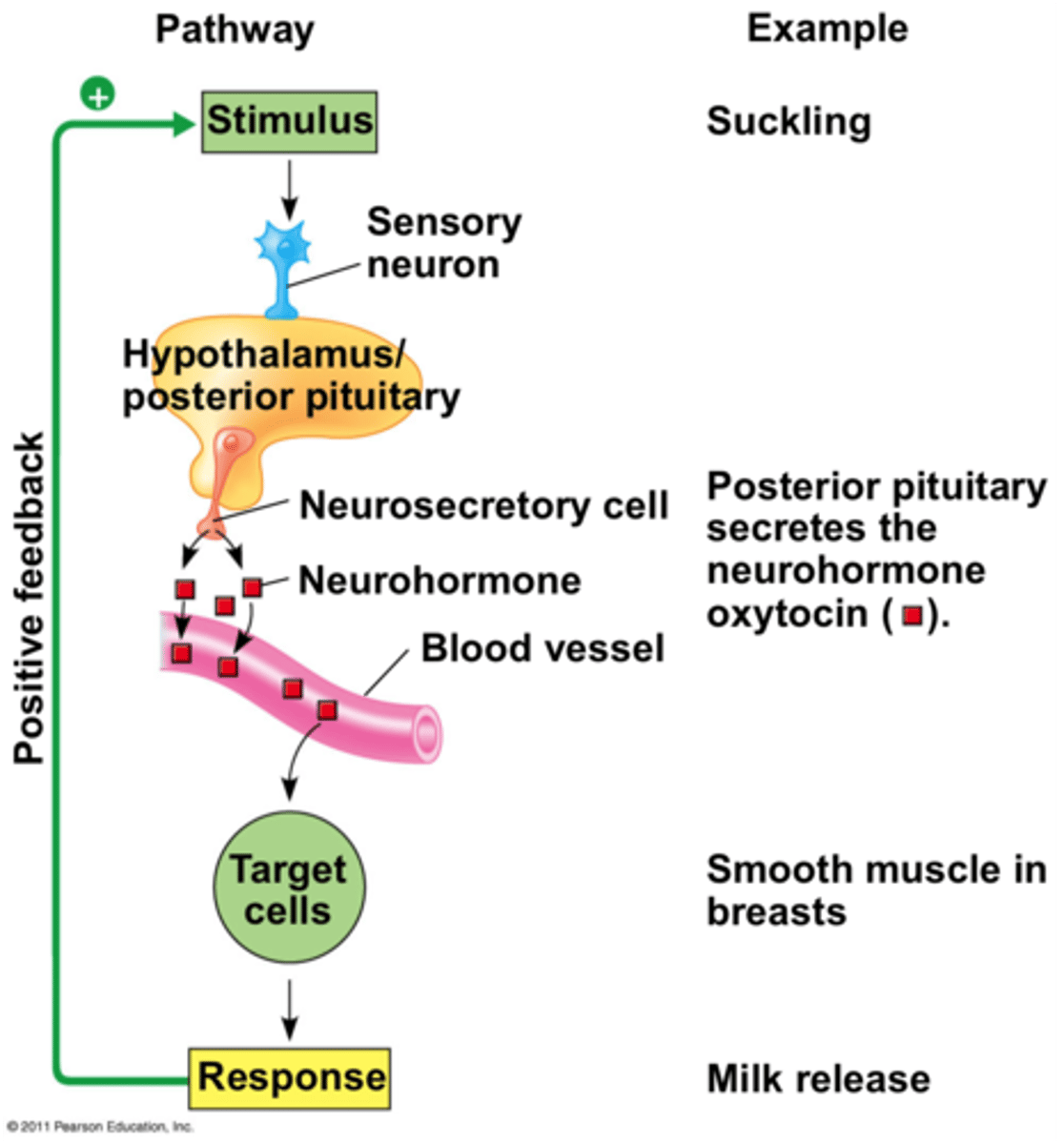
Neuroendocrine stimuli
Nervous signals (neurotransmittors) from axons stimulate the release of hormones into blood.
Like how hypothalamus stimulates the posterior pituitary gland by neurons to release hormones.
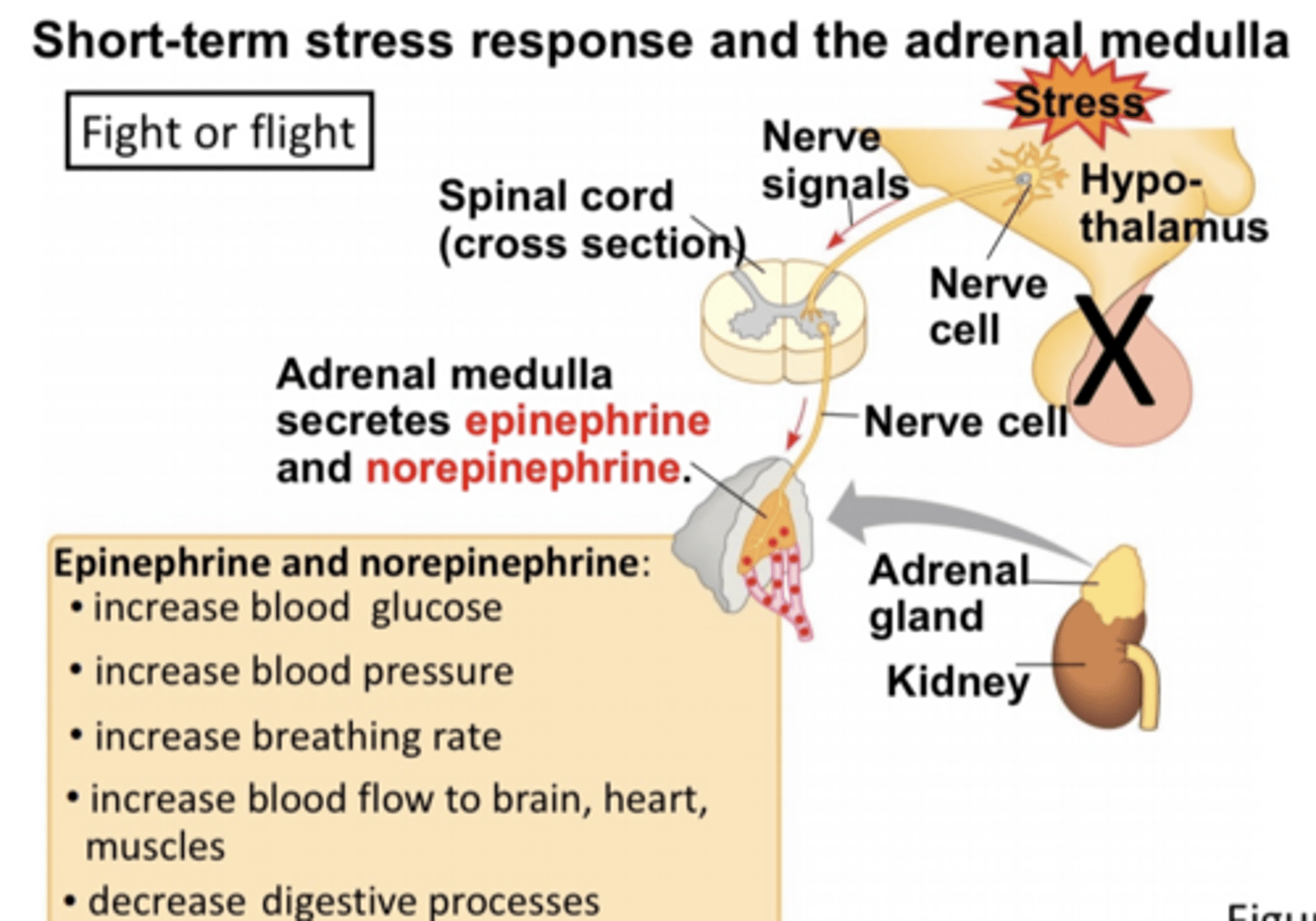
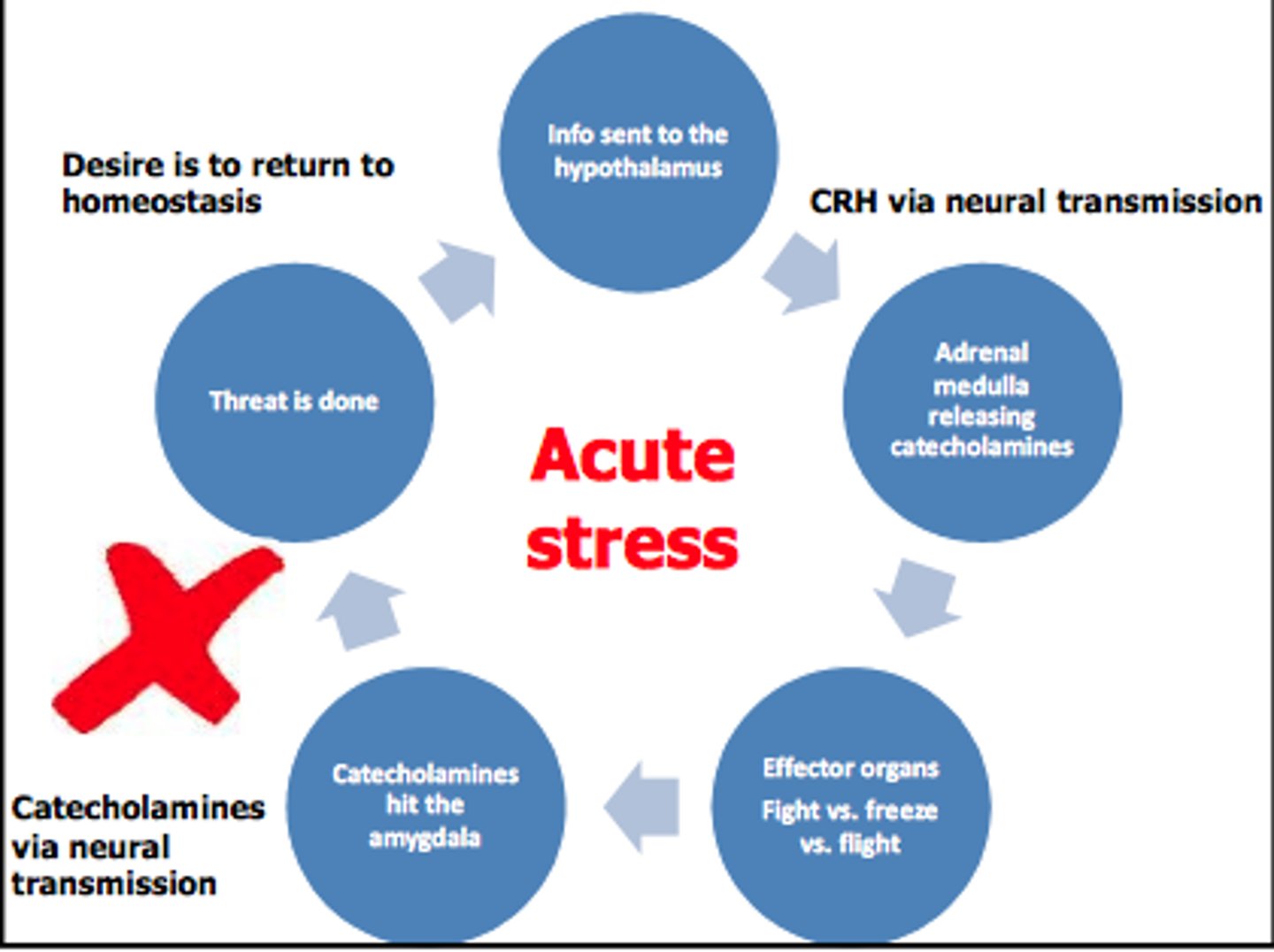
Fight or Flight response (hormones)
Body senses something dangerous => info gets relayed to THALAMUS => sends it to the AMYGDALA => HYPOTHALAMUS that stimulates the adrenal gland directly through neurons to release noradrenalin/adrenalin.
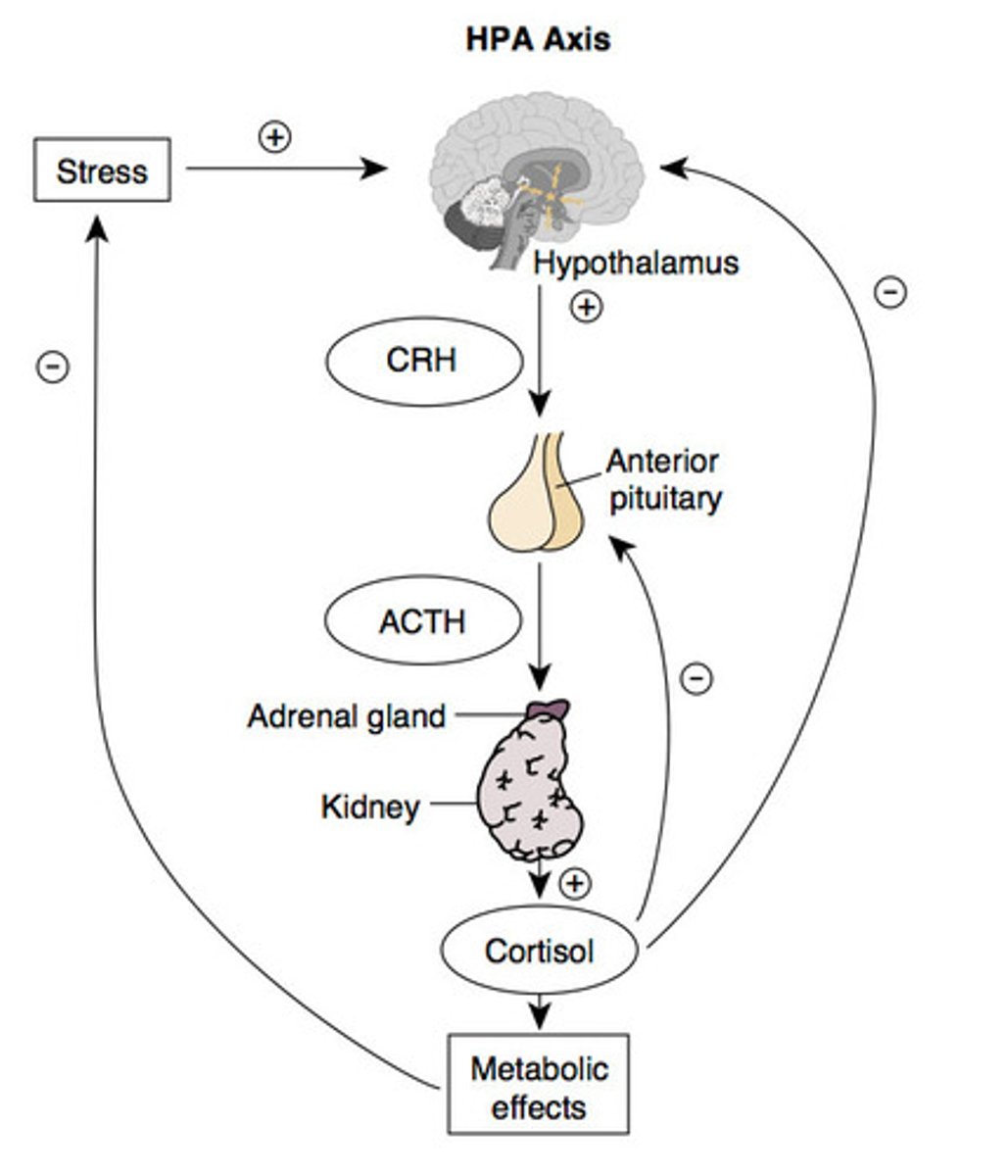
The hypothalamic-pituitary-adrenal-axis
The biological system responsible for the stress response;
Hypothalamus produces CtRH =>
Anterior pituitary produces ACTH =>
Adrenal gland produces cortisol => sends it to the immune-system preventing the production of inflammatory mediators.
Cortisol will inhibit CtRH release (negative feedback)
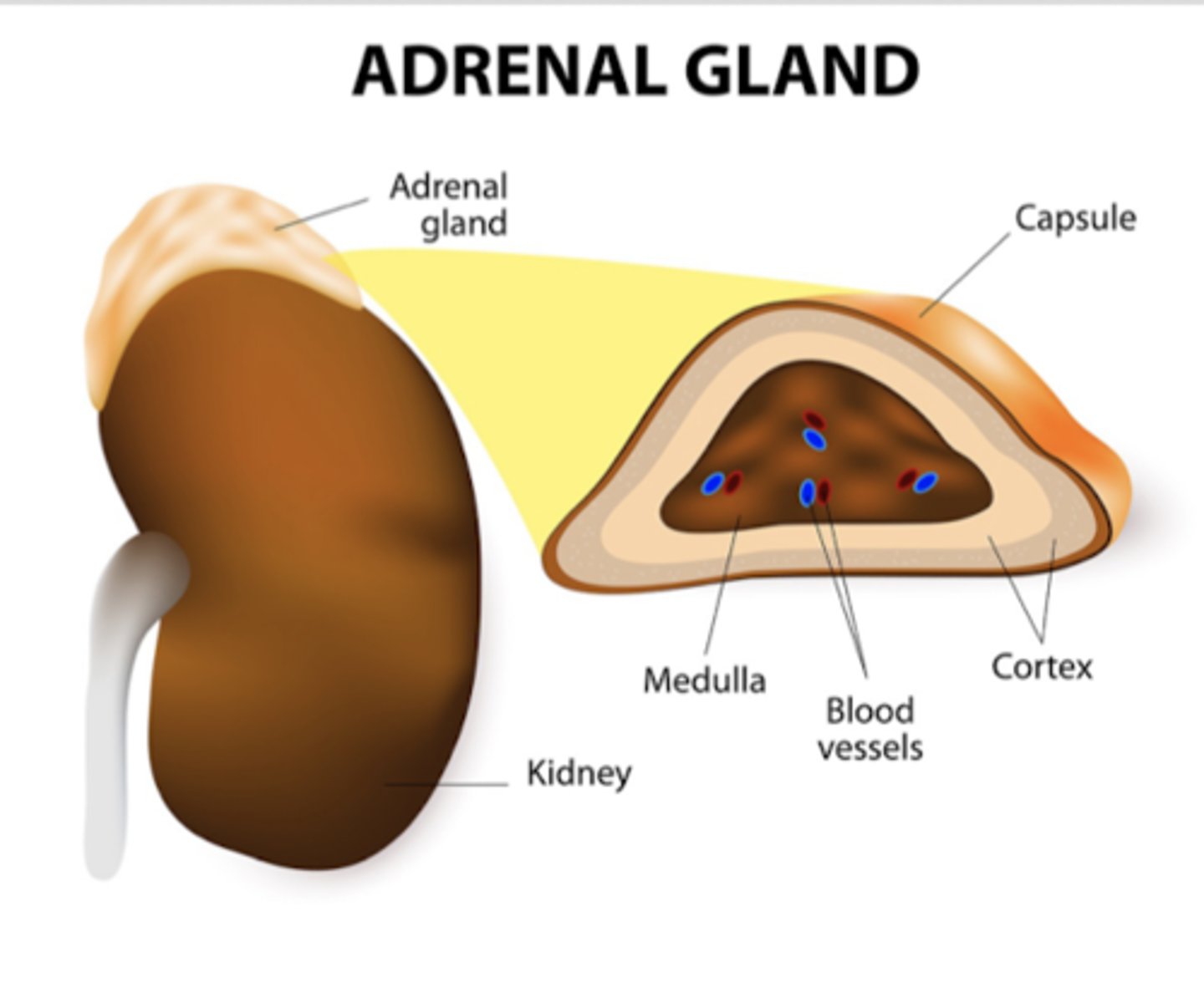
Adrenal gland consist of (2)
1: Adrenal cortex; makes androgens, cortisol, aldosterone and mineral-hormones
2: Adrenal medulla; makes adrenalin and noradrenalin
Acute stress pathway
Respond => Peak => Stop production (negative feedback) = recover
Like cortisol!
Chronic stress leads to
Constant production of cortisol that never stops, but this is bad because after approximately 30 days receptors get exhausted and stop responding to cortisol which means stress responses can't be stopped.
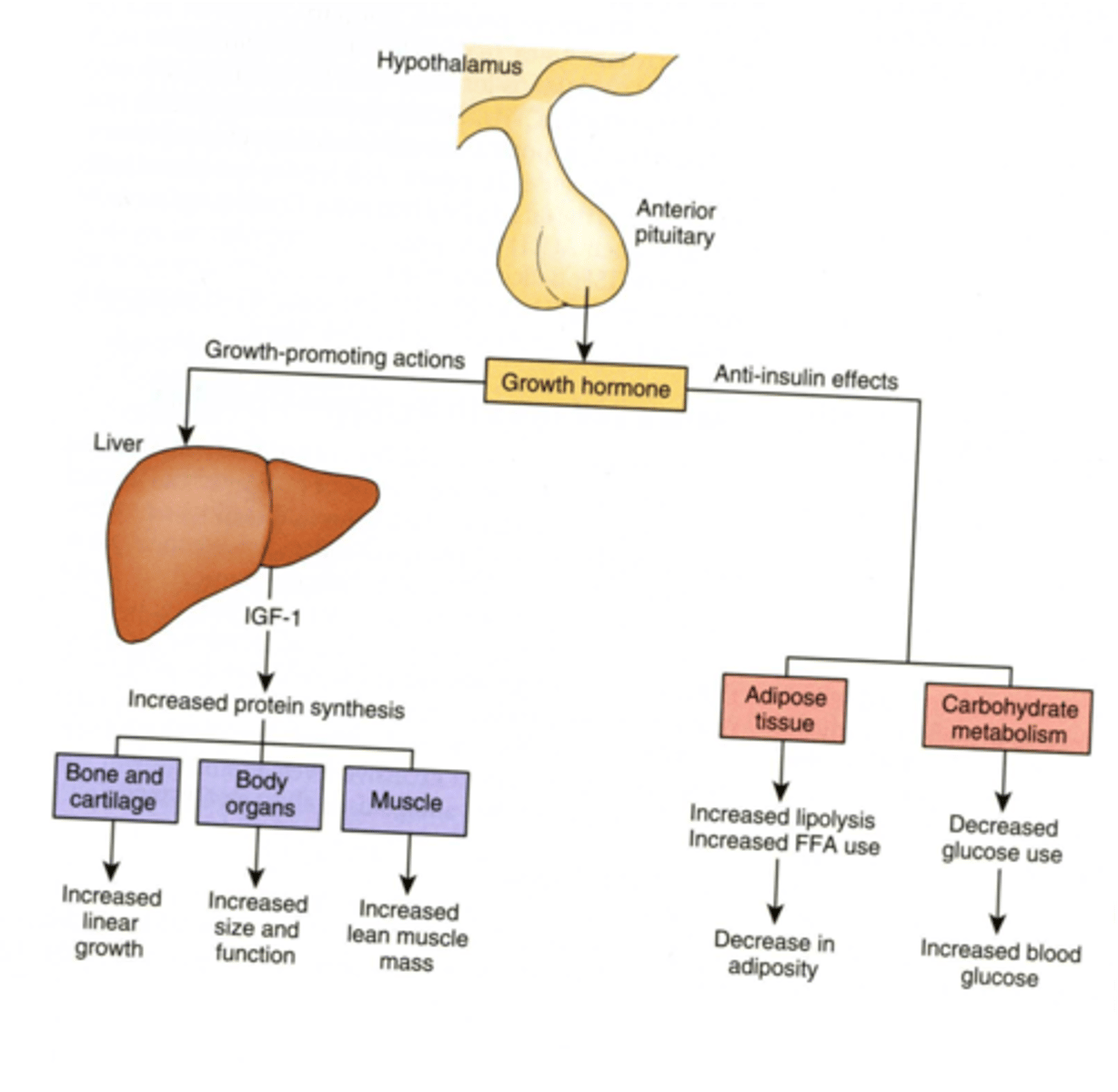
Growth hormone (GH) and Insuline-like-GrowthFactor-1 (IGF-I)
Promotes growth of skeleton an muscles;
GH, secreted by the anterior pituitary gland, promotes the synthesis of IGF-I in the liver => IGF-I promotes growth of muscles and bones while promoting the break down of fat.
GH can be used as a body-building steroid, but using it causes a lot of side effects.
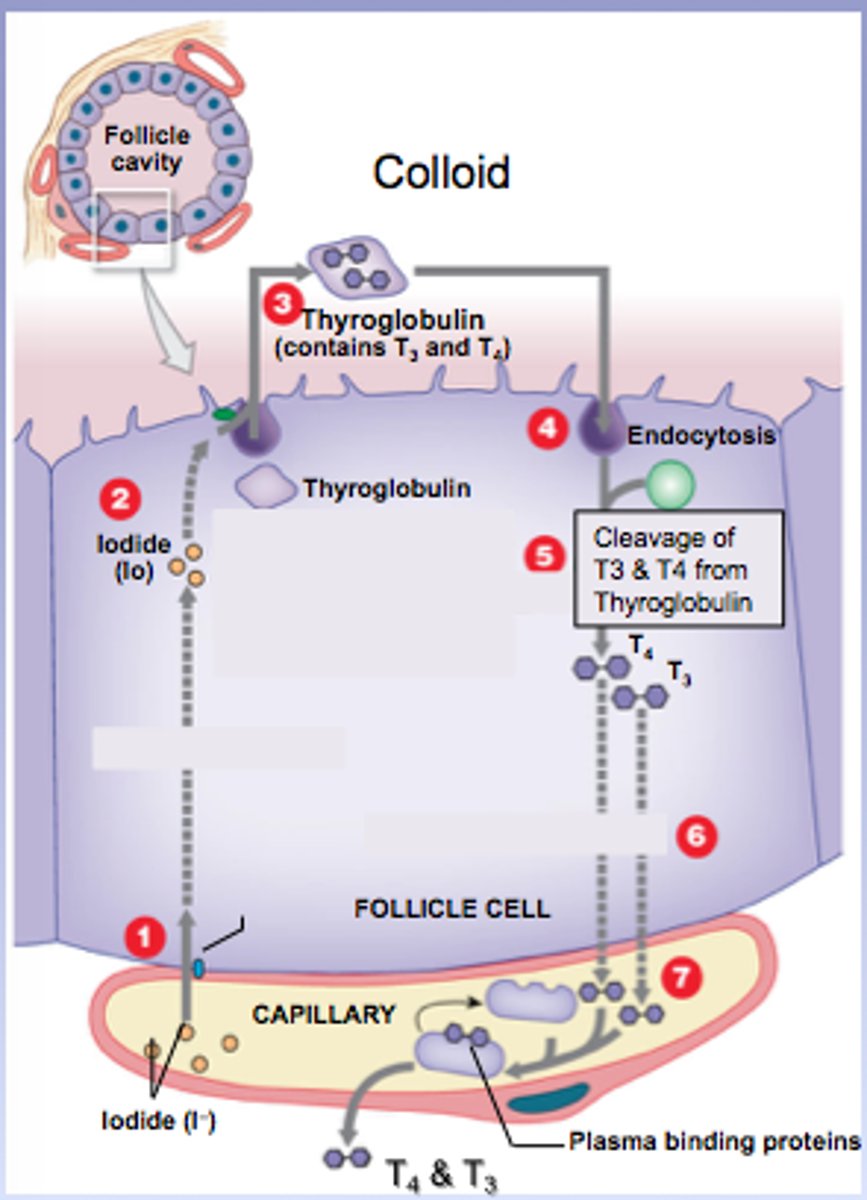
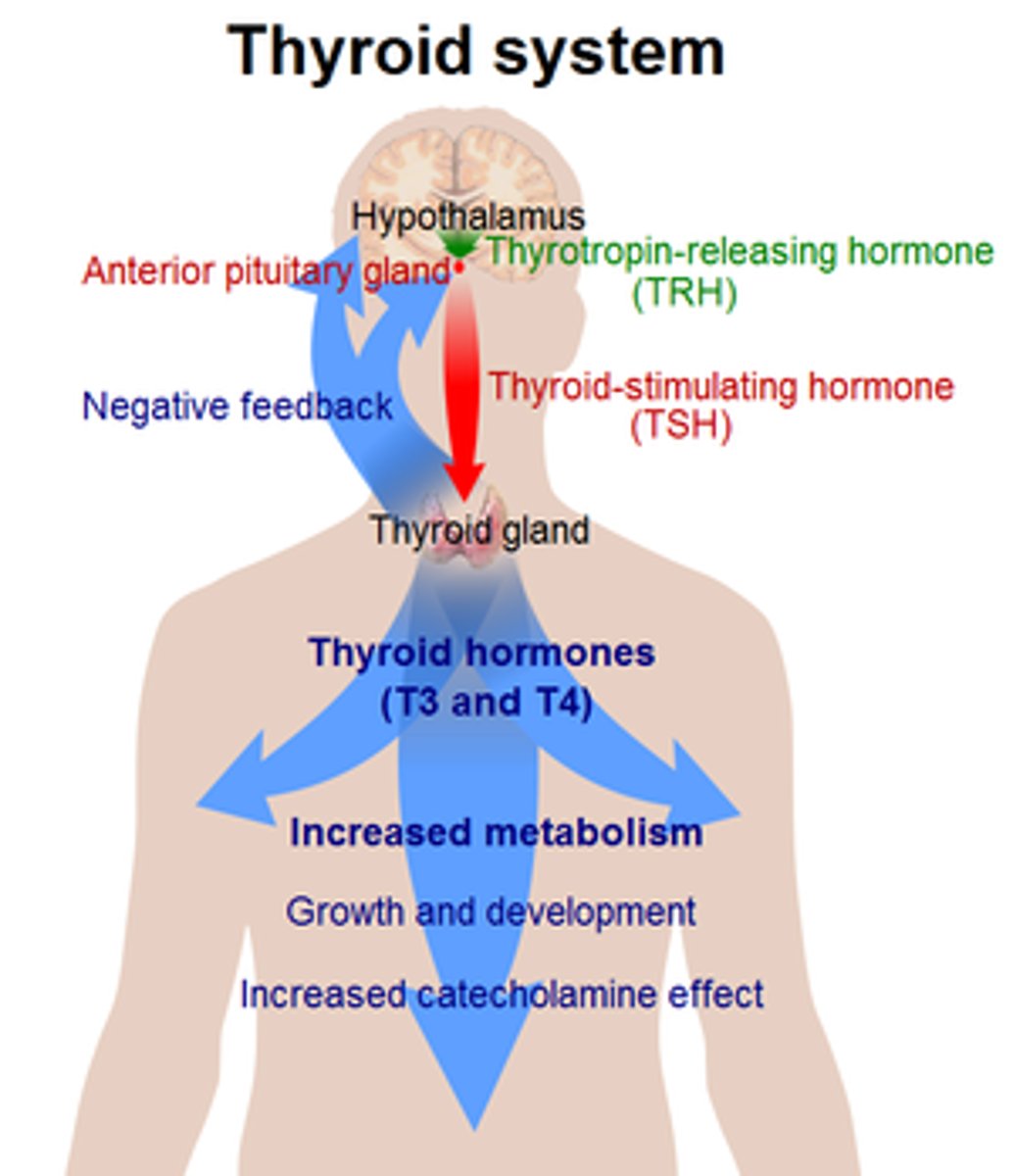
How is T4 and T3 made?
The hypothalamus secretes Thyroid Releasing Hormone (THR) => pituitary gland that secretes Thyroid Stimulating Hormone (TSH) => promotes the synthesis of T4 and T3 by;
1: Epithelial cells of the thyroid absorb iodine from the blood
2: The AA tyrosine is made into thyroglobulin (TG)
3: TG is excreted into the lumen and combined with iodine
4: TG-iodine is reabsorbed by the epithelial cells and broken down into smaller molecules with either 3 or 4 iodine atoms attached to them (T3 or T4)
5: T3 and T4 is then secreted into the blood and stimulates metabolism
Effects of T3 and T4 (6)
1: Stimulates heat production
2: Increased cardiac output
3: Increased oxygenation of blood
4: Increased metabolism
5: Increased oxygen consumption
6: Stimulates nervoussystem development; i.e. neuron synthesis
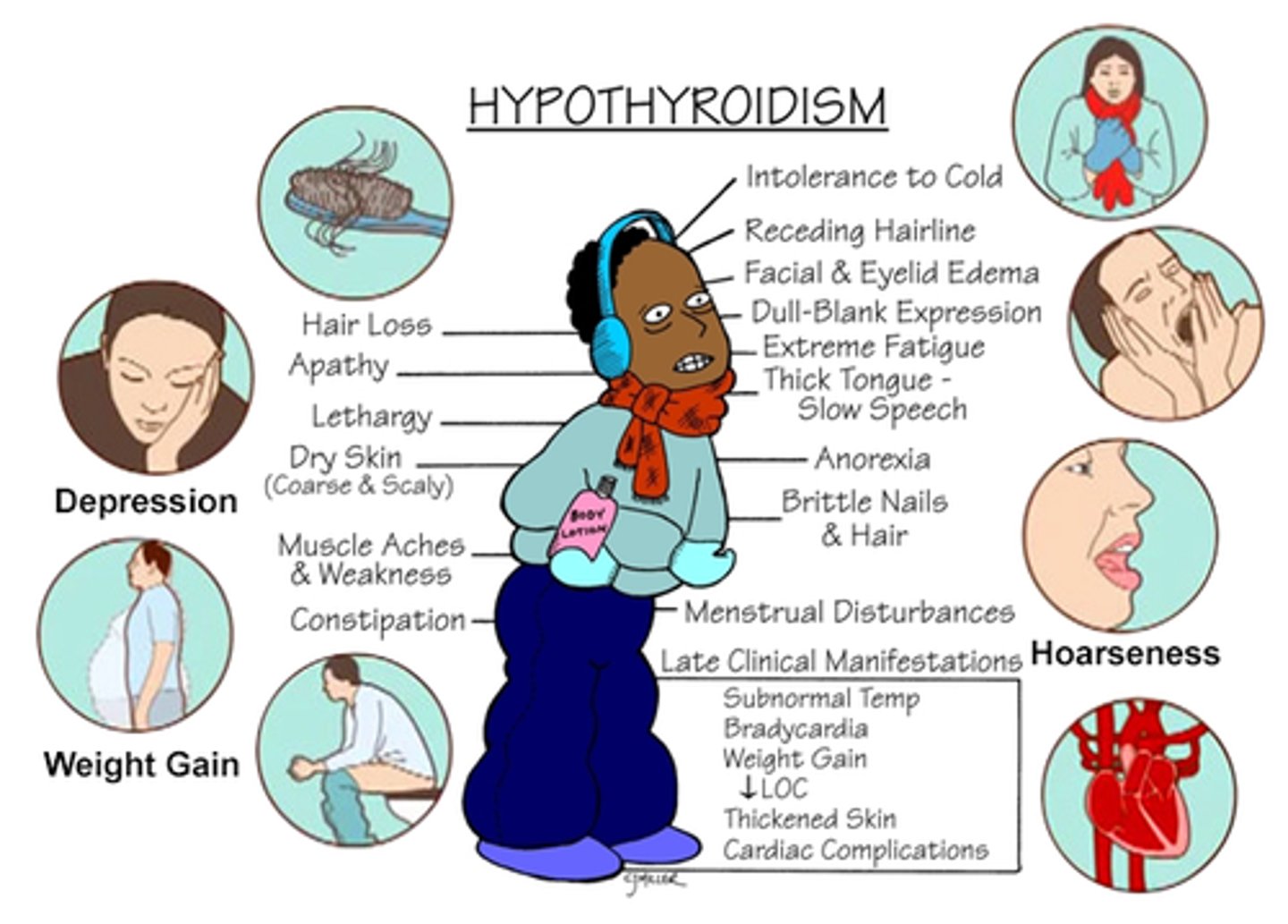
Hypothyroidism + symptoms (4)
Low production of T3 and T4 =>
1: Slow heart rate (pulse)
2: Weight gain
3: Feeling constantly cold
4: Low appetite
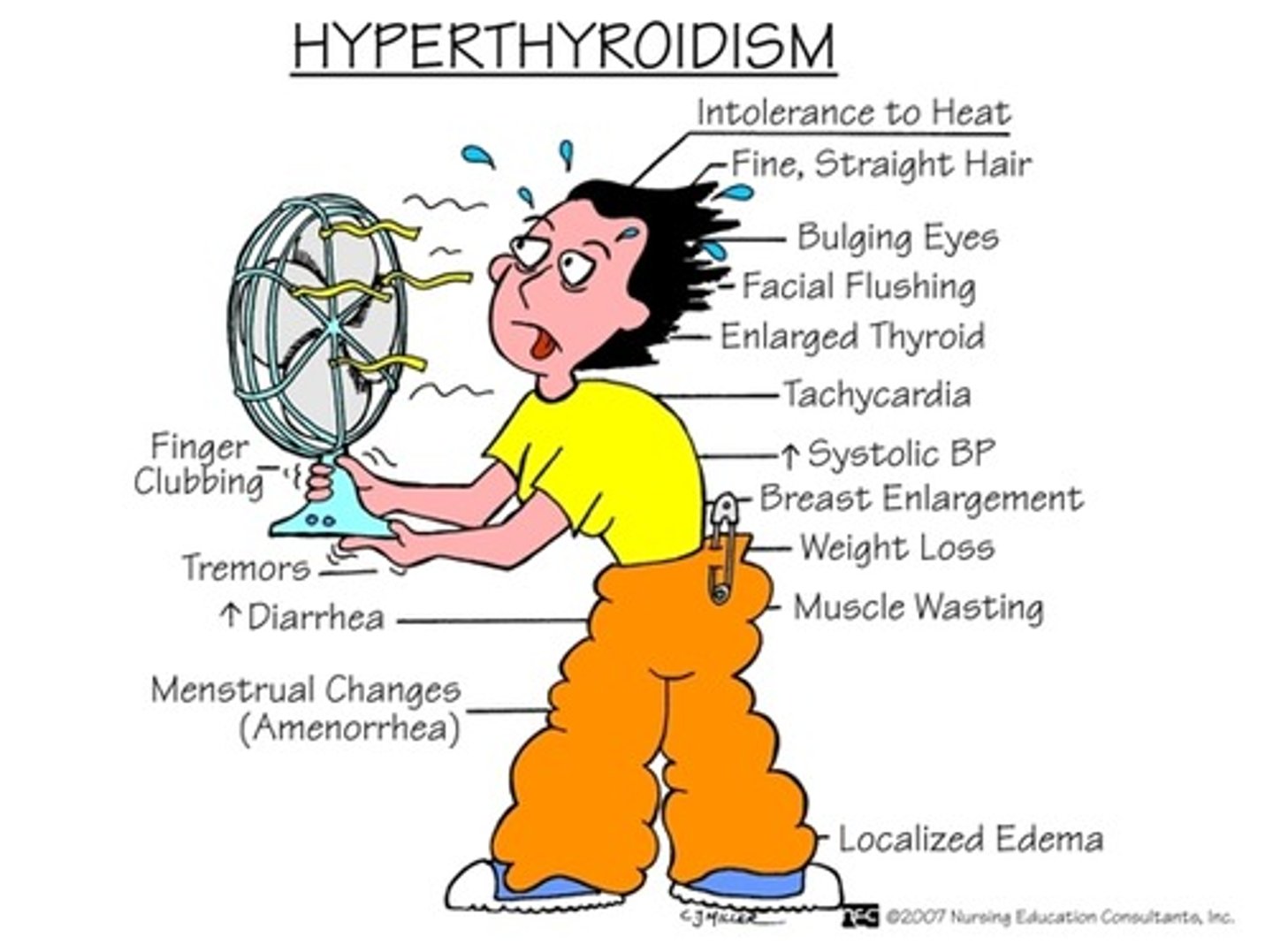
Hyperthyroidism + symptoms (4)
High production of T3 and T4 =>
1: Fast heart rate (pulse)
2: Weight loss
3: Constantly hot
4: High appetite
Para-thyroid-hormone (PTH) and calcitonin homeostasis
1: PTH is excreted from the para-thyroid gland, activates osteoclats (proteins that break down bone)
2: Calcium levels go up (reabsorbtion of Ca2+ from kidneys, guts and break down of bone)
3: Thyroid reacts to this by excreting calcitonin
4: Calcitonin inhibits osteoclats => calcium levels go down
Homeostasis is reached, and the cycle repeats if Ca2+ levels get to low again
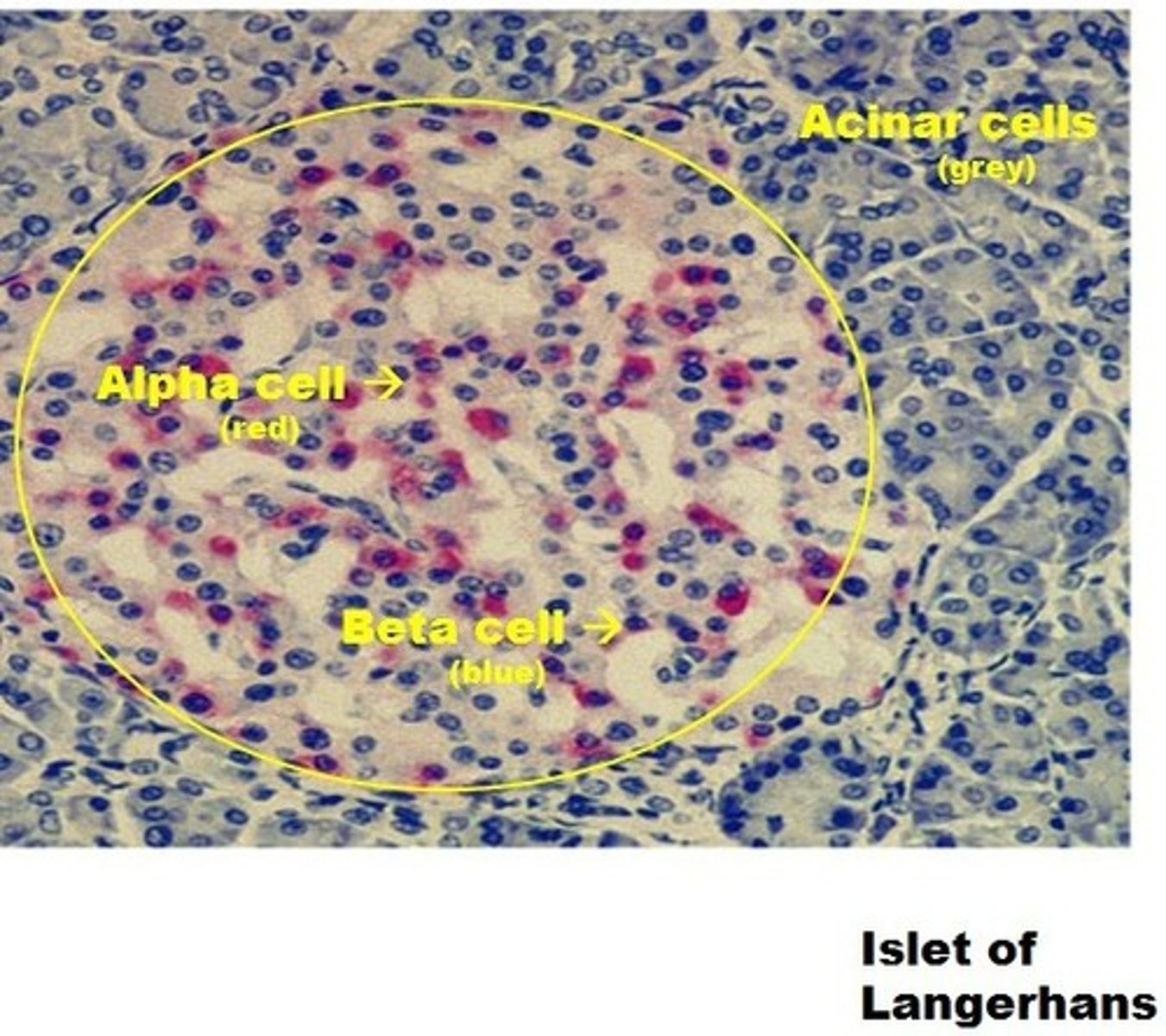
Pancreic islands' 4 cells + functions
The pancreas releases insulin and glucagon to control blood-sugar levels;
1: Beta-cells: secretes insulin => glucose levels go down
2: Alfa-cells: secretes glucagon => glucose levels go up
3: Delta-cells: secretes somatostatin, an overall inhibiting hormone, => insulin and glucagon synthesis is inhibited
4: PP-cells: rare, secretes pancreatic-polypeptides that paracrinely inhibits the secretion of pancreatic enzymes used for digestion, but also inhibits endocrinely the release of GH (=> no IFG-I) and the motility of smooth-muscles in the intestines.
Ecdysteriods
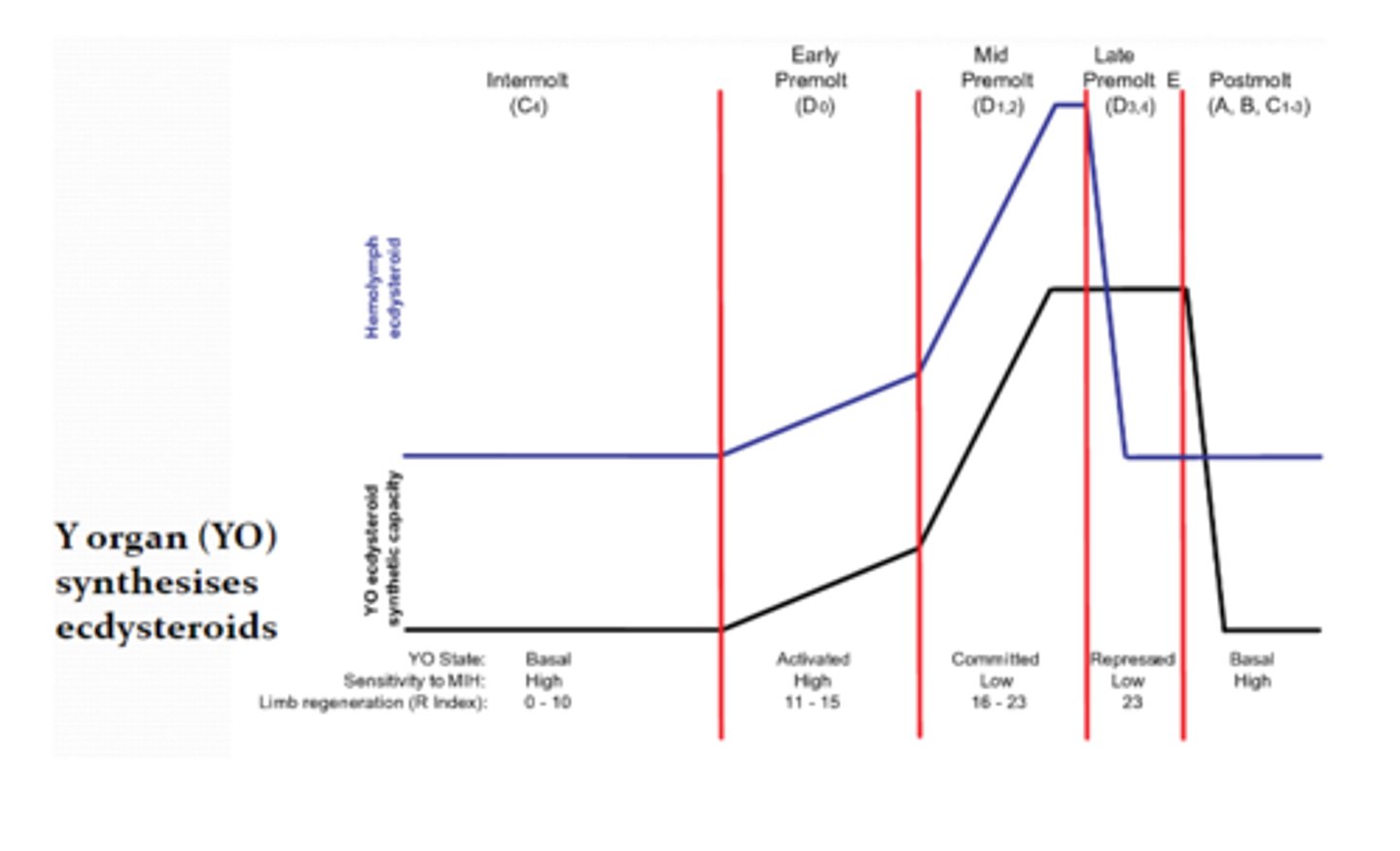
A steroid produced in INVERTEBRATES that, when high carbon levels, promotes the growth of a new exoskeleton under the already existing one => moulting (shedding of old exoskeleton)
Lutenizing Hormone (LH) males and females
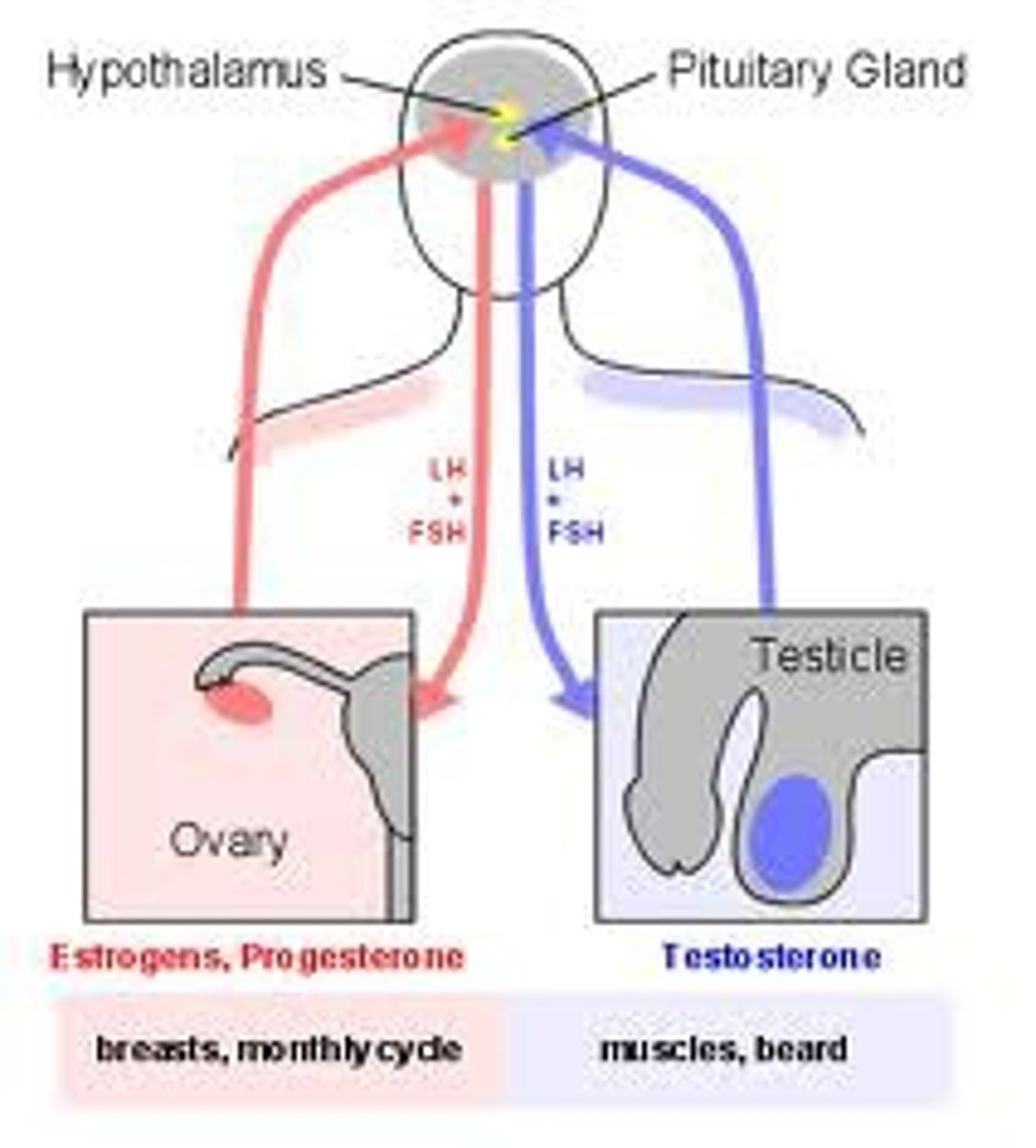
Females:
- Stimulates the ovaries to produce Oestrogen/Progesterone (during ovulation positive feedback of EST and PRO => increased LH to release egg from follicle, otherwise negative feedback)
Males:
- Stimulates the Leydig Cells in the testis to produce Testosterone
Follicle Stimulating Hormone (FSH) males and females
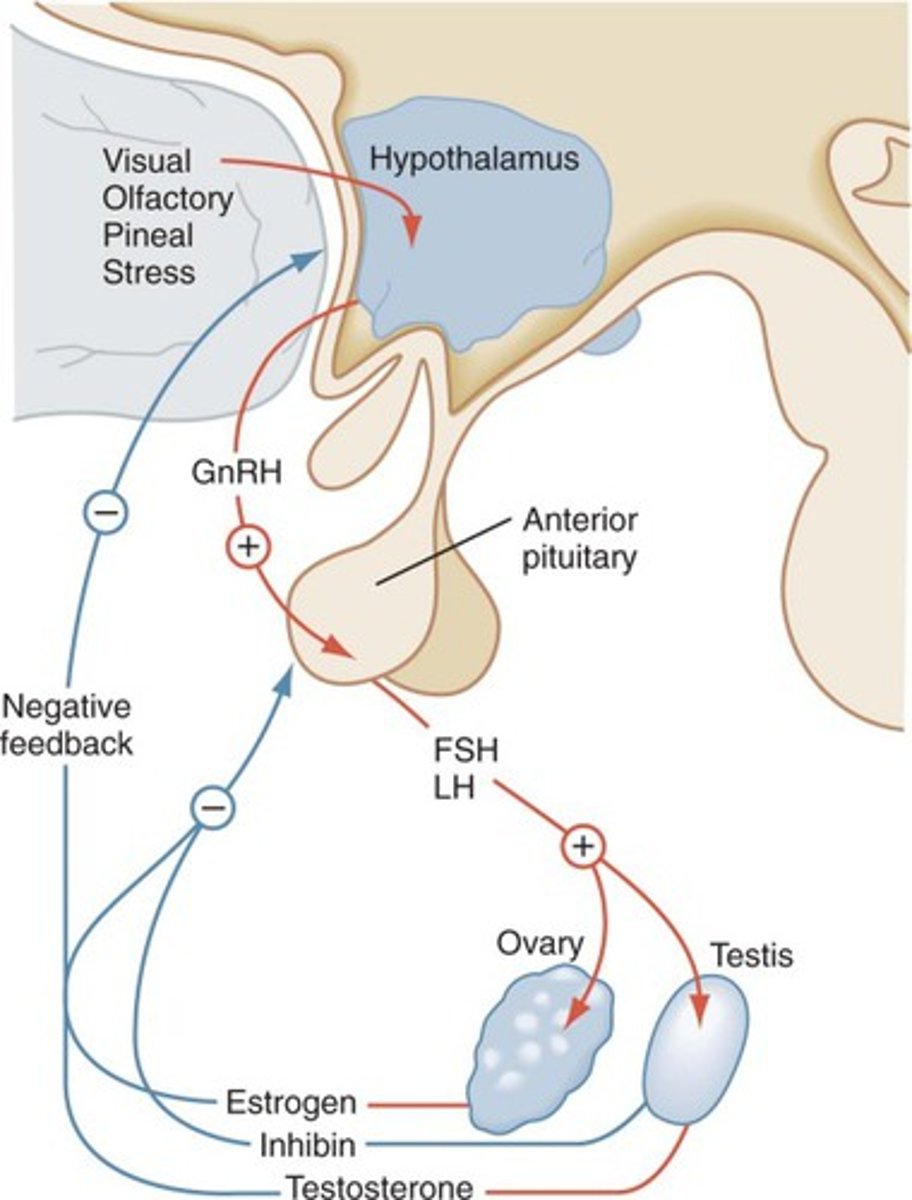
Females:
- Stimulates the growth of the ovarian follicles (during the follicle phase when the egg-cell grows)
- Increases amount of oestradiol (E2, most important oestrogen hormone for growth) produced
Males:
- Stimulates the Sertoli cells in the testis that promotes spermatogenesis
What hormone is the most important for puberty development?
LH, it's levels go up during puberty and promotes menstruation and spermatogenesis.
In females:
It's levels fluctuate monthly, giving women a monthly menstrual-cycle, and when menopause hits LH spikes (because OST levels go down) and stay's high until you die.
In males:
LH levels stay mostly the same throughout their reproductive period in life, it gradually decreases as you age.
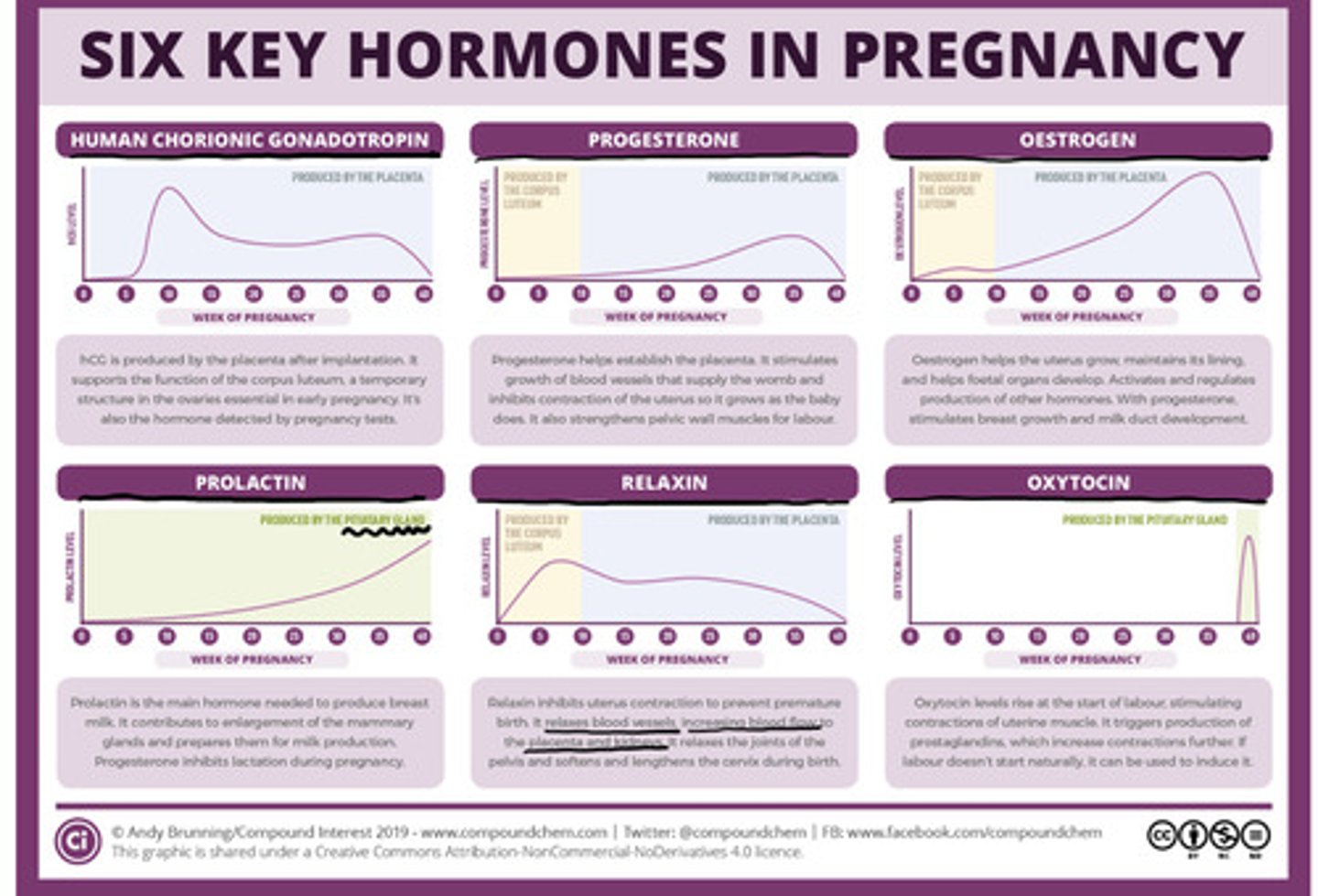
6 key hormones in pregnancy
1: Human Chorionic Gonadotropin (hCG), made by the PLACENTA, hormone detected by pregnancy tests.
2: Progesterone, made firstly by the CORPUS LUTEUM then by the PLACENTA around week 12. Prevents menstruation by blocking GnRH (mostly FSH).
3: Oestrogen, made firstly by the CORPUS LUTEUM then by the PLACENTA around week 12. Prevents ovulation hormones by blocking GnRH (mostly LH).
4: Relaxin, made firstly by the CORPUS LUTEUM then by the PLACENTA around week 12. Relaxes the contractions by inhibiting uterine muscle contractions AND inhibiting oxytocin from entering, production ends abruptly at childbirth.
5: Oxytocin, made by the PITUITARY GLAND at the end of pregnancy to promote uterine muscle contractions.
6: Prolactin, made by the PITUITARY GLAND, mostly at the end of pregnancy to promote growth of milk tissue and production.
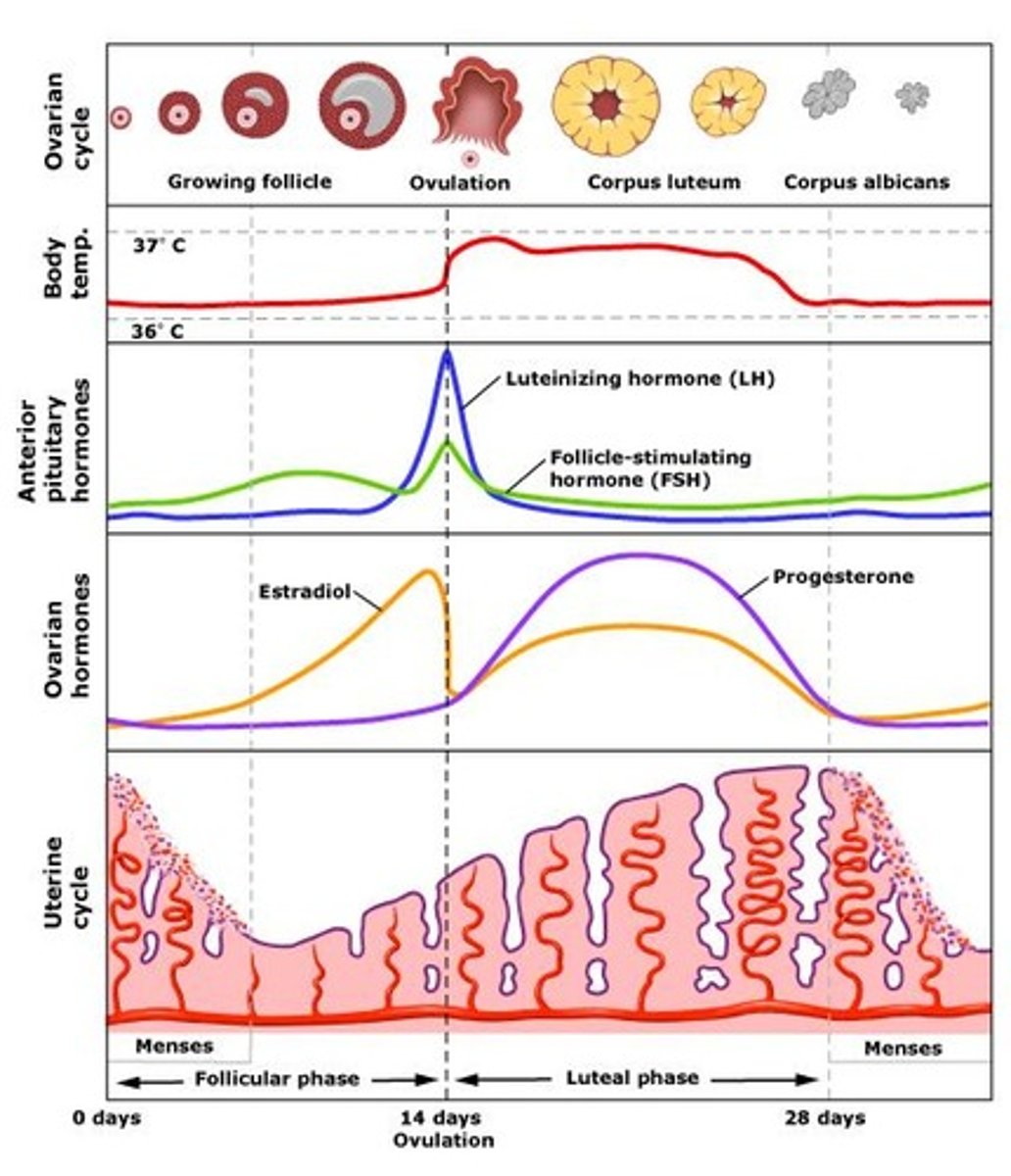
Menstruation 3 phases + key hormones
1: The follicular phase that begins with the menstruation, FSH promotes growth of ovarian follicles (egg) which in turn releases EST and PRO
2: The ovulation phase, EST and PRO promotes the excretion of LH in a positive feedback manner => excessive production of LH => ovulation
3: The luteal phase, corpus luteum, left in the ovaries, produces EST and PRO for about 2 weeks, promoting the growth of the endometrium lining. If egg doesn't get fertilized => no release of hCG => Corpus luteum turn into Corpus albicans and menstruation cycle starts over
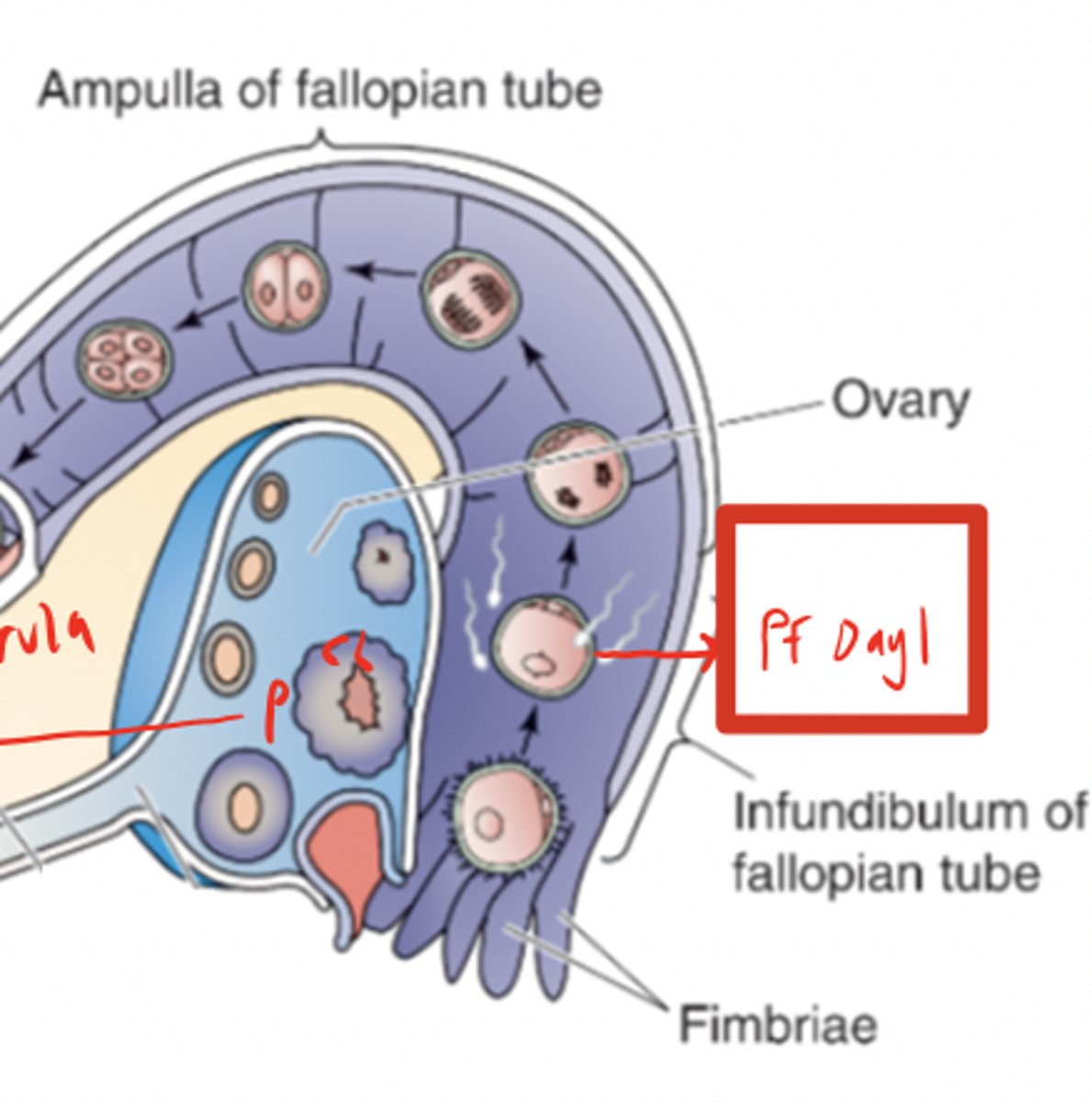
Where in the fallopian tube is the egg fertilized?
In the first 1/3 of the tube from the follicle, it then travels by the help of fimbrae to the endometrium
What hormone controls the Circadian Rythm?
Melatonin!
The hormone is produced in the absence of light by the Pineal gland. It's synthesized from the AA tryptophane which makes it a amine hormone.
The 3 mediums in which exchanges between an organism/the environment occur
1: The outside environment
2: The ECL
3: The ICL