chlorofluorocarbons
 Call Kai
 Learn
Learn Practice Test
 Spaced Repetition
 Match
Match Flashcards
 Knowt Play
1/5

There's no tags or description
Looks like no tags are added yet.
Name | Mastery | Learn | Test | Matching | Spaced | Call with Kai |
|---|
No analytics yet
Send a link to your students to track their progress
6 Terms
Chloroflourocarbons
Contain : chlorine, fluorine and carbon (hydrogens replaced )
Stable, volatile, non-flammable + non toxic
Used in: fridge, aerosol cans dry cleaning and air conditioning
But destroy ozone
Ozone layer
Is in layer in atmosphere called stratosphere
Contains mostly O 3 (ozone) + acts as chemical sunscreen
Absorbs UV light → sunburn / skin cancer
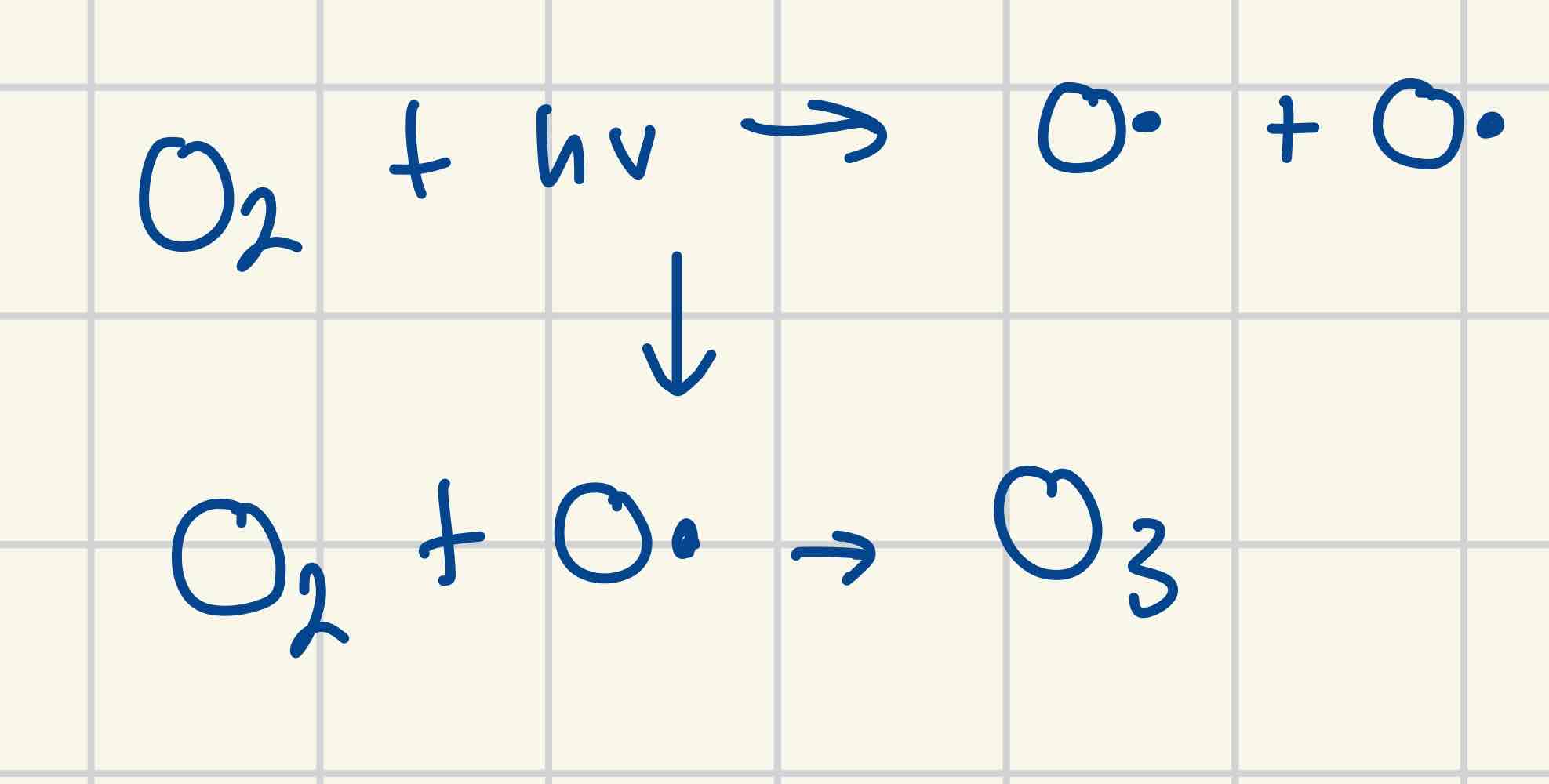
Formed when O2 → broken down into 2 free radicals t other free radicals attack O2→O3
Holes in the ozone layer
Discovering thinning out near artic and Antarctica
Bad = harmful UV radiation reaches earth
Free radicalisation with chlorofluorocarbons
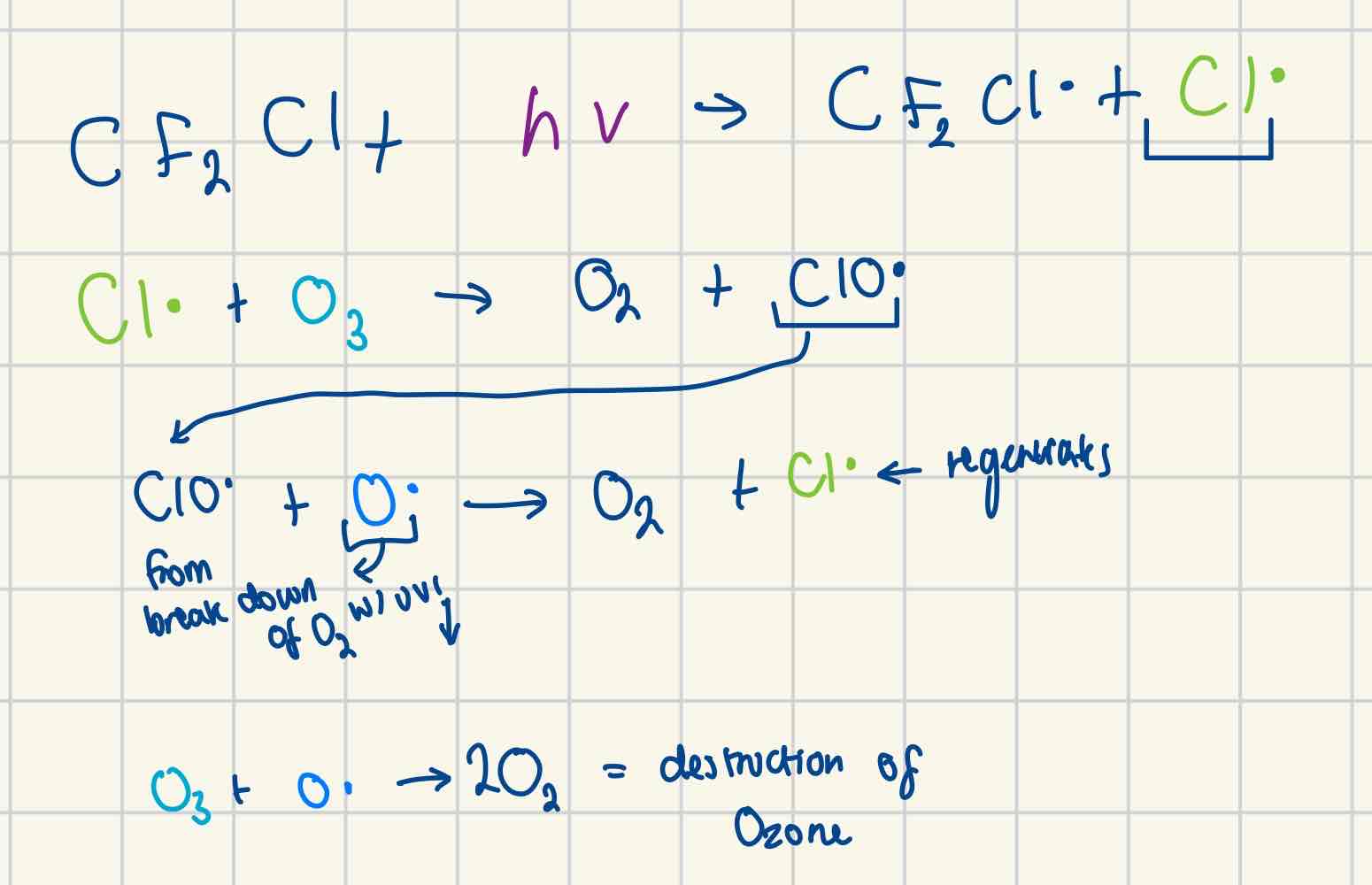
Formed because when CFCs travel up they absorb UV = split chlorine = free radicals → catalyse & ozone destruction
One Cl*= 10000 O3 destroyed
Nitrogen oxides and the ozone layer
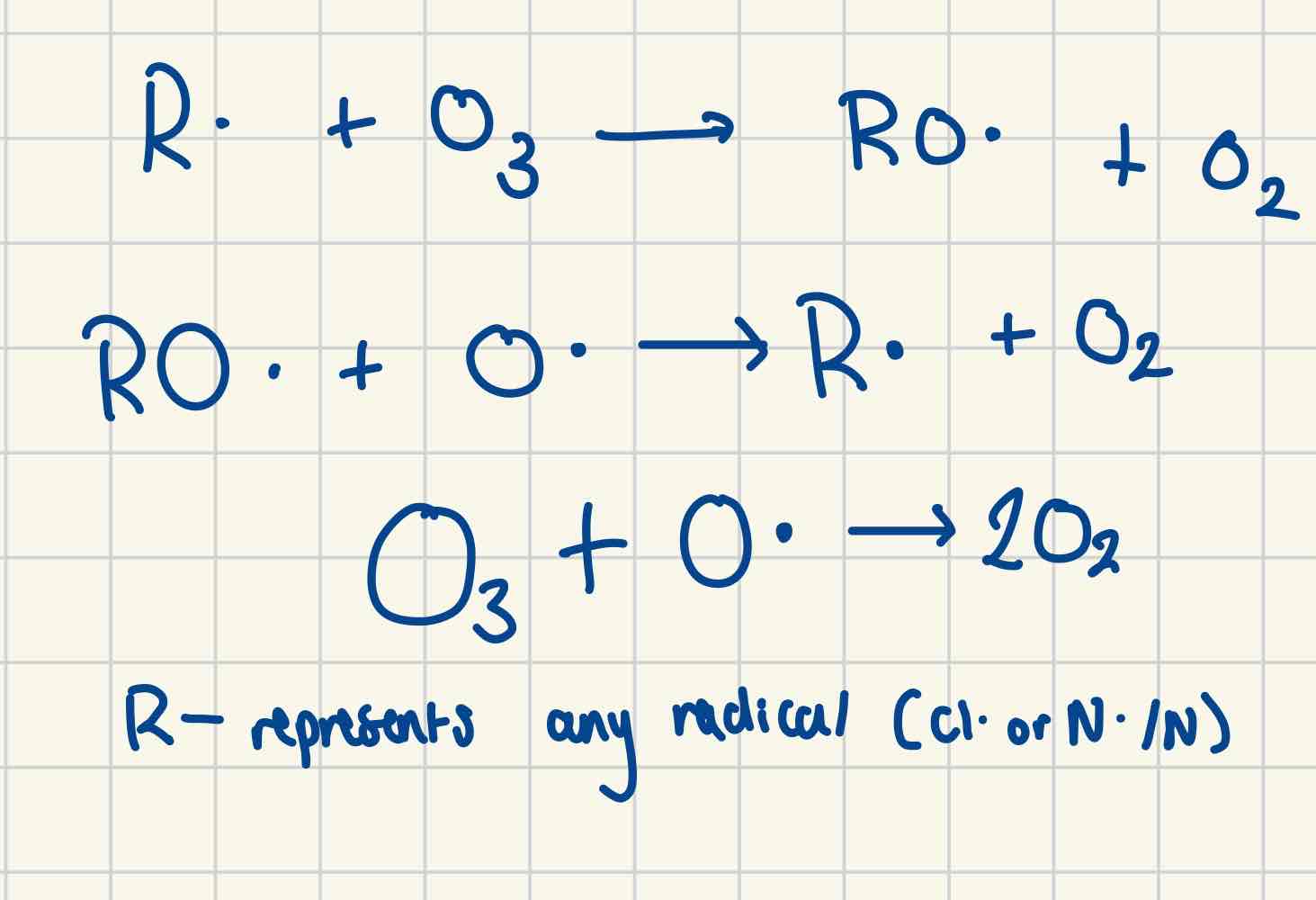
NO* radicals from nitrogen oxides also destroy ozone layer
Prod. by cars, aircraft engines and thunderstorms
Free radicals act as catalysts
Alternatives to CFCs:HFCs and HCFCs
Used as temporary alternatives until safer products an developed
Disadvantages:
Hang around atmosphere = disruption
Still damage ozone layer but less than CFCs
Greenhouse gages