DAT chemistry 7 - acid base equilibria and titratins
 Call Kai
 Learn
Learn Practice Test
 Spaced Repetition
 Match
Match Flashcards
 Knowt Play
1/47

There's no tags or description
Looks like no tags are added yet.
Name | Mastery | Learn | Test | Matching | Spaced | Call with Kai |
|---|
No analytics yet
Send a link to your students to track their progress
48 Terms
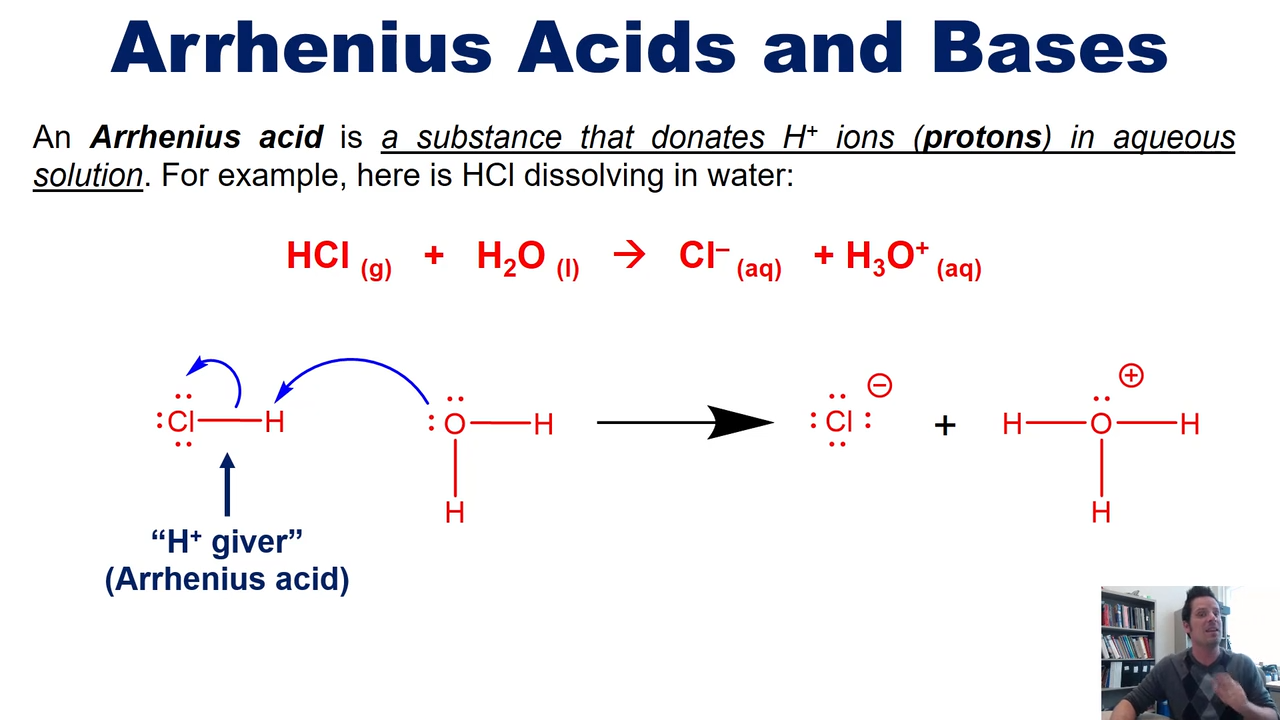
arrehnius acids
substance that donates H+ ions in water
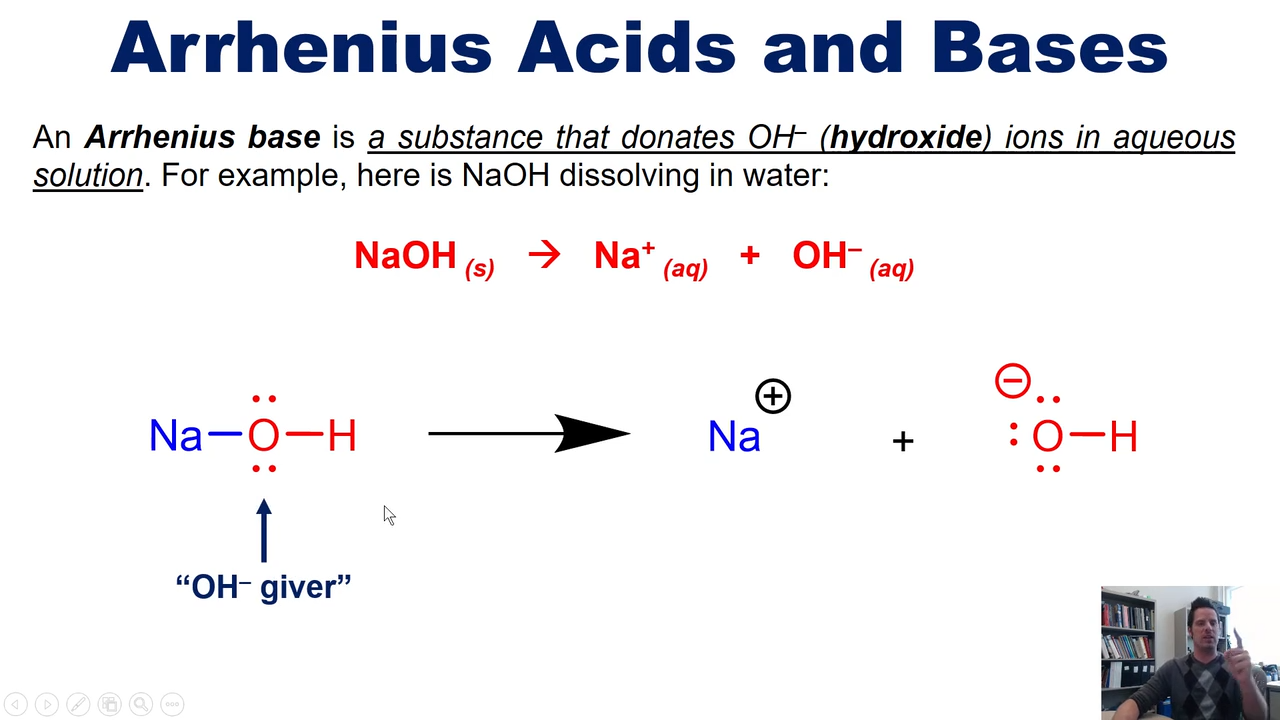
arrehnius bases
Substance that doantes OH- in aqeous solution
Bronstead acid
substance that donates protons
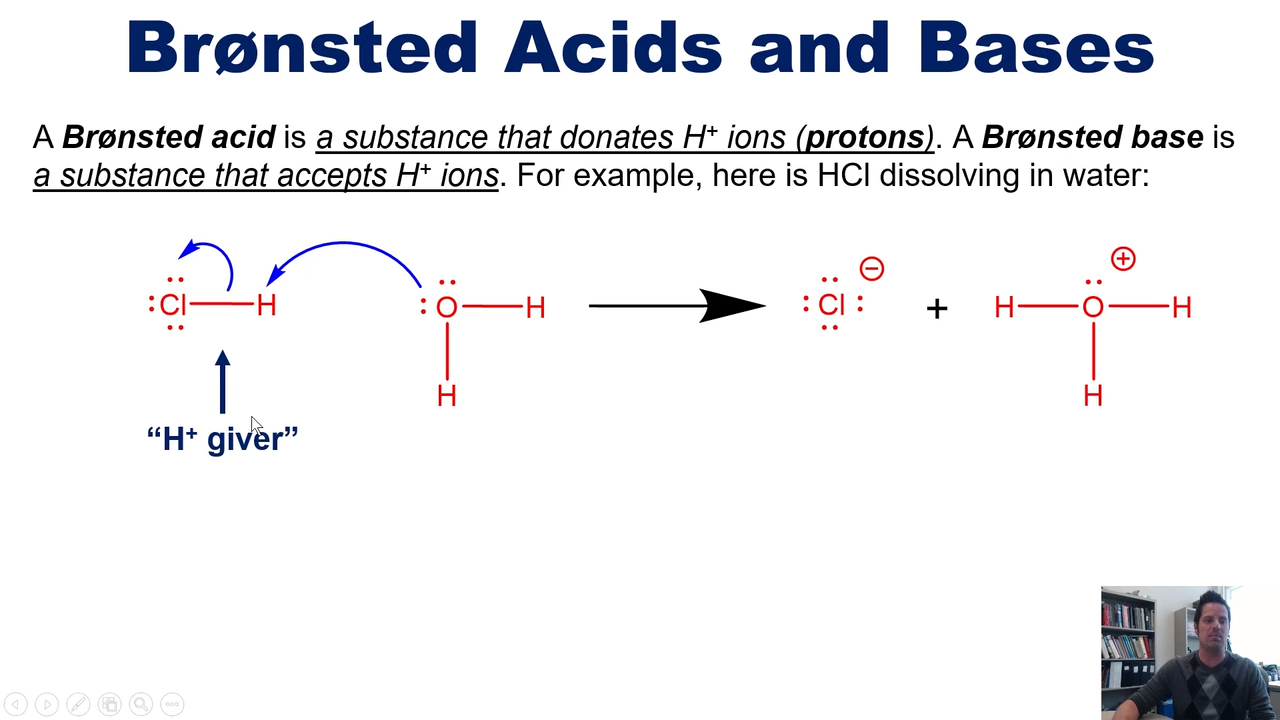
Bronstead base
substance that accepts protons
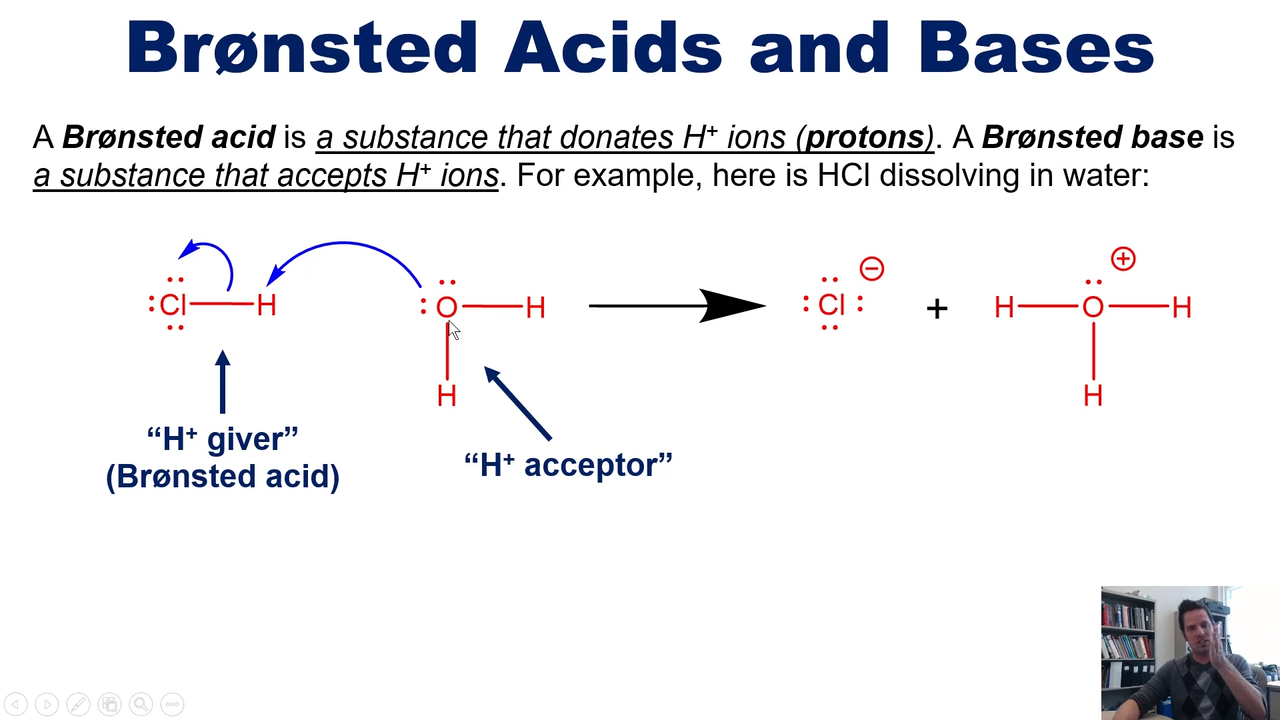
lewis acid
substance that accepts electrons
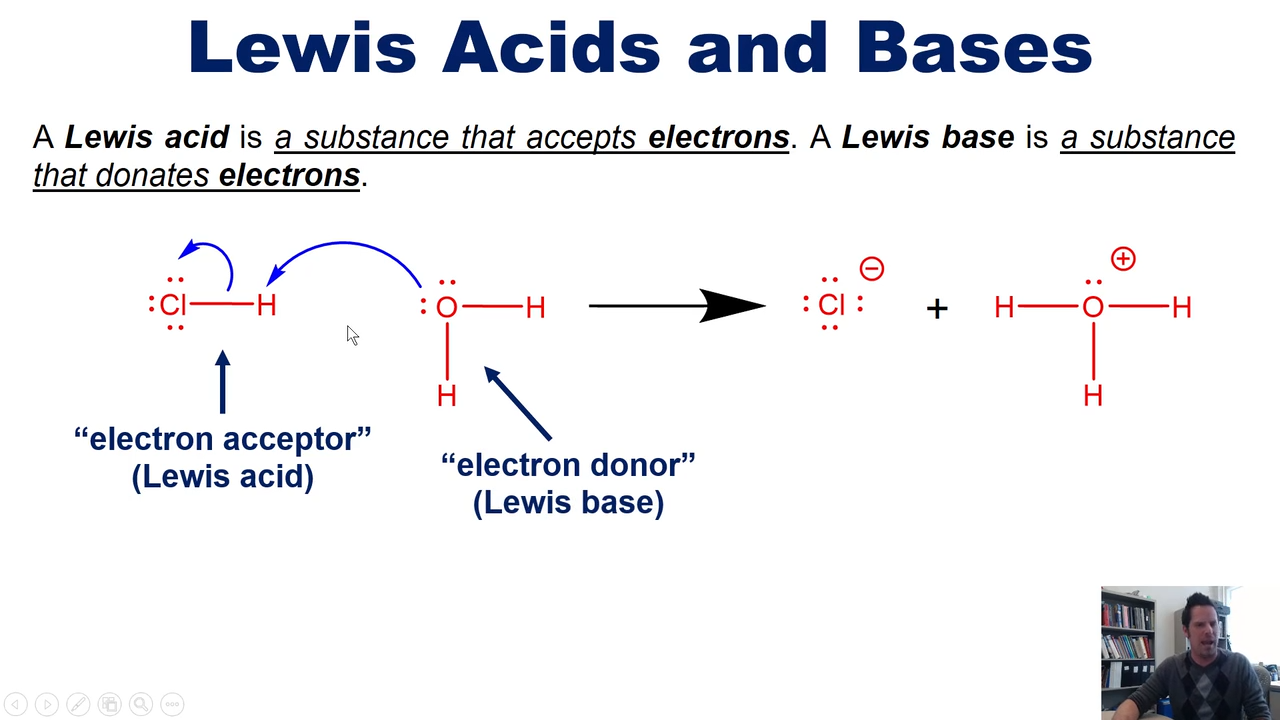
lewis base
substance that donates electrons
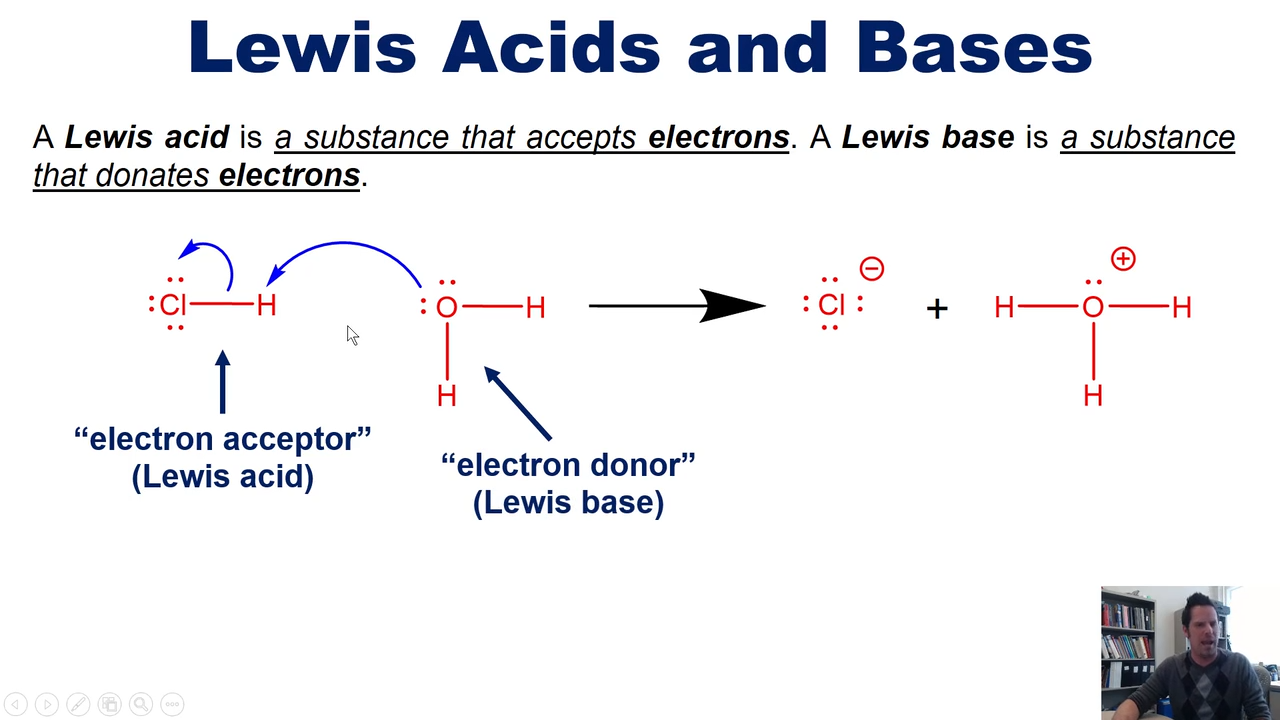
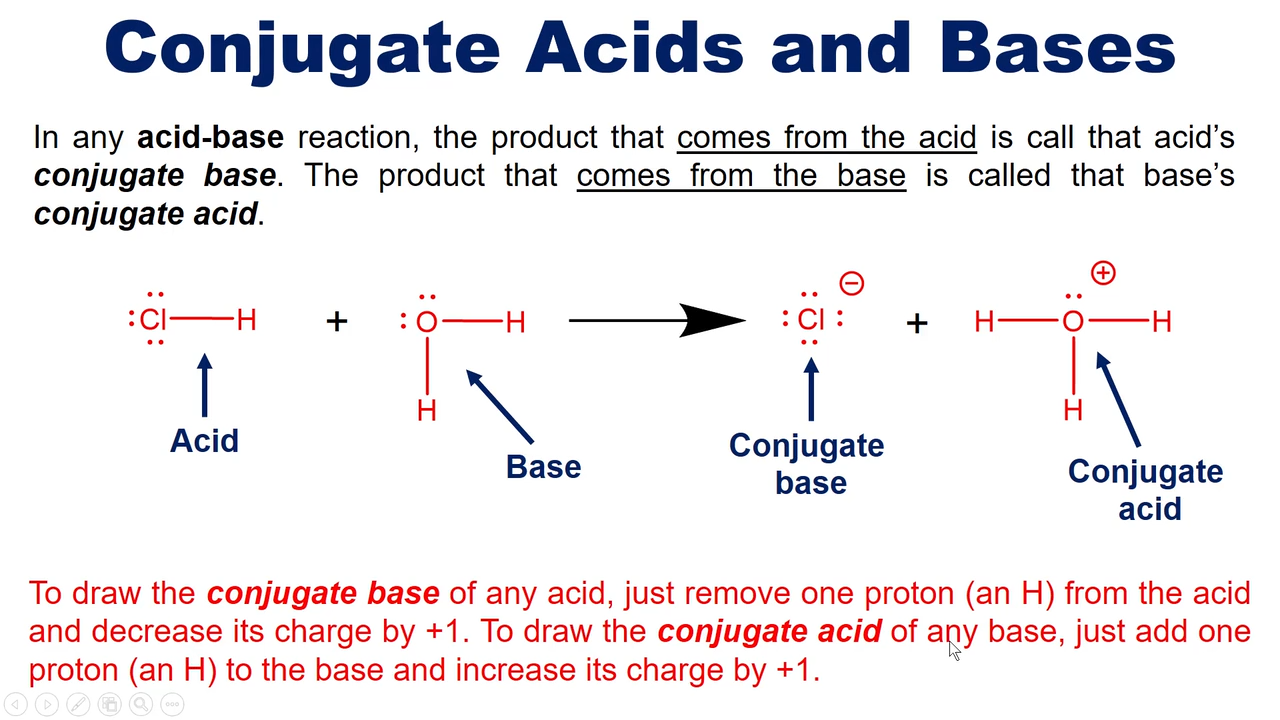
how to draw conjugate bases
add a proton and -1 to the charge
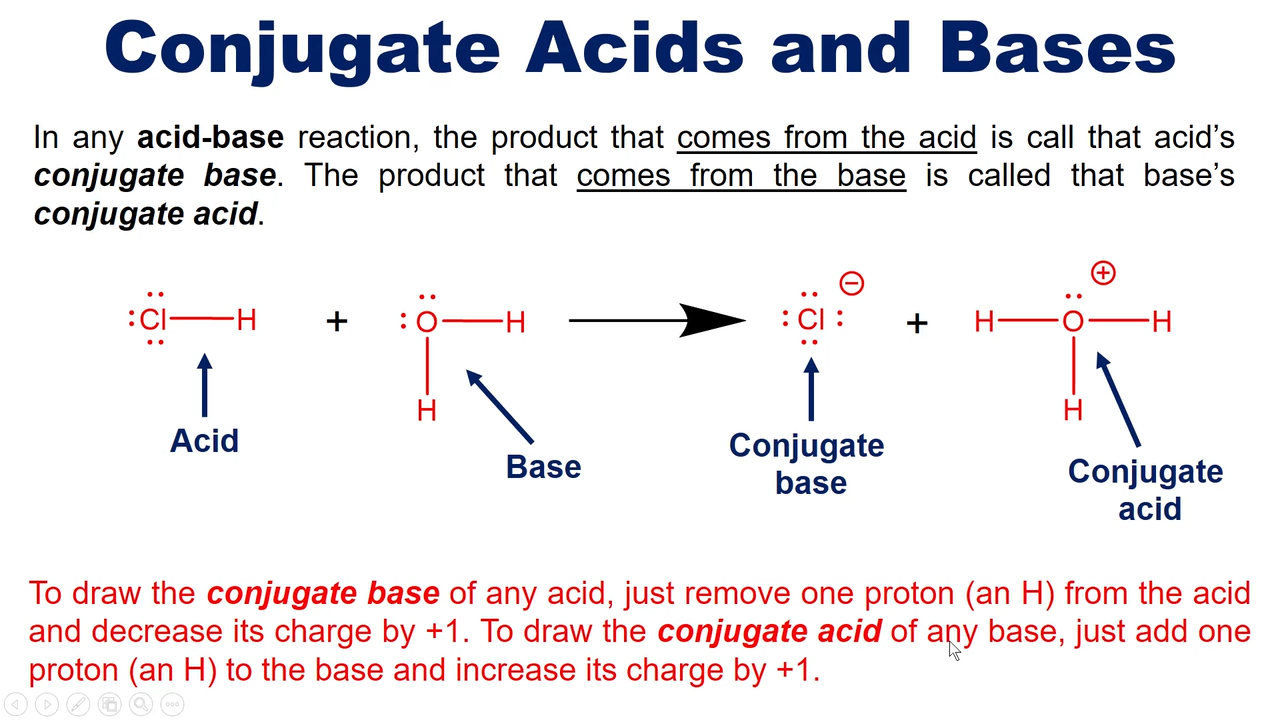
how to draw conjugate acids
remove a proton and +1 to the charge
amphoteric
a substance that can act as both an acid and a base
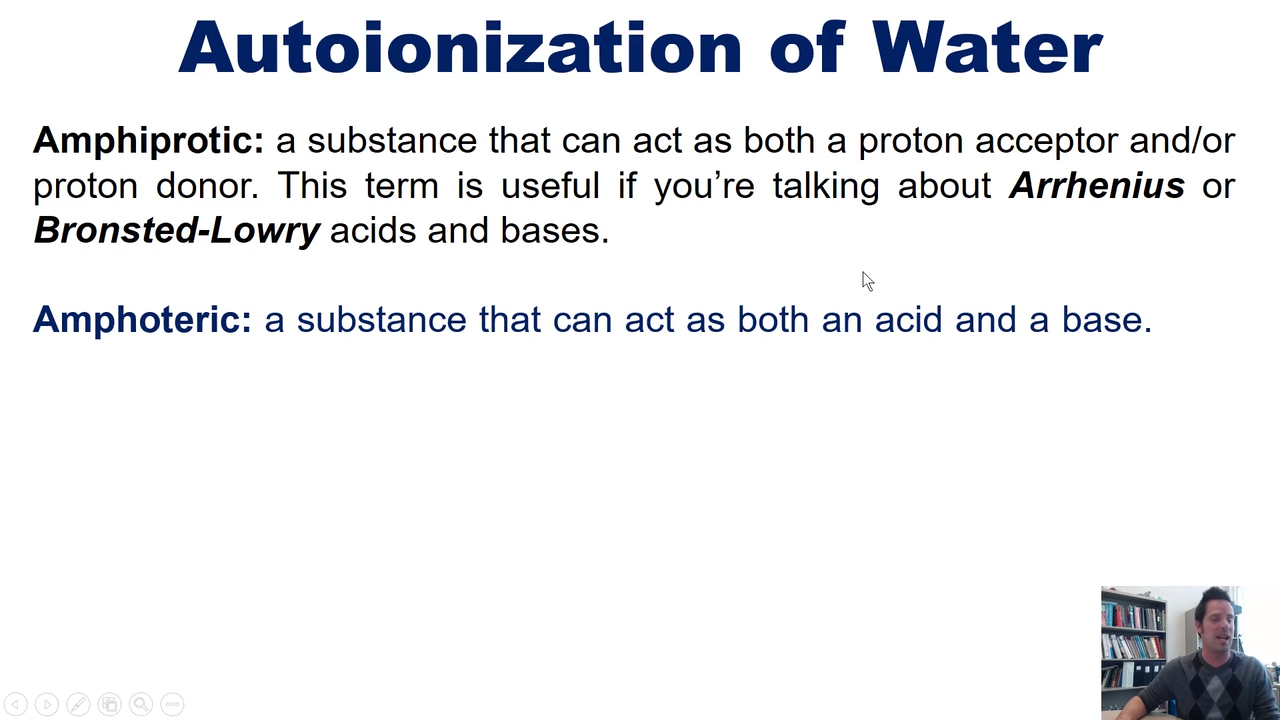
amphiprotic
substance that can be both a proton acceptor and donor
(works when talking about bronstead lowry bases and acids)
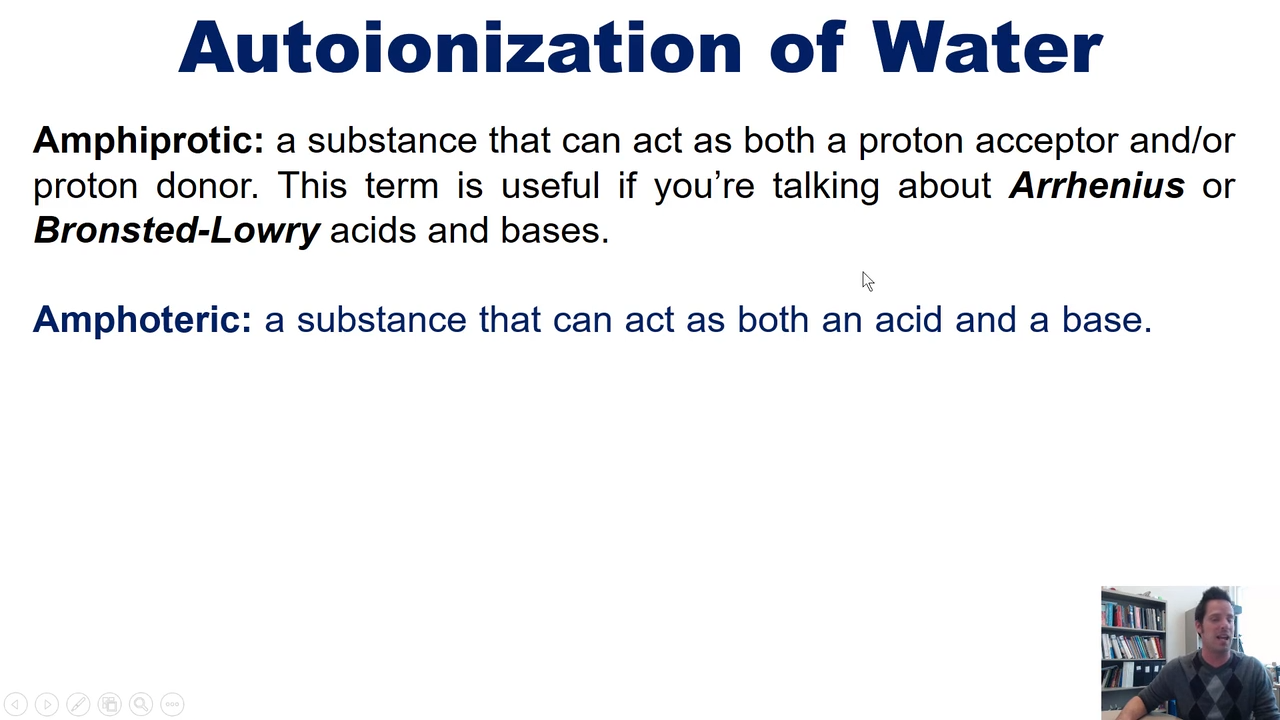
kw
1×10^-14
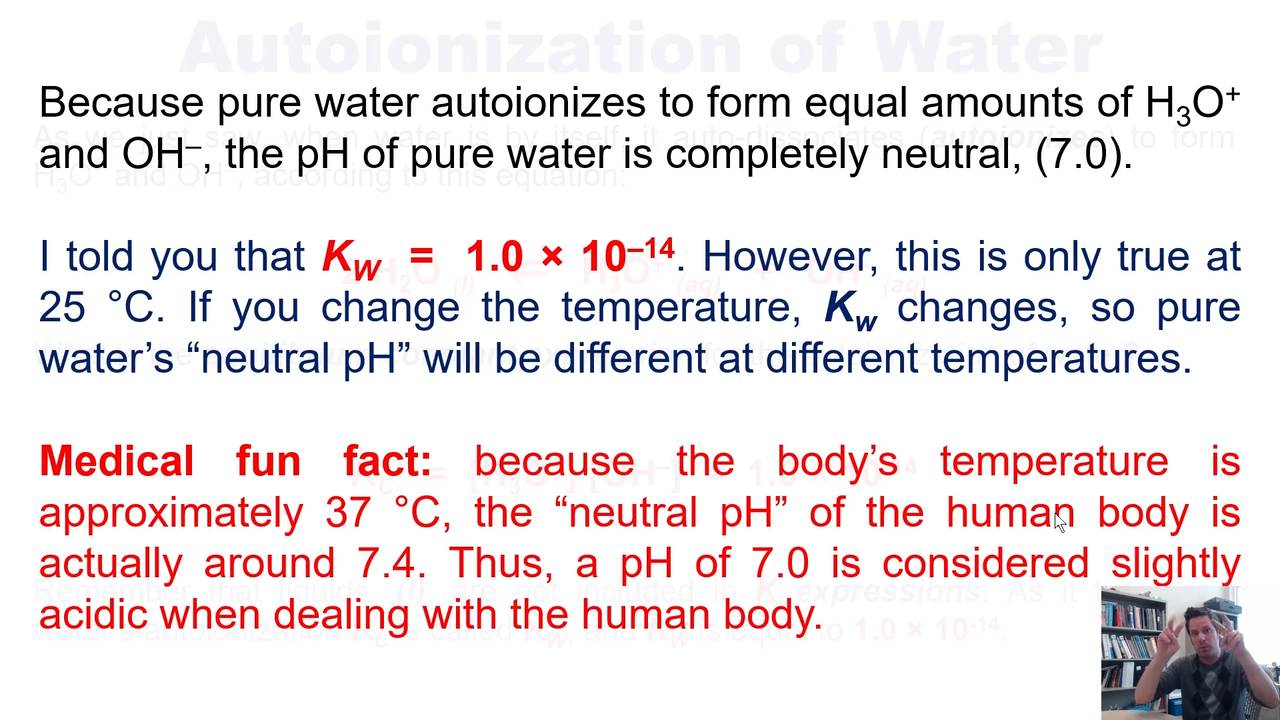
why is water ph neutral
pure water’s neutral ph due to the fact that pure water autoionizes to form equal amounts of H3O+ and OH-
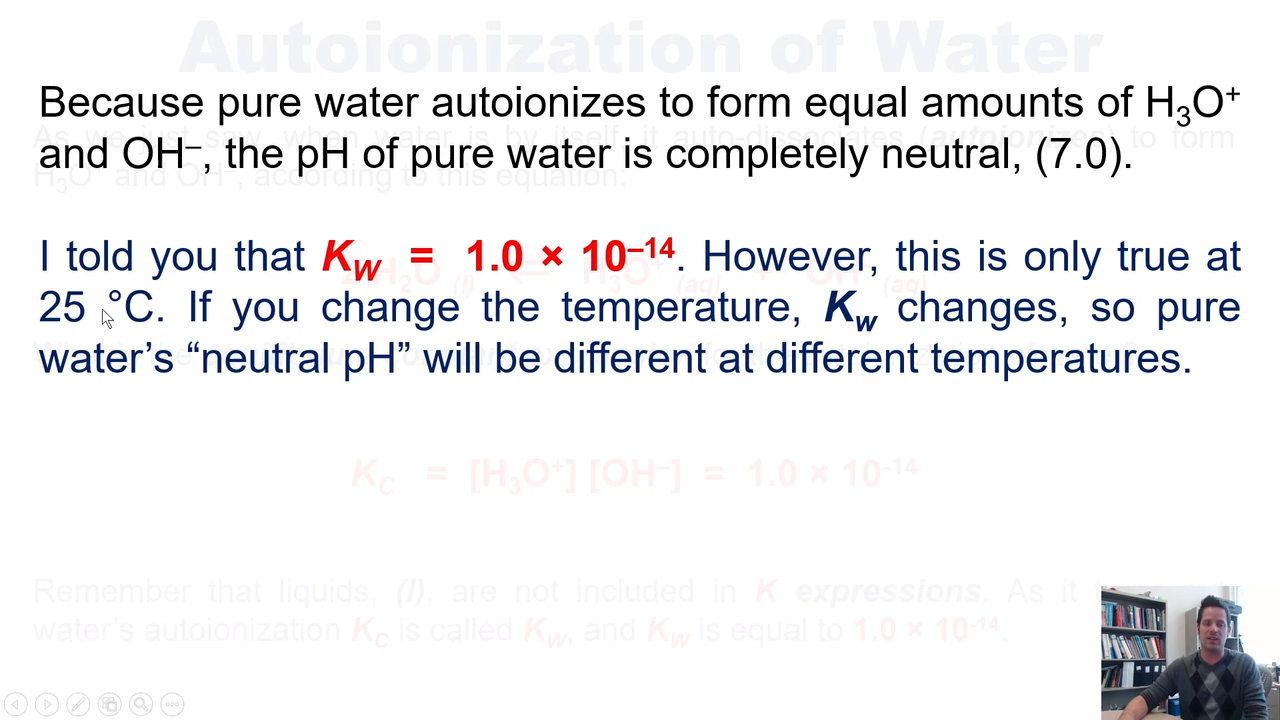
What happens if you increase the temperature of water
it changes ph, as kw changes with temp
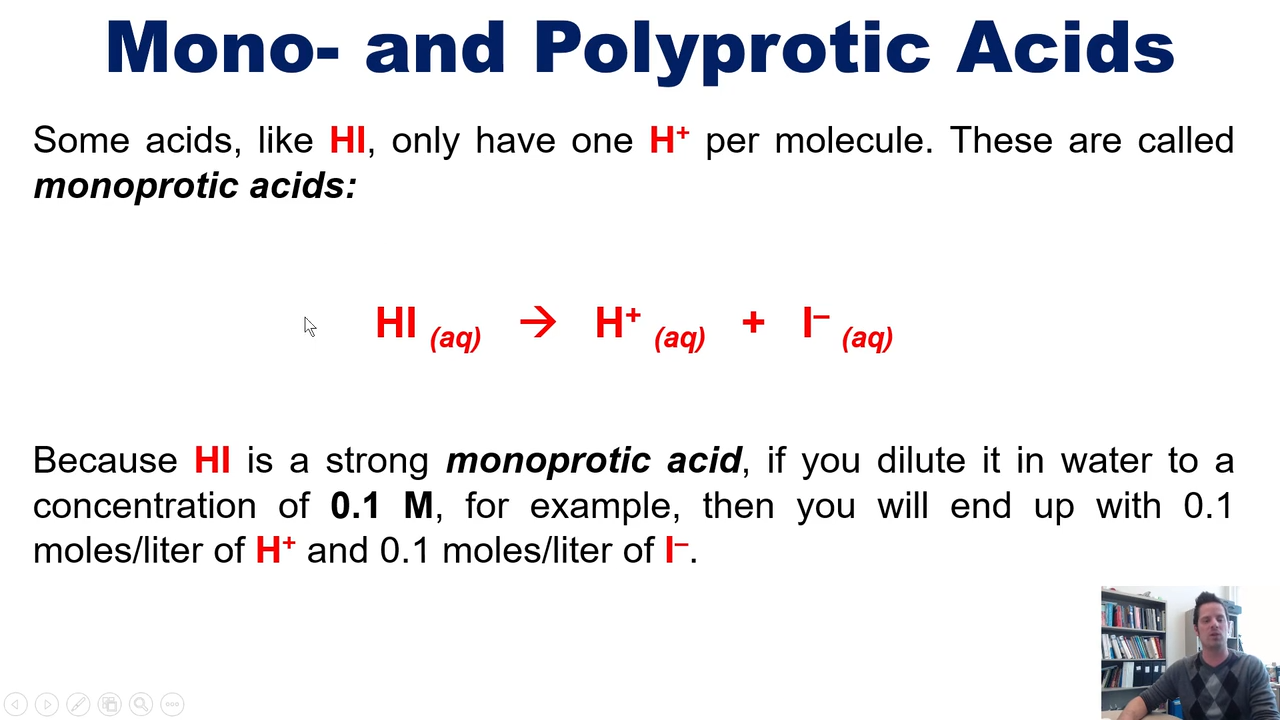
monoprotic acids
completley dissacociates in water,
resulting in 0.1 mols of H+ and 0.1 mols of conjugate base if acid has a concentration of 0.1
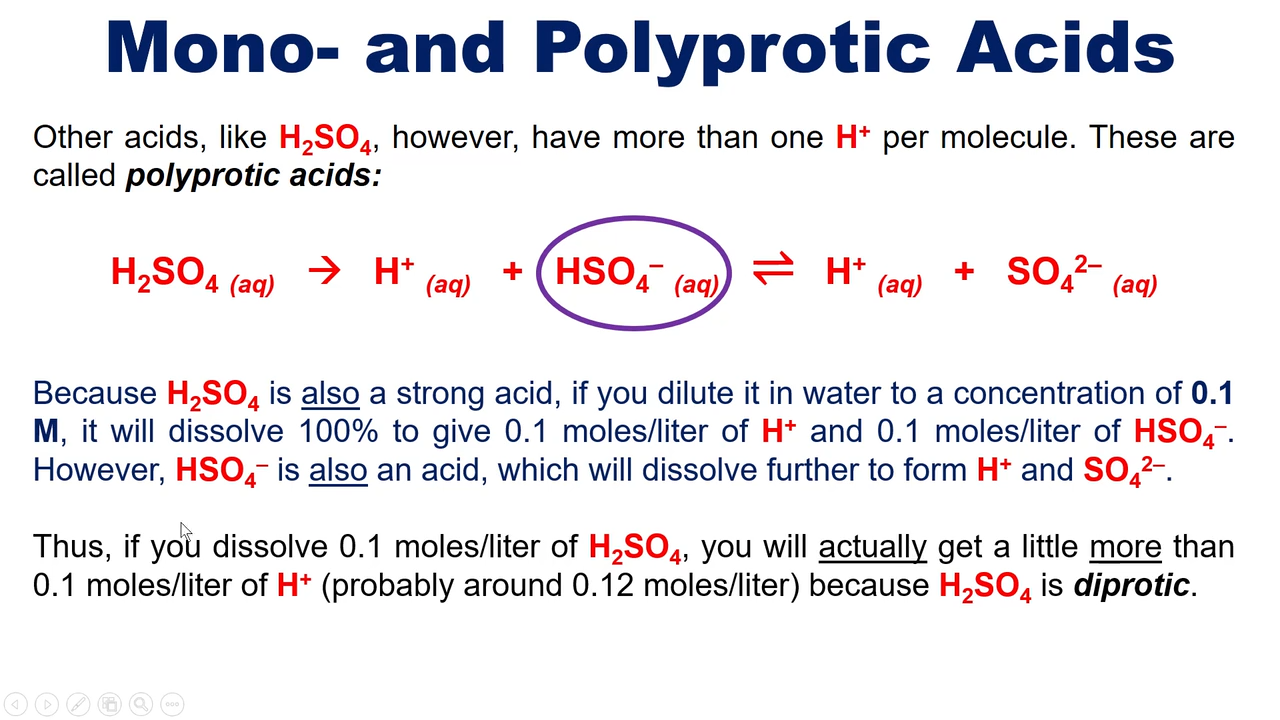
polyprotic acids
first H+ completley dissacociates in water, while conjugate will dissacociate a bit further
resulting in 0.1+ mols of H+ and 0.1 mols of conjugate base if acid has a concentration of 0.1
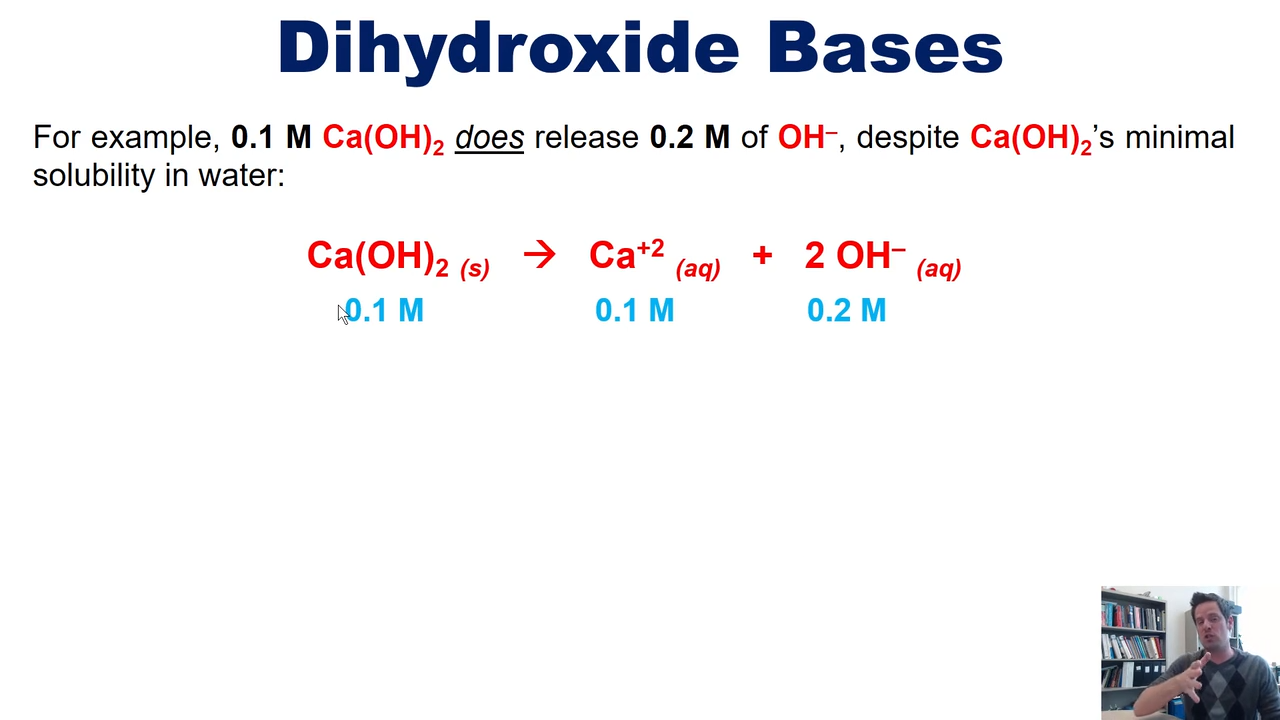
Dihydroxide bases
completley dissacociate, producing 0.1 of metal and 0.2 of OH-
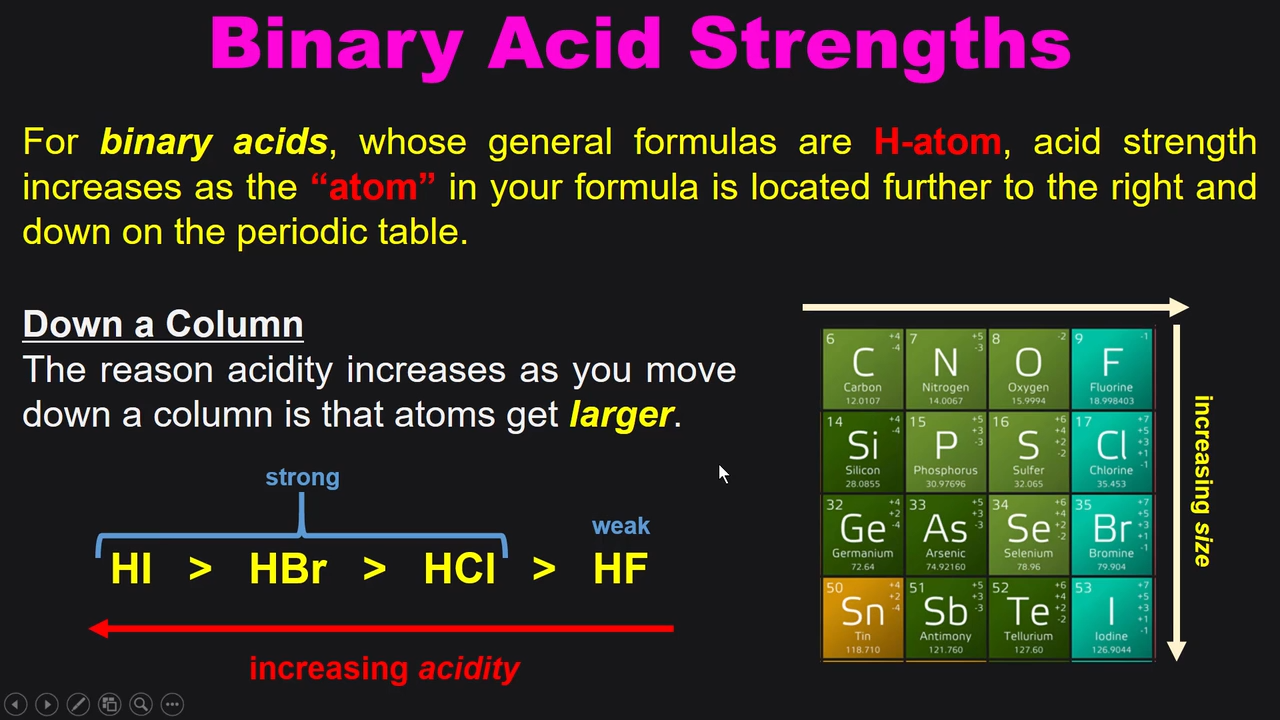
Binary acid strengths
left to right - atom is more electronegative
top to down - atoms get larger, electrons can distribute more
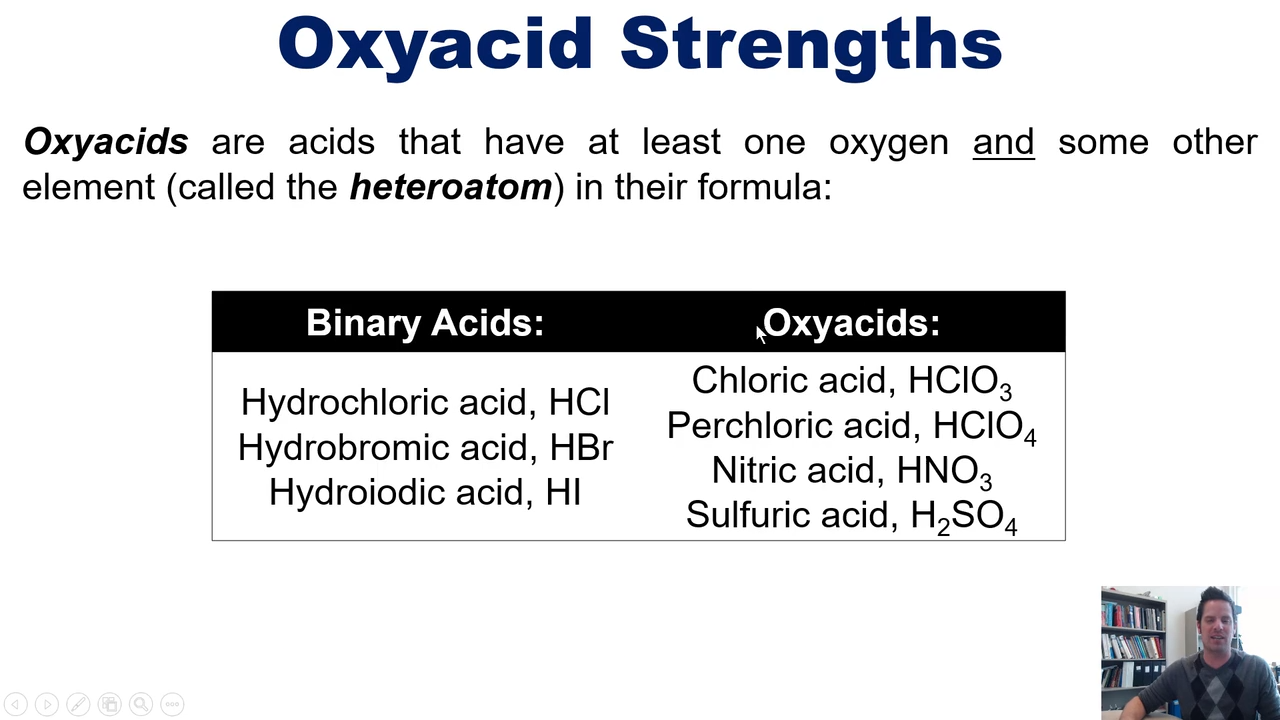
Oxyacids
acids with at least one oxygen and some other element (called a heteroatom)
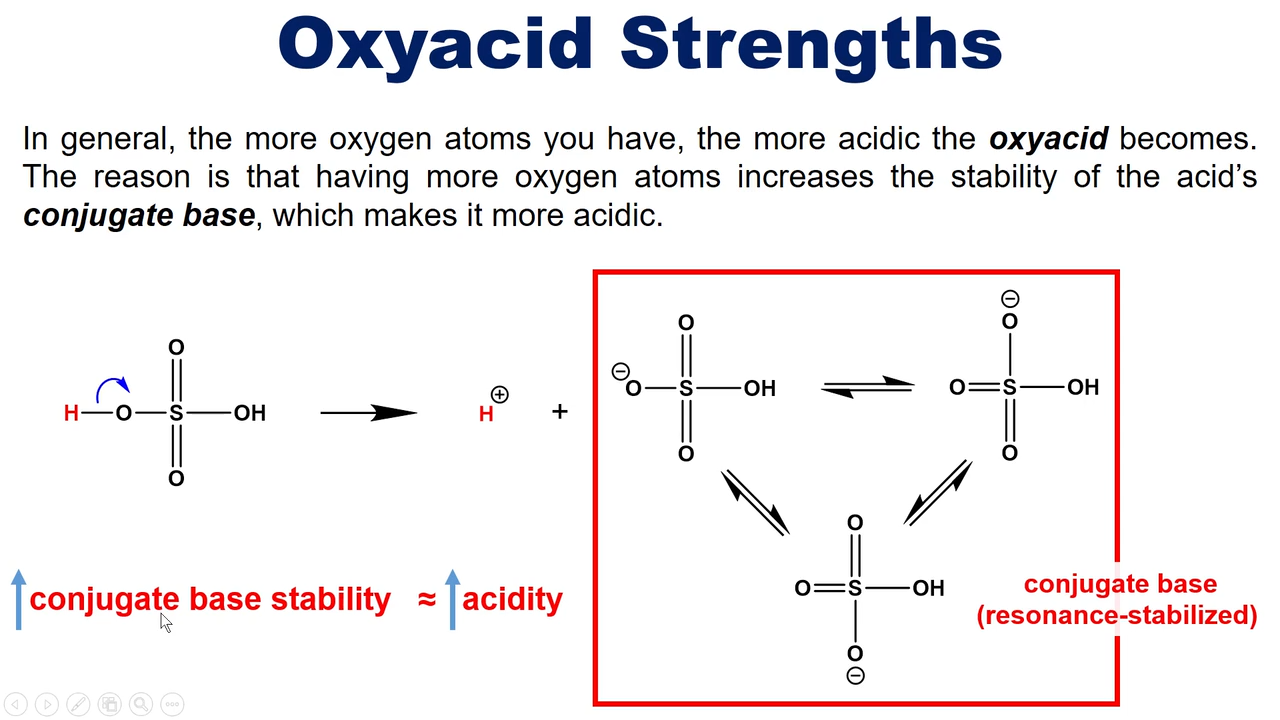
Oxyacid strength trend - oxygen amount
the more oxygens, the more resonance, the more stable the conjugate base is
The more acidic the oxyacid
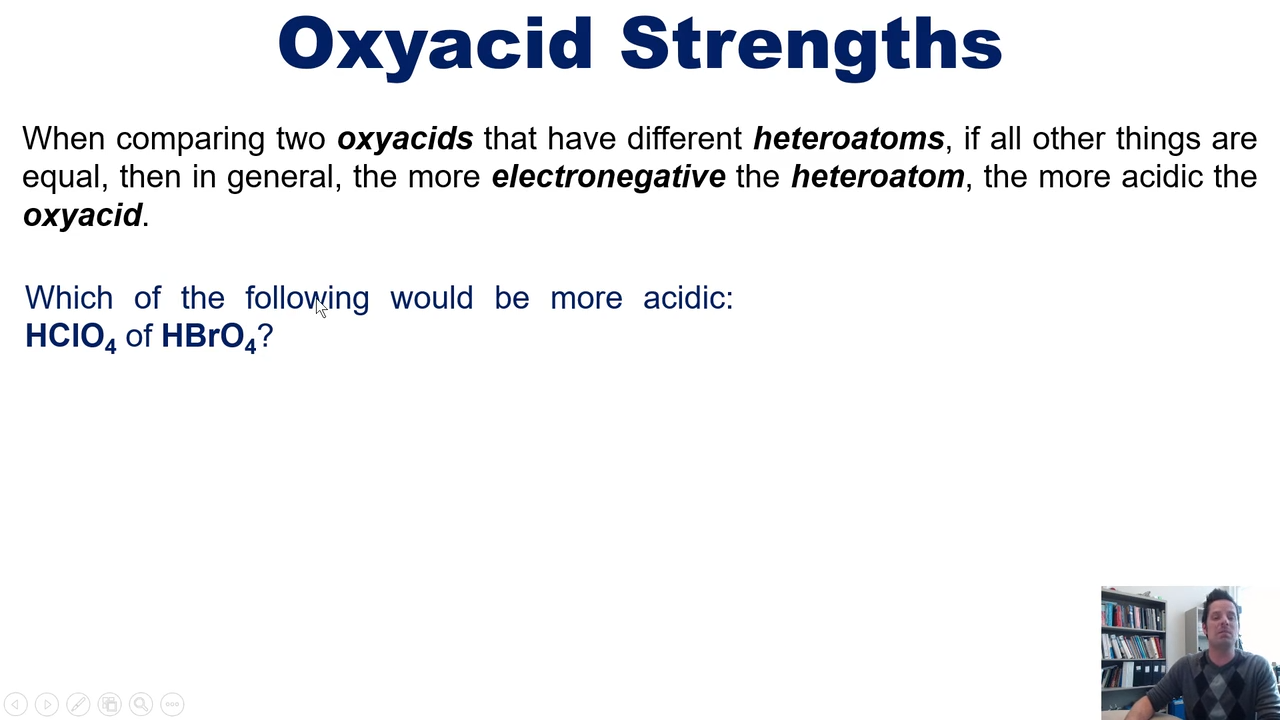
Oxyacid strength trend - heteroatom
the more electronegative the atom, the more dipole induction, the more acidic the oxyacid
ph calculation
-log [H+]
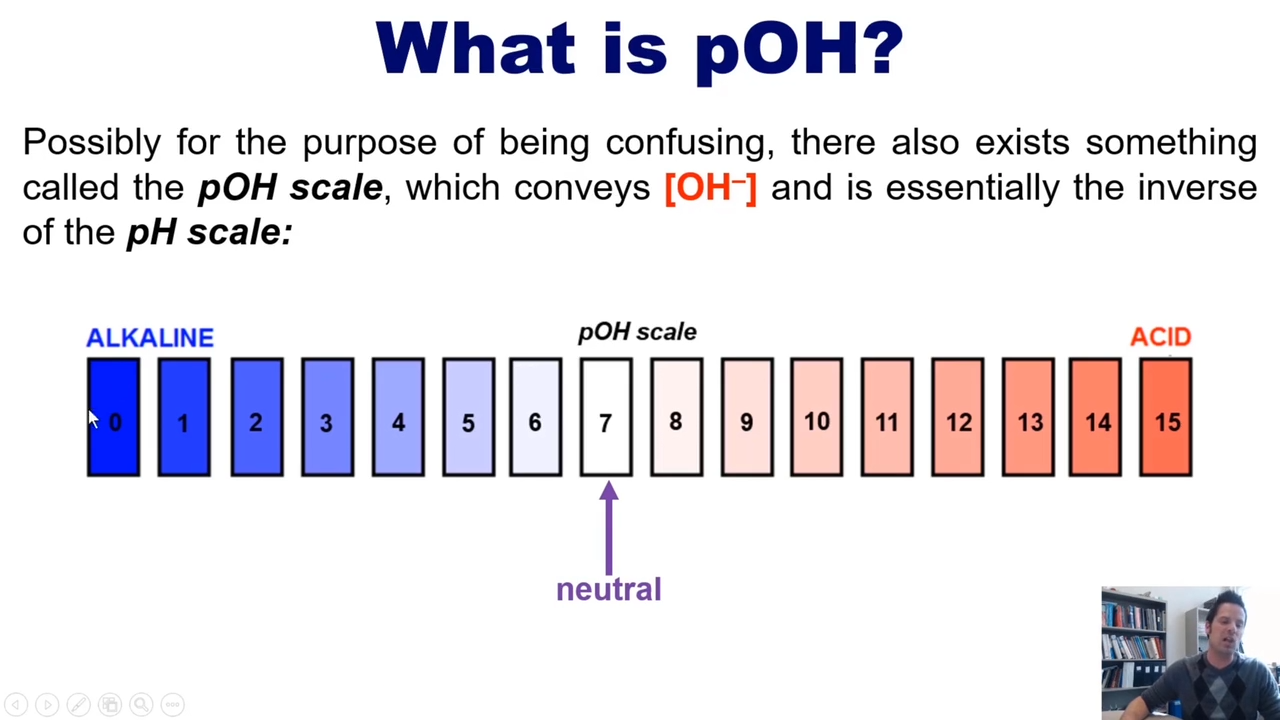
Poh scale
as opposed to ph, it portrays Oh concentration
poh calculation
-log [OH-]
When does a strong base not affect a solution
when the reulting H+ concentration is less than 10^-7
shortcut to find H3O given Ka and HA
H30 = Sqrt(Ka[HA])
![<p>H30 = Sqrt(Ka[HA])</p>](https://assets.knowt.com/user-attachments/42932f42-3c78-4fbc-973a-9dce77d8474c.png)
shortcut to find OH given Kb and A-
OH- = Sqrt(Ka[A-])
how to calculate pKa and pKb
pKa or pkb = -log [ka or Kb]
![<p>pKa or pkb = -log [ka or Kb]</p>](https://assets.knowt.com/user-attachments/8cd7f714-eb44-4d27-9c1f-a7734f979981.png)
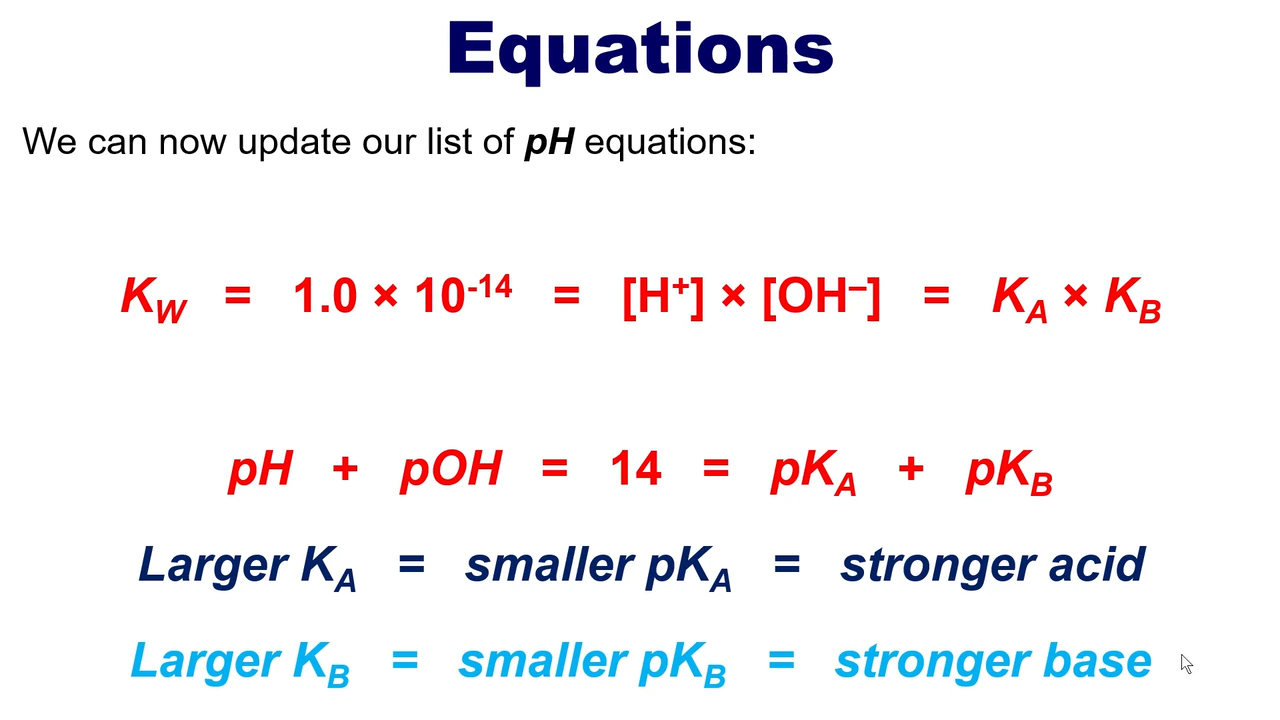
how to calculate Ka or kb using Kw
Kw = Ka*Kb
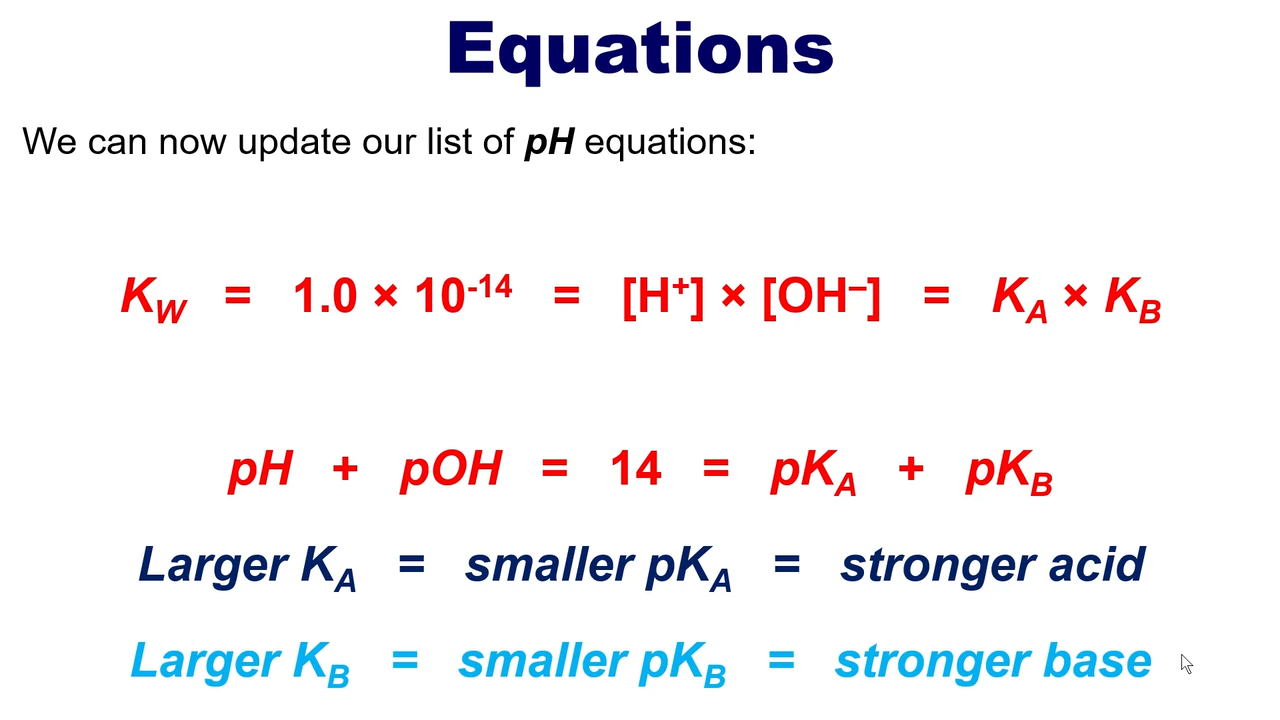
Pka+Pkb
14
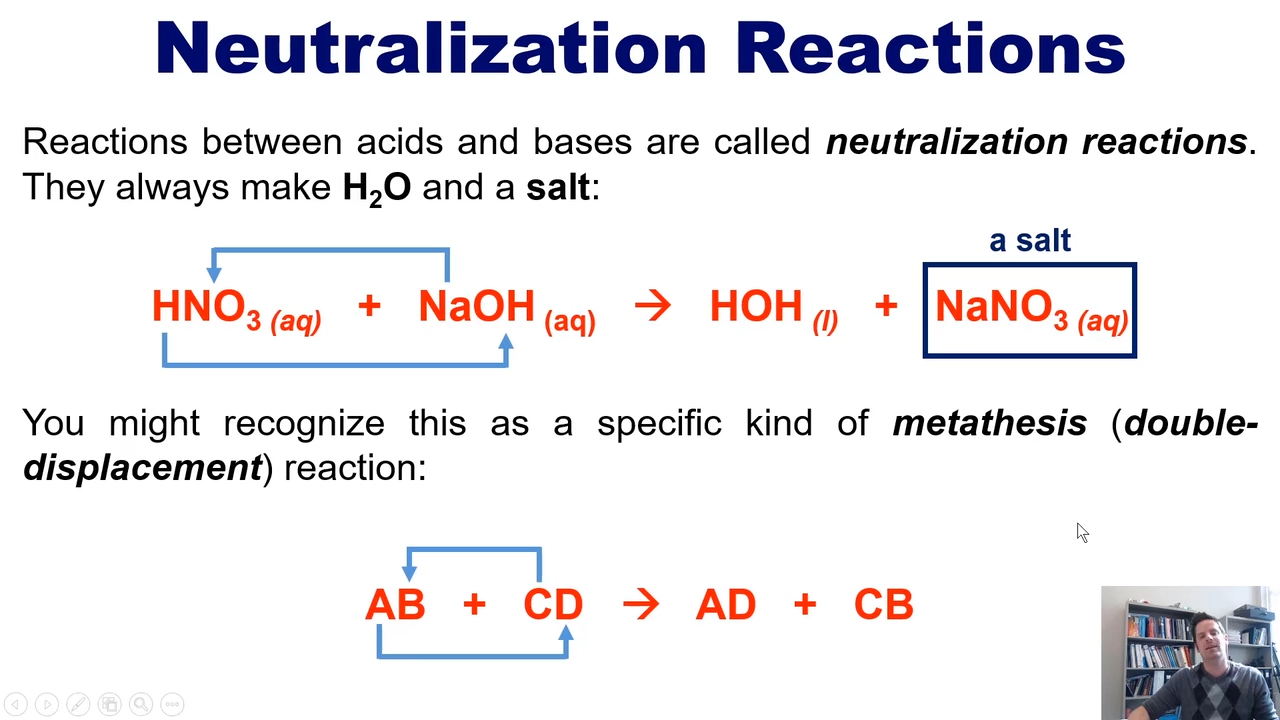
Neutralization reactions
Reactions between acids and bases that always make H2O and a salt
type of mettheisis reaction
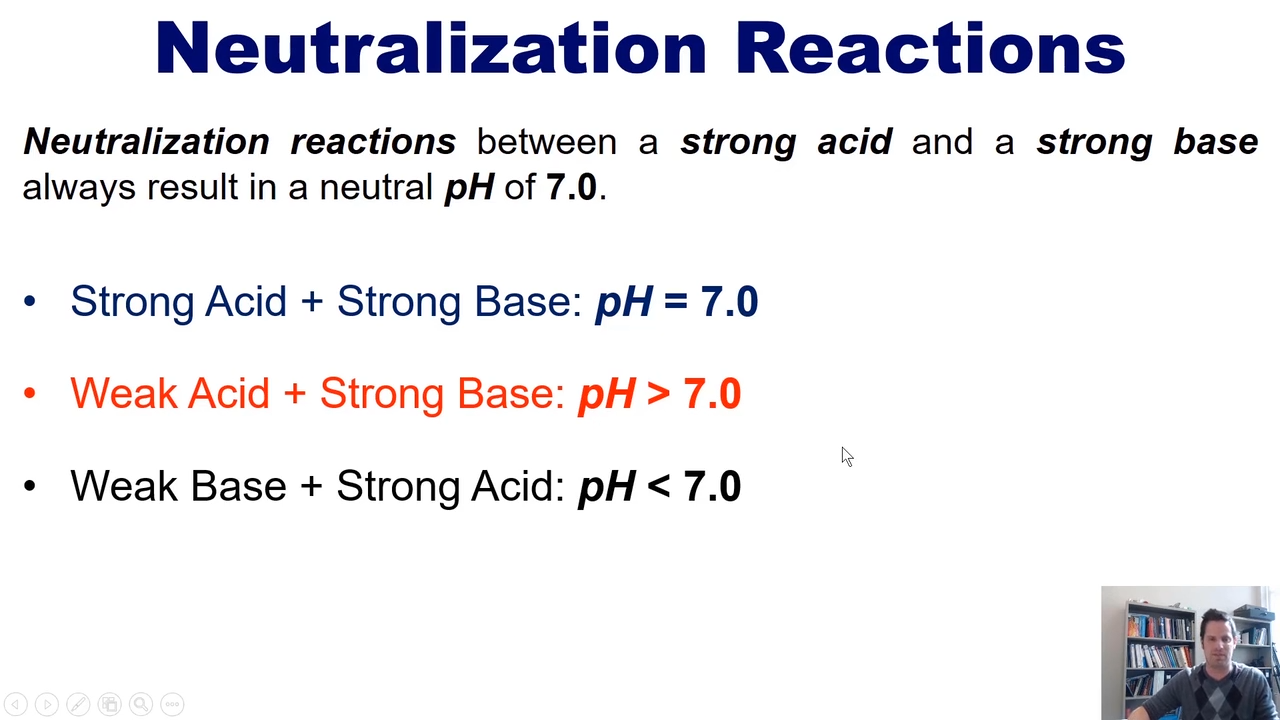
What PH does a reaction between two strong acids and bases result in?
a pH of 7.0
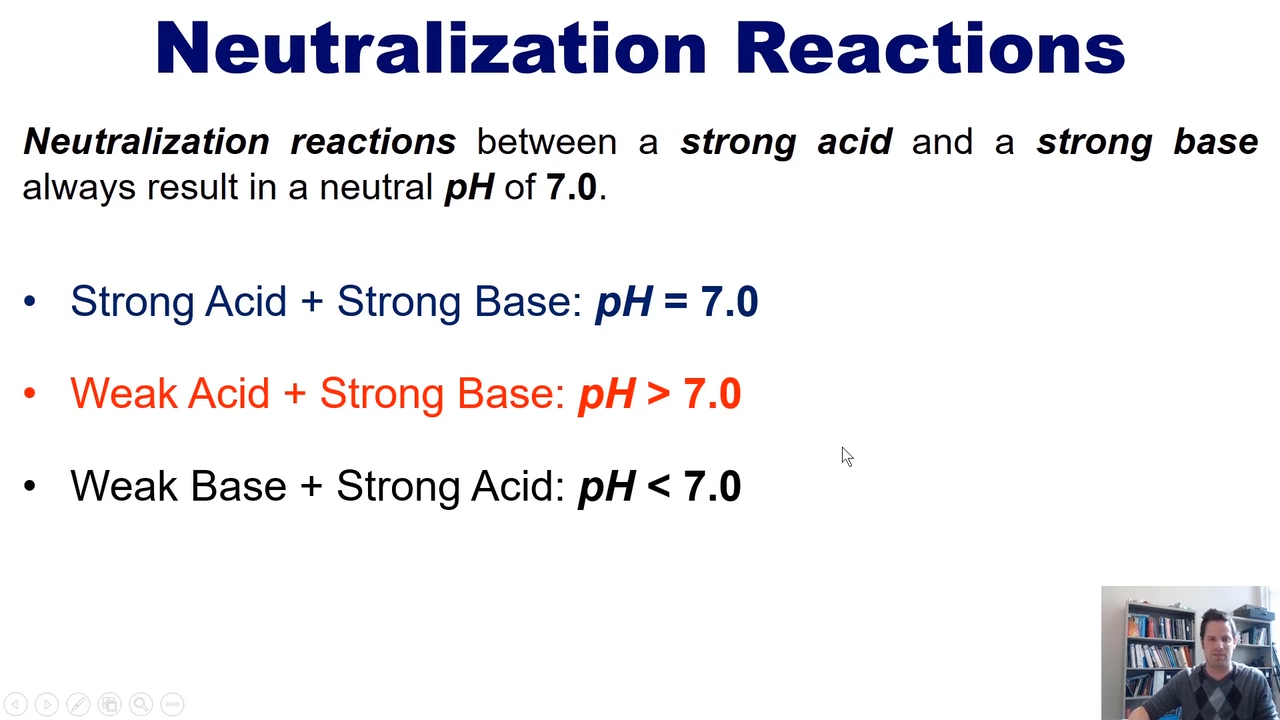
What does a neutralization reaction between a strong base and a weak acid result in
a ph above 7.0
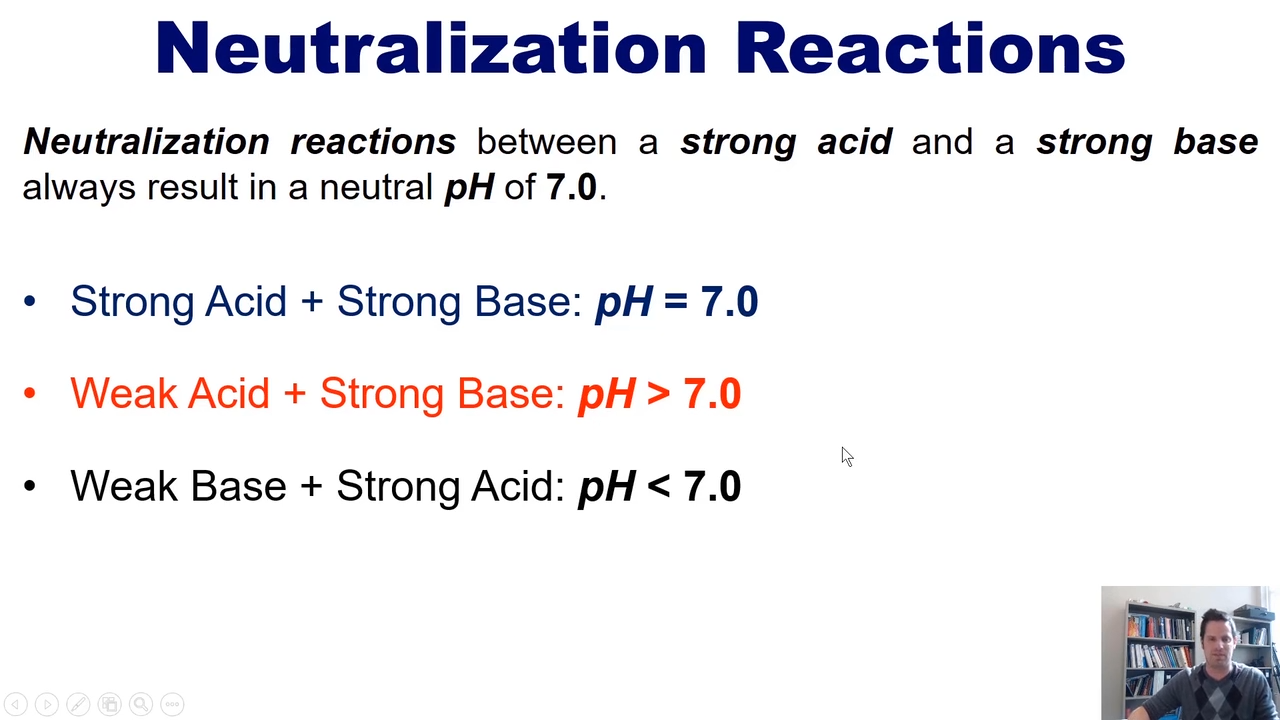
What does a neutralization reaction between a strong acid and a weak base result in
a ph bellow 7.0
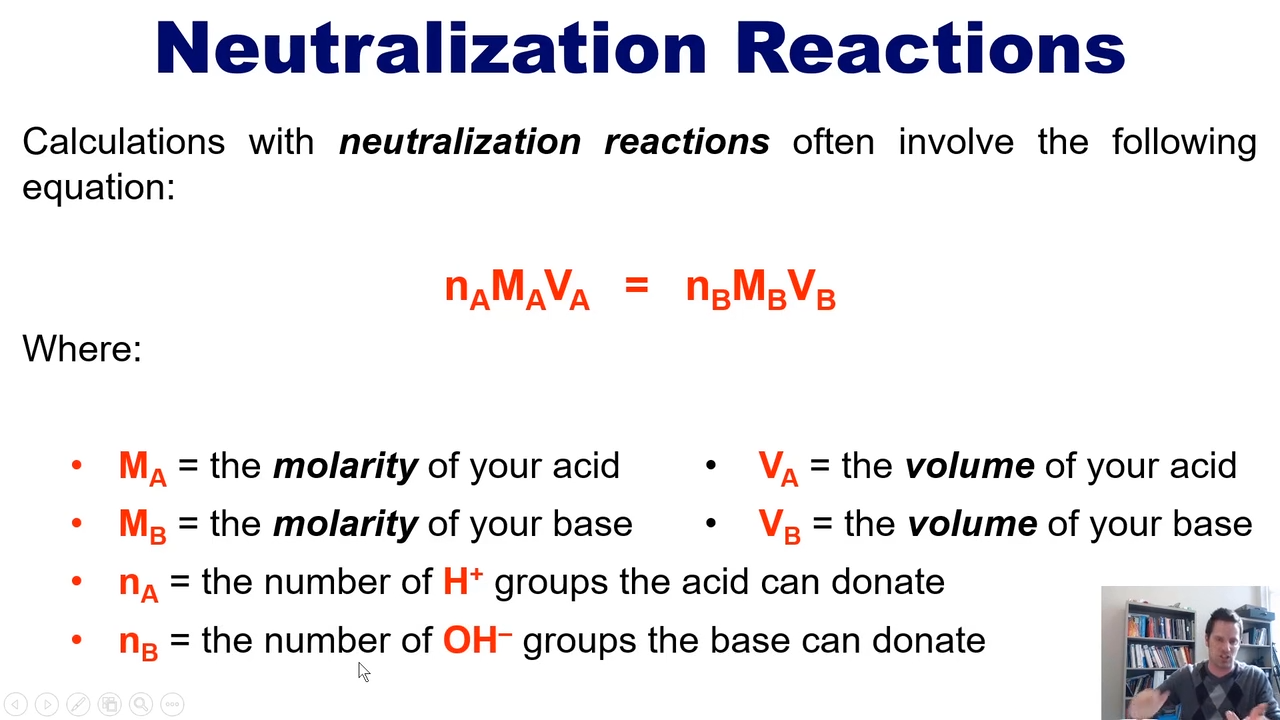
neutralization reactions equation
na MA VA = nb MB VB
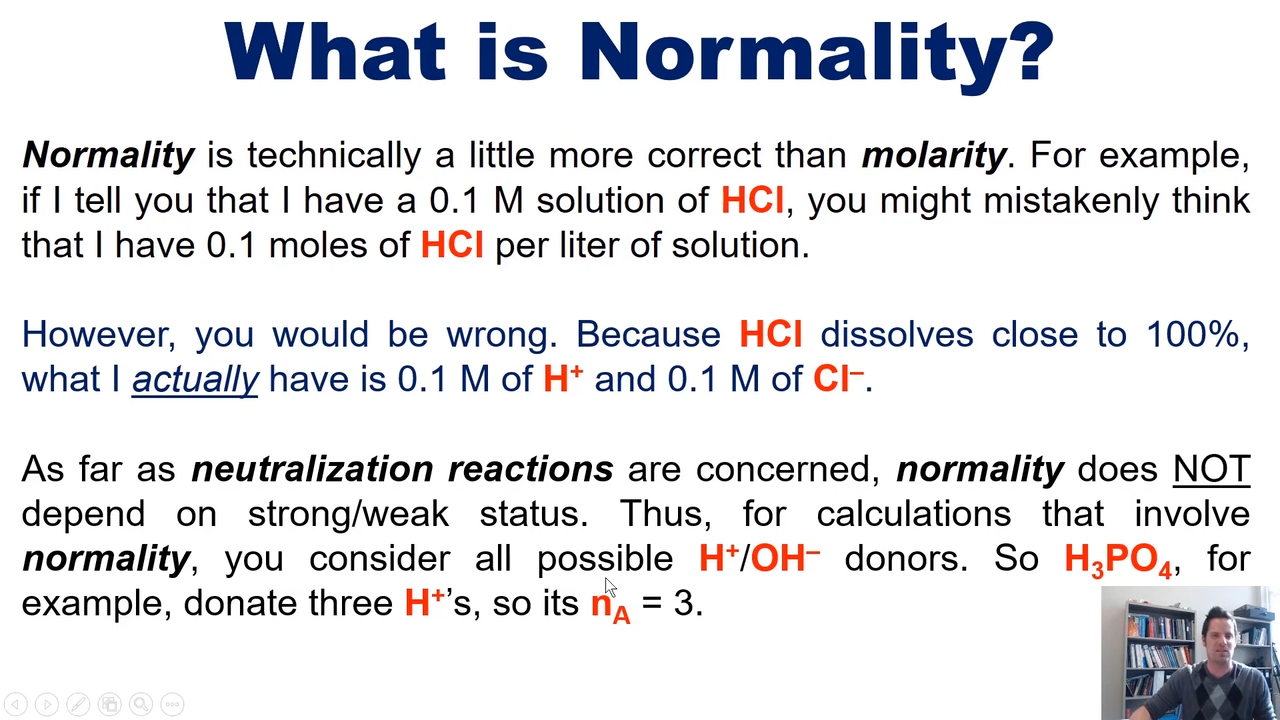
normality
mols/liter, whats actually in the solution, as opposed to molarity, which only portrays what you dissolved in it in mols/liter
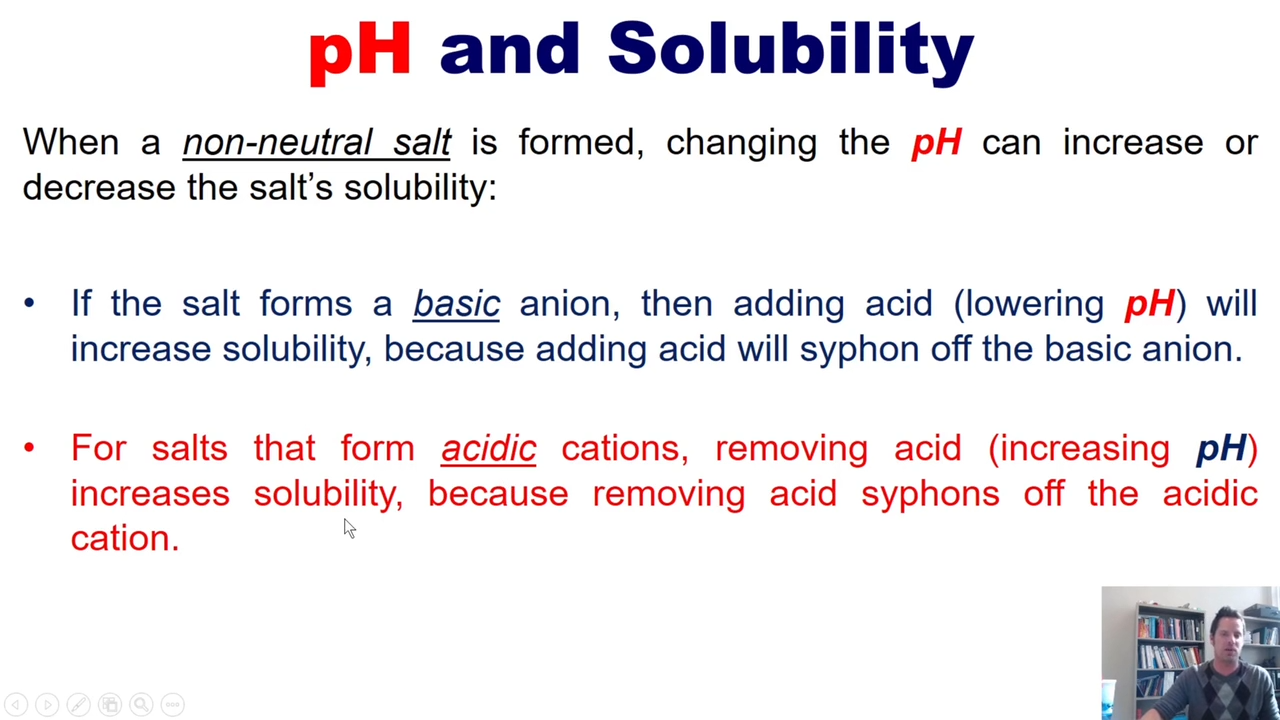
How to increase the solubility of a salt that forms a basic anion
decrease the pH adding H+ syphons off the acidic cation
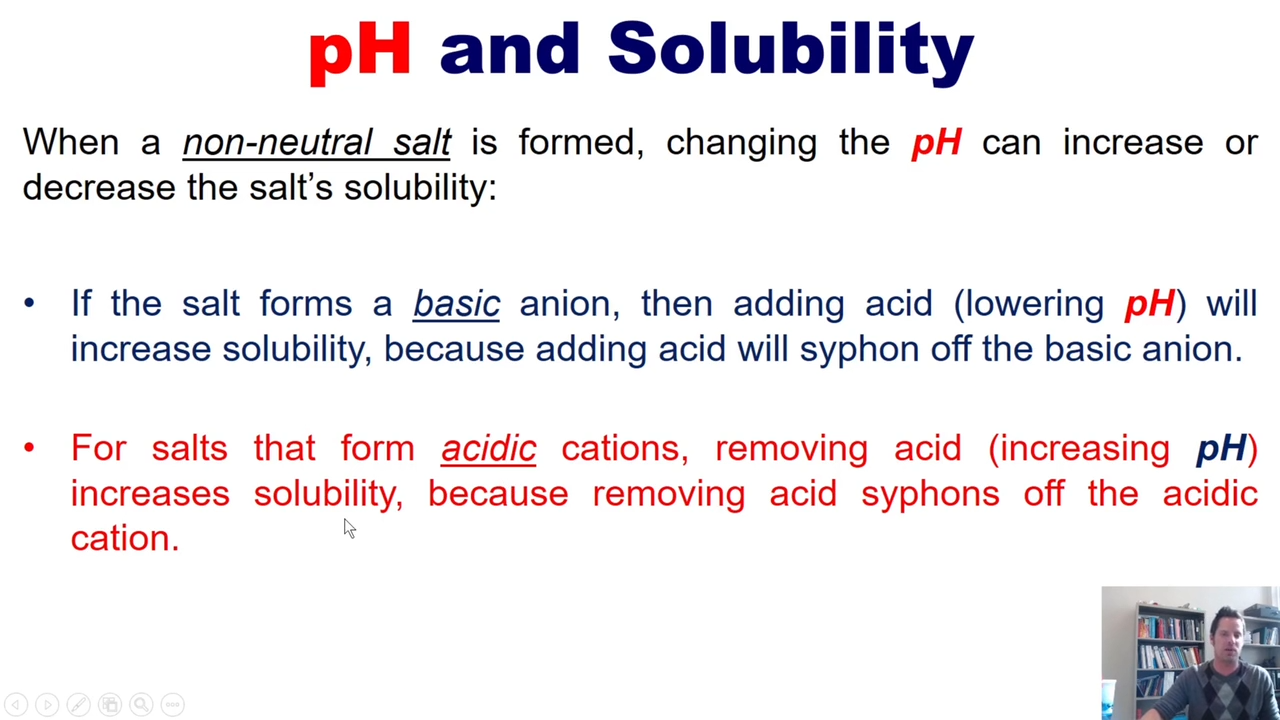
How to increase the solubility of a salt that forms an acidic cation
lower the Ph, removing acids syphons off the acidic cation
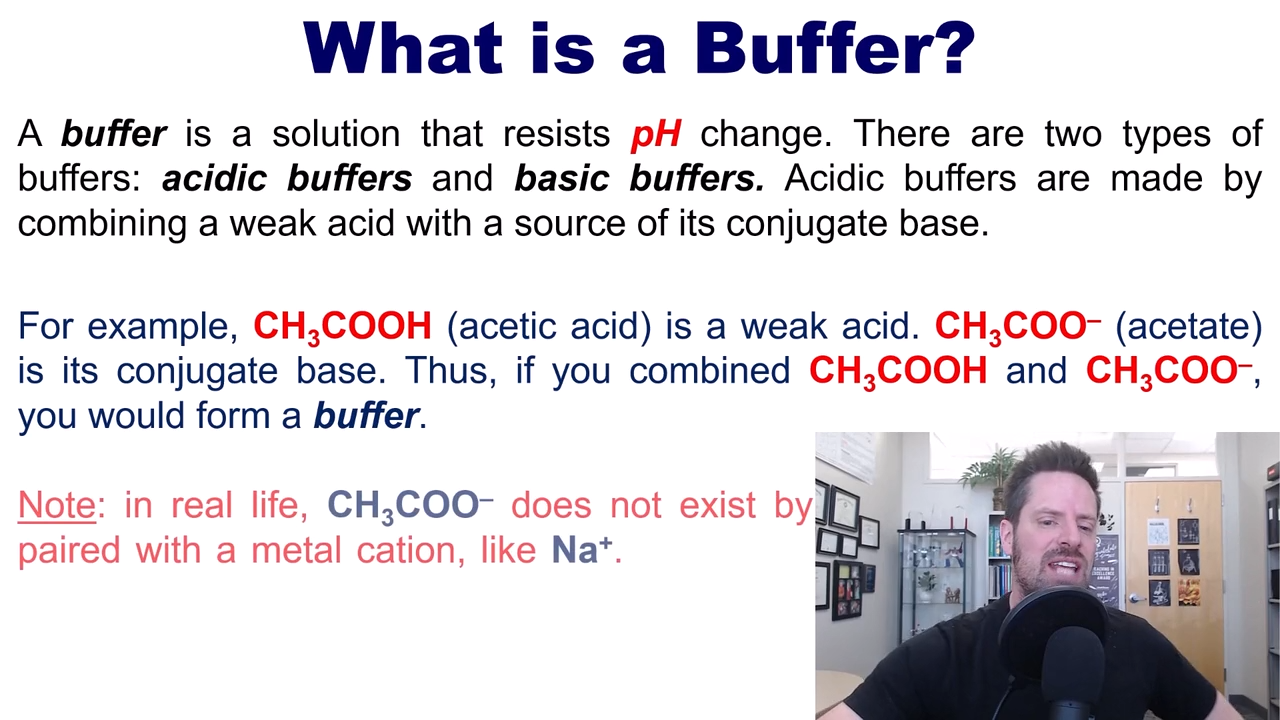
How are acidic buffers made
by combining a weak acid with a source of its conjugate base
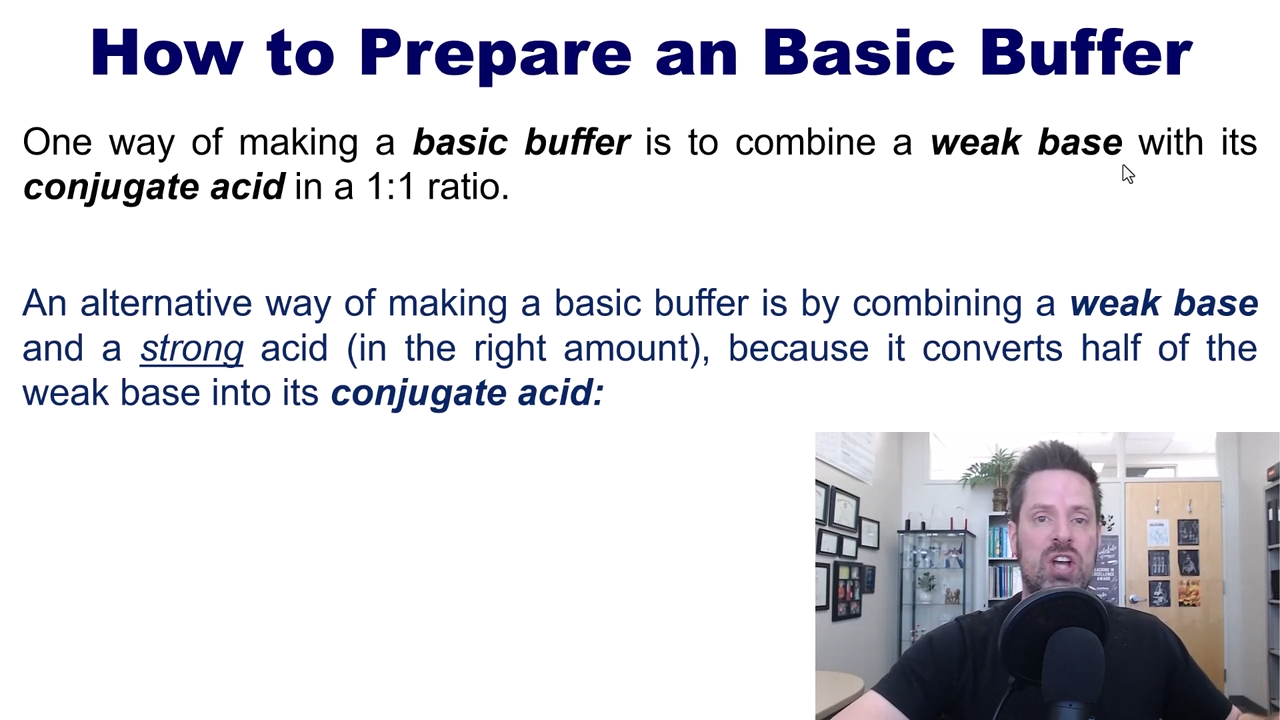
How are basic buffers made
adding a weak base alongside its conjugate acid
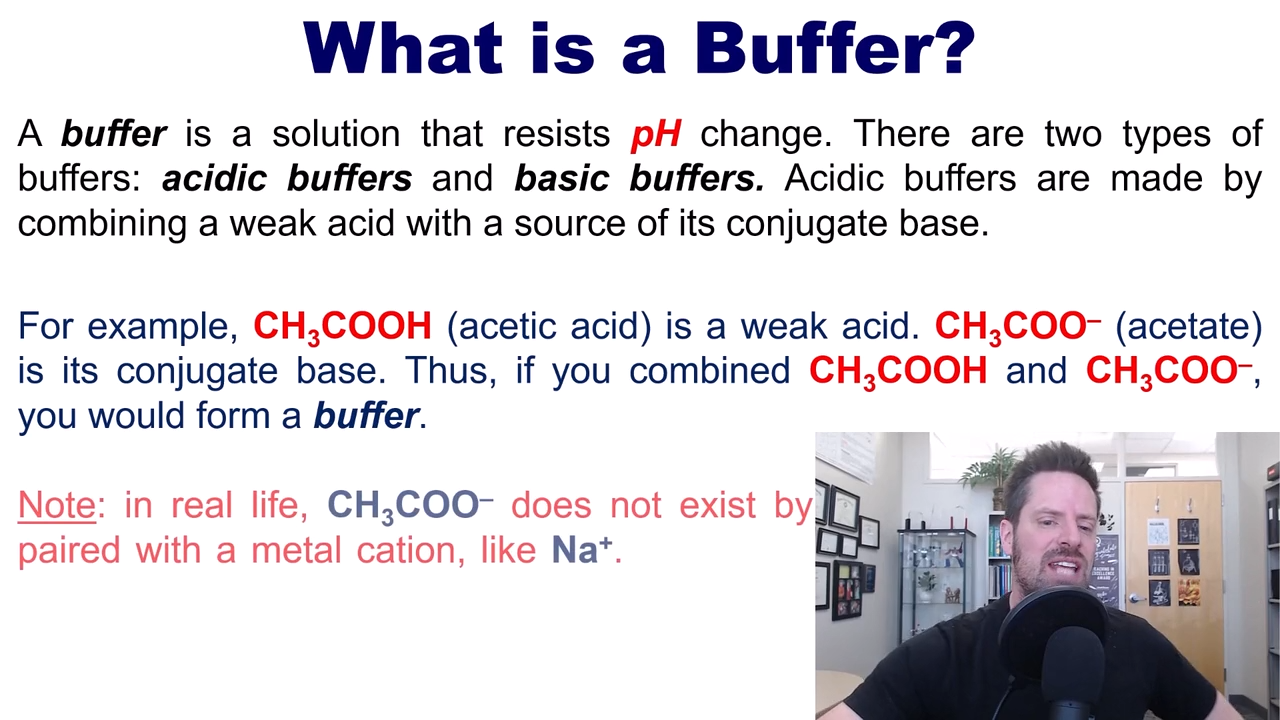
Whats another way of making a basic buffer
adding 2 parts weak base to 1 part strong acid, which will lead to the strong acid being completley used up, and in turn generating the conjugate acid of the weak base in a 1:1 ratio
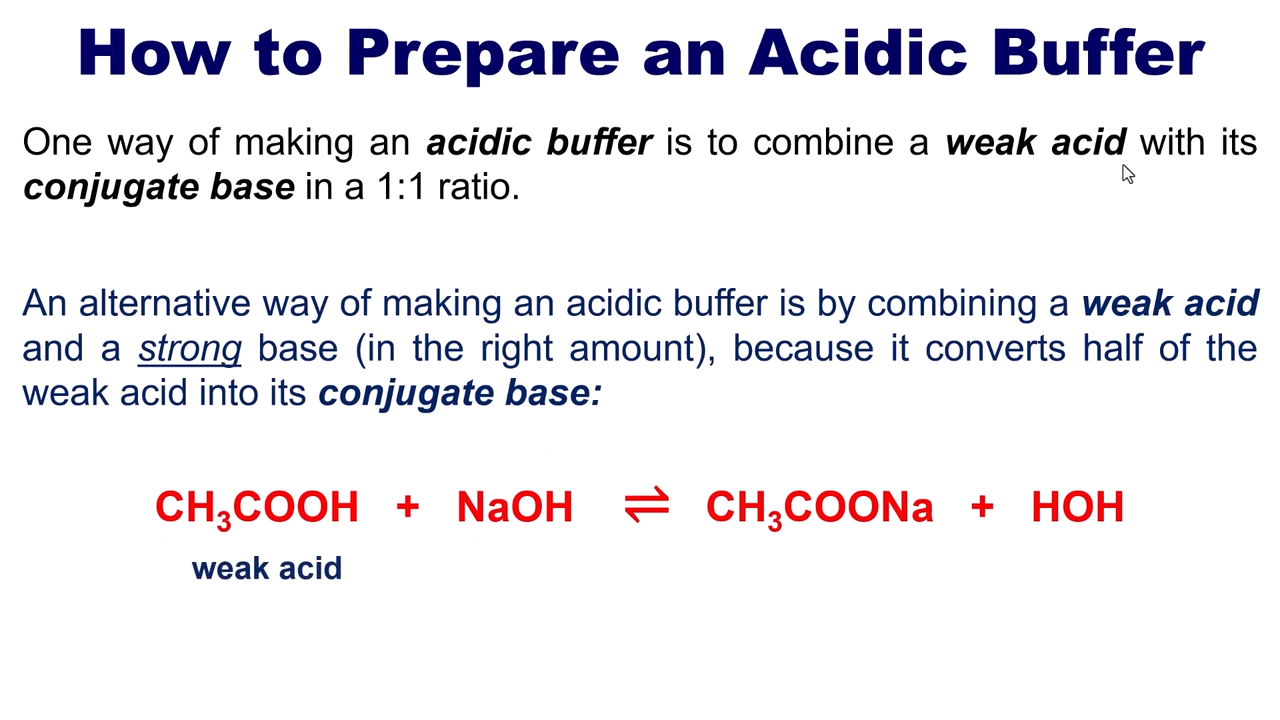
Whats another way of making a acidic buffer
adding 2 parts weak acid to 1 part strong base, which will lead to the strong acid being completley used up, and in turn generating the conjugate base of the weak acid in a 1:1 ratio
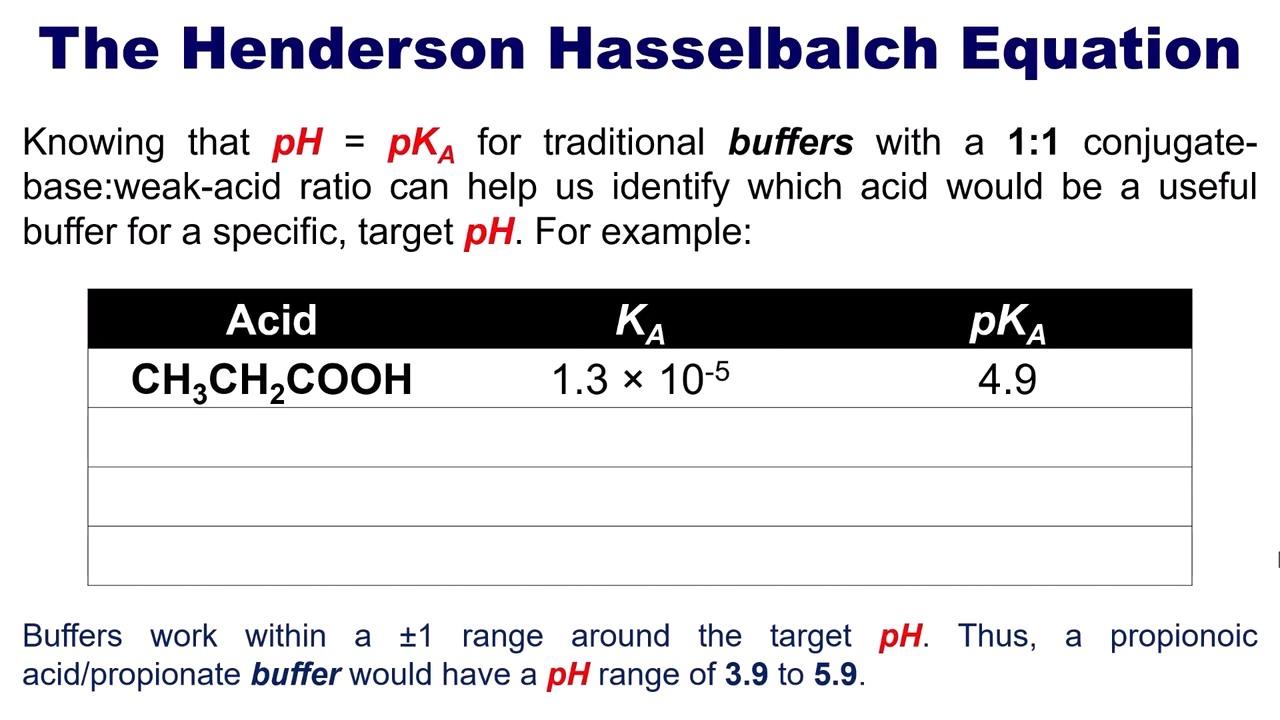
how range do buffers work in
+- range arounf target pH
Titrations
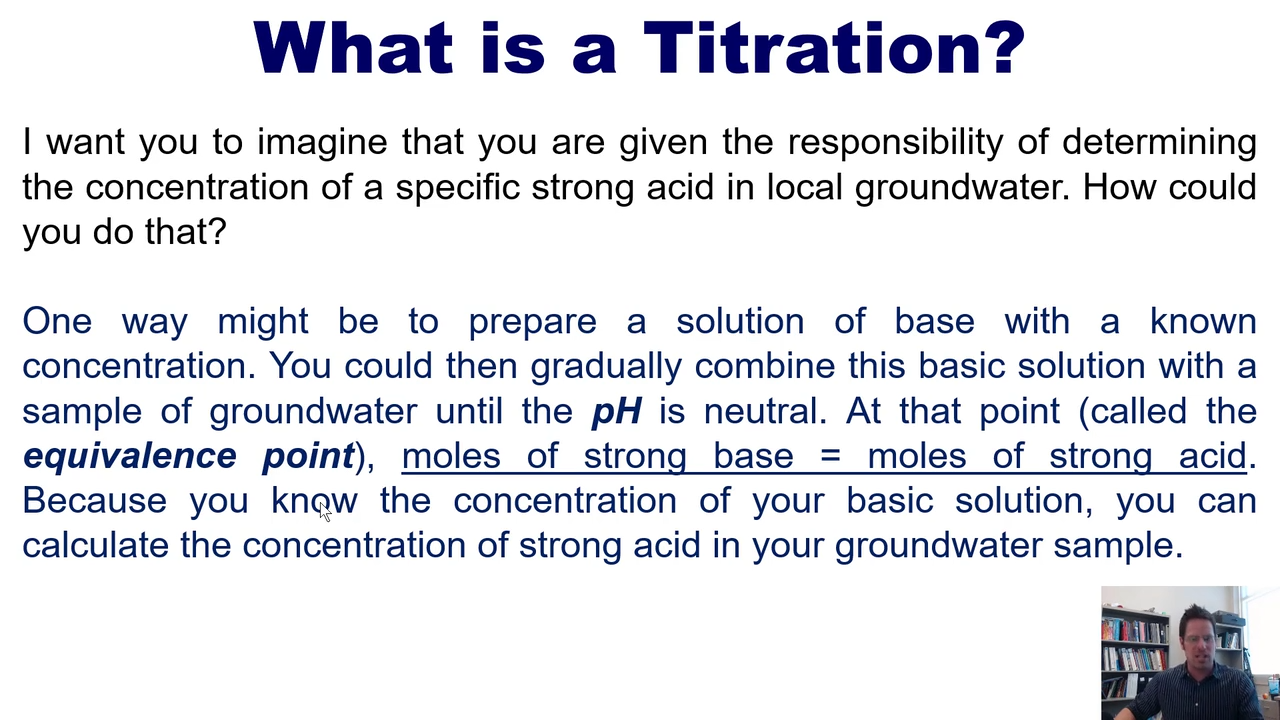
when looking to find the concentration of a strong acid, you can add a weak base in incrmemental amounts until the ph is 7. this is when the concentration of the acid is equal to that of the base .
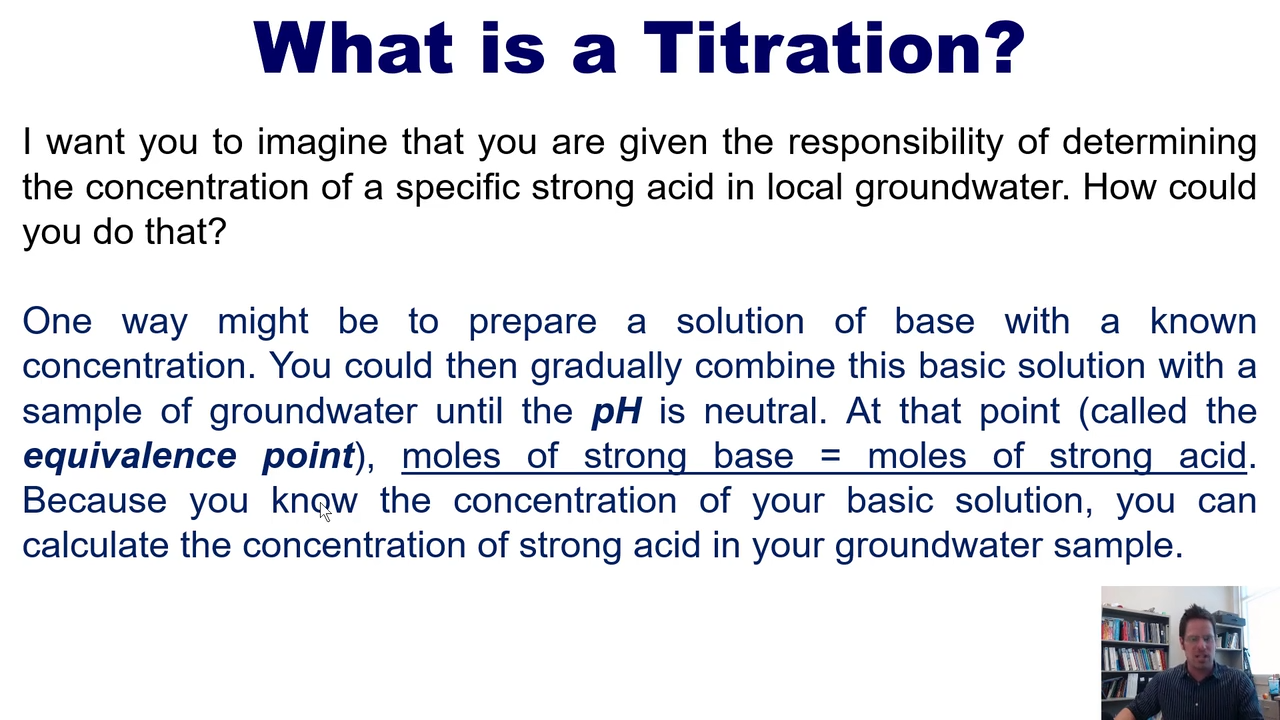
Equivalence point
when the concentration of the acid is equal to that of the base .
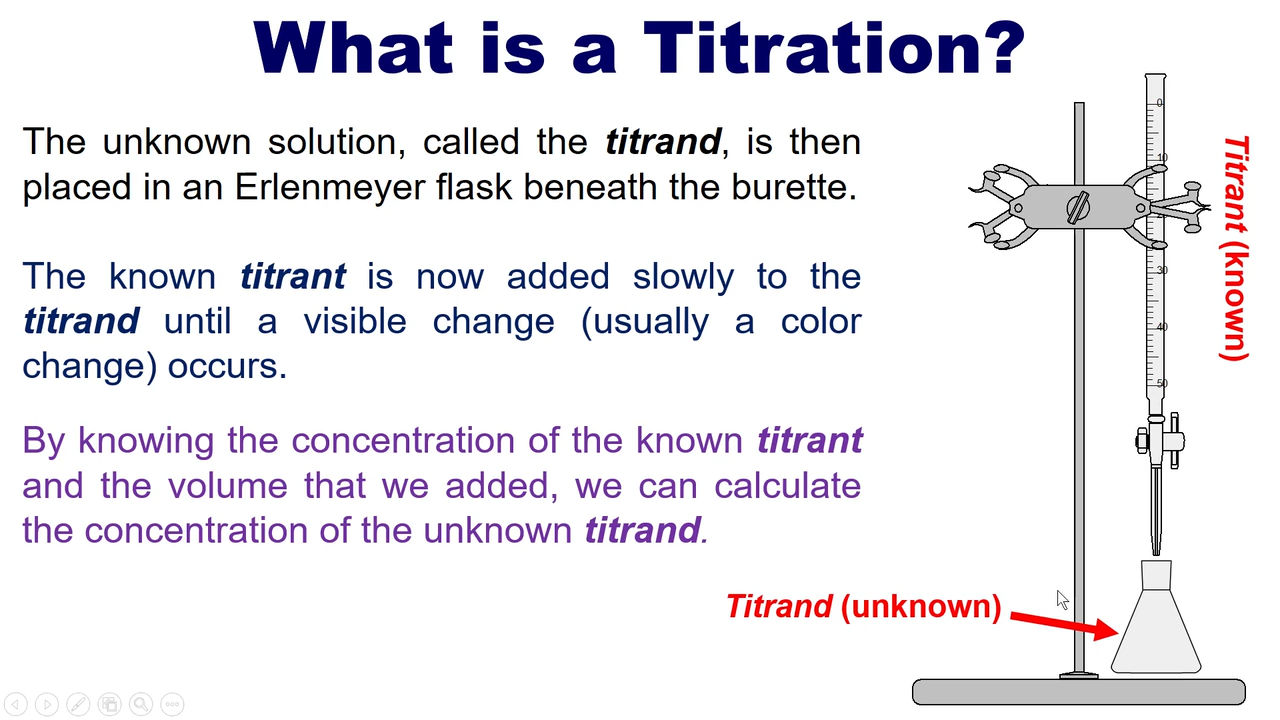
Titrant
solution that has a known concentration
titrand
unknown solution
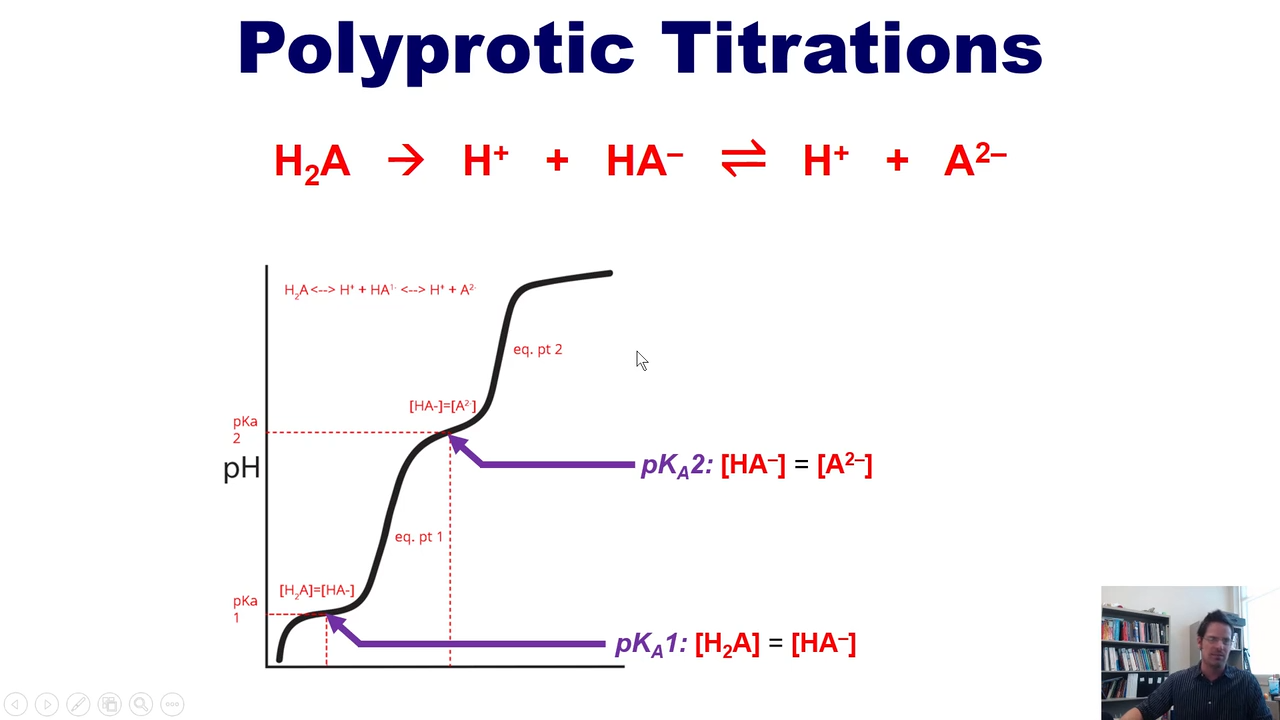
half equavalence point
the pka, where HA =A-
Polyprotic titrations