2 PRELIM - SOIL MECHANICS
 Call Kai
 Learn
Learn Practice Test
 Spaced Repetition
 Match
Match Flashcards
 Knowt Play
1/28

There's no tags or description
Looks like no tags are added yet.
Name | Mastery | Learn | Test | Matching | Spaced | Call with Kai |
|---|
No analytics yet
Send a link to your students to track their progress
29 Terms
Types of Shear Failure
General Shear Failure
Location Shear Failure
Punching Shear Failure
Shear Stresses
the maximum resistance of soil to shearing stresses
General Shear Failure
Type of Failure: Provided that Dense Sand or Stiff Cohesive Soil Support the Footing.
The Footing Moves Slightly Downward
Sudden Failure with a Significant Bulging of the Ground Surface Alongside the Footing
Sudden Collapse together with Tilting of the Footing
The Load-Settlement Diagram is Equivalent to Stress-Strain for Solid Sand or Over-Consolidated Clay
The Ultimate Load is Apparent on this Curve
Local Shear Failure
Type of Failure: In moderately Compressible Soils or Loose Sand
Large Deformation takes place under the footing
Large Vertical Settlement Occurs Prior to Slight Bulging of the Ground Surface
Tilting of Footing is Not Necessary
1st Major Non-Linearity in the Load-Settlement Curve (Open Circle)
Ultimate Load is Not Clear
Punching Shear Failure
Type of Failure: Very Loose Sands and Weak Clays
Loaded Base Sinks into Soil like a Punch
No Bulging of Ground Surface and No Tilting of Footing
Large Vertical Strains with No Lateral Deformation
After 1st yield, The Load-Settlement Curve will Steepen Slightly BUT remain flat
Ultimate Load is not Clear
Soil Formation
the process by which rocks are broken down into smaller particles through physical, chemical, biological weathering
soil is formed affects it’s strength compressibility, and drainage characteristics, residual soils remain at their origin, while transported soils are carried by water, wind, or ice
Settlement of Soil
The Vertical Deformation of Soil due to Applied Loads; may be immediate or long-term and excessive settlement can lead to cracking and structural damage if not properly accounted for
Consolidation of Soil
The Gradual Reduction in Soil Volume cased by the expulsion of Pore Water under sustained load
Soil Stabilization
is the process of improving soil properties through mechanical or chemical methods
enhances strength and durability, allowing weak soils to be used in construction projects
Bearing Capacity of Soil
is the maximum load per unit area that soil can safely support without failure
it depends on soil strength, foundation depth, and soil conditions
accurate evaluation ensures safe foundation design
Properties of Soil
1. Index Properties
2. Physical Properties
3. Mechanical Properties
4. Hydraulic Properties
Index Properties
mainly for identification and classification of soils
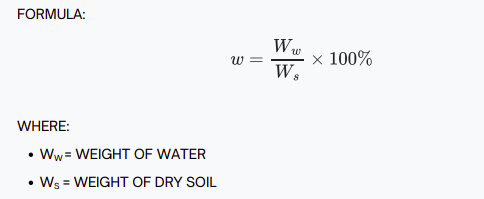
Water Content (Moisture Content)
ratio of the weight of water to the weight of dry soil, expressed as a percentage
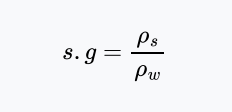
Specific Gravity
ratio of the density of soil solids to the density of water
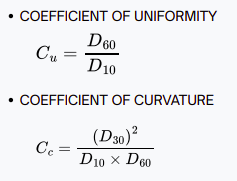
Grain Size Distribution Parameters
Coefficient of Uniformity
Coefficient of Curvature
Atterberg Limits
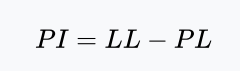
Liquid Limit (LL) and Plastic Limit (PL)
Liquid Limit (LL)
Moisture Content at which soil changes from Plastic to Liquid State
Plastic Limit (PL)
Moisture Content at which soil changes from Semi-Solid to Plastic State
Plasticity Index
Bulk Unit Weight
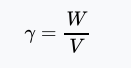
Dry Unit Weight
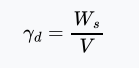
Saturated Unit Weight
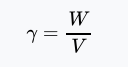
Void Ratio
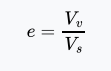
Porosity

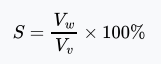
Degree of Saturation
Classification System
Geological Soil
Particle Size
Unified Soil
Asshto Soil
Geological Soil Classification
based on their origin and mode of formation
types:
residual soils - formed by in place weathering of rock
transported soils - moved by agentsL water, wind, ice, gravity
Particle Size Classification and Unified Soil Classification System (USCS)
Soils are Grouped According to Grain Size, determined by sieve and hydrometer analysis
Aastho Soil Classification System
Primarily used in highway and pavement engineering