Lecture 17 & 18: Aggregate Demand, Aggregate Supply & the Business Cycle
 Call Kai
 Learn
Learn Practice Test
 Spaced Repetition
 Match
Match Flashcards
 Knowt Play
1/18

There's no tags or description
Looks like no tags are added yet.
Name | Mastery | Learn | Test | Matching | Spaced | Call with Kai |
|---|
No analytics yet
Send a link to your students to track their progress
19 Terms
Aggregate Demand: Endogenous Change
A change of a variable already captures on the axis (P or Y). This triggers movement along the aggregate demand curve.
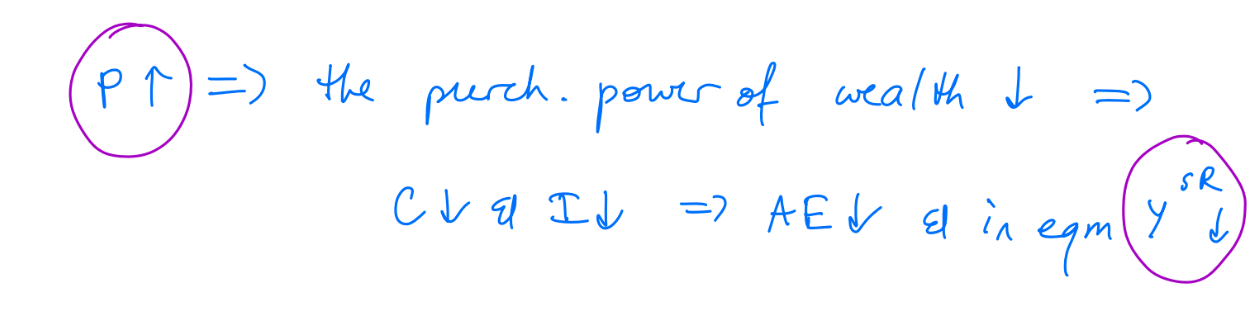
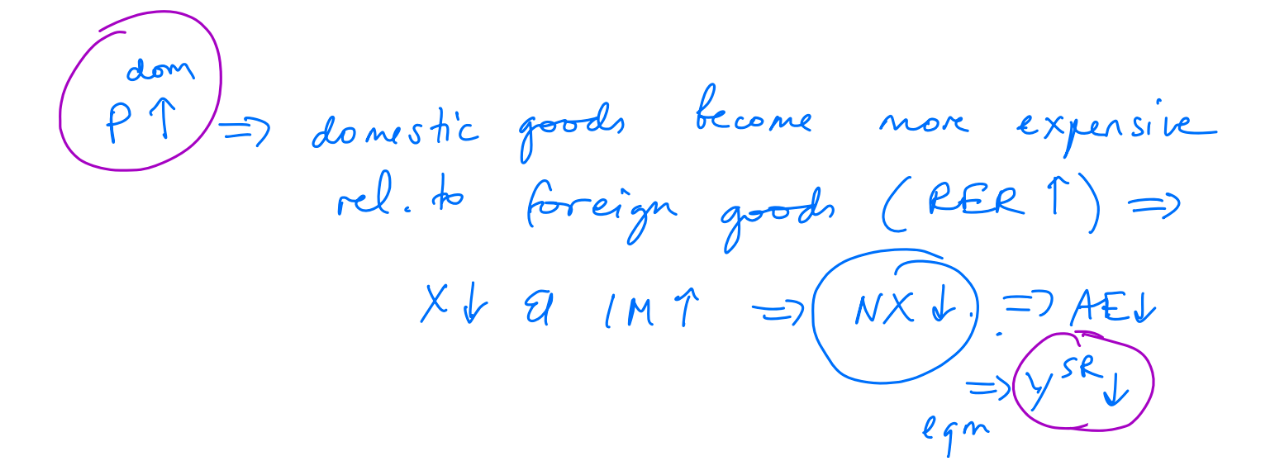
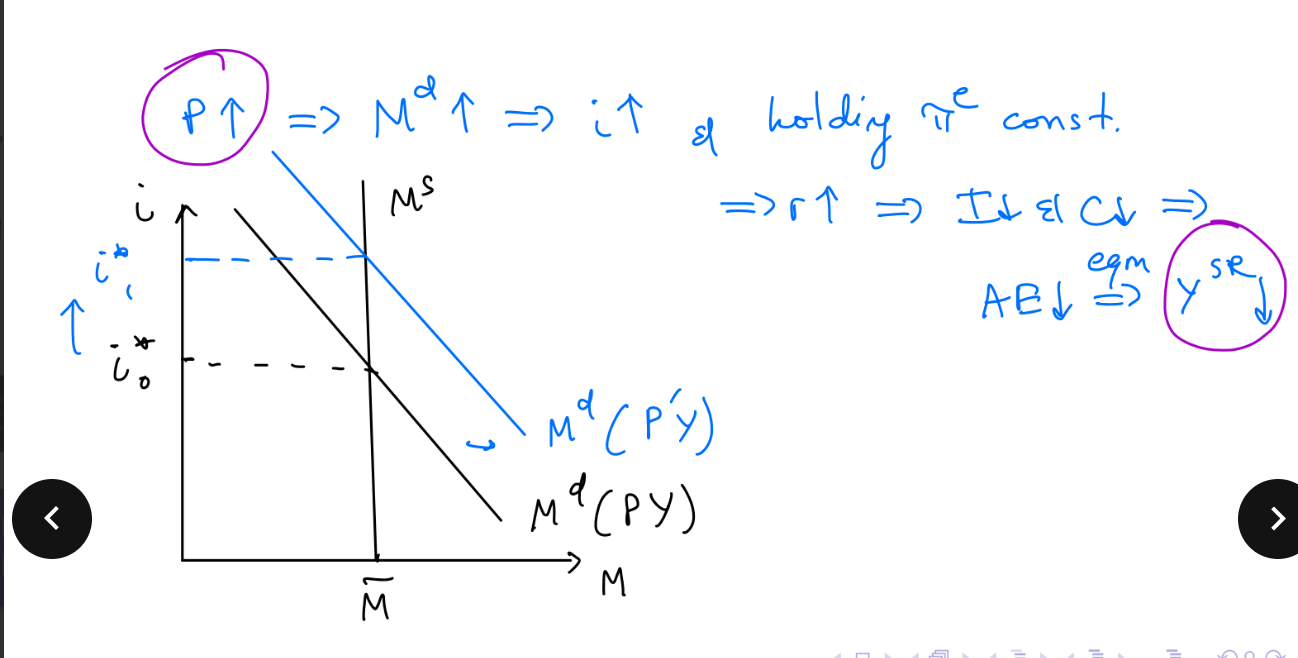
The wealth effect, interest rate affect, and exchange rate effect are all endogenous changes.
Wealth Affect
Exchange Rate Effect
Note if RER increases then goods in the domestic country become more expensive relative to goods in the foreign country.
The Interest Rate Effect
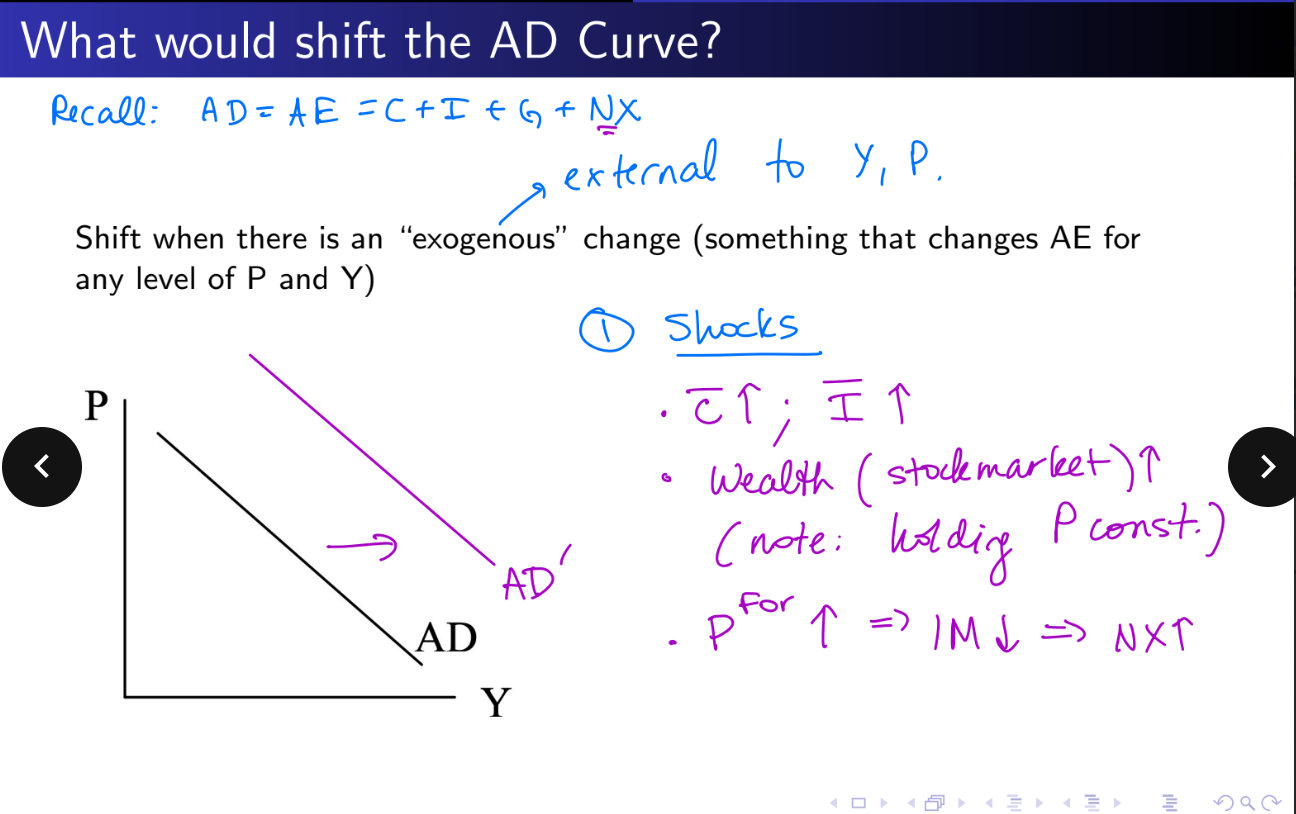
Aggregate Demand: Exogenous change
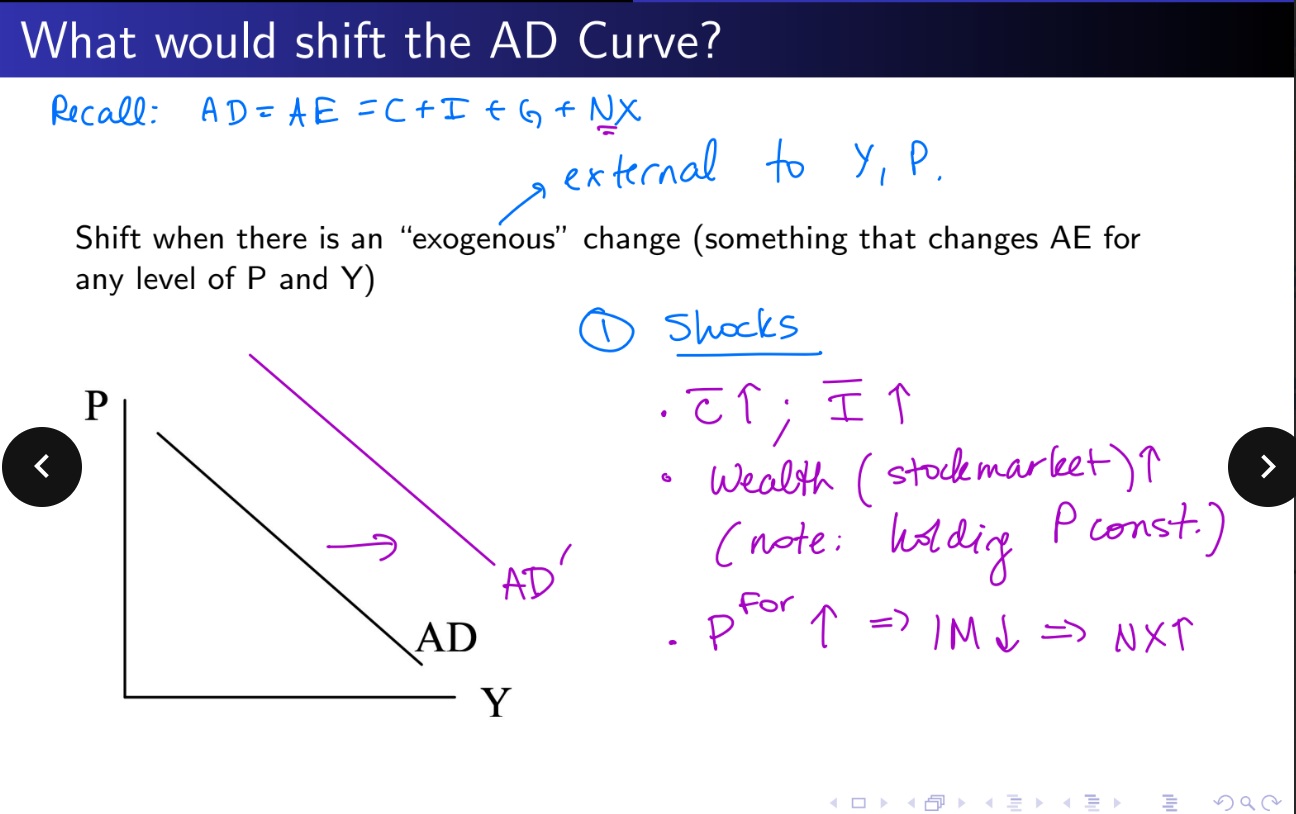
A change that affects aggregate demand/ aggregate expenditure for any level of P& Y.
This change is external to P & Y and represented by one of the following letters AD= AE= C + I + G + NX
Exogenous change my come in 2 forms: (1) shocks and (2) policies.
Aggregate Demand Exogenous Change: Shocks
Wealth (stock market) —> real wealth must increase or decrease for a reason not having to do with P.
Consumer confidence or investor confidence decrease
Pfor.- if the price of foreign goods fall, imports rise, exports fall, nx fall so aggregate demand falls.
Aggregate Demand Exogenous Change: Policies
Government Spending- G increases or T decreases (Yd increases, and consumption and investment increase).
Central Bank- buying bonds
Tariffs- if a foreign country reduces tariffs AD on all price levels rise.
Factors of Production/Supply in the longrun
YLR = AF(K,N) = Yp
A= technology
K= capital
N= labor
Above variables are slow moving and may not explain why YSR > YLR or YSR > YLR.
Keynes’ idea of production in the short-run
Short-run production level YSR matches aggregate demand (at least in the very short run)
YSR = Aggregate Demand (AD)
The general framework for analysis of of SR economic fluctuations (P taken as given): YSR = AE= AD- C + I + G + NX
Assumptions about price for long-run and short-run:
Long-run: prices are flexible & able to adjust to all economic conditions.
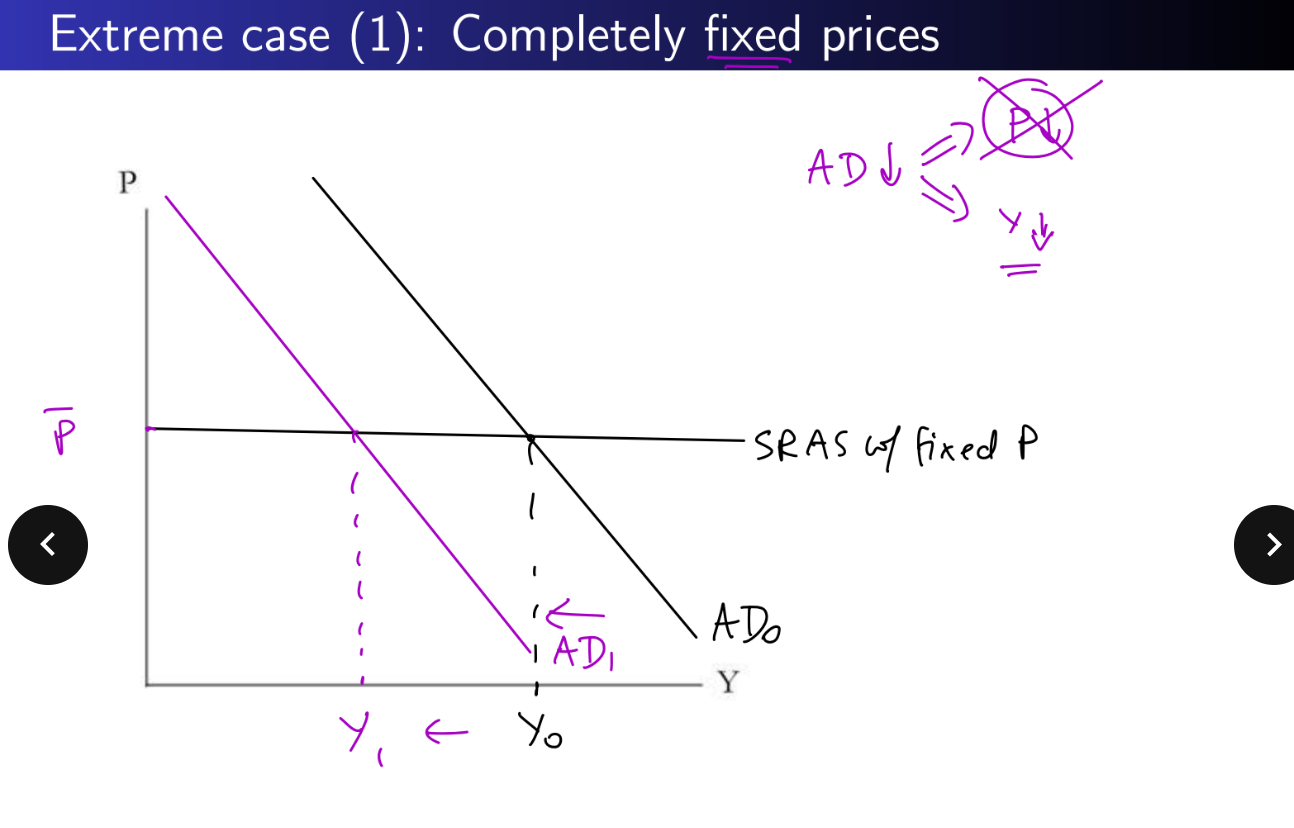
Short run: Prices are fixed/ stuck because it takes time for firms to adjust and decide on the correct P to charge.
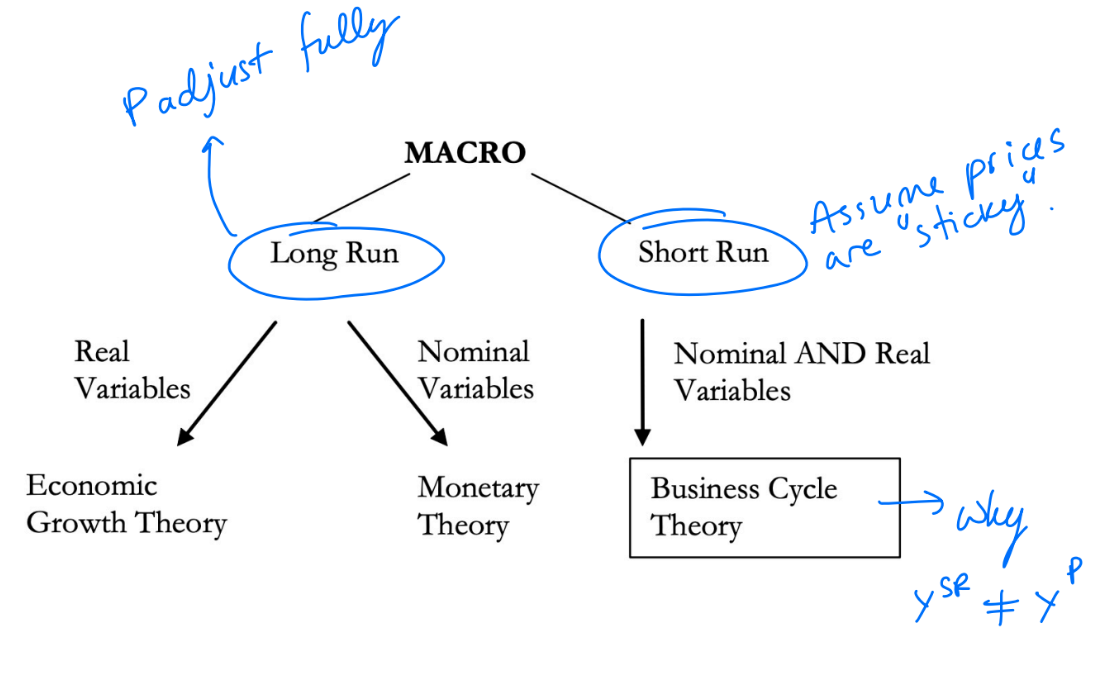
In what two lights can the determinants of aggregate supply be looked at under?
1) Short run
2) Long run
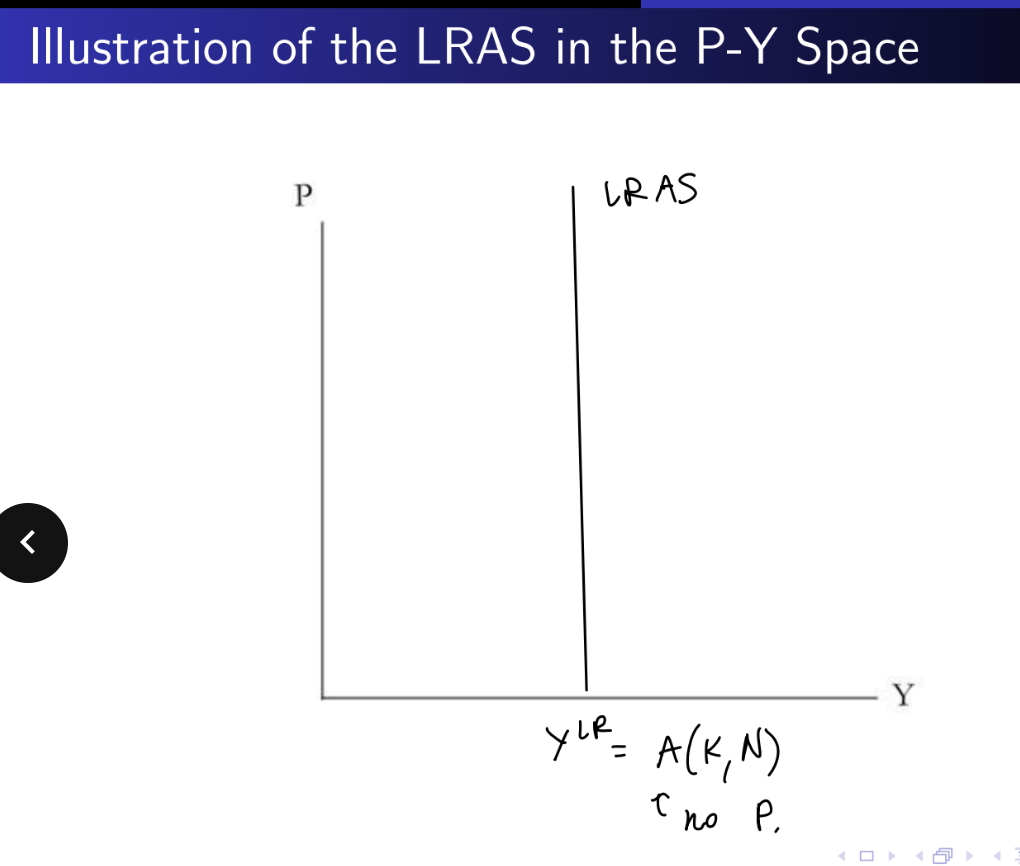
Aggregate Supply: Long Run levels of production
YLR= AF(K,N) Notice that P is not a determinant so…
Aggregate Supply: Short run levels of production
Determines by P (not fully flexible in the SR) and Y
SR Supply: Extreme Case 1- completely fixed price
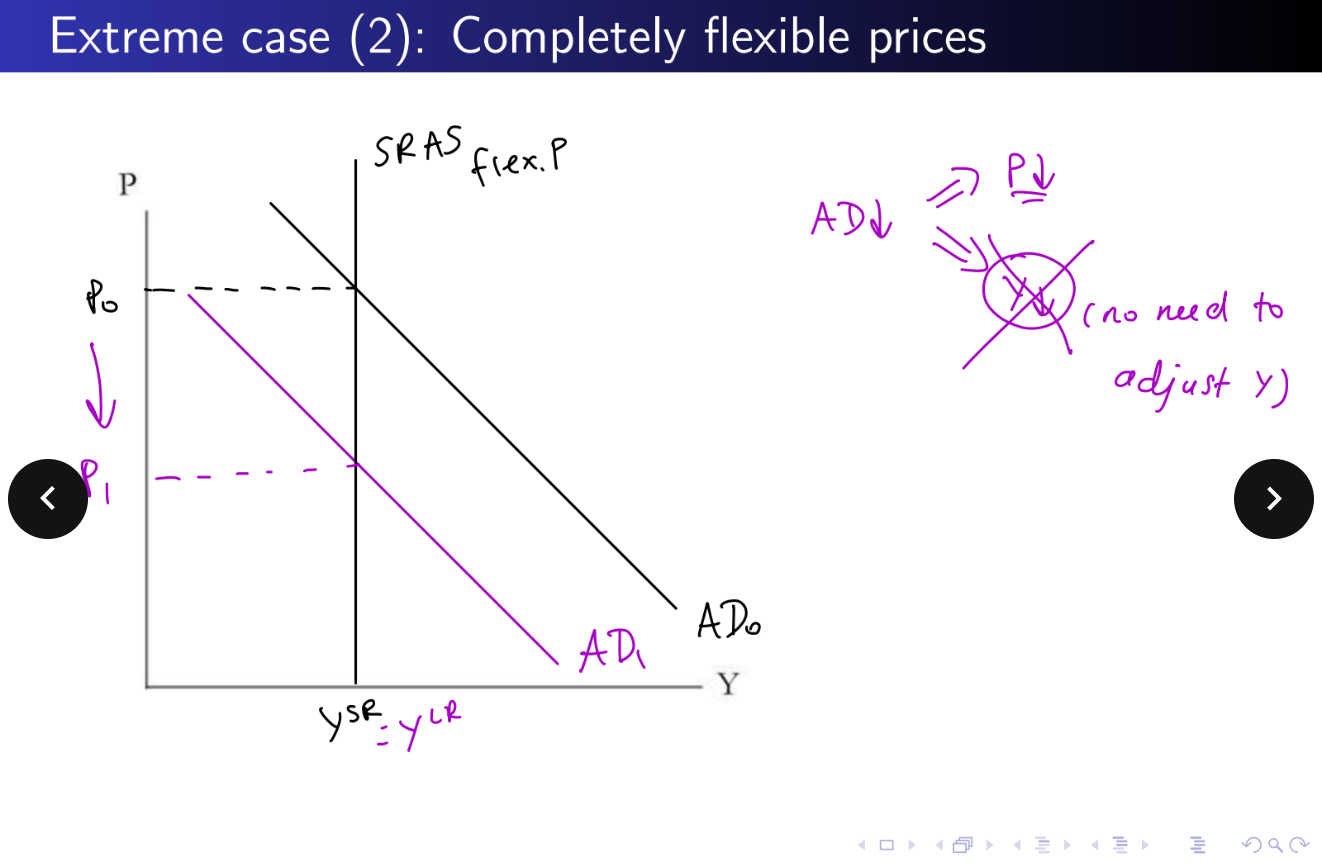
SR Supply: Extreme Case 2- Completely flexible prices
Note this is equal to long run
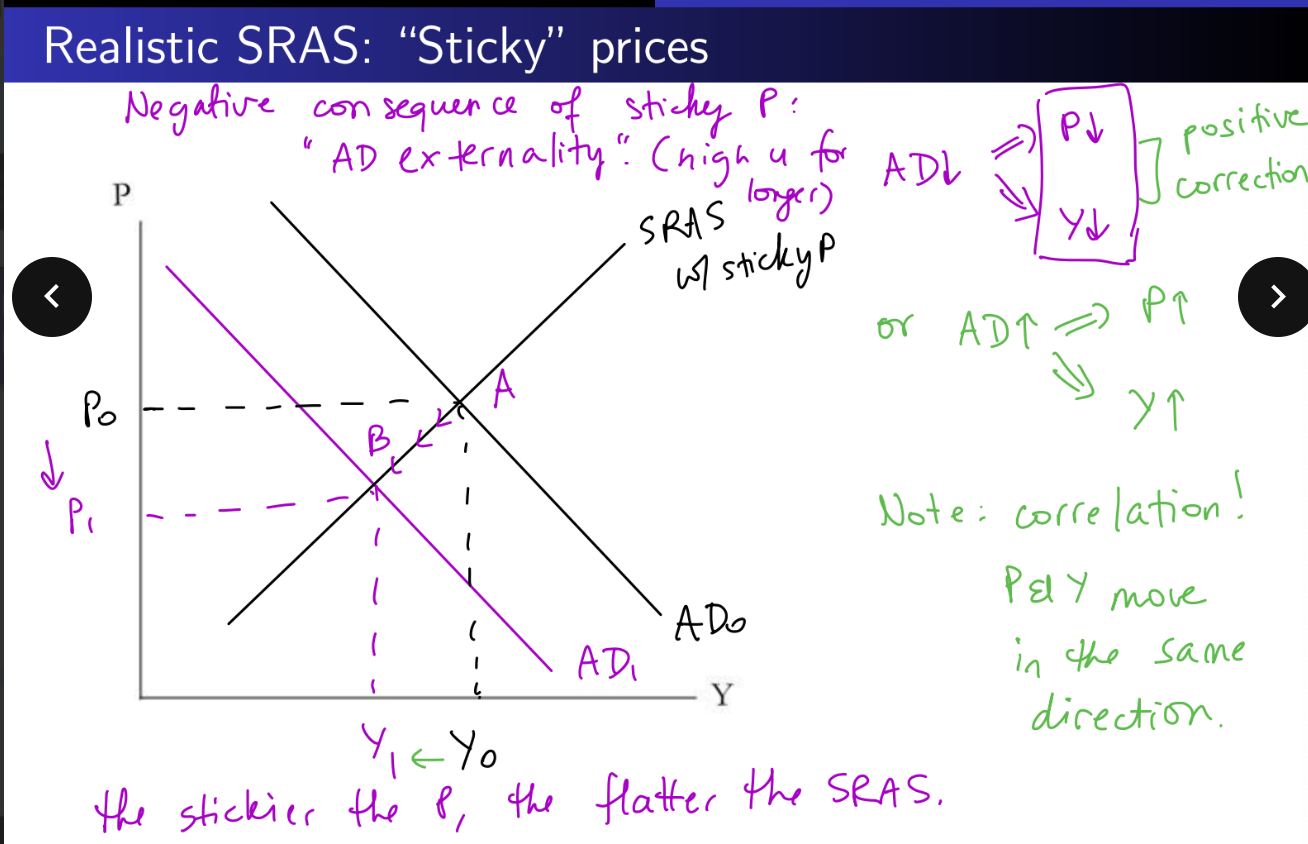
SR Supply: “Sticky” prices (realistic SRAS)
NOTE: if prices were more flexible (S curve steeper); AD shock would be less severe. Because when adverse shocks occur, prices may adjust so output is NOT reduced.
Shifts and movements along aggregate supply: Endogenous change
Shift along when there is a change already captures on the axis P & Y.
Shifts and movements along aggregate supply: Exogenous
Shift when there is an “exogenous” change that has a temporary impact- temporary supply chocks.
Generally, this is anything that affects the cost of firms to produce like…
1) Poil
2) Health (pandemics)
3) “small” natural disasters
4) future expected prices (wages).
What would shift both the SRAS & LRAS?
Exogenous change that has a permanent impact- permanent supply shocks.
Positive version of this is an increase in technology.