Chapter 6
 Call Kai
 Learn
Learn Practice Test
 Spaced Repetition
 Match
Match Flashcards
 Knowt Play
1/31

There's no tags or description
Looks like no tags are added yet.
Name | Mastery | Learn | Test | Matching | Spaced | Call with Kai |
|---|
No analytics yet
Send a link to your students to track their progress
32 Terms
alkyl halide
halogen bonded directly to an sp3 carbon
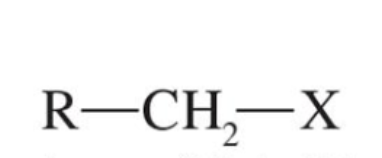
primary alkylhalide
halogen carbon bonded to 1 carbon
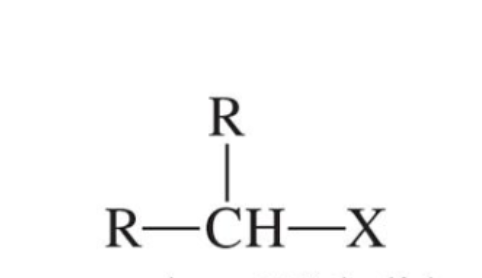
secondary alkylhalide
halogen carbon bonded to 2 carbons
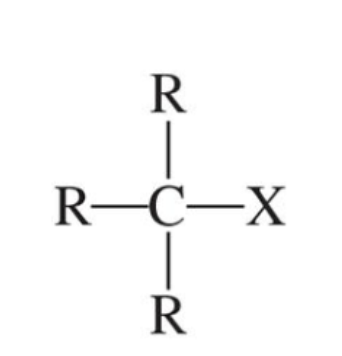
tertiary alkylhalide
halogen carbon bonded to 3 carbons
concerted reaction
new bond forming and old bond breaking
sn2 reaction properties
rate = K[aldehyde][nu], strong Nu, polar aprotic solvent, Ch3X>1°>2°, no rearrangements or carbocation
sn1 reaction properties
rate = k[alkylhalide], 3°>2°, polar protic solvent, weak Nu, racemic, rearranges, carbocation
nucleophilic strength
faster: less bulky, stronger nucleophiles, negative nucleophiles, decreases left to right, increases up to down
strong nucleophiles
I-, -NH2, RO-, HO-, -CN, RS-
medium strength nucleophiles
RSH, RNH2, NH3
weak nucleophiles
F-, ROH, H2O
solvent effects on sn2
aprotic solvents (acetone, DMP) make reaction faster
good leaving groups properties
are electron-withdrawing, stable (not a strong base), polarizable (electron cloud can be distorted)
good leaving groups examples
Cl-, Br-, I-, sulfonates
neutral molecules are __ leaving groups
good, H2O, ROH, NR3
sn2 relative rates
CH3X>1°>2°
steric hinderance
bulk
racemization
sn1 products can be R or S
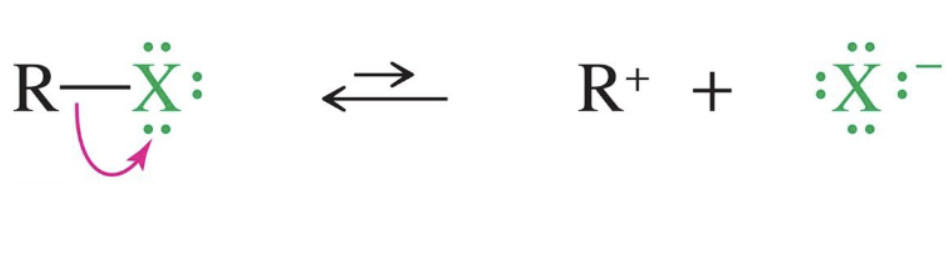
step 1 sn1
formation of carbocation
step 2 sn1
attack of the nucleophile
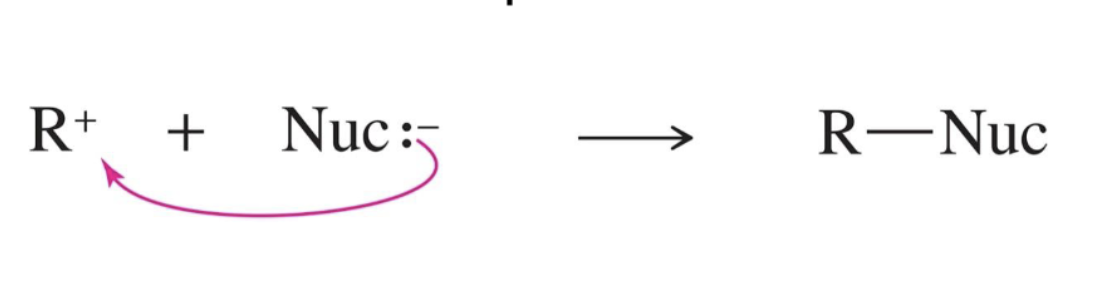
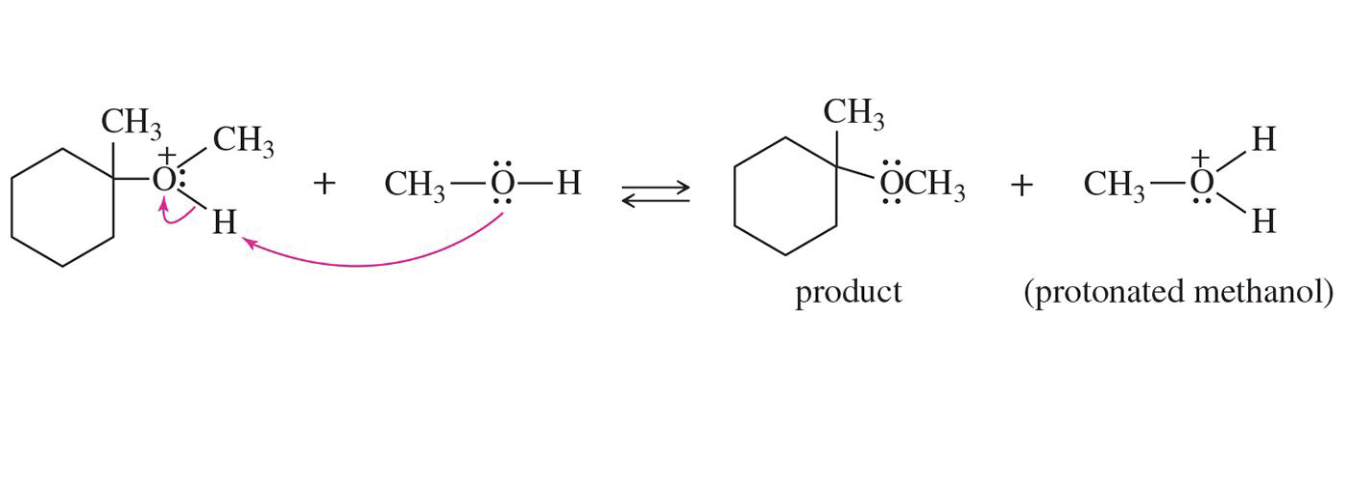
step 3 sn1
if the nucleophile is neutral, it needs to be deprotonated
sn1 relative rates
3°>2°>1°>CH3X
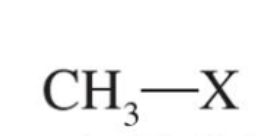
methyl halide
-ene
double bond, but methylene means two Hs bonded to a C