Neo-Classical and Classical Period Stack
 Call Kai
 Learn
Learn Practice Test
 Spaced Repetition
 Match
Match Flashcards
 Knowt Play
1/15

Earn XP
Description and Tags
HAM 2026
Name | Mastery | Learn | Test | Matching | Spaced | Call with Kai |
|---|
No analytics yet
Send a link to your students to track their progress
16 Terms
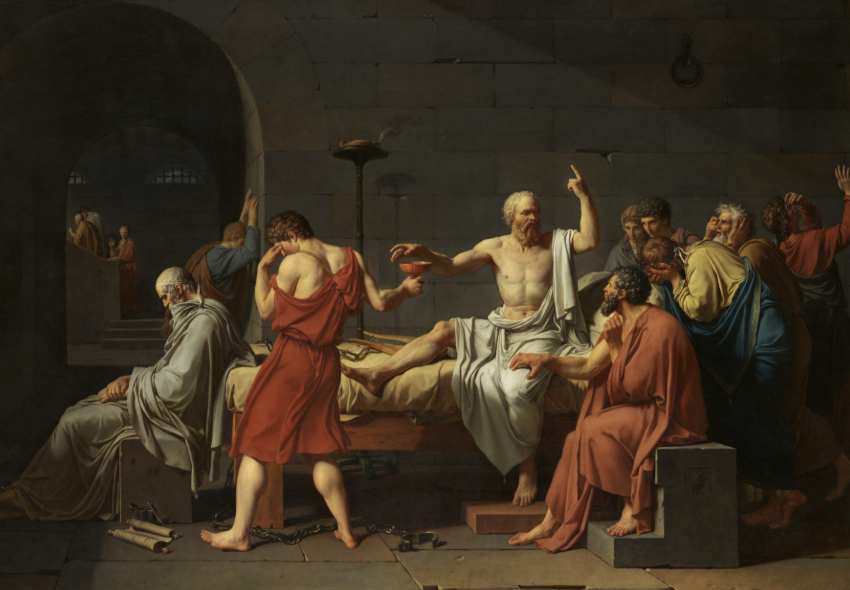
What is the title of this work, who made it, what specific period was it made, and what is its significance?
Jacques-Louis David
Period: Neoclassical period
Significance: Shows Neoclassical ideals of reason, virtue, and moral sacrifice; Socrates calmly accepts death for his beliefs, modeled after ancient Greek history.
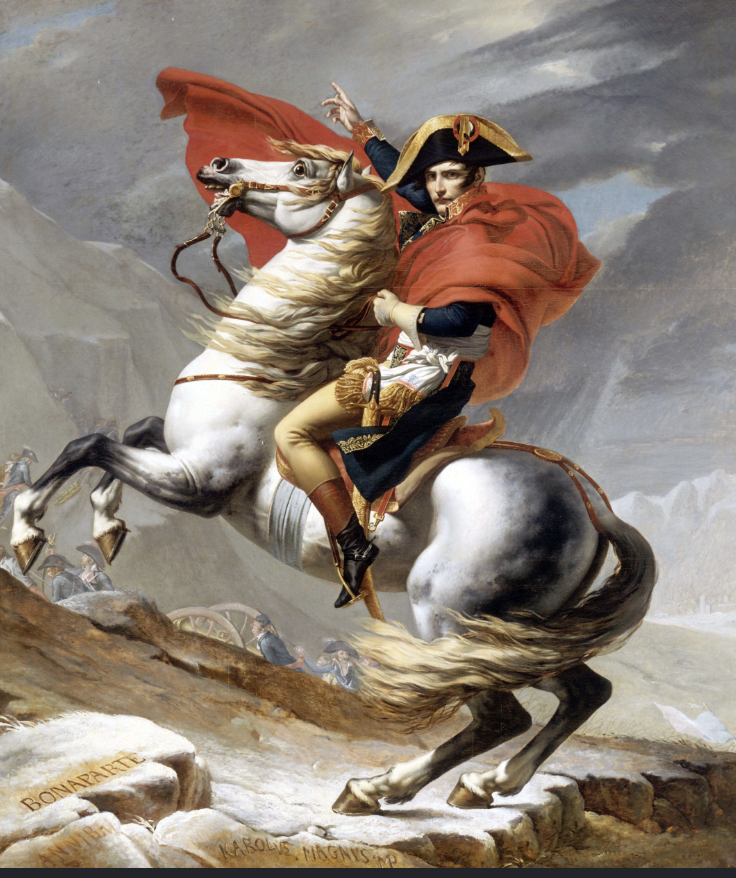
What is the title of this work, who made it, what specific period was it made, and what is its significance?
Jacques-Louis David
Period: Neoclassical, Napoleonic era
Significance: Political propaganda portraying Napoleon as heroic, powerful, and in control; reflects Neoclassical emphasis on heroism, leadership, and Classical-style grandeur.
How does the Neoclassical Period differ from the full-scale Classical era?
Classical
A music period
Style: balanced, clear, structured sound
NOT A “Greek/Roman revival”
Neoclassical right after Rococo
A visual art + architecture movement
Inspired directly by ancient Greece and Rome
Reaction against Rococo decoration
Style: serious, moral, patriotic, orderly
What is the connection of the French Revolution to the Classical and Rococo Periods?
The French Revolution was a turning point that rejected Rococo’s aristocratic luxury and embraced Neoclassical ideals, using art to promote civic virtue, moral seriousness, and public education rather than pleasure and elite leisure.
Neoclassical refers to ___ works while classical refers to ____ works.
Which two composers pushed people towards the Romantic Period.
artistic, musical
Franz Schubert and Beethoven
Franz Schubert
Lieder or Lied
What important instrument was created at the beginning of the classical period? How did this change music? What was it a transition out of?
Franz Schubert = Major early Romantic composer who developed the German art song (Lieder), combining expressive poetry with piano and voice to convey deep emotion and storytelling.
Piano and vocal works based on poetry. Language is German. One song is a lied.
The fortepiano was the key new instrument of the Classical period. It allowed dynamic control (soft and loud). Transition from Baroque harpsichord.
What are the differences between the baroque and classical orchestras?
Baroque orchestra: Smaller, less standardized groups; based on continuo (harpsichord + bass instruments); limited dynamic contrast
Classical orchestra: Larger, standardized ensemble; no continuo; clear sections (strings, woodwinds, brass, percussion); greater dynamic range and balance.
The Baroque orchestra was generally smaller and centered around string instruments with a harpsichord playing the basso continuo.
Classical orchestra was larger and included more woodwind and brass instruments. Wider range of dynamics and a more balanced instrumentation.
Who are the 3 main composers of the classical period? State the significances/contributions of each
Wolfgang Amadeus Mozart = Master of melody, balance, and expressive Classical music. He also made significant Opera Buffas and singpiels
Ludwig van Beethoven = Bridge to Romanticism; expanded Classical forms with emotion and power
Franz Shubert = Elevated the German Lied (art song), while promoting song cycles (collection of songs designed to be performed together in a specific order to drive a theme home)
Compare the role of patronage in the Baroque period versus the Classical period. How did changes in who supported artists and musicians influence the art and music they created?
Baroque: Supported mainly by the Church and aristocracy; art was grand, dramatic, and meant to glorify religion or rulers.
Classical: Shift towards the public; aristocratic patronage still existed; music became clearer, more balanced, and more accessible.
Key idea: Baroque = elite patronage and spectacle; Classical = growing public influence and more independent, structured art.
State the composer and the significance of the following pieces written during the Classical Period:
Queen of the Night Aria
Gretchen Am Spinnrade
Wolfgang Mozart. Extremely virtuosic coloratura aria from the play The Magic Flute; displays dramatic vocal power.
Franz Schubert. An early Romantic Lied; the piano mimics spinning wheel to express emotion
State the composer and the significance of the following pieces written during the Classical Period:
Requiem- Lacrimosa
Erlkonig
Wolfgang Mozart. Emotional funeral mass; his final work expressing deep sorrow and drama.
Franz Schubert. Dramatic Lied portraying fear and death through rapid piano and multiple characters.
State the composer and the significance of the following pieces written during the Classical Period:
Symphony No. 9 Final Movement
Symphony No. 40- First Movement
Symphony No. 5 First Movement
Ludwig van Beethoven. First symphony to include choir; “Ode to Joy” symbolizes unity and humanity.
Wolfgang Amadeus Mozart. Classical symphony showing emotional intensity within structured form.
Ludwig van Beethoven. Famous 4-note motif representing fate; intense development and dramatic structure.
What are 2 major artists of the Neo-Classical Period. State their significances briefly.
Jacques-Louis David
Significance: Used Classical themes to promote moral virtue, patriotism, and Revolutionary ideals
Jean-Auguste-Dominique Ingres
Significance: Continued Neoclassical style with idealized beauty, smooth forms, and Classical inspiration, especially in portraits and historical scenes.
A category of art that depicts scenes from everyday life, such as domestic interiors, markets, or social gatherings, rather than historical, religious, or mythological subjects.
Considered the highest category in the academic hierarchy of genres, these paintings depict scenes from history, mythology, or the Bible. These works were large in scale and intended to convey grand moral or political messages.
Genre painting
History painting
How did the Industrial Revolution affect the Classical music period in particular?
What was the significance of the sonata-allegro form during the Classical music period? What was it.
By improving the construction of musical instruments, making them louder, more reliable, and capable of producing a wider range of sounds. It also helped expand the middle class, which increased public interest in music education, leading to greater demand for composers/performers.
Common structure used in the first movement of Classical period works such as symphonies. Has three main sections: exposition (themes are introduced), development (themes are varied and modulated), and recapitulation (themes return in the home key).
Cadenza and its significance and especially to whom?
A short, improvisatory section in the first movement of a concerto. It allows the soloist to show technical skill and expressiveness. It was significant in the Classical period, especially in works by Wolfgang Amadeus Mozart