Meiosis and Life Cycles
 Call Kai
 Learn
Learn Practice Test
 Spaced Repetition
 Match
Match Flashcards
 Knowt Play
1/31

Earn XP
Description and Tags
Lecture 22
Name | Mastery | Learn | Test | Matching | Spaced | Call with Kai |
|---|
No analytics yet
Send a link to your students to track their progress
32 Terms
Meiosis
the cell division of gametes in sexually-reproducing organisms
2 rounds & 4 haploid cells
How many rounds are in meiosis and how many haploid cells does it result in?
Heredity
the transmission of traits from one generation to the next
Variation
differences in appearance from parents to offspring
Genetics
the scientific study of heredity and variation
Alleles
different forms of a gene that can be represented as dominant (A) or recessive (a)
Genotype
the genetic makeup (alleles) of an organism
Phenotype
the outward expression of alleles in an organism
Gene locus
the specific position on a gene in the genome
Gametes
reproductive cells (sperm & egg in humans); passes down genetic information
Sexual Reproduction
two parents, gametes fuse together; only in multicellular organisms
Asexual Reproduction
one parent, no gametes; occurs in multicellular and unicellular organisms
Clone
a group of genetically identical individuals produced from asexual reproduction
Life Cycle
the generation-to-generation sequence of stages in the reproductive history of an organism
46 chromosomes stored in 23 pairs
How many chromosomes does a human have?
Karyotype
the visualization of all chromosomes and their corresponding pairs from the cell
Homologous chromosomes / homologs
the same size and shape; express genes for the same traits, but may have differing alleles
XX & XY
female & male sex chromosomes
Autosomes
the other 22 pairs of non-sex chromosomes
Diploid cell (2n)
has two sets of chromosomes (2n=46 for humans)
Gametes
sex cells that contain a single set of chromosomes (haploid cells); divided by meiosis, not mitosis
Zygote
a fertilized egg
Meiosis I
replication of each pair of homologous chromosomes and split equally between the two daughter cells
Meiosis II
separates the homologous chromosomes into individual sister chromatids
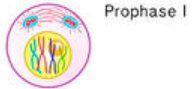
Prophase I
homologous chromosomes pair up, aligned gene by gene
exchange of DNA segments (crossing-over) at the chiasmata (x-shaped region)
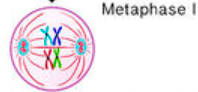
Metaphase I
homologous pairs line up at the metaphase plate
tetrads have two chromosomes (one from each parent) and four chromatids; microtubules are attached to the kinetochores of the chromosomes
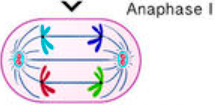
Anaphase I
homologous pairs separate
chromosomes move to opposite poles
sister chromatins remain attached at the centromere and move to opposite poles
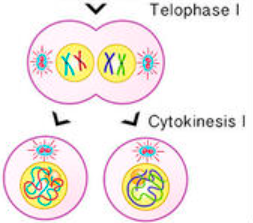
Telophase I & Cytokinesis
splitting of haploid set of chromosomes
each cell has half of the chromosomes which is then replicated to create two haploid daughter cells
animal cells form a cleavage furrow; plant cells form a cell plate
cytokinesis (splitting of the cytoplasm) occurs simultaneously
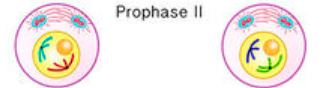
Prophase II
spindle apparatus forms
sister chromatids migrate towards the metaphase plate
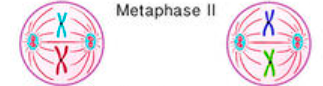
Metaphase II
sister chromatids line up at the metaphase plate (no longer identical due to crossing-over)
microtubules attach to the kinetochores
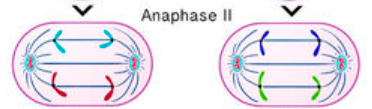
Anaphase II
each sister chromatid is separated and moves toward opposite poles
two new individual chromosomes at each pole
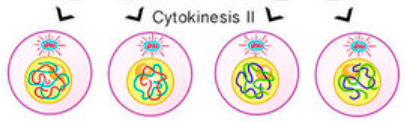
Telophase II & Cytokinesis
nuclei form, chromosomes decondense
results in 4 daughter gamete cells that contain a haploid (unduplicated) set of chromosomes; each daughter is genetically unique