OB Exam 4: Newborn Teaching

0.0(0)
Studied by 0 people
call kaiCall Kai
learnLearn
examPractice Test
spaced repetitionSpaced Repetition
heart puzzleMatch
flashcardsFlashcards
GameKnowt Play
Card Sorting

1/17

encourage image

There's no tags or description

Looks like no tags are added yet.

Last updated 6:33 PM on 4/11/26
Name
Mastery
Learn
Test
Matching
Spaced
Call with Kai

No analytics yet

Send a link to your students to track their progress

18 Terms

1
New cards

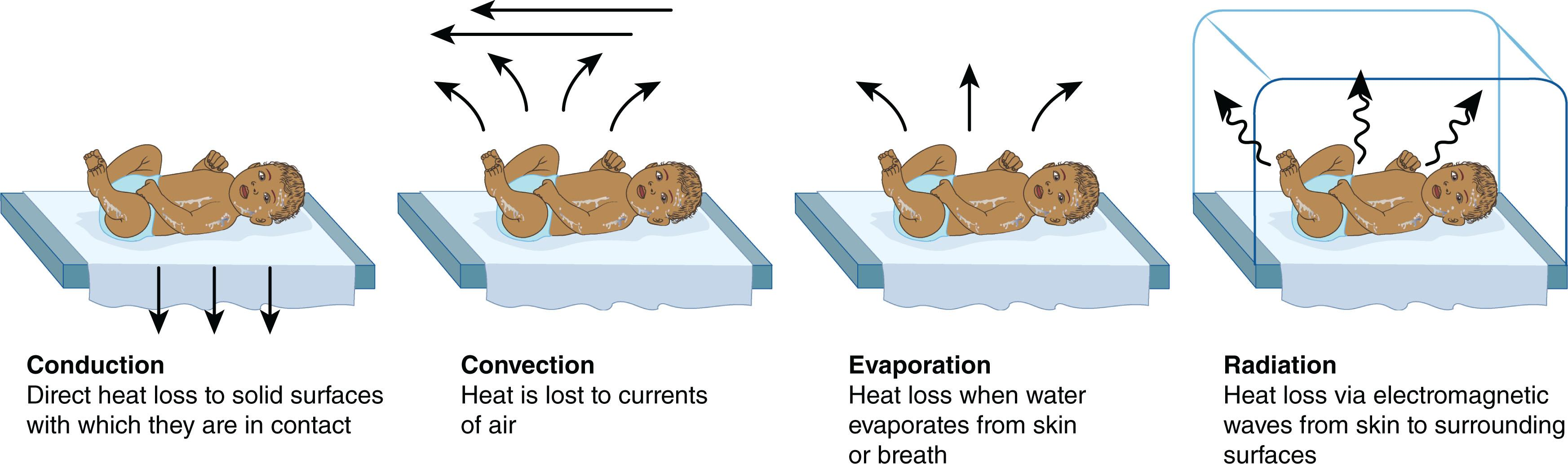
Whats the 4 mechanisms of heat loss in newborns?

  1. convection

  • cool air drafts across skin surface

  1. evaporation

  • wet skin loses heat (covered w/ amniotic fluid)

  1. radiation

  • skin nearby cold objects

  1. conduction

  • direct contact w/ cold surfaces

<ol><li><p><span style="color: rgb(99, 124, 216);"><strong>convection</strong></span></p></li></ol><ul><li><p><span style="color: rgb(8, 8, 9);">cool </span><span style="color: rgb(99, 124, 216);"><strong>air drafts</strong></span> across skin surface</p></li></ul><ol start="2"><li><p><span style="color: rgb(230, 105, 105);"><strong>evaporation</strong></span></p></li></ol><ul><li><p><span style="color: rgb(230, 105, 105);"><strong>wet skin</strong></span> loses heat (covered w/ amniotic fluid)</p></li></ul><ol start="3"><li><p><span style="color: rgb(44, 158, 42);"><strong>radiation</strong></span></p></li></ol><ul><li><p><span style="color: rgb(44, 158, 42);"><strong>skin nearby</strong></span> cold objects</p></li></ul><ol start="4"><li><p><span style="color: rgb(209, 51, 237);"><strong>conduction</strong></span></p></li></ol><ul><li><p><span style="color: rgb(209, 51, 237);"><strong>direct contact</strong></span> w/ cold surfaces</p></li></ul><p></p>
2
New cards

How can we prevent hypothermia during initial hours after birth? (5)

  1. dry immediately after birth

  2. skin to skin contact

  3. warm blankets and hat

  4. pre warm crib

  5. avoid drafts

3
New cards

Newborn normal ranges:

  1. temp

  2. RR

  3. HR

  1. temp: 97.7-99.5F

  2. RR: 30-60 breaths/min

  3. HR: 110-160 bpm

4
New cards

Why do newborns have low Vit.K? (4)

  1. sterile newborn gut (havent eaten yet)

  2. low amt in breast milk

  3. immature liver

  4. poor placental transfer

5
New cards

Physiological Jaundice (3) vs Pathological Jaundice (2):

Physiological (normal)

  1. appears AFTER 24 hrs

  2. due to immature liver

  3. mild and resolves on its own

Pathological: too high too soon (bilirubin rises too quick)

  1. appears WITHIN 24 hrs

  2. high bilirubin levels

6
New cards

Hyperbilirubinemia management: (3)

  1. phototherapy

  • strip down to diaper and expose skin

  • cover eyes

  1. NO lotions!!

  • causes burns

  1. the more they poop, the better bilirubin levels will be

<ol><li><p><span style="color: rgb(182, 87, 229);"><strong>phototherapy</strong></span></p></li></ol><ul><li><p>strip down to diaper and expose skin</p></li><li><p><span><strong>cover eyes</strong></span></p></li></ul><p></p><ol start="2"><li><p><span style="color: rgb(240, 79, 79);"><strong>NO lotions</strong></span>!!</p></li></ol><ul><li><p>causes burns</p></li></ul><p></p><p></p><ol start="3"><li><p>the more they <span style="color: rgb(145, 121, 51);"><strong>poop, the better bilirubin</strong></span> levels will be</p></li></ol><p></p>
7
New cards

Whens APGAR done and include categories and scoring

done @ 1min and 5 mins

  • appearance: pallor, cyanotic, pink

  • pulse: < 60 CPR; 110-160 bpm

  • grimace: coughs/cries/sneezes

  • activity: limp or active mvmt

  • respirations: retractions, grunts, flares

→ 0-3 start interventions

→ 4-6 monitor

→ 7-10 good baby

8
New cards

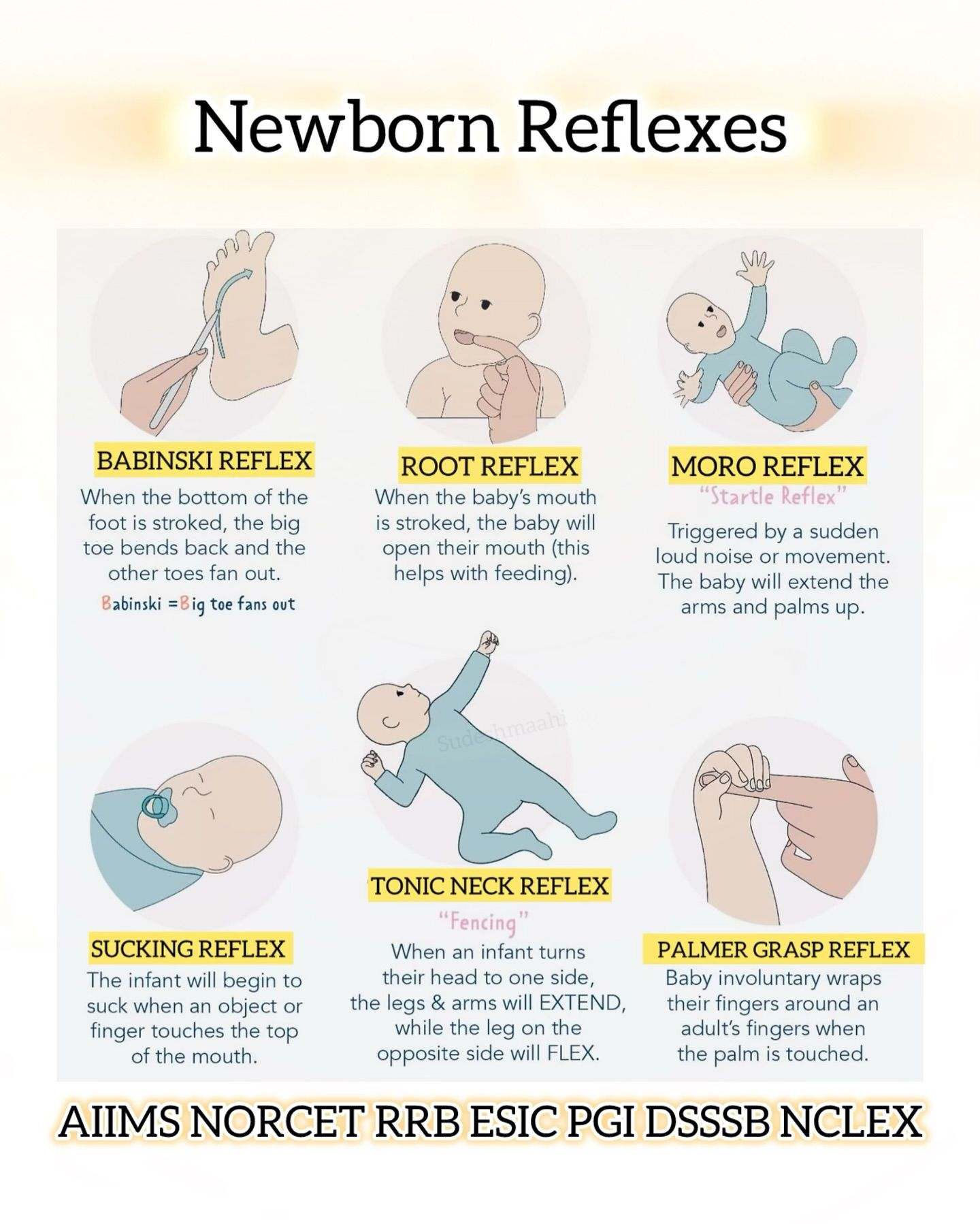
newborn reflexes and how to elicit each of them: (7)

  1. moro (startle reflex)

  • “baby thinks they’re falling”

  • let head drop slightly → arms open wide (good)

  1. rooting

  • “looking for food”

  • stroke cheek→ turns head toward touch

  1. sucking

  • something in mouth = suck

  1. palmar grasp

  • put finger in palm → baby grips tightly

  1. Babinski

  • stroke sole of foot from toe→ heel

    • toes fan OUT=normal for baby but problem for > 2 y/o

  1. tonic neck

  • “baby looks like a fencer”

  • baby looks one way and arm+leg points same way

    • other arm+leg bends

  1. stepping

  • hold upright → feet make stepping motions
<ol><li><p><span style="color: rgb(208, 158, 62);"><strong>moro</strong></span><span style="color: rgb(13, 12, 11);"> (startle reflex)</span></p></li></ol><ul><li><p>“baby thinks they’re falling”</p></li></ul><ul><li><p><span style="color: rgb(208, 158, 62);">let head drop slightly → arms open wide </span><span style="color: rgb(13, 12, 9);">(good)</span></p></li></ul><ol start="2"><li><p><span style="color: rgb(49, 157, 18);"><strong>rooting</strong></span></p></li></ol><ul><li><p>“looking for food”</p></li></ul><ul><li><p><span style="color: rgb(49, 157, 18);">stroke cheek→ turns head toward touch</span></p></li></ul><p></p><ol start="3"><li><p><span style="color: rgb(23, 139, 235);"><strong>sucking </strong></span></p></li></ol><ul><li><p><span style="color: rgb(23, 139, 235);">something in mouth = suck</span></p></li></ul><ol start="4"><li><p><span style="color: rgb(100, 66, 197);"><strong>palmar grasp</strong></span></p></li></ol><ul><li><p><span style="color: rgb(100, 66, 197);">put finger in palm → baby grips tightly</span></p></li></ul><ol start="5"><li><p><span style="color: rgb(228, 98, 98);"><strong>Babinski</strong></span></p></li></ol><ul><li><p><span style="color: rgb(228, 98, 98);">stroke sole of foot from toe→ heel</span></p><ul><li><p><span style="color: rgb(228, 98, 98);">toes fan <strong>OUT</strong>=<strong>normal for baby</strong> but problem for &gt; 2 y/o</span></p></li></ul></li></ul><ol start="6"><li><p><span style="color: rgb(33, 188, 194);"><strong>tonic neck</strong></span></p></li></ol><ul><li><p><span style="color: rgb(6, 6, 6);">“baby looks like a <strong>fencer</strong>”</span></p></li><li><p><span style="color: rgb(33, 188, 194);">baby looks one way and arm+leg points same way</span></p><ul><li><p><span style="color: rgb(33, 188, 194);">other arm+leg bends</span></p></li></ul></li></ul><ol start="7"><li><p><span style="color: rgb(244, 111, 233);"><strong>stepping</strong></span></p></li></ol><ul><li><p><span style="color: rgb(244, 111, 233);">hold <strong>upright </strong>→ feet make stepping motions</span></p></li></ul><p></p><p></p><p></p>
9
New cards

newborn weight measurements:

lose up to 10% of birth weight by 48 hrs

  • should regain by 2 weeks

10
New cards

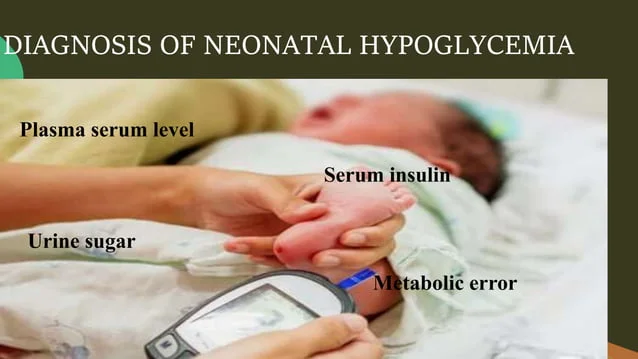
newborn HYPOglycemia signs: (5)

  • how to check?

  1. shaky/ tremors

  2. lethargic

  3. poor muscle tone (weak)

  4. cyanotic

  5. heel stick to check glucose (normal: >45 mg/dL)
<ol><li><p><span style="color: rgb(46, 59, 144);"><strong>shaky</strong>/ <strong>tremors</strong></span></p></li><li><p><span style="color: rgb(46, 59, 144);"><strong>lethargic</strong></span></p></li><li><p><span style="color: rgb(46, 59, 144);"><strong>poor muscle tone </strong>(weak)</span></p></li><li><p><span style="color: rgb(46, 59, 144);"><strong>cyanotic</strong></span></p></li><li><p><span style="color: rgb(48, 169, 183);"><strong>heel stick to check glucose</strong></span> (normal: &gt;45 mg/dL)</p></li></ol><p></p>
11
New cards

PKU test and timing

  • collected after baby eats (breastmilk or formula) at least 24 hrs

    • PKU causes brain/nervous system issues

12
New cards

Newborn positive for Critical Congenital Heart Disease if one of the following: (2)

  1. O2 < 90%

  2. O2 < 95% in both extremities, 3 diff times, each separated by 1 hr

13
New cards

Newborn abduction interventions: (3)

  1. 2 ID bands on infant @ delivery

  • wrist and ankle

  1. ID band on pt and other caregivers

  2. foot and hand prints

14
New cards

When and how long to breast feed:

  • feed q2-3 hrs, 8-12 times/day

  • feedings should last 15-20 mins per breast

15
New cards

newborn indicators of adequate intake of breastmilk: (2)

  • whens the best time to breastfeed?

  1. 3 bowels mvmts

  2. 6-8 wet diapers

→ all in 24 hrs after day 4

****best time to breastfeed is within 1st hr after birth!!

16
New cards

Neonatal nutrition guide for formula: (6)

  1. formula fed q3-4 hrs; 6-8x/day

  2. 15-30mL/feeding

  3. burp them every ½ oz

  4. head 15-20 degrees

  5. look for hunger cues (rooting, sucking noise, crying)

  6. note emesis (assess if allergy or normal behavior)

17
New cards

abnormal newborn assessment needs interventions: (7)

  1. head:

  • caput succedaneum

  • cephalohematoma

  • sutures

  • fontanels (bulging or sunken)

  1. eyes

  • pupillary response

  • strabismus (cross-eyed)

  1. mouth

  • cleft lip/palate

  1. chest

  • murmurs/breath sounds

  • crepitus

  1. extremities:

  • pulses equal and deformities

  • dysplasia

  1. back

  • spina bifida (hair tuft)

  1. skin

  • erythema toxicum (normal red rash)

  • Mongolian spots (normal)

  • jaundice (1st 24 hrs is pathological aka BAD and day 2/3 is physiological-normal)

18
New cards

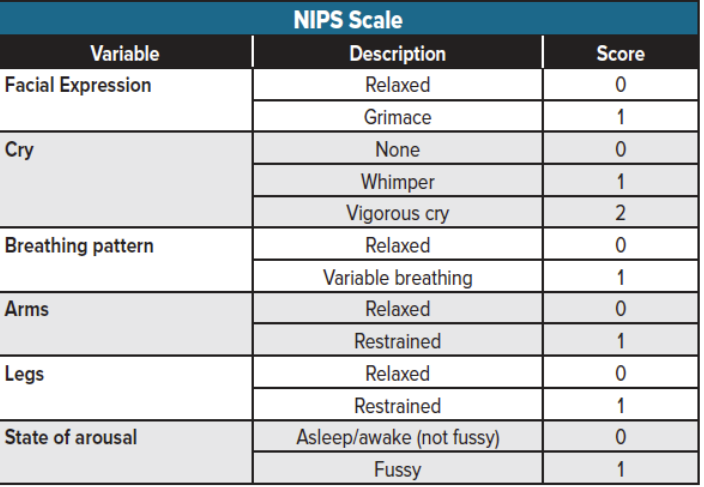
How is pain assessed using Neonatal Infant Pain Scale (NIPS): (6)

  1. Facial expression: relaxed or grimacing

  2. Cry: none, whimper, vigoruos

  3. Breathing: relaxed→ changed from baseline

  4. Arms: relaxed or flexed

  5. Legs: relaxed or flexed:

  6. Alertness: calm or fussy

<ol><li><p><span style="color: rgb(236, 129, 129);"><strong>Facial expression</strong></span>: relaxed or grimacing</p></li><li><p><span style="color: rgb(192, 194, 17);"><strong>Cry</strong></span>: none, whimper, vigoruos </p></li><li><p><span style="color: rgb(54, 171, 124);"><strong>Breathing</strong></span>: relaxed→ changed from baseline</p></li><li><p><span style="color: rgb(123, 103, 244);"><strong>Arms</strong>: relaxed or flexed</span></p></li><li><p><span style="color: rgb(123, 103, 244);"><strong>Legs</strong>: relaxed or flexed:</span></p></li><li><p><span style="color: rgb(191, 61, 172);"><strong>Alertness</strong></span>: calm or fussy</p></li></ol><p></p>