naia final
 Call Kai
 Learn
Learn Practice Test
 Spaced Repetition
 Match
Match Flashcards
 Knowt Play
1/89

There's no tags or description
Looks like no tags are added yet.
Name | Mastery | Learn | Test | Matching | Spaced | Call with Kai |
|---|
No analytics yet
Send a link to your students to track their progress
90 Terms
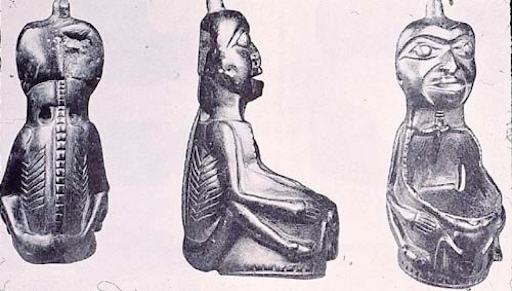
65: Northwest Coast, Prehistoric, Fraser River
What is it? — a composite mortar form carved in the shape of a seated human figure with a top knot and an upside-down frog, marked with incised skeletal lines of the spine, ribs, and clavicle and well-articulated face
Cultural and functional significance — used by a shaman to grind materials for magical purposes as part of their job as curers
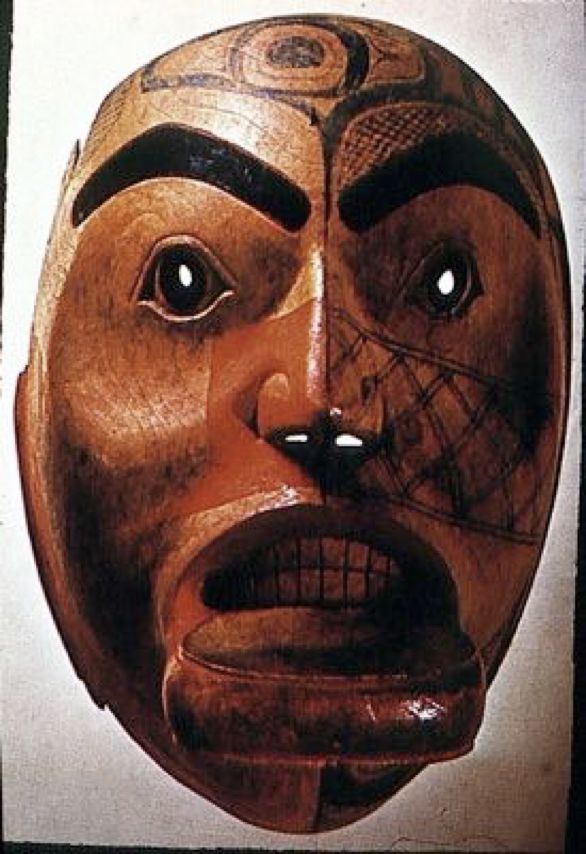
35: Northwest Coast, Historic, Haida
Name of the object: Haida portrait /ancestor mask of an elderly woman, with a lip plug (labret) and asymmetrical facial painting
Functional and cultural significance: The Haida would often commemorate their elders as ancestors through creating portrait masks of them like this one + The facial painting also illustrates how the Haida stylized themselves to represent totemic beliefs/clan affiliation
*Asymmetry is common in early Haida art
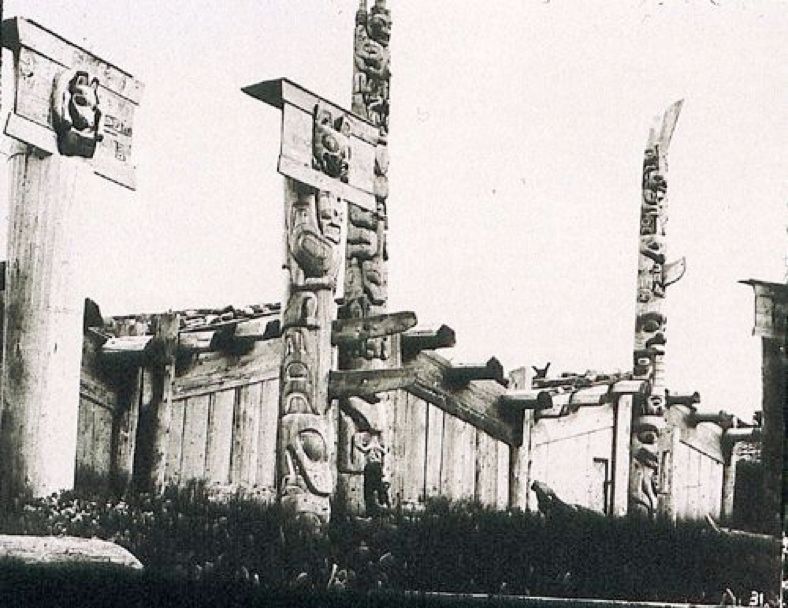
91: Northwest Coast, Historic, Haida
What is it? — A picture of two mortuary poles and two house frontal poles in a Haida village
Functional and cultural significance — Illustrates the Haida’s totemic belief system and use of totem poles to pay homage to their ancestors and represent their clan affiliations
The mortuary poles (like a raised casket) in particular featured the body of the ancestor in the rectangular box with a totemic animal’s face, with the leftmost pole representing a bear with a copper in his mouth, as a means of homage
The house frontal poles similarly illustrated their ancestors and their clan associations
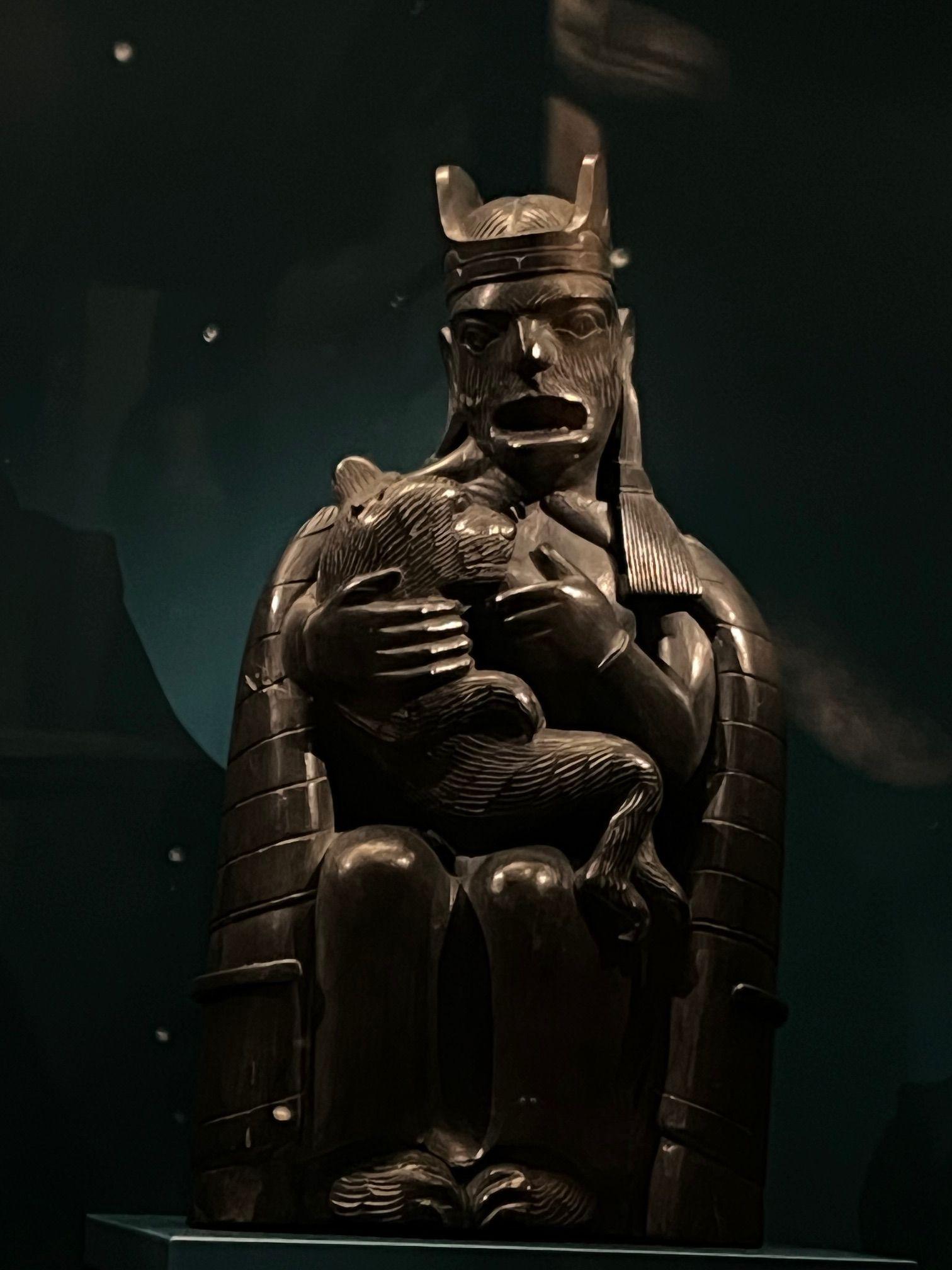
Northwest Coast, Historic, Haida
Name of the object: Bear mother argillite sculpture, representing the Haida myth of a Haida woman breastfeeding her bear-cub child in a position reminiscent of the Madonna and Child
Functional and cultural significance: The Haida sold argillite sculptures exclusively for European sale, often incorporating their traditional mythology like the Bear Mother myth in an effort to sell to European traders and visitors who desired the “exotic”
Other museum objects will be included
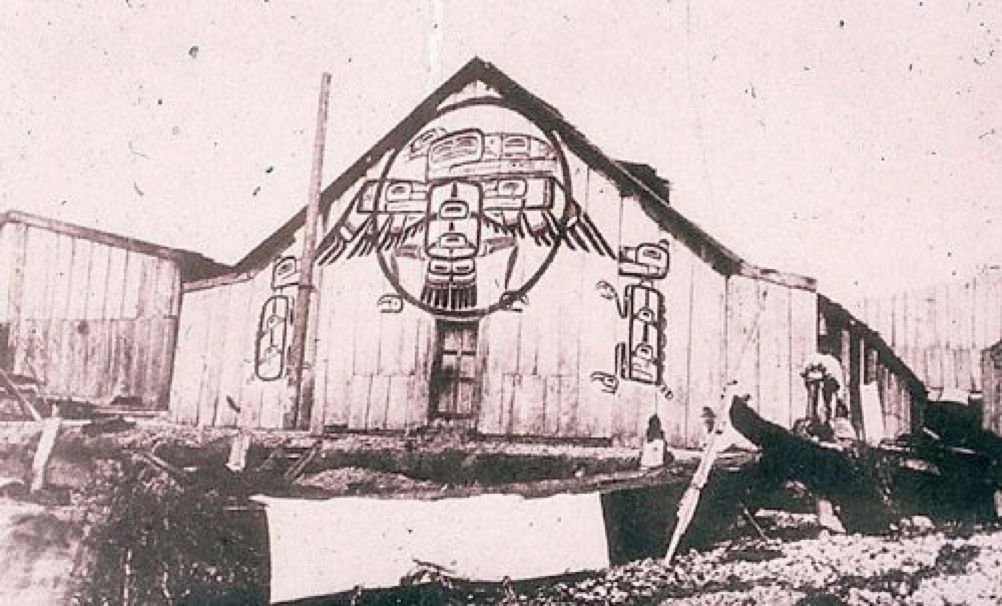
101: Northwest Coast, Historic, Kwakiutl
Name of the object: Kwakiutl painted chief’s house facade representing a thunderbird flanked by two bears
Cultural and functional significance — Represents the Kwakiutl’s belief in supernaturals like the ubiquitous thunderbird and illustrates the common artistic practice among the Kwakiutl, where painted house facades served to represent one’s clan affiliation and status
Kwakiutl art style: Dramatic and expressive old lines, x-ray vision (showcasing the internal organs of the animals), use of negative space, multiple profiles and eyes (joint marks)
Cedar plank houses -> NWC (emphasized use of wood)
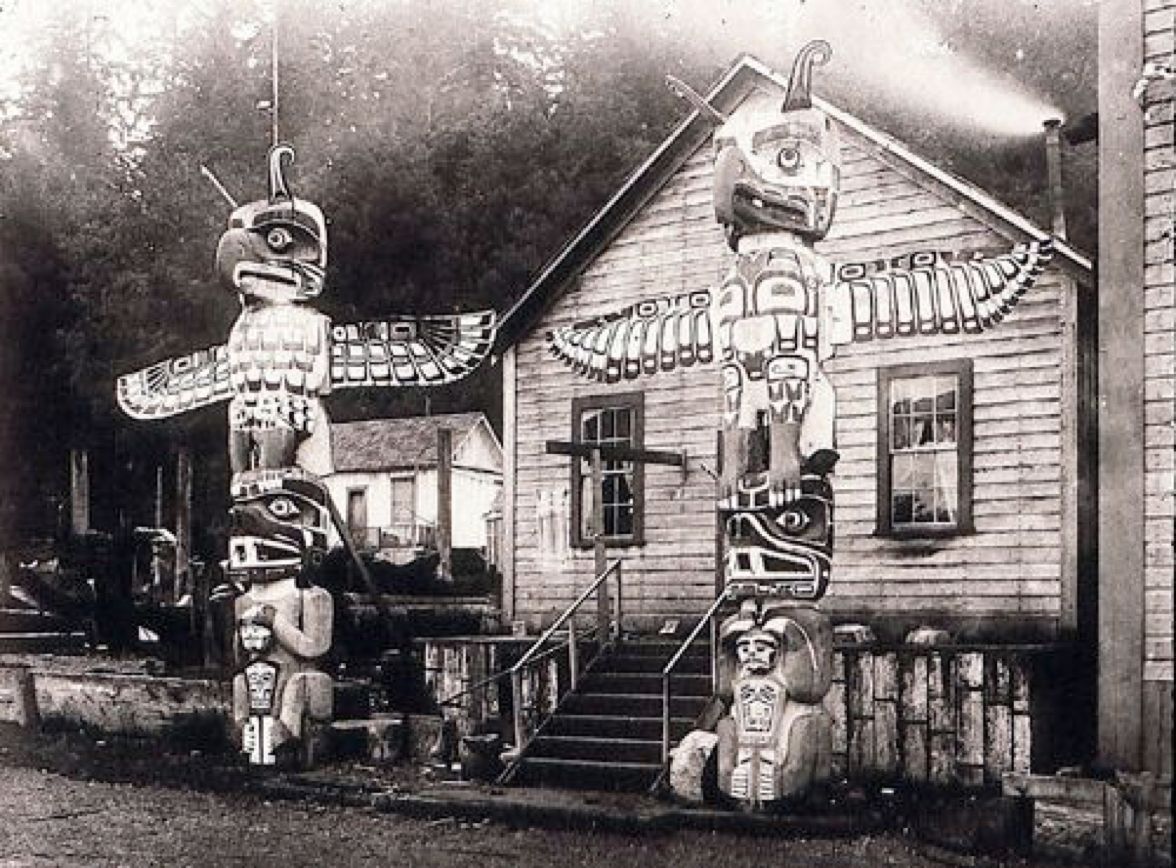
Northwest Coast, Historic, Kwakiutl
What is it? — Kwakiutl memorial poles with thunderbird and grizzly bear totemic emblems (grizzly beat is protecting an ancestor with a copper on his chest)
Functional and cultural significance — Represents the Kwakiutl’s belief in and homage to supernaturals like the thunderbird, their use of memorial totem poles to illustrate clan affiliation, and deep carving, added parts , ornate painting traditional to their art style
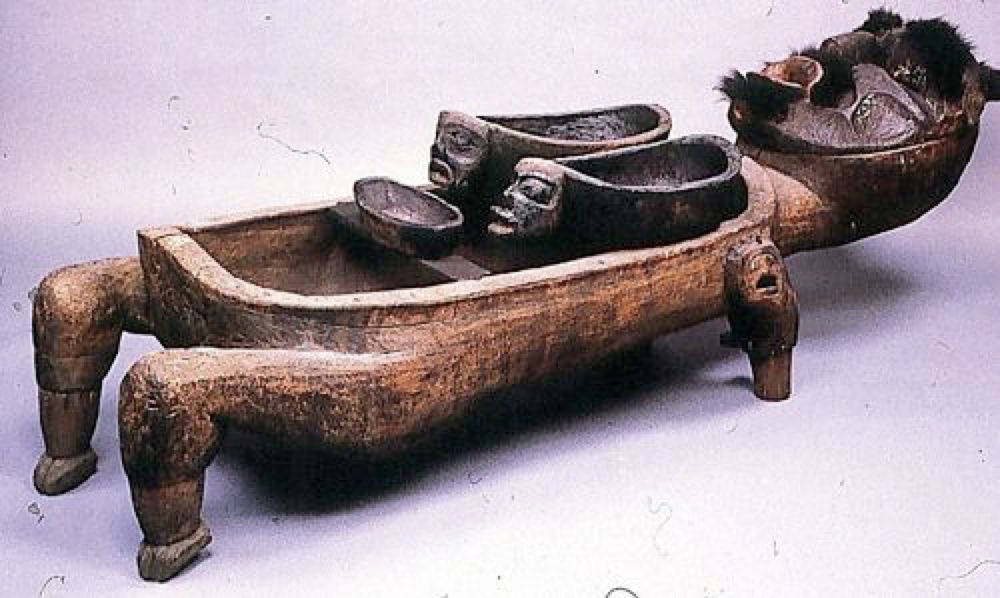
109: Northwest Coast, Historic, Kwakiutl
What is it? — Kwakiutl feast dish in the shape of the cannibal woman Tsonokwa, featuring multiple anthropomorphic dishes, bushy hair, etc
Functional and cultural significance — Illustrates the cannibal society within Kwakiutl culture, which represents the wild, animalistic side of people, versus the gift-giving society (served the purpose of entertainment and learning social norms)
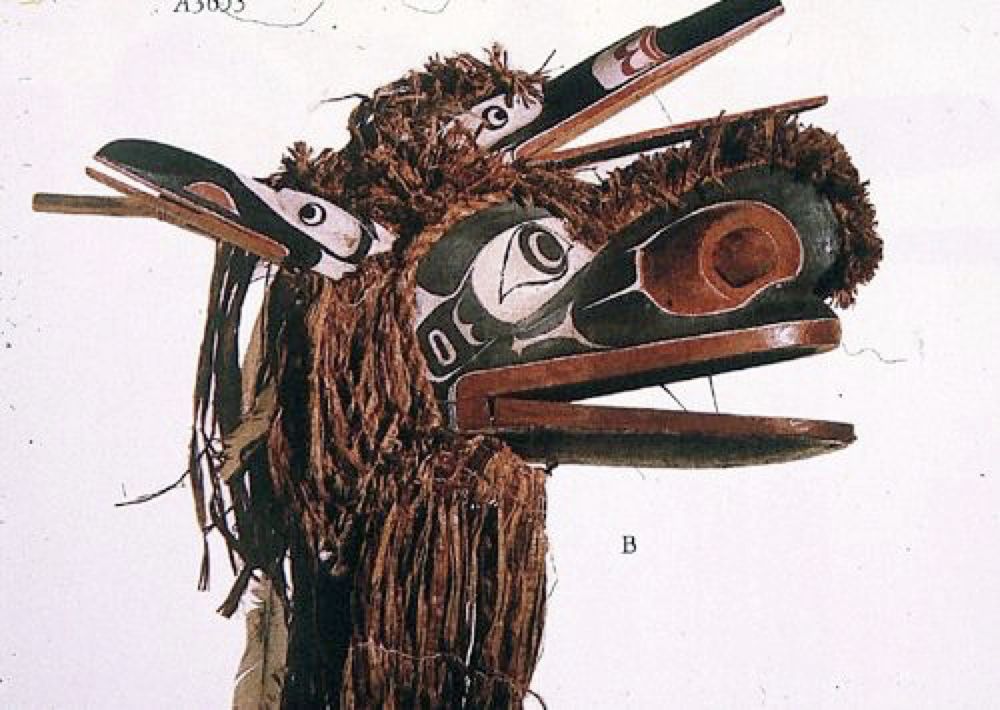
113: Northwest Coast, Historic, Kwakiutl
What is it? — Kwakiutl multiple-headed cannibal spirit mask
Functional and cultural significance — Illustrates a supernatural bird of the cannibal society of Kwakiutl culture, featuring multiple heads and jaws that can open and close, that can crush people’s skulls and eat their brains
Kwakiutl details: Use of bold red and black, representation of multiple heads (complex), addition of rope-like hair, negative space, active lines
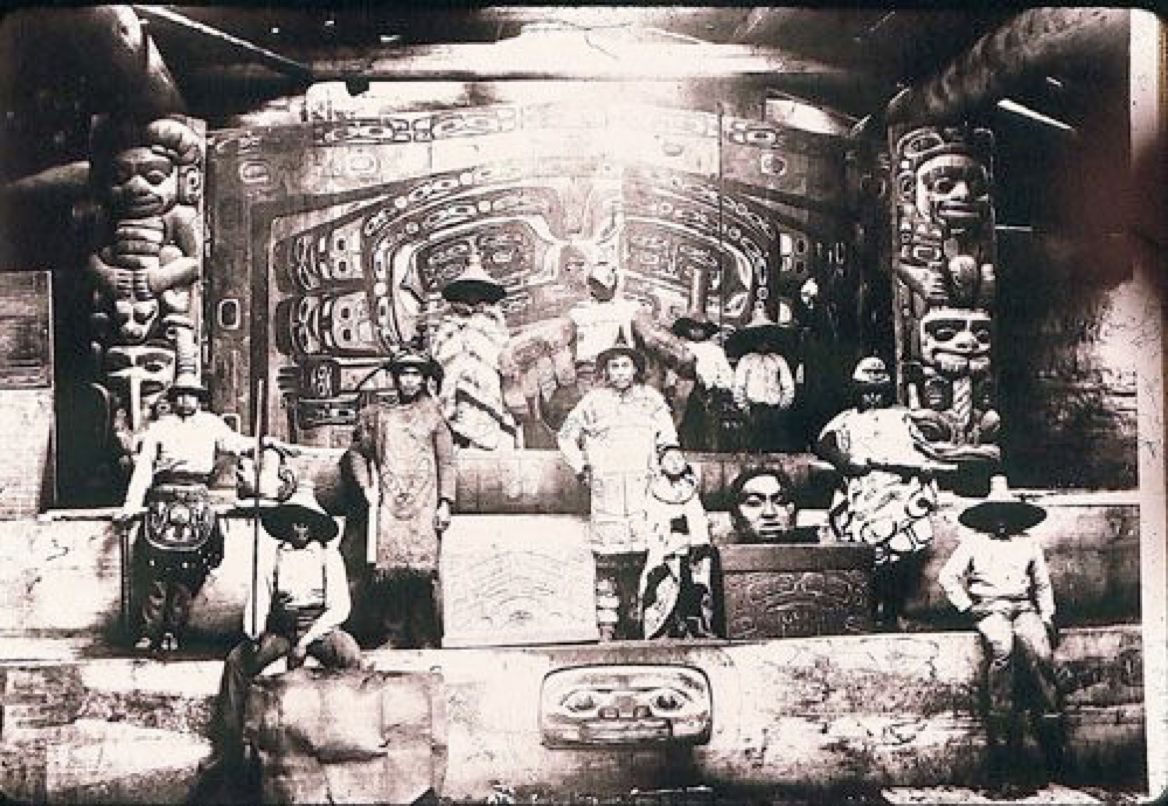
15: Northwest Coast, Historic, Tlingit
What is it? — Winter & Pond photo of the interior of a Tlingit chief’s house, “‘whale house’ interior”
Comment on its cultural significance — This photograph of the inside of a Tlingit chief’s house is loaded and extravagant with cultural motifs. Two totem-like poles stand as support beams in the back, deeply carved in the shape of anthropomorphic animals (hybrid figures). The back wall made up of planks is also carved and painted in the Tlingit’s signature 2D style, illustrating a complex composition of a totemic animal spirit made up of secondary eyes, hands with eyes, etc.
Carved kerf box, man with hat lined with potlatch rings
Tlingit: Carving INSIDE the house versus Haida: Carving OUTSIDE the house
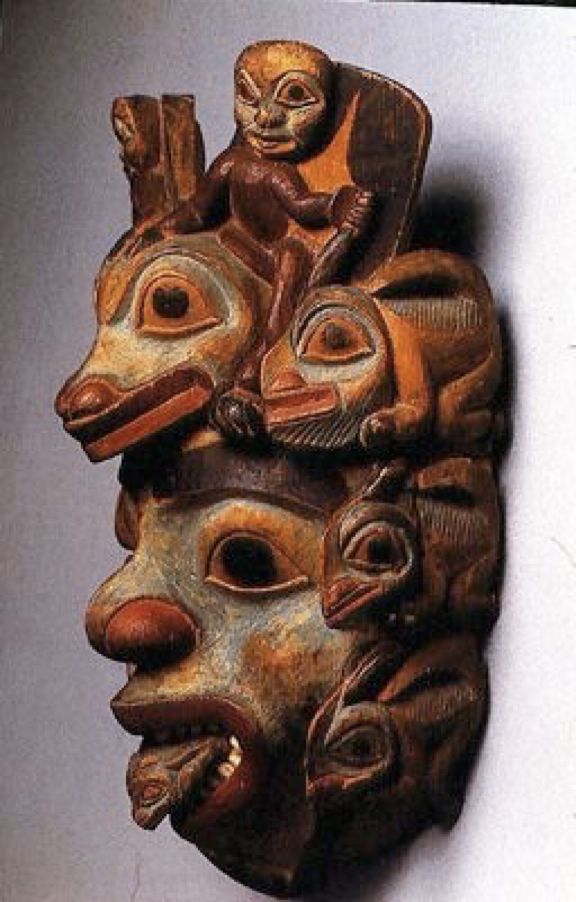
Northwest Coast, Historic, Tlingit
What is it? — Tlingit Shaman’s helping spirit mask
An extravagant wooden mask of an anthropomorphic face with helping spirits of different animals surrounding him, with a frog substituting his tongue and a wolf, otters and humanoid figures lining the top and sides of their face
Functional and cultural significance — Shamanism was a critical aspect of Tlingit society, and helping spirits were a major part in the process of someone’s journey to becoming a shaman
Blue grayish tint common of the Tlingit
4 modalities of Tlingit shamanistic masks: masks with multiple creatures on it + multiple masks each representing a different helping spirit (toolkit with 4-6 masks) + oyster-catcher rattle + bone amulet
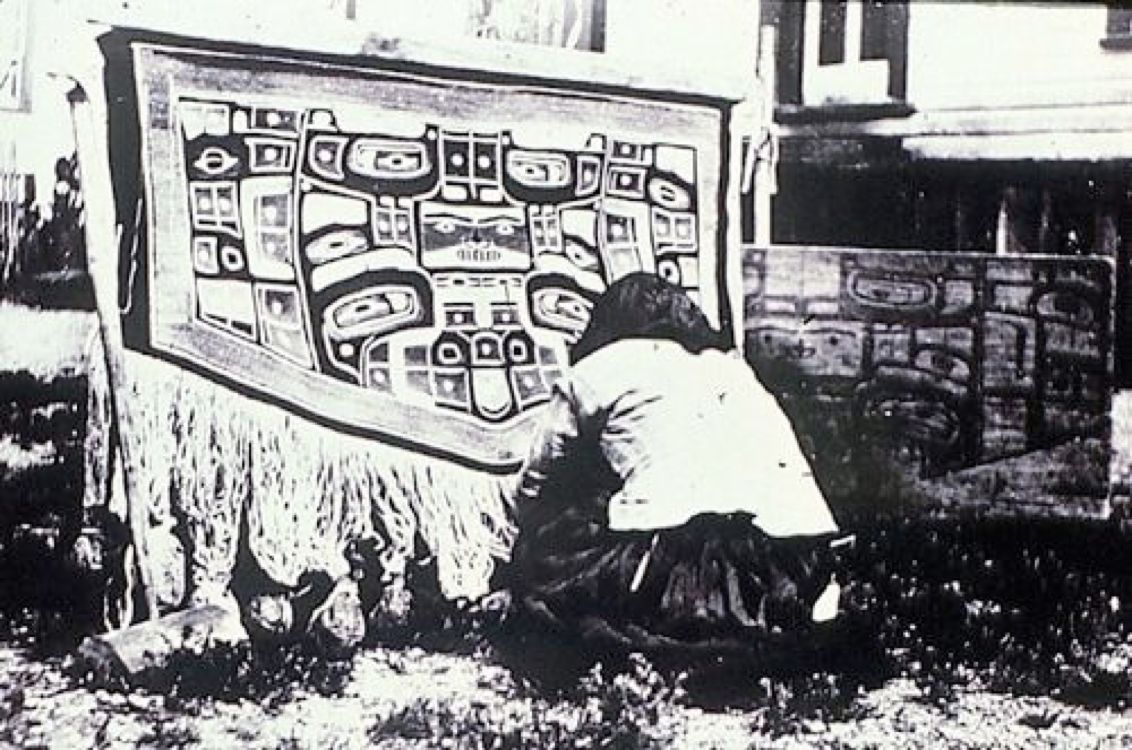
Northwest Coast, Historic, Tlingit
What is it? — Photo of a Tlingit women weaving a Chilkat blanket from a pattern board
Functional and cultural significance — Tlingit Chilkat blankets were a prestige item that was traded throughout the Northwest Coast, featuring a markedly flat composition and totemic animals
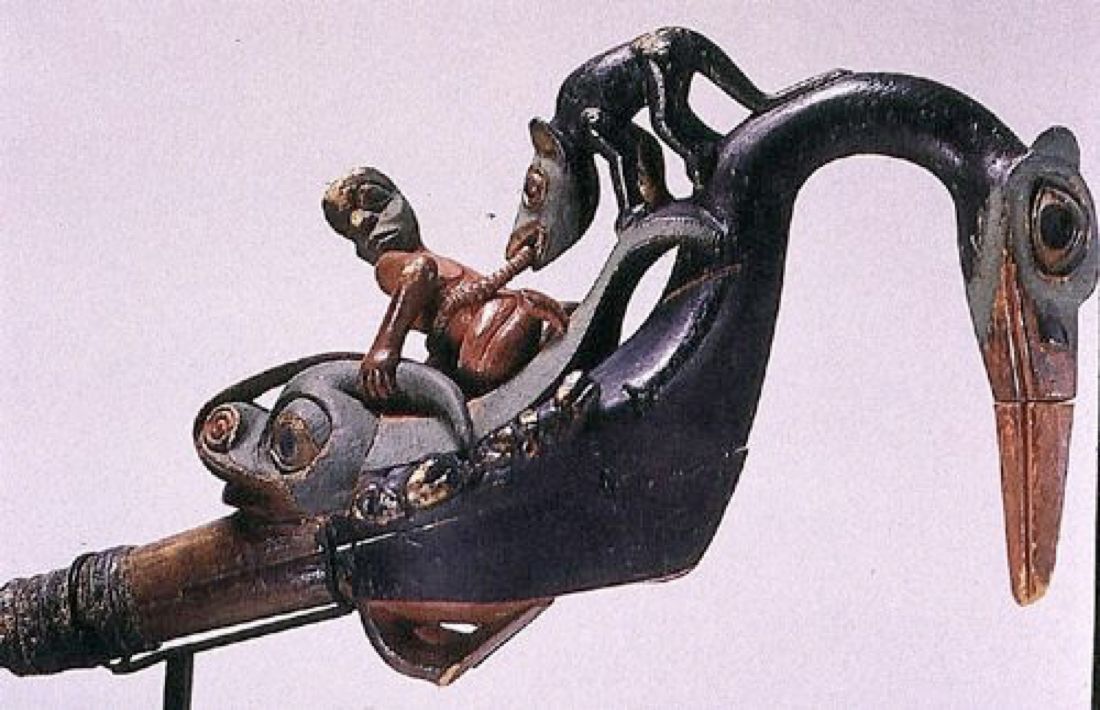
136: Northwest Coast, Historic, Tlingit
What is it? — A Tlingit shaman’s oyster-catcher rattle with helping spirits on back
Functional and cultural significance — Shamans were equipped with rattles in the shape of the oyster-catcher (common in the Northwest Coast) and that represented their helping spirits, with this particular rattle showing a mountain goat carrying a witch (or another helper) and another creature, decorated with octopus suckers
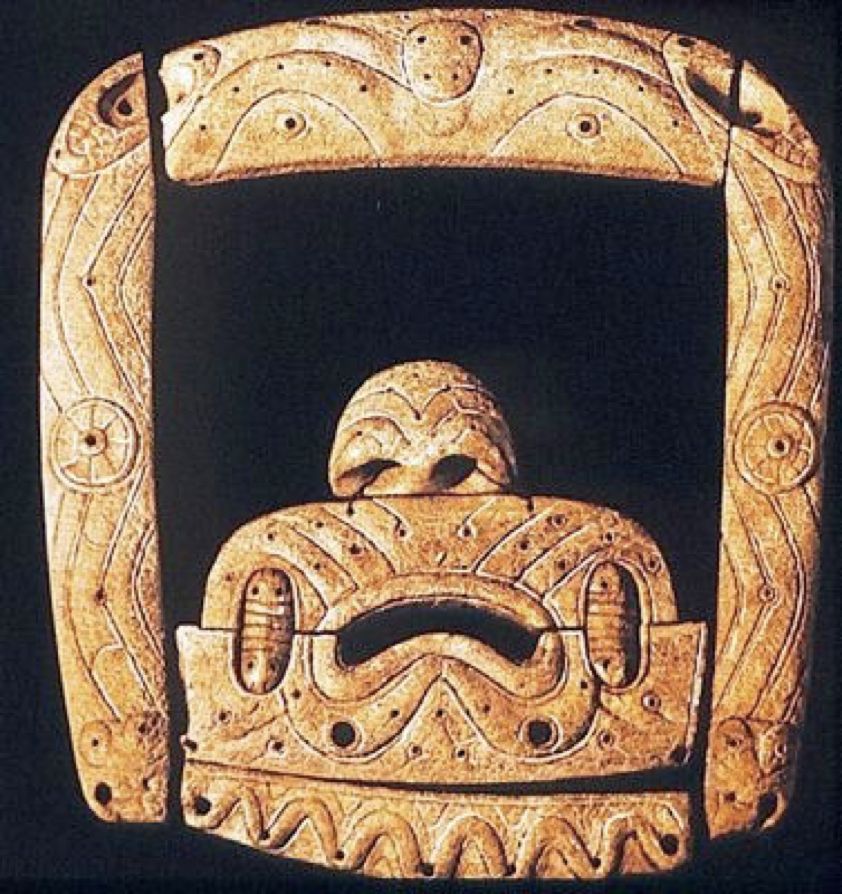
148: Alaska, Prehistoric, Ipiutak
What is it? — Ivory burial/death ceremony mask, possibly for a shaman
Functional and cultural significance — representation of the person who died for the purpose of a burial/death ceremony, a composite of pieces featuring details such as two grubs, a lip plug, linear patterns referencing tattoos, and a seal looking up
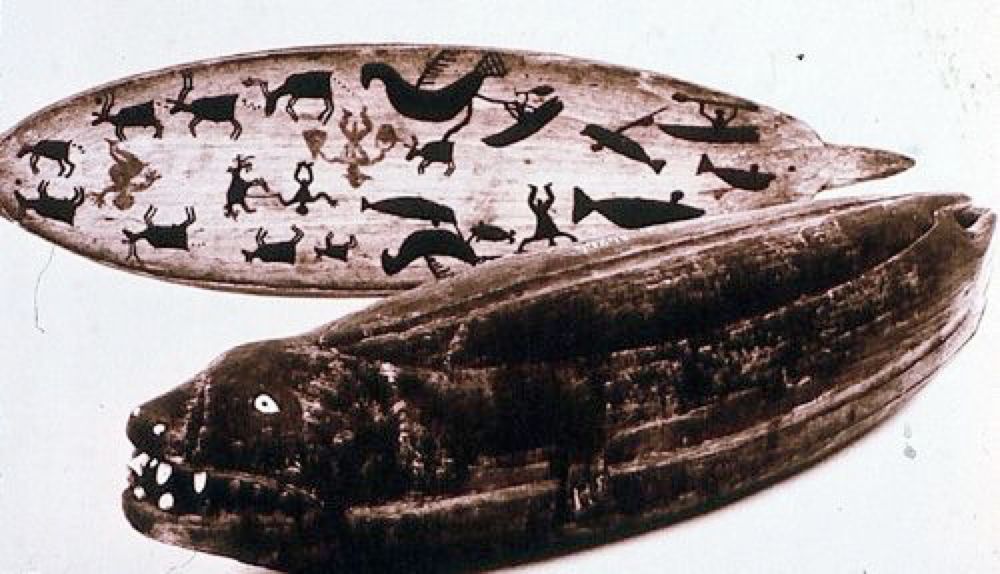
49: Southwest Alaska, Historic, Yupik Eskimo
What is it? — a wooden hunting-gear box carved into the shape of a seal, with a painted interior
Comment on the cultural significance — In addition to its shape, which refers to a major food source of the Yupik (the seal), the painted scene itself has significant meaning in regards to Yupik everyday life, reproduction, and mythology. The simplified representation of the supernatural thunderbird picking up caribou and whales, Yupik hunters harpooning whales for food, etc.
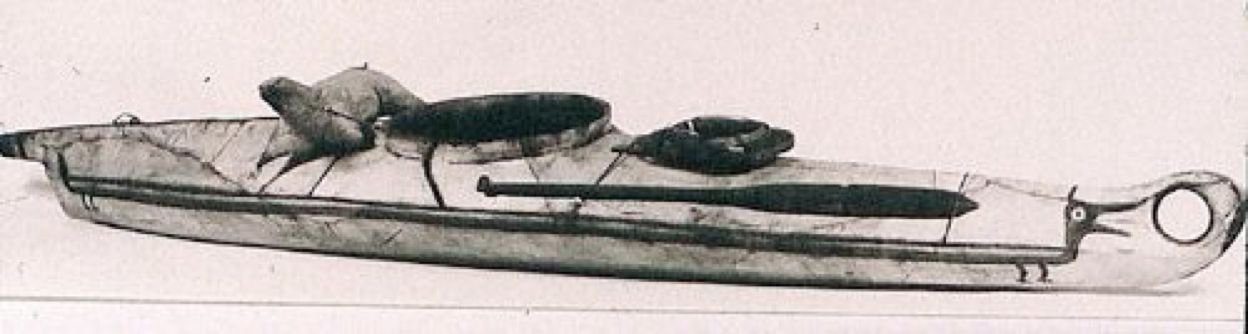
151: Southwest Alaska, Historic, Yupik Eskimo
What is it? — An animal skin kayak painted with a mythical monster image, alongside a blown-up seal, paddle, and rope
Functional and cultural significance — Kayak used for hunting but painted image of an extremely long four-legged creature likely a means of placating this dangerous creature who they believed caused tsunamis
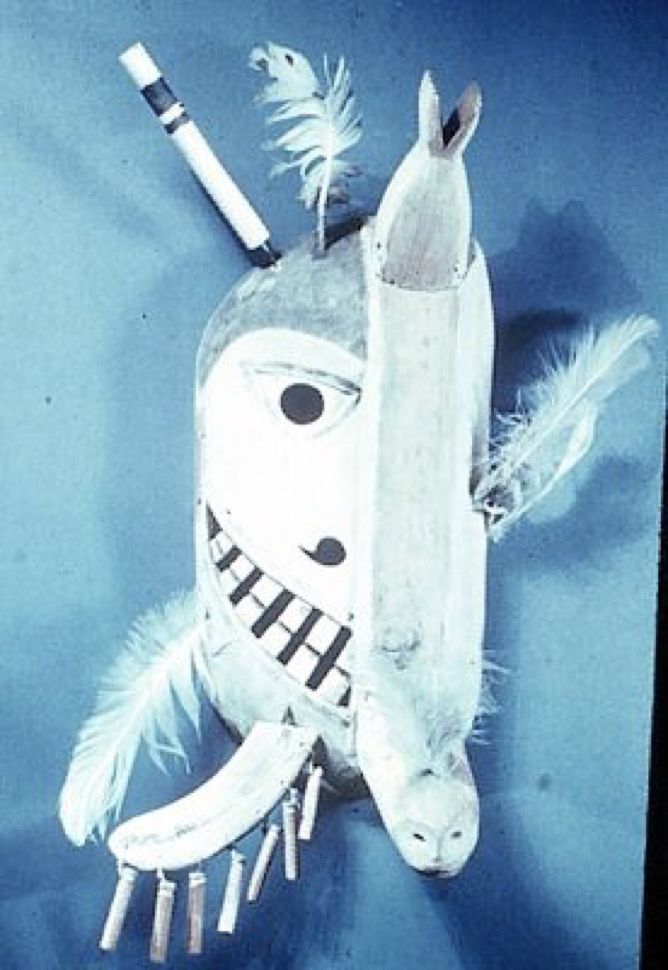
Southwest Alaska, Historic, Yupik Eskimo
What is it? — Mask of a seal spirit revealing its inua (human interior)
Functional and cultural significance — Reveals their mythology, which believed animals to have a human interior + represents an animal that they hunt, which they may be paying homage to in ceremony
Shaman masks: “Uglies” — heavily distorted, objects jutting out, eyes in multiple places
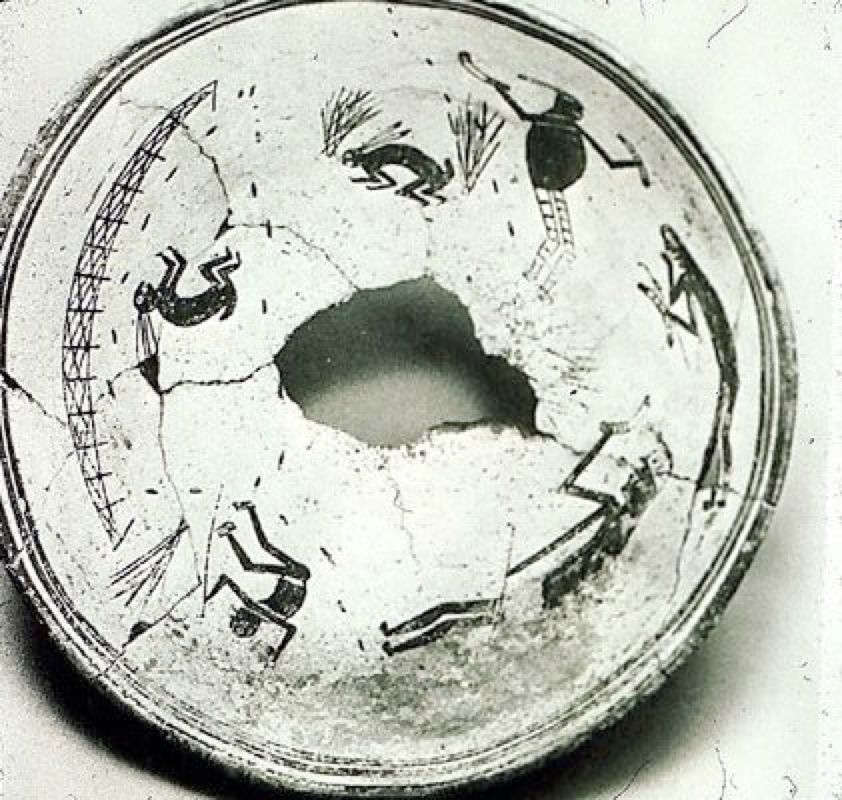
Southwest Coast, Prehistoric, Mogollon/Mimbres
What is it? — Ceramic burial bowl with painted rabbit hunt scene, with four human figures working to trap two rabbits into a net
Comment on its cultural significance — functioned as a burial bowl, where libations would be poured through the punctured hole in the middle + the Mimbres like to paint scenes relevant to their lives on these bowls, such as hunting rabbits for food
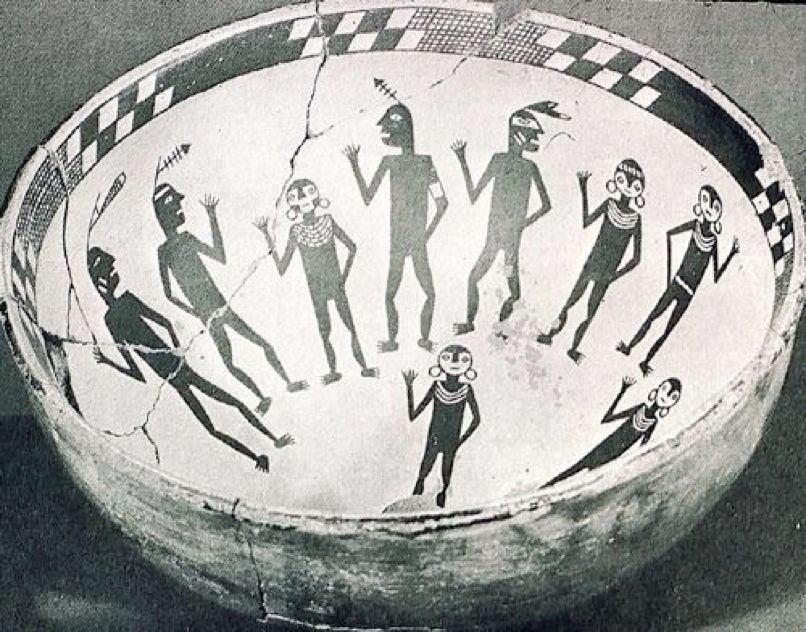
Southwest, Prehistoric, Mimbres
What is it? — Mogollon painted bowl of men and women in some ritual scene
Functional and cultural significance — The bowl represents a ceremony with a collection of both men and women, although the exact meaning of the ceremony is unclear
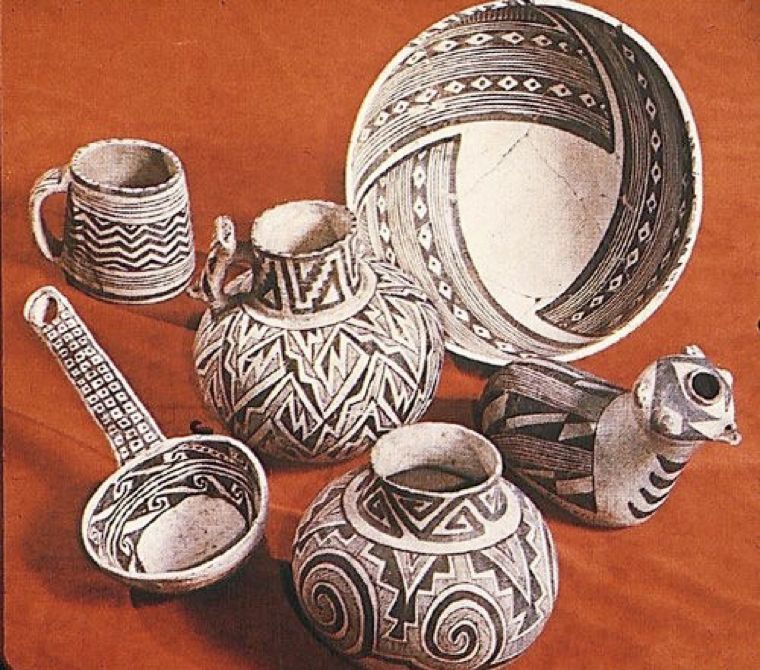
44: Southwest, Prehistoric, Anasazi
What is it? — Abstract, geometric patterned black-and-white ceramics
Functional and cultural significance — abstract patterns were central to Anasazi artistic tradition
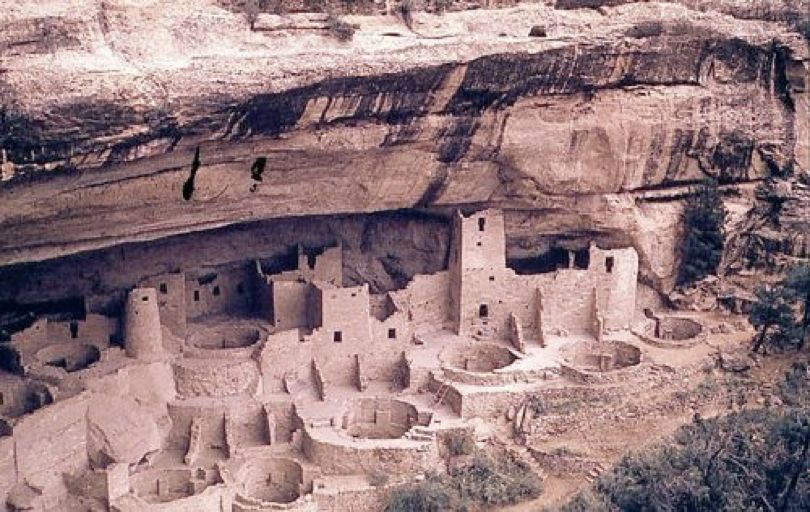
181: Southwest, Prehistoric, Anasazi (Mesa Verde)
What is it? — Anasazi cliff dwellings and underground kivas at Mesa Verde
Functional and cultural significance — The Anasazi in the Mesa Verde opted to build their settlements in cliff overhangs to guard against other tribes and the weather, and the underground kivas represented throughout served as spiritual spaces
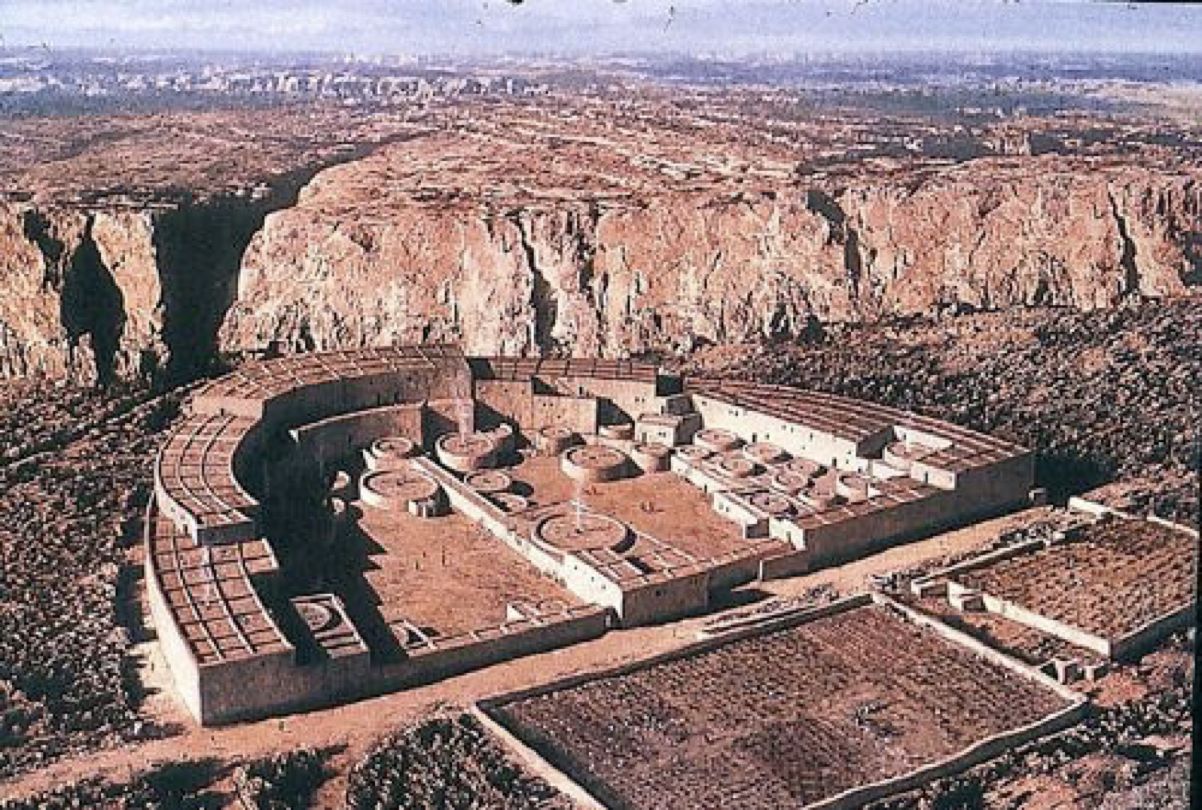
182: Southwest, Prehistoric, Anasazi (Chaco Canyon)
What is it? — Reconstructed site showing large fortified complex with dwellings and kivas at Chaco Canyon
Functional and cultural significance — Illustrates how the Anasazi of Chaco Canyon opted for building high walls, gates, and vantage points for protection + created kivas as religious spaces, with painted walls
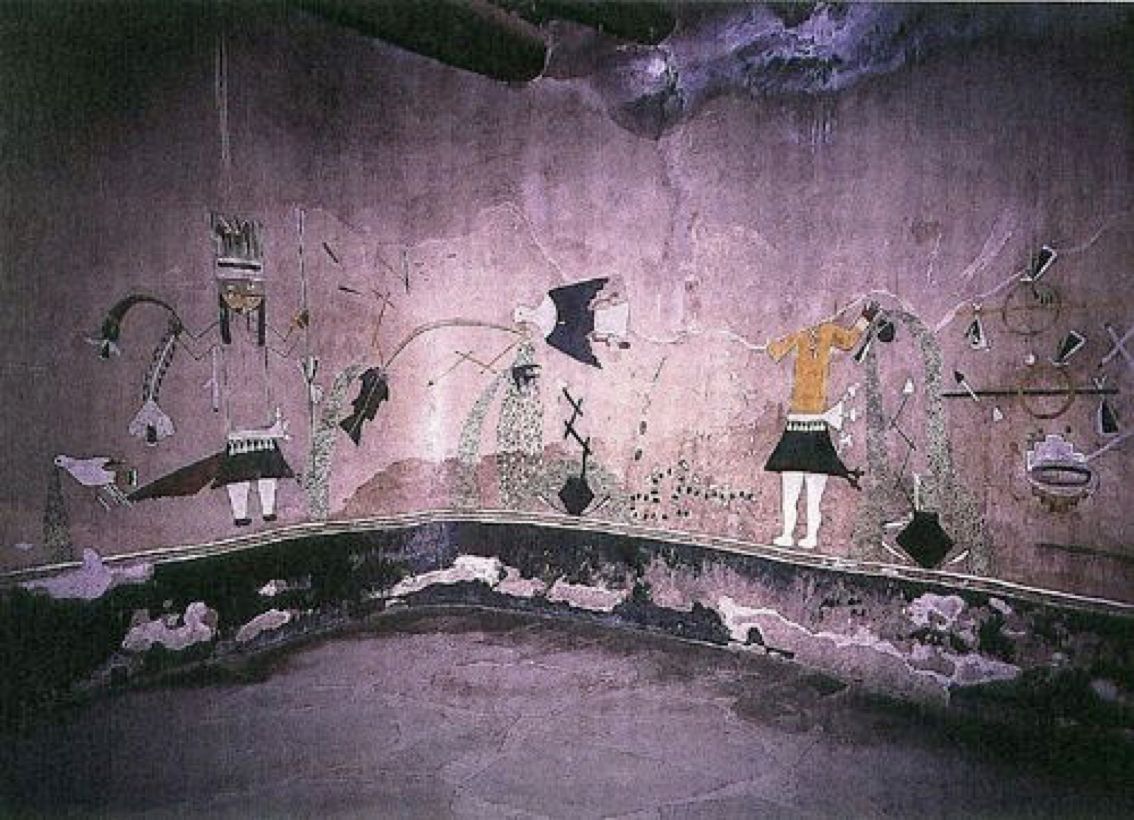
189: Southwest, Prehistoric, Anasazi
What is it? — Anasazi painted kiva images of rain-making rites from Kuaua, New Mexico, illustrating a kachina deity on the left, animals like an eagle and fish, rain, lightning, and rainbows
Functional and cultural significance — These images allude to important themes of fertility of the land, the germination of seeds, and a bountiful harvest, which was important for an agricultural society like the Anasazi
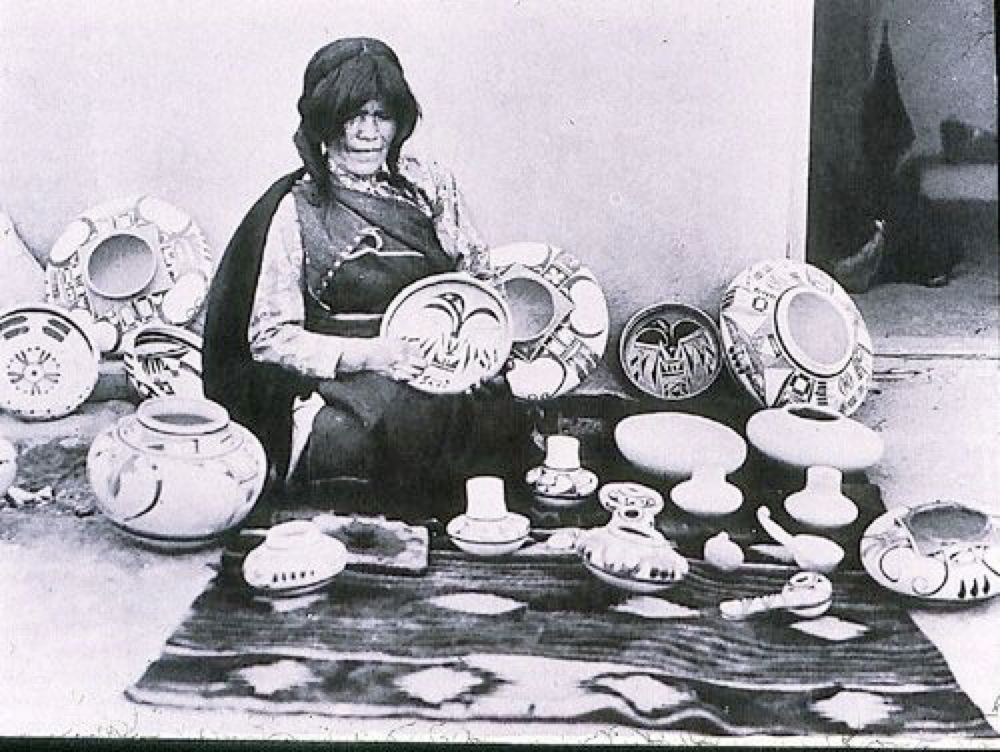
Southwest, Historic, Hopi
What is it? — Photo of Nampeyo (Hopi/Tewa) with pots she crafted herself, taking on the prehistoric Sikyatki style
Functional and cultural significance — would sell these untraditional pots, which mimic prehistoric artistic traditions in the Southwest, along railroads
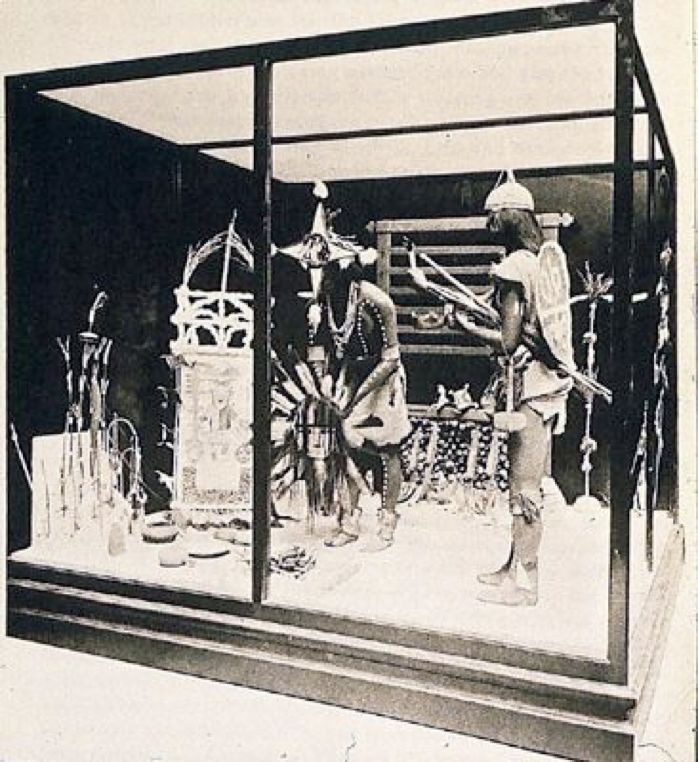
196: Southwest, Historic, Hopi
Hopi “winter solstice” (Soyala) kiva reconstruction with painted altar of kachina deity, star and war priests, and emblems of germination and fertility
Functional and cultural significance — represents how the Hopi would secretly construct and organize the spiritual space that was their underground kivas for ceremony, with items loaded with cultural meaning (decorated priests, painted altar of Kachina deity, etc)
Topographical and directional (things are placed in certain directions, a piece of the altar represents an uphill)
-Items collected by missionaries, anthropologists, etc. to reconstruct a kiva ceremony — 2-D representation as an atlar, dry paintings, offerings, star priest with feathered mask, warrior priest with bow and arrows
-All related to the idea that when you plant, you need certain kachinas with fertility and germination (over 300 deities worshipped overall, some might be worshipped in only certain clans)
-Was done in both secret in the kivas associated with specific clans and in procession above ground + kachina dolls, artists representing kachina deities in dolls, given to children as a means of education
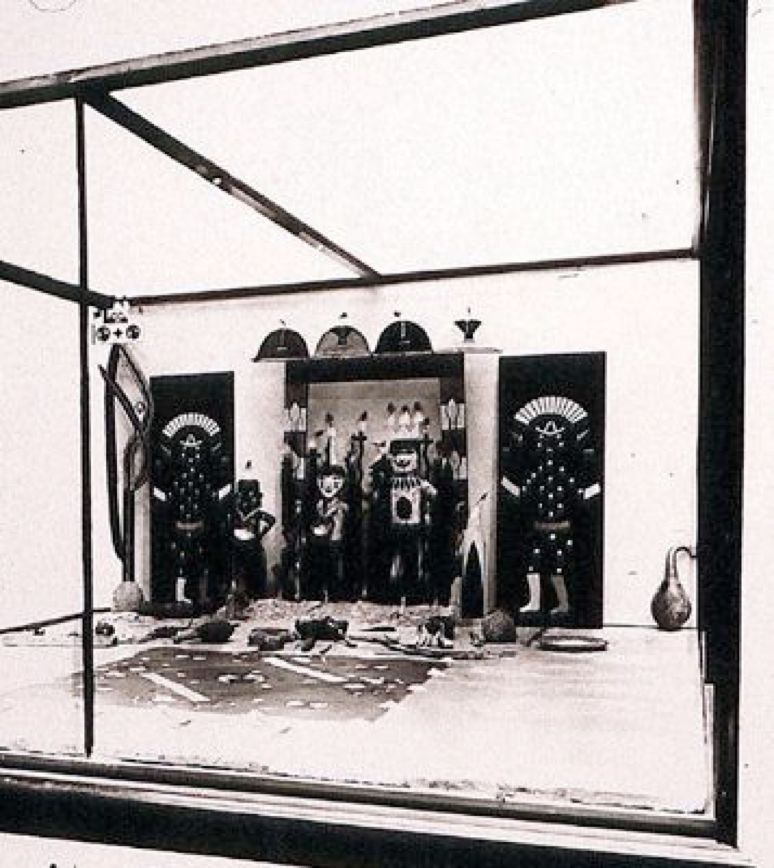
200: Southwest, Historic, Hopi
What is it? — A bean-dance (Powamu) kiva altar reconstruction from 1901 at Oraibi
Functional and cultural significance — represents the secret ceremonies that the Hopi would have within kivas, which featured a myriad of cultural objects — dry paintings, offerings on the floor, cloud motifs in different colors, painted kachina spirits
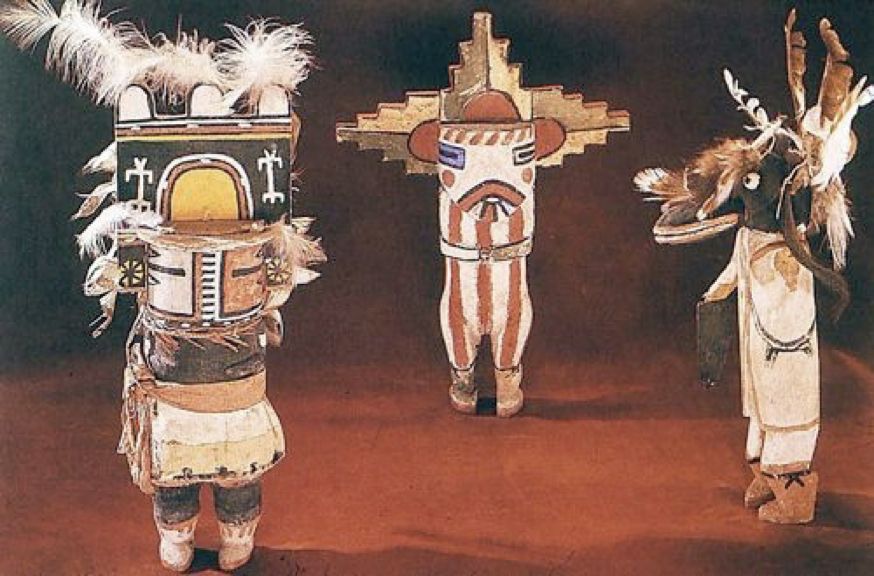
200: Southwest, Historic, Hopi
What is it? — 3 Hopi Kachina dolls of Sio Hemis (rainbow, cloud, star motifs) a corn maiden, and an ogre
Functional and cultural significance — the Hopi would craft Kachina dolls as a means of teaching young Hopi social norms and their Kachina belief system
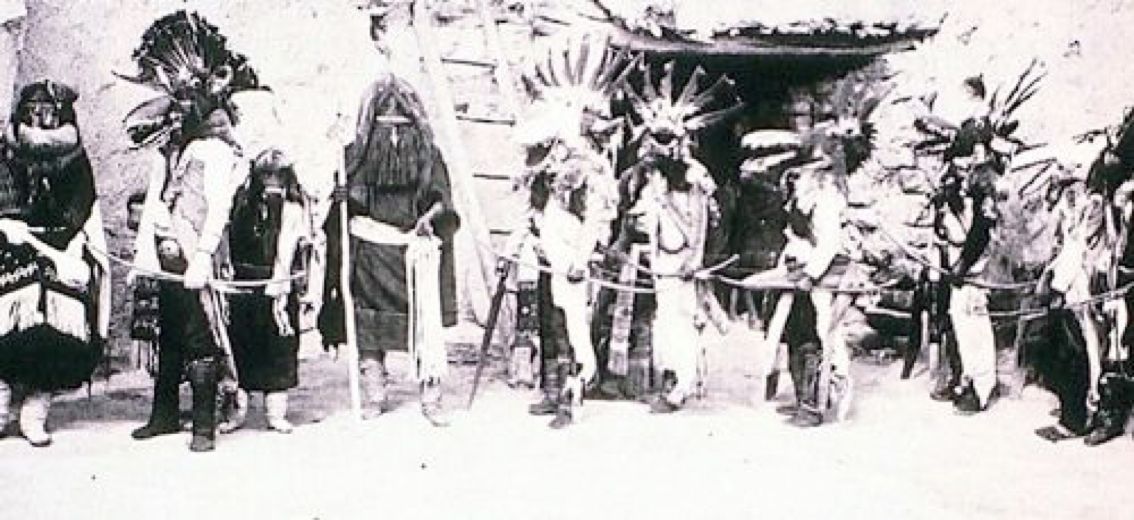
206: Southwest, Historic, Hopi
What is it? — Kachina masked dancers at Walpi (1893)
Functional and cultural significance — the Hopi would not only perform ceremony within kivas but also in the public sphere (masks of ogre, female, etc.)
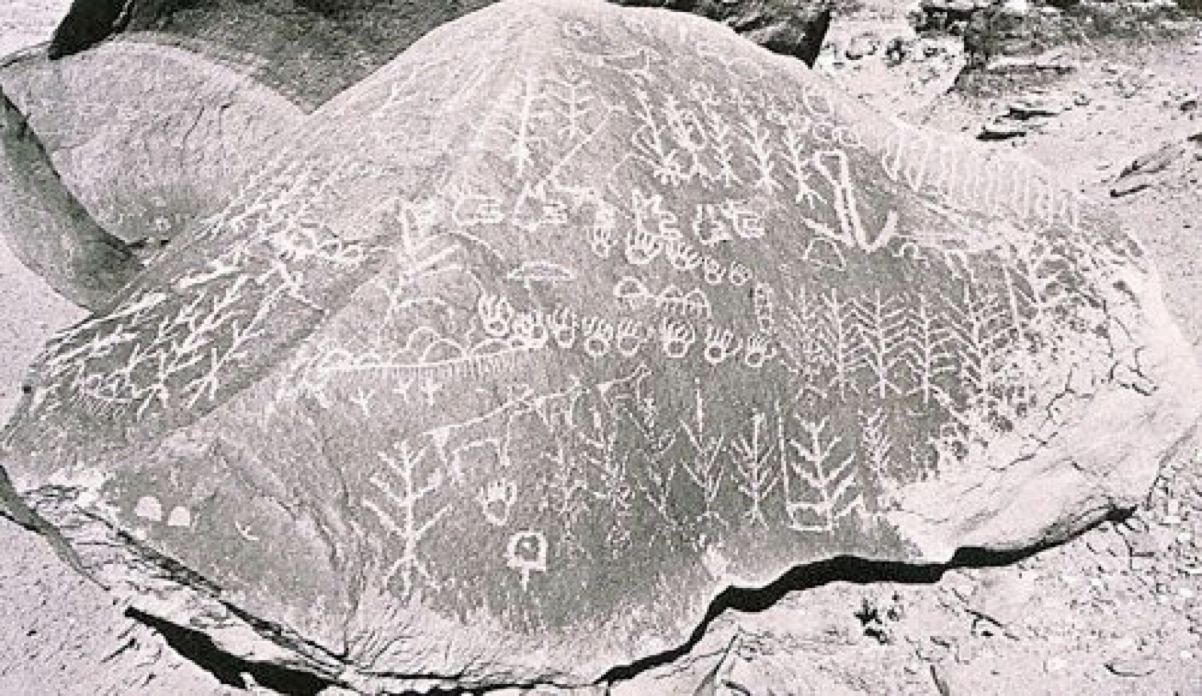
211: Southwest, Historic, Hopi
What is it? — Hopi clan-symbol petroglyphs at Willow Springs, Arizona, featuring animal paws, corn stalks, etc.
Functional and cultural significance — A visual record of an important ceremony where young boys must go on a special retreat to a place with salt, where they would make offerings and pray (a part of initiation rites)
![<p>]</p><p></p>](https://knowt-user-attachments.s3.amazonaws.com/d0dc11a1-1a05-4308-998f-1c43cc8bd140.jpg)
]
212: Southwest, Historic, Hopi
What is it? — Hopi painted ceramics pots, which become increasingly more figurative as time goes on (center pot actually represents a kachina spirit)
Functional and cultural significance — the Hopi would paint their pots increasingly with important cultural motifs (plants for fertility, kachinas for mythology)
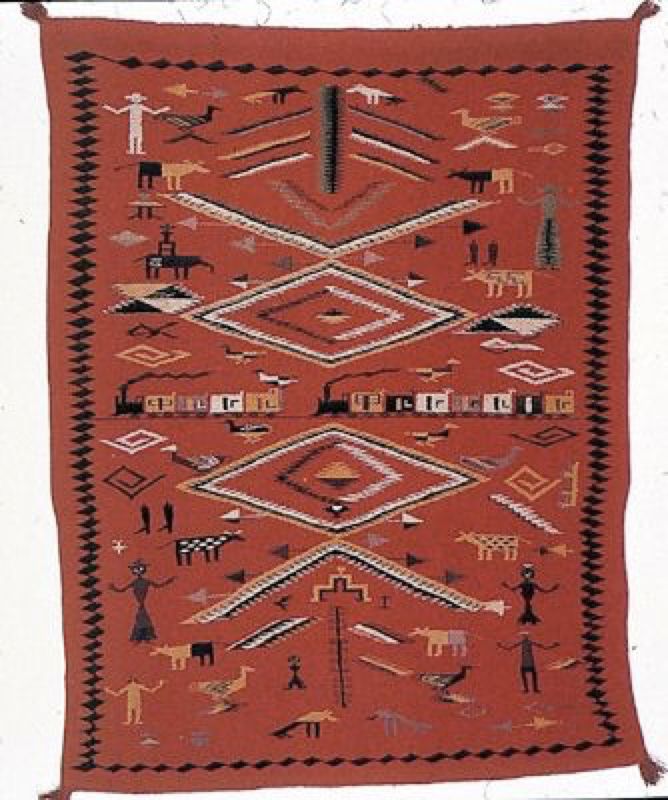
219: Southwest, Historic, Navajo
What is it? — Early pictorial-style blanket (1880), showing images of railroads, animals, humans, and other geometric shapes
Functional and cultural significance — representing images relevant to their lives (animals, railroads, etc.) into the weaving of blankets
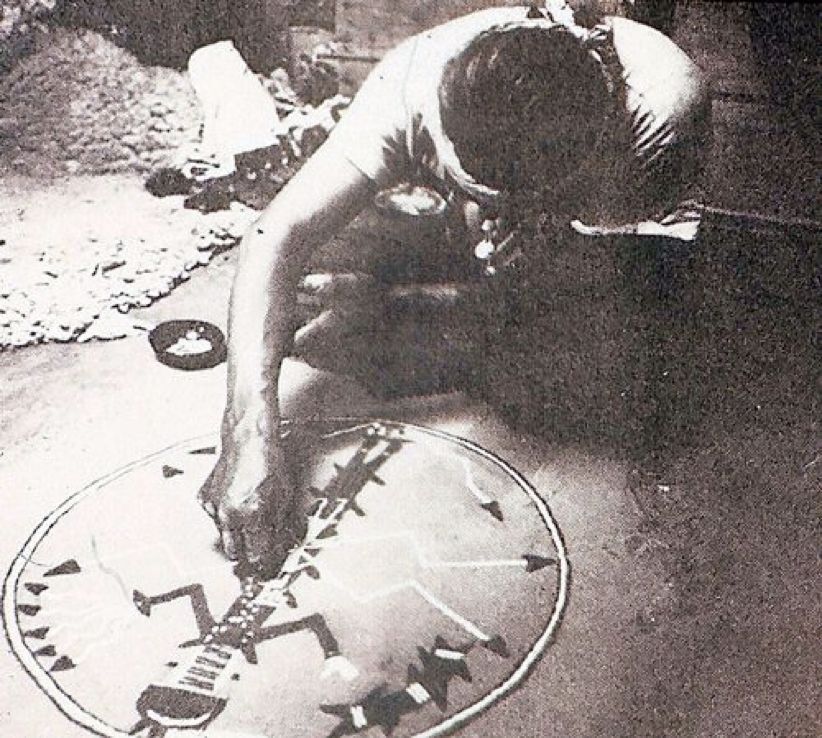
222: Southwest, Historic, Navajo
What is it? — Navajo dry painting of “slayer-of-the-enemy gods” that would be used to heal Navajo of specific illnesses
Functional and cultural significance — Would be an integral part of ritual specialist’s curing rituals
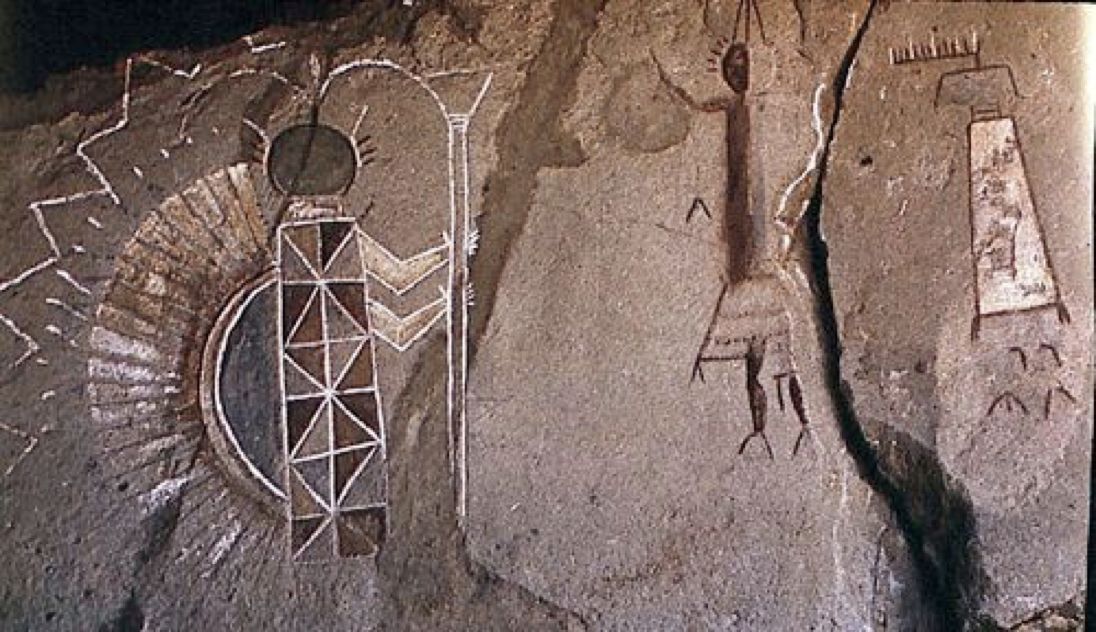
229: Southwest, Historic, Navajo
What is it? — Rock paintings of Navajo Yeis
Functional and cultural significance — the Navajo worshipped Yeis, representing them in their artwork
229: Plains, Protohistoric, Montana
What is it? — Rock petroglyph of battle scene with a horse, as a figure on foot throws a spear at the figure on the horse with his own spear
Functional and cultural significance — intertribal warfare was often illustrated, and once the horse was introduced, this militaristic, equestrian-esque imagery increased
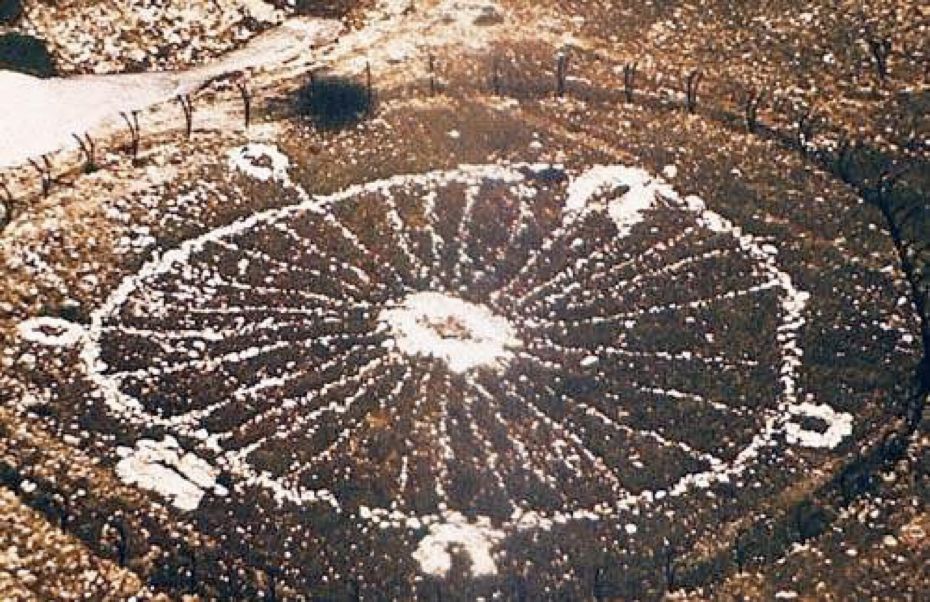
234: Plains, Prehistoric, Wyoming
What is it? — Medicine wheel associated with astronomical/medicinal rites
Functional and cultural significance — the sacred circle was a ubiquitous motif in the Great Plains, embodying their spirituality and emphasis on astronomical direction
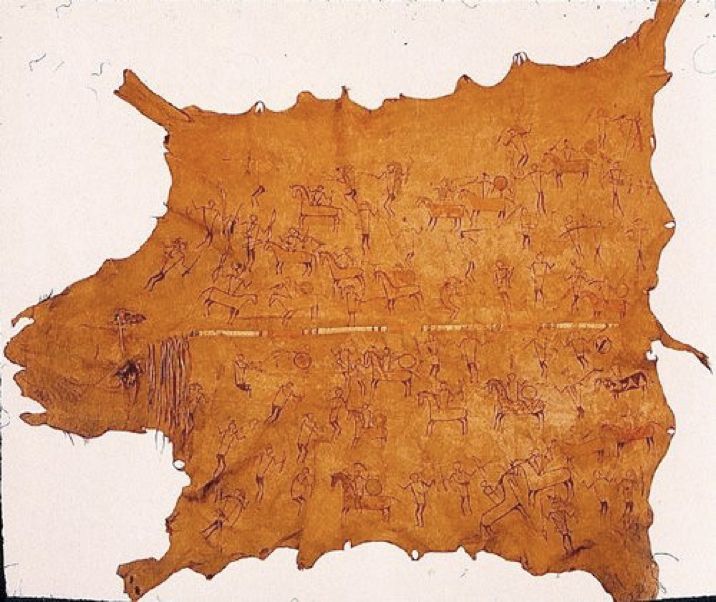
28: Plains, Historic, Mandan
What is it? — Mandan painted bison robe, depicting war exploits against other tribes such as the Sioux
Functional and cultural significance — represents how the Mandan would record scenes relevant to their lives by painting them on these biographical bison robes, especially intertribal war
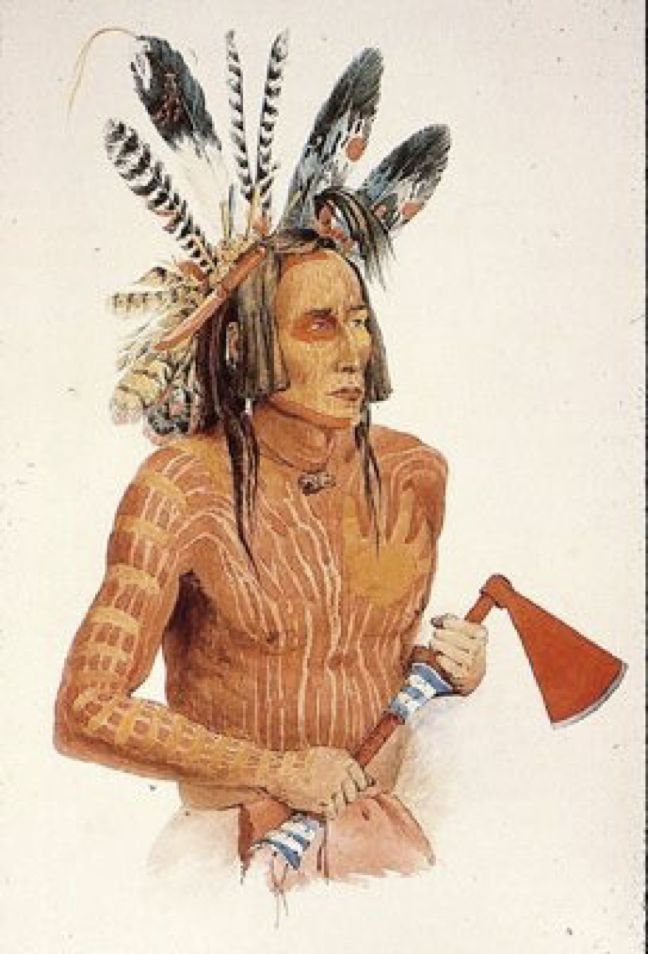
11: Plains, Historic, Mandan What is it? — Karl Bodmer watercolor portrait of Mandan Chief Mato-tope in his war outfit
Functional and cultural significance — his bodily dressing is loaded with cultural meaning *knife means he’s been cut by the enemy, handprint means he’s touched the enemy without dying, lines on his arm represents his kills
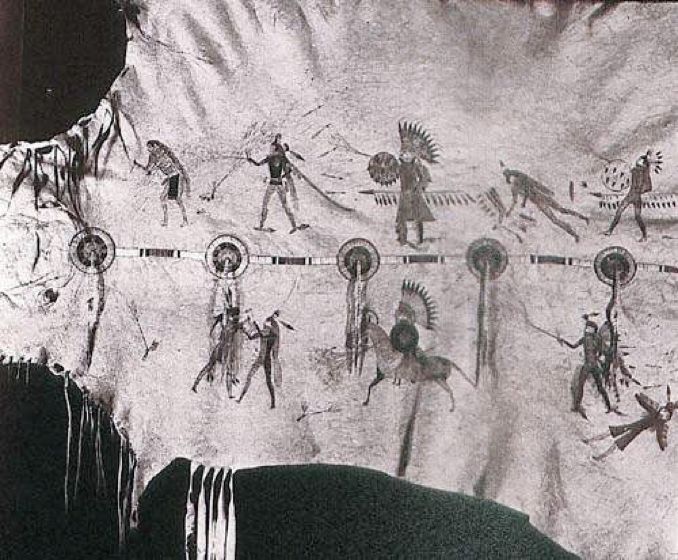
240: Plains, Historic, Mandan What is it? — Mandan Mato-tope’s own painted buffalo robe documenting his war exploits
Functional and cultural significance — the Mandan would create biographical robes, showcasing his own experience in warfare (including when he was sliced by a knife)
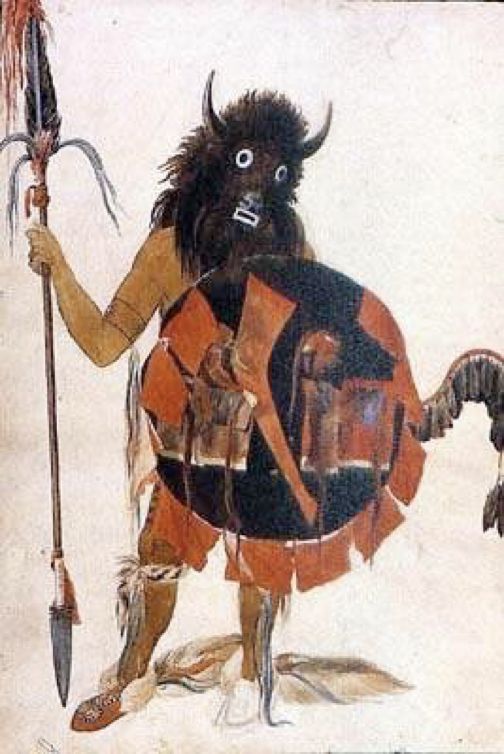
244: Plains, Historic, Mandan
What is it? — Watercolor painting by Karl Bodmer of Mandan Buffalo Bull warrior leader
Functional and cultural significance — illustrates war-related regalia of the Mandan, including a stylized war shield with a gunstock image and attachments referencing human scalps, buffalo head mask, and spear
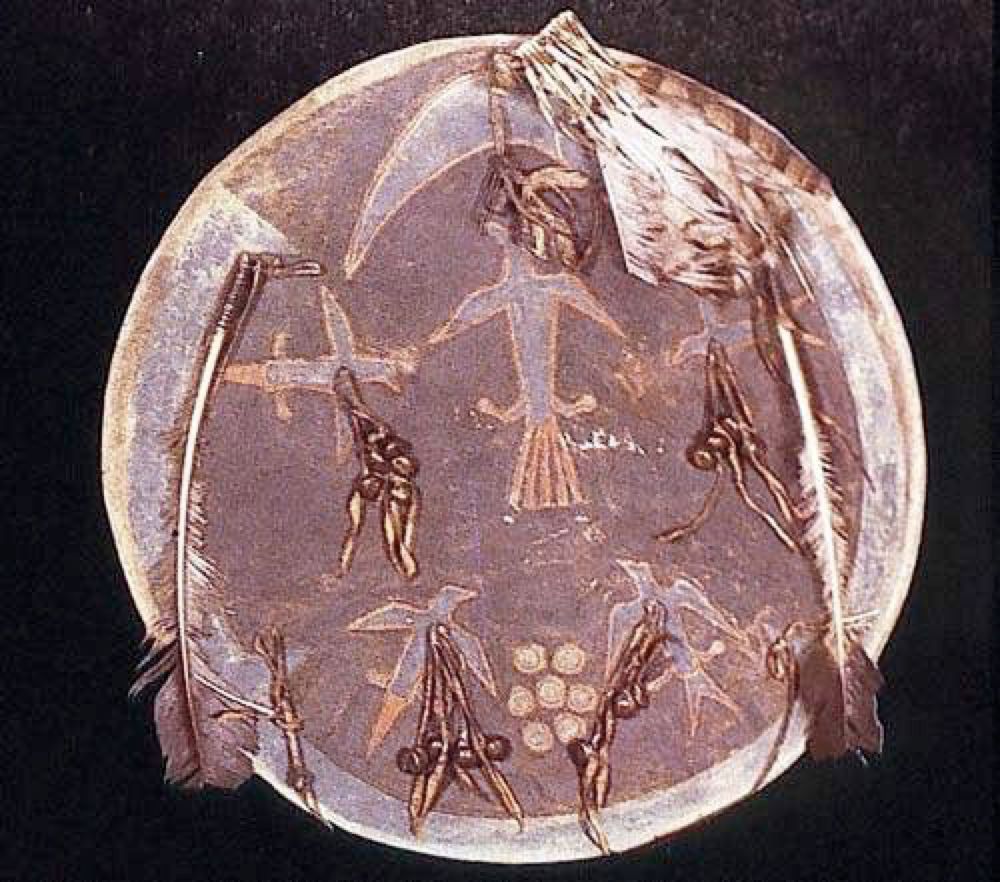
255: Plains, Historic, Sioux
What is it? — Sioux war shield taken by Custer in 1868
Functional and cultural significance — The Sioux, like other Plains tribes, would stylize their war shield with painted emblems of powerful animals and spirits, things likes feathers attached for additional protective power (each shield was unique as these images often came through the visions of warriors)
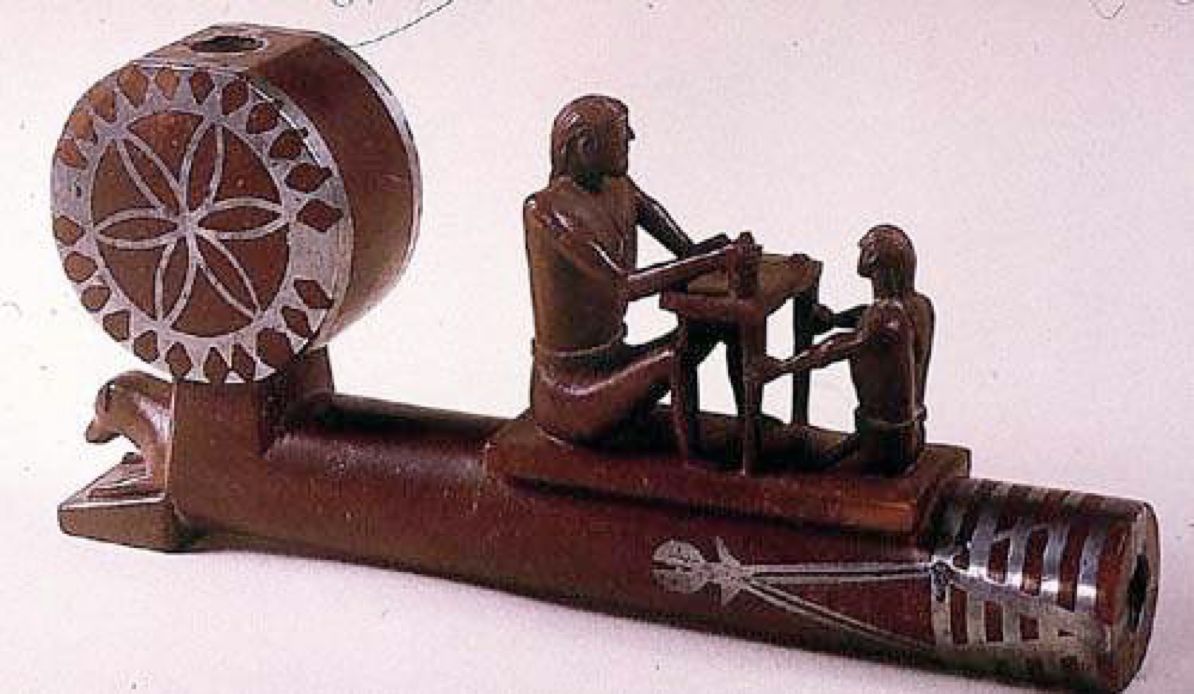
261: Plains, Historic, Sioux
What is it? — Catlinite pipe with chief offering liquor to follower on a steamboat
Functional and cultural significance — pipes were important in Sioux ritual practice, debate on who exactly is selling alcohol to this Indigenous person
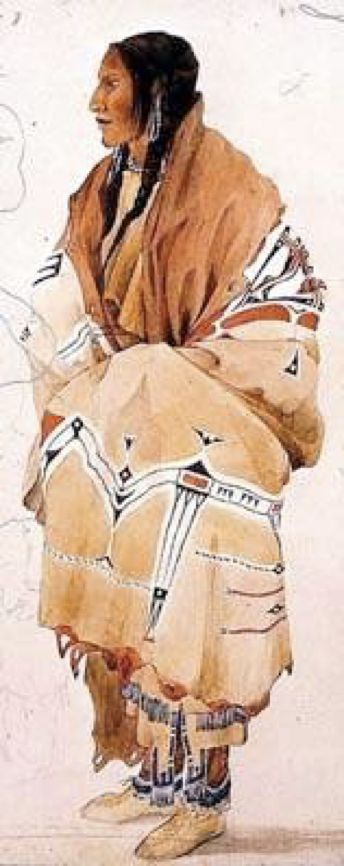
262: Plains, Historic, Sioux
What is it? — Karl Bodmer painting of woman wearing an ABSTRACT box-and-border blanket
Functional and cultural significance — the type of clothing worn was gendered, as women tended to wear blankets that leaned abstract and geometric
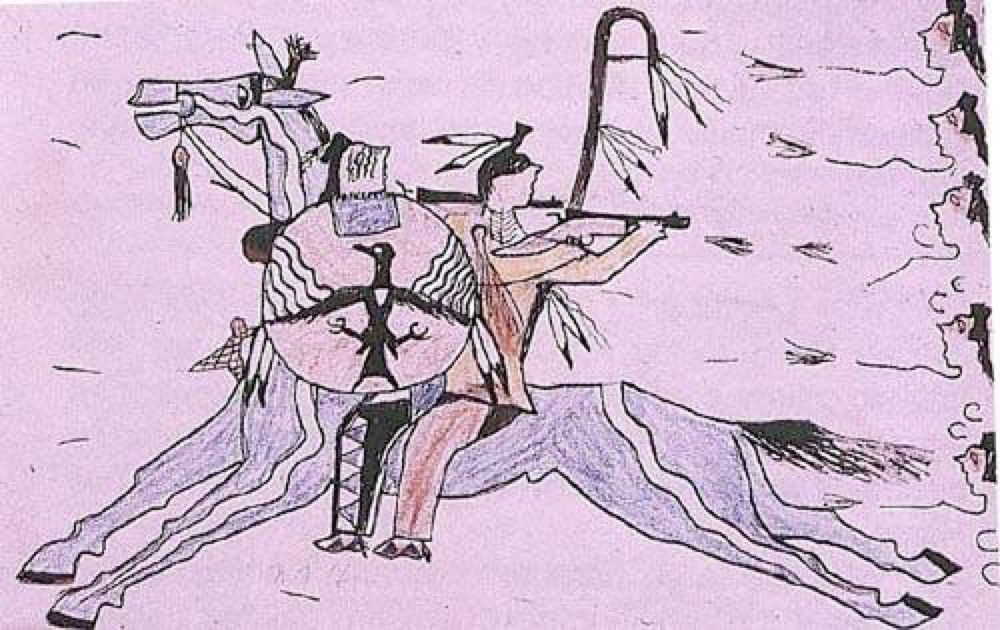
265: Plains, Historic, Sioux
What is it? — Ledger drawing by No Two Horns of himself on horseback with a war-shield in hand (drawn while he was imprisoned)
Functional and cultural significance — When imprisoned, Indigenous men were given ledgers to document their history (relatively recent art form of ledger drawings)
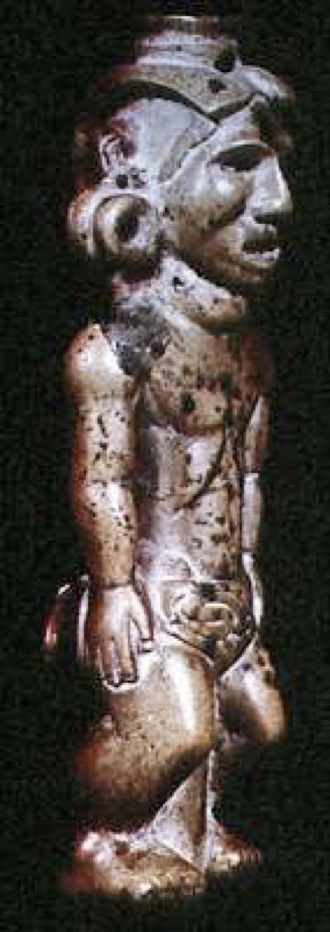
266: Southeast (Eastern Woodlands), Prehistoric, Adena
What is it? — Adena carved stone pipe in anthropomorphic form
Functional and cultural significance — found in burial site, smoking as an important part of ritual
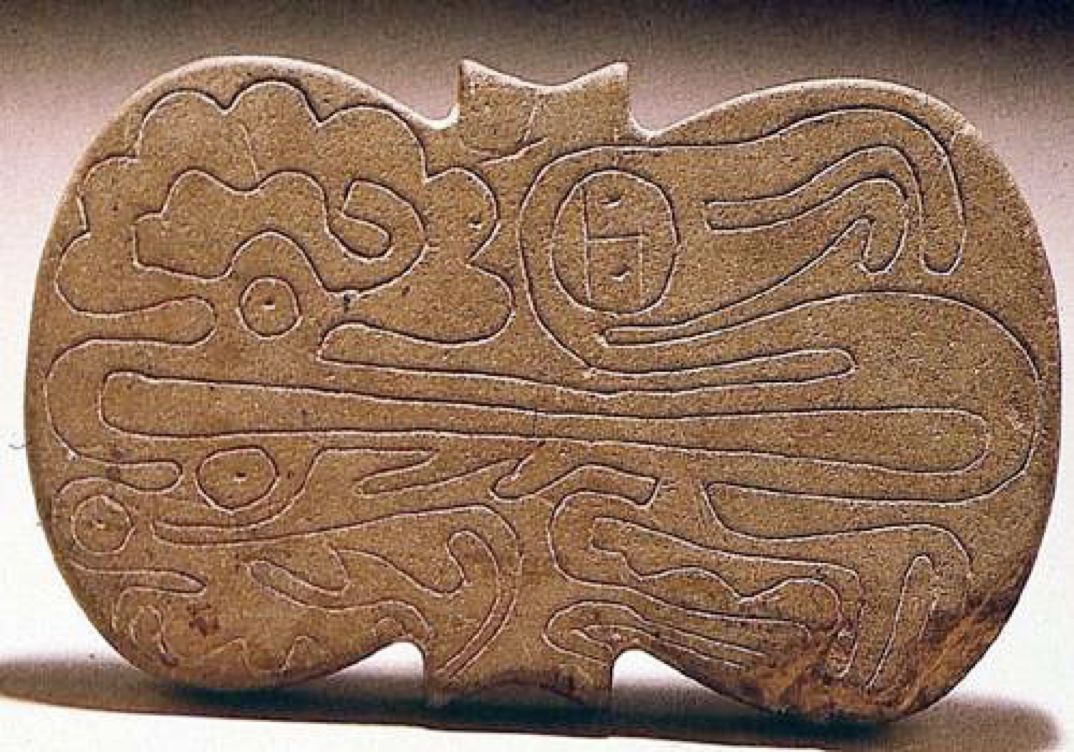
268: Southeast (Eastern Woodlands), Prehistoric, Adrns
What is it? — The “Berlin tablet” with abstracted vulture-like incised imagery
Functional and cultural significance — functionally used as a stamp or a weapon counterweight or as a grave good
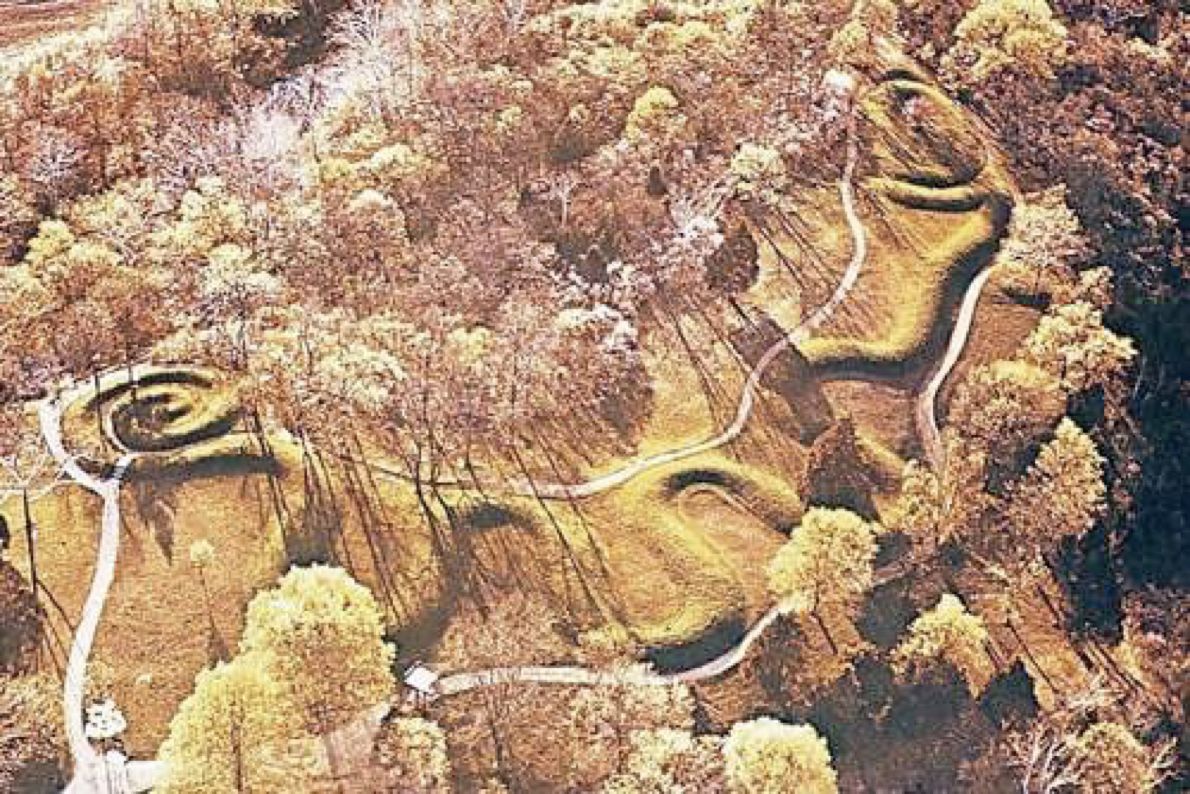
270: Eastern Woodlands, Prehistoric, Adena
What is it? — Aerial view of the Adena gigantic earthwork “serpent mound,” a serpent with an egg in its mouth (near Cincinnati Ohio)
Functional and cultural significance — Serpents in the Americas are associated with water, with the mound being right next to the river (visual metaphor for water sources)
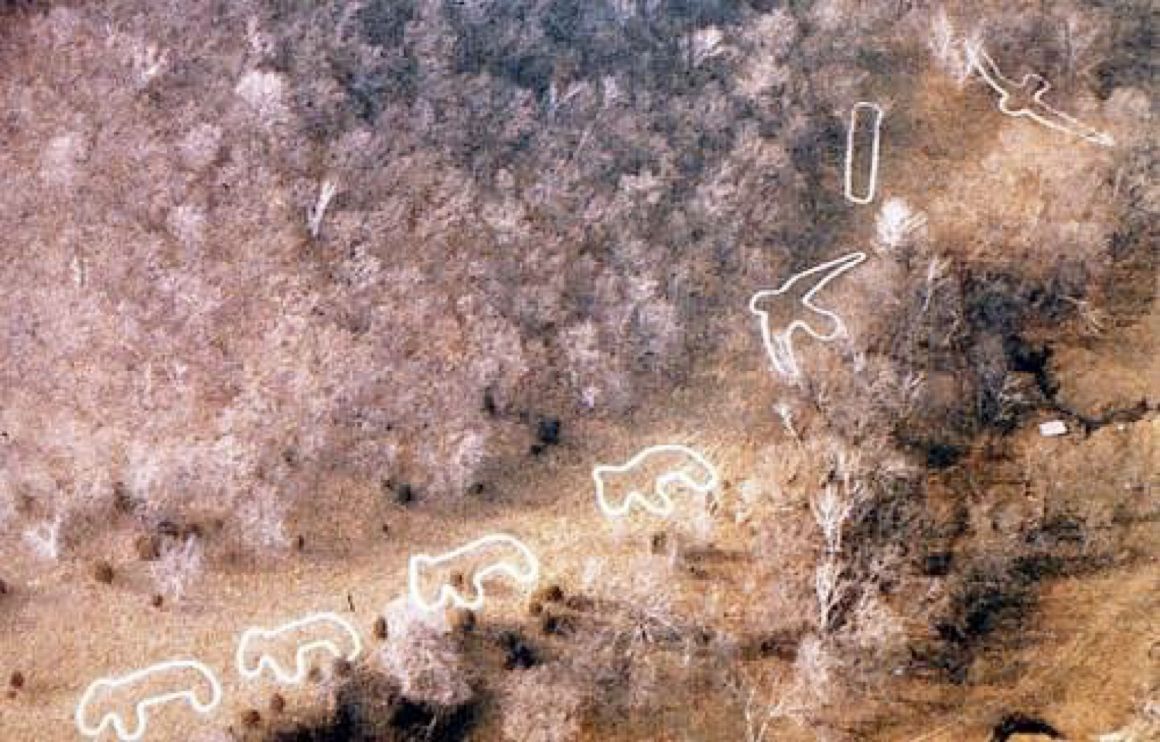
272: Eastern Woodlands, Prehistoric, Adena
What is it? — Animal mounds with two falcons, four bears, and a rectangular (architectural) form from Iowa, cleared by and chalked in by archaeologists
Functional and cultural significance — Likely represents clan emblems
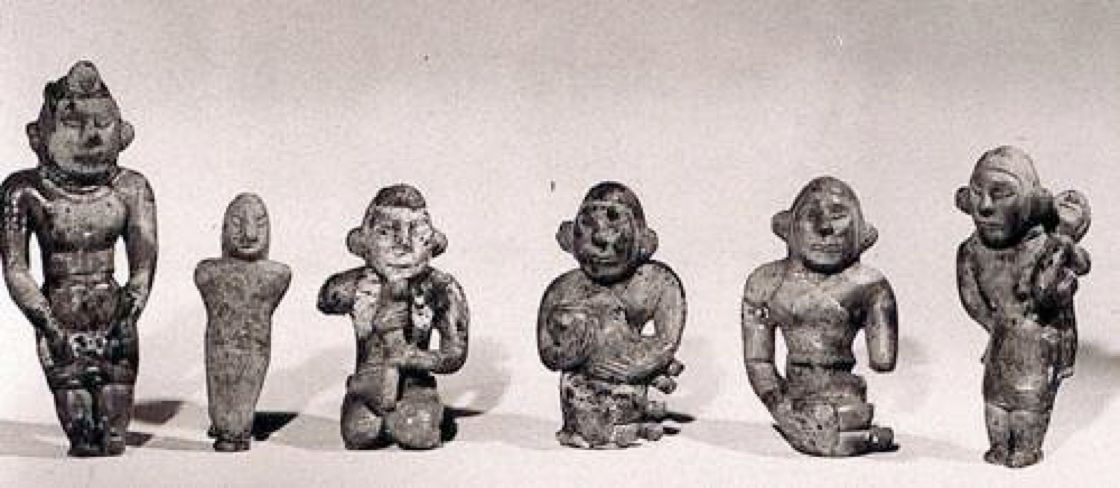
273: Eastern Woodlands, Prehistoric, Hopewell
What is it? — Hopewell clay female and male figurines
Functional and cultural significance — Could be related to ceremony, fertility, etc. (exact meaning is unclear but the sculptures are gendered)
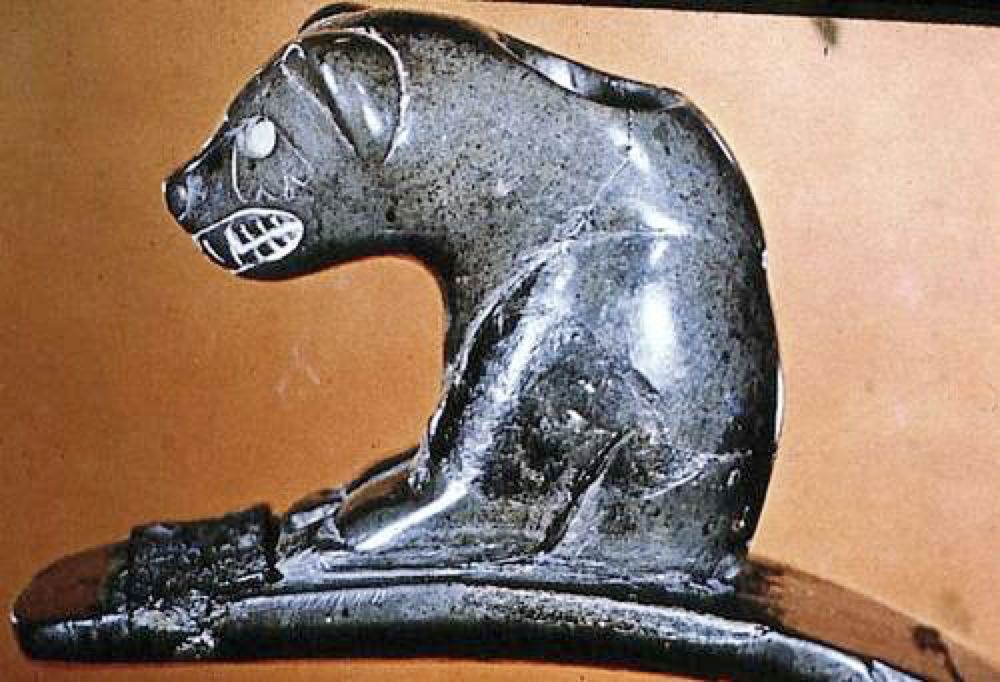
275: Eastern Woodlands, Prehistoric, Hopewell
What is it? — Stone platform pipe in the shape of a bear
Functional and cultural significance — Cultural pattern on the eye, incised three-lobed shape that references clan
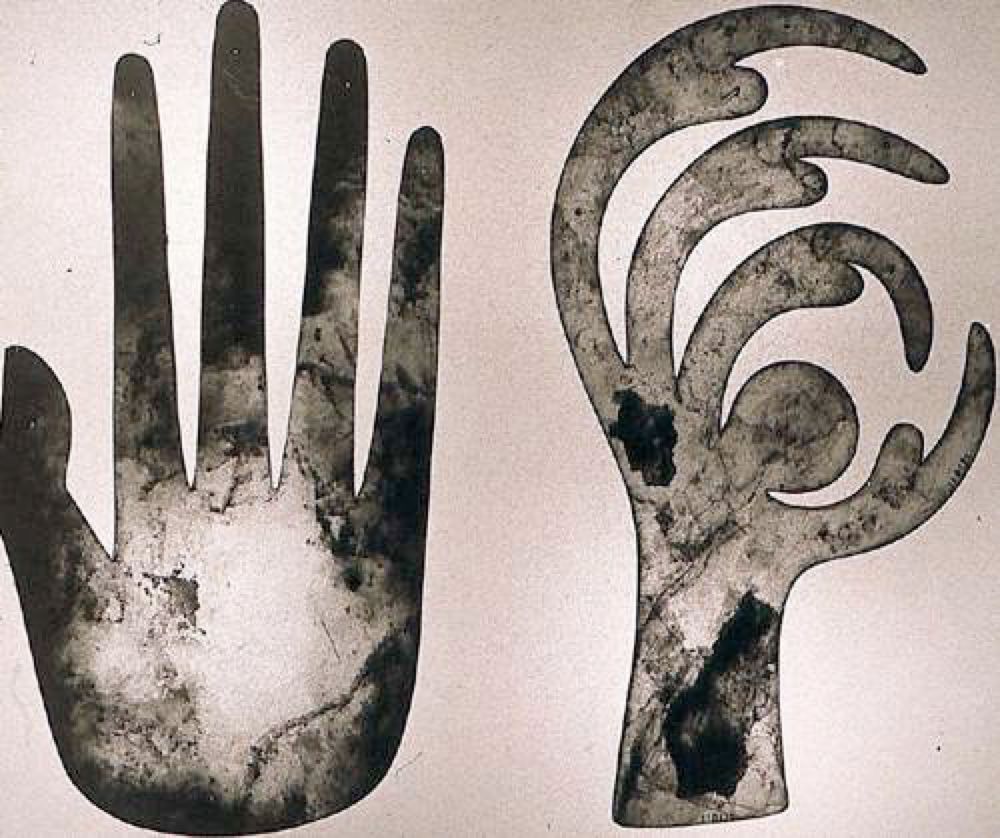
279: Eastern Woodlands, Prehistoric, Hopewell
What is it? — Hopewell mica cut-out in human and eagle-claw shapes, found in the burial sites of the elites
Functional and cultural significance — draws a connection between the dexterity of humans hands and eagle talons
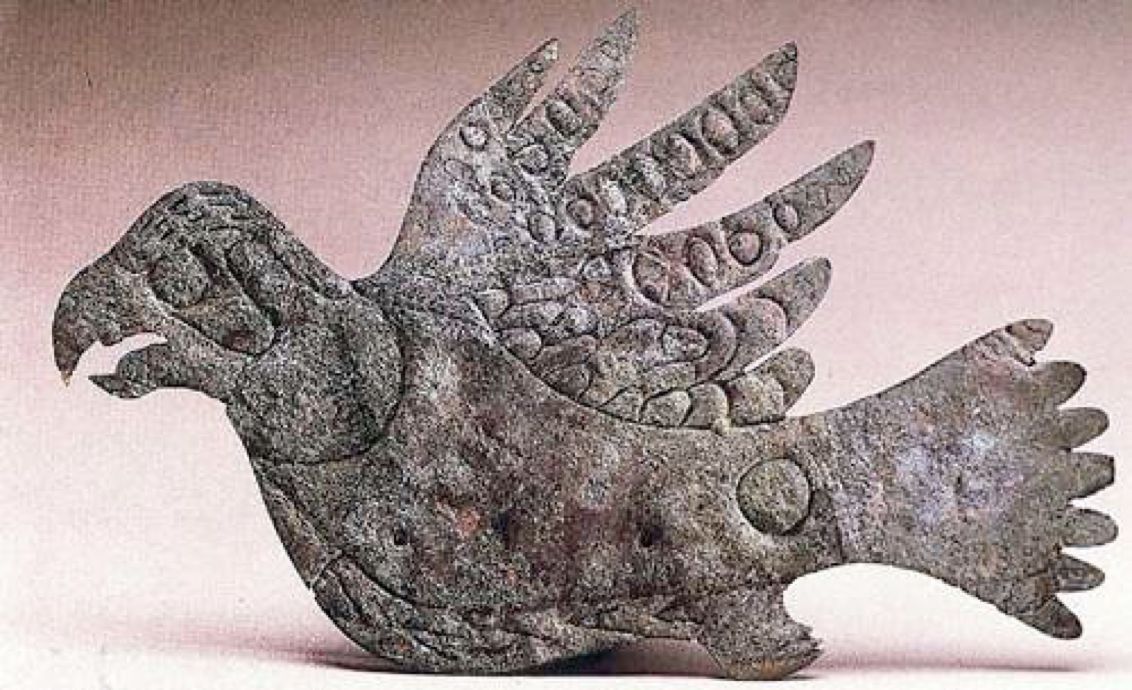
281: Eastern Woodlands, Prehistoric, Hopewell
What is it? — Copper cut-out of eagle/falcon shape (copper nuggets are flattened and cut) found in elite burials of high-ranking chiefs *could be used as a flag that is staked outside of house
Functional and cultural significance — was a prestige object that conveyed status, evident in that it was found the burial sites of high-ranking chiefs
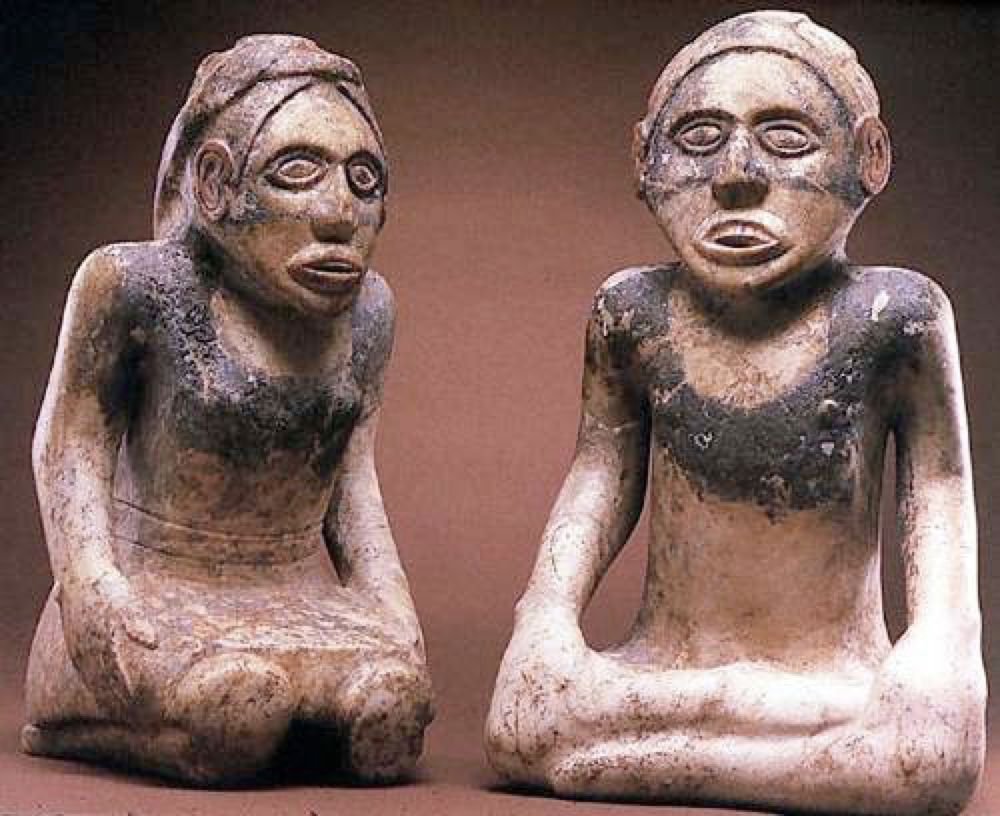
282: Eastern Woodlands, Prehistoric, Mississippian
What is it? — Mississippian stone commemorative ancestral figures, likely that of a chief and his wife for burial
Functional and cultural significance — used to commemorate the deceased to place in their burial (they’re both grave markers and portraits)
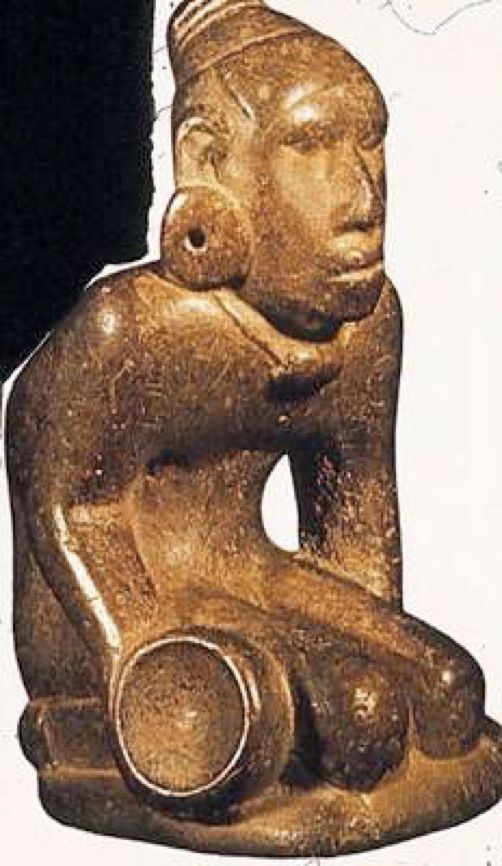
285: Eastern Woodlands, Prehistoric, Mississippian
What is it? — Stone effigy pipe of a “chunkey” player
Functional and cultural significance — represents a common game amongst the elites and the warriors of the tribes
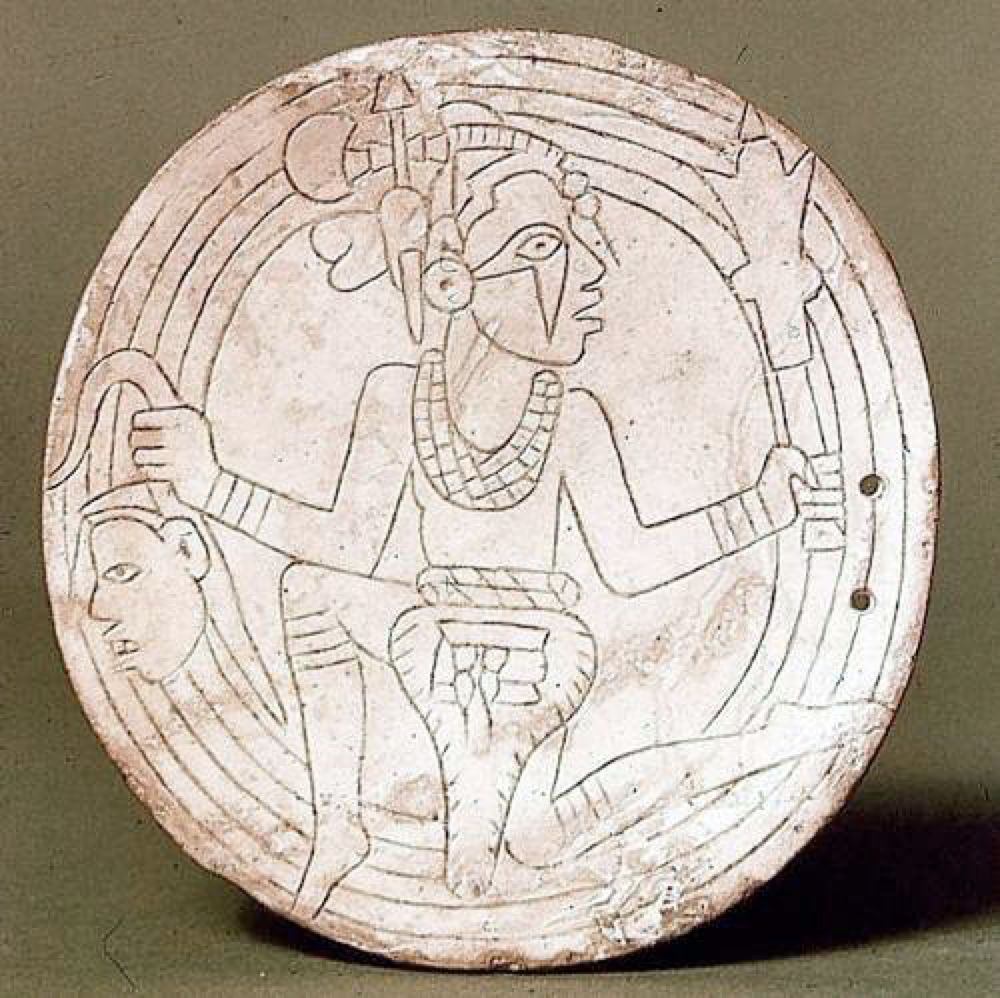
289: Eastern Woodlands, Prehistoric, Mississippian
What is it? — Shell gorget with beheading scene from Tennessee, with ceremonial stone mace in one hand and a severed human head in the other
Functional and cultural significance — could be beheading a vanquished enemy as a chief or warrior/a ritual specialist beheading the leader before they’re buried
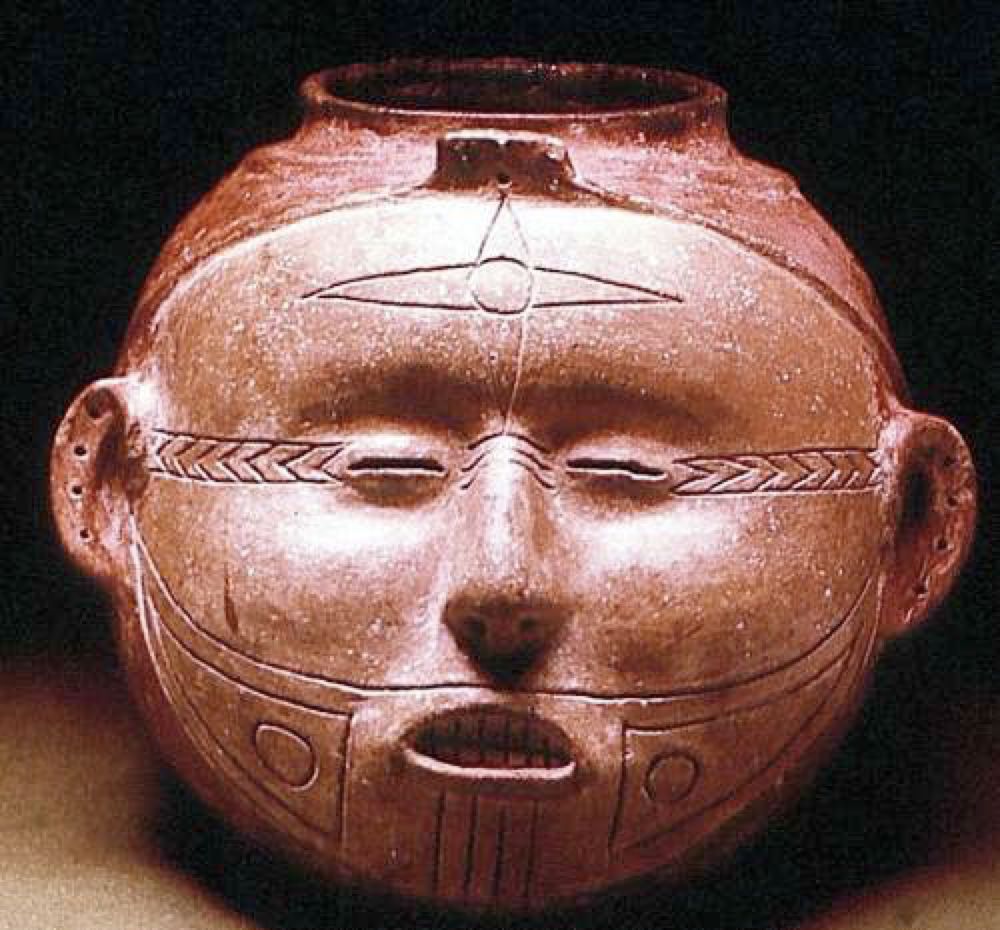
291: Eastern Woodlands, Prehistoric, Mississippian
What is it? — ceramic effigy pot as trophy head from Kentucky
Functional and cultural significance — a means of commemorating individuals by creating pots in their likeness (differentiated by the incised tattoos)
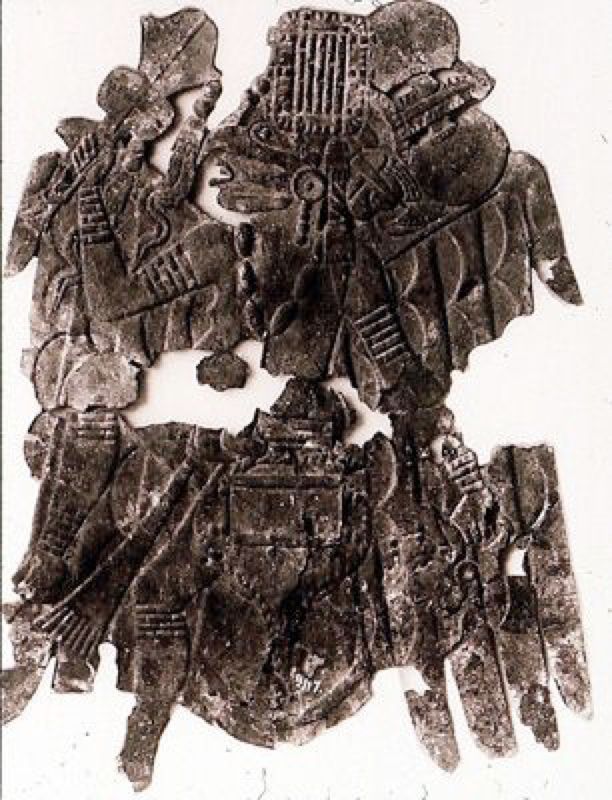
47: Eastern Woodlands, Prehistoric, Mississippian
What is it? — a copper plaque of a falcon warrior with a stone mace and severed head
Functional and cultural significance — represent warriors vanquishing an enemy
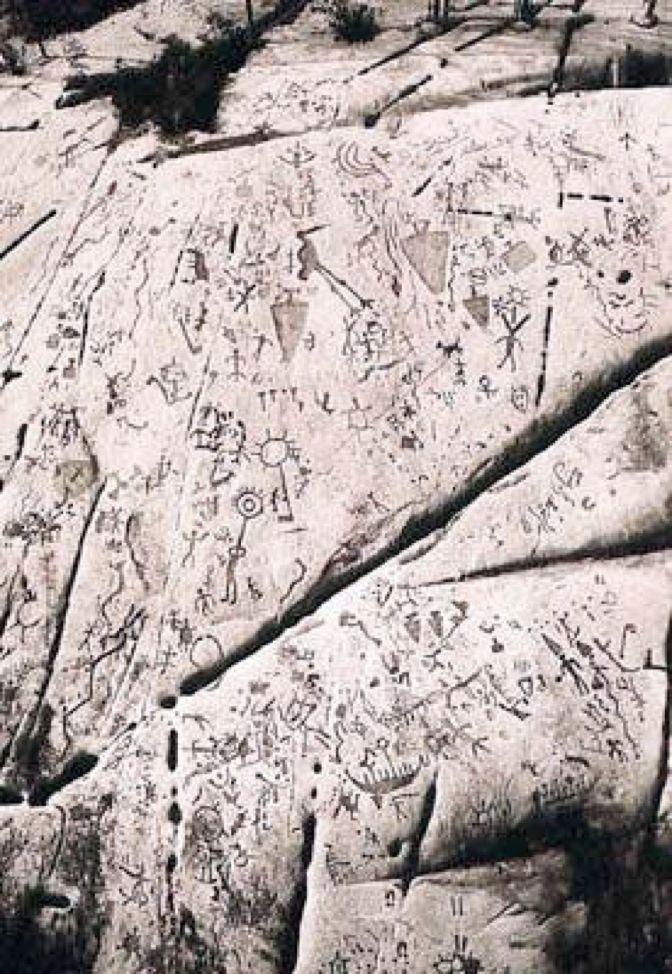
301: Great Lakes, Prehistoric, Peterborough, Ontario Algonkian
What is it? — petroglyph site of shamanistic rites
Functional and cultural significance — complex petroglyphs that act as its own system of meaning
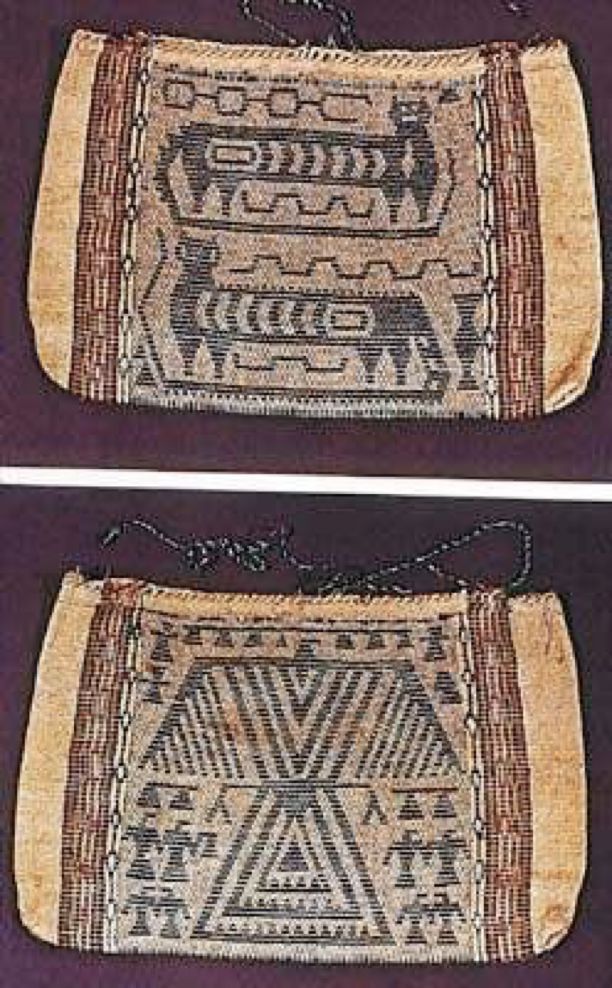
305: Great Lakes, Historic, Potawatomi
What is it? — Front and back view of a shaman’s pouch with underwater panther and thunderbird images
Functional and cultural significance — represents Potawatomi spirituality, specifically the belief in supernaturals like the ubiquitous thunderbird and underwater panther
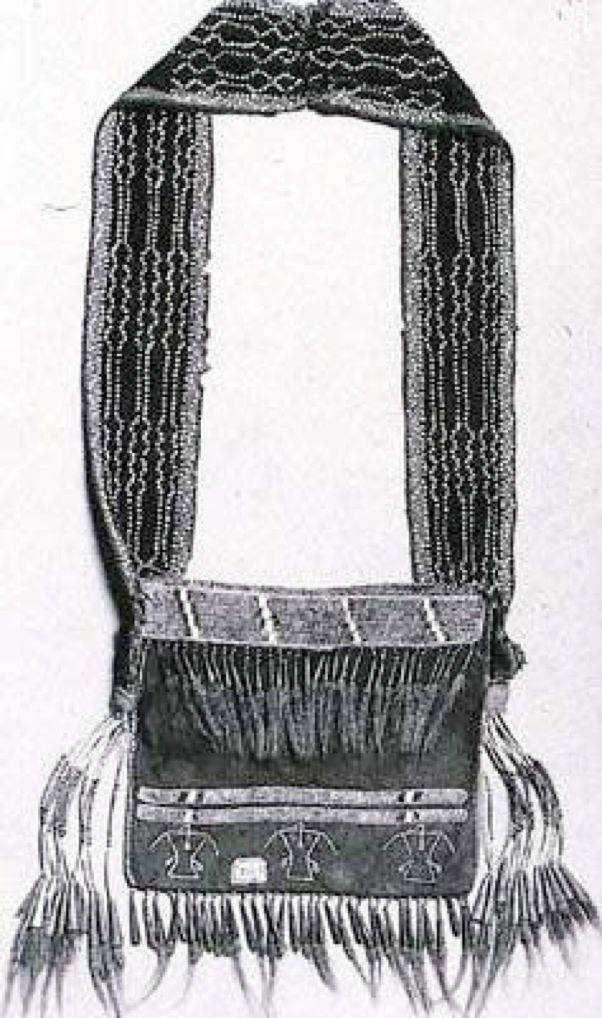
312: Great Lakes, Historic, Ojibwa
What is it? — Ojibwa warrior’s pouch with thunderbird images (ca. 1800)
Functional and cultural significance — Ojibwa would incorporate and represent their mythology into functional items like this warrior pouch
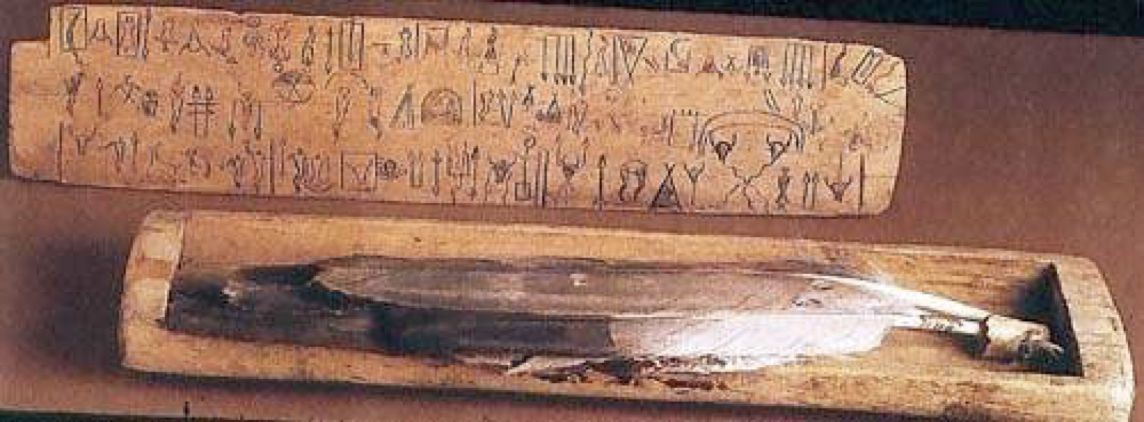
316: Great Lakes, Historic, Ojibwa
What is it: “Mide society” box with pictographic images on cover
Functional and cultural significance: the actual box served as a sacred bundle of fathers and the pictographic images were likely read by a chanter during ceremony (symbolic language)
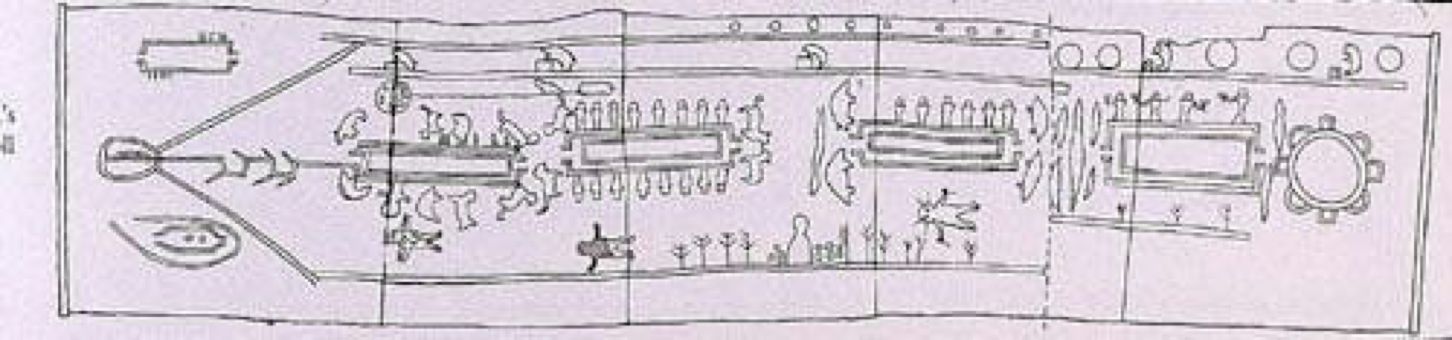
317: Great Lakes, Historic, Ojibwa
What is it: Master scroll of the Mide society painted on birchbark
Functional and cultural significance: Each of the zones represents their trajectory from the Eastern Great Lakes to the West + Read by a chanter recounting their story
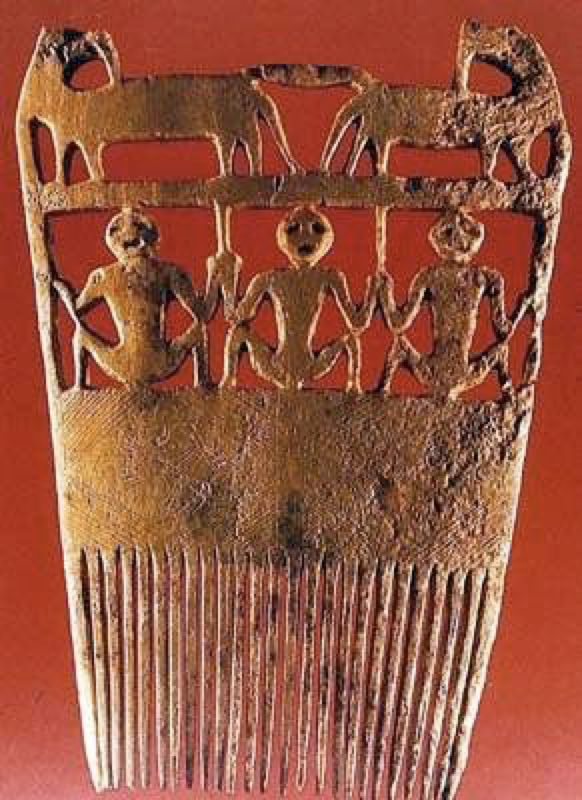
322: Great Lakes, Prehistoric, Iroquoian?
What is it? — Bone comb with three human and two wolf figures
Functional and cultural significance — aims to represent the decision of three different groups to join together
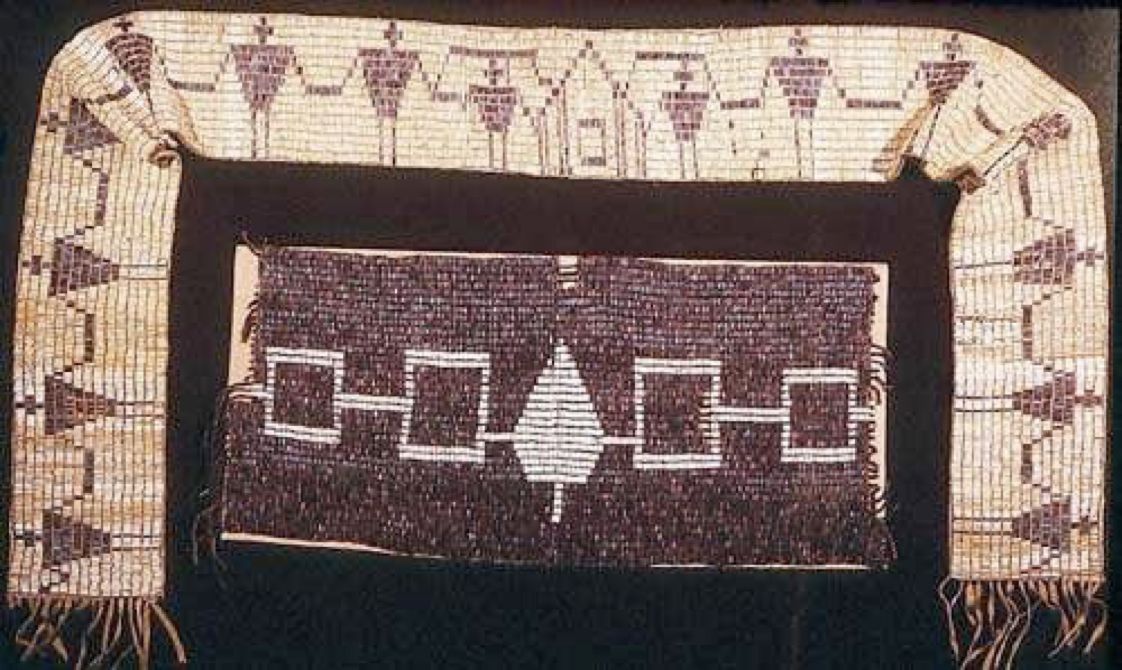
324: Great Lakes, Historic, Iroquois
What is it? — Wampum belts (Washington Covenant Belt and Hiawatha Belt) made out of shell
Functional and cultural significance — Analogous to signed treaties made permanent in shell, represents political agreement
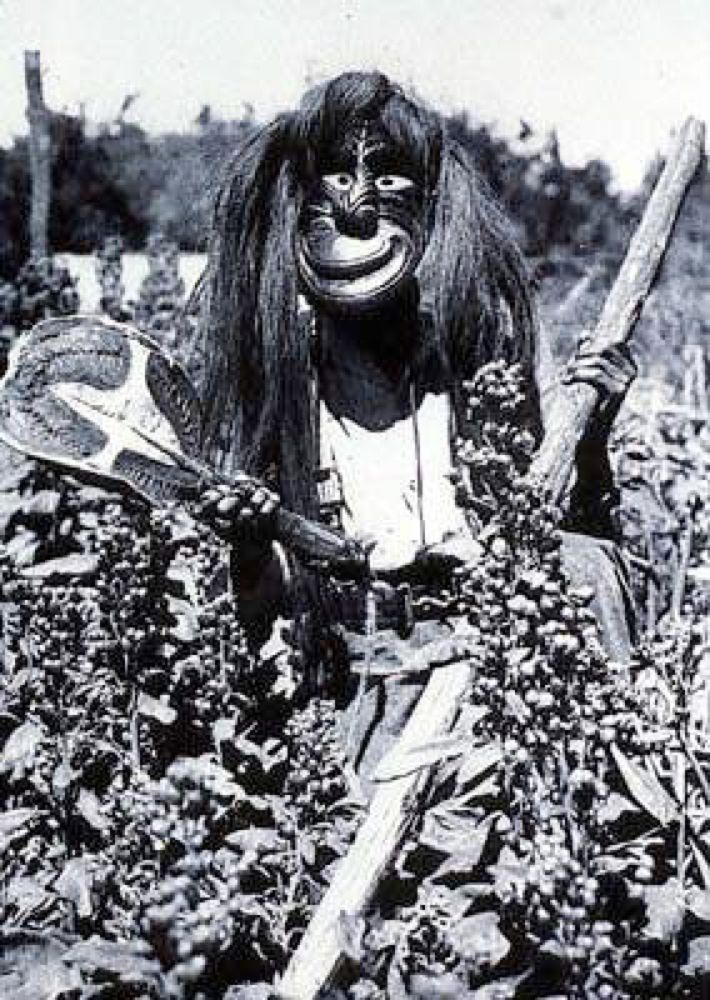
329: Great Lakes, Historic, Iroquois
What is it? — Iroquois crooked-mouth false face dancer with turtle-shell rattle
Functional and cultural significance — Iroquois masking traditions often represented giants, with the smashed composition of the face referencing mythology of giants fighting with one another *false face society associated with healing
False face masks: Comical looking, circular eyes with punctured holes
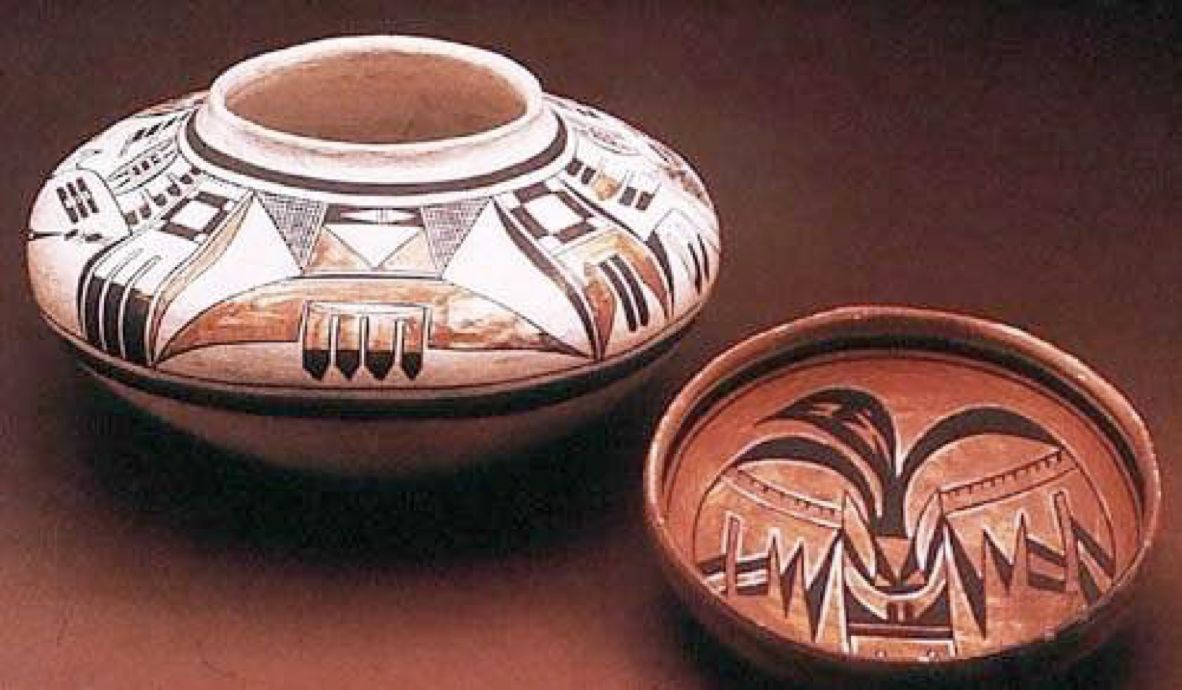
Southwest, Contemporary (first half of 20th century), Nampeyo (Hopi/Tewa)
What is it? — Nampeyo’s pottery in Sikyatki revival style (1901)
Functional and cultural significance — Not necessarily traditional to her culture, as it fused Southwest traditions across different time periods, and she would sell them for cheap at railroad stations
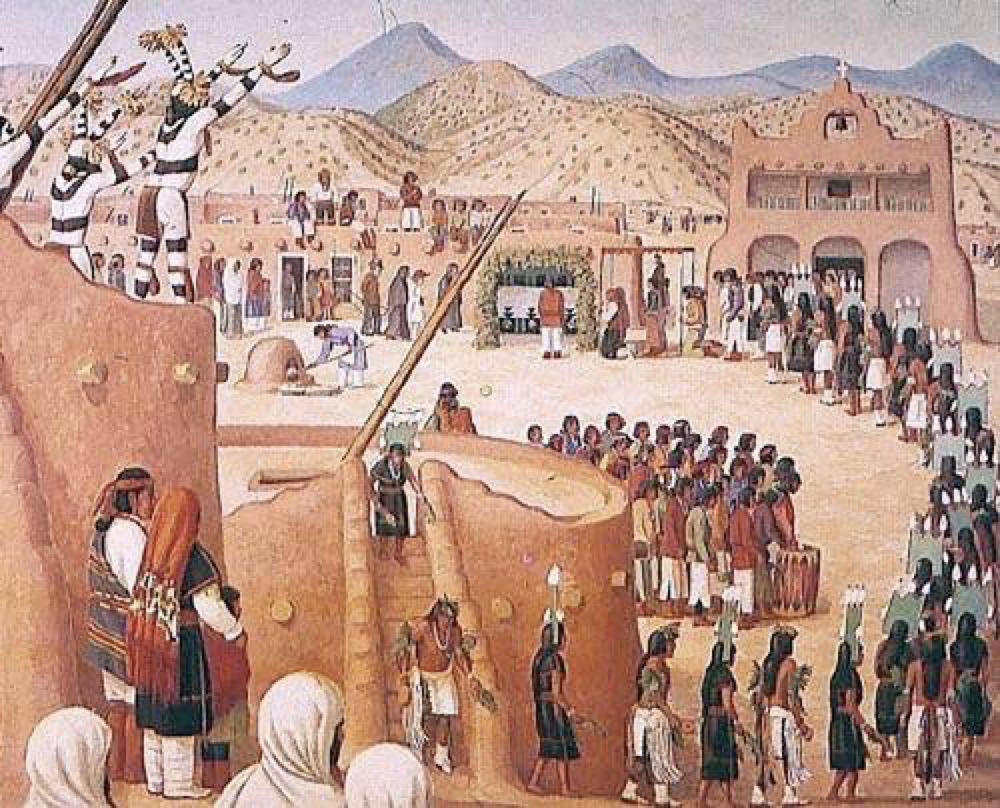
340: Southwest, Contemporary (1947 — first half of 20th century), Fred Kabotie (Hopi/Tewa)
What is it? — “Green corn dance” painting of the Hopi ceremony
Functional and cultural significance — representing an important ceremony of the Hopi through the nontraditional techniques of European painting
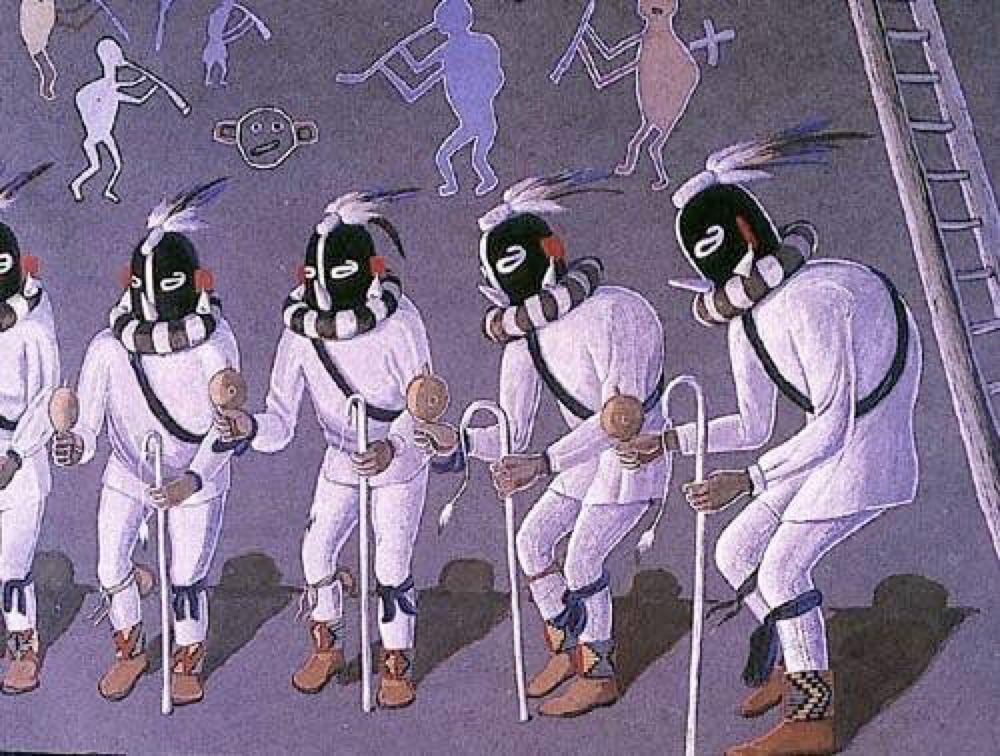
341: Southwest, Contemporary (1954 second half of 20th century), Fred Kabotie (Hopi/Tewa)
What is it? — “Kookopolom” painting of hunch-backed kachina spirits and kiva illustrations in the background
Functional and cultural significance — illustrating a sacred, secret ritual that would be performed in underground kivas
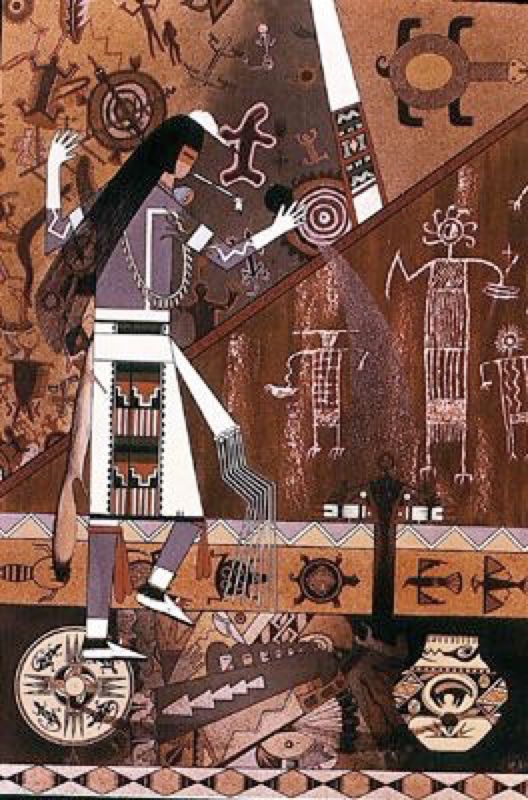
58: Southwest, Contemporary (ca. 1960s — 2nd half of the 20th century), Tony Da (Eastern Pueblo/San Ildefonso)
What is it? — Painting titled “An Abstract Painting,” foregrounded by a floating figure against a complex background
Functional and cultural significance — an abstraction, or composite of different art traditions in the Southwest (including petroglyphs, ceramics, etc.)
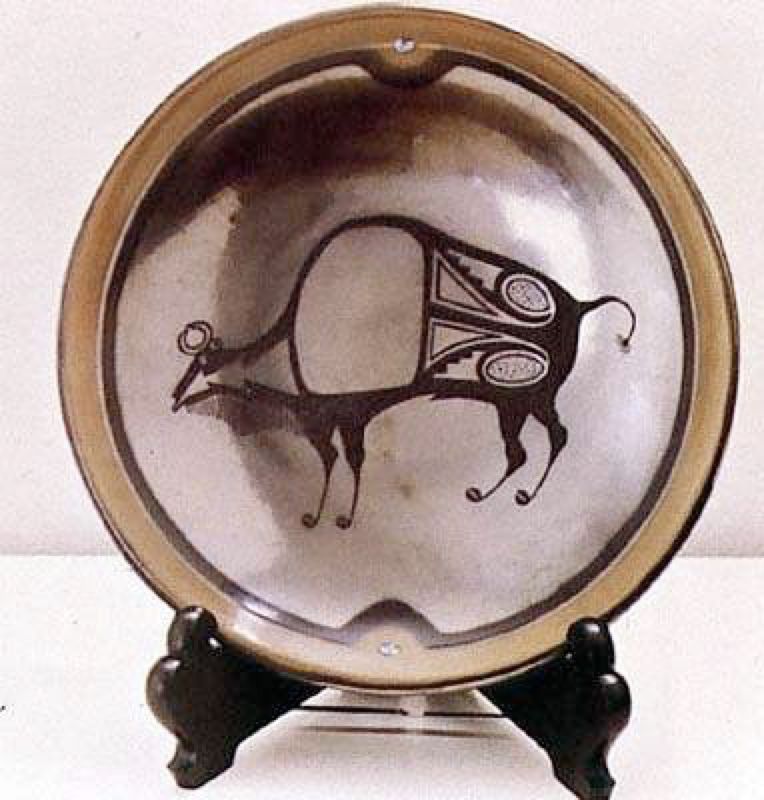
343: Southwest, Contemporary (1970 — second half of 20th century), Tony Da (San Ildefonso)
What is it? — “Bison ceramic plate,” representing an abstracted bison in the middle of a pot
Functional and cultural significance — Take-off on the style of Mogollon/Mimbres pots, but for the purpose of being looked at rather than functioning as a burial bowl
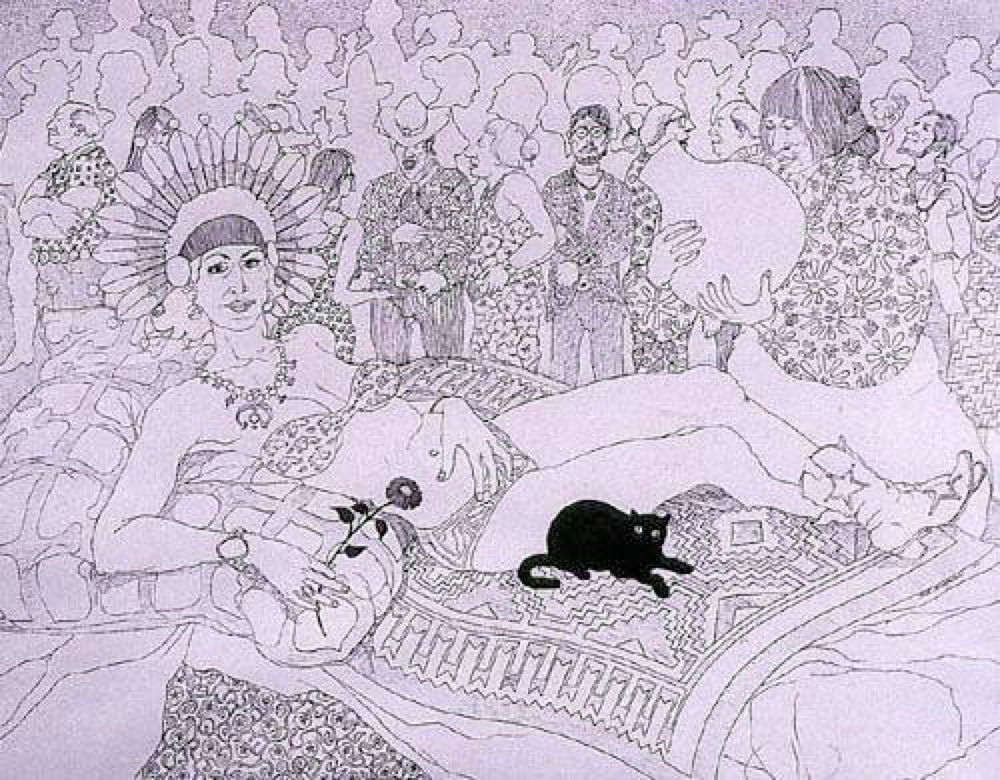
Southwest, Contemporary (1977 — second half of the 20th century), Bob Haozous (Apache)
Painting titled “Taos Lady,” mainly representing a patroness in a bikini, cowboy boots, Navajo jewelry, and a feather headdress, alongside an Indigenous woman and sea of patrons
Functional and cultural significance — functions as a critique of his wealthy patrons and of the contemporary art culture he works in (take-off on Manet’s “Olympia”)
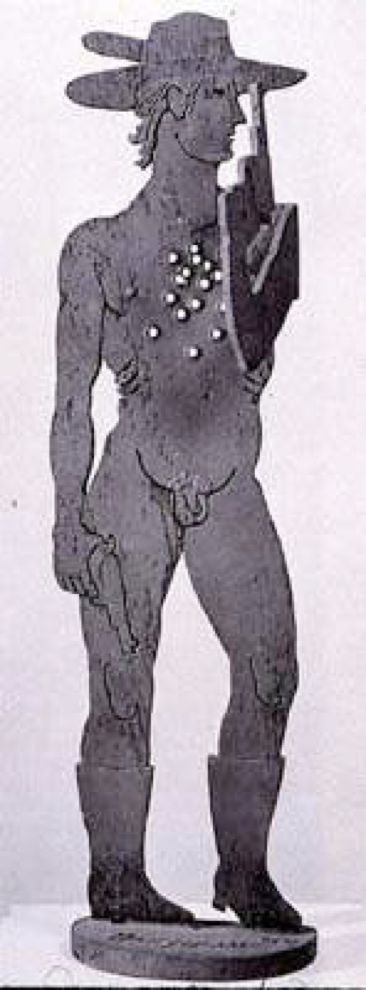
Southwest, Contemporary (1990), Bob Haozous (Apache)
What is it? — Haozous’s take on “David,” in which David is made of sheet steel and is represented as a gun-slinging cowboy, with two guns, cowboy boots and a hat, and bullet holes in his chest
Functional and cultural significance — functions as a humorous critique of the Western canon of art, which is a common throughline in his work
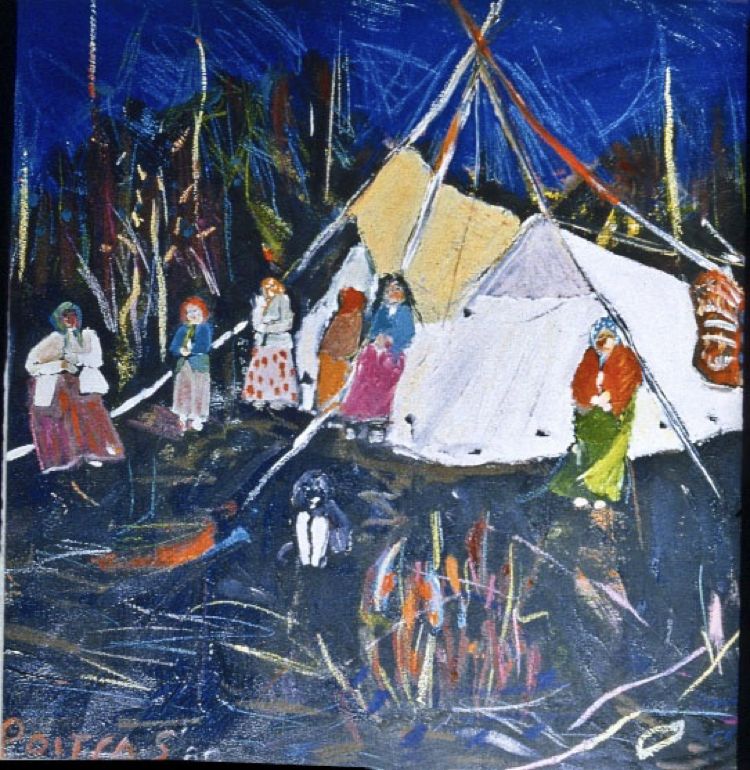
S3: Great Lakes, Contemporary (1988), Jane Ash Poitras (Ojibwe)
What is it? — “Fort Chip sewing club,” representing a scene within the community she was born in of Indigenous women coming together to sew
Functional and cultural significance — Poitras illustrates scenes relevant to and found within her community, taking from European style of simplified realism to do so
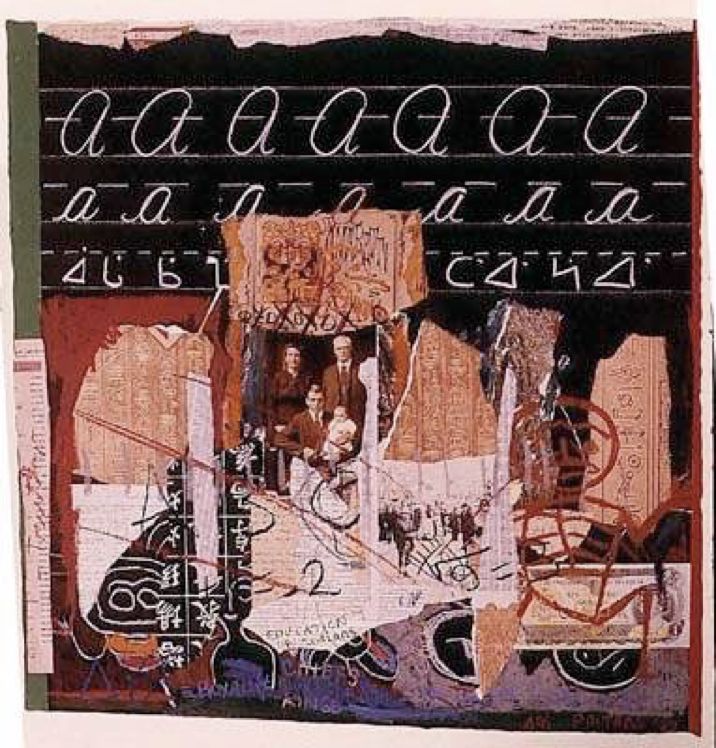
350: Great Lakes, Contemporary (1989), Jane Ash Poitras (Ojibwe)
What is it? — Collage titled “Family blackboard” that includes both English and Ojibwa script, family portrait, pictographic paintings, petroglyphic texts, newspaper images, etc.
Functional and cultural significance — Illustrates how Indigenous people, specifically Indigenous children, were assimilated into the white American mainstream through education
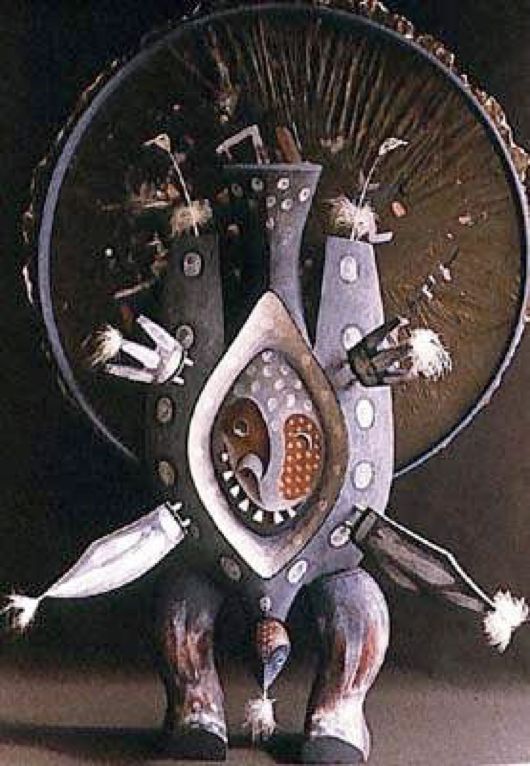
351: Northwest Coast, Contemporary (1985), James G. Schoppert (Tlingit)
What is it? — Wooden composite form titled “Migrations,” featuring both human and animal traits alongside external appendages and feathers
Functional and cultural significance — Despite being Tlingit, Schoppert pulls from a mixture of Eskimo masking traditions, mainly the Yupik, in their traditional representation of Inua
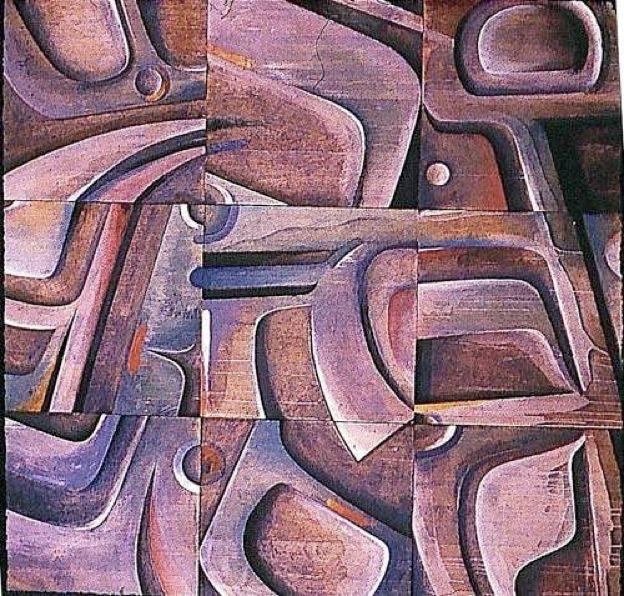
352: Northwest Coast, Contemporary (1986), James G. Schoppert (Tlingit)
What is it? — Both a sculpture and painting titled “Blueberries,” comprised of nine panels of wood carved with form lines traditional to NWC art and assembled together
Functional and cultural significance — Schoppert puts a twist on traditional NWC art, specifically the form lines you’ll find on kerf boxes, by zooming into them and rearranging them
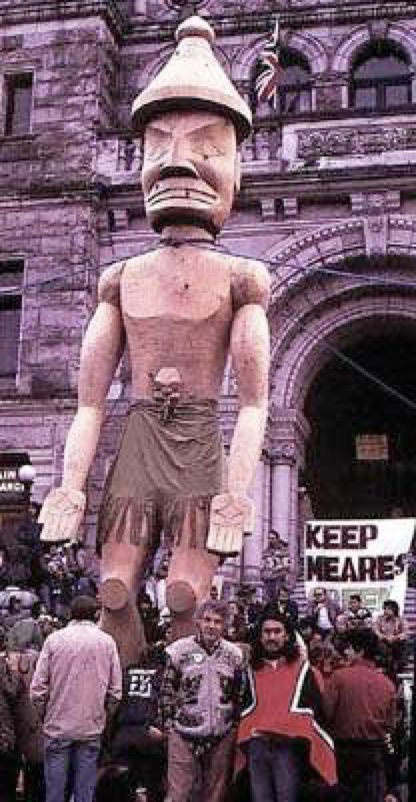
Northwest Coast, Contemporary (1984), Joe David (Nootka)
What is it? — 32-foot tall “Cedar man” sculpture that David carved, featuring the traditional basketry hat of the Nootka
Functional and cultural significance — was created as part of the movement to protect Meares Island from industrial logging
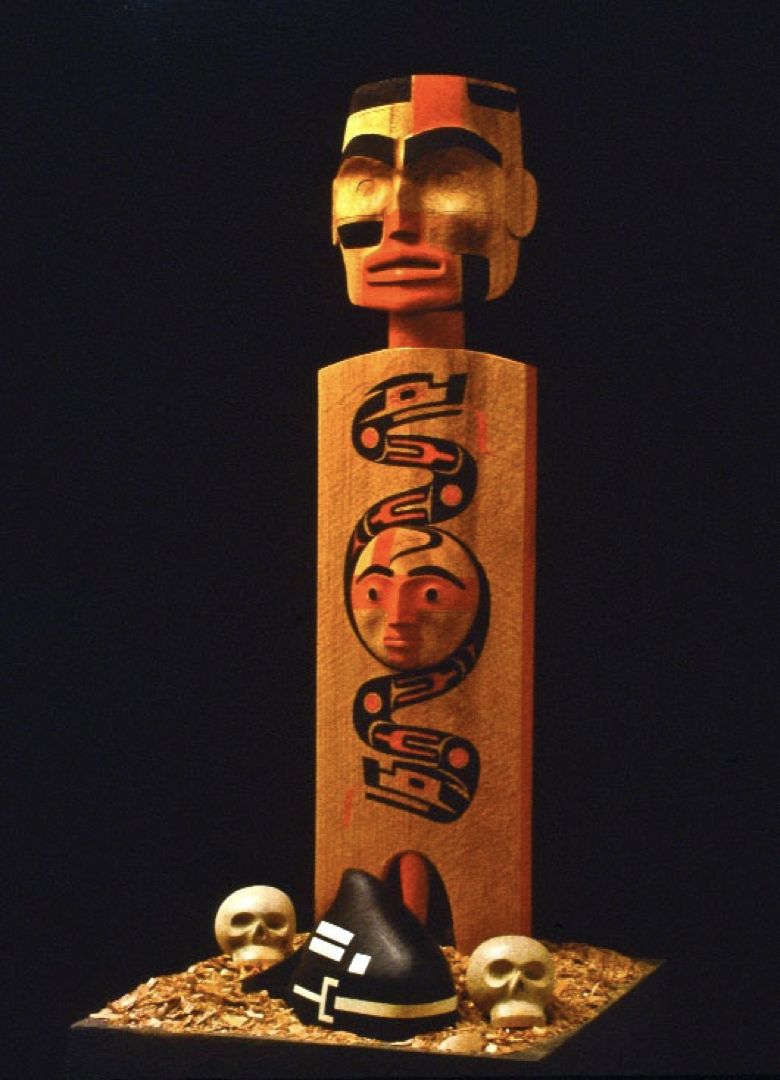
S8: Northwest Coast, Contemporary (2005), Joe David (Nootka)
What is it — Wooden sculpture titled “A whaler’s shrine” of an anthropomorphic figure with stylized painting and human skulls and a killer whale at its base
Functional and cultural significance — David pulls from the traditional whaler’s shrine in Nootka culture, creating his own version of the anthropomorphic wooden figures you would find there with untraditional sisiutl imagery
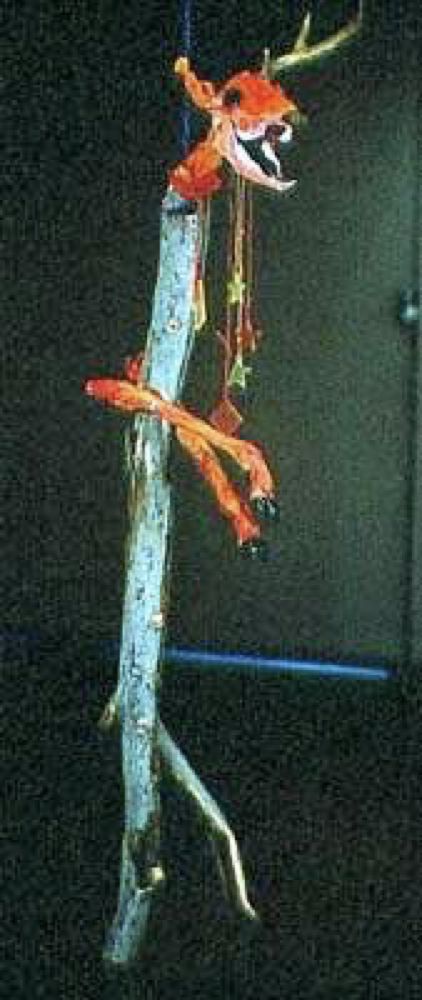
357: Southeast, Contemporary (1986), Jimmy Durham (Cherokee)
What is it — “A dead deer” abstract sculpture and assemblage, composed of an assemblage of different pieces (deer skull and antler, wooden body and sticks, dangling shapes)
Functional and cultural significance — Durham was part of a group of assemblage artists + could also be a humorous means of poking fun at traditional art
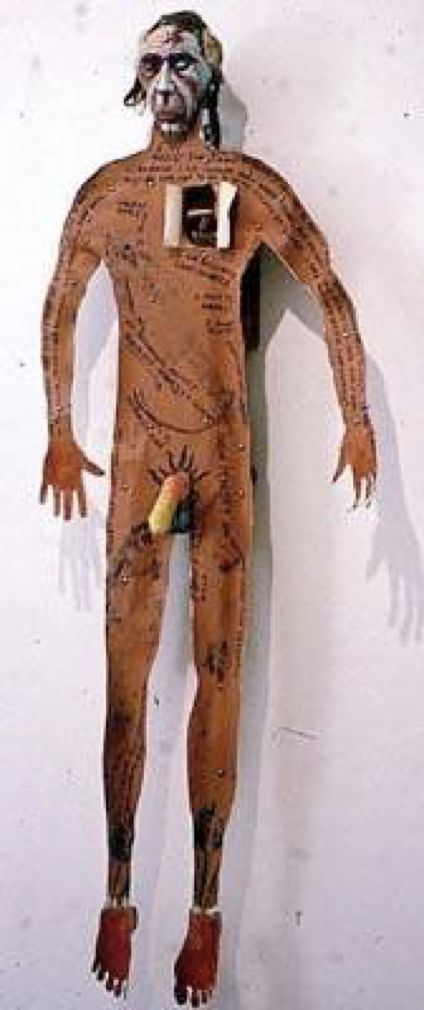
358: Southeast, Contemporary (1987), Jimmy Durham (Cherokee)
What is it? — “Self-portrait” sculpture consisting of a flat body, feet attached as footprints, writings about himself and his culture, casted phallus and face, and open chest
Functional and cultural significance — exploring the stereotypes against Indigenous people/making fun of the revival of the male nude during the Renaissance
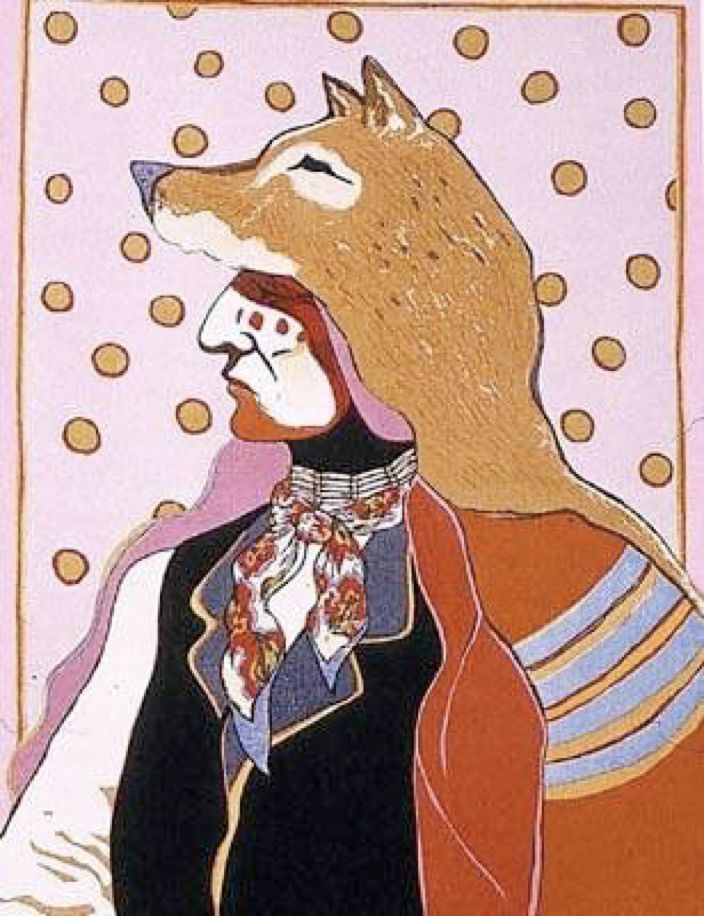
362: Lower Mississippi, Contemporary (1970s), T.C. Cannon (Caddo)
What is it? — Painting titled “His hair flows like a river,” showing an Indigenous man regally standing with a wolf skin head, beadwork, facial painting, alongside a western-style necktie and coat
Functional and cultural significance — aims to represent Indigenous people as regal, wealthy, etc.
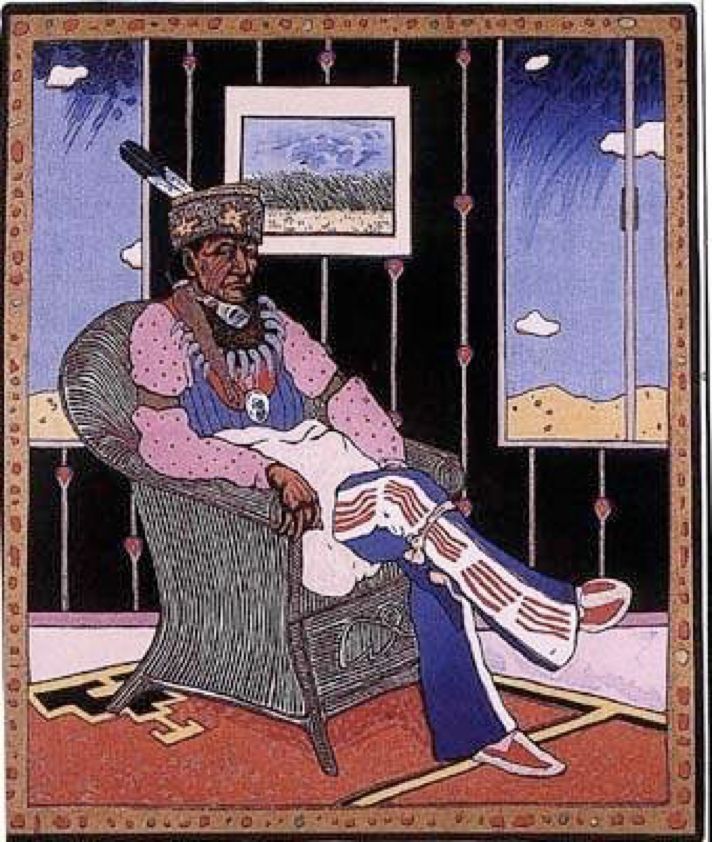
Lower Mississippi, Contemporary (1980), T.C. Cannon (Caddo)
What is it? — Painting titled “Collector #5 or Osage with Van Gogh,” representing an Osage man as a wealthy collector with a Van Gogh, art deco rug, and two Japanese print-like windows
Functional and cultural significance — aims to subvert traditional representations of Indigenous people, flipping the typically Anglo collector with an Indigenous man
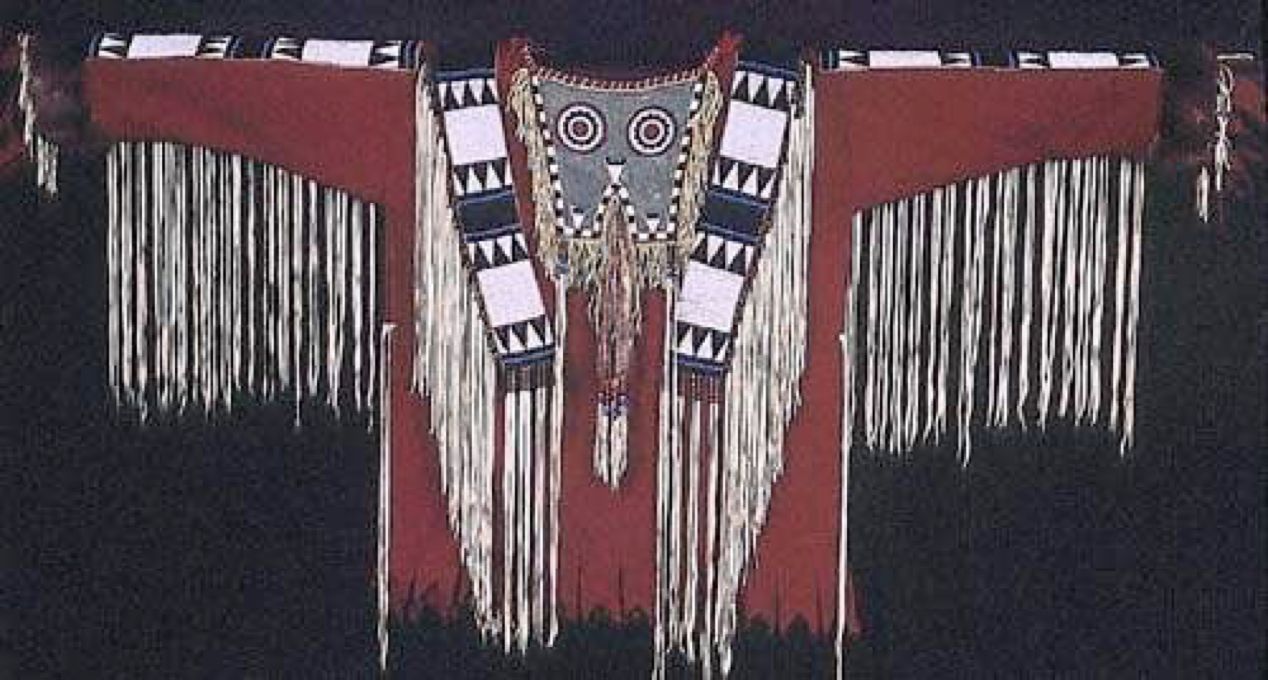
363: Plains, Contemporary (1982-83), Joyce Growing Thunder Fogarty (Assinibone/Sioux)
What is it? — Traditional Sioux “War shirt” with geometric patterns
Functional and cultural significance — Fogarty created these war shirts for dancers who go to traditional pow wows or as gifts for significant times in people’s lives
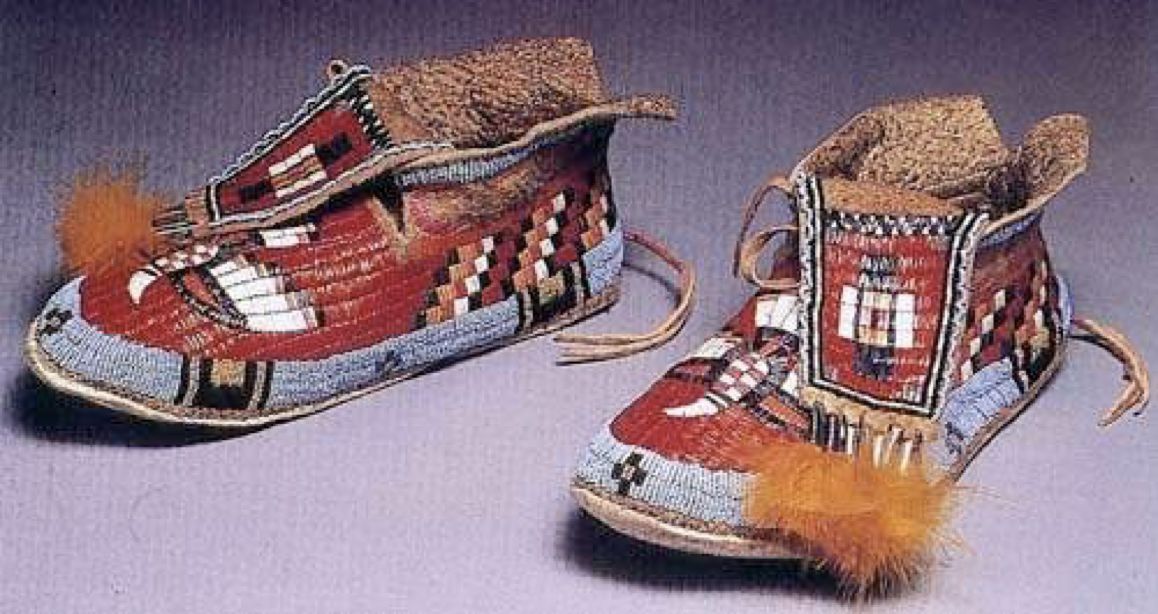
364: Plains, Contemporary (1982-83), Joyce Growing Thunder Fogarty (Assinibone/Sioux)
What is it? — Quilled and beaded moccasins
Functional and cultural significance — chooses to stick to the traditional artistic styles of the Sioux
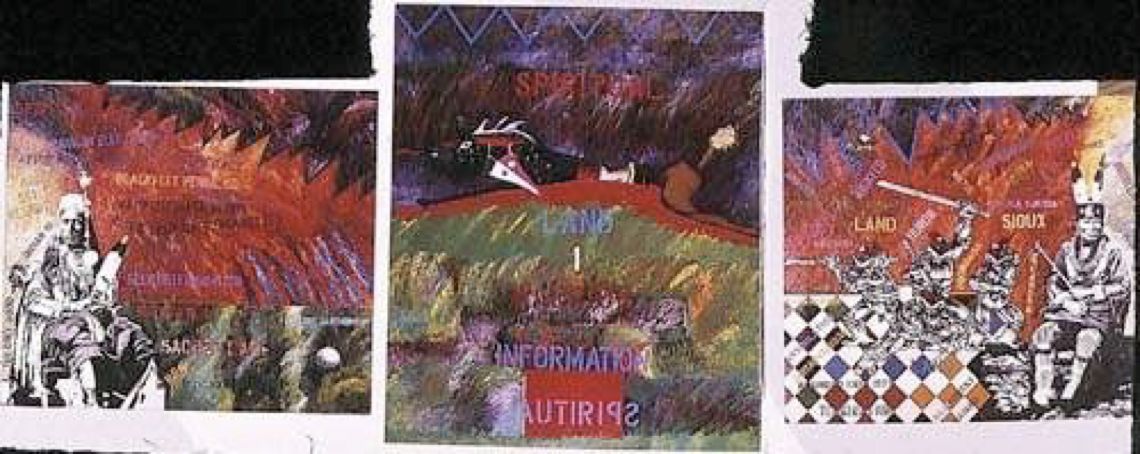
367: Great Lakes, Contemporary (1991-92), George Longfish (Seneca/Tuscarora)
What is it — Triptych titled “The End of Innocence,” linking three abstract acrylic canvases with images of Indigenous warriors, painted text, and modern pop culture references
Functional and cultural significance — critiques Western expansion and its devastation on Indigenous peoples
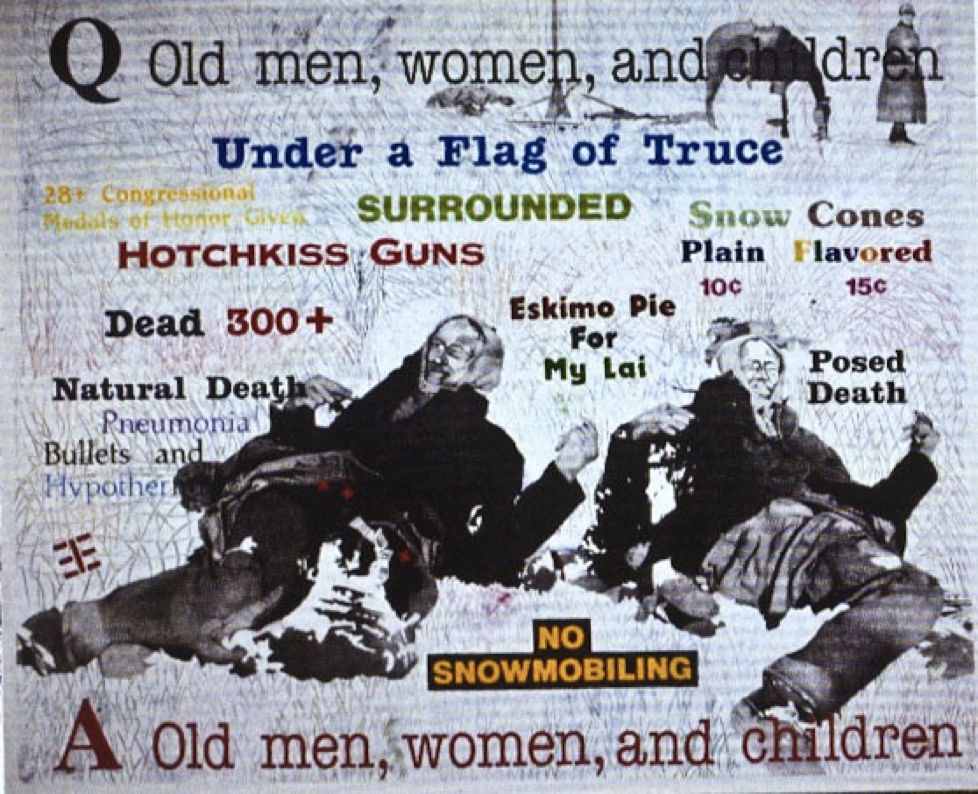
S12: Great Lakes, Contemporary (2003), George Longfish (Seneca/Tuscarora)
What is it? — Painting titled “Winter still-life landscape, South Dakota, 1983,” showcasing the images of frozen bodies who were massacred at Wounded Knee alongside a variety of text
Functional and cultural significance — commentary on the colonial violence of the Wounded Knee Massacre, connecting it to other imperial massacre such as the My Lai during the Vietnam War
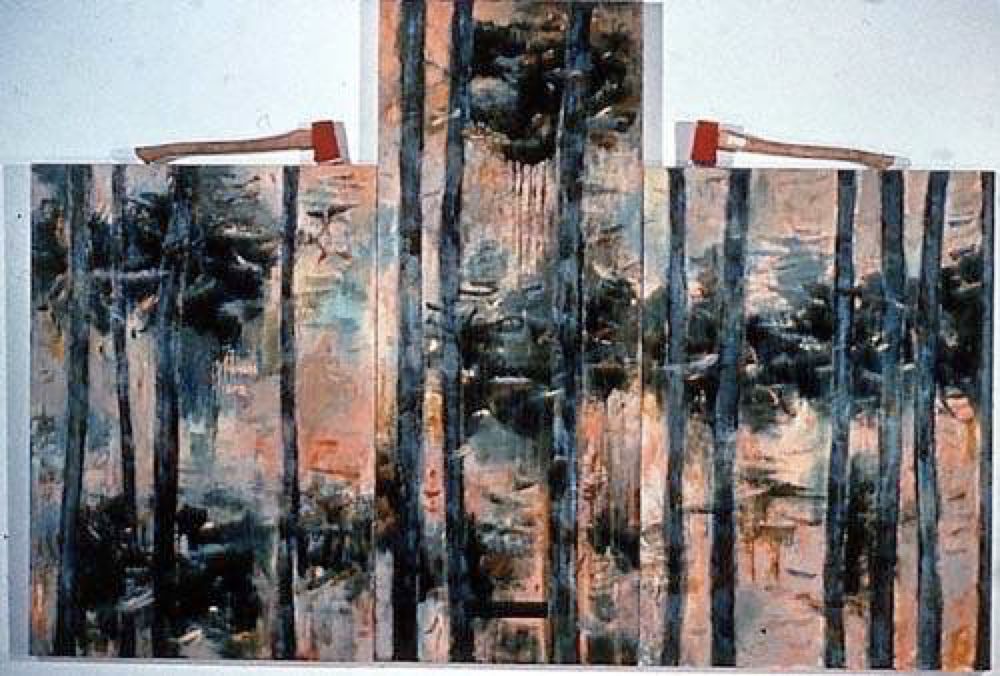
Western Montana, Contemporary (1990), Jaune-Quick-To-See Smith (Flathead)
What is it? — Triptych titled “The spotted Owl,” illustrating an abstract landscape of trees and possibly owl nests
Functional and cultural significance — critique on deforestation, as indicated by the two axes that are positioned at the tops of the canvases
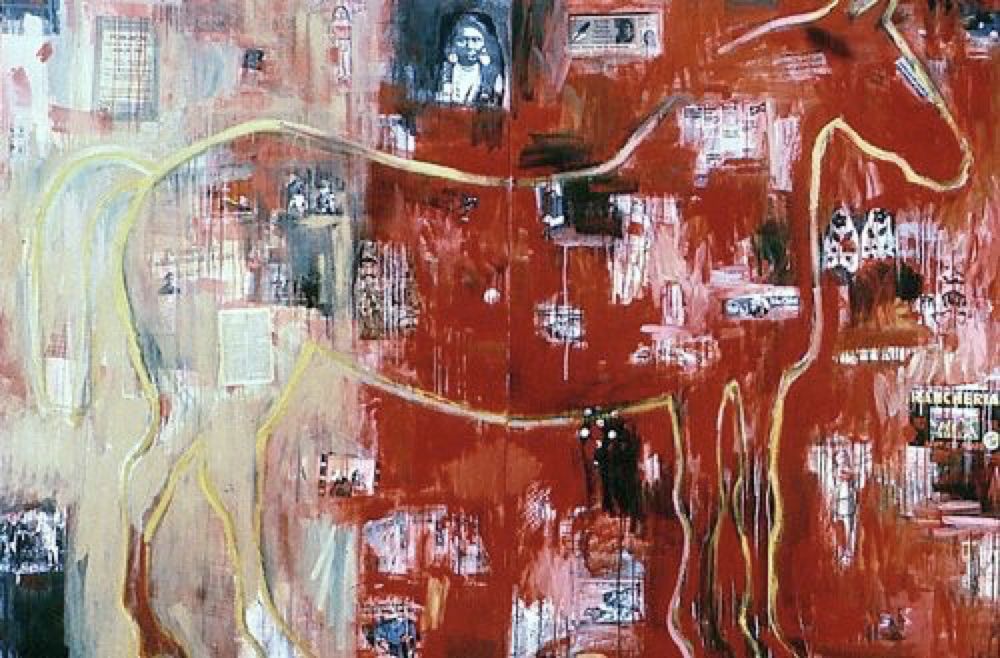
56: Western Montana, Contemporary (1992), Jaune-Quick-To-See Smith (Flathead)
What is it? — Painting titled “Indian Horse,” in which the outline of a horse frames an abstracted, collaged background with photographs of Indigenous people and newspaper clippings
Functional and cultural significance — works to critique mass-media representations of Indigenous people versus how they actually view themselves
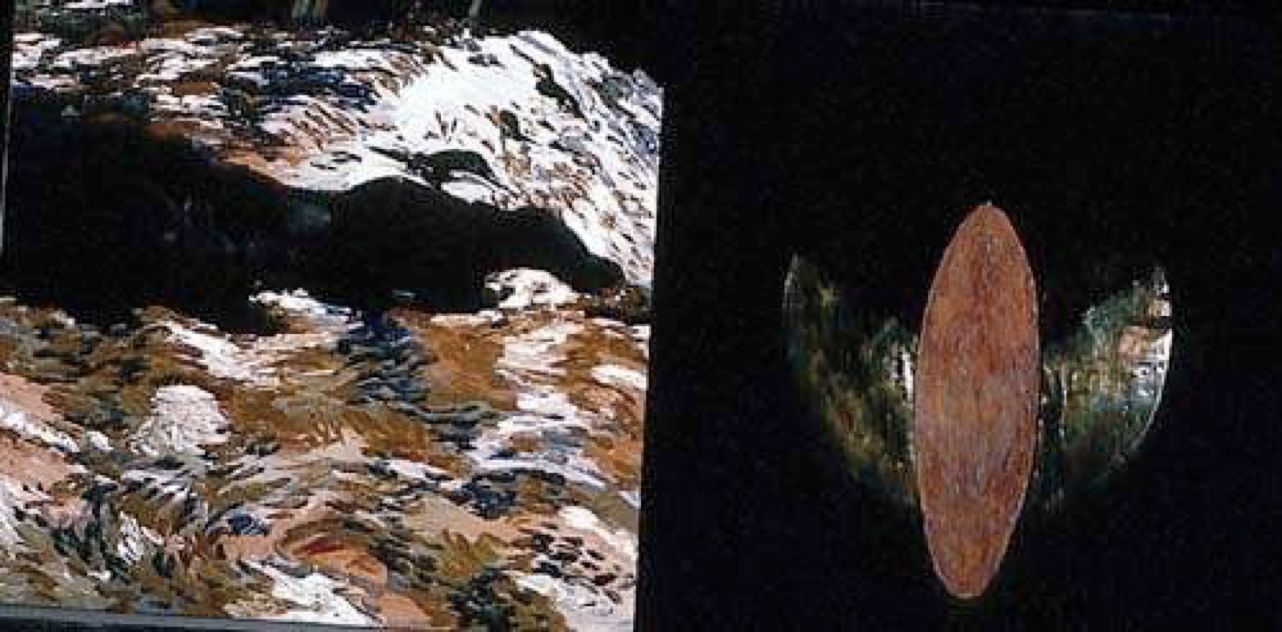
372: Southeast, Contemporary (1991), Kay Walkingstick (Cherokee)
What is it? — Painting titled “Reclaiming the Center,” which juxtaposes a painting of river rapids with a painting of a completely abstract oval with wings
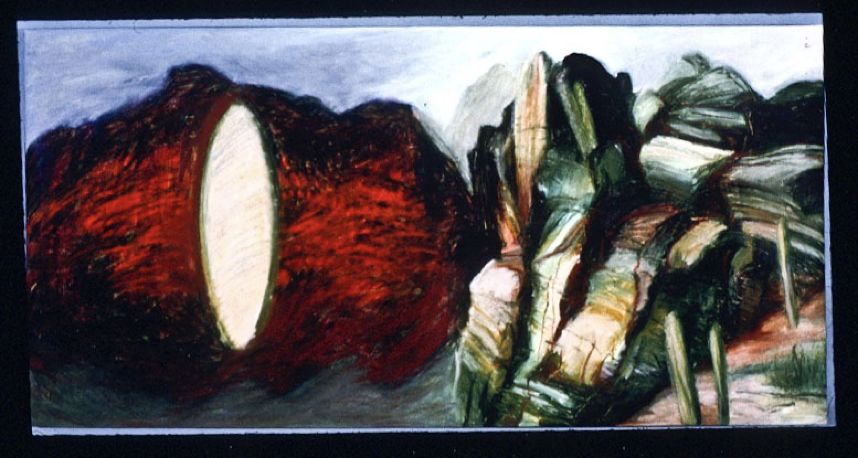
S25: Southeast, Contemporary (1992), Kay Walkingstick (Cherokee)
What is it? — Painting titled “Synergy II,” simultaneously juxtaposing and merging an abstract oval backgrounded by a red/black cloud with a scene of a rocky natural landscape
Functional and cultural significance — straying from traditional art, fully delving into abstract 2D painting
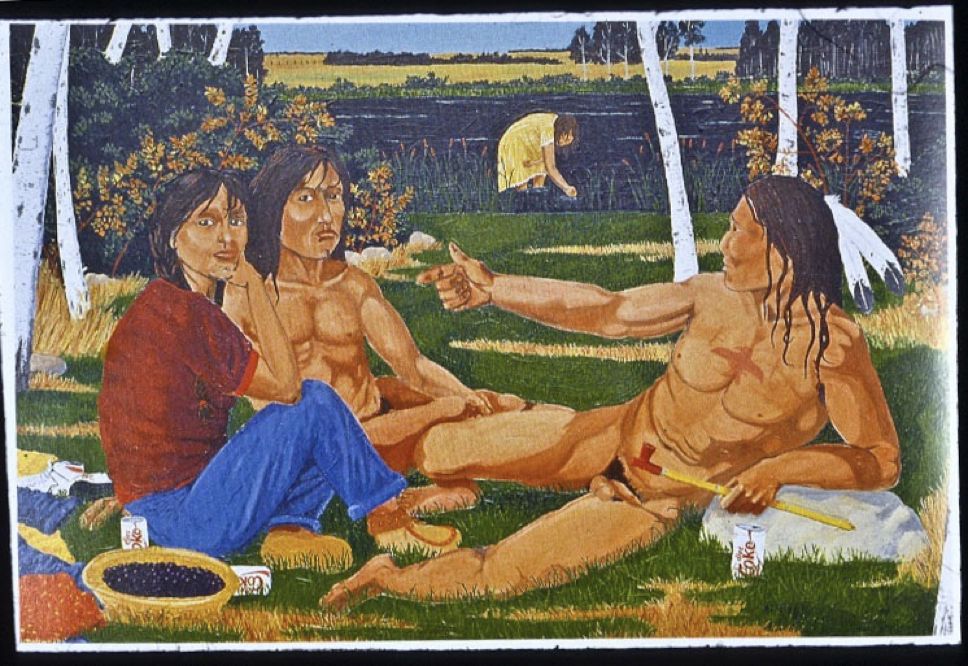
S35: British Columbia, Contemporary (1992), Jim Logan (Métis)
What is it? — Painting titled “The Diners Club (No reservations required),” featuring two nude men having a picnic with a clothed woman
Functional and cultural significance — putting a twist on Manet’s “Luncheon on the grass” by making the men, rather than the woman, nude
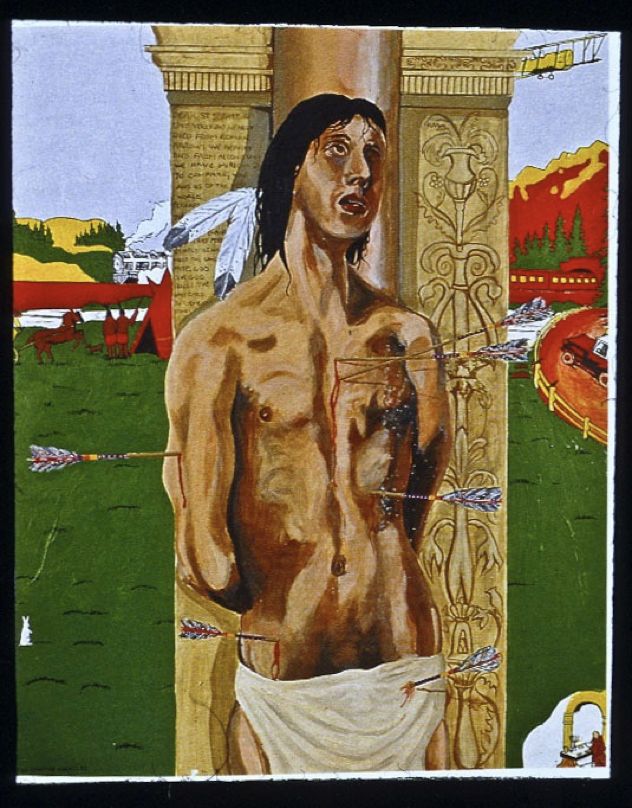
S35: British Columbia, Contemporary (1992), Jim Logan (Métis)
What is it? — Painting titled “Let us compare miracles”
Functional and cultural significance — putting a twist on Mantegna’s “St. Sebastian” by making a Native American the central figure, backgrounded by an American landscape — interrupting the Western art canon by incorporating Native imagery