English Language Exam Revision
 Call Kai
 Learn
Learn Practice Test
 Spaced Repetition
 Match
Match Flashcards
 Knowt Play
1/113

There's no tags or description
Looks like no tags are added yet.
Name | Mastery | Learn | Test | Matching | Spaced | Call with Kai |
|---|
No analytics yet
Send a link to your students to track their progress
114 Terms
Morpheme
The smallest unit of meaning within a word. These units of meaning are spelled consistently even though their pronunciation may change within words
Root word
Contains primary meaning
Prefix
Attach at the start of a root word
Suffix
Attach at the end of a root word
MR PEPC
Metalinguistic (talks about the language itself)
Referential (conveys information to people)
Poetic (brings an aesthetic)
Emotive (interprets feeling)
Phatic (establishes a social connection)
Conative (directions and commands)
The six factors to consider when exploring a function
Context, message, addresser, addressee, form of contact, way of talking
Lexicology
Lexicology relates to the study of the words themselves and these words fall into various categories known as word classes (or more traditionally, parts of speech).
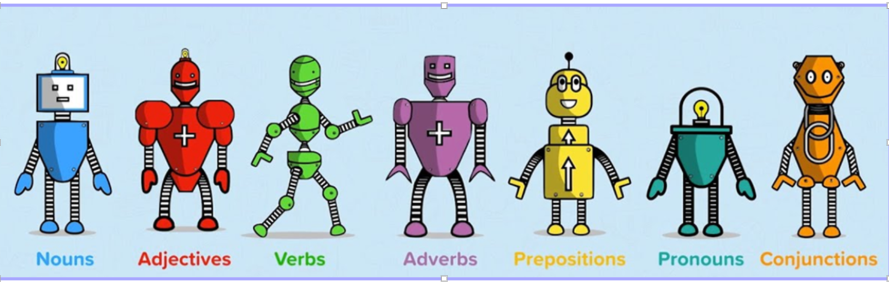
Nouns
They name people, places, animals, things, ideas, feelings and qualities.
Pronouns
Replace nouns

Verbs
Verbs are sometimes referred to as “doing” as they communicate what a subject (i.e. person or thing) is doing.
They also include “being” and “having” words. Being verbs can also tell us how something “is”.
Auxilary Verbs
Often known as the helper verbs, used to construct grammatical tenses.
eg. I am going, you have gone
Modal Verbs
Express possibility, intent, ability and obligation.
eg. I might eat, I could eat, I would eat
Adverbs
Adverbs help to describe, modify or qualify verbs, adjectives, other adverbs and whole phrases and sentences. Often has a -ly
Adjectives
Adjectives are describing words that modify nouns and pronouns.
Infixes
Rarely used suffix. Appear in the middle of words.
eg. Mothers-in-laws
Determiners
A determiner is a word that’s placed in front of a noun and helps to clarify the noun, specify quantity or indicate possession, include articles, quantifiers, demonstratives, possessives.
Demonstratives
Indicates specific nouns in a sentence. Helps provide information about the proximity of a noun in relation to the speaker and listener.
eg. this. that. these. those
Quantifiers
Helps to specific the quantity of a noun within a phrase. Quantifiers tend to help to answer questions such as ‘How many?’ or ‘How much?’
eg. All, a lot, many, most, much, some, several, few, a couple, one, none
Conjunctions
Conjunctions link words, phrases, clauses and sentences together.
Coordinating conjunctions
FANBOYS – for, and, nor, but, or , yet and so
Subordinating Conjuctions
Subordinating conjunctions: can only join clauses and sentences to each other in a way that demonstrates a parent-child relationship. The parent sentence is referred to as the independent clause, and the ‘child’ sentence as the dependent clause. Most famous is because.
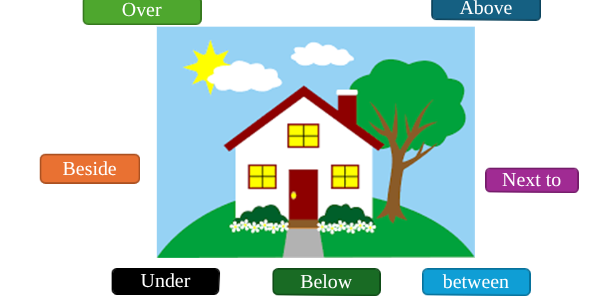
Prepositions
A preposition expresses a relationship between a noun and another word, phrase or element in a sentence.
Purpose
Refers to the reason the text exists
Answers the question: What is this text trying to do?
Intent
Refers to the specific motivation or goal of the author or speaker when creating the text.
Answers the question: What does the author or speaker want the audience to think, feel, or do?
Purpose vs Intent
Purpose is about the text’s role, while (authorial) intent focuses on the creator's goals. Purpose tends to be more objective, whereas (authorial) intent can involve subtle persuasive or emotional aims depending on the context.
Writing an analysis of a function
PMQC
Point: respond to the question
Metalanguage: provide a language feature to support your claim
Quote: quote an example of it from the passage (include line number)
Comment: analyse/explain how it supports your point.
Syntax
Syntax refers to the ways in which words are put together in sentences to make meaning.
Sentences are created by combining phrases (groups of words with a grammatical relationship) into clauses and then joining clauses to create sentences.
Subject
The subject is the person or thing they will act out the verb. Subjects are typically noun phrases
Object
The object is what the subject and verb are acting upon. While a sentence will always have a subject and a verb, they will not always have an object.
Predicates
All sentences have a predicate and they are very easy to spot – the predicate is what is left of the sentence after you have removed the subject. The predicate must also contain a verb.
Interjection
Expresses a sudden feeling or emotion. eg. hey! oh my!
Sentence Structures
Include sentence fragments, simple sentences, compound sentences, complex sentences, compound-complex sentences.
Simple sentences
A sentence consisting of a subject (noun) and a verb. It stands alone as an independent clause and complete sentence.
e.g. "The cat sleeps."
Compound sentences
Two or more independent clauses joined together by coordinating conjunctions (FANBOYS) like 'and', 'but', 'or'. Each part can stand alone.
e.g. "The cat sleeps and the dog barks."
Complex Sentences
Contains one independent clause and one or more dependent clauses. They are often joined using a subordinating conjunction, but not always.
e.g. "When the cat sleeps, the dog barks."
Compound-Complex Sentences
Combines elements of both compound and complex sentences. It has two or more independent clauses joined with a coordinating conjunction and at least one dependent clause.
e.g. "While the cat sleeps, the dog barks and the birds chirp."
Sentence Types
There are four main sentence types: declarative, interrogative, imperative and exclamative.
Interrogative
Used when framing questions. Designed to elicit responses and always end with a question mark.
Declarative
To provide information, observations or statements. They are the most common sentence type in English.
Imperative
Give a direct order or instruction. This sentence type will often omit the subject of the sentence.
Exclamative
Make exclamations! They indicate high levels of feeling or emotion and emphasise what is being said. Written forms end with an exclamation mark, while spoken term may end with a rising intonation, stress or volume.
Semantics
Semantics is the study of meaning in language at a morpheme, word, phrase and sentence level.
Oxymoron
An oxymoron is a type of phrase that combines two apparently contradictory words for special effect.
For example, in the opening scene of Shakespeare’s Romeo and Juliet, Romeo cries out: ‘O brawling love, o loving hate’.
Irony
Irony occurs when a speaker or writer states one thing but actually intends the audience to understand an opposing or contradictory meaning. For example, in stormy weather, a person who said ‘Nice day for a picnic’ would expect their listeners to understand that the statement was ironic and that it was, in fact, a terrible day for a picnic.
Personification
Personification is a specific type of metaphor that gives non-humans(animals, ideas, objects, places) human qualities or abilities such as emotions, desires, expressions or language.
How are SAQs marked
Marks are tight. We don’t give half-marks, so you either hit the point or you don’t.
Here’s the rough guide:
1 mark → identify a feature (not common in Year 12)
2 marks → feature + effect.
3–4 marks → feature + effect + explanation linked to context.
5 marks → usually a comparison or extended explanation.
What assessors want
Clear and concise answers (1–3 sentences).
Correct metalanguage.
Direct quotes with line numbers.
No waffle — accuracy beats length.
D.I.I.E.
Declaritive.Interrogative.Imperitive.Exclamative.
PALMOFSHIP Semantics
Pun, Animation, Lexical Ambiguity, Metaphor, Oxymoron, Figurative Language, Simile, Hyperbole, Irony, Personfication
Lexical Ambiguity
Lexical ambiguity occurs when a single word or phrase has multiple, distinct meanings, causing confusion or different interpretations of a sentence. This phenomenon often happens when the surrounding context is insufficient to clarify which meaning is intended.
Power
Power is the ability to influence people’s behaviour, choices, or relationships — often through language.
Three main types of Power
Institutional Power
Social Power
Interpersonal Power
Institutional Power
The language is formal, directive and impersonal
Social Power
Shows respect, signals difference and adjusts the tone to suit the person.
Interpersonal Power
Occurs on one-on-one interactions and power can shift through the conversation. The language used manages relationships, builds or reduces distance and negotiates influence. Eg. A teacher correcting a student.
Key Idea to remember
Power is not just about who has authority, but how language is used to manage relationships.
Speakers use language to…
Build rapport
Promote harmony
Reinforce social distance
Building Rapport
When a speaker builds rapport, they use language to gain cooperation voluntarily rather than through authority. It aims to create a sense of trust, understanding, and mutual respect between individuals, which can lead to smoother interactions and stronger connections.
Promoting Social Harmony
Promoting social harmony refers to the use of language that avoids conflict, is respectful of others and promotes a shared understanding. Some examples include using inclusive or politically correct language.
Reinforce social distance
Social distance refers to the level of closeness or familiarity between people. It emphasizes authority by maintaining a social hierarchy or formality, which exists along a scale.
Sociolinguistics
A field of study that examines the relationship between social factors and language
Sociolinguistic Variables
Refer to factors in society that differ from text to text. CART
CART
Context
Audience
Register
Tenor
Context
Setting (Where is the communication taking place?)
Time (When is it happening?)
Addresser & Adressee (Who is communicating?)
Purpose (Why is the communication happening?)
Text Type & Mode (Is it spoken or written? A casual text, a formal speech, an email?)
Context-Situational
Mode
Setting
Field
I
Text Type
Mode
Written, spoken, signed
Field
A group of words that share related meanings, concepts, or subject matter. These words are organized around a specific topic—such as "weather" (rain, storm, sunny)—to create cohesion in text, enhance vocabulary, and establish context.
Text Type
The type of text used to convey the message eg. speech
Audience
Audience refers to the people who are intended to receive or interact with a particular message.
Tenor
Tenor refers to the relationship between individuals communicating with each other. They can on: The professional roles of the participants, the status between speakers and the relationship between the participants. Eg. Authoritive, Submissive, Respectful
How to explain tenor
-You can refer to the level of consideration one person gives another: respectful, friendly, appreciative
-The amount of social distance between them. It includes terms like: ‘very close’, ‘little social distance’, ‘some social distance’ or ‘quite close’
-Status relates to a person’s social standing or rank, so terms like ‘high’ to ‘low’ are appropriate.
Register
Refers to the formality of the text
Positive Face Threat
Aim to minimise offense by emphasising friendliness and rapport. A common example is the 'feedback sandwich'—where a criticism is cushioned between two positive remarks to soften its impact.
Negative Face Threat
Focus on avoiding offense by expressing deference and respect. When someone uses negative politeness, they are showing respect for their autonomy, trying not to impose on the other person, or acknowledging that their actions or requests might be seen as an intrusion.
Saving Positive Face Techniques
Deflection
Politeness Strategies
Joking and Humour
Agreement Strategies
Changing the Subject
Saving Negative Face Techniques
Apologies
Hedging
Politeness Strategies
Changing the Subject
Distancing
Phonetics
The study of the sounds of human speech.
Phonology
The study of the way a particular language organises sounds to convey meaning. Phonology examines the way words sound in different English accents.
Prosodic Features
Volume
Tempo
Intonation
Pitch
Stress
Volume
Volume is the loudness or softness of a voice.
Intonation
Intonation is the pattern of pitch from falling to rising or vice versa across phrases, clauses and sentences
Tempo
Relates to the pace (speed) with which an intonation unit is delivered. It is often linked to the communication of emotion or intent within a conversational exchange.
Pitch
Pitch is the relative height, ranging between high and low, of auditory sound.
Stress
Stress is the intensity that is placed upon a syllable within a word.
Eg. I think that’s my bag. (but you may disagree)
I think that’s my bag. (but I’m not entirely sure)
I think that’s my bag. (not this one)
I think that’s my bag. (not someone else’s)
I think that’s my bag. (not something else)
What
The WHAT is where you identify the linguistic feature or pattern you will analyse.
word class (modal verb, adjective, pronoun)
syntax (imperatives, declaratives, interrogatives)
discourse strategies
politeness strategies
Jakobson’s functions
Register features
(use a quote)
How
The HOW is the analytical core of the paragraph.
Here you explain how the language feature operates and what effect it creates in the interaction.
This often involves discussing:
how the feature softens or strengthens meaning
how it shapes tenor or power relations
how it affects formality
how it constructs solidarity or distance
how it helps the speaker manage face needs
Why
The WHY explains why the speaker or writer uses the feature in this situation.
This connects the analysis to:
Communicative purpose – addressing face needs/building rapport, etc.
Audience
Tenor - relationship
Context
Jakobson’s function
This step shows that you understand the broader meaning of the linguistic choice.
Sample What-How-Why
The text maintains a formal public register typical of a government press conference, positioning the Prime Minister as an authority addressing the Australian public during a national crisis. This authority is reinforced through the use of imperative clauses such as “Stop hoarding” (l.2) and “Stop it” (l.4), which function as direct behavioural directives to the audience. The speaker also uses negative declarative clauses including “It’s not sensible” and “it’s not helpful” (l.5), as well as the repeated structure “It is not…” (l.7–9), creating syntactic parallelism that emphasises condemnation of this very behaviour. This is balanced with some informal features such as the inclusive first-person plural pronoun “we” in the clause “That is not who we are as a people” (l.7) which constructs a collective national identity while positioning the audience as responsible members of that group. Through the combination of imperatives, negative declaratives, and collective pronoun use, the Prime Minister establishes an authoritative register that reinforces his institutional power while urging Australians to cease panic buying.
Discourse
Discourse refers to both the written and spoken modes of language, and it covers a wide range of different text types. Discourse analysis involves looking at whole texts or excerpts from texts and analysing their register, structure, context, function, purpose and other linguistic features (i.e. CART elements)
Paralinguistics
facial expressions, body gestures, body language, and eye gaze. It can also include vocal effects such as a creaky voice, whispering, tone of voice, laughing, sighs, and intakes of breath.
Discourse Features-Openings
We open with salutations: ‘Hi’, ‘Hey’, ‘Good morning’ and
Vocatives: ‘Sally’, ‘Ladies and gentlemen’, ‘Mum’, ‘Darling’ to greet people, and
often some kind of phatic question or comment: ‘How are you?’ ‘Great to see you!’ ‘Nice day, isn’t it?’.
Discourse Features-Closings
Formulaic utterances — they are typical, oft-repeated phrases that form part of our conversational rituals and help give our conversations a framework or structure.
For example:
‘Well, I'd better get going ...’
‘It’s been lovely talking to you ...’
‘Okay, well thanks for that’
‘See ya!’
Adjacent Pairs
Adjacency pairs are sequentially linked utterances or turns in a conversation where one speech act (e.g. a question) is followed by its expected response (e.g. an answer).
These sequences are normally adjacent to each other – one after the other – in a cooperative conversation.
Most adjacency pair sequences have what is referred to as preferred or dispreferred responses.
Eg. How are you, I am good
Overlapping Features
We sometimes overlap one another inadvertently, when we think the other person has finished speaking, or because we are excited or encouraging the other person to continue; often we overlap someone when we are agreeing with them, or echoing their thoughts. However, we can also overlap deliberately, in an attempt to contradict, interject or take the floor.
Discourse particles
Discourse particles (or ‘discourse markers’) are the little ‘fillers’ we insert in our speech for a particular purpose.
Examples include: ‘well’, ‘yeah-no’, ‘okay’, ‘like’, ‘anyhow’, ‘OMG’, ‘guess what’, ‘I mean’, ‘I guess’, ‘kind of’, ‘sort of’, ‘you know’ and ‘I think’.
Pauses
Pauses may occur when we’re breathing, or when we reach some sort of grammatical boundary in our speech (‘He was so happy(.) and it was wonderful to see.’).
Filled Pauses
Filled pauses or voiced hesitations are words such as ‘um’, ‘ah’ and ‘er’, and these are very common indicators of hesitation or thinking.
A false start
A false start might involve one of these filled pauses(‘I ah, don’t know’) or possibly repetition (‘I I don’t know’) or a repair, where the speaker corrects themselves(‘She (...) I don’t know’ or ‘I (.) I’ll go if you like’). Stumbling on a word, or stuttering, is also a common non-fluency feature(‘I d- don’t want to go tonight’).
morphology
the internal structure of words
morpheme
the smallest unit of meaning in a word including root words, prefixes, suffixes, infixes and affixes