Operative Lecture 8: Polymerization Shrinkage
 Call Kai
 Learn
Learn Practice Test
 Spaced Repetition
 Match
Match Flashcards
 Knowt Play
1/77

There's no tags or description
Looks like no tags are added yet.
Name | Mastery | Learn | Test | Matching | Spaced | Call with Kai | Chat |
|---|
No analytics yet
Send a link to your students to track their progress
78 Terms
What are the three steps after placing a composite?
1. Shape
2. Light cure
3. Lock
What is using light energy to turn soft paste into hard plastic called?
Light curing
What occurs to the shape of the composite during curing?
Shrinkage
Rank the three photoinitiators from shortest to longest wavelength
1. Lucerin
2. PPD
3. Camphorquinone
Which light curing unit has the shortest range of wavelengths?
Conventional LED
What is generated when photoinitiators are activated by a light source?
Reactive species (Free radicals)
What do reactive species initiate in light curing?
Polymer chain formation
How do polymer chains grow in light curing?
Sequential addition of monomer units
What are the four types of light curing units?
1. QTH
2. LED
3. Plasma arc
4. Laser units
What are the four disadvantages of using QTH curing lights?
1. Heavy
2. High energy consumption
3. Heat generation
4. Loud
What is the benefit of using QTH curing lights?
Wide spectrum
What is the tip shape for QTH curing lights?
Big and long
Why aer halogen curing lights not used anymore?
Does not cure photoinitiators with short wavelengths efficiently
What two traits make LED curing lights efficient?
1. Minimum energy consumption
2. Minimum heat generation
What are LED curing lights usually powered by?
Batteries
What is the tip shape for LED curing lights?
Short and thin
What are the four names for LED curing units that emit photons at two or more bands?
1. Polywave
2. Wide-band
3. Broad-band
4. Multi-chip
What is the term that measures how powerful the flashlight is?
Radiant power (flux)
What is the term for how much light energy is leaving curing tip surface?
Radiant exitance (emittance)
What is the term for the amount of light energy that hits composite?
Irradiance
What is the term for how much energy curing light emits at each wavelength?
Spectral radiant power
What are the three possible fates of photons when emitted from a light cure unit?
1. Lost
2. Reflected
3. Attenuated
What can some photons be lost in light curing?
Divergence angle of light beam
What are the two main processes that attenuate photons in light curing?
1. Absorption by photoinitiators
2. Scattering by the pigments and fillers
What angle do you want for light curing?
Perpendicular to tooth
What are the five factors that the depth of cure (polymerization) depends on?
1. Time of cure
2. Intensity
3. Distance between light source and resin
4. Increment thickness
5. Material related factors
What is the minimum intensity needed for light curing?
300 mW/cm²
What is the maximum increment thickness for light curing?
2 mm
What is the percentage of carbon double bonds converted into single bonds called? (Monomer to polymer)
Degree of conversion
What does the improvement of mechanical properties from increasing degree of conversion result in?
More color stability
What type of curing causes the highest rate of conversion?
Heat
After curing the composite for the optimal time, will over curing increase the degree of conversion?
No
What are the four negative effects of undercuring?
1. Low mechanical properties
2. Less color stability
3. Leaching of unreacted monomer
4. Possible recurrent caries
What are the three negative effects of overcuring?
1. Heat generation
2. Pulpal and soft tissue irritation
3. Longer chair time
Which type of photoinitiator has a simple bond-cleavage mechanism?
Norrish Type I
What type of photoinitiator is Camphorquinone?
Norrish Type II
What are the four steps for free-radical polymerization with photoinitiators?
1. Activation with light absorption
2. Free-radicals react with monomer
3. Polymer network formation
4. Termination of free radicals
What color is Camphorquinone?
Yellow-ish
Why can residual amines when using Camphorquinone cause color instability of RBCs?
Residual amines turn yellow over time
What forces initially hold close monomer molecules together?
Van-der Waals forces
What bonds are formed when monomers come closer together when being cured?
Covalent
What are the four phases of the polymerization process?
1. Autoacceleration
2. RP max
3. Autodeceleration
4. Limiting conversion
What is the transition between pre-gelation and post-gelation phases called?
Gel point
In the visco-plastic (pre-gelation) phase, what two things are taking place?
1. Chain growth
2. Plastic deformation
In the stress-building (post-gelation) phase, what two things are taking place?
1. Chain growth
2. More cross-linking
Is there a linear or exponential increase in stress as conversion increases?
Exponential
Which composites does shrinking occur in?
All composites
When does shrinking stress occur?
When composite is bonded to tooth
What is the ratio between the number of bonded walls to the unbonded ones?
C-factor
Does a higher C-factor indicate higher or lower stress?
Higher
What are the four advantages of the incremental technique?
1. Appropriate contact tightness
2. Optional restoration stains
3. Simulates natural enamel
4. Adequate curing energy for each increment
What are the three disadvantages of the incremental technique?
1. Time
2. Air bubbles
3. No evidence of reducing stress
What are the six consequences of shrinkage stress?
1. Marginal staining
2. Microleakage
3. Secondary caries
4. Enamel crack
5. Internal gap
6. Sensitivity
What should inspection clean up with adequate light be checked with?
Radiometer
What should be used to prevent cross contamination during curing?
Plastic sleeves
What should always be worn when using curing lights?
Amber eye protection
Why are multi-wave LEDs preferred?
Activates all currently used photo-initiators
How should compromised access and darker shades of composite be compensated by?
Increasing curing time
What are the two ways of reducing shrinkage stress related to material modification?
1. Increase filler loading
2. Bulk-fill composite
What are the three ways of reducing shrinkage stress related to stess-absorbing layers?
1. Adhesives
2. Low viscosity composites
3. RMGI
Why does increasing filler loading decrease shrinkage stress?
Reduces amount of resin used (less shrinkage)
What is the composite that can be placed without using an incremental technique?
Bulk-fill composite
What are the four benefits of using Bulk-fill composite?
1. Allowing deeper curing in single layer
2. Reducing shrinkage stress
3. Avoiding voids
4. Saving time
What is the photoinitiator for bulk-fill composite?
Ivocerin
What are the two differences of Ivocerin to camphorquinone?
1. Higher potency
2. Lower peak wavelength
What are the two main distinctive features of bulk-fill composites?
1. Increased translucency
2. Increased depth of cure
What is needed to finish off filling with flowable composites?
Capping with regular or bulk-fill composites
What are the three limitations of bulk-fill composites?
1. Limited long-term data
2. Esthetic limitations
3. Varying material properties
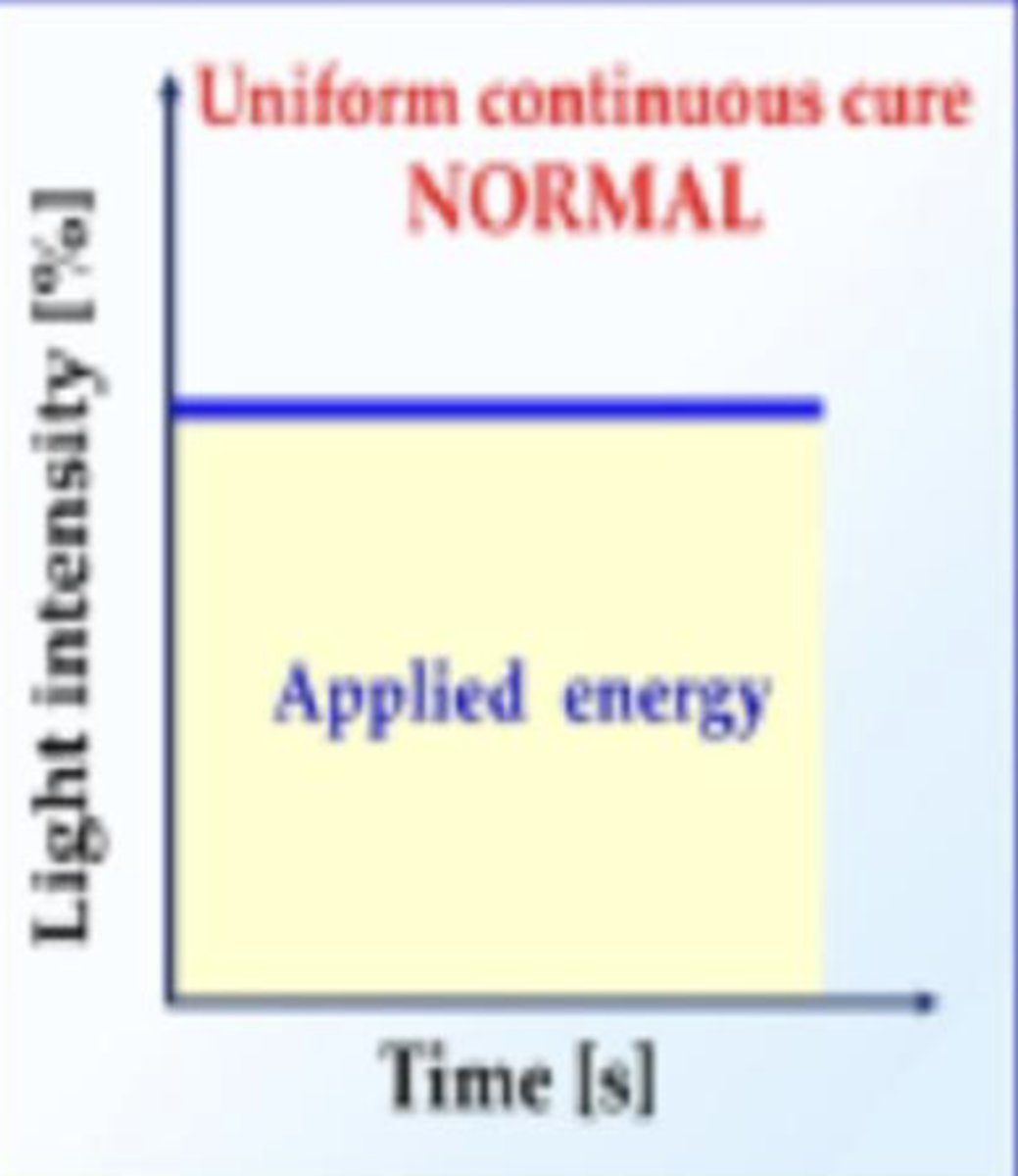
What kind of cure has applied energy remaining constant throughout the curing time?
Normal
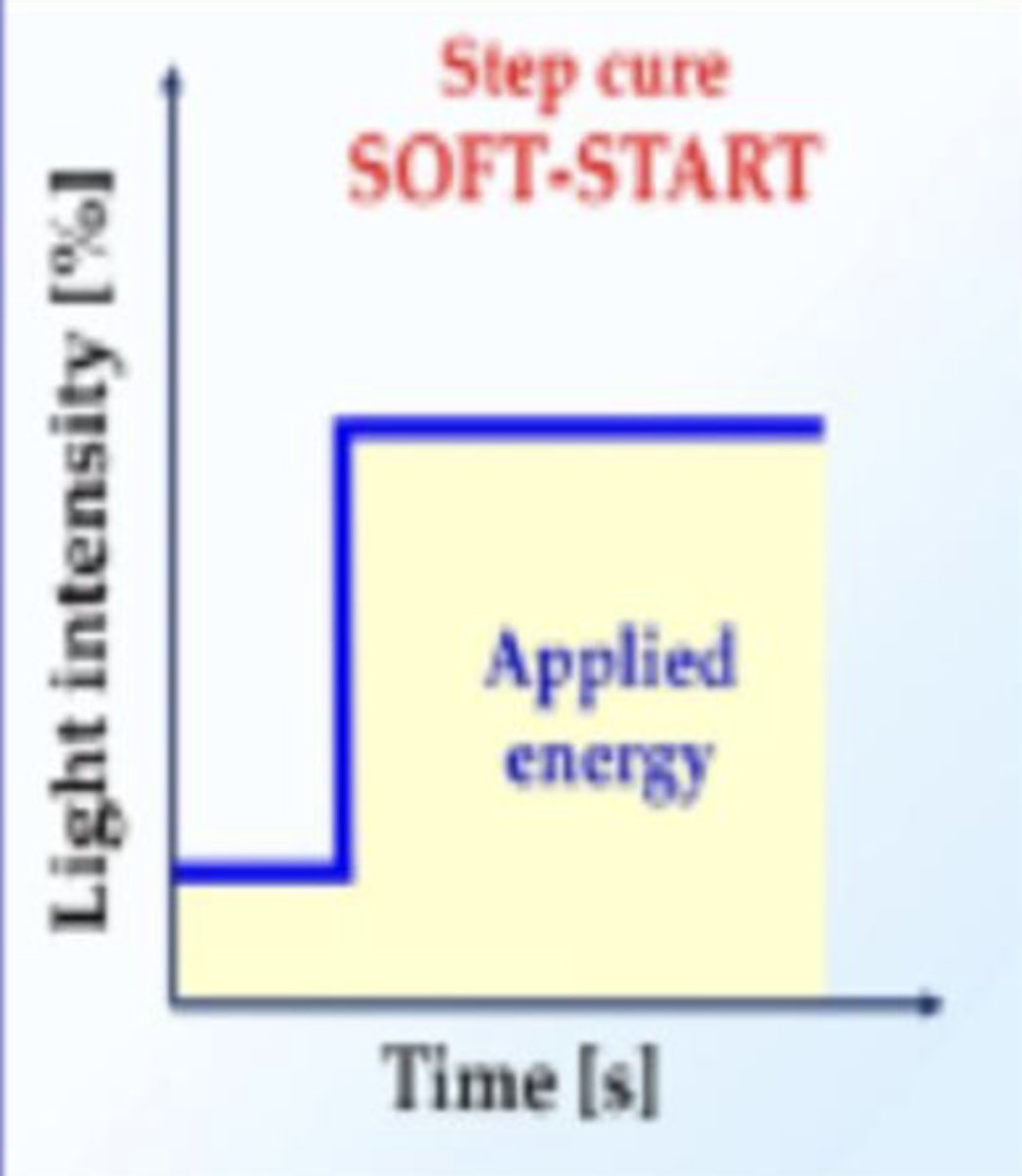
What kind of cure has applied energy starting low then increasing to full intensity?
Soft-start
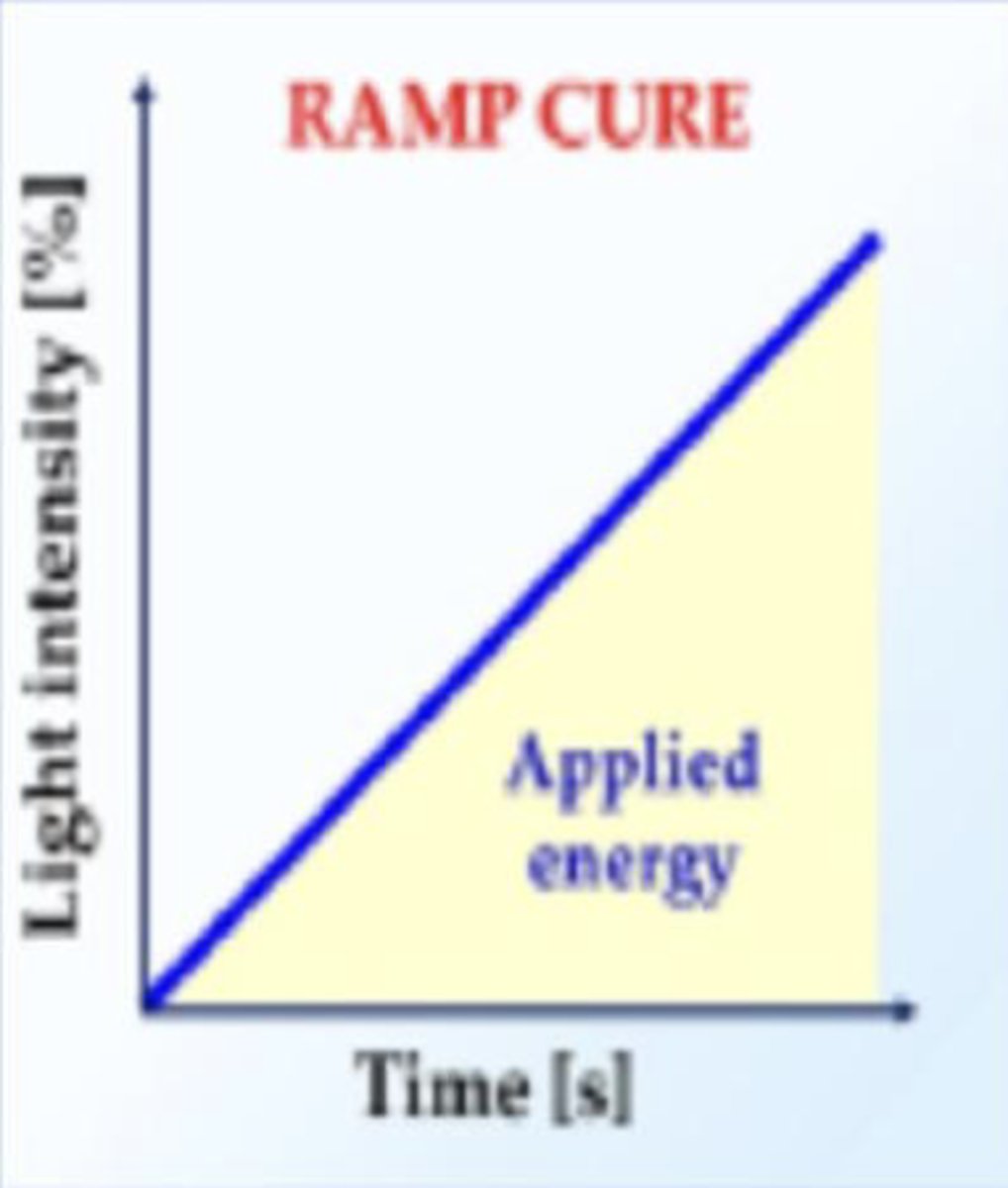
What kind of cure has applied energy gradually increasing from low to high intensity over time?
Ramp
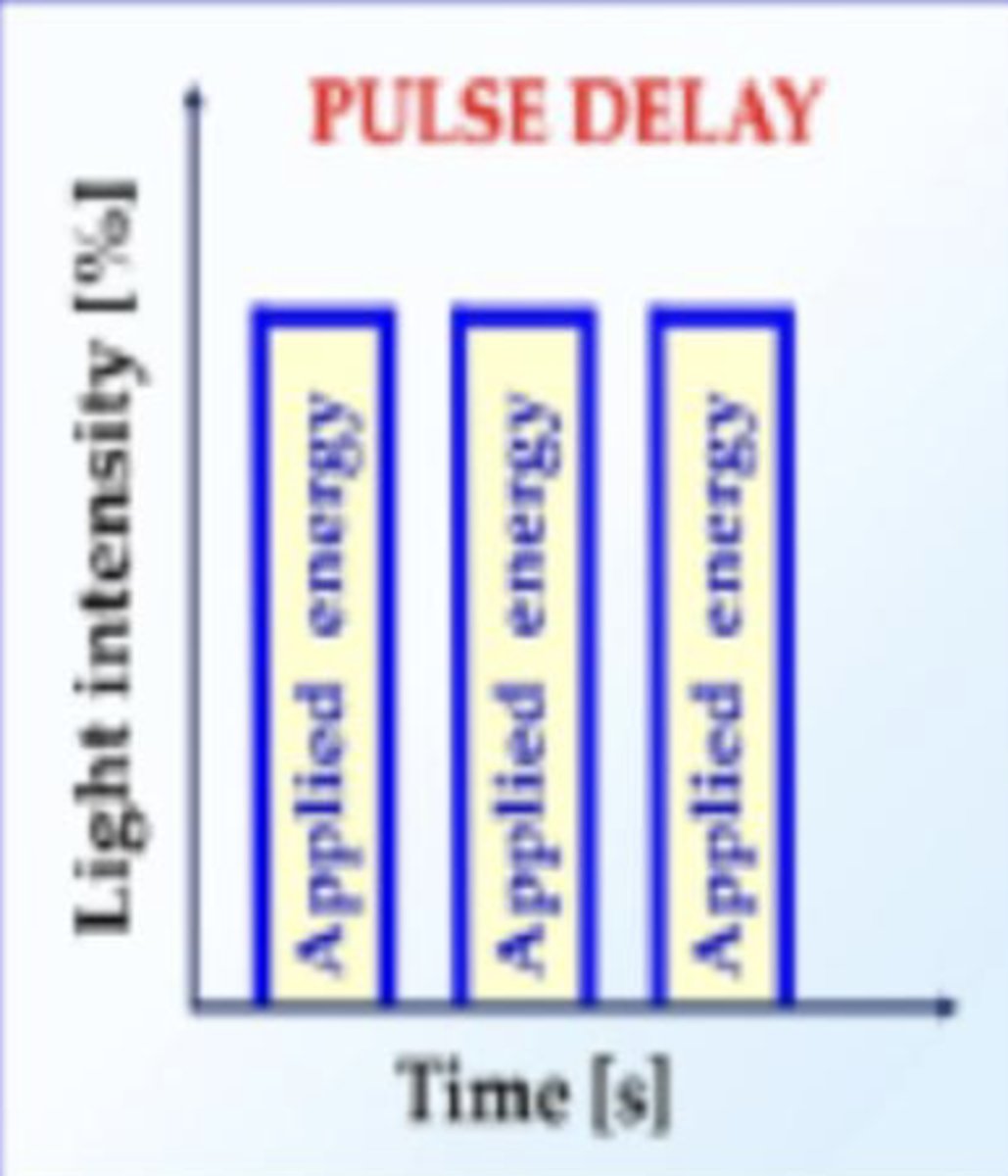
What kind of cure has applied energy delivered in intermittent pulses with delays between applications?
Pulse delay
What are the two types of stress-absorbing liners?
1. Flowable composite
2. Resin modified glass ionomer
Which wall/floor can stress-absorbing liners be used on by itself?
Gingival floor
Which wall/floors must apply stress-absorbing liners be used on both?
Pulpal and axial walls
What technique is used with resin modified glass ionomer as a stress-absorbing liner?
Open sandwich
What is the benefit of RMGI?
Less moisture sensitive
Why is RMGI not sensitive to light curing?
Can undergo chemical curing parallel to light curing