Bio 161 - Cell-Cell Interactions: Junctions & Signaling
 Call Kai
 Learn
Learn Practice Test
 Spaced Repetition
 Match
Match Flashcards
 Knowt Play
1/70

There's no tags or description
Looks like no tags are added yet.
Name | Mastery | Learn | Test | Matching | Spaced | Call with Kai |
|---|
No analytics yet
Send a link to your students to track their progress
71 Terms
What is the key to cell-cell interactions?
signal & a response
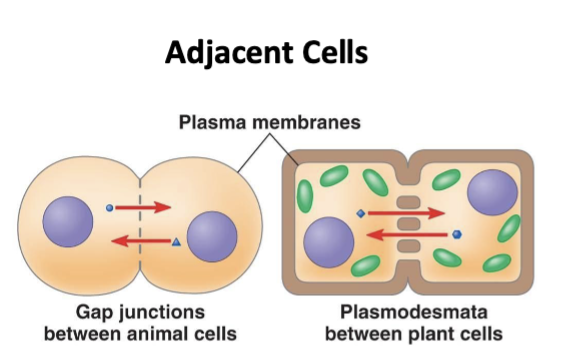
Ways Cells Communicate: Adjacent Cells
cytoplasm to cytoplasm → proteins form physical junctions
OR
maybe through pores between cells
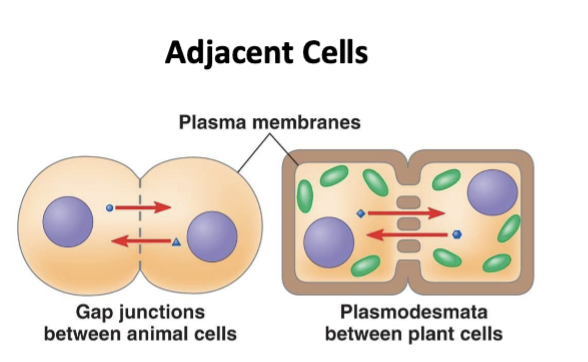
What moves through adjacent cell communication?
small molecules line ions & chemical messengers flow freely & rapidly through pores from one cell into the next
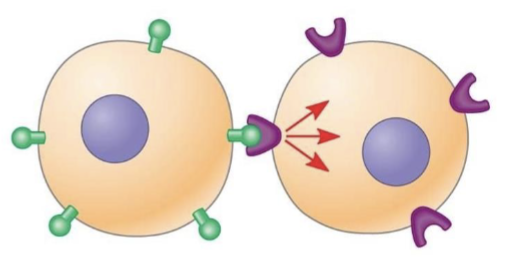
Ways Cells Communicate: External Cell Signaling - Contact Dependent
one cell has ligand bound to its own membrane
neighboring cell has receptor bound to its membrane
cells come into direct physical contact → ligand plugs into receptor
Ways Cells Communicate: External Cell Signaling - Secreted Chemical Signaling
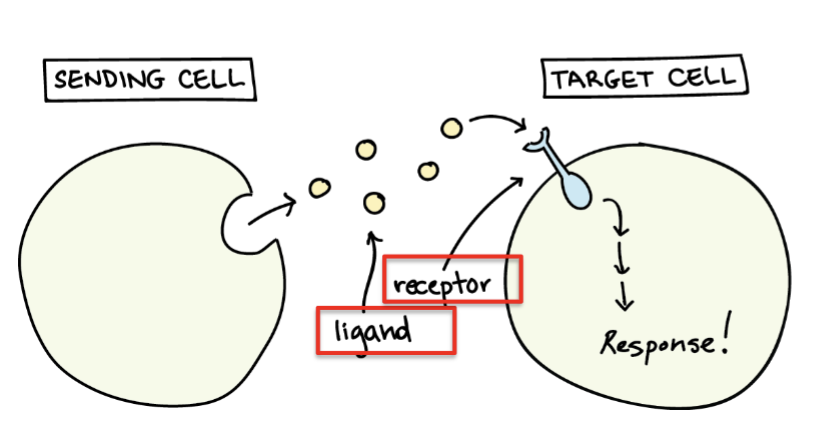
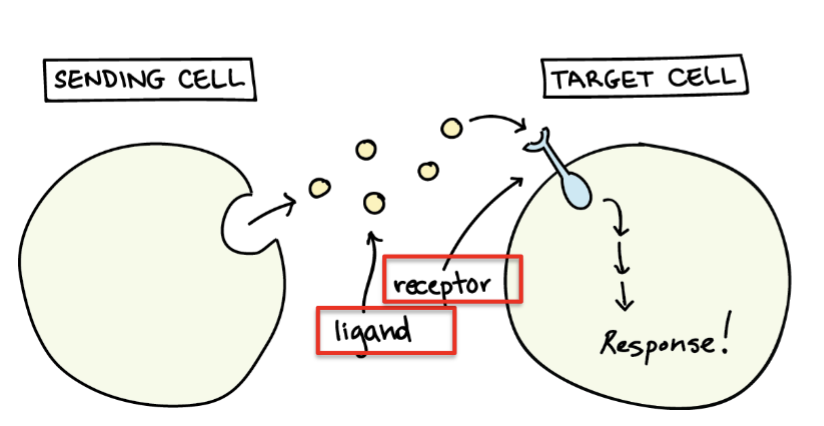
sending cell releases/secretes ligands → diffuse through extracellular space
ligands bind to receptors on target cell
What is a ligand
general term for small molecule that induces a response
What determines whether a cell responds to a signal?
Presence of the correct receptor.
Why can different tissues respond differently to the same signal?
Different tissues express different receptors and signaling pathways.
Autocrine, Paracrine, and Endocrine are all
types of external cell signaling
not contact dependent
describe the distance that the signaling molecule (the ligand) travels from the secreting cell to the target cell
External Cell Signaling: Autocrine
cell releases signal that loops back & binds to itself
to self, very close
External Cell Signaling: Paracrine
signal diffuses a short distant to nearby neighbor (like example of External Cell Signaling - Secreted Chemical Signaling)
External Cell Signaling: Endocrine
signal (hormone) enters blood stream to travel long distances across body
Which signaling type usually uses hormones?
Endocrine signaling.
Which signaling types are usually local?
Autocrine and paracrine signaling.
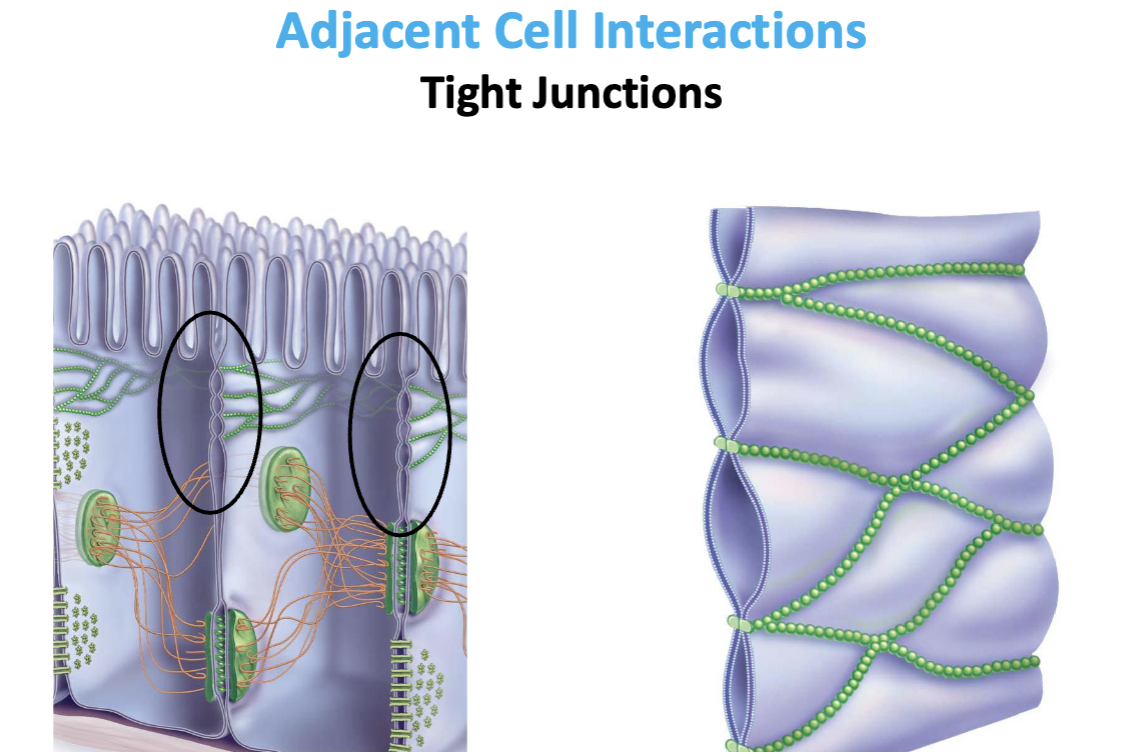
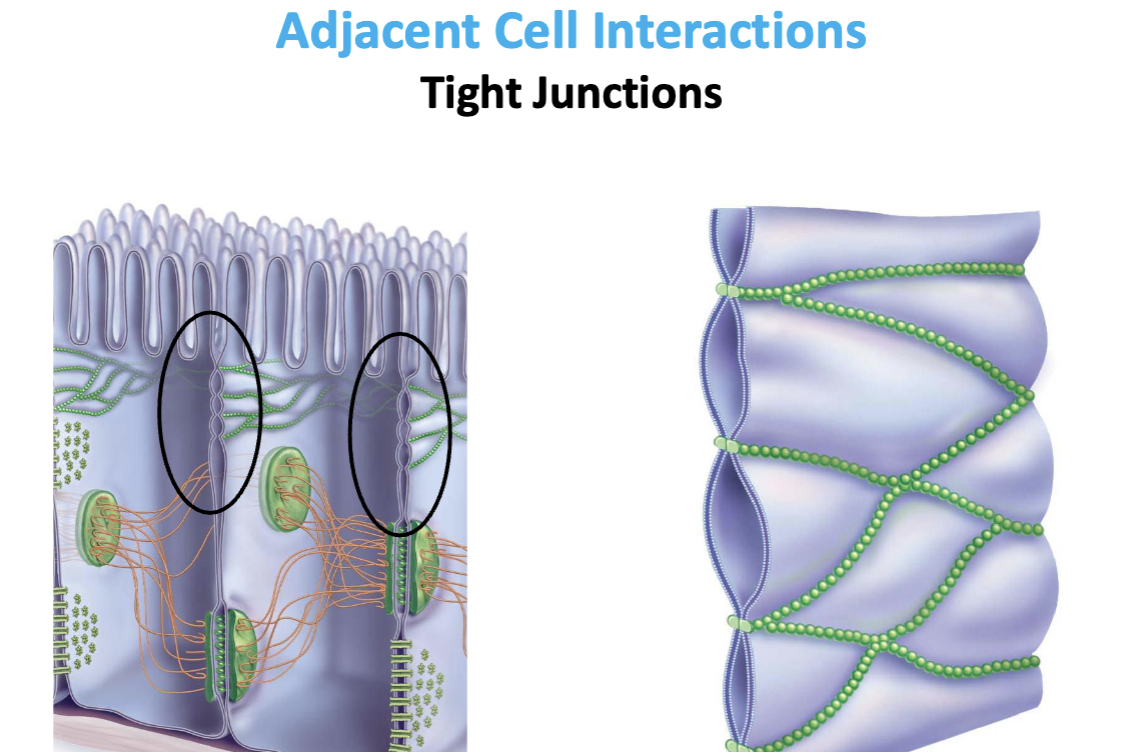
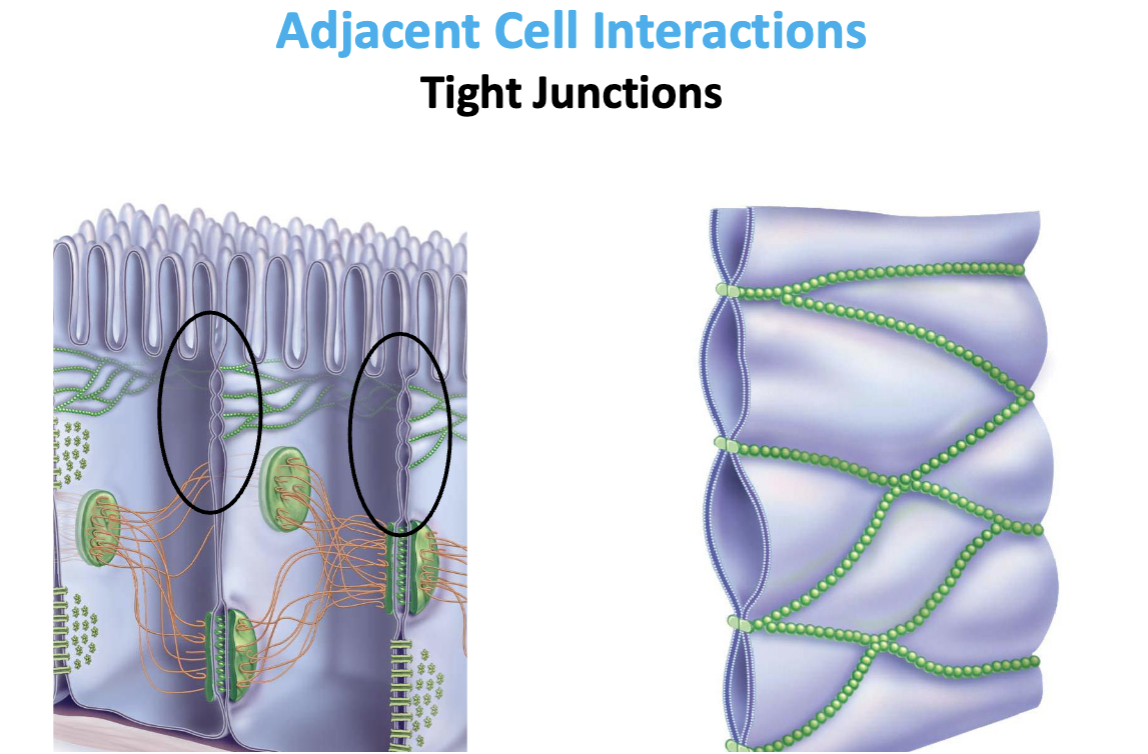
What is the main function of tight junctions?
To seal adjacent cells together and prevent leakage.
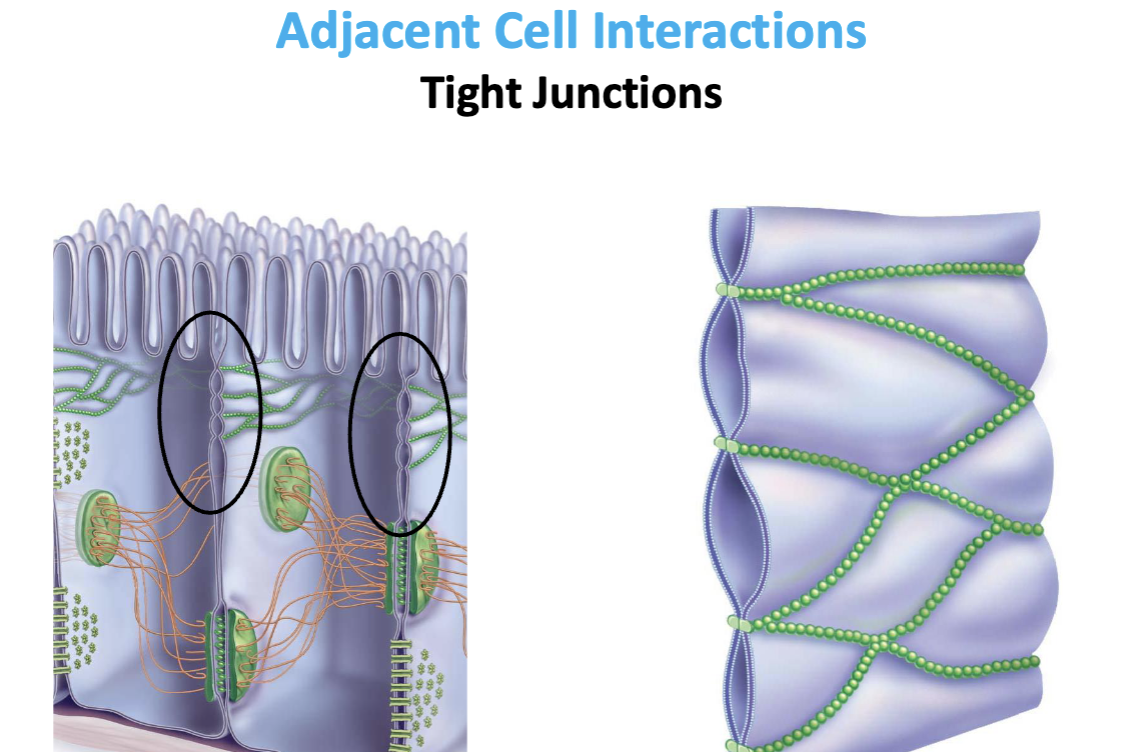
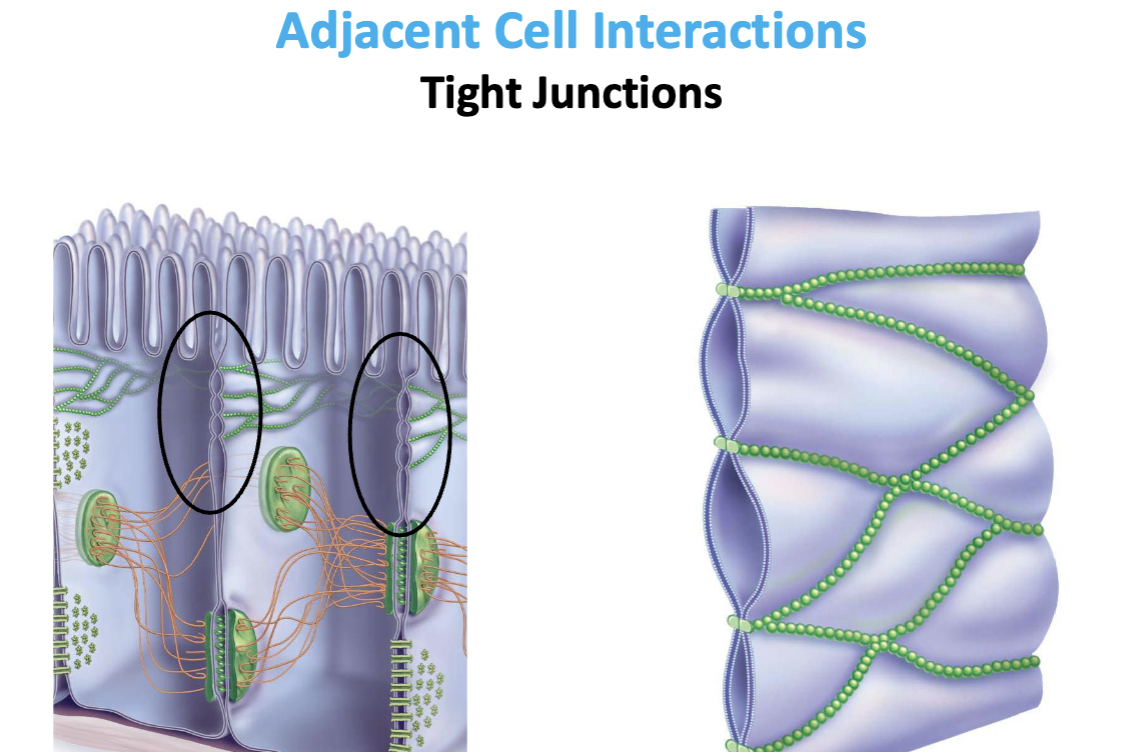
holds 2 or more cellular membranes together to make semi-impermeable membrane structures
Where will tight junction be found?
in anatomical locations where there is some type of interaction w/outside world
Tight junctions are commonly found in what tissue types?
Epithelial and endothelial tissues.
Epithelial tissues
protective barrier covering external body surfaces (like skin) or lining internal organisms (like stomach) that interact w/outside environment
Endothelial tissues
type of epithelium tissue that lines “inner” world of body like vasculature (hear, blood vessels, lymphatic vessels)
What do tight junction proteins do to adjacent membranes?
“Stitch” them together.
→ are inter-membrane, go through entire membrane
Why are tight junctions important in epithelial tissues?
They create selective barriers.
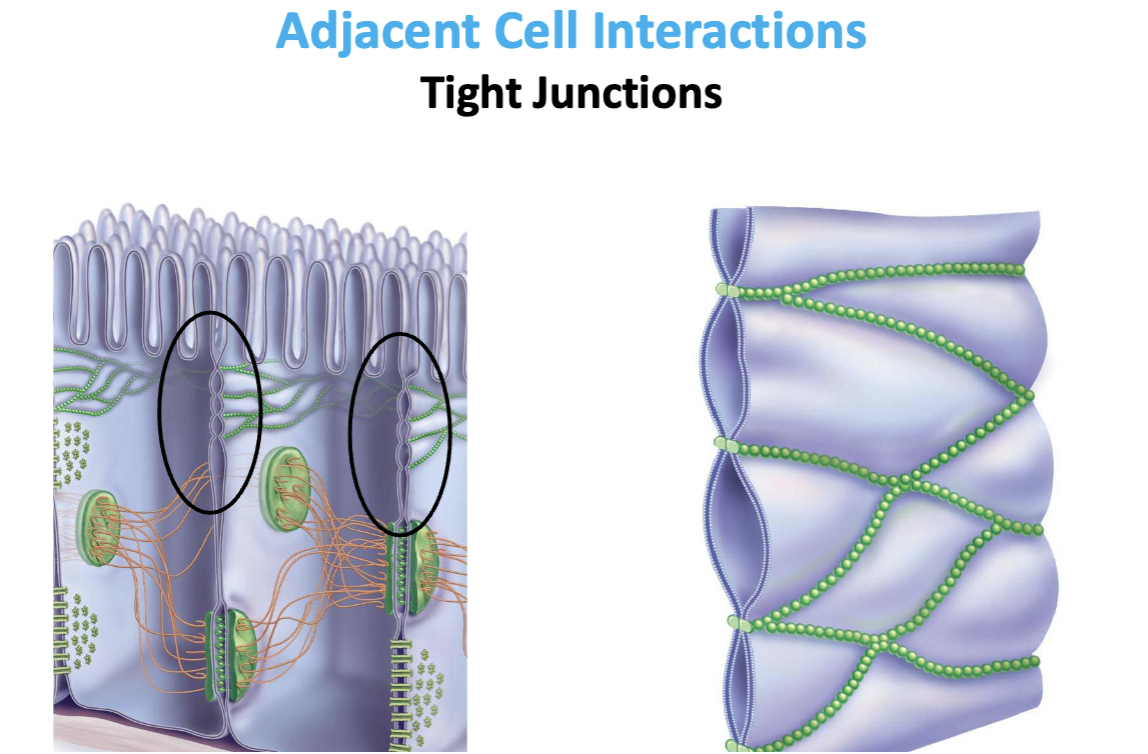
What is the apical side of an epithelial cell?
The exposed/outside-facing side.
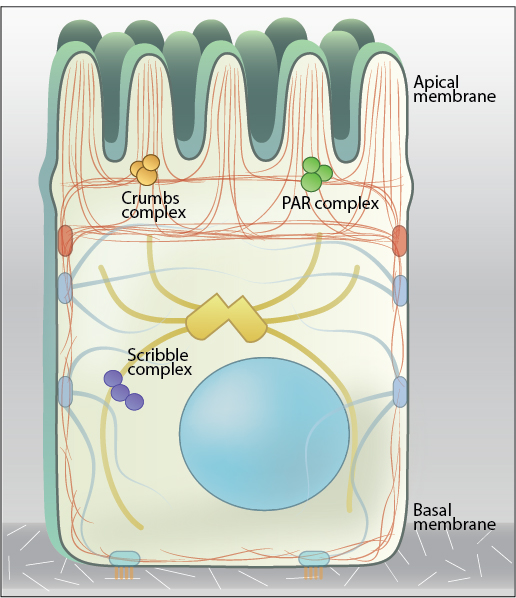
What is the basal side of an epithelial cell?
The bottom side attached to underlying tissue.
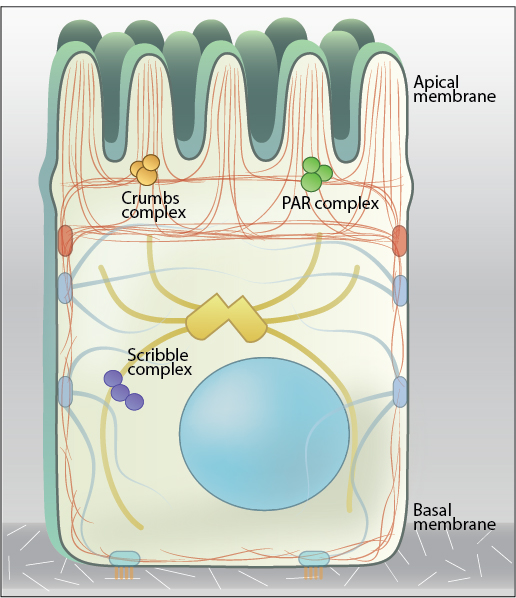
Where would you commonly find tight junctions?
junctions are located at the apical-most end of the lateral membrane
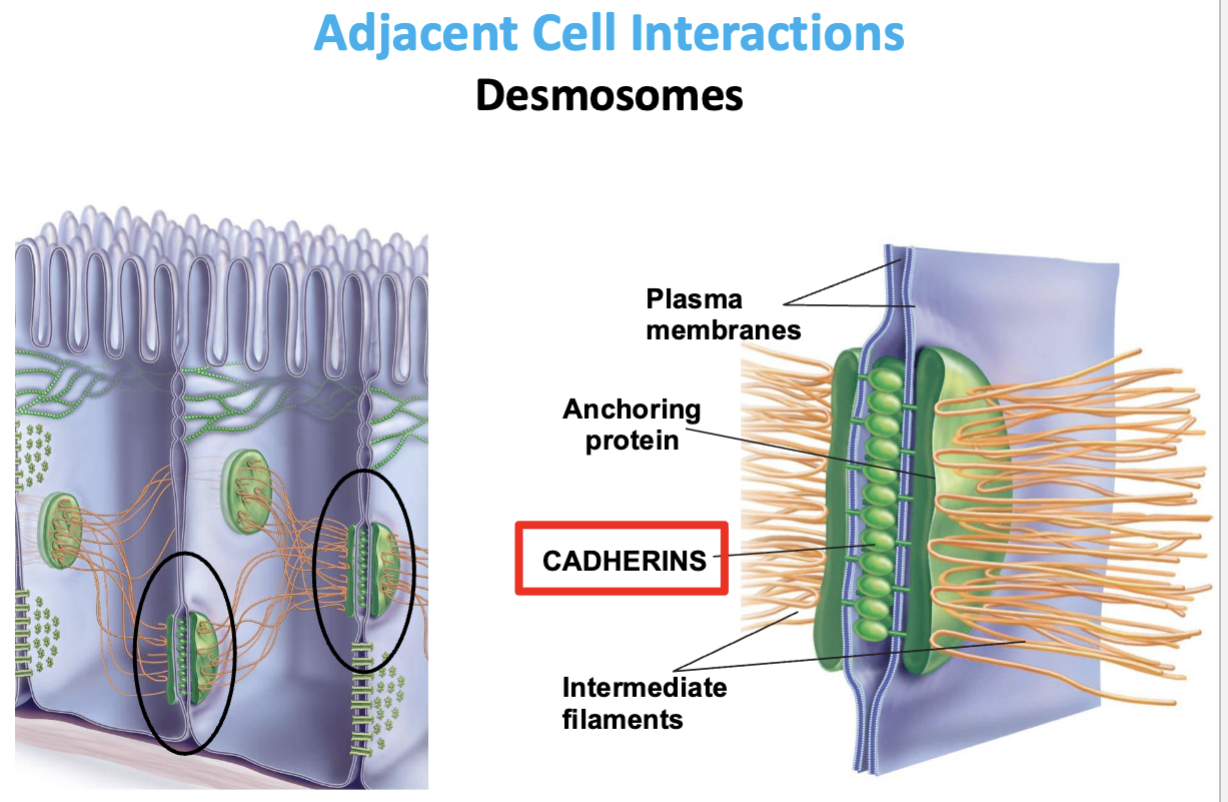
What is the main function of desmosomes?
anchor cells together
fuse membranes together
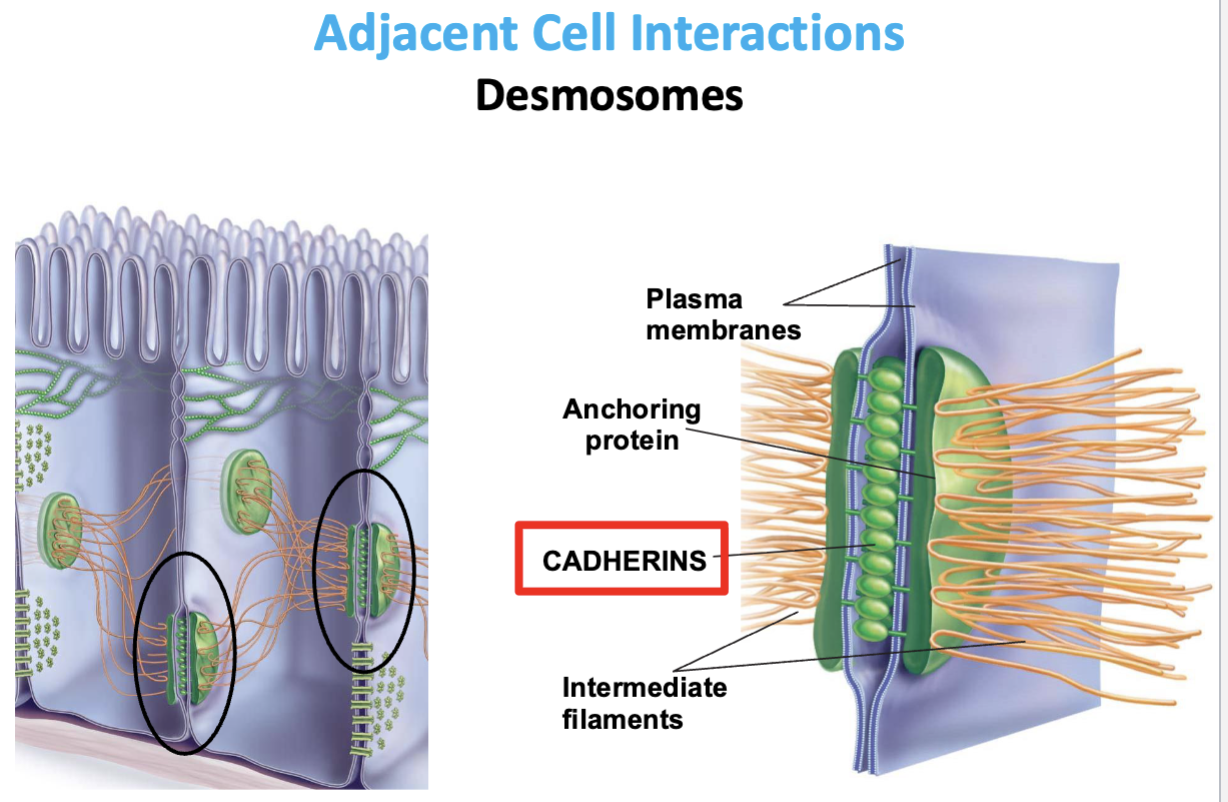
What proteins are especially important in desmosomes?
Cadherins
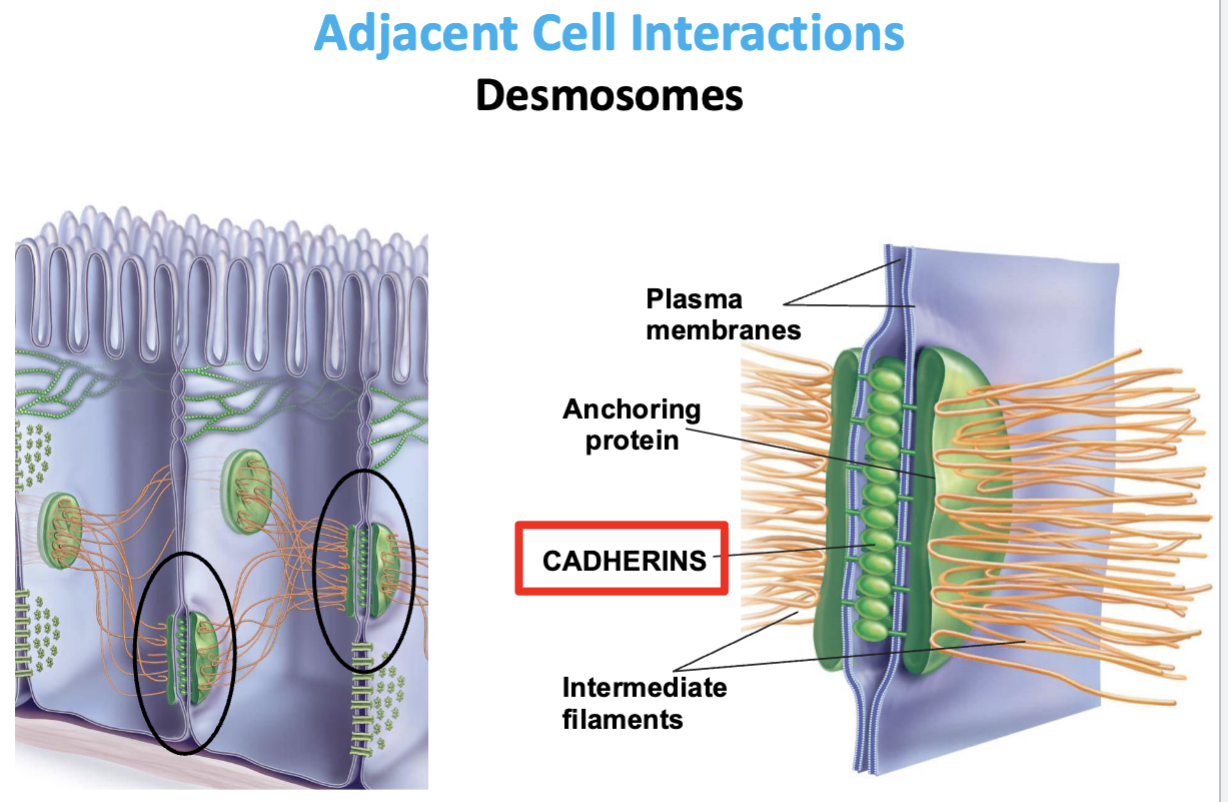
What cytoskeletal fibers connect to desmosomes?
Intermediate filaments which hold together anchor proteins
Tight junctions mainly do what?
seal cells
Desmosomes mainly do what?
anchor cells
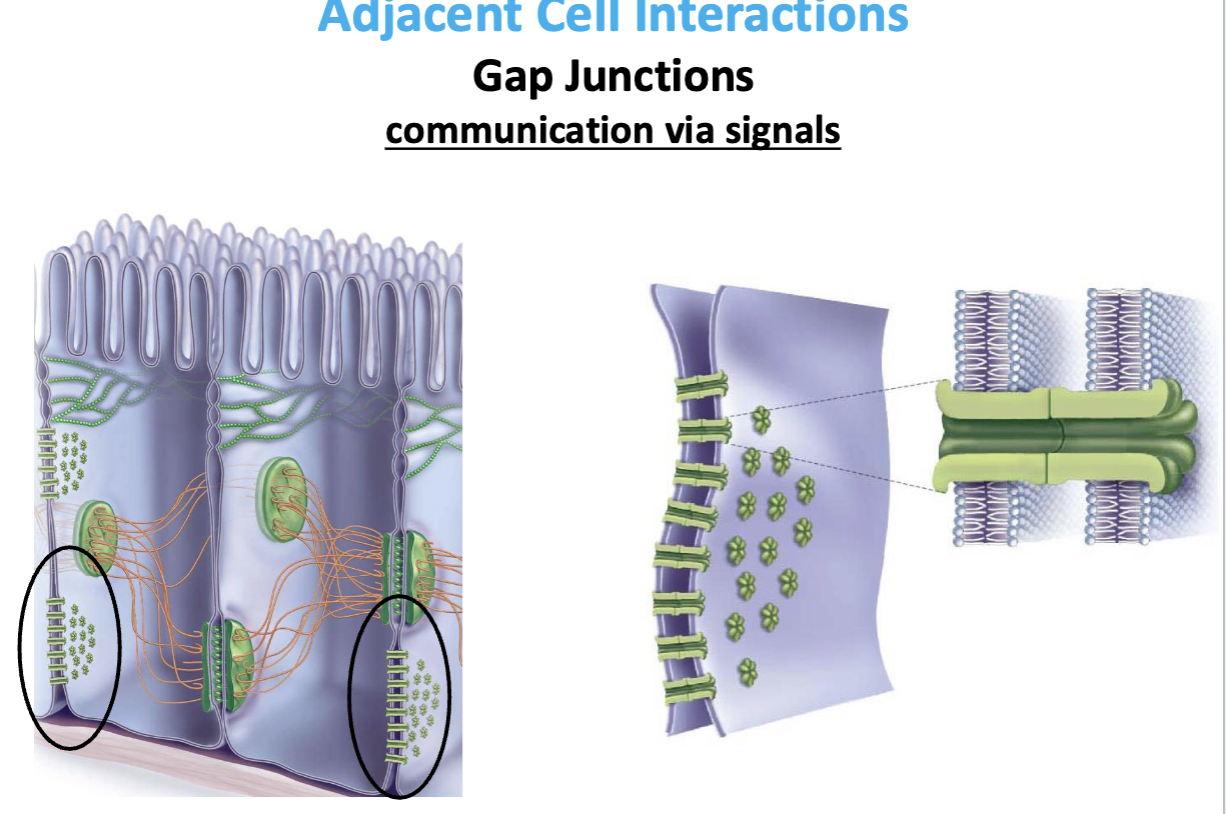
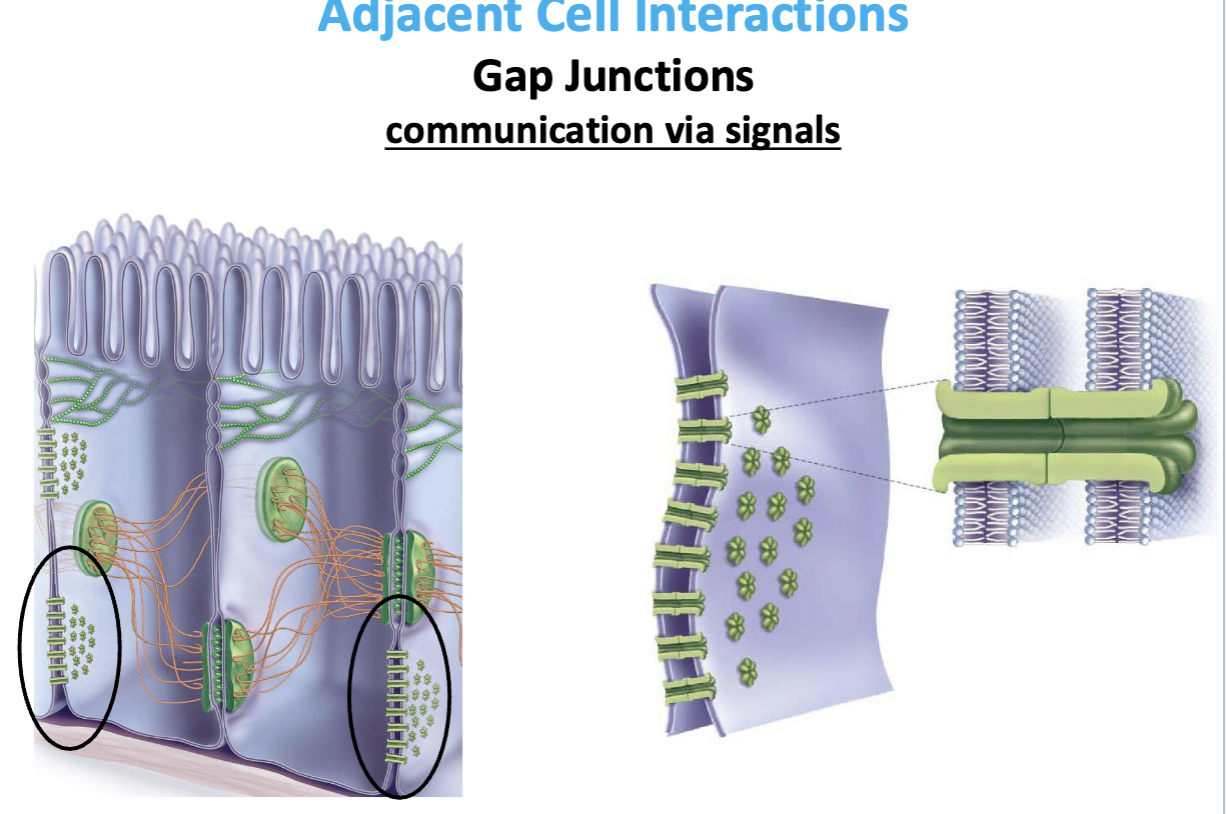
What is the main function of gap junctions?
Communication between adjacent cells via signals
What do gap junctions connect?
gap junctions are channels between 2 membranes
allow connections between cytoplasms
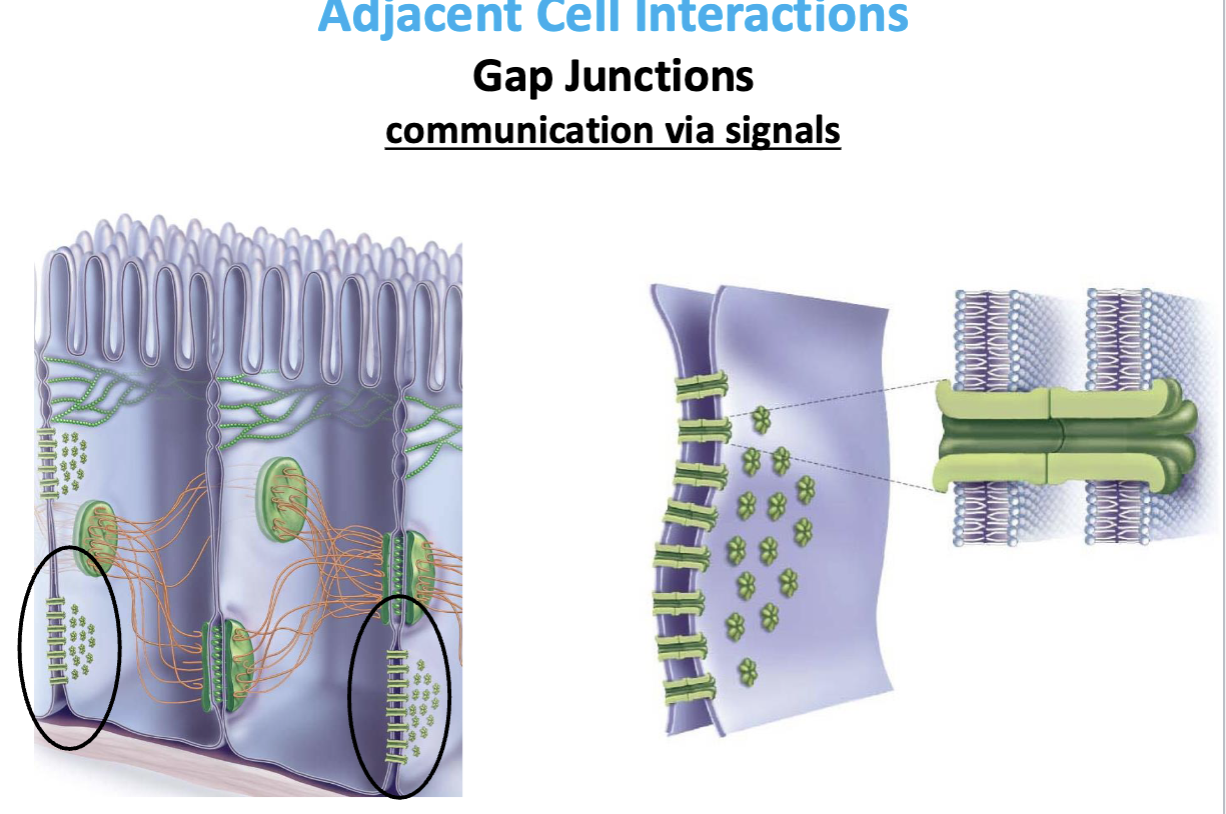
What types of substances move through gap junctions?
Small molecules, ions, and signaling molecules.
Communication from distant cells allows cells from….
from different tissues to “control” other cell types
Communication from distant cells: cell response depends on
depends on presence of the correct receptor molecules → specific to tissue type
Communication from distant cells: Different tissues/cell types may have…
different responses to same signal (depends on receptor & signaling pathway initiated)
Communication from distant cells: Receptors/cell sensitivity may
may change
Communication from distant cells: Receptors can be
can be blocked
a lot like competitive inhibition of enzymes
also relates to length of time + concentration, for every on there is an off
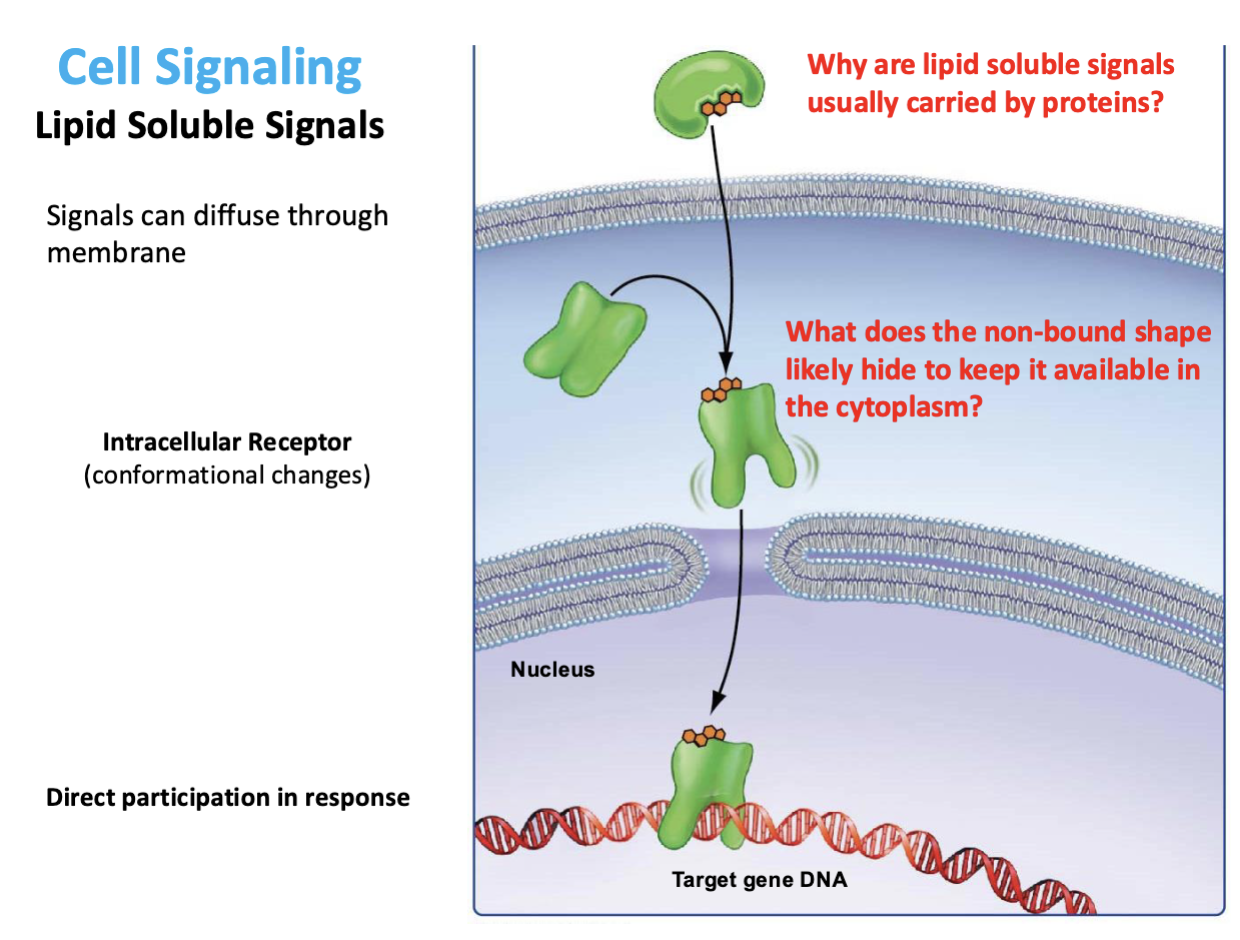
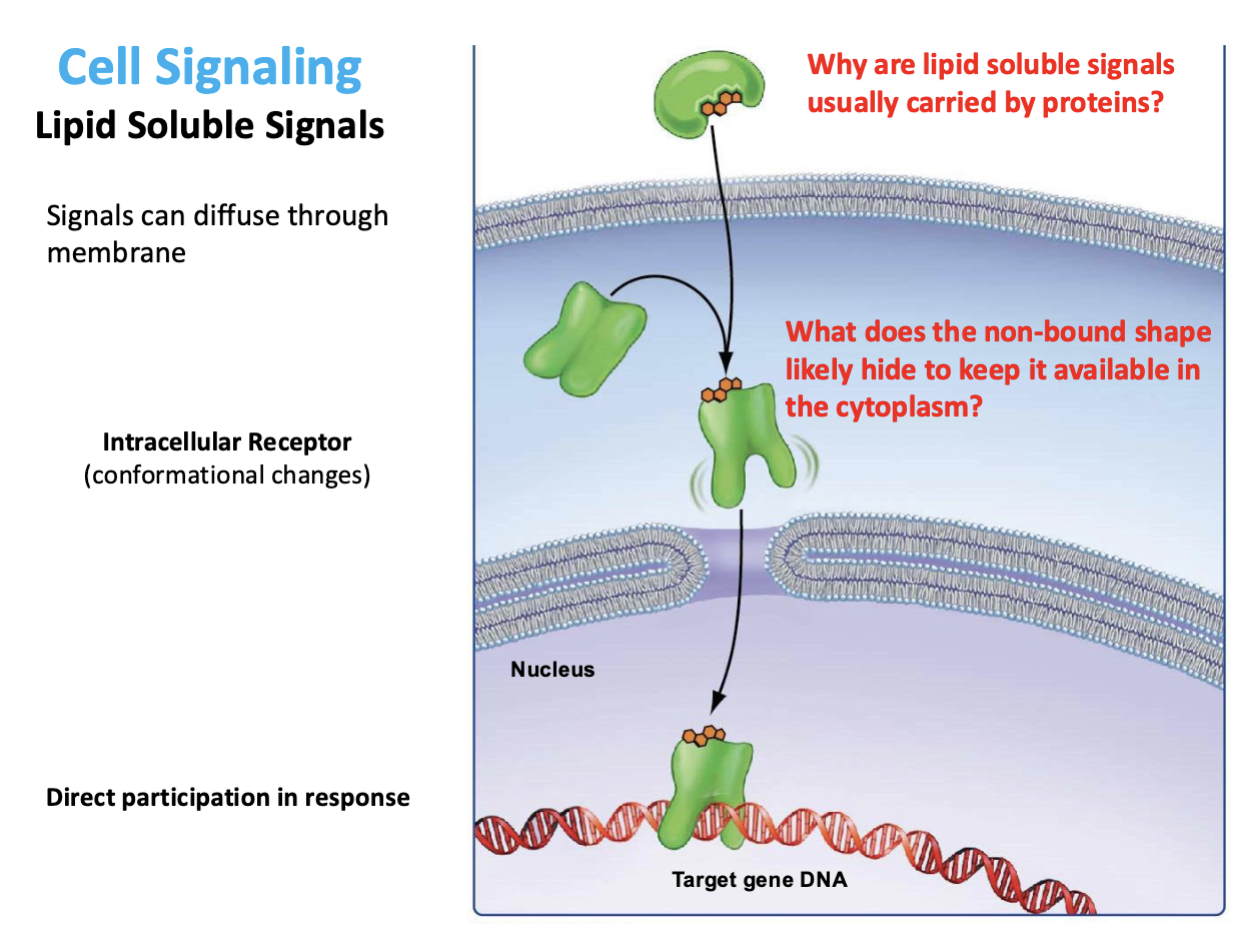
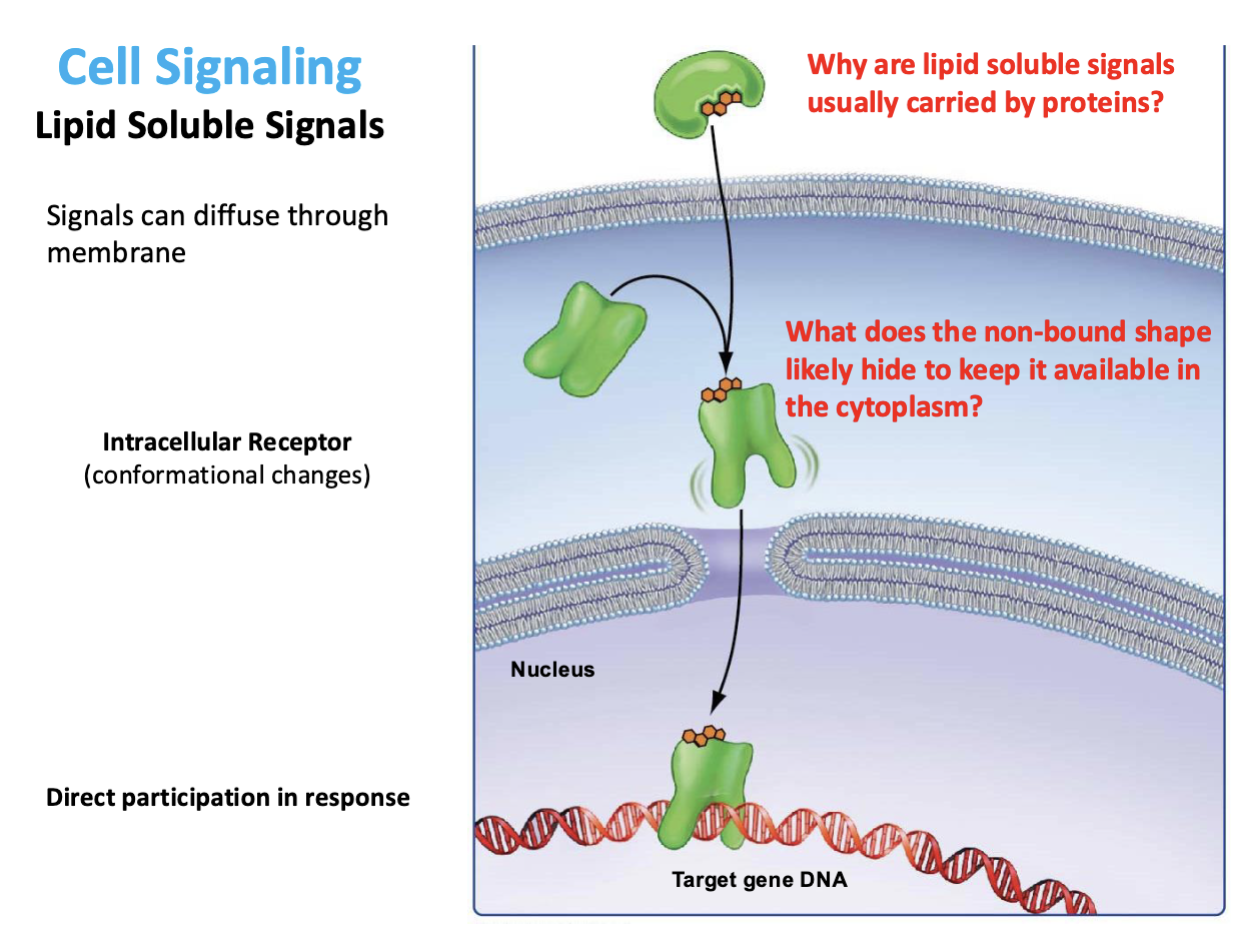
Why can lipid-soluble signals cross the plasma membrane?
They are hydrophobic/nonpolar.
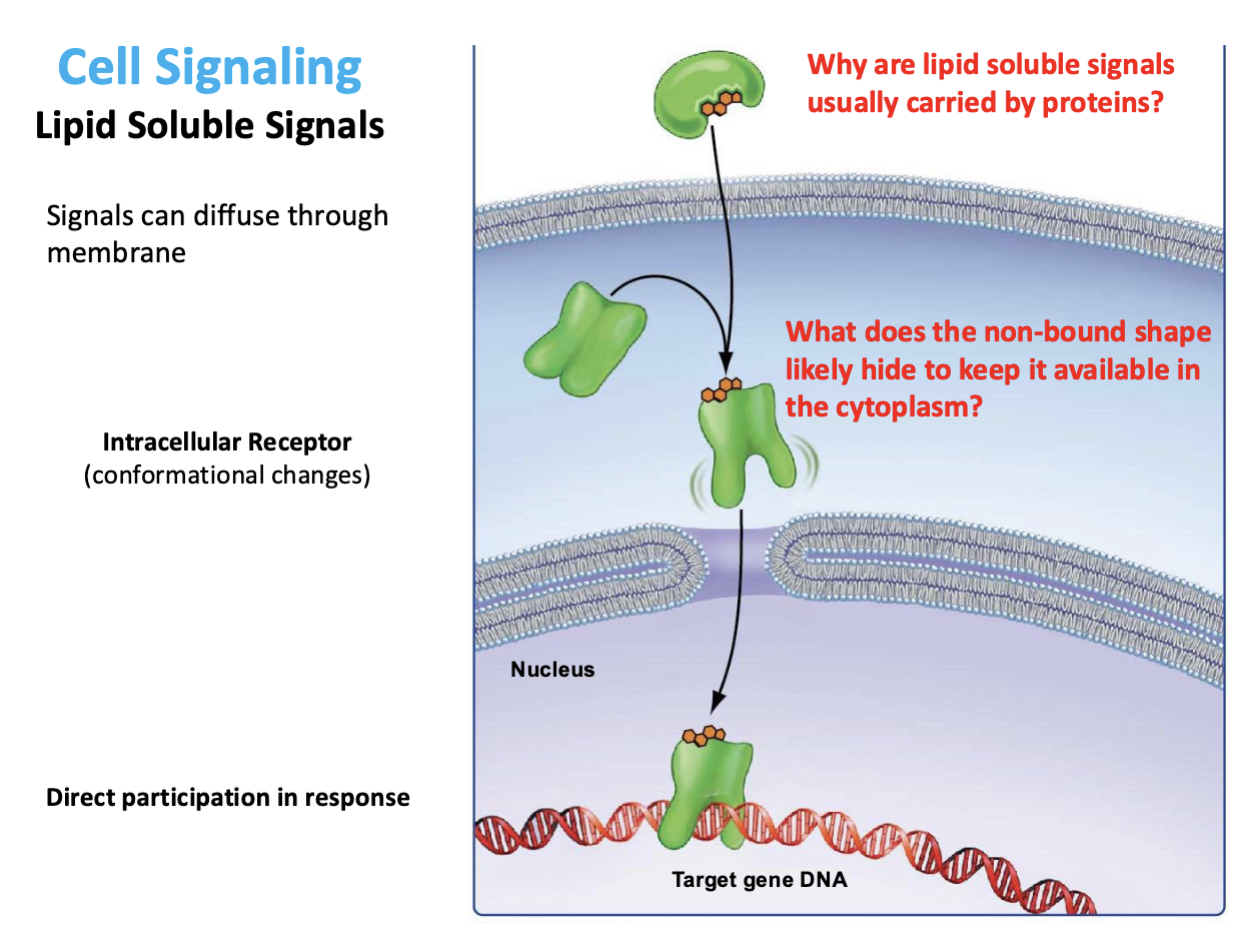
Where are receptors for lipid-soluble signals usually located?
Inside the cell.
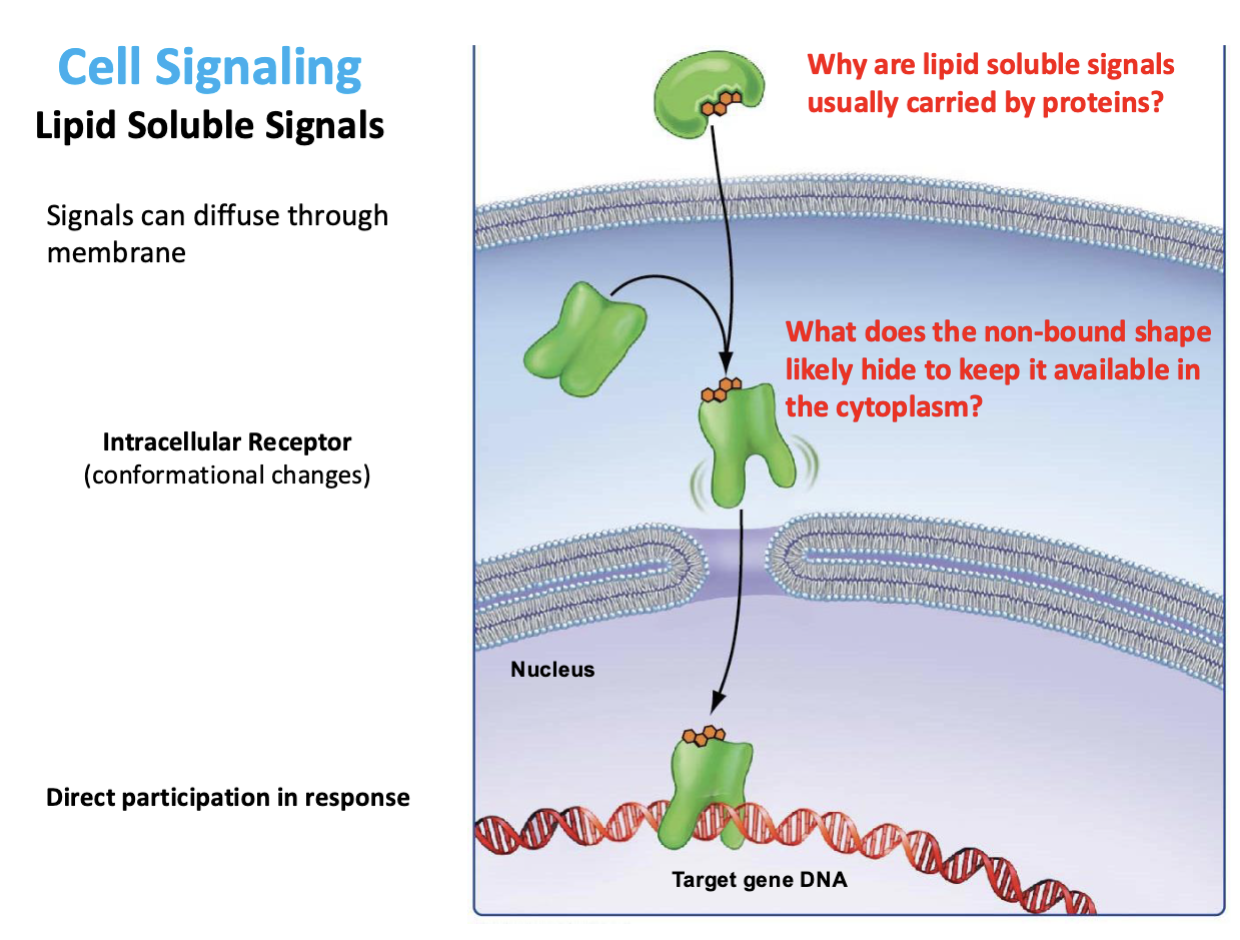
What type of hormones are commonly lipid-soluble?
Steroid hormones (ligand in model is a steroid)
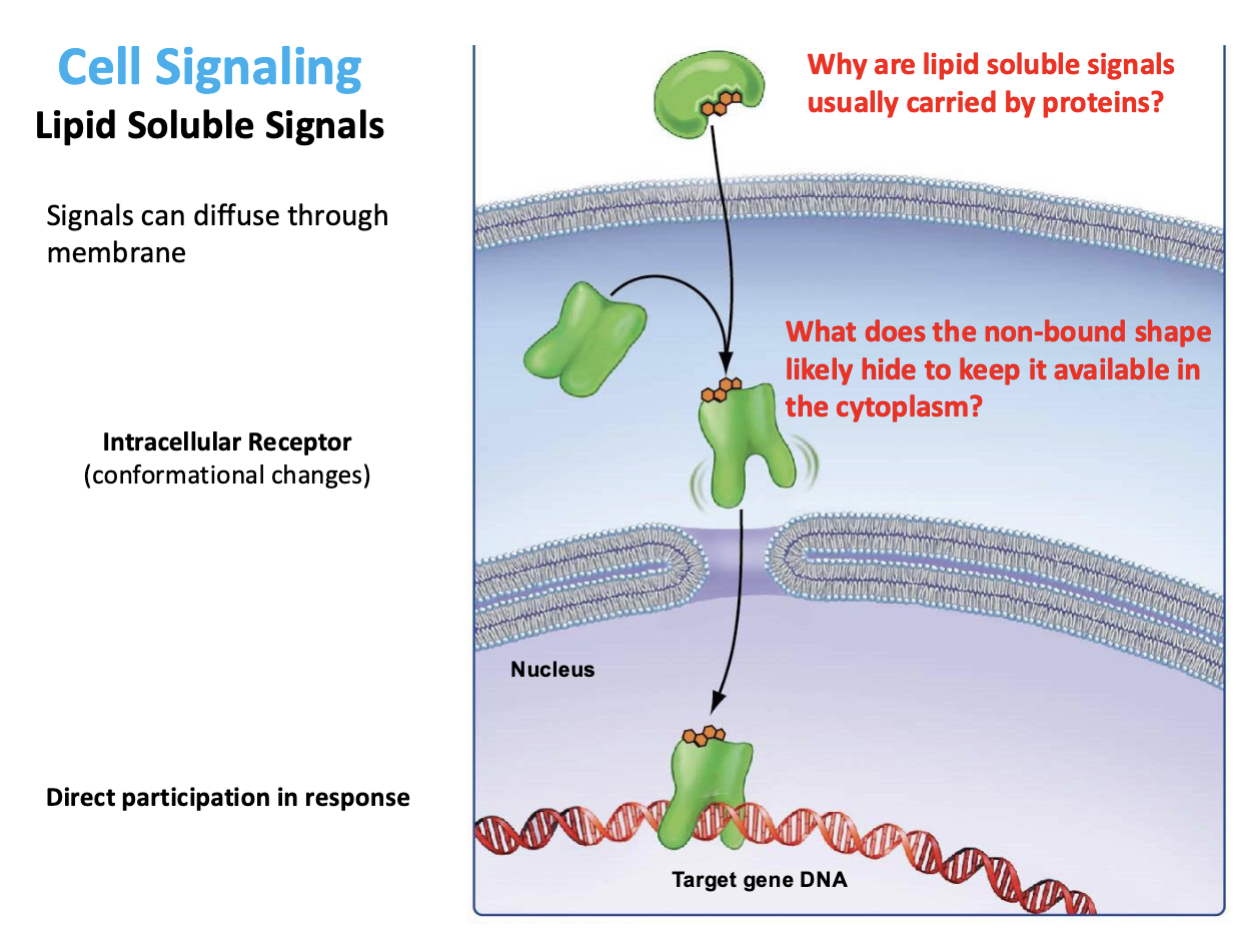
What usually happens after a lipid-soluble signal binds its receptor?
A conformational change occurs in intracellular receptor
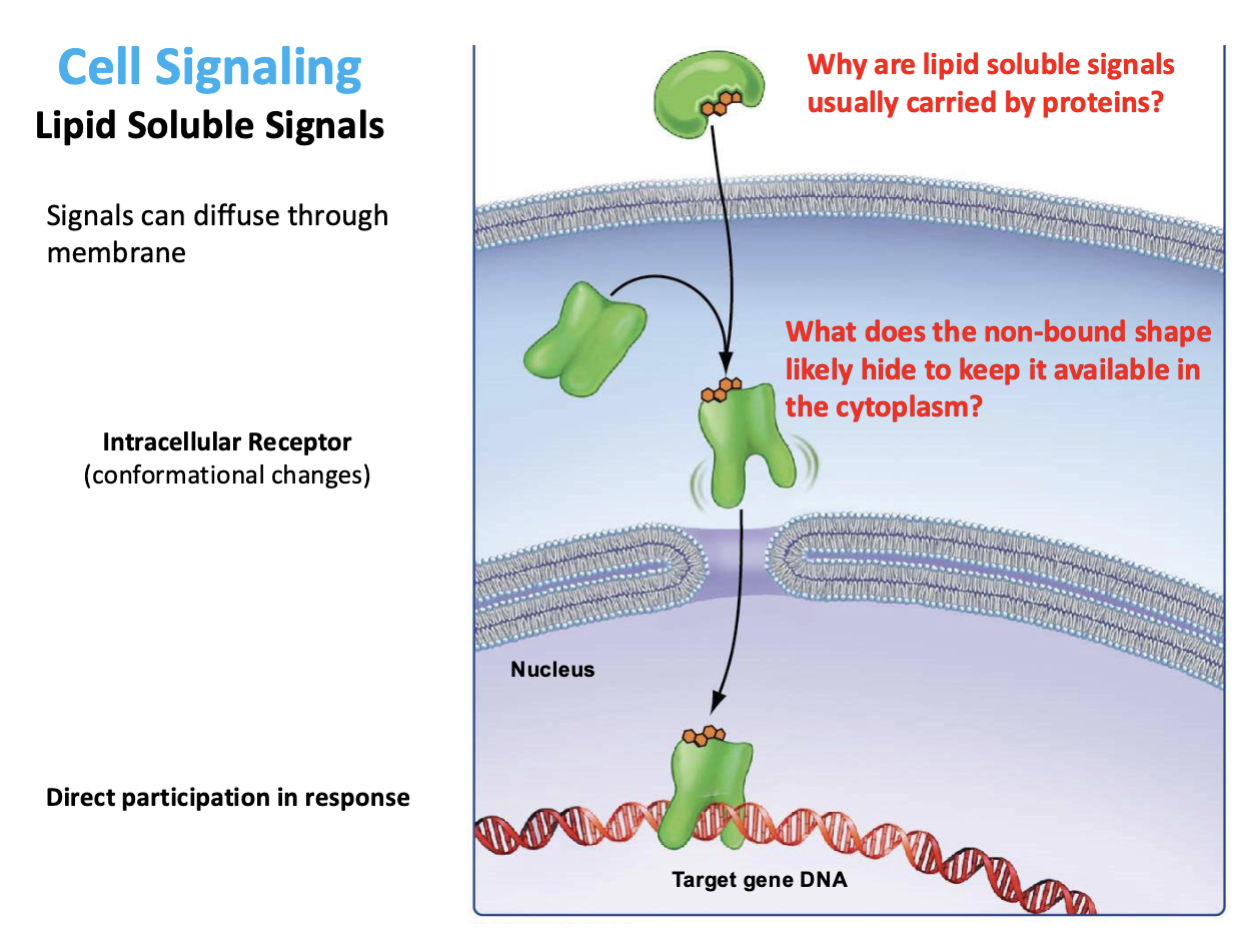
What does the conformational change after the ligand attaches to the receptor target mean in this case
NLS were tucked away
nuclear localization signals now expressed
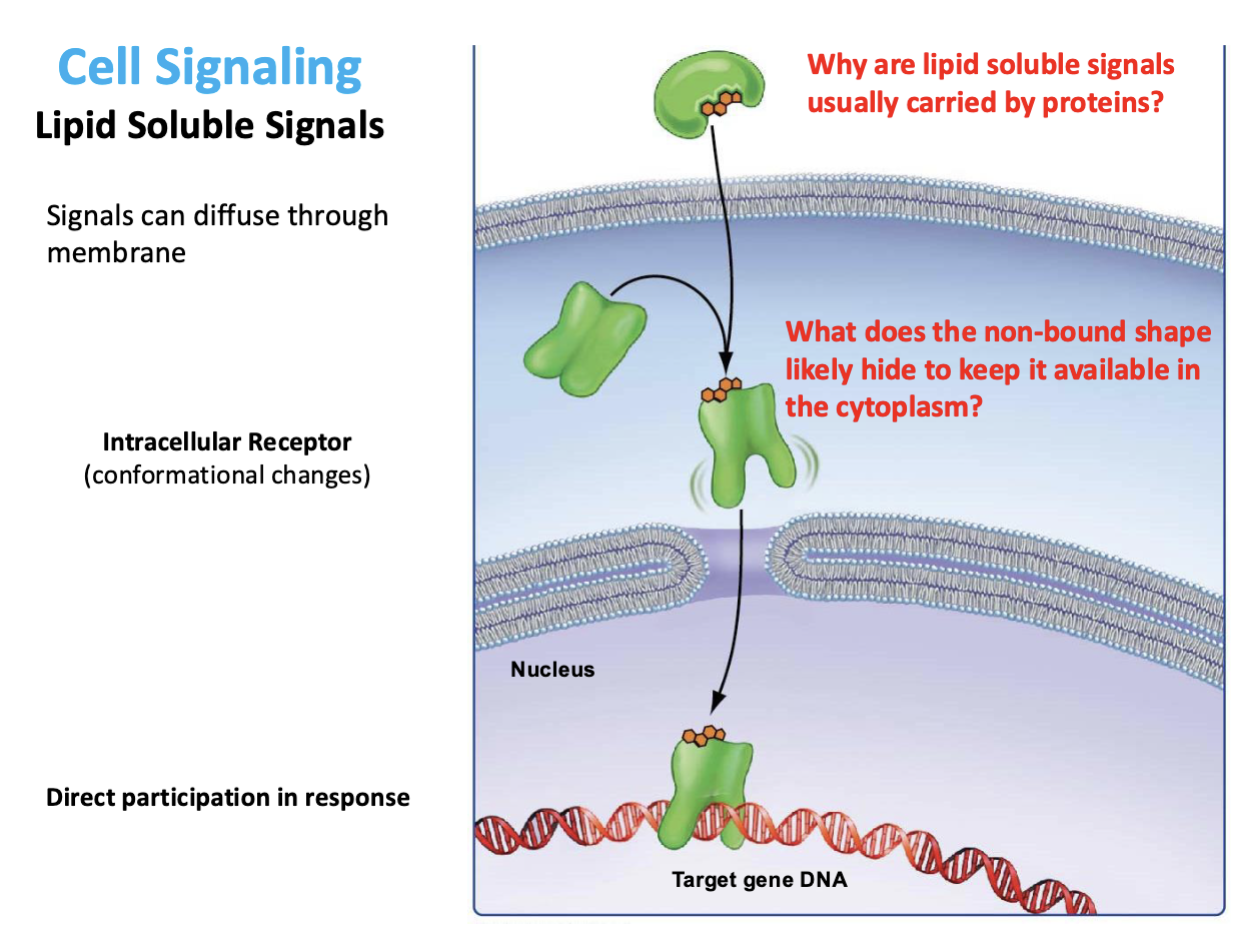
What happens when the nuclear localization signal is exposed?
receptor enters the nucleus
transported across double membrane
To get out of the nucleus what happens?
NLS clipped off
put out nuclear export signal
What does a receptor often do in the nucleus?
Bind DNA and regulate gene expression.
Why can’t lipid-insoluble signals cross the membrane?
They are polar/hydrophilic
vast majority of molecules
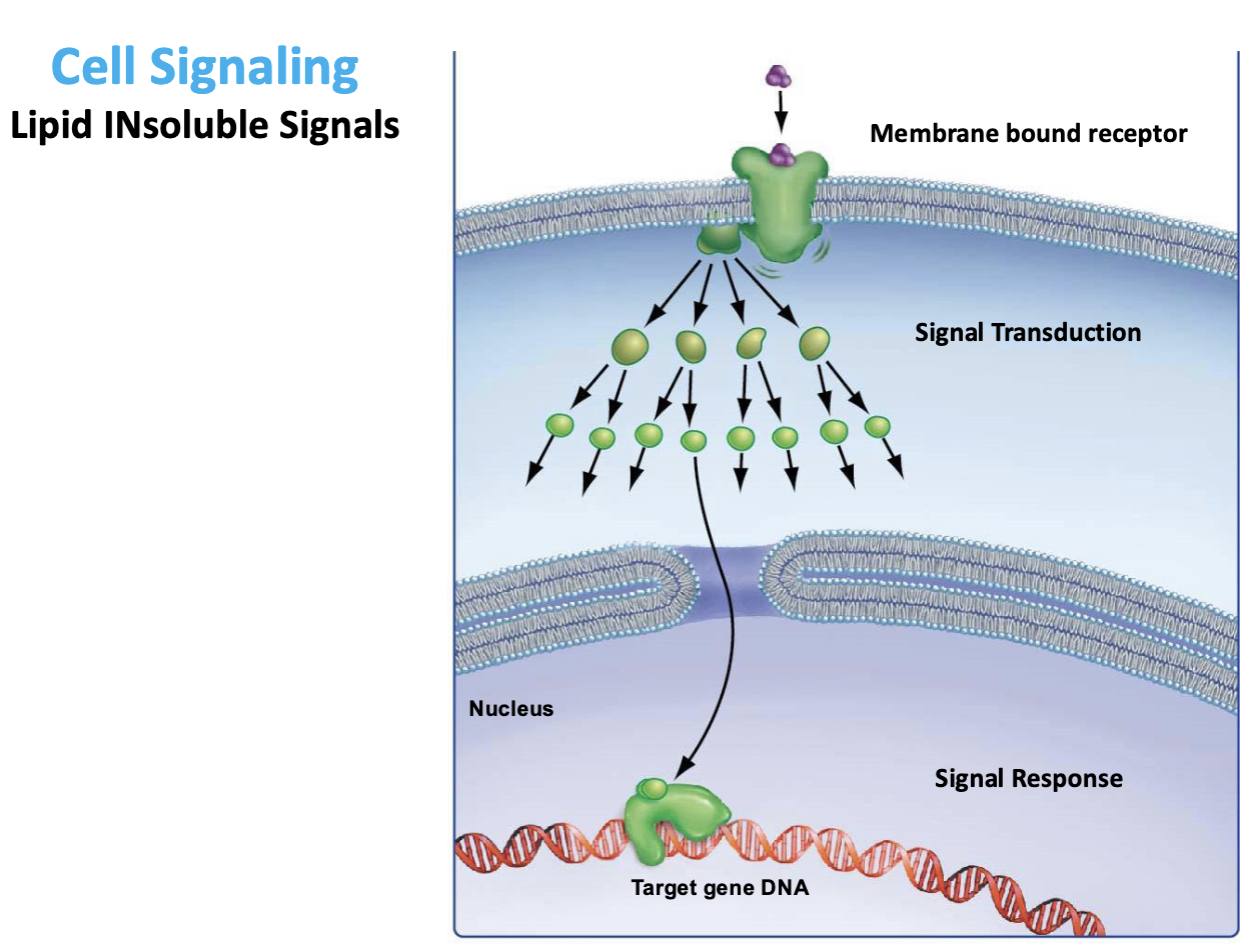
Where are receptors for lipid-insoluble signals located?
On the plasma membrane.
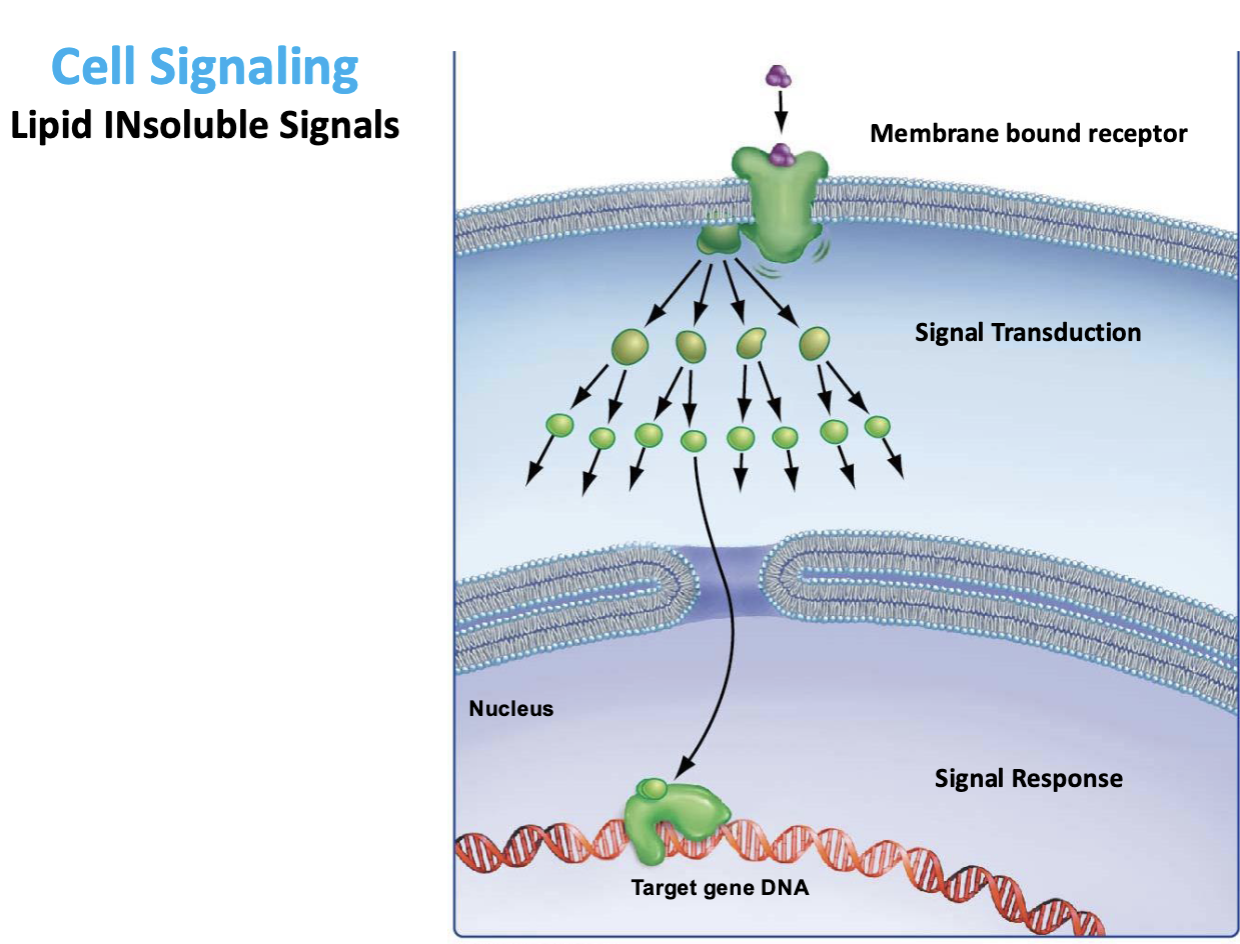
What is signal transduction?
Relaying a signal from the receptor to inside the cell.
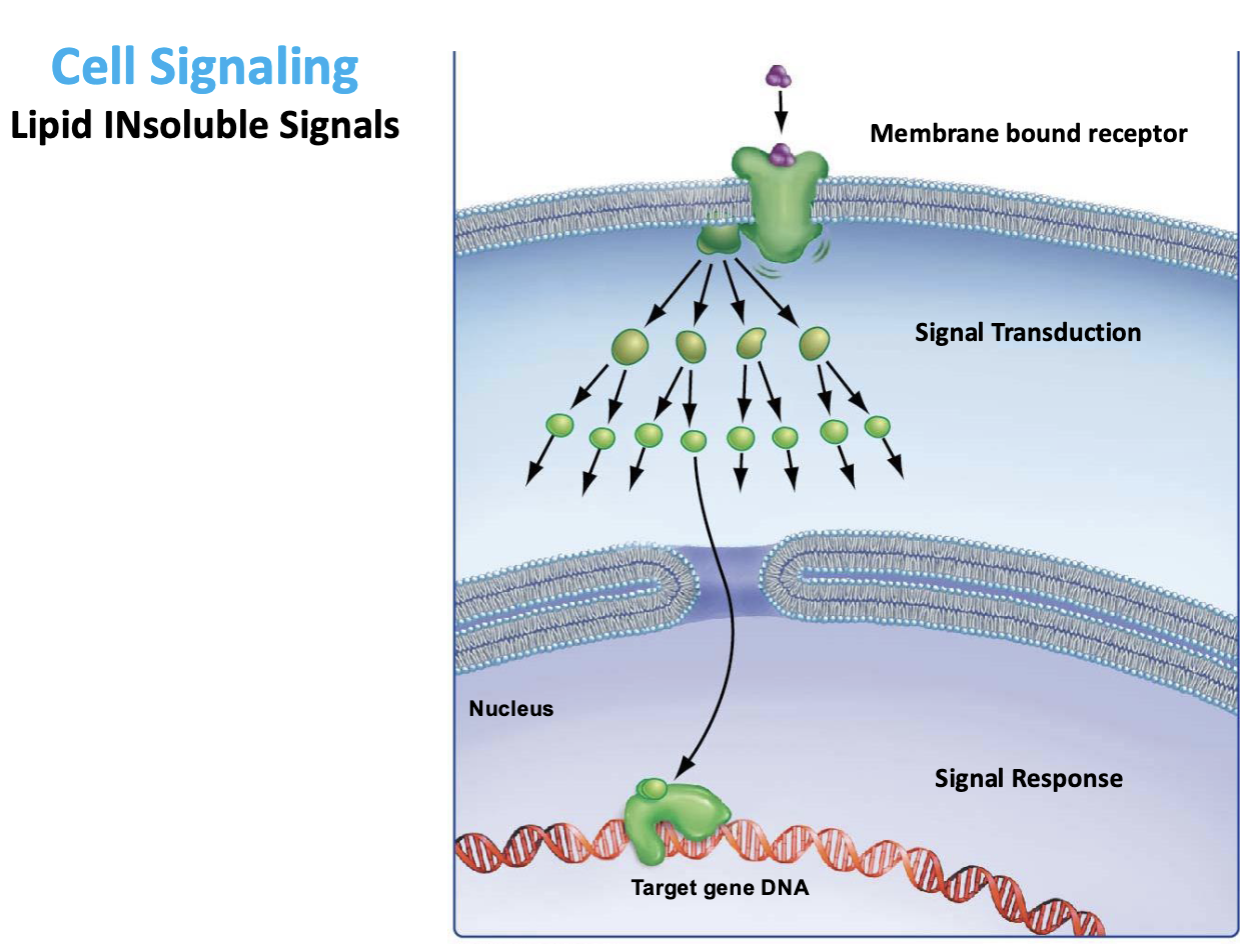
What is signal amplification?
One signal causing many downstream responses.
signal cascade
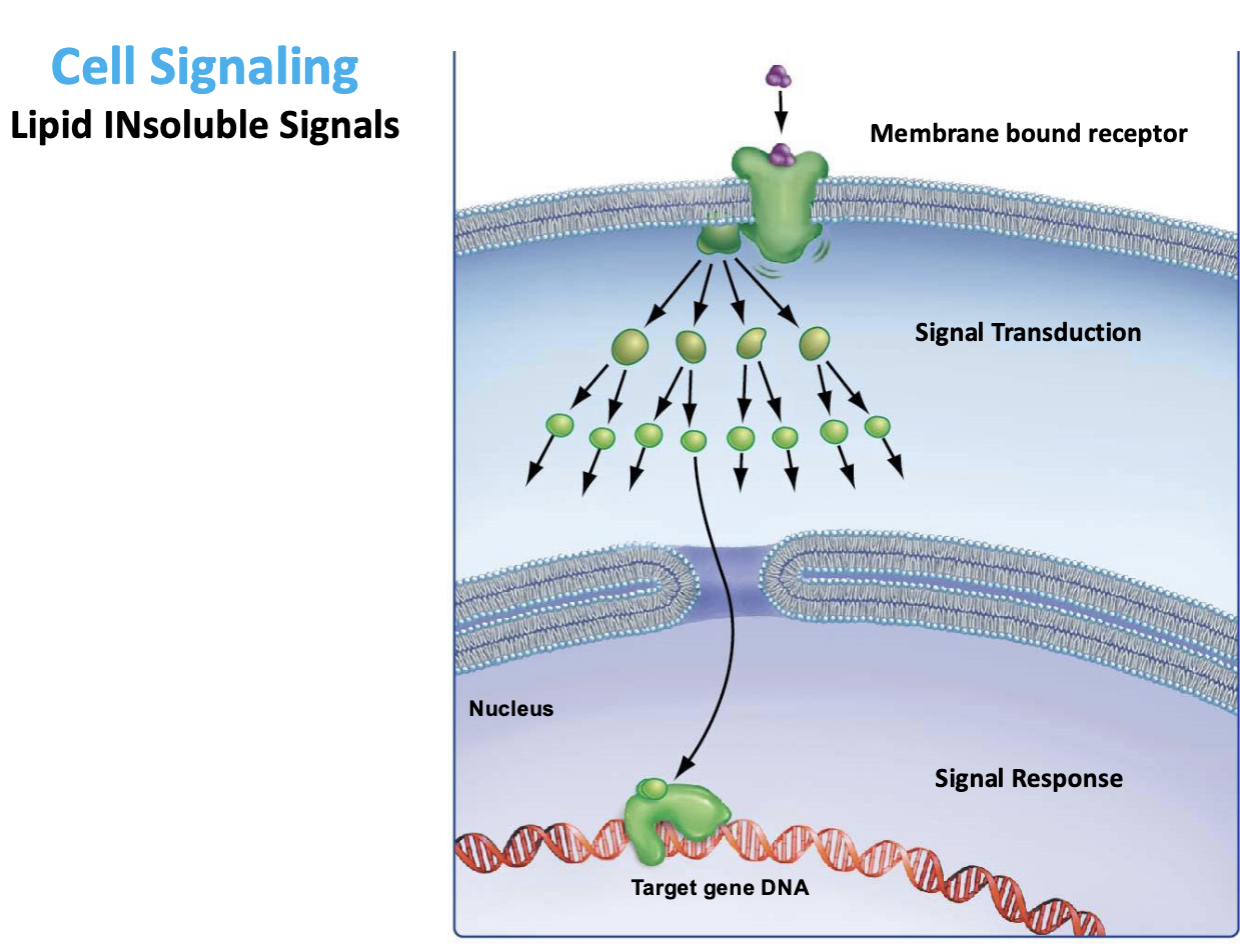
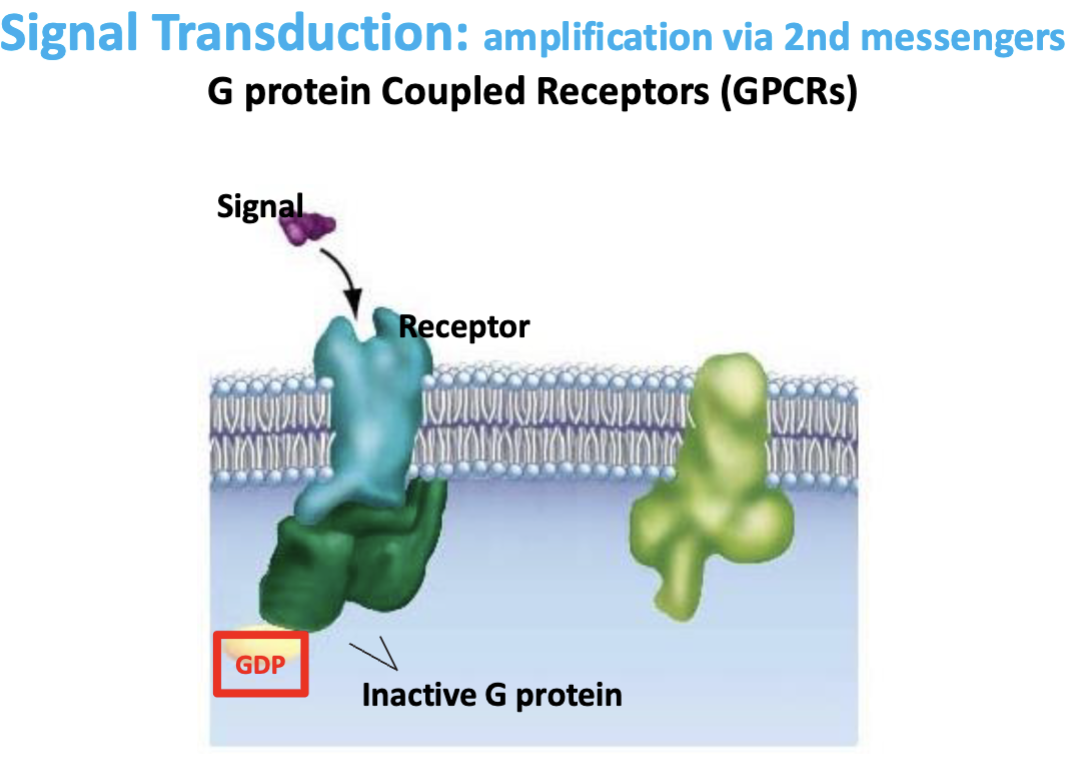
Amplification via 2nd messengers: What does GPCR stand for?
G protein-coupled receptor
is a receptor w/specific G protein attached to it
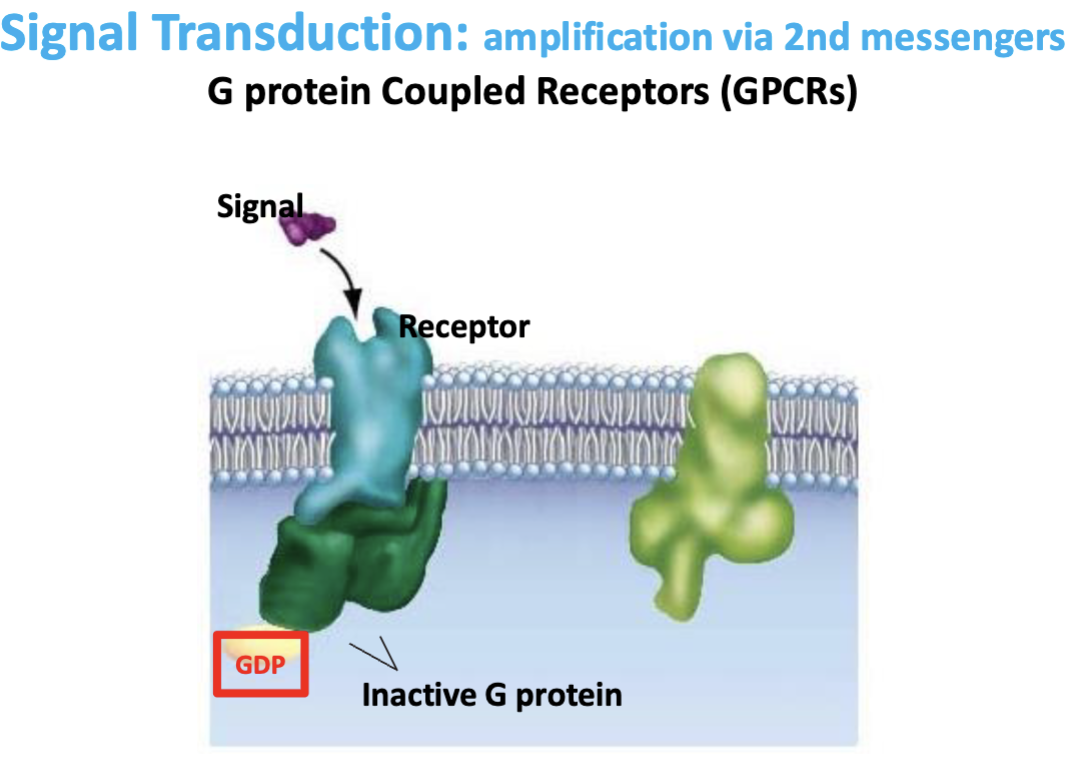
What activates a GPCR?
Binding of a signaling molecule.
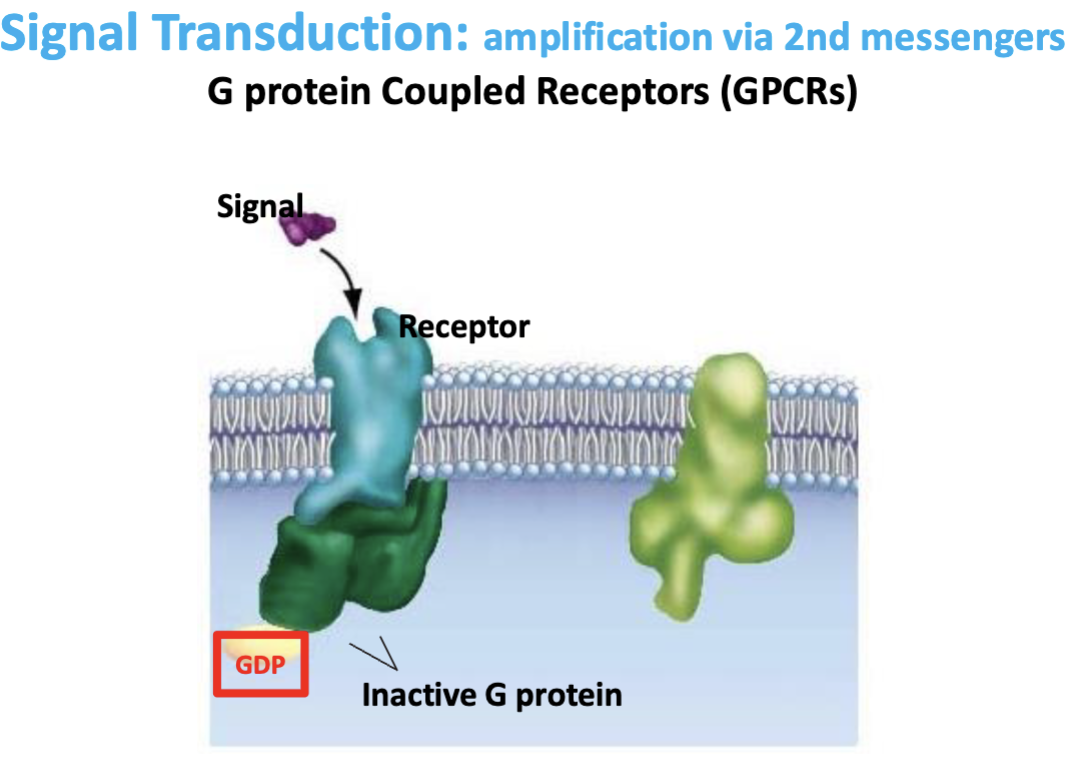
What molecule is bound to an inactive G protein?
GDP
What molecule is bound to an active G protein?
GTP
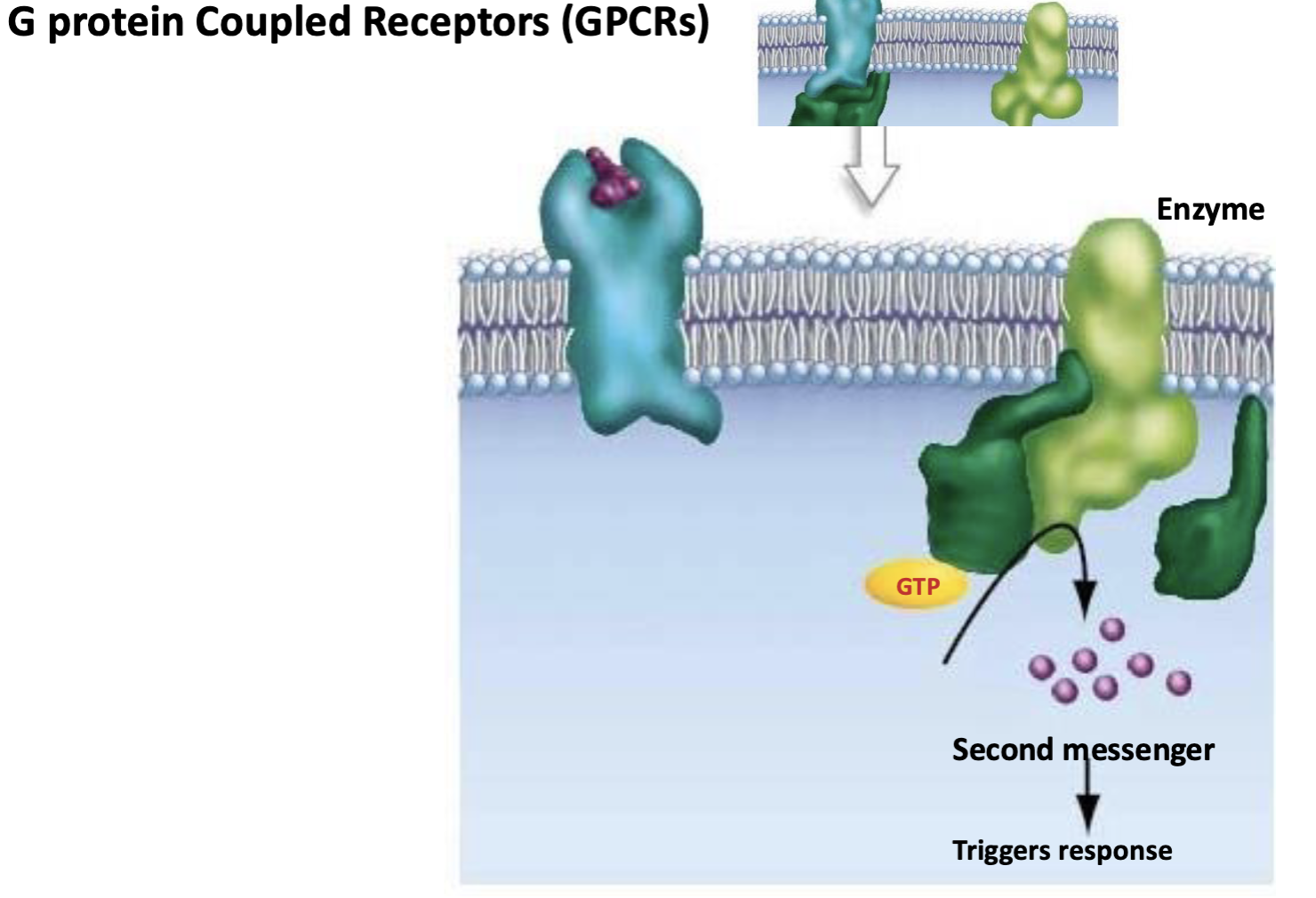
How is a G protein activated?
GDP is exchanged for GTP.
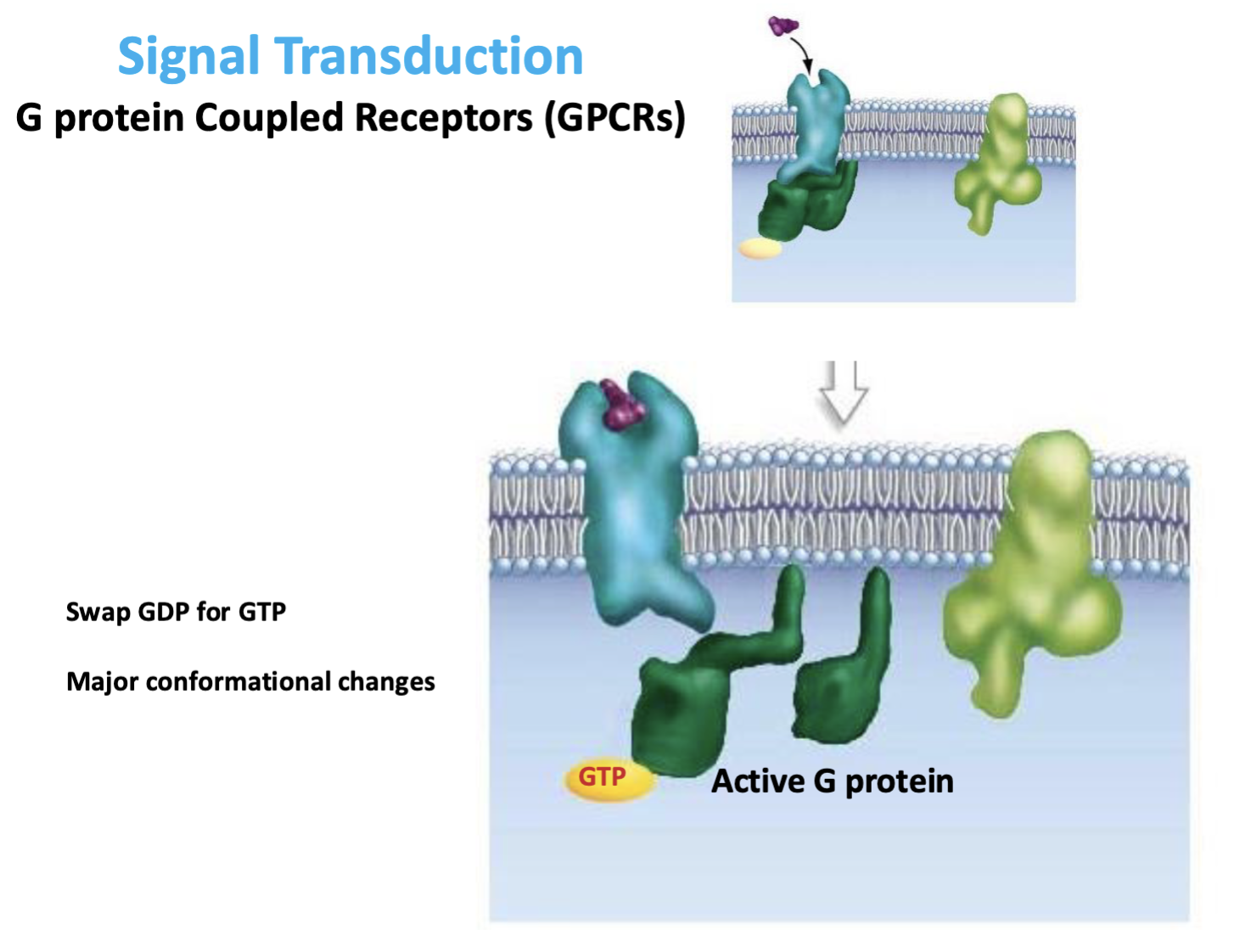
Is GDP → GTP G protein activation an example of phosphorylation?
no! its an exchange!!
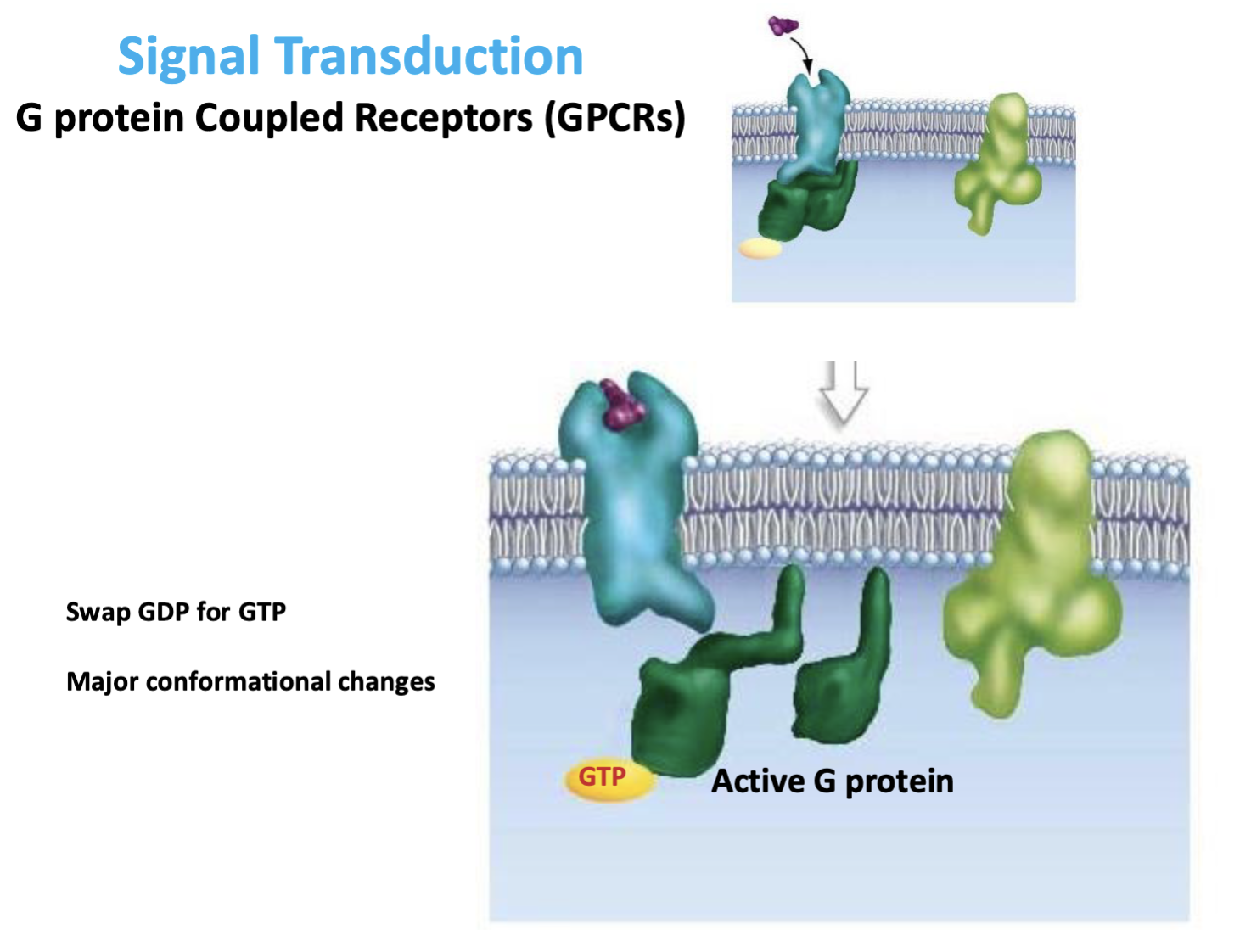
What causes the G protein to activate?
A conformational change after GTP binding.
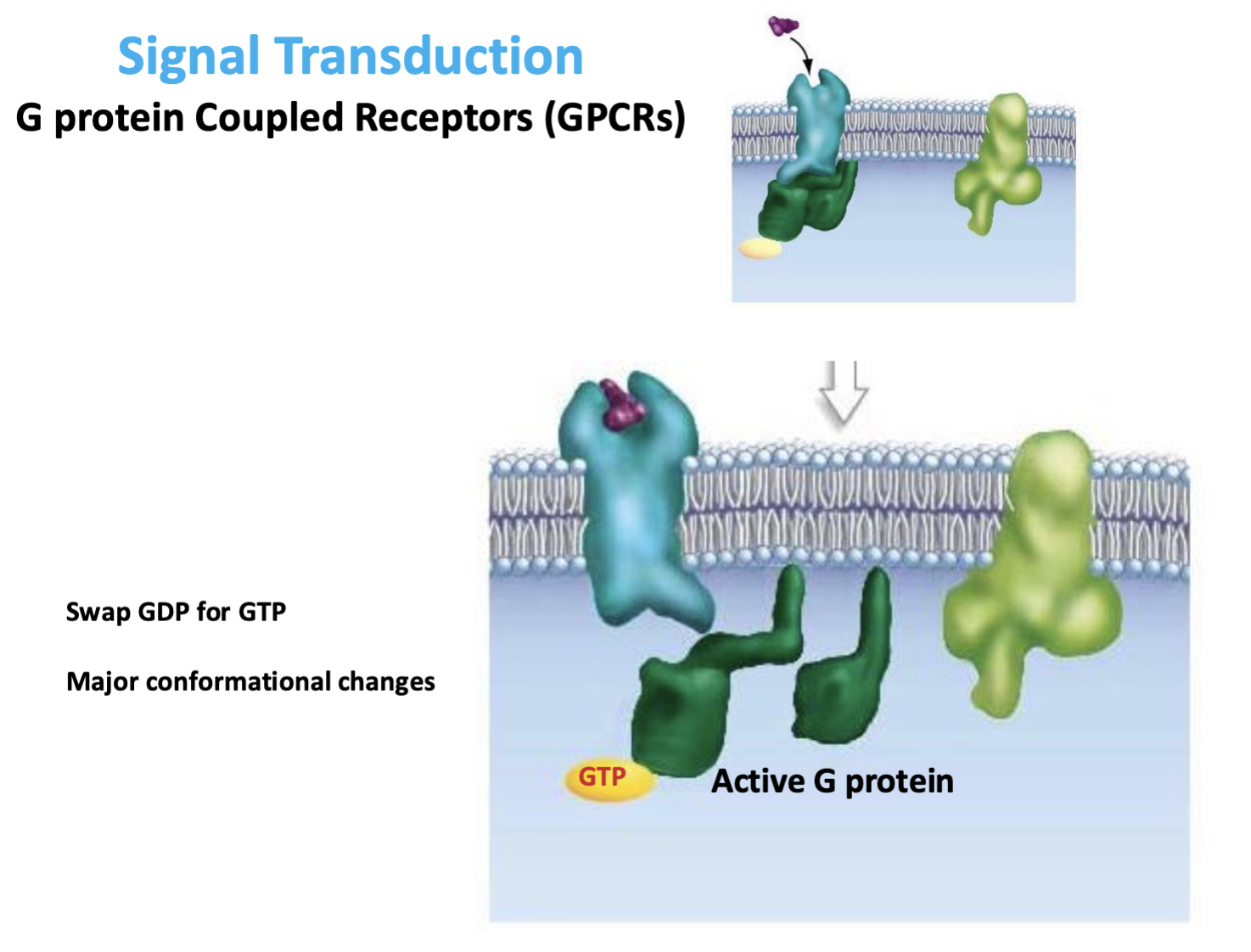
What does the activated G protein usually activate next?
an enzyme
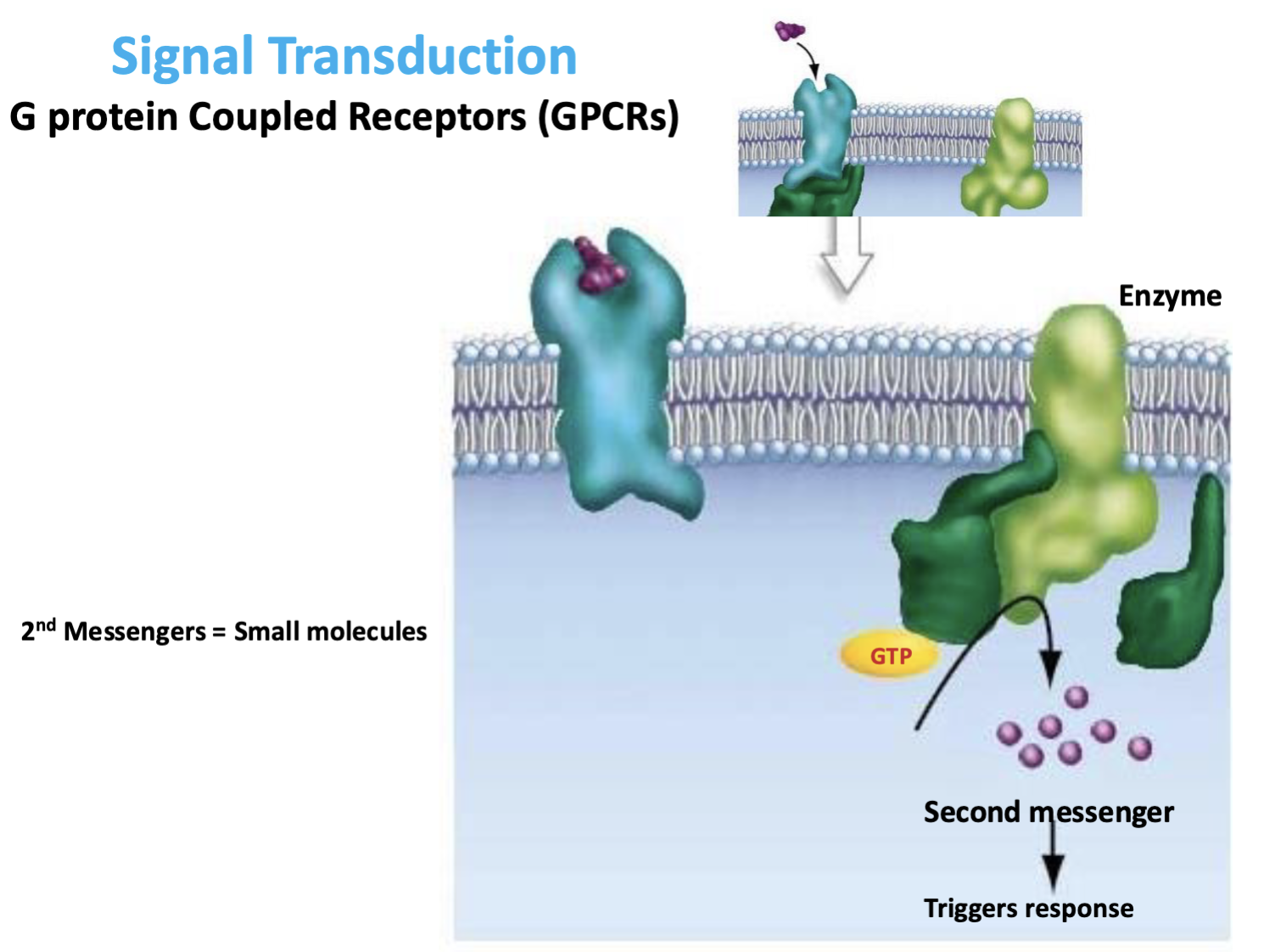
What does the activated enzyme produce?
second messengers
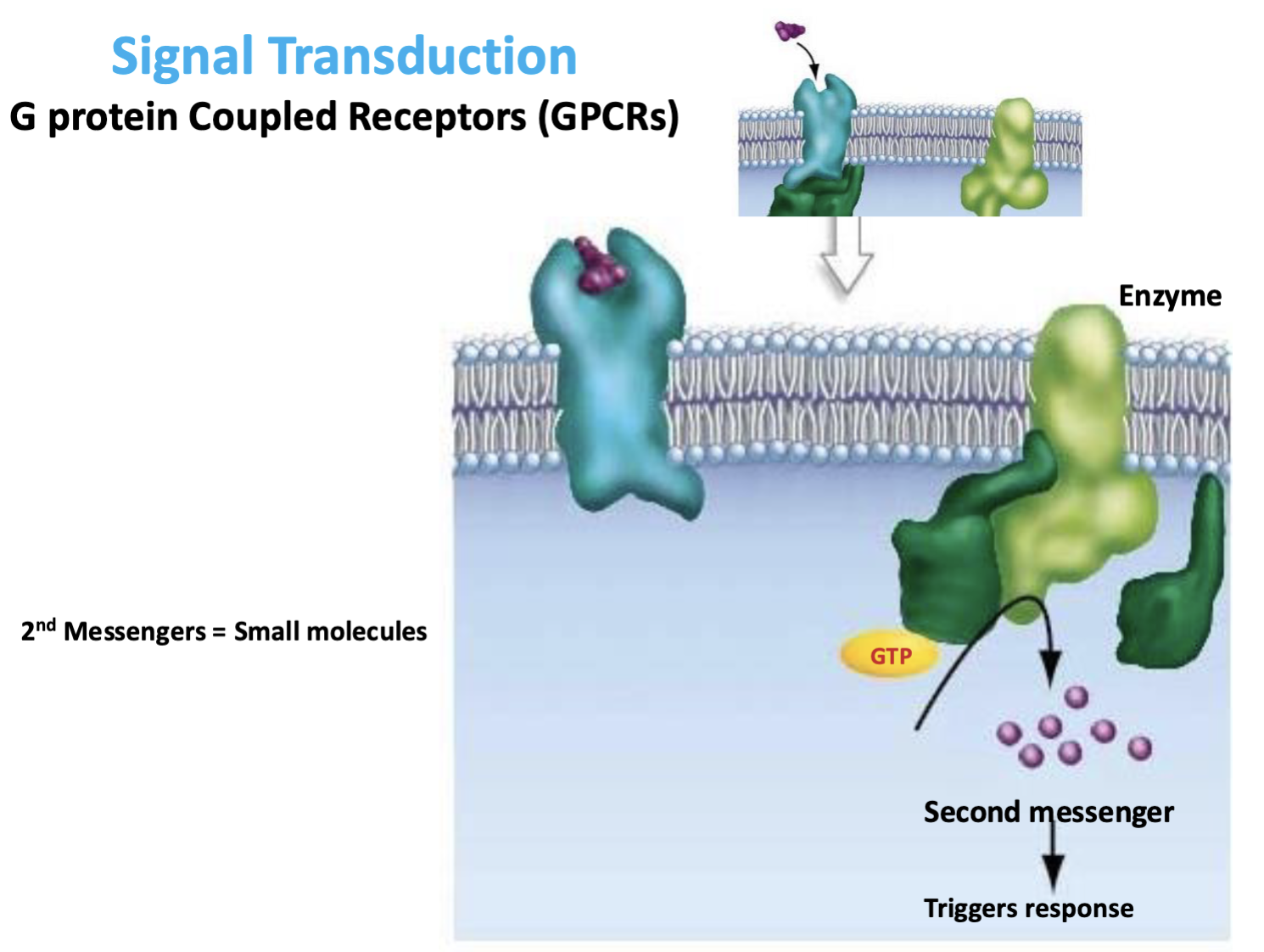
What are second messengers & why are they important?
small intracellular signaling molecules
amplify signals
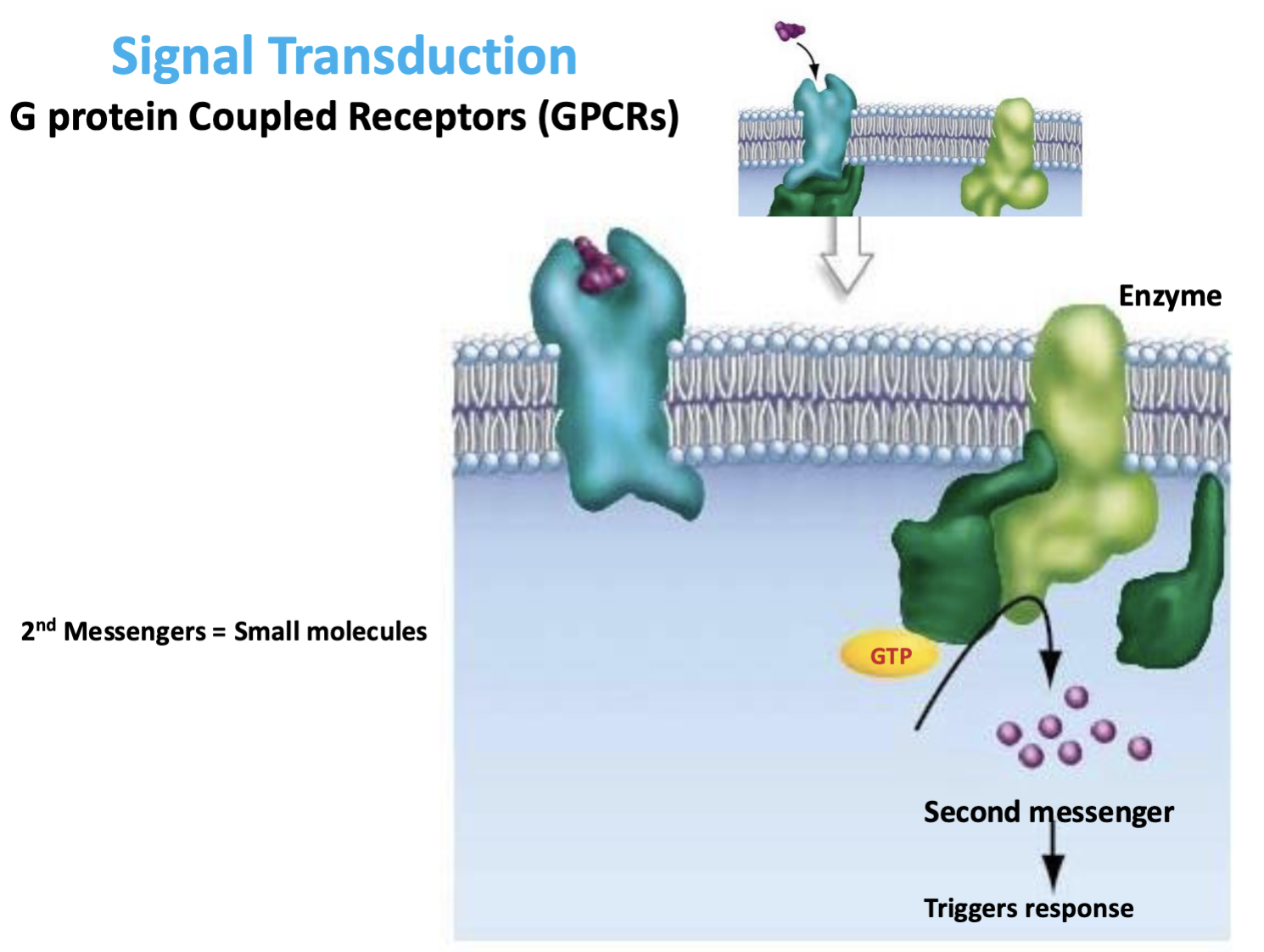
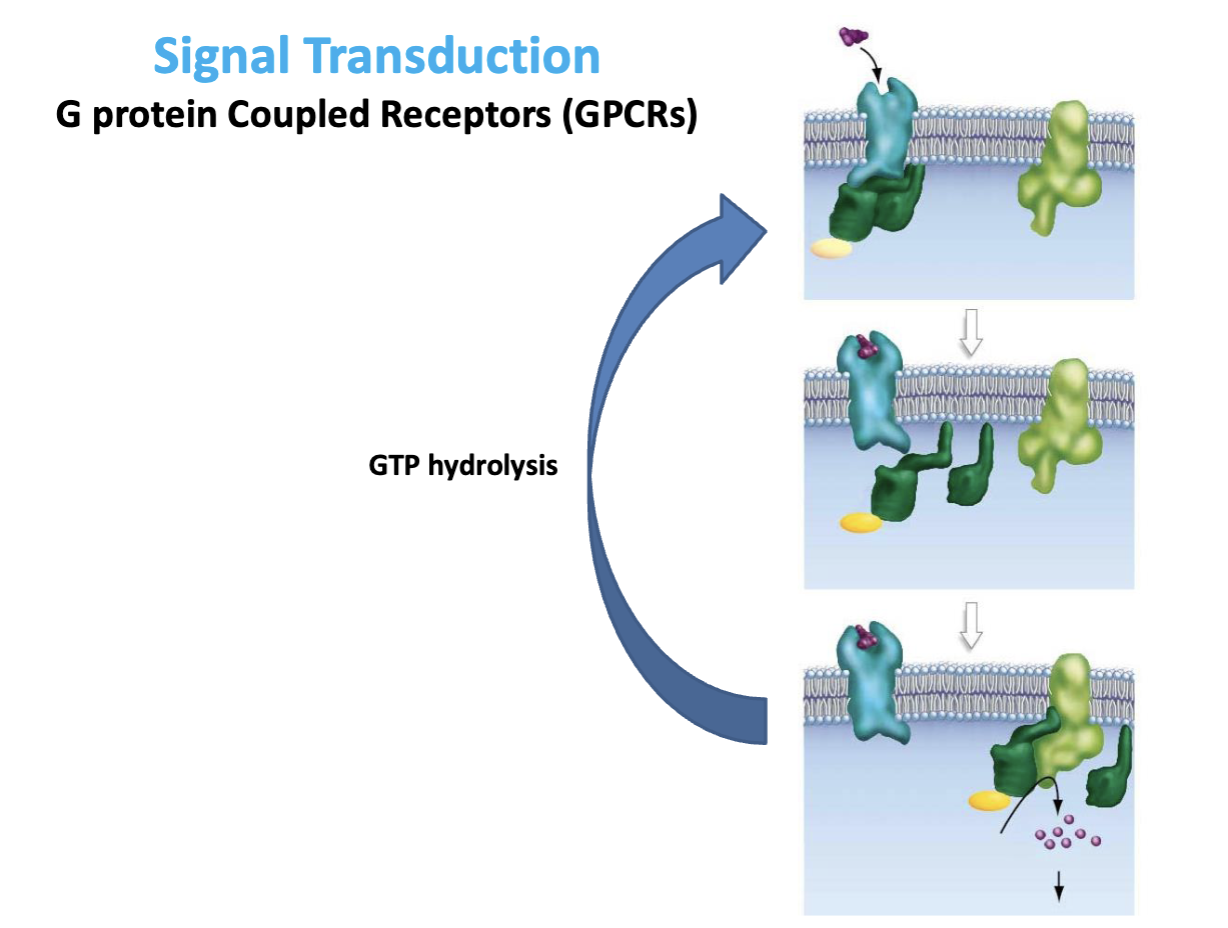
How is GPCR signaling turned off?
GTP is hydrolyzed to GDP.
when signaling is finished (second messengers diffuse quickly)
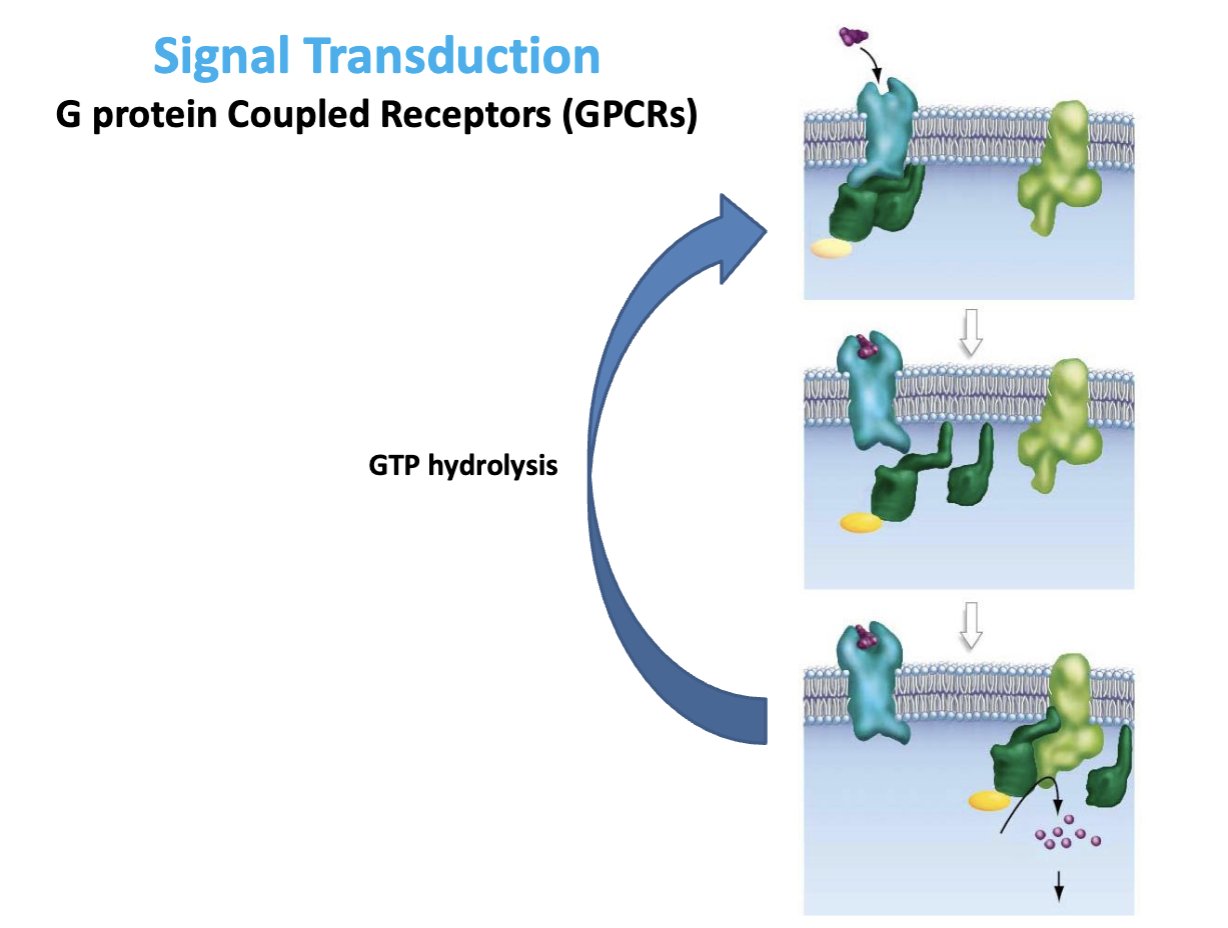
What does GTP hydrolysis do to the G protein?
inactivates it
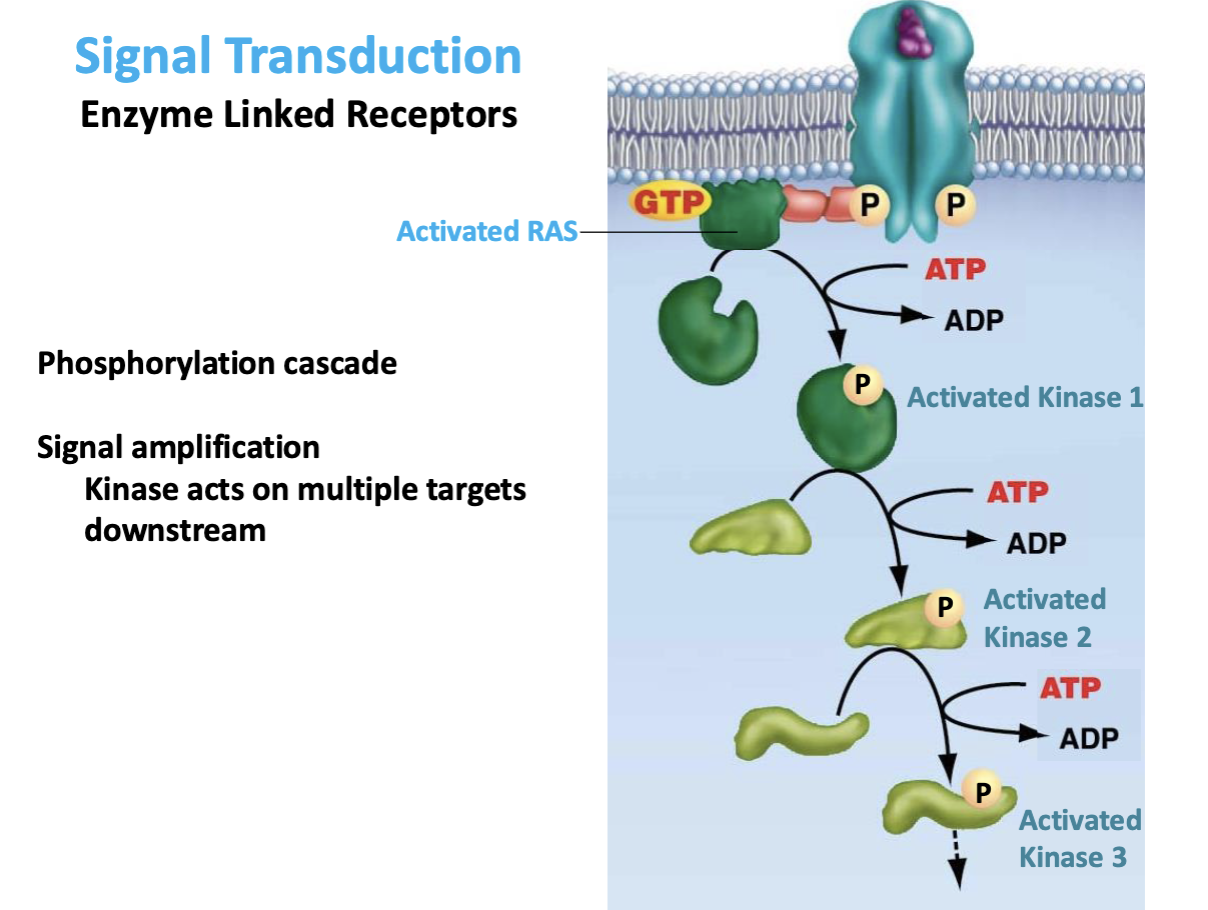
What does RTK stand for?
Receptor tyrosine kinase.
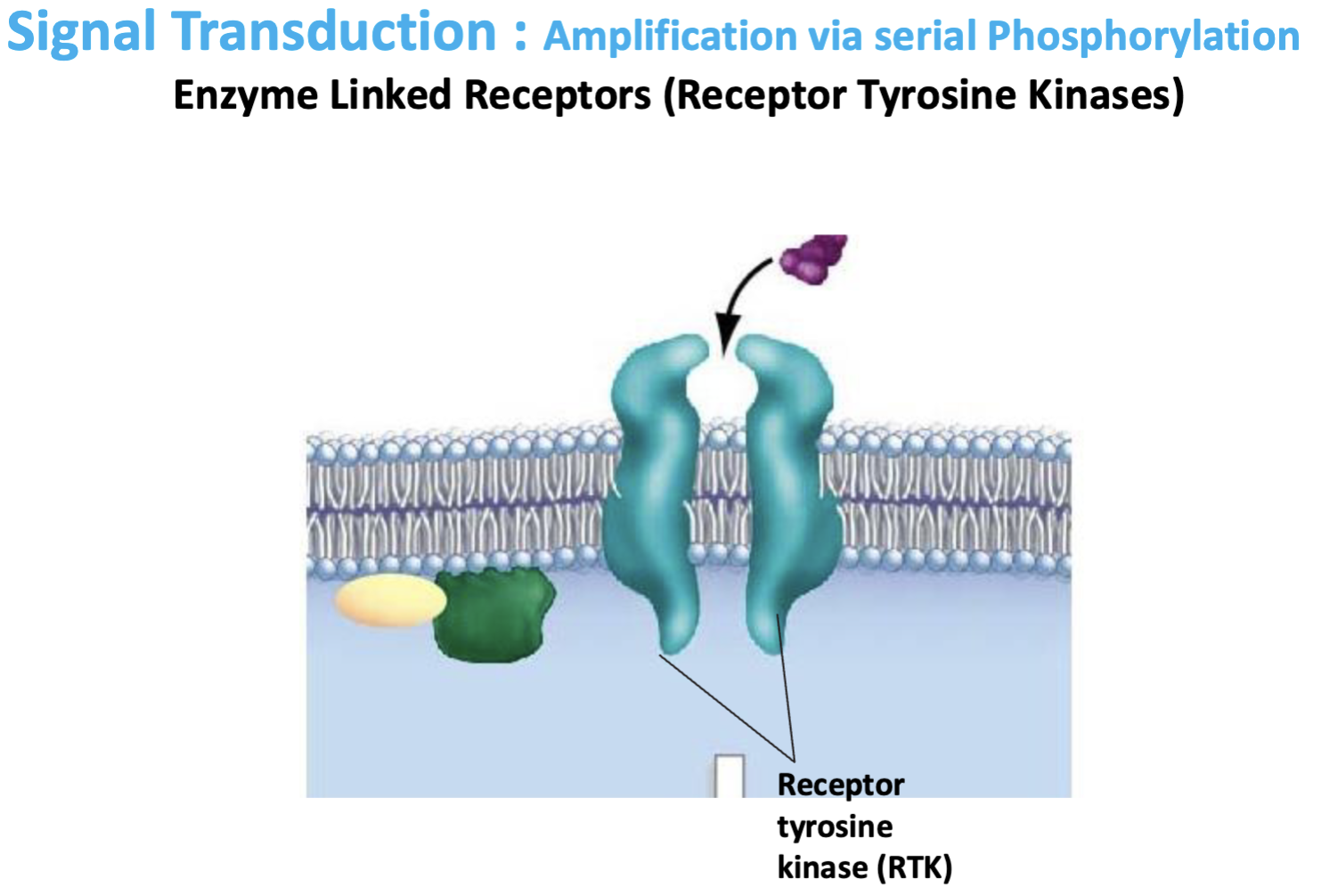
What type of enzyme activity do RTKs have?
Kinase activity.
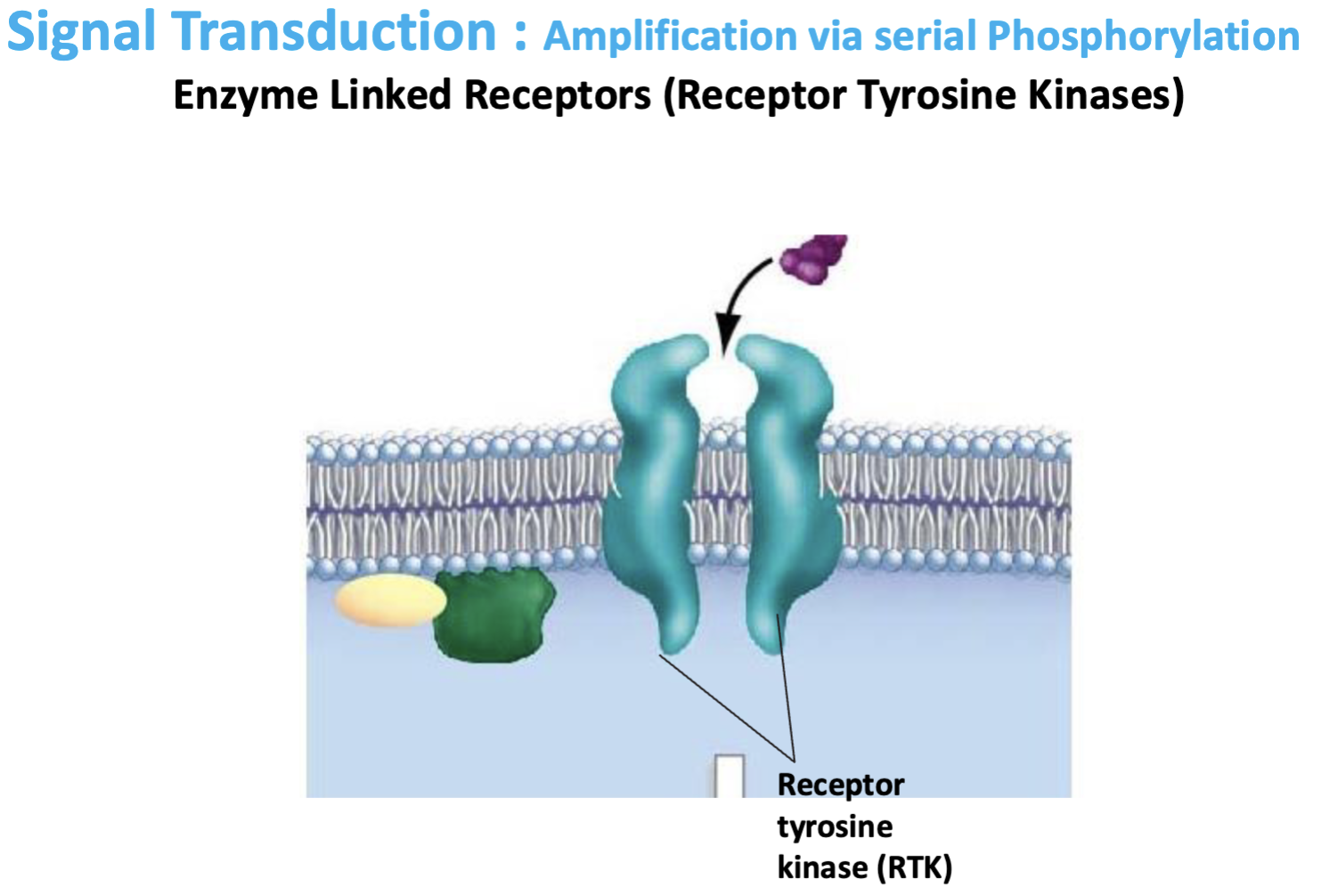
What does a kinase do?
enzyme that phosphorylates
What usually activates an RTK?
Binding of a signal molecule.
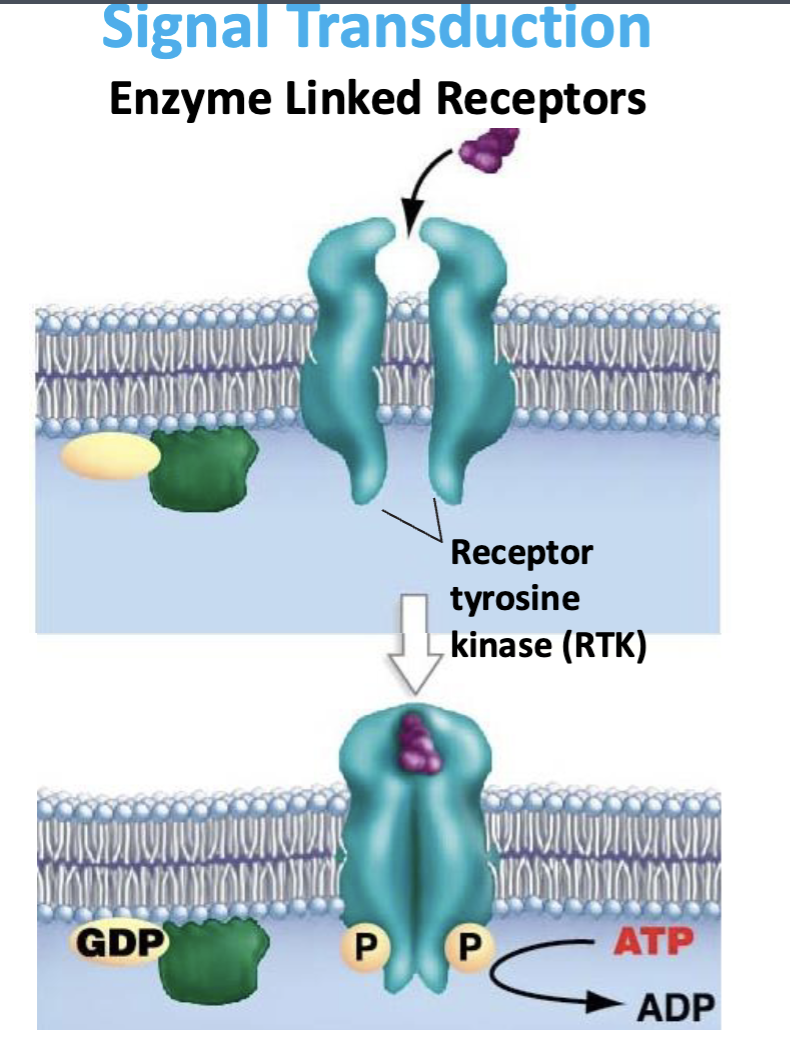
Upon binding of signal molecule…
RTK self phosphorylates
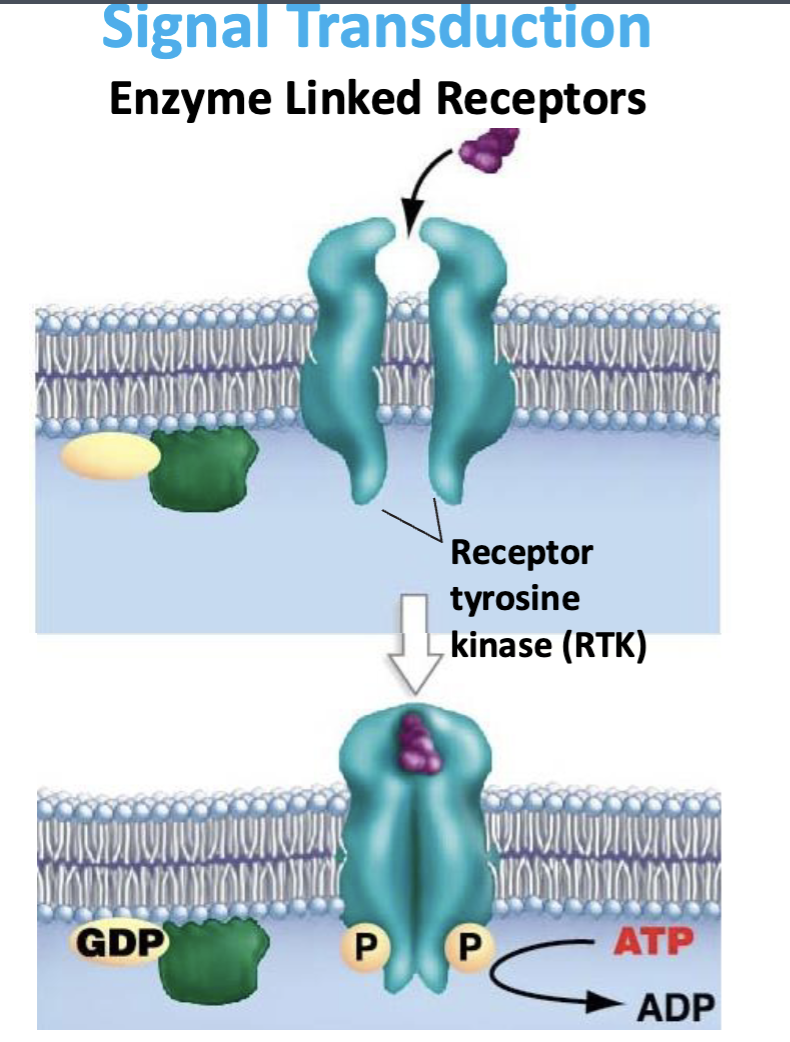
Upon self-phosphorylating
series of conformational changes to induce signal transduction
G protein associates w/Ras protein
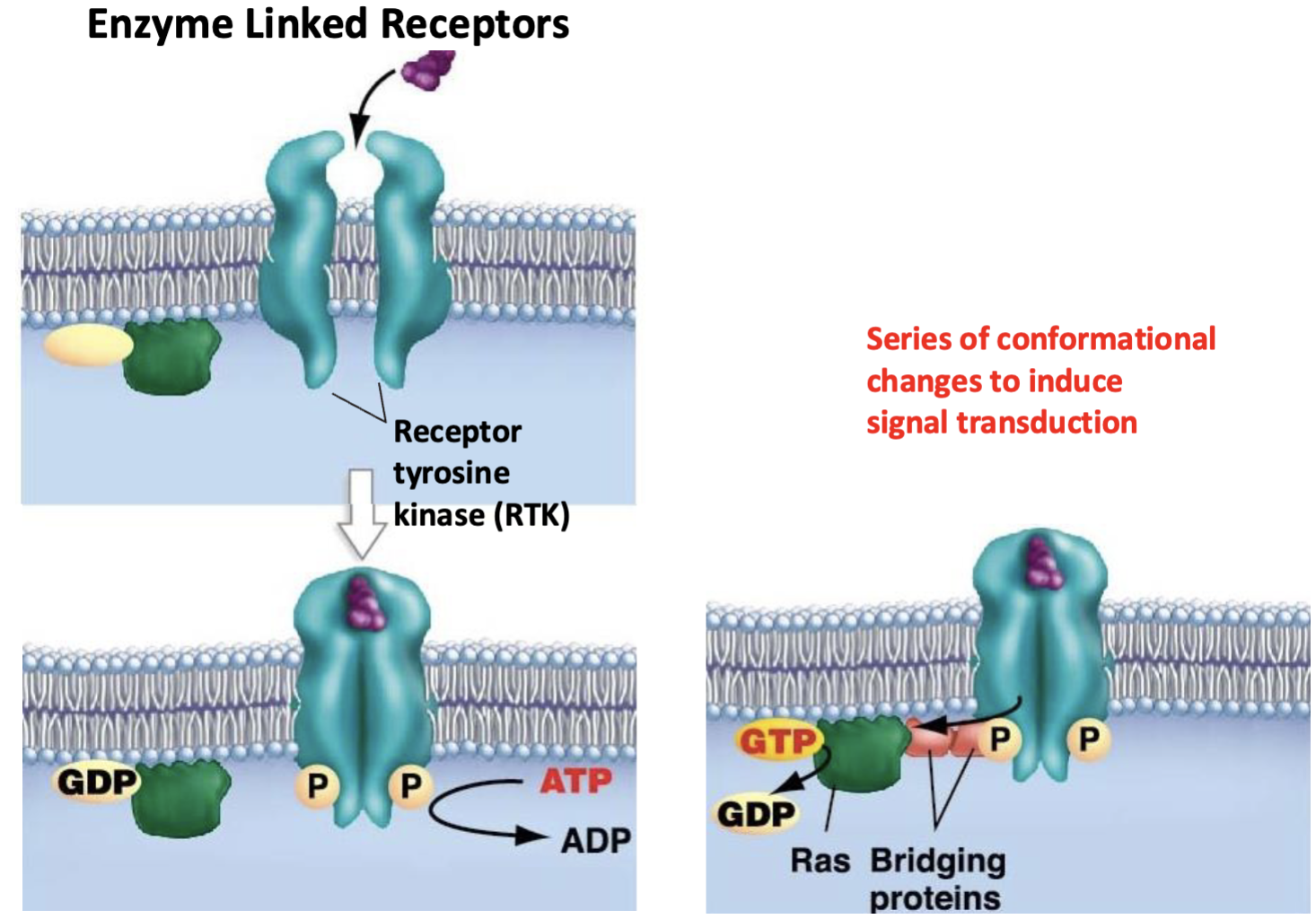
What is RAS in RTK signaling?
A signaling relay protein.
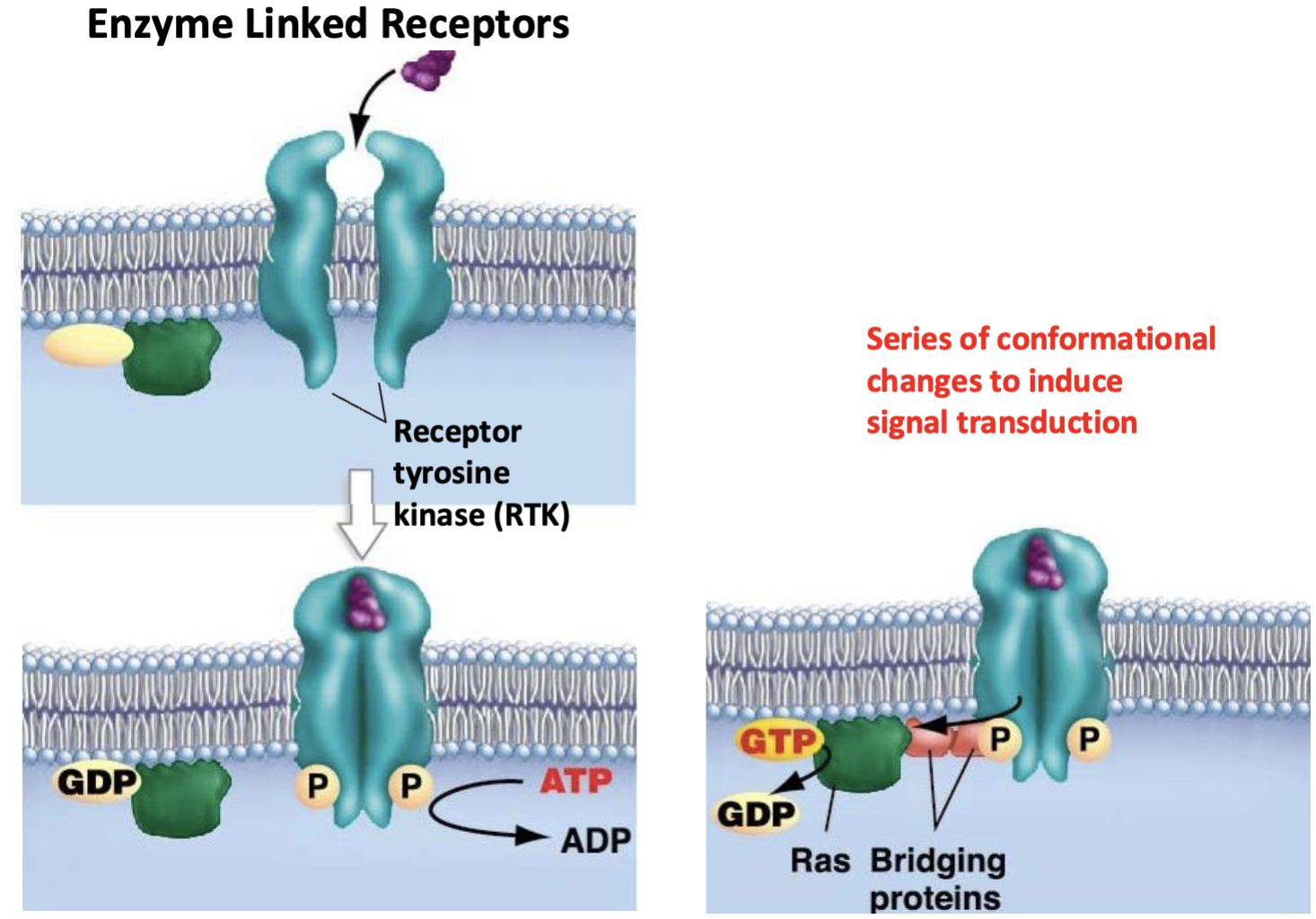
After associating with RTK..
RAS is activated
phosphorylation cascade ensues
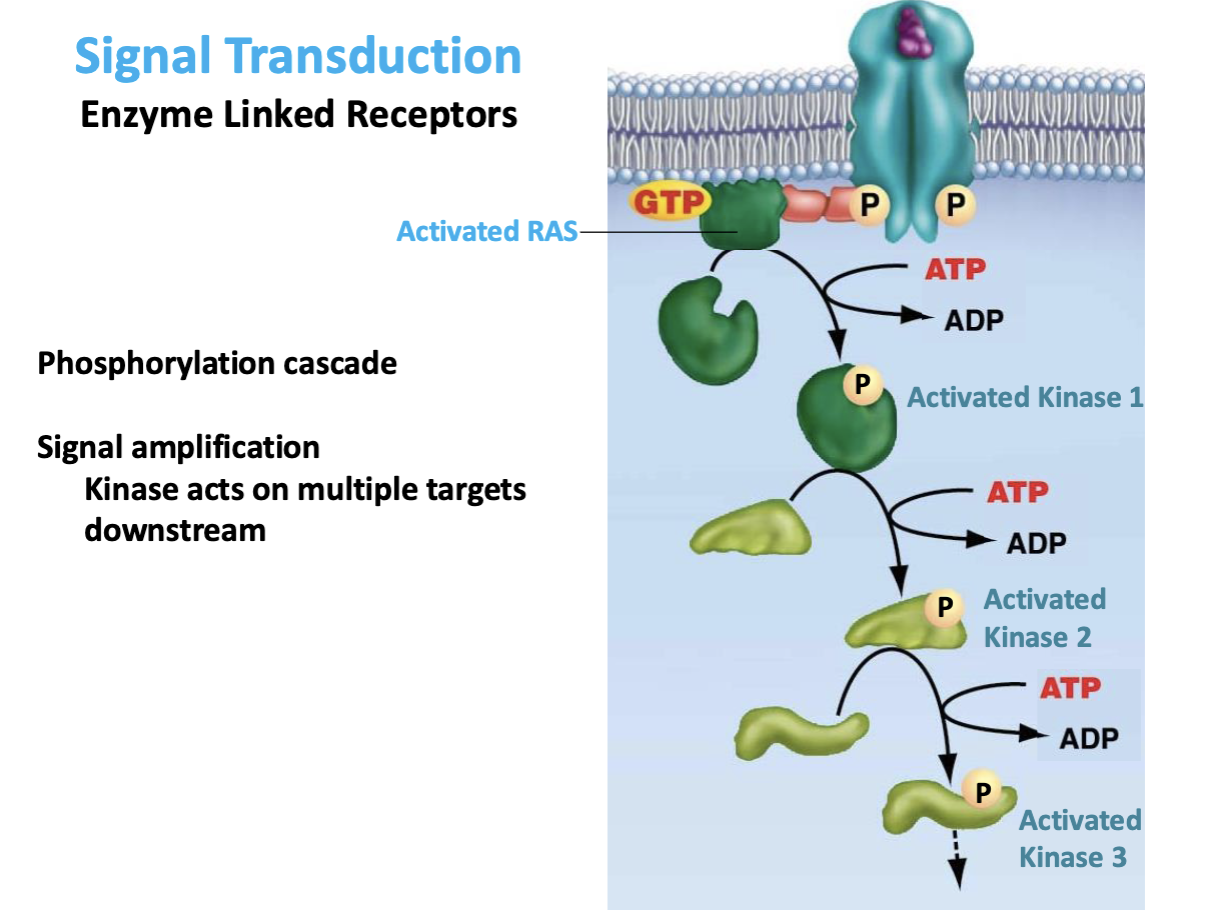
What is a phosphorylation cascade?
A series of kinases activating other kinases.
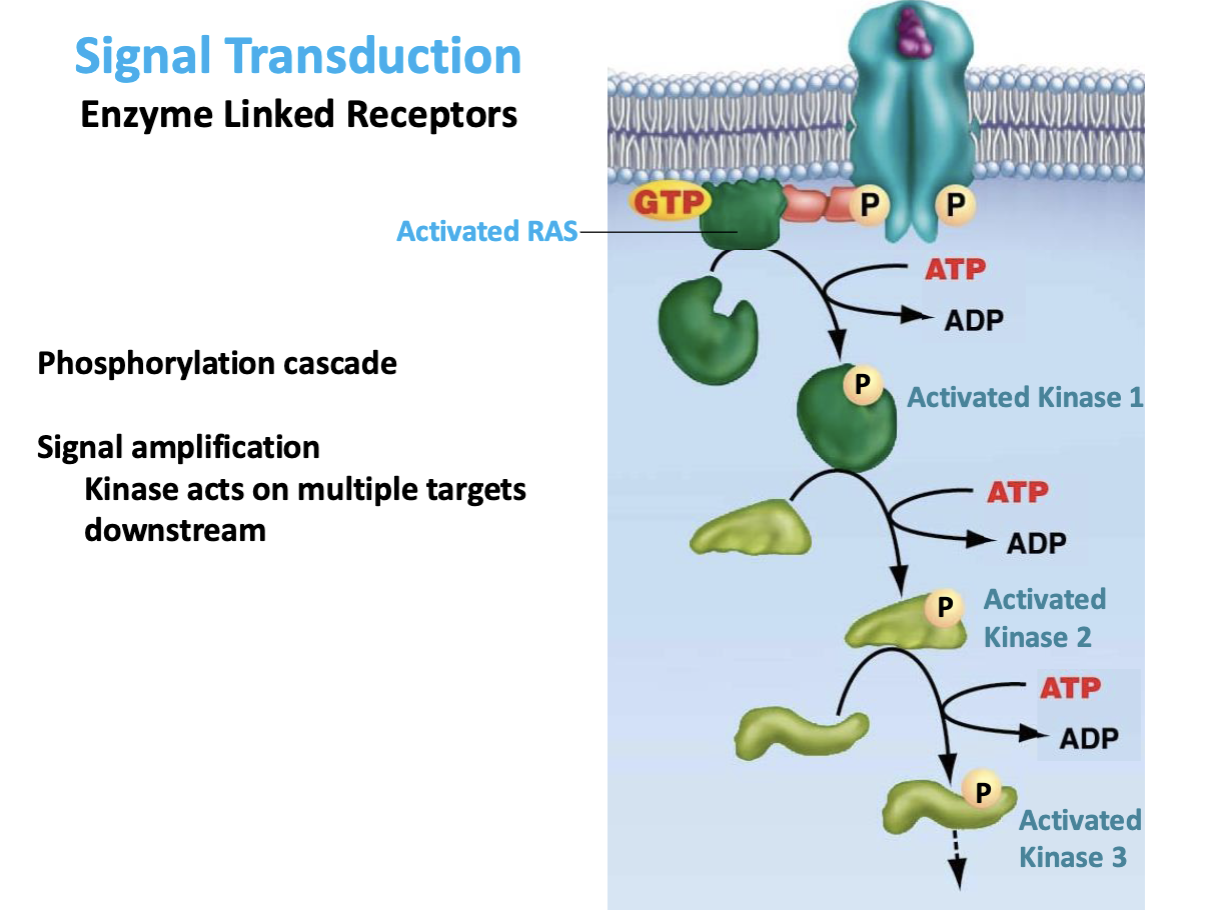
Why do phosphorylation cascades amplify signals?
Each kinase can activate many downstream targets.