Kaplan Social Sciences Cards
 Call Kai
 Learn
Learn Practice Test
 Spaced Repetition
 Match
Match Flashcards
 Knowt Play
1/103

There's no tags or description
Looks like no tags are added yet.
Name | Mastery | Learn | Test | Matching | Spaced | Call with Kai |
|---|
No analytics yet
Send a link to your students to track their progress
104 Terms
Transduction
The process of converting one form of energy into another, particularly the transformation of physical, electromagnetic, auditory, and other stimulus energy into electrical signals in the nervous system.
Subliminal perception
The ability to perceive stimuli that are below the threshold of conscious awareness, often influencing thoughts and behavior without direct awareness.
Somatosensation
The sensory experience of touch, temperature, pain, and proprioception, which conveys information about the body's physical state and the environment.
Two threshold
The minimum distance necessary between two points of stimulation on the skin such that the points will be felt as two distinct stimuli
Signal detection theory
A theory of perception, in which internal (physiological) and external(environmental) context play a role in our perception of stimuli
Response bias
The tendency of subjects to systematically respond to a stimulus in a particular way due to non-sensory factors. I.e. Their response is skewed because of expectations, habits, pressure, or assumptions—not because of what they actually sensed.
Parallel processing
The ability to simultaneously analyse and combine information regarding multiple aspects of a stimulus such as colour, shape, and motion.
Sensation
Transduction of physical stimuli into neurological signals
Gestalt Principles
Ruled by Law of Prägnanz. Says your brain uses to automatically organise separate pieces of sensory information into meaningful, unified patterns or objects.
There are seven principles: Figure-ground, Similarity, Proximity, Common fate, Continuity, Closure, Symmetry.
Just noticeable difference (JND)
The minimum difference in magnitude between two stimuli before one can perceive this difference. Also known as different threshold
Absolute threshold
The minimum stimulus energy needed to activate sensory system. This is about sensation not perception, and the moment your sensory receptors finally fire strongly to say “something is there”.
I.e. Think of it as the point where something goes from “too faint to notice” → “okay, now I can sense it.”
Proprioception
The ability to tell where one's body is in space. Often described as the bodies internal GPS being able to tell where bodily limbs are without having to look. And is also associated with balance.
Weber's law
Theory of perception that states there is a constant ratio between the change and stimulus intensity needed to produce a just noticeable difference (JND) and the intensity of the original stimulus.
Errors of growth
Misuse of grammar characterised by universal application of rule, regardless of exceptions. Often seen in children during language development.
Egocentrism
Self-centred view of the world in which one is not necessarily able to understand the experience of another person.
Disconfirmation principle
Idea that states if evidence obtained during testing does not confirm a hypothesis, then the hypothesis is discarded or revised.
However it is also applied to how people reason through their problems or how cognitive biases can interfere with proper reasoning.
Consciousness
Awareness for oneself. Can be used to describe varying levels of awareness that occur with wakefulness, sleep, dreaming, and drug induced states.
Circular reaction
Repetitive action that achieves a desired response.
Availability heuristic
A mental shortcut in which people judge how likely something is. Based on information that is most readily available or how easily examples come to mind rather than knowing all the information behind the subject.
E.g. After seeing the news about recent plane crashes, Jane overestimates the danger of flying and chooses to take the bus instead. This is heuristic because those types of events are easier to recall.
Arcuate fasciculus
A bundle of axons that connect the Broca’s area (right hemisphere) responsible for speech production and the Wernicke’s area (left hemisphere) responsible for speech comprehension.
Loss of function: Disconnection from the two areas, but speech and comprehension ability is intact, but repeating words or phrases is impaired (conduction aphasia).
Adaption
In perception a decrease in stimulus perception after a long duration of exposure.
In learning, the process by which new information is processed e.g. consist of assimilation and accommodation.
Sleep apnea
Sleep disorder in which a person may cease to breathe while sleeping. Due to obstruction or central neurological cause.
Sensitive period
A time during, often emphasised in early childhood, which environmental input has a maximal input on the development of a particular ability.
Selective attention
The ability to focus on a single stimulus even while other stimuli are occurring simultaneously.
Recognition-primed decision model
A decision-making model in which experience and recognition of similar situations one has already experienced. Which plays a large role in decision-making and actions.
It is one of the explanations for the experience of ‘intuition’ or intuitive thought.
Rapid eye movement (REM) sleep
Stage in which I move rapidly back-and-forth and physiological arousal are more similar to wakefulness than sleep. Dreaming occurs during the stage.
Object permanence
Knowledge that an object does not cease to exist even when the object cannot be seen.
Learning or behaviorist theory
A theory that attitudes are developed through forms of learning.
Which can include: Direct contact, direct interaction, direct instruction, and conditioning.
Divided attention
The ability to attend to multiple stimuli simultaneously and perform multiple tasks at the same time.
Deductive reasoning
A form of cognition that starts with general information → then narrows down that information → create a conclusion
Crystallised intelligence
Cognitive capacity to understand relationships or solve problems using information acquired during schooling and other experiences.
Critical period
A time during development which exposure to language is essential for eventual development of effective use of language. This period of development is between two years old and puberty.
Conservation
The understanding that physical quantities (mass, volume, number) remain the same despite changes in shape or appearance. This concept is seen in Piaget’s stage of cognitive development in concrete operational stage (age 7 to 11 years old).
Liquid conservation:
Pouring water from a short, wide cup into a tall, thin cup doesn’t change the amount.Mass conservation:
Rolling a ball of clay into a snake shape doesn’t change how much clay there is.Number conservation:
Spreading out coins doesn’t mean there are more coins.
Confirmation bias
Cognitive bias in which one focuses on information that supports a given solution, belief, or hypothesis and ignores evidence against it.
I.e. A white woman believes that Black Americans are criminals. She sees a local crime taken place and the mug shot reveals a black male, which she says this is “proof”. Though the statistics say more crime is committed by white people she refuses to believe it
Circadian rhythm
The bodies internal 24 hour clock regulated by the superchiasmatic nucleus (SCN) located in the hypothalamus.
retina (sends light information) → thalmus (relay station) → SCN signals to → pineal gland → releases melatonin (induces sleep).
Broca's area
The left hemisphere of the brain, this area is located in the inferior frontal gyrus of the frontal lobe. It is responsible for motor function of speech.
Loss of function: Broca’s aphasia → inability to correctly produce spoken language. However Wernicke’s area is intact, thus comprehension is normal.
Alertness
State of consciousness in which one is aware, able to think, and able to respond to the environment. Nearly synonymous with arousal.
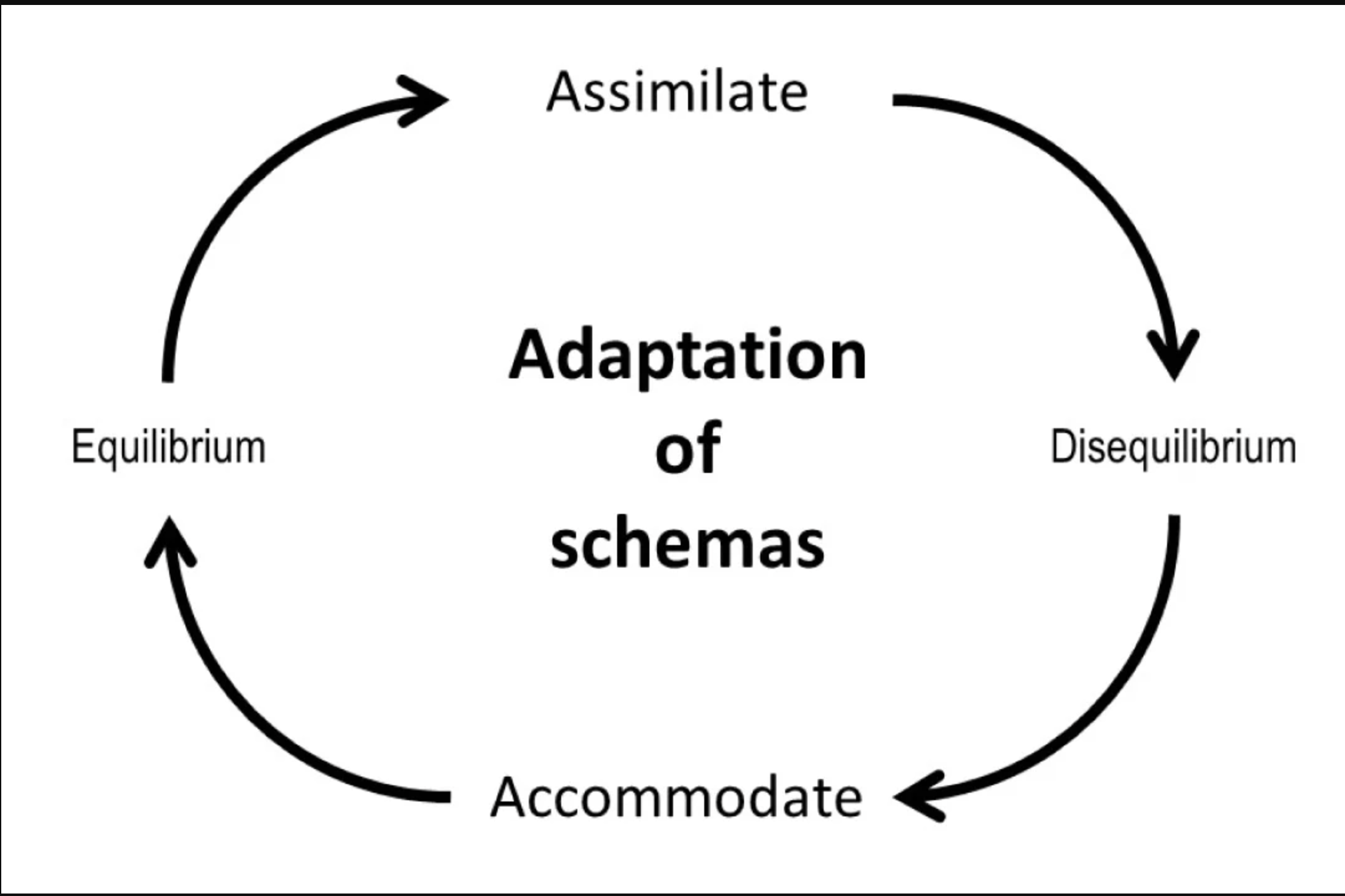
Accommodation
Process by which existing schemata are modified to encompass new information. This concept is observed and applied across all stages in Piaget’s theory of cognitive development
Syntax
The way in which words are organised to create meaning.
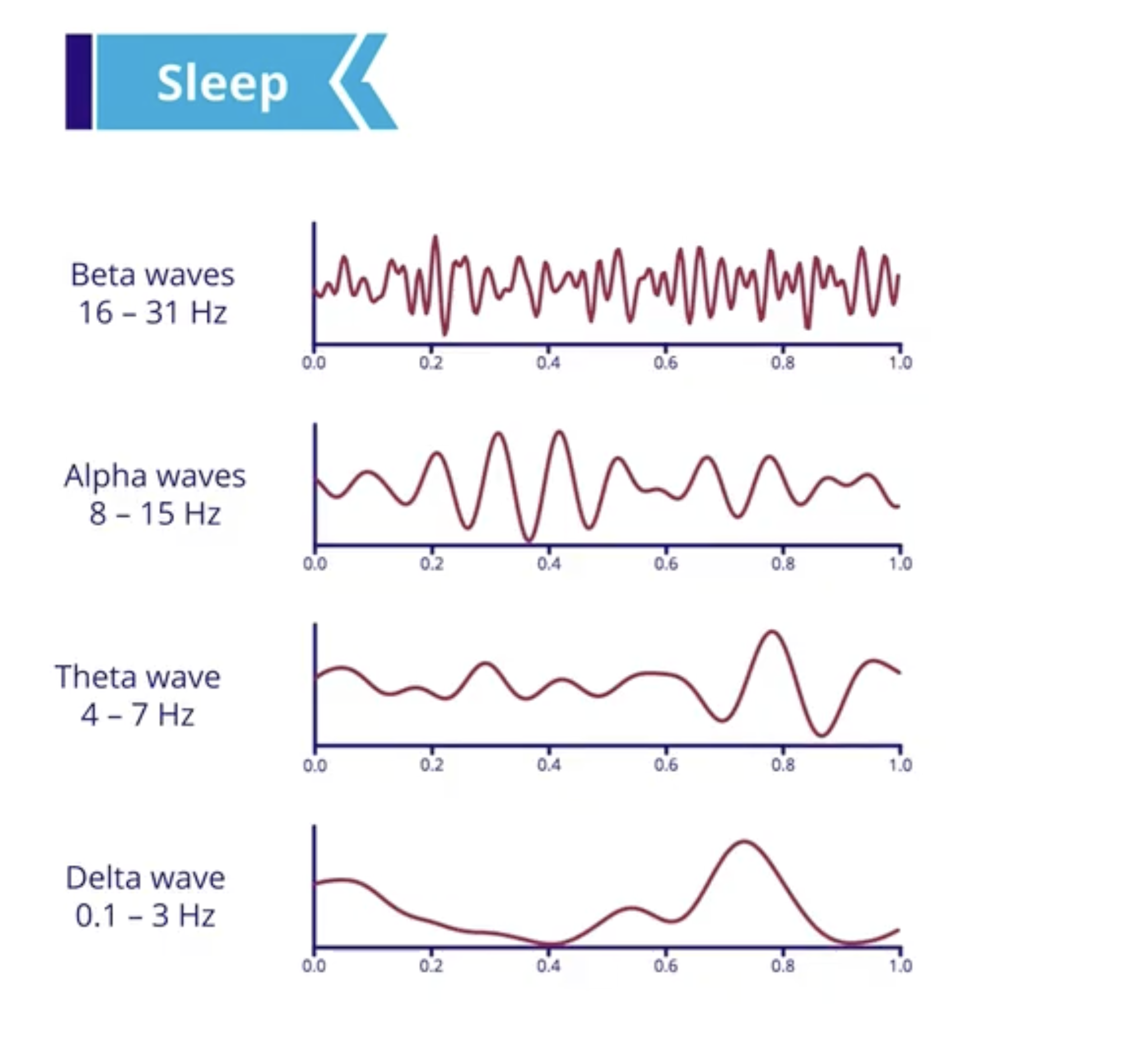
Slow-wave sleep
Consists of NRM sleep stages 3 and 4. Also known as Delta wave sleep
Schema
A mental framework or an organized pattern of thought and behavior. It helps a person interpret, categorize, and understand the information about the world. Schemas guide how new experiences are processed through either assimilation or accommodation.
One of the central concepts of Piaget’s stages of cognitive development
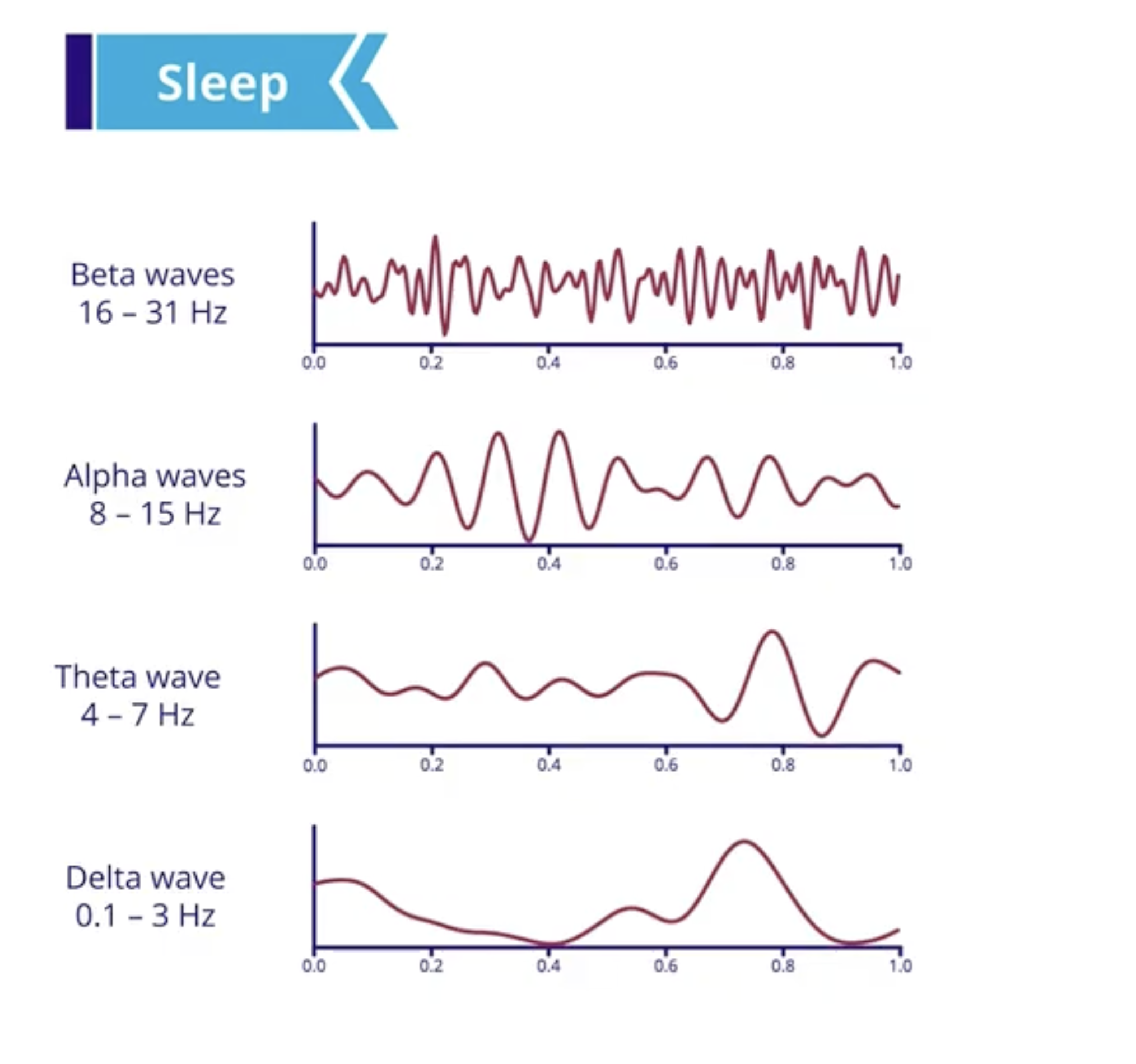
Non-rapid eye movement (NREM) sleep
Stages 1 through 4 of sleep.
It is characterized by slowed brain activity, reduced physiological arousal, and the absence of dreaming‑like activity seen in REM.
NREM is essential for memory consolidation, physical restoration, and deep restorative sleep.
Narcolepsy
Narcolepsy is a sleep disorder characterized by sudden, uncontrollable episodes of daytime sleepiness caused by abnormal regulation of REM sleep.
It often includes cataplexy (sudden loss of muscle tone triggered by emotion), sleep paralysis, and hypnagogic or hypnopompic hallucinations due to REM elements intruding into wakefulness.
Mental set
A tendency to repeat solutions that have yielded positive results at sometime in the past.
Heuristic
A heuristic is a mental shortcut or simple rule of thumb the brain uses to make quick decisions or judgments with minimal cognitive effort. Heuristics increase speed but can lead to systematic errors or biases.
Such as availability or representativeness heuristic.
Somnambulism
Sleep disorder in which one carries out actions in his or her sleep. Also known as sleepwalking.
Representativeness heuristic
A mental shortcut, in which people judge items by how much it resembles an existing prototype, stereotype, or representative image of that category rather than using actual statistical probability. This often leads to errors when base rates are ignored.
E.g. A fight breaks out inside of a restaurant and the owner sees the fight between a regular and A biker. The owner applies this heuristic to the biker who is wearing a leather jacket and believes he was the one who started the fight due to stereotyping them in a gang.
Linguistic relativity hypothesis (Whorfian Hypothesis)
Hypothesis suggesting that one's perception of reality is largely determined by the content, form, and structure of language.
Intuition
Intuition is rapid, automatic decision‑making based on past experiences and pattern recognition rather than conscious reasoning. It feels like a “gut instinct” and relies on heuristics, which can be efficient but prone to bias.
Inductive reasoning
Involves drawing general conclusions from specific observations or patterns.
It moves from particular examples to broader rules or theories.
It is faster and flexible, but prone to error because conclusions are not guaranteed to be true.
Intelligent quotient
Numerical measurement of intelligence, usually accomplished by some form of standardised testing
Hypnosis
An altered state of consciousness in which a person appears to be awake but is in fact in a highly suggestible state. This treatment is associated with psychodynamic/ psychoanalytic approaches.
Hallucinations
Perceptions that are not due to external stimuli but have compelling sense of reality.
Drugs that cause hallucinations such as lysergic acid diethylamide (LSD) or psilocybin-containing mushrooms are examples.
Functional fixedness
The tendency to see objects as only having their traditional or intended use which blocks creative problem-solving. Specifically a problem-solving error or cognitive bias.
Fluid intelligence
Ability to think flexibly and solve new, unfamiliar problems by using logic, pattern recognition, and abstract reasoning.
OiIt does not rely on prior knowledge and typically declines with age.
Universal emotions
Recognized by all cultures includes happiness, sadness, anger, fear, discussed, contempt, and surprise.
Tolerance
Decreased response to a drug after physiological adaption
Shatner-Singer theory
A theory of emotion that states, emotion is produced by two components: (1) physiological arousal and (2) a cognitive interpretation of that arousal based on the situation (environmental context).
The same physical response can lead to different emotions depending on how it is labeled. E.g. you feel adrenaline rushing through your veins, but your environment is surrounded by a angry mob. Thus you feel angry too. Alternatively if the sitaution was a musical concert, you’d feel joy.
Opponent-process theory
Theory of emotion that states, emotions or motivations are regulated by opposing pairs of processes. One emotional state is activated, and the other is suppressed—and overtime, the opposite state strengthens to restore balance. However, this term is often associated with drug addiction. As it explains tolerance, withdrawl, and addictive patterns by describing the
This explains why repeated exposure to stimulius can reduce the initial reaction and increase the opposite reaction.
Example:
First skydive → intense fear (primary process), weak relief (opponent process)
After many jumps → fear weakens, relief/euphoria strengthens
Opponent-process theory (association with drug addiction)
First time using a stimulant (e.g., cocaine):
Primary process: intense euphoria
Opponent process: mild crash afterward
After repeated use:
Primary process weakens (less euphoria)
Opponent process strengthens (stronger crash)
User takes more drug to avoid the crash
→ Addiction cycle
James Lange theory
States that emotions occur because we first experience physiological arousal. The body reacts to a stimulus, and the brain interprets those physical changes as a specific emotion.
Emotion follows the body’s response: Stimulus → physiological arousal → emotion.
Drive reduction theory
A theory that explains motivation as being based on the goal of eliminating uncomfortable internal states of tension. Additionally there are two types of drives, primary (biological) and secondary (Learned).
Biological needs → create drives → drives motivate behaviour → behaviour reduces the drive → homeostasis is restored.
Primary drive examples: hunger, thirst, sleep
Secondary Drive examples: achievement, money, social approval, grades
Primary drives (biological)
Related to the drive reduction theory, these are innate, physiological, and directly tied to survival.
Examples: Hunger, thirst, sleep, warmth, and avoiding pain.
Secondary drives (Learned)
Related to the drive reduction theory, these are not biological,but learned through conditioning and social experience.
Examples: money, achievement, social approval, Academic grades.
Cannon-bard theory
Theory of emotion that states, when a stimulus is perceived the brain signals that trigger physiological arousal and the conscious experience of emotion at the same time. Unlike James Lang theory of emotion that says it occurs sequently.
Stimulus → brain → emotion and physiological arousal occur both independently AND simultaneously.
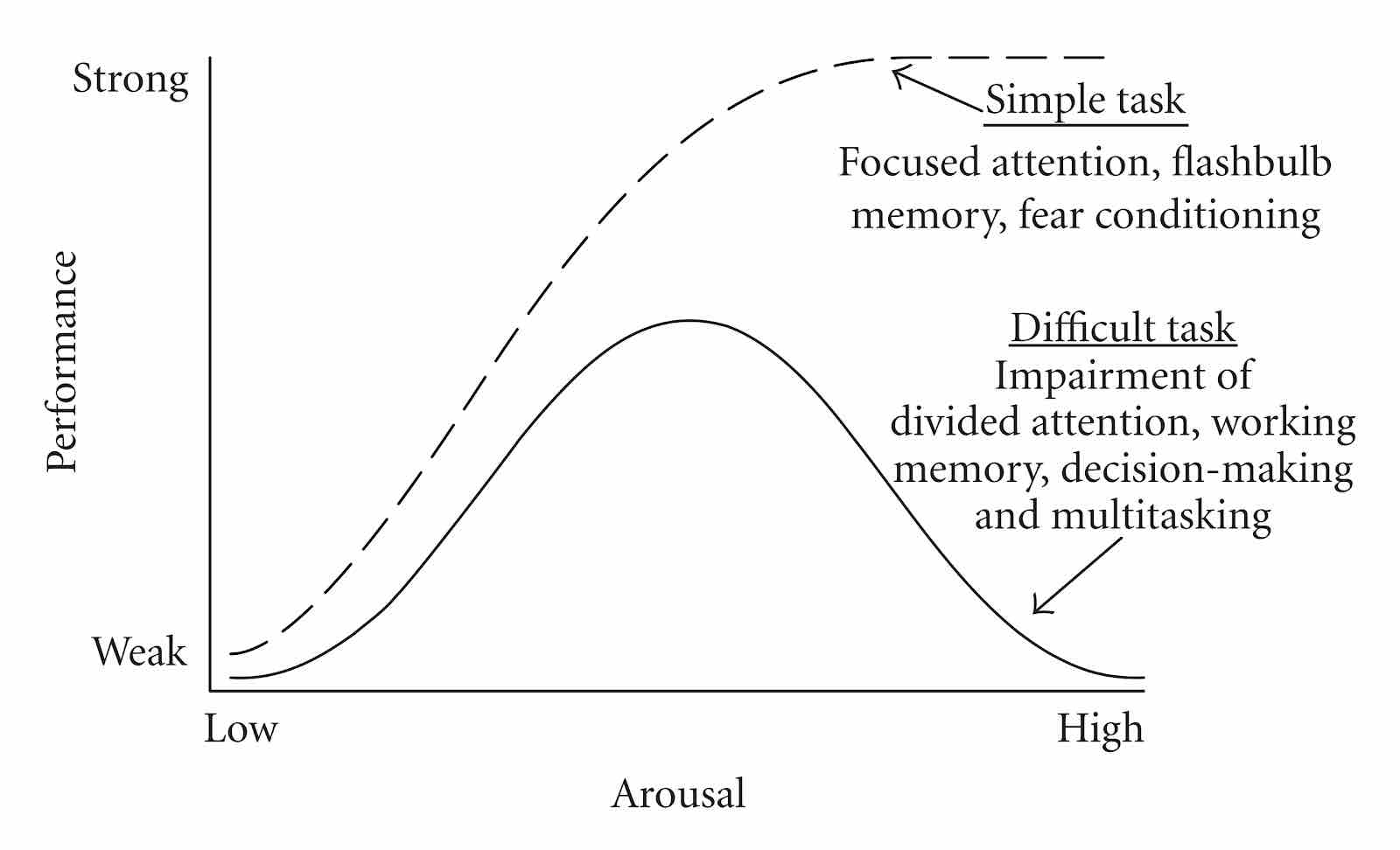
Arousal theory
Theory of motivation that states there is a particular level of arousal required in order to perform actions optimally.
Summarise by the Yerkes-Dodson law.
Aggression
A behavior with the intention to cause harm or increase relative social dominance. Can be physical or verbal
Stereotypes
Attitudes and impressions that are based on limited and superficial information about a person or a group of individuals.
Social perception (also known as social cognition)
Understanding the thoughts and motives of other people present in the social world.
Self-handicapping
An impression management strategy where one creates obstacles to avoid self blame when he or she does not meet expectations.
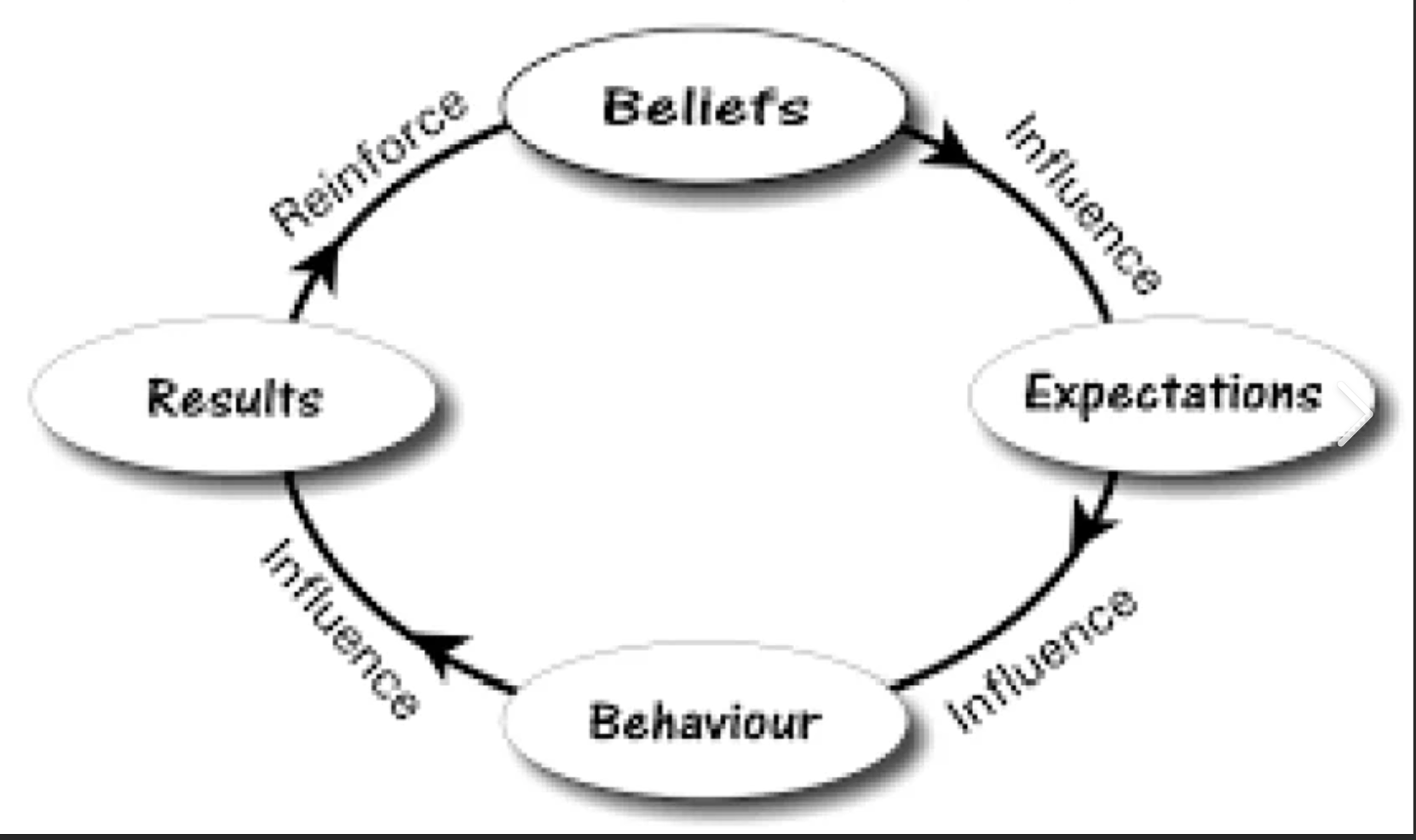
Self-fulfilling prophecy
A phenomenon when an expectation about a person or situation unintentionally shapes behaviors in a way that causes the expectation to become true.
Prejudice
An attitude, either positive or negative towards a person, group, or thing. Based on preconceived beliefs, stereotypes, or assumptions.
It is an internal evaluation (a thought or feeling), not a behavior.
Fundamental attribution error
General bias toward making dispositional attribution rather than situational attribution when analysing another person’s behaviour. 🔑 Judging without thinking thru all the possibilites.
Example: A coworker arrives late to a meeting, and you immediately assume they’re irresponsible or lazy (dispositional cause).
(Attribution error) And we don’t consider situational factors e.g. traffic, a sick child, or a delayed bus.
Ethnocentrism
The practice of making judgements about other cultures based on the values and beliefs of one's own culture.
Discrimination (classical conditionning context)
The ability to distinguish between the conditioned stimulus (CS) and other similar stimuli, responding only to the specific CS that predicts the unconditioned stimulus.
Learning to respond only to the conditioned stimulus, not to similar ones.
Discrimination (sociology context)
Negative behavior toward a group based on characteristics such as race, gender, age, or class.
Cultural Reletivism
The recognition that social groups and cultures be must be studied on their own terms to be understood.
Symbolic Interactionism
Symbolic interactionism is a micro‑level sociological perspective that explains how people create meaning through social interactions.
Individuals interpret symbols e.g. language, gestures, and objects. These shared meanings shape behavior, identity, and social reality.
Symbolic culture
Refers to the non‑material aspects of a society—such as language, values, beliefs, norms, and symbols.
These are things people use to communicate and create shared meaning.
Social Constructionism (a.k.a. Social construct)
A sociological perspective that argues that reality is created through shared social processes.
Concepts, meanings, and categories such as gender, race, illness, or value—exist because society collectively agrees on them.
They are not inherently natural or fixed.
Ritual
A formalized ceremony that involves specific objects, symbolism, and additional mandates on acceptable behaviour.
Material culture
Refers to the physical objects, tools, technologies, and artifacts that a society creates and uses.
These tangible items reflect a group’s values, beliefs, and ways of life.
Conflict theory
Conflict theory is a macro‑level perspective that views society as a system of inequality, where groups compete for limited resources, power, and control.
Social structures reflect the interests of the powerful, and social change occurs through conflict between dominant and disadvantaged groups.
According to Karl Marx, conflict arises between the bourgeoisie (the powerful, resource‑owning class) and the proletariat (the working class).
Beneficence
The ethical tenant that a physician has a responsibility to act in the patient's best interest.
Functionalism
A macro‑level sociological perspective that views society as a complex system whose parts work together to maintain stability and social order.
Each institution (family, education, religion, economy, government) serves a function that contributes to the overall functioning and equilibrium of society.
Nonmalefience
The ethical tenet that a physician has a responsibility to avoid interventions in which the potential for harm outweighs the potential for benefit.
Symbolic ethnicity
Introduced by sociologist Herbert Gans to describe a voluntary, occasional, and superficial expression of ethnic identity. Gans used it to describe how white ethnic groups in the U.S. (e.g., Irish, Italian, Polish Americans) express ethnicity in superficial ways rather than cultural immersion.
It involves adopting cultural symbols (holidays, foods, traditions) without deep involvement in the everyday practices or lived experiences of that ethnic group.
Social movements
Organized, collective efforts by groups of people who work to promote, resist, or undo social change.
They arise when individuals share a sense of dissatisfaction and mobilize to address perceived injustices or inequalities.
Demographics
the statistical characteristics of populations, used in sociology to describe and analyze groups based on measurable factors such as age, gender, race, ethnicity, income, education, and immigration status.
They help researchers identify patterns, trends, and social changes within a population.
Demographic transition
A model that describes how a society’s birth and death rates change as it industrializes. It outlines the shift from high fertility and mortality to low fertility and mortality, resulting in overall population growth followed by stabilization.
Mode
The most frequently occurring value in a data set.
Median
The middle value of an ordered data set and is resistant to outliers. Thus, making it a better measure of central tendency than the mean when data are skewed.
It splits the distribution so that 50% of the values fall below it and 50% fall above it.
Mean
The arithmetic average of a data set. It is calculated by summing all values and dividing by the number of observations.
It’s also sensitive to outliers, which can pull the mean toward the tail of a skewed distribution.
Prevalence
Total number of existing cases of a disease or condition in a population at a specific point in time (point prevalence) or over a defined period (period prevalence). It reflects how widespread a condition is within a population.
Poverty
A socioeconomic condition in which individuals or groups lack the financial resources necessary to meet basic needs such as food, housing, healthcare, and education.
It reflects limited access to material resources and is closely tied to health disparities, social inequality, and reduced life opportunities.
Incidence
The rate of new cases of a disease or condition that develop in a population over a specific period of time.
It measures the risk of contracting the condition and reflects how quickly new cases are appearing.
Usually new cases per 1000 at risk people per year.
Social mobility
Refers to the movement of individuals or groups within a social hierarchy. It can be upward or downward and occurs through changes in income, education, occupation, or social status.
High social mobility indicates an open system; low mobility indicates structural barriers.
Meritocracy
A social system in which advancement and rewards are based solely on individual talent, effort, and achievement.
Anomie (Think of a NPC gaining feeling lost)
A state of normlessness in which social norms break down, leaving individuals without clear guidance or moral regulation.
It often arises during periods of rapid social change and is associated with feelings of alienation, purposelessness, and weakened social cohesion.
Justice
A ethical tenet the physician has a responsibility to treat patience similarly and to distribute healthcare resources fairly.