Personal Vocabulary
 Call Kai
 Learn
Learn Practice Test
 Spaced Repetition
 Match
Match Flashcards
 Knowt Play
1/76

There's no tags or description
Looks like no tags are added yet.
Name | Mastery | Learn | Test | Matching | Spaced | Call with Kai |
|---|
No analytics yet
Send a link to your students to track their progress
77 Terms
Volition
Using one's own will to make a decision.
Arpeggio
Spreading a chord over time as if it were a melody. Ex: Playing C-E-G-C separately instead of together.
Affinity
A strong and close connection between people, things, or concepts.
Gamut
A range or series of related things.
Tenuous
Flimsy, weak, or uncertain.
Emblazon
To decorate something with a name, slogan, or picture.
Hale
Good or exceptional health.
Envy
Wanting something that someone else has that you do not.
Jealousy
Concern about losing something you already possess to someone else.
Cherubim
Mighty guardians of God’s presence. They typically have four heads from a lion, eagle, oxen, and human.
Self-Righteousness
The idea that one can earn moral goodness, favor, or spiritual standing through one's own efforts and commitment to rules rather than relying on grace. Often associated with self-justification, pride, arrogance, and lack of empathy.
Adherence
Attachment or commitment to a person, cause, or belief.
Enmity
The state or feeling of being actively opposed or hostile to someone or something.
Contend
Struggle to overcome.
Ziggurat
A religious building that has a flat top and is a gate for God to come down and receive worship. This concept may be controversial because this building implies that God needs worship.
Gelding
A castrated male horse.
Bridle
The headgear around a horse's head that the reins attach to.
Pugilist
Someone who physically fights another for sport.
The Five Stages of Grief
Denial, anger, bargaining, depression, acceptance.
Sexual Dimorphism
Different genders of a species display different physical builds and behaviors.
Alloparenting
Parenting done by anyone other than the biological parents, aka "It takes a village."
Egalitarian
All people are equal.
Consciousness
Awareness of oneself and one's surroundings.
Default Network
Parts of the brain that activate when we are not required to focus or concentrate on a task. Low-level brain activity.
Daydreaming
Focusing attention on one's thoughts and feelings by mentally separating themself from their surroundings.
Positive-Constructive Daydreaming
Very creative and imaginative thinking that may be inspirational or foster creativity. It is useful for planning and/or goal setting and allows the brain to separate from itself from external responsibilities.
Guilty-Dysphoria Daydreaming
Undesirable, negative thoughts and feelings, such as fear, guilt, and anger. These daydreams, along with obsessive, hostile, or violent thoughts, are a sign of neurosis.
Poor Attention Control
Self-explanatory. It does not always involve daydreaming, but instead is associated with difficulty concentrating on a task or train of thought.
Rumination
An obsessive thought or worry.
Visualization
Using mental imagery, or imagination, as a tool, typically of a desire.
Escapism
A result of frustration or boredom with reality, but also a way of coping with distress.
Fantasy
A train of thought following an event that is unlikely to happen or not grounded in reality. Most of these thoughts have a purpose, such as distraction, entertainment, or sexual arousal.
Executive Network
The part of the brain that deals with advanced problem-solving operations. It is used when the brain is focused on external tasks.
Medial Prefrontal Cortex
Allows us to visualize images.
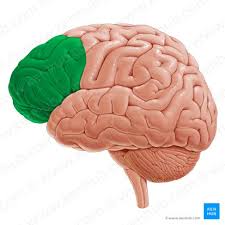
Posterior Cingulate Cortex
Activates when we are planning or allows us to access our memories of social interactions that makeup one's identity/self.
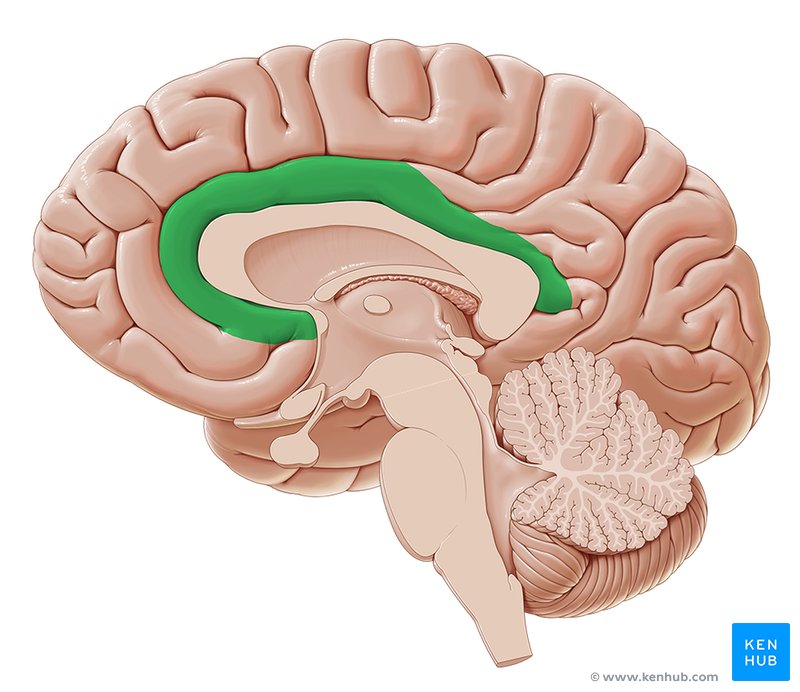
Parietal Cortex
Allows us to access memories of specific events and experiences that are stored in the hippocampus.
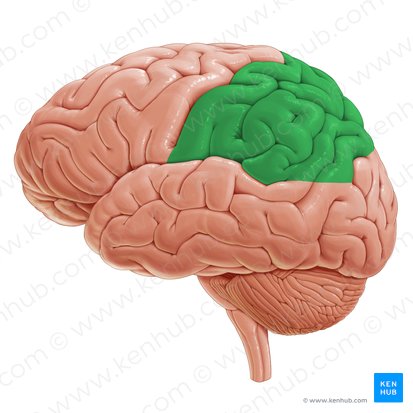
Maladaptive Daydreaming
A type of daydreaming that has become compulsive and interferes with a person's daily life. It is not part of the DSM-V and does not have a formal diagnosis or treatment.
Inadvertently
On accident, without intention.
Neurosis
A mild disorder associated with stress. Often appears as depression, anxiety, obsession, or hypochondria.
Hypochondria
Now formally classified as Illness Anxiety Disorder (IAD). A mental health condition in which someone has an obsessed and unwanted fear of having or developing a serious medical illness. Those with IAD often misconstrue symptoms of insignificant illnesses as severe illnesses.
Misonstrue
To interpret incorrectly.
Compulsive
The urge to perform repetitive tasks in order to relieve stress and anxiety.
Infer
Deduce or conclude from evidence and reasoning, not explicit statements.
Symbiosis
Any relationship or interaction between two living things of different species.
Host
The organism that harbors or lives in association with the other.
Symbiont
The organism that lives on, inside, or in association with the other.
Mutualism
Both species benefit from the other.
Commensalism
One species lives with, on, or in another. The host does not benefit, but is not harmed, either.
Parasitic
The symbiont (parasite) lives on or inside the host and causes harm over time.
Competition
Two or more organisms fighting over the same, limited, resources. They can be of the same species (intraspecific), or two completely unrelated ones (interspecific).
Syncretism
The mixing of religions, cultures, or schools of thought.
Cavalcade
Refers to a series of of related things.
Assiduous
To show great care, attention, and effort.
Longueur
A boring part of something, such as a book or play. It is typical used in its plural form.
Indomitable
Used to describe something impossible to defeat or to discourage
Acquiesce
To accept, agree with, or allow to happen by staying silent or without arguing.
Wifty
Describes something or someone very silly or scatterbrained
Eccentric
Departing from what is usual
Blandishments
Nice things one says or does to convince someone to do something.
Saturnine
Describes people who are glum or grumpy or things that express gloom. Or, slow to act/change
Foible
Minor flaws in someone’s character
Deleterious
Describes something that is damaging or harmful in subtle, unexpected ways.
Accoutrement
Clothing or equipment that is used in a specific place or for a specific activity.
Valedictory
Describes something expressing/containing a farewell
Interloper
An unwanted person who intrudes a place or sphere of activity.
Redolent
Something that has a noticeable smell without specifying the scent. It is usually follow by “with” or “of.”
Engender
To be the source/cause of something.
Crux
The most important part of something. It is typically followed by, “of.”
Palatable
Something that has a pleasant taste or is acceptable to someone.
Miasma
An unpleasant smell or atmosphere.
Maelstrom
A whirlpool or state of confused/violent movement.
Schema
The background knowledge your brain has about the world.
Schema Activation
Bringing relevant background knowledge from long-term memory into working memory.
Scintillating
Shining brightly or very clever/skillful.
Preemptive
To disable an enemy in order to prevent an attack from them.
Reprimand
To express extreme disapproval, especially legally/officially.
Rebuke
To express criticism because of their behavior or actions.