The Army, Religion, Law, Republican Art Week 13
 Call Kai
 Learn
Learn Practice Test
 Spaced Repetition
 Match
Match Flashcards
 Knowt Play
1/71

There's no tags or description
Looks like no tags are added yet.
Name | Mastery | Learn | Test | Matching | Spaced | Call with Kai |
|---|
No analytics yet
Send a link to your students to track their progress
72 Terms
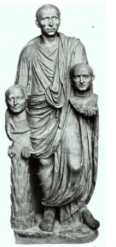
What does this photo depict?
A roman funeral
If someone passed away, busts/masks of the ancestors would be carried
Paterfamilias definition
Father of the family
Applied to the oldest male in the family
Had control over everyone-> very central role
Three Roman Names
Romans had a first name (praenomen), last name (nomen) and a distinguishing name (usually if they did something notable) (cognomen)
Examples:
Gaius Julius Caesar
Marcus Tullius Cicero-> Cicero = chickpea
Patron and Client
A patron was a wealthy or influential Roman who provided protection, legal aid, and support to clients, who in return offered respect and loyalty to the Patron..
So what does the term Patr, refer to in the words, Patron, Patrician, etc.?
Refers to father
Why did people want to be patrons?
They enjoyed fulfilling favours because they would gain reputation and influence and would be “center of attention”. It was a way for their ego to be boosted in a way.
So what were the three “father figure” roles?
Paterfamilies -> head of family
Patrician -> aristocrats
Patron -> provide assistance to the poor
What was a unique way that indicated your social status?
Seating
Ex. seating at the theatre, at the dinner table, etc.
Was social climbing possible in Rome?
Yes, however difficult and took many generations
Various types of Roman religion/spirits
Deities: sky god; war god
The conquered Greeks conquered the Romans = the Romans adopted a large number of Greek practices
Animistic spirits: numina
Rivers, forests, roads, mountains, towns io
Family ancestors and spirits
Personal magic
> Romans had a pious and pragmatic (would do whatever was required) toward religion
What is the Roman word for spirits?
Numina (numen)
How did the name Jupiter come around?
The king of the gods would be called zeus patr
Saying zeus patr fast sounded like jupiter
The story of Vesta
Vestalia was a festival in honour vesta
Vesta was the goddess of sacred fire
Only time throughout the year the temple of vesta had its doors open
Women would come in barefoot with their hair undone and leave gifts to vesta
To honour the sptry of vesta, a donkey was allowed in
Why? Was a donkey allowed in?
A donkey was allowed because a weirdo god was creeping on her
The donkey made a noise and alerted vesta
So now a donkey is allowed in the temple
At the end of the festival, what would happen?
It was called “when the poop is removed”
Called this because they would clean all the donkey poop
Poop would be dumped in the tiber river
Since Romans excused a lot of traditions in the name of religion, they would do anything, esp. things like this.
Deities: priestly colleges
Romans had a group of priests and each priests had a different job
Name the 4:
Pontiffs: administrative job >oversaw all the festivals
The chief of head was called the Pontifex Maximus (what the pope is called now)
^ In charge of religious contracts
Flamens: priests dedicated to specific gods (would say the prayers/carry out the festivals)
Augurs: priests who interpreted the will of the gods through behavior of birds to determine whether important actions had divine approval.
“Inaugurate” = to bring in an augur
The 15 Men: in charge of the books of the sybil
What is the story of Sybil?
Sibyl offered King Tarquin nine prophetic books
After he repeatedly refused her price, she burned six of them and sold the remaining three for the original price
These became the Sibylline Books, which Rome consulted during major crises.
When would the 3 books of sybil be consulted?
When Rome was in major crisis
Vestal Virgins and the Home-fire of Rome
The temple had 10 priestesses who were virgins throughout their service
Was seen as being the symbolic heart of rome
Why was the Vestal Temple considered the safest place in Rome?
To ensure that the women were virgins, the temple would be locked up
This caused important documents to be stored in the temple as well
2. Numina
Romans believed spirits were invested in throughout the empire
Regions of land were also considered to have spirits
What is a cult?
A religious celebration in honour of the spirits
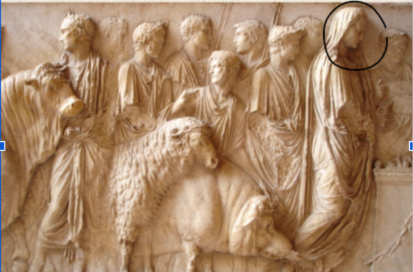
Which figure is a priest when looking at a sculpture/painting?
Priest will have toga thrown up on their head
Family Religion
What is a Lares and lararium?
Romans believed that their ancestors had powers called Lares
A roman house would have a lararium = a palace to honour lares
4. Personal Magic
Would use amulets, curse tablets, horoscopes, ghosts to defend/attack
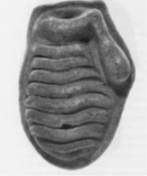
What is this an image of?
Image above is of an amulet of a uterus
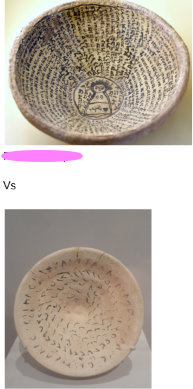
What is the difference between the two?
Above: pot w/ a script
Below: pot w/ bogus on it, a scam to look like the pot above
What is a ponti-fex?
Roman priest from the college of Pontiffs
Would survey religious rituals
Highest ranking preist
What does ponti fex mean?
Bridge builder
Roman syncretism
When two religious practices merge
Tolerance was based on pragmatism = accepted other religions because it was politically and socially useful, not because of an ideology
What is the religious capitol?
Rome
Religions accepted by Rome:
Magna Mater (Cybele)
Mithras
Isis
Bacchus
Yahweh
Magna Mater (Cybele)
The 15 men consulted from the Sybil book that they need to bring the great mother to Rome
A meteor fell from the sky and emerged Cybele
the romans brought it back to rome to worship
Mithras
A Roman god influenced by Persian religion, Zoroastrianism
Secret/mystery religion
Depicted slaying a bull (tauroctony)
Became popular among Roman soldiers (a military cult)
Women were not allowed part of religion
Isis
Egyptian goddess
Had many unofficial temples at rome
Romans equated Isis with Venus, Cleopatra associated herself with Isis
People in this religion claimed that they met isis
Bacchus
“Bacchanalia” = secret religious festivals held in honour of Bacchus
Religion was temporarily banned because rumours went out that the people of this religion were conspiring against the government
Yahweh
God worshiped in judaism
Judea was the most problematic area of the Roman empire
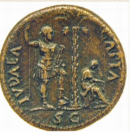
What is this image of?
A coin showing a jewish person under a palm tree with a roman standing above them
The coin says “Judea captured”
What law are we focusing on throughout this course?
Formative Law
Court case of the barber and woodcutter
They made an agreement that a woodcutter would bring all of the wood that his ox could pull
In return the barber gives the woodcutter a haircut
The woodcutter then says he wants his wagon that carries wood since it is made of wood
They then took this to court
Due to issues in the contract, it was severed
Civil Procedure
> When two citizens disagreed, the procedure that took palace
Formulation of the problem (also called the formula system)
Instructions for a judge to follow in deciding a case
Selection of Judge
Trial
What was the influence of the formula system
Development of the contract law, tort law, cyber law
Justinian's Digest -> compilation of Roman legal writings ordered my Emperor Justinian
Who were the Legal experts
Jurists and Lawyers (Gratis or pro bono -> would do it for free)
Why would people ever do something for free?
To become a patron
What type of law did Romans focus on? How did laws form?
Civil laws
Tended to let law develop in courts
Did not create statutory laws
Criminal Procedure, what was it like?
If someone did something terrible, the government would appointment sometime to help prosecute this person
Very rarely used
What were permanent courts like?
Would have expert judges for certain cases
Social function of law
Roman law was not interested in preventing crime
Expected for citizens to advocate for themselves
Redistributive justice (compared to rehabilitative justice)
If someone thought they were above the law, revenge would be brought upon them to put them in their place
Who are Delatores
informers who accused people of crimes
If court case is successful, a reward is received
Who is Crassus
The wealthiest man in Rome who wanted military glory
Gathered a military force to gain military glory against the Parthia Empire
As he was marching out, he was offered assistance and refused both because he wanted credit on his own
He then ended up dying in the battle of Carrhae as he fell into a trap by Parthia
How much power did the Army really hold?
Power of army was so important in Rome that they could refuse to serve which would humiliate the leader
Large number of army = political clout
Proclaim and depose Emperors -> Roman armies could declare new emperors and overthrow existing ones
3 Elements of the Roman Army
Legions: Heavy infantry, only roman citizens
Auxiliaries: other forces, non-roman allies
Praetorians: bodyguard to the emperor (in the imperial era)
What was the legion in the early republic like?
Drafted amateurs who fought together in a simple line formation
Had to pay for own equipment and served for one battle season
What was the legion in the late Republic like (post punic wars)?
Legion becomes a sub group of all those drafted; it fights under an assigned commander
The trend is toward more standard weapons
The same group of soldiers would be recruited as a group in the same legion whenever drafted > basically serving w/ the same people
What are the requirements to enlist?
Male
Roman citizen
Own land
No criminal record
Had to take a physical test
Must take training
2 major benefits of being in a legion?
oot was divided amongst soldiers if a city was captured by them
When done your military duty, you could be rewarded with retirement benefits
Who is Marius? What changes did he make?
A military commander who transformed Roman army by making these changes:
Did not need to own land to join army
Each commander would recruit his own army (no longer randomly assigned)
Equipment was provided
There was promotion
What social and political repercussions did Marius’ changes bring about?
Became extremely strong military force
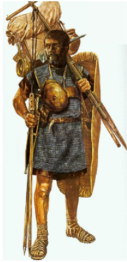
What was a jackass?
- someone who carried everything they needed (weapons, tent, etc)
similar to how a donkey carries everything
What changes were made in the Imperial Army?
Annual pay increased
Fixed term of duty + fixed pension
Legions no longer attached to specific commanders
Non citizens can enlist
Axuillaries
Non drafted citizen drafted allies
Called “light” infantry
Received retirement and full citizenship if served for 25 years
Praetorian Guard
Bodyguards to the emperor
Better benefits
Disbanded by the first African Emperor since so powerful (army could dispose of emperor thats why)
Manipular formation
instead of fighting along straight line, they would break into groups
Why was the Roman military so successful?
Discipline -> intense training + decimation
Technique -> Roman roads and camps
Bravado -> Monuments and military culture
What is decimation?
Type of punishment
Every 10th soldier would be killed
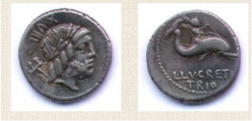
What is this?
Republican coins
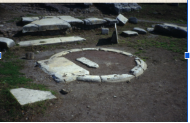
Where is the rest of the building?
Often times when looking at republican roman architecture, we only have the foundations of the buildings.
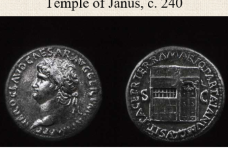
Why are the doors of the temple of Janus always open?
Rome was always at war with someone → as shown in this coin
What was a Roman innovation that was dominant in architecture?
The roman arch -> freestanding arch so army could parade through
What is distinctive about Roman art?
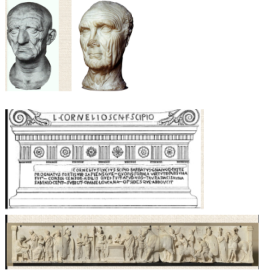
Realism Sculptures (they looked aged/wise) -> called sculpture narrative
Very long captions under sculptures
Favoured story like/ comic strip sculptures
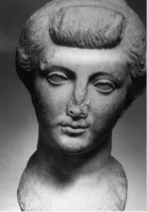
What is the hairstyle of this Roman woman called?
The nodus