DNA replication to Meiosis Keywords
 Call Kai
 Learn
Learn Practice Test
 Spaced Repetition
 Match
Match Flashcards
1/13

There's no tags or description
Looks like no tags are added yet.
Name | Mastery | Learn | Test | Matching | Spaced | Call with Kai |
|---|
No analytics yet
Send a link to your students to track their progress
14 Terms
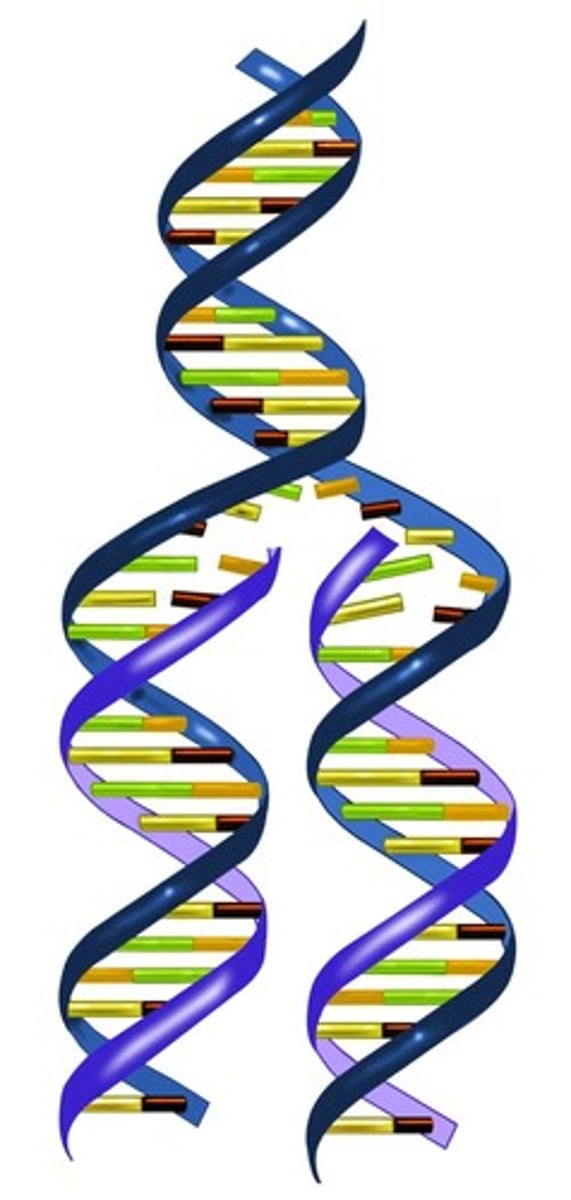
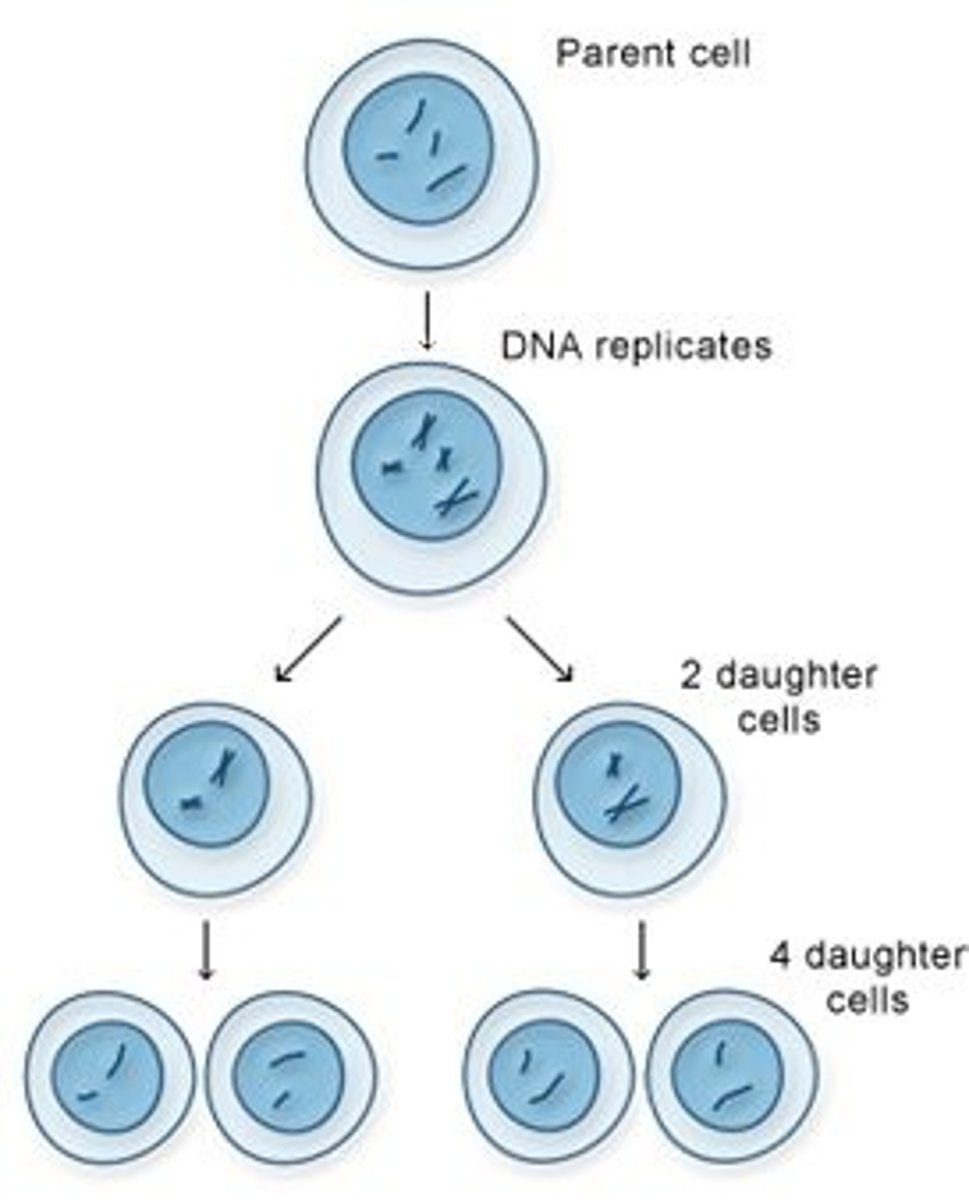
DNA replication
How new DNA is made to make new chromosomes for new cells for growth and repair.
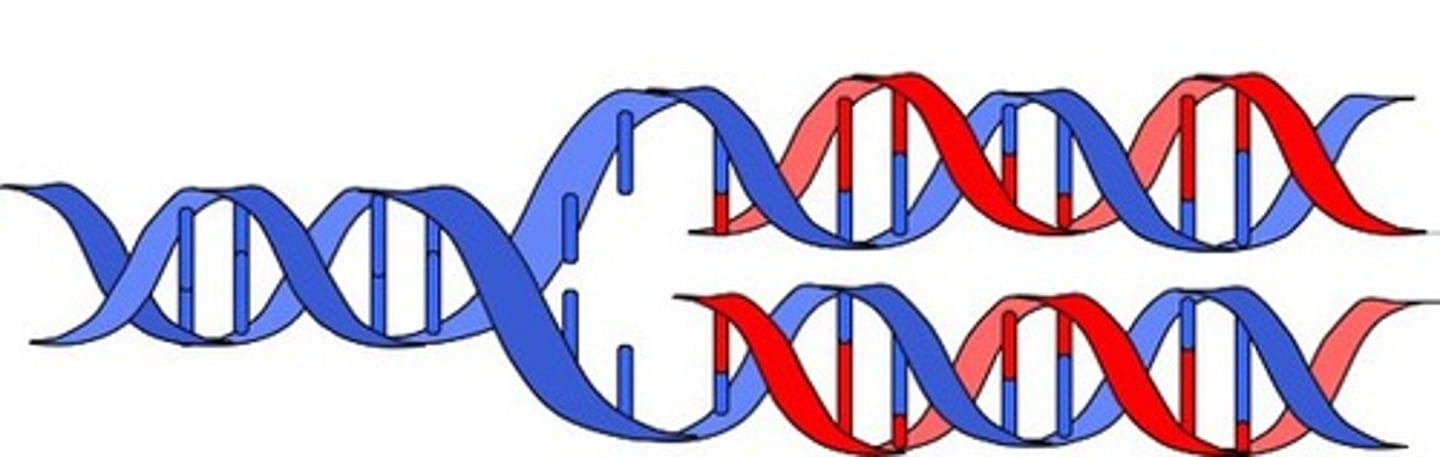
Semi-conservative replication
New DNA made by replication has half of it original (old) DNA and half of it new DNA made from free nucleotides in the nucleus.
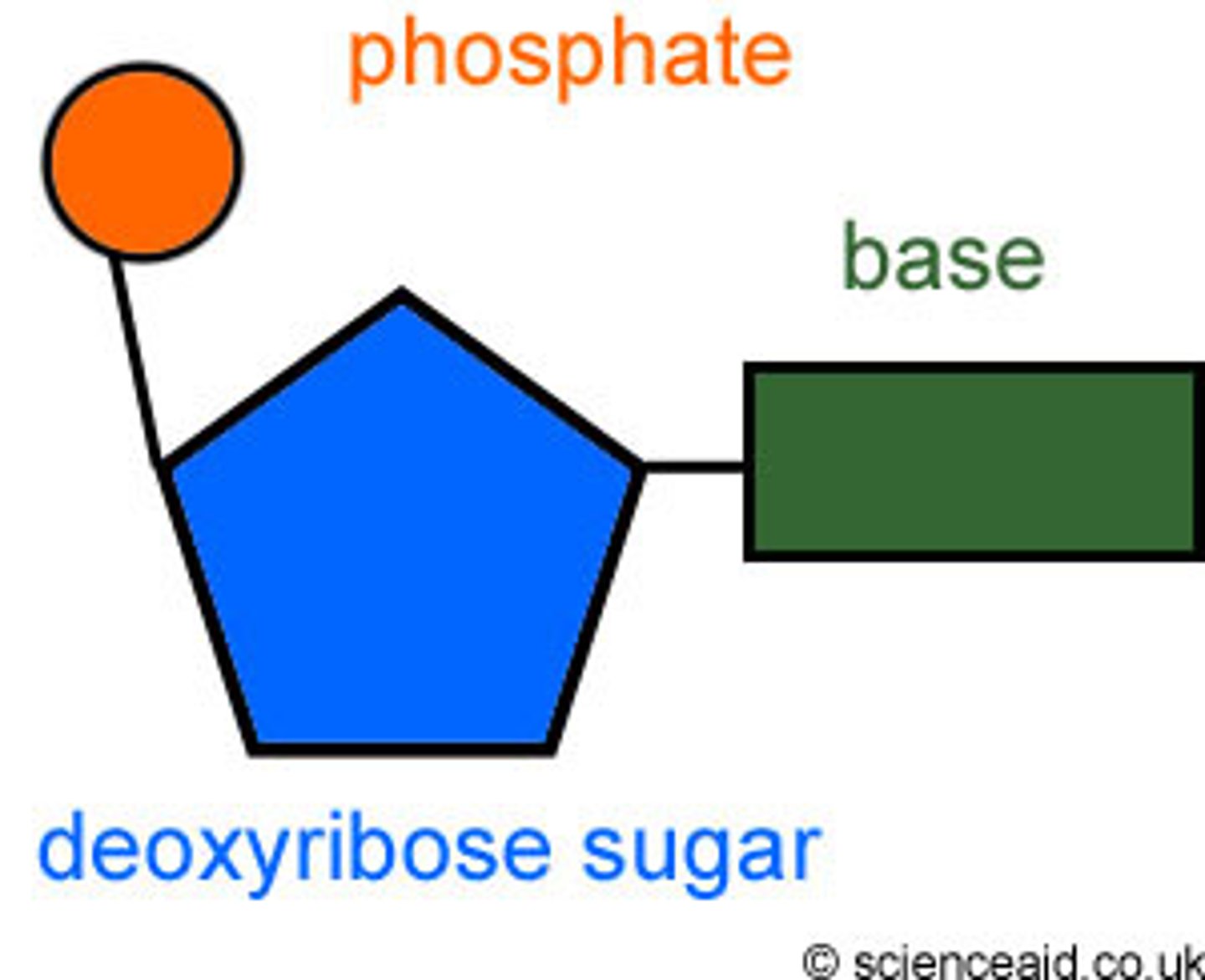
Nucleotide
Structure making up DNA - 1 base (A,C,T,G) joined to 1 sugar and 1 phosphate.
DNA is made of lots of these joined together
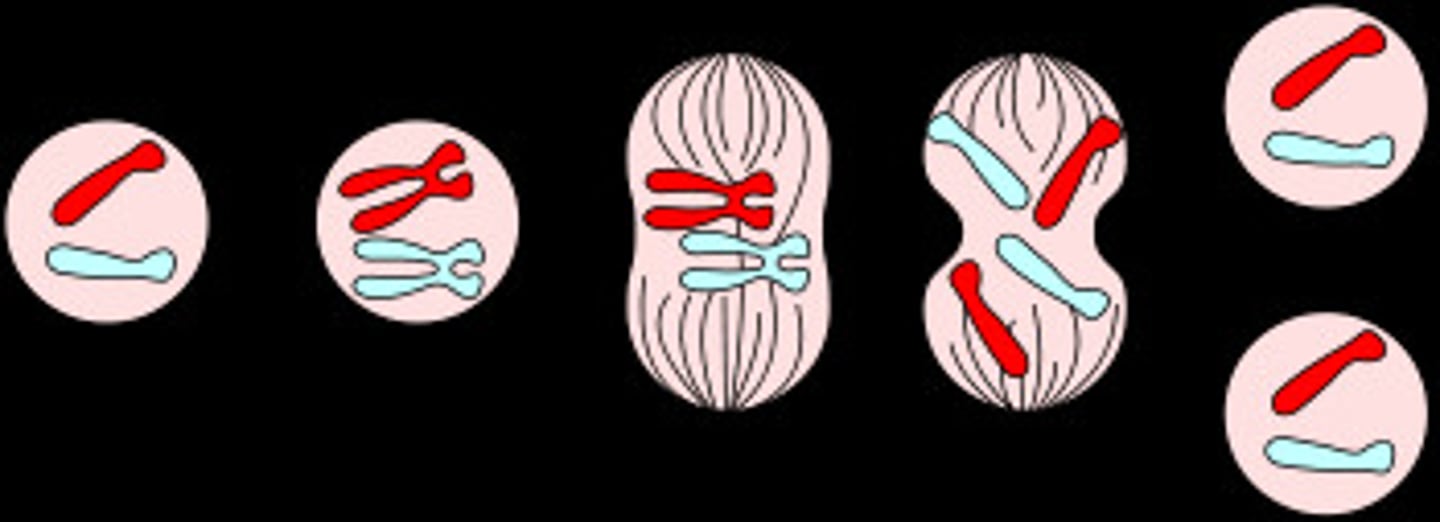
Mitosis
Cell division that makes new cells.
This happens in the somatic cells only.
It makes 2 new (daughter) cells that are genetically identical to the original cell.
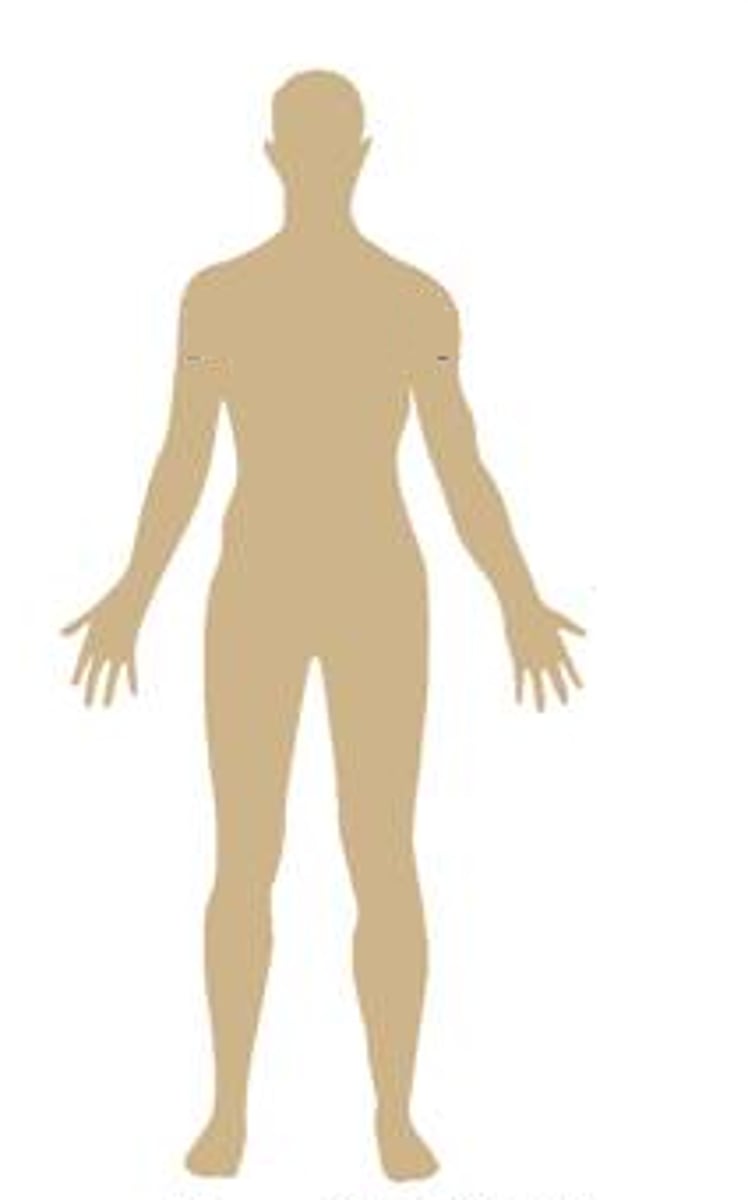
Somatic cell
A type of cell.
These are all cells in the body except the gamete cells (e.g. sperm, egg).
They have the full chromosome number in their nucleus, e.g.46 single chromosomes in humans.
Equator
Middle part of the cell where the chromosomes line up during cell division.
Spindle fibre
Fibres (strings) that form during cell division.
They help to pull the chromosomes apart when lining up on the equator. They pull them to ends of cell (poles).
Meiosis
Cell division that happens to make new gamete cells.
This makes new cells such as sperm and eggs.
Makes cells with half the number of chromosomes (e.g. 23 single in humans). Cells made all genetically different.
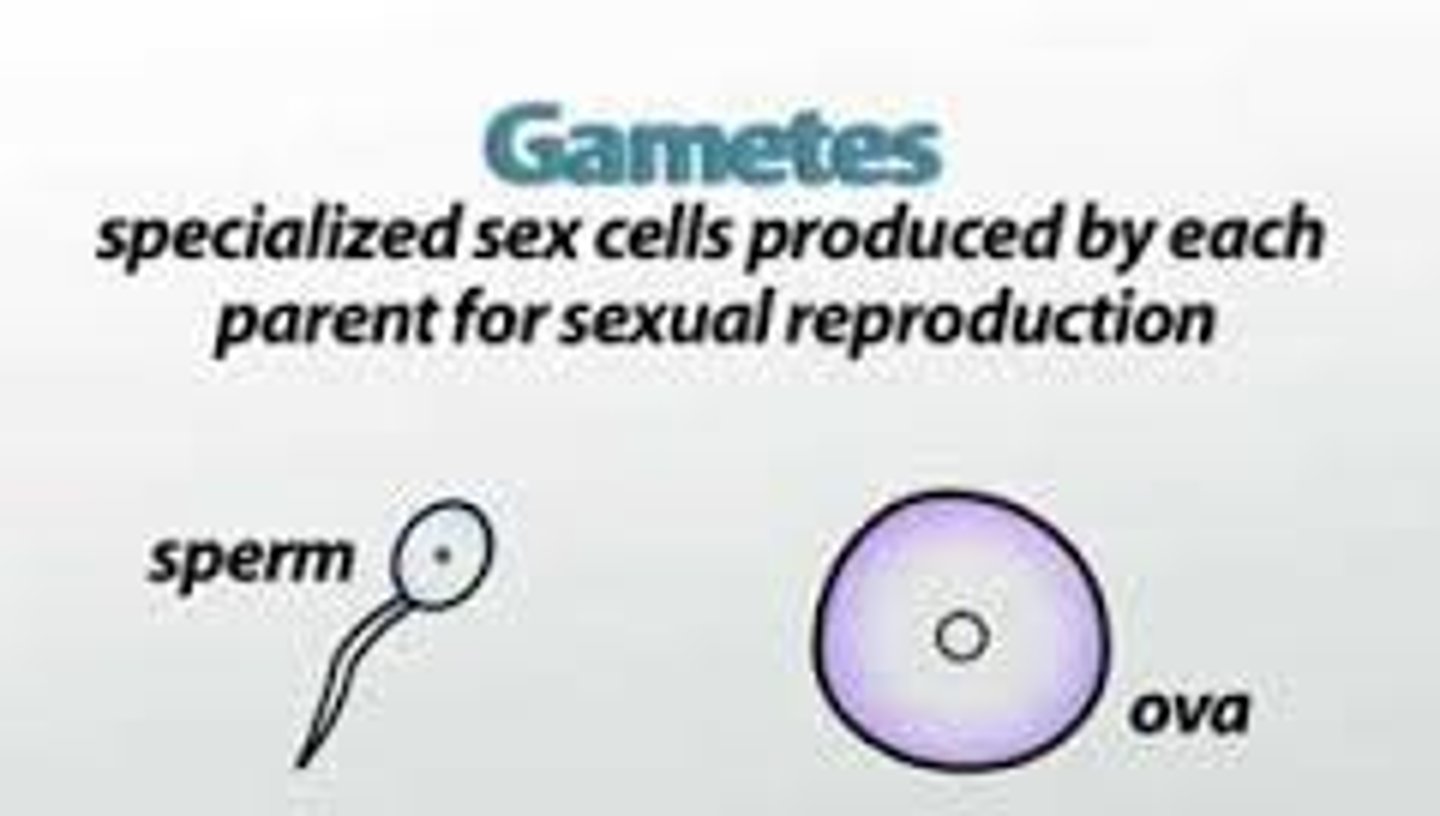
Gamete (gametic cell)
Name given to sex cells such as sperm or eggs in animals.
Used to make new living thing in sexual reproduction.
Sexual reproduction
Reproduction where 2 parent cells (gametes- sperm and egg) are needed. They join together (fuse) in fertilisation to make a zygote. This type of reproduction produces variation in living things.
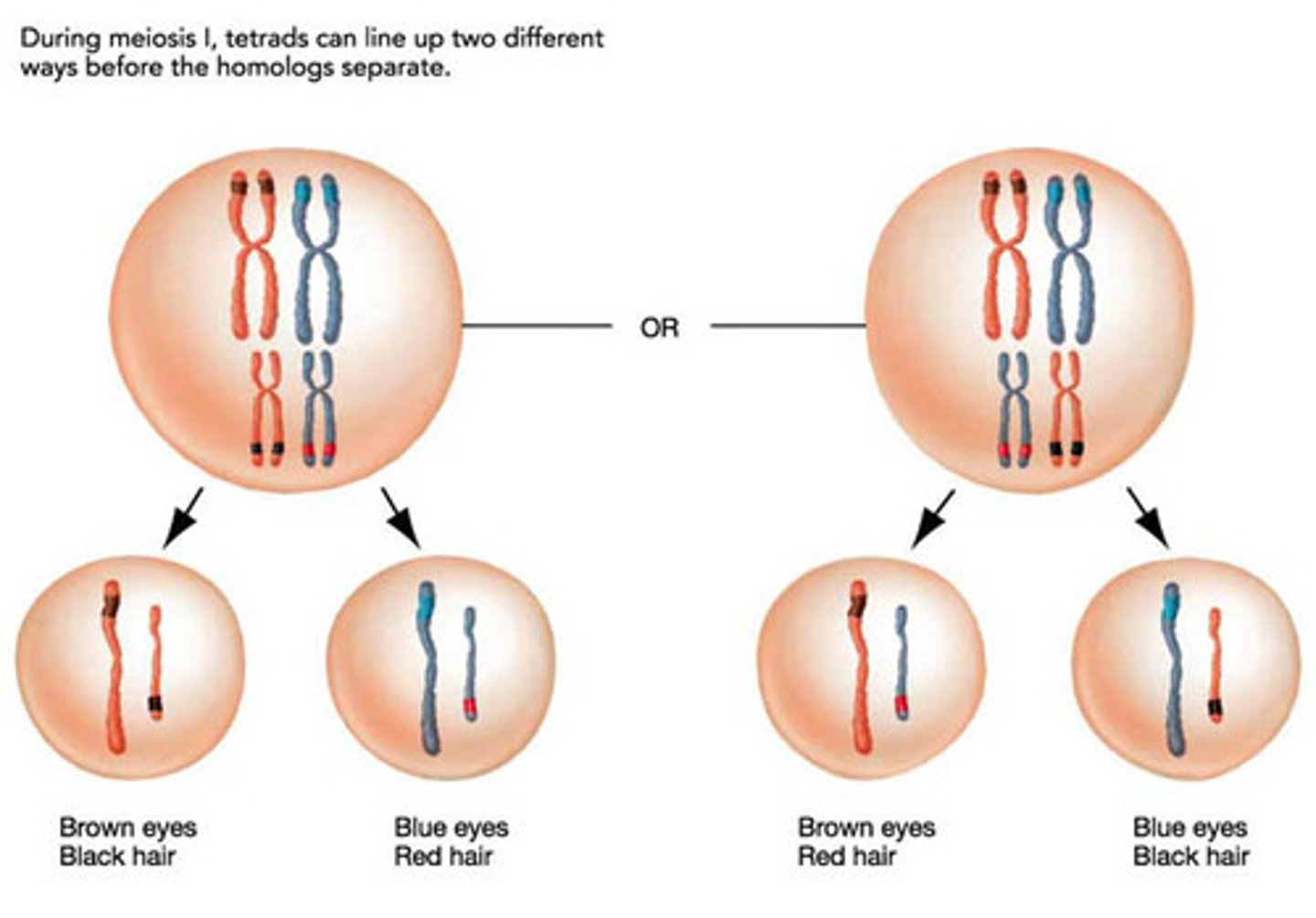
Independent assortment
Step that happens during MEIOSIS.
Chromosome pairs line up randomly on the equator.
Means different combinations of chromosomes can end up in final gamete cells made.
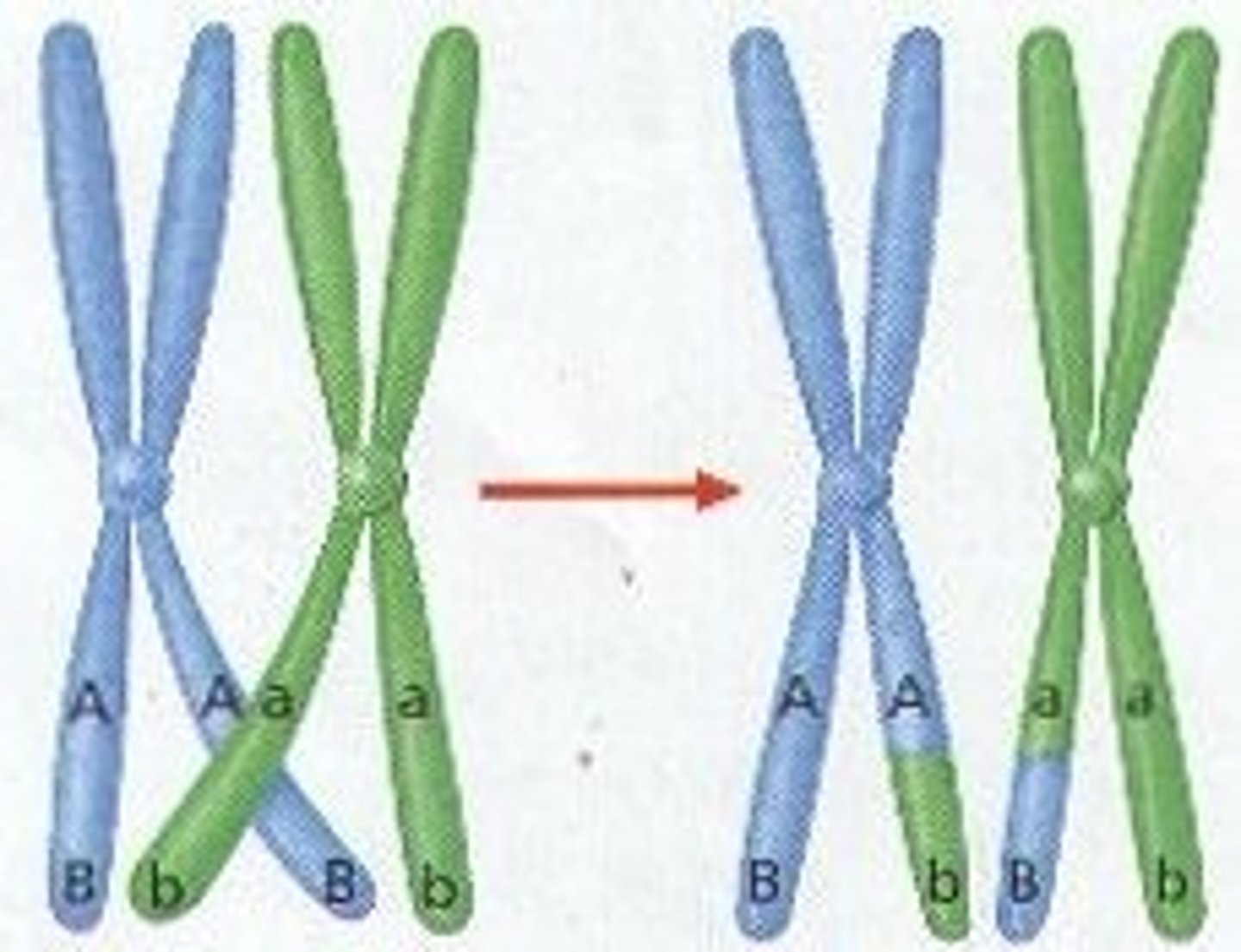
Crossing over/recombination
Another step in MEIOSIS.
Ends of chromosomes overlap when the chromosome pairs line up on equator.
Mean sometimes get swapping of pieces of chromosomes (and genes) from one chromosome to another next to it.
Genetic variation
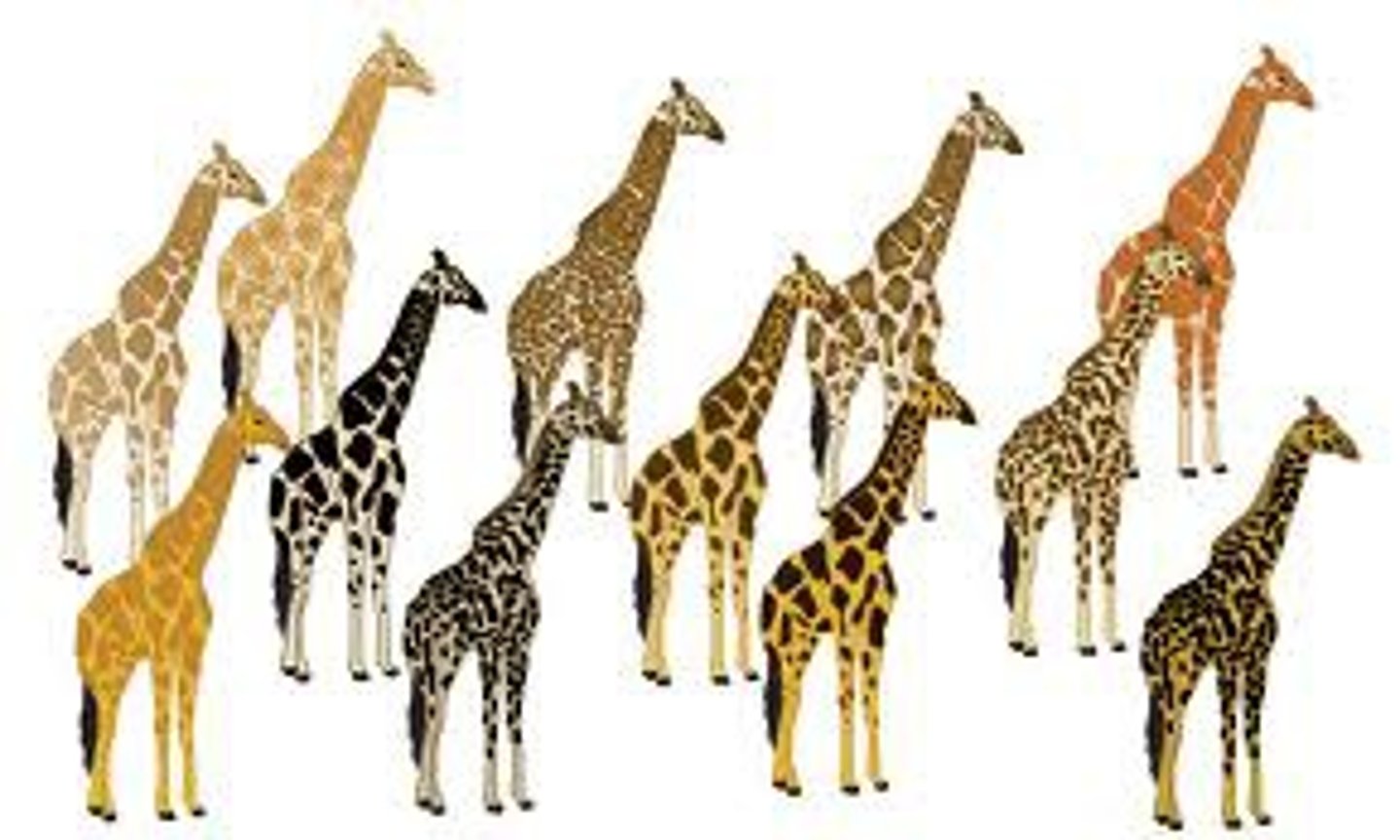
Difference in the genes of living things.
Living things are slightly genetically different when made by sexual reproduction. This helps to increase chances of survival in living things.
Not studied (13)
You haven't studied these terms yet!