Gene Expression in Bacteria & Eukaryotes: Regulation & Mechanisms
 Call Kai
 Learn
Learn Practice Test
 Spaced Repetition
 Match
Match Flashcards
 Knowt Play
1/60

There's no tags or description
Looks like no tags are added yet.
Name | Mastery | Learn | Test | Matching | Spaced | Call with Kai |
|---|
No analytics yet
Send a link to your students to track their progress
61 Terms
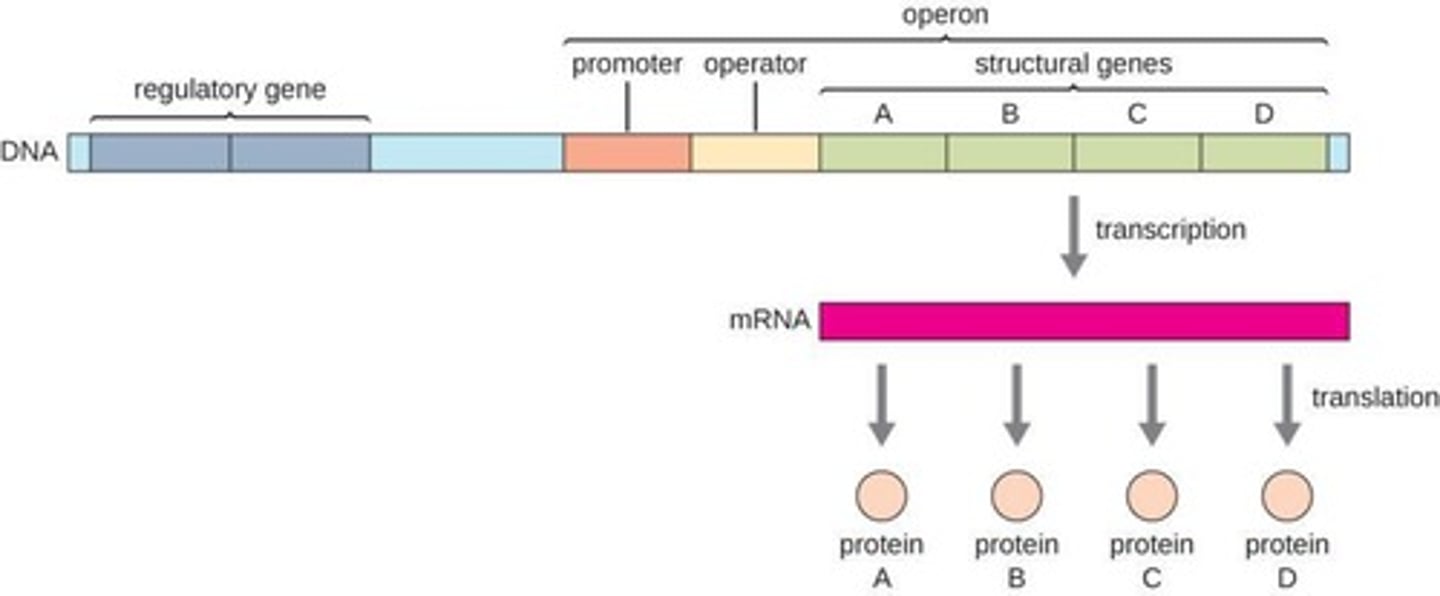
What are structural genes?
Genes that code for non-regulatory proteins, such as mRNA, rRNA, and tRNA.
What are regulatory genes?
Genes that code for proteins that activate or repress the level of gene expression, affecting transcription and translation.
What is an operon?
A group of genes that are regulated and transcribed as a unit, allowing efficient expression of sets of genes needed at the same time.
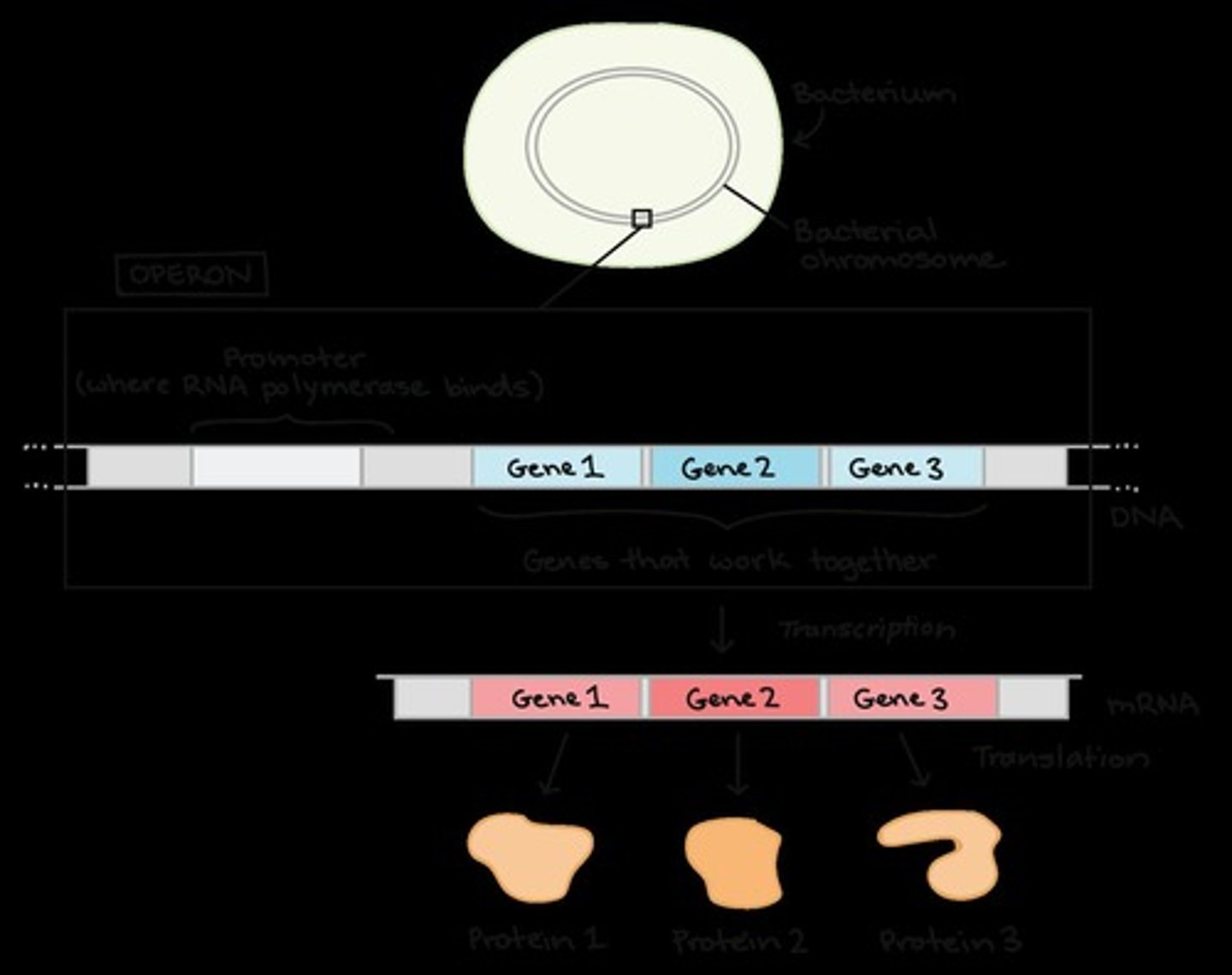
What are the components of an operon?
Promoter, regulatory sequences, operator, and structural genes.
What is constitutive expression?
Gene expression that is continuously expressed and always 'on'.
What is positive control in gene expression?
Stimulating gene expression, or 'turning on' genes.
What is negative control in gene expression?
Inhibiting gene expression, or 'turning off' genes.
What is an inducible operon?
An operon where transcription is usually off and needs to be turned on, such as the lac operon.
What is a repressor in gene expression?
A small molecule that binds to the operator and inhibits transcription, effectively 'turning off' the gene.
What is the lac operon?
An operon in E. coli that involves lactose metabolism, expressed only when lactose is present and glucose is absent.
What is the role of an inducer in gene expression?
A small molecule that binds to the operator and induces transcription, helping RNA polymerase bind to the promoter.
What happens when a regulatory protein is present in positive control?
The operon is turned off until the inducer activates it, turning the operon on.
What happens when a regulatory protein is absent in negative control?
The operon is turned on, allowing transcription to occur.
What is the trp operon?
A repressible operon where transcription is usually on and needs to be turned off.
What is the function of RNA polymerase in gene expression?
It binds to the promoter to initiate transcription of the structural genes.
What is the significance of regulatory sequences in an operon?
They are involved in the regulation of gene expression by interacting with regulatory proteins.
What is the difference between positive and negative control?
Positive control stimulates gene expression, while negative control inhibits it.
What is the role of the operator in an operon?
It is the binding site for regulatory proteins that control the transcription of the operon.
How does the presence of glucose affect the lac operon?
The lac operon is only expressed when glucose is absent, allowing for lactose metabolism.
What is the main focus of Chapter 16 in the lecture?
Gene expression in bacteria, including the structure and function of operons.
What is the main focus of Chapter 17 in the lecture?
Gene expression in eukaryotes, which involves more complex regulatory mechanisms.
What is the expected focus for Quiz 6?
Chapters 13, 15-17, covering transcription, translation, gene expression, and molecular techniques.
What does coli only eat?
Lactose, when glucose is unavailable.
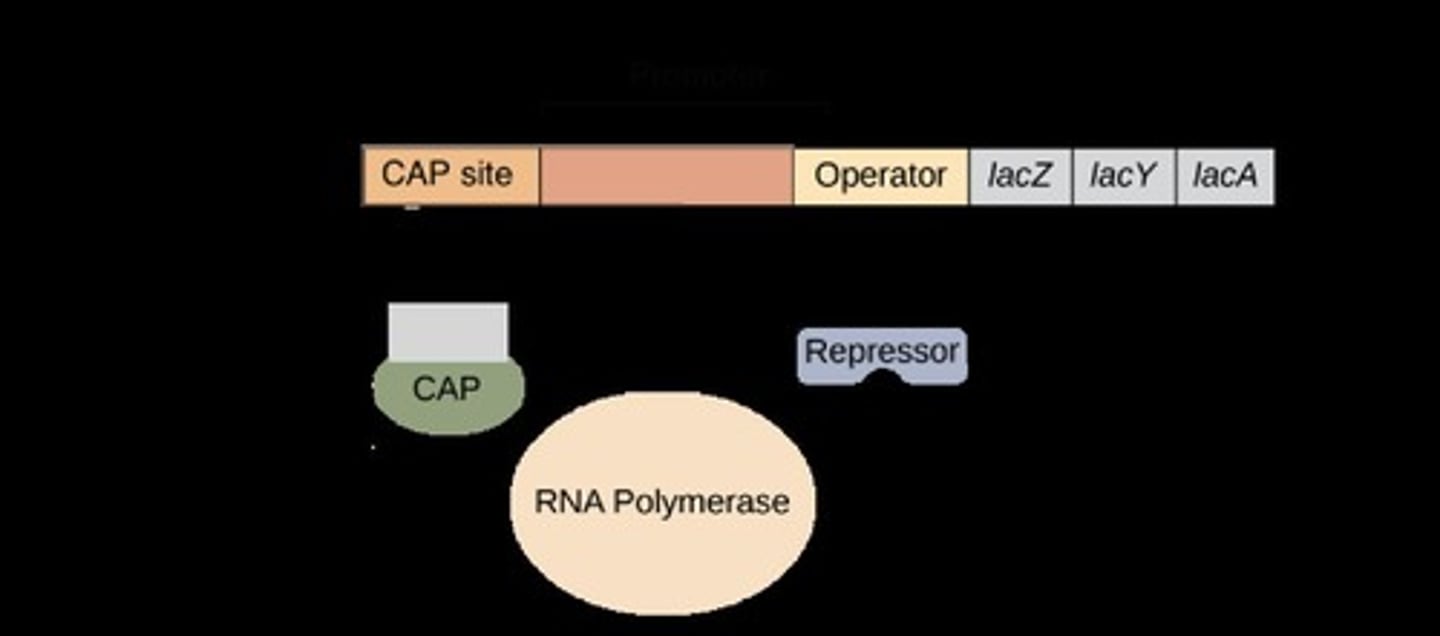
What are the two main regulatory proteins in the lac operon?
Lac repressor and Catabolite activator protein (CAP).
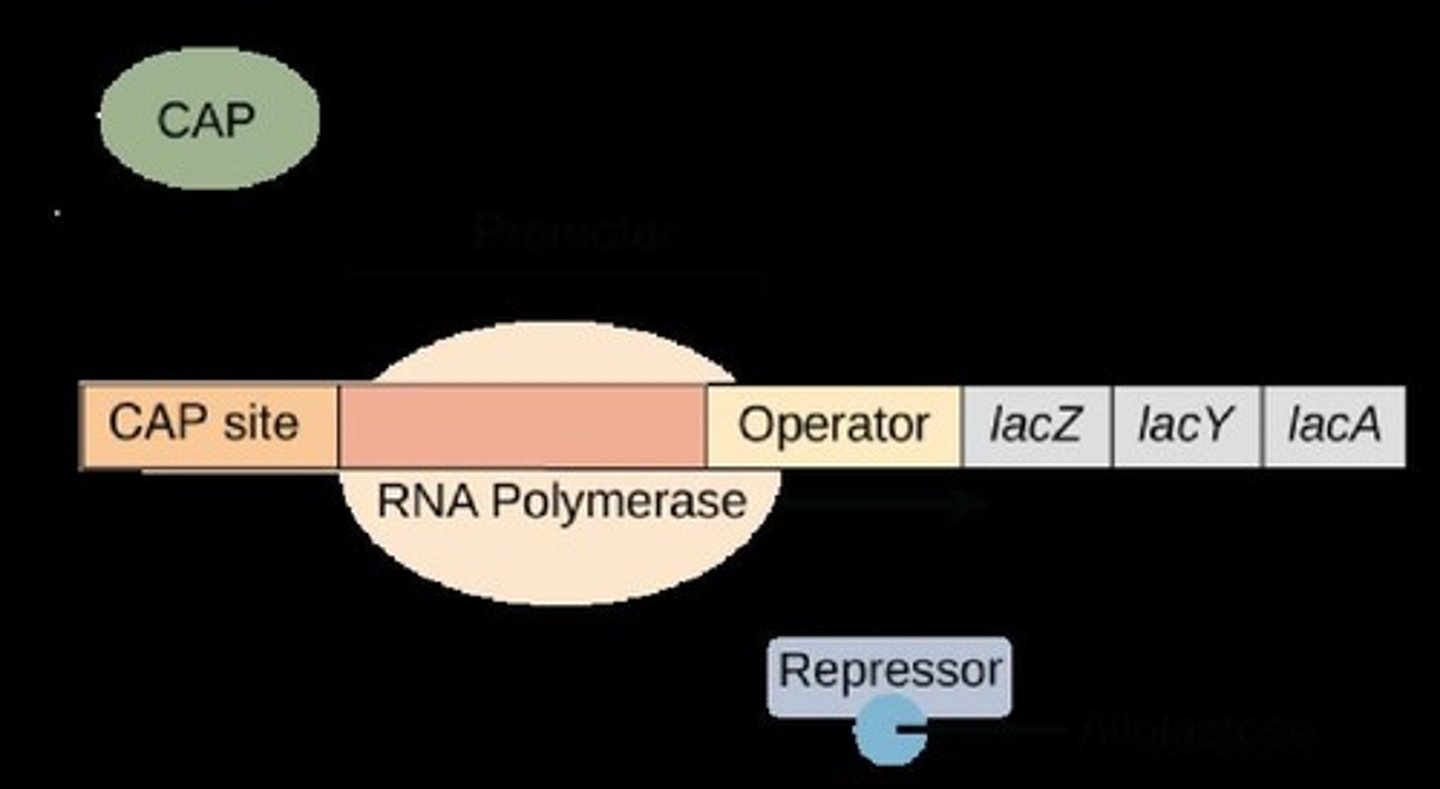
What is the function of the lac repressor?
It normally blocks transcription but stops when allolactose is present.
What happens when lactose is absent?
Lac repressor binds to the operator to block RNA polymerase.
What happens when lactose is present?
Lac repressor does NOT bind to the operator.
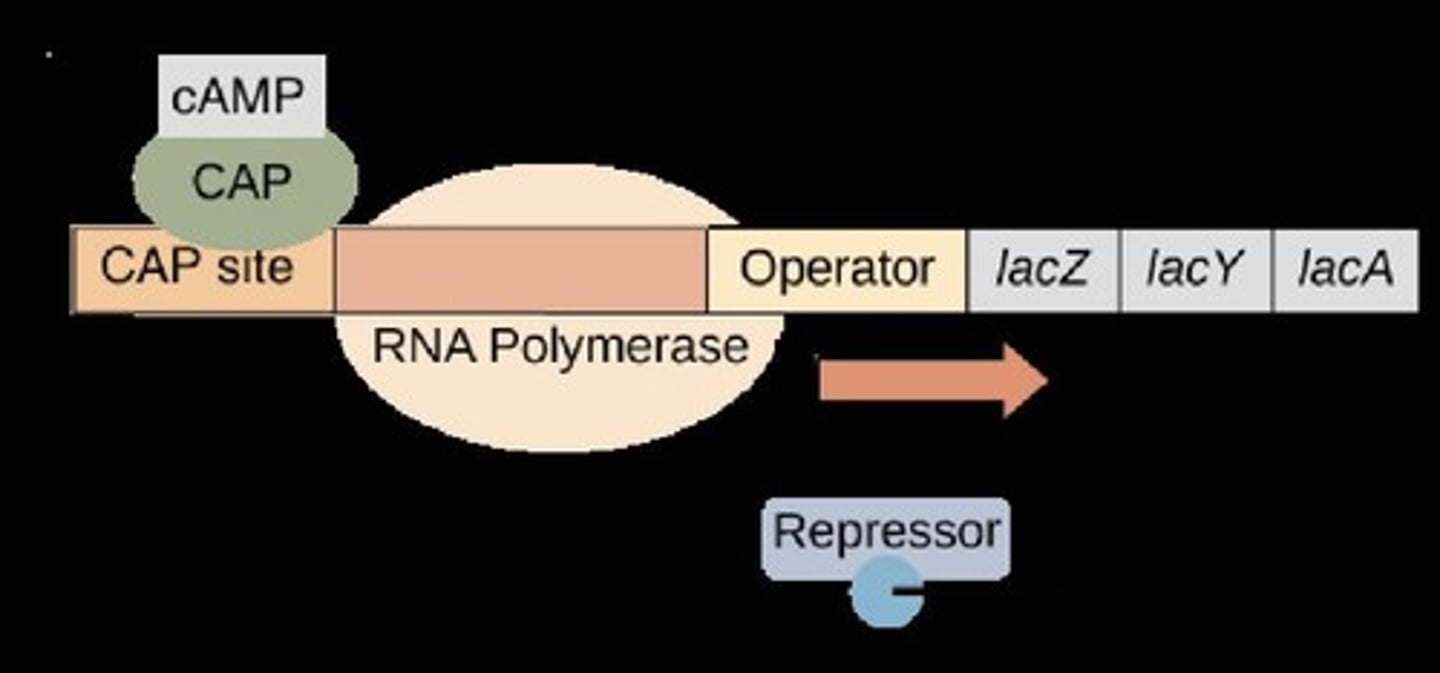
What does CAP do when glucose is absent?
CAP binds to the CAP site to help transcription.
What happens to CAP when glucose is present?
CAP does NOT bind to the CAP site.
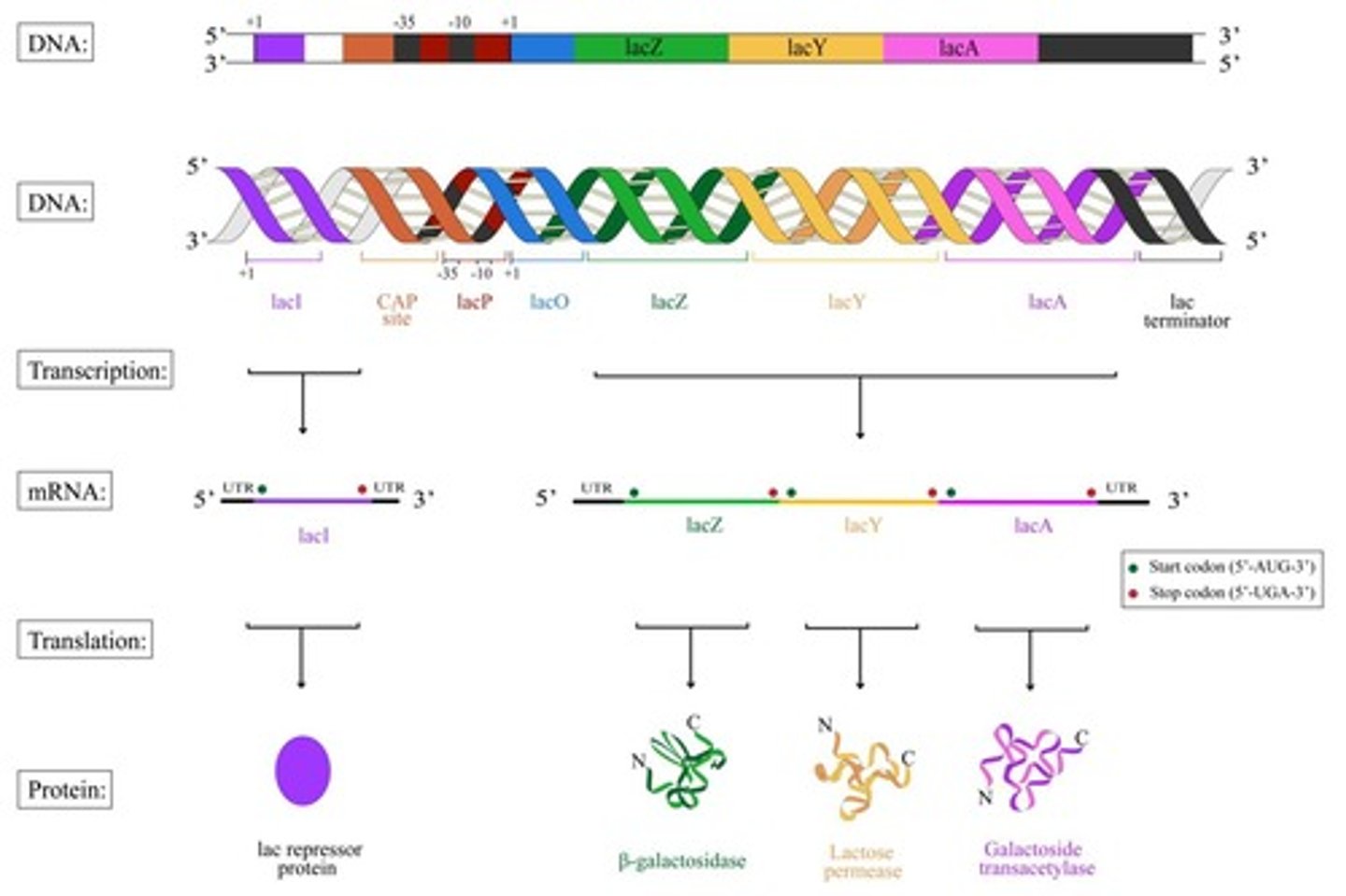
What are the components of the lac operon?
Promoter, lacI gene, operator, CAP binding site, lac terminator, and three structural genes (lacZ, lacY, lacA).
What do the structural genes lacZ, lacY, and lacA produce?
Proteins that bring lactose into the cell and break it down.
What occurs when lactose is present and glucose is absent?
High level of transcription with lac repressor released and CAP active.
What occurs when lactose is absent and glucose is present?
No transcription with lac repressor bound to the operator and CAP inactive.
What is a key difference in gene expression between bacteria and eukaryotes?
Bacteria can transcribe groups of structural genes together in an operon, while eukaryotes transcribe each gene separately.
What must happen to DNA before transcription in eukaryotes?
DNA must unwind from histone proteins.
What are the steps at which eukaryotic genes are regulated?
Chromatin accessibility, transcription, and RNA processing.
What are the two types of chromatin?
Heterochromatin (condensed) and euchromatin (relaxed).
Which type of chromatin is more likely to suppress expression?
Heterochromatin.
What are enhancers, insulators, and silencers?
Regulatory factors involved in transcription in eukaryotes.
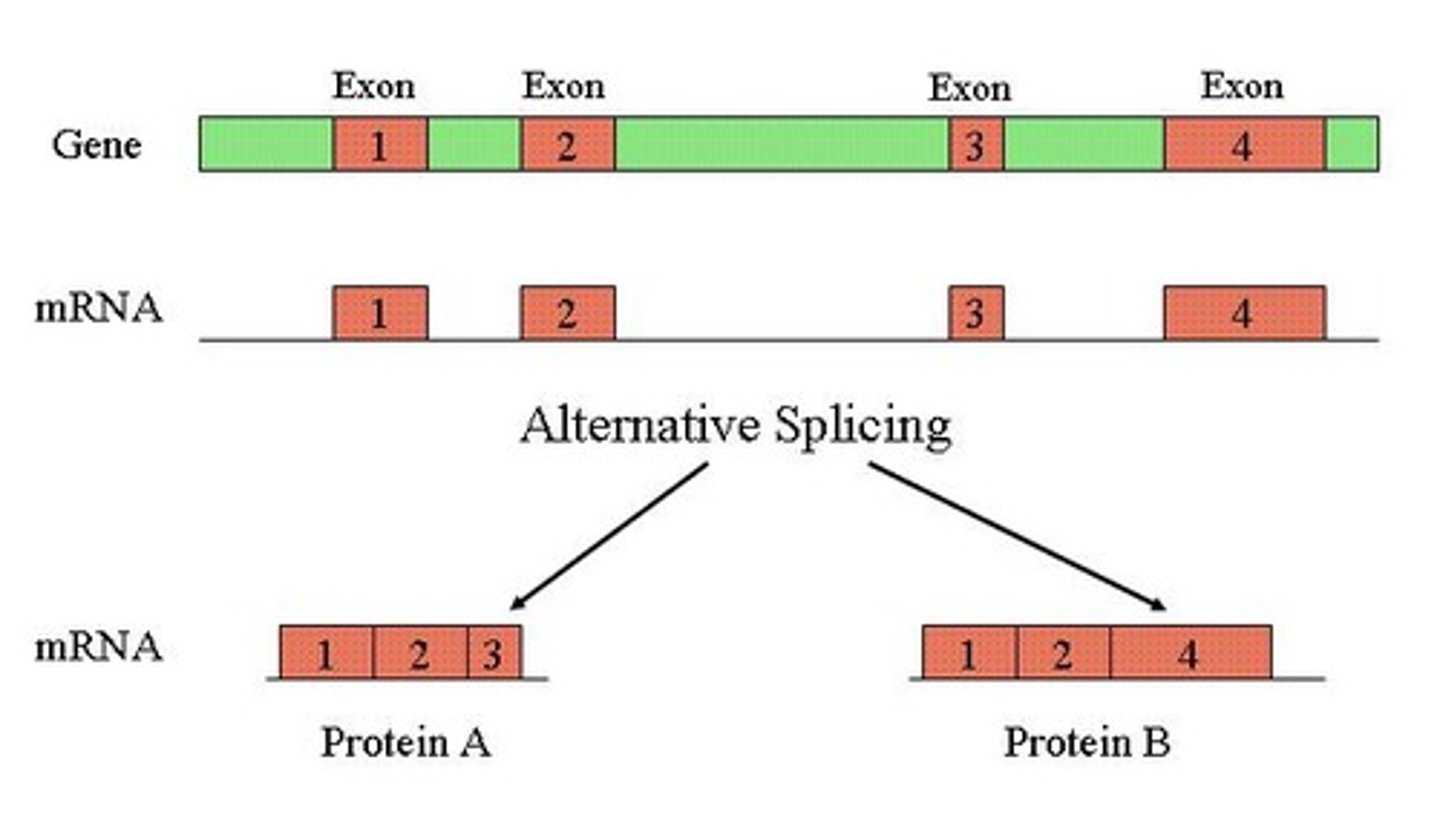
What is alternative splicing?
A process in RNA processing that allows for different protein variants to be produced from the same gene.
What is the role of DNAse hypersensitivity in gene regulation?
It indicates chromatin accessibility for transcription.
What is the lac operon responsible for?
Regulating the metabolism of lactose in bacteria.
What is allolactose?
An isomer of lactose that binds to the lac repressor to stop it from blocking transcription.
What happens to transcription when glucose is absent and lactose is present?
There is a high level of transcription due to active CAP and released lac repressor.
What is heterochromatin?
A tightly packed form of DNA that is less accessible for gene expression.
What does DNase I hypersensitivity indicate?
It measures chromatin accessibility, showing regions of chromatin that are more sensitive to being opened.
What are DNase I hypersensitive sites (DHS)?
Short regions of chromatin that are more sensitive to DNase I, typically located upstream of the transcription start site.
What is the role of histone modification in gene expression?
It regulates the physical properties of chromatin, affecting accessibility to DNA.
What happens when methyl groups (-CH3) are added to histone proteins?
It causes the histone to contract, restricting access to DNA.
What is the function of methyltransferase?
It facilitates the addition of methyl groups to histone proteins.
What is demethylation?
The removal of methyl groups from histone proteins, facilitated by demethylase.
What is histone acetylation?
The transfer of an acetyl group (-COCH3) to histones, loosening their attachment to DNA.
What enzyme facilitates histone acetylation?
Histone acetyltransferases (HATs).
What is histone deacetylation?
The removal of acetyl groups from histones, tightening their attachment to DNA.
What enzyme facilitates histone deacetylation?
Histone deacetylases (HDACs).
How does acetylation of histones affect flowering in Arabidopsis?
It controls the expression of the FLC gene, which prevents flowering; deacetylation inhibits FLC, allowing flowering.
What is an enhancer in gene expression?
A DNA sequence that stimulates transcription.
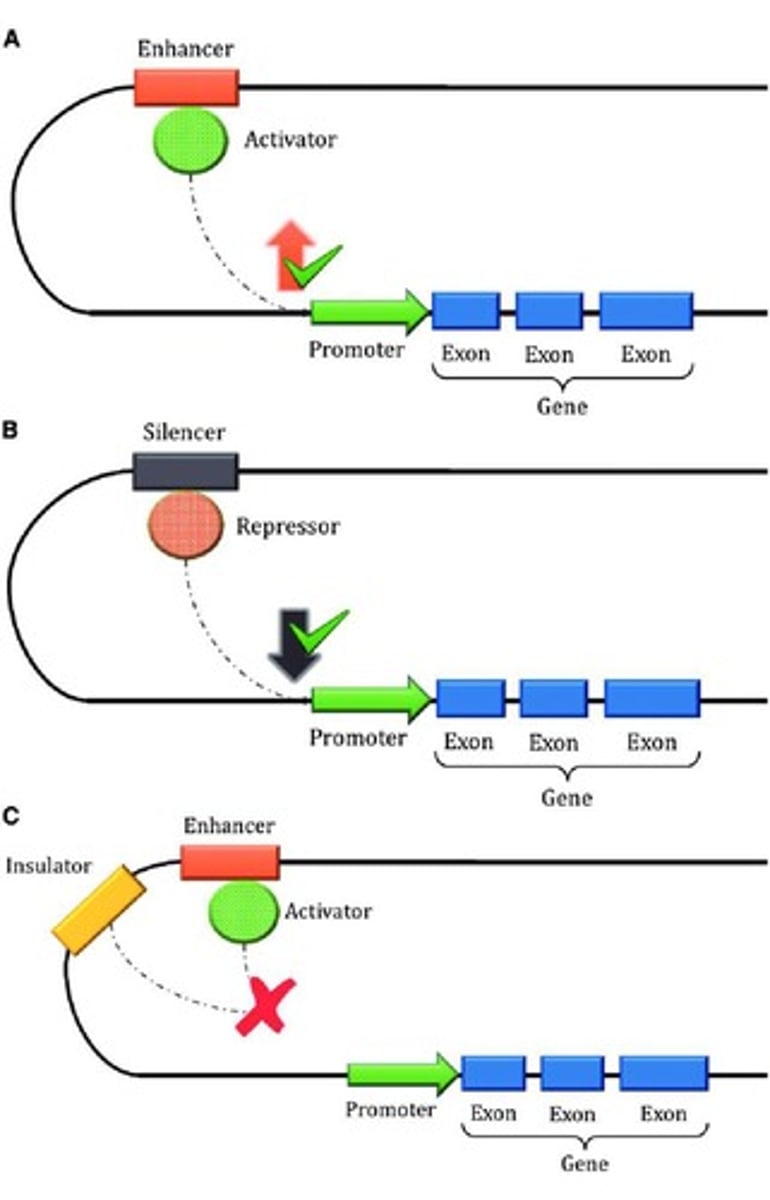
What is a silencer in gene expression?
A DNA sequence that reduces transcription.
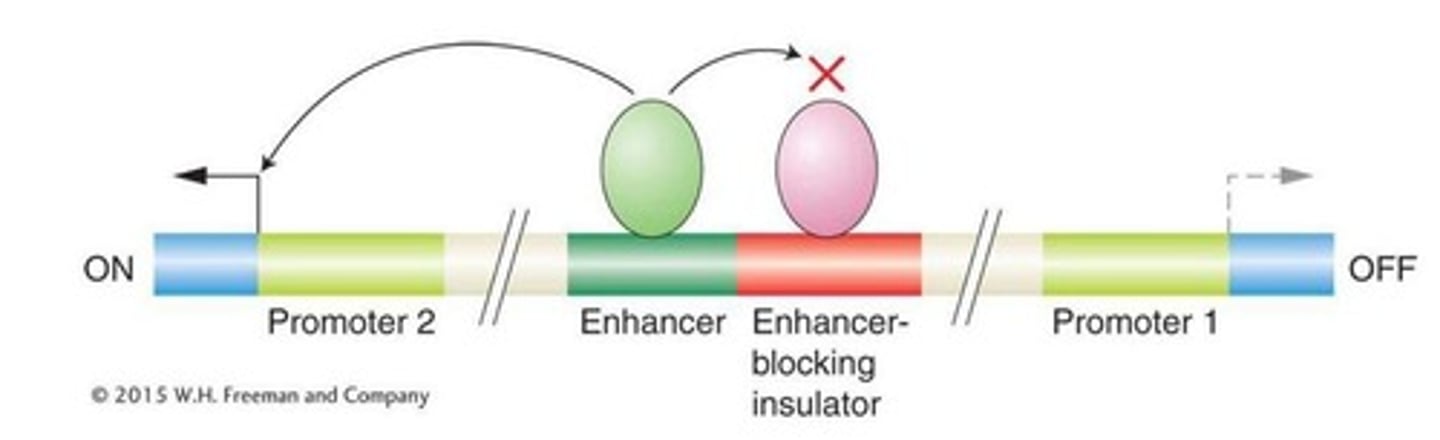
What is an insulator in gene expression?
A DNA sequence that blocks or insulates the effect of enhancers.
Why is alternative splicing important?
It amplifies the number of possible proteins produced by a gene, contributing to complexity and cell differentiation.
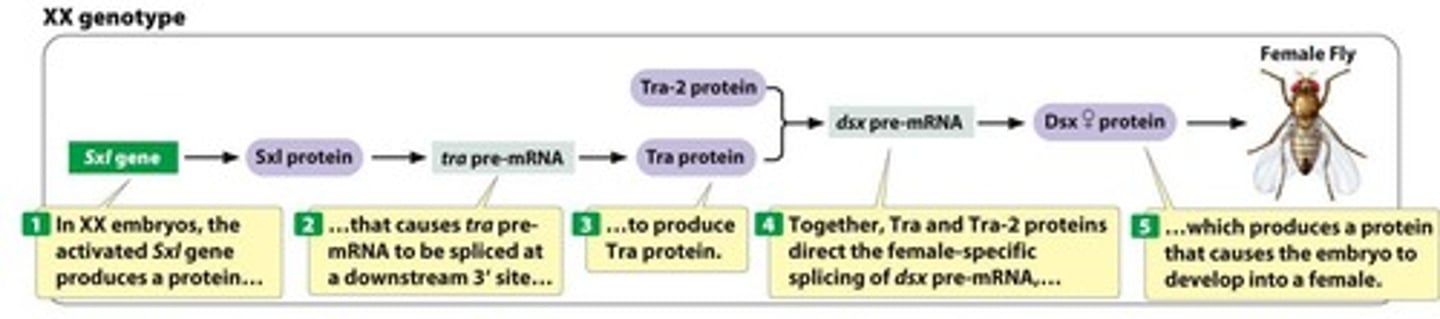
How does alternative splicing control sex determination in Drosophila?
It allows for the production of different proteins that influence sexual development.