AP Human Geo Bossfight - Unit 5
 AP Practice
 Call Kai
1/33

Earn XP
Description and Tags
Name | Mastery | Learn | Test | Matching | Spaced | Call with Kai |
|---|
No analytics yet
Send a link to your students to track their progress
34 Terms
List some agricultural practices that have impacts in tropical regions
slash-and-burn (shifting cultivation), large-scale monocropping, deforestation for livestock pasture, and intensive pesticide/fertilizer use, leading to nutrient depletion, soil erosion, and habitat loss.
What is the difference between intensive and extensive farming?
Intensive: Small land, high labor, close to market
Extensive: Large land, low labor, further out
What are the three land survey systems?
Metes and Bounds, Long Lot, Township and Range
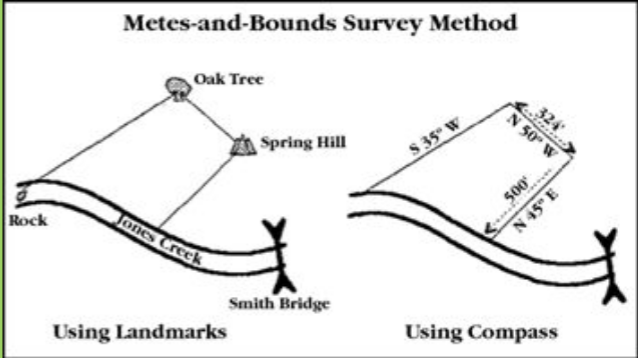
What is Metes and Bounds?
A land survey system; measures short distances between landmarks to define boundaries.
Relies on descriptions of land ownership in reference to natural features (streams, forests, etc.)
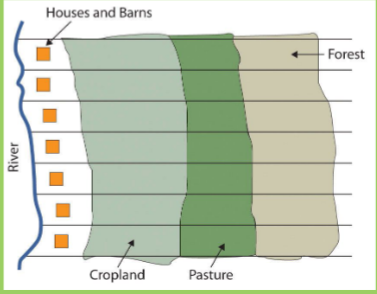
What is Long Lot?
A land survey system; relationship to river. Land divided into narrow parcels stretching back from rivers, roads, or canals
Common in France. Found in Louisiana and Quebec.
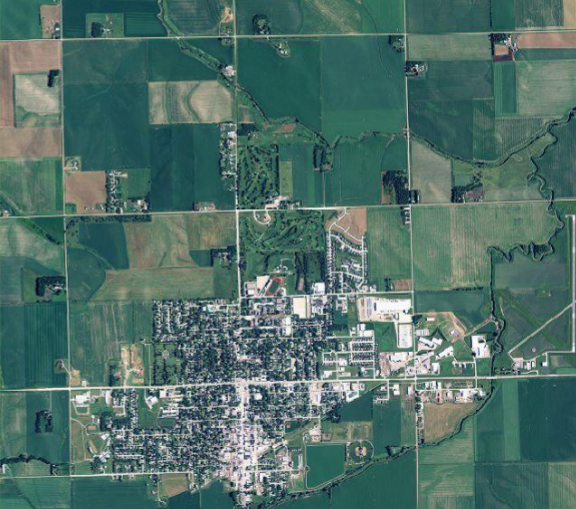
What is Township and Range?
A land survey system; Rectangular survey system used by the US government to divide the land into a grid.
Doesn’t account for natural land features — Common in western ⅔ of the US
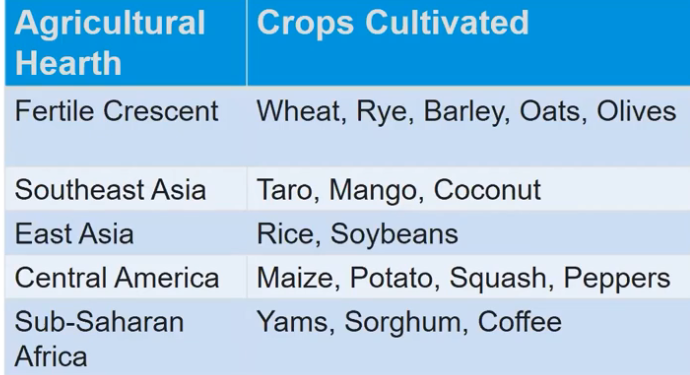
What were the original hearths of agriculture, and what did they give?
Fertile crescent, Southeast asia, East asia, Central america, and Sub-saharan Africa
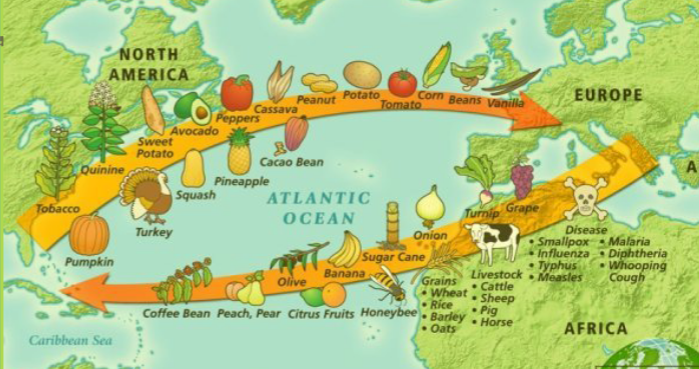
What was the diffusion of plants and animals for the Columbian Exchange?
After the Spanish conquered Mesoamerica and South America, they diffused plants and animals to and from the area.
Maize, squash, potatoes and other crops were taken to Europe and planted.
Coffee, sugar, horses, cattle, and other animals were brought to the Americas.

What was the relationship between the 2nd agricultural and industrial revolutions? Also, what were the impacts?
The second agricultural revolution coincided with the industrial revolution, which brought in new technologies like Seed Drill and Crop Rotation.
The intro of privately owned land increased agricultural production
Results: Increased food production, better diets/longer lifespans, population increase, and displaced farmers migrated to cities to work in factories (urbanization!)
Why has food production in some instances tripled between 1950-1990?
The Green Revolution happened.
Practice of using higher yield (GMO) seeds, expanded use of chemicals, and mechanized farming to increase agricultural production. Also, irrigation!
Focused on Grains
What was the diffusion of the Green Revolution to Asia and Africa?
Successful in Latin America and Asia, but not Africa. It’s too expensive and the equipment didn’t work on their crops.
Transformed Asian agriculture through high-yielding varieties (HYVs) of rice and wheat, massive irrigation, and agrochemicals, doubling yields and averting famine
Countries like Mexico and India also became exporters instead of importers.
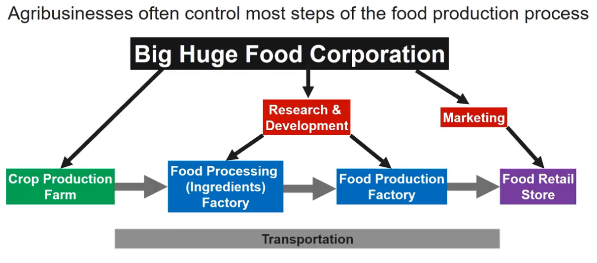
What is agricultural commodity chains’ affect consumers and producers?
Producers: face high risks from price fluctuations, market changes, and environmental issues like droughts or floods, which can destabilize their incomes. Many farmers are forced to grow only one crop for export, which is efficient but makes them very vulnerable if that crop's market price falls
Consumers: Global events (like pandemics, conflicts, or climate change) can break these complex chains, leading to unexpected price spikes and food shortages.
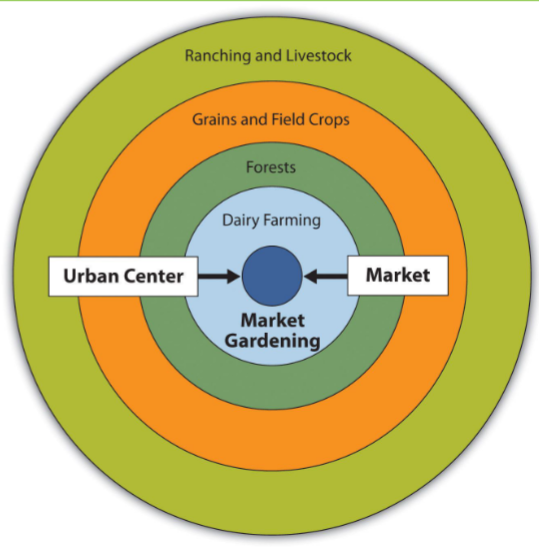
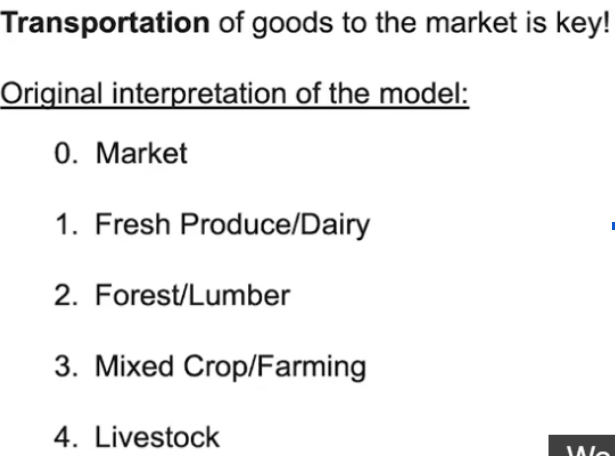
What is the von thunen model?
A model that explains the distribution of agricultural regions based on a singular market and transportation costs. Doesn’t take into account multiple markets, wood not being as important, improved transport and tech, and land is not all flat.
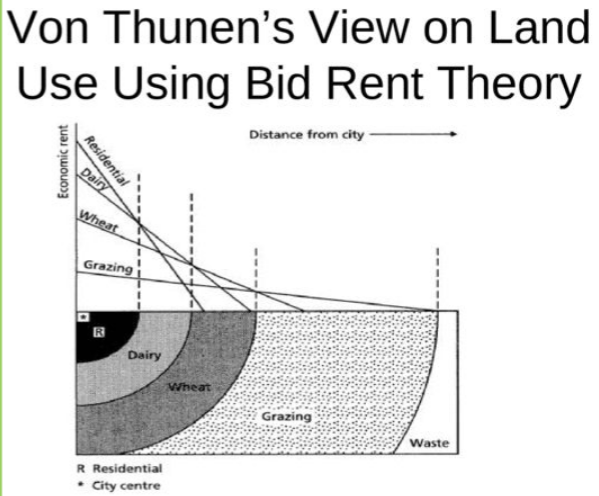
What is the bid-rent theory?
Land is more expensive closer to the market.
Land use is more intensive the closer it is to the market
Grow perishable products close to the market
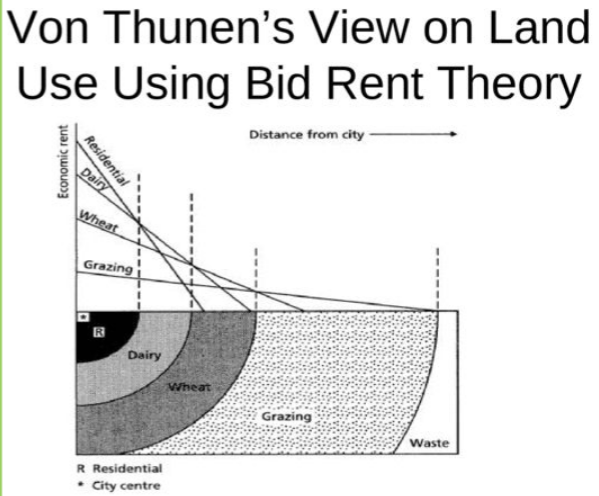
What are the uses of the different von thunen rings and why?
Ring 1: Market-oriented garden and milk producers (Dairy)
Expensive to deliver
Perishable
Ring 2: Woodlots
timber cut for construction and fuel
Closeness to market is important for this commodity because of its weight
Third Ring
Used for various crops and pasture
Specific commodity rotated from one year to the next
Fourth Ring
Devoted exclusively to animal grazing
Requires lots of space