4.2 Middle Ear and Inner Ear pathologies
 Call Kai
 Learn
Learn Practice Test
 Spaced Repetition
 Match
Match Flashcards
 Knowt Play
1/38

There's no tags or description
Looks like no tags are added yet.
Name | Mastery | Learn | Test | Matching | Spaced | Call with Kai |
|---|
No analytics yet
Send a link to your students to track their progress
39 Terms
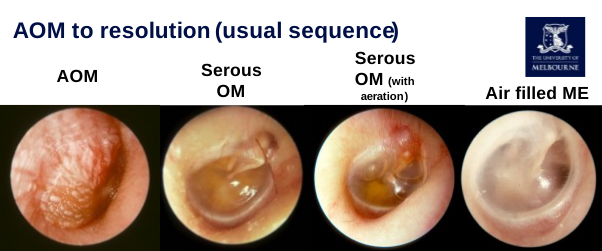
what is the usual sequence of AOM development to resolution?
AOM, Serous OM (after infection subsides fluid stays due to ET dysfunction) , Serous OM with aeration as ET function is restored, air filled ME
AOM can lead to what change in the ear?
TM perforation.
perforation with discharge.
two outcomes with TM perforation:
TM perforation heals.
or chronic TM perforation.
if AOM becomes OME and is unresolved this can lead to more serious issues like
atelectasis and adhesions with continuing ETD.
and cholesteatoma.
what are the 3 middle ear surgeries?
myringoplasty.
tympanoplasty.
and mastoidectomy.
what is myringoplasty for?
TM perforation or retraction pockets (no cholesteatoma)
what is tympanoplasty for?
TM perforation and restoring hearing
what is mastoidectomy used for?
cholesteatoma, chronic infection
what are the two techniques for myringoplasty?
overlay technique and underlay technique
myringoplasty involves doing what to the perforation
freshening up the perforation.
to allow TM epithelial and mucosal layers to cover perforation.
overlay technique involves placing
the graft on the lateral (outer) surface of the TM after the squamous epithelium has been removed
underlay technique
graft is placed medial to underneath the TM
when is it better to use overlay technique for myringoplasty?
better for subtotal (larger) perforations or those involving the anterior part of the TM.
when is it better to use underlay technique for myringoplasty?
better for small perforations or those involving the posterior aspect of the TM.
what is the surgical management of CSOM?
remove any of the active disease (cholesteatoma or polyps) to promote drainage and healing.
restore air filled middle ear that is lined by mucosa (to prevent further infection.
prevent complications in an actively infected ear.
restoring hearing function.
what is the aim of a tympanoplasty?
eradicate infection and middle ear pathology.
reconstruct sound conducting mechanism (durable connection between TM and inner ear).
may include graft for TM.
tympanoplasty involves entering the middle ear via a
tympanomeatal flap
tympanoplasty impact on hearing results?
reduction in ABG and improvement in AC average
what is the difference between a myringoplasty and a tympanoplasty
myringoplasty is limited to repairing the eardrum itself (tympanic membrane) so less repair needed. Don’t need to clear active disease.
Tympanoplasty is a broader procedure that repairs the eardrum and may include addressing the middle ear bones (ossicles) or disease behind the drum (different surgery technique not direct)
what are the two main forms of mastoidectomy?
intact canal wall and canal wall down (also called radical or modified radical mastoidectomy)
what factors determine whether a mastoidectomy is performed?
reason for surgery
cholesteatoma- may need canal wall down
chronic infection- usually intact canal wall
extent of disease
follow up for the patient.
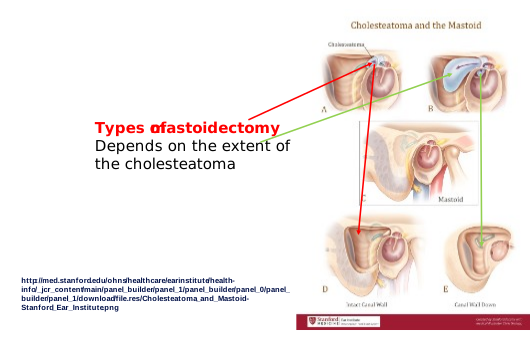
how does the extent of cholesteatoma affect mastoidectomy?
smaller cholesteatoma might do intact canal wall mastoidectomy.
if affecting greater extent and bigger CSA will need to do canal wall down.
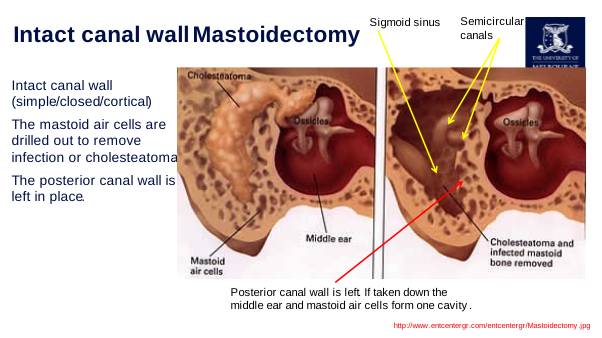
an intact canal wall mastoidectomy involves removing
mastoid air cells which are drilled out to remove the source of the infection or cholesteatoma.
the posterior canal wall is left in space.
what are some advantages of ICW?
more rapid healing.
easier long term care.
no water precautions in the long term.
What are the disadvantages of ICW?
- Residual disease (usually cholesteatoma) may be difficult to detect
- There may be retraction pocket formation and recurrent disease
- More than one operation may be necessary (staged procedure), usually in 6-12 months, to:
Remove any more disease
Or perform an ossicular chain reconstruction
what are the two subtypes of canal wall down mastoidectomy?
radical and modified radical mastoidectomy
what is the difference between radical mastoidectomy and modified radical mastoidectomy?
Radical = TM and most middle ear structures are removed along with CSA
Modified radical = TM and middle ear structures (including handle of malleus and stapes superstructure) are saved, with air filled middle ear (allows for better hearing than radical)
CWD is associated what hearing loss
maximal CHL
CWD mastoidectomy involves what process
The posterior canal wall is taken down to the level of the vertical facial nerve
• This exteriorizes (opens out) the mastoid air cells into the EAC and creates a common cavity
• The attic is opened with removal of the scutum, the head of the malleus and the incus
CWD often has meatoplasty which is
widening of opening of EAC made by removing some of the cartilage form EAC.
allows for better aeration to remove likelihood of infection.
what are some advantages of CWD?
- Residual disease (cholesteatoma) is more easily detected
- Recurrent disease is rare
Disadvantages of CWD
- Mastoid bowl may need to be regularly cleaned by otolaryngologist
- Healing takes longer
- Hearing mechanism may be difficult to reconstruct
- Must keep the ear dry
o Water contamination
o Caloric effect from water (can also occur from cold breeze) affects semicircular canals which makes you feel dizzy
Complications of mastoid surgery
- Facial nerve injury
- SNHL if e.g. cochlea is damaged
- Wound infection
- Dysgeusia or abnormal taste chorda tympani nerve
- CSF leak, brain herniation (more serious)
- Bleeding of sigmoid sinus
what are the 4 audiological considerations post mastoid surgery?
patient history, otoscopy, audiometry and whether fit for hearing aid
History
Wet or discharging ear?
Vestibular changes?
Hearing changes?
Otoscopy
Be thorough.
Search for landmarks.
Inspect attic region, any retraction pockets.
Audiometry
Headphone use?
Large CHL will be issue for overmasking.
May not seal canal effectively.
Inserts may not be large enough.
Hearing aid
Medical contraindications if so need ENT clearance.
what to do if need to make ear impression of a person who has done a mastoidectomy?
Ear impression (small opening into a big area)? Pack mastoid cavity (make like a fake smaller EAC for impression material to be in so it does go into the mastoid cavity).
how to perform BC testing on person with mastoidectomy?
BC aid (mastoid cavity dependent).
where and how BC is placed.
hearing restoration following ME disease only occurs after:
- eradication of ear disease.
- Reconstruct the damage caused by chronic ear disease
- Air conduction thresholds better than 30dB at the key speech frequencies
- So that the patient can understand conversational speech without amplification
what can cause SNHL?
otic capsule can fracture.
Because remember the cochlea is surrounded by temporal bone.