Disease and Epidimeiology
 Call Kai
 Learn
Learn Practice Test
 Spaced Repetition
 Match
Match Flashcards
 Knowt Play
1/67

There's no tags or description
Looks like no tags are added yet.
Name | Mastery | Learn | Test | Matching | Spaced | Call with Kai |
|---|
No analytics yet
Send a link to your students to track their progress
68 Terms
Pathology
Study of disease
Etiology
Study of the cause of disease
Pathogenesis
Manner in which a disease developes
Infection
Invasion/colonization of the body by pathogens
Infectious Disease
Disease when infection results in change of state of health
When does the human microbiome gets established?
Begins in utero and keeps developing for the first 10 years of life
How many bacterial cells does the human microbiome have?
4×10¹³
Human Microbiome Project
Analyzes relationships between microbial communities on body and health
Normal Microbiota / Normal Flora
Permanently colonize host and does not cause disease
Transient Microbiota
Temporary microbes that can be present for days, weeks, months
Hygiene Hypothesis
Insufficient exposure to microbes in childhood may interfere with development of immune system
Microbial Antagonism / Competitive Exclusion
Competition between microbes ; ex. competing with invading microbes for nutrients
Ways normal microbiota protect host :
Competing with invading microbes for nutrients
Produce substance harmful to invaders
Affecting pH and available oxygen
Commensalism
One organism benefits and the other unaffected ; ex. Staphylococcs epidermis
Mutualism
Both organism benefits ; ex. E-coli
Parasitism
One organism benefits at expense of the other ; ex. influenza
Koch’s Postulates
A set of criteria established to demonstrate the causative relationship between a microorganism and a disease
Symptoms
Changes in body function that are felt by patient as a result of the disease ; not apparent to observer
Signs
Changes in body that can be measures/observed as a result of disease
Syndrome
Specific group of signs/symptoms that accompany a disease
Communicable Disease
Disease that is spread from one host to another ; ex. influenza
Contagious Disease
Disease that are easily and rapidly spread
Noncommunicable Disease
Disease that does not spread from one host to another ; ex. tetanus
Incidence
Number of people who develop a disease during a particular time period ; number of new cases/period of time
Prevalence
Number of people with the disease at a specific time, regardless of when it first appeared ; all cases of disease/period of time
Sporadic Disease
Occurs occasionally
Endemic Disease
Constantly present
Epidemic Disease
Acquired by many in given area in short time
Pandemic Disease
Worldwide epidemic
Duration
Average time someone have the disease from diagnosis to being cured/death
Acute Disease
Develop rapidly, but short duration
Chronic Disease
Develop slowly and can last for a while
Subacute Disease
Lasts longer than acute disease but does not last as long as chronic disease
Latent Disease
Inactive for a while, but then activates
Severity
Presence and extensiveness of a disease in the body
Infection Fatality Ratio
Assess severity of disease ; number of deaths/infected
Case Fatality Ratio
Proportion of individuals diagnosed who die within certain time period
Local Infection
Invading microbes limited to small area
Systemic Infection
Invading microbes spread throughout body
Focal Infection
Local infection enters blood/lymph and spread to another area where it gets confined
Primary Infection
Acute infection from initial illness
Secondary Illness
Infection caused by opportunistic pathogen after body is weaken by primary infection
Predisposing Factors
Variables that make your body more susceptible to disease or alter course of disease
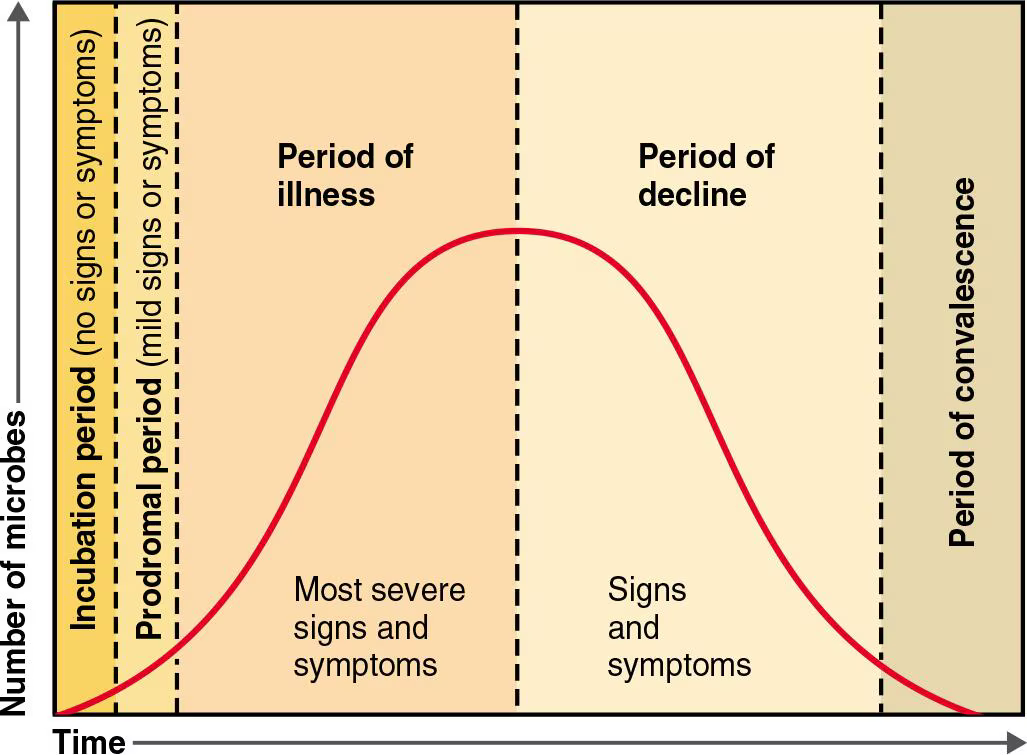
Incubation Period
Period between initial infection and first signs/symptoms
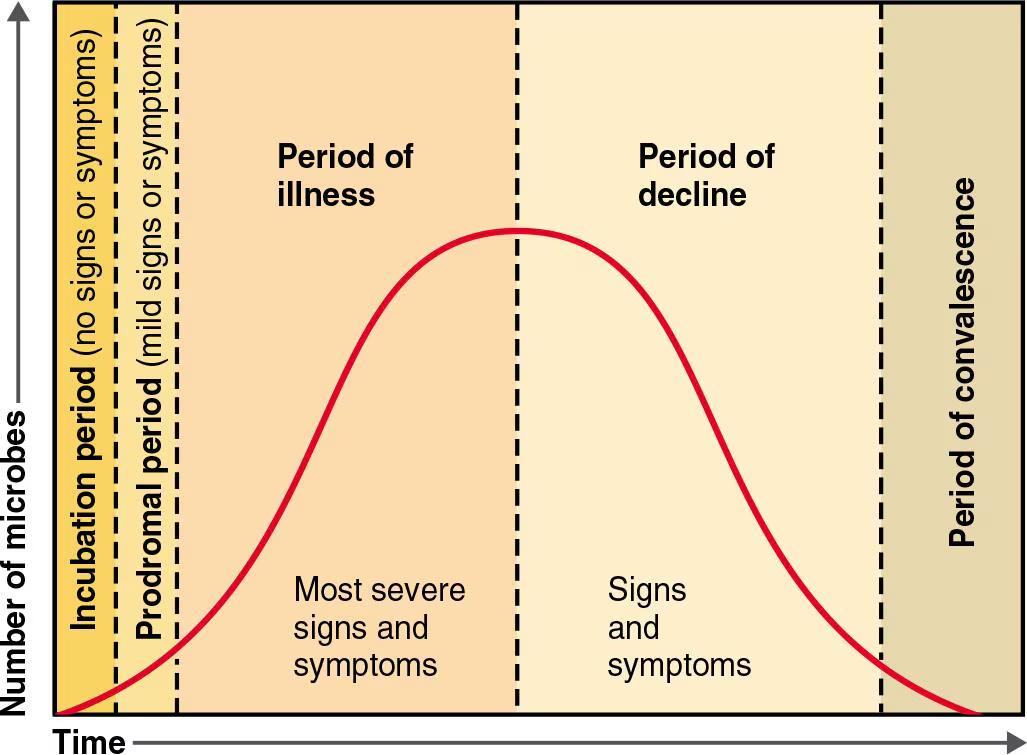
Prodromal Period
Short period after incubation; mild non-specific symptoms
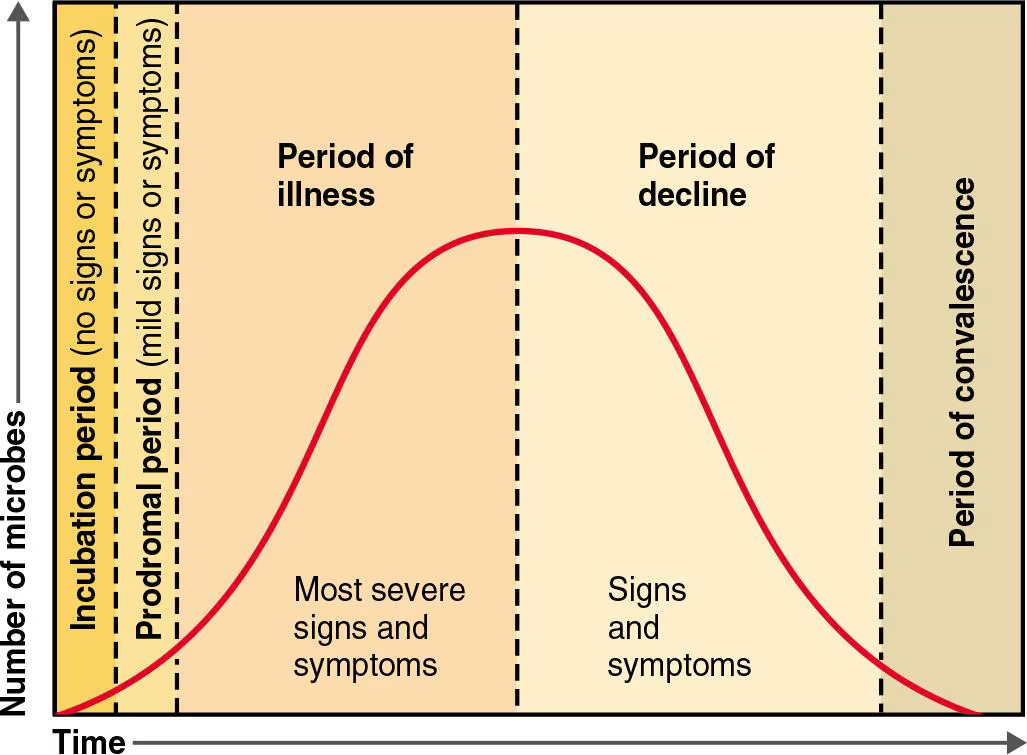
Period of Illness
Disease most severe
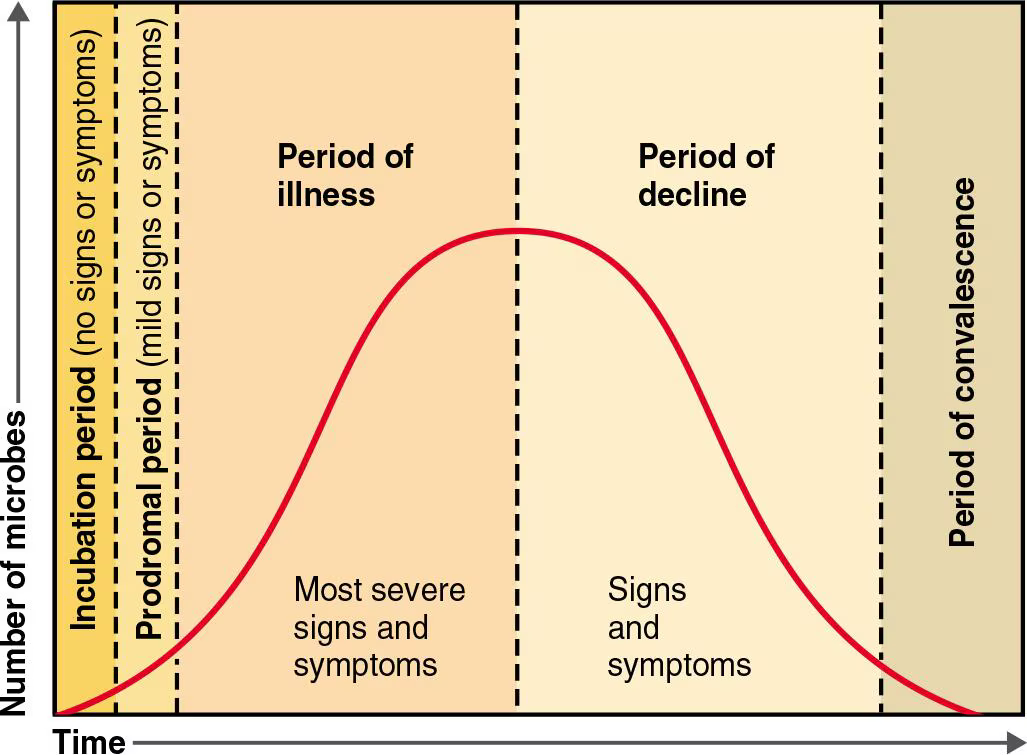
Period of Decline
Signs/symptoms subside
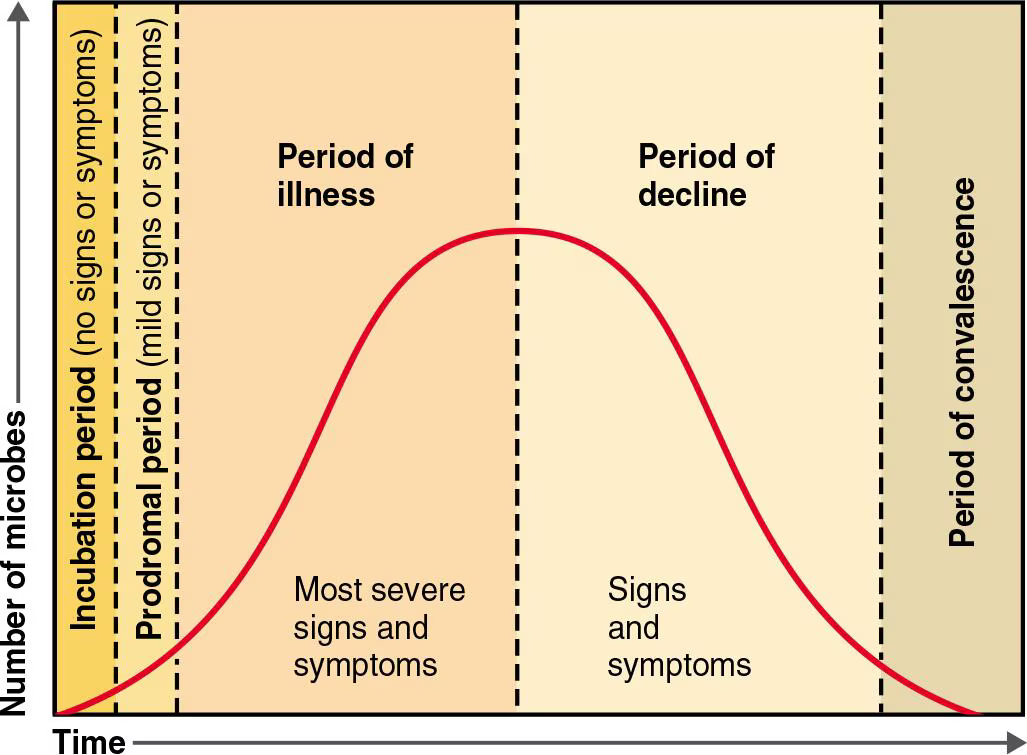
Period of Convalescence
Body returns to pre-disease state ; recovery
Human Reservoirs
People with signs/symptoms
Reservoirs
Continual source of the pathogen ; somewhere with adequate conditions for survival, multiplication, and opportunity for transmission
Carriers
Host with the infection, but shows no signs/symptoms
Zoonoses
Disease primarily in wild/domestic animals that can be transmitted to humans
Nonliving Reservoir
Soil, water, food
Direct Contact
Requires close association between infected and host
Congenital Transmission
From mother to newborn/fetus at birth
Indirect Contact Transmission
Spreads to host by nonliving object (fomite) ; ex. student sneeze on work, teacher grades work, teacher gets sick
Droplet Transmission
Airborne droplets <1 meter
Vehicle Transmission
Air, water, food ; may involve cross-contamination
Nosocomial Infection
Healthcare-associated infection (HAIs) ; infection acquired in healthcare setting
Leading cause of HAIs
Clostridioides difficile
Universal Precaution
Designed to reduce transmission of microbes in healthcare ; standard and transmission-based
Standard Precaution
Basic, minimum practices ; hand hygiene, PPE, cleaning, etc
Transmission-based Precaution
For infections that are highly transmissible or epidemiological important pathogens ; contact, droplet, airborne precautions
Epidemiology
Study of where and when diseases occur and how they’re transmitted
Center of Disease Control and Prevention (CDC)
Collects and analyze epidemiological info in the US
Notifiable Infectious Disease
Disease in which physicians are required to report occurance
Morbidity
Incidence of notifiable disease
Mortality
Death from notifiable disease