Cambridge igsce ict chapter 4
0.0(0)
Studied by 1 person Call Kai
 Learn
Learn Practice Test
 Spaced Repetition
 Match
Match Flashcards
 Knowt Play
Card Sorting
1/3

Earn XP
Description and Tags
Last updated 6:53 AM on 2/11/23
Name | Mastery | Learn | Test | Matching | Spaced | Call with Kai | Chat |
|---|
No analytics yet
Send a link to your students to track their progress
4 Terms
1
New cards
Network interface card
A network interface card is needed to allow a device to connect to a network.An NIC turns binary data into an electrical signal board that allows access to a network. The NIC usually intergrated into the motherboard on most modern computers.
2
New cards
Media access contro(MAC) address
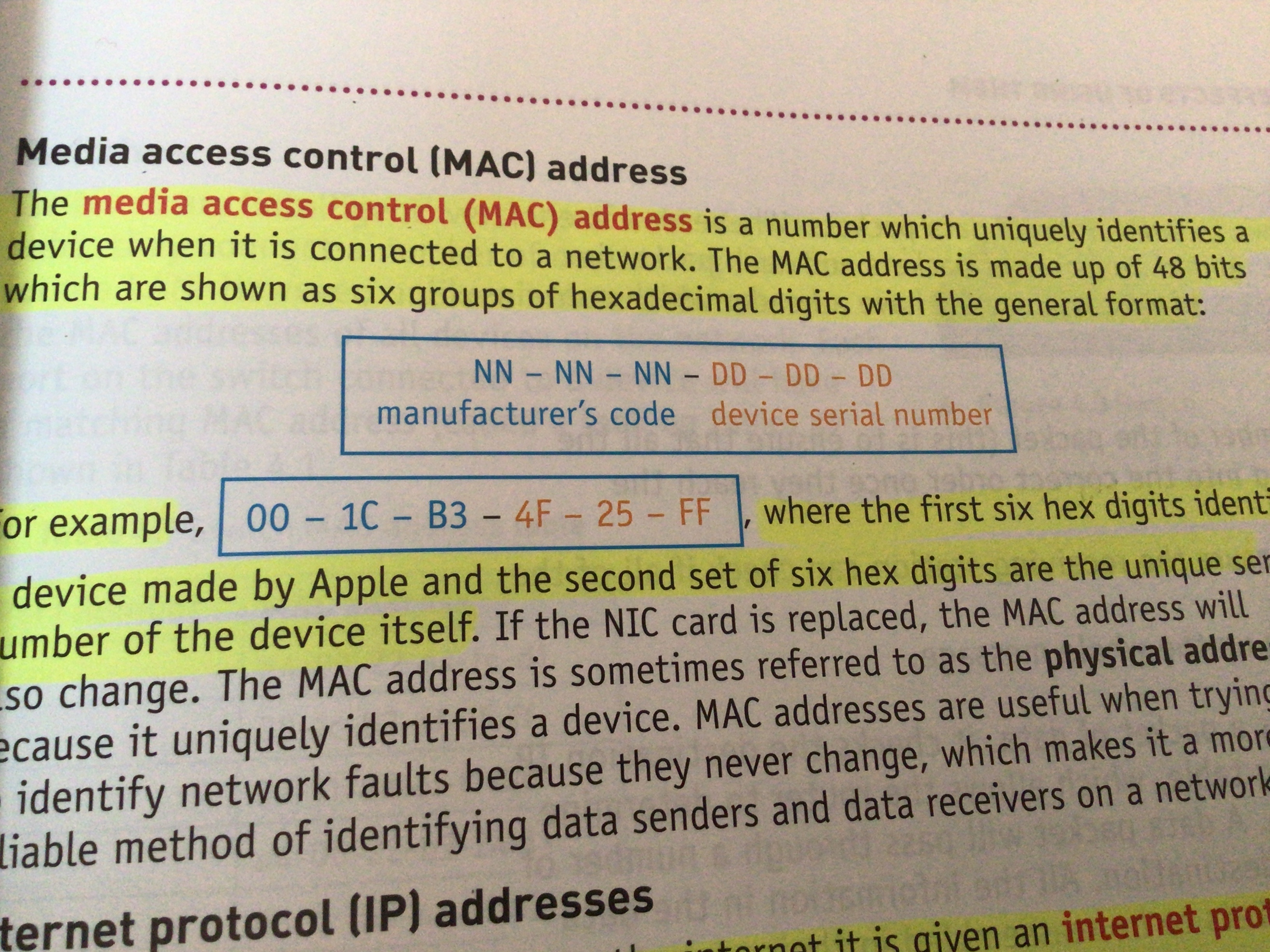
The media access control address is a number which uniquely identifies a device when it is connected to a network.The MAC address is made up of 48 bits which are shown as six groups of hexadecimal digits with the general format.
The first six hex digits identify a device made by Apple and the second hex digits are the unique number of device itself
The first six hex digits identify a device made by Apple and the second hex digits are the unique number of device itself
3
New cards
Internet protocol(IP) addresses
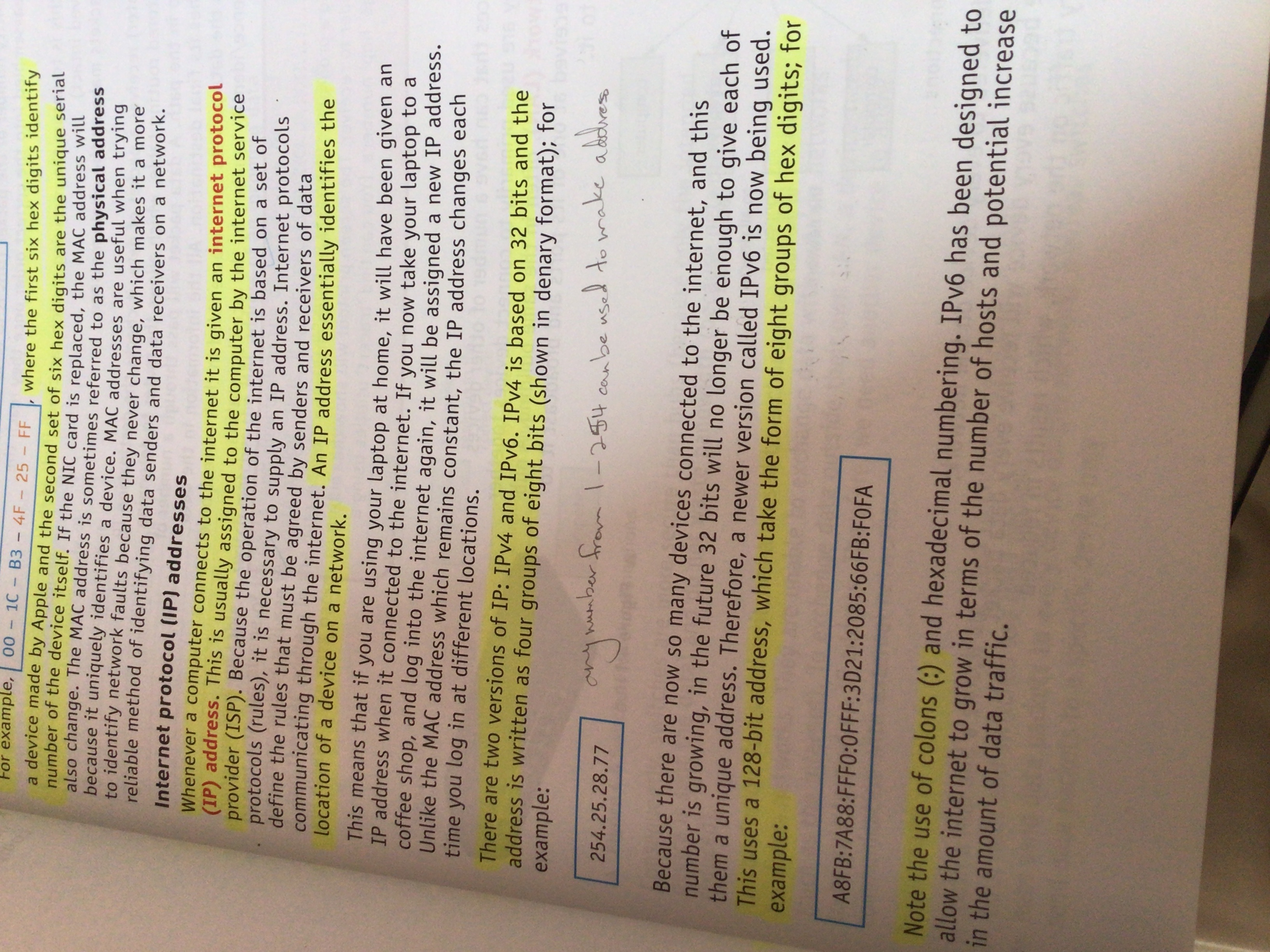
Whenever a computer connects to the internet it is given an internet protocol address.This is usually assigned to the computer by the internet service provider (ISP).
An IP address essentially identifies the location of a device on a network. There are two versions of IPv4 and IPv6. IPv4 is based of 32 bits and the address is written as four groups of eight bits.
An IP address essentially identifies the location of a device on a network. There are two versions of IPv4 and IPv6. IPv4 is based of 32 bits and the address is written as four groups of eight bits.
4
New cards
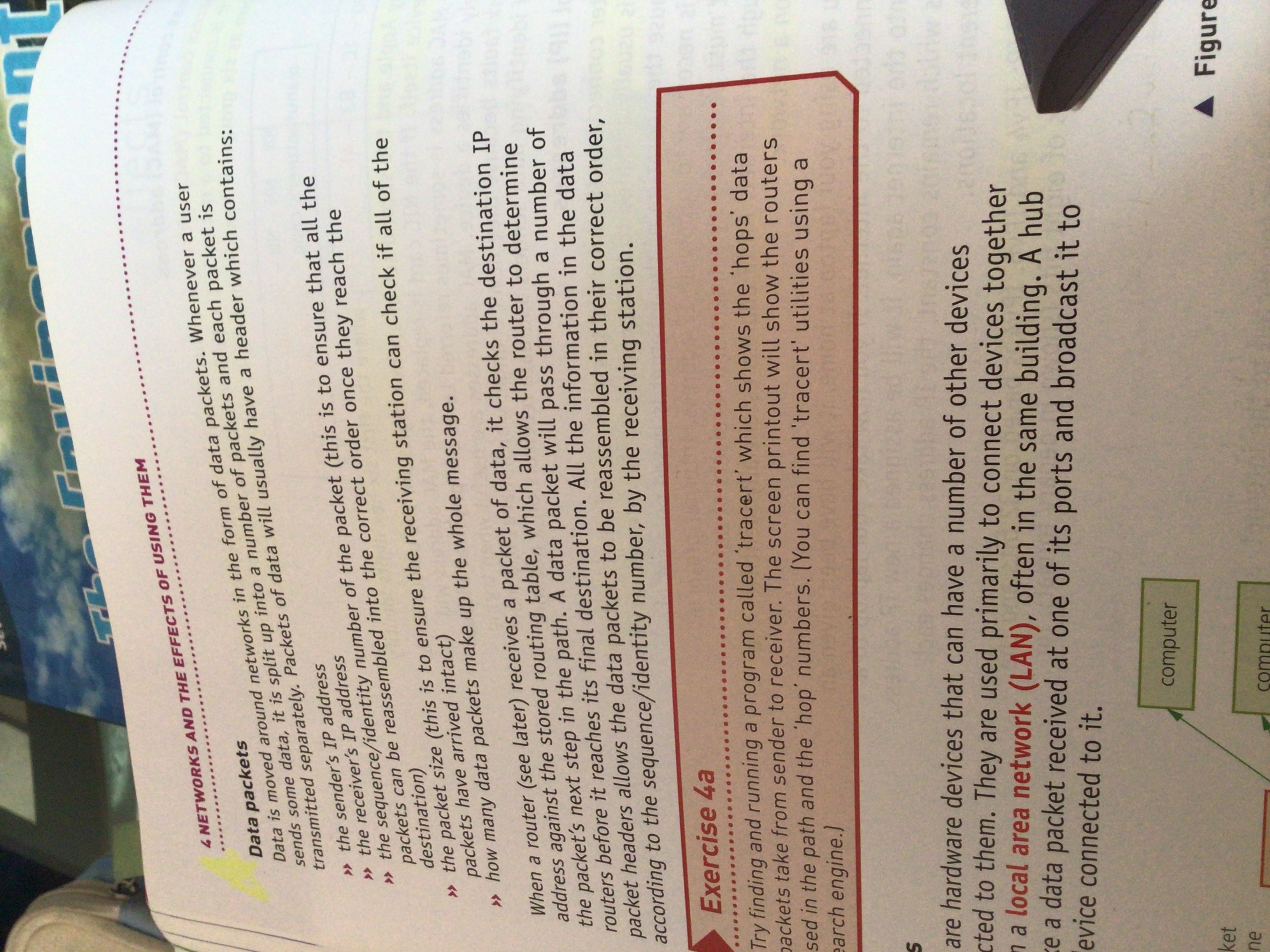
Data packets