Psychology - Chapter 2: Language and Intelligence
 Call Kai
 Learn
Learn Practice Test
 Spaced Repetition
 Match
Match Flashcards
 Knowt Play
1/51

There's no tags or description
Looks like no tags are added yet.
Name | Mastery | Learn | Test | Matching | Spaced | Call with Kai |
|---|
No analytics yet
Send a link to your students to track their progress
52 Terms
What is motivation?
Motivation describes the wants or needs that direct behaviour toward a goal.
What are the two types of motivation?
Intrinsic: arising from internal factors
Extrinsic: arising from external factors
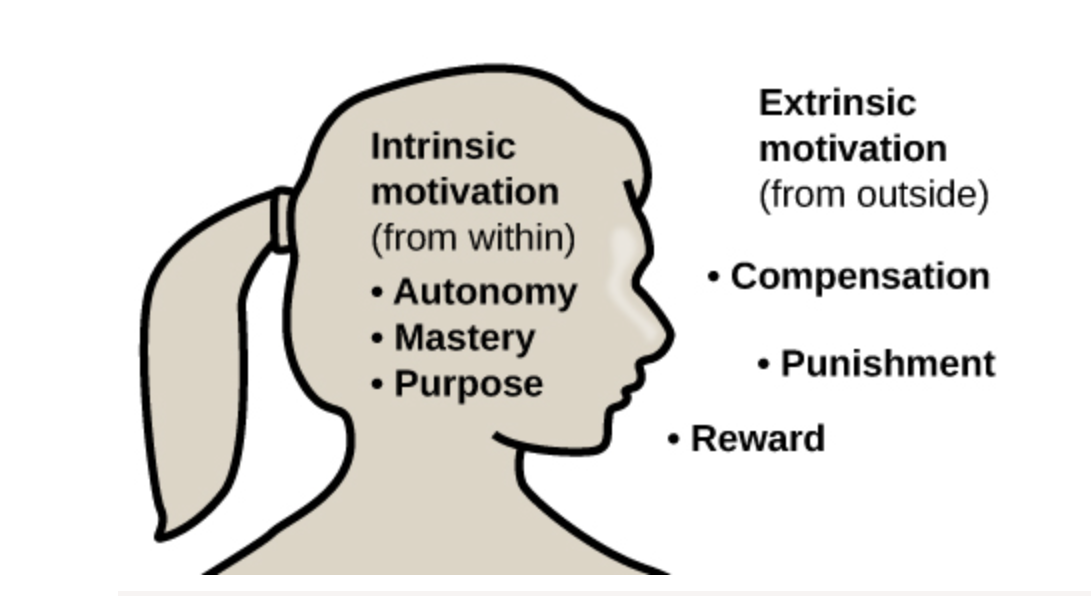
What is the overjustification effect
Intrinsic motivation is diminished when extrinsic motivation is given. This can lead to extinguishing the intrinsic motivation and creating a dependence on extrinsic rewards for continued performance.
Example:
In a well-known psychological study, researchers observed children who loved to draw during their free time.
Condition 1: The children were asked to draw but were promised a "Good Player Award" with a gold star and ribbon for doing so.
Condition 2: The children drew just for the joy of it, without any expected reward.
The Result: A few weeks later, the children who had been rewarded for drawing were significantly less likely to pick up markers during playtime. Because they were given an external reason to draw, they no longer viewed it as a fun activity and instead saw it as a "job" they needed to get paid for.
How do tangible rewards affect intrinsic motivation?
Tangible rewards, such as money, tend to reduce intrinsic motivation (has more of a negative effect) more than intangible rewards, such as praise.
How does expecting a reward affect intrinsic motivation?
If a person expects an external reward, intrinsic motivation tends to decrease.
If the reward is a surprise, intrinsic motivation is more likely to remain strong.
What is collectivistic culture and how can culture influence motivation?
Collectivistic culture: A culture that emphasizes the needs and goals of the group over the individual.
Culture can shape what motivates people and influence whether they prioritize individual goals or group goals.
In an educational setting, when are students more likely to experience intrinsic motivation?
When they feel a sense of belonging and respect in the classroom.
Who was William James and what did he theorize?
William James (1842–1910) was an important contributor to early research into motivation, and he is often referred to as the father of psychology in the United States.
He theorized that human behaviour is driven by instincts, which is a species-specific pattern of behaviour that is not learned.
James proposed several dozen special human instincts, but many of his contemporaries had their own lists that differed. A parent’s protection of their baby, the urge to lick sugar, and hunting prey were among the human behaviours proposed as true instincts during James’s era.
What is the drive reduction theory of motivation?
Deviations from homeostasis create physiological needs. Our actions are primarily motivated by the desire to satisfy these physiological needs and return the body to a state of equilibrium, or homeostasis.
Example: if it’s been a while since you ate, your blood sugar levels will drop below normal. This low blood sugar will induce a physiological need and a corresponding drive state (i.e., hunger) that will direct you to seek out and consume food. Eating will eliminate the hunger, and, ultimately, your blood sugar levels will return to normal.
How does the drive reduction theory influence habits?
A habit is a pattern of behaviour in which we regularly engage.
Once we have engaged in a behaviour that successfully reduces a drive, we are more likely to engage in that behaviour whenever faced with that drive in the future
What’s an issue with the drive reduction model?
Not all physiological states have set points, such as temperature (37 degree).
Some states, such as hunger, do not have a set point and therefore cannot be explain using the drive reduction model.
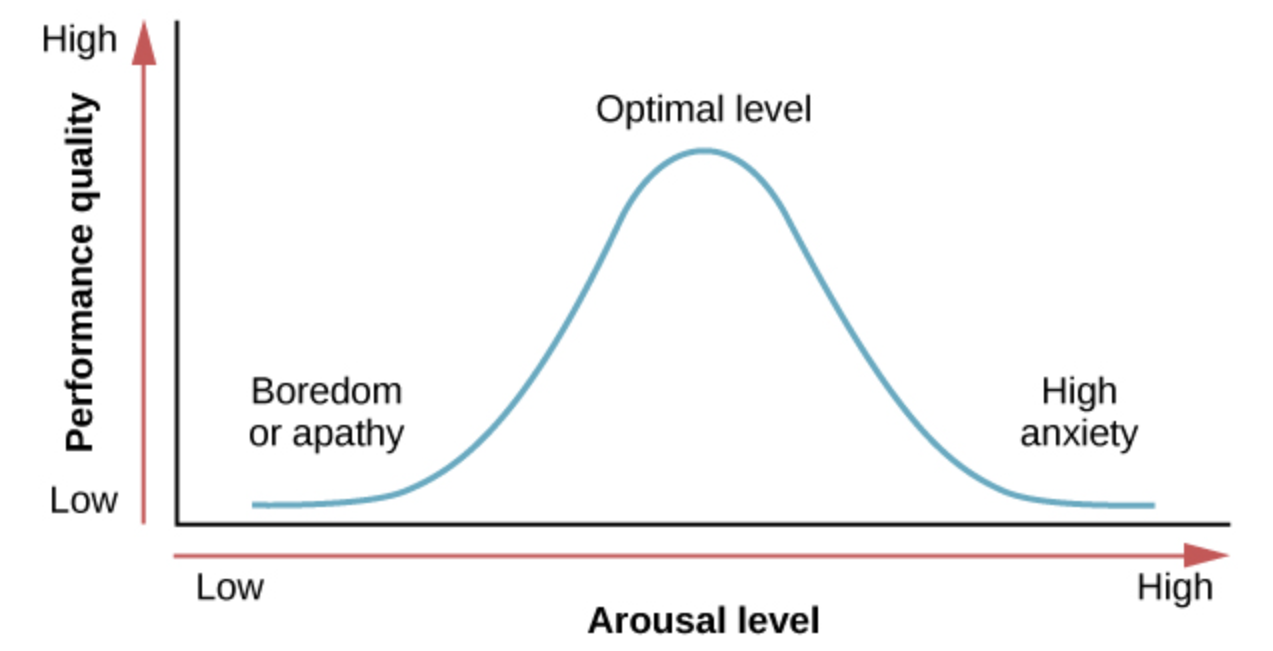
What is the Optimal Arousal Model?
A theory stating that people are motivated to maintain an optimal level of arousal for best performance.
If a person is underaroused, they may feel bored or apathetic and seek stimulation to increase arousal, while if a person is overaroused, they may feel stressed or anxious and try to reduce arousal.
So, performance is best at moderate levels of arousal and decreases when arousal is too low or too high.
Example: Consider the example of a softball team facing a tournament. They are favoured to win their first game by a large margin, so they go into the game with a lower level of arousal and get beat by a less skilled team.
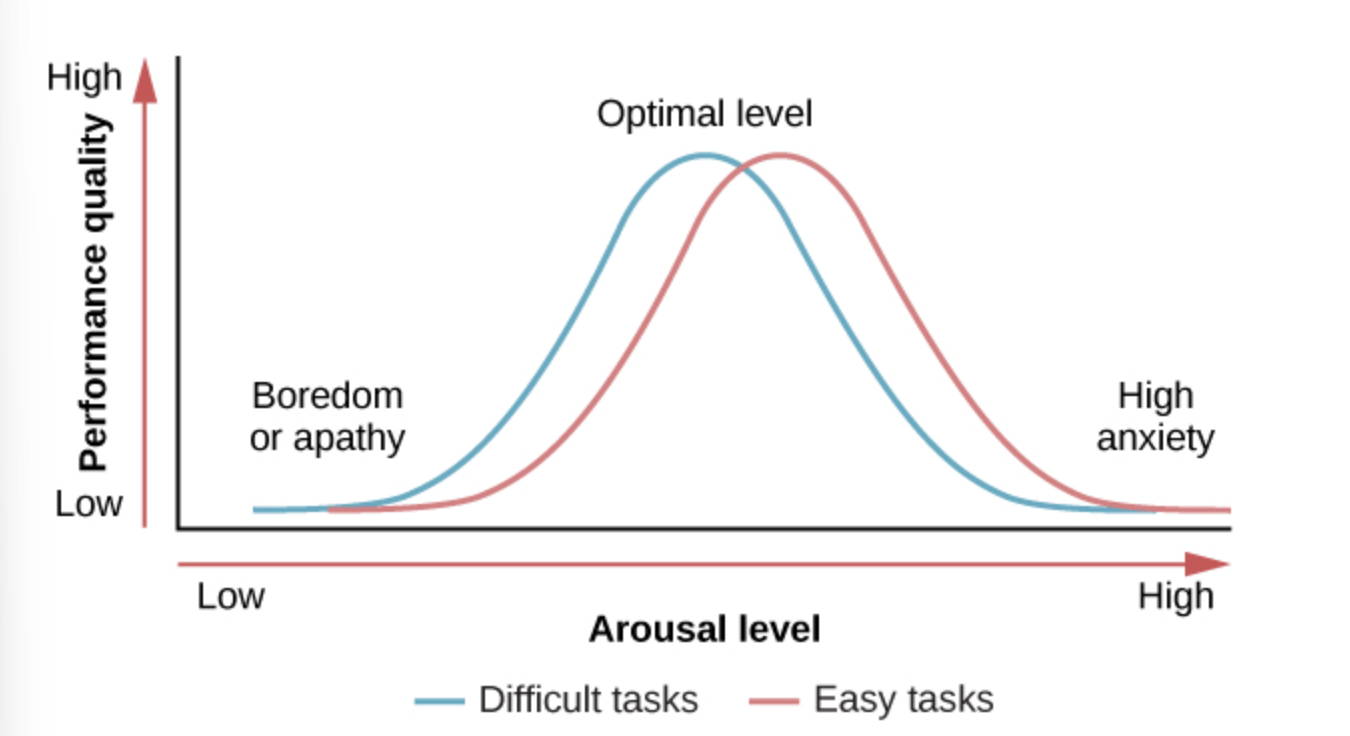
What is the Yerkes-Dodson law?
John Dodson discovered that the optimal arousal level depends on the complexity and difficulty of the task to be performed.
Yerkes-Dodson law: a simple task is performed best when arousal levels are relatively high and complex tasks are best performed when arousal levels are lower.
What is self-efficacy and how does it influence motivation?
Developed by Albert Bandura, self-efficacy is an individual’s belief in their ability to successfully complete a task.
Motivation is influenced by expectations about the outcomes of behaviour and belief in one’s own abilities. Therefore, people with high self-efficacy are more likely to take on challenges and persist despite setbacks.
What are social motives and the 3 main motives associated?
Motivations related to interacting with others and fulfilling social needs.
Achievement: It is the need for achievement that drives accomplishment and performance.
Affiliation: The need for affiliation encourages positive interactions with others
Intimacy: The need for intimacy causes us to seek deep, meaningful relationships.
How were these motives/needs of social motives categorized?
Henry Murray et al. (1938) categorized these needs into domains.
Example: the need for achievement and recognition falls under the domain of ambition. Dominance and aggression were recognized as needs under the domain of human power, and play was a recognized need in the domain of interpersonal affection.
What is the hierarchy of needs proposed by Abraham Maslow?
The hierarchy of needs is a spectrum of motives ranging from the biological to the individual to the social.
At the base of the pyramid are all of the physiological needs that are necessary for survival. These are followed by basic needs for security and safety, the need to be loved and to have a sense of belonging, and the need to have self-worth and confidence. The top tier of the pyramid is self-actualization, which is a need that essentially equates to achieving one’s full potential, and it can only be realized when needs lower on the pyramid have been met.
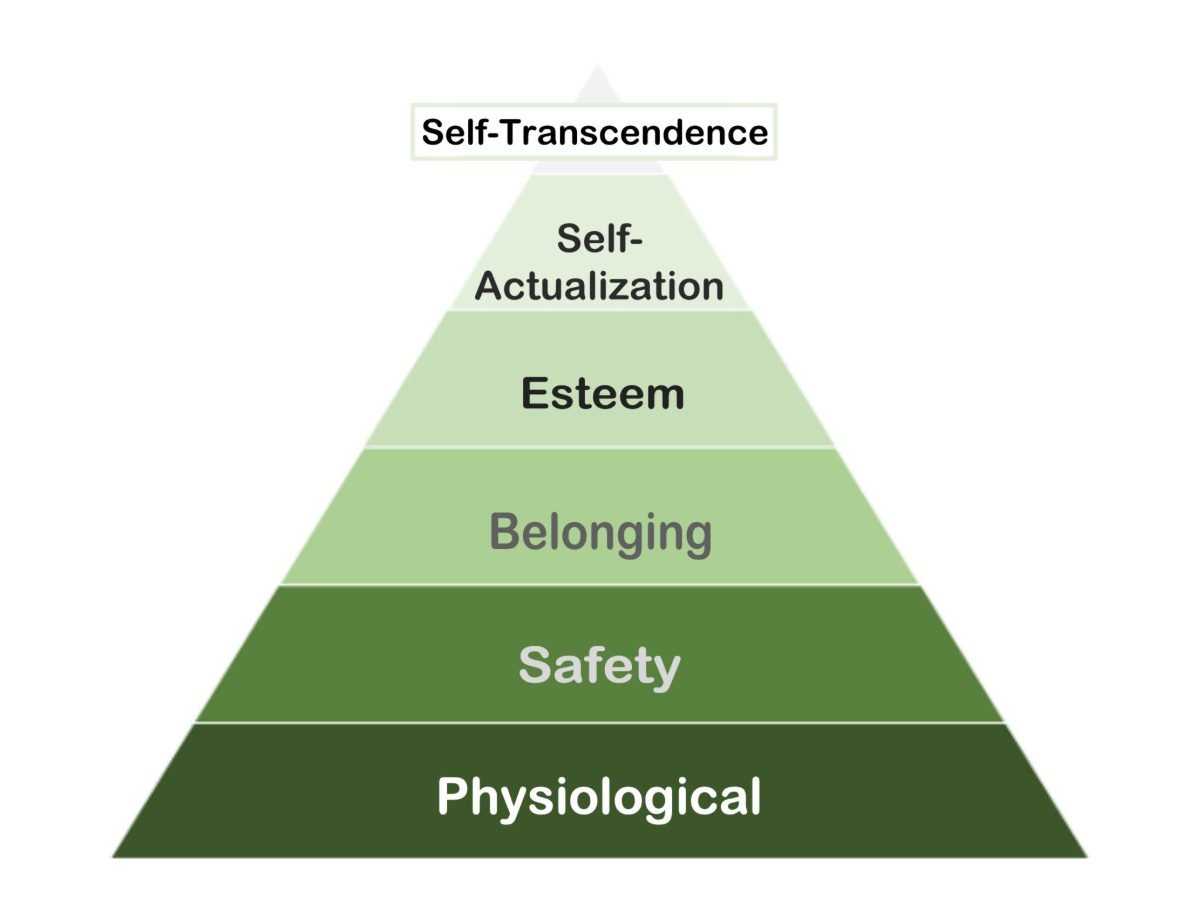
What is Maslow’s self-transcendence level above self-actualization?
This represents striving for meaning and purpose (self-actualization) beyond the concerns of oneself.
Example: people sometimes make self-sacrifices in order to make a political statement or in an attempt to improve the conditions of others.
What were some criticisms of Maslow’s model?
His model focuses on individualistic values, such as those of the United States, Canada, New Zealand, and Germany.
In other words, this model has little applicability to collectivistic cultures, which include Indigenous populations living in colonized countries like Canada and the United States, as well as peoples who live and/or associate with traditional values in countries like China, Korea, Japan, Costa Rica, and Indonesia.
What is the blackfoot model and how does it compare to Maslow’s model?
Blackfoot Model
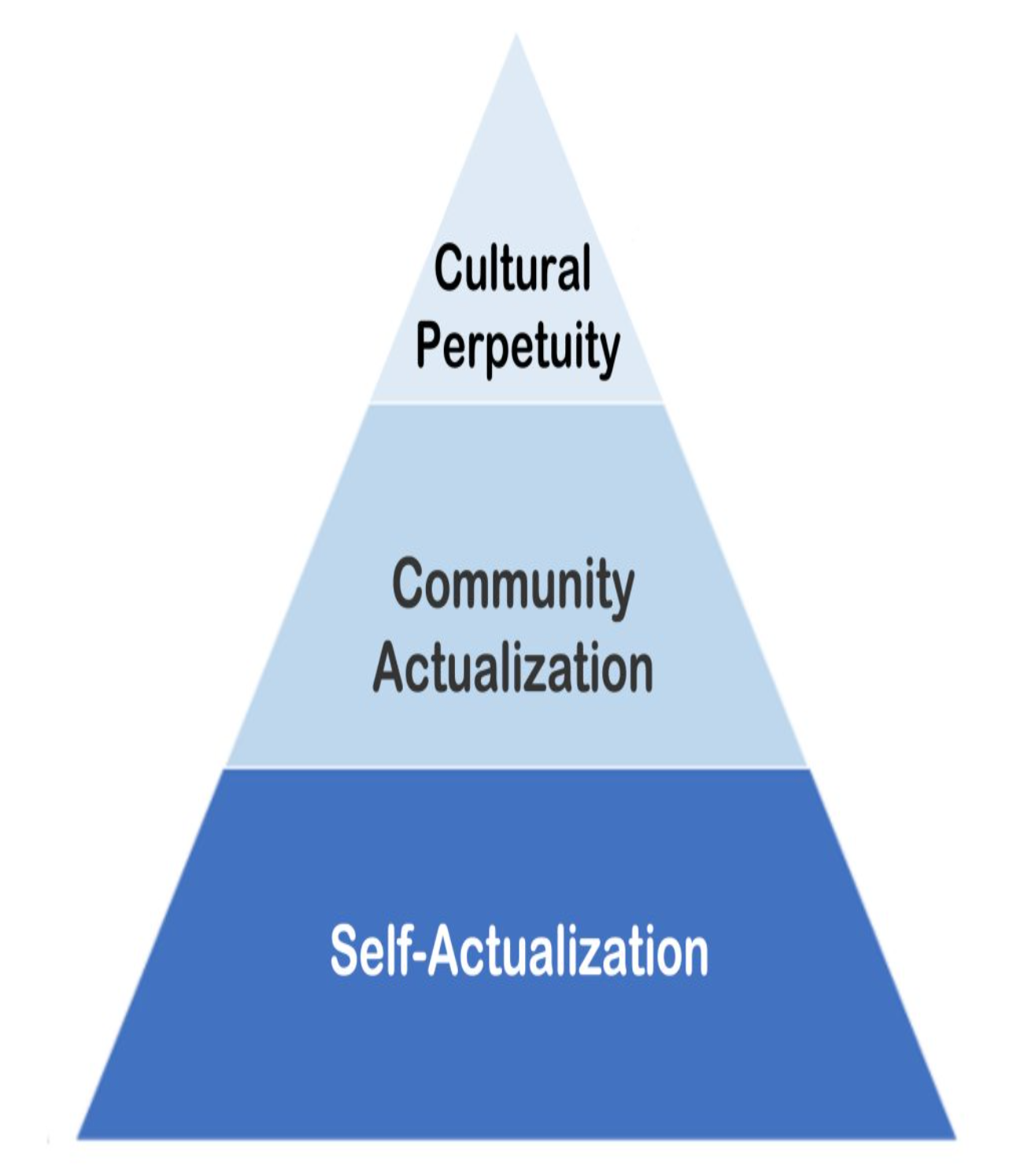
Self-actualization is considered inherent in everyone and forms the foundation/base of the model.
Maslow’s Model
Self-actualization is the highest level achieved after fulfilling lower needs.
What are the three layers of the blackfoot model?
Layer | Meaning |
|---|---|
Self-Actualization | Inherent human potential |
Community Actualization | Helping family/community thrive |
Cultural Perpetuity | Preserving knowledge and traditions for future generations |
What was the idea of self-transcendence that Maslow added later in life?
The idea that all self-actualized peoples would feel the need to pursue goals outside of the self, like those related to spiritual identity.
What were the 2 Indigenous Concepts Beyond Maslow from the Mi’kmaq culture?
Netukulimk: communities are inseparable from the land and the land’s resources, as they are interconnected and must support one another (Prosper, 2011). In this way, land is community.
Humans, land, and resources are interconnected and must support one another.
Msit No’kmaq: or “all my relations”; which means that all living things and pieces of the earth are Mi’kmaq relatives
All living things and parts of Earth are related.
What were the 2 Indigenous Concepts Beyond Maslow from the Haudenosaunee culture?
Seven Generation Principle: similar to that of cultural perpetuity, this principle highlights how important it is for community members to make decisions that will result in a sustainable world for the next seven generations
What is the Overall Conclusion of the Blackfoot model, the Netukulimk principle, the Seventh Generation principles?
Other cultural values that are not included in Maslow’s model suggest that a universal understanding of human needs must extend beyond his work.
What is satiation and how does blood glucose and the gastrointestinal tract influence it?
Satiation: The feeling of fullness and satisfaction that causes eating to stop.
Blood glucose: Increased blood glucose causes the pancreas and liver to send signals that reduce hunger and stop eating, while low blood glucose causes the pancreas and liver to send chemical signals that stimulate hunger and feeding behaviour.
GI tract: The movement of food through the gastrointestinal tract sends satiety signals to the brain.
What is leptin?
A satiety hormone released by fat cells that helps signal fullness to the brain.
Which brain area is especially important in regulating hunger and satiation?
The hypothalamus.
The lateral hypothalamus (LH) is concerned largely with hunger and, in fact, lesions (i.e., damage) of the LH can eliminate the desire for eating entirely—to the point that animals starve themselves to death unless kept alive by force feeding.
Additionally, artificially stimulating the LH, using electrical currents, can generate eating behaviour if food is available
What’s the difference in the role of the hypothalamus for hunger vs satiety?
Distinct from the LH, which plays an important role in hunger, the ventromedial hypothalamus (VMH) plays an important role in satiety.
Though lesions of the VMH can cause an animal to overeat to the point of obesity, the relationship between the LH and the VMH is quite complicated.
How do the physical sensations of hunger arise and which hormone is released?
The physical sensation of hunger comes from contractions of the stomach muscles.
These contractions are believed to be triggered by high concentrations of the hormone ghrelin, a hormone produced by the stomach, which triggers the release of orexin from the hypothalamus, signalling to the body that it is hungry.
Ghrelin is released if blood sugar levels get low, a condition that can result from going long periods without eating.
Which hormones are involved in the the physical sensations of being full (satiety)?
Two other hormones, peptide YY and leptin
Which hormone regulates the long-term hunger regulation and regulation of body fat stores? How does it do this?
Leptin serves as the brain’s indicator of the body’s total energy stores.
The function of leptin is to suppress the release of neuropeptide Y (NPY), which in turn prevents the release of appetite-enhancing orexins from the lateral hypothalamus. This decreases appetite and food intake, promoting weight loss.
Though rising blood levels of leptin do promote weight loss to some extent, its main role is to protect the body against weight loss in times of nutritional deprivation.
What does the short-term regulation of hunger involve?
The short-term regulation of hunger deals with appetite and satiety. It involves neural signals from the GI tract, blood levels of nutrients, and GI-tract hormones.
How do Neural Signals from the GI Tract influence hunger signals?
The brain can sense differences between macronutrients through vagal nerve fibres.
Stretch receptors (mechanoreceptors that respond to an organ being stretched or distended) work to inhibit appetite when the GI tract becomes distended. They send signals along the vagus nerve afferent pathway and ultimately inhibit the hunger centres of the hypothalamus.
How do nutrient signals influence hunger signals?
Nutrient signals indicate fullness.
They inhibit hunger by raising blood glucose levels, elevating blood levels of amino acids, and affecting blood concentrations of fatty acids.
How do hormonal signals influence hunger signals?
Inhibitors: The hormones insulin and cholecystokinin (CCK) are released from the GI tract during food absorption and act to suppress feelings of hunger.
Other inhibitors include leptin and PYY,
Fasting: glucagon and epinephrine levels rise and stimulate hunger.
Other stimulators include Ghrelin, a hormone produced by the stomach, triggers the release of orexin from the hypothalamus, signalling to the body that it is hungry,
melanin and endocannabinoids
What is a persons metabolic rate?
A person’s metabolic rate is the amount of energy that is expended in a given period of time, and there is tremendous individual variability in our metabolic rates.
People with high rates of metabolism are able to burn off calories more easily than those with lower rates of metabolism.
What is the set-point theory of body weight regulation?
The set-point theory asserts that each individual has an ideal body weight, or set point, which is resistant to change.
This set-point is genetically predetermined and efforts to move our weight significantly from the set-point are resisted by compensatory changes in energy intake and/or expenditure
What are some issues with the set-point theory?
The set-point theory has limited research support because studies do not always show metabolic differences after weight loss, and the theory does not fully account for social and environmental influences on body weight.
Why is obesity considered a major public health concern?
Obesity increases the risk of many health problems
Including: cardiovascular disease, stroke, Type 2 diabetes, liver disease, sleep apnea, some cancers, infertility, and arthritis, and it affects a large portion of adults and children.
What is Prader-Willi Syndrome? Is there a cure?
A genetic disorder that results in persistent feelings of intense hunger and reduced rates of metabolism.
Typically, affected children have to be supervised around the clock to ensure that they do not engage in excessive eating.
Currently, PWS is the leading genetic cause of morbid obesity in children, and it is associated with a number of cognitive deficits and emotional problems
No, there is currently no cure or definitive treatment for PWS.
When do developmental delays usually appear in individuals with PWS?
Between the ages of 6 and 12, and excessive eating and cognitive deficits associated with PWS usually onset a little later.
Which brain structure is associated with abnormalities in Prader-Willi syndrome, and how can PWS affect sexual development?
The hypothalamus.
Many individuals with PWS fail to reach sexual maturity during adolescence.
Other than biological factors, what else influences our hunger cues?
Food preferences
Classical conditioning: for example, getting hungry when you see the time and its lunch time
Having the need to finish your plate, which can be bad because it can promote overeating
What is Bulimia nervosa? What issues are associated?
An eating disorder involving binge eating followed by compensatory behaviours such as vomiting, laxative use, or excessive exercise.
Bulimia is associated with many adverse health consequences that can include kidney failure, heart failure, and tooth decay. In addition, these individuals often suffer from anxiety and depression, and they are at an increased risk for substance abuse
What is the lifetime prevalence rate for bulimia nervosa?
Estimated at around 1% for women and less than 0.5% for men
What is Binge eating disorder? What distinguishes binge eating disorder from overeating?
An eating disorder involving binge eating episodes without compensatory behaviours such as purging, but they are followed by distress, including feelings of guilt and embarrassment.
Binge eating disorder involves psychological distress, guilt, and embarrassment after binge episodes, unlike simply overeating
What is Anorexia nervosa? What do people who suffer from anorexia often have?
An eating disorder characterized by extreme weight loss through starvation and/or excessive exercise.
Individuals suffering from anorexia nervosa often have a distorted body image, referenced in literature as a type of body dysmorphia, meaning that they view themselves as overweight even though they are not.
What are issues are associated with anorexia nervosa?
Like bulimia nervosa, anorexia nervosa is associated with a number of significant negative health outcomes: bone loss, heart failure, kidney failure, amenorrhea (cessation of the menstrual period), reduced function of the gonads, and in extreme cases, death.
Furthermore, there is an increased risk for a number of psychological problems, which include anxiety disorders, mood disorders, and substance abuse
What are the prevalence rates of anorexia nervosa?
Estimates of the prevalence of anorexia nervosa vary from study to study but generally range from just under one percent to just over four percent in women. Generally, prevalence rates are considerably lower for men
Which races, genders, and ages are most susceptible to both anorexia and bulimia nervosa
Race: Caucasian females from Western societies tend to be the most at-risk population.
Gender and age: females between the ages of 15 and 19 are most at risk,
it has long been suspected that these eating disorders are culturally-bound phenomena that are related to messages of a thin ideal often portrayed in popular media and the fashion world
What are the most likely causes of eating disorders?
It has long been suspected that these eating disorders are culturally-bound phenomena that are related to messages of a thin ideal often portrayed in popular media and the fashion world.
However, while social factors play an important role in the development of eating disorders, there is also evidence that genetic factors may predispose people to these disorders