CS L 13 Reconstructive Surgery⭐
 Call Kai
 Learn
Learn Practice Test
 Spaced Repetition
 Match
Match Flashcards
 Knowt Play
1/15

There's no tags or description
Looks like no tags are added yet.
Name | Mastery | Learn | Test | Matching | Spaced | Call with Kai |
|---|
No analytics yet
Send a link to your students to track their progress
16 Terms
reconstructive surgery
repairs or replaces skin that as been damaged
common reasons for reconstructive surgery
wounds, neoplasia, developmental disease
3 phases of wound healing
1. Inflam
2. Cellular proliferation/ granulation (fibroplasia, angiogenesis, epithelialization)
3.remodeling/ maturation (contraction and reorganization)
how to optimize wound healing
aseptic handling and equipment
suitable lavage
thorough debridement
correct bandaging
good nutrition
analgesia
what effect does cutaneous muscle have on healing
better when present as blood supply is better
cutaneous muscle is thick on thoracic skin and absent on limbs
types of reconstructive surgery techniques
>special closure techniques
>skin flaps
>skin grafts
what are the special closure techniques
> cosmetic closure of skin defects
> tension relieving and skin mobilization procedures
examples of tension relieving and skin mobilization procedures
far-near-near-far sutures
stents
undermining skin (create small secondary wound near to sutures)
mesh expansion
what is a skin flap
living tissue deprived of original blood supply and transerred to new site
autograft/ iosgraft
same individual
allograft/ homograft
same species
xenograft/ heterograft
another species
full thickness graft
includes epidermis and entire dermis
split thickness graft
epidermis and portion of dermis (more succesful)
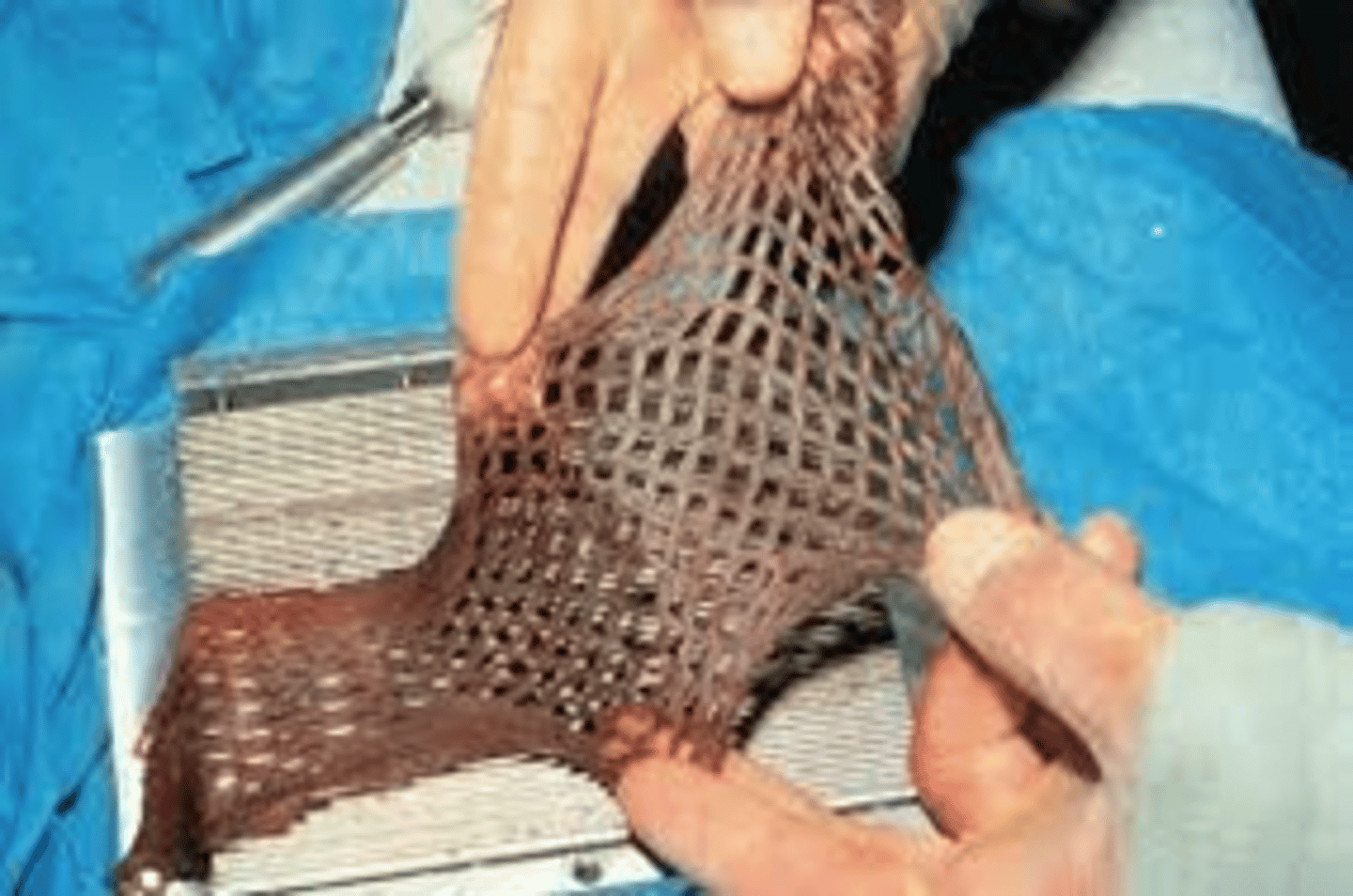
mesh graft
A skin graft that is altered to create a mesh-like pattern in order to cover a larger surface area
island grafts
small pieces of skin implanted into large field of open granulation tissue: rely on keratinocytes that proliferate and migrate from edge of islands to cover site
Pinch (split thickness)
Punch (full thickness)
Strip
Stamp