IGCSE - Organic Chemistry 2 (Triple Award)
 Call Kai
 Learn
Learn Practice Test
 Spaced Repetition
 Match
Match Flashcards
 Knowt Play
1/35

There's no tags or description
Looks like no tags are added yet.
Name | Mastery | Learn | Test | Matching | Spaced | Call with Kai |
|---|
No analytics yet
Send a link to your students to track their progress
36 Terms
Displayed formula
Shows all the atoms and bonds
Structural formula
Shows the sequence in which the atoms are bonded
Molecular formula
Shows the number of atoms from each element in one molecule
Empirical formula
Simplest ratio of atoms of elements in a compound
General formula for alcohols
CnH2n+1OH
General formula for carboxylic acids
CnH2n+1COOH
Oxidation of alcohols
E.g. ethanol --> ethanal --> ethanoic acid.
Structural formula for ethanol
CH3 CH2 OH
Structural formula for methanoic acid
HCOOH
Structural formula for methanol
CH3 OH
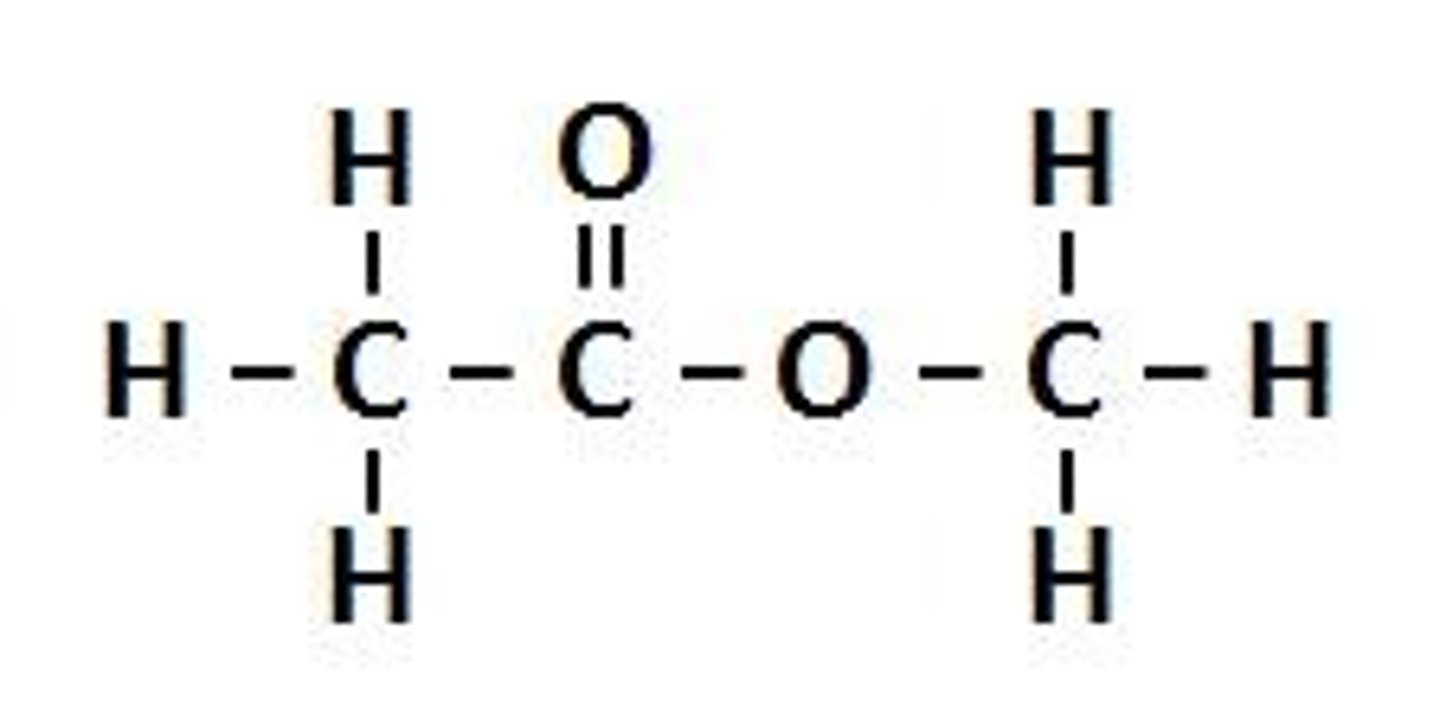
Displayed formula for methyl ethanoate
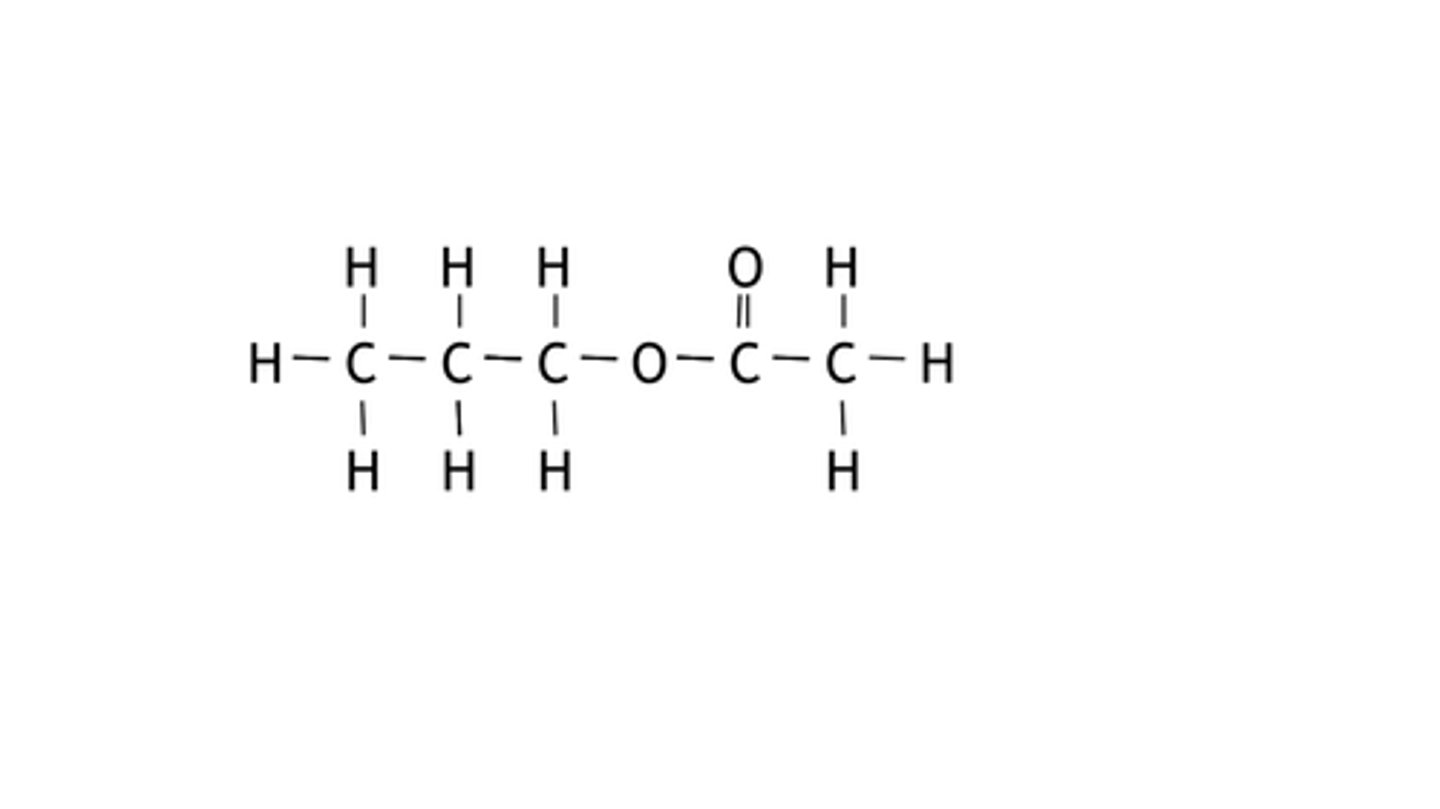
Displayed formula for propyl ethanoate
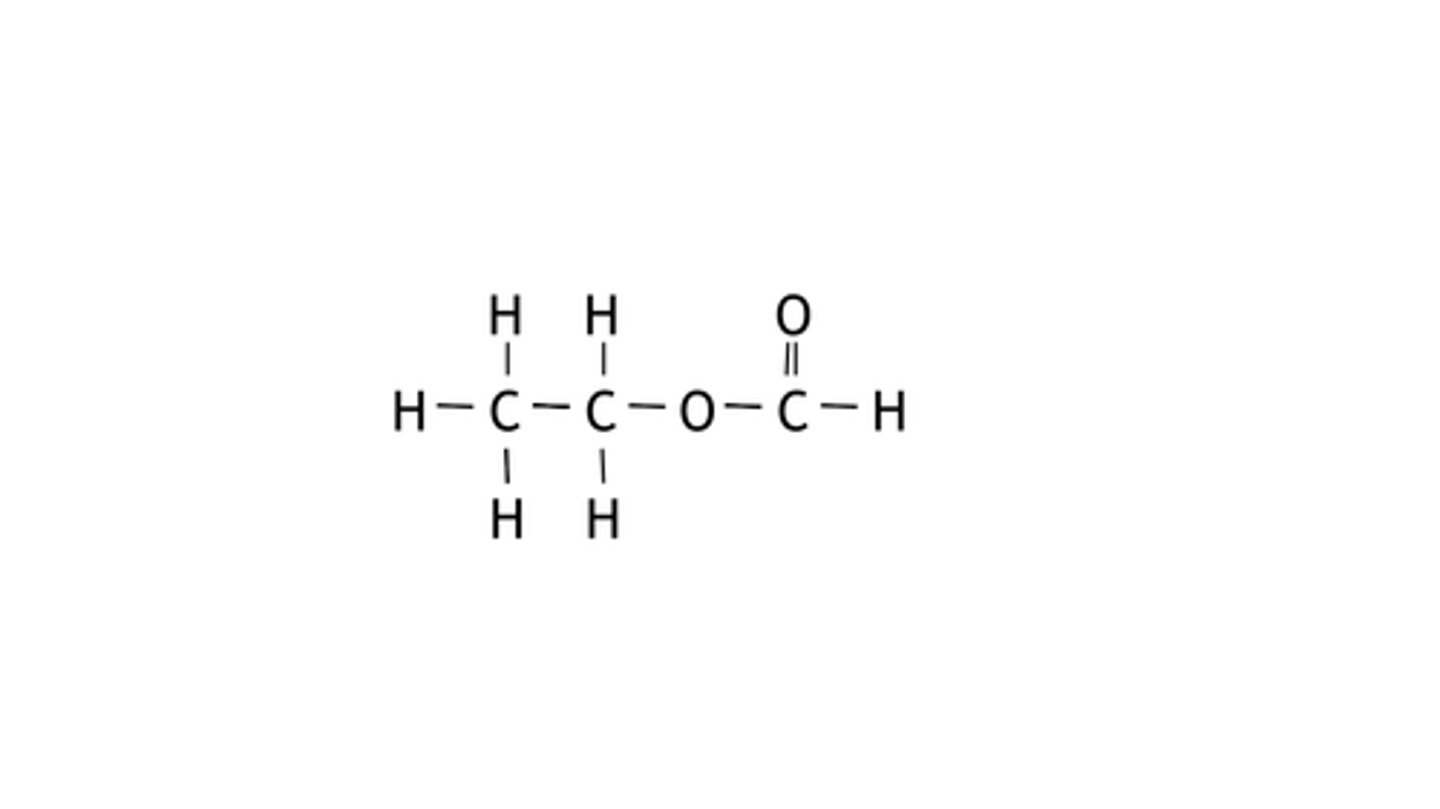
Displayed formula for ethyl methanoate
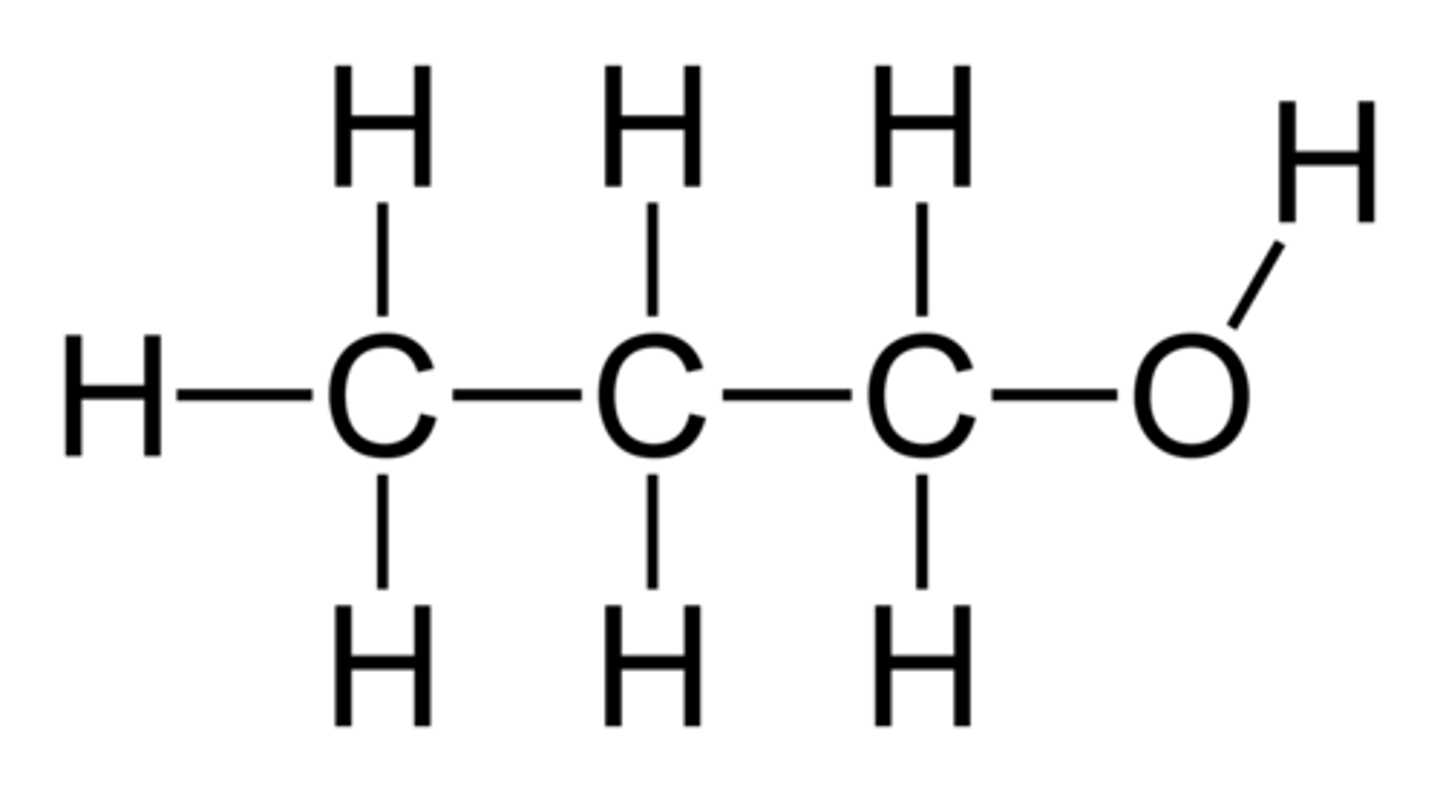
Displayed formula for propan-1-ol
What are esters?
A homologous series with '-COO-' functional group in the middle of the molecule. They are volatile compounds with distinctive smells, used as food flavourings and in perfumes
What are carboxylic acids?
A homologous series of compounds that all have '-COOH' as a functional group.
Name of the ester formed from the reaction of ethanol with ethanoic acid, in the presence of an acid catalyst
Ethyl ethanoate
Oxidising agent for alcohols
Acidified potassium dichromate
What are polyesters?
Condensation polymers, formed from the reaction of a dicarboxylic acid with a diol
What is the condition for making esters?
Acid catalyst
What are the conditions for fermentation of ethanol?
Anaerobic, around 30 degrees Celsius, yeast
What are the conditions for hydration of ethene?
Phosphoric acid catalyst, 300 degrees Celsius, pressure of 60-70 atm
Why not use a temperature of higher than 30-40 degrees Celsius in fermentation?
Enzymes in yeast denature
Why not use a temperature of lower than 30-40 degrees Celsius in fermentation?
Enzyme activity too low (rate too slow)
Why anaerobic conditions for fermentation?
Otherwise ethanol is oxidised to ethanoic acid (or yeast respires aerobically to form carbon dioxide and water, instead of ethanol)
Equation for fermentation of glucose
C6H12O6 --> 2C2H5OH + 2CO2
Equation for hydration of ethene
C2H4 + H2O --> C2H5OH
Products of the reaction of ethanoic acid and magnesium
magnesium ethanoate + hydrogen
Products of the reaction of ethanoic acid and magnesium carbonate
magnesium ethanoate + carbon dioxide + water
Products of the reaction of ethanoic acid and magnesium hydroxide
magnesium ethanoate + water
What is the benefit of biopolyesters?
They are biodegradable
Structural formula of a section of a polyester
OCH2CH2OOCCOOCH2CH2O
Condensation polymerisation always forms
A polymer and water (or another small molecule)
methyl propanoate structural formula
CH3CH2COOCH3
propyl ethanoate structural formula
CH3COOCH2CH2CH3
ethyl methanoate structural formula
HCOOCH2CH3