Skin Lesions and Conditions: A Medical Overview for Students
 Call Kai
 Learn
Learn Practice Test
 Spaced Repetition
 Match
Match Flashcards
 Knowt Play
1/23

There's no tags or description
Looks like no tags are added yet.
Name | Mastery | Learn | Test | Matching | Spaced | Call with Kai |
|---|
No analytics yet
Send a link to your students to track their progress
24 Terms
Skin
Largest organ in our body
Temperature Regulation
Process by which the skin helps maintain body temperature
Infections
Can be bacterial, viral, or fungal
Burns/Trauma
Damage to the skin due to heat or injury
Cancers
Skin lesions that can be malignant
Standard Nomenclature
Naming and categorization of skin lesions to aid in diagnosis
Primary Lesions
Nonpalpable, palpable/solid, or palpable/fluid-filled lesions
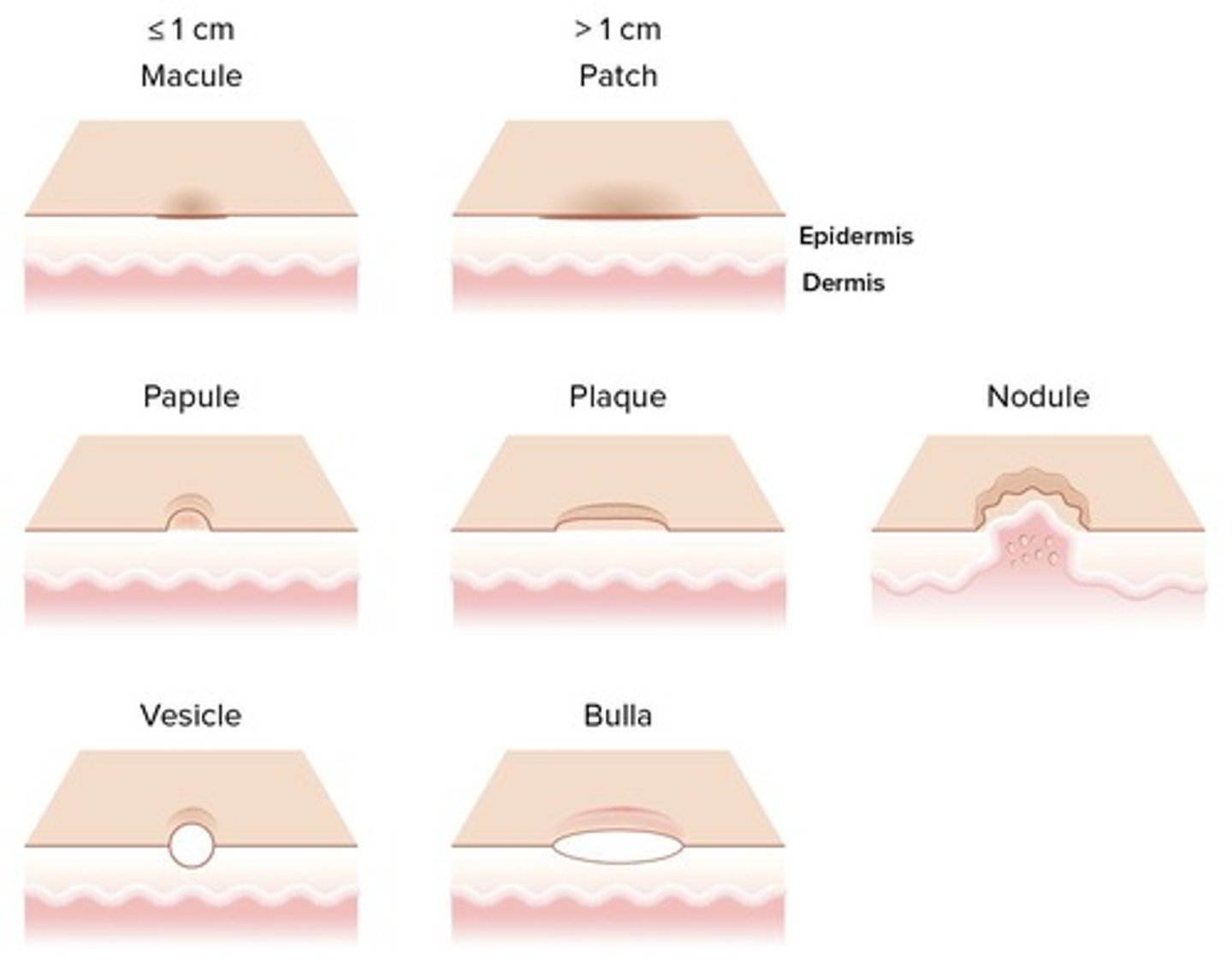
Macule
A flat area on the skin that is usually lighter or darker than the surrounding skin
Patch
A large macule
Papule
Elevated small bump usually less than 1cm
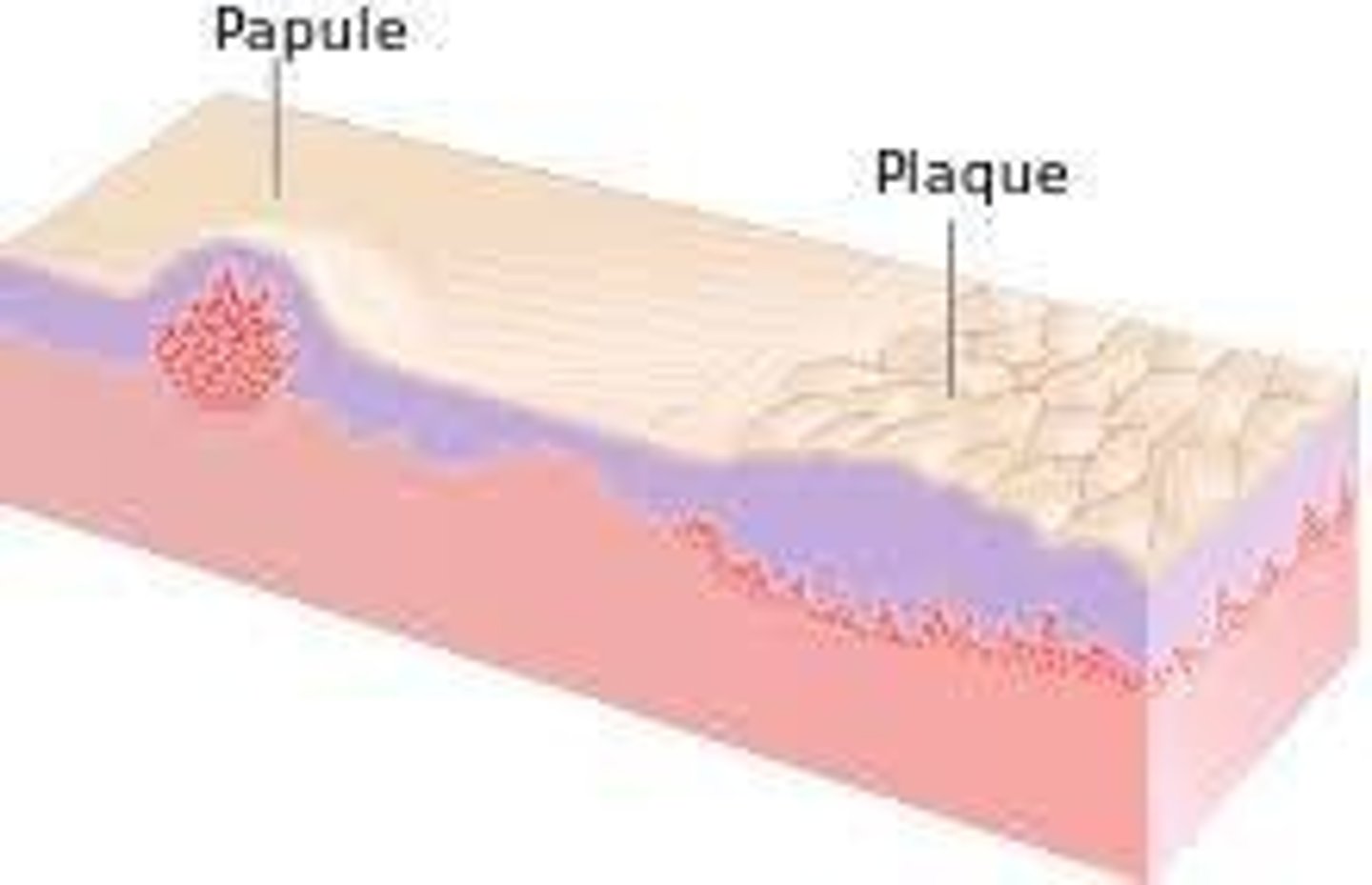
Plaque
Larger raised lesion 1cm or greater
Wheal
Usually itches, light pink to red color
Mass
Raised lesion with a solid aspect hidden under the skin
Vesicle
A small clear fluid-filled lesion up to 1cm
Bulla
Fluid-filled lesion 1cm or larger
Pustule
Lesion filled with bacteria or white blood cells (pus)
Excoriation
Abrasion of outer layer due to scratching, rubbing, or trauma
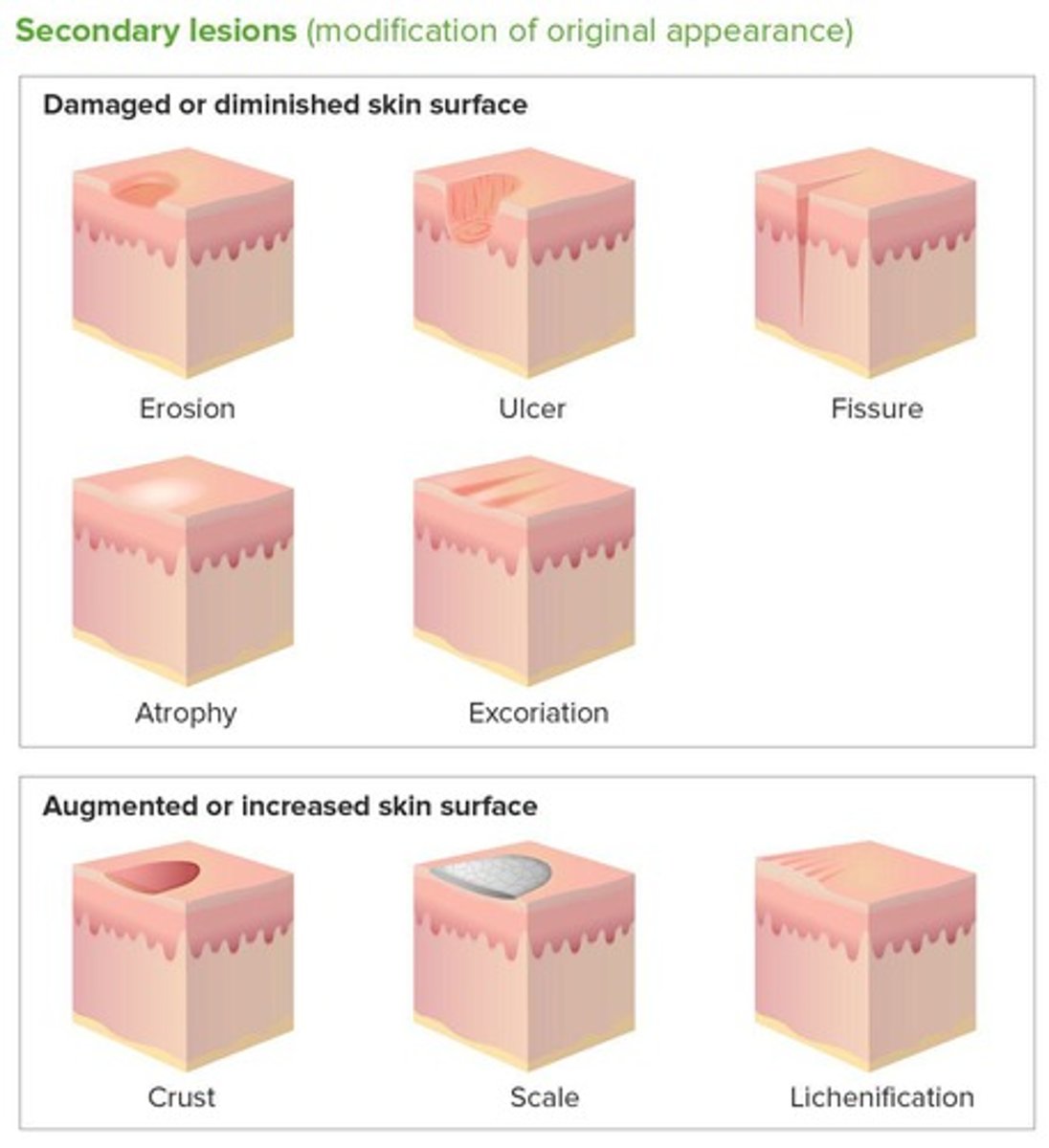
Fissure
A cleft/split in the epidermal layer
Erosion
Loss of epidermis (not dermis)
Ulcer
Loss of skin through the dermis
Crust
Dried things on the outside of the skin
Scale
Flakes or plates of skin
Lichenification
Epidermal thickening
Scar/Keloid
Permanent fibrotic tissue that replaces epidermal and dermal tissue