PSCI 103H Chapter 6 Key Terms
 Call Kai
 Learn
Learn Practice Test
 Spaced Repetition
 Match
Match Flashcards
 Knowt Play
1/31

There's no tags or description
Looks like no tags are added yet.
Name | Mastery | Learn | Test | Matching | Spaced | Call with Kai |
|---|
No analytics yet
Send a link to your students to track their progress
32 Terms
Immune System
The tissues, organs, and processes that protect the body from invasion.
Lymph
Tissue fluid (components of blood other than red cells and platelets) of the lymphatic system.
Lymphatic System
The system that transports lymph throughout the body in order to fight against an infection.
Lymph Nodes
Small pieces of lymphatic tissue that help clean the lymph of debris and bacteria.
Lymphocytes
A type of white blood cell found in lymph.
What types of lymphocytes exist?
T-cells
B-cells
Natural killer (NK cells)
T-cells
The type of white blood cells of the immune system that produce immunity.
B-cells
The white blood cells of the immune system that attack invaders (microrganisms).
Natural Killer (NK) cells
The type of white blood cells of the immune system that attack invading organisms.
Thymus
An organ located near the heart which secretes thymosin (hormone) and also activates T-cells.
Thymosin
A hormone produced by the thymus.
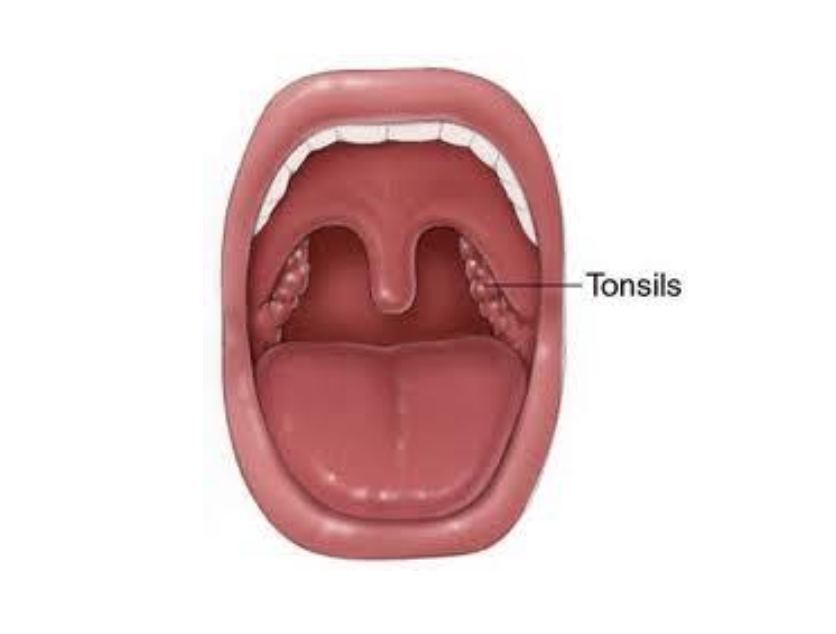
Tonsils
Masses of lymphatic tissue that trap and kill invading cells and particles – similar to lymph nodes.
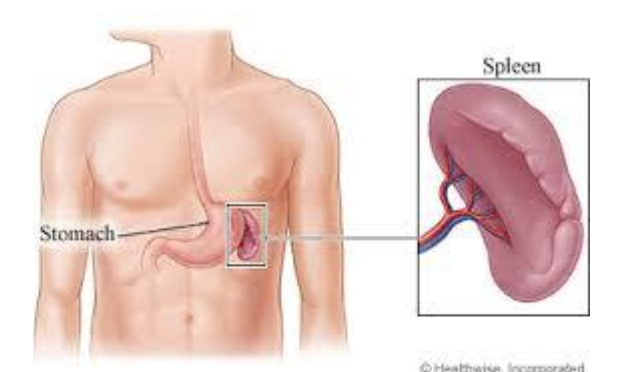
Spleen
An organ near the stomach in the abdominal cavity that serves as a site where lymphocytes mature and also a disposal for worn out blood cells.
Where are the tonsils located?
The back of the throat.
Where is the spleen located?
Near the stomach in the abdominal cavity.
Pathogens
Microorganisms (germs) that causes diseases.
What are the two types of nonspecific mechanisms of the immune system?
Phagocytosis
Inflammation
What is a nonspecific response/defense?
The body’s immediate response and first line of protection against any pathogen (regardless of the type)
What is the process of phagocytosis?
A nonspecific response of the immune system that attacks foreign particles with two types of white blood cells – granulocytes and macrophages.
Granulocytes
A type of white blood cells involved in phagocytosis and contain granules filled with chemicals that are released to attack invaders.
Macrophages
A type of white blood cells involved in phagocytosis and perform a number of immune functions.
What are the immune functions of macrophages?
Hunt for worn-out cells and debris
Initiate specific immune responses
Secrete chemicals to break down cell membranes of invaders
Inflammation
A nonspecific response of the body that works to restore damaged tissue.
Immunity
A bodily response to foreign microorganisms that happen due to repeated exposure and results to resistance of disease.
Vaccination
A medical method that involves the injection of a weakened form of a virus into the body in order to stimulate the production of antibodies.
What are different forms of immune deficiency?
Acquired immune deficiency syndrome (AIDS)
Allergies
Autoimmune diseases (lupus, rheumatoid arthritis, multiple sclerosis)
Acquired immune deficiency syndrome
An immune deficiency caused by viral infection which results to the vulnerability of bacterial and viral diseases.
Allergies
An immune deficiency that involves little or no immune response to a foreign substance.
Psychoneuroimmunology (PNI)
The study that focuses on the interaction between behavior, the nervous system, the endocrine system, and the immune system.
Cytokines
The chemical messengers in the body that are secreted by cells in order to form a communication link between the nervous system and immune system.
True/False - According to Janice Kiecolt-glaser, medical students displayed more symptoms of infectious disease before exams and less after exams.
False; Immune system functioning was suppressed due to stress activating both the sympathetic nervous system and immune responses
Is stress a major factor in ulcers?
No