Blood volume
 Call Kai
 Learn
Learn Practice Test
 Spaced Repetition
 Match
Match Flashcards
 Knowt Play
1/45

There's no tags or description
Looks like no tags are added yet.
Name | Mastery | Learn | Test | Matching | Spaced | Call with Kai |
|---|
No analytics yet
Send a link to your students to track their progress
46 Terms
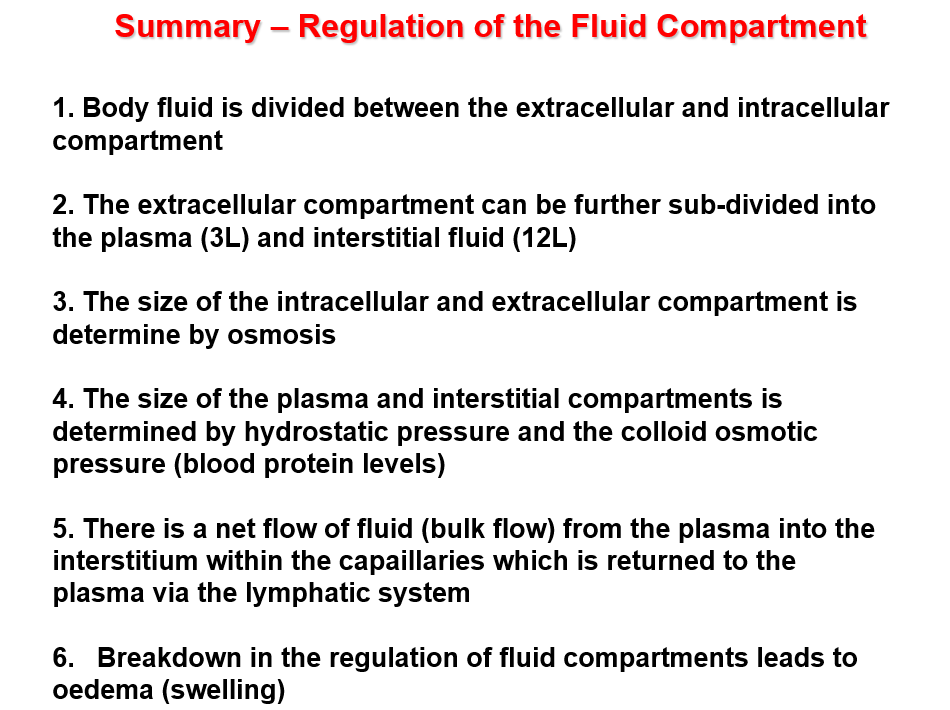
What are the 2 major fluid compartments in the body?
Extracellular and intercellular
Most of the fluid in our body is?
Intercellular (28L)
How much L is extracellular?
14L
What 2 things is extracellular fluid made up of?
Plasma (3L) and interstital (11L)
What is the total volume of fluid in our body?
42L
How is the volume in the intracellular compartment maintained?
Via osmosis
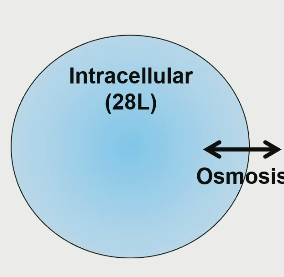
How is the volume in the interstitum compartment maintained?
Via a colloid osmotic pressure (adsorption) and hydrostatic pressure (filteration) THEY ONLY WORK IN THE CAPILLARIES as all the other blood vessels r too thick for these processes to occur
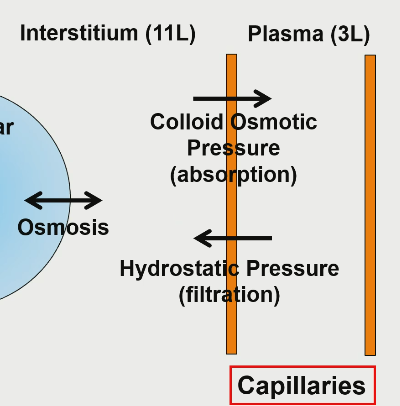
Failure to regulate fluid compartments leads to what?
Oedema; fluid build up in certain parts of the body e.g burn or friction blister
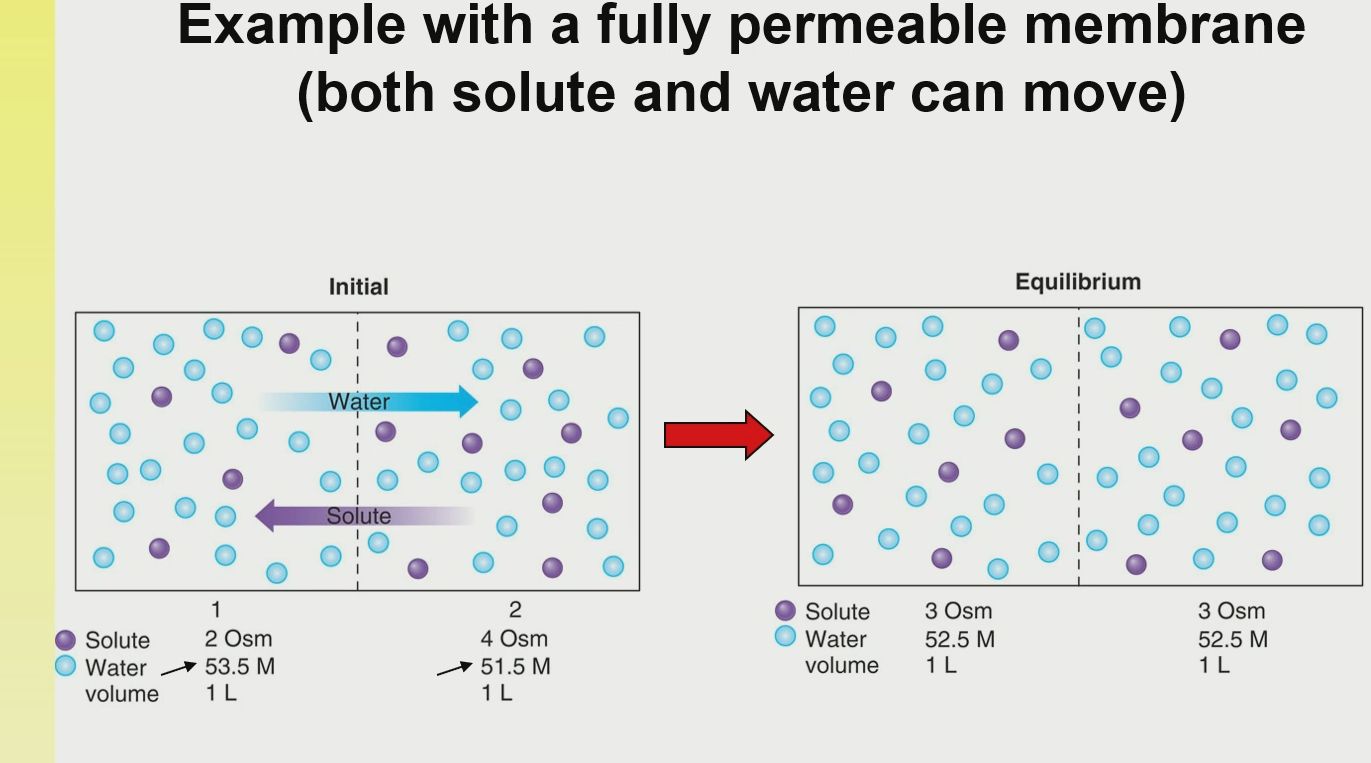
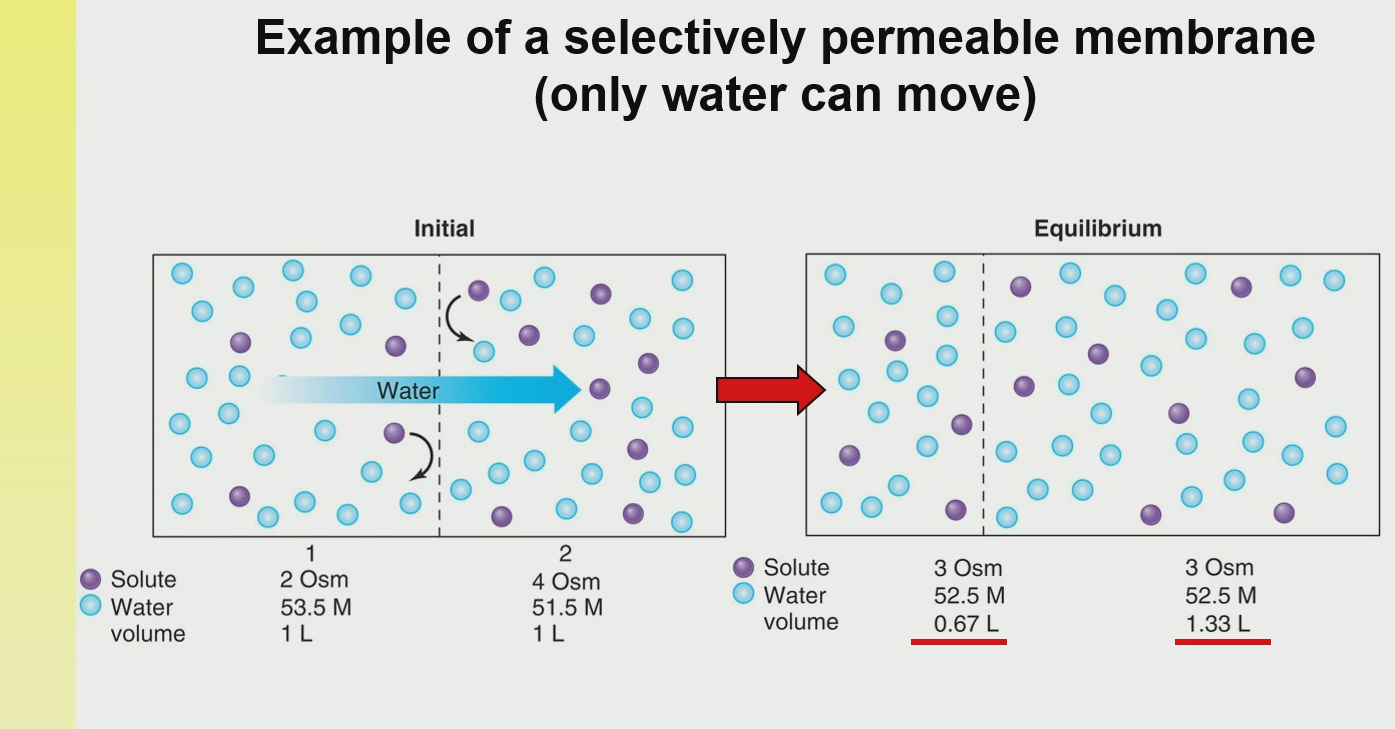
What is osmosis?

The total number of particles in a solution is measured in terms of?
Osmoles
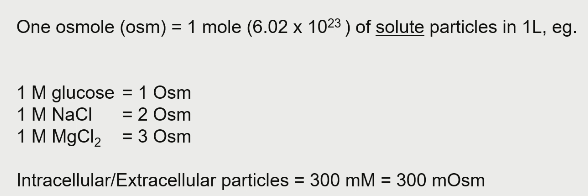
Osmoles is independent to?
Molecular weight

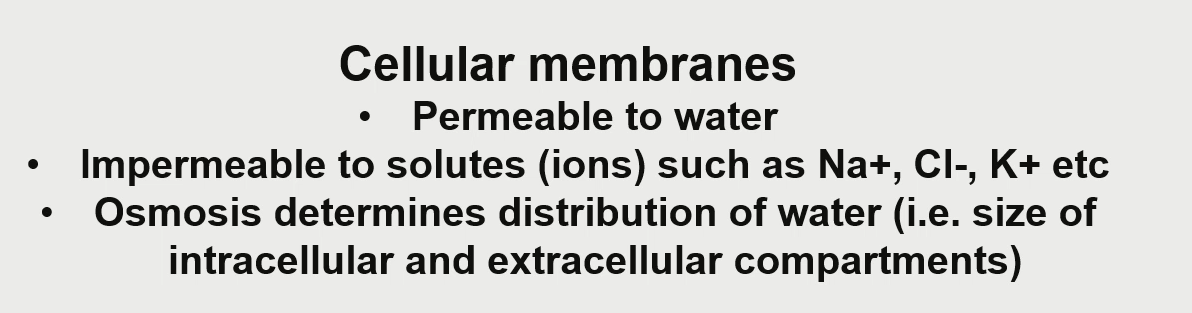
Cellular membrane
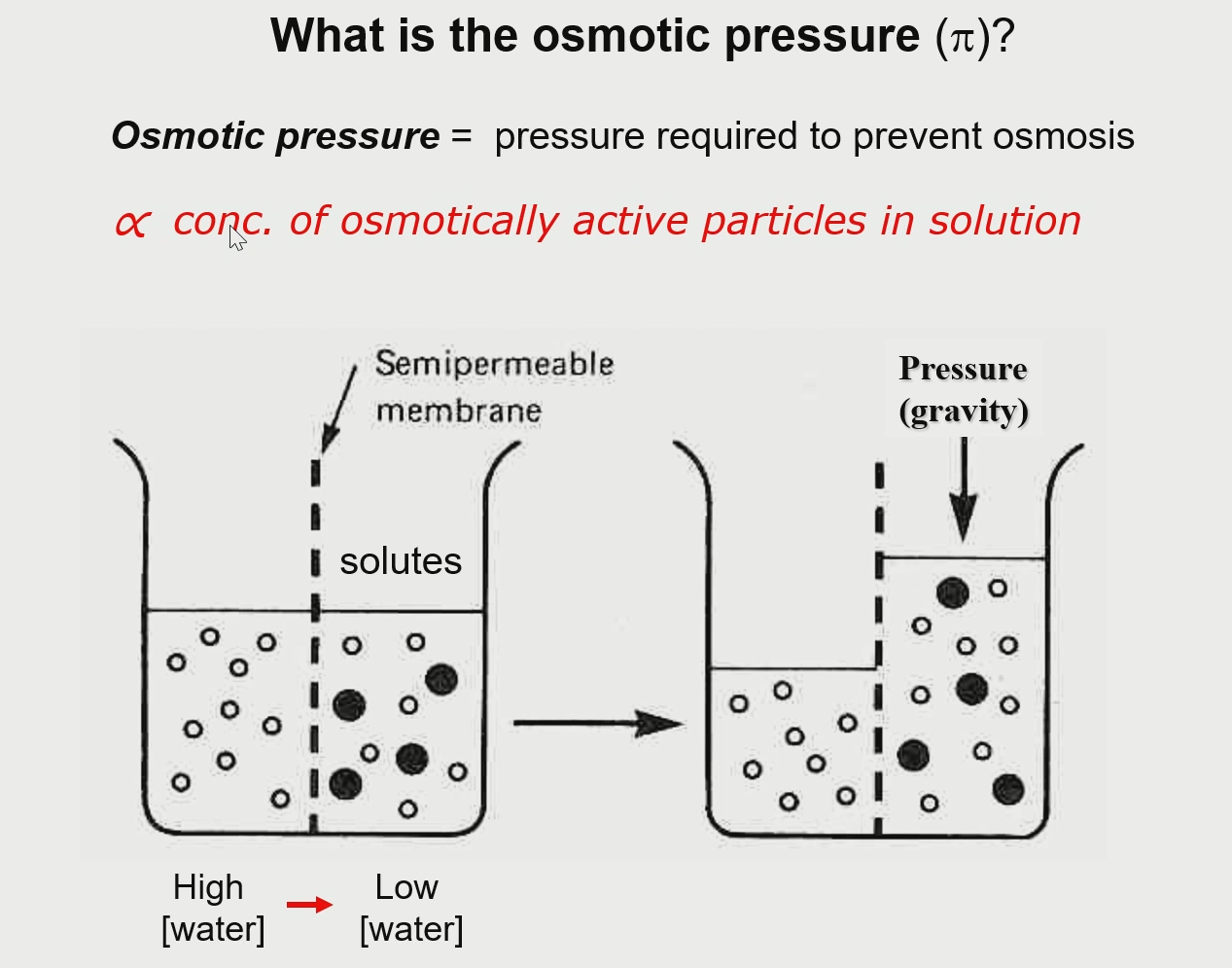
What is osmotic pressure?
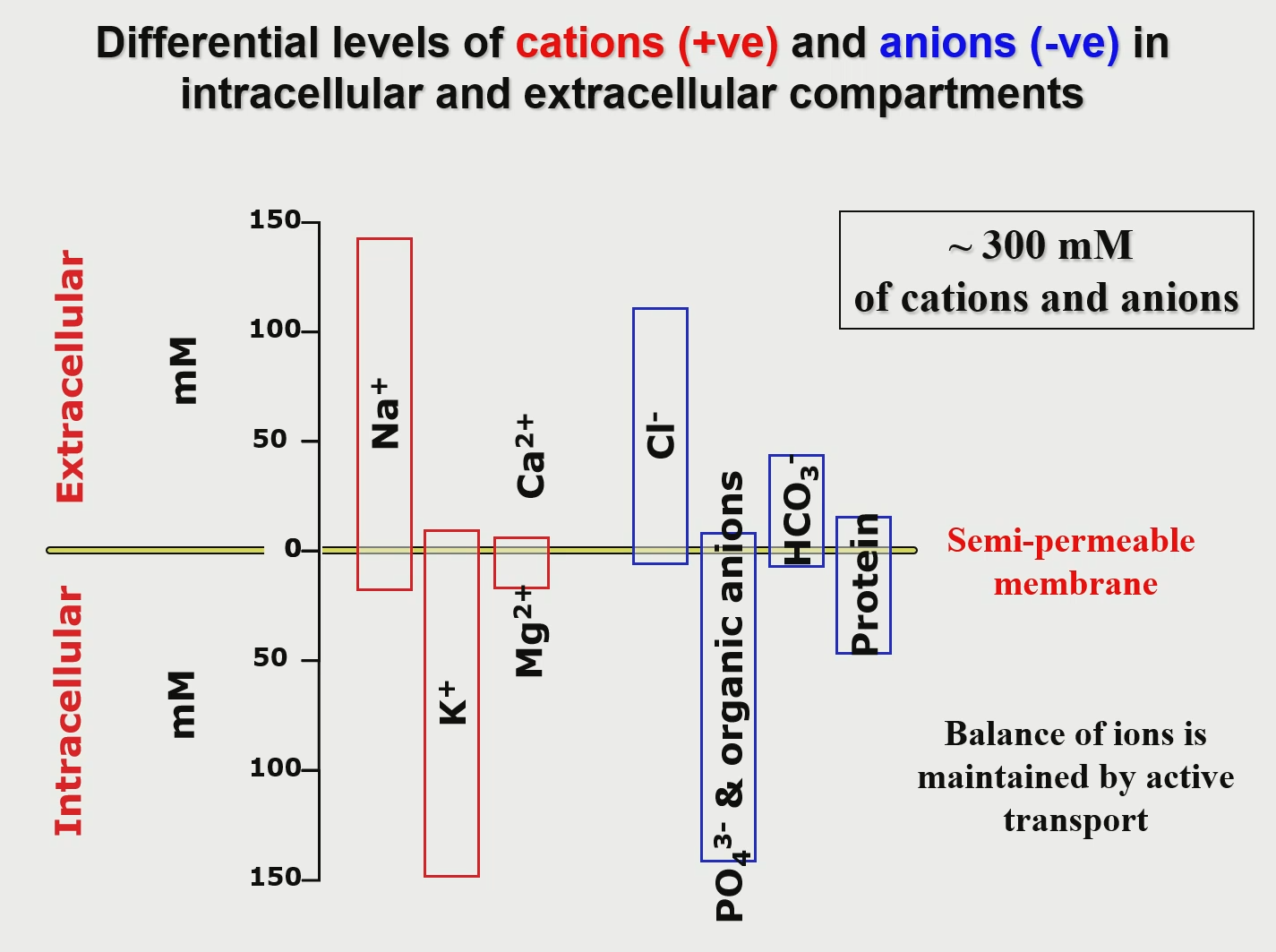
If the extracellular fluid volume is the same as intracellular it is referred to as?
Isotonic (no change)
If the extracellular fluid volume is less then the intracellular it is referred to as?
Hypotonic (cell swells) ; liquid moves in
If the extracellular fluid is more than the intracellular it is referred to as?
Hypertonic (cell shrinks) ; fluid moves out
What is the colloid osmotic pressure?
Capillary membrane is semi-permeable
Permits diffusion of ions, water, oxygen, nutrients and waste
Not proteins
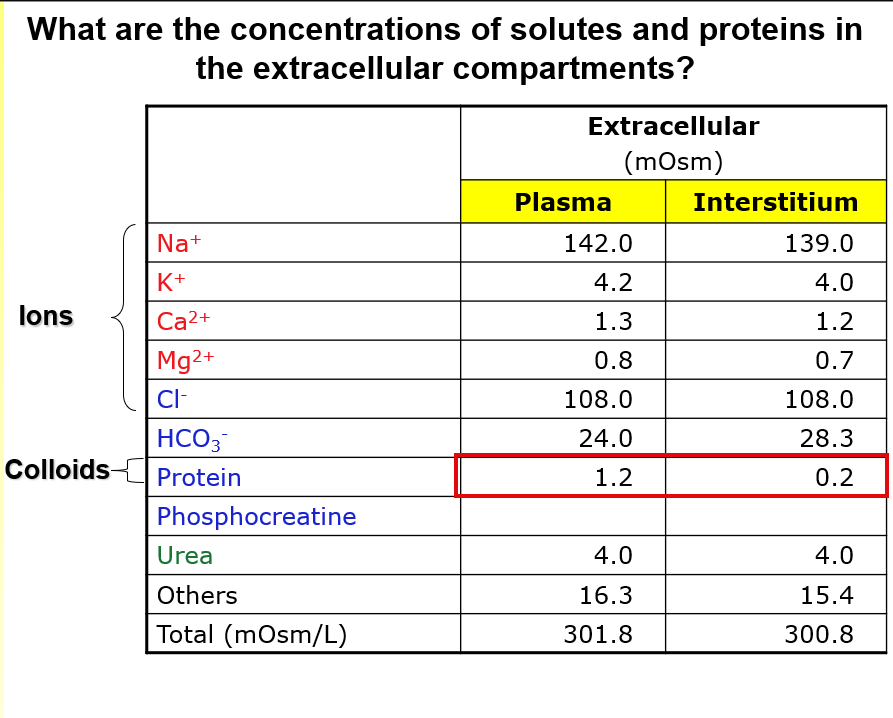
only difference is plasma contains 6x the conc of protein
Colloid osmotic pressure
Pressure exerted by the higher levels of protein in the plasma compared with the interstital fluid
Draws water back into plasma by osmosis (adsorption)
28mmHg (plasma) - 3mmHg (interstitium) = 25mmHg
Hydrostatic Pressure
It is the force exterted by the blood upon the capillary walls i.e blood pressure
It drives blood from plasma into interstitial space
Pressure drops as the blood moves through the capillaries (35mmHg to 15mmHg)
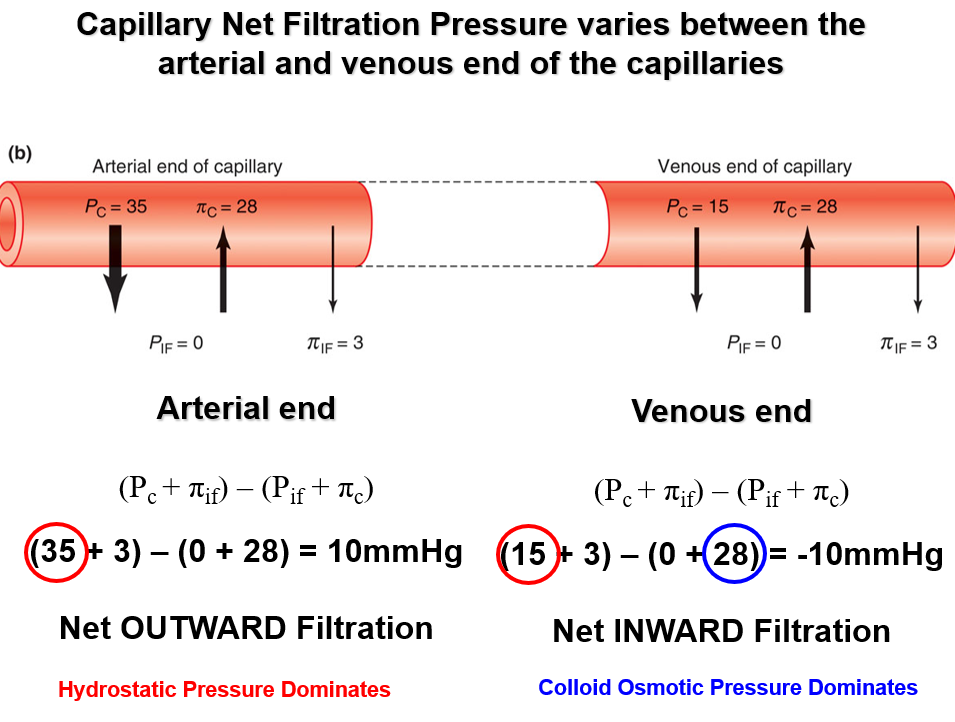
What system in our body removes liquid/fluid from capillaries?
The lymphatic system
Name given to the removal of fluid from the plasma
Bulk flow
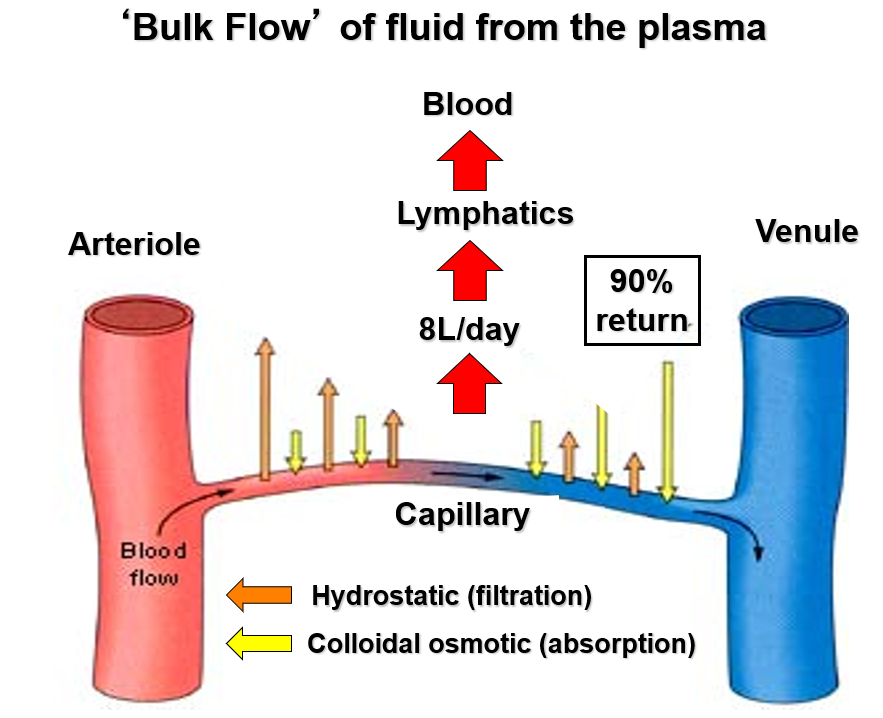
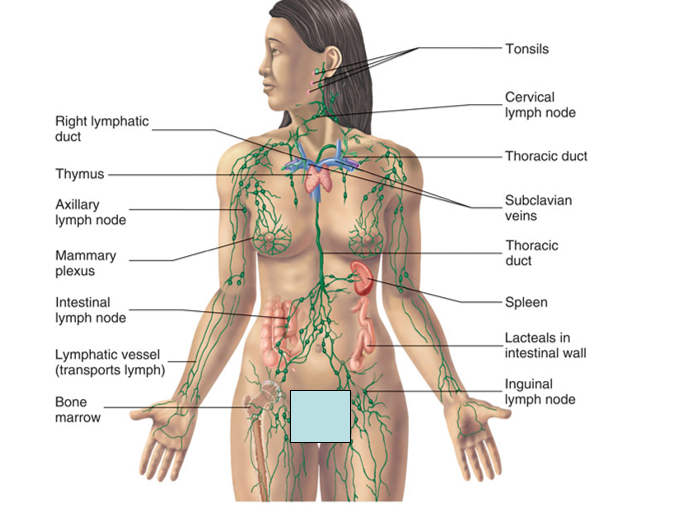
Lymphatic system
Lymph system is parallel vascular system with two major functions: draining fluid from the tissues and returning to the cardiovascular system and maintenance of the immune response
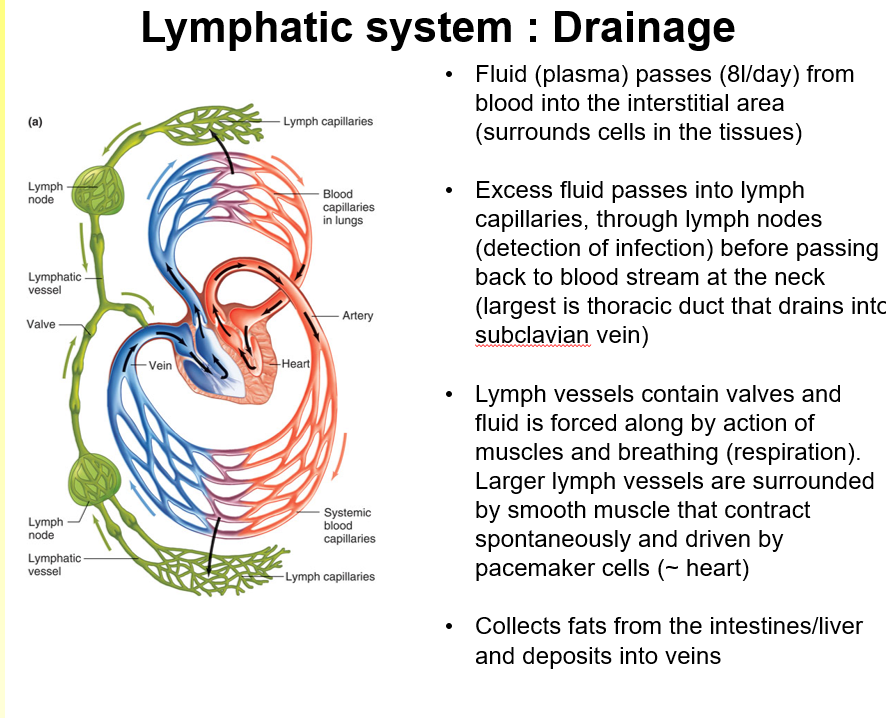
How much fluid (plasma) passes a day?
8L
Where does fluid (plasma) pass from?
The blood into the interstitial area (surrounds cells in the tissues)
Excess fluid then passes into what?
Lymph capillaries
After passing through the lymph capillaries is then passes through the?
Lymph nodes (detection of infection) before passing back to blood stream at the neck (largest is thoracic duct that drains into subclavian vein)
What do lymph vessels contain?
Valves
What do the valves then cause?
Fluid being forced along by action of muscles and breathing (respiration).
Larger lymph vessels are surrounded by what?
Smooth muscle which contract spontaneously and are driven by pacemaker cells (~ heart)
What does the lymphatic system also collect?
Fats from the intestines/liver and deposits into veins
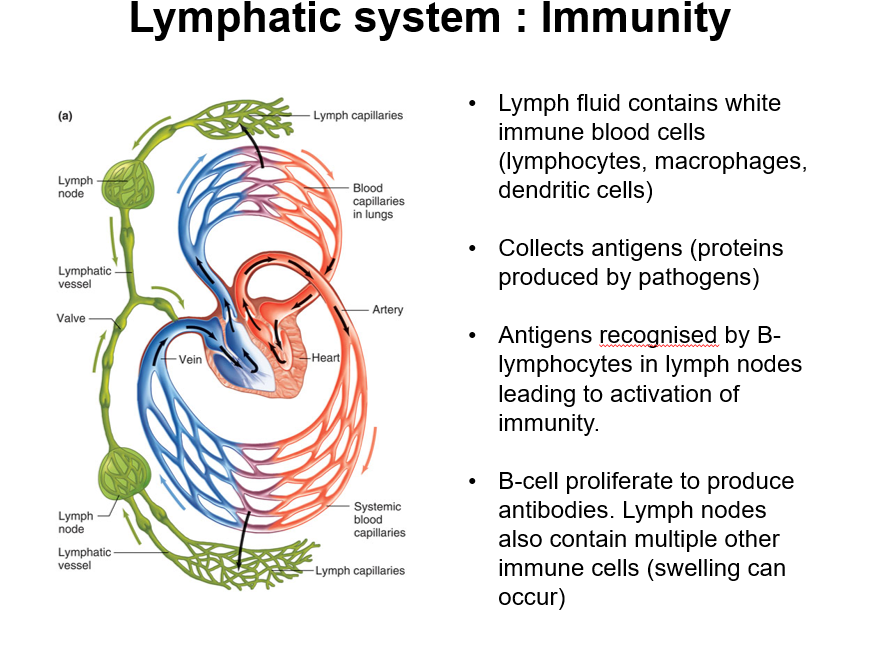
Lymph fluid contains what cells?
White immune blood cells (lymphocytes, macrophages, dendritic cells)
What would the lympatic system collect?
Antigens (proteins produced by pathogens)
Antigens recognise what lympohcyte?
B-lymphocytes in lymph nodes leading to activation of immunity
B-cells proliferate to produce?
Antibodies as lymph nodes also contain multiple other immune cells (swelling can occur)
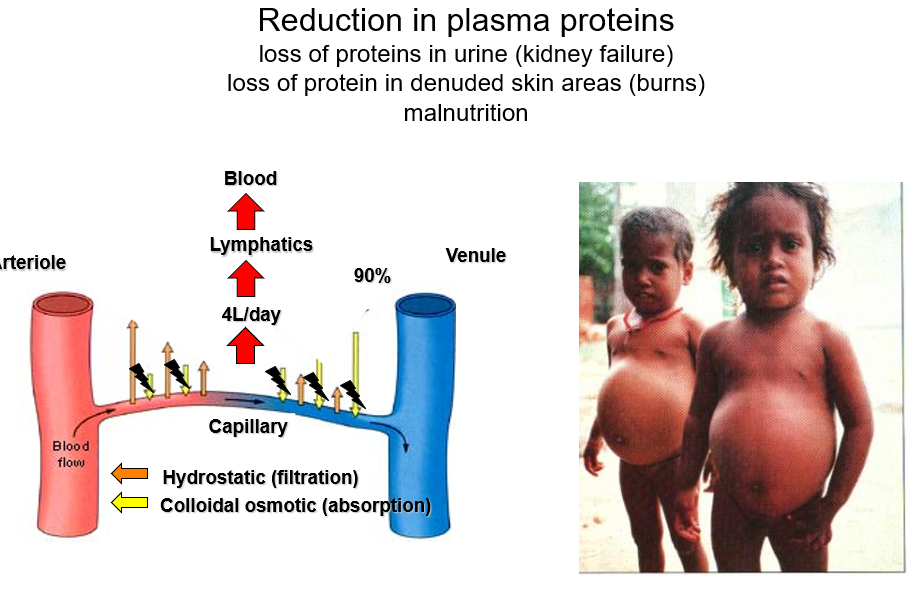
What happens during heart failure?
Fluid leaves capillaries
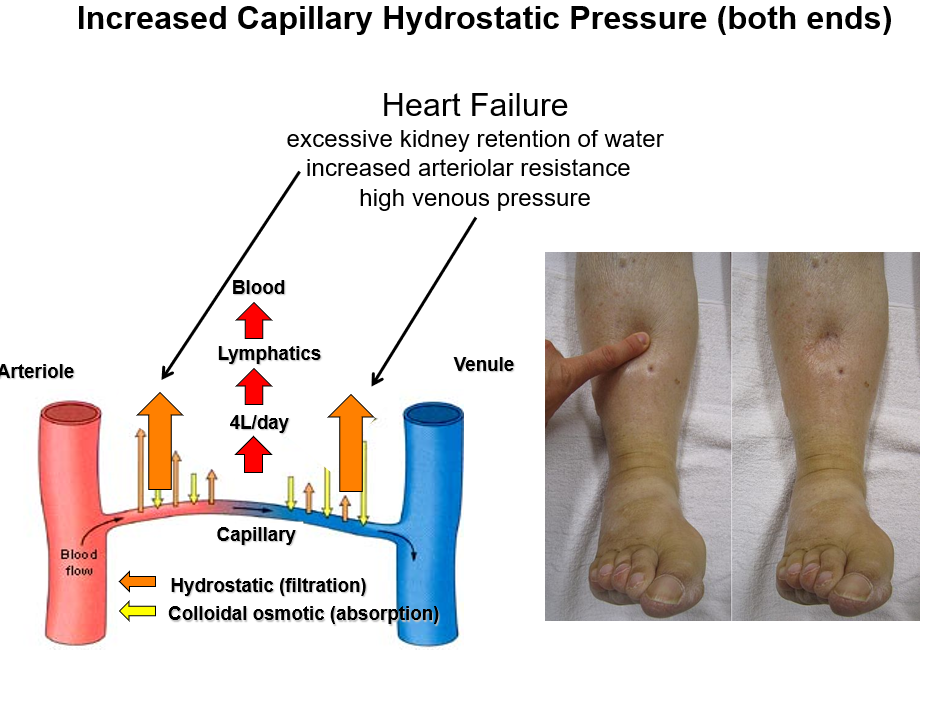
Decrease in colloid osmotic pressure
Again more liquid being pushed out; liquid isnt sucked back into the blood
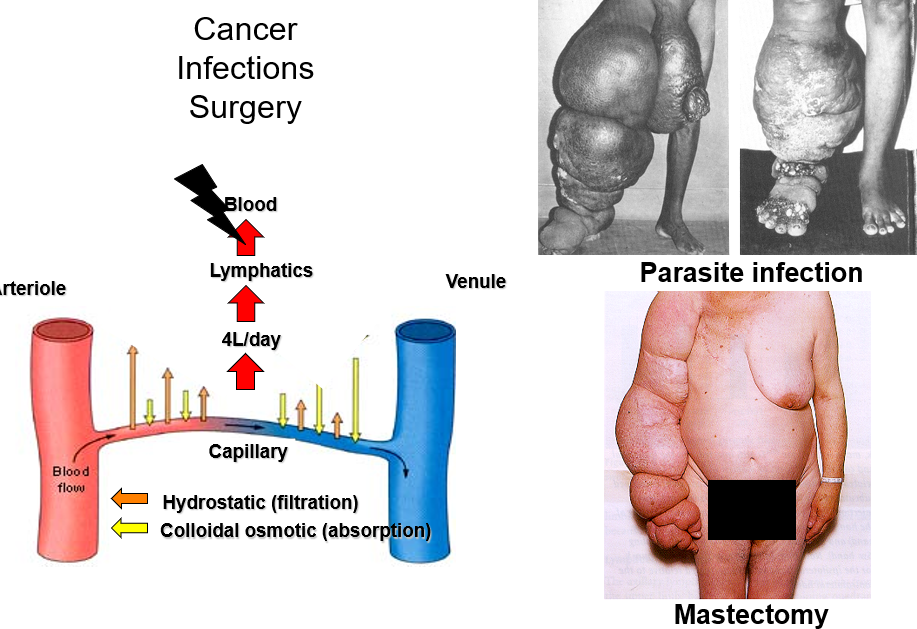
Blockage of lymph nodes
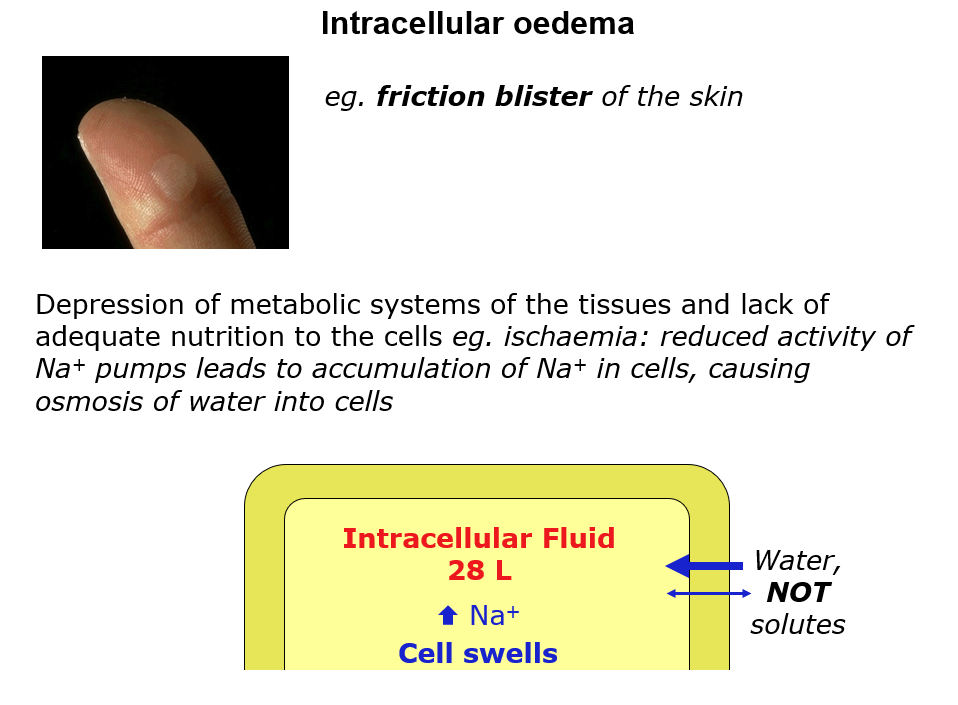
Intracellular oedema
Loss of ion within intra and extracellular environment
Summary