art vocab good
 Call Kai
 Learn
Learn Practice Test
 Spaced Repetition
 Match
Match Flashcards
 Knowt Play
1/80

There's no tags or description
Looks like no tags are added yet.
Name | Mastery | Learn | Test | Matching | Spaced | Call with Kai |
|---|
No analytics yet
Send a link to your students to track their progress
81 Terms
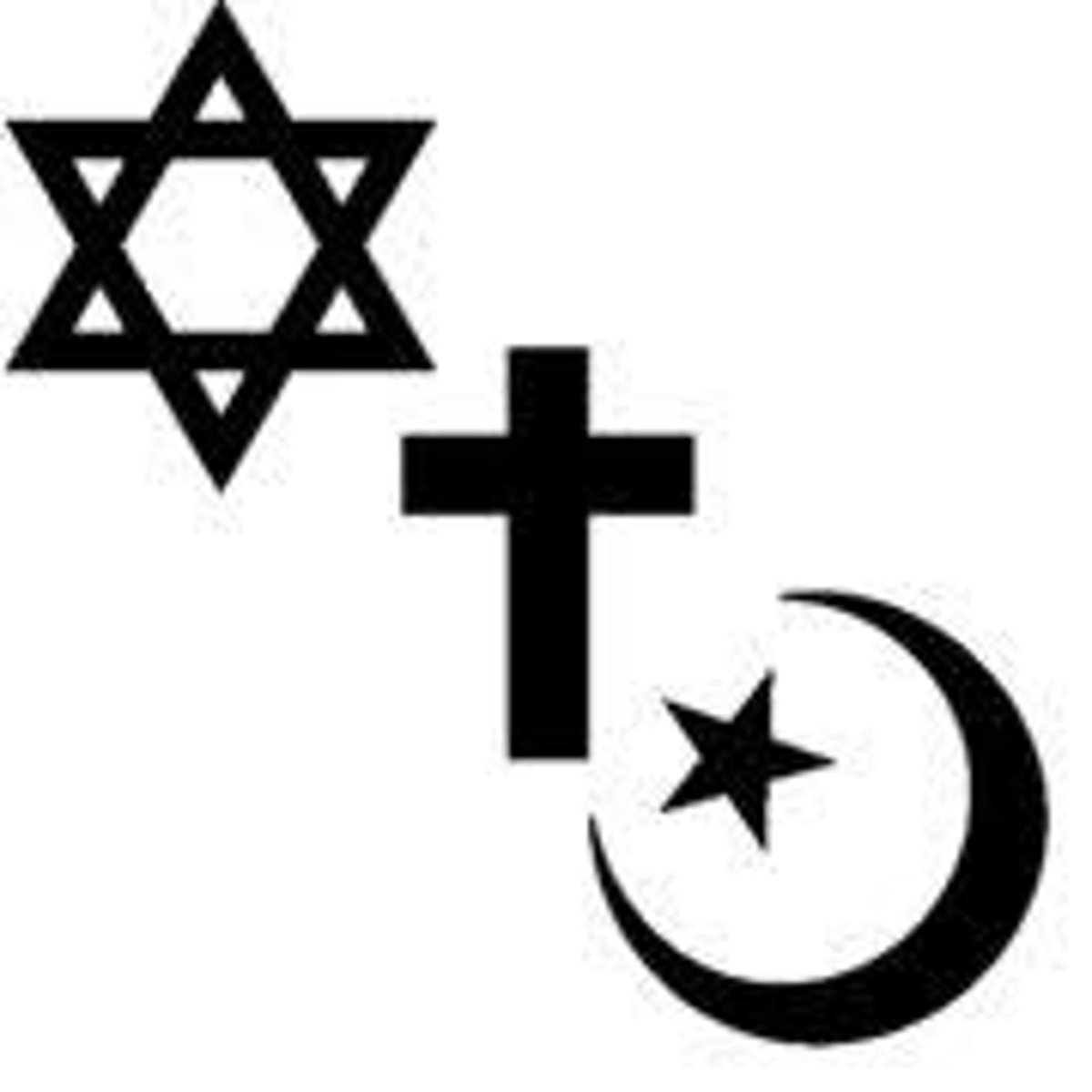
Abrahamic religions
A group of monotheistic religions—Judaism, Christianity, and Islam—that trace their spiritual lineage to the patriarch Abraham.
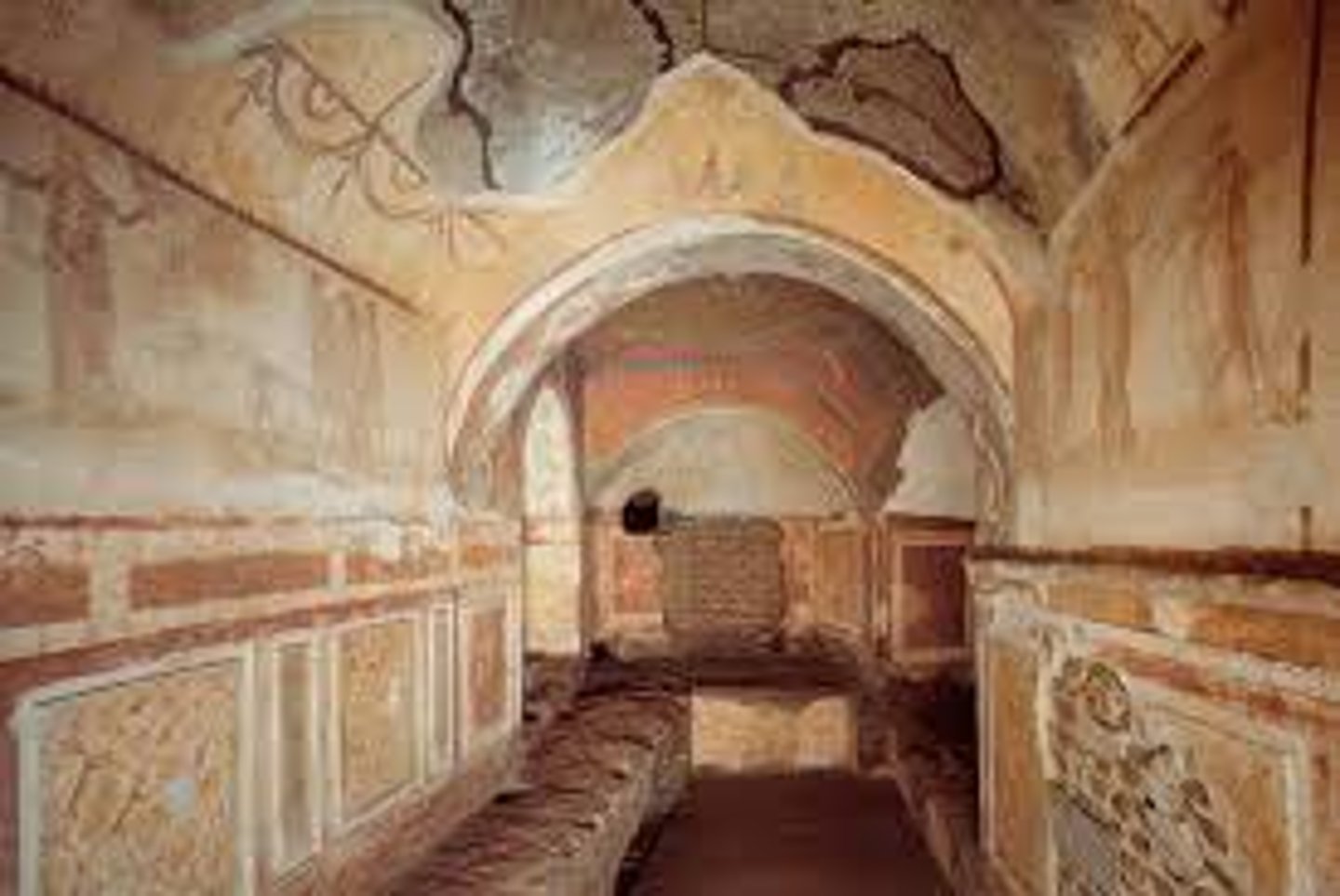
Catacomb
An underground burial complex consisting of passageways lined with tombs, used especially by early Christians in Rome.
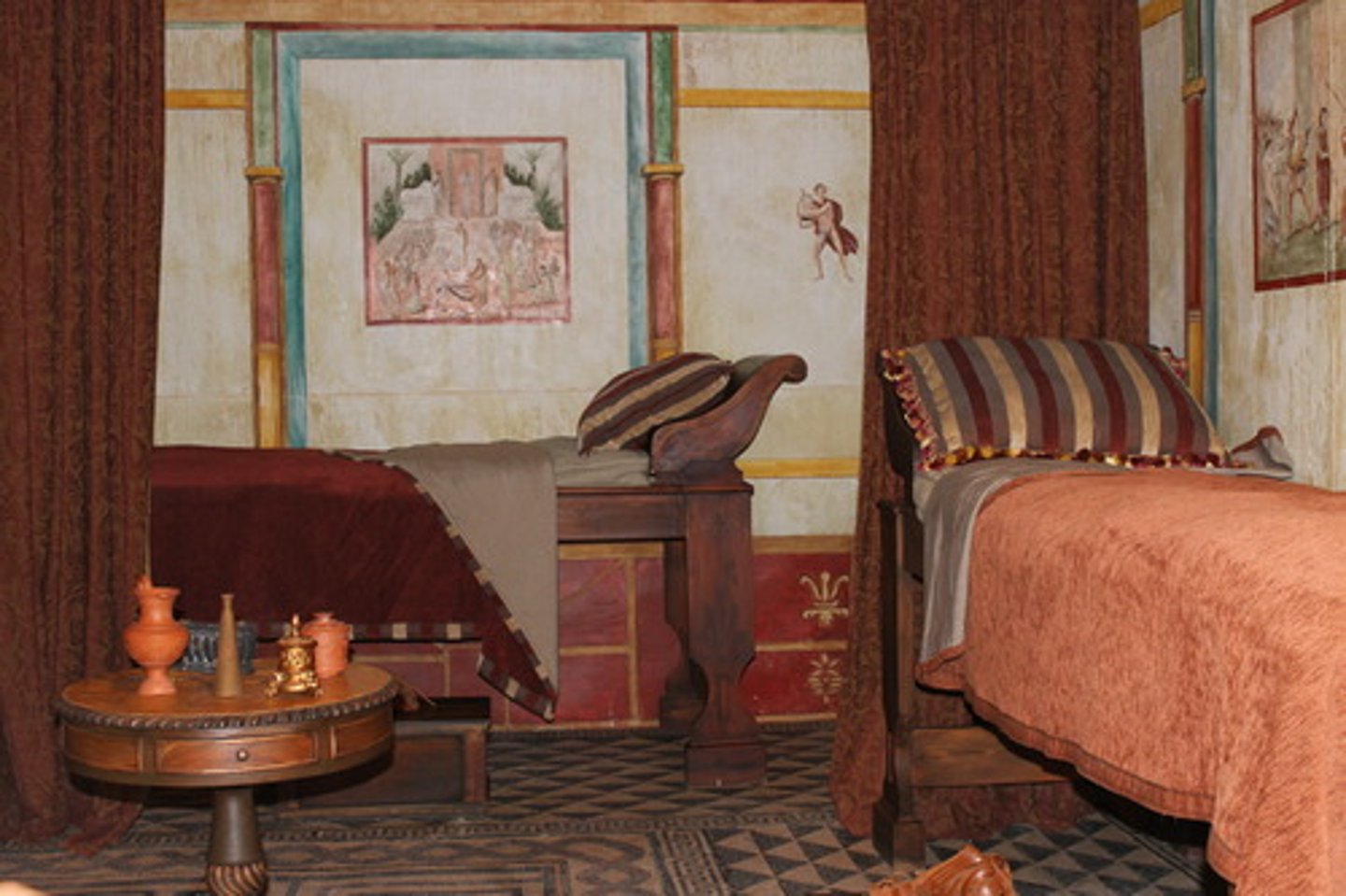
Cubiculum (cubicula)
A small chamber within a Roman house or catacomb, often used as a bedroom or burial space.
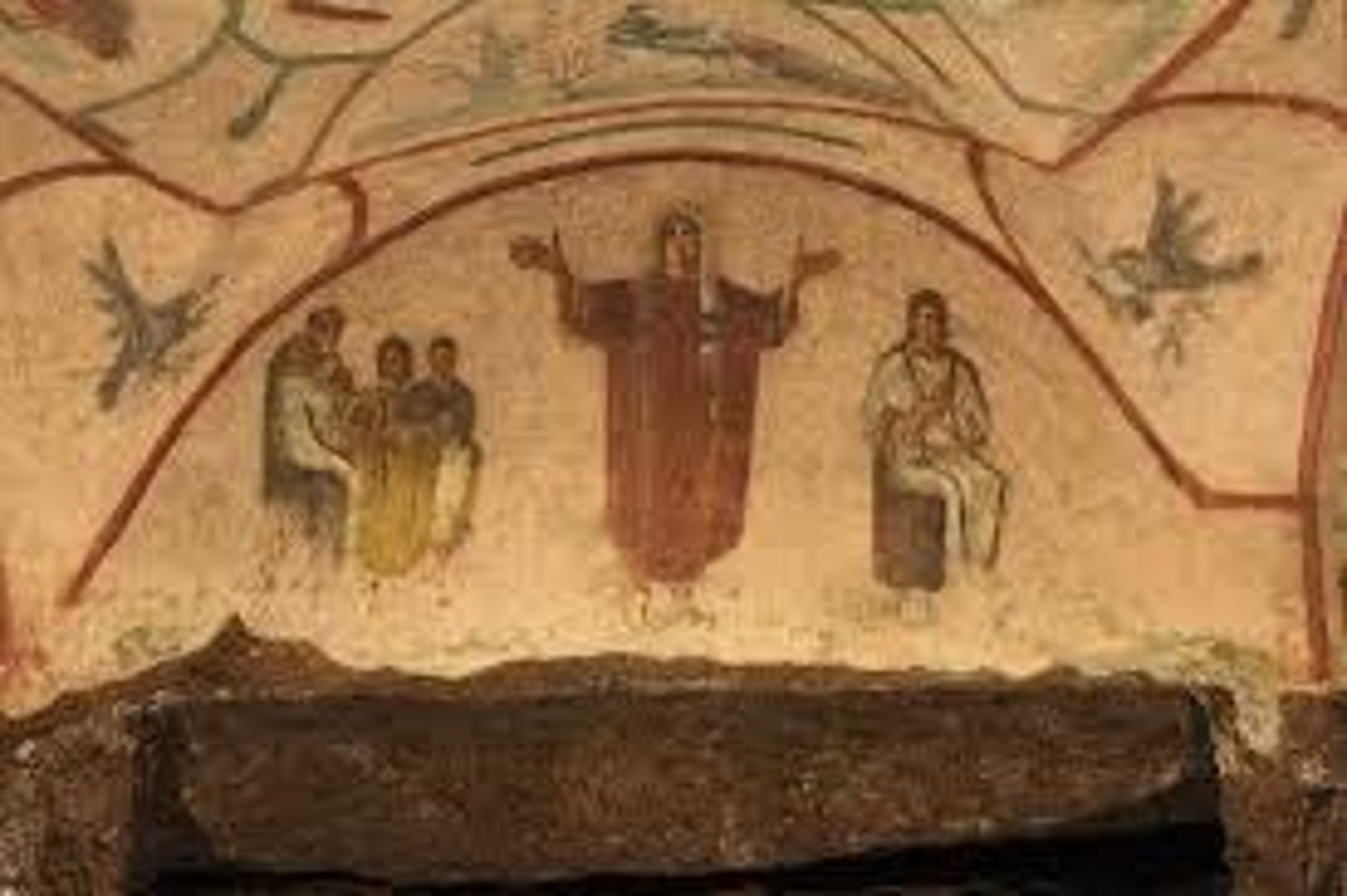
Orant
A figure shown standing with arms raised in prayer, a pose adopted by early Christians from earlier Roman funerary imagery where it signified piety and communication with the divine.
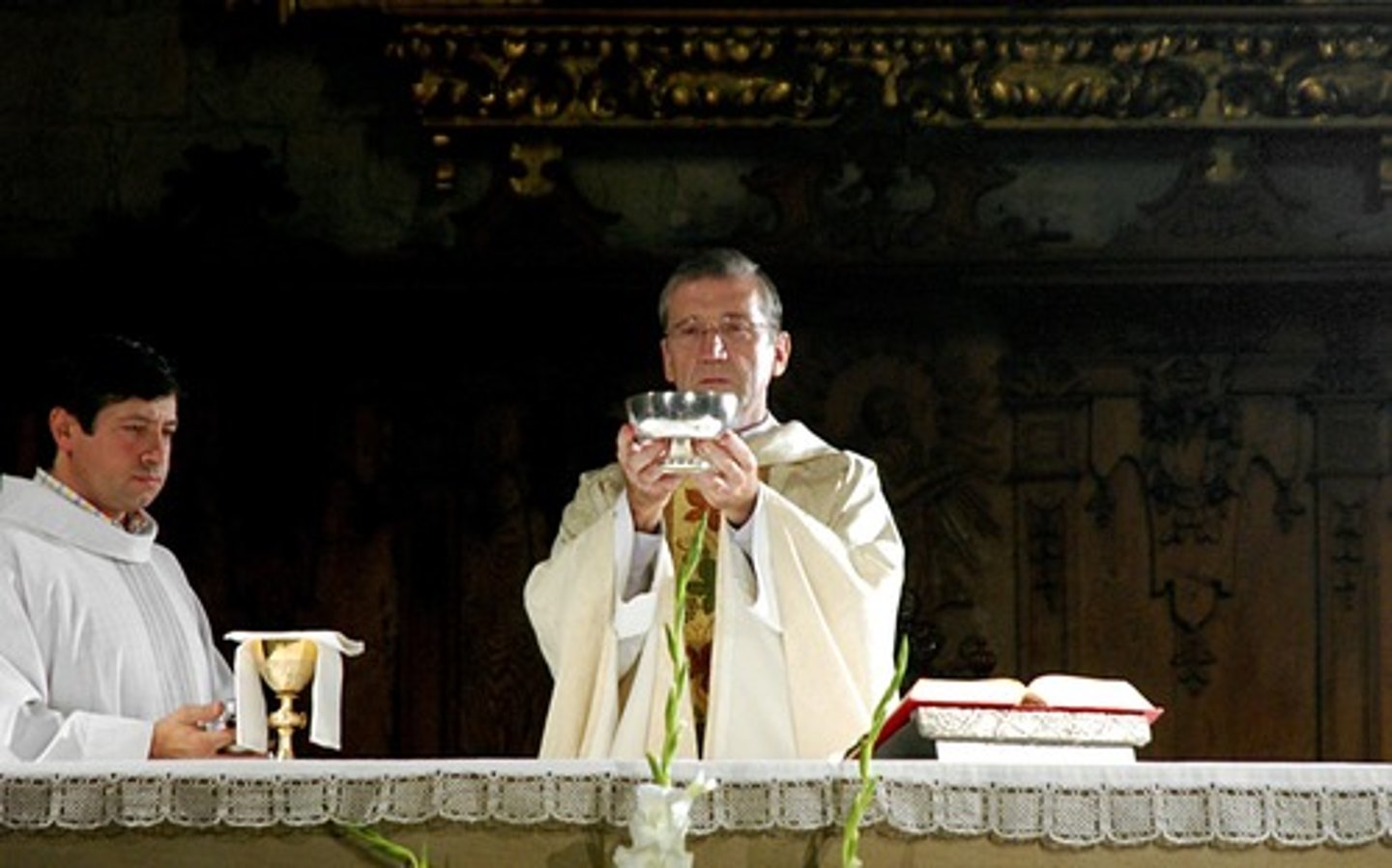
Eucharist
A central Christian ritual commemorating the Last Supper, in which bread and wine symbolize—or in some traditions become—the body and blood of Christ.
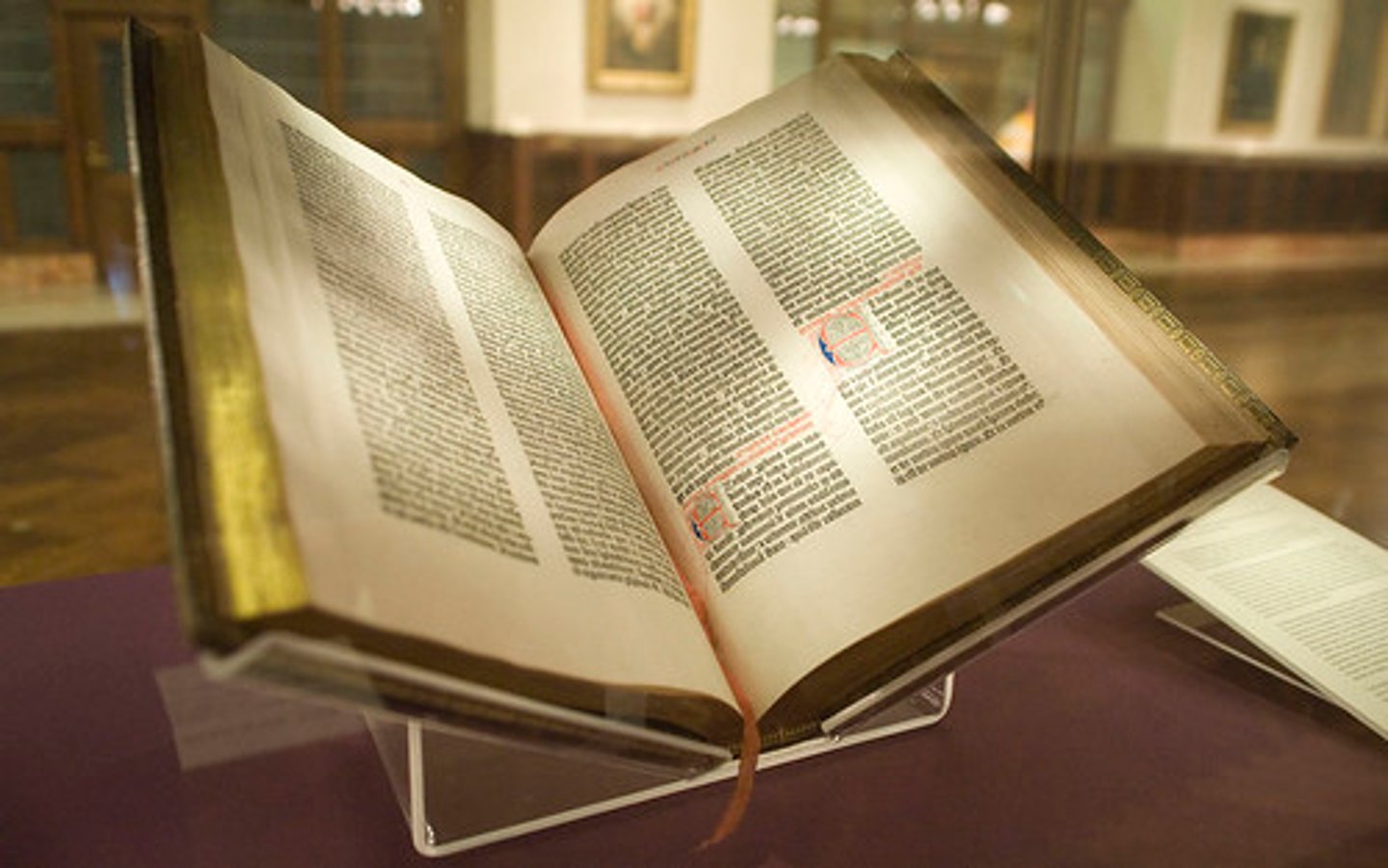
Liturgy
A prescribed set of public prayers, rituals, and ceremonial actions used in communal worship within a religious tradition.
Typology
A method of interpretation in which earlier events or figures are understood as prefigurations of later ones, especially in biblical art and theology.
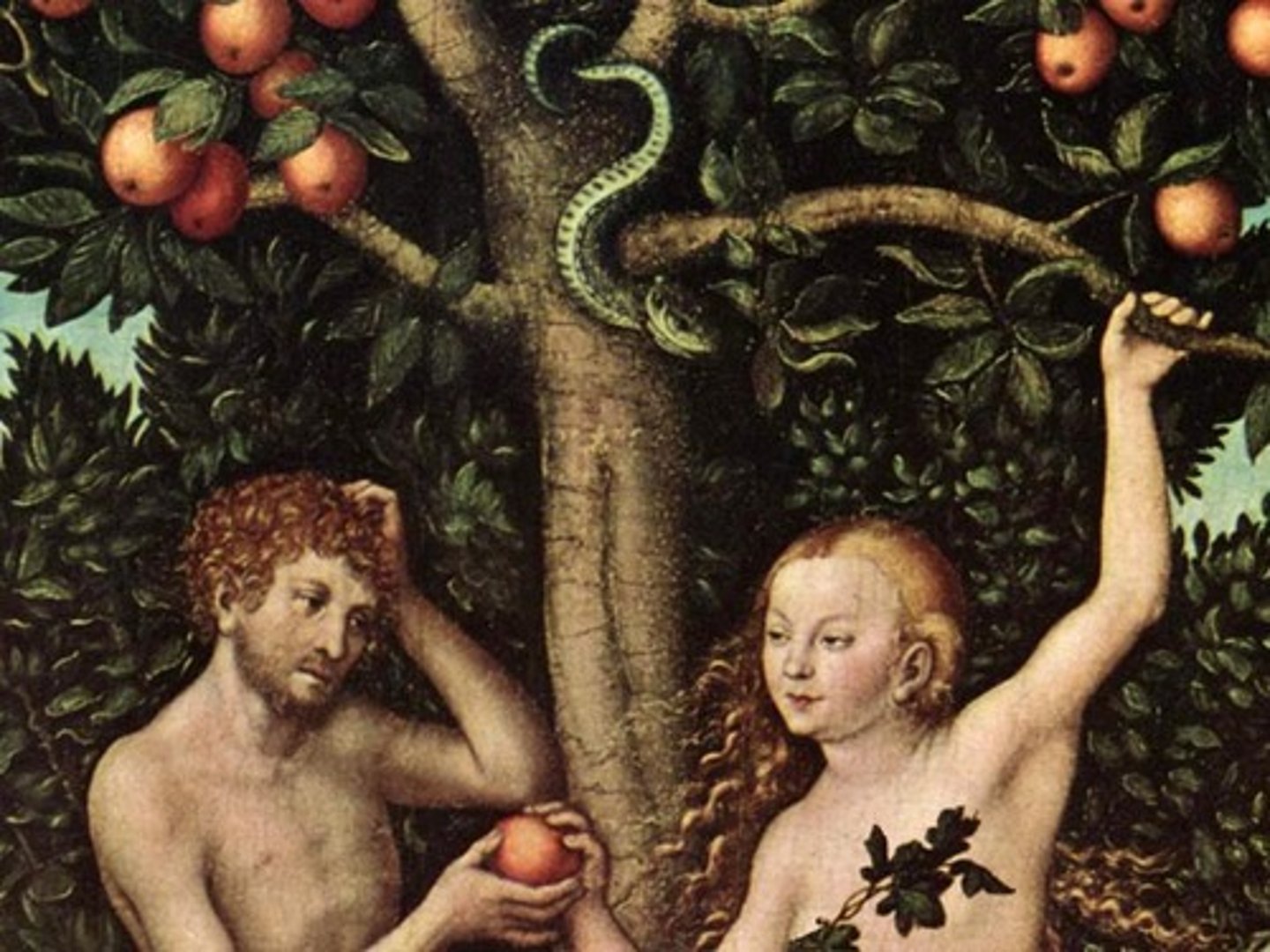
Original Sin
The Christian doctrine that humanity inherits a fallen condition as a result of Adam and Eve's disobedience in the Garden of Eden.
Narthex
An entrance hall or vestibule located at the western end of an early Christian church, preceding the nave.
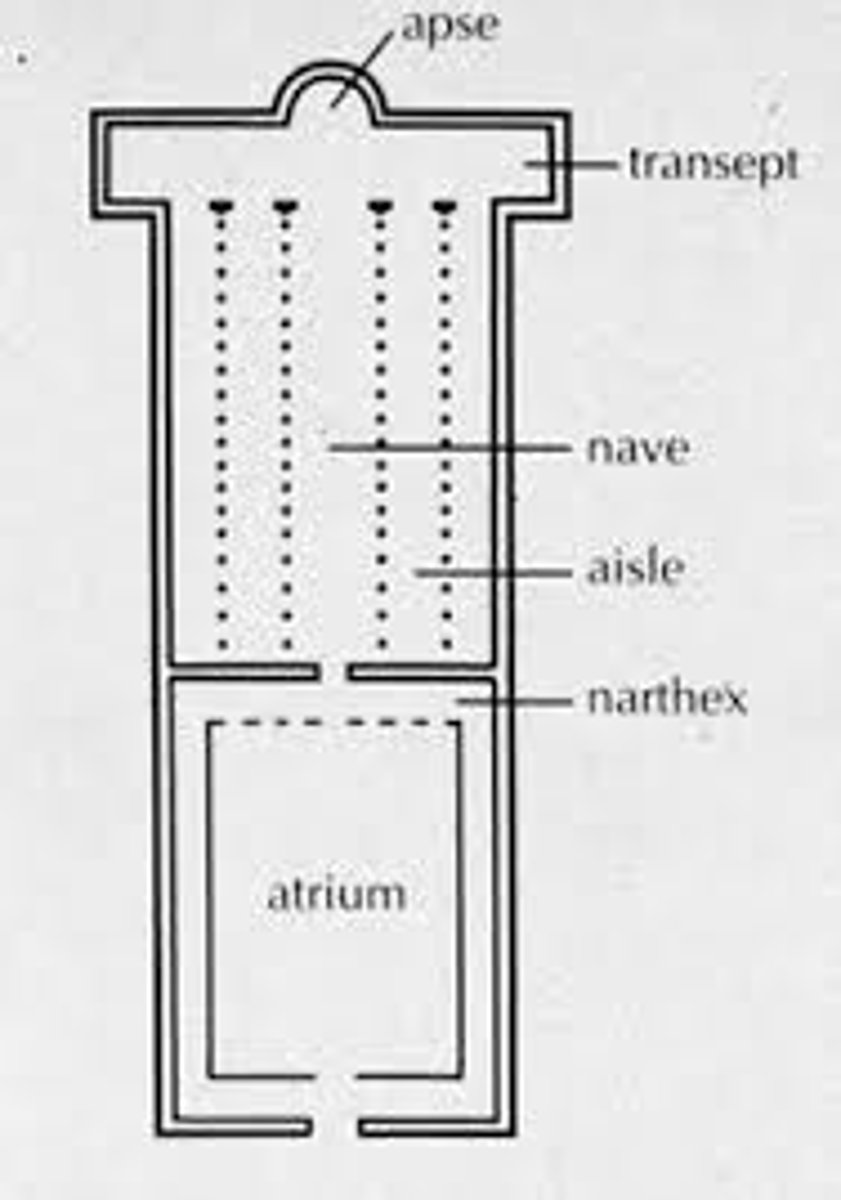
Transept
A transverse arm of a church that crosses the nave, creating a cruciform ground plan.
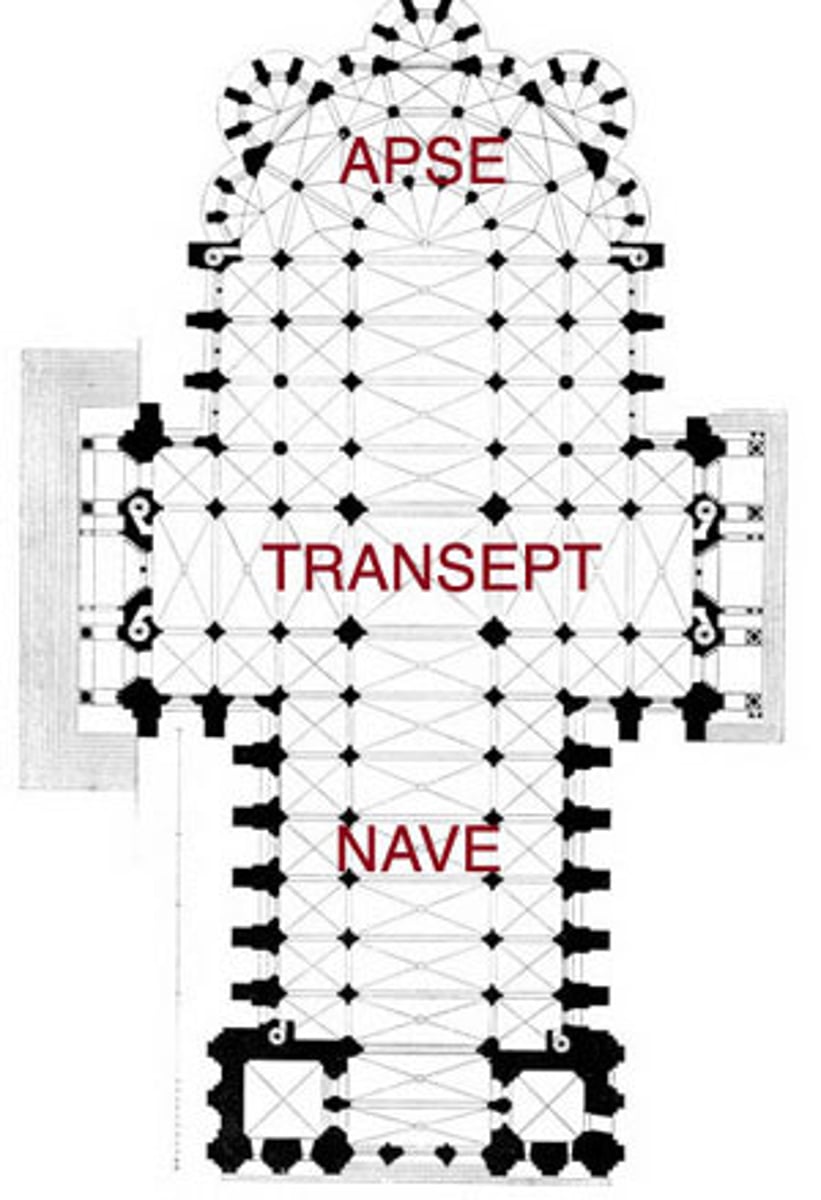
Nave
The central longitudinal space of a basilica or church, extending from the entrance to the apse and typically flanked by aisles.
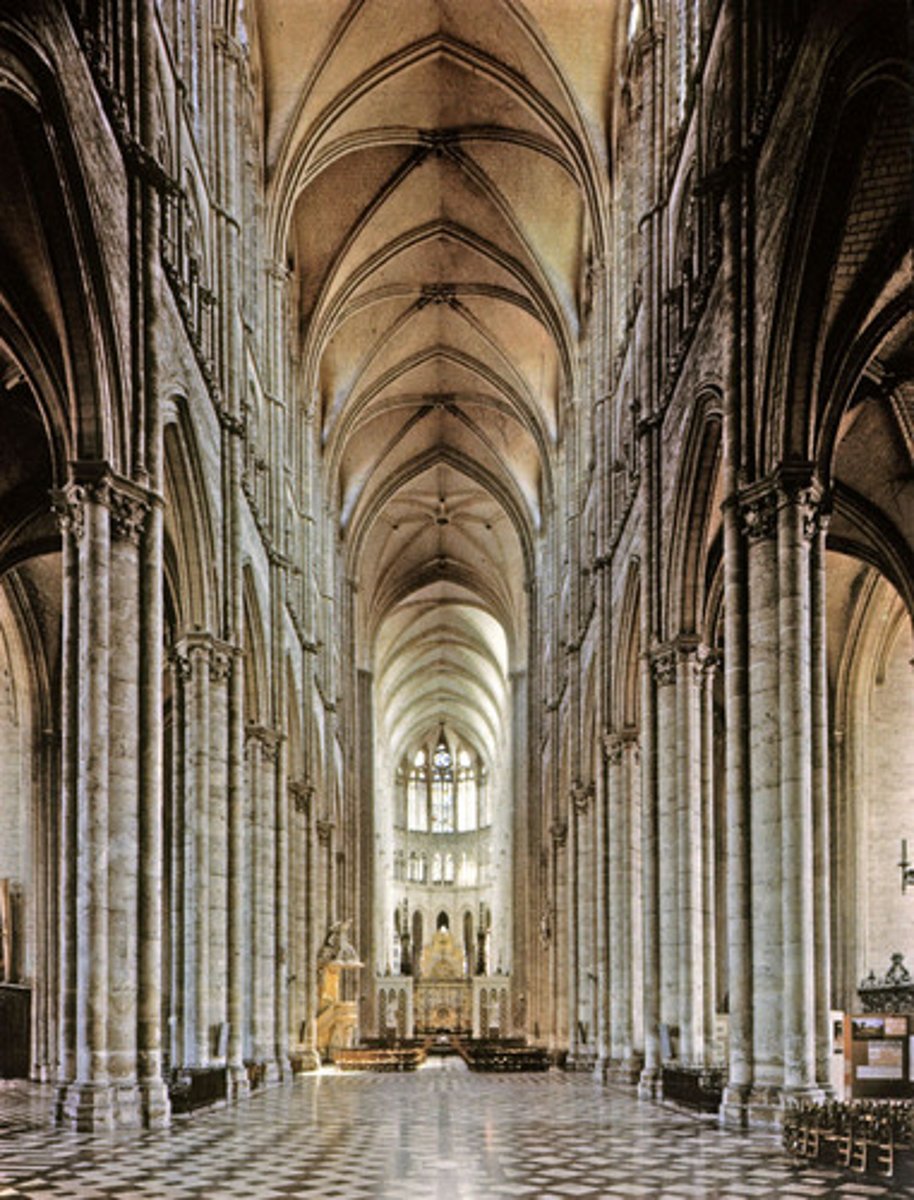
Latin-Cross plan (or longitudinal plan)
A church floor plan in which a long nave is intersected by a shorter transept, forming the shape of a cross.
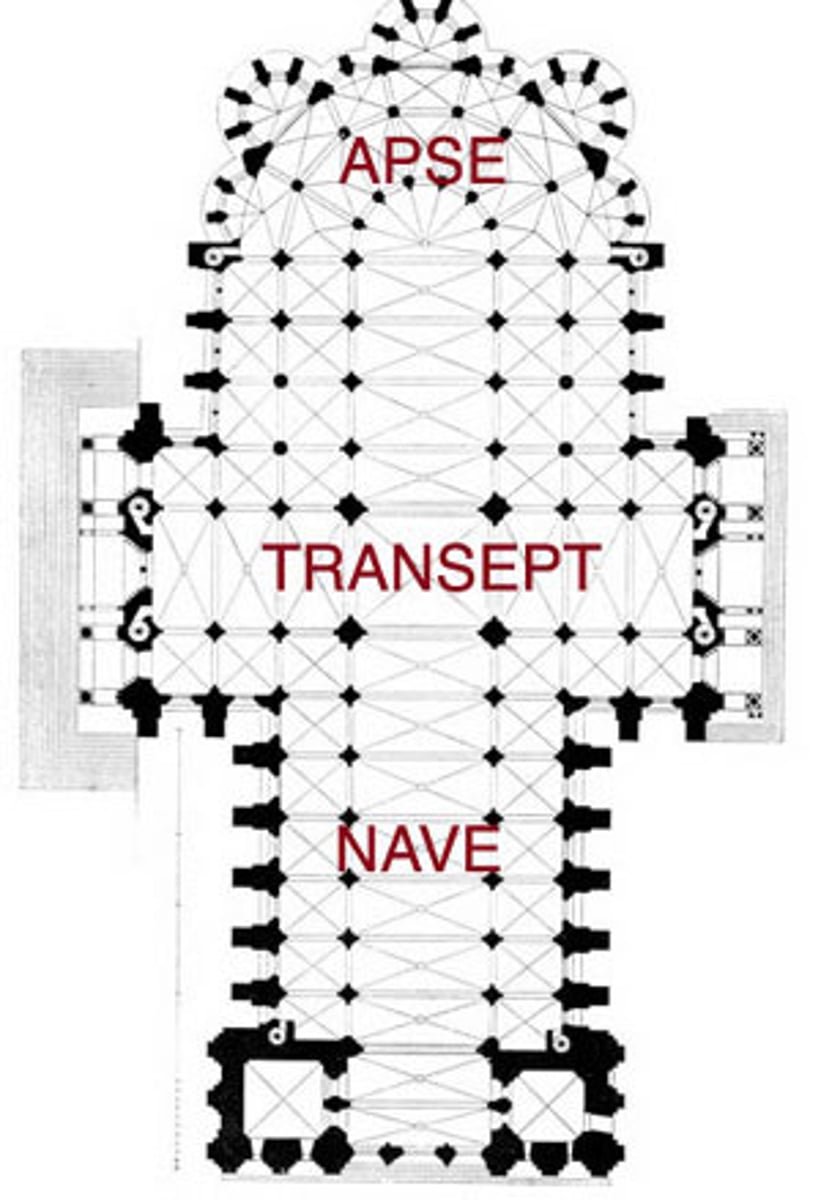
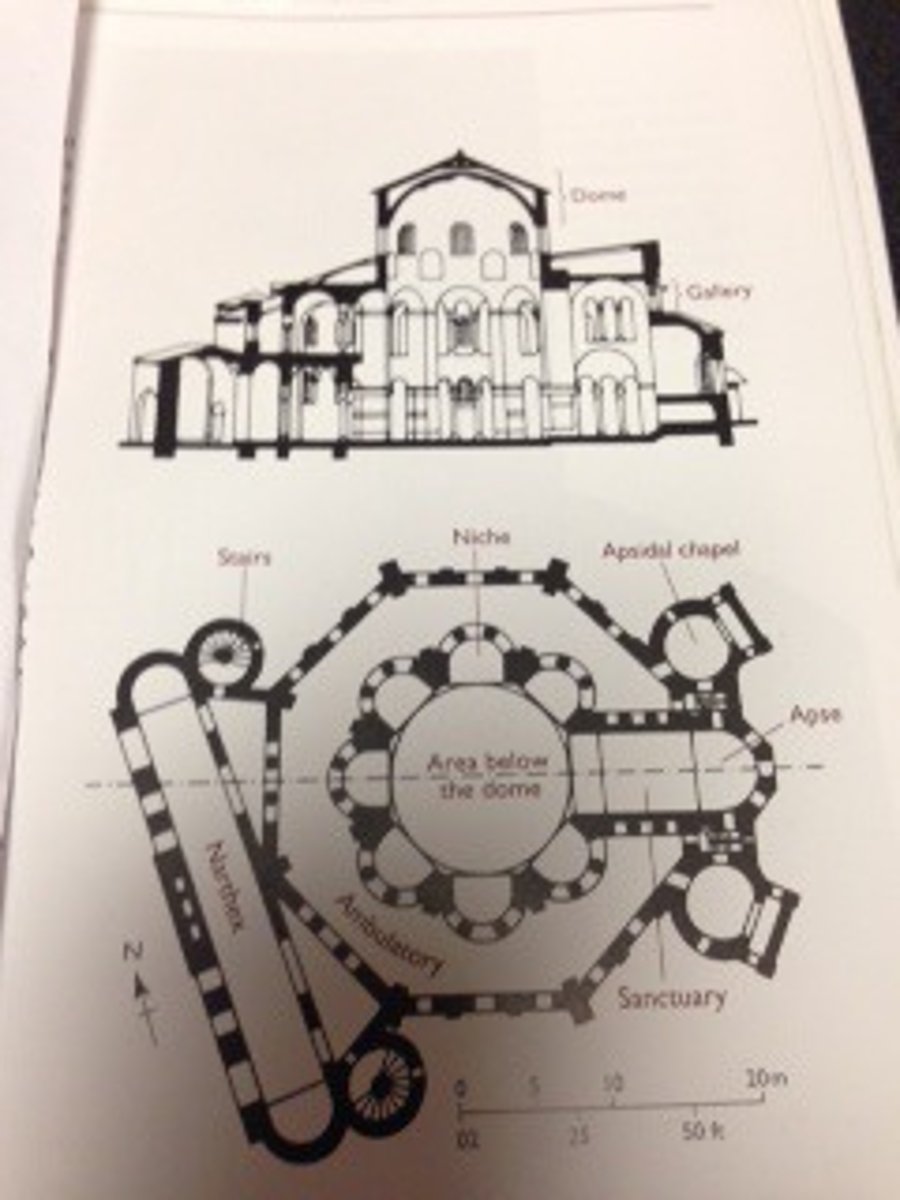
Centrally planned church
A symmetrical church plan organized around a dominant central space surrounded by an ambulatory based on Late Roman imperial, funerary, and liturgical architecture.
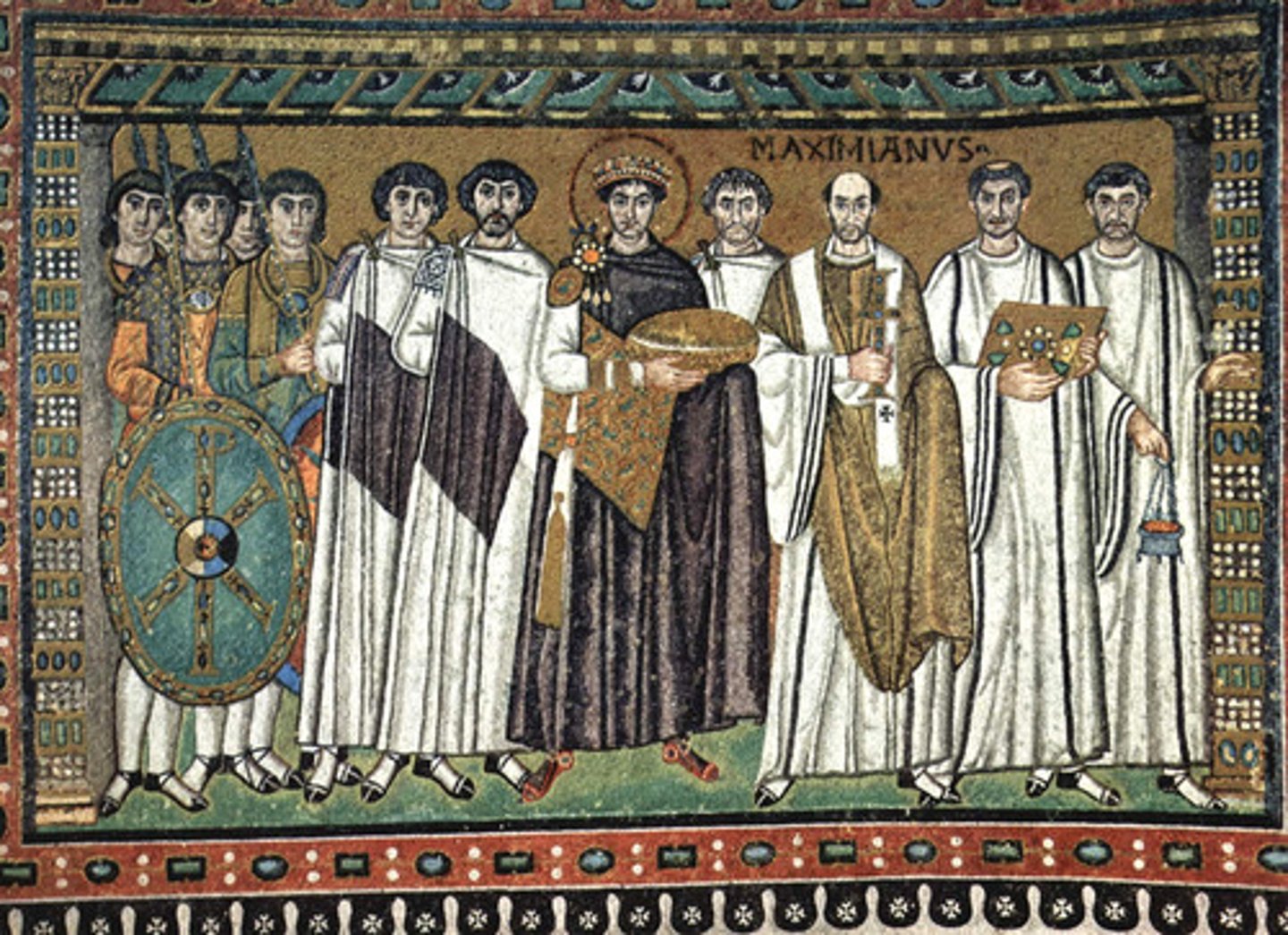
Mosaic
An image or pattern created by assembling small pieces of colored stone, glass, or other materials into a surface.
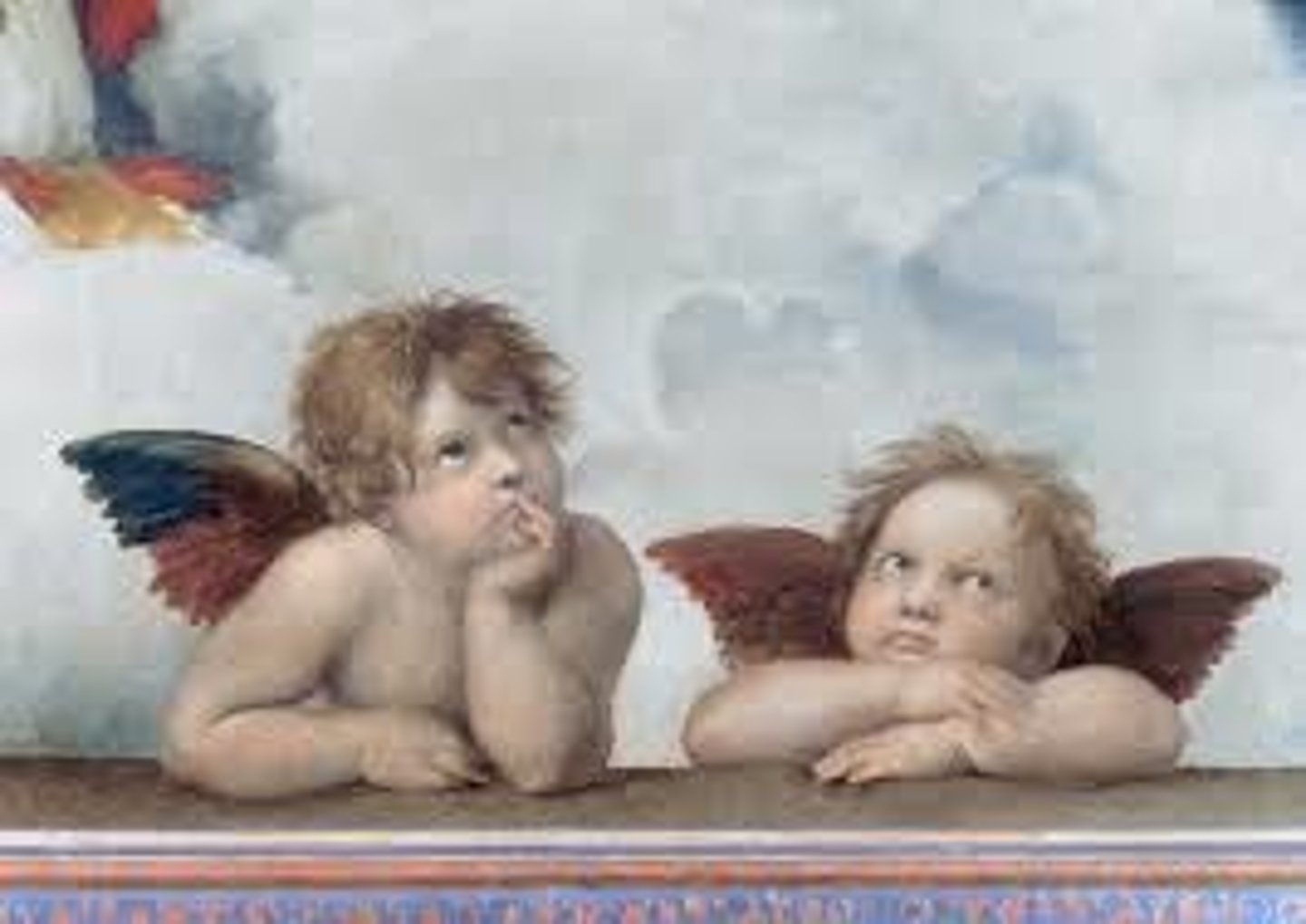
Putto (singular), Putti (plural)
A small, often nude child figure—sometimes winged—used in Greco-Roman and later art as a decorative or symbolic motif.
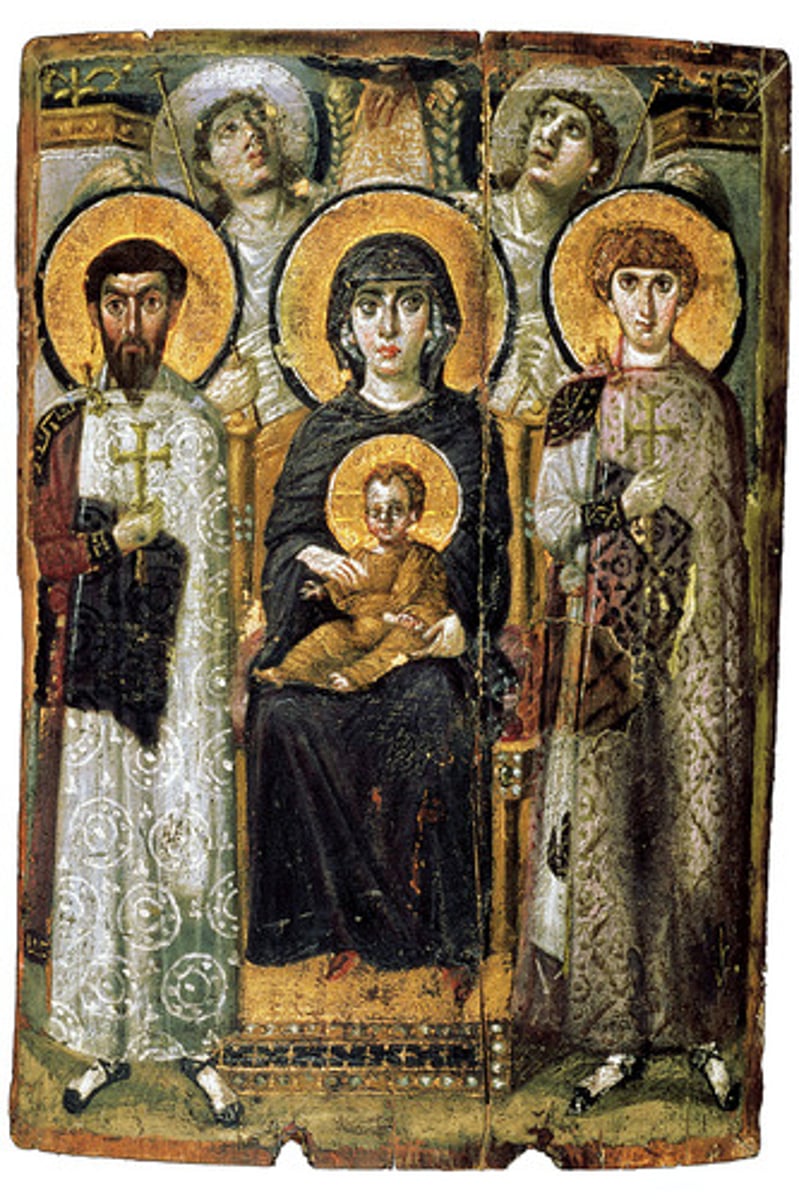
Icon
A sacred image of Christ, the Virgin Mary, or a saint used as an aid to devotion, especially in Eastern Christian traditions, and venerated as a conduit to the holy figure represented.
Aniconic
a religious tradition or work of art that avoids the depiction of divine beings in human form, and in stricter cases prohibits all figural imagery.
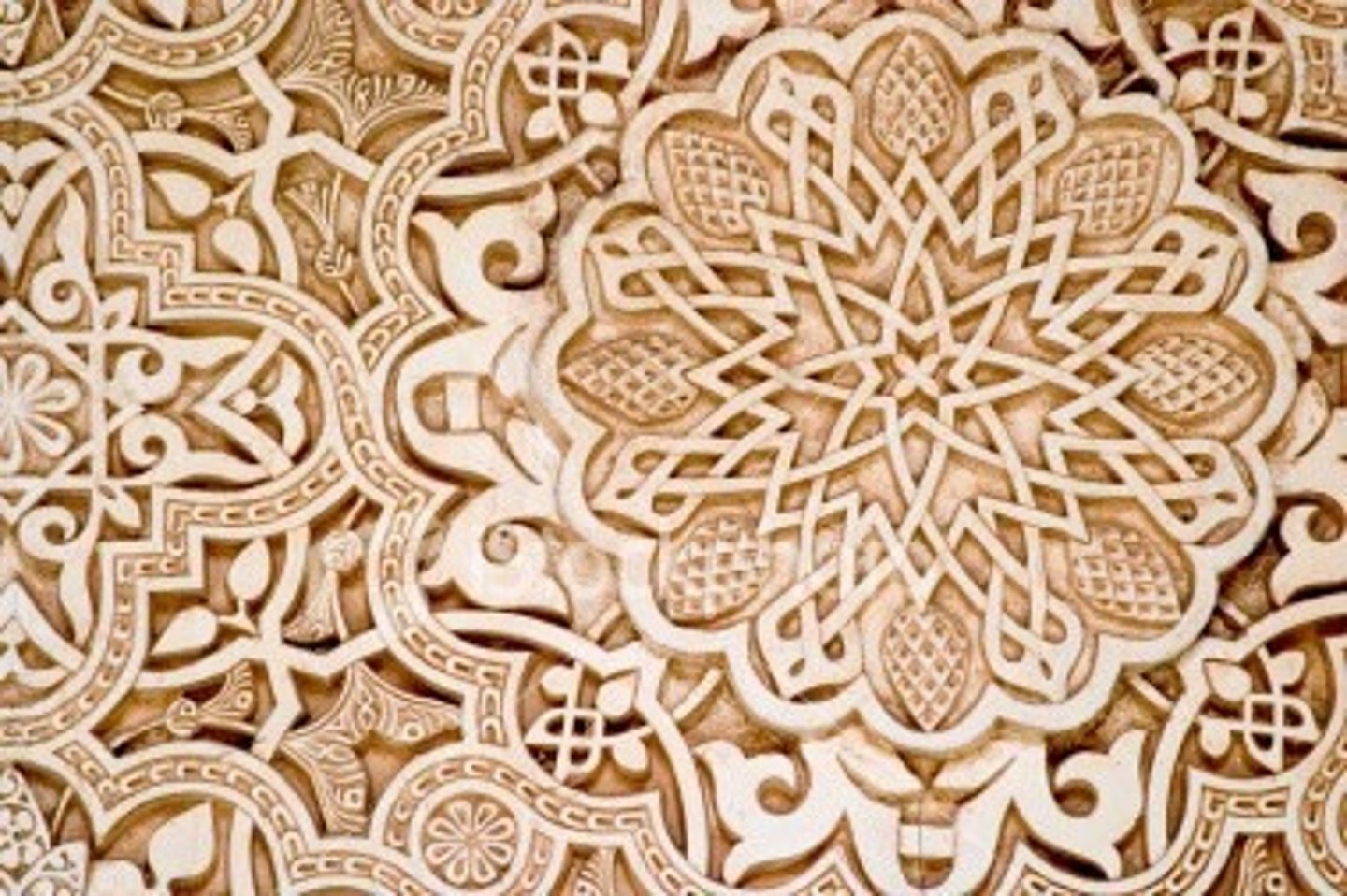
Iconoclasm
The rejection or destruction of religious images based on the belief that their veneration constitutes idolatry.
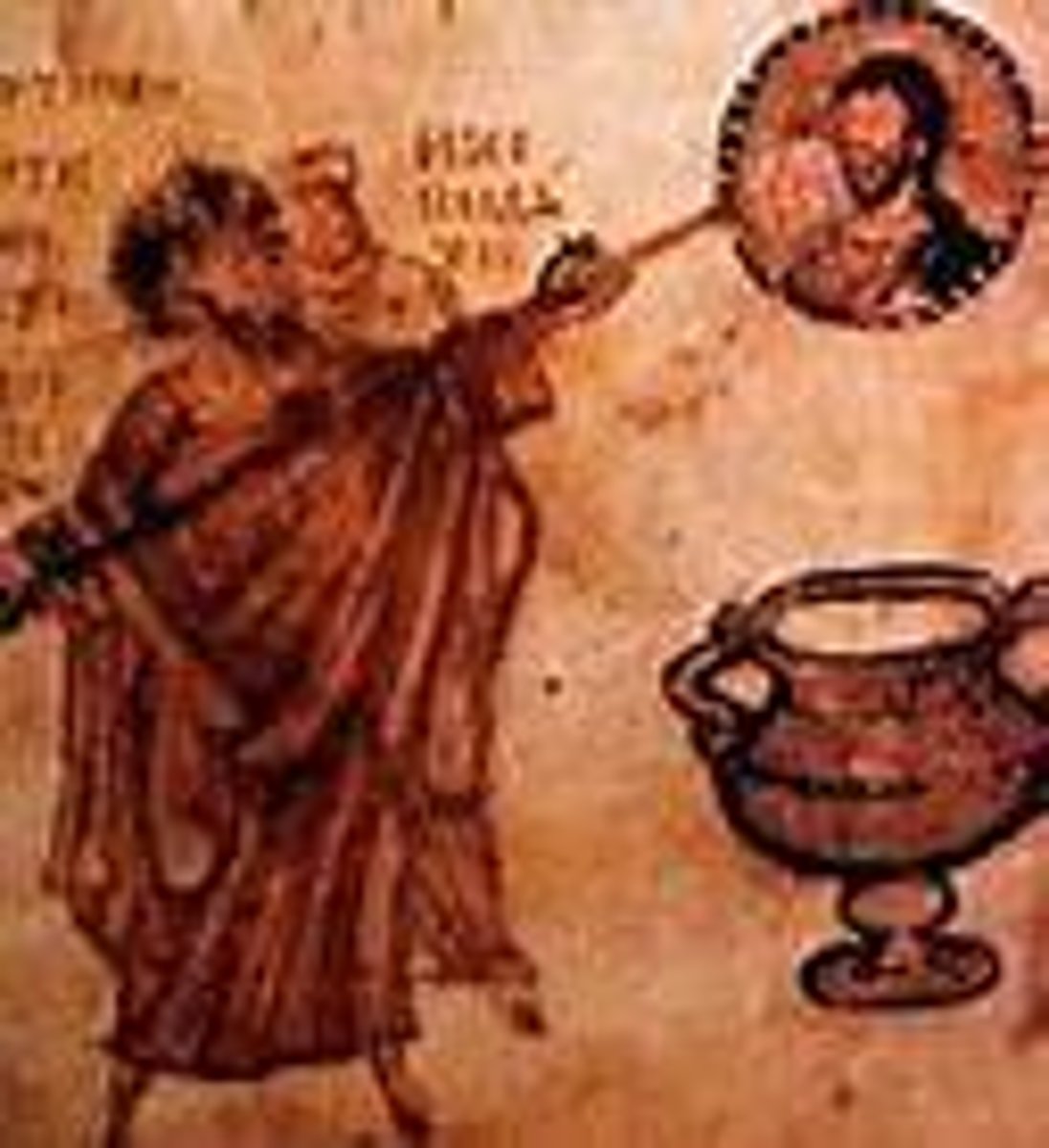
Eastern Orthodox Church
The branch of Christianity that developed in the Eastern Roman (Byzantine) Empire, characterized by Greek liturgy, the authority of patriarchs rather than the pope, and a strong tradition of icon veneration.
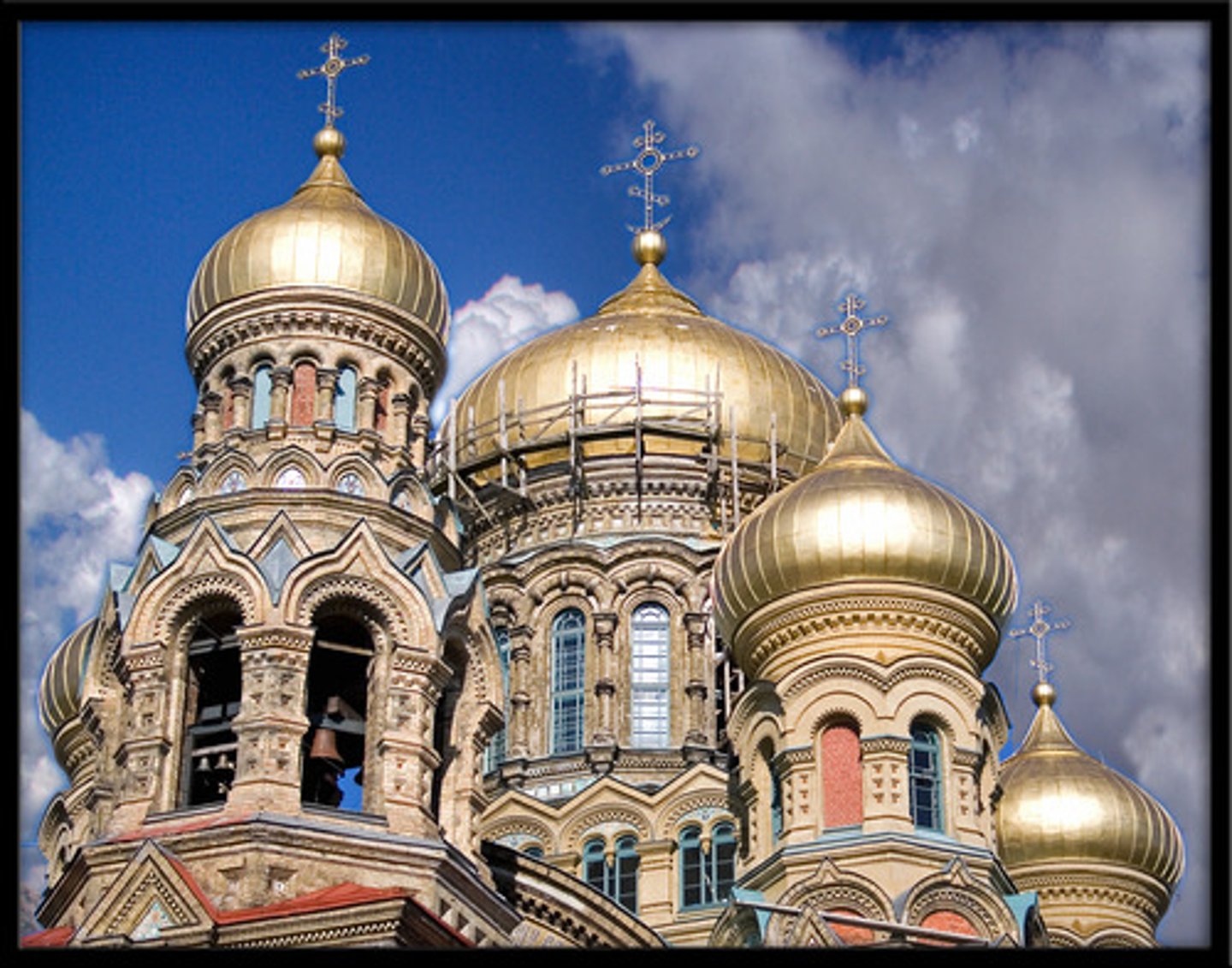
Hodegetria
A type of icon showing the Virgin Mary holding the Christ Child and gesturing toward him as the source of salvation, based on a famous and widely copied image originally housed in Constantinople.
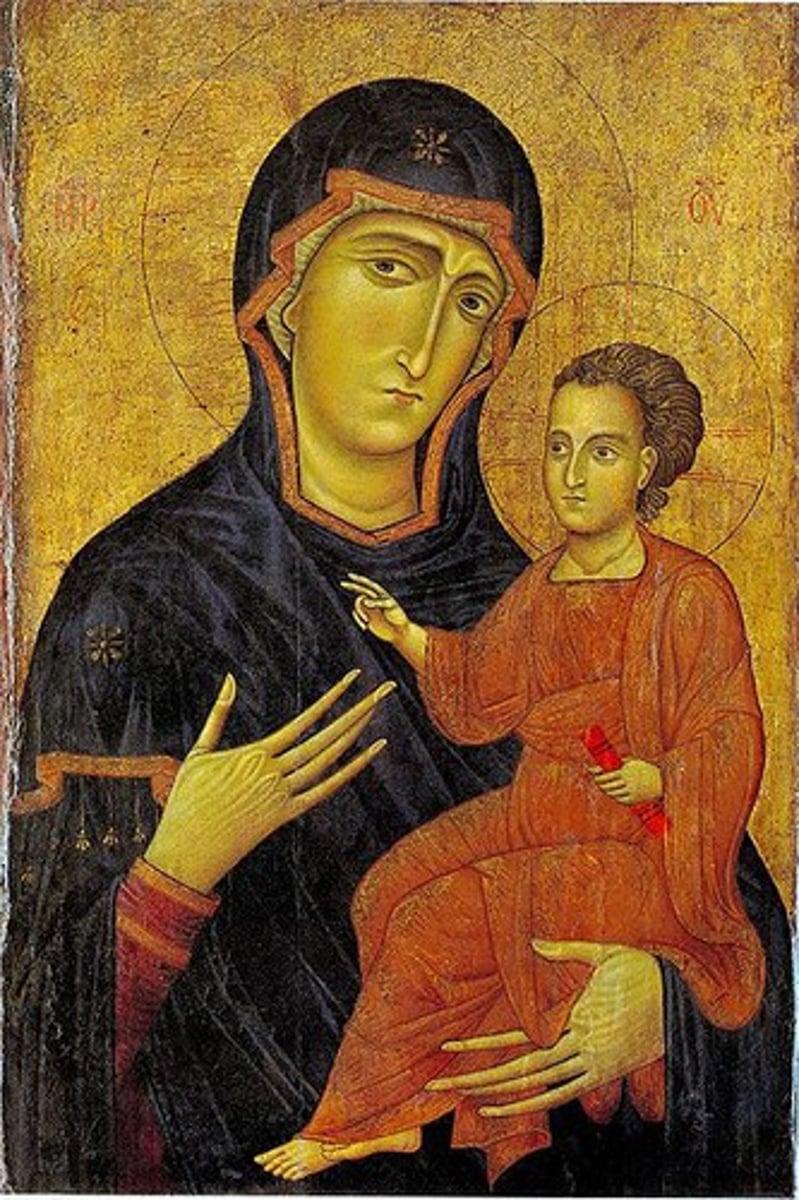
Acheiropoieta
A sacred image believed to have been created miraculously without human intervention and therefore considered especially authoritative or holy.
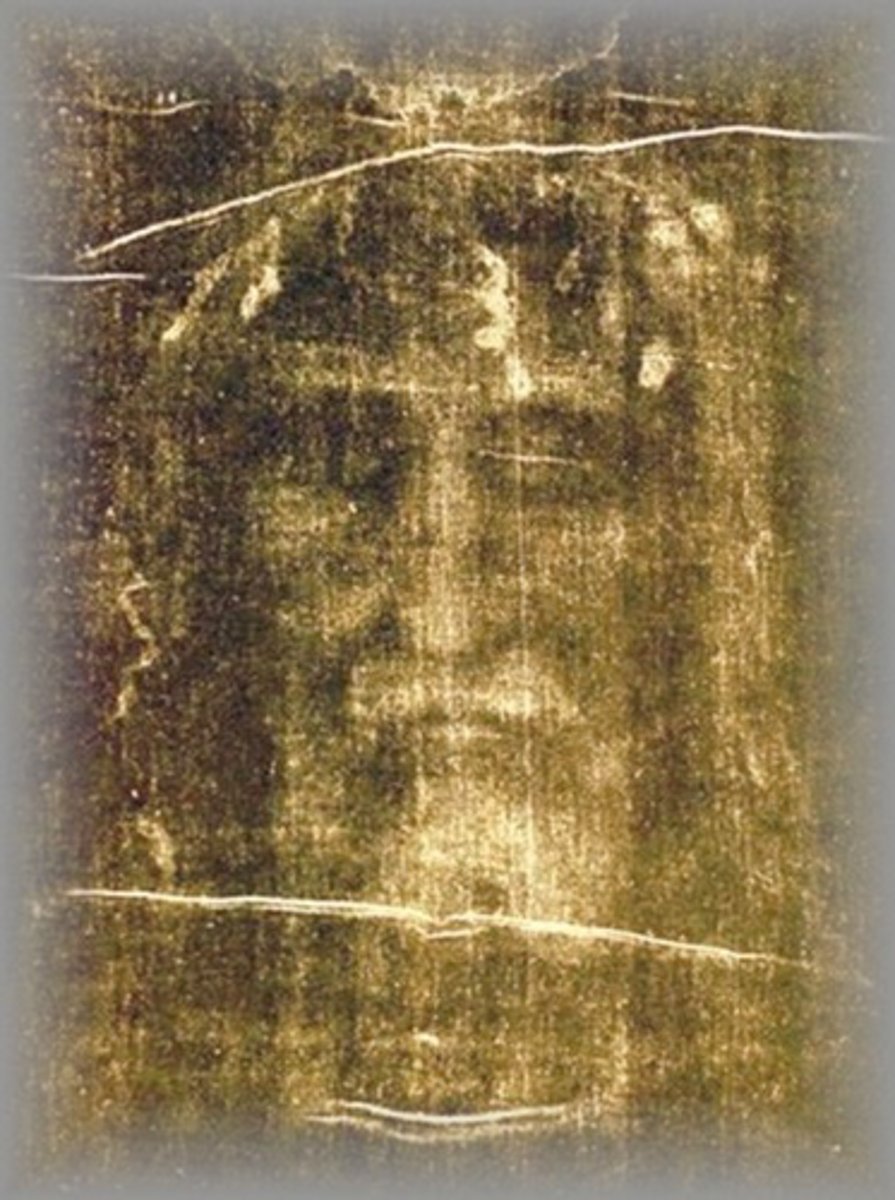
Martyrium
A church or shrine erected over the tomb of a martyr, at a site associated with their death, or to house their remains.
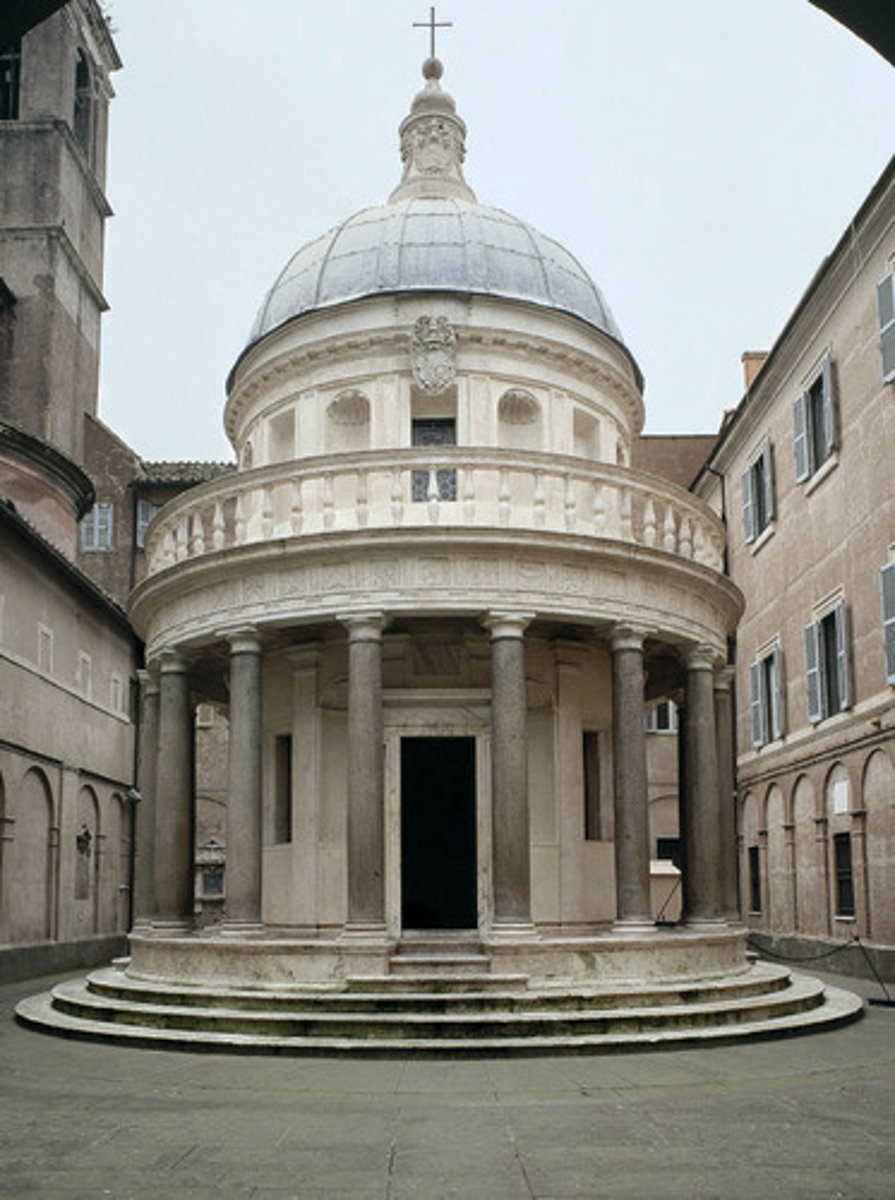
Ambulatory
A passageway that curves around the apse or central space of a church, allowing movement and pilgrimage access without disturbing the main liturgical area.
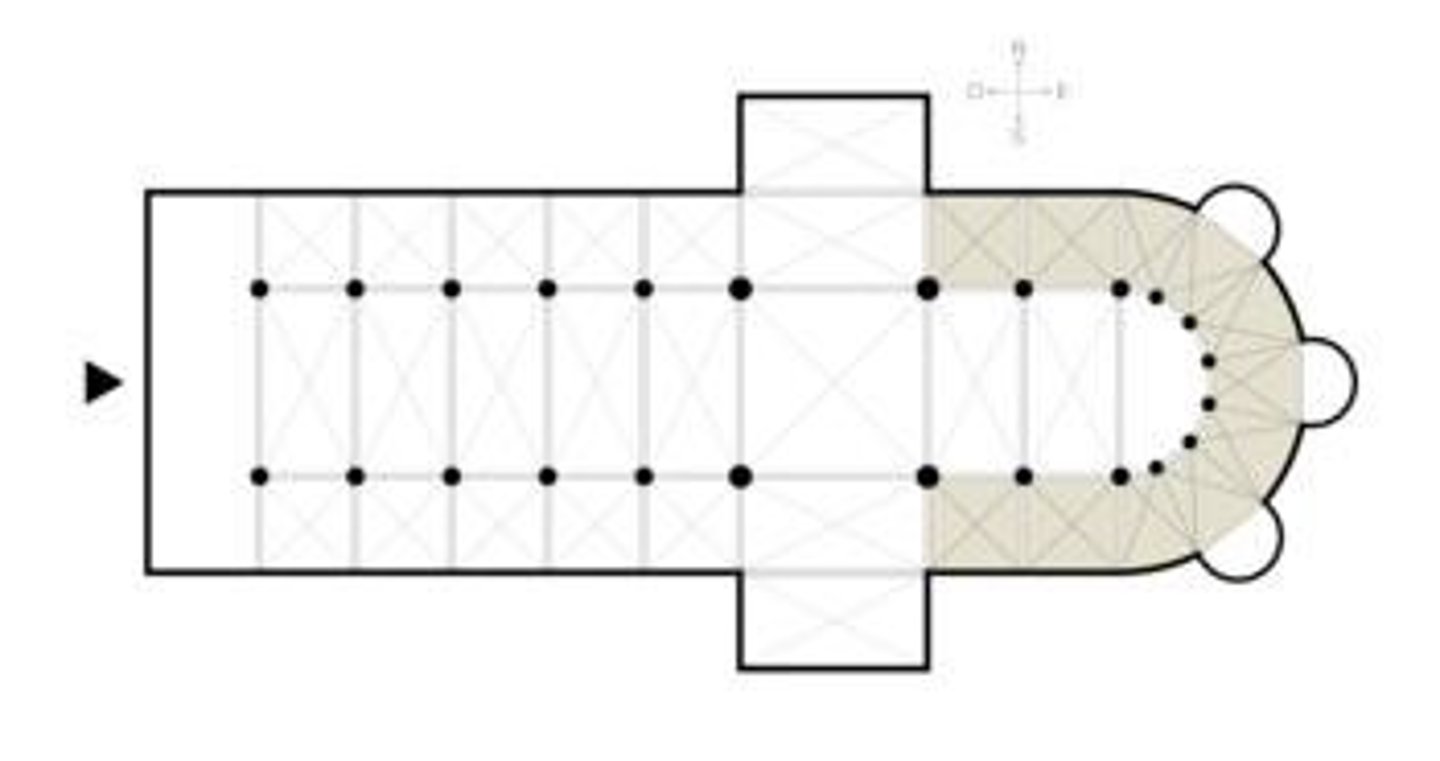
Apse
A semicircular or polygonal recess at the end of a church, typically housing the altar.
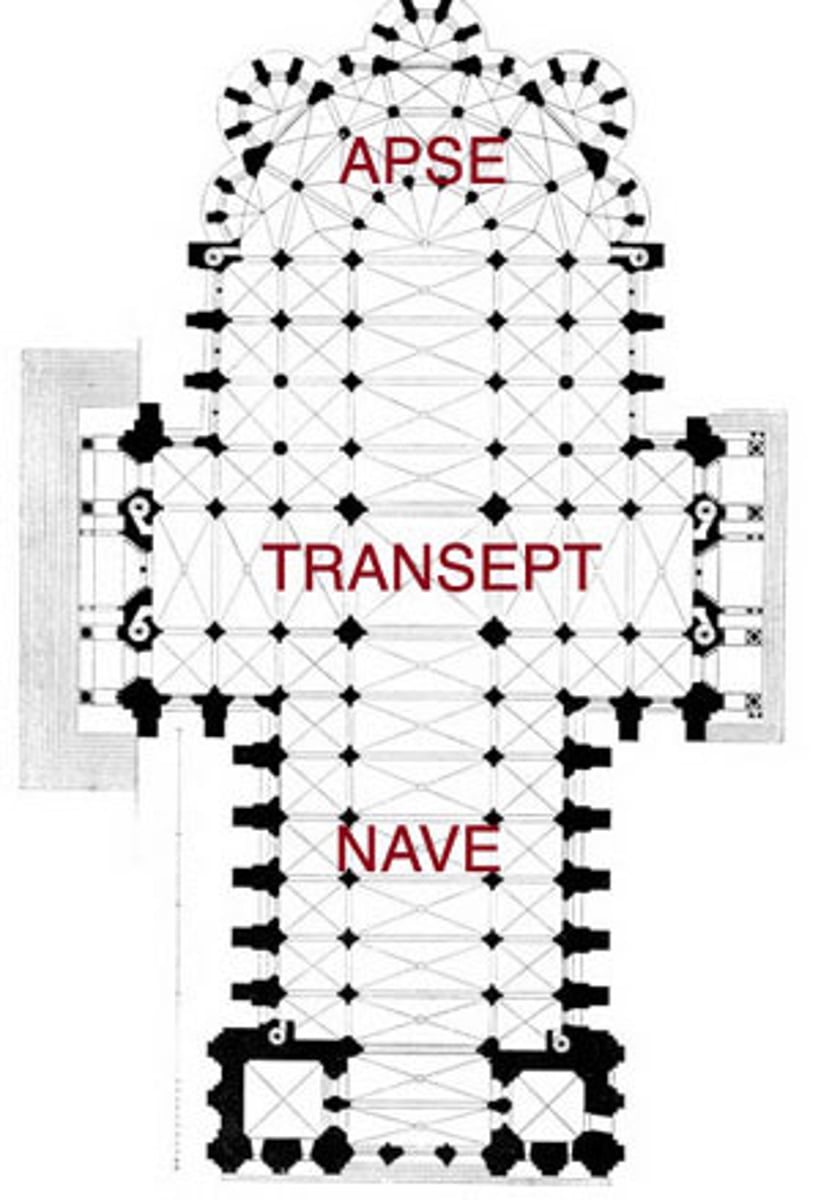
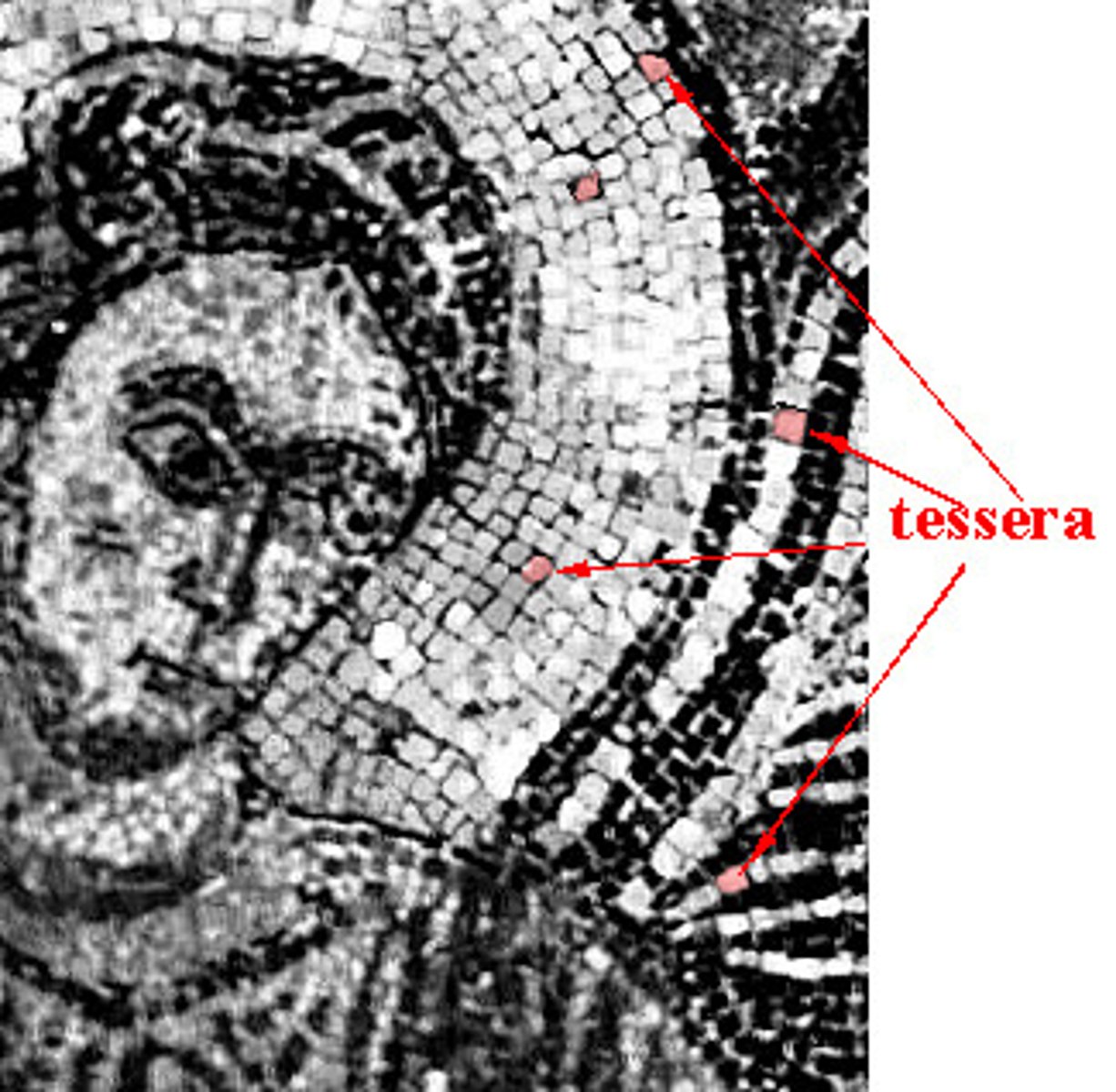
Tesserae
Small pieces of colored stone, glass, or ceramic used to create a mosaic image.
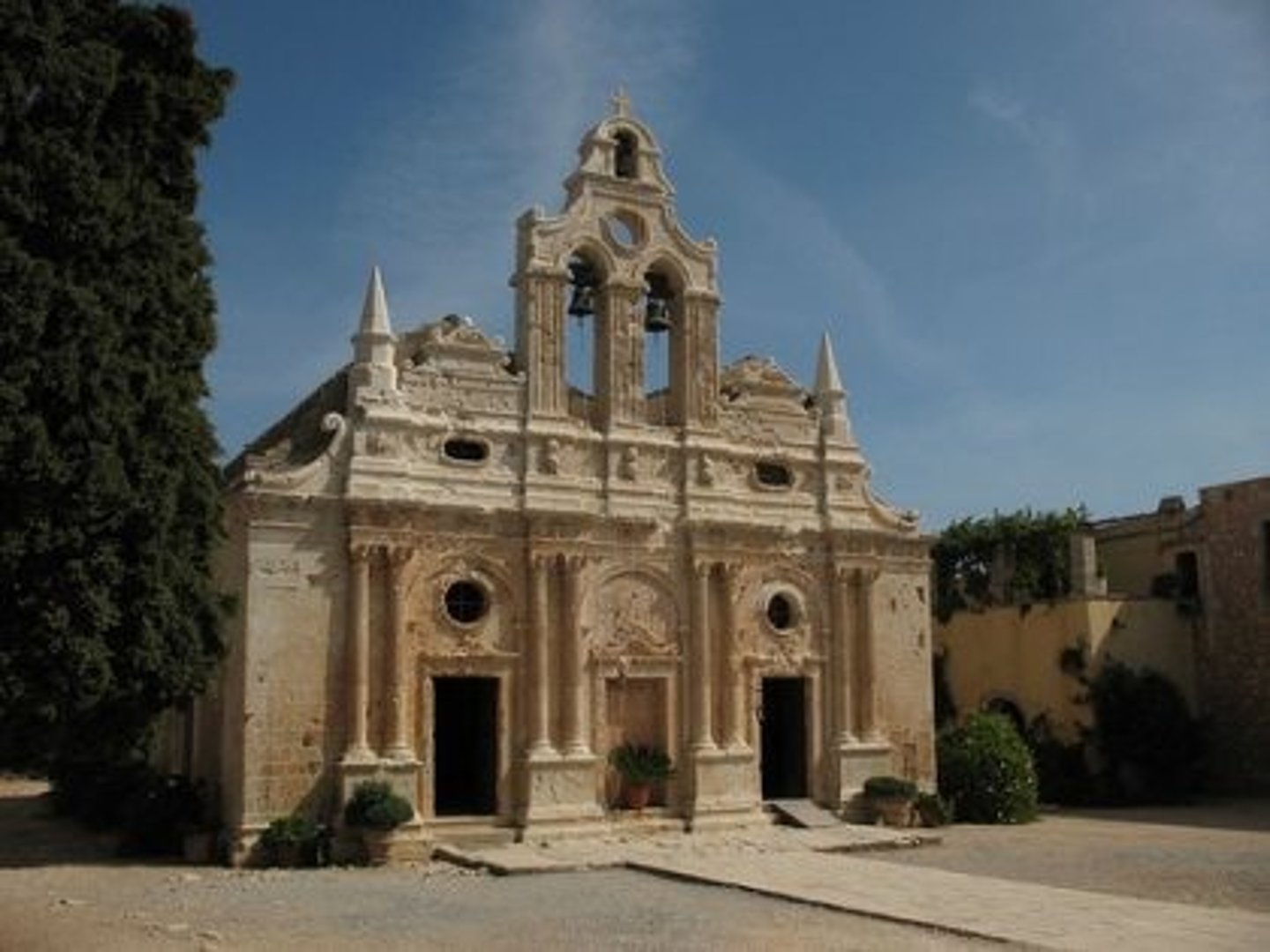
Monastery
A religious community where monks or nuns live apart from secular society under shared vows and a regulated spiritual routine.
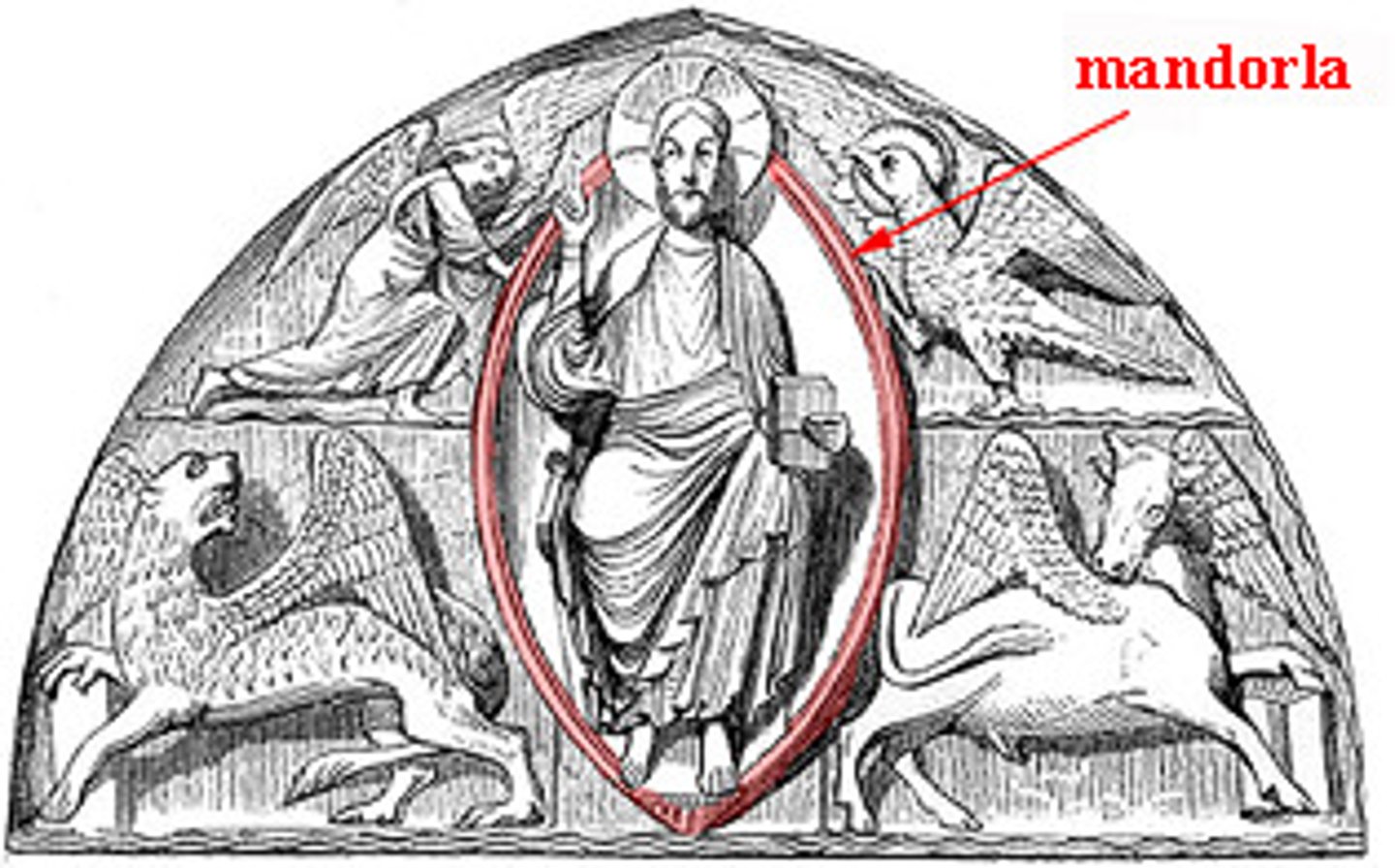
Mandorla
An almond-shaped halo or aureole surrounding a sacred figure, signifying divine light or heavenly glory.
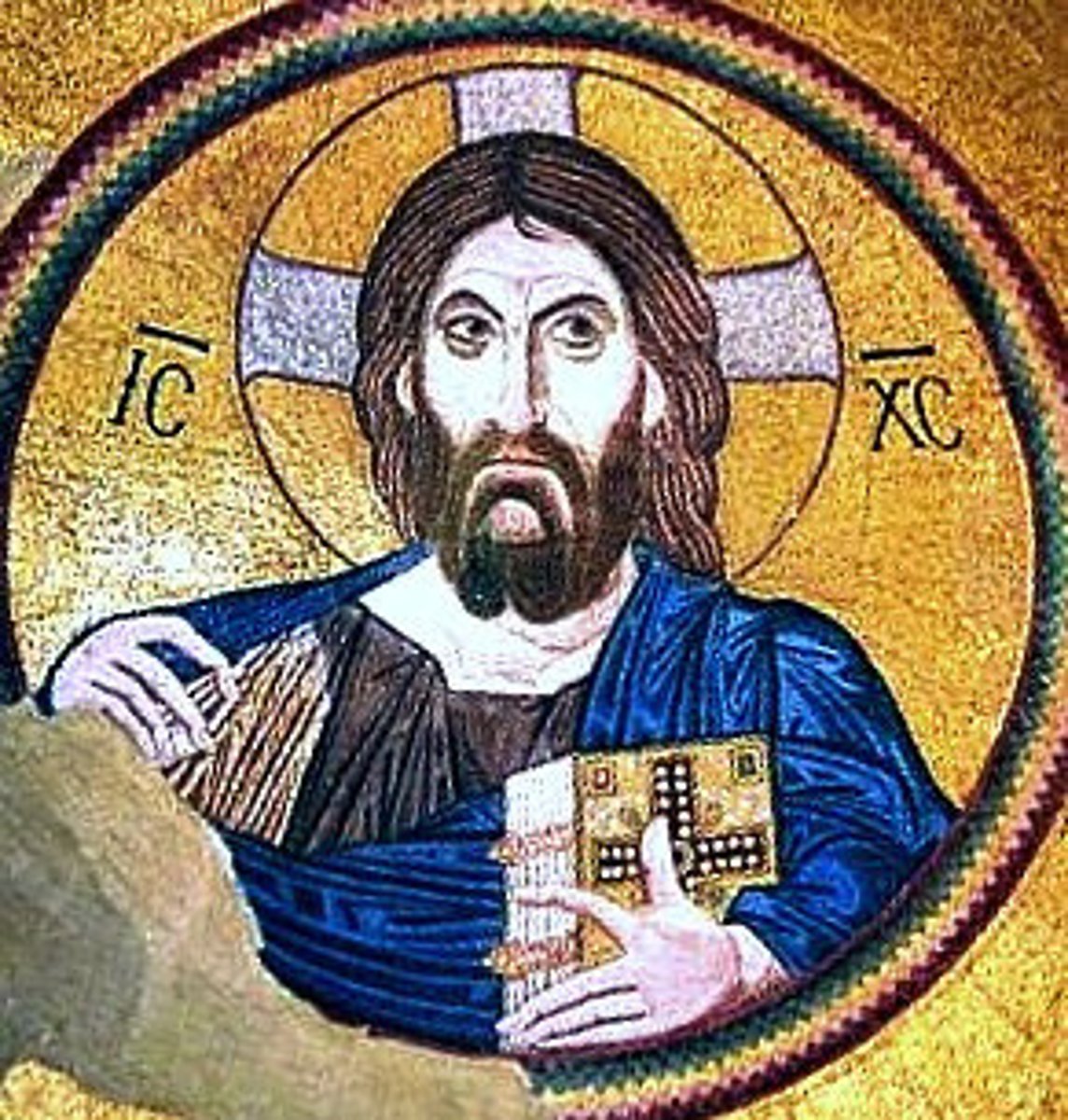
Christ Pantokrator
An iconographic type popularized in Eastern Orthodox Christianity depicting Christ as the all-powerful ruler and judge of the universe, typically shown frontal, blessing with one hand and holding a Gospel book in the other.
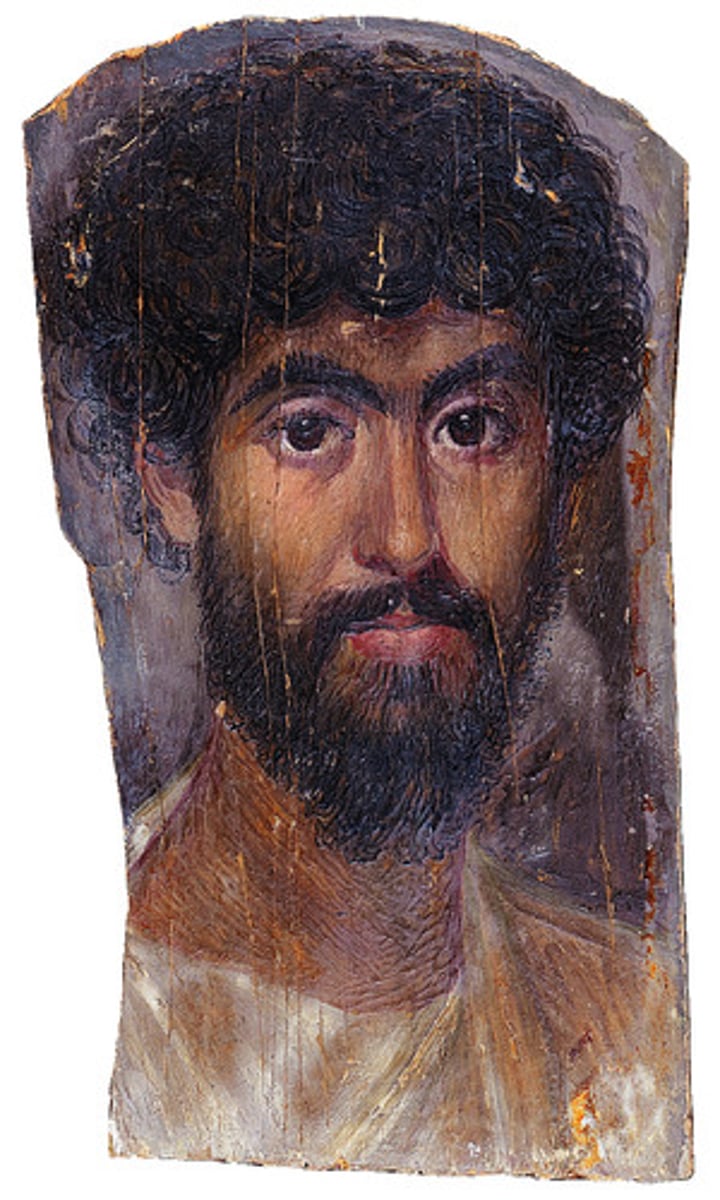
Encaustic
A painting technique in which pigments are mixed with hot wax and applied to a surface, allowing for rich color, durability, and smooth blending of tones.
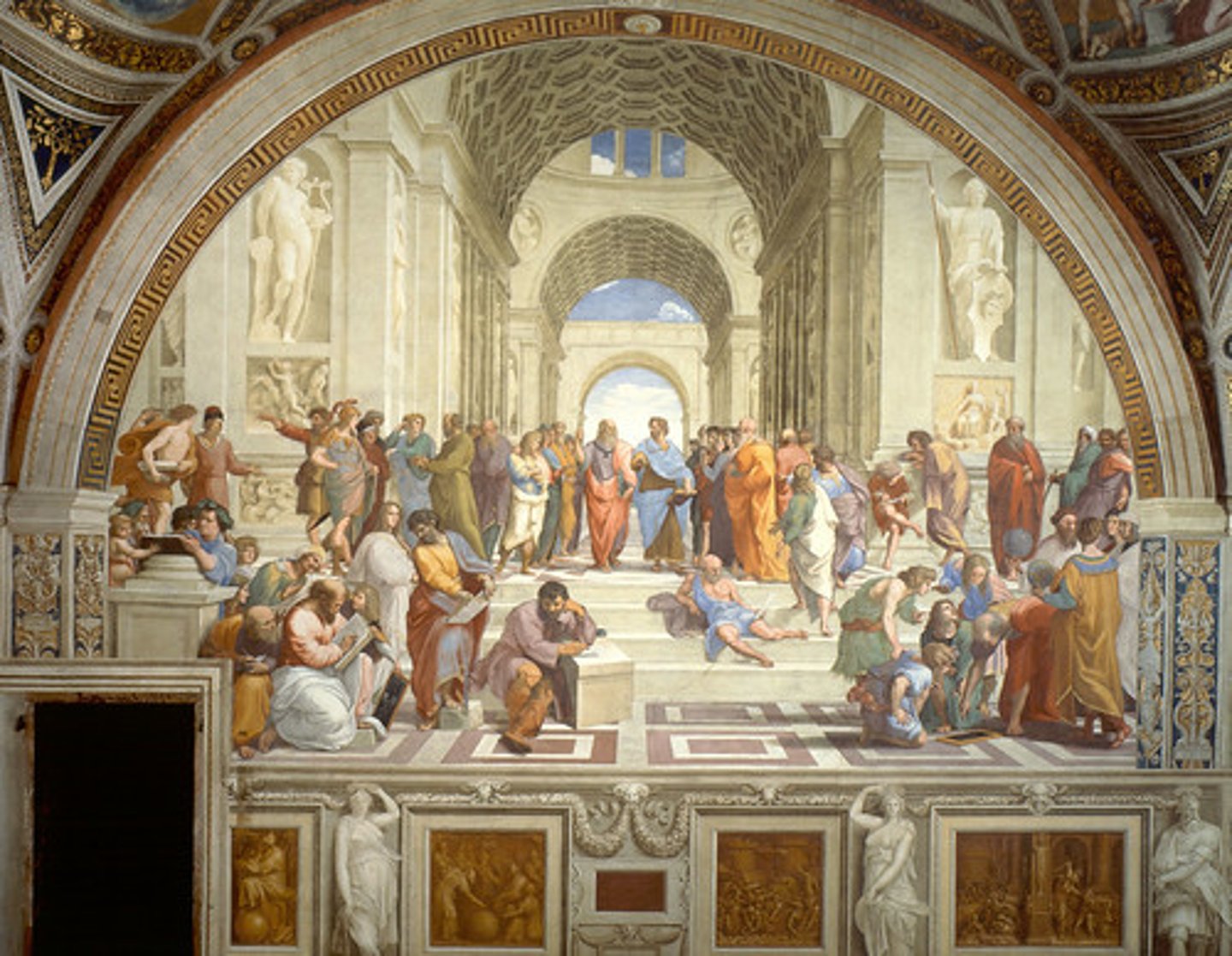
Fresco
A mural painting technique in which pigments are applied to freshly laid wet plaster so that the image becomes chemically bonded to the wall as it dries.
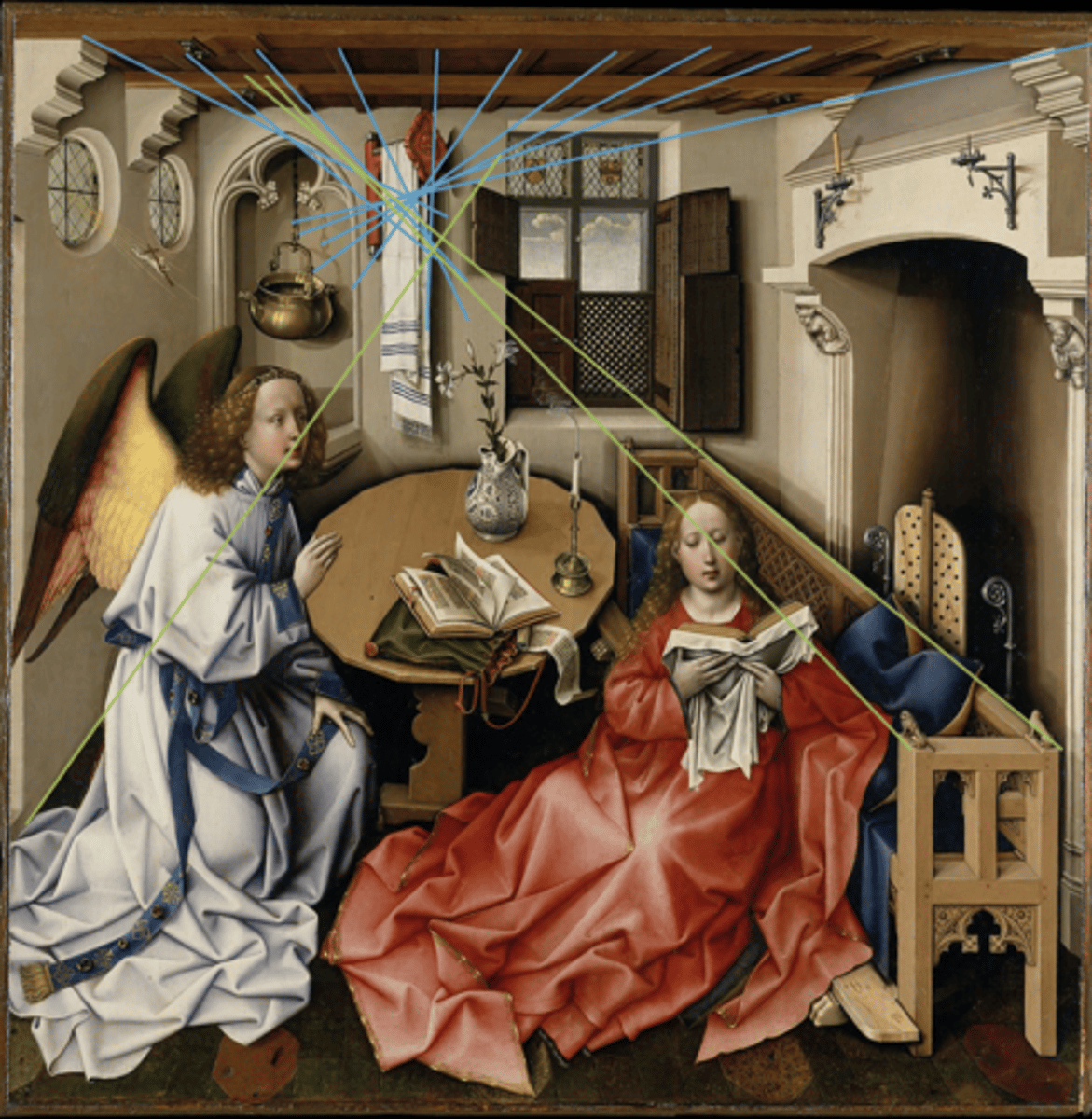
Intuitive perspective
A method of suggesting depth in which objects are arranged to imply recession into space without a consistent mathematical system or single vanishing point.
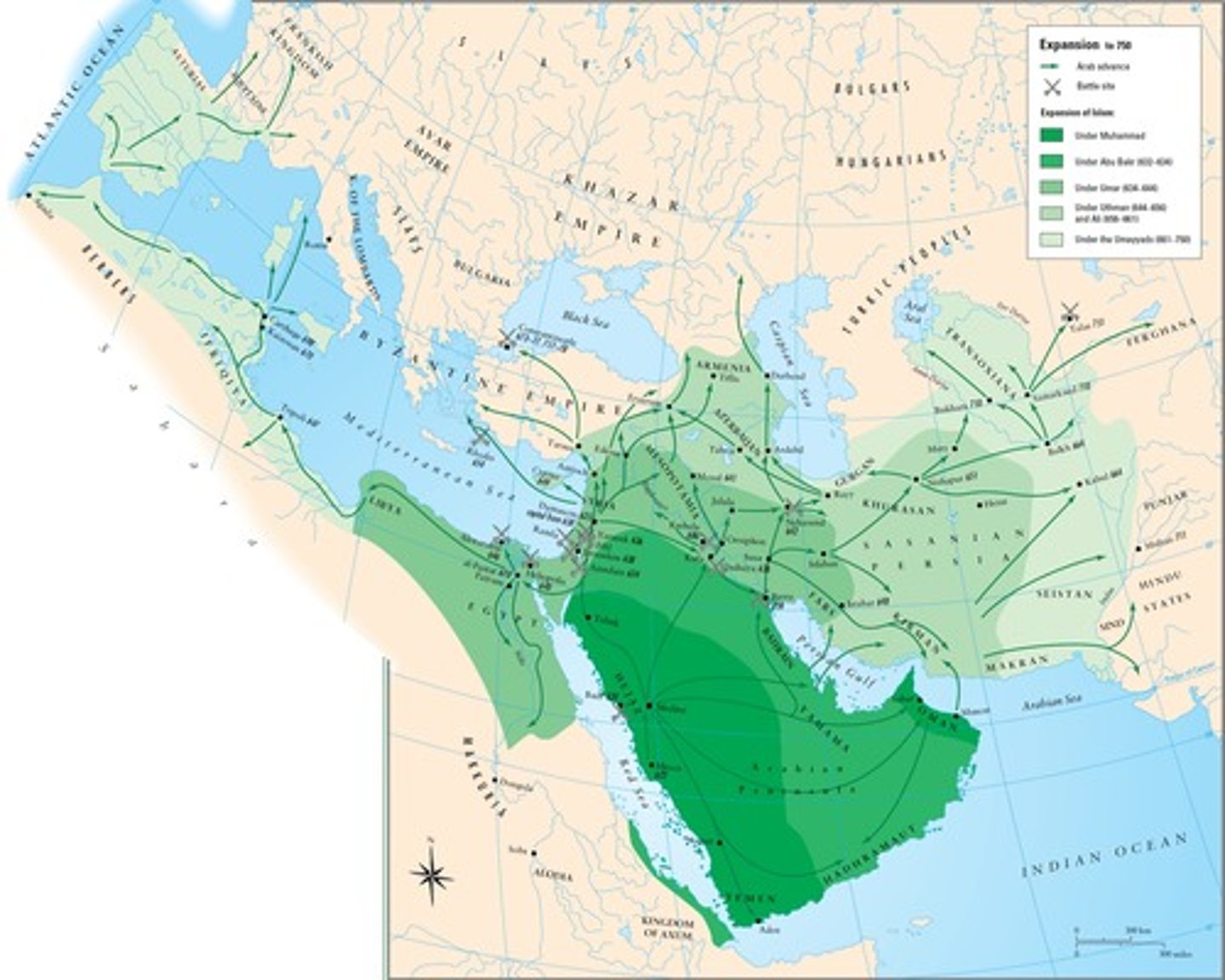
Caliphate
An Islamic state led by a caliph, who is regarded as the political and religious successor to the Prophet Muhammad.
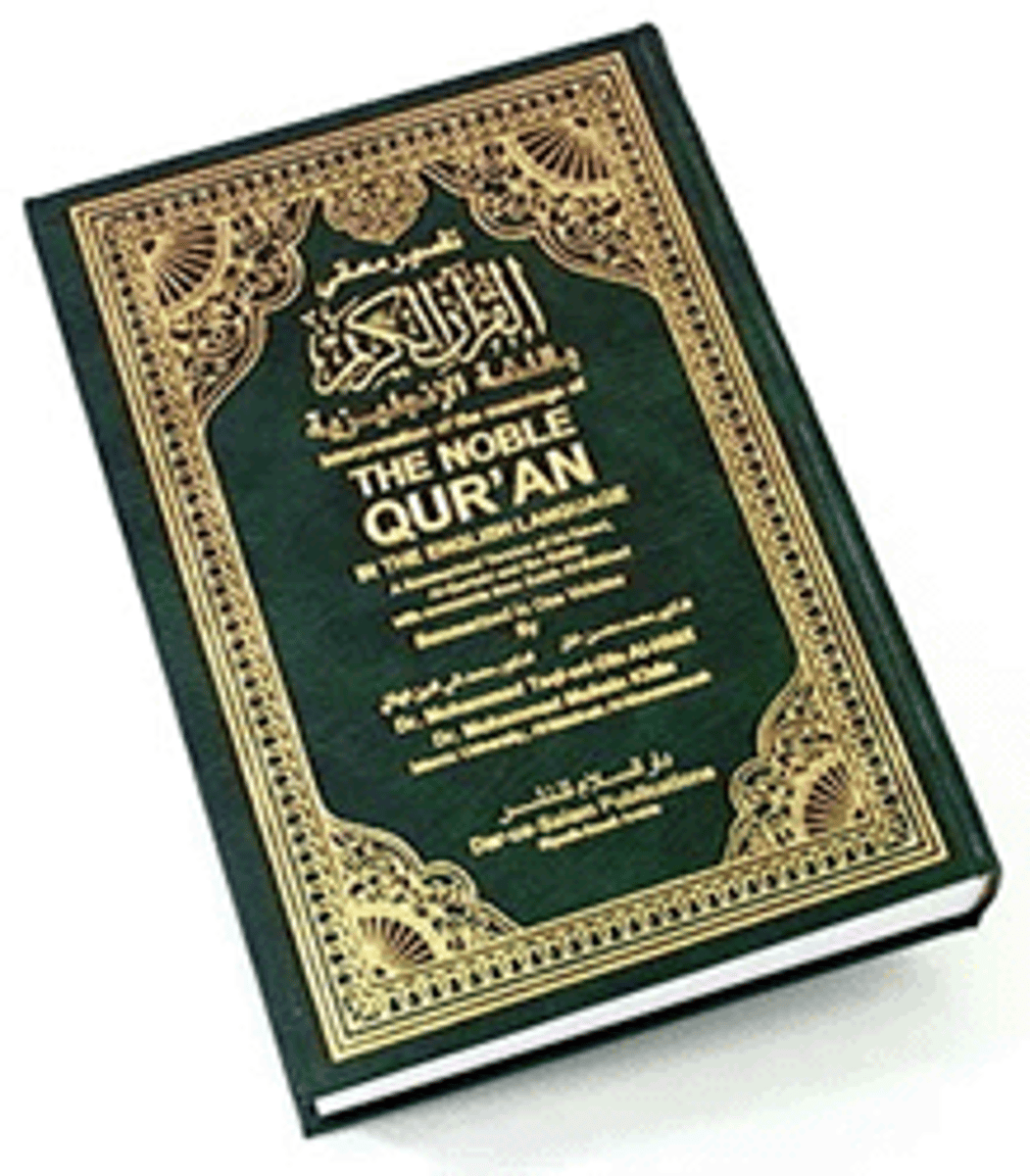
Qur'an
The sacred scripture of Islam, believed by Muslims to be the revealed word of God as communicated to the Prophet Muhammad.
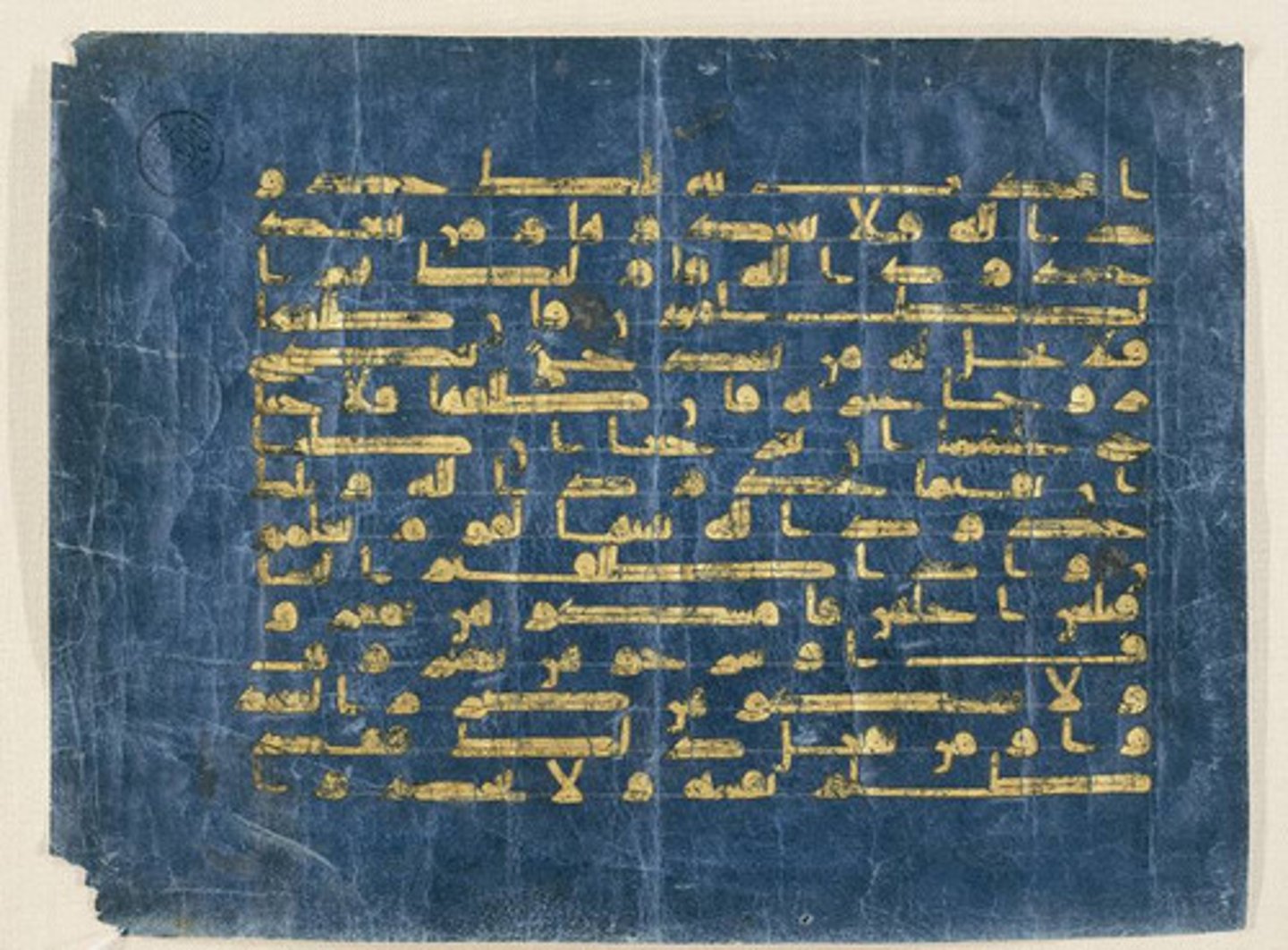
Kufic script
An early, angular form of Arabic calligraphy used prominently in Qur'anic manuscripts and architectural decoration.
Mosque
A building designated for communal prayer and worship in Islam.
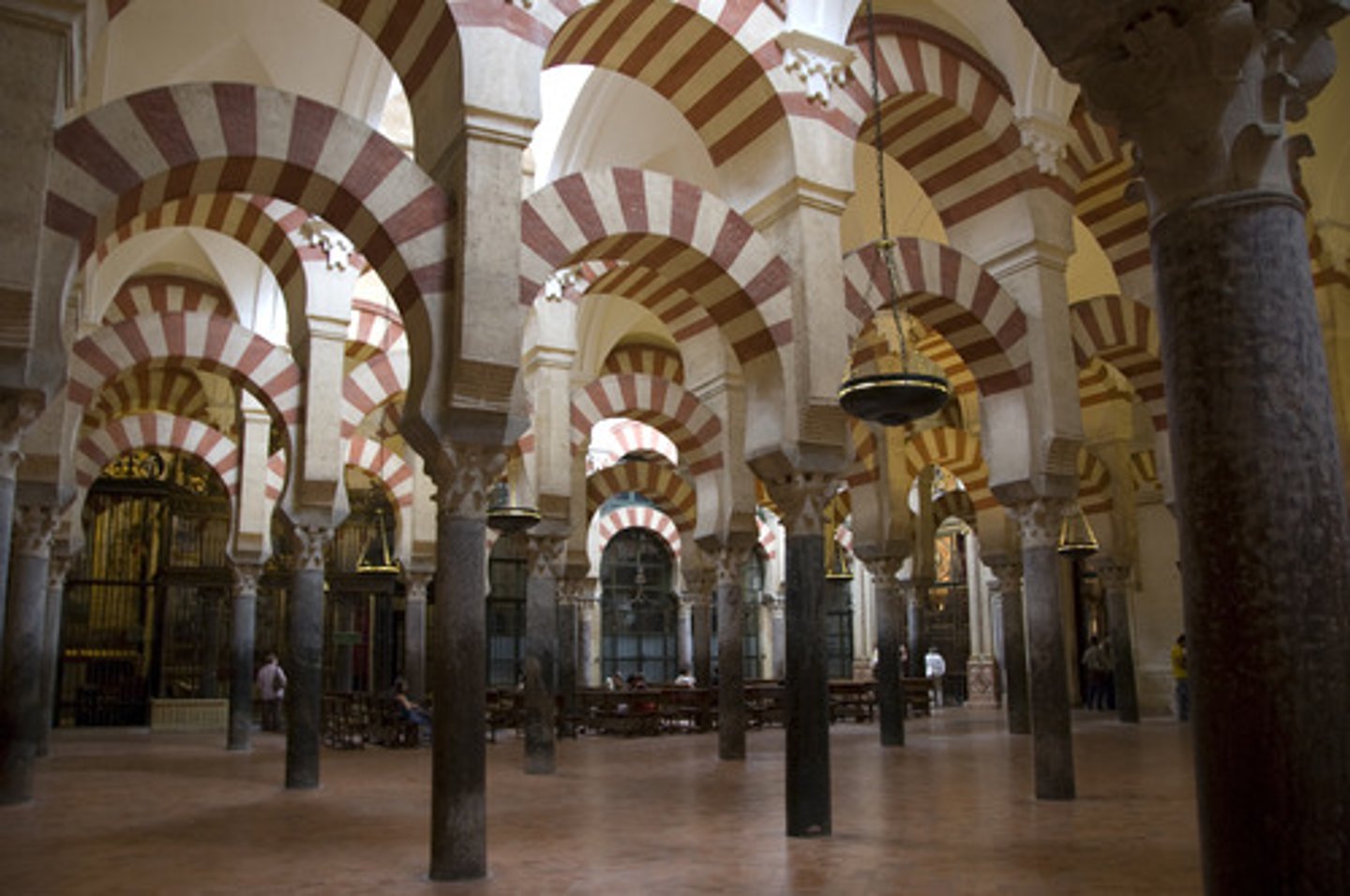
Hypostyle
A hall or interior space whose roof is supported by numerous closely spaced columns.
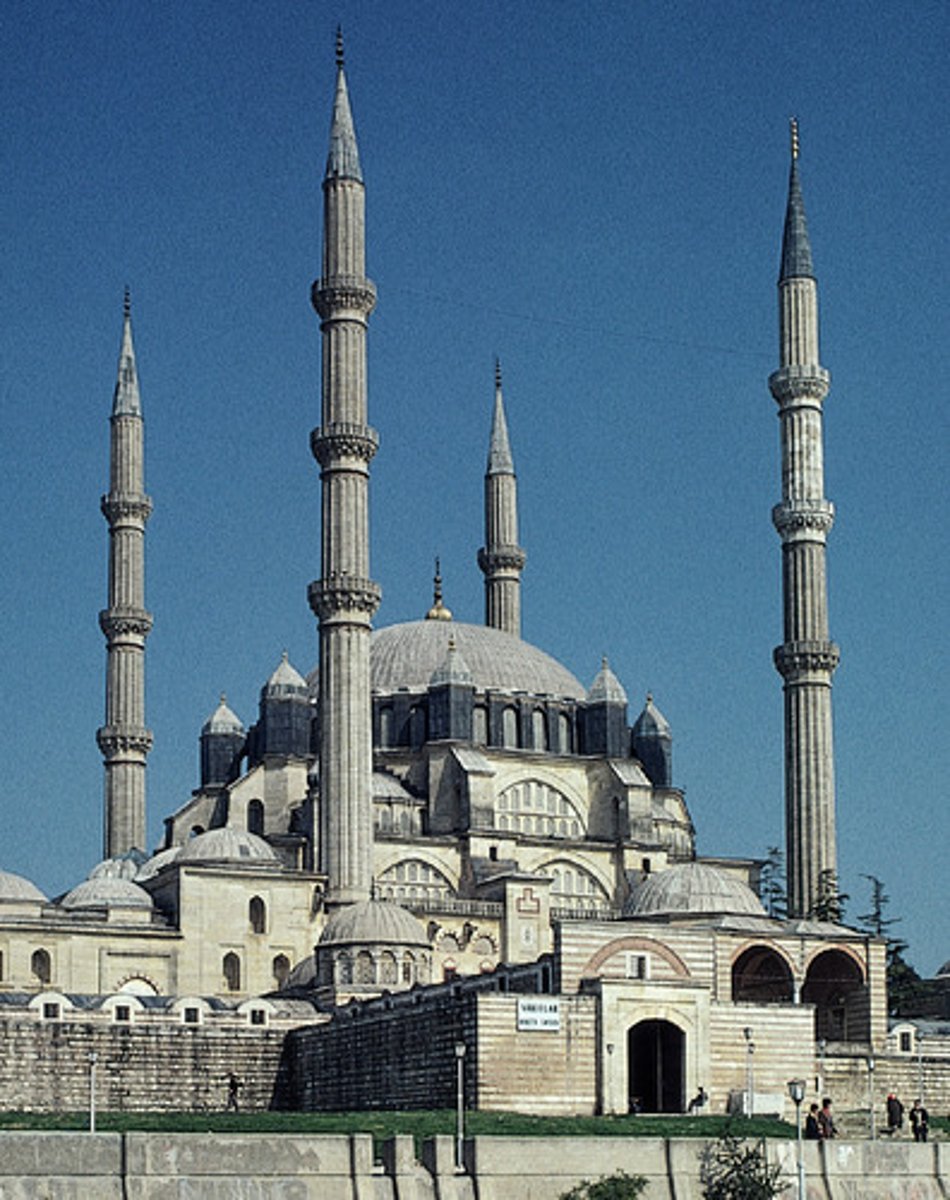
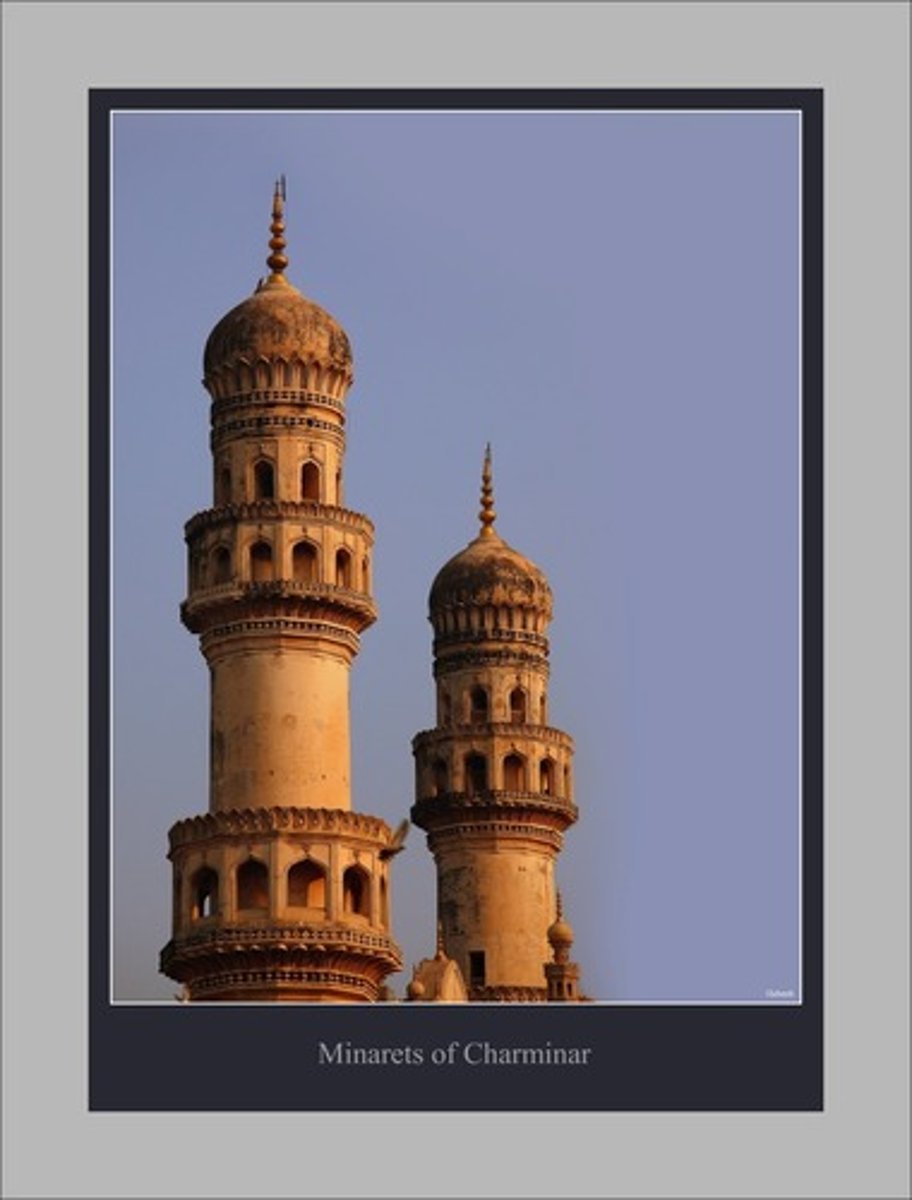
Minaret
A tall, slender tower attached to or associated with a mosque, from which the call to prayer is traditionally announced.
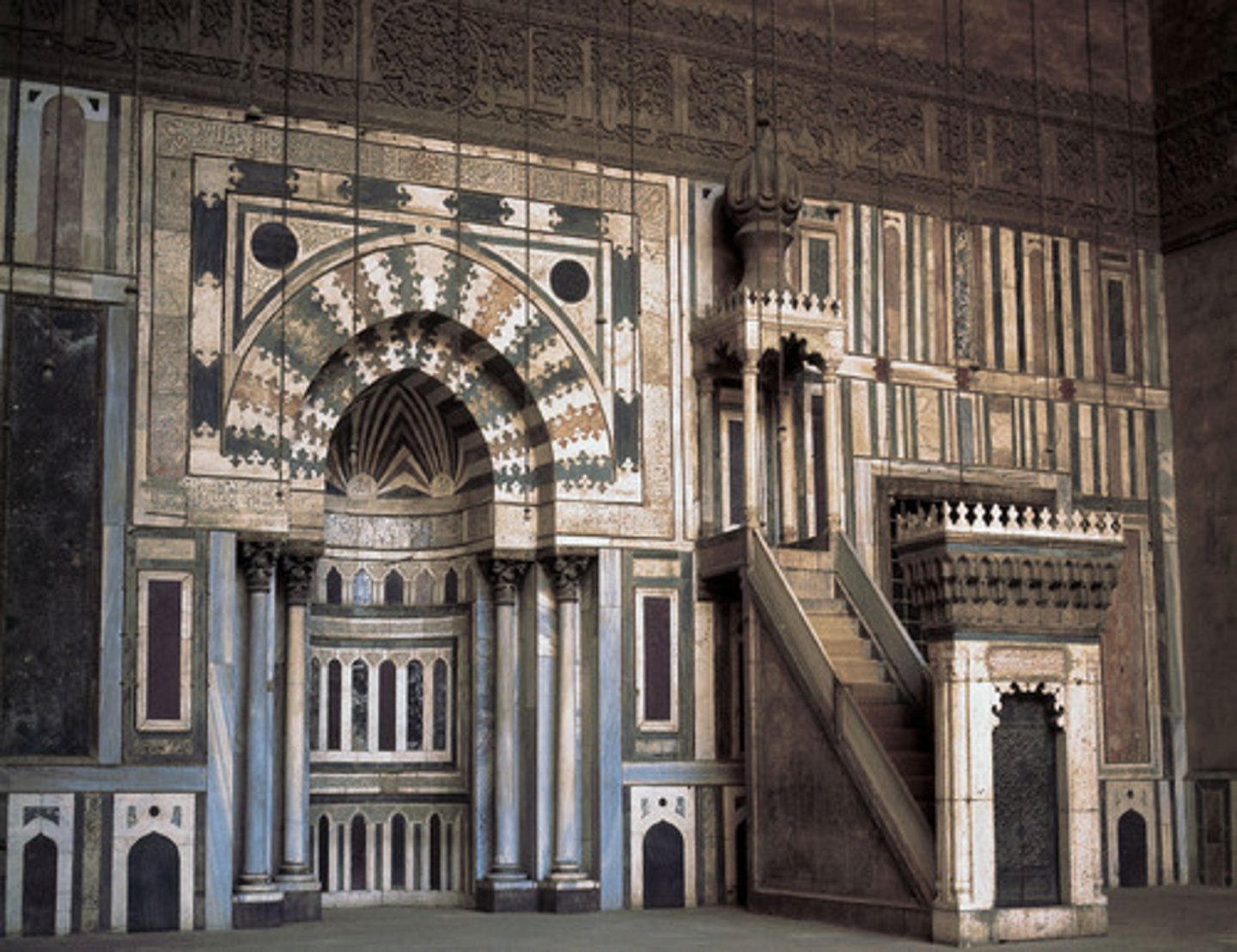
Qibla wall
The wall in a mosque that faces Mecca, indicating the direction Muslims face during prayer.
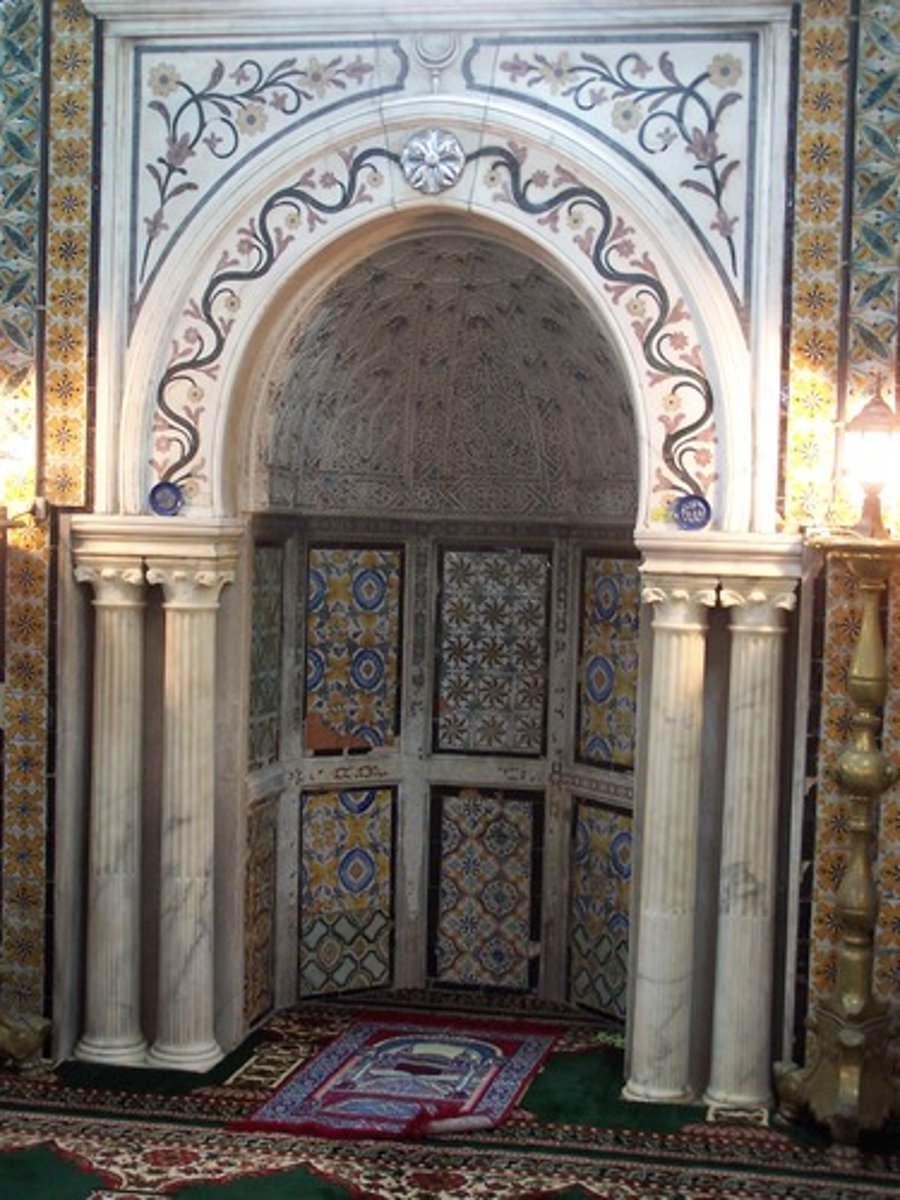
Mihrab niche
A semicircular niche set into the qibla wall of a mosque that marks the direction of Mecca.
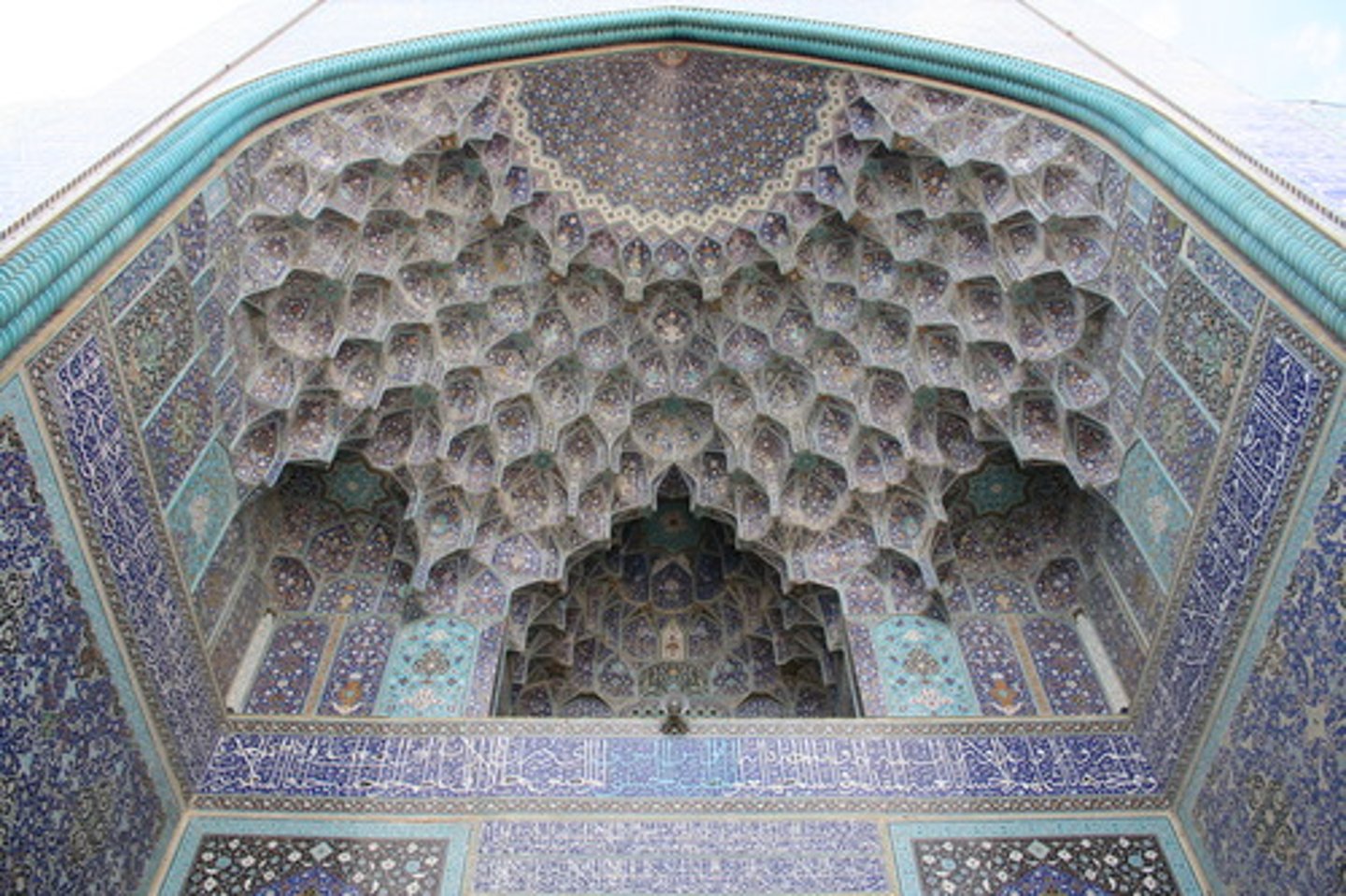
Muqarnas
A form of three-dimensional architectural ornament in Islamic architecture composed of small, niche-like elements arranged in tiers to create a honeycomb-like surface, often used to adorn the interiors of arches, domes, and vaults.
Migration Period
A period of widespread movement of peoples across Europe from approximately 300 CE to 700 CE, contributing to the transformation of the Roman world and the rise of early medieval cultures.
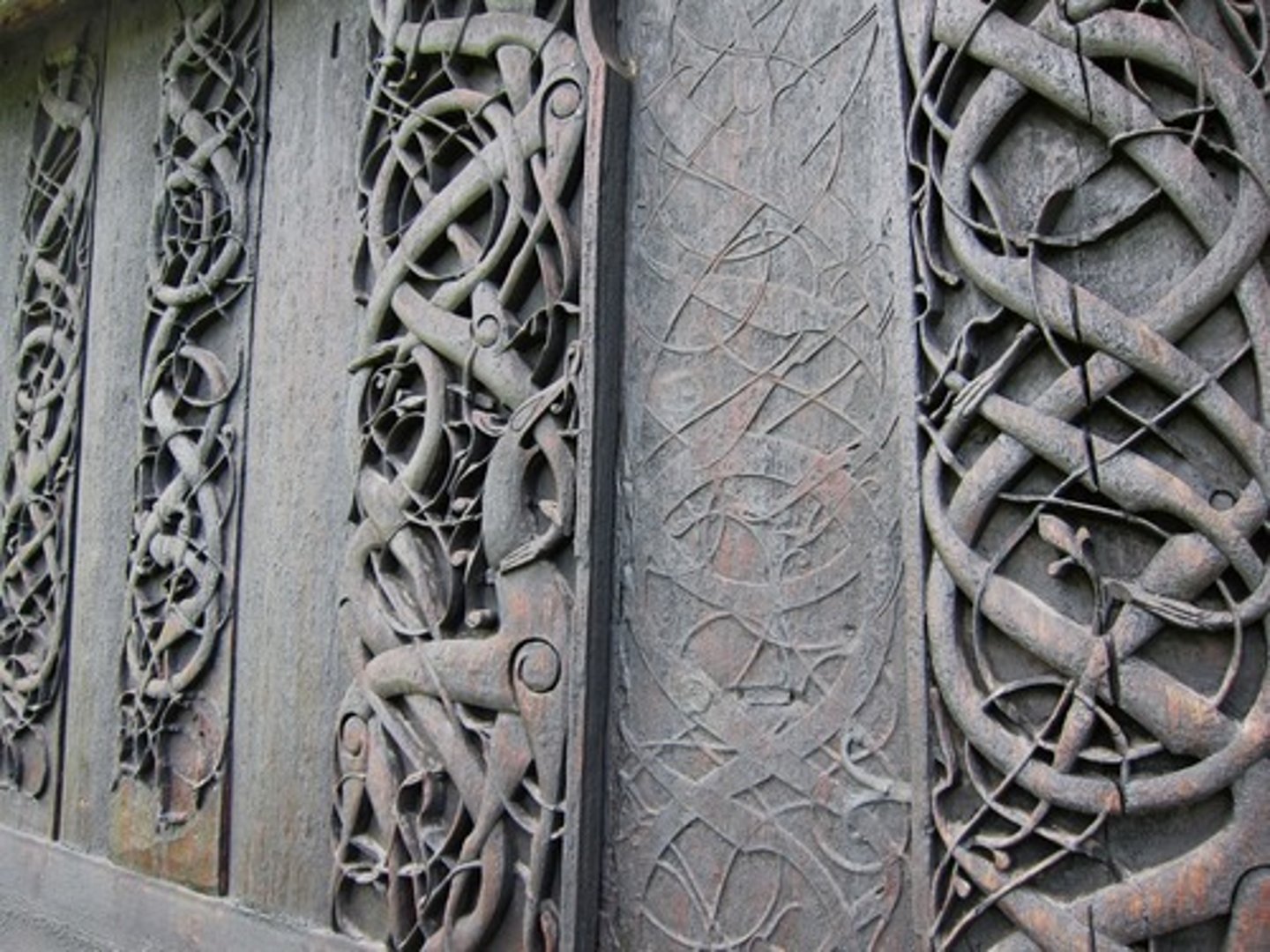
Animal Style
An ornamental style of the early medieval Migration Period characterized by interlacing, abstracted animal forms and intricate linear patterns.
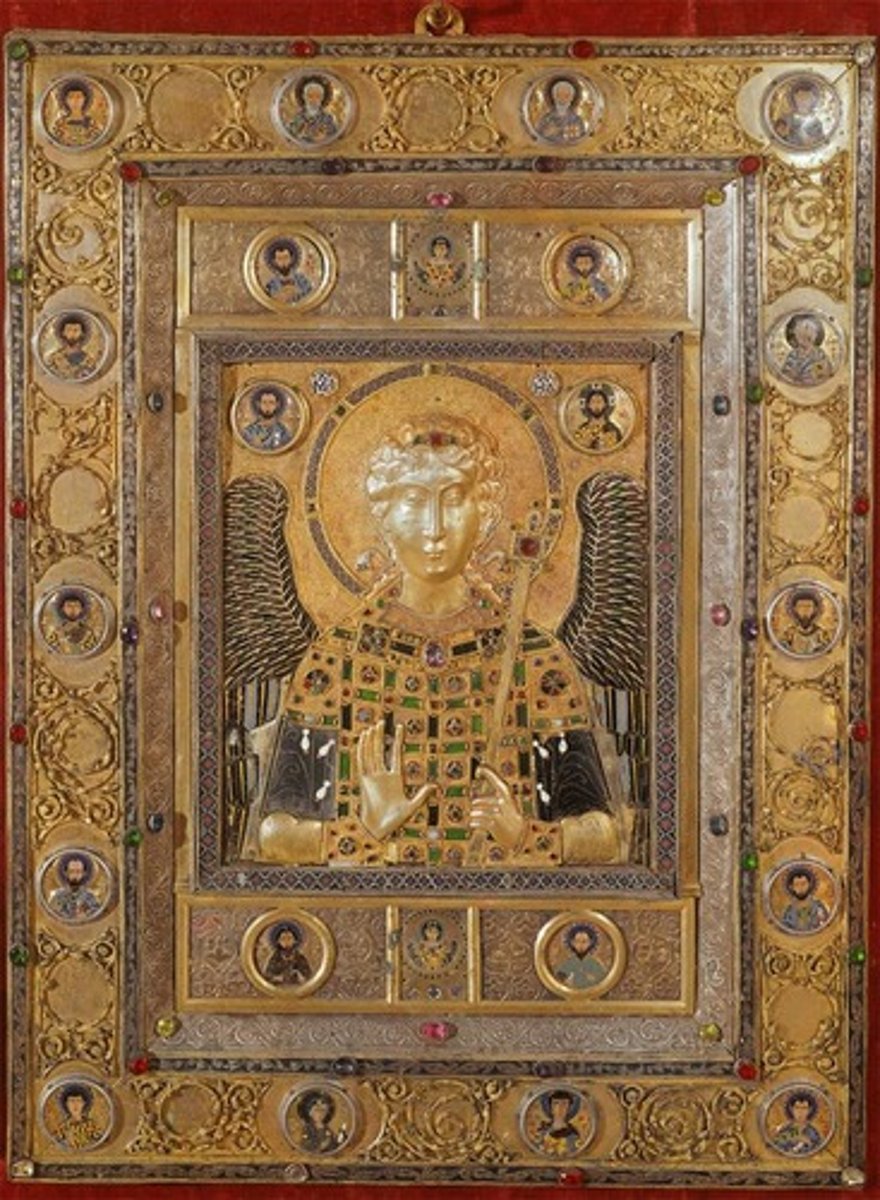
Cloisonné enamel
A decorative technique in which thin metal strips create compartments that are filled with powdered enamel and then fired so the enamel melts and fuses into colorful compartmentalized designs.
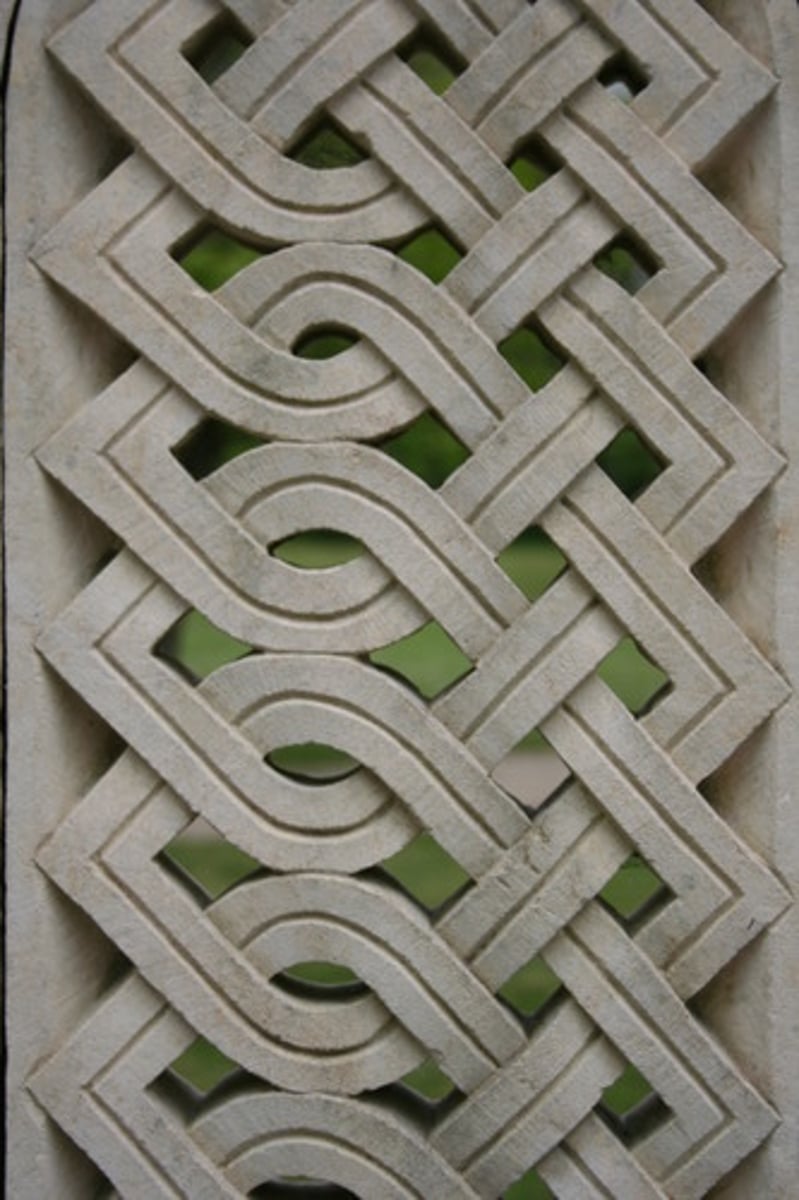
Interlace
A decorative pattern formed by intertwining bands or ribbon-like forms that weave over and under one another, creating elaborate knot-like patterns, popular in early medieval art.
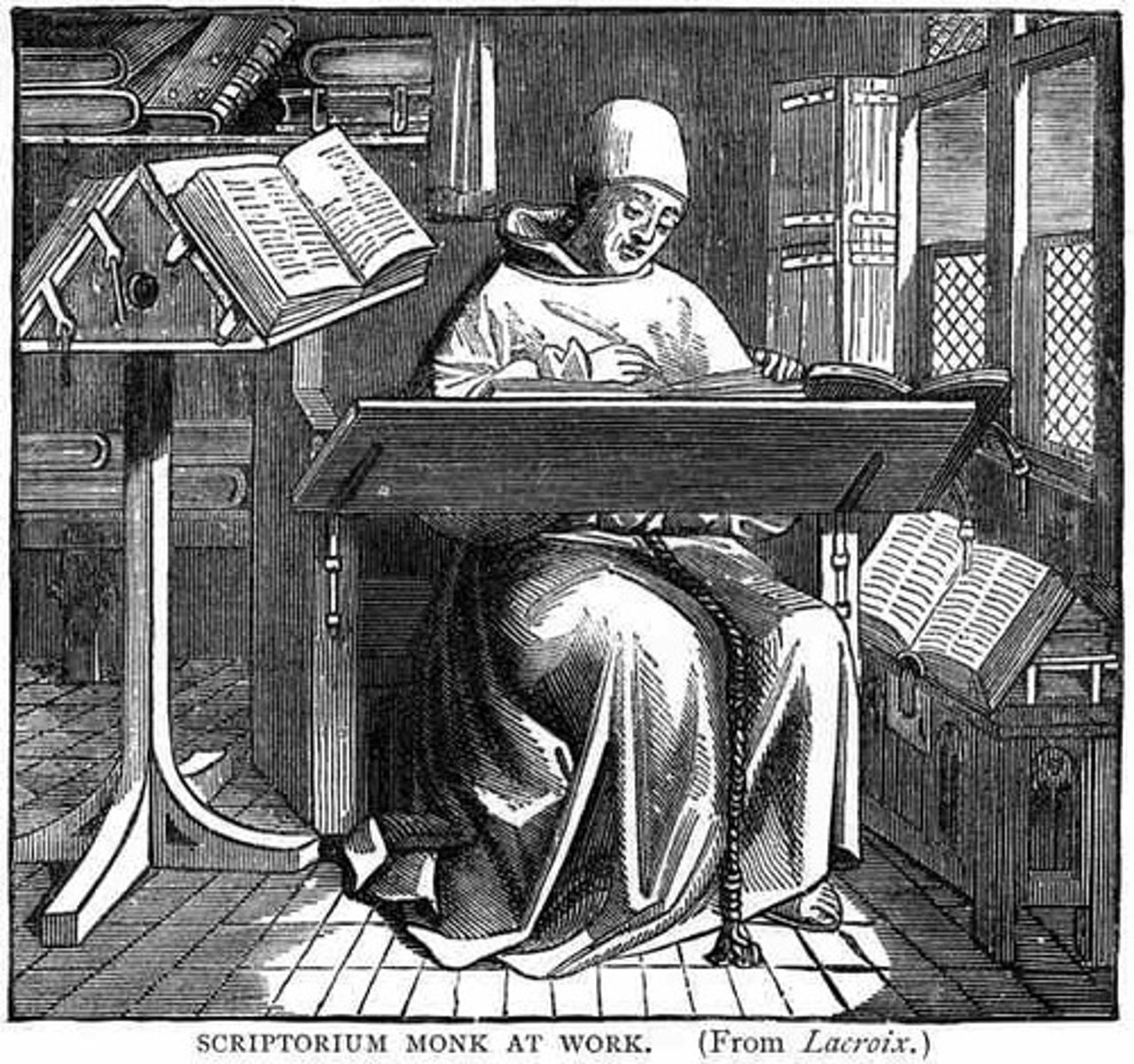
Scriptorium
A room in a monastery set aside for the copying and production of manuscripts.
Parchment
A writing surface made from specially treated animal skin, commonly used for manuscripts in the ancient and medieval periods.

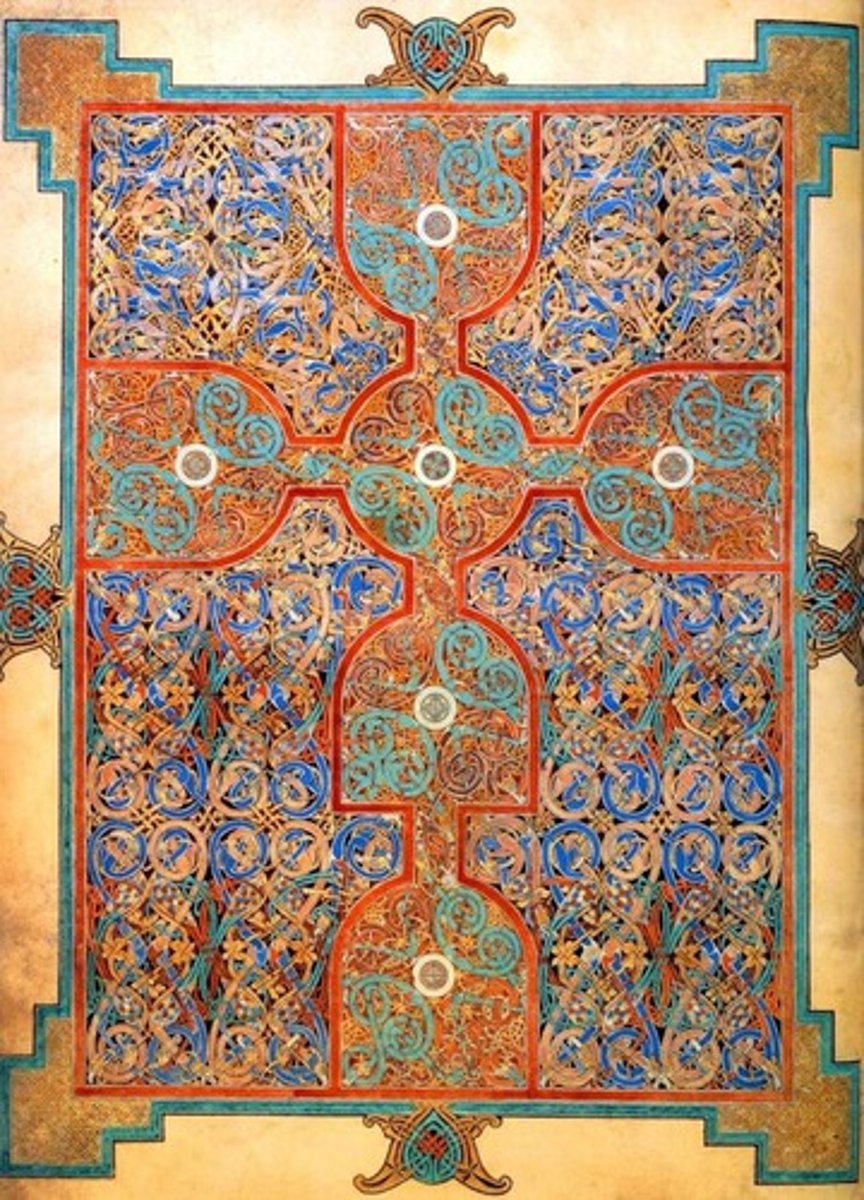
Carpet page
A full-page decorative design in an early medieval manuscript, composed of intricate interlace and ornamental patterns resembling a woven carpet.
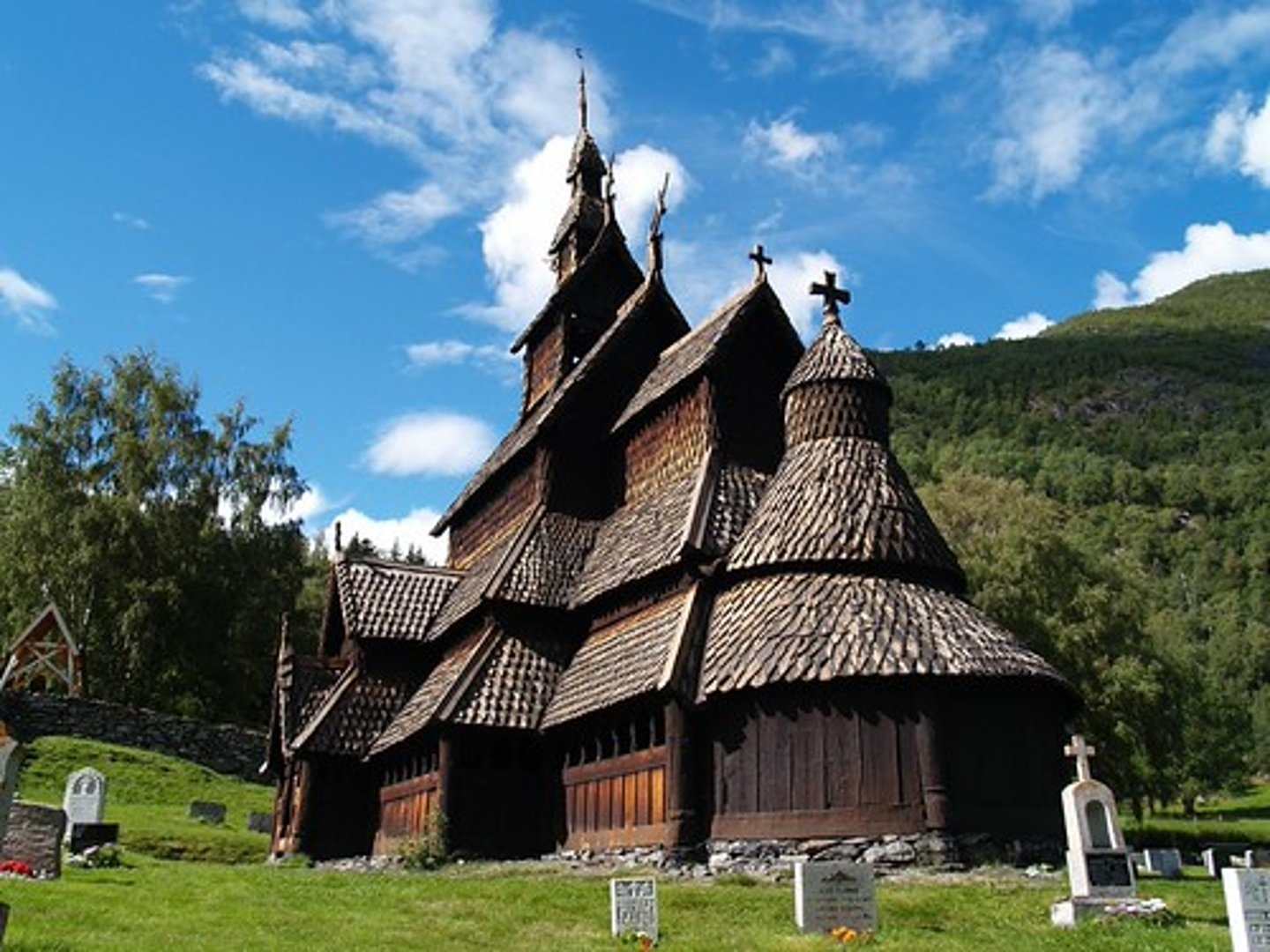
Stave churches
Medieval wooden churches built in Scandinavia using vertical load-bearing posts (staves) and characterized by steep roofs and intricate carved decoration.
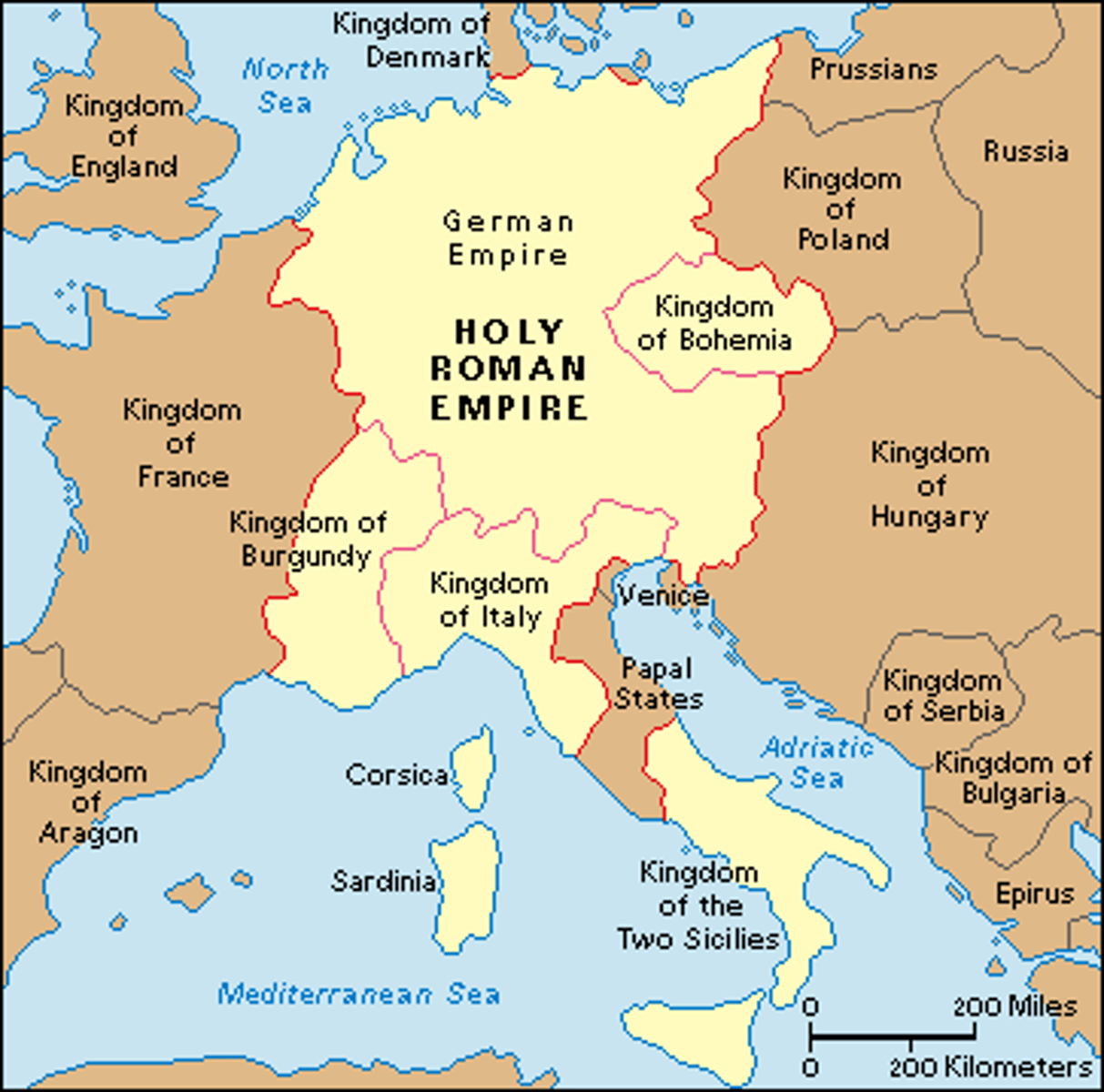
Holy Roman Empire
A political entity in central Europe, established in 800 CE with the coronation of Charlemagne, that sought to revive the legacy of the ancient Roman Empire under Christian rule.
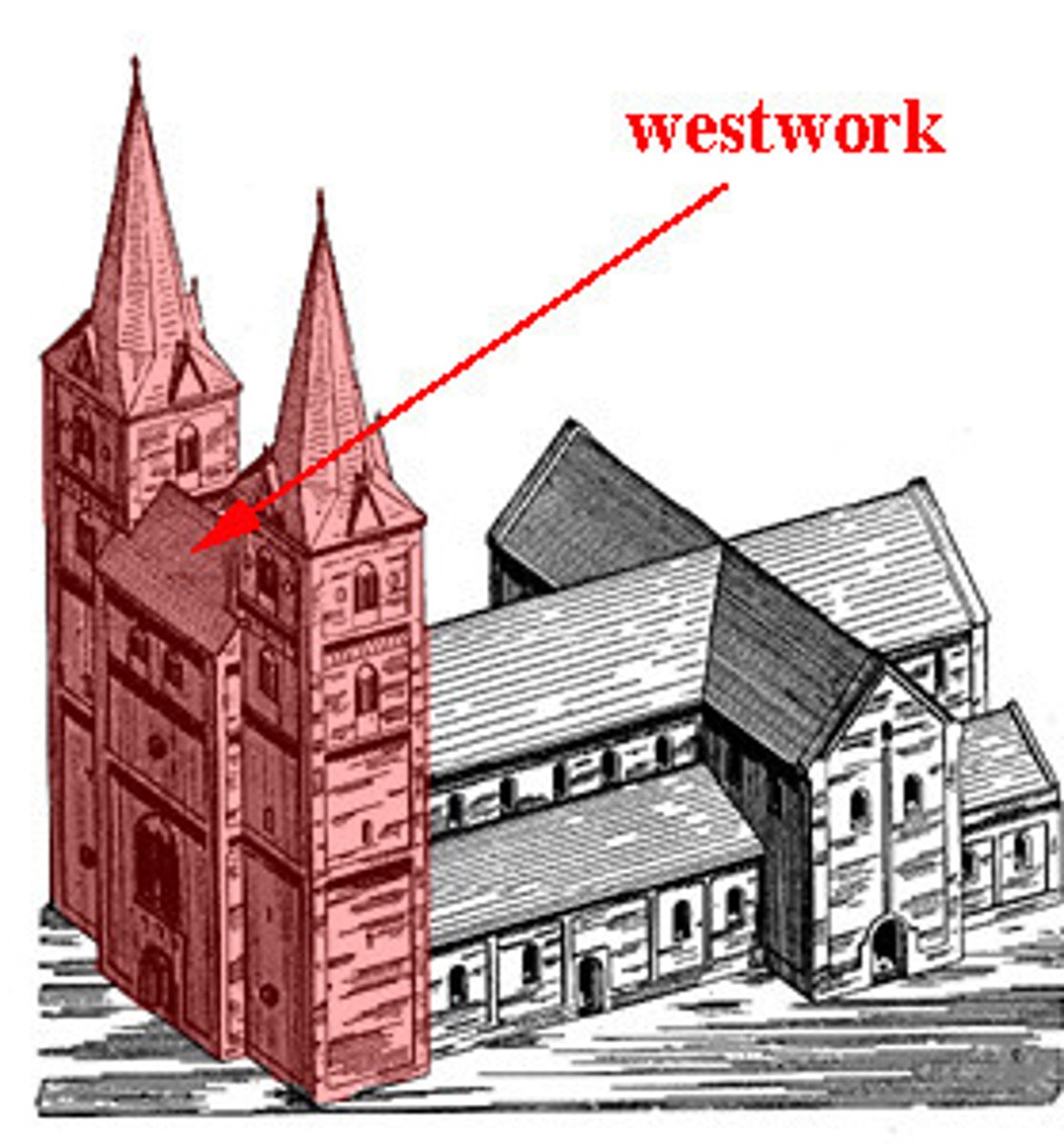
Westwork
A monumental western entrance of a medieval church, characteristic of Carolingian and Ottonian architecture, often featuring multiple stories, towers, and an upper chapel overlooking the nave.
Relic
A physical remain of a saint or an object associated with a holy figure, preserved and venerated for its spiritual significance.
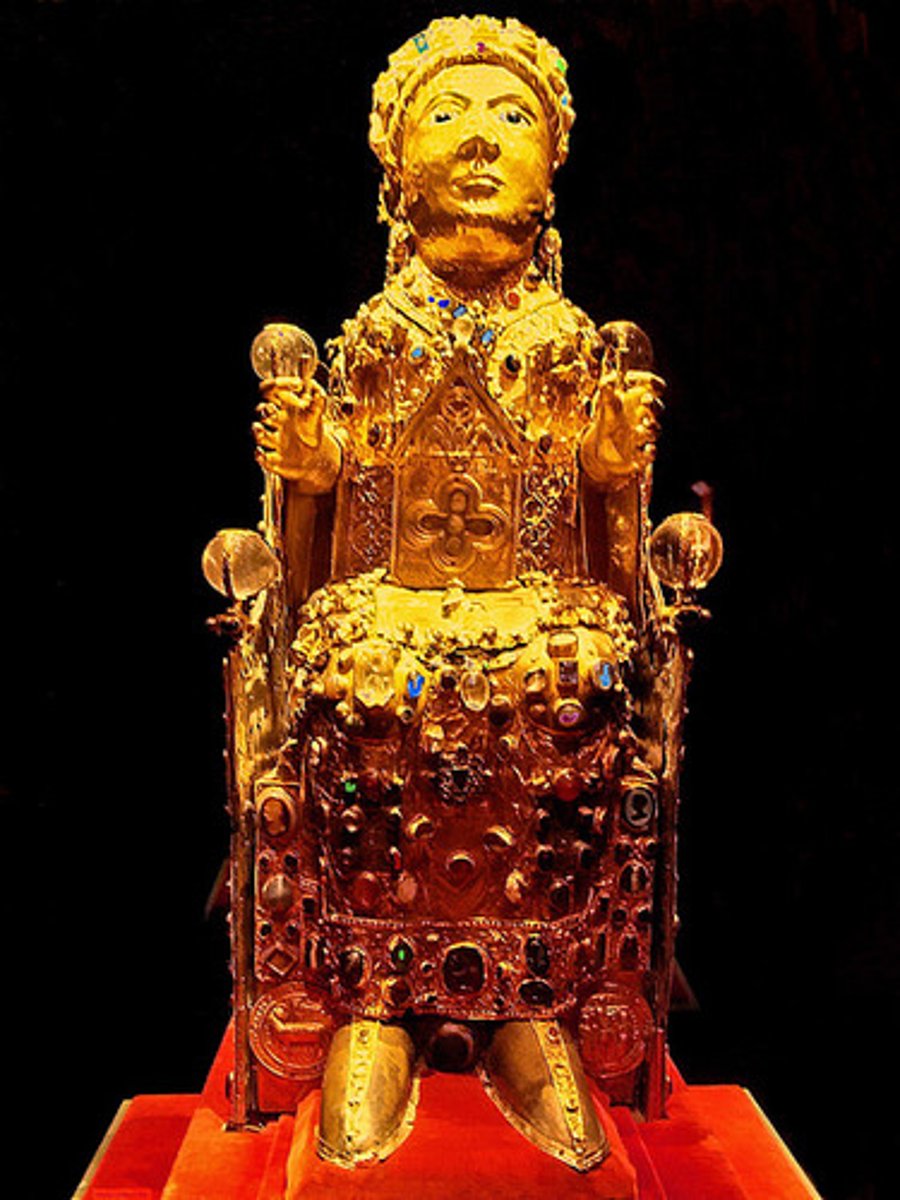
Reliquary
A container made to hold and display a sacred relic, often richly decorated to reflect the object's spiritual importance.
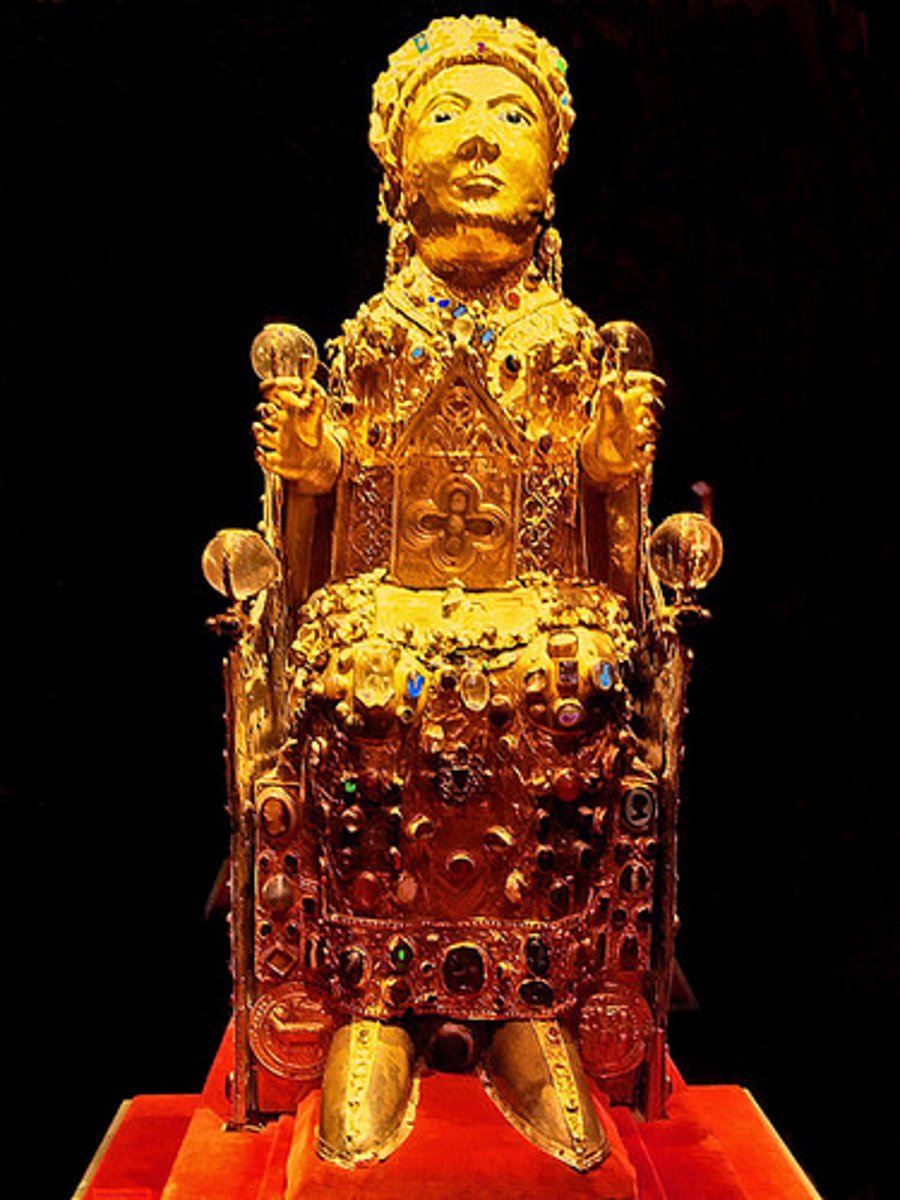
Ecclesiastical Hierarchy
A conceptual ranking of beings, objects, and spaces along a spectrum from the most sacred to the most ordinary, reflecting a divinely ordered structure of the world in medieval Christian thought.
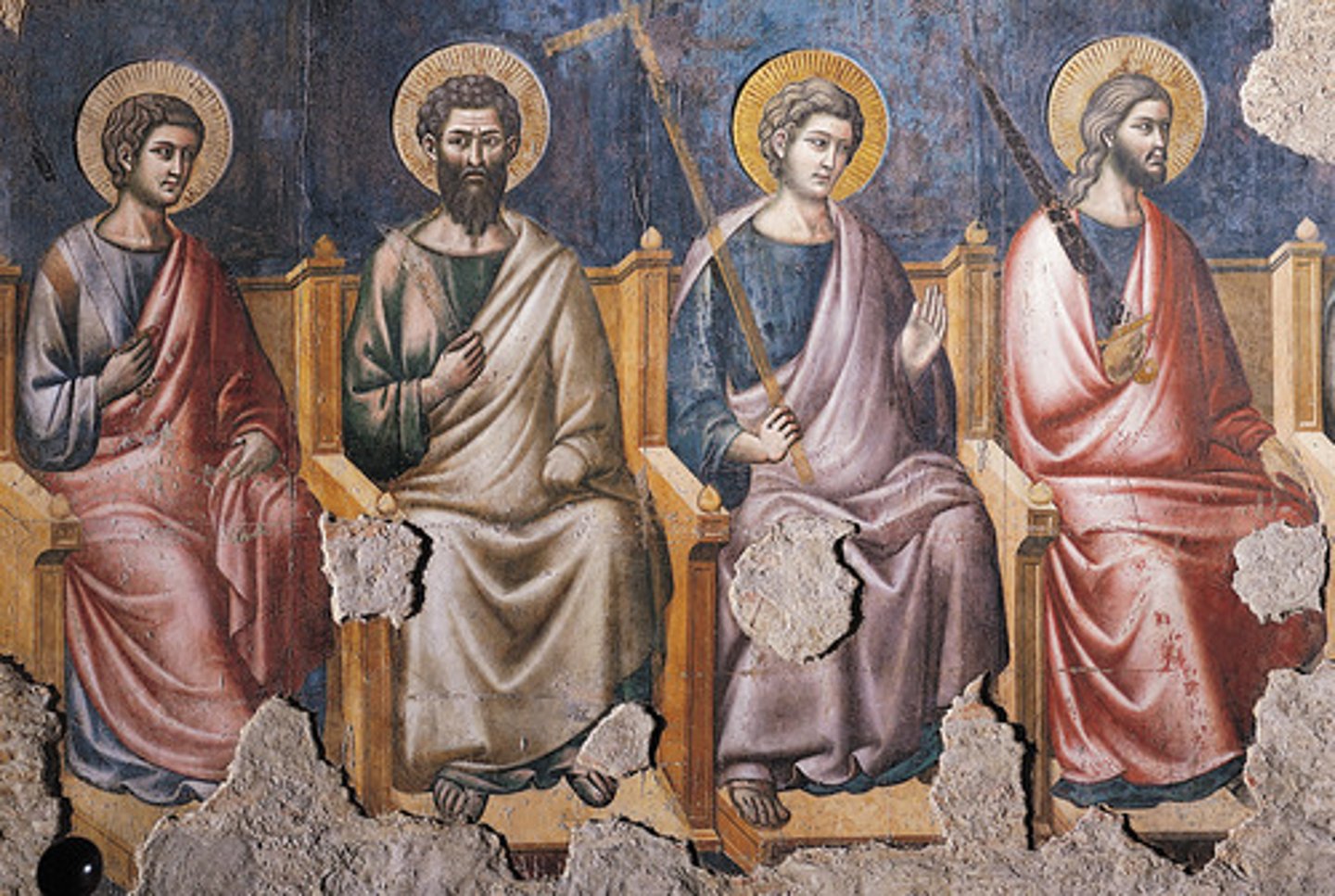
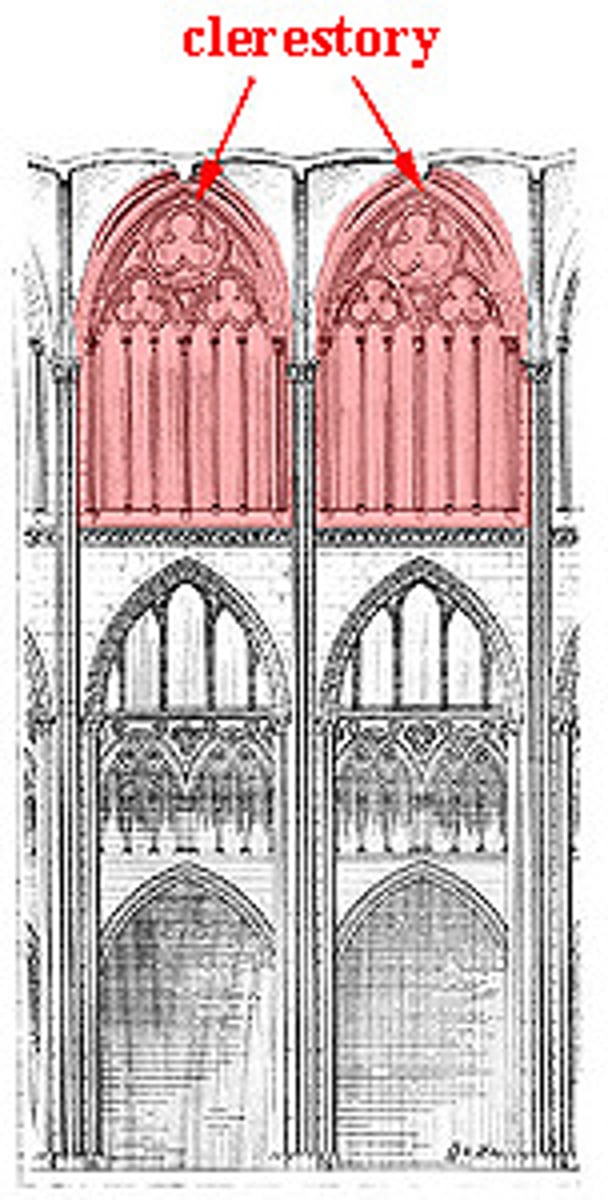
Clerestory
An upper level of a wall, often above side aisles or at the base of a dome, pierced with windows that admit light into the central interior space.
Choir
The area of a church between the nave and the apse, typically reserved for clergy and singers during the liturgy.
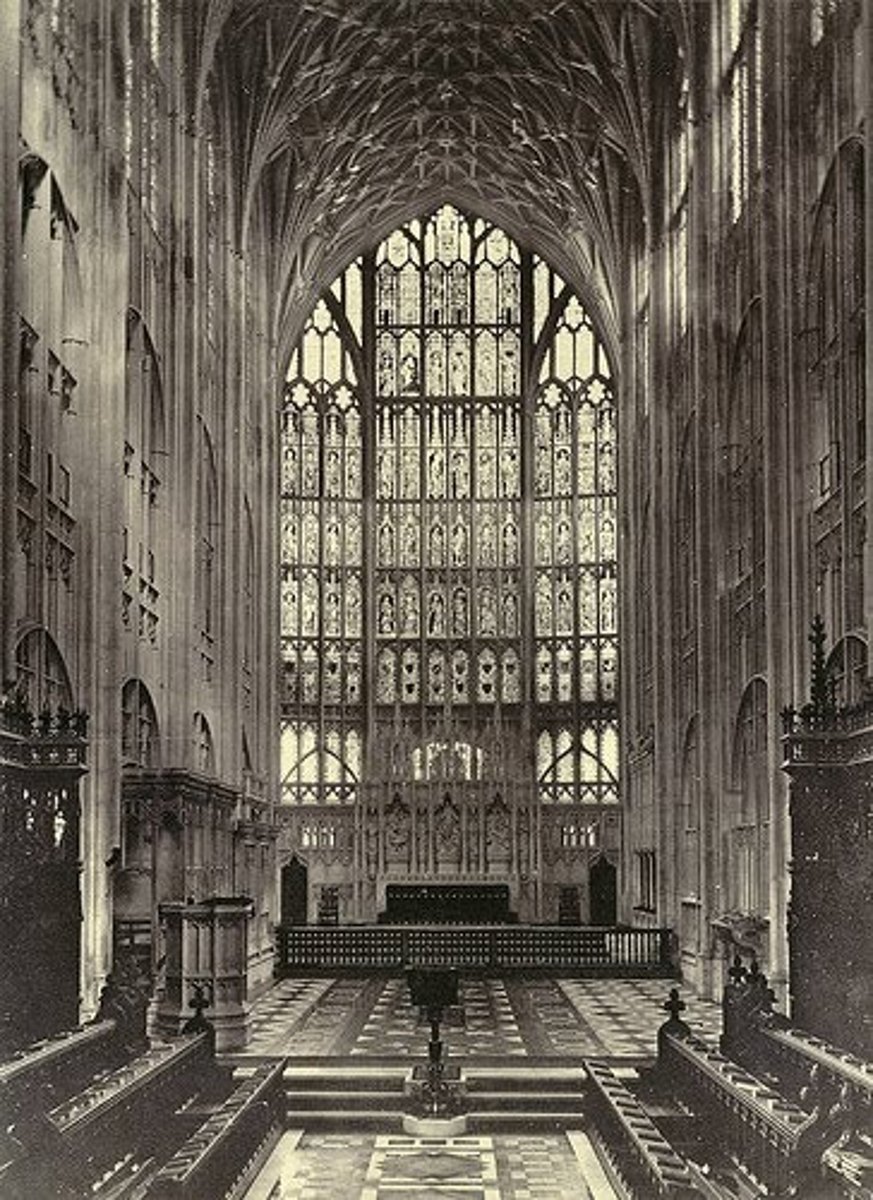
Radiating Chapels
Small chapels that extend outward from the apse or ambulatory of a church, often used to house relics and accommodate pilgrims.
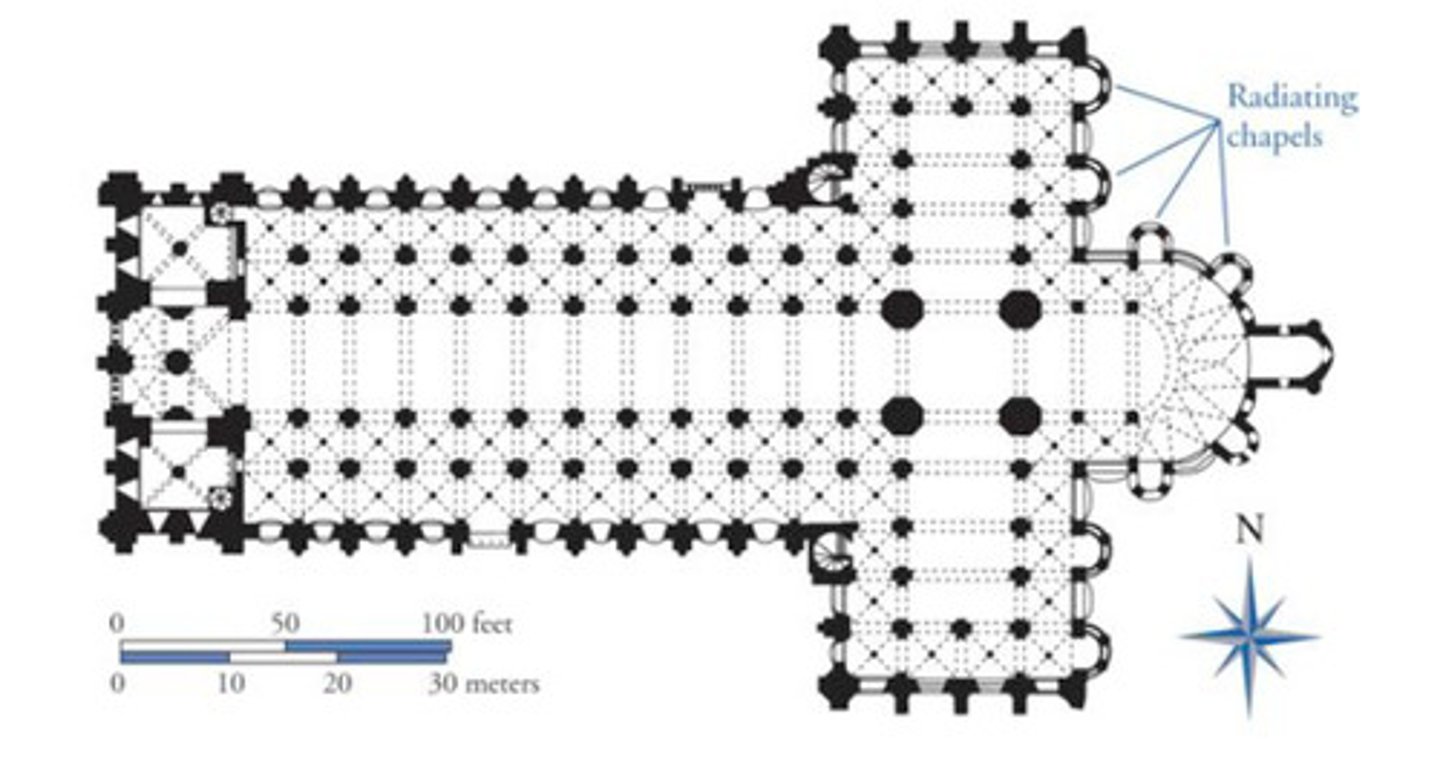
Arcade
A series of arches supported by columns or piers, often used to separate the nave from the side aisles in a church.
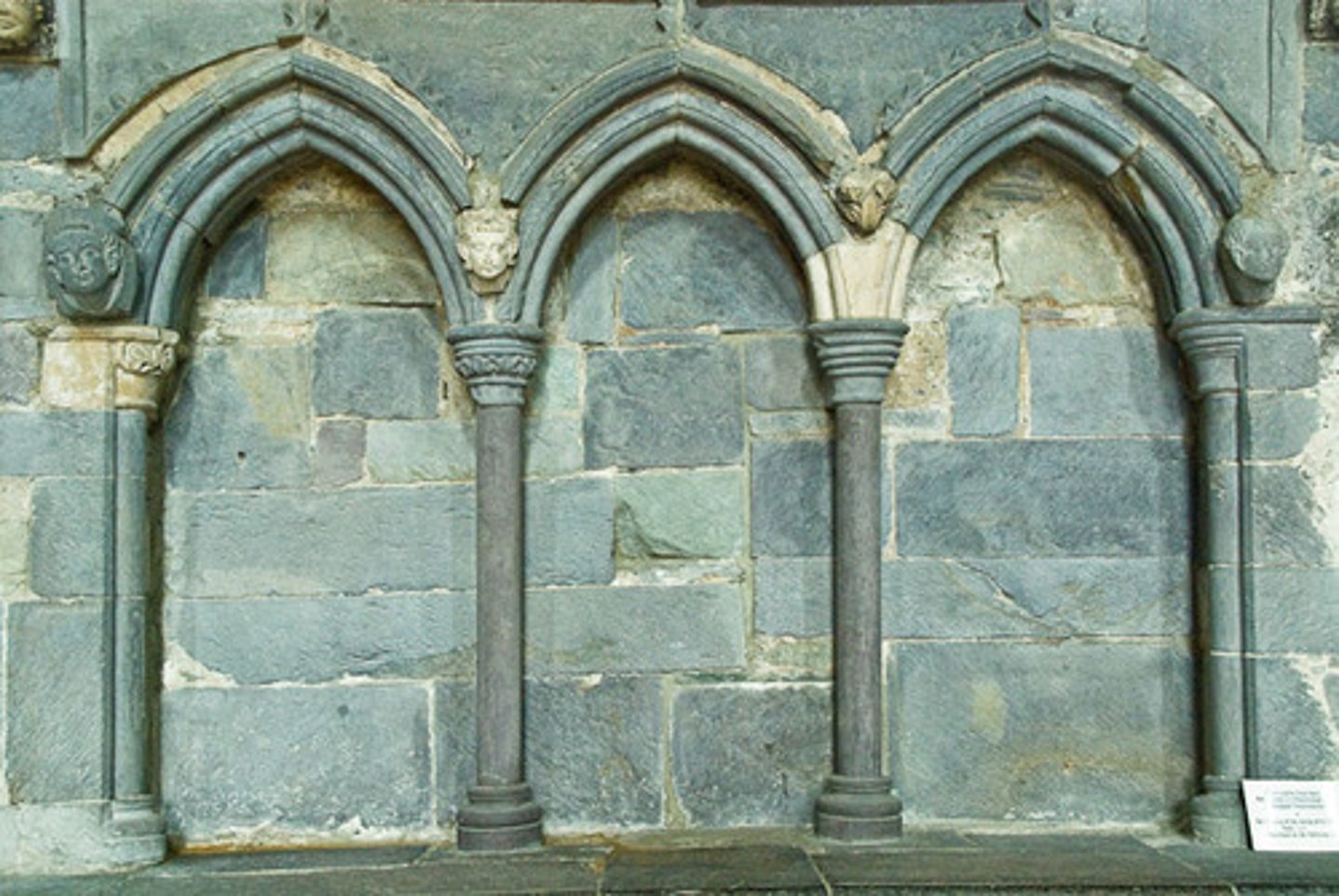
Cloister
A covered walkway surrounding an open courtyard, typically attached to a monastery and used for meditation and communal movement.
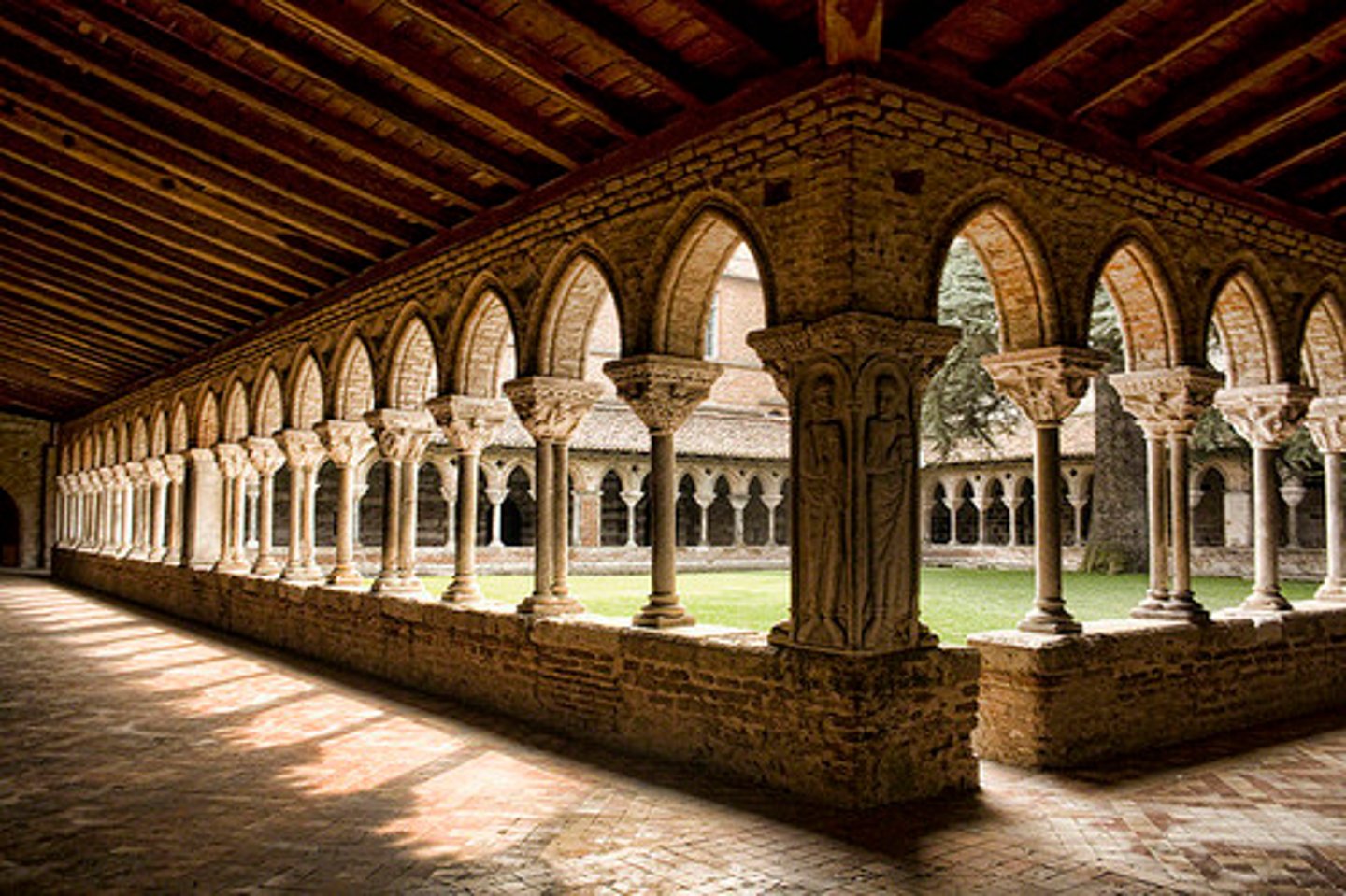
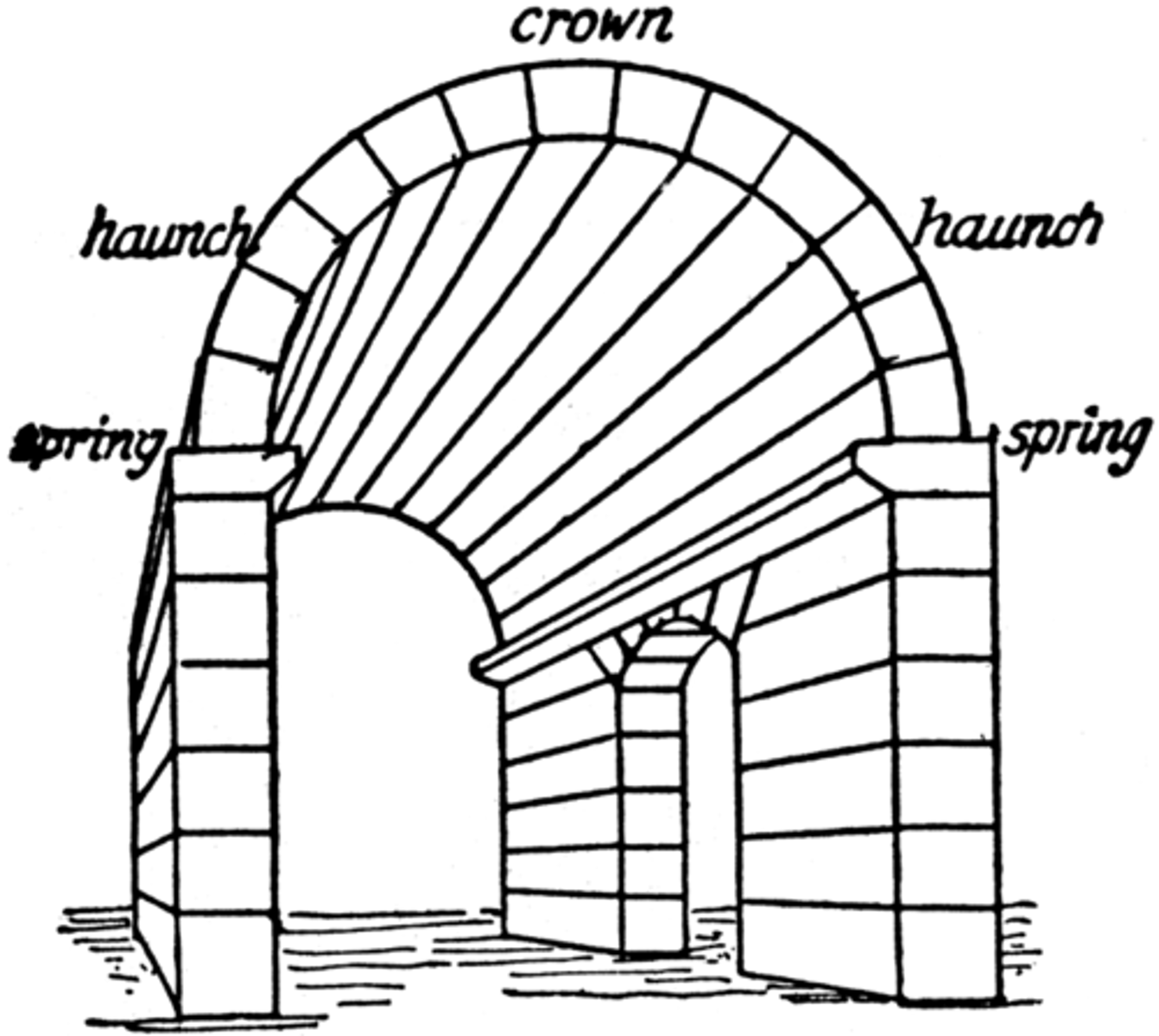
Barrel vault
A continuous semicircular vault formed by extending a round arch along a straight line to create a tunnel-like ceiling.
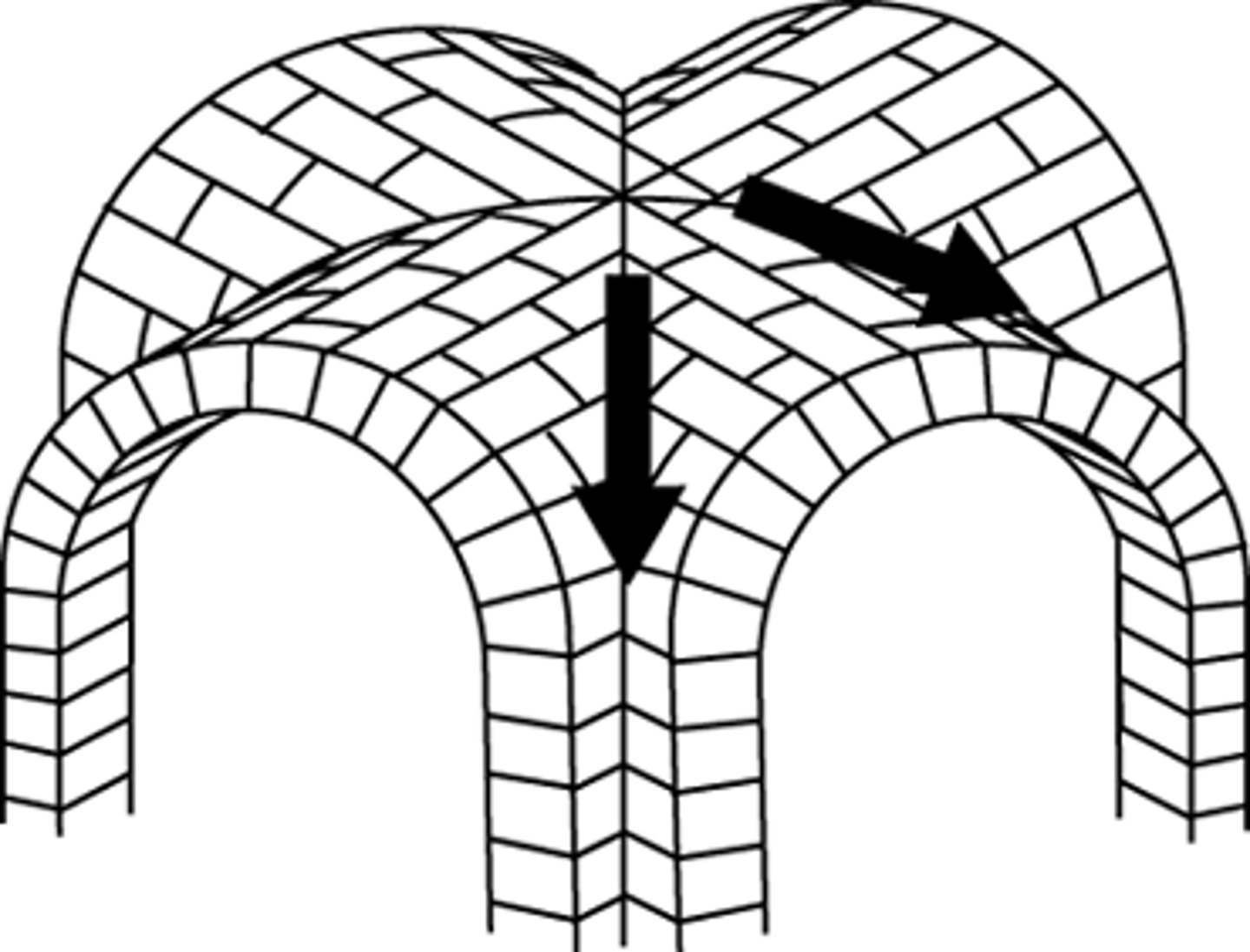
Groin vault
A vault formed by the perpendicular intersection of two barrel vaults, creating four curved surfaces that channel weight to the corners.
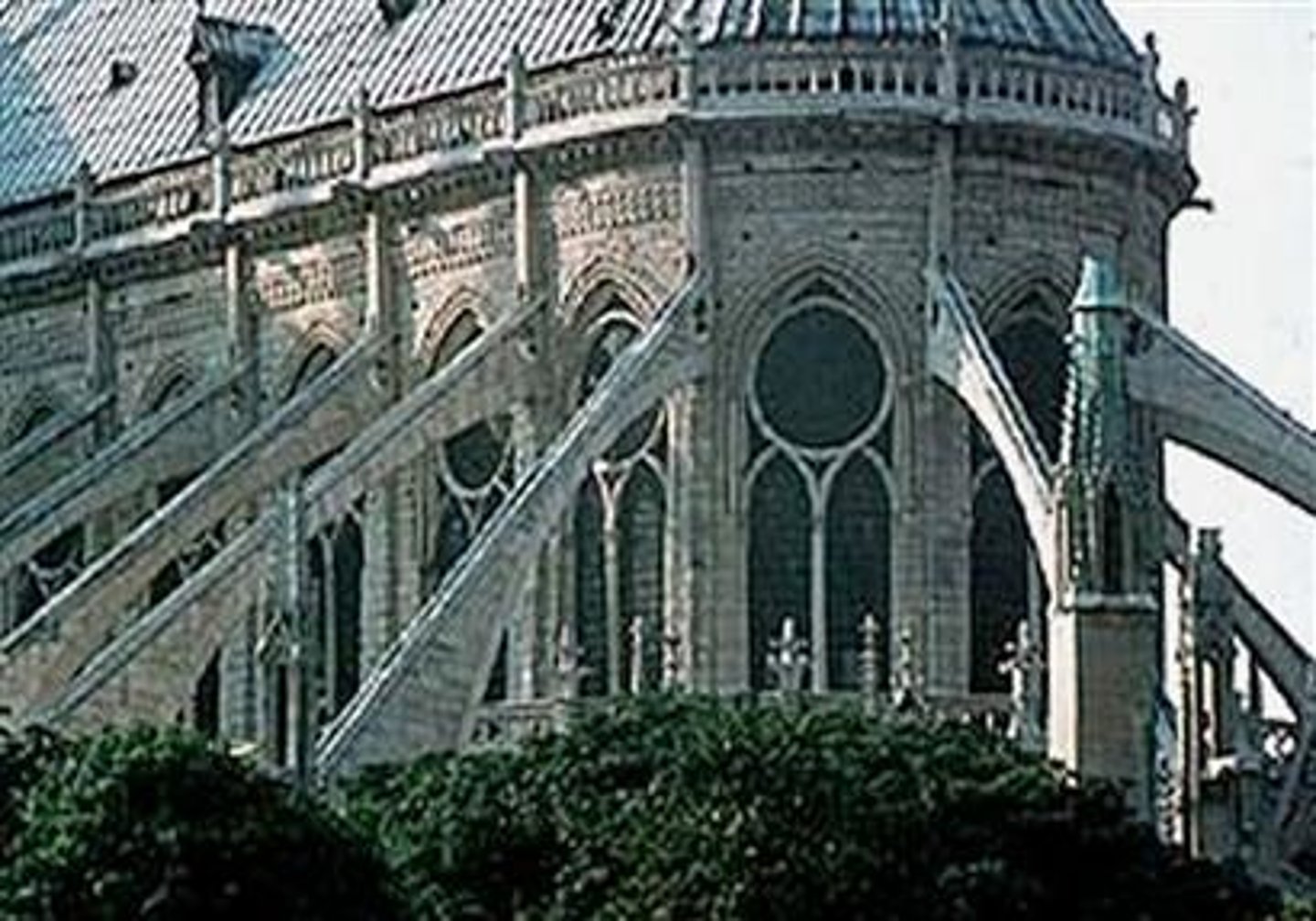
Buttress
A projecting exterior support built against a wall to counteract the lateral thrust of a vault or roof.
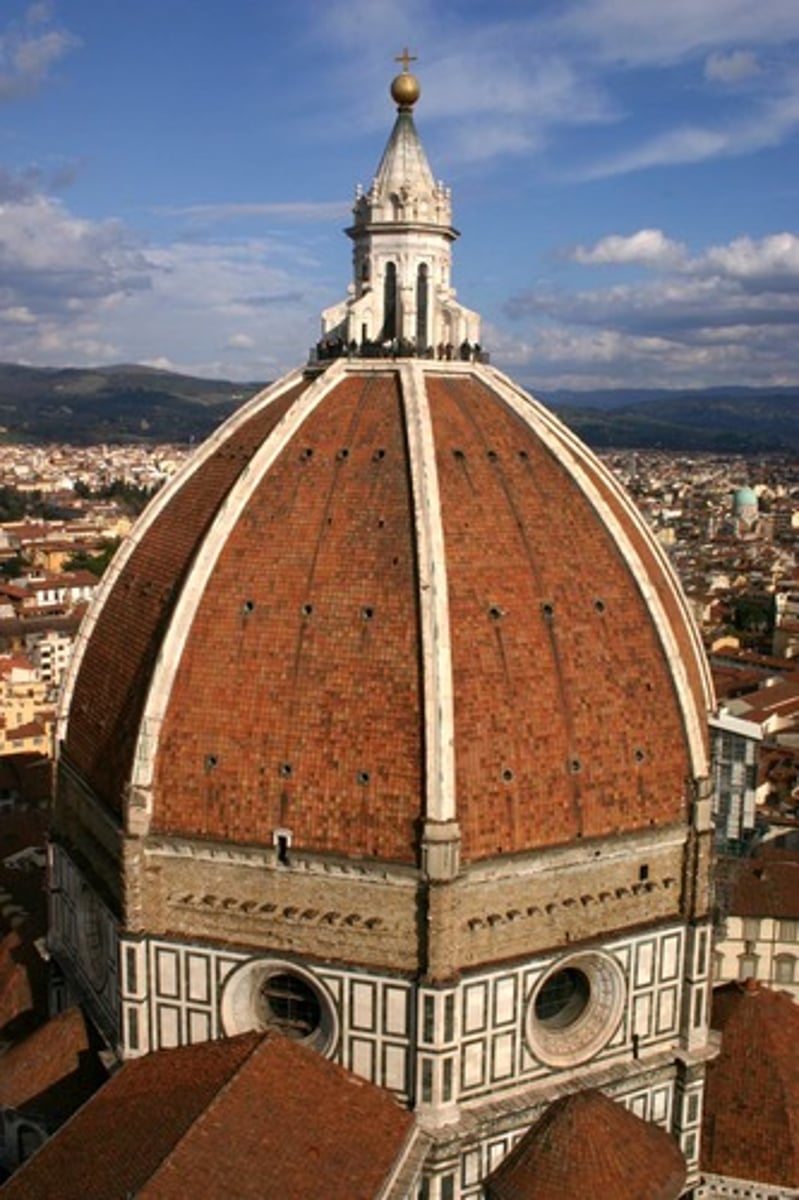
Ribs
Projecting stone arches that outline and support the intersections of vaults, helping to channel weight downward to the supports.
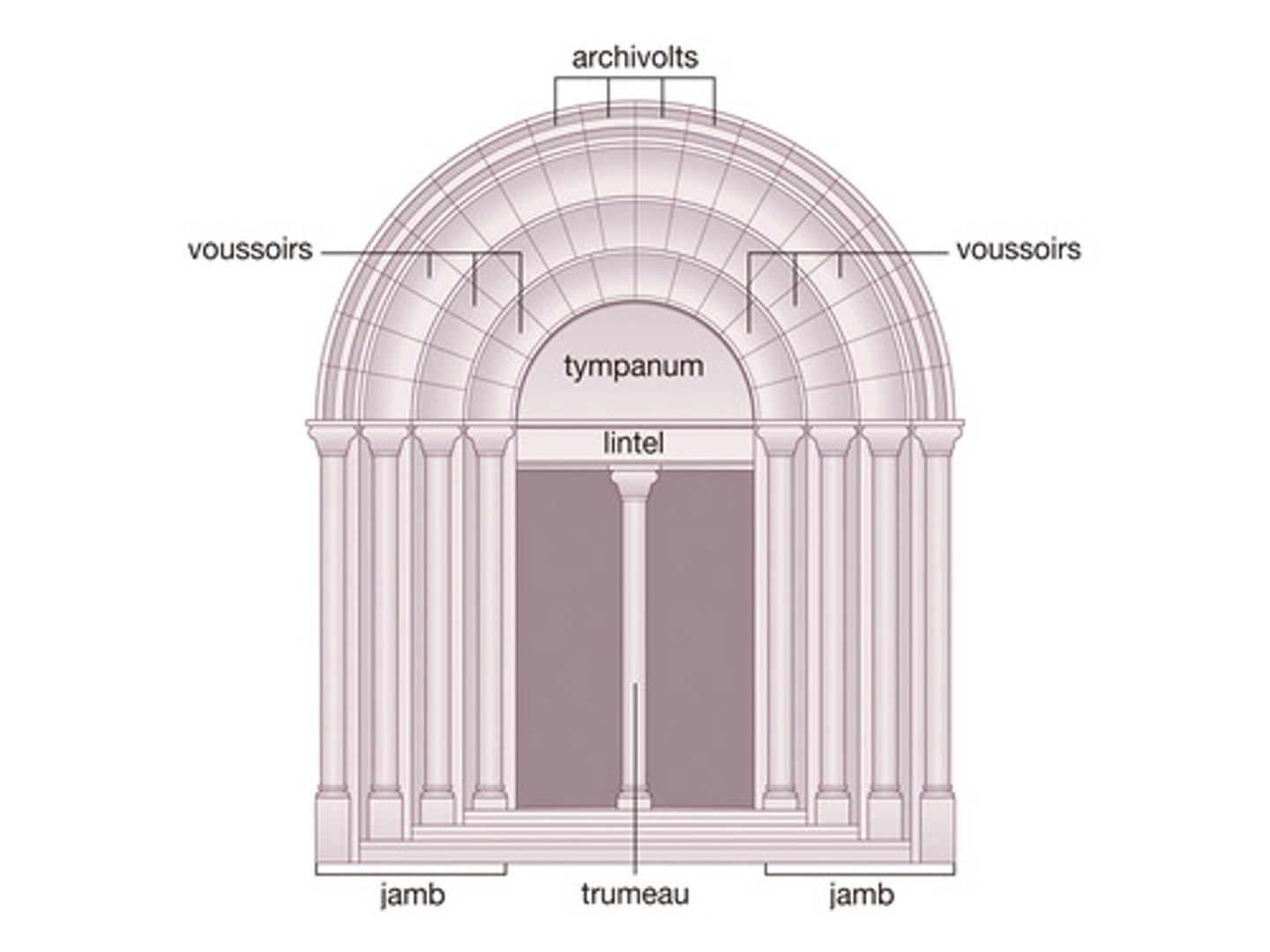
Romanesque
A style of medieval European architecture and art (c. 1000-1150 CE) characterized by round arches, thick walls, barrel vaults, and monumental stone construction.
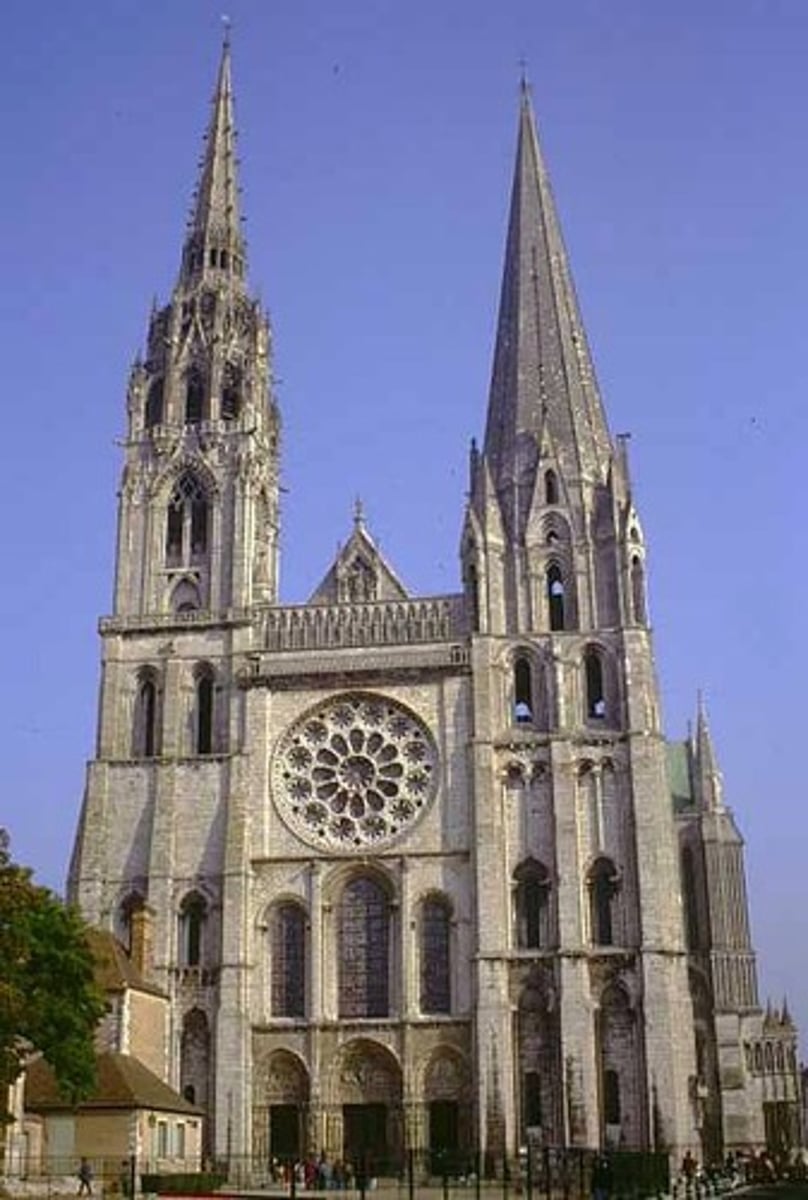
Gothic
A style of European architecture and art (c. 1140-1500 CE) characterized by pointed arches, ribbed groin vaults, flying buttresses, and expansive stained glass windows.
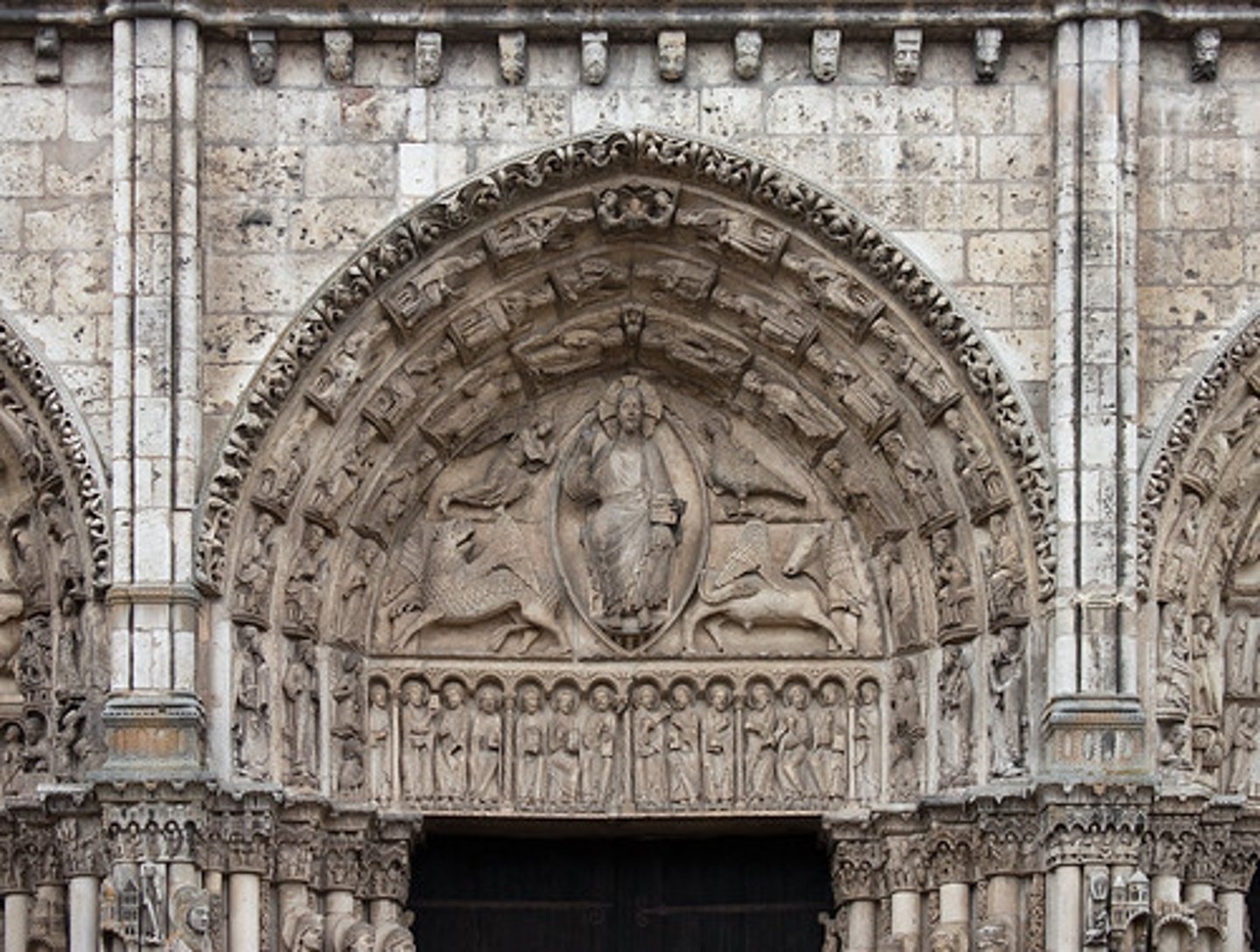
Tympanum
The semicircular or triangular sculpted area above a doorway, enclosed by an arch and often filled with relief imagery.
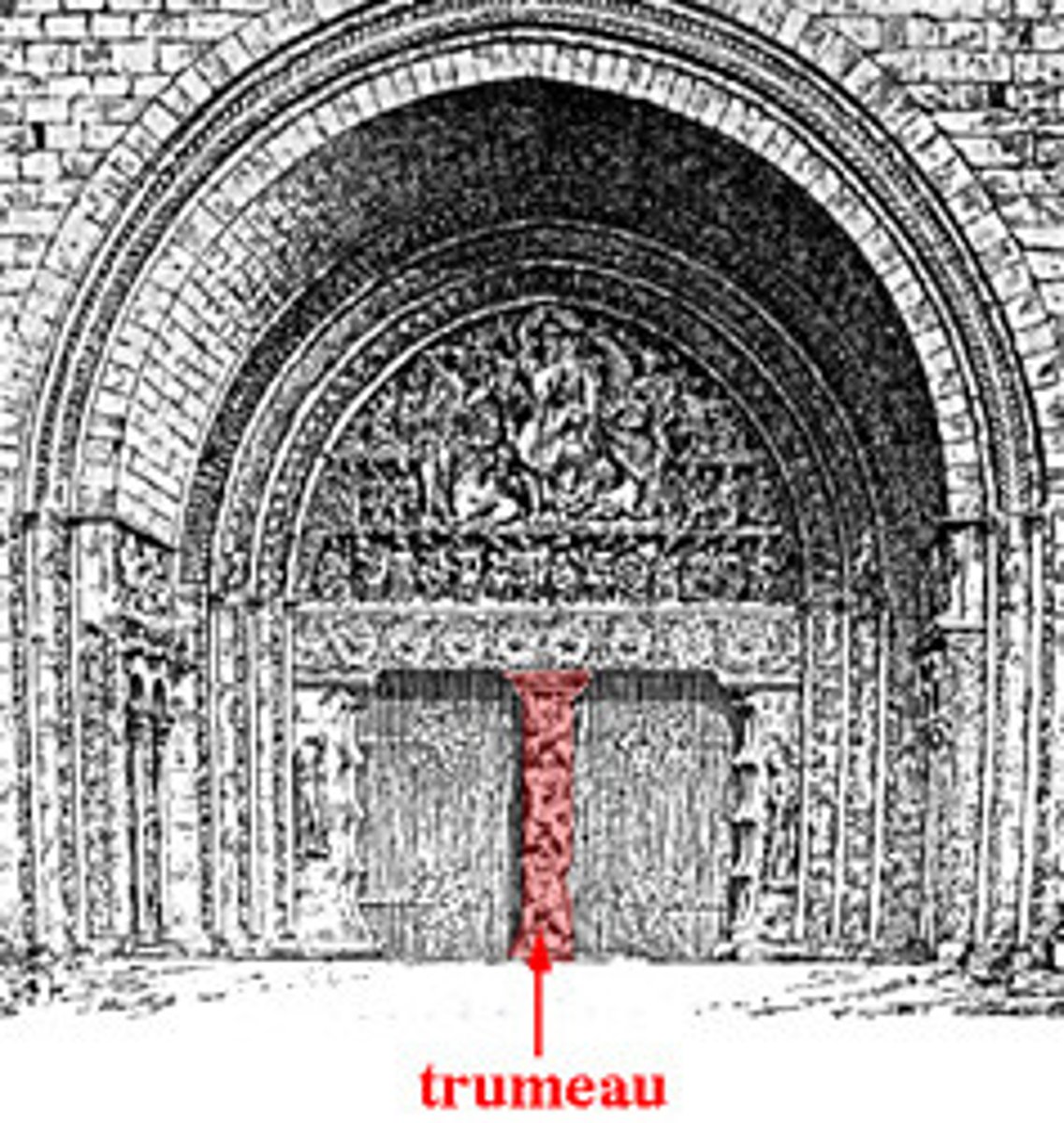
Trumeau
The central vertical support beneath the tympanum of a church portal, often carved with a sculpted figure.
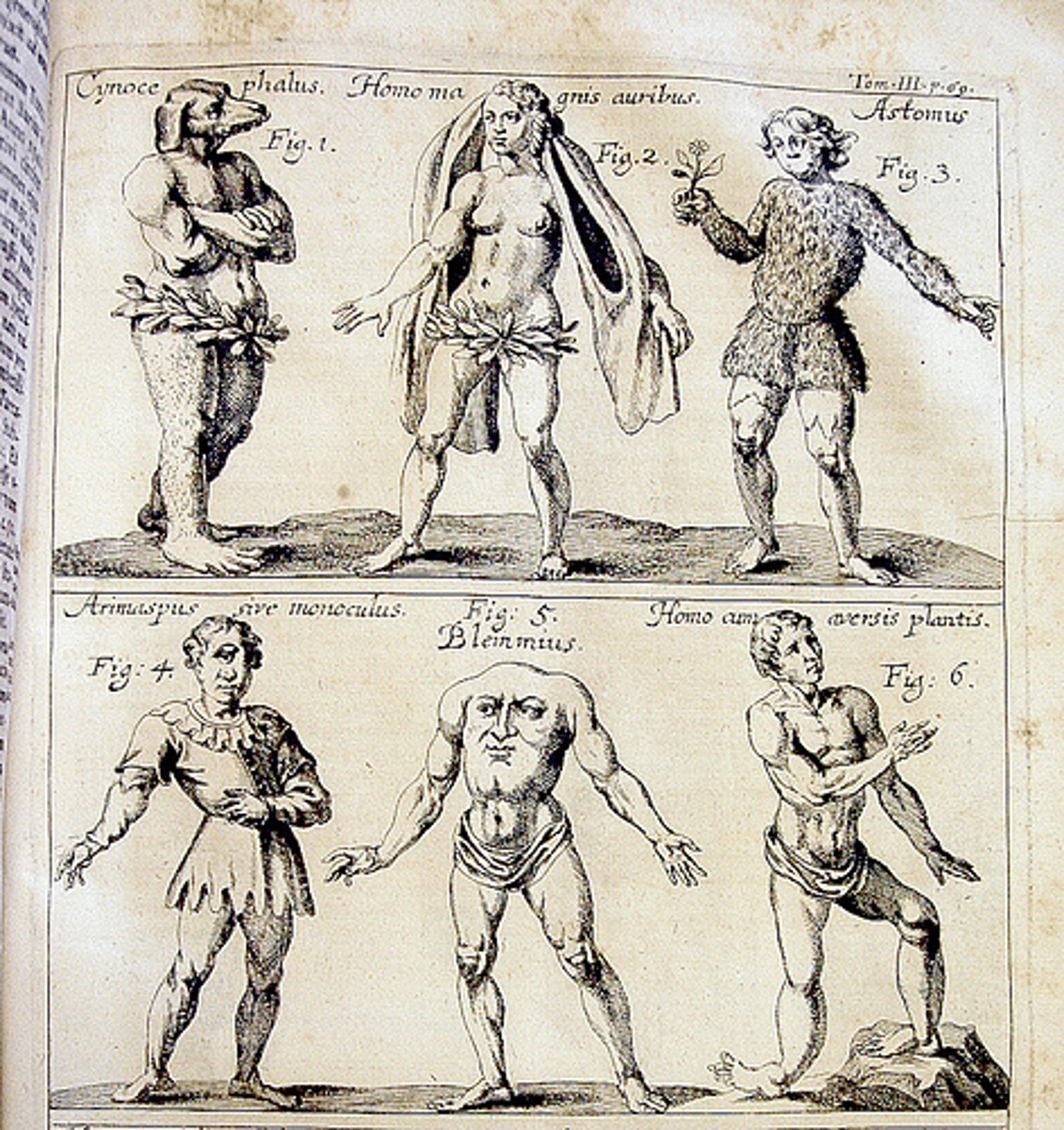
Plinian Monstrous Races
Legendary human-like races described by the Roman author Pliny the Elder, believed in the Middle Ages to inhabit distant lands and often depicted with fantastical physical traits.
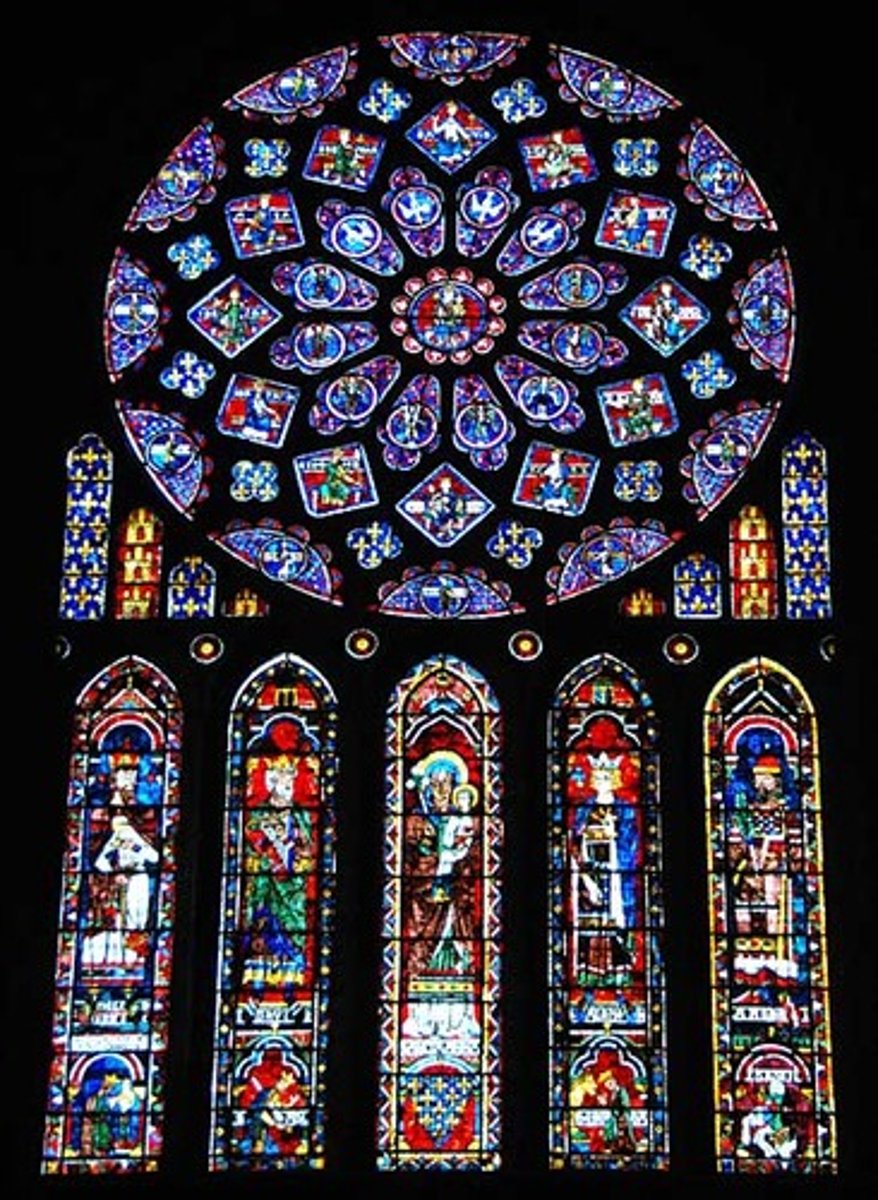
Rose window
A large circular stained glass window with radiating tracery, commonly placed on the façade or transept of a Gothic cathedral.
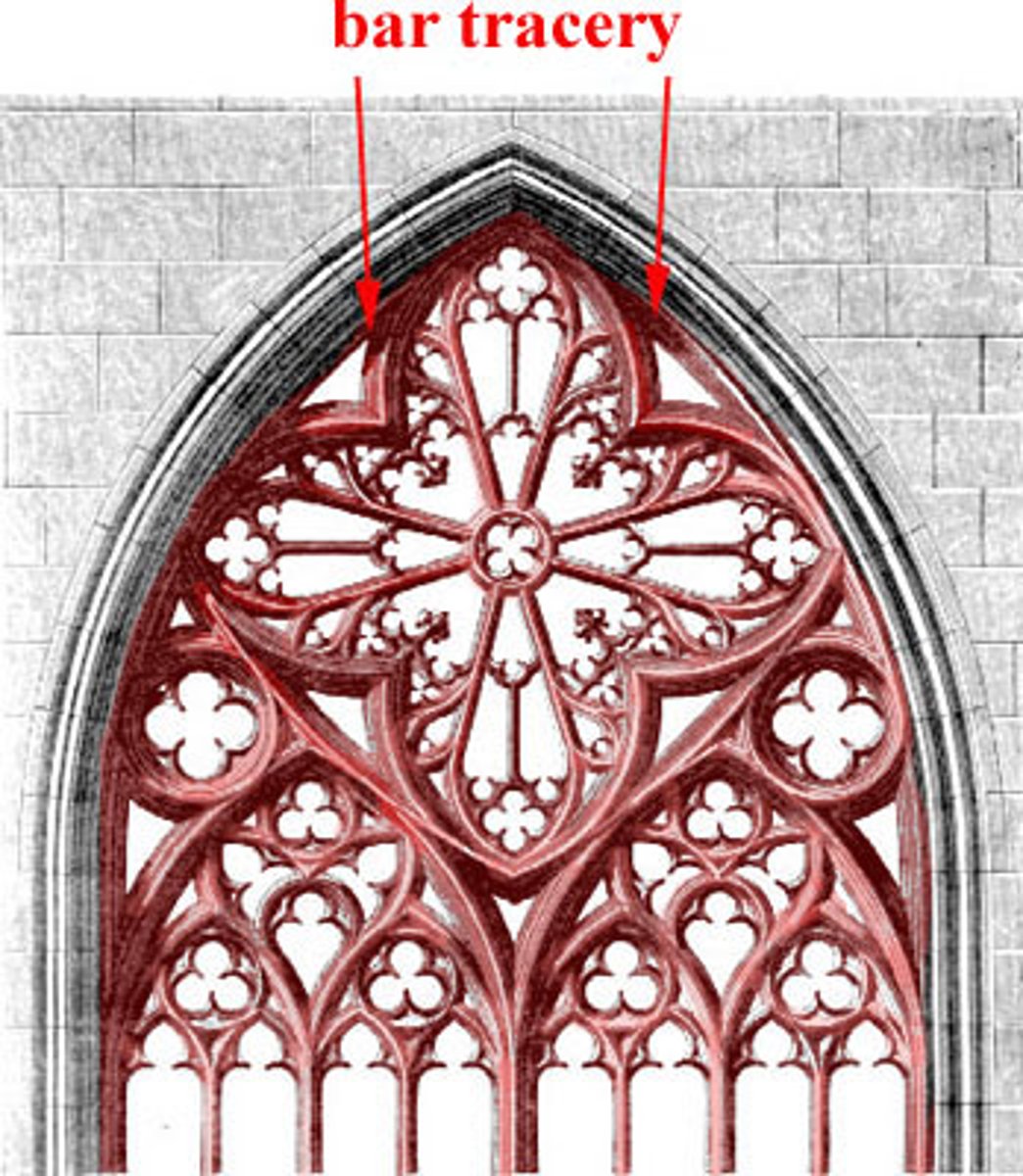
Tracery
The ornamental stone framework that supports and divides stained glass windows into decorative patterns that transfer the visual interest of the glass onto the exterior façade.
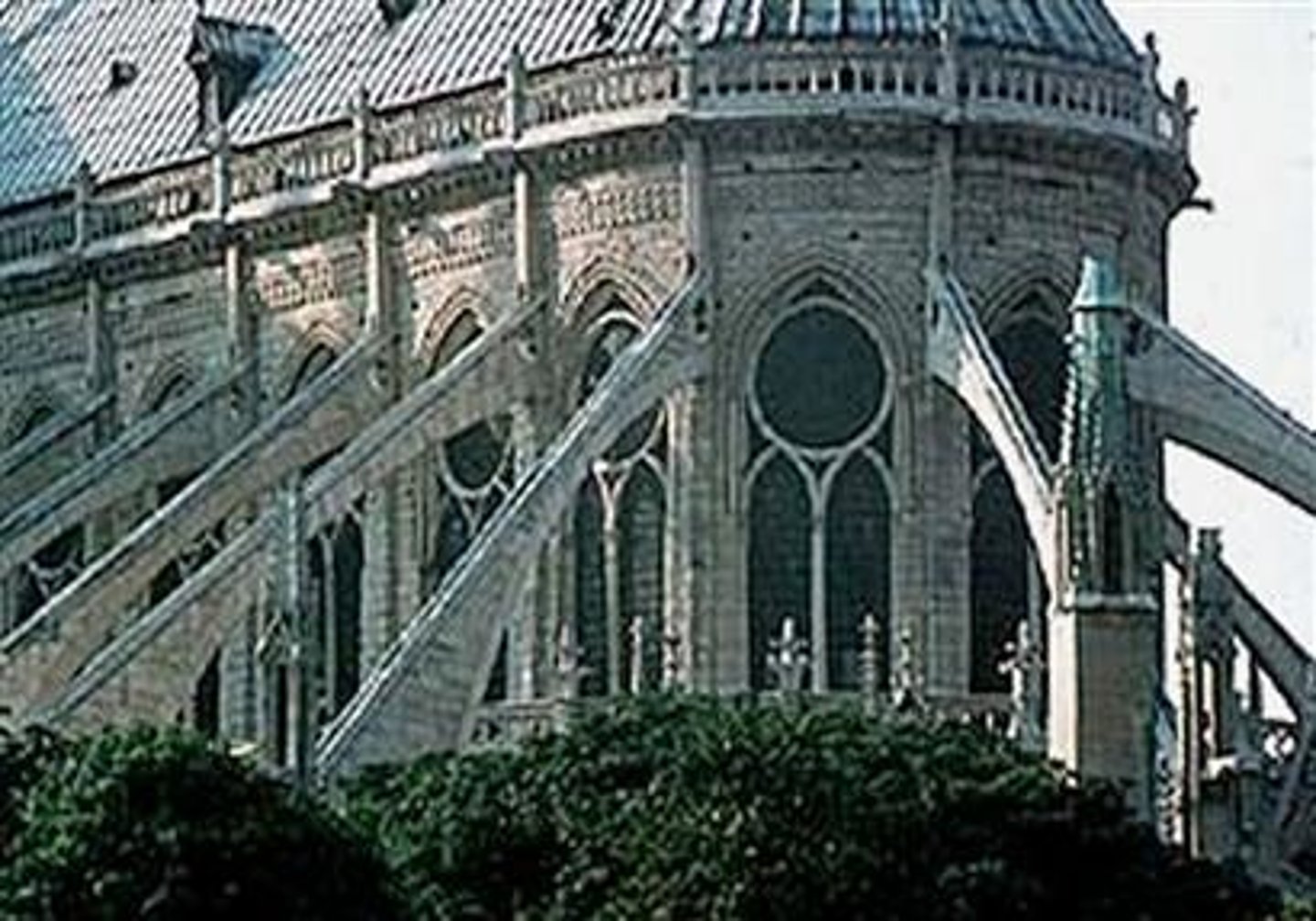
Flying buttress
An exterior arched support that transfers the lateral thrust of a vault from a wall to a separate pier, allowing for taller structures and larger windows.
Book of hours
A private devotional manuscript used in the later Middle Ages, containing prayers to be recited at specific times of day.
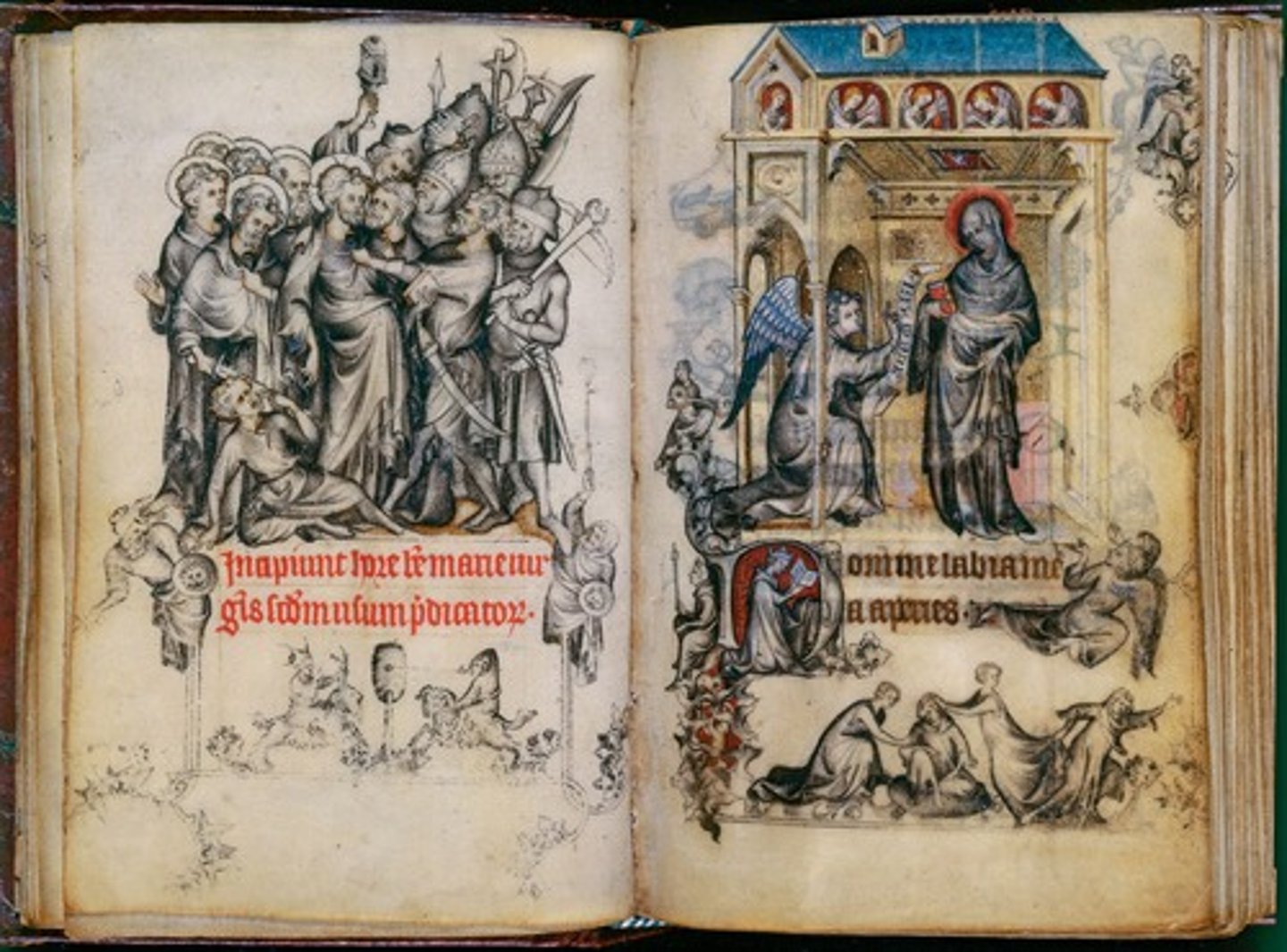
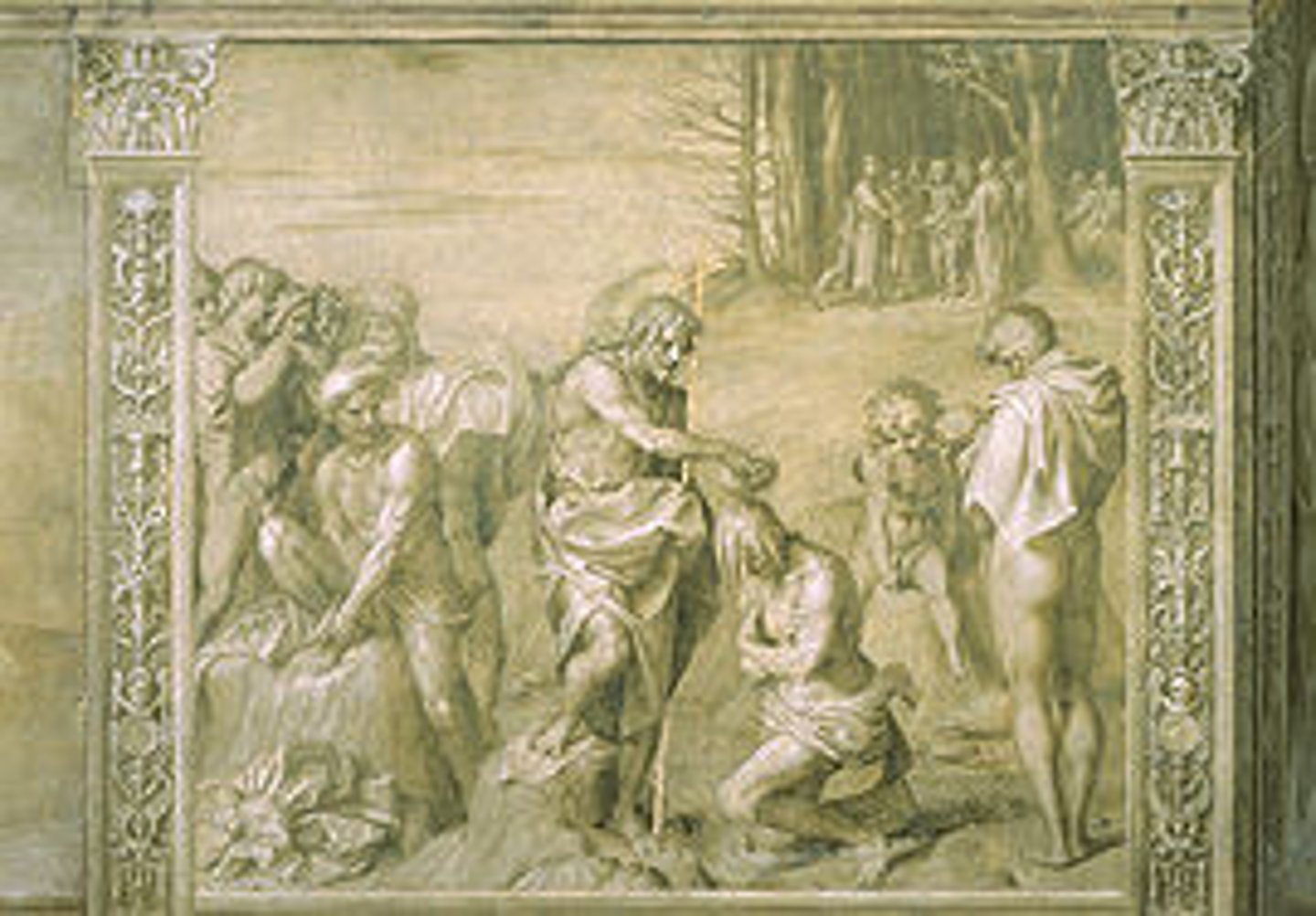
Grisaille
A painting technique executed entirely in shades of gray (or another neutral color) to imitate sculpture or create subtle tonal effects.
Marginalia
Images, decorations, or notes added in the margins of a manuscript, often playful, symbolic, or commentary on the main text.
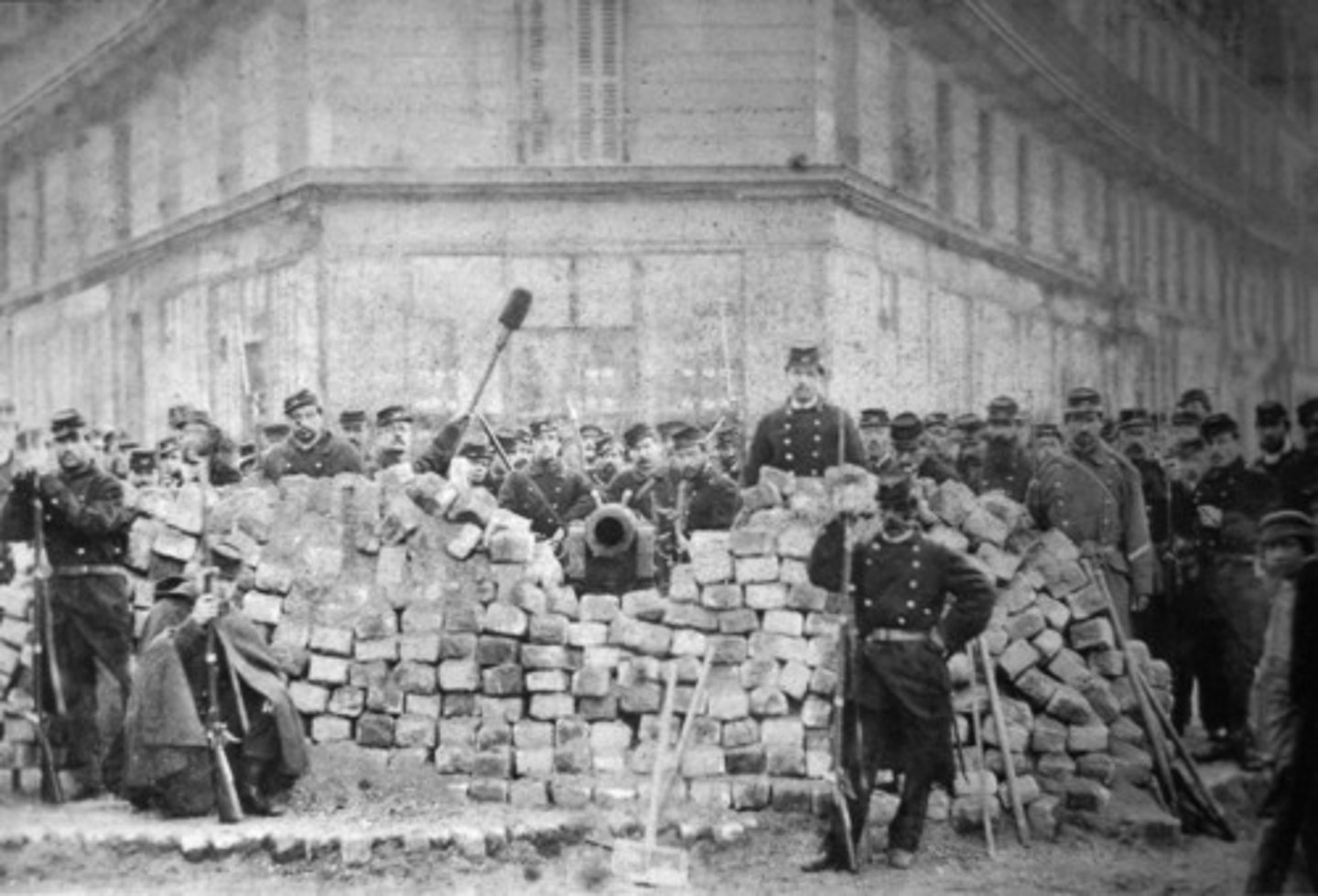
Commune
A self-governing urban association formed in medieval Europe, in which citizens banded together to secure political and economic rights from feudal authorities.
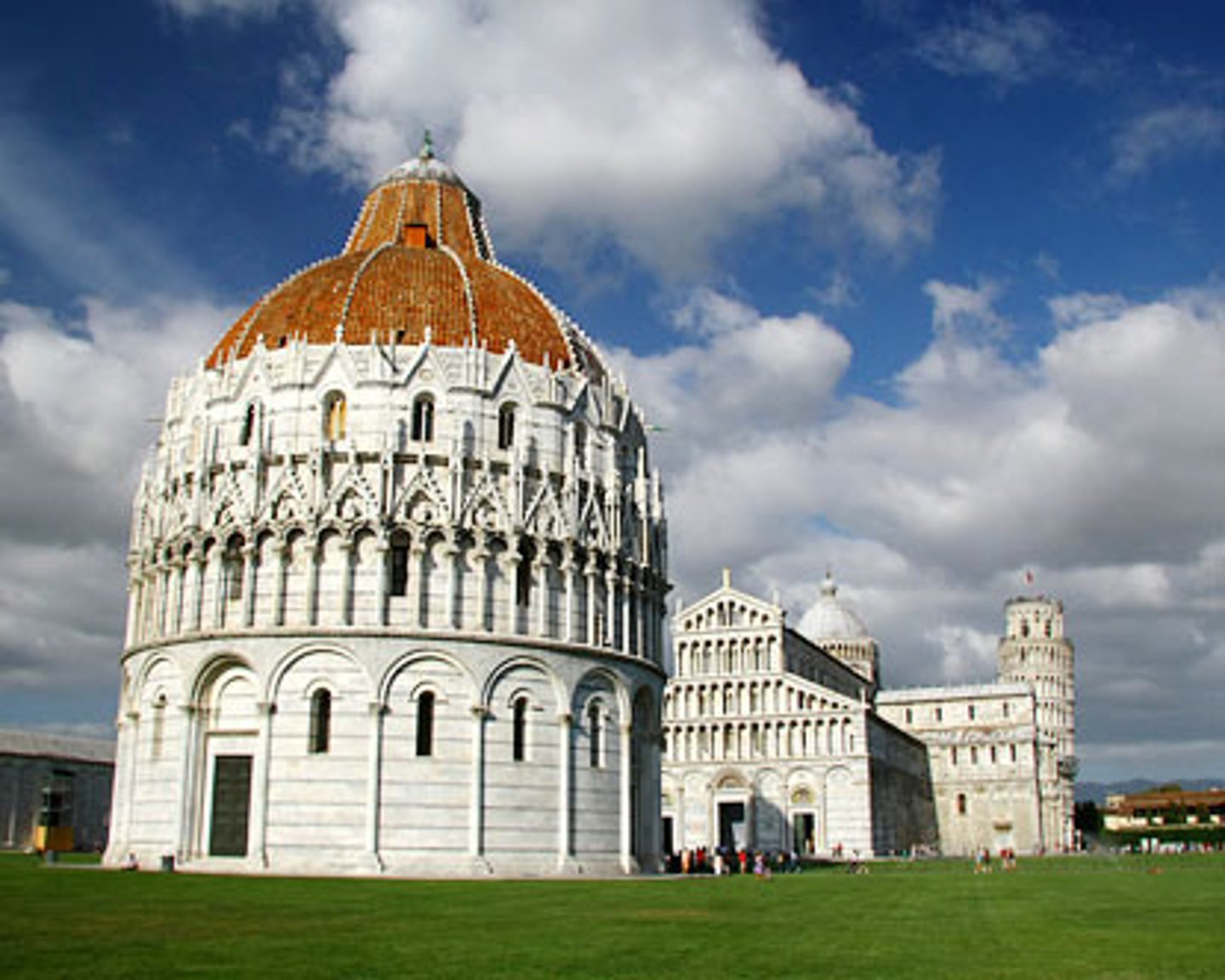
Baptistery
A building or distinct space within a church set aside for the sacrament of baptism.
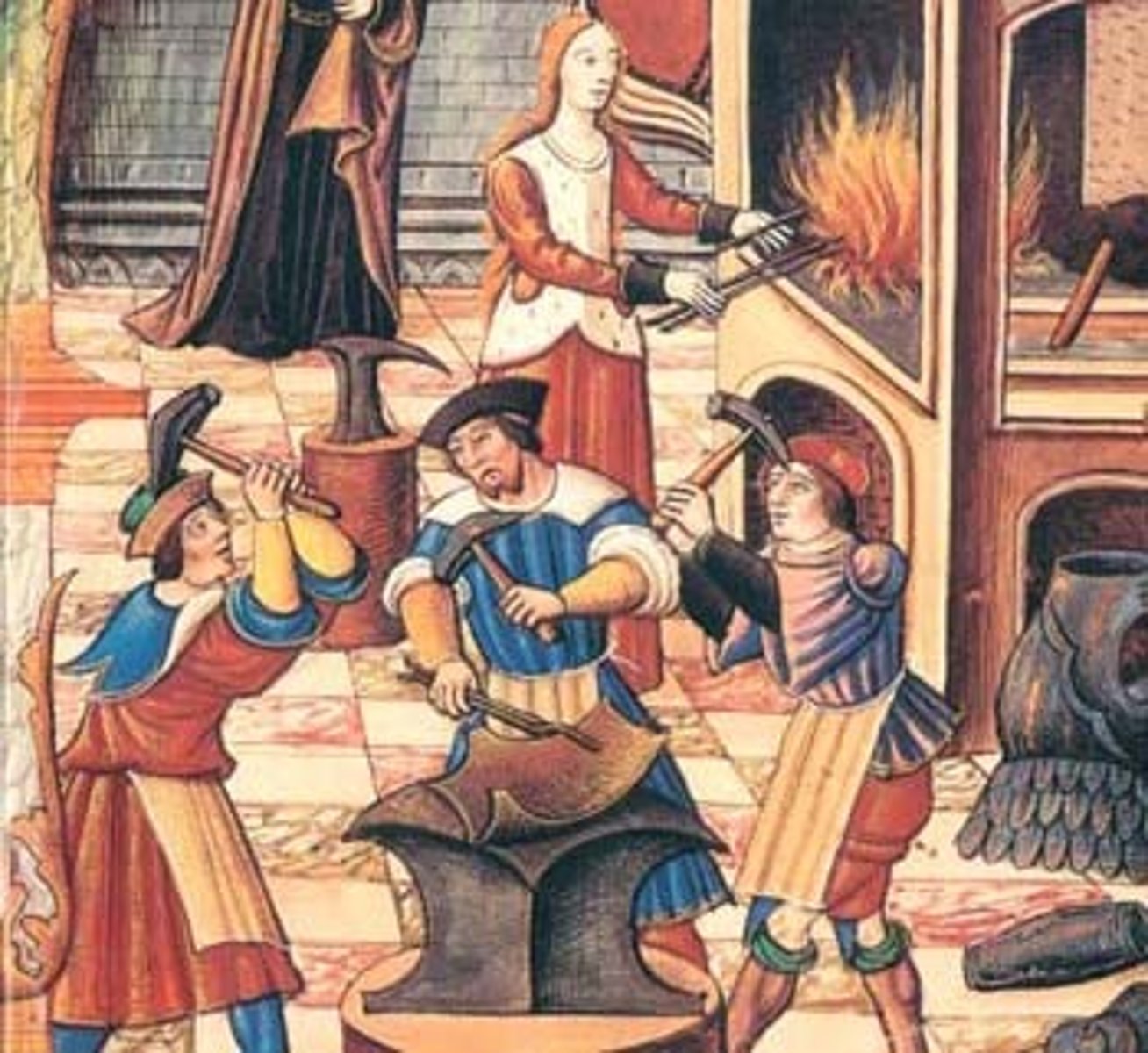
Guild
An organized association of artisans or merchants in medieval Europe that regulated training, standards, and trade within a particular craft.
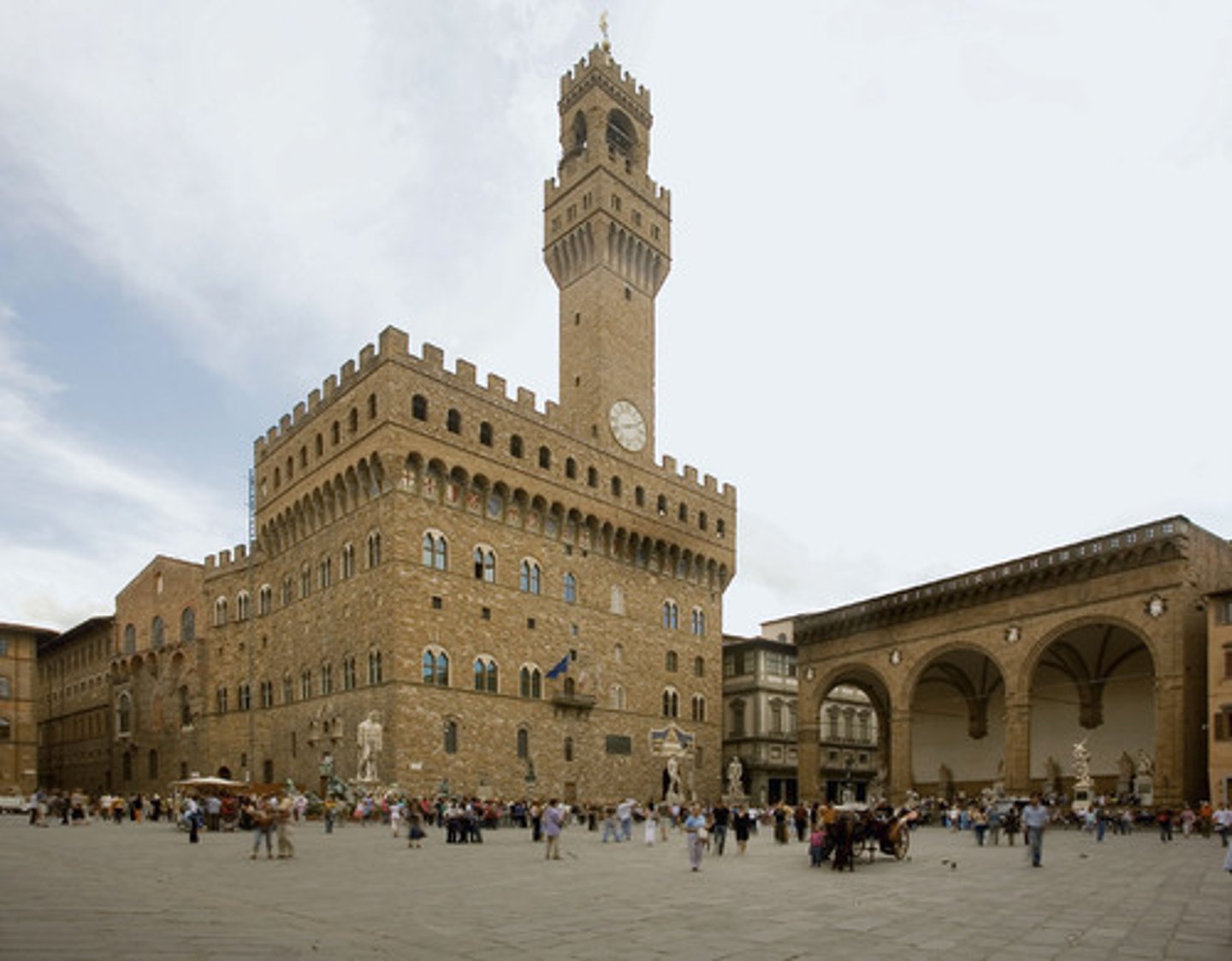
Signoria
The governing council or ruling body of an Italian city-state during the late medieval and early Renaissance periods.
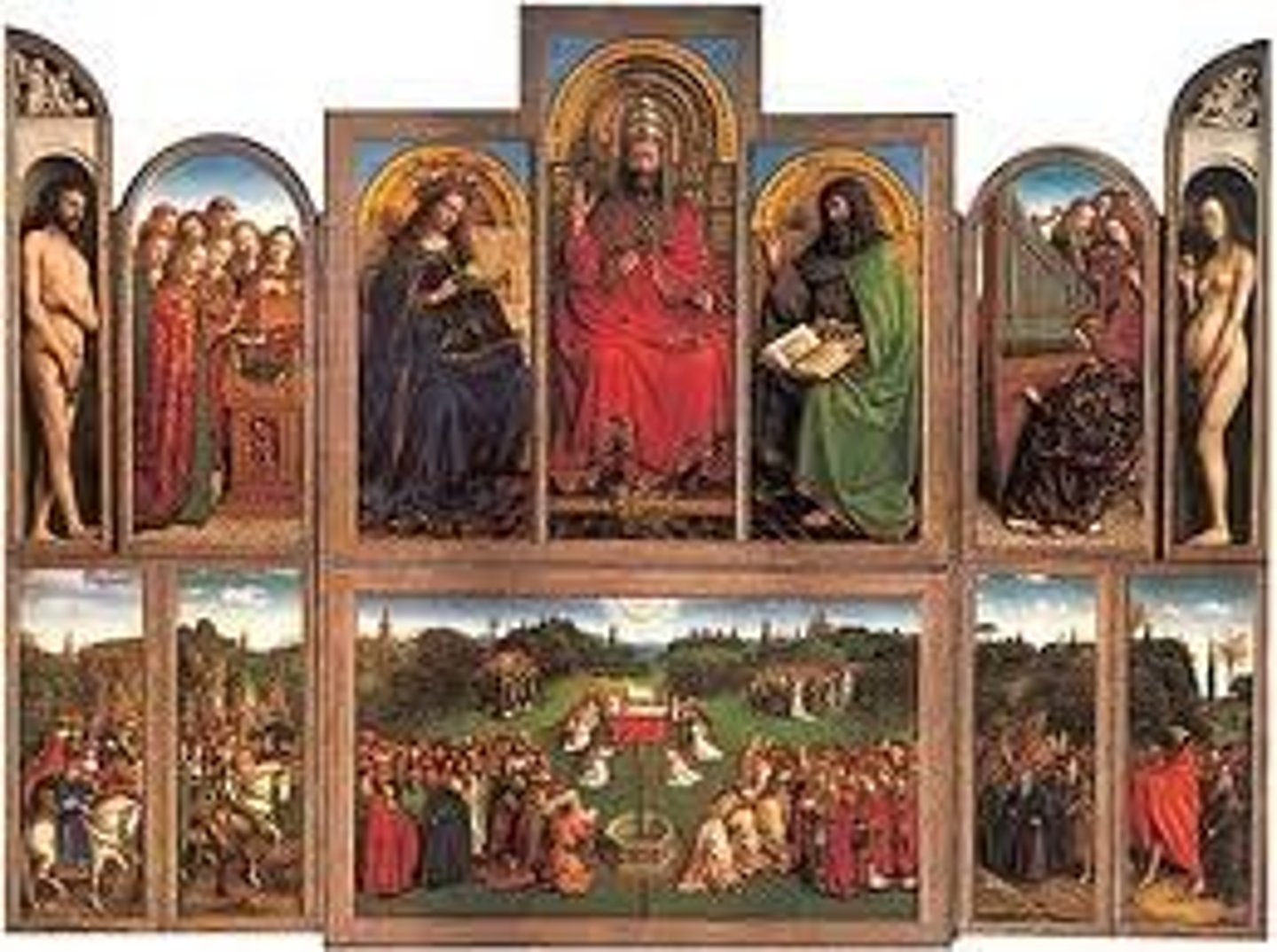
Altarpiece
A work of art placed behind or above an altar, often consisting of painted or sculpted panels depicting sacred subjects.
Tempera
A painting medium in which pigments are mixed with a water-soluble binder, such as egg yolk, producing precise detail and a matte surface.
Patron
An individual or institution that commissions and financially supports the creation of a work of art.

Embroidery
The art of decorating fabric by stitching designs with needle and thread, often incorporating colored silks, gold, or silver threads.