The fates of pyruvate
 Call Kai
 Learn
Learn Practice Test
 Spaced Repetition
 Match
Match Flashcards
 Knowt Play
1/3

There's no tags or description
Looks like no tags are added yet.
Name | Mastery | Learn | Test | Matching | Spaced | Call with Kai |
|---|
No analytics yet
Send a link to your students to track their progress
4 Terms
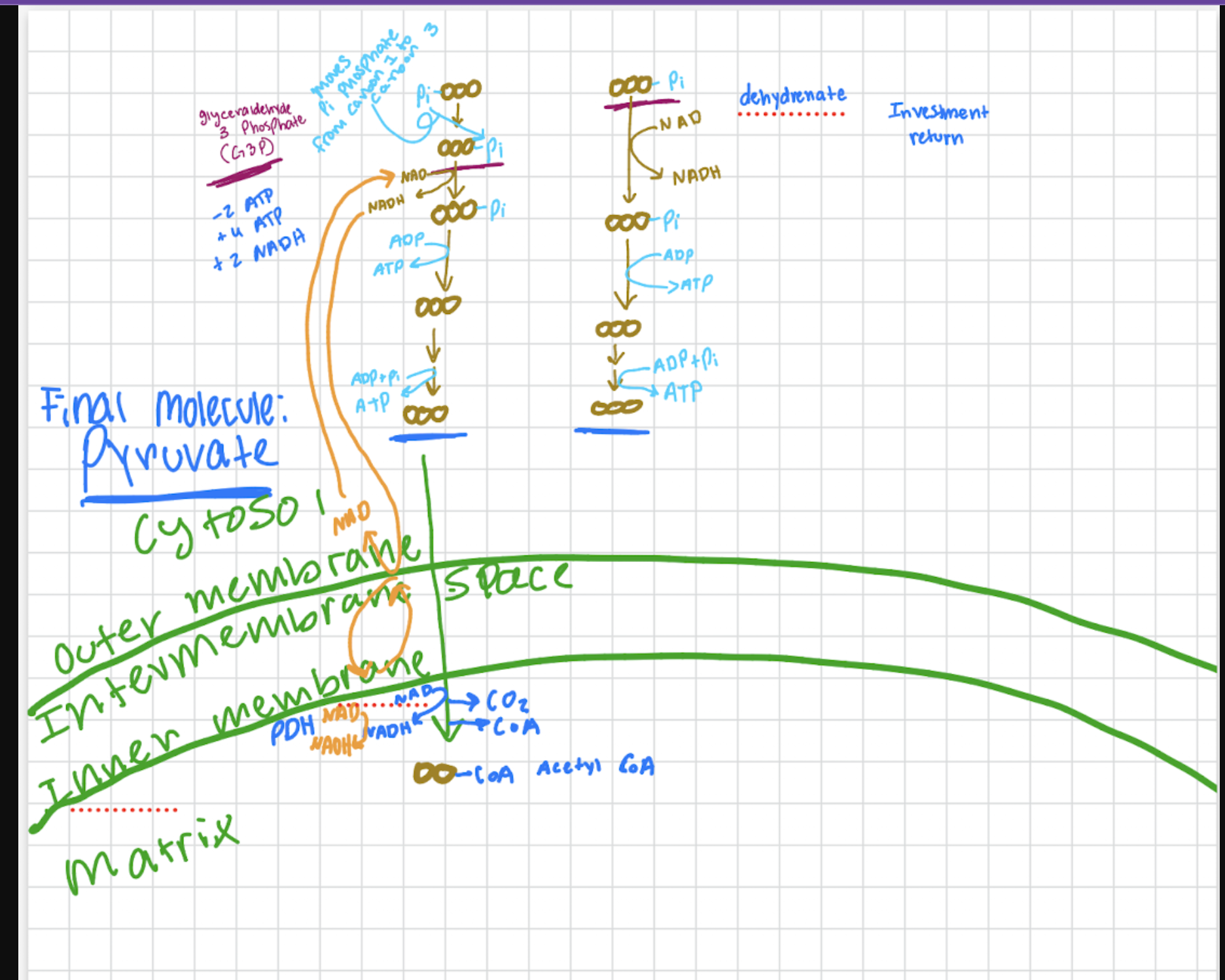
Aerobic fate:
involves the mitochondria
- mitochondria have their own DNA, and their DNA codes for 13 mitochondrial proteins
- have two membranes, outer membrane and inner membrane
- in between the two membranes there is the inter membrane spaceinvolves oxygen
starts with transporting pyruvate across the inter and outer membranes of the mitochondria using an enzyme called pyruvate dehydrogenase (PDH)
then we split off a carbon which produces carbon dioxide
hydrogens and electrons gets transfered and loads them into NAD which produces NADH
coenzyme A (CoA) gets added and because of this we are down to a two carbon molecule (known as an acetyl group) and attached to the acetyl group is CoA
- this new molecule is known as acetyl CoATHESE STEPS ARE RELATED BUT INDEPENDENT OF THE ONES ABOVE
after, NADH comes down to the outer membrane from the investment return phase and the electrons and hydrogens get transferred to a new molecule
inside the mitochondria, the hydrogens and electrons get transferred onto an NAD within the matrix
this allows us free up the NAD and now the NAD can be used to pick up more hydrogens and electrons in the cytosol associated with glycolysis
this system is slower then the anaerobic system because the molecules are being transferred passed membranes
recycling NAD in the cytosol which allows for glycolysis to continue
anaerobic fate
anaerobic: means without oxygen
these pathways do not require oxygen, these processes are more likely to occur if oxygen is not present in sufficient quantities
produce metabolites via anaerobic pathways
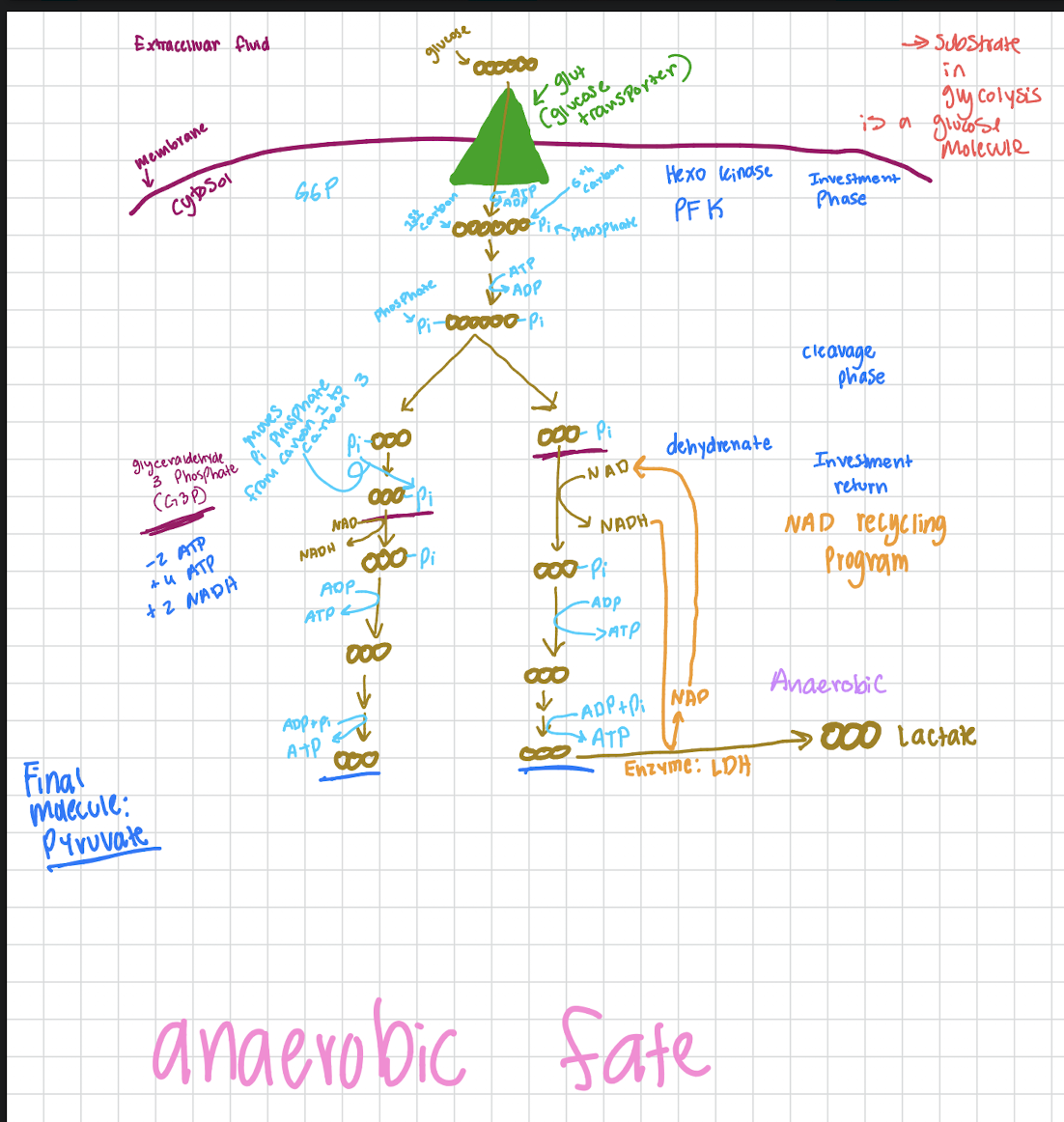
anaerobic fate produces a lactate molecule and this process will operate with or without oxygen
pyruvate makes lactate in a process that does not require oxygen
the enzyme that creates lactate from pyruvate is called lactate dehydrogenase (LDH)
- dehydrogenase enzymes transfer hydrogen and electrons from on molecule to anotherLDH creates lactate from pyruvate from taking the hydrogens and the electrons from NADH that was produced in glycolysis and transfer them to the pyruvate molecule which produces a new lactate molecule
- because of this, the NAD is now free to come back and pick up more hydrogens and electrons so we can continue to produce ATP via substrate level phosphorylation and glycolysisthis is important because:
1. if you do not have NAD, you do not have substrate phosphorylation in glycolysis, without NAD you do not produce any ATP
2. the production of lactate is not a bad thing, lactate production is important because it allows us to continue to operate glycolysis and continue making ATP and ATP is important because if a cell does not have enough ATP it will diethis process is essentially the recycling of NAD by adding hydrogen or transferring the hydrogens and electrons from NADH to pyruvate which produces lactate
this system is faster then the aerobic fate because there is no transferring of molecules over membranes
In both fates
the electrons follow the pyruvate
- for the anaerobic metabolism we load them into the hydrogens and electrons onto the pyruvate producing lactate
- aerobic metabolism: both the hydrogens and the electrons and the pyruvate are shuttled into the mitochondria
you can do this!