EAE3111 Chapter 6
 Call Kai
 Learn
Learn Practice Test
 Spaced Repetition
 Match
Match Flashcards
 Knowt Play
1/99

There's no tags or description
Looks like no tags are added yet.
Name | Mastery | Learn | Test | Matching | Spaced | Call with Kai |
|---|
No analytics yet
Send a link to your students to track their progress
100 Terms
Mean
Seasonal or daily cycles
Variability
Difference to the long time mean
Standard deviation
Spread of a distribution, strength of the variability
Correlation
How much two variables tend to have anomalies at the same time
Central limit theorum
Tendency of long term averages to have less variation than a single data point
Time scale dependence of variability
Increasing the time scale reduces the variability
Characteristics of climate variability: strength
More variability over land
Characteristics of climate variability: time scales
Longer time scales have less variability, different regions have different time scales.
Oscillation
Positive and negative anomalies taking turns on irregular time intervals
Chaotic
Persistence of anomalies
Trend
The climate drifts on one direction over time
Characteristics of climate variability: spatial scales
Generally larger variability over land, varies between regions.
Teleconnections
Unexpected connections between remote regions
Hoevmoeller diagram
Presents the variability of a climate variable as a function of a spatial direction versus the time dimension
Shorter time scale variability tends to be on
Smaller spatial scales
Longer time scale variability tends to be on
Larger spatial scales
External influences on the climate system
Climate system cannot feedback (changes in insolation, volcanic eruptions, anthropogenic forcing or meteorites)
Internal influences on the climate system
Dynamics of the climate system within itself given external boundary conditions
A stable equilibrium system
A dynamical system which, given initial conditions and certain fixed boundary conditions, would converge towards an equilibrium point.
Oscillating system
Highly predictable repeating cycle, with some internal variability
Deterministic chaos system
Tendency equations of the system are known (deterministic) but the system is largely unpredictable, varying around equilibria points in a non-periodic, chaotic and unpredictable way.
The Lorenz-salzman model
Simplified convection dynamics which illustrate the important characteristics of chaotic weather dynamics.
The Lorenz model has
3 equilibria
Characteristics of the Lorenz-Salzman model: no stable equilibria
Always varies, no valleys in the climate potential POV
Characteristics of the Lorenz-Salzman model: regime behaviour
Oscillations between two non-zero equilibria (attractors) with transitions between two regimes.
Characteristics of the Lorenz-Salzman model: non-periodic flow
The system never reaches the same point twice.
Deterministic
The tendency equations are exactly defined if the state of the system is known.
Chaos
The time evolution beyond a given time interval cannot be predicted, no matter how well the initial state of the system is known.
Characteristics of the Lorenz-Salzman model: chaotic time evolution
Only predictable up to a certain time period, depending on how precisely the initial conditions is known. There will be a point where the system fills all likely points in dynamical space.
Characteristics of the Lorenz-Salzman model: numerical uncertainty
No general analytical solution, thus must be estimated with numerical approximations, which are limited by computer precision.
Characteristics of the Lorenz-Salzman model: non-linear response to forcing
As the distribution shifts, the shape changes (shifting to higher values results in the lower value regime becoming more likely)
Stochastic climate variability
Randomness of climate variability on larger and longer time and spatial scales results from chaotic weather on shorter and smaller time and spatial scales.
The Power Spectrum
How much each frequency contributes to the variability of the time series
Area under the power spectrum curve
Total variance over the range of frequencies
White noise
Power spectrum has the same amount of variance for all frequencies, result of a time series of purely random numbers.
Red noise
Climate can vary on long time scales without a cause (external forcing) simply due to the weather variability that exist on shorter time scales.
Red Noise Null Hypothesis
The system is linearly damped and forced by white noise (random weather)
Slab ocean model
An example of red noise process, the ocean is just a heat capacity that integrates atmospheric sensible heat fluxes
Glacier red noise model
An example of a red noise process, the glaciers mass is controlled by random weather events of snow accumulation and melting
SST variability is in the order of
0.5ºC
Elements of the spatial complexity: domain boundaries
Coastlines or mountains
Elements of the spatial complexity: different mean states
Wind directions, temperature
Elements of the spatial complexity: different dynamics
Coriolis force or water vapour saturation pressure
Principle component analysis or empirical orthogonal functions (EOFs)
Dimensionality reduction to explain the maximum amount of variance in data.
Statistical modes
Has three elements: Data = Amplitude * EOF Pattern * time series
Climate variability of the domain at any given time
Sum of all modes with the pattern * the amplitude * the current value of the time series
Mode hierarchy
The modes are in order by how much of the data they can explain
Maximum variance
The EOF analysis is the optimal approach to maximise the explained variance in one mode
Orthogonal
The EOF modes are not similar to each other, thus the time series and patterns of two modes is uncorrelated
Multipoles
Orthogonality constraints lead to multi-pole like patterns in the whole domain.
Null hypothesis for spatial structure
Nearby regions will influence each other to behave similarly over time (isotropic diffusion), red noise but on the spatial scale
Climate mode
A reappearing pattern in space or time that is potentially predictable beyong stochastic red noise.
Deviation from chaos
Structure in variability beyond the simple stochastic model
A phyiscal mode
You can predict the next phase of the oscillator by knowing the current state of the system, a swing or a pendulum
Phase space
The system moves from one phase to the next in a highly predictable manner
Two variables can be measured with an out-of-phase relation
Position and velocity
When position is at maximum
Velocity is at zero
Level 1: subjective / impact focused
Usually defined based on a statistical mode, subjective, no physical oscillator or deviations from pure noise.
Damped persistence
Current anomalies will persist in the near term, but mathematically decay toward zero
Level 2: structures different from noise
Indications of deviations from pure noise, not clear is this is a physical mode, could be chaotic but different from red noise.
Level 3: a physical mode/predictable oscillator
A structure different from red noise, physical phase space with clear propagation, predictable beyond damped persistence
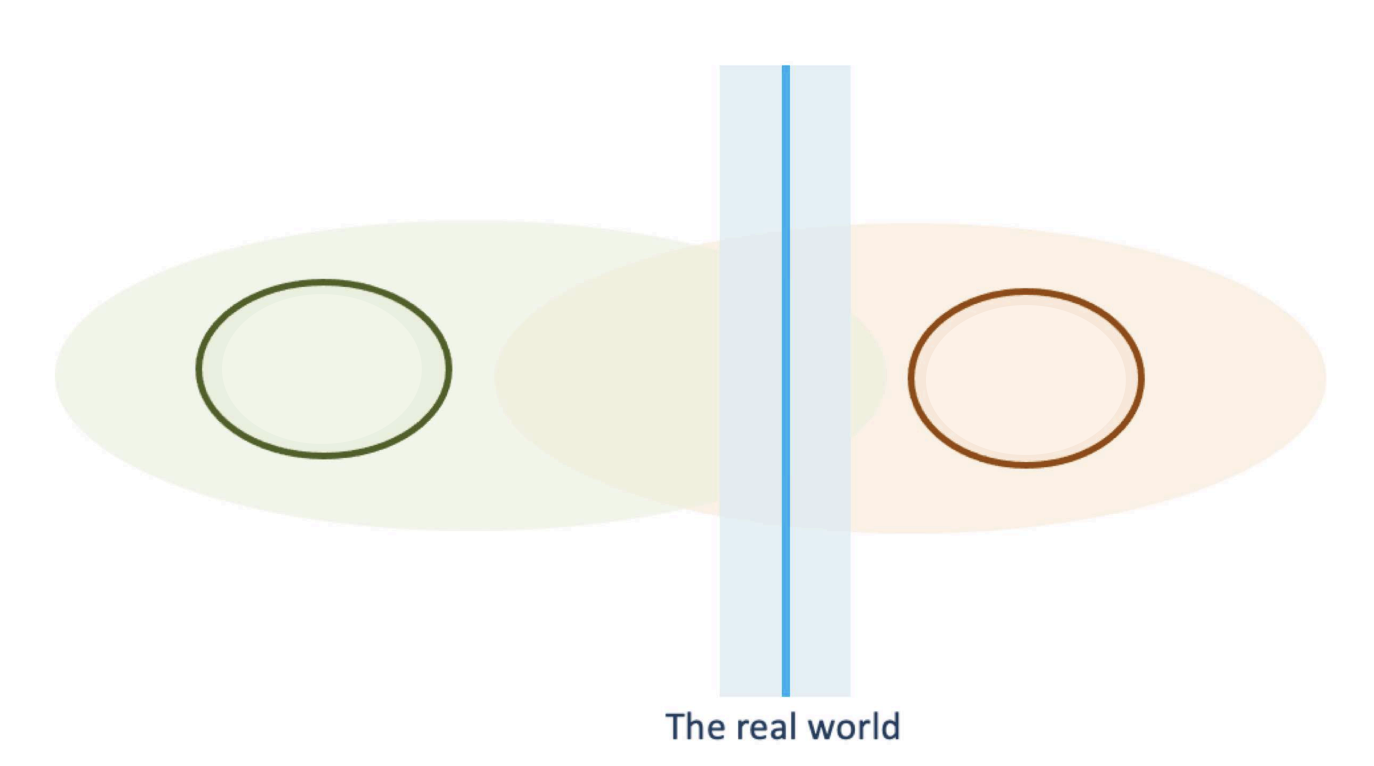
The green circle is
Mode: deterministic
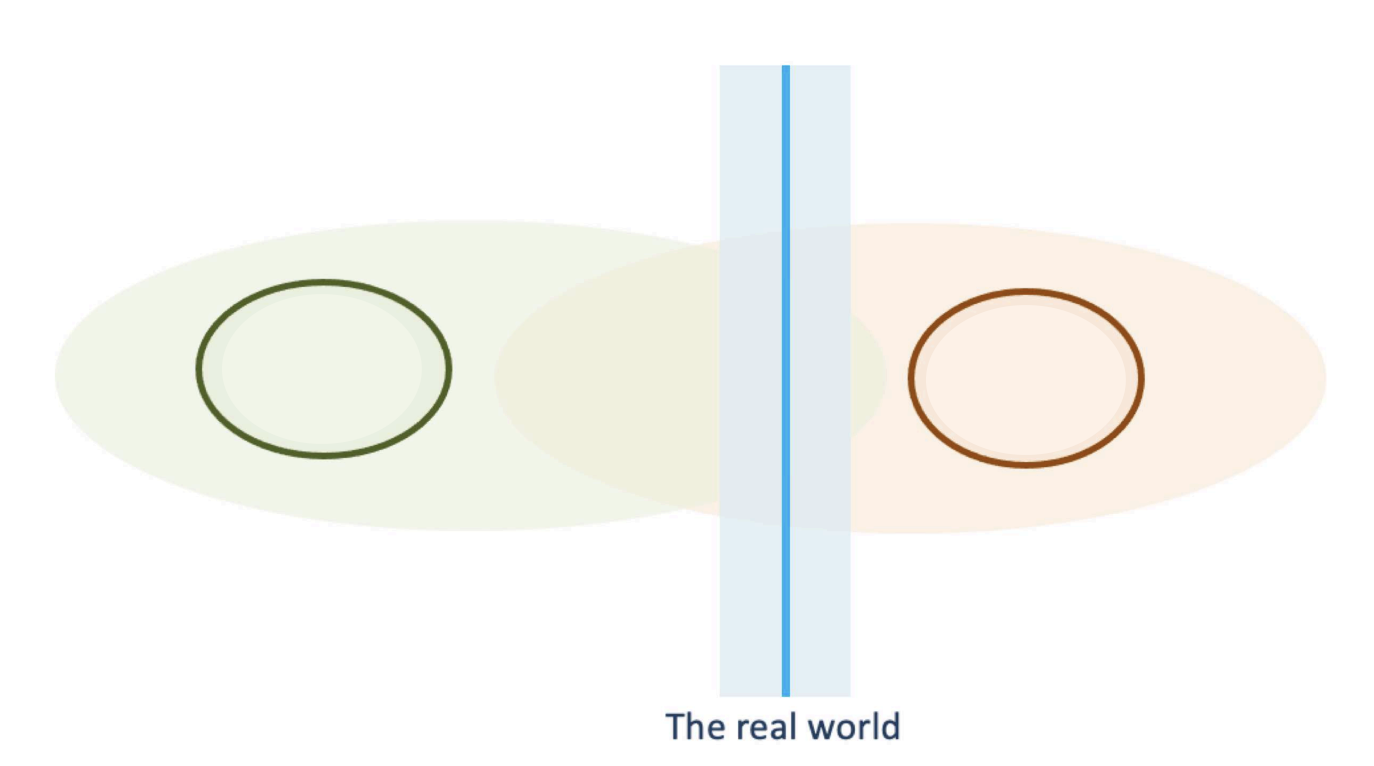
The red circle is
Chaos: stochastic climate
El Nino originated in
South American fisheries
Southern Oscillation
Pressure difference between Tahiti and Darwin
ENSO coupling origin
Bjerknes identified the relation and suggested that this may account for variability in both
ENSO numerical model origin
Cane and Zebiak determined that an ocean and atmospheric model could reproduce the ENSO mode
The El Nino
Peaks around November to January, warming
ENSO events are marked by a
SST pattern in the tropical pacific
La Nina
Not as strong as warming events, last longer, intensification of the mean state
ENSO lasts for
2-7 years (4 average)
ENSO dynamics are controlled by
Dynamics in the upper ocean tropical Pacific
Thermocline
Strongest ENSO variability, region of the upper ocean where the temperature decreases very quickly (change from light/warm surface water to dense/cold subsurface waters)
Deepening of the thermocline marks
Increased heat content before an El Nino event in the western/central equatorial Pacific, propagates to the east, followed by large-scale surface warming
During strong surface warming, western thermocline marks
Reduced heat content, which propagates to the east, introducing the La Nina event
Prominent teleconnection of ENSO
Reduced Indian monsoon and reduced hurricanes during El Nino
Tropical pacific mean state is marked by
A strong temperature gradient from east (cold) to west (warm)
Equatorial cold tongue
Result of prevailing easterly trade winds (Hadley cell induced boundary conditions) and the Ekman ocean currents induced by friction and Coriolis forcing
Easterly winds lead to
Pile up of warm water and higher sea level on the western side
The thermocline has an
East to west gradient
Coriolis forcing results in _ at the equator
Divergence
Walker circulation
Secondary tropical circulation, with rising over the western warm pool and cooling over eastern equatorial Pacific.
Walker circulation results in _ surface pressure in the west and _ surface pressure in the east
Low, high
Bjerknes feedback: SST forces zonal wind
Warm SST causes heating in the atmosphere, low surface pressure and a reduced zonal easterly wind
Bjerknes feedback: Zonal wind forces thermocline
Easterly zonal winds keep the western Pacific thermocline deeper, weakening leads to a shallowing of the thermocline which propagates to the east.
Bjerknes feedback: Thermocline forces SST
A deeper thermocline in the east reduces the upwelling of cold subsurface waters along the equator and the south American coasts, leading to warming of SST.
Thermohaline circulation
Deep ocean circulation that spans the global oceans
Reduced North Atlantic MOC during warming is due to
Reduced temperature gradients between tropics and polar regions and poles warm more strongly
Density differences between two boxes in the Stommel model are controlled by
Temperature and salinity differences
If temperature differences dominate in the Stommel model
Surface flow is from the equatorial box to the polar box, reducing temperature gradients
If salinity differences dominate in the Stommel model
Surface flow is from the polar box to the equatorial box, reducing the temperature in the equatorial box
Proxy data
Data from the past climate not related to direct measurements.
Milankovitch cycles
Cause the glacial cycles dominating the last 500,000 years, with warm periods every 100,000 years
The biggest driver of ice age cycles is most likely
Variations in earth’s orbit around the sun, caused by other planets and the moon (milankovitch cycles)
Glacier feedbacks
Ice albedo, water vapour, altitude cooling and atmospheric circulation
Ocean CO2 uptake feedback
Cold oceans can uptake more CO2 than warm oceans.
Eccentricity
The shape of the earth’s orbit around the sun
Precession
The position of the seasons within the orbit around the sun
Obliquity
Changes in the angle of tilt of Earth’s axis rotation