4.1.5 Perfect competition, imperfectly competitive markets and monopoly
 Call Kai
 Learn
Learn Practice Test
 Spaced Repetition
 Match
Match Flashcards
 Knowt Play
1/30

Earn XP
Name | Mastery | Learn | Test | Matching | Spaced | Call with Kai |
|---|
No analytics yet
Send a link to your students to track their progress
31 Terms
what is market structure?
the number and size of firms within a market for a particular good or service
illustrate the spectrum of competition
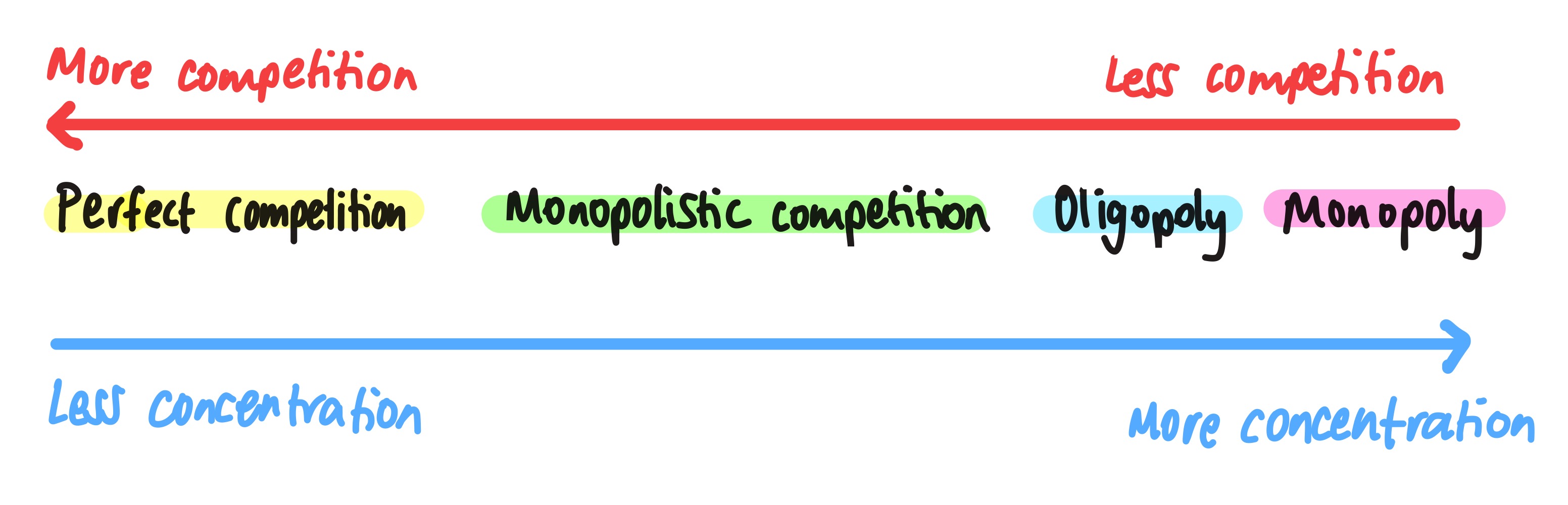
what is each market structure characterised by?
no. of firms in the market
the degree of product differentiation
ease of entry into the market
what is assumed to be the main objective of firms?
profit maximisation
what is profit maximisation?
when a firm seeks to make the largest positive difference between TR and TC
when are profits maximised?
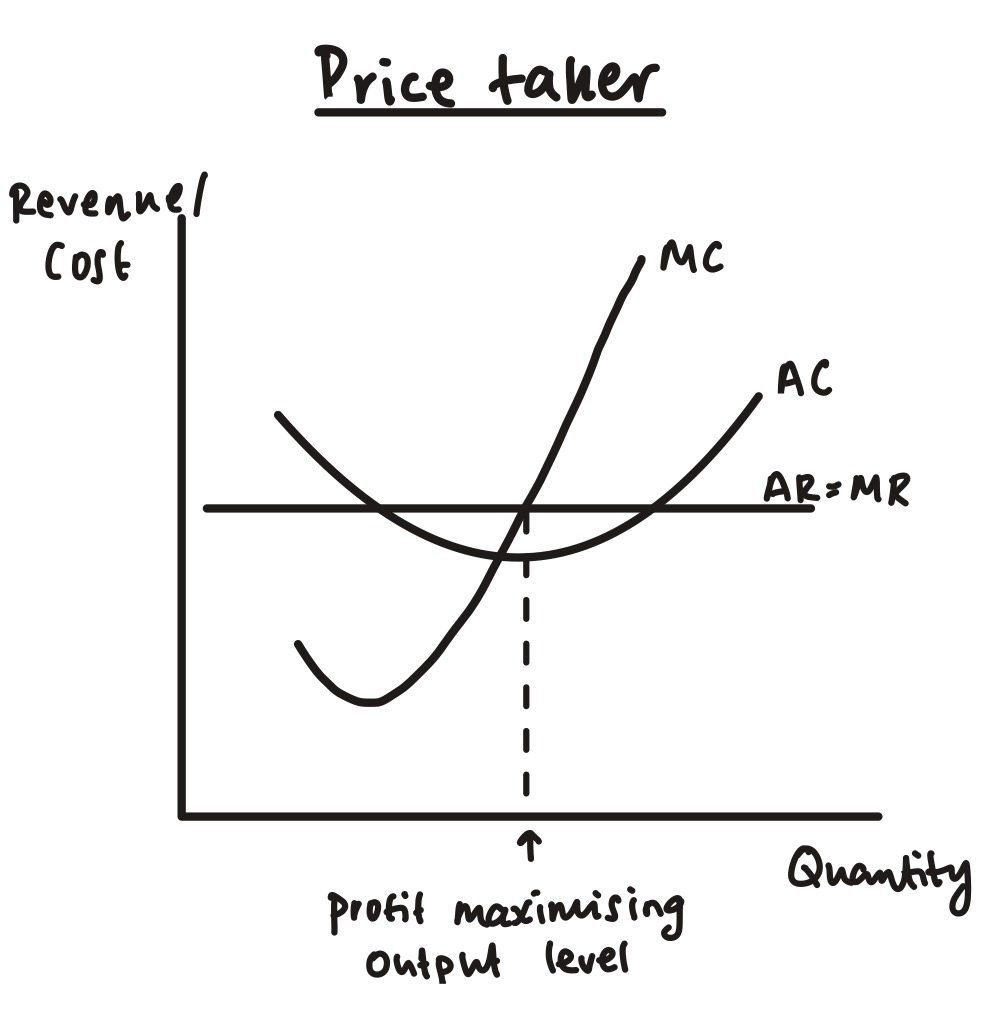
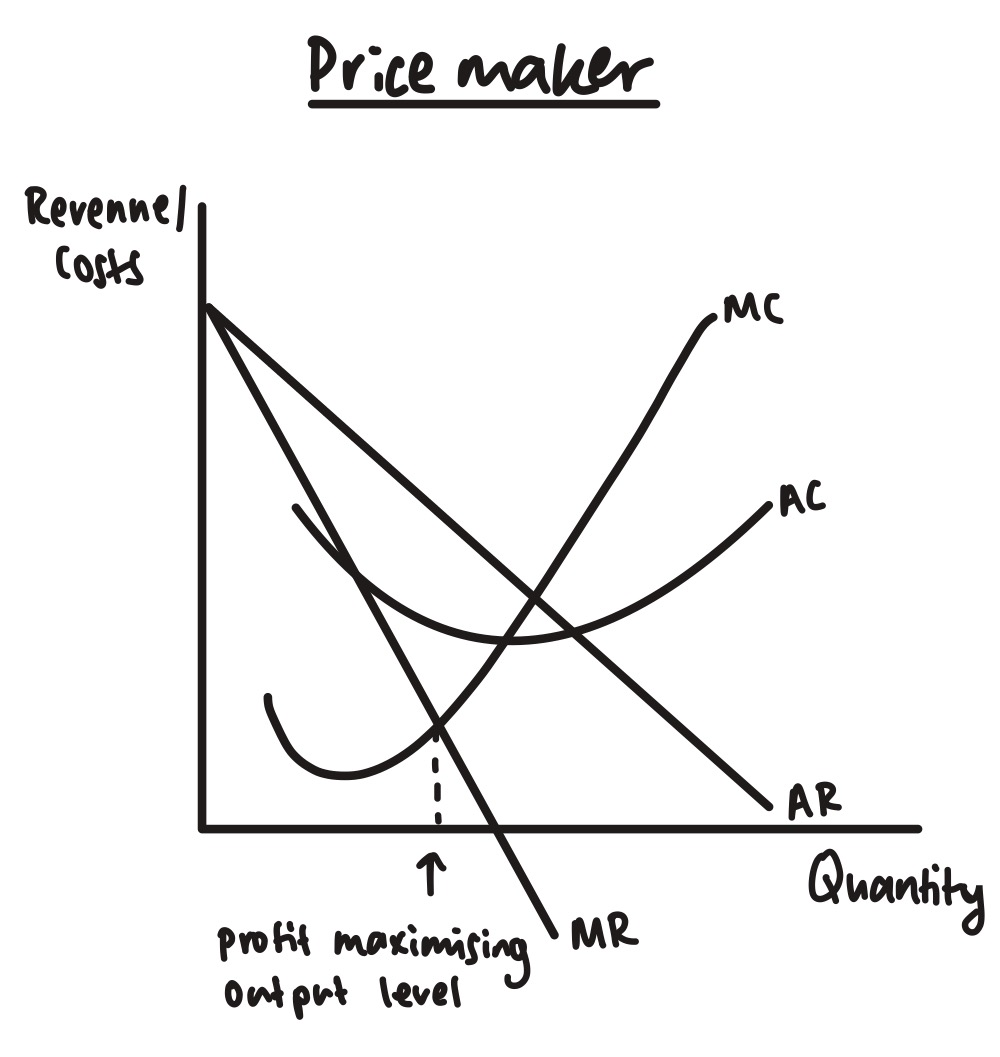
when MC = MR
it’s the only point where no further gain can be made by increasing or decreasing output
show where a price taker maximises profits
show where a price maker maximises profits
what other objectives might a firm pursue instead of profit maximisation?
revenue maximisation
sales maximisation
survival
growth
increasing market share
quality
when is revenue maximised?
when MR = 0
at output level Q1 (higher than the profit maximising output Q)
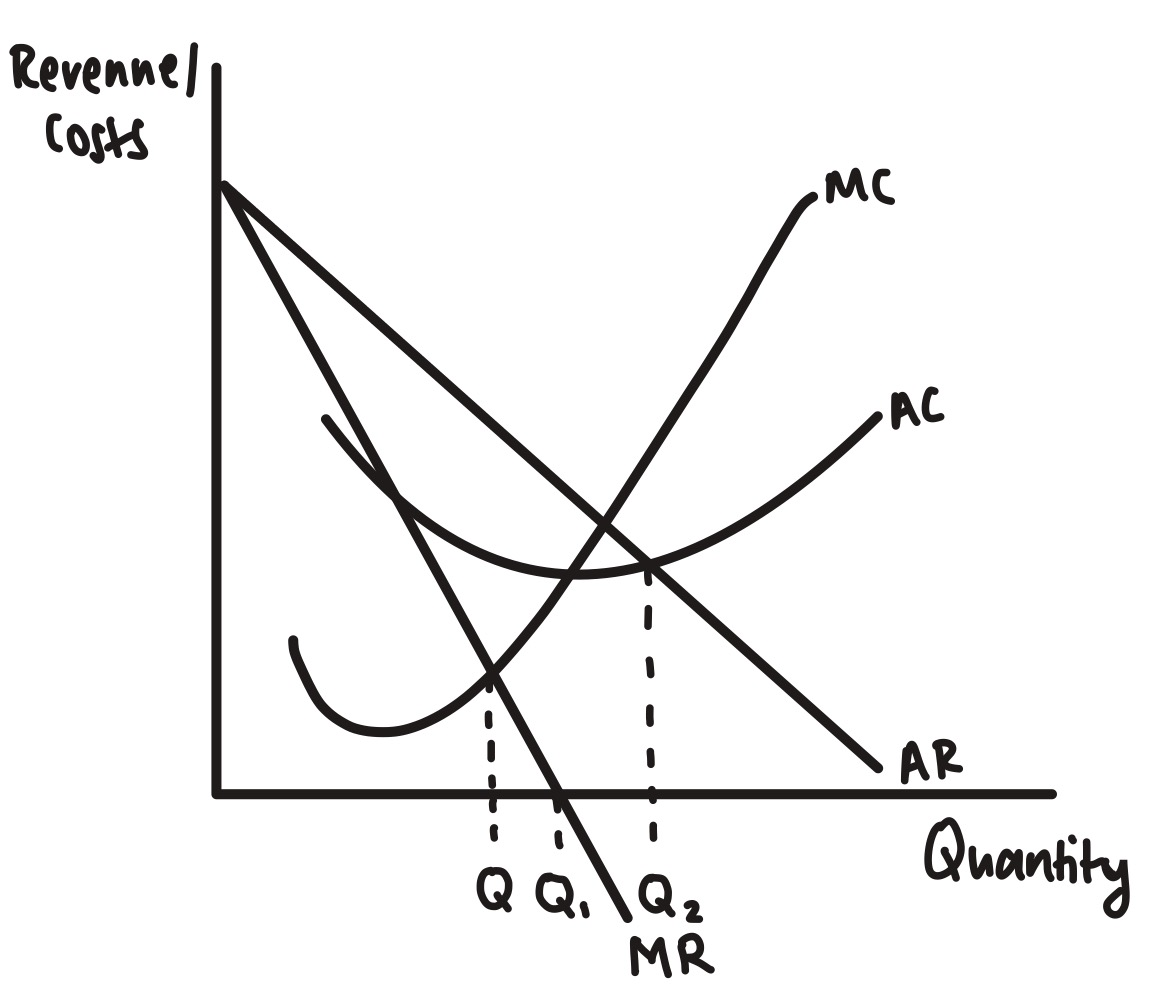
why does a revenue-maximising firm produce beyond the profit-maximising output?
it keeps increasing output past the point where profit is maximised, as long as adding more output leads to greater revenue
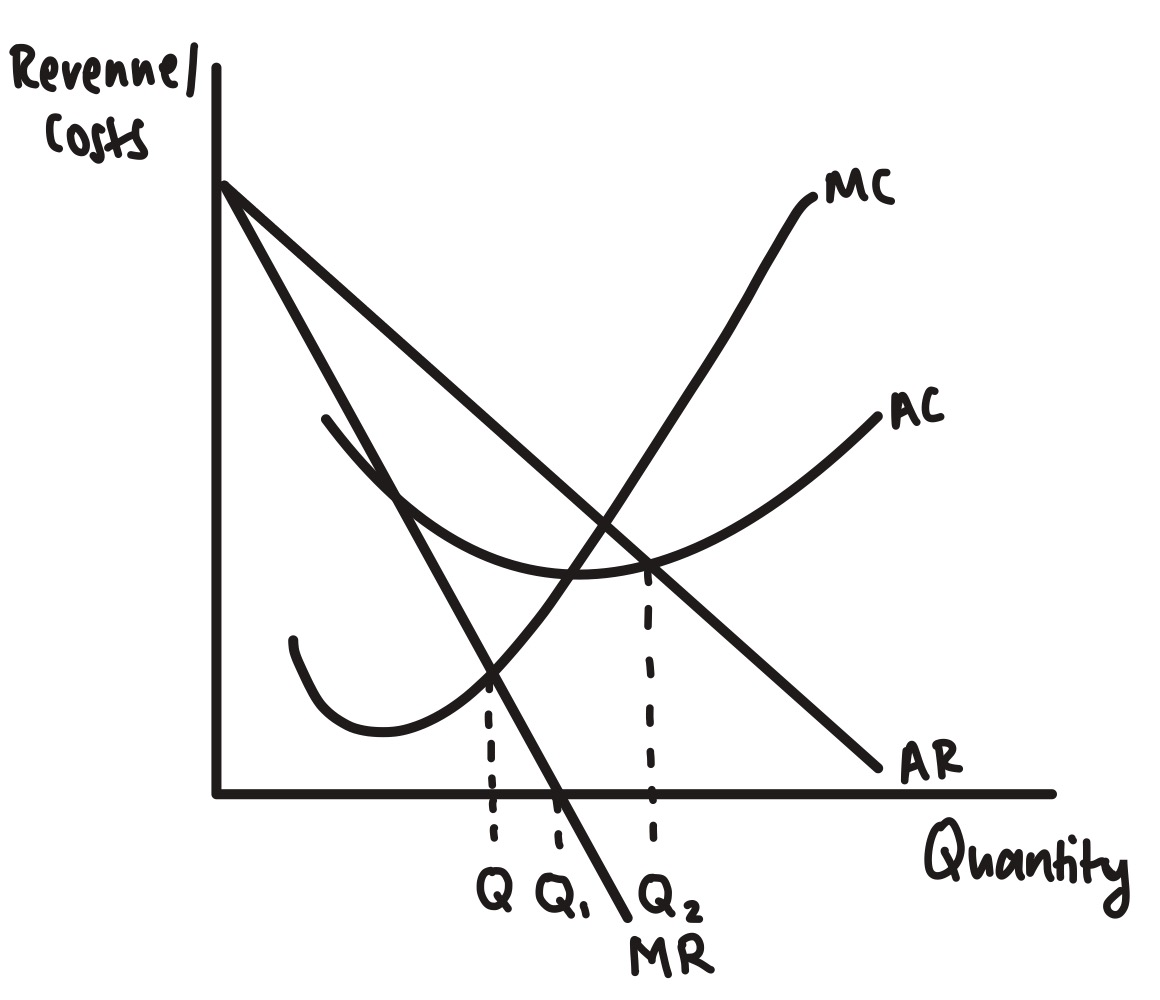
when are sales maximised?
when AR = AC (normal profit)
at output Q2 (the highest output sustainable in the long run)
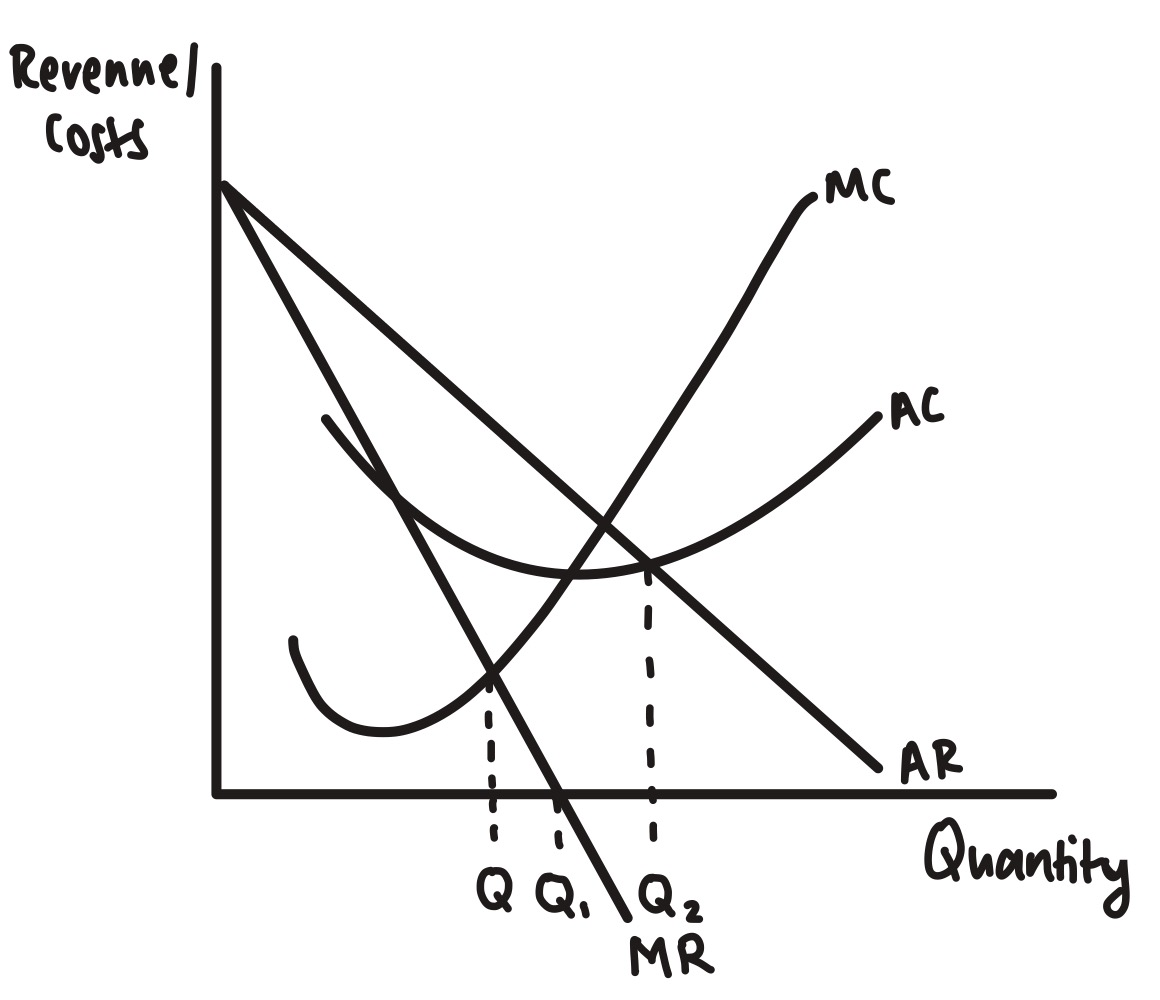
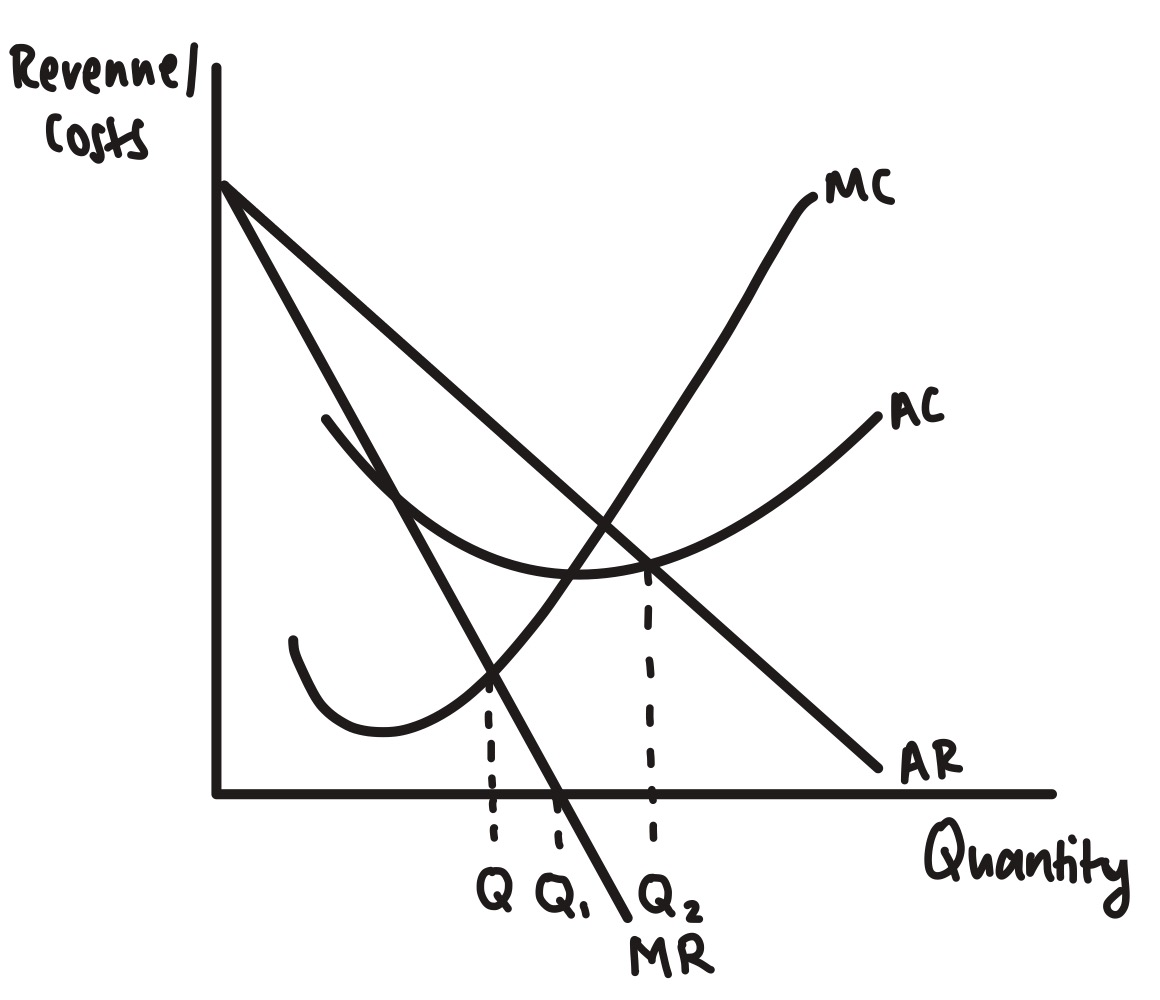
why can’t a sales-maximising firm increase output beyond Q2?
it would be making a loss
why might a firm sacrifice short-run profit to maximise sales or revenue?
to grow market share
gain monopoly power
or make it easier to borrow money
→ which can lead to supernormal profit in the long run
why might a firm operate at a loss in the short run?
it may expect future revenue to increase as brand recognition grows
or expect costs to fall through EOS
what are “not for profit” firms and what’s their main aim?
firms that don’t pay out profit to owners
their main aim is to “do good” or provide a public benefit, while still making at least normal profit
what is corporate social responsibility (CSR)
when firms operate in a way that benefits society e.g.
using sustainable resources
supporting local suppliers
pay workers above market rate
while still seeking supernormal profit
how can CSR increase a firm’s profits?
by encouraging consumers to buy from them, building brand loyalty and reputation
what is divorce of ownership from control?
when a firm’s owners (shareholders) are no longer in day-to-day control
instead, appointed directors run the business
how does the divorce of ownership from control arise?
as firms grow, owners raise finance by selling shares
new shareholders become part-owners
but directors are appointed to manage the firm
what is the principal-agent problem?
when a principal (e.g. shareholder) pays an agent (e.g. managing director) to act in their interests, but the agent acts in their own self-interest instead
example: shareholders want profit maximisation, but if a director’s pay is linked to revenue or sales, they may pursue those objectives instead
who are a firm’s stakeholders?
everyone with an interest in or affected by the firm
e.g. employees, managers, suppliers, customers and shareholders
how can owners tackle the principal-agent problem?
by holding directors accountable
requiring them to justify past decisions and explain future plans
shareholders can also vote to remove directors
why is accountability alone not always enough to control directors?
shareholders often lack the information needed to judge whether director’s decisions were truly in the firm’s best interests
how can incentives help align directors’ objectives with owners’ objectives?
owners can offer bonuses linked to profits, or free/discounted company shares, making profit maximisation attractive for directors
what is satisficing?
doing just enough to satisfy important stakeholders rather than fully maximising or minimising any one objective
why does satisficing occur?
when different stakeholders have conflicting objectives, firms may settle for outcomes that keep everyone sufficiently content
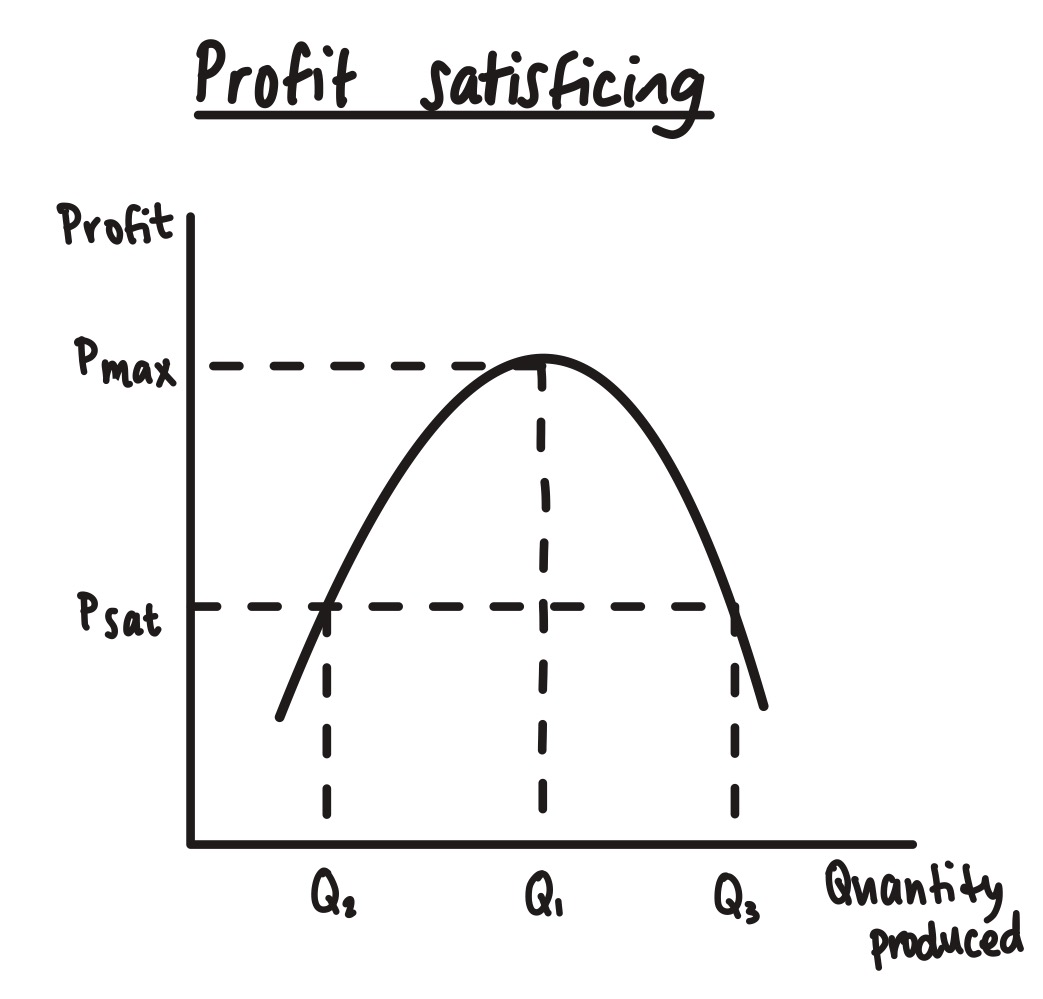
show profit satisficing on a diagram
profit maximisation occurs at a single, specific output, Q1, which will be hard to achieve
a satisfactory level of profit (Psat) that most shareholders will be happy with can be achieved at any level of output between Q2 and Q3
what is perfect competition?
a market structure that has a large number of buyers and sellers who have perfect information about the market, identical products and few, if any, barriers to entry
what are the characteristics of perfect competition
many/infinite buyers and sellers (sellers are price takers)
no barriers to entry
perfect information (consumers + firms have perfect knowledge of all goods and prices in a market
homogenous goods (identical)
firms are short run profit maximisers
FOPs are perfectly mobile