Theme 8.2
 Call Kai
 Learn
Learn Practice Test
 Spaced Repetition
 Match
Match Flashcards
 Knowt Play
1/31

There's no tags or description
Looks like no tags are added yet.
Name | Mastery | Learn | Test | Matching | Spaced | Call with Kai |
|---|
No analytics yet
Send a link to your students to track their progress
32 Terms
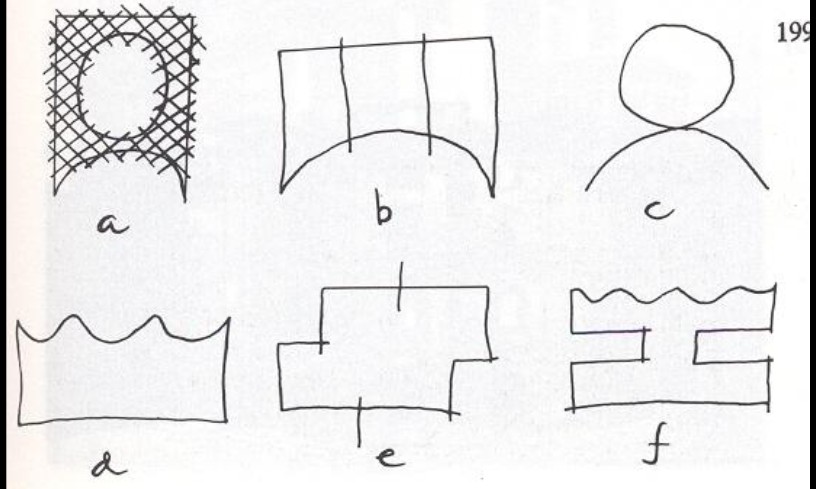
Theories of Robert Venturi about the relation between interior-exterior
Venturi’s ‘Complexity and Contradiction in Architecture’
KEY THEME: Behavior of the limit generates contradictory situations where inside and out are unclear, leading to an interesting interaction with the surrounding environment.
References concavity and convexity of Baroque churches as they fluctuate from taking in and blocking out the environment, and the unique spaces this leaves behind.
Concept of the limit as a ‘guardian’ (ruben Rubio)
Limit is the guardian of internal space
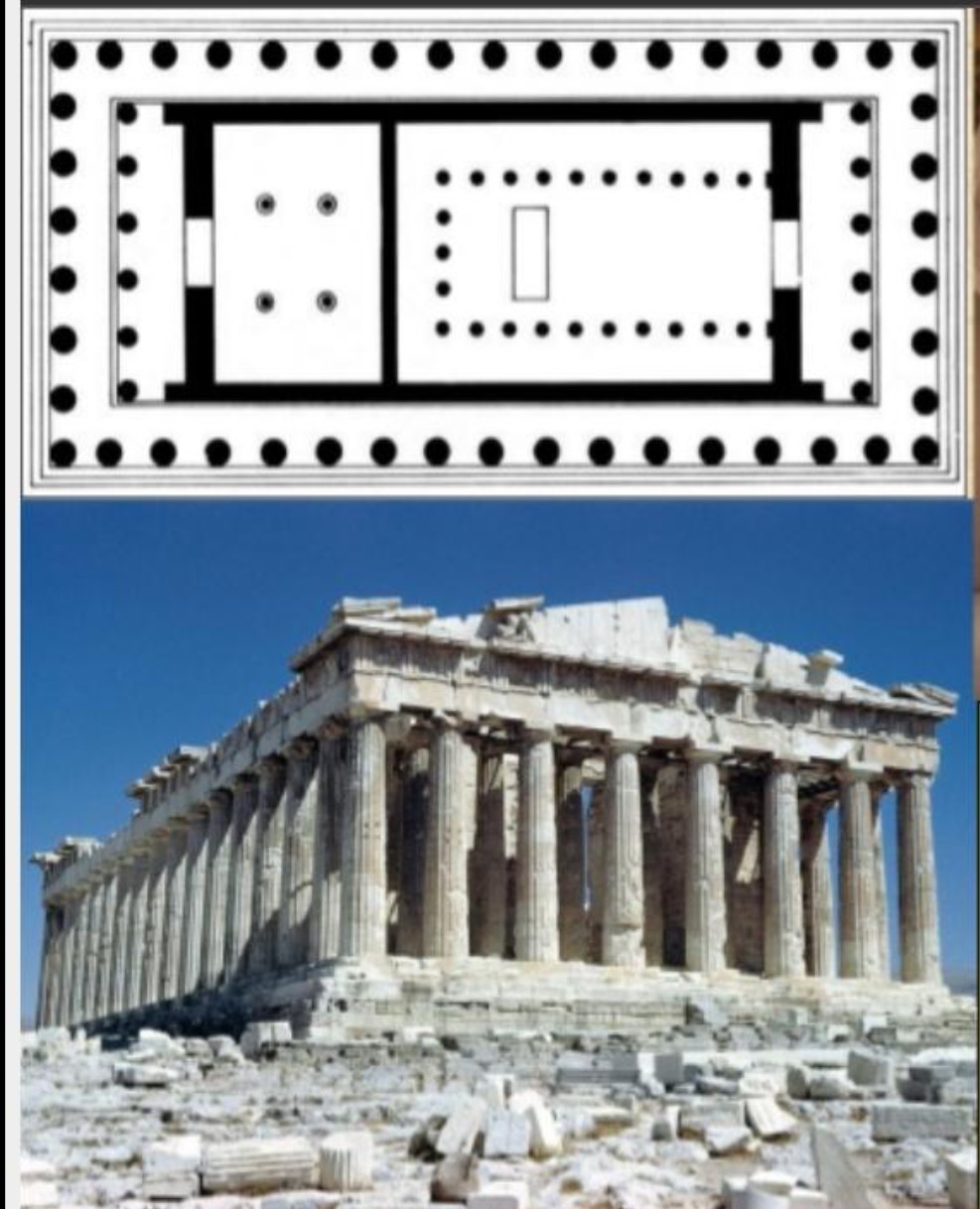
Differences between a greek temple and a cloister in relation to the limit as a guardian
Greek temple: External layer of limit is colonade (more permeable), while internal wall guards the intimacy of the CELLA (example: Parthenon)
Cloister: Reversion of layers of the Greek temple. The outer layer protects what happens inside, while the inner decomposed/permeable layer of colonades is a free central space.
Theories of Colin Rowe: Differences between 2 Trends in modern Architecture about the consideration of a PLACE or its negation
Gunnar Asplund versus Corbusier
Asplund & others enhance the context and form a spatial connection with the immediate environment
Corbusier: designs from internal necessity and makes a symbolic construction with cultural intentionality
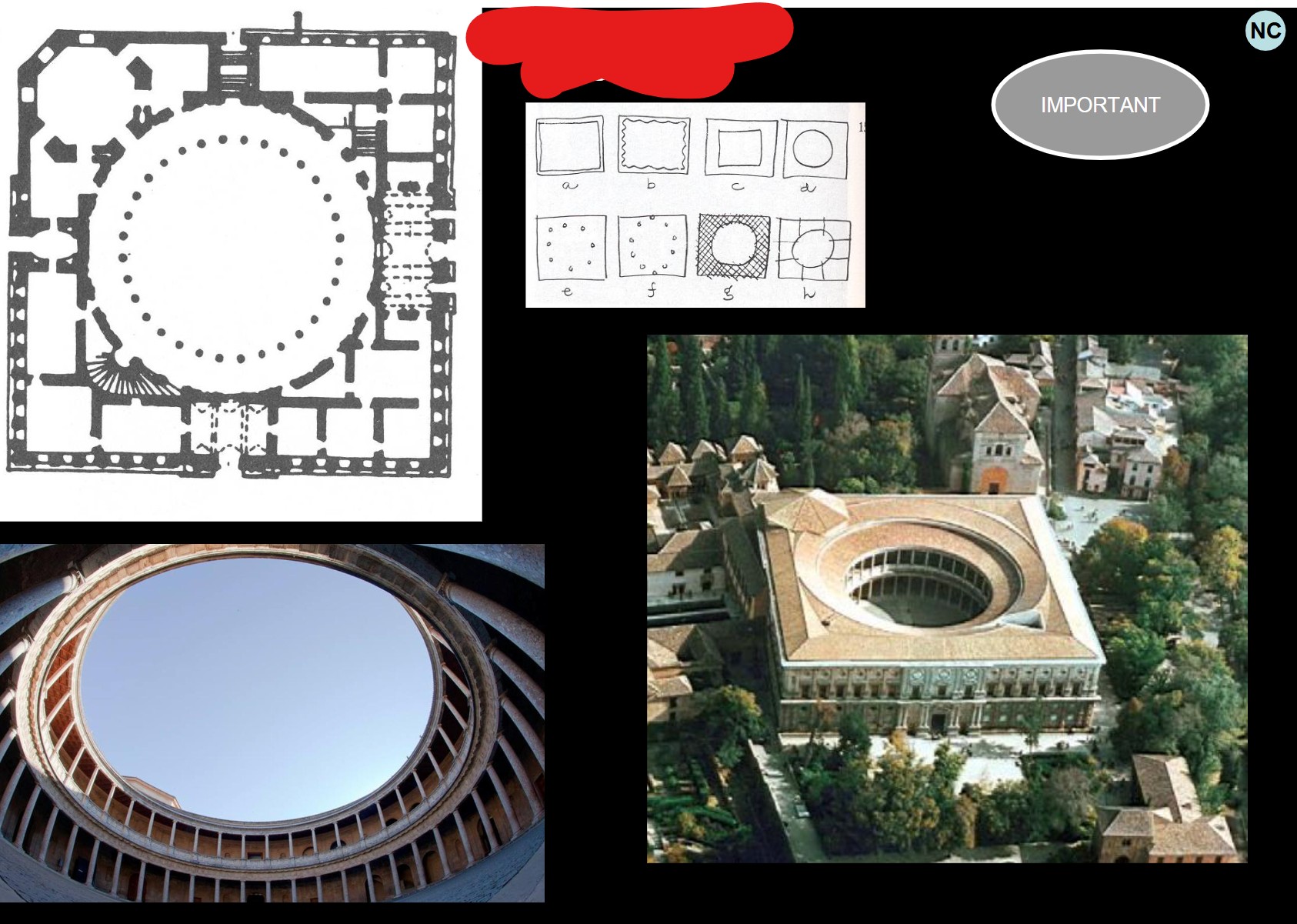
Palace of Carlos V (Machuca), early to mid 16th c
The building as a singular case of treatment of the limit
“Contradiction between the inside and the ouside may manifest itself as an
unattached lining (forro despegado) which produces an additional space between the lining
and the exterior wall. Plan diagrams illustrate that such layers between the inside space
and the outside space can be more or less contrasting in shape, position, pattern and size.”
What happens in between the inside and outside layers can be an additional, inhabited space, such as in Palace Carlos V. These spaces can be varied in plan (in shape, position, pattern, and size)
The shape is also has a perimeter that is adapted to the irreguar site.
In Charles V´s palace at Granada (Machuca, 1526), the courtyards dominate because they are large and their shapes contrast with the shapes of the perimeters. They make the primary space; the rooms of the palaces are left over space”
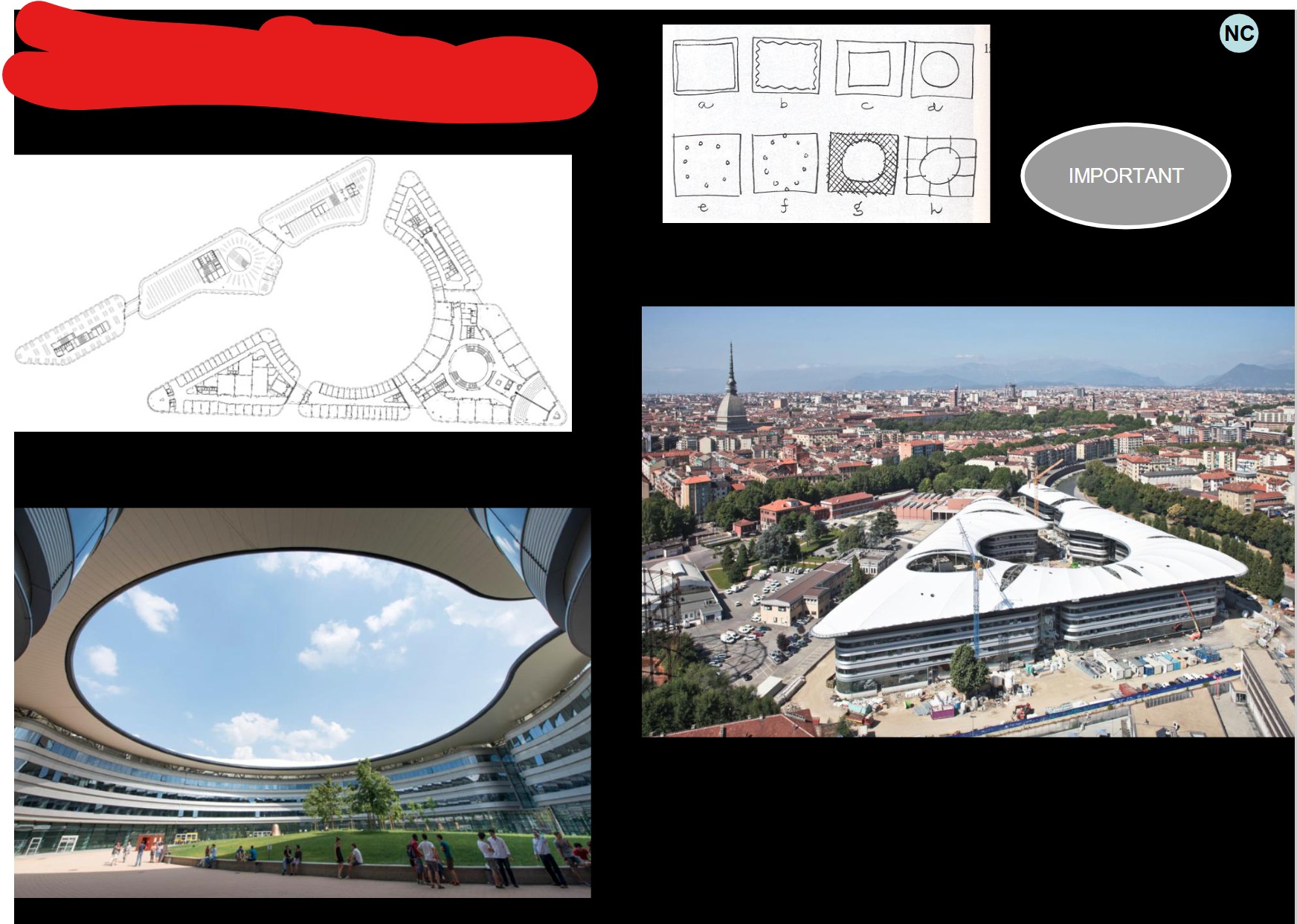
Luigi Eunaldi Campus (Foster), 1993
The building as a singular case of treatment of the limit
“Contradiction between the inside and the ouside may manifest itself as an
unattached lining (forro despegado) which produces an additional space between the lining
and the exterior wall. Plan diagrams illustrate that such layers between the inside space
and the outside space can be more or less contrasting in shape, position, pattern and size.”
What happens in between the inside and outside layers can be an additional, inhabited space, such as in Luigi Eunaldi Campus. These spaces can be varied in plan (in shape, position, pattern, and size)
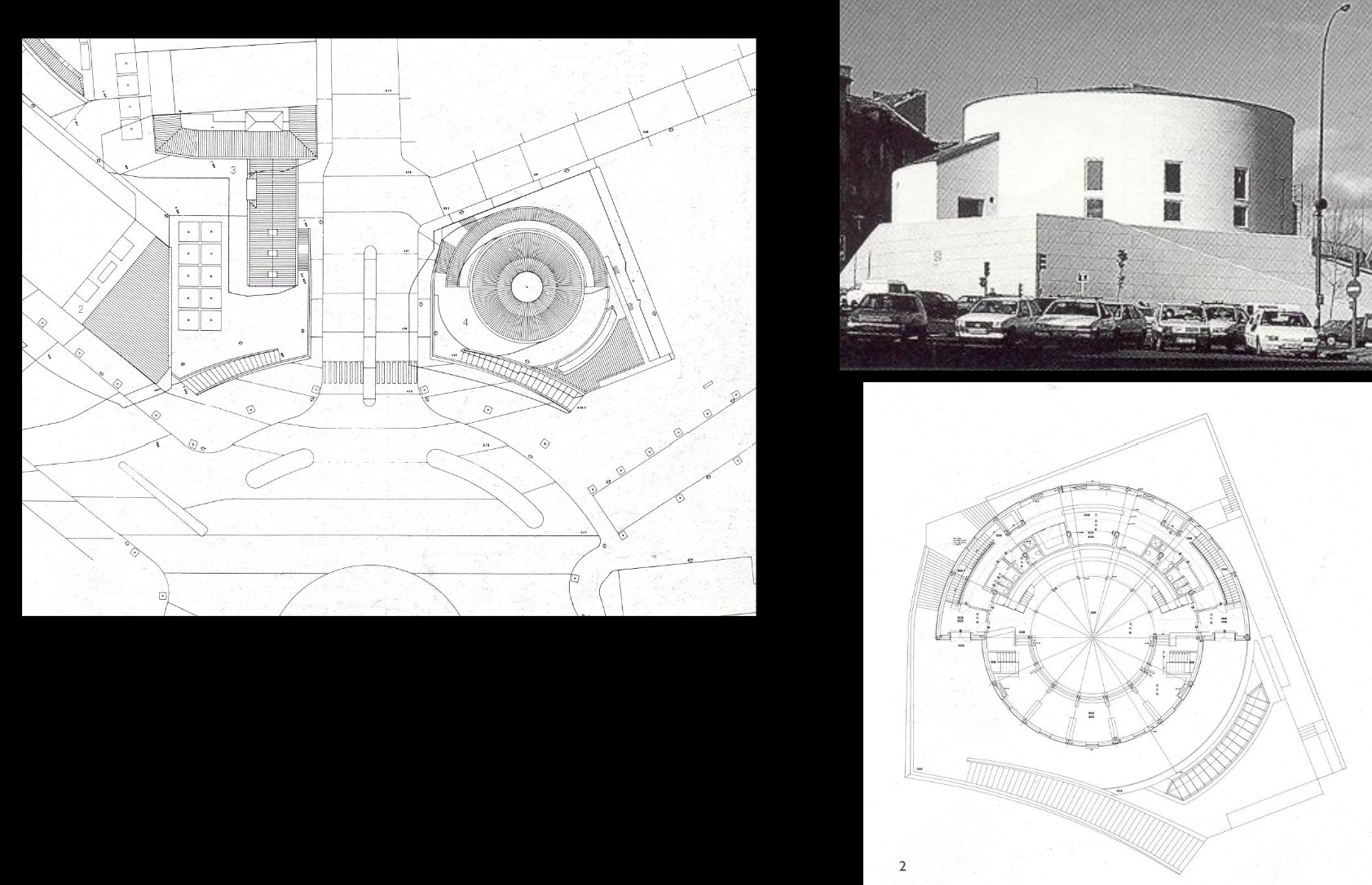
Navarro, Biblioteca Puerta Toledo, 1994
Project is adapted to the site and the roundabout that it sits on.
There is a library and cultural center across from one another. There is no pedestrian connection between the two but they have a visually implied line. The two buildings have different shapes but are balanced.
The library is a good example of the limit. The cylinder is the main component, similar to Asplund’s Stockholm Library.
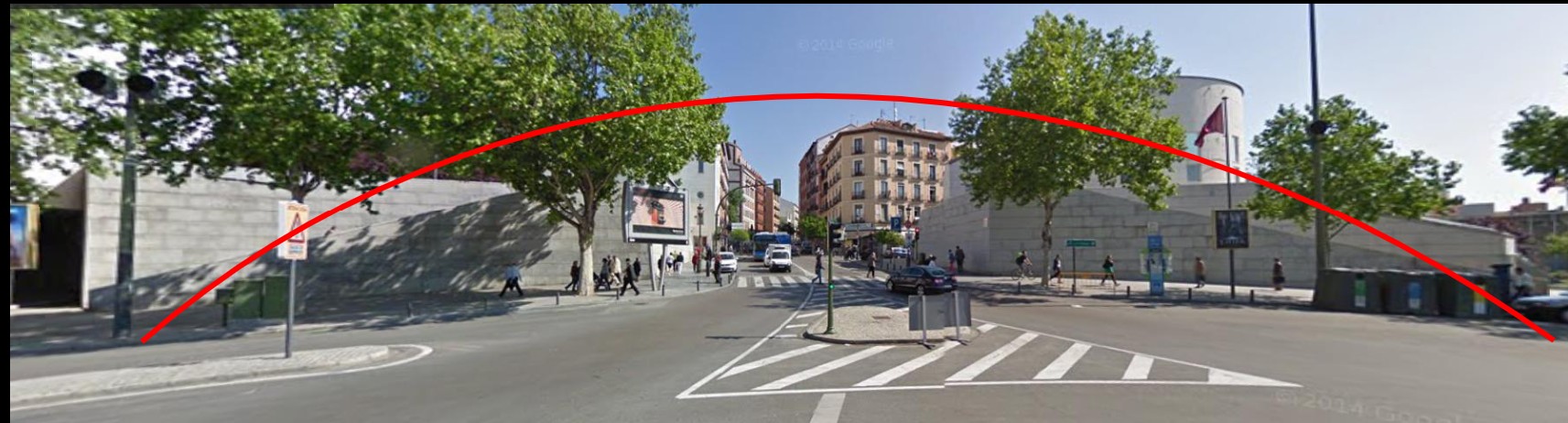
Navarro, Biblioteca Puerta Toledo, 1994
Project is adapted to the site and the roundabout that it sits on.
IMPLIED BRIDGE BETWEEN THE BUILDINGS
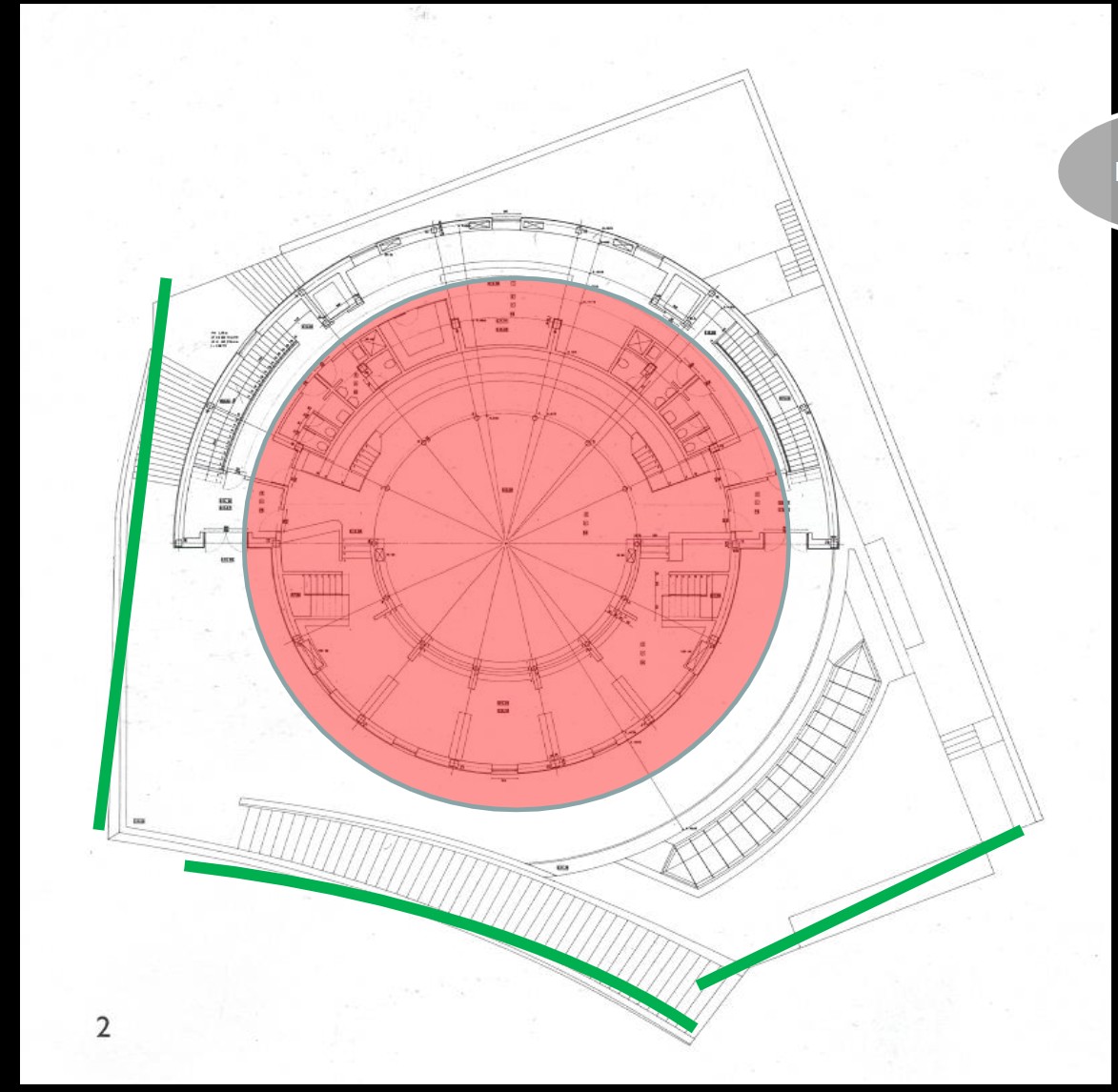
Navarro, Library Puerta Toledo, 1994
Regularly shaped cylinder form surrounded by irregular deformed lines. Deformation of the limit to adapt to existing place (roundabout). Gently adapted the autonomous shape of the cylinder to the site.
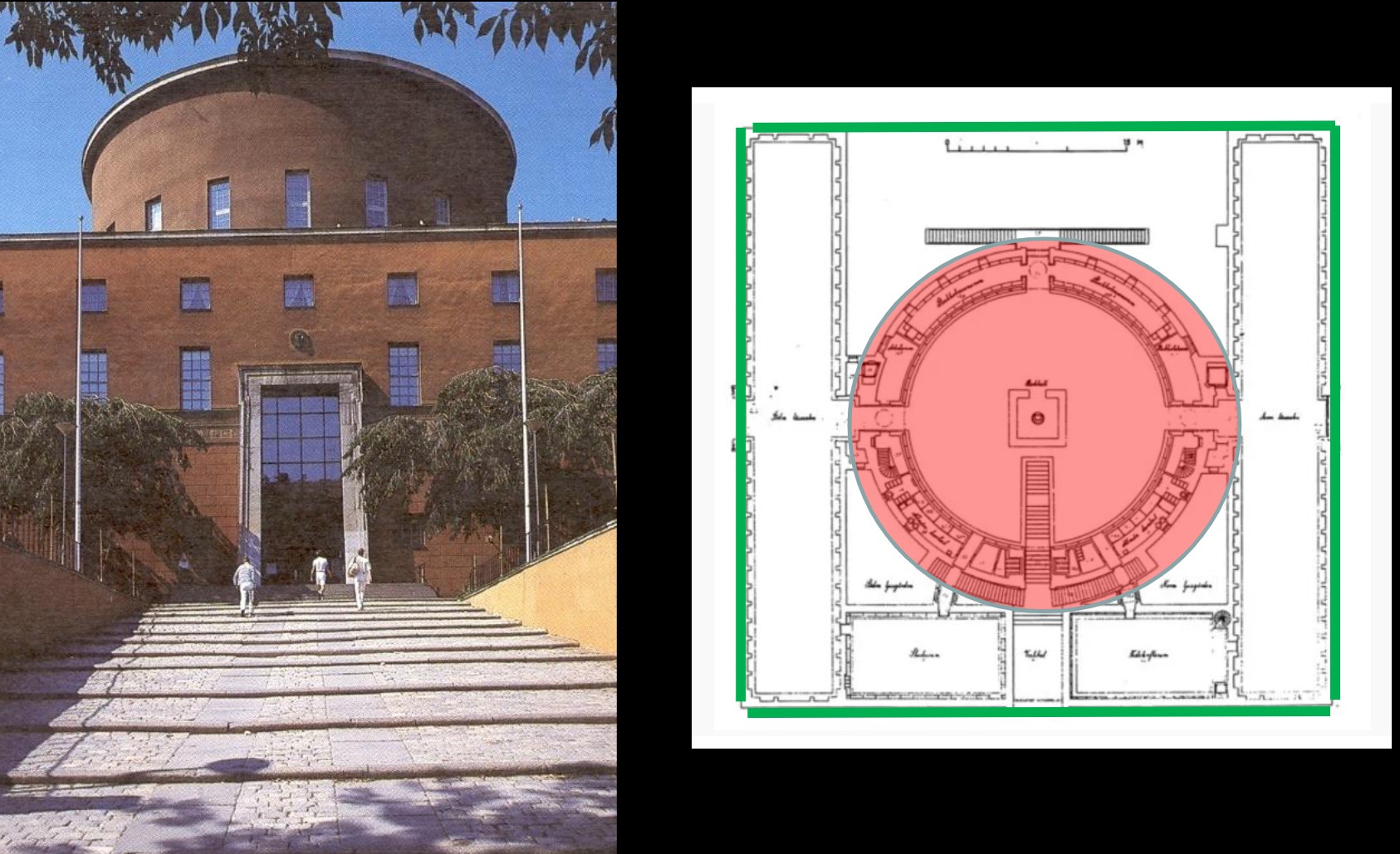
Asplund, Library Stockholm, 1925
Also a library with cylindrical form in urban conditions, but surrounding volumes are very regular, unlike Library in puerta de toledo.
No adaptation to irregular site conditions
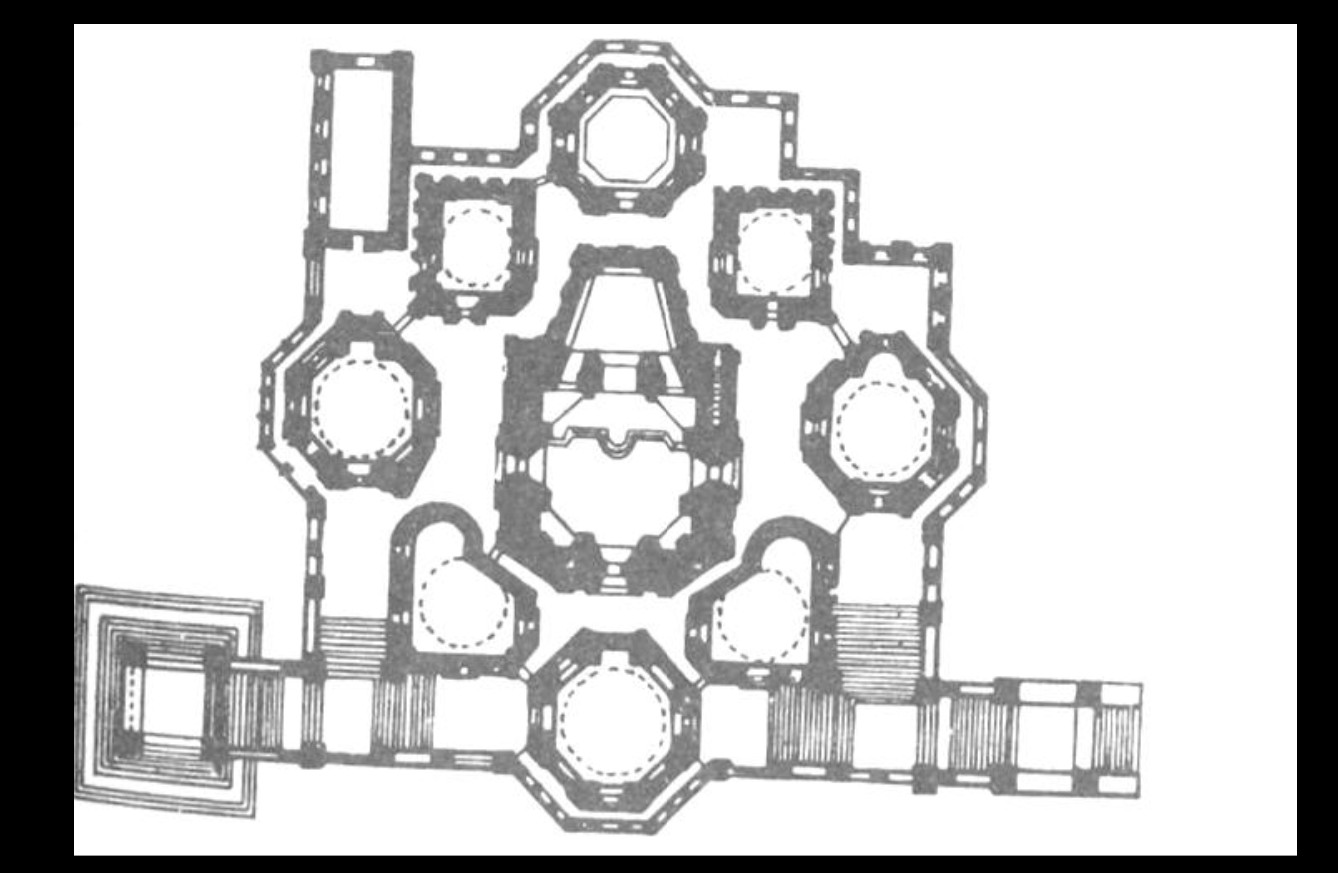
Dont need to memorize
Cathedral of St. Basel, 1555-60. in Moscow
Shapes fitted inside of shapes, like a series of Russian nesting dolls. Varying spatial conditions create complexity - what is inside and what is out? Complex architecture blurs that line
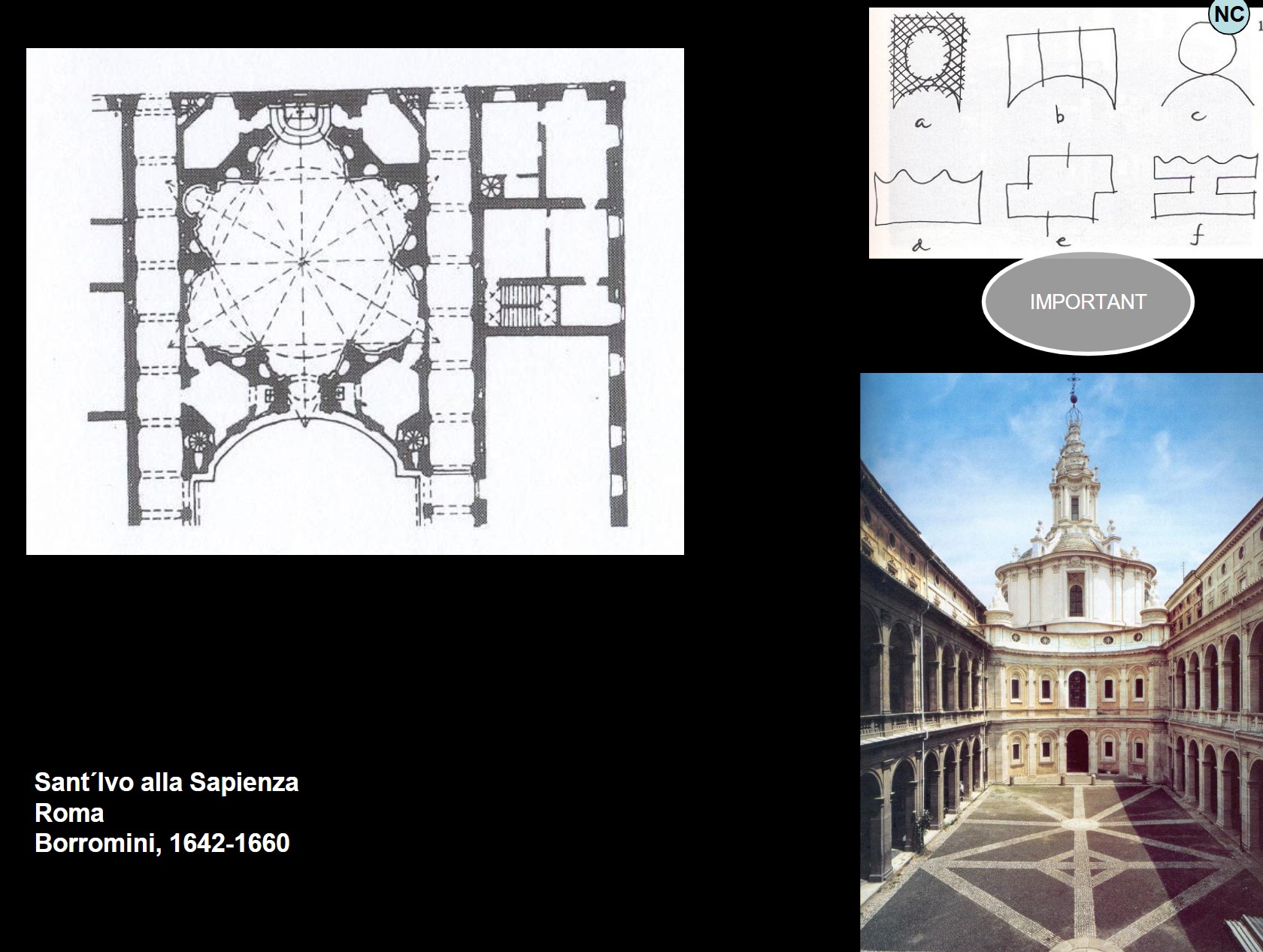
Sant´Ivo alla Sapienza
Roma
Borromini, 1642-1660, BAROQUE
University building designed with the layout of a church.
The concavity of the entrance creates a spatial pause in thhe street that draws occupants in. The front facade was designed from the outside in, while the interior was designed from the inside out.
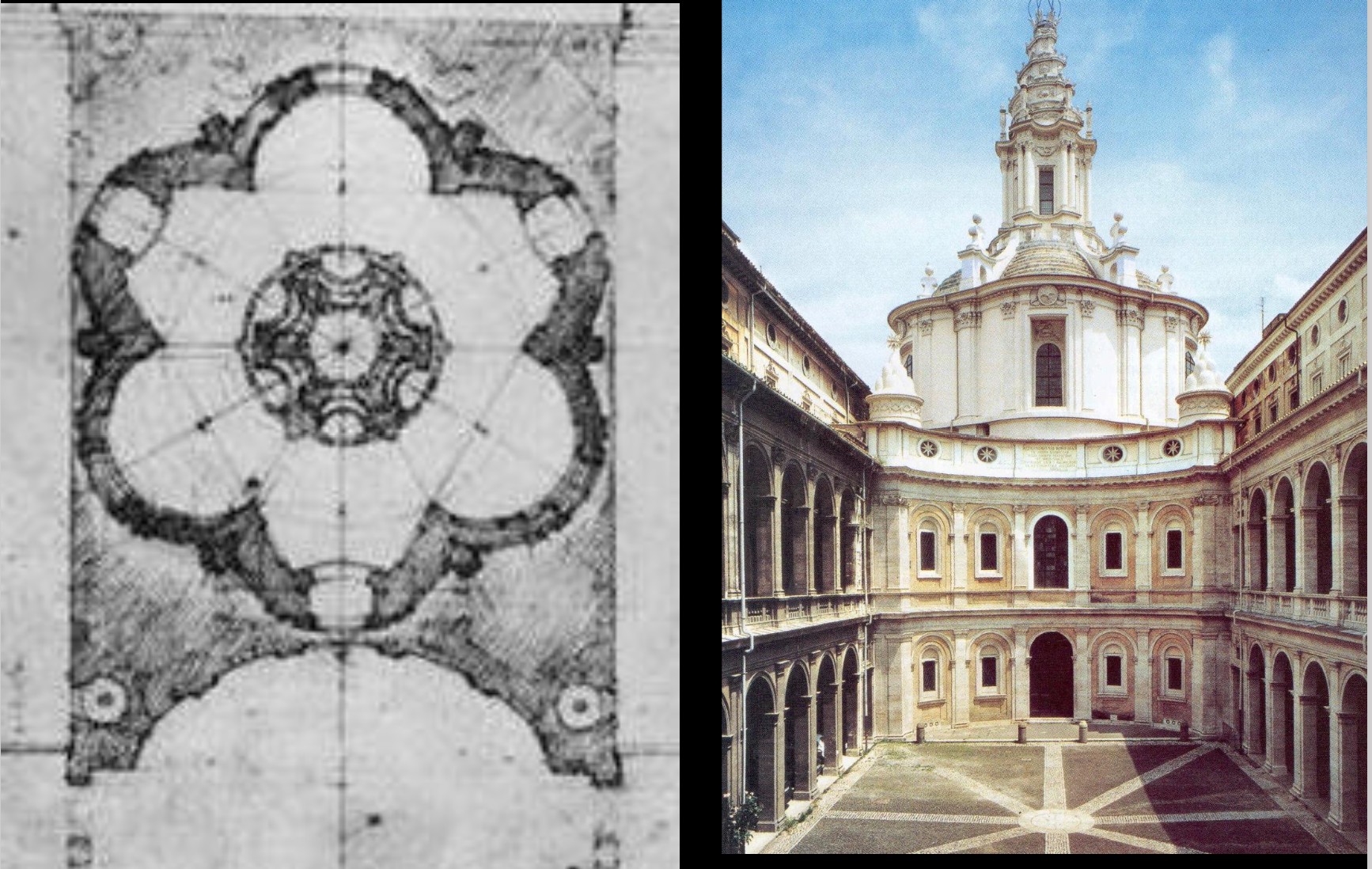
Sant´Ivo alla Sapienza
Roma
Borromini, 1642-1660, BAROQUE
The WALL-MEMBRAINE
Duality concavity-convexity
Concave exterior contrasts with the convex and makes unique spatial conditions.
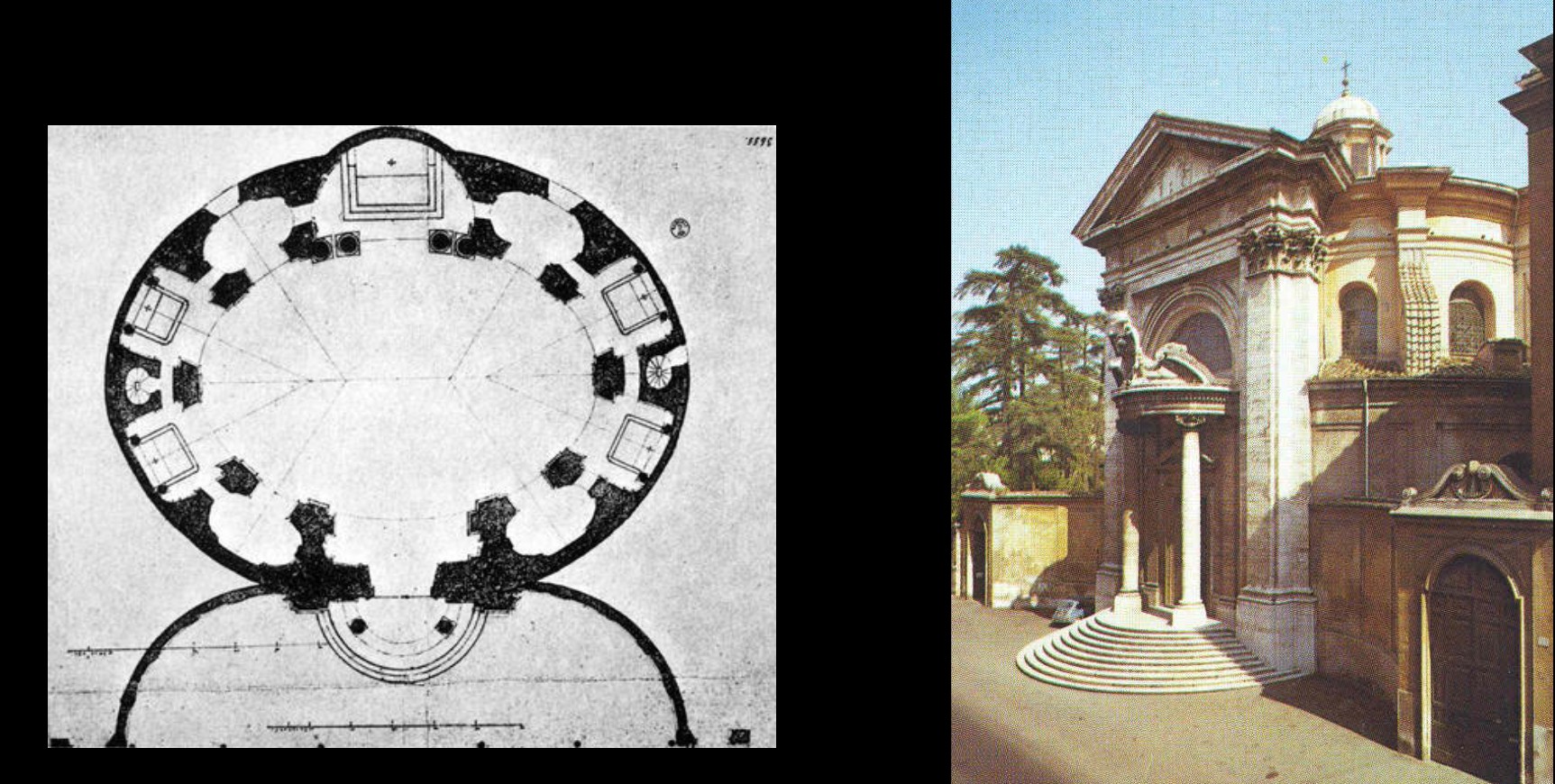
Bernini - Sant’Andrea al Quirinale, 1658-71
Interaction with urban space:
-Concave façade gives priority to the urban sense of the church
-Convex stairs: spatial “knee-knot”
in relation to the exterior space
Normally churches have two axes (at the longitunal way and the transcept way) but this deforms the traditional form.
Short axis is most important here: from entrance to altar
Contrast of concavity and convexity accomplishes intentions of this project.
Staircase embraces movement.
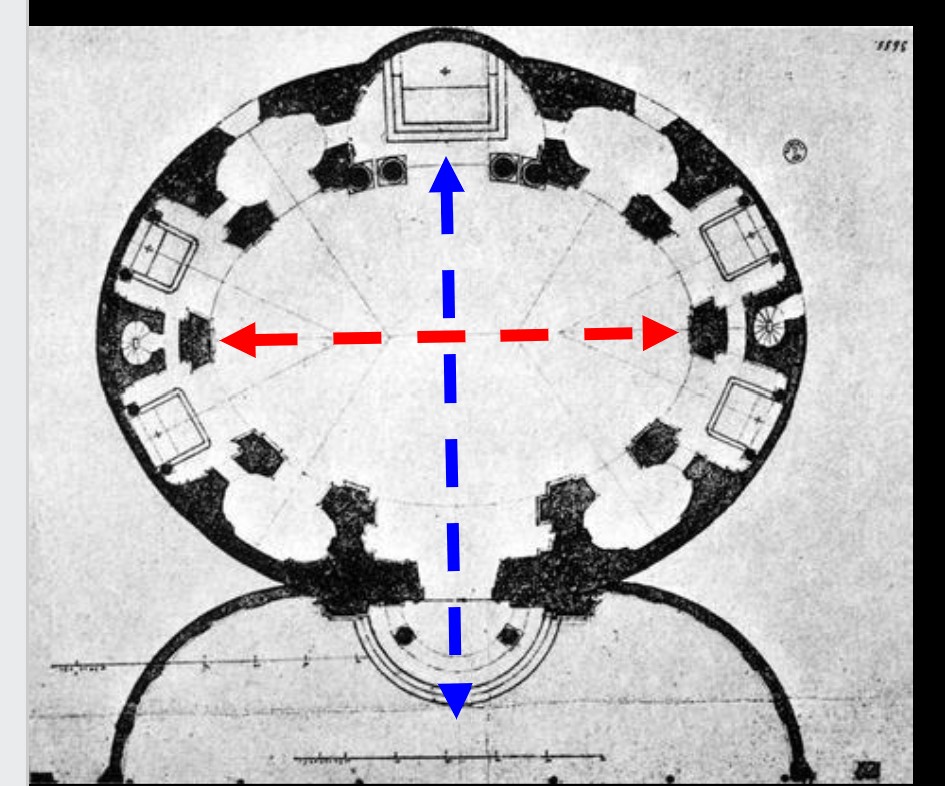
Bernini - Sant’Andrea al Quirinale, 1658-71
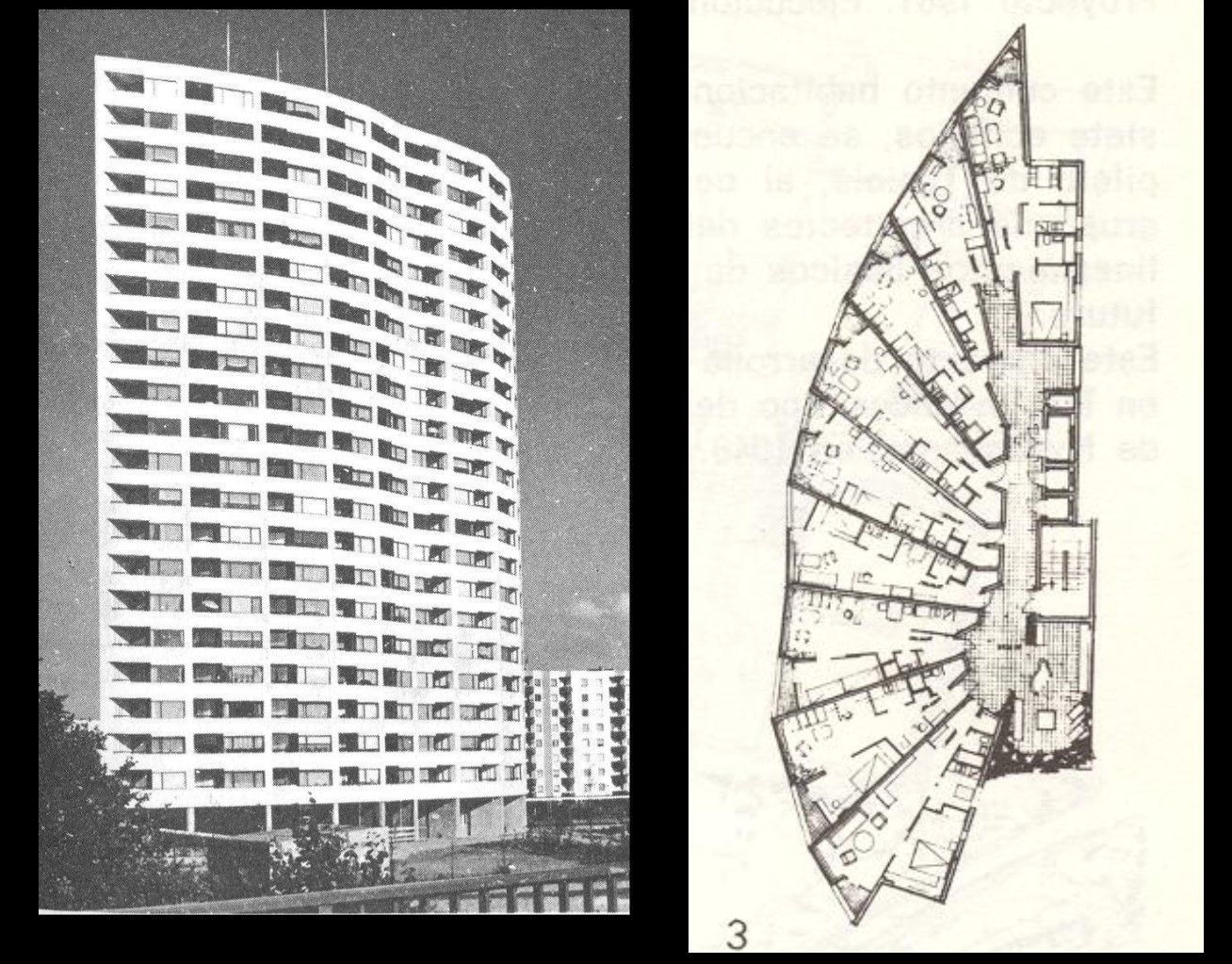
Apartments in Bremen, alvar Aalto, 1960
Aalto could have gone with a reguar rectangular shape for this project, but he manipulates the limit. It still expresses inside vs outside, but it is manipuulated to accomplish the needs of this project like light and views.
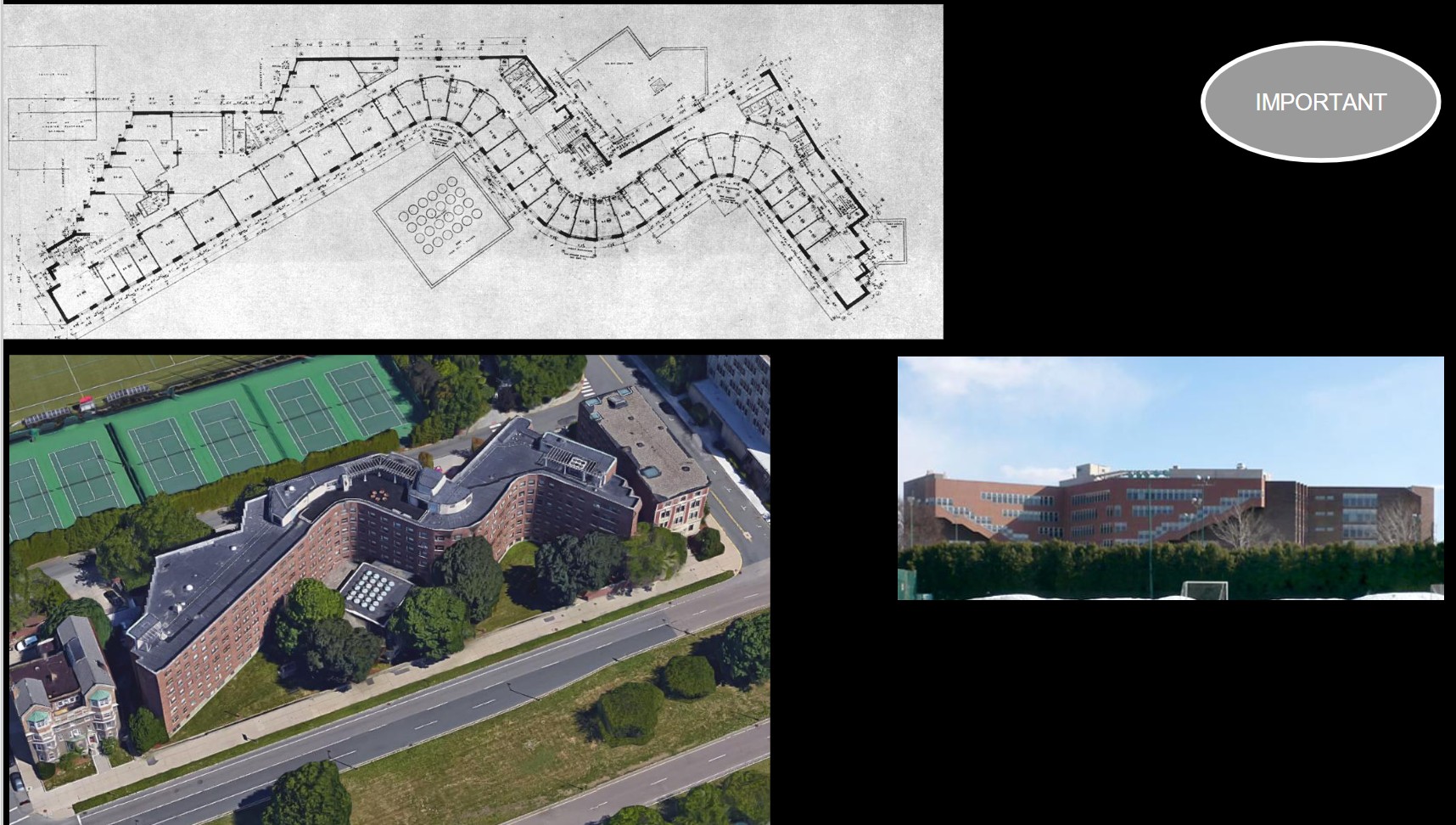
Baker House - M.I.T., Aalto, 1950
Manipulation of limit again to capture views, mirror river’s curve, and personalize each room.
Wavy organic shape in place of boring rectilinear form
Explain this quote from Venturi: “Designing from the outside in, as well as the inside out, creates necessary
tensions, which help make architecture. Since the inside is different from the
outside, the wall - the point of change - becomes an architectural event ”
There exists a tension between the spaces of the inside and outside. What we call a limit, or a wall, is what occurs between that inside and outside, and it becomes complex as it mediates that tension to become an event..
Explain the following Venturi quote: “Architecture occurs at the meeting of interior and exterior forces of use and space”
Good architecture can be explained as the meeting of internal and external forces. Complex architecture often blurs the line between the two.
Explain the following quote: “Architecture as the wall between the inside and the outside becomes the spatial record of this resolution and its drama .
And by recognising the difference between the inside and the outside,
architecture opens the door once again to an urbanistic point of view ”
This quote has to do with PLACE and urban setting. The limit becomes the building that is fulfilled with both internal and external functions.
Architecture (and the limit) must be sensitive to place because it is fitted within the urbanistic environment via the external side of the limit.
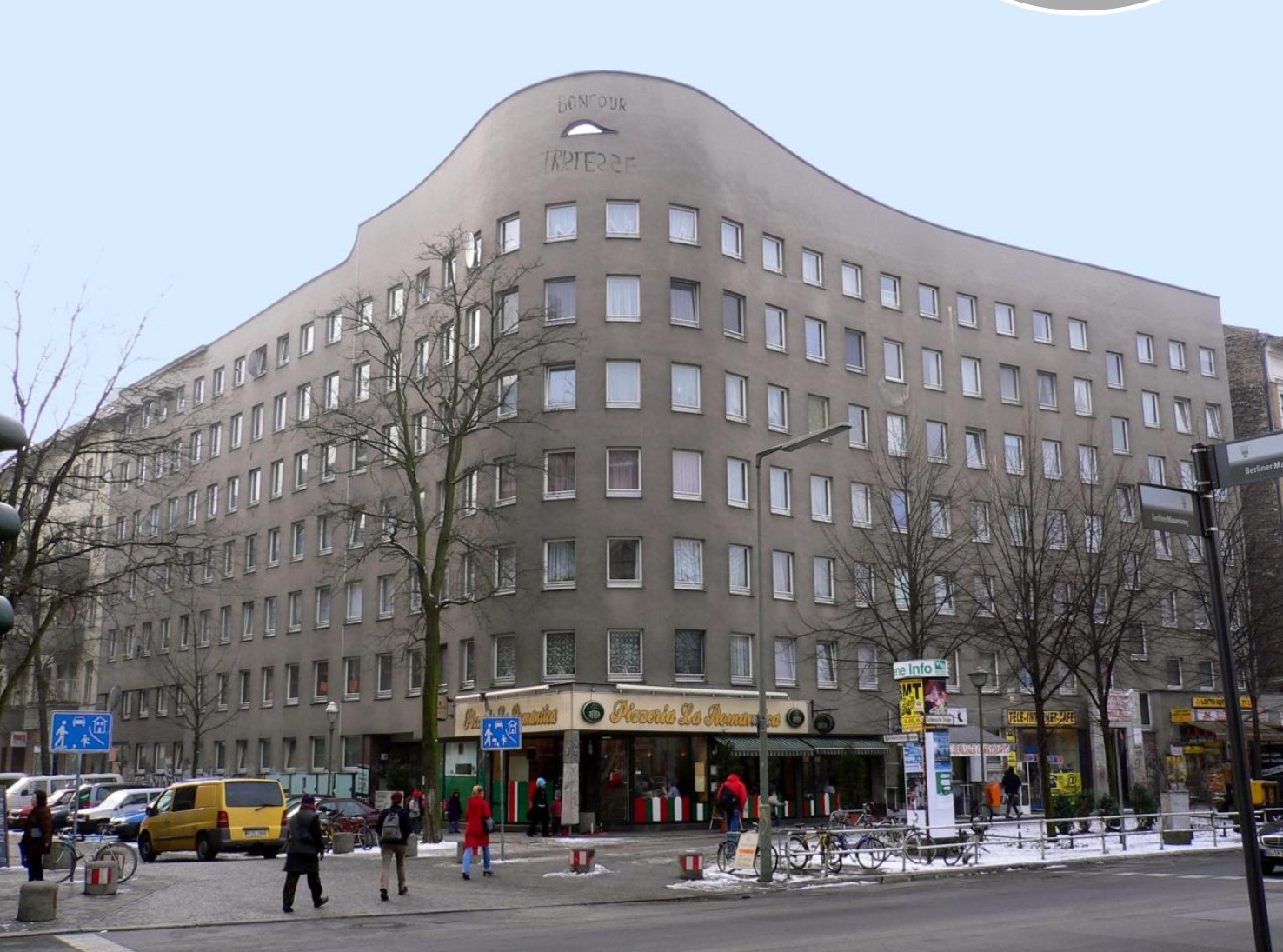
Siza, Schlesisches Tor Berlín, 1984
From the post-war era back when the berlin wall was still standing
Good example of adaptation to place via the limit. Adapts in 3 ways:
Physical: the square shape of the urban plot of land
Cultural: Curve form evokes German expressionism
Emotional: Berlin in post-war era with poverty, depression, and splitting of families
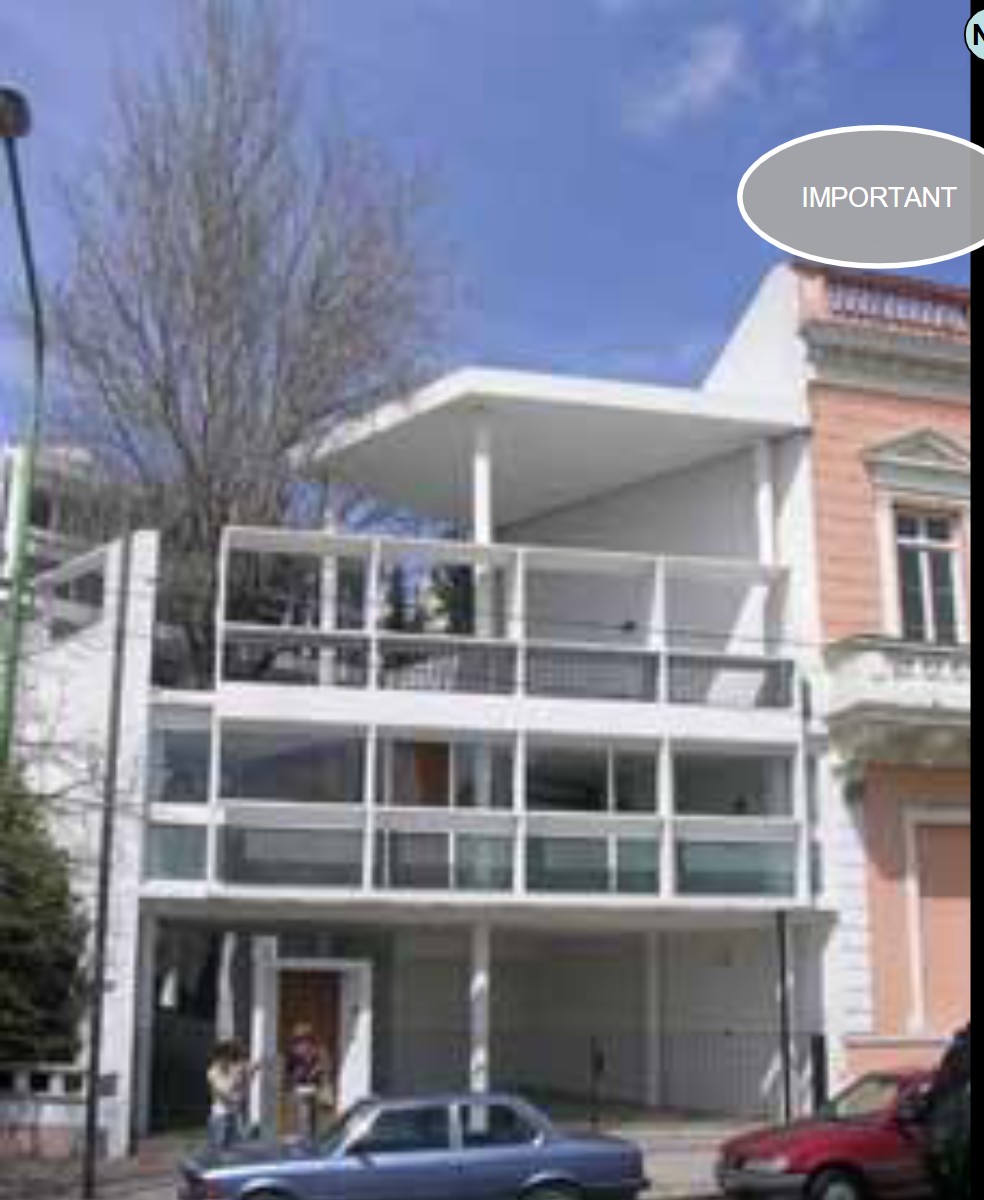
Le Corbusier
Dr. Curutchet House
La Plata, Argentina
1949-55
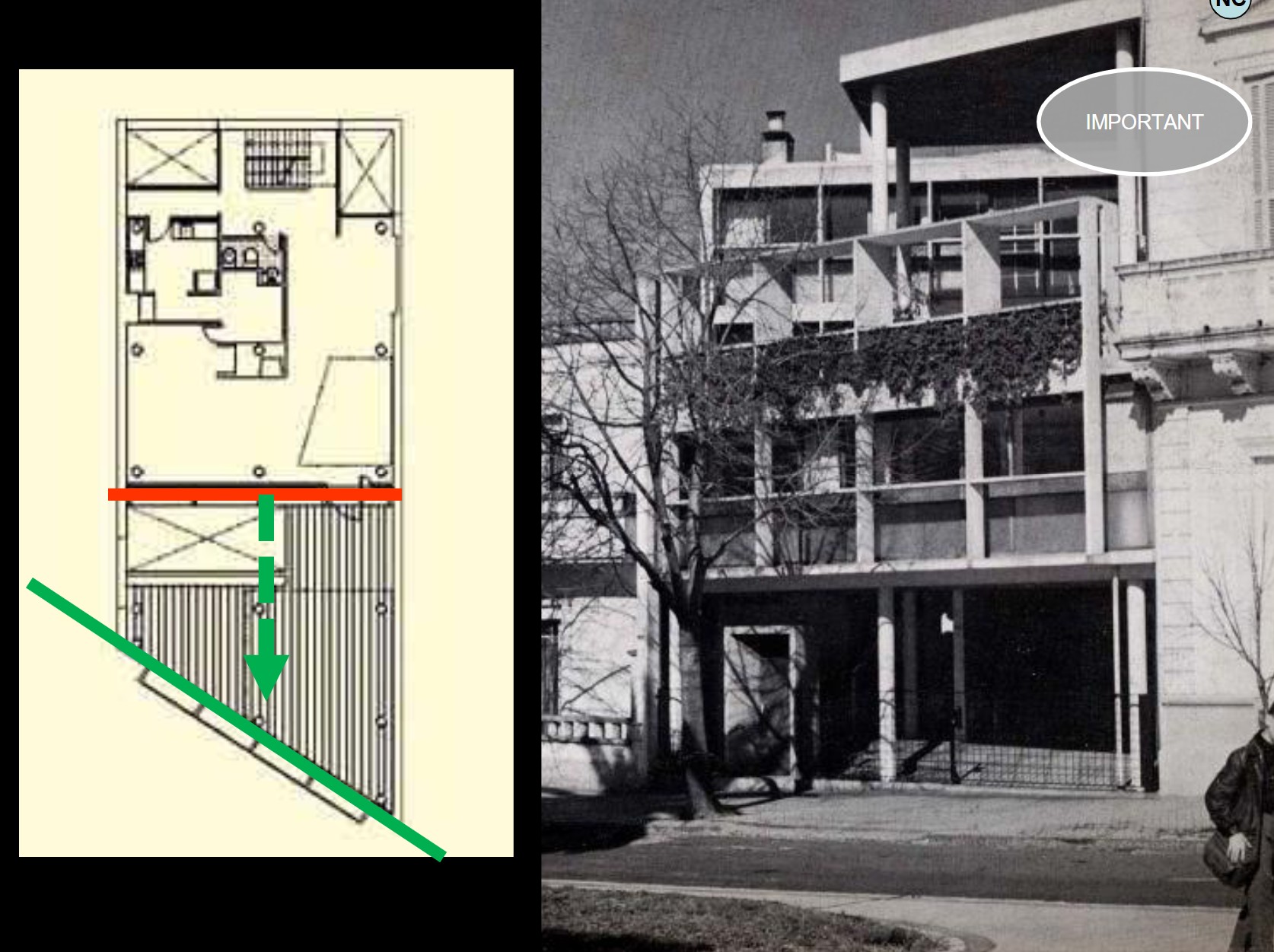
Idea of manipulating limit to be diagonal and fit within the streetline.Facade acts as filter through which air can flow.
Uran setting linked to Venturi’s quote about adapting to urban environment: the limit is shifted diagonally to adapt to the streetline.
The second limit layer protects the intimacy of the house and its patients, while the first adapts to the urban place. The space in between the first and second limits is the transition area!!
Patients are received in the front, doctor’s residence is in the rear.
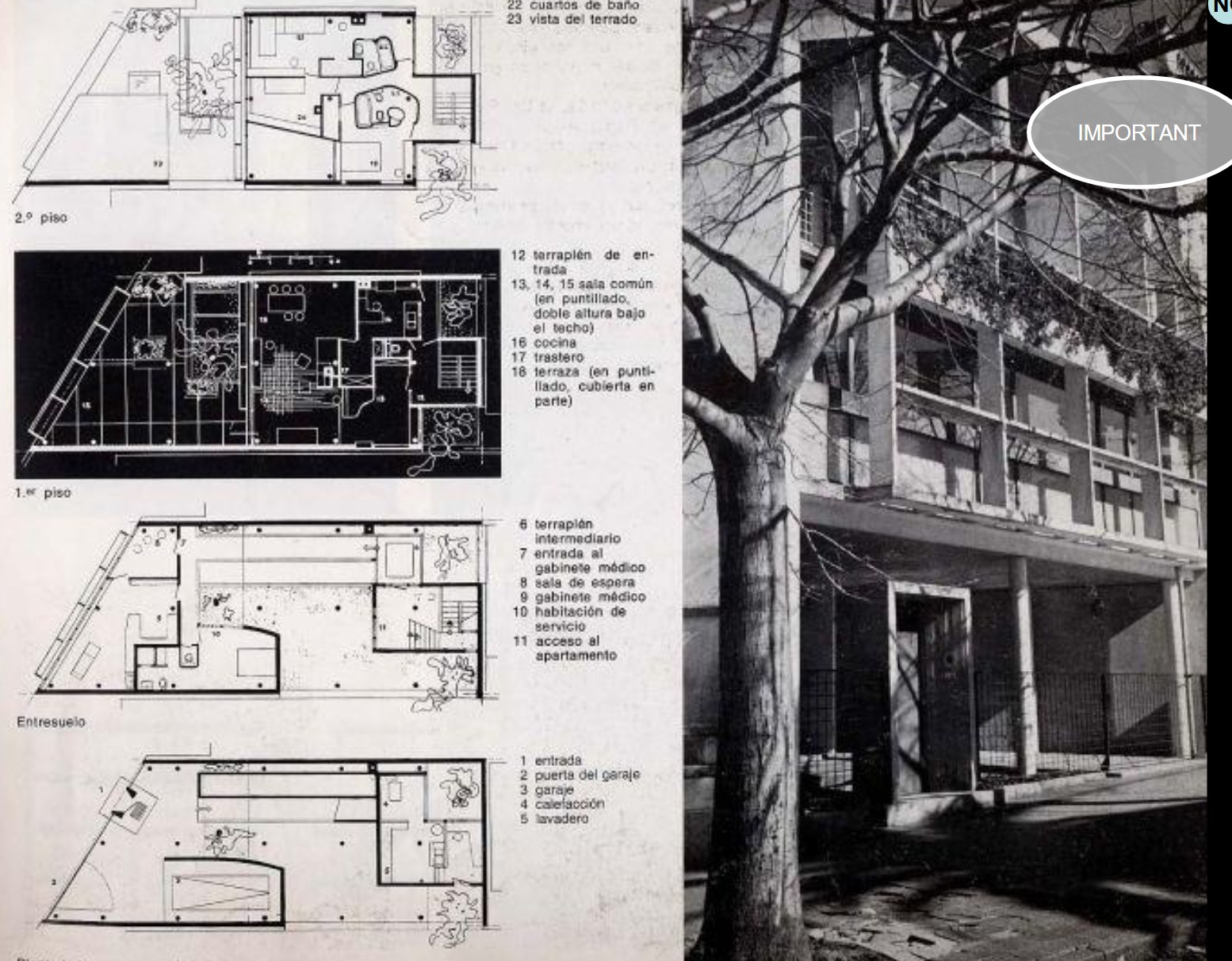
Le Corbusier
Dr. Curutchet House
La Plata, Argentina
1949-55
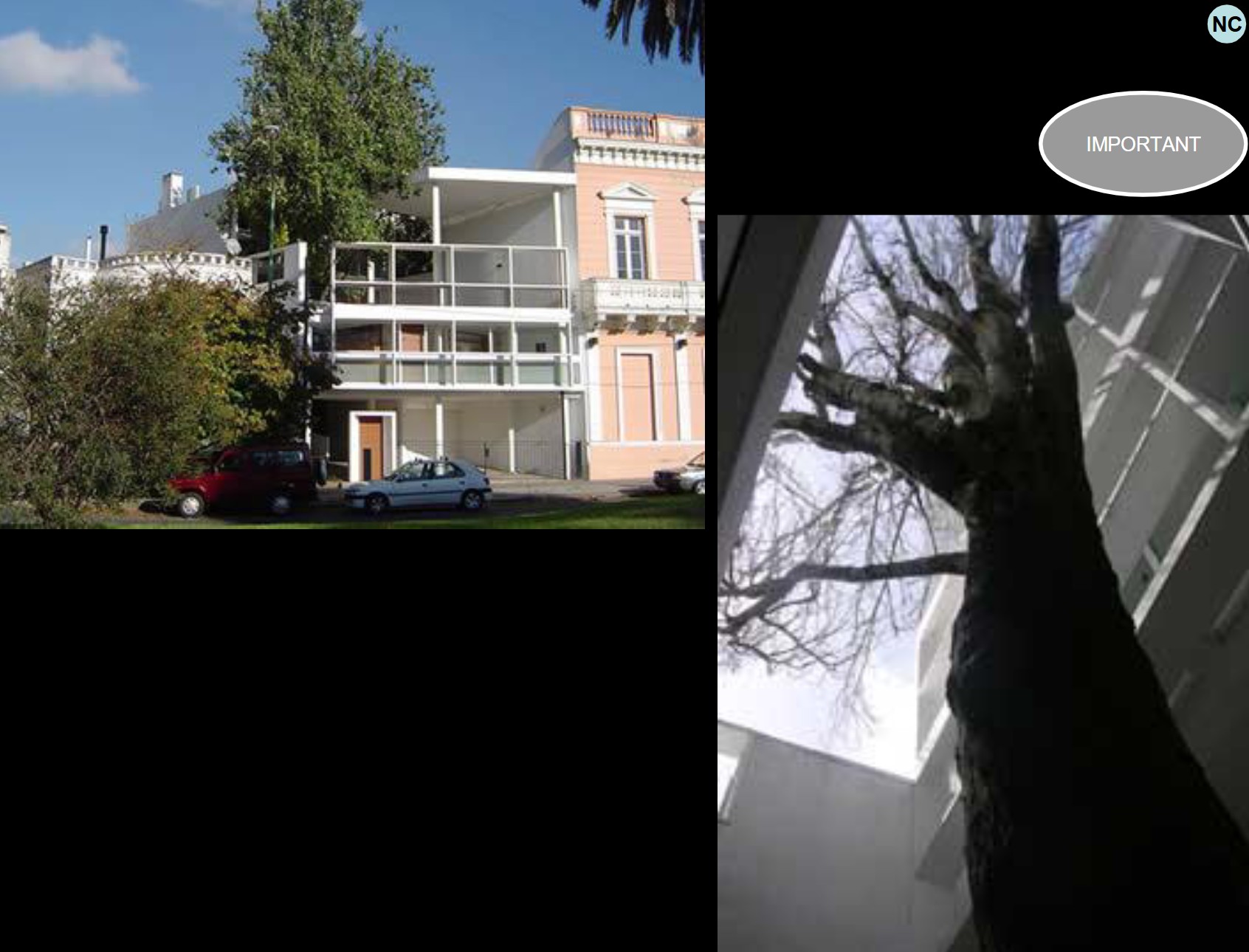
Le Corbusier
Dr. Curutchet House
La Plata, Argentina
1949-55
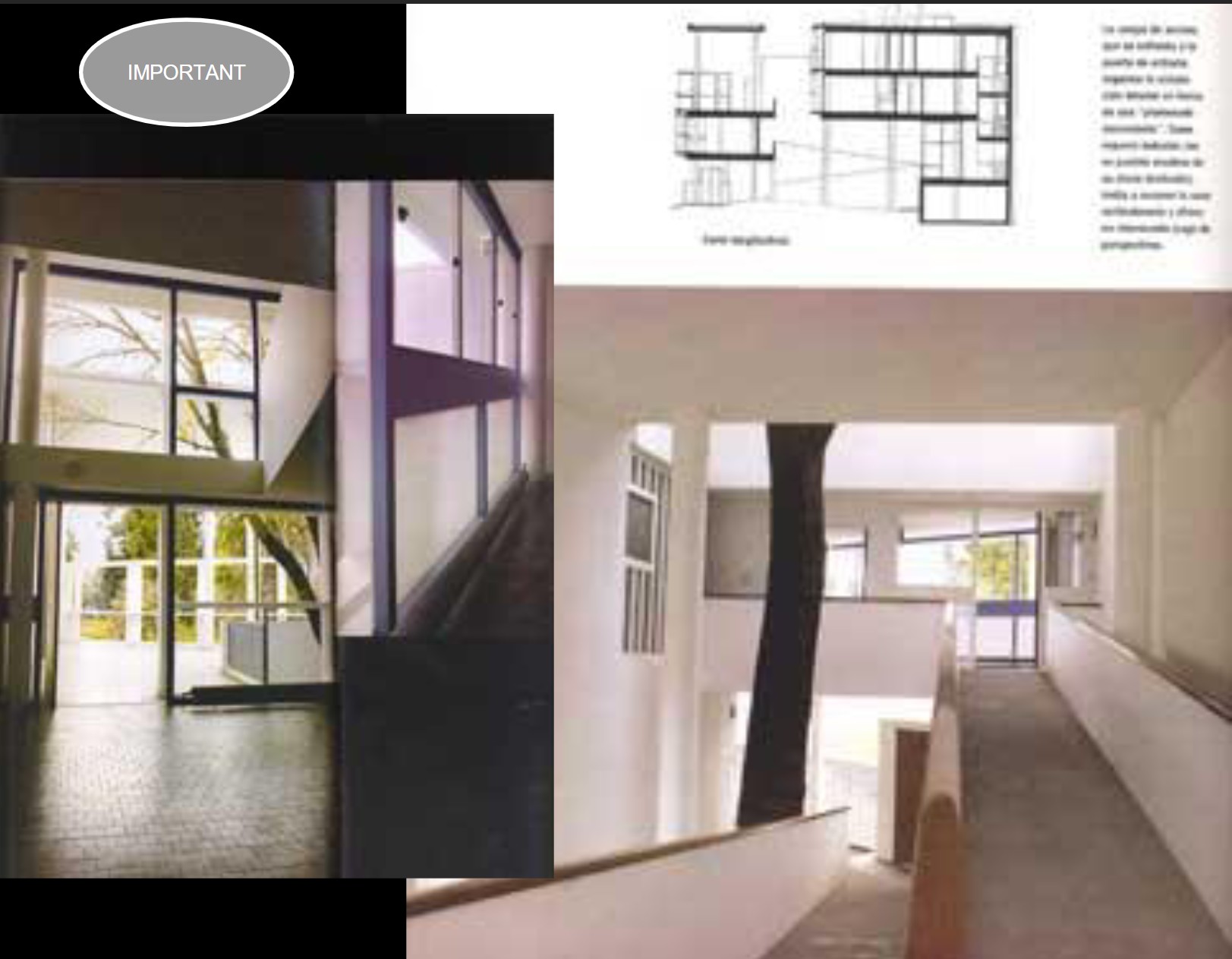
Le Corbusier
Dr. Curutchet House
La Plata, Argentina
1949-55
Le Corbusier
Dr. Curutchet House
La Plata, Argentina
1949-55
Architecture and Place, What causes varying complexity to the limit?
Adaptation to setting causes varying complexity of the limit.
PLACE MUST BE CONSIDERED IN THE DESIGN OF THE BUILDING!!
Projects should arise naturally out of the place they are rooted in.
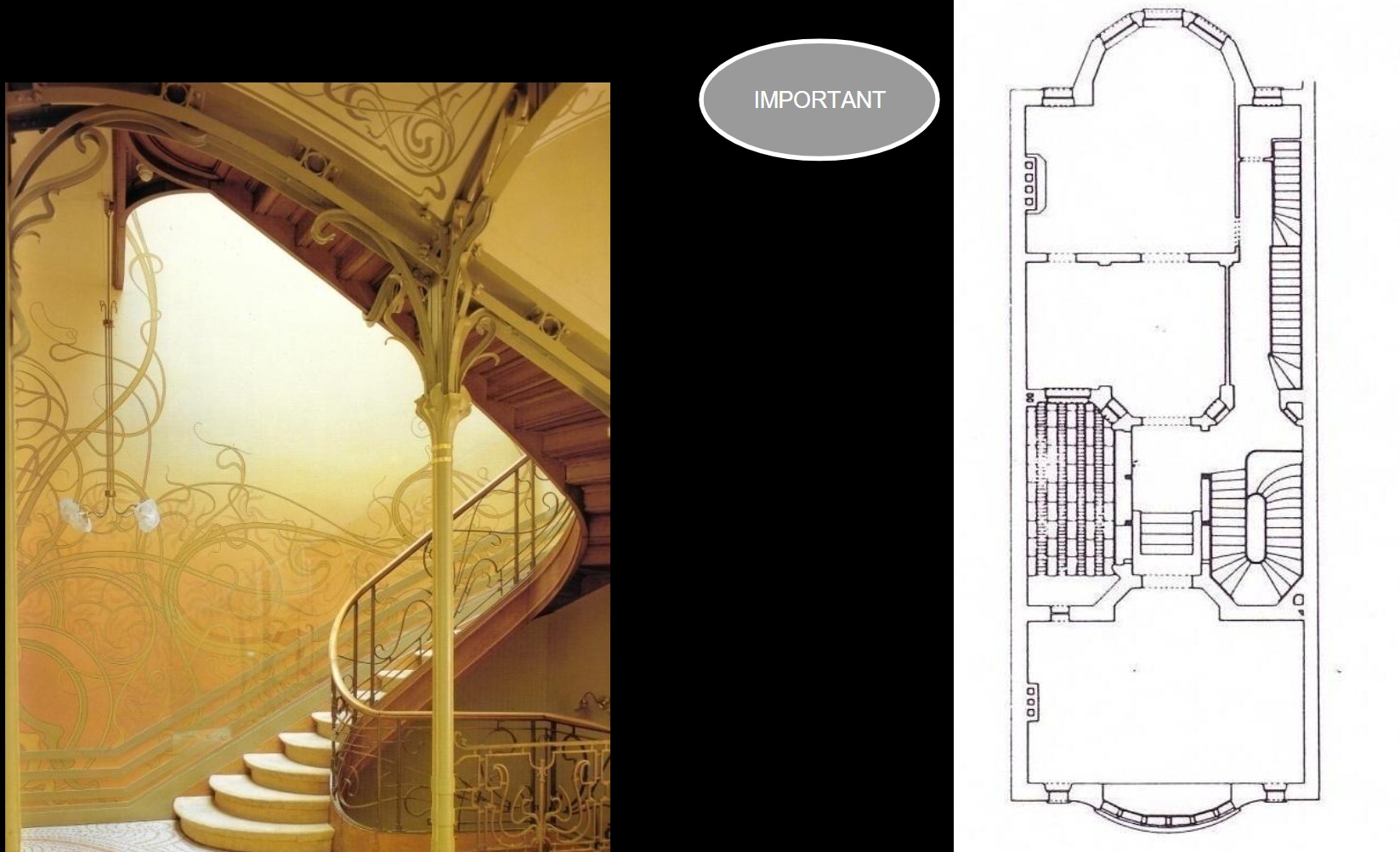
Víctor Horta (1861-1947)-Art Nouveau – Tassel, House 1893
DIALOG IN THE LIMIT – TENSION STEEL – STONE MASS
The iron-glass central element expands towards the external
space, pushed by the internal space. This determines the
character of the house, which projects its activity outside
(Social status)
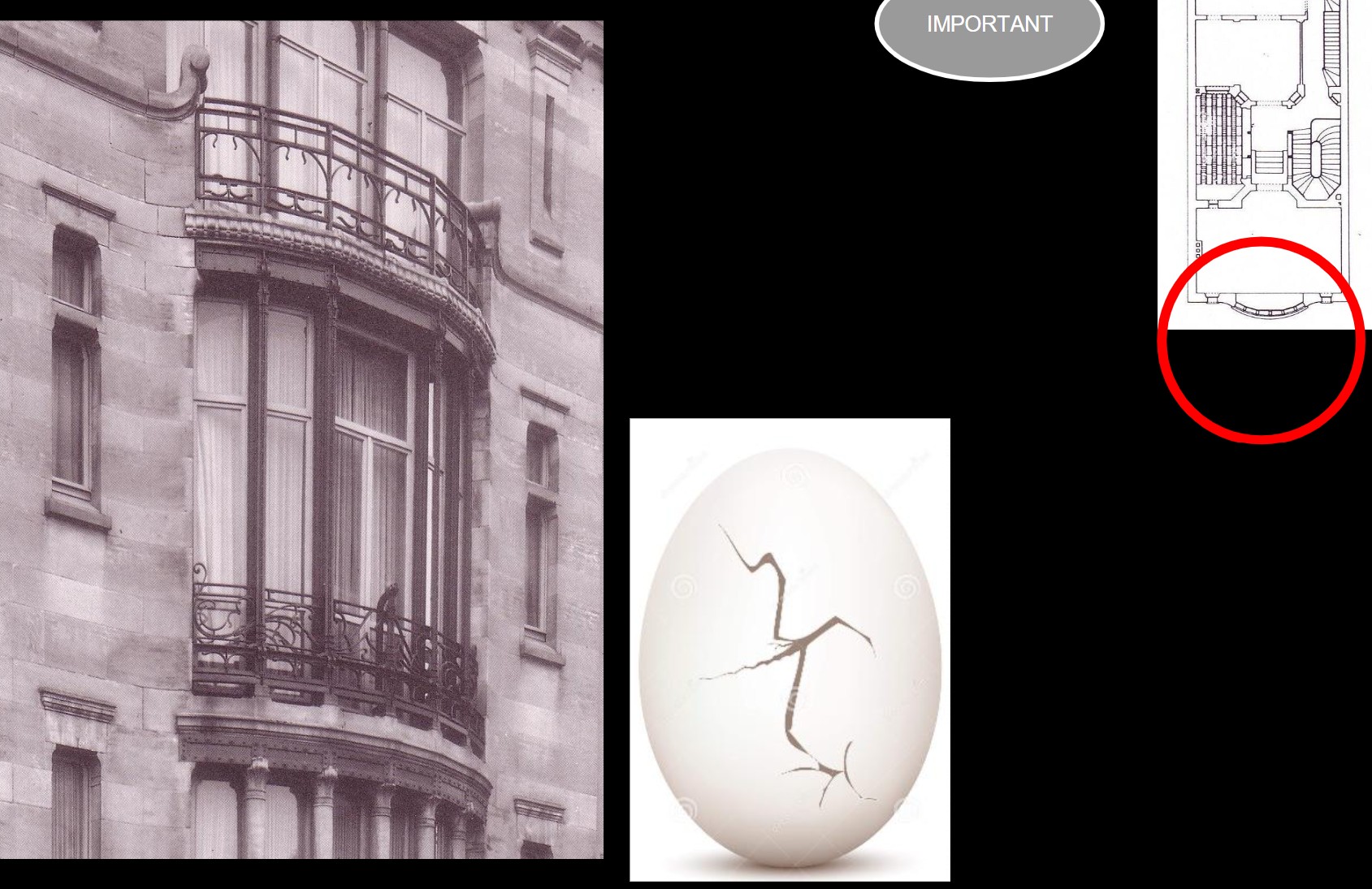
Victor Horta, Tassel House, 1890, Art Nouveau
Elements of facade are mostly built in heavy stone, except the central delicate steel windows which look like a crack in the stone, showing that even fragile glass material is capable of breaking stone because it bears the force of life within.
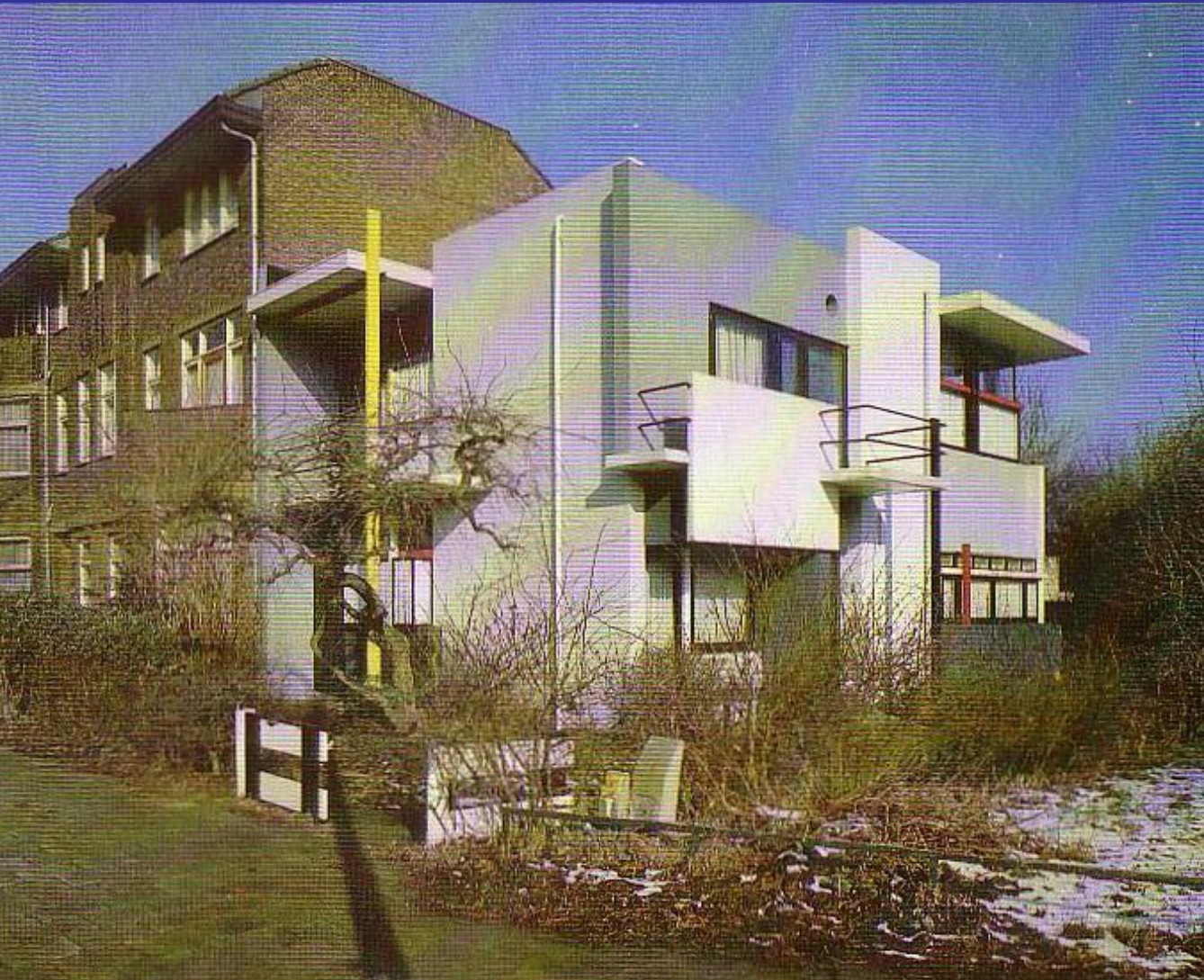
NEO-PLASTICISM: Schröder House, Gerrit Rietveld, Utrecht, 1923-4
The “explosion” of the box, and Fragmentation of the limit
What is the Law of Requisite Variety?
A new added element has to match in complexity to the existing elements.
“The larger the variety of actions available
to a control system,
the larger the variety of perturbations
it is able to compensate
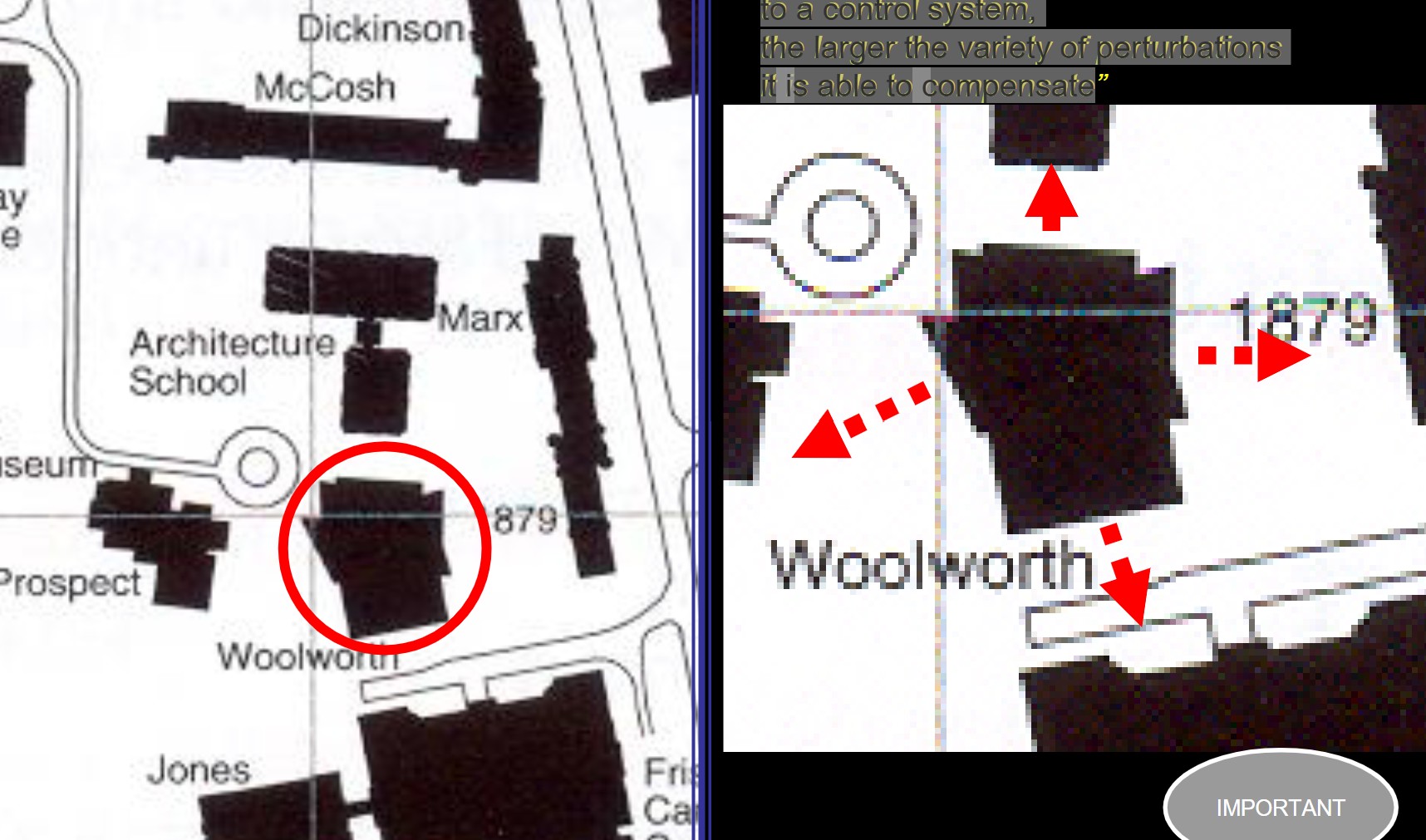
Woolworth Center Princeton (Navarro)
Manipulation of limit as a compositional strategy to adapt the building to the existing place (and match its complexity)