Lecture 9 - prosocial behaviour and altruism
 Call Kai
 Learn
Learn Practice Test
 Spaced Repetition
 Match
Match Flashcards
 Knowt Play
1/29

There's no tags or description
Looks like no tags are added yet.
Name | Mastery | Learn | Test | Matching | Spaced | Call with Kai | Chat |
|---|
No analytics yet
Send a link to your students to track their progress
30 Terms
comparative psychology and development
-compare ourselves to other great apes
-timing of developments in prosociality might be crucial in explaining differences between species
-source of new traits is changes in timing and manner in which existing genes are expressed and interact with the environment
prosocial behaviour
-voluntary behaviour intended to benefit another
-children engage in more prosocial behaviours with age
altruism
-prosocial behaviour that is performed for unselfish motives
-studies demonstrate altruism in infancy is not uncommon
types of prosociality
comforting → addressing negative emotional state
helping → addressing instrumental need
sharing → addressing material need/desire
comforting
-rate at which children comfort others who are in pain or distress increases over the second year of life
individual differences - comforting
-compared monozygotic and dizygotic twins
-genetic factors have a modest role in explaining toddlers’ prosocial actions and concerns
-genes might influence neurohormonal systems, which influences affective responses to others’ distress
holmegren (individual differences - comforting)
-those who are not overwhelmed by the emotions they experience are more likely to feel sympathy
-those who are not overly inhibited are more likely to act on their sympathetic feelings
-child may struggle to process or act on emotions → so seemingly show no concern or comforting
chimpanzees and comforting
-chimpanzees do comfort/reassure others
-but at later development than humans
-understanding human prosociality may be when certain abilities emerge in development rather than ‘if’
assisting others
-prosocial response to an instrumental need
-selectively in helping
-comparing humans with non-human apes
informing others
-12 month olds help others by informatively
-communication helps others achieve instrumental goals
active assistance
-18 month olds help others in simple tasks → adult feigns needing help to reach peg or open door
chimpanzees and bonobos - helping
-chimpanzees also help in similar situations where it is easy for them to infer what the person’s goal is
-there are some debates over chimpanzee prosociality, with the majority view being chimps and bonobos do display prosocial helping
-less common among young chimps
-e.g., cannot reach rubber so chimp grabs it for her
promoting helping - method
-toddlers who were 18 months or 30 months helped their mother clean up
-maternal helping promotion behaviours were recorded
-children then had the chance to help another adult
promoting helping - results
-certain styles of caregiver behaviour predicted infants’ likelihood of helping another adult - with differences depending on age
-18 month olds:
directives → commands or requests
scaffolding → providing support such as emotional regulation, making child’s actions relevant in the activity
-30 month olds:
scaffolding
negotiation → finding a compromise
promoting helping - what doesn’t work
reasoning/explaining the need → don’t yet have reasoning skills required
praise/positive comments → too open ended/generic, though may promote self-esteem
character attribution → comments on child characteristics → may promote self-esteem but not helping
sharing
-addressing other’s material needs/desires even at a personal cost
-affiliative sharing
-resource sharing
-fairness and reciprocity
-cultural variation in these tendencies
-sharing by non-human apes
affiliative sharing
-infants share attention and interest from around 6 months
-actively give objects around 9-10 months
early resource sharing - 18 months
-start to share resources
-this requires heavy scaffolding from adults
-at 18 months this behaviour is:
not very common
rarely spontaneous
not very generous
early resource sharing - 24 months
-start to share more quickly, more often, with less prompting, more generously
-driven by increased social understanding
-infants first start to say ‘mine!’
fairness and reciprocity (sharing)
-around 3 years, children start to become more discerning about who should benefit from their acts of kindness
-children think people should prefer to share resources with:
family and friends
people who have shared with them - reciprocity
people who have shared with others - indirect reciprocity
-show strong reciprocity
-sacrificing resources to punish and reward that children could trade for small prizes
blake - method (fairness and reciprocity)
-inequity when someone gets more sweets than someone else
advantageous equity → get more sweets than someone else
disadvantageous equity → get less sweets than someone else
-child has access to two levers and other child does not
green lever → everyone gets some sweets
red lever → tips sweets into central bowl and nobody gets sweets
blake - result (fairness and reciprocity)
-pulling red lever is less likely with equal distribution
-more likely to pull red lever with uneven distribution
-as children reach middle childhood disadvantageous inequity more likely to reject and give no one sweets
-with advantageous inequity will see cultural differences with age → more variable in later development
great apes - sharing
-female chimps have been known to share food
-much more common in bonobos
-bonobos voluntarily hand food to others but not toys or tools
self-maximisation (sharing)
-advantageous inequity aversion and strong reciprocity more culturally variable
dahl - altruism
-acts motivated by the welfare of others
evidence for altruism
-toddlers help others even anonymously
-help whether the adult is there to watch or not, even if adult is unfamiliar
-2 year olds remedy unnoticed accidents
-proactive rather than solely reactive prosociality → even when engaged in an interesting task of their own
motivational sources of prosociality
-empathic concern → sincere concern for others’ wellbeing
-gratitude and guilt → gratitude sustains prosocial interactions and reinforces reciprocity, guilt motivates repair of ruptured social relations
-obligation → commitments create a sense of social obligation, norms create an expectation of altruistic behaviour
-reward
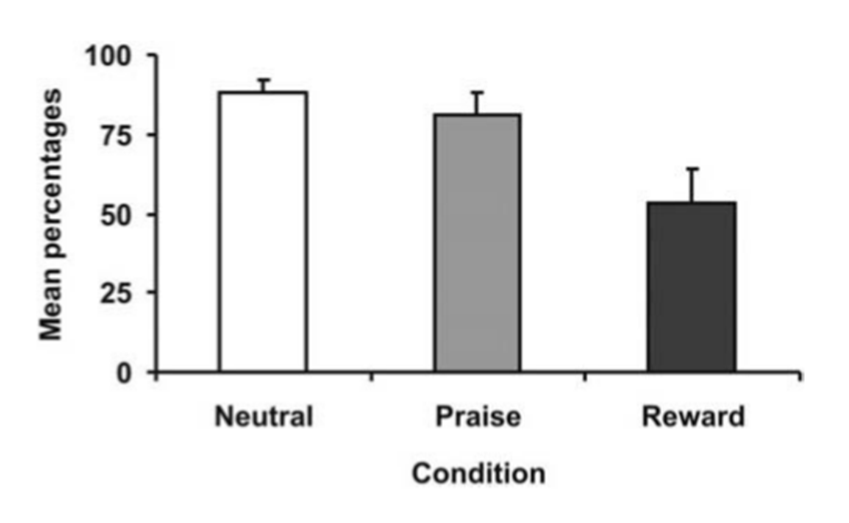
impact of material reward - method (altruism)
-20 month olds had chance to help adult
-if they did the adult provided a response:
gave them a material reward
praised them
responded neutrally
-in 2nd phase children again given the opportunity to help the adult
impact of material reward - results (altruism)
-less likely in reward condition- extrinsic motivator
-praise did not function as a ‘verbal reward’ focuses on intrinsic motivation
-important of intrinsic motivation to altruistic action → undermined by extrinsic motivation
altruism - innate tendency
-infants display helping from early in development and extrinsic motivation inhibits helping behaviour
-chimpanzees help others when it is easy to infer the goal
-but early helping can be explained by a motivation for social interaction rather than altruism