MAR 3203 Chapter 1: Operations and Productivity
 Call Kai
 Learn
Learn Practice Test
 Spaced Repetition
 Match
Match Flashcards
 Knowt Play
1/13

Earn XP
Description and Tags
Name | Mastery | Learn | Test | Matching | Spaced | Call with Kai |
|---|
No analytics yet
Send a link to your students to track their progress
14 Terms
Production
The creation of goods and services
Operations management (OM)
The set of activities that create value in the form of goods and services by transforming inputs into outputs
Three functions of organizations
Marketing, which generates the demand
Production/operations creates the product
Finance/accounting tracks how well the organization is doing, pays bills, collects money
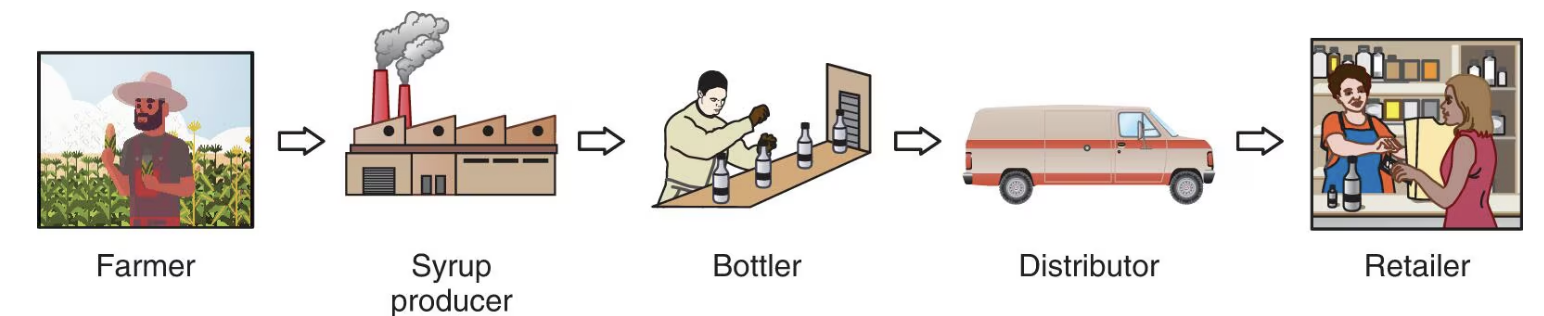
Supply chain
A global network of organizations and activities that supply a firm with goods and services
Services
Economic activities that typically produce an intangible product; almost all services and almost all goods are a mixture of a service and a tangible product
Service sector
Economy that spans trade, financial, lodging, education, legal, medical, and other professional occupations
The largest economic sector in postindustrial societies
Productivity increase in agriculture and manufacturing has allowed for more economic resources towards services
Many service jobs pay well
Characteristics of goods vs services
Goods
Tangible: The seat itself
Many aspects of quality are easy to evaluate: strength of a bolt
Services
Intangible: Ride in an airline seat
Quality may be hard to evaluate: consulting, education, and medical services
Productivity
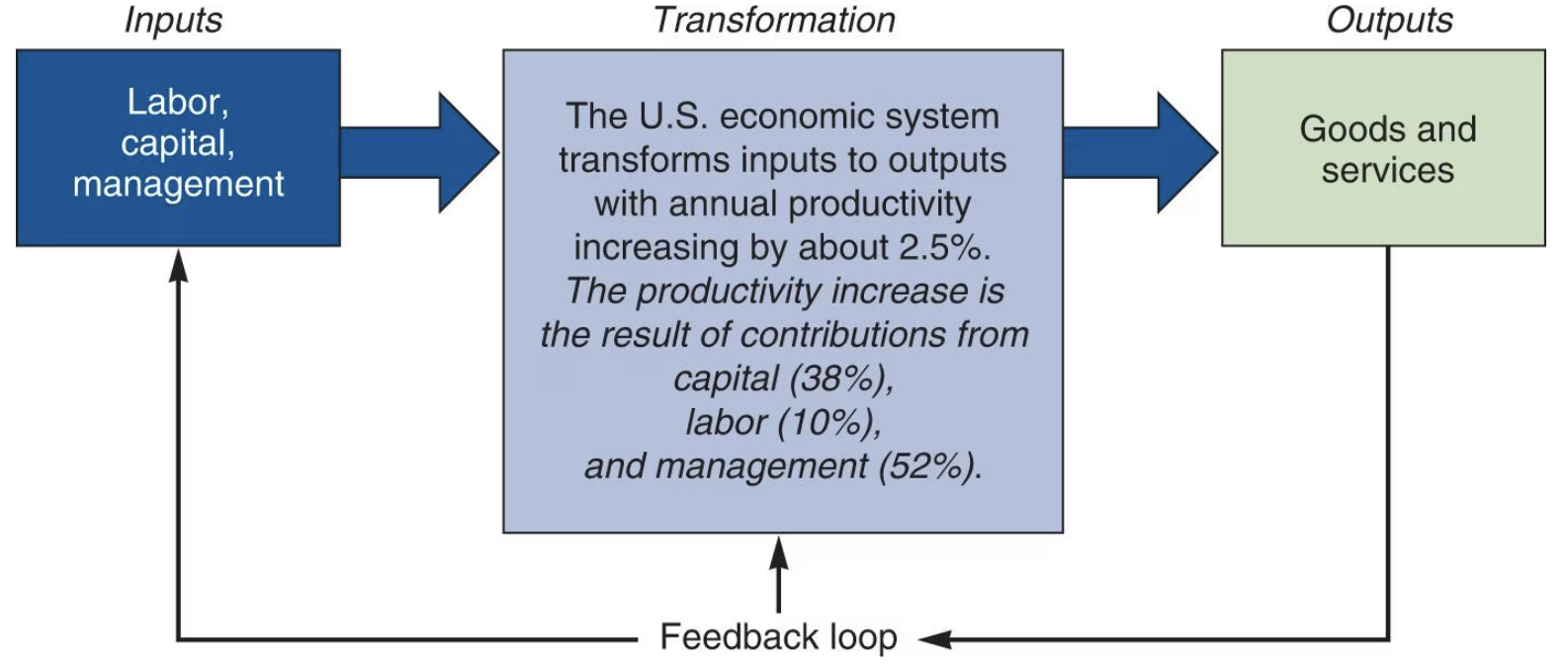
The ratio of outputs (goods and services) divided by one or more inputs (such as labor, capital, or management)
Measure of process improvement
High production means producing many units, while high productivity is producing units efficiently
Only through productivity increases can standard of living improve
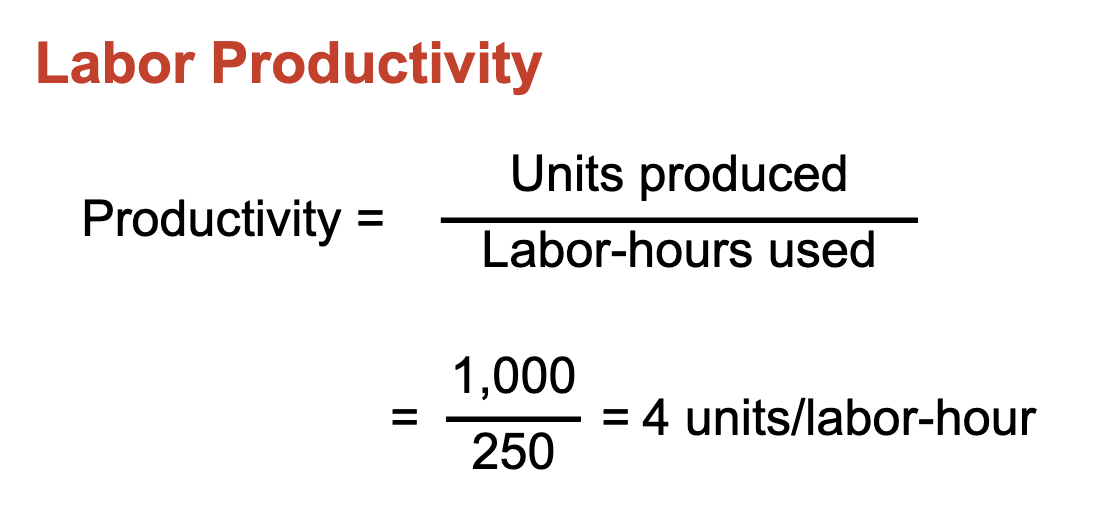
Single-factor productivity
Indicates the ratio of goods and services produced (output) to one resource (input)
Example: labor productivity
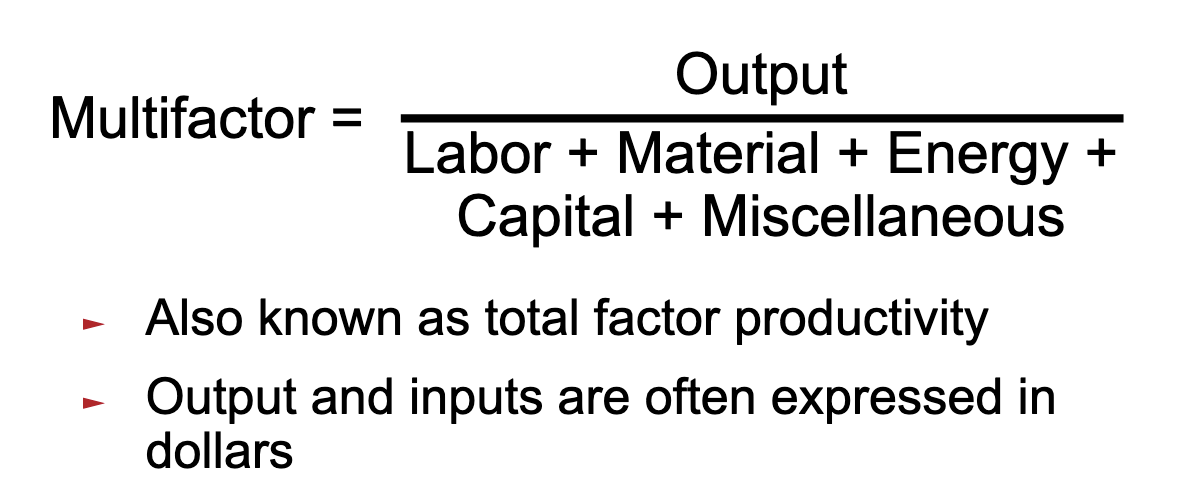
Multi-factor productivity
Indicates the ratio of goods and services produced (outputs) to many or all resources (inputs)
Also known as total factor productivity
Output and inputs are often expressed in dollars $
Productivity measurement problems
Quality may change while the quantity of inputs and outputs remains constant
External elements may cause an increase or decrease in productivity
Precise units of measure may be lacking
Productivity variables
Factors critical to productivity improvement are
Labor: contributes about 10% of the annual increase
Basic education and appropriate labor force, diet of labor force, social overhead like transportation
Capital: about 38% of the annual increase
Inflation and taxes increase the cost of capital
Management: about 52% of the annual increase
Ensures labor and capital are effectively u sed to increase productivity
Knowledge societies
Post-industrial societies in which much of the labor force has migrated from manual work to technical and information-processing tasks requiring ongoing education
Productivity and the service sector
Productivity improvement in services is difficult because
Typically labor intensive
Frequently focused on unique individual attributes or desires
Often an intellectual task performed by professionals
Often difficult to mechanize and automate
Often difficult to evaluate for quality