Capacitors and Dielectrics (from lecture 15)
 Call Kai
 Learn
Learn Practice Test
 Spaced Repetition
 Match
Match Flashcards
 Knowt Play
1/14

There's no tags or description
Looks like no tags are added yet.
Name | Mastery | Learn | Test | Matching | Spaced | Call with Kai |
|---|
No analytics yet
Send a link to your students to track their progress
15 Terms
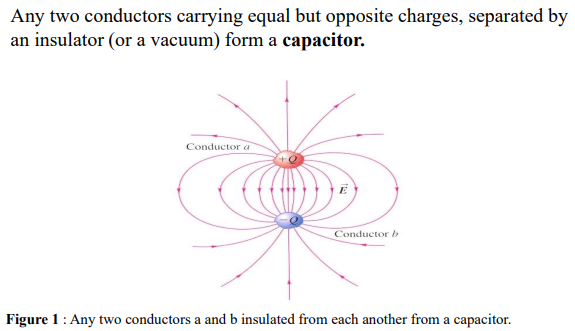
what forms a capacitor?
the uncharged state of a capacitor
has no net charge separation between its two conductor plates
stores no electric charge, voltage, or electric potential energy U
the two plates are at the same electric potential
this is the state after the capacitor has been fully discharged or before any battery is connected
the charging state of a capacitor
a charge Q is transferred from one conductor plate to the other, givomh pme cpmductor a charge +Q and the other charge -Q
a potential difference deltaV is created, where the positively charged has a higher potential than the negatively charged plate
*the net charge on the entire capacitor is always zero whether if its charged or not*
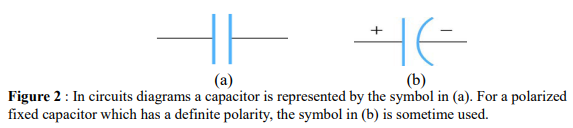
symbols for capacitor
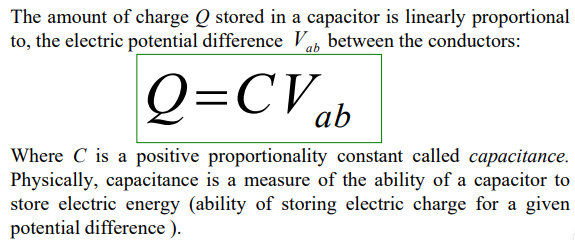
amount of charge Q stored in a capacitor (formula)
by convention, Vab = Va - Vb
capacitance C is measured in farads (F)
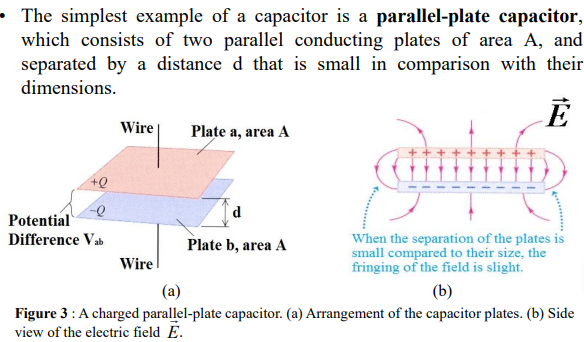
parallel plate capacitor
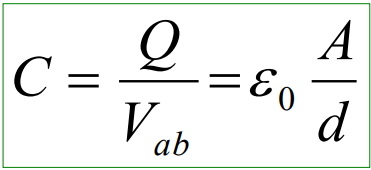
how to find the capacitance from a parallel plate capacitor
A = the area of each conductor plate in the capacitor (only factor in the area that overlaps) m²
d = the perpen dist between the conductor plates in the capacitor (m)
most common way to charge a capacitor
by connecting its plates to the terminals of a battery
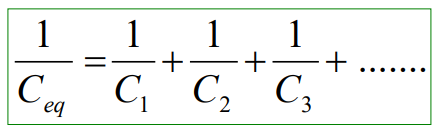
combining capacitors connected in series
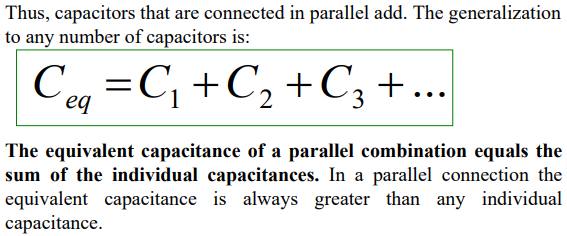
combining capacitors connected in parallel
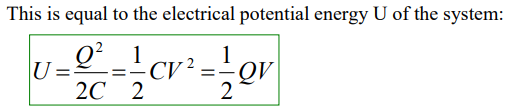
electrical potential energy U of a parallel plates capacitor system
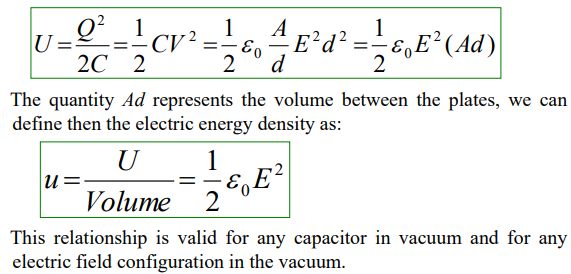
electrical potential energy U of a parallel plates capacitor system iin terms of electric field E)
A*d is the volume between the plates

formula for electric energy density (electric potential energy divided by area or volume)
take note of the bottom eqn
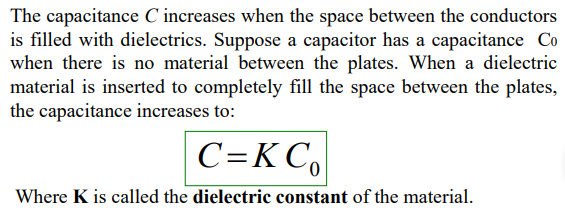
how the dielectric constant K is related to capacitance C
where C0 is the initial capacitance (where the space between the conductor plates is air or vacuum) and C is the final capacitance after the addition of dielectrics
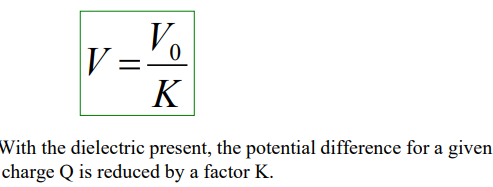
how the dielectric constant K is related to electric potential V