Nervous system
 Call Kai
 Learn
Learn Practice Test
 Spaced Repetition
 Match
Match Flashcards
 Knowt Play
1/53

There's no tags or description
Looks like no tags are added yet.
Name | Mastery | Learn | Test | Matching | Spaced | Call with Kai |
|---|
No analytics yet
Send a link to your students to track their progress
54 Terms
structure of nervous system
Central nervous system→ spinal chord and brain
Peripheral Nervous system→ all nerves that take info from our sense organs into CNS & from CNS to effector (muscles/glands)
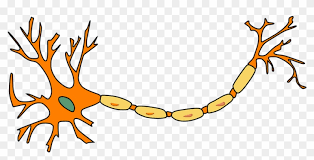
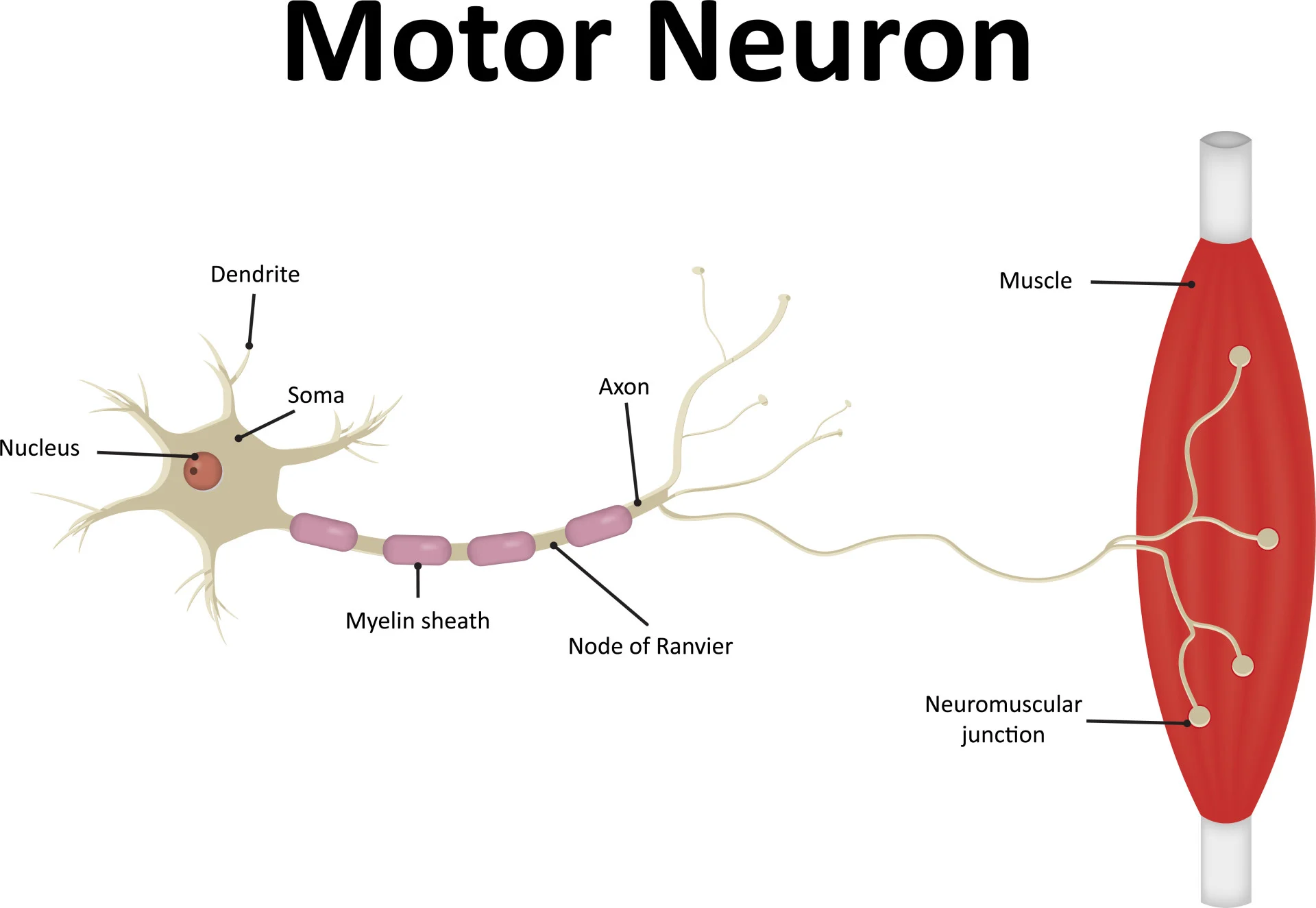
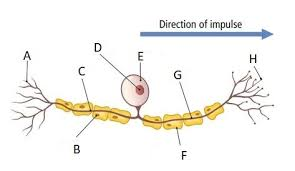
label motor neurone
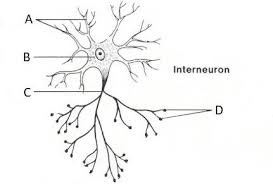
relay neurone
A = dendrites
B = cell body
C = axon
D = axon terminals
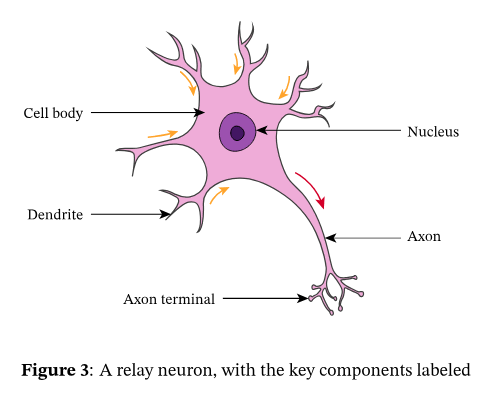
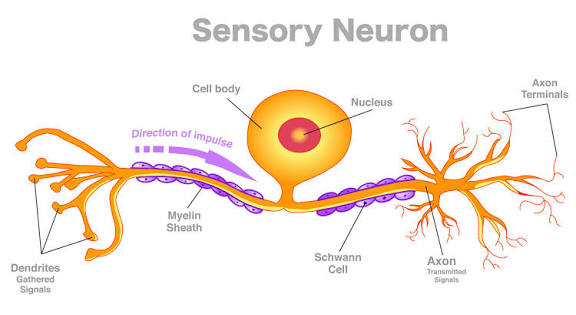
sensory neuron
A = dendrites
C = axon
D = nucleus
E = cell body
F = Myelin sheath
H = axon terminals
what is a nerve
a bundle of neurones
adaptation of neurones
long fibre (axon) can carry messages up and down the body over long distances
electrical nerve impulse passes along axon
axon insulated by a fatty (myelin) sheath → increases the speed of the nerve impulses along the neurone
fine branches (dendrites) at their tips to communicate with other neurones
Process of synaptic transmission
nerve impulses arrives at the synapse
chemical messages (neurotransmitters) are released into synapse
neurotransmitter diffuses across the synapse
they bind to receptors on the membrane of the post synaptic neurons
binding of neurotransmitter to receptor stimulates in post synaptic neurone
reflex arc
does not involve the conscious part of the brain
involuntary response to a stimuli (throughout evolution humans have needed to respond to a variety of different situations)
they protect us from harm
reflex arc process
stimulus detected by receptor cell eg in finger
impulse passed on to sensory neurone
sensory neurone passes impulse to spinal chord
impulse transmitted to relay neurone in spinal chord
impulse carried along nerve cell (motor neurone to effector organ)
effector brings response eg finger moving away from hot object

reflex arc including synaptic transmission (6marks)
receptor detects a stimulus
impulse sent to sensory neurone which is sent to spinal cord across synapse
relay neurone in spinal cord carries impulse to motor neurone across synapse
motor neurone carries impulse to effector organ
effector organ brings response
eg muscles of arm contract
reaction time
time taken between the presentation of a stimulus and the initiation of the muscular response to that stimulus
factors that affect reaction time
age
tiredness
depressant & stimulant drugs
distractions
sex
physical fitness
measuring reaction time practical
Person A holds out their hand with a gap between their thumb and first finger.
Person B holds the ruler with the zero at the top of person A's thumb
Person B drops the ruler without telling Person A and they must catch it.
The number level with the top of person A's thumb is recorded in a suitable table. Repeat this ten times.
Swap places, and record another ten attempts.
You can use the conversion table to help convert your ruler measurements into reaction time or just record the catch distance in cm.
Why is using a computer program to measure reaction times likely to be more valid than using the ruler method?
no indicator before hand when colour change
able to get more accurate answer an answer has a higher resolution
Structure of brain
cerebral cortex
cerebellum
medulla
cerebral cortex
outer most layer
concerned with consciousness, intelligence, memory and language
folded → greater surface area
composed of grey matter consisting mainly of cell bodies and capillaries
cerebellum
mainly coordination of muscular activity
doesn’t initiate movement→ contributes to precision and accurate timing
receives input from sensory system of spinal chord and other parts of the brain → integrates input to fine-tune activity
damages produces disorders in fine movement, equilibrium, posture and motor learning
medulla
unconscious activity → heartbeat & breathing
studying the brain
neuroscientists have been able to map the regions of the brain by…
studying patients with brain damage
electrically stimulating different parts of the brain
using MRI
though the complexity of the brain makes investigating and treating the brain difficult
Magnetic resonance imaging (MRI)
shows exactly which areas of the brain are affected by a stroke or tumour
so scientists can link loss of function by the brain area
How is information transmitted from light receptors in the retina to the brain?
electrical impulses sent
via sensors neurones
from eye to the brain by optic nerve to process information
the eye
sense organ containing receptors sensitive to light intensity and colour
compound eye
have more than one lens
common in nature
complex eye
eyes with a single lens
eg mammals
how do we see?
rays of light are refracted (bent) first by the cornea and then by the lens → they focus on the retina to converge to the fovea
light rays converge towards the retina
the lens is able to precisely focus the image because of its ability to change shape
focusing on a distant object → the lens becomes thinner
focusing on a near object → the lens becomes fatter
accommodation
the process of changing shape of the lens to focus on near or distant objects
to focus on near object
the ciliary muscles contract
suspensory ligaments loosen
the lens is then thicker and refracts light ray strongly
Close, Ciliary, Contract
to focus on distant object
ciliary muscles relax
suspensory ligaments are pulled tight
the lens is then pulled thin and only slightly refracts light rays
How does a dim/dark room cause iris to change shape of a pupil?
circular muscles dilate
radial muscles constrict
more light through pupil (dilates)
How does a bright light cause iris to change shape of a pupil?
circular muscles in iris contract
radial muscles dilate (relax)
allows less light through pupil (contricts)
What is short sightedness (myopia) due to ?
a very curved lens
eyeball is too big
description of short sightedness
distant objects are blurry whilst nearby objects are in focus
light focuses in front of retina so images on retina are out of focus/blurry
ways to treat short sightedness
wear glasses with concave lens
spreads out light from distant object before it meets eye
results in light being brought into perfect focus on the retina
What is long sightedness (hyperopia) due to?
a lens that is too flat
the eye ball is to short
description of long sightedness
distant object are in focus while nearby objects objects are blurry
light focuses behind retina so images on retina are out of focus/blurry
ways to treat long sightedness
to wear glasses with convex lens
brings light rays together more before they reach the eye itself
now the thinner lens brings rays of light together to the retina perfectly
adv and disadv of replacing lenses
+ permanently corrects visual impairment ( add or replace lens)
- can cause damage to retina, infection, & cataracts developing if natural one is left in place
adv and disadv of contact lenses
+ lasts a long time (hard lens)
+ more flexible & comfortable to wear (soft lens)
- have to be removed overnight, kept sterile, possible baad environmental impact
adv and disadv of laser eye surgery
- only available for adults
+ used to change curve of cornea so it refracts light more effectively (hyperopia)
+ thickness of lens is reduced so cornea reflects light less strongly (myopia)
+ fixes permanently
- expensive
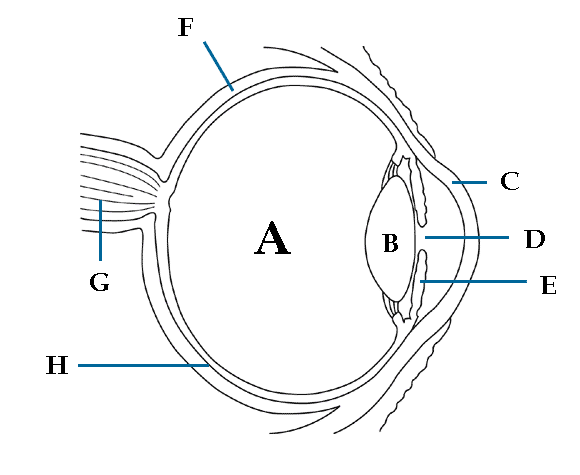
label eye
B = lens
C = cornea
D = pupil
E = iris
F= retina
G = opotic nerve
H = scalera
retina
contains light receptors
optic nerve
carries electrical impulses from eye to brain
scalera
tough white layer that protects eye
cornea
first responsible for refracting/ bending light
iris
contracts to allow less light or relaxes to allow more light to the pupil
ciliary muscles
involved in accommodation of lens → can contract/ relax to change shape of lense
suspensory ligaments
also involved in control of lens accommodation ( keeps lens in place)
lens
refracts light further
blind spot
where there are no light receptors
pupil
hole that can get bigger or smaller to let light in
fovea
densely packed light receptors
How can a persons eye adjust to form a clear image of a nearer object?
ciliary muscles contract
smaller diameter
suspensory ligaments loosen
lens becomes thick
once light hits lens its further refracted
converges on fovea at the retina
Why does a long sighted person that has difficulty seeing near objects clearly?
they may have eyes that are too short
therefore light focuses behind the retina so close objects appear blurry
describe how spectacles can correct long-sightedness
can wear glasses with a convex lens
this refracts light more so it can not spread out
this allows the light to converge perfectly on the retina