UNIT 2 APBio Final Exam
 Call Kai
 Learn
Learn Practice Test
 Spaced Repetition
 Match
Match Flashcards
 Knowt Play
1/62

Earn XP
Description and Tags
CB 1-8, 2: 2.1-2. 9-10, 2.3-8, U2 progress check mcq
Name | Mastery | Learn | Test | Matching | Spaced | Call with Kai |
|---|
No analytics yet
Send a link to your students to track their progress
63 Terms
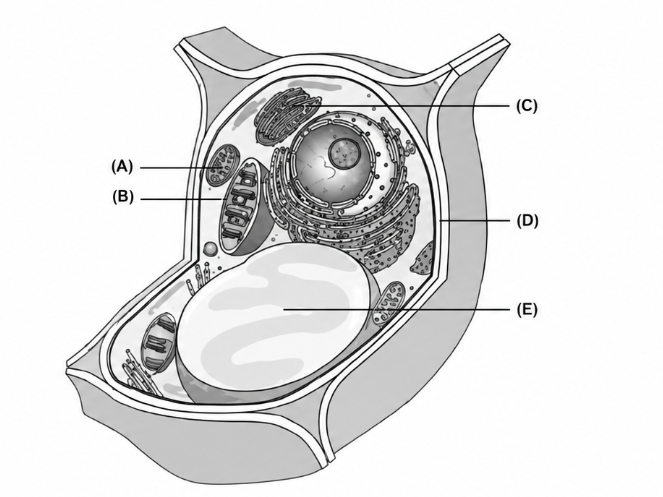
Site of glucose synthesis
A) A
B) B
C) C
D) D
E) E
B) B
chloroplast
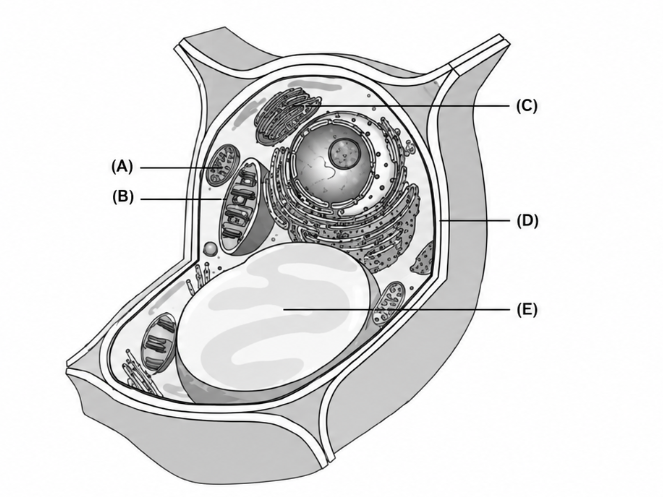
Site of conversion of chemical energy of glucose to ATP
A) A
B) B
C) C
D) D
E) E
A) A
mitochondria; image shows squiggly lines that would be depicted as the cristae
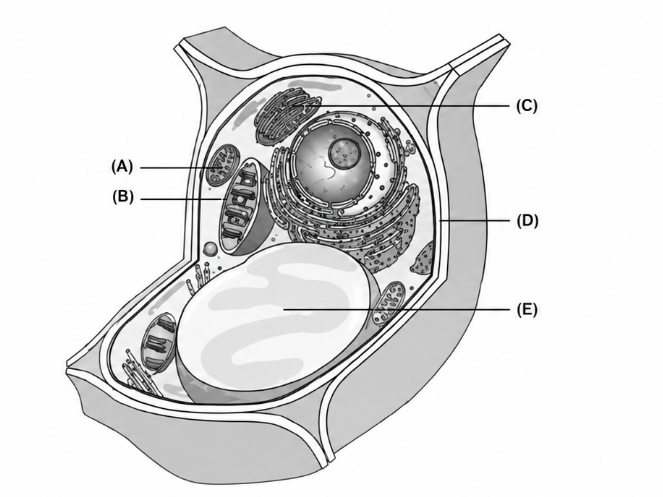
Site of modification and packaging of proteins and lipids prior to export from the cell
A) A
B) B
C) C
D) D
E) E
C) C
golgi apparatus
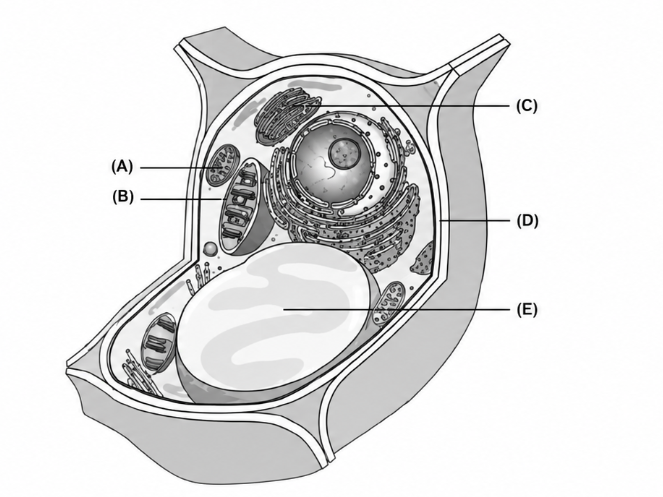
Site of transport of materials into and out of the cell
A) A
B) B
C) C
D) D
E) E
D) D
cell membane/plasma membrane; membrane controls what enters/leave the cell through selective permeability
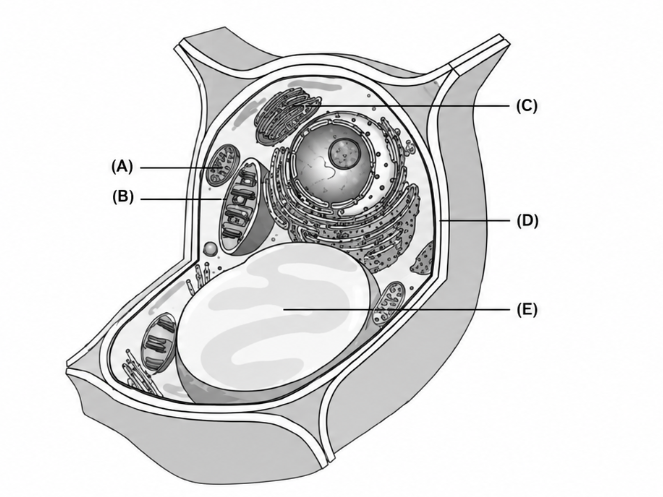
Evolved from a photoautotrophic prokaryote
A) A
B) B
C) C
D) D
E) E
B) B
chloroplast; endosymbiotic theory says chloroplast evolved from photosynthetic cyanobacteria
Which of the following organelles modifies and packages for secretion the materials produced by the ribosomes?
A) The chloroplast
B) The Golgi apparatus
C) The nucleus
D) The nucleolus
E) The mitochondrion
B) The Golgi apparatus
This group of questions refers to the following groups of biological compounds:
(A) Proteins
(B) Carbohydrates
(C) Nucleic acids
(D) Lipids
(E) Steroids
Synthesized at the ribosome
A) Proteins
B) Carbohydrates
C) Nucleic acids
D) Lipids
E) Steroids
A) Proteins
Individuals with an inherited recessive disorder called primary ciliary dyskinesia (PCD) often have severe respiratory problems caused by an ineffective cilia. Males with PCD are often sterile because they produce sperm with defective flagella. Which of the following most likely explains the effect of the recessive allele?
A) The cells possessing the defective allele do not produce sufficient protein to synthesize microtubules in the cilia and flagella.
B) The cells metabolize all the stored sugars completely to carbon dioxide during respiration because it is chemoheterotrophic.
C) The Golgi bodies secrete an enzyme that destroys the proteins in the flagella and cilia.
D) The cells do not produce functional motor proteins in flagella and cilia.
D) The cells do not produce functional motor proteins in flagella and cilia.
sperm can’t move efficiently because the recessive alleles affects the flagella and cilia from moving
Contains hydrolytic enzymes associated with the intracellular digestion of macromolecules
A) Vacuole
B) Lysosomes
C) Nucleolus
D) Peroxisome
E) Ribosome
B) Lysosomes
The organelle that is a major producer of ATP and is found in both heterotrophs and autotrophs is the
A) chloroplast
B) nucleus
C) ribosome
D) Golgi apparatus
E) mitochondrion
E) mitochondrion
Prokaryotic and eukaryotic cells generally have which of the following features in common?
A) A membrane-bound nucleus
B) A cell wall made of cellulose
C) Ribosomes
D) Flagella or cilia that contain microtubules
E) Linear chromosomes made of DNA and protein
C) Ribosomes
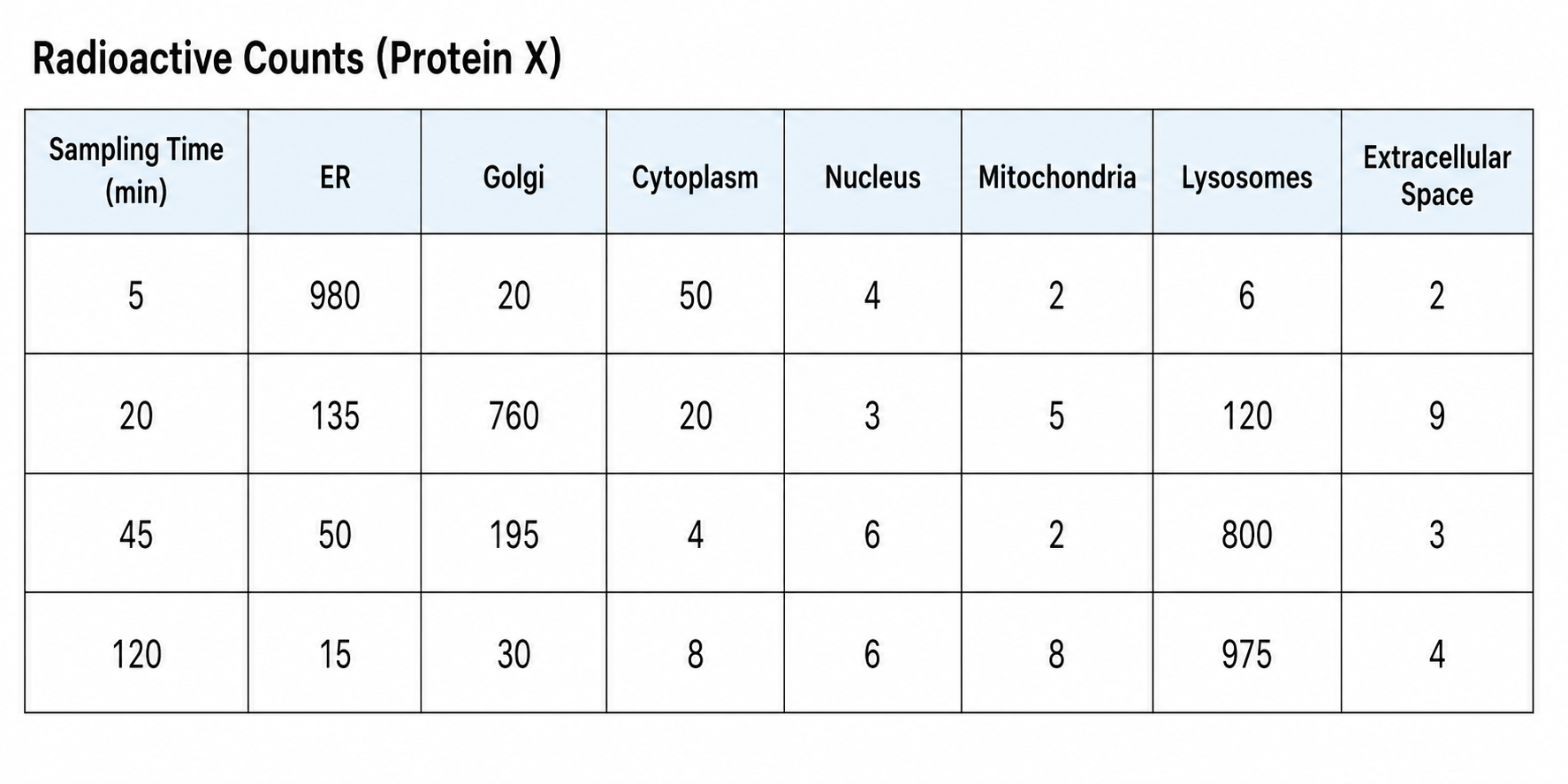
In the first step of an experiment, rat liver cells were exposed for 5 minutes to amino acids labeled with a radioactive isotope. The cells were then washed to stop any further incorporation of radioactive amino acids. The cells were sampled periodically thereafter, and the radioactivity of a certain protein (protein X) was measured in various cell components.
What is the most likely identity of protein X?”
A) An enzyme that is involved in transcription
B) An electron transport protein that participates in respiration reactions
C) A protein secreted from liver cells into the bloodstream that permits proper capillary function
D) An enzyme that participates in the degradation and recycling of cell components
E) A building block of the microtubules that are part of the cytoskeleton
D) An enzyme that participates in the degradation and recycling of cell components
protein ends up being concentrated in lysosomes
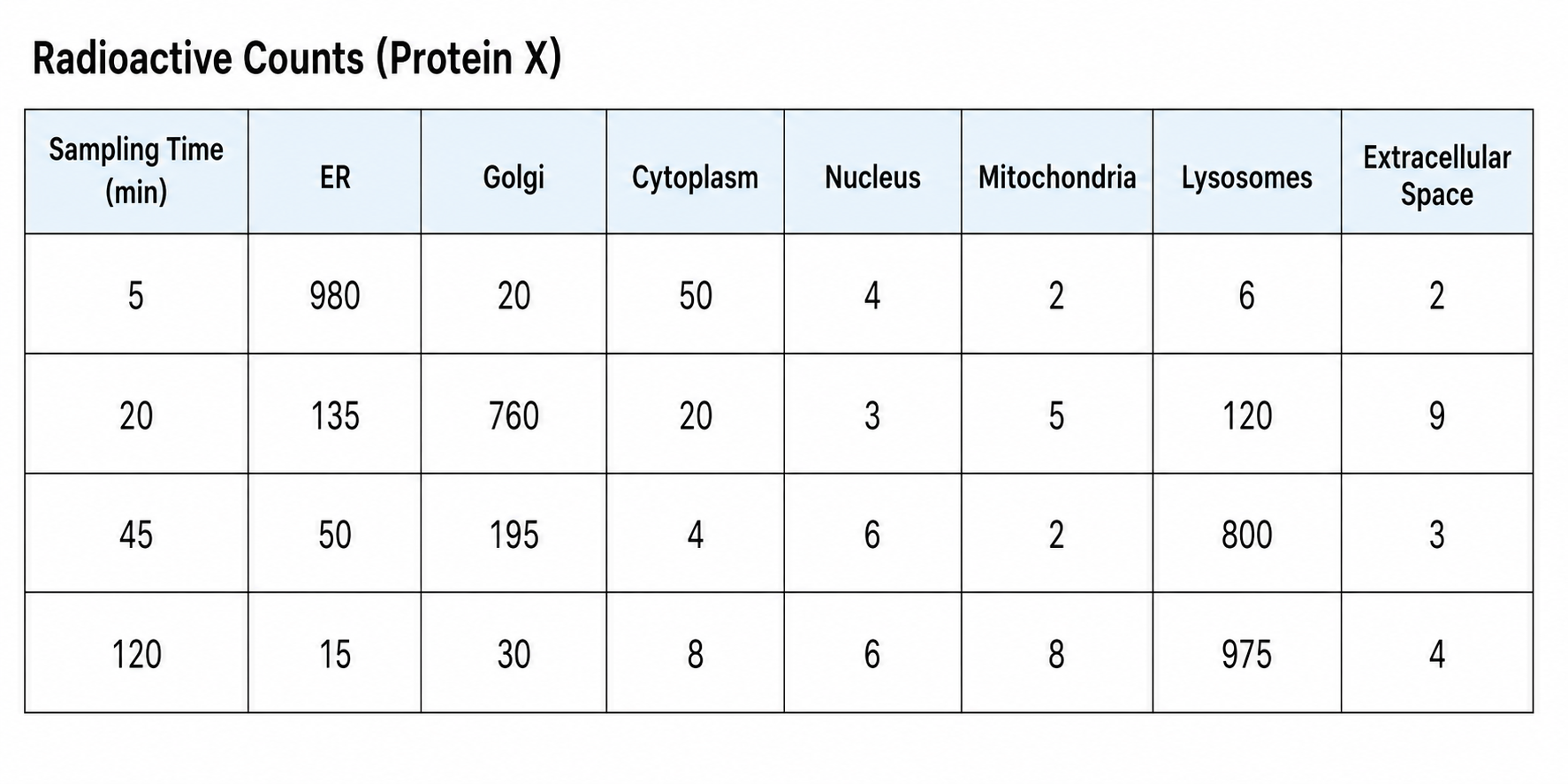
In the first step of an experiment, rat liver cells were exposed for 5 minutes to amino acids labeled with a radioactive isotope. The cells were then washed to stop any further incorporation of radioactive amino acids. The cells were sampled periodically thereafter, and the radioactivity of a certain protein (protein X) was measured in various cell components.
Which of the following correctly shows the order in which protein X moves through the cell?
A) Endoplasmic reticulum → Golgi apparatus → lysosomes
B) Endoplasmic reticulum → Golgi apparatus → ribosomes → cytoplasm → lysosomes
C) Extracellular space → mitochondria → cytoplasm
D) Golgi apparatus → cytoplasm → ribosomes
E) Cytoplasm → mitochondria → plasma membrane
A) Endoplasmic reticulum → Golgi apparatus → lysosomes
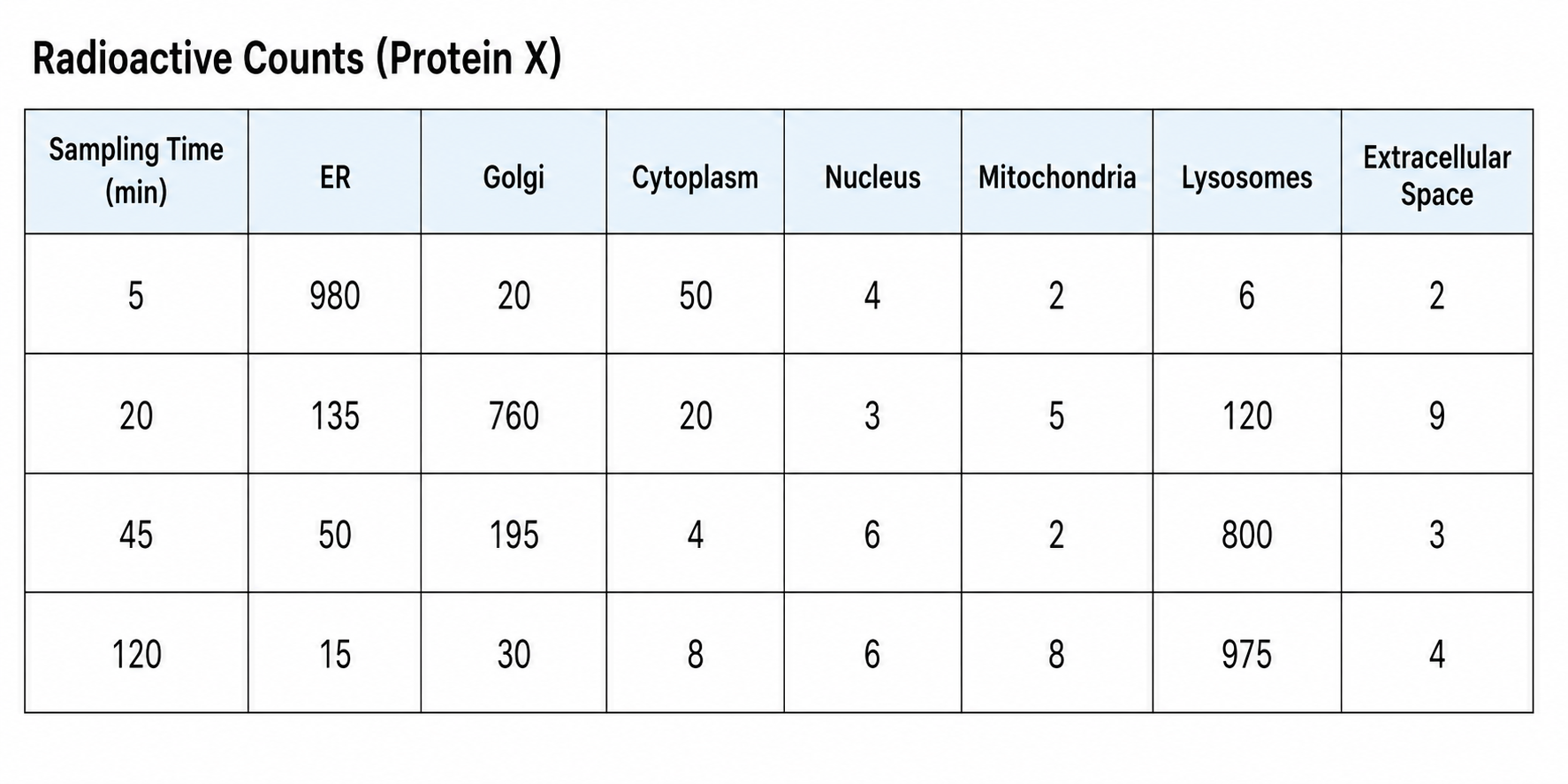
The same procedure was repeated with a second protein (protein Y). If the function of Y is protein processing and packaging, most radioactivity would be found in the…
A) Golgi apparatus
B) Nucleus
C) Mitochondria
D) Lysosomes
E) Cytoplasm
A) Golgi apparatus
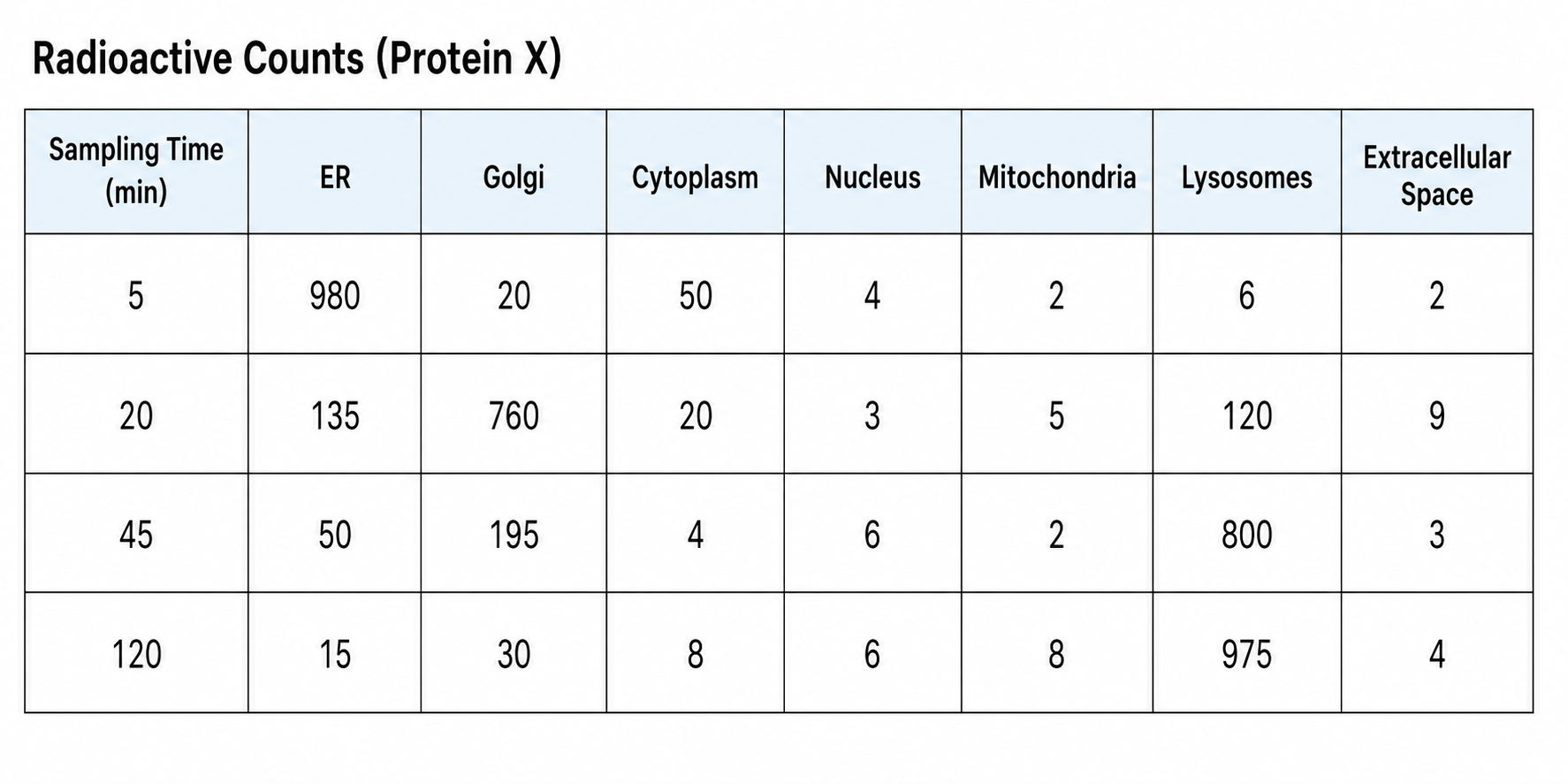
In graphing the data from the experiment, the sampling time would be shown on the x-axis because
A) cell components were shown on the y-axis
B) radioactivity level shows the most variation
C) time values are always located on the horizontal axis
D) all quantitative values are represented on the x-axis
E) sampling time is the independent variable
E) sampling time is the independent variable
independent variable is what the experimenter controls/manipulates
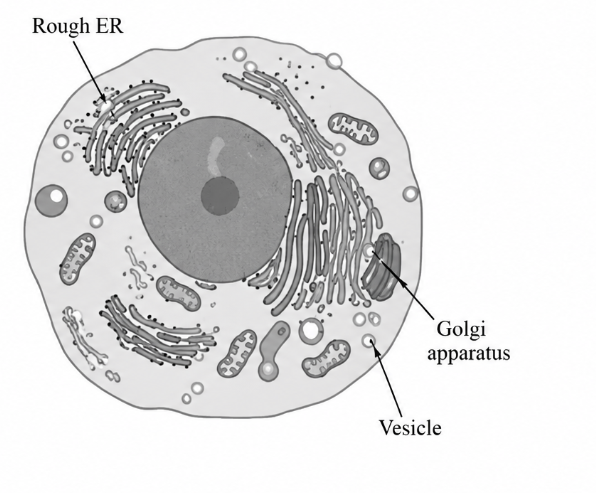
The figure below illustrates a eukaryotic cell. Which of the following best describes how the three structures indicated by the arrows work together?
A) To synthesize lipids and modify toxic substances in order to render them harmless
B) To synthesize and isolate proteins for secretion or for use in the cell
C) To catabolize nutrients and produce ATP for intracellular energy storage
D) To synthesize all ribosomal proteins
B) To synthesize and modify proteins for secretion or for use in the cell
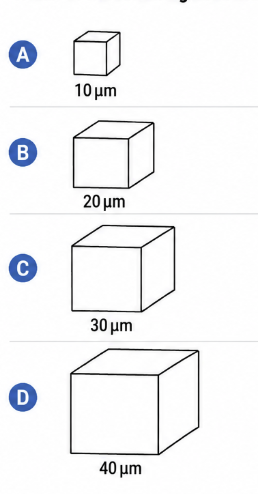
Simple cuboidal epithelial cells line the ducts of certain human exocrine glands. Various molecules are eliminated from or out of the cells by diffusion. (The formula for the surface area of a cube is 6×S² , and the formula for the volume of a cube is S³, where S= the length of a side of the cube.)
Which of the following cube-shaped cells would be most efficient in removing waste by diffusion?
A) 10 μm
B) 20 μm
C) 30 μm
D) 40 μm
A) 10 μm
has the highest surface area to volume ratio
lots of surface area → more space for waste to leave
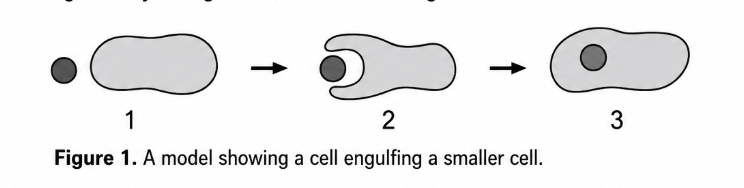
Researchers claimed that a particular organelle originated from a free-living prokaryotic cell that was engulfed by a larger cell, as shown in Figure 1.
Which of the following provides evidence to best support the researchers’ claim?
A) The organelle has a phospholipid membrane
B) The organelle has proteins on the membrane
C) The organelle has a double membrane
D) The organelle has an internal aqueous environment that is similar to the cytoplasm of the larger cell
C) The organelle has a double membrane
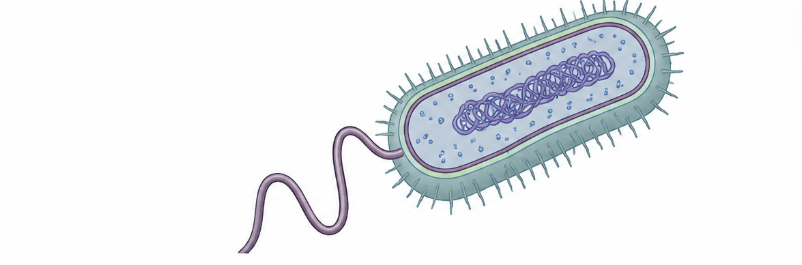
The diagram above represents a typical rod-shaped bacterium. Which of the following best describes a feature shown in the diagram that is unique to archaea and bacteria?
A) The organism is surrounded by a cell wall
B) The organism contains ribosomes
C) The organism does not have a nuclear membrane surrounding its genetic material
D) The organism is not capable of making or providing itself with ATP
C) The organism does not have a nuclear membrane surrounding its genetic material
plants and fungi also have a cell wall
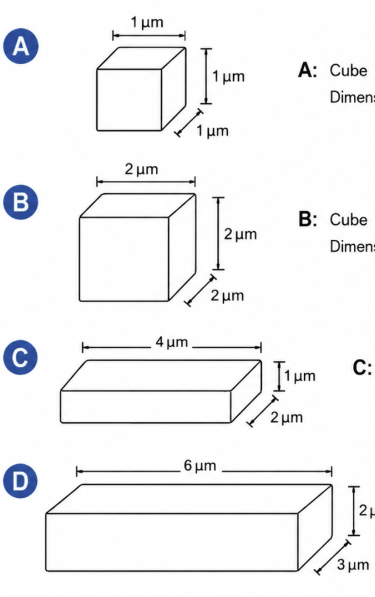
Which one of the following cells is likely to be the most efficient at eliminating waste by diffusion?
A) Dimensions: 1 μm × 1 μm × 1 μm
B) Dimensions: 2 μm × 2 μm × 2 μm
C) Dimensions: 4 μm × 2 μm × 1 μm
D) Dimensions: 6 μm × 3 μm × 2 μm
A) Dimensions: 1 μm × 1 μm × 1 μm; has highest SA:V ratio, making diffusion more efficient
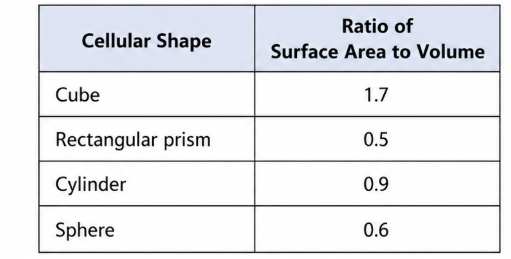
In an experiment, the efficiency of oxygen exchange across the plasma membrane is being assessed in four artificial blood cells. The table above lists several properties of these artificial cells. Other conditions being equal, which artificial cell is predicted to be the most efficient at exchanging oxygen with the environment by diffusion?
A) The cuboidal cell
B) The rectangular cell
C) The cylindrical cell
D) The spherical cell
A) The cuboidal cell; has highest SA:V ratio
Membrane-bound organelles have been an important evolutionary step in the development of complex multicellular organisms. Which of the following best summarizes an advantage of compartmentalization in cells having internal membranes?
A) Eukaryotic cells are able to reproduce faster because of the presence of organelles.
B) Some organelles, such as mitochondria and chloroplasts, are similar to prokaryotic cells in structure.
C) Compartments isolate specific reactions, increasing metabolic efficiency.
D) Compartmentalization leads to a higher mutation rate in DNA, which leads to more new species.
C) Compartments isolate specific reactions, increasing metabolic efficiency.
Mitochondria are found in most eukaryotic cells and contain their own DNA and ribosomes that are similar to those found in prokaryotic cells. Which of the following statements is justified by these observations?
A) The mitochondrion is the only location in which eukaryotic cells synthesize ATP.
B) An ancestral cell most likely engulfed an aerobic prokaryote in a relationship that proved beneficial for both cells.
C) Mitochondrial membranes provide abundant surface area for reactions because of the infoldings called cristae.
D) The mitochondrion plays a role in translation but also stores the cell’s extra mRNA.
B) An ancestral cell most likely engulfed an aerobic prokaryote in a relationship that proved beneficial for both cells.
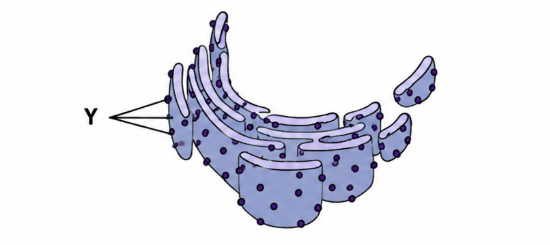
The figure above represents a rough endoplasmic reticulum. Which of the following best describes the role of the structure labeled Y?
A) Structure Y contributes the raw materials required for the synthesis of proteins.
B) Structure Y packages proteins for export from the cell.
C) Structure Y is the location where proteins are synthesized.
D) Structure Y contains enzymes that cut and activate proteins.
C) Structure Y is the location where proteins are synthesized.
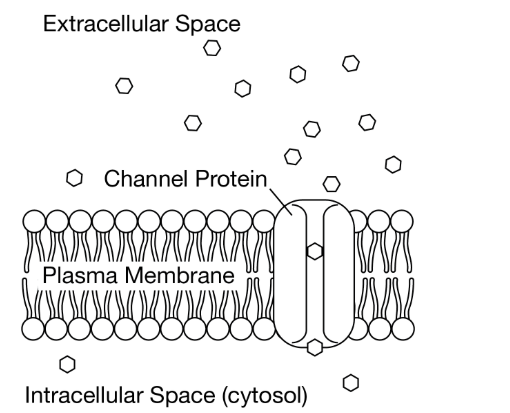
Figure 1 shows a model of how a channel protein influences the movement of a particle across a cell’s plasma membrane.
An investigator wants to understand whether a newly found membrane protein is involved in membrane transport of a certain particle. Which investigation will help determine whether the new membrane protein is a channel protein involved in membrane transport?
A) Add small nonpolar molecules to the extracellular space and measure the direction of particle movement of the molecules.
B) Measure the rate of extracellular fluid movement into the intracellular space.
C) Add more of the proteins to the plasma membrane and measure the rate of the particle movement.
D) Remove ATP from the intracellular space and measure the rate of the particle movement into the intracellular space.
C) Add more of the proteins to the plasma membrane and measure the rate of the particle movement.
A scientist designed an experiment to test an artificial membrane that mimics the phospholipid bilayer of a cell.
The scientist built a tube that was divided by an artificial membrane and filled with distilled water. The scientist put a known amount of a protein into the water on one side of the membrane. After some time, the scientist measured the concentration of the protein on either side of the membrane but found that there had been no change.
Which of the following experimental changes would allow the scientist to observe transport of a solute across the artificial membrane?
A) Increase the solute concentration in the solution
B) Use a small, nonpolar solute instead of a protein
C) Increase the temperature of the solution
D) Add artificial aquaporins to the membrane
B) Use a small, nonpolar solute instead of a protein
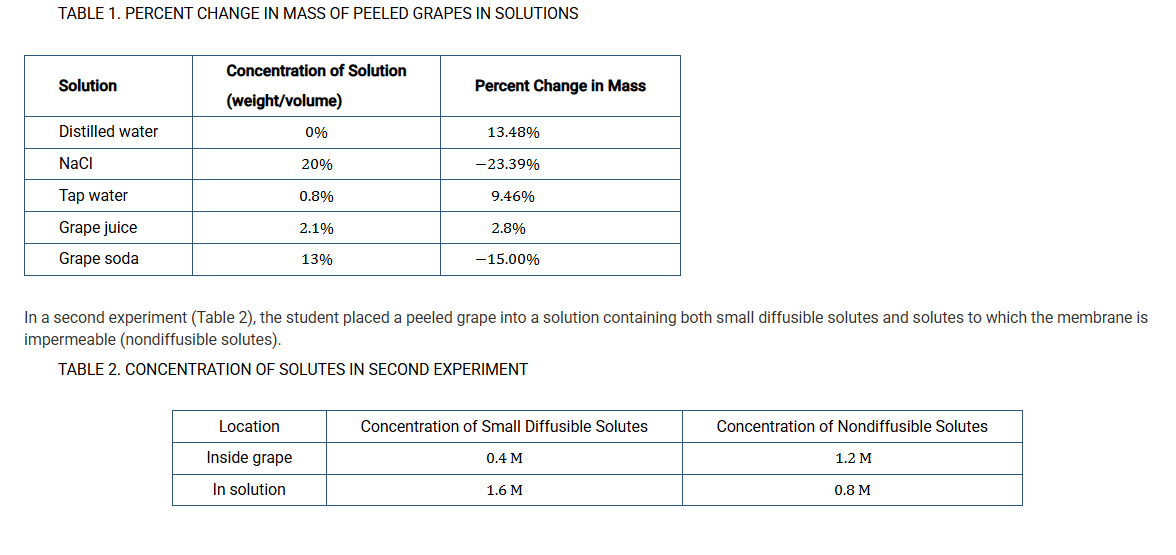
A student peeled the skins from grapes, exposing cells with membranes that are only permeable to water and small diffusible solutes. The student measured the mass of the peeled grapes. The student then placed each peeled grape into one of five solutions. After 24 hours, the student removed the peeled grapes from the solutions, measured their final mass, and calculated the percent change in mass (Table 1).
In a second experiment (Table 2), the student placed a peeled grape into a solution containing both small diffusible solutes and solutes to which the membrane is impermeable (nondiffusible solutes).
Assuming a negligible pressure potential, which of the following best predicts the net movement of the small diffusible solutes and water in the second experiment (Table 2) ?
A) Small diffusible solutes will diffuse into the grape cells, followed by water.
B) Small diffusible solutes will diffuse out of the grape cells and water will diffuse into the cells.
C) Small diffusible solutes will diffuse out of the grape cells, followed by water.
D) Small diffusible solutes will diffuse into the grape cells and water will diffuse out of the cells.
A) Small diffusible solutes will diffuse into the grape cells, followed by water.
nondiffusible solute: inside grape 1.2M (hyper); outside solution 0.8M (hypo) → solutes move from outside solution into inside grape
diffusible solute: outside 1.6 M; inside: 0.4 M; small solutes can move into the grape; moving from a higher concentration to a lower concentration → concentration moves outside to inside grape
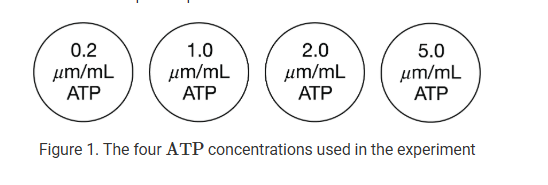
The transport of a substance across a plasma membrane of a specific organelle requires energy. The rate at which the transport takes place also depends on temperature. A scientist isolated the specific organelle and then used the following treatments to determine the conditions that will result in the maximal transport. All treatments contained the extracted organelle and were maintained at 25 degrees C.
The data from this experiment indicate that maximal rate of transport of protein X at occurs at an ATP concentration of 1.0 μm/mL
Which procedure should be done next to gather data needed to meet the scientist’s objective?
A) Incubate samples with the same four ATP concentrations at 30 degrees C.
B) Incubate samples containing of 5.0 μm/mL of ATP at four temperatures other than 25 degrees C.
C) Incubate samples containing 1.0 μm/mL of ATP at four temperatures other than 25 degrees C.
D) Incubate samples containing 1.0 μm/mL of ATP at 25 degrees C and determine the rate of transport for four other proteins.
C) Incubate samples containing 1.0 μm/mL of ATP at four temperatures other than 25 degrees C.
1.0 μm/mL of ATP is the maximal rate of transport. The scientist wants to determine the rate depending on temperature
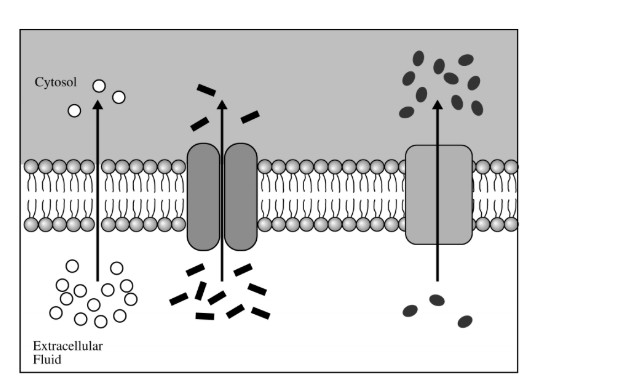
Which of the following scientific questions is most relevant to the model represented in the figure above?
A) Is ATP required for the transportation of sugars across the outer mitochondrial membrane?
B) Do the types of phospholipids in a membrane affect the rate at which molecules enter a cell by passive diffusion?
C) Which molecular substance is actively transported across the plasma membrane?
D) How does temperature affect the movement of molecules into lysosomes?
C) Which molecular substance is actively transported across the plasma membrane?
A is too specific, and doesn’t mention about outer mitochondrial membrane
Aquaporins are channel proteins that facilitate the transport of water across the cell membrane. One group of researchers hypothesizes that without functional aquaporins, no water will be able to enter the cell. A different group proposes an alternative hypothesis, stating that even with nonfunctional aquaporins, a small amount of water will still cross the cell membrane. An experiment is set up in which plant cells with mutated (nonfunctional) aquaporins and plant cells with normally functioning aquaporins are both placed in distilled water.
Which of the following data would support the alternative hypothesis?
A) Cells with functional aquaporins exhibit low turgor pressure and are hypertonic.
B) Cells with functional aquaporins exhibit high turgor pressure and are hypotonic.
C) Cells with mutated aquaporins exhibit an absence of turgor pressure and are completely plasmolyzed.
D) cells with mutated aquaporins exhibit moderate turgor pressure and are hypertonic.
D) cells with mutated aquaporins exhibit moderate turgor pressure and are hypertonic.
alternative hypothesis: water will still be able to cross the membrane despite nonfunctional aquaporins. Data to find this hypothesis is by using mutated aquaporins. C refutes the hypothesis, but we want something supporting it— thus its D.
Which of the following components of the cell membrane is responsible for active transport?
A) Phospholipid
B) Protein
C) Lipid
D) Phosphate
E) Cholesterol
A) Phospholipid
When a substance moves across the plasma membrane along a concentration gradient at a rate faster than would be expected by simple diffusion alone but without the expenditure of metabolic energy, the process is best described as
A) facilitated diffusion
B) osmosis
C) active transport
D) pinocytosis
E) the work of an ion pump
A) facilitated diffusion
A certain type of specialized cell contains an unusually large amount of rough endoplasmic reticulum (ER).
Which of the following functions is this cell type most likely specialized to perform?
A) The production and secretion of steroids
B) The destruction of toxic materials produced in other cells of the organism
C) The synthesis of polysaccharides for energy storage
D) The production and secretion of proteins
D) The production and secretion of proteins
The fluid mosaic model of cell membranes describes proteins and steroids associated with a phospholipid bilayer. Which of the following membrane components affect membrane stability?
A) Embedded proteins give plasma membranes less stability.
B) Steroids, such as cholesterol, give membranes more stability.
C) Proteins in the hydrophilic region of the plasma membrane create more stability.
D) Polar heads of phospholipids give plasma membranes less stability.
B) Steroids, such as cholesterol, give membranes more stability.
A scientist is studying the various prokaryotic and eukaryotic species found floating in a sample of water taken from a marine ecosystem.
Which cellular component will be found in the widest range of organisms in the sample?
A) The chloroplast, since all organisms need a source of energy.
B) The ribosome, since all organisms need to synthesize proteins.
C) The mitochondrion, since all organisms need to break down glucose.
D) The cell wall, since all marine organisms need them for support.
B) The ribosome, since all organisms need to synthesize proteins.

In an experiment, researchers provided a radiolabeled amino acid to living plant cells. After one hour, the researchers determined the amount of the radiolabeled amino acid that was in each of several subcellular compartments. The results of the experiment are represented in the table.
Which of the following conclusions about the radiolabeled amino acid is best supported by the results of the experiment?
A) It was mostly incorporated into nucleic acids that store the biological information.
B) It was mostly incorporated into proteins that regulate and manage metabolic reactions.
C) It was mostly incorporated into lipids that help separate cells from their surrounding environment.
D) It was mostly incorporated into carbohydrates that form protective structures outside the cells
B) It was mostly incorporated into proteins that regulate and manage metabolic reactions.
amino acid = proteins
in mitochondria → metabolic reactions
Which of the following statements accurately describes the facilitated diffusion of materials across a cell membrane?
A) Energy is required to move charged substances across the membrane.
B) Small, polar molecules require transport proteins to cross the membrane.
C) Oxygen molecules move directly across the membrane.
D) Ions move down their concentration gradient across the membrane.
D) Ions move down their concentration gradient across the membrane.
ions move from a high concentration to a low concentration
The antibiotic blasticidin S is a large molecule that can inhibit protein synthesis in mammalian cells. A researcher is investigating how blasticidin S enters mammalian cells. The researcher identified two proteins that might be associated with blasticidin S transport into the cell.
Which of the following claims most likely explains how the two proteins are directly involved in the antibiotic’s ability to enter the cell?
A) They form a receptor complex that selectively binds to blasticidin S in the cell cytoplasm.
B) They are regulatory proteins that control the expression of other proteins involved in antibiotic transport.
C) They are transport proteins that facilitate the movement of blasticidin S across the cell membrane.
D) They are enzymes that chemically modify blasticidin S to make it more soluble inside the cell.
B) They are regulatory proteins that control the expression of other proteins involved in antibiotic transport.

Some cells, such as intestinal cells, exchange a lot of material with their surroundings. The surface-to-volume ratio of these cells affects the efficiency of material exchange.
The table provides measurements of four different eukaryotic cells.
Based on the data, which cell is likely to be most effective in the exchange of materials?
A) Cell 1
B) Cell 2
C) Cell 3
D) Cell 4
B) Cell 2
Hereditary spherocytosis (HS) is a disorder of red blood cells that causes the cells to be smaller and spherical instead of having the usual flattened, biconcave shape. The average diameter of normal red blood cells is 7.2 μm, and the average diameter of red blood cells in a person with HS was found to be 6.7μm. The normal red blood cell has an average surface area 136 μm² of and an average volume of 91 μm³.
Which of the following provides an accurate calculation of the surface area to volume ratio of an red blood cell, as well as a prediction of its effect on the efficient transferring of oxygen compared to a normal red blood cell?
A)The ratio is 0.45, and the cells are more efficient at transferring oxygen.
B) The ratio is 1.12, and the cells are less efficient at transferring oxygen.
C) The ratio is 0.89, and the cells are less efficient at transferring oxygen.
D) The ratio is 141, and the cells are more efficient at transferring oxygen.
C) The ratio is 0.89, and the cells are less efficient at transferring oxygen.
normal red blood cell ratio: SA/V= 136/91 = 1.49; mutated rbc is less SA:V ratio and therefore less efficient
SA=4πr² V=4/3πr³ d=6.7μm (r=3.35μm)
SA=4π(3.35)² SA≈141 μm²
V=V=34π(3.35)³ V≈157 μm³
SA/V= 141/157 = 0.89
Stomata are pores on the surfaces of the leaves and stems of plants that regulate gas exchange between the plants and the atmosphere.
Researchers found that the stomata density on the leaves of a species of plant changes as the concentration of CO₂ in the atmosphere changes. When grown at 350 ppm CO₂ the plant has an average density of 300 stomata per mm², but when grown at 400 ppm CO₂ the plant has an average density of 250 stomata per mm².
Which of the following best describes how the ratio of the density of stomata (stomata per mm²) per CO₂ concentration (ppm CO₂) changes as the CO₂ concentration increases?
A) The ratio decreases from 0.86 to 0.63, because fewer stomata are needed at higher CO₂ concentrations.
B) The ratio decreases from 1.6 to 1.2, because fewer stomata are needed at higher CO₂ concentrations.
C) The ratio increases from 0.63 to 0.86, because more stomata are needed at higher CO₂ concentrations.
D) The ratio increases from 1.2 to 1.6, because more stomata are needed at higher CO₂ concentrations.
A) The ratio decreases from 0.86 to 0.63, because fewer stomata are needed at higher CO₂ concentrations.
ratio of density of stomata per CO₂ concentration: density divided by CO₂
300/350 = 0.86
250/400=0.62
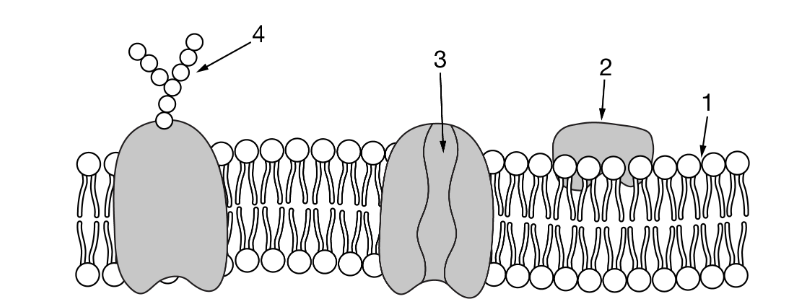
Testosterone is a small steroid hormone that is important in cell signaling. Which of the following describes where testosterone enters a cell and why it is able to cross at that point?
A) 1, testosterone is nonpolar and can diffuse through the membrane.
B) 2, testosterone covalently binds to a surface protein and transports into the cell.
C) 3, testosterone dissolves in water and flows through the channel.
D) 4, testosterone is filtered out of the extracellular fluid and taken into the cell by endocytosis.
A) 1, testosterone is nonpolar and can diffuse through the membrane.
testosterone: small and not charged (lipid)
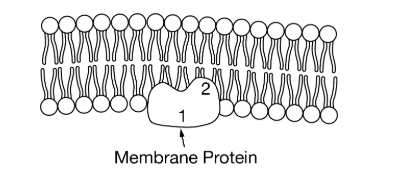
Based on the figure, which of the following statements best describes the relationship between regions 1 and 2 of the protein?
A) Region 1 is hydrophilic because it interacts with the interior of the membrane, whereas region 2 is hydrophobic because it interacts with an aqueous environment.
B) Region 1 is hydrophilic because it interacts with an aqueous environment, whereas region 2 is hydrophobic because it interacts with the interior of the membrane.
C) Region 1 is hydrophobic because it interacts with the interior of the membrane, whereas region 2 is hydrophilic because it interacts with an aqueous environment.
D) Region 1 is hydrophobic because it interacts with an aqueous environment, whereas region 2 is hydrophilic because it interacts with the interior of the membrane.
B) Region 1 is hydrophilic because it interacts with an aqueous environment, whereas region 2 is hydrophobic because it interacts with the interior of the membrane.
exterior of phospholipid: hydrophilic
interior of phospholipid: hydrophobic
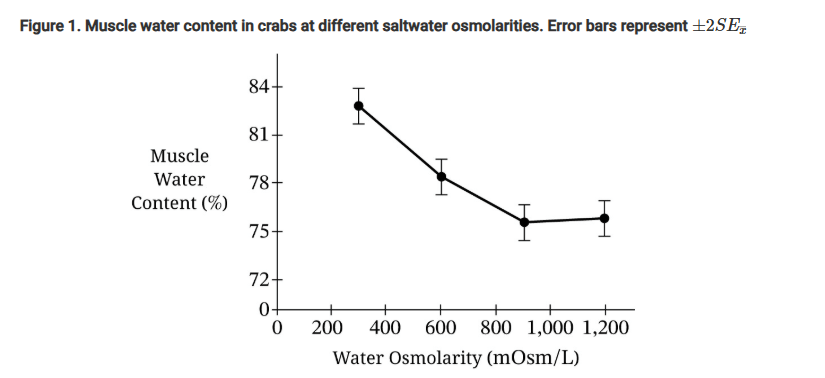
Researchers studying osmoregulation in a specific crab species measured the change in water content within the crabs’ muscles when the crabs were exposed to water with different salt concentrations (Figure 1).
Which of the following claims about the crab’s muscle water content is most likely supported by the data shown in Figure 1?
A) The water content remains relatively constant across different levels of water osmolarity.
B) The water content increases and then decreases as water osmolarity increases.
C) The water content decreases as water osmolarity increases.
D) The water content increases as water osmolarity increases.
C) The water content decreases as water osmolarity increases.
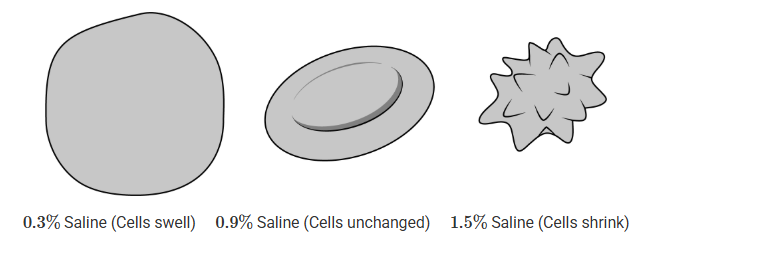
Intravenous (IV) therapy is used for fluid replacement in instances of dehydration in humans and other animals. One type of IV fluid is essentially a saltwater solution. To determine the best concentration for therapy in people, a team of students is researching the effects of solutions of different salt concentrations on red blood cells. The following observations were made from three different red blood cell samples viewed under a microscope.
The team wants to extend the research project. What should the team of students do next to obtain data that are more conclusive?
A) Repeat the process with other salt concentrations.
B) Develop a model to explain why the cells react differently to different salt concentrations.
C) Repeat the process using red blood cells from other animals.
D) Develop an experimental procedure that uses a stain that makes the organelles of red blood cells more visible.
A) Repeat the process with other salt concentrations.
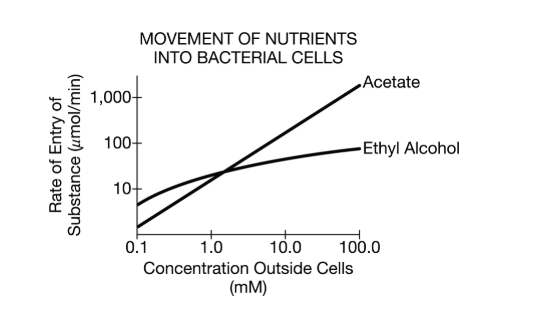
Certain bacteria can use both ethyl alcohol and acetate as sources of nutrients. In an experiment where both nutrients are available to a bacterial population, the following results were obtained and graphed.
What additional procedure would best help determine whether these movements are due to active transport or to passive transport?
A) Repeat the original experiment, but at three different temperatures. Compare the transport rates among the three temperatures.
B) Repeat the original experiment, but add a substance known to block movement of molecules across aquaporins. Compare the rates on the two graphs.
C) Use two additional treatments, one containing only ethyl alcohol and one containing only acetate. Compare the graphs of these two treatments with the original graph.
D) Use two additional treatments, one containing only ethyl alcohol and one containing only acetate. Include a substance known to block ATP use by the plasma membrane. Compare the graphs of these two treatments to the original graph.
D) Use two additional treatments, one containing only ethyl alcohol and one containing only acetate. Include a substance known to block ATP use by the plasma membrane. Compare the graphs of these two treatments to the original graph.
Researchers investigate the transport of a certain protein into cells by endocytosis. In an experiment, the researchers incubate the cells in the presence of the protein and measure the amount of the protein that is absorbed into the cells over a five-minute period.
Based on their observations, what should the researchers do to further clarify how the availability of the protein outside the cells affects the rate of endocytosis of the protein?
A) Incubate the cells in the absence of the protein.
B) Incubate the cells in the presence of several different proteins.
C) Incubate the cells in the presence of several different concentrations of the protein.
D) Incubate the cells in the presence of the protein for several different lengths of time.
C) Incubate the cells in the presence of several different concentrations of the protein.
Lysosomes digest food particles brought into a cell by endocytosis. After a vesicle containing food particles fuses with a lysosome, H⁺ ions are transported into the lysosome from the cytosol. This significantly lowers the pH of the lysosome relative to the cytosol and activates the enzymes that digest the particles.
Which of the following best predicts what will happen to the lysosomal enzymes if the proteins that transport H⁺ ions from the cytosol into the lysosome are damaged?
A)The lysosomal enzymes will not become active, since there will be no active transport of H⁺ ions.
B)The lysosomal enzymes will not become active, since H⁺ ions will diffuse out of the lysosome.
C)The lysosomal enzymes will become active, since facilitated diffusion will move H⁺ ions into the lysosome.
D)The lysosomal enzymes will become active, since passive diffusion will move H⁺ ions into the lysosome.
A)The lysosomal enzymes will not become active, since there will be no active transport of H⁺ ions.
Which of the following transport mechanisms will be affected most directly by a temporary shortage of ATP molecules inside the cell?
A) The movement of water molecules through aquaporins
B) The diffusion of oxygen molecules across the plasma membrane
C) The transport of glucose molecules against a concentration gradient
D) The facilitated diffusion of Ca²+ ions into the cell
C) The transport of glucose molecules against a concentration gradient
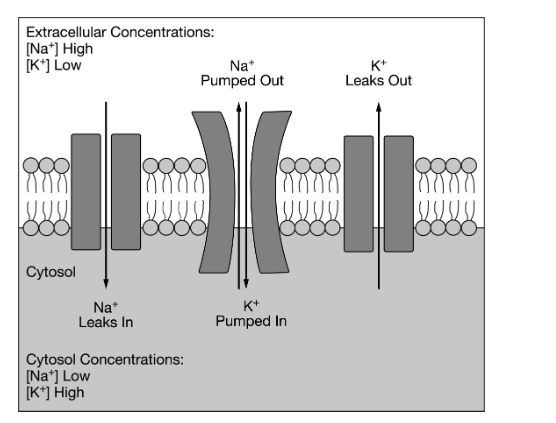
Some membrane proteins help maintain the concentrations of ions inside a cell by transporting the ions across the cell’s plasma membrane. Other membrane proteins form pores in the plasma membrane through which the ions can diffuse. A model showing the influence of membrane proteins on the movement of sodium (Na⁺) and potassium (K⁺) ions across a plasma membrane is presented in Figure 1.
Based on the model presented in Figure 1, which of the following changes will most likely result from a depletion of available ATP stores inside the cell?
A) The Na⁺ concentration outside the cell will increase.
B) The Na⁺ concentration inside the cell will increase.
C) The K⁺ concentration inside the cell will increase.
D) The K⁺ concentration outside the cell will decrease.
B) The Na⁺ concentration inside the cell will increase.
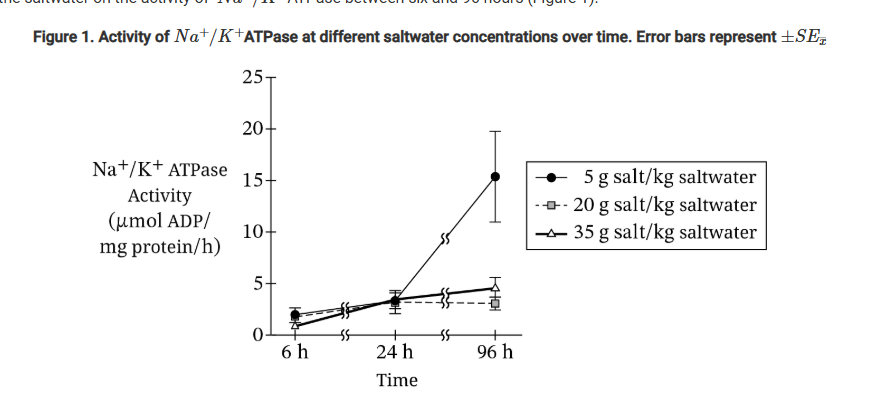
A saltwater fish has specialized cells that contain Na⁺/K⁺ ATPase to help with osmoregulation. Scientists studying this fish investigated the effect of the different concentrations of salt in the saltwater on the activity of Na⁺/K⁺ ATPase between six and 96 hours (Figure 1).
Which of the following statements accurately supports the data shown in Figure 1?
A) Na⁺/K⁺ ATPase activity increases steadily as saltwater concentration and time increase.
B) Na⁺/K⁺ ATPase activity increases steadily as saltwater concentration decreases and time increases.
C) Na⁺/K⁺ ATPase activity stays approximately the same throughout the experiment and at all saltwater concentrations.
D) Na⁺/K⁺ ATPase activity increases only after 24 hours at the lowest saltwater concentration.
D) Na⁺/K⁺ ATPase activity increases only after 24 hours at the lowest saltwater concentration.
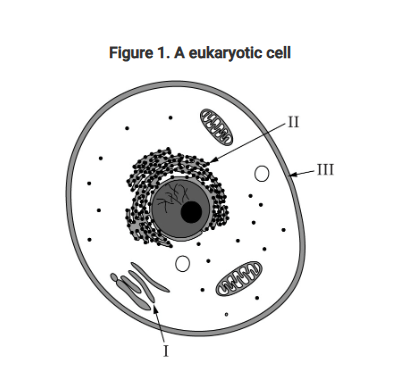
Figure 1 shows three labeled organelles (I, II, III) in a eukaryotic cell.
Which of the following is a claim that could be made about the relationship between organelles I, II, and III in Figure 1?
A) All three organelles play a direct role in the production, modification, and transport of proteins that are released from the cell.
B) All three organelles play a direct role in the breakdown of materials that enter the cell.
C) Organelles I and II synthesize macromolecules that are then transported by organelle III to the electron transport chain to become part of cellular respiration.
D) Organelles II and III synthesize and transport proteins that are then digested into amino acids by organelle I.
A) All three organelles play a direct role in the production, modification, and transport of proteins that are released from the cell.
Which of the following best explains why hydrolytic enzymes are typically transported to the lysosome after they are synthesized by ribosomes?
A) These enzymes are essential for breaking down organic molecules.
B) These enzymes function most efficiently at low concentrations.
C) These enzymes require a continuous input of ATP to function.
D) These enzymes require post-translational modifications to be bound to the cell membrane.
A) These enzymes are essential for breaking down organic molecules.
Not B because the hydrolytic enzymes in lysosomes function at high concentrations
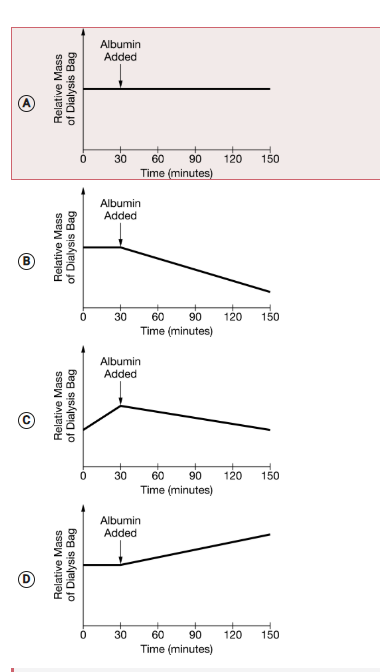
A student is using dialysis bags to model the effects of changing solute concentrations on cells. The student places one dialysis bag that contains 25mL of distilled water into each of two beakers that are filled with 200mL of distilled water. (Figure 1). The membrane of each dialysis bag membrane contains pores that allow small solutes such as monoatomic ions to pass through but are too small for anything larger to pass. After 30 minutes, 5mL of a concentrated solution of albumin (a medium-sized, water-soluble protein) is added to one of the two beakers. Nothing is added to the other beaker. After two more hours at room temperature, the mass of each bag is determined. There is no change in the mass of the dialysis bag in the beaker to which no albumin was added.
Which of the graphs below best represents the predicted change in mass over time of the dialysis bag in the beaker to which albumin was added?
B)
Before albumin, it was isotonic. When albumin was added, solution was hypertonic and dialysis bag was hypotonic; solution from dialysis moved to outside solution, decreasing the size of the bag (water must flow from hypo)
Some viral infections can lead to the rupture of the lysosome membrane. Which prediction of the effect of this disruption of cellular compartmentalization is most likely correct?
A) Enzymes will be released that will specifically target the virus.
B) Cellular osmotic concentrations will change, preventing viral entry into the cell.
C) Hydrolytic enzymes will be released, which will cause cell death.
D) Intracellular digestion of organic materials will increase, which will increase the energy available to the cell for fighting the virus.
C) Hydrolytic enzymes will be released, which will cause cell death.
Gaucher disease is an inherited disorder in which cells of the body are unable to break down a particular type of lipid, resulting in a buildup of the lipid in some tissues and organs.
Based on the information provided, Gaucher disease results most directly from a defect in the function of which of the following organelles?
A) The smooth endoplasmic reticulum
B) The nucleus
C) The lysosome
D) The mitochondrion
C) The lysosome
lysosome breaks down molecules. a defect of lysosome enzymes to break down the lipids matches the cause of gaucher’s disease
Researchers have proposed a model of chloroplast evolution. According to the model, chloroplasts evolved from a small prokaryotic organism that was engulfed by an ancestral eukaryote. The engulfed prokaryote then formed an endosymbiotic relationship with the eukaryotic host.
Which of the following observations best supports the model?
A) Chloroplasts are separated from other subcellular compartments by semipermeable membranes.
B) Prokaryotic and eukaryotic organisms both acquire nutrients from the surrounding environment.
C) Eukaryotes evolved after prokaryotes and have more complex structures.
D) Chloroplasts and some prokaryotes share similar photosynthetic reactions.
D) Chloroplasts and some prokaryotes share similar photosynthetic reactions.
Which of the following observations best supports the claim that mitochondria evolved from once-free-living prokaryotic cells by the process of endocytosis?
A) Mitochondria produce ATP.
B) Mitochondria contain proteins.
C) Mitochondria exchange substances with the cytosol.
D) Mitochondria are surrounded by a double membrane.
D) Mitochondria are surrounded by a double membrane.
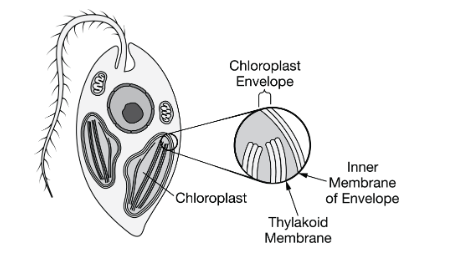
Euglenids are single-cell eukaryotes that live in aquatic environments. The chloroplasts found inside euglenids are enveloped by three membranes, as represented in Figure 1. The inner membrane of euglenid chloroplasts resembles the thylakoid membrane.
Which of the following claims about the origin of the euglenid chloroplast is best supported by the three-membrane structure of the envelope?
A) It originated from the spontaneous assembly of organic molecules into a lipid bilayer inside a free-living prokaryote.
B) It originated from the fusion of the plasma membranes of two different free-living photosynthetic prokaryotes.
C) It originated from the incorporation of a photosynthetic prokaryote into a eukaryotic cell by a single endosymbiotic event.
D) It originated from the incorporation of a photosynthetic prokaryote into a eukaryotic cell by two endosymbiotic events.
D) It originated from the incorporation of a photosynthetic prokaryote into a eukaryotic cell by two endosymbiotic events.
has three membranes
Beetroot cells contain a family of dark red pigments called betalains. The selectively permeable nature of the beetroot cells keeps the internal environment of the cell separate from the external environment of the cell. Researchers are interested in determining whether the selective permeability of beetroot cells is due to the cell membrane or if it is due to the cell wall.
Exposure to cellulase is known to damage the structure of the cell wall. An experiment is set up in which beetroot cells are placed in an aqueous solution with cellulase and in one without cellulase.
Which of the following results best refutes the alternative hypothesis that selective permeability is a consequence of the cell wall?
A) When beetroot cells are placed in a solution with cellulase, the solution turns dark red.
B) When beetroot cells are placed in a solution with cellulase, the solution remains clear.
C) When beetroot cells are placed in a solution, it turns dark red with or without cellulase present.
D) Since plant cells contain cell membranes, not cell walls, the alternate hypothesis cannot be tested.
B) When beetroot cells are placed in a solution with cellulase, the solution remains clear.
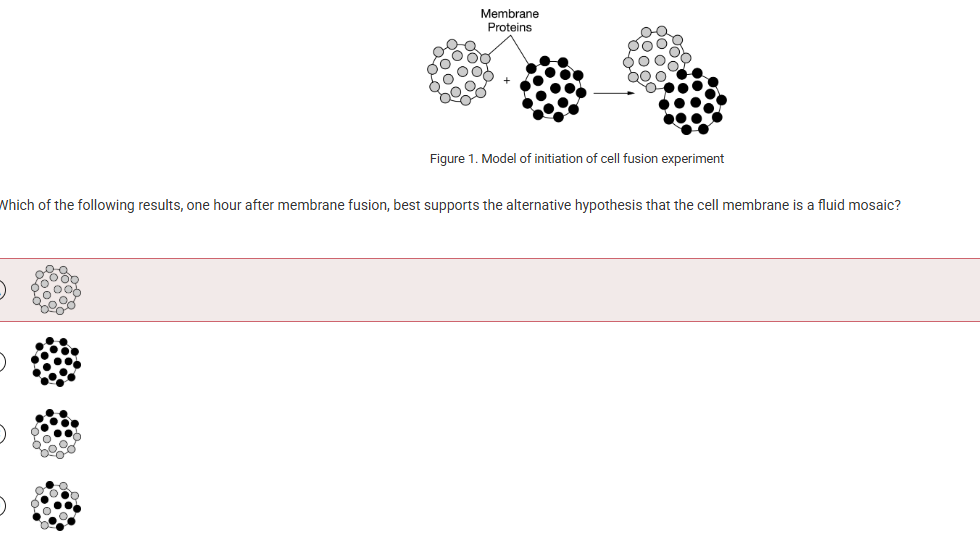
Two competing hypotheses exist regarding the cell membrane structure. One hypothesis states that membrane structure is static and membrane components throughout the bilayer are rigidly bound. Alternatively, the other hypothesis states that cell membranes are a fluid mosaic in which membrane components may drift within the bilayer around the surface of the cell. An experiment is set up in which membrane proteins of two different cells are fluorescently labeled with two different colors and then fused as shown in Figure 1.
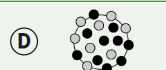
Which of the following results, one hour after membrane fusion, best supports the alternative hypothesis that the cell membrane is a fluid mosaic?
D
because C shows that the cells did not move within the bilayer, not supprting alternatie hypothesis.
The cell membrane is selectively permeable due to its structure. Thus, the internal environment of the cell is distinct from the external environment of the cell. One biologist hypothesizes that small nonpolar molecules readily pass through the membrane. Another biologist alternatively hypothesizes that these types of molecules require channel and transport proteins that are embedded in the membrane in order to move across the membrane.
Which of the following data would best refute this alternative hypothesis?
A) Ethanol is found in the cytosol of cells when they are briefly exposed to a ten percent ethanol solution.
B) Cells become oxygen deficient when membrane protein activity is blocked.
C) CO2 and N2 movement in and out of cells is unaffected when membrane protein activity is blocked.
D) Sodium ions cannot move across the cell membrane when membrane protein activity is blocked.
C) CO2 and N2 movement in and out of cells is unaffected when membrane protein activity is blocked.
CO2 and N2 are small nonpolar molecules
Which of the following best describes the relationship between the size and shape of a cell and the ability of the cell to move substances across the membrane?
A) Larger and more round-shaped cells are more efficient at moving substances across the membrane than small round-shaped cells.
B) Smaller and more oval-shaped cells release waste more slowly than large oval-shaped cells.
C) Larger cube-shaped cells obtain nutrients more quickly than small cube-shaped cells.
D) Smaller irregularly shaped cells are more efficient at dissipating heat than large irregularly shaped cells.
D) Smaller irregularly shaped cells are more efficient at dissipating heat than large irregularly shaped cells.