Preterm birth, post-partum, sepsis
 Call Kai
 Learn
Learn Practice Test
 Spaced Repetition
 Match
Match Flashcards
 Knowt Play
1/51

There's no tags or description
Looks like no tags are added yet.
Name | Mastery | Learn | Test | Matching | Spaced | Call with Kai |
|---|
No analytics yet
Send a link to your students to track their progress
52 Terms
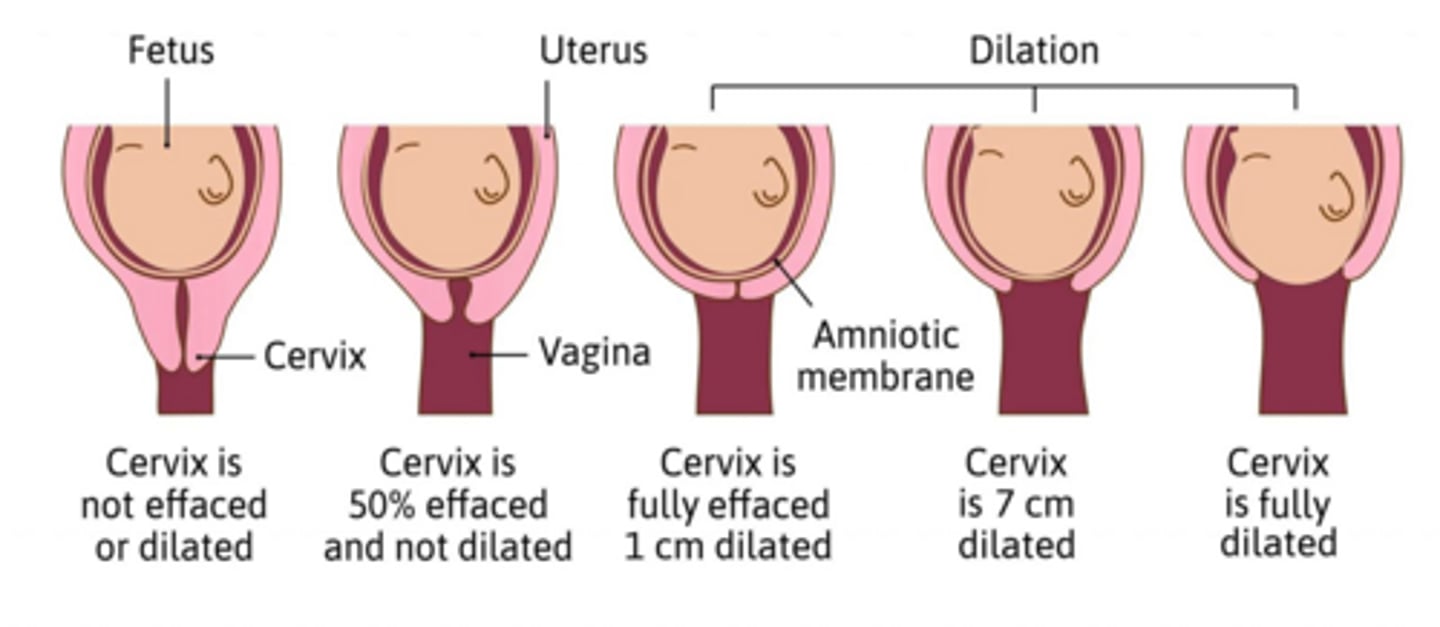
What is the definition of preterm labor?
Uterine contractions occurring between 20-37 weeks of gestation, leading to cervical changes.
What are the criteria for diagnosing preterm labor?
Uterine contractions of 4 per 20 minutes or 8 per 60 minutes, with cervical effacement of 80% or cervical dilation of 2 cm or more.
What is the leading cause of infant mortality related to gestation?
Prematurity.
What are some causes of preterm labor?
Spontaneous preterm labor, multiple gestations, preterm premature rupture of membranes (PPROM), pregnancy-associated hypertension, and cervical incompetence.
What are some risk factors for preterm labor?
Placental-uterine vascular dysregulation, smoking, stress, assisted reproductive technologies, genetic thrombophilias, and previous preterm birth.
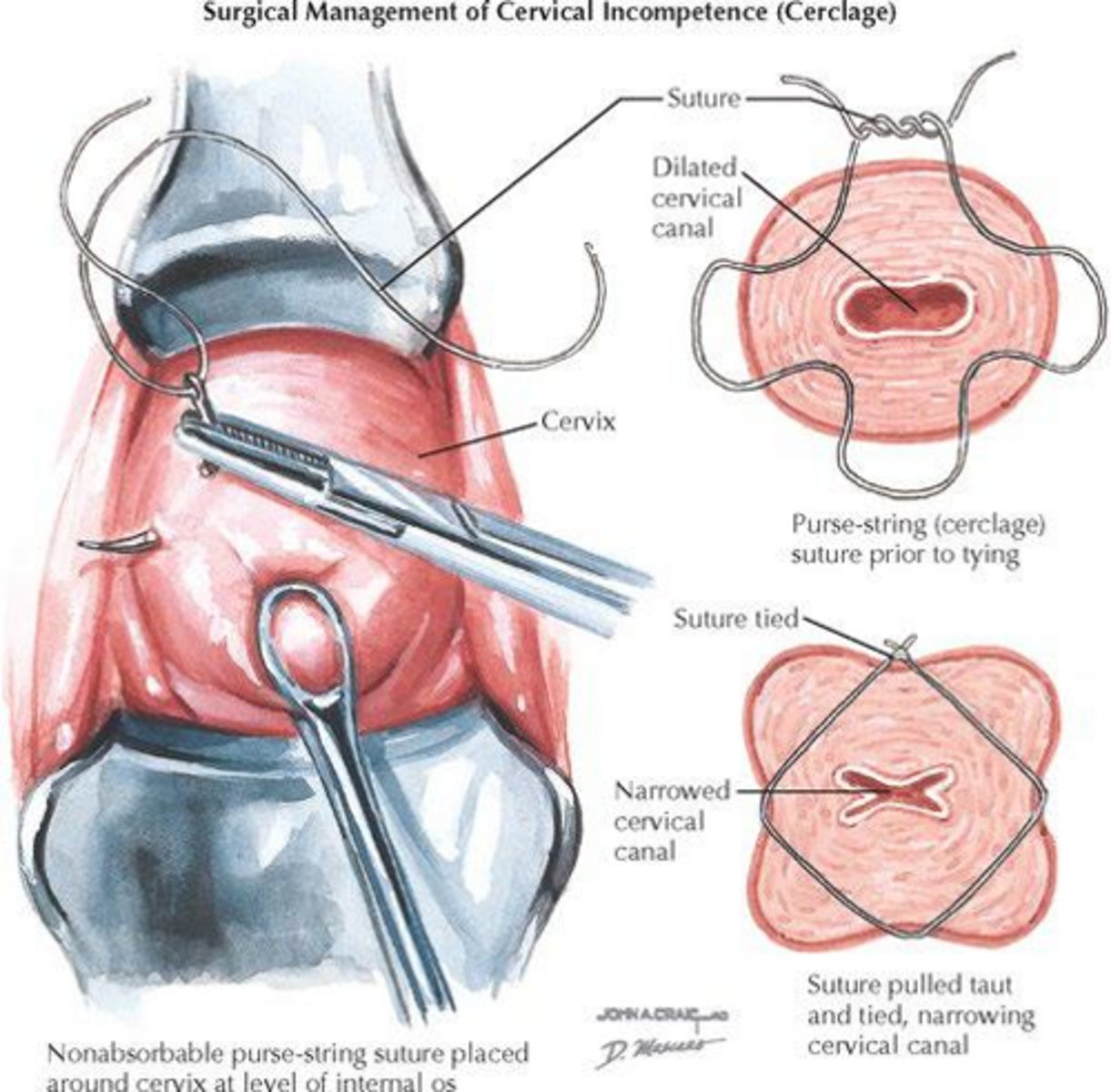
What is cervical incompetence?
The inability to retain a pregnancy in the absence of contractions or labor.
What diagnostic tools are helpful for cervical incompetence?
Patient history, transvaginal ultrasound, and physical examination.
What is the first-line management for cervical incompetence?
Transabdominal or transvaginal cerclage.
What is the definition of premature rupture of membranes (PROM)?
Rupture of the fetal membranes before the onset of labor.
What are the signs and symptoms of premature rupture of membranes?
Sudden gush or continuous leakage of fluid from the vagina.
What is the management approach for patients with premature rupture of membranes?
Monitoring for infection, assessing fetal well-being, and considering delivery based on gestational age and maternal/fetal status.
What defines post-term pregnancy?
Pregnancy that extends beyond 42 weeks of gestation.
What are the risks associated with post-term pregnancy?
Increased risk of stillbirth, macrosomia, and need for cesarean delivery.
What is postpartum hemorrhage?
Excessive bleeding following childbirth, typically defined as blood loss greater than 500 mL after vaginal delivery.
What are common causes of postpartum hemorrhage?
Uterine atony, lacerations, retained placenta, and coagulopathy.
What is the management for postpartum hemorrhage?
Identification of lacerations, use of contractile agents, management of volume loss, and addressing coagulopathy.
What is the differential diagnosis for postpartum infection?
Endometritis, urinary tract infection, and wound infection.
What is the role of antibiotic prophylaxis in postpartum infection?
To prevent infections in high-risk patients during and after delivery.
What are the signs of postpartum infection?
Fever, tachycardia, uterine tenderness, and foul-smelling lochia.
What is the significance of Vitamin D deficiency in pregnancy?
It may be a risk factor for preterm labor.
What is the impact of obesity on pregnancy outcomes?
Increased risk of complications such as gestational diabetes, hypertension, and preterm labor.
What is the first-line approach for preterm labor?
Transvaginal approach
When is the transabdominal approach reserved?
For those contraindicated for transvaginal
What should be done with sutures prior to labor?
They should be removed.
What is the implication of a transabdominal approach?
It results in lifelong cesarean deliveries.
What does a positive fetal fibronectin test at 22-24 weeks predict?
More than half of spontaneous preterm births before 28 weeks.
What is the role of cervical/vaginal fetal fibronectin in predictive testing?
It helps predict the risk of preterm birth.
What is a key week for respiratory development in fetuses?
24 weeks.
What does an L/S ratio <2 indicate?
Pulmonary immaturity.
What is the management for preterm labor if hydration is ineffective?
Initiate tocolytic therapy.
What are the contraindications to tocolytics?
Severe preeclampsia, severe placental bleeding, chorioamnionitis, IUGR, and fetal anomalies incompatible with life.
What is the purpose of glucocorticoid therapy in preterm delivery?
To facilitate fetal pulmonary maturation and reduce mortality.
What is defined as PROM?
Vaginal loss of amniotic fluid before the onset of labor.
What tests confirm PROM?
Nitrazine paper test, fern test, and Amnisure test.
What is the management for PROM at 36 weeks or more?
Labor may be induced if the cervix is favorable.
What is the risk associated with PPROM?
High risk of infection increases with time.
What is the leading cause of postpartum hemorrhage?
Uterine atony.
What is the definition of postpartum hemorrhage?
Blood loss >500 ml vaginal delivery or >1000 ml C-section.
What are common causes of postpartum infection?
Chorioamnionitis and endometritis.
What is the typical presentation of postpartum endometritis?
Fever on POD ½, abdominal pain, uterine tenderness, leukocytosis.
What is the recommended antibiotic regimen for postpartum endometritis?
Clindamycin + gentamicin.
What is the management for retained products of conception post-abortion?
Hospitalization, IV antibiotics, and evacuation of POC if febrile.
What are the risk factors for postpartum hemorrhage?
Clotting disorders, prolonged labor, grand multiparity, and uterine overdistention.
What is the significance of the L/S ratio in pulmonary maturity testing?
It helps predict the risk of respiratory distress syndrome (RDS).
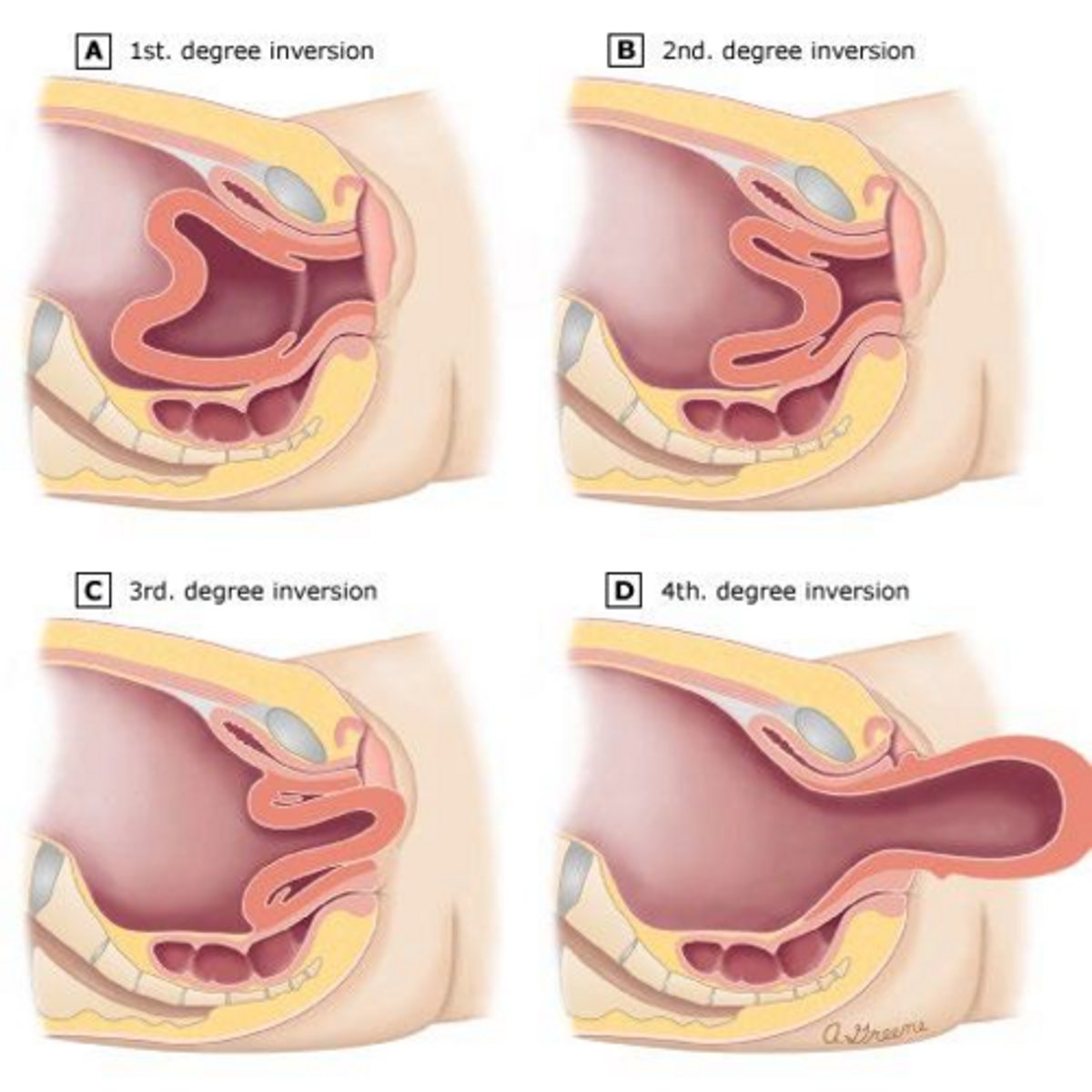
What is the management for uterine inversion?
IV fluids and manual replacement of the inverted fundus.
What is the role of amniotic fluid embolism in postpartum complications?
It can cause rapid decompensation requiring respiratory support.
What is the management for postpartum hemorrhage due to lacerations?
Suture above the apex and manage conservatively for cervical lacerations.
What is the potential viability lower limit for preterm delivery?
24 weeks or 500 g.
What is the management strategy for postterm pregnancy?
Induction when possible; monitoring with NSTs and biophysical profiles.
What are the signs of chorioamnionitis?
Fever, maternal or fetal tachycardia, leukocytosis, uterine tenderness.
What is the significance of the 7-day IM injections of betamethasone?
It is optimal for facilitating fetal pulmonary maturation.
What is the purpose of continuous fetal heart rate monitoring in preterm labor?
To assess fetal well-being during labor.