Written exam
 Call Kai
 Learn
Learn Practice Test
 Spaced Repetition
 Match
Match Flashcards
 Knowt Play
1/93

There's no tags or description
Looks like no tags are added yet.
Name | Mastery | Learn | Test | Matching | Spaced | Call with Kai |
|---|
No analytics yet
Send a link to your students to track their progress
94 Terms
Zero Tolerance harassment
Does not tolerate any form of harassment whether its towards race, color, religion, gender, national origin, age, sexual orientation and/or disability.
Acts of Harassment…
will result in automatic dismissal
Harassment covers any form of…
intimidating or inappropriate behavior (verbal, written, or behavioral) that creates an uncomfortable environment.
Assault
Intentionally putting another person in apprehension of a harmful or offensive contact.
Physical injury is not required
Harassment
Any conduct that creates significant anguish to another person such that it may bother, scare, or emotionally abuse them.
Consent
-affirmative, conscious, voluntary, and revocable
-the responsibility of each person to ensure they have affirmative consent of the other to engage in a activity
-Lack of protest, lack of resistance, or silence does not result or constitute to consent
-Affirmative consent can be revoked at any time
-existence of a dating relationship or past relationship/sexual relationship will never by itself be assumed to be an indicator of consent
asking for and giving consent isnt only about intimate relationships, It is to be asked about in the day-to-day life when you make decisions or set boundaries and respect for other people’s choices all the time.
Stalking
Cyber___ involves annoying or harassing someone with repeated calls or electronic communications that are obscene or threatening
It is a crime to use an electronic device to distribute personal information about or digital images of someone with the intent to harass or harm that person
Scheduling shirts with the intent to see another scholar may ultimately be considered ___ if the scholar feels uncomfortable or has made it clear they do not want to be visited by that particular individual.
Prohibited behaviors
Threatening: swinging fists, destroying property, or throwing objects
Prohibited behaviors
Verbal or written: any expression of an intent to inflict harm
Prohibited behaviors
Verbal abuse: swearing, insults, or condescending language
Prohibited behaviors
Physical attacks: hitting, shoving, pushing, or kicking
Prohibited behaviors
Retaliation: adverse action against a person based on their participation in a harassment investigation
Prohibited behaviors
Inappropriate behaviors with a person under the age of 18
Prohibited behaviors
Failing to comply with the terms of a no-contact order
Quid Pro Quo (H1)
Decisions based on a request for a intimate favor or expected return for something
Hostile Environment
Unwelcome conduct that results in the following:
interfere with an individual’s ability to work
creates an intimidating, hostile, or offensive work environment
Examples of Harassment (Seual)
unwelcomed seual propositions
unwanted seual innuendoes or behavior, repeated or not
Unwelcomed seual comments or jokes
Unwanted touching or leering
Sending someone unwanted seual materials
Examples of Harassment (non-seual)
slurs
negative stereotyping
Threatening or hostile acts related to above
Non-Harrassment
mutual consent like consensual hugging between friends and a compliment between colleagues are not considered (H)
Giving and receiving constructive feedback should be evidence based and delivered in an appropriate manner
initiating conversations where you ask how someone’s weekend was, avoid asking them for detailed personal/private info
Complimenting a colleague (“nice work” or “nice haircut”)
Responding to Harasser
Harassment is unlikely to stop until confronted. Inform the harasser that their actions are offensive and unwelcome. There is no best way to respond to harassment in every circumstance.
Project confidence, even if you do not feel that way
Do not apologize, make an excuse, or ask a question. You do not need to say sorry for your feelings
Name the behavior and state that it is wrong
Reporting and Incident
Incident arises —> Report to supervisor —> investigation —→ Resolution
Mandatory Reporting
Health care providers are legally obligated to report suspicious behavior or events to the correct authorities
Scholars are not mandatory reporters legally but should none the less be required under program policy to report anything suspicious to a program facility and/or cope health solutions staff member
Incident Reporting
An unexpected or unanticipated event that needs to be reported to the program facility and COPE health solutions, this includes harassment.
Reporting:
Program manager
Regional Manager
Director
Open Door Policy
Cope encourages open communication
if you have a problem or issue that you want to discuss, you should feel free to talk to your supervisor or another point of contact
Considered Workplace Violence
physical assault
threats
harassment
domestic violence can spillover into the workplace
intimidation
bullying
stalking
Zero Tolerance Policy
all threats or acts of violence occurring on program site property, regardless of the relationship between employee and individual involved in the incident
all threats or acts of violence not occurring on program site property, but involving someone who is acting in the capacity of a representative of the organization
all threats or acts of violence not occuring on program site property, but involving an employee of the organization if the threats or acts of violence affect the legitimate interests of employees or the org.
Workplace violence
any action that threatens the saftey of an employee and negatively impacting an employee’s physical and or psychological well-being, or causes damage to an organization’s property.
Behaviors of Concern (BoC)
disruptive, aggressive, hostile, or emotionally abusive behaviors that generate anxiety or creare a climate of distrust, and which adversely affects productivity and morale.
exp: expressed frustration, prolonged anger, holding grudges, hypersensitivity to criticism, blaming others, extreme anxiety, visible distress and isolation
Possible factors for BoC
pain
personal stress
fear of unknown
psychological causes
anger at hospital system (long awaited times or cramped spaces)
Physiological causes
BoC communication indicators (verbal)
raised voice, aggressive statements (demanding attention), Confrontational statements
BoC communication indicators (paraverbal)
voice quality
rate of speech
inflection
BoC communication indicators (Non-verbal)
sitting at the edge of the bed
gripping arm rails
tense posture
eye movement
leaning in
breathing changes
clenched fists
pacing
Areas more susceptible to violence
emergency department
Geriatric units
behavioral health units and clinics (outpatient)
psychiatric wards
waiting rooms and exam rooms
pain management department
Common misconceptions
Violence is not sudden or sporadic, it is evolutionary
“They just snapped” or “They are a loner”
Cycle of Assault
Trigger —> Escalation —> Crisis —> recovery —> post-crisis Depression
Trigger
The event that initiates the escalation of behavior.
Can lead to a violent or an assaultive episode.
Comes from a perceived loss or threat of loss from the individual.
Predisposing factors are usually unknown to health care providers.
Escalation of behavior
Anxiety —> Aggressive behavior —> physical violence
De-escalating the Situation
Active (empathic) listening
Remain non-judgmental
Leave silence for reflection
Be patient
Maintain attitudes of respect and acceptance
Avoid conflicts over power and control
Rational detachment
Restraints
physical restraints
Behavioral restraints (Form of restraint used for the management of violent or self destructive behavior that jeopardizes the immediate physical safety of the patient, staff, or others
Seclusion (involuntary confinement of a patient alone in a room or area from which the patient is physically prevented from leaving
DO NOT ENTER ROOM IF PATIENT HAS RESTRAINTS (HS)
Recovery and Post-crisis Depression
Being quiet, lack of energy, crying, moving to a protected area
Emotional status below average state
Individual may become tired and not remember the incident
Intervention
Give person space and time
Look at what caused the behavior
Code Gray
Combative or disruptive person
Code Silver
Person who is armed with weapon or hostage situation
Code Pink
Infant abduction
Code Purple
Child abduction
Mandatory Reporting responsibilities
Report to the Division required shall be made within 24 hours after the employer knows of the injury
1) Report —> charge nurse —> seek treatment —> Call emergency pager
2) After a violent incident, it is important that all personnel involved in the incident, meet immediately following to discuss.
What should always be reported
aggressive and hostile behaviors
physical violence
threats and threatening behavior
Open door policy
includes scratching, spitting, bitten, choked, sexually assaults, verbally threatened, grabbed etc etc.
Don’t think it is someone else’s responsibility, you have responsibility to help maintain a safe enviorment.
Extreme danger Gap (Active shooter)
Period of time between extreme violence and the arrival of law enforcement
anywhere that there’s human congregation and activity there can be violence
Accept, Assess, Act and alert
accept the situation
assess the situation (what is going on/where is the danger coming from)
Act (avoid, barricade, fight)
Alert (emergency response)
Law enforcement
be prepared to calmly and quickly tell them what they need to know
follow orders
do not attempt to re-enter the scene until they give you the all clear
their first priority will bot be the wounded
Anatomical Position
Patient’s body is erect
Head, eyes, toes, and palms are directed forward with limbs at sides of body
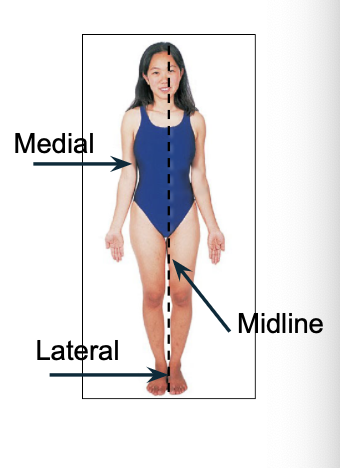
Medial and Lateral
towards the midline of the body
away from the midline of the body
Anterior and Posterior
face or front side (ventral)
Backside (dorsal)
Proximal
Close to the middle of the body, toward torso
Distal
Away from the middle of the body, away from torso
Cranial
Towards the top of the head
Caudal
Away from the top of the head, toward the hind parts
Superior
Above or over something, based on a reference point
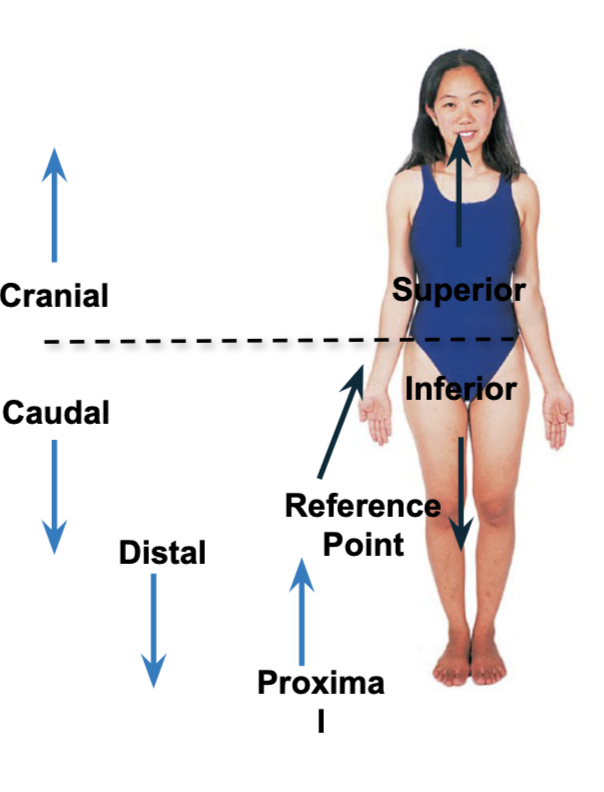
Inferior
Below or under something, based on a reference point
Flexion
Closing of a joint
Extension
Opening of a joint
Supination
Palm of hand faces fowards vertically
Pronation
Palm of hand faces backward/dorsal
Supine
Lying down facing ceiling (on back)
Prone
Lying down facing the floor (on stomach)
Eversion
Sole of foot faces outward
Inversion
Sole of foot faces inward
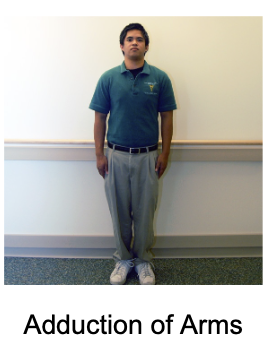
Adduction
Move toward the midline
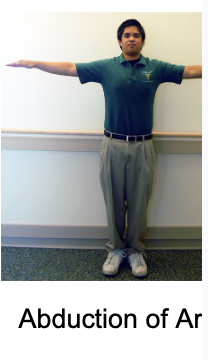
Abduction
move away from midline
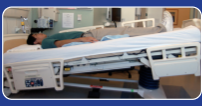
Trendelenburg Position
Patient’s head is low and legs are elevated
used as a first measure for hypotension or change of blood flow
Reverse Trendelenburg Position
Patients head is elevated
used for head trauma victims (anyone with an open/bleeding wound)
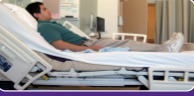
Fowler’s Position
Semi-sitting position with hip at an angel of 45-60 degrees
used after abdominal operations
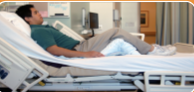
Semi-Fowler’s position
semi-sitting position with hip ar an angle of approx. 30 degrees (knees can be flexed and supported by a pillow after additional support)
helps reduce pressure on a patients back
Orthopedics
Branch of surgery concerned with injuries and disorders of the musculoskeletal system.
Total Hip Replacement
Common orthopedic procedure
Arthroplasty: replacement of arthritic dysfunctional joint surface
Patient placed in Fowler’s position after total hip replacement surgery.
important precautions (orthopedic patients)
Do not change patient position unless directed by nursing staff
Do not flex the hip past 45 degrees
Do not adduct the hip past
X-rays
Used to determine the structural status of bones and other high density tissues
Must wear lead apron and thyroid shield to protect from ionizing radiation.
CT
Computerized Axial Tomography
Specialized x-ray used to examine soft tissues like the liver, brain or pancreas
MRI
Magnetic Resonance Imaging
Uses magnetic field and radio waves to create cross-sectional images of head and body
High image quality, but time consuming and expensive
Ultrasound
High-frequency sound waves are used to produce real-time pictures of internal organs
Used during pregnancy to observe development of fetus
C-Arm
X-Ray machine used in surgery to take pictures of spine without moving patient.
Catheter
Small tube inserted into a body cavity, duct or vessel.
Allows drainage, injection of fluids or access by surgical instruments
Chest Tube
Flexible plastic tube inserted through the side of the chest into the pleural space.
Used to remove air (pneumothorax), fluid or pus
EKG/ECG
Electrocardiogram
Records electrical activity of heart
Intubation
Usually refers to endotracheal intubation
Placement of flexible plastic tube into trachea to protect the patient’s airway and allow mechanical ventilation.
IV
Intravenous
Insertion of flexible catheter into a vein using a needle for guidance and to puncture skin.
NG Tube
Nasogastric Tube
Inserted through nose, past pharynx and esophagus, into stomach; used for feeding and/or administering drugs, or emptying the stomach
Ventilator
Machine breathes for patients who are unable to do so on their own.
Can be adjusted to set respiratory rate, air pressure, etc.
ACU (ambulatory Care unit)
Patients are able to walk, either assisted or unassisted.
ICU (intensive care Unit)
Where unstable medical patients go for constant care.NIC
NICU (Neonatal Intensive Care Unit)
Where premature and/or seriously ill or unstable babies are treated.
PACU (Post-Anesthesia Care Unit)
Provide care for patients recovering from anesthesia after undergoing surgery
BM
Bowel Movement
CBC
Complete blood count
Percent of each cell type (RBCs, WBCs, platelets, etc.).
TKO
To keep open