Chapter 7: Memory (2)
0.0(0)
Studied by 0 people Call Kai
 Learn
Learn Practice Test
 Spaced Repetition
 Match
Match Flashcards
 Knowt Play
Card Sorting
1/17

Earn XP
Description and Tags
Last updated 4:45 AM on 5/31/26
Name | Mastery | Learn | Test | Matching | Spaced | Call with Kai |
|---|
No analytics yet
Send a link to your students to track their progress
18 Terms
1
New cards
LONG-TERM MEMORY
Knowlede that can be stored indefinitely
2
New cards
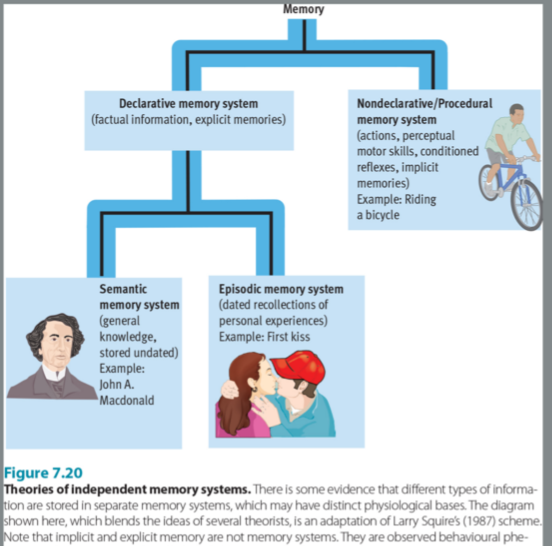
3 types of knowledge Stored
About yourself: e.g. Your name
favourite TV show...
About the world:knowledge that can be brought to mind and that don’t involve you.
How to do things: e.g. riding a bike
favourite TV show...
About the world:knowledge that can be brought to mind and that don’t involve you.
How to do things: e.g. riding a bike
3
New cards
Declarative Memory
• Information that can be stated
• E.g.: Words, definitions, names, dates, faces, events, concepts, ideas
• E.g.: Words, definitions, names, dates, faces, events, concepts, ideas
4
New cards
Procedural Memory
• Actions, skills, operations, and conditioned responses
• E.g.: Procedure of writing, walking, drawing
• E.g.: Procedure of writing, walking, drawing
5
New cards
Semantic Memory
General facts about the world
> Both part of declarative memory
> Both part of declarative memory
6
New cards
Episodic Memory
Personal experiences and facts (with chronological or temporal component)
> Both part of declarative memory
> Both part of declarative memory
7
New cards
why we forget
1. Ineffective Encoding
2. Decay
3. Retrieval Failure
4. Interference
2. Decay
3. Retrieval Failure
4. Interference
8
New cards
1. Ineffective Encoding
- that you were not paying attention
- not continuously working with Short term memory)
- needs all your attention
- not continuously working with Short term memory)
- needs all your attention
9
New cards
2. Decay
- when you don't use your neurons and the connects start to weaken (things fade)
- (More you rehearse the better you recall)
- (More you rehearse the better you recall)
10
New cards
3. Retrieval Failure
- tip of the tongue phenomenon"
- likeyou have a partial memory of what your trying to remember
but you can't remember it exactly (might come back later)
- the memory is there and intact but you can't recall it.
- likeyou have a partial memory of what your trying to remember
but you can't remember it exactly (might come back later)
- the memory is there and intact but you can't recall it.
11
New cards
4. Interference
- Distracted so you can't store the right memory like one thing keeping another from getting into long term memories
- (this is why developing attention is important
- (this is why developing attention is important
12
New cards
2 types of Interference
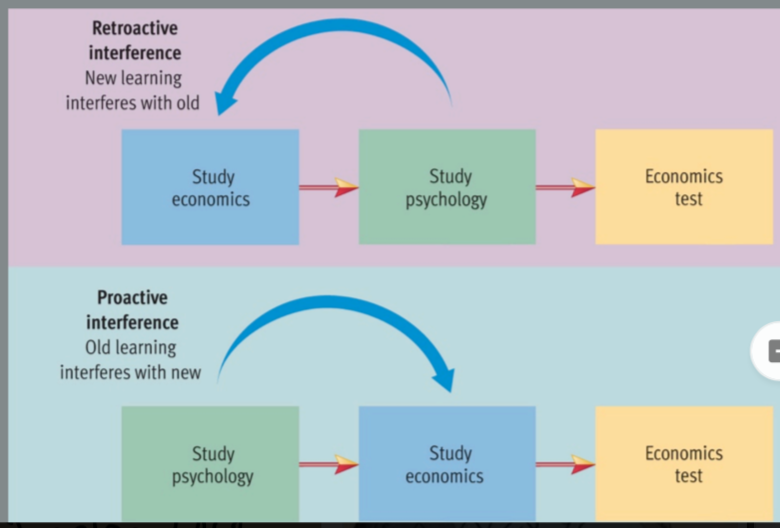
1. Retroactive Interference
2. Proactive Interference
2. Proactive Interference
13
New cards
1. Retroactive Interference
- New learning interfering with the Old
14
New cards
2. Proactive Interference
old learning interferes with new
15
New cards
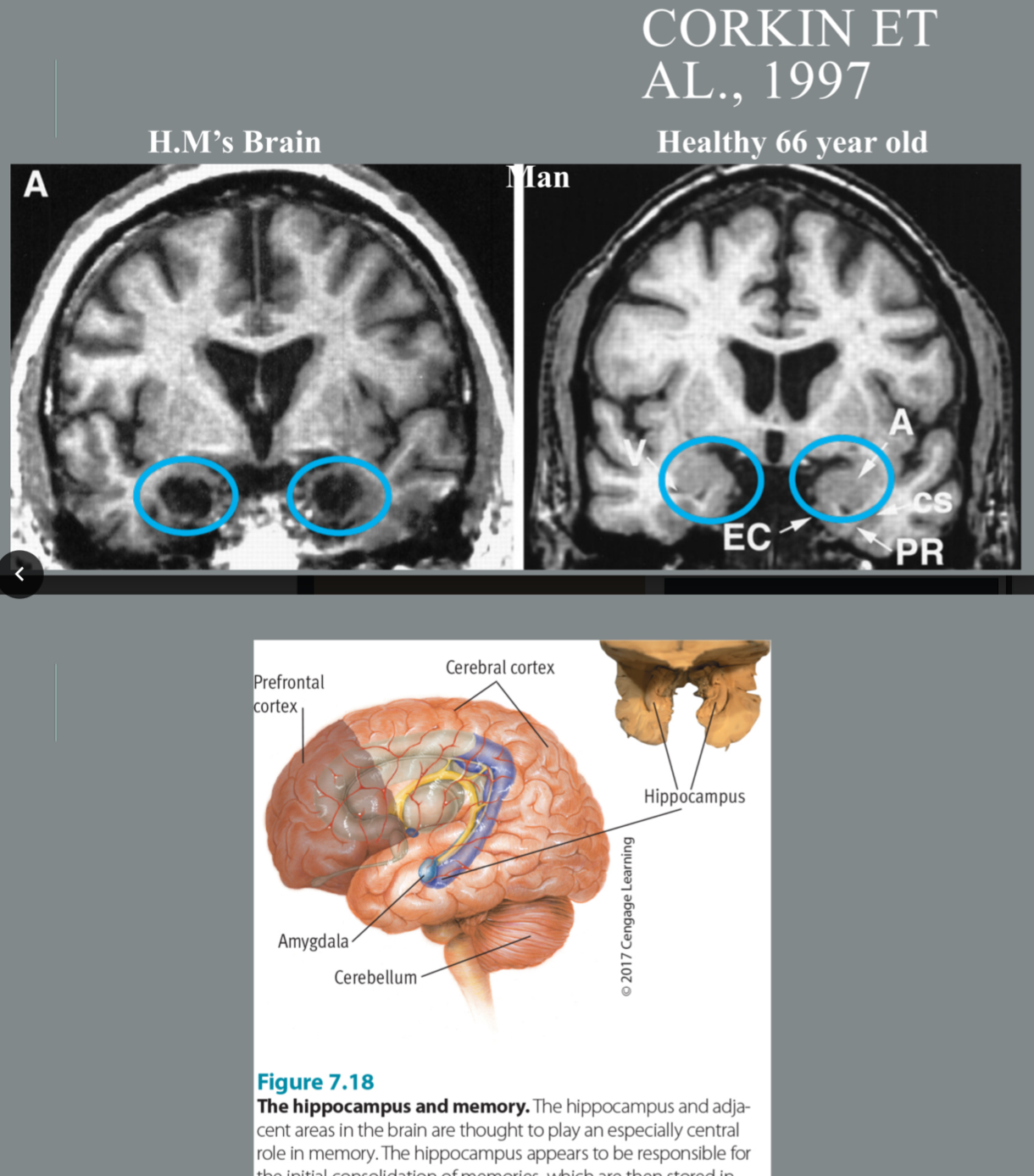
ANTEROGRADE AMNESIA – HENRY MOLAISON (H.M.)
• Impaired Episodic Memory
- No new memories
• Impaired Explicit Memory*
-He does not remember people he met the next day (learning new things)
• Intact Semantic Memory*
- Remembers everything that had happened before surgery
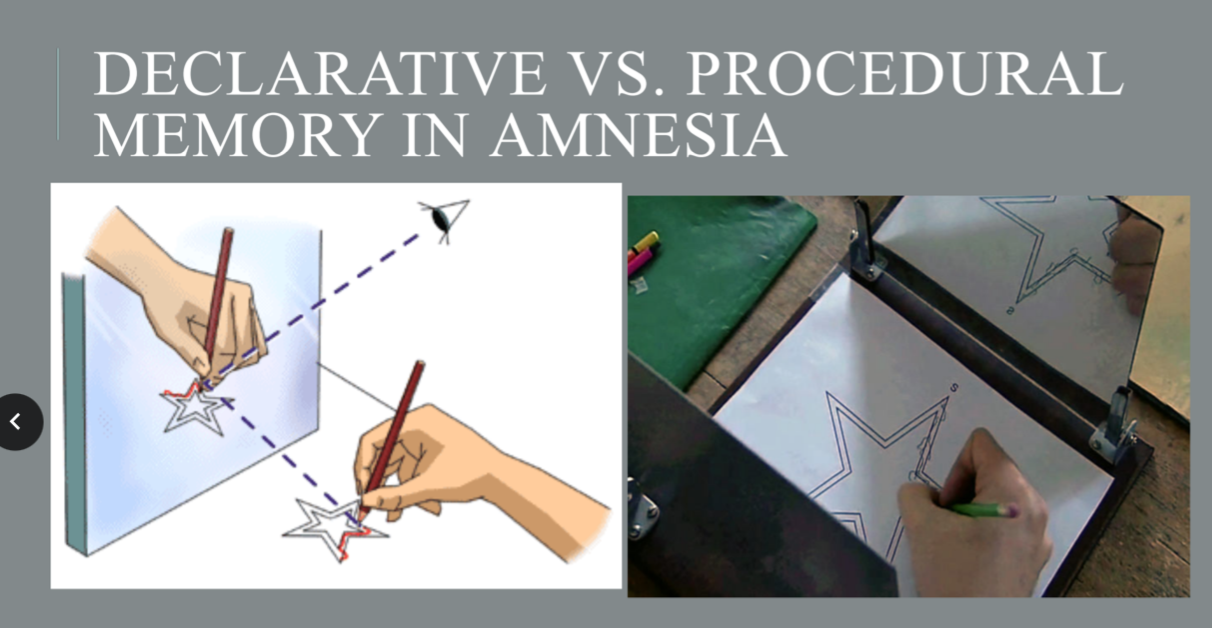
• Intact Procedural memory
- how to do things like drawing the star experiment.
- No new memories
• Impaired Explicit Memory*
-He does not remember people he met the next day (learning new things)
• Intact Semantic Memory*
- Remembers everything that had happened before surgery
• Intact Procedural memory
- how to do things like drawing the star experiment.
16
New cards
H.M. star experiment
17
New cards
eye witness testimony
A case of constructive memory
•Discussed by professor in class
Conclusion:
●“Memories” are notoriously unreliable
•Discussed by professor in class
Conclusion:
●“Memories” are notoriously unreliable
18
New cards
MOVIE FALSE MEMORIES
Ted Talk with Elizabeth Loftus (6 min.)
Does memory function like a video recorder? Are memories
permanently etched or do they change over time? What does
the research suggest regarding the accuracy of childhood
memories?
Dr. Loftus shows how her research findings have
implications for the justice system.
Does memory function like a video recorder? Are memories
permanently etched or do they change over time? What does
the research suggest regarding the accuracy of childhood
memories?
Dr. Loftus shows how her research findings have
implications for the justice system.