7. Early life and The diversification of prokaryotes
 Call Kai
 Learn
Learn Practice Test
 Spaced Repetition
 Match
Match Flashcards
 Knowt Play
1/76

There's no tags or description
Looks like no tags are added yet.
Name | Mastery | Learn | Test | Matching | Spaced | Call with Kai |
|---|
No analytics yet
Send a link to your students to track their progress
77 Terms
Origin of life (stages)
Chemical and physical processes on early Earth may have produced very simple cells through:
Abiotic synthesis of small molecules into macromolecules
The joining of small molecules into macromolecules
the packaging of these molecule into protocells
the origin of self-replicating molecules
What are the earliest known fossils?
Stromatolites
these are banded rocks that arise from the activities of certain prokaryotes
they date back at least 3.5 billion years and fossil stromatolites are similar to those observed today.
Prokaryotes
most are unicellular though some form colonies
most are 0.5-5 micrometers, much smaller than eukaryotic cells
they have a variety of shapes
Prokaryotes - Shapes
Cocci
Bacilli
Spirilla
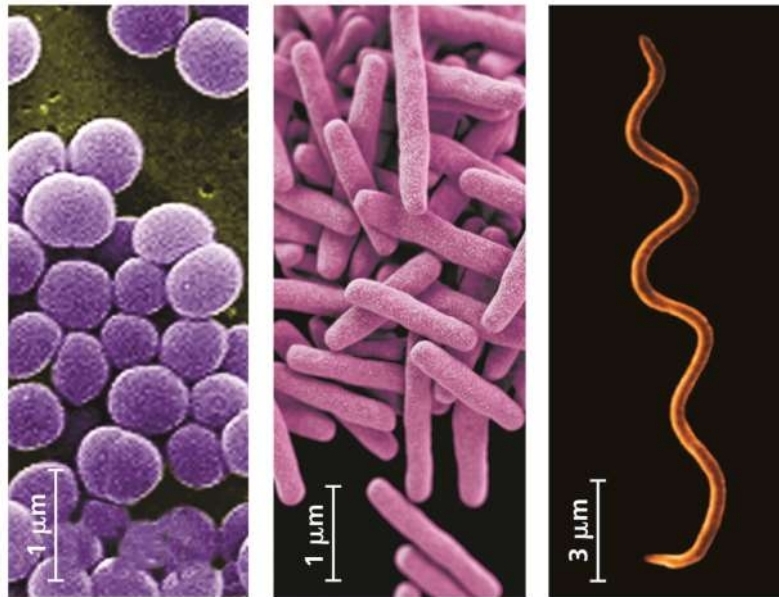
Cocci
spherical shaped
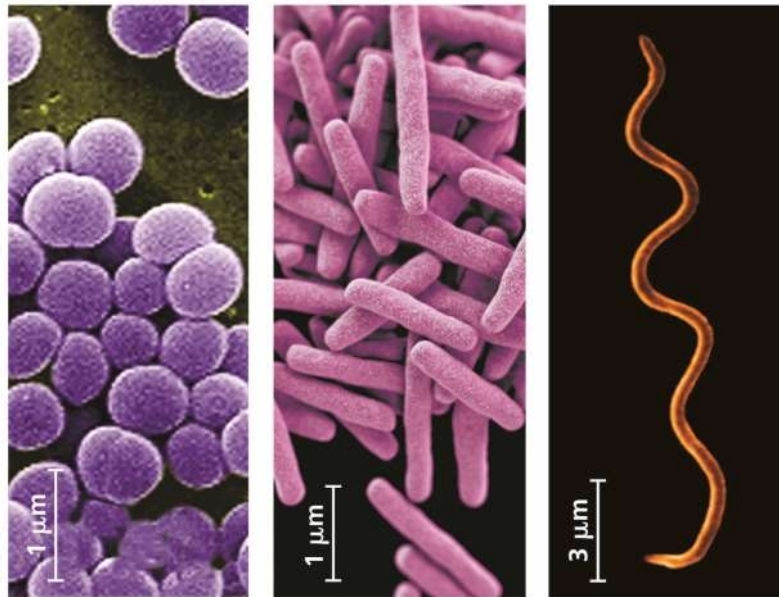
Bacilli
rod-shaped
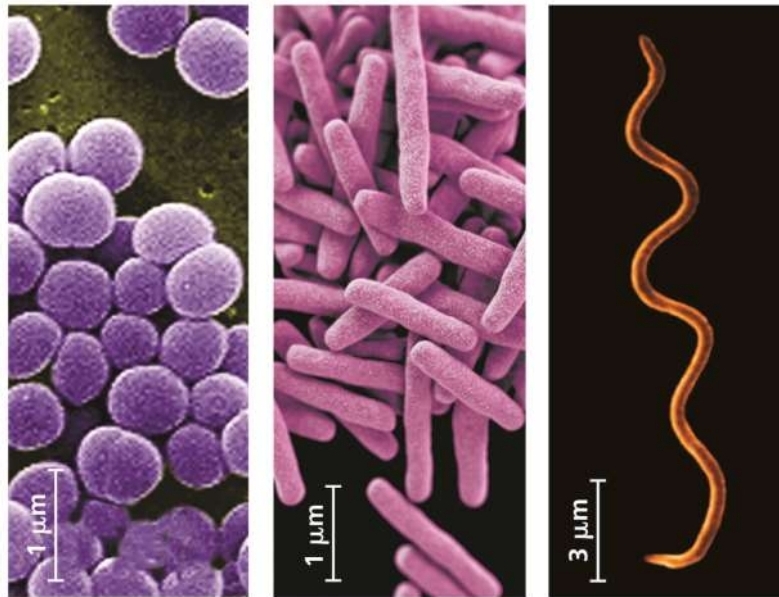
Spirilla
Spiral shaped
WHat is the most important feature of prokaryotic cells?
The cell wall
this maintains the cell shape, provides physical protection and prevents the cell from bursting in a hypotonic environment
What are eukaryotic cell walls made of?
Cellulose or chitin
What do bacterial cell walls contain?
Peptidoglycan
this is a network of sugar polymers cross-linked by polypeptides
Gram stain
a stain scientists used to classify many bacterial species
either into Gram Stain positive or Gram stain negative groups
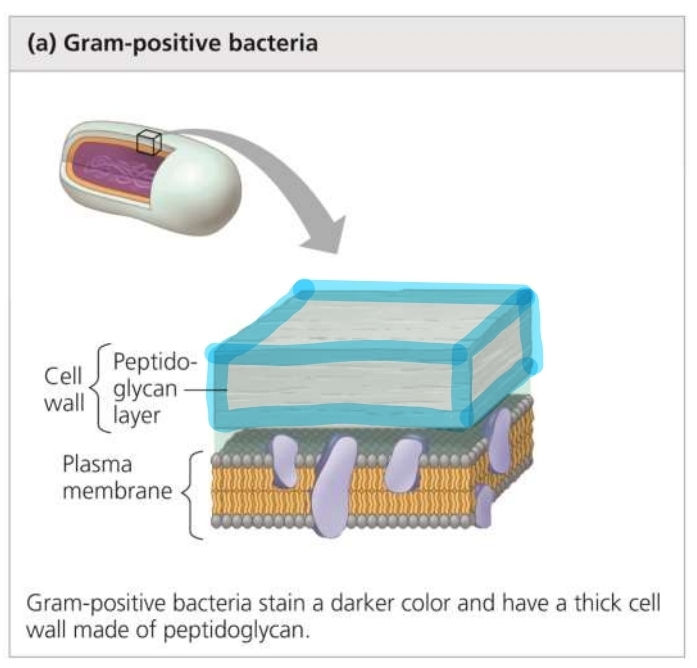
Gram-Positive
These are bacteria that have peptidoglycan in their out membrane
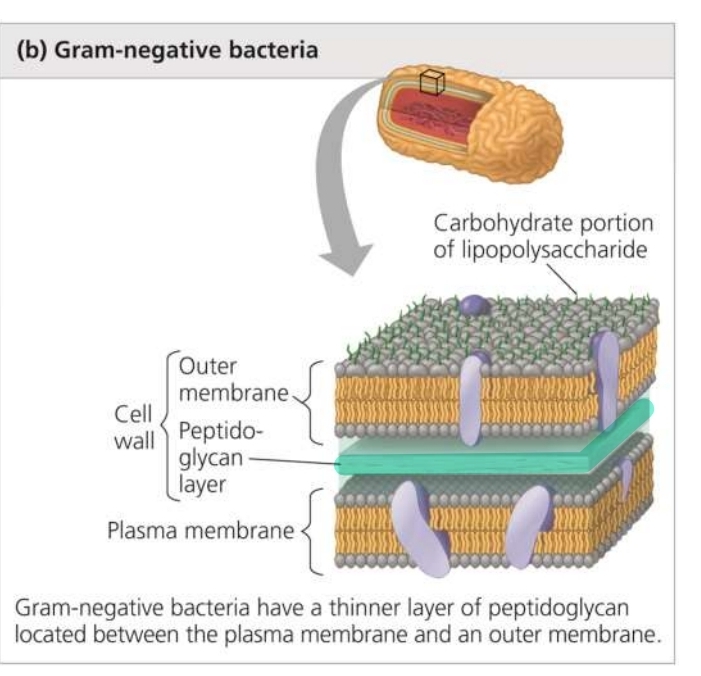
Gram-negative
These are bacteria that have less peptidoglycan in their cell wall
the outmembrane can be toxic and they are more likely to be antibiotic resistant
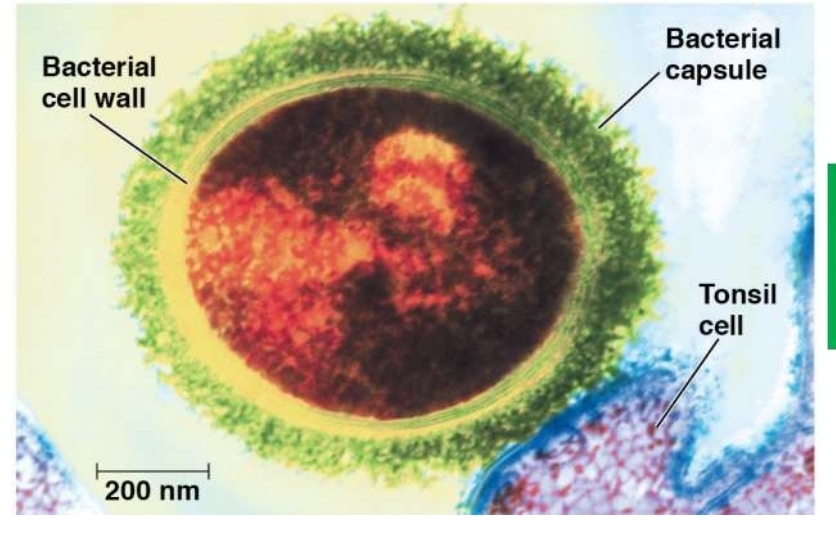
What covers many prokaryotes?
A polysaccharide or protein layer called a capsule
What are fimbriae
Fimbriae are appendages or spike looking structures
these allow them to attach to other surfaces or other prokaryotes
How do most bacteria move?
Motile bacteria propel themselves by flagella
the flagella are structually and functionally different from eukaryotic flagella
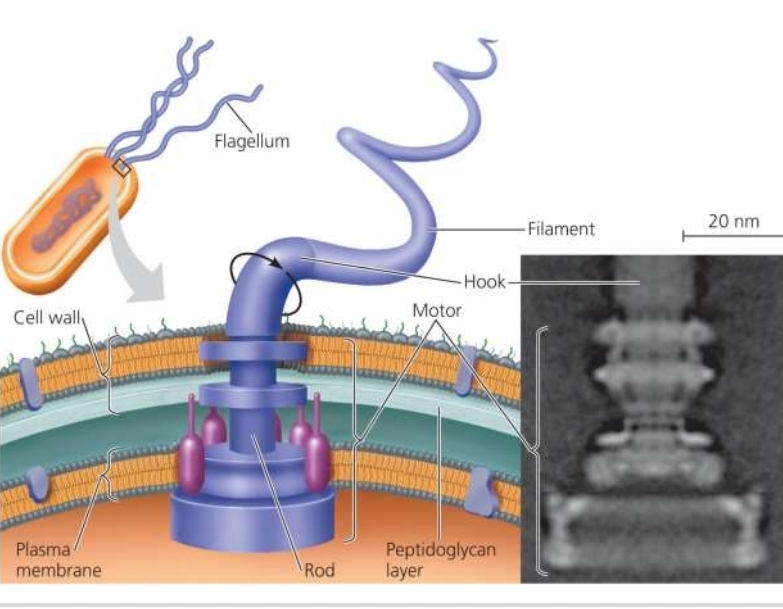
Porkaryotic Flagella anatomy
In a prokaryotic flagella there is a motor system of rings embedded in the cell wall and plasma membrane
An ATP driven pomp transports protons out of the cell, while diffusion brings them back in, this process powers the motor
the motor rotates the curved hook attached to the filament
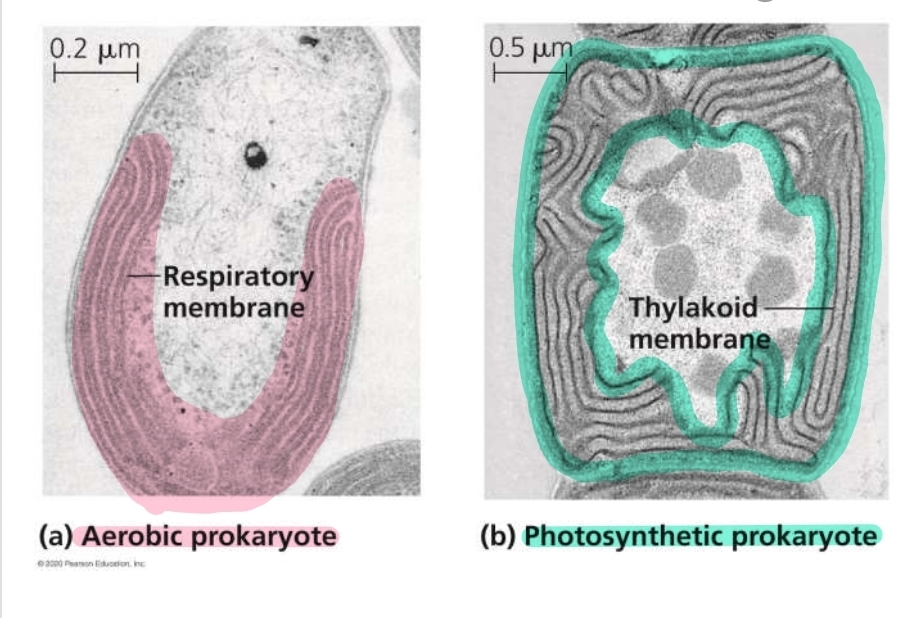
What do prokaryotes lack?
They usually lack complex compartmentalization
however they do have specialized membranes that perform metabolic functions
e.g. aerobic prokaryote & photosynthetic prokaryote
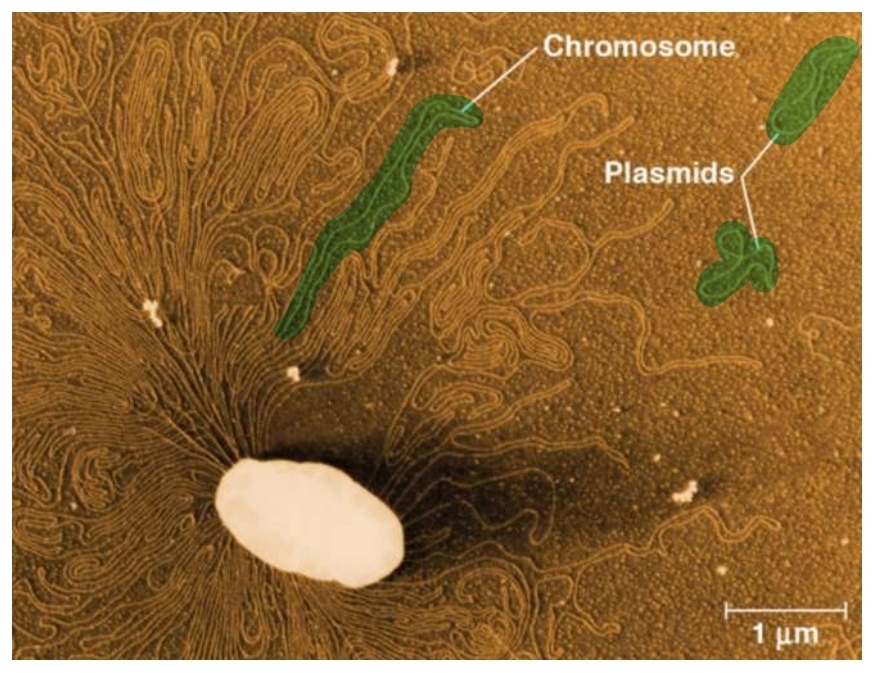
Prokaryote genome
This has less DNA than the eukaryotic genome
most of the genome consists of a circular chromosome
The typical genome is a ring of DNA that is NOT surrounded by a membrane and is located ina nucleoid region
aka, it is not a true nucleus
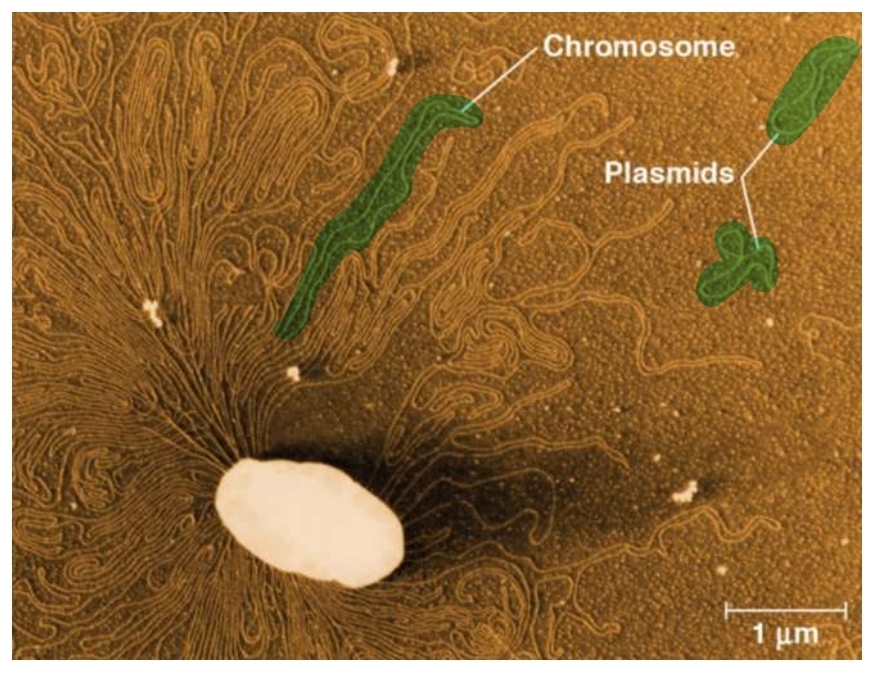
What are the smaller rings of DNA in some bacteria called?
Plasmids
Phototrophs
obtains energy from light
Chemotrophs
Obtain energy from chemicals
Autotrophs
require CO2 as a carbon source
Heterotrophs
require organic nutrient to make organic compounds
Photoautotrophy
energy from light; CO2 carbon source
Chemotrophy
Energy from chemicals; CO2 carbon source
Photoheterotrophy
energy from light; carbon from organic compounds
Chemoheterotrophy
energy and carbon from organic compounds
Prokaryote's Metabolism and Oxygen requirement
Prokaryotic metabolism varies with respect to oxygen
Obligate Aerobes
Obligate anaerobes
Faculative anaerobes
Obligate aerobes
require O2 for cellular respiration
Obligate anaerobes
these are poisioned by O2 and use fermentation or anaerobic respiration
Faculative anaerobes
These can survive with or without O2
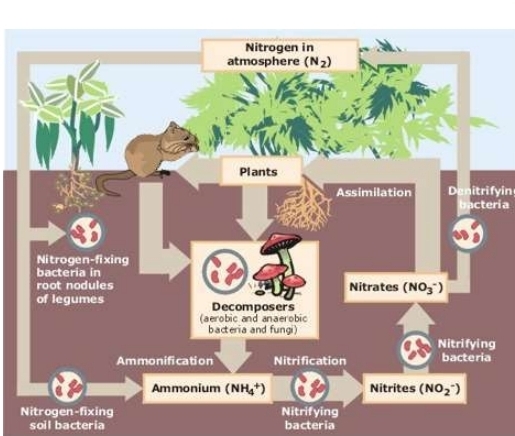
Nitrogen Fixation
Where prokaryotes can metabolize nitrogen in a variety of ways
prokaryotes will convert atmospheric nitrogen into ammonia
e.g. peanuts & legumes
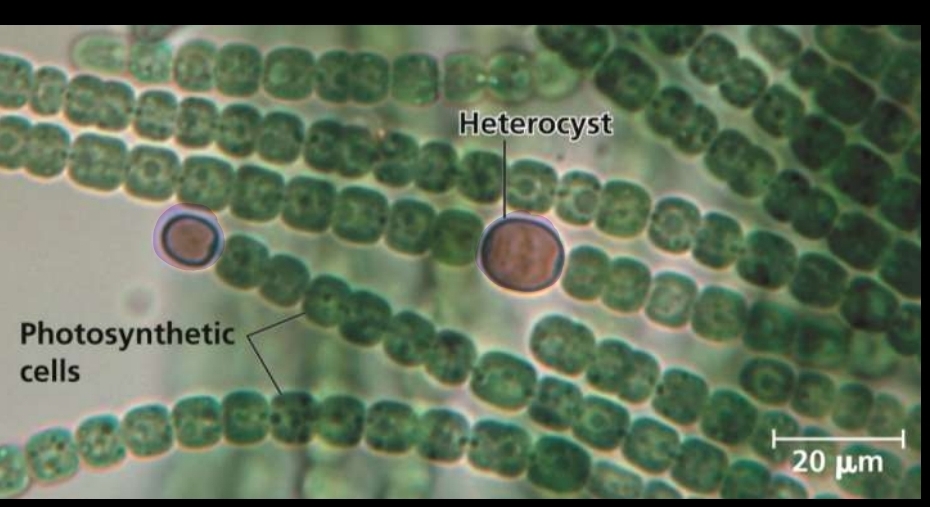
Heterocysts
these are found in colonial prokaryotes (algae) which fix nitrogen while other cells perform photosynthesis
How do prokaryotes reproduce?
They reproduce quickly by binary fission and can divide every 1-3 hours
this means they can evolve rapidly because of their short generation times
e.g. antibiotic resistence can evolve in under a day
What do prokaryotes form?
They form metabolically inactive endospores
these can remain viable in ahrsh conditions for centuries
What are the 3 factors that contribute to Prokaryotes genetic diversity?
Rapid reproduction
Mutation
Genetic recombination
Rapid Reproduction
Prokaryotes reproduce by binary fission which allows them to reproduce rapidly
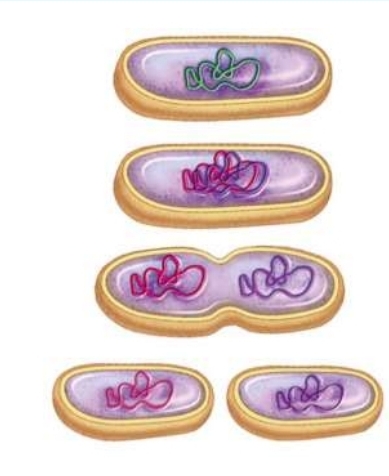
Mutation
Mutation rates during binary fission are low but b/c of rapid reproduction, mutations can accumalate rapidly
high diversity from mutations allows for rapid evolution
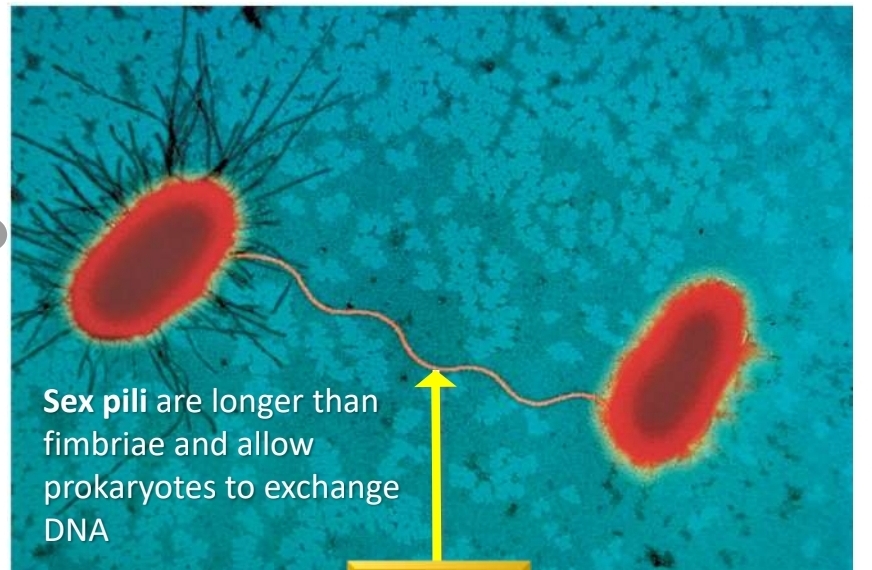
Genetic recombination in Prokaryotes can occur by..
Transformation → take up foreign DNA from environment
Transduction → movement of genes between bacteria by viruses (bacteriophages)
COnjugation and plasmids → sex pilli (tube) allow cells to connect and pull together for DNA transfer (one way)
Conjugation and Plasmids
The process where genetic material is transferred between bacterial cells
Sex pilli allow cells to connect and pull together for DNA transfer
a piece of DNA, F factor, is required for the production of this tube
F factor can exist as a separate plasmid or as DNA within the bacterial chromosome.
What 2 domains are prokaryotes divided into?
Archaea
Bacteria
Archaea
Prokaryotes in this domain share certain traits with bacteria and other traits with eukaryotes!
however archaea and eukarya share a more recent common ancestor than archaea and bacteria
Archaea - Extremophiles
Prokaryotes of this domain are called this because they live in extrem environments
Exterme halophiles - live in highly saline environments
Extreme thermophile - thrive in very hot environments
Archaea - Methanogens
these live in swamps and marshes and produce METHANE as a waster product
These prokaryotes anaerobes and are poisoned by O2
Comparing the 3 domains - Nuclear envelope
Bacteria - NE Absent
Archaea - NE Absent
Eukarya Present
Comparing the 3 domains - Membrane enclosed organelles
Bacteria - MEO Absent
Archaea - MEO Absent
Eukarya - Present
Comparing the 3 domains - Peptidoglycan in cell wall
Bacteria - Present
Archaea - ABsent
Eukarya - Absent
Comparing the 3 domains - Membrane lipids
Bacteria - Unbranched hydrocarbons
Archaea - Some branched hydrocarbons
Eukarya - Unbranched hydrocarbons
Comparing the 3 domains - RNA polymerase
Bacteria - One kind of RNA
Archaea - Several Kinds of RNA
Eukarya - Several kinds of RNA
Comparing the 3 domains - Initiator amino acid for protein synthesis
Bacteria - Formyl Methionine
Archaea - Methionine
Eukarya - Methionine
Comparing the 3 domains - introns in genes
Bacteria - Very Rare
Archaea - Present in some genes
EUkarya - Present in many genes
Comparing the 3 domains - Response to the antibiotics (streptomycin and chloramphenicol)
Bacteria - Growth usually inhibited
Archaea - Growth not inhibited
EUkarya - Growth not inhibited
Comparing the 3 domains - Histones associated with DNA
Bacteria - Histones Absent
Arcahea - Present in some species
Eukarya - Present
Comparing the 3 domains - Circular Chromosome
Bacteria - Present
Archaea - Present
Eukarya - Absent
Comparing the 3 domains - Growth at temperature above 100
Bacteria - No
Archaea - Some species
Eukarya - No
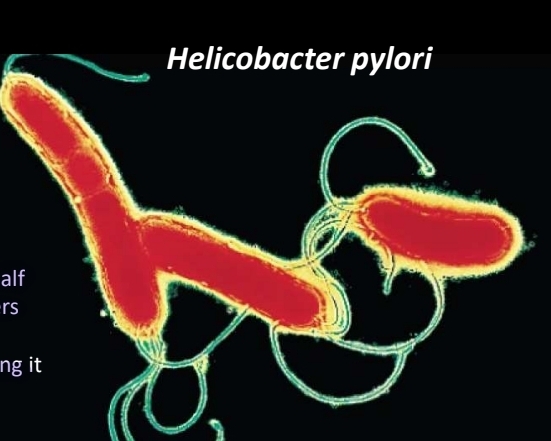
Proteobacteria
Gram-negative bacteria that include photoautotrpohs, Chemoautotrophs,, and heterotrophs.
Some are anaerobic and others aerobic
e.g. helicobacter, causes stomach ulcers and stomach cancer
Chlamydias
these bacteria are parasites that live within animal cells
e.g. Chlamydia trachomatis causes blindness and nongonococcal urethritis by sexual transmission
Spirochetes
These bacteria are helical heterotrophs
e.g. Treponema pallidum which causes syphilis, and Borrelia burgdorferi which causes Lyme disease are parasites
Cyanobacteria
These are photoautotrophs that generate O2
Plant chloroplasts likely evolved from cyanobacteria by the process of endosymbiosis
Gram-positive bacteria consists of..
Actinomycetes, which decomposes soil
Bacillus anthracis, the cause fo anthrax
Clostridium botulinum, the cause of botulism
some Staphylococcus and Streptococcus, which can be pathogenic
Mycoplasms, the smallest known cells
What do prokaryotes play a major role in?
they play a major role in the recycling of chemical elements between the living and nonliving components of ecosystems
Chemoheterotrophic prokaryotes
These prokaryotes function as decomposers
they break down corpses, dead vegetation and waste products
Chemical Recycling - Nitrogen fixation
Nitrogen-fixing porkaryotes add usable nitrogen to the environment
not only do they increase the availibility of nitrogen but also phosphorus and potassium for plant growth
Chemical Recylcing - Immobilize
Prokaryotes can also decrease the availability of nutrients
Symbiosis
An ecological relationship in which two species live in close contact
consists of a larger host and a smaller symbiont
prokaryotes often form symbiotic relationships with larger organisms
Symbiosis - Mutualism
Where both symbiotic organisms benefit from the relationship
Symbiosis - Commensalism
Where one organism benefits while neither harming or helping the other in any significant way
Symbiosis - Parasitism
An organism called a parasite harms but does not kill it's host
they cause disease called pathogens
Pathogenic Bacteria
Prokaryotes can sometimes be human pathogens while others have positive interactions with humans
they cause about half of all human diseases
e.g. lyme disease
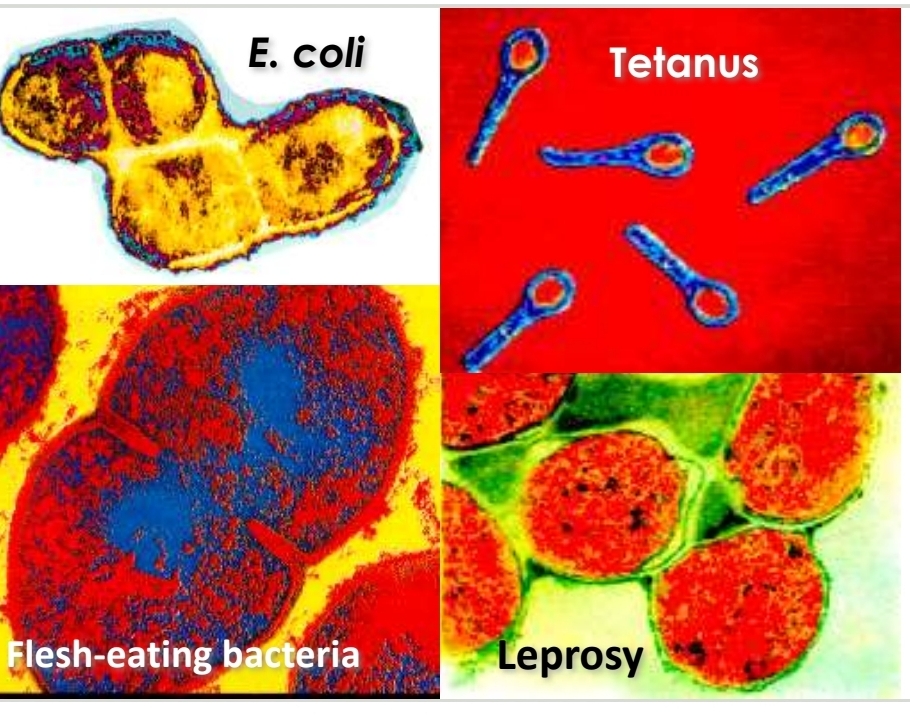
Pathogenic Prokaryotes
They typically cause disease by releasing exotoxins or endotoxins
Exotoxins
Cause disease even if the prokaryotes that produce them are not present
e.g. Botulism, cholera
Endotoxins
these are rleased only when the bacteria die and their cell walls break down
E. coli, Salmonella
How do prokaryotes help research?
Experiments that have used prokaryotes have led to important advances in DNA technology
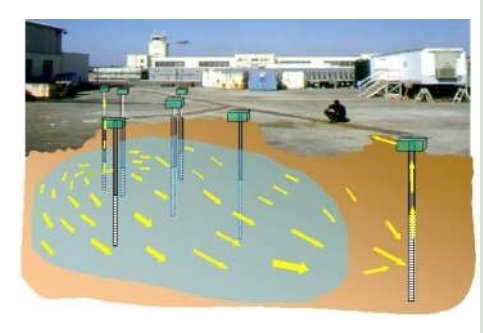
Prokaryotes are the key agents of what?
Bioremediation
they help remove pollutants from the environment
Botox
A purified form of botulinum exotoxin
a potent nerve blocker
it temporarily paralyzes or freezes facial muscles that wrinkle from habitual use
takes 2-3 days to kick in and lasts 4-6 months
Other uses of prokaryotes
Recovery of metals from ores
Synthesis of vitamins
Production of antibiotics, hormones, and other products